Recently, I stumbled upon claims that Google is planning to introduce ads to its Gemini AI chatbot by 2026. However, Google’s top executive has firmly denied these rumors.
The Buzz: According to AdWeek, Google supposedly informed major advertisers that Gemini is set to feature its own ad slots in 2026—distinct from AI Mode’s current ads. Could this mean something big is on the horizon?
On these calls, advertisers were curious but noted a lack of concrete details or prototypes.
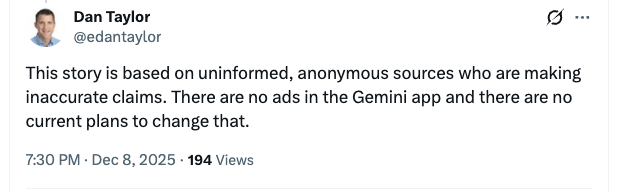
Google’s Rebuttal: Dan Taylor, the VP of Global Ads at Google, took to X, flatly dismissing these claims. He insisted, “There are no ads in the Gemini app and no plans to change that.”
Why This Matters: As advertisers, we are on the edge of our seats, wondering how AI interfaces like Gemini might change the ad landscape. Could an ad-supported chatbot alter advertising strategies and user interactions dramatically?
Discussions are already underway about whether AI chatbots should solely serve as utility tools or evolve into revenue-generating platforms. Even whispers of ads in Gemini drive agencies to consider future possibilities.
Moving Forward: Google’s stance is clear; for now, Gemini remains ad-free. Yet with competitors exploring monetization avenues, we must watch this space closely. The conversation about ads in Gemini is far from over.
Embarking on the complex B2B journey can feel like navigating a labyrinth. I know this from firsthand experience, especially when it comes to optimizing campaigns amidst long sales cycles and low conversion volumes.
In the realm of selling high-value items, waiting for months to see tangible results can be frustrating. That’s where I discovered the power of proxy metrics, or micro-conversions, to drive faster optimization.
Let’s dive into the specifics of proxy metrics and their transformative impact on B2B campaigns.
Understanding Proxy Metrics
From my perspective, proxy metrics are like the early indicators of success that help predict final outcomes. Think of them as a weather vane pointing towards future achievements.
Engagement rates hint at potential conversions, while add-to-cart events often precede sales. Watching these early signs allows me to course-correct campaigns sooner and optimize budget allocations.
Proxy metrics also prove invaluable when navigating Google’s 90-day latency window. I’ve learned to identify key predictors within this time frame to maintain tracking efficiency.
In my work with digital ad platforms like Google and Meta, I’ve seen the crucial role of machine learning in campaign optimization. Feeding these systems with early signals like micro-conversions enhances their ability to target quality users effectively.
With metrics like time on site and scroll depth, I can refine targeting even when conversion data appears sparse, creating training signals that define algorithms’ paths.
Building Audiences and Gaining Insights with Proxy Metrics
Segmentation through proxy metrics opens up smarter audience building. By identifying engaged users, I craft lookalike audiences that mirror high-value customers, shifting focus from mere click-through metrics.
I’m also able to expedite testing cycles by employing leading indicators instead of waiting for long-term data, thereby speeding up hypothesis validations and subsequent decisions.
Proxy metrics frequently offer more robust statistical significance in models than distant revenue markers, enabling reliable market assessments.
Evaluating the Trustworthiness of Proxy Metrics
I’ve learned that not all proxy metrics pack the same punch. Some signal genuine interest more effectively than others. Newsletter signups, for example, often predict engagement, whereas add-to-cart events can be misleading due to frequent abandonment.
To choose the right proxies, I measure correlation strength, timeliness, actionability, and stability to ensure they provide reliable guidance for strategic decisions.
By focusing on these factors, I navigate the intricate path of B2B optimization with confidence, leveraging insights to drive impactful outcomes.
I’m excited to share with you that SMX Advanced is gearing up to make its mark in Boston from June 3rd to 5th, 2026, hosted at the Westin Boston Seaport. This is the premier event for those of us committed to mastering search marketing.
We’re really keen on highlighting the advanced strategies in SEO, PPC, and AI, and we can’t do it without your expertise.
The world of search is evolving incredibly fast.
As SEOs, we find ourselves adapting to AI SEO trends, making sense of AI Overviews dominating SERPs, and navigating Google’s ever-changing landscape and algorithm updates.
For those in PPC, there’s the challenge of making informed, data-driven decisions while seamlessly integrating new AI tools and maintaining that essential human touch.
We’re looking for speakers at SMX Advanced who can provide real solutions to these complex issues.
Do you have proven, high-level strategies for today’s marketing landscape? Now is the perfect time to share your session idea with us. Even if you haven’t spoken at SMX before, in person or virtually, we encourage diverse voices and perspectives to come forward.
The deadline for submitting your SMX Advanced session pitch is January 30th. Don’t delay—spots are limited and fill up quickly.
Consider these tips for crafting a compelling session proposal:
Ensure that your topic is truly advanced and tailored for intermediate to advanced professionals in search marketing.
Introduce an original idea or a unique session format.
Include a case study or specific examples to illustrate your points.
Be mindful of what can realistically be covered in a 20-minute timeframe.
Provide clear, actionable takeaways for participants to implement.
Clarify what skills or insights attendees will gain from your session.
I’ve recently discovered that Google is testing an intriguing beta feature in Shopping ads, which allows merchants to offer region-specific loyalty prices. This innovation can help retailers tailor their promotions to local audiences more efficiently.
Personally, I find this feature fascinating because it provides a fresh opportunity for merchants to customize pricing based on regional markets. By highlighting loyalty benefits directly within the ads, there’s potential for increased conversions and more sign-ups.
Here’s how it works: Merchants need to participate in Google’s loyalty add-on, define regional settings within the Merchant Center, and incorporate loyalty_program attributes — such as program label, tier, and price — into their regional inventory feeds.
As someone who’s been following this development, it’s important to note that when a shopper clicks on an ad, Google adds a region ID to the URL. Consequently, the merchant’s landing page must dynamically showcase the appropriate member price.
However, the caveat is that this feature is still in beta, with limited visibility, and is only accessible in markets supporting both RAAP (regional availability and pricing) and loyalty programs.
In my opinion, enabling regional member pricing empowers retailers to localize incentives and distinguish value across various markets without needing to create separate promotions for each region. It seems to be a clever strategy for reaching customers at a local level.
If you’re interested, you can find out more about how to set up regional member pricing from Google’s official announcement.
I’ve delved deep into four key areas that shape how ecommerce PPC campaigns perform: mastering the essentials of Performance Max, leveraging Amazon’s conversion power, building social audiences, and crafting insightful dashboards.
PPC in ecommerce differs vastly from PPC for lead generation or SaaS. The mechanics of campaigns, the conversion data volume, and each platform’s unique role demand a specialized approach.
Entering the ecommerce realm helped me identify which fundamentals truly matter. Let’s look at how the core differences between ecommerce and non-ecommerce models influence PPC strategy and how to play to each platform’s strengths.
1. Performance Max is Built for Ecommerce
Google Ads is essential for ecommerce, primarily because of Performance Max campaigns, or PMax. It’s tailored for ecommerce, where data flows from high sales volumes and lower ticket sizes, allowing rapid learning and improvement.
To maximize PMax’s potential, optimizing your feed, segmenting your campaigns, and ensuring conversion tracking are crucial steps.
Feed Optimization
Optimizing your feed can dramatically enhance PMax performance. Ensure your product titles and descriptions are well-structured, utilize character limits, and incorporate keywords effectively.
Campaign Segmentation
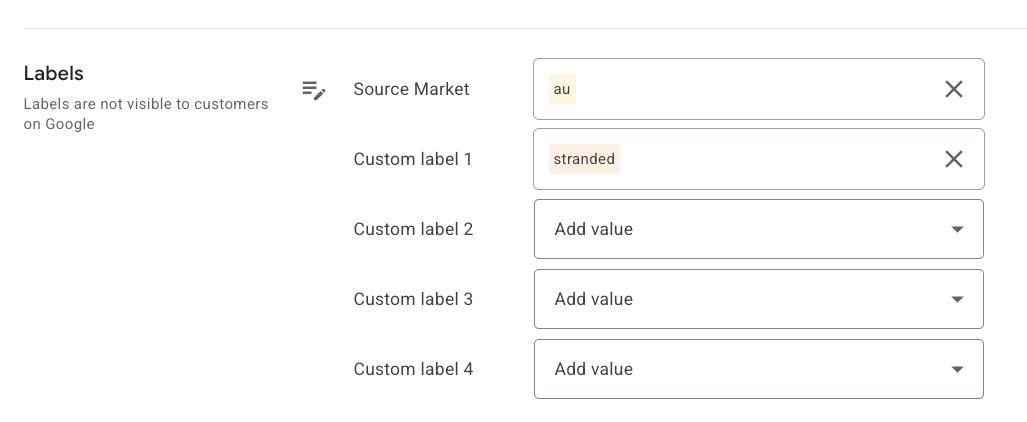
By categorizing your feeds effectively, you can segment campaigns for better results. Utilize default and custom labels in Google Merchant Center to achieve precise targeting and higher ROAS.
Conversion Tracking
Accurate conversion tracking is critical. Integrating with tools like Shopify to sync data with Google Ads enables automated bidding strategies and campaign experiments for enhanced ROI.
2. Amazon Excels in Ecommerce Advertising
Amazon is an advertising powerhouse for ecommerce, offering transparency and deeper insights through its platform, which results in higher conversion rates compared to competitors.
Transparency
Amazon provides detailed reporting, enabling clear insights into conversion performance at both the keyword and market level, setting it apart from platforms like Google and Meta.
Higher Conversion Rates
Amazon’s unified platform leads to seamless transactions, resulting in higher average conversion rates and more reliable attribution data, minimizing guesswork.
Rankings Philosophy
Amazon’s approach to linking ads and organic rankings provides clarity and allows advertisers to precisely strategize on improving offers and performance based on conversion metrics.
3. Social Media: Not the Conversion Leader
While social platforms are crucial for brand awareness and audience building, they typically aren’t optimal for direct conversions, making them secondary to platforms like Amazon Ads and PMax.
Building Customer Lists
Using social channels to host giveaways can substantially grow your customer lists, which are invaluable for targeted marketing efforts such as promotions and cross-selling.
Awareness
Utilize social media to build brand visibility with cost-effective campaigns, focusing on awareness over immediate sales for new-to-market products.
Remarketing
Social media excels in creating remarketing funnels that engage customers more deeply, enhancing overall campaign effectiveness.
4. Dashboarding for Clarity and Success
Effective dashboarding is vital for maintaining clarity across multiple platforms. A good dashboard distills complex data into actionable insights, critical for profitability and strategy alignment.
With tools like Sellerboard, you can connect revenue and costs down to the SKU, providing clarity and revealing which platforms and strategies are truly driving success.
Guide to Next Steps in Ecommerce PPC
Recognizing the nuances of ecommerce PPC is crucial for making informed decisions that result in campaign success. These insights continue to guide my strategy and I hope they do the same for you.
I’ve been following Google’s plan to address its ad tech issues closely, and now their proposed solutions are under the spotlight of an EU ‘market test.’ This is a critical step to ensure they truly bring back fair competition in the industry.
The European Commission is actively seeking feedback from industry leaders, and I’ve noticed that they have reached out to a significant group of stakeholders, including publishers, advertisers, and rival ad tech firms, to gauge their reactions to Google’s latest proposal.
Officials are emphasizing that the feedback gathered will play a key role in determining if Google’s commitments will really ensure fair play in the EU’s digital ad market.
Personally, I’m intrigued by the background of this situation. Google was hit with a hefty fine of €2.95 billion and was instructed to cease favoring its own ad tech services. In an effort to resolve these issues, Google has suggested several changes, which include allowing publishers more control over setting minimum bid prices in their Ad Manager platform.
They also promise improved interoperability between their tools and those of competitive ad tech providers, along with broader choices and flexibility for advertisers and publishers alike.
Why does this matter to me and you? The unfolding ‘market test’ could significantly influence how Brussels approaches Google’s offer, potentially ending a pivotal tech rivalry case. If Google’s suggestions are approved, we could see fairer auctions that provide better returns on investment and reduce Google’s inherent advantages in their ad tech operations.
Reading between the lines, this market test represents a potential turning point. If it goes well, the EU could be on the brink of concluding the case, relieving Google of prolonged regulatory pressures. However, Thursday’s developments also highlight the EU’s broader mission to regulate major tech giants while dealing with external pressures from U.S. authorities.
Meanwhile, I’ve noticed that the EU is also setting its sights on Meta, as they’re starting a new examination of its AI features within WhatsApp and examining whether these might skew the competition.
It’s crucial to remember that antitrust breaches can incur penalties up to 10% of global revenue, although such severe fines are uncommon. Meta is now under pressure to present solutions, although WhatsApp insists that the concerns are unwarranted.
I recently dived into how Google’s new AI Max setting is changing the game for search term matching and reporting. It’s like an adventure where advertisers find themselves facing challenges in maintaining precise keyword control.
Why AI Max Might Not Be Ideal It’s important to note that AI Max isn’t necessarily negative. However, if broad match has underperformed in your past account history, or if your budget already limits top exact or phrase match keywords, then AI Max might require a second thought.
If you dislike text customization or Final URL expansion, which are inherent features of AI Max, you might want to reconsider.
You can maintain control by adding broad match keywords manually if they suit your objectives.
Understanding AI Max and Your Keywords From the Adalysis test, I learned that even when your campaigns lack a broad match version, AI Max behaves as if it includes one, distributing impressions and clicks to your existing keywords. This can obscure match-type reporting, crediting AI Max for traffic already earned by exact and phrase match terms.
To achieve clearer reporting, I recommend adding broad match versions of core keywords.
Trouble with Search-Term Reporting By checking search terms under AI Max, I’ve observed issues like brand terms matching non-brand queries and vice versa. Even with brand filters, misspellings and variants might sneak in. Strong negative keywords remain a vital defense line.
AI Max Isn’t Always Unearthing New Searches More often, AI Max is merely claiming credit for existing queries and can override Google’s usual matching hierarchy, misallocating impressions to less relevant ad groups.
This could partly explain why its metrics seem inflated.
The Mystery Bucket I’ve found that AI Max sometimes generates search terms not aligned with any current keyword or past searches. This might relate to Google’s keywordless technology, although confirmation is pending.
Adalysis advises de-duplicating search terms across match types to pinpoint real performance enhancements.
Decoding Google’s Priority Order Though Google asserts that exact matches should take precedence when search terms are identical, our tests sometimes revealed AI Max taking over. This inconsistency necessitates adding exact matches for even minor spelling variations to protect valued search queries.
Why It Matters This journey with AI Max highlights how it can blur match types and reporting clarity. This murkiness makes it difficult to discern the true drivers of results, hindering budget optimization and protection of brand traffic.
Final Thoughts The Adalysis test strongly suggests that while AI Max offers campaign scaling opportunities, its structure can deceive with inflated metrics by reallocating impressions from original match types.
If you’re using AI Max or planning to test it, ensure to include broad match versions, differentiate traffic with strong negatives, and keep exact match for your key queries while watching for mixed search terms. Managing search terms is as crucial now as it has always been to align your spending with high-performing searches.
Explore Further For more insights on AI Max, check these valuable reads:
I’ve discovered that Meta’s recent research highlights the potential of native Reels ads to significantly enhance purchase intent and brand interest. This insight could be a game-changer for advertisers looking to harness the power of Reels.
Reels have rapidly become a favorite format for entertainment, education, and discovery. What I’ve learned from Meta is that advertisers must prioritize native creative content—forget about recycling old assets. Embrace 9:16 framing, platform-first audio, and swift storytelling aimed at capturing attention in a swipe-driven world.
Brand advertiser insights from Meta’s data:
Show your brand early: Introducing branding in the first 5 seconds can make ads 1.7 times more effective in achieving top purchase-intent rankings.
Use dynamic branding: Featuring your brand multiple times within the ad boosts top-tier purchase intent by 1.8 times.
Combine speech + music: This combination doubles the chance of landing in the top 20% for brand interest.
Say it visually and audibly: Dual-channel messaging can increase brand interest by 1.8 times.
Keep it relatable: Incorporating everyday “slice of life” moments enhances purchase intent by 1.5 times.
Direct response advertiser takeaways:
Product > everything: Presenting the product multiple times can boost purchase intent by 2.7 times.
Brand lightly: Keeping branding to less than 25% of the ad’s duration drives a 4.8 times increase in purchase intent.
Add context: Highlighting USPs, features, and benefit-driven messaging raises purchase intent by a staggering 5.3 times.
Always include a CTA: Both visual and audio CTAs have the potential to lift purchase intent by 1.9 times.
Pair speech + music: This high-impact strategy makes it 2.1 times more likely to achieve top rankings.
Use native elements: Emojis play a significant role in helping direct response creatives rank 2.5 times higher.
Open with a hook: Audio-visual hooks can improve purchase intent by 1.5 times.
Why I care. Reels are not just a current trend; they’re fundamentally shaping the way we approach short-form storytelling. With more than half of Instagram users spending their time on Reels, and video consumption up over 30% annually, the importance of native content is undeniable. Meta’s research makes it clear that success on Reels demands creative strategies that are tailored specifically for the platform. Early and strong branding, multiple product showings, a blend of audio and speech, relatable content, and clear CTAs are all crucial for maximizing results.
The lesson here is straightforward: ads crafted with Reels in mind, rather than repurposed from other formats, achieve the best results. Structured testing and continuously evolving creative approaches are essential for anyone aiming to capture the Reels audience effectively.
Meta’s bottom line. Reels aren’t fading away; they’re integral to the advertising landscape, with effective ads looking and behaving like native Reels content. The more seamlessly integrated the creative, the better the outcome.
What’s next. Meta recommends that advertisers develop a robust “test and learn” program, focusing on elements like incrementality measurement and A/B testing. The objective is to discern which combination of format, messaging, and creative content drives the most significant impact for their offerings. The guiding principle is to iterate quickly, validate what’s effective, and refine approaches tirelessly.
The takeaway. Successful brands on Reels are not just crafting short clips; they are designing specifically for the medium. Meta’s new data provides a roadmap, but it’s up to advertisers to test, learn, and continually adapt their creative strategies to fully realize the advantages available.
As someone deeply involved in PPC marketing, planning and managing budgets across various paid media channels has become a vital skill in my toolkit.
I’m perpetually tasked with determining how to allocate spending across channels, handling significant budget fluctuations, and deciding whether to set total or daily budgets.
In the world of AI-driven ad platforms, campaign budgets are one of the few areas I still have full control over, and so they demand thoughtful attention.
Depending on my business model, I may have varying degrees of input into the overall paid media budget, but I usually have the reins when it comes to distributing that budget across channels and campaigns.
My strategy begins with assessing the total budget available. It’s unwise to spread a modest budget across too many campaigns, as this limits the platforms’ capacity to gather data and drive effective results.
However, with a larger budget, exploring new testing channels or campaign styles becomes feasible.
For instance, if my efforts in paid search are maxed out and additional budget is available, I might allocate some to Google Demand Gen or social channels to see how they perform.
Considering the brand’s current awareness level is crucial. If building credibility is still ongoing, focusing on social prospecting could enhance visibility and audience building for future retargeting.
Another factor is my ability to support campaigns requiring creative assets. If getting creative approved is challenging, keeping budget in paid search might be more pragmatic, with plans to expand to other channels once assets are ready.
When making budget decisions, I ensure not to view individual channels or campaign types in isolation. It’s important to understand how they might affect each other and leverage data to guide these decisions.
For instance, if I launch a YouTube campaign that raises product awareness, I might notice improved conversion rates in search, with video viewer remarketing audiences performing well.
Even if direct conversions from YouTube are minimal, data might show improved overall conversion efficiency, justifying an ongoing budget for both YouTube and search.
When mapping out annual budgets, aligning them with peak buying times or potential slumps specific to the industry at hand is vital.
Ecommerce brands may raise budgets around holiday seasons, while B2B brands might choose to invest earlier in the year.
Historical data can be a guide, and tools like Google Trends offer insights into monthly trends for relevant keywords.
Unexpected budget shifts are common, whether due to financial constraints or last-minute fiscal year decisions. I’m prepared to adapt by pausing campaigns or reallocating budgets where they’ve proven efficient.
Opportunities to increase budgets prompt a focus on campaigns that are currently capped and performing efficiently. However, I avoid increasing budgets too rapidly, to prevent inefficiencies.
Finally, selecting between total or daily budget types is a frequent consideration. Short campaigns or ones with strict budget limits benefit from a total budget, while ongoing campaigns are better suited to daily budgets.
I’m mindful of spending spikes and aim to avoid overspending, especially when adjusting budgets mid-month.
Having a budget strategy that’s adaptable to ongoing and exploratory efforts, while considering the unique nuances of each platform, is key to successful paid media campaign management.
The position of ads is more crucial than ever. I’ve recently come across new data that underscores how Google AI Overviews are reshaping paid search visibility and click-through rates (CTR).
In my experience, Google’s AI Overviews have dramatically altered the search landscape almost overnight. As someone deeply invested in paid search, I’ve noticed the battle for visibility isn’t just about ad rank anymore—it’s about appearing above the AI results.
This change is part of a rapid surge in AI Overviews, which I discovered in Adthena’s earlier study. My analysis found that AI Overviews are now trespassing into short, high-volume commercial searches.
The underlying mechanism causing this is pretty clear to me: AI Overviews intercept user attention, slash CTRs, and push both organic and paid listings lower down the page. As a result, clicks and revenue take a hit.
From what I’ve seen in Adthena’s latest research, it accurately identifies how often advertisers secure top ad positions above AI Overviews across seven major industries, device types, and query categories. The research highlights clear leaders and provides actionable strategies for the rest of us in paid search.
The topline reality: Ad position visibility is lost 25% of the time
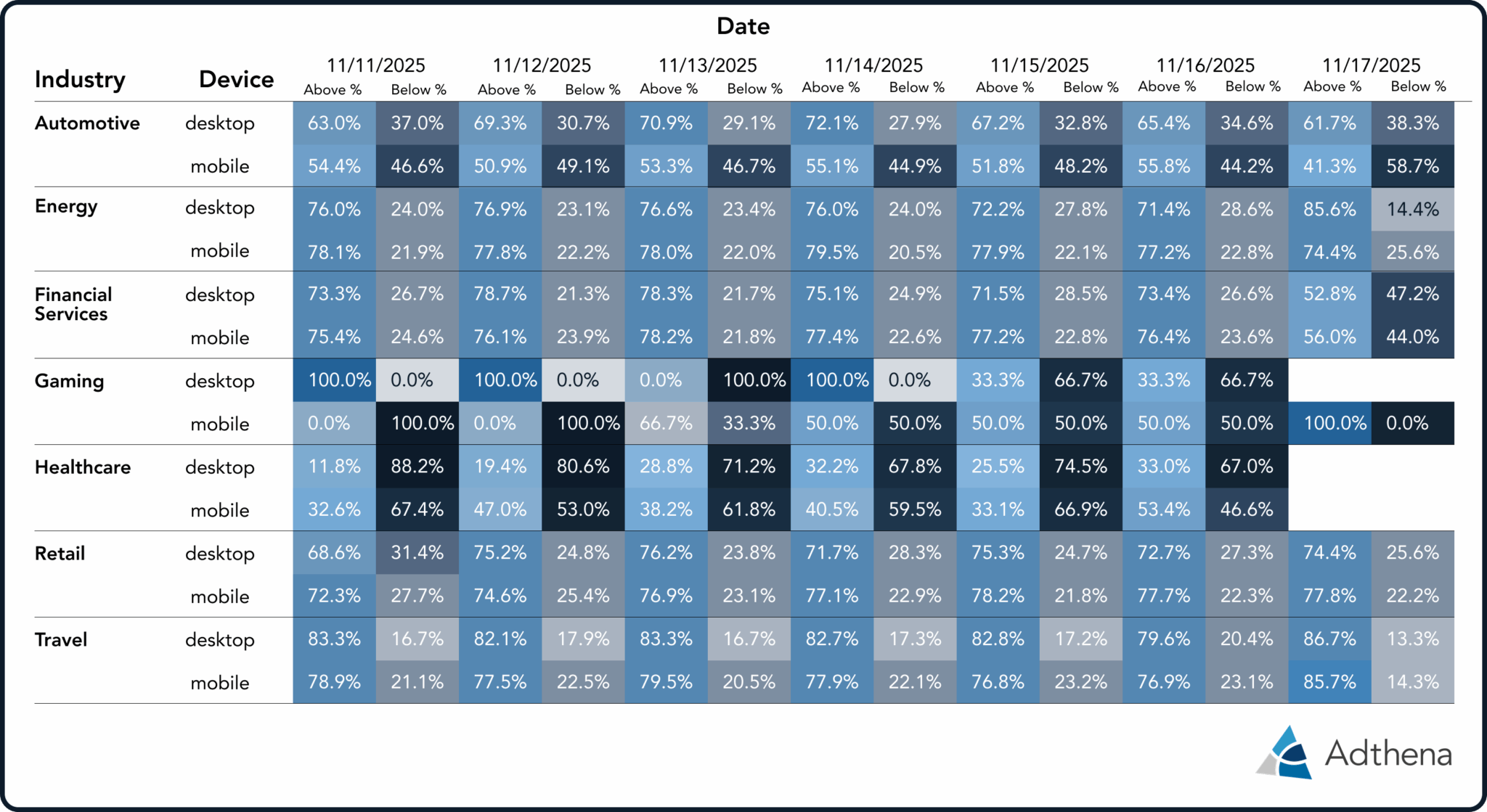
The industry benchmark table below reveals how fierce the fight is for the top spot. It shows us the percentage of ads that appear either above or below AI Overviews across seven industries.
Strategic implications from the topline data
The leaders: Industries like Travel, Energy, Financial Services, and Retail consistently land above the AI Overviews in more than 75% of cases. However, I’ve noticed that even in these sectors, 1 in 4 paid ads are still affected. When keywords drive major revenue, that 20% to 30% exposure is a direct threat to ROI.
The runners-up (the risk of being hidden): Healthcare is a major outlier. Ads in this field often appear below AI Overviews 64.6% of the time, given the high-stakes nature and research-heavy aspect of healthcare searches. Google’s AI prioritizes “expert” information first, meaning healthcare ads see significantly less visibility.
The volatility: The gaming sector shows a clear 50/50 split. Visibility feels like flipping a coin, demonstrating to me the need for agile bidding strategies.
The device divide: Why mobile is your biggest threat
From what I’ve gathered, device-specific data indicates that ads are more likely to be displaced by AI Overviews in a mobile setting due to limited screen space.
Strategic implications on device differences
Automotive’s Mobile Problem: Although Automotive shows strong “Above %” placement overall, daily trends are worrying. On mobile, ads are frequently buried by AI Overviews, making them invisible without extensive scrolling. This leads to diminishing visibility and CTR for us marketers.
The “double whammy”: In healthcare, desktop ads generally appear below AI Overviews, although mobile sometimes performs slightly better. It seems the AI Overviews box might be designed for mobile screens, occasionally allowing one or two ad slots to remain visible. However, desktop visibility still suffers greatly.
Actionable insight: Mobile is where AI Overviews present the greatest challenge. For industries like healthcare and gaming, where this is a significant problem, securing top ad positions is vital for survival.
The query intent test: Where does AI Overviews win and lose?
Generally, I’ve observed that long queries tend to be more informational and thus more likely to activate AI Overviews, while shorter ones are typically transactional. The table below unfolds a surprising industry pattern related to this.
This table reveals the connection between query complexity (or user intent) and AI Overviews’ dominance, spread over query lengths from one to ten words.
Strategic implications on query intent
AI Overviews dominance on the fringes:
Healthcare shows that as queries get longer (up to 10 words), ad positions above AI Overviews drop to 0%. Google clearly prioritizes complex health questions, relegating commercial interests lower.
Gaming reveals the opposite: short terms (1-2 words) have 0% visibility above AI, suggesting organic results or features claim the top spot. However, for longer terms (7-9 words), ads dominate above AI Overviews, a golden opportunity to engage users deeply researching.
The unexpected paid search opportunity (Automotive & Travel):
Automotive and Travel ads excel with longer informational queries rather than short, high-volume ones. For example, Automotive’s “Ad Above AI Overviews” rate leaps from 21.9% (one word) to over 74% (four words).
Strategic implication: This upends conventional PPC strategy, suggesting we should be bidding eagerly on mid-to-upper-funnel terms where AI Overviews are present, intercepting the user’s journey before their final decisions.
Next steps for paid search marketers
Adthena’s research highlights that the threat of Google AI Overviews is fragmentary. Precision is key: know when and where your ads can outrank AI Overviews, adjust your bids and content accordingly.
From my ongoing observations, as the frequency of AI Overviews rises, these ad position percentages might swing. I advise regularly auditing profitable keywords to effectively handle changes in the AI-driven search landscape.
Here are three game-changing steps we can take:
1. Have you explored testing a device-specific strategy?
I’ve realized that mobile often amplifies visibility loss from AI Overviews, notably in sectors like automotive.
I recommend considering a device-specific strategy, especially for campaigns severely impacted by AI Overviews.
2. Have you identified quick wins in keyword coverage?
Data on word counts reveals unexpected possibilities. Industries like Gaming and Automotive often see robust ad placements with long-tail queries (four words or more) above AI Overviews.
This signals high-visibility traffic in mid- to upper-funnel searches that our competitors may be ignoring.
3. Have you reviewed your ad copy against the AI answer?
AI Overviews can miss out on brand nuances and emotional resonance.
To captivate users, ads must deliver what AI can’t: a strong, compelling reason to choose you over Google’s summary. Using messaging that includes trust, guarantees, or urgency can clearly differentiate from AI’s generic style.
Convey transactional incentives like deals, free shipping, or scarcity (“Limited stock, grab yours!”), and use emotional elements like customer testimonials to build trust and convey your unique brand narrative.
The search landscape has evolved. Adthena’s data suggests that marketers who rapidly analyze and adjust their ad strategies in response to AI Overviews will thrive.
Ready to see where your ads sit today?
Adthena gives you the precise data on ad appearances in relation to AI Overviews, helping you adapt to changes in AI search performance. Book a demo to see where your ads rank today.