Category: PPC

  • Unlocking Google’s AI Max Potential: A Guide for Advertisers

    Unlocking Google’s AI Max Potential: A Guide for Advertisers

    I have been diving into Google’s AI Max for Search as it becomes more accessible in beta, and I’m exploring its impact on ad campaigns. AI Max is aimed at helping advertisers discover new conversion opportunities beyond their existing keywords, with a promise of clearer controls and measurable benefits.

    The buzz around AI Max has led many advertisers, like myself, to evaluate its performance and its compatibility with our current keyword strategies. Ginny Marvin, Google’s Ads Liaison, has been clarifying precisely what AI Max is and is not.

    Understanding the Purpose of AI Max

    AI Max isn’t here to replace or overshadow your existing keyword structures. Its main objective is to unlock incremental conversions or additional conversion value.

    • It extends your reach using broad match logic and keywordless matching, similar to DSA-style crawling of landing pages.
    • Dynamic creative optimization is part of the package, including text customization and Final URL expansion to better align with user intent.

    The Essentials

    If a search query matches your existing keywords, those keywords will be prioritized. AI Max is designed to capture new searches that you might not currently be targeting.

    Is AI Max Just a Rebranding? It’s a bit more than that, with improvements. AI Max combines broad match, DSA, generated text assets, and Final URL expansion into a streamlined system, offering enhancements like:

    • Controls at the ad-group level, including locations and brands
    • Enhanced search-term reporting, highlighting which creative assets and landing pages are used
    • Upcoming features like text guidelines for better customization

    Marvin believes that these components work more effectively together in AI Max than they do separately.

    What to Anticipate Based on Your Current Setup

    • Mostly Phrase/Exact users: Expect significant growth as AI Max leverages broader and keywordless capabilities.
    • Heavy Broad Match users: Anticipate marginal expansion, since you already cover a broad area.
    • DSA users: Experience less keywordless reach but gain improved performance with asset-driven signals absent in standard DSA.
    • PMax-heavy advertisers: AI Max introduces PMax-style matching to Search, and many users still observe incremental growth.

    Why CPA/ROAS May Differ. AI Max focuses on incrementality, leading to potentially higher costs for incremental conversions compared to core conversions from curated keywords.

    ```json
{
  "alt": "A comparison of CPA conversions between Exact Match and AI Max.",
  "caption": "Unveiling the impact of strategies: Exact match vs. AI Max in CPA conversions. Observe the averages and totals, revealing insights for effective targeting.",
  "description": "This image shows a comparison between Exact Match and AI Max CPA strategies. The Exact Match generates 7 conversions averaging $8.57 CPA, while AI Max produces 13 conversions with a $10.77 average, achieving a total of 20 conversions at an average CPA of $10.00. The image illustrates the effectiveness of AI driven strategies in enhancing conversion outcomes, providing key insights for digital marketing optimization."
}
```

    Google advises not to view match types in isolation but to assess whether the overall campaign provides more conversions or value at your desired CPA/ROAS.

    Why This Matters

    For advertisers like myself, Google clarifies that AI Max is intended to discover incremental demand not attainable through traditional keyword settings, potentially leading to more conversions or revenue without needing a campaign overhaul. It merges broad match, DSA, and dynamic creative into one system with advanced controls and reporting, providing transparency and measurability.

    The inclusion of A/B testing enables advertisers to confirm the validity of perceived gains.

    Measuring Incremental Lift

    Google now offers genuine A/B testing within AI Max experiments to compare control and treatment groups.

    • Brand and location controls are not yet available in AI Max experiments.
    • You can use Custom Experiments for those tests.
    • Disregard the learning period when analyzing results.

    The Overall View

    AI Max is developed to engage new, pertinent demands that your keywords may miss. Evaluate its effectiveness by focusing on campaign-level incremental lift — achieving more conversions or conversion value at your target efficiency.

    Google continues to enhance features and encourages advertisers to actively test and provide feedback.

    Explore Further Full article by Ginny Marvin.


    Inspired by this post on Search Engine Land.


    crushpress.ai community screenshot
  • Unlocking Automation: How OpenAI’s New Tools Revolutionize AI Agents

    Unlocking Automation: How OpenAI’s New Tools Revolutionize AI Agents

    I always knew that automation was transforming PPC, but recently, I’ve seen how OpenAI’s groundbreaking tools are taking this transformation to new heights.

    Automation has shaped PPC for decades, with the landscape constantly evolving. My journey started with developing the first AdWords Editor and writing about automation layering. Now, we’re seeing a new era unfold.

    The way AI processes information is shifting. This change isn’t driven by traditional platforms like Google, but by pioneers like OpenAI.

    AI was mostly known for handling tasks related to human language—copywriting, summarizing, reporting. But now, LLMs are delving into computer language, creating the software that boosts our efficiency.

    ```json
{
  "alt": "Visual interface of a workflow application featuring a start node and an agent node with a sidebar of tools.",
  "caption": "Exploring the versatile workflow application interface with nodes connecting seamlessly, empowering efficient task automation.",
  "description": "This image showcases a workflow application in draft mode with a graphical interface. It features a start node connected to an agent node, demonstrating the flow of a process. The left sidebar presents various tools including File search, Guardrails, and MCP. The agent node has instructions for checking emails and proposing ads using brand guidelines. The interface allows toggling options and selecting models, highlighting its role in automating tasks. Keywords: workflow, automation, interface, tools, nodes."
}
```

    At OpenAI’s DevDay in San Francisco, I witnessed the introduction of AgentKit, a tool that brings AI into action-handling territory. This marks a shift where PPC optimization techniques can transcend campaigns, integrating into comprehensive workflows.

    Imagine if AI could manage your routine tasks, from adding client reports to your dashboard before you even access your emails, to scheduling meetings, drafting agendas, and ensuring adherence to brand guidelines while drafting ad copy.

    These advancements are within reach, without the need for technical expertise.

    ```json
{
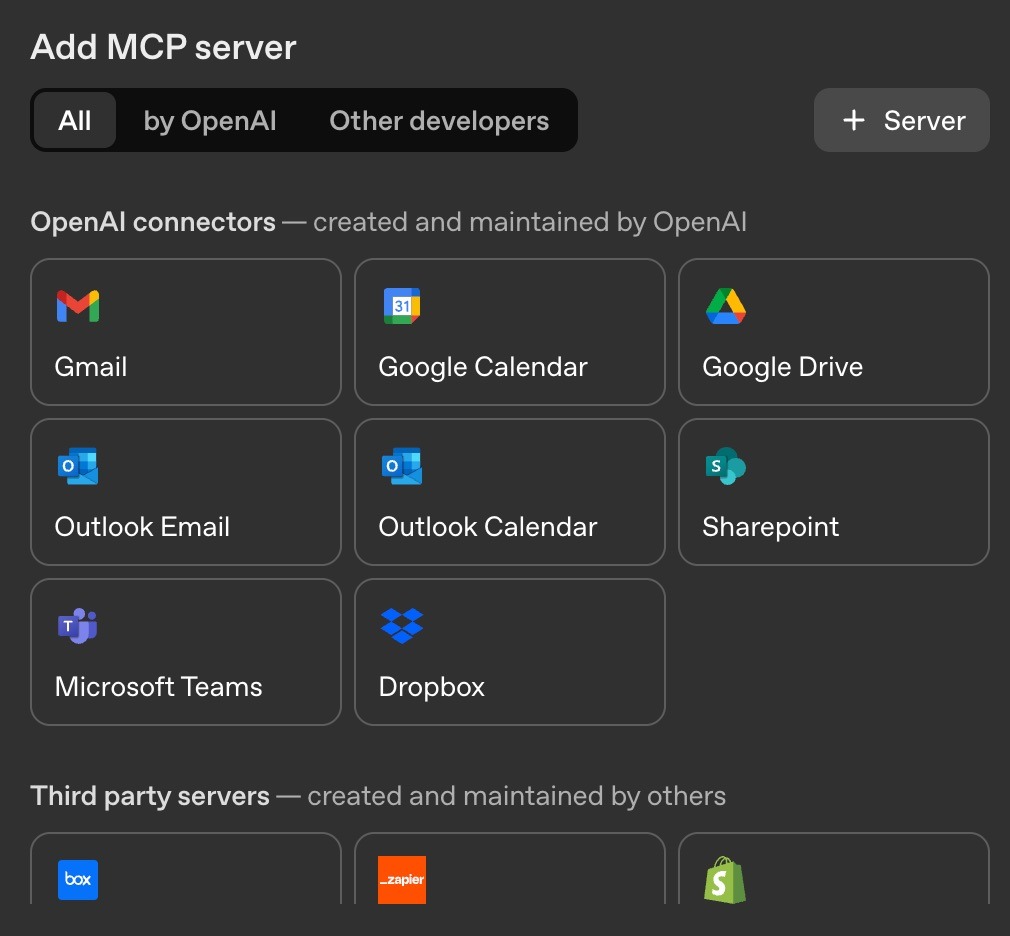
  "alt": "Interface for adding MCP server with OpenAI and third-party connectors like Gmail, Google Calendar, Outlook, and Dropbox.",
  "caption": "Explore seamless integration options with OpenAI's MCP server interface, featuring connectors for Gmail, Google Drive, and more.",
  "description": "This image displays an interface for adding an MCP server, showcasing a variety of OpenAI and third-party connectors. Users can select from options like Gmail, Google Calendar, Google Drive, Outlook Email, and Dropbox. The layout is organized with OpenAI-managed connectors on top and third-party servers like Box and Zapier below. This setup allows for comprehensive integration across various platforms, enhancing productivity and connectivity."
}
```

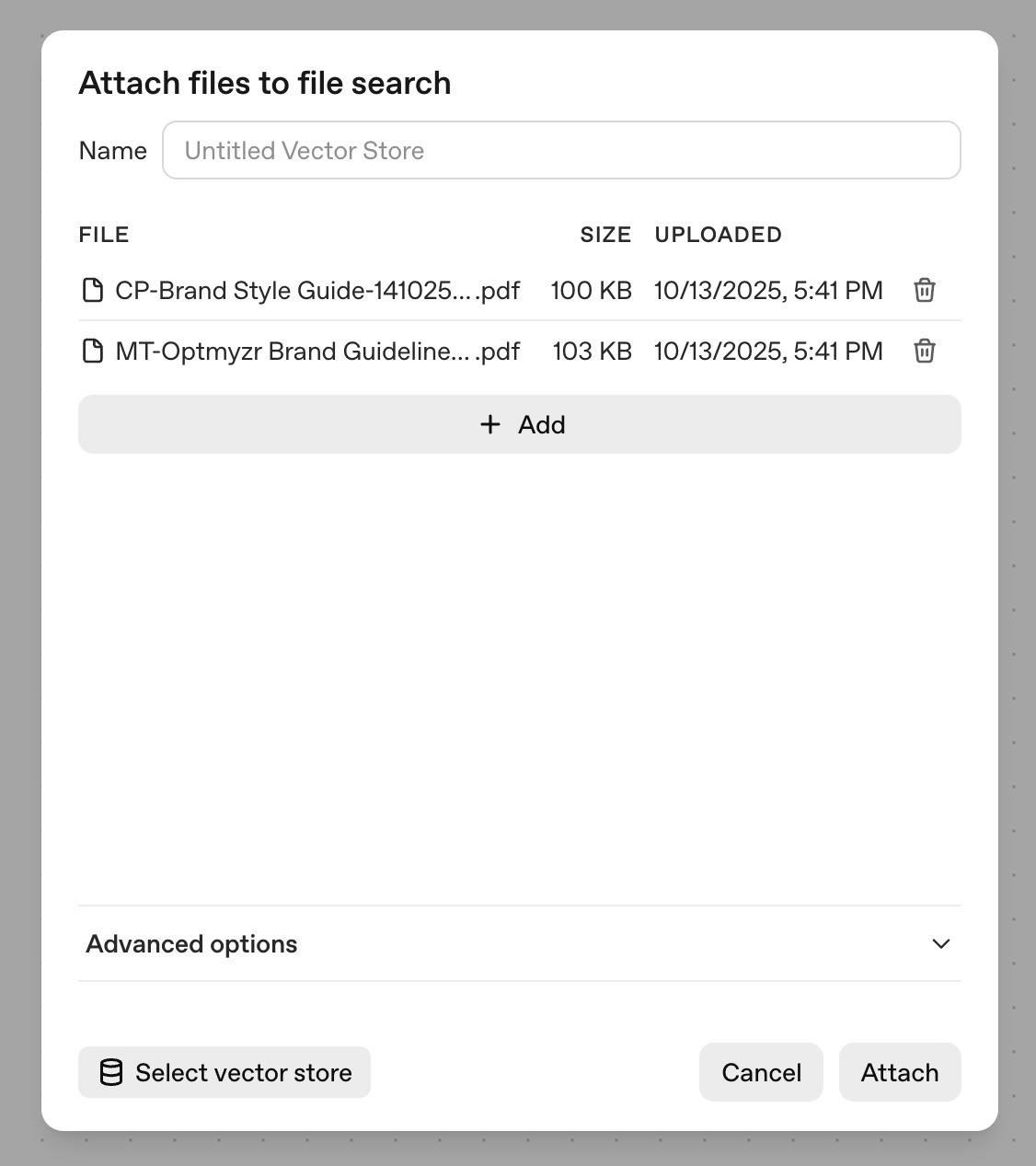
    Mainly, if you can break down tasks into actionable steps, you can set up an agent to execute them.

    Dig deeper: 4 ways to connect your ads data to generative AI for smarter PPC

    An AI agent is not just an algorithm; it’s a versatile aide equipped to deduce necessary actions and execute them through connected tools.

    ```json
{
  "alt": "Interface showing file attachment options for a vector store, listing PDF files and upload details.",
  "caption": "Easily attach your brand guidelines with the streamlined file search and upload feature, perfect for organizing your vector store.",
  "description": "The image displays a user interface for attaching files to a vector store. Two PDF files are listed with names, sizes, and upload dates. The interface includes buttons for adding more files, selecting a vector store, and the option to cancel or attach. This feature aids in efficient file management and project organization, enhancing productivity and accessibility for users managing digital assets."
}
```

    Unlike traditional, rigid software with deterministic steps, agents offer flexibility and adapt to scenarios without requiring exhaustive pre-programming.

    This evolution in automated assistance is something I had glimpsed in early iterations—now, a more sophisticated agent can execute real-world tasks formulated in the virtual sandbox of GPT innovations.

    Dig deeper: AI agents in PPC: What to know and build today

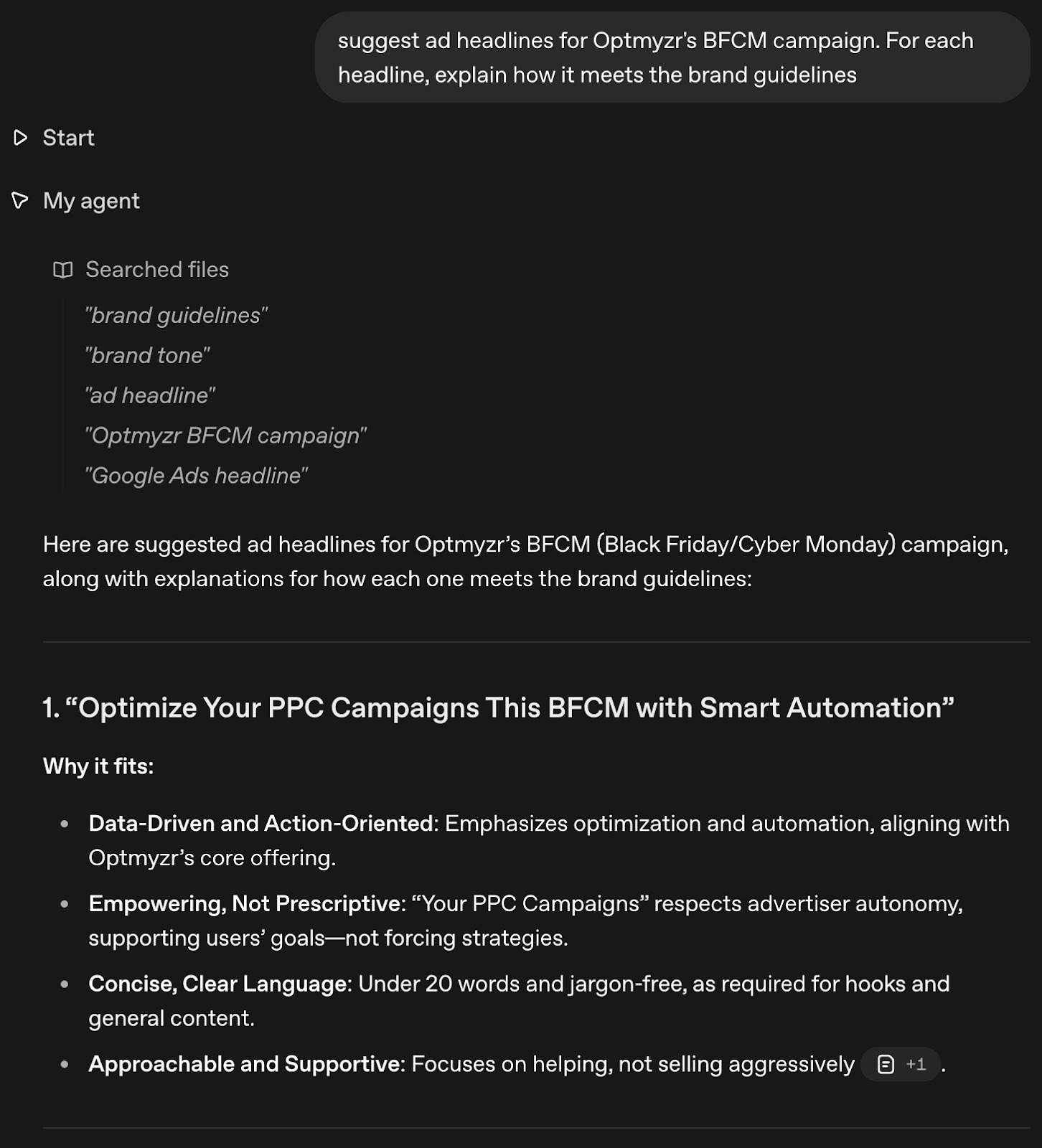
    ```json
{
  "alt": "Text analyzing ad headlines for Optmyzr's BFCM campaign with emphasis on brand guidelines.",
  "caption": "Crafting compelling ad headlines for Optmyzr's BFCM campaign, highlighting how they align with brand values for effective marketing.",
  "description": "This image displays a text-based analysis of suggested ad headlines for Optmyzr's Black Friday/Cyber Monday campaign. It includes a breakdown of how each headline meets brand guidelines such as data-driven strategies, empowerment, clear language, and a supportive tone. The layout includes headers, bullet points, and search file references, offering a detailed overview for optimal advertising strategy."
}
```

    The appeal of OpenAI’s AgentKit lies in its ability to transform lengthy coding sessions into quick, non-technical builds, akin to “Zapier for AI.”

    Unlike traditional software, AgentKit leverages AI’s reasoning instead of fixed rules, making it an innovative tool for marketers like me aiming to automate tasks efficiently.

    AgentKit provides a visual workflow built around familiar tools like Gmail and Dropbox, ensuring seamless integrations and ease of use.

    Dig deeper: How to get smarter with AI in PPC


    Inspired by this post on Search Engine Land.


    crushpress.ai community screenshot
  • Unlock True Conversion Insights with Google Ads’ New Metric

    Unlock True Conversion Insights with Google Ads’ New Metric

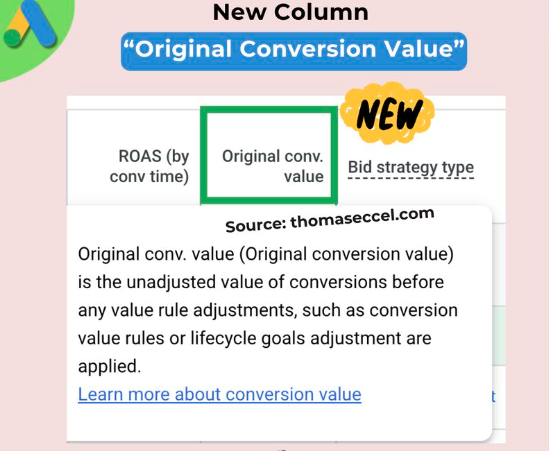
    I’ve discovered something exciting in the realm of Google Ads—a new metric called “Original Conversion Value.” It’s quietly revolutionizing how advertisers, like myself, can gauge the real, unaltered revenue our campaigns produce.

    Imagine seeing a new column, “Original Conversion Value,” in your Google Ads dashboard. This update gives us the chance to finally assess the true, unadjusted value of our conversions, cutting through all the noise.

    How it works. Google’s approach is refreshingly straightforward:

    Conversion Value
    – Rule Adjustments (value rules)
    – Lifecycle Goal Adjustments (e.g., NCA bonuses)
    = Original Conversion Value
    

    Why we care. For years, I’ve struggled alongside fellow marketers to extract genuine conversion values from the maze of Google’s adjustments—from Conversion Value Rules to Lifecycle Goals like New Customer Acquisition. This new metric simplifies the task of diagnosing performance, comparing data across campaigns, and identifying when automated bidding is inflating value rather than actual conversions.

    In essence, it provides clearer insights, a more precise ROAS, and greater confidence in decision-making.

    ```json
{
  "alt": "Overview of the new 'Original Conversion Value' column added to a table, highlighting its introduction and functionality.",
  "caption": "Discover the newly introduced 'Original Conversion Value' column that provides unadjusted conversion values, enhancing your data insights.",
  "description": "This image highlights the introduction of the 'Original Conversion Value' column in a data table setup, as announced by thomaseccel.com. It's pivotal for displaying the unadjusted conversion values without any applied rules or adjustments. The feature aims at improving data transparency and understanding within conversion metrics."
}
```

    Between the lines:

    • Value adjustments assist in navigating Smart Bidding.
    • However, they can inflate figures, complicating reports and performance assessments.
    • Many agencies and in-house teams have long requested a purer perspective from Google.

    What’s next. I anticipate “Original Conversion Value” will quickly become invaluable for:

    • Revenue reporting
    • Post-campaign analysis
    • Diagnosing inflated ROAS
    • Auditing automated bidding strategies

    First seen. The innovative update was first noticed by Google Ads Specialist Thomas Eccel, who shared his find on LinkedIn.

    The bottom line. This update, albeit small, brings significant clarity. Google Ads is, at last, offering us a more transparent lens into the actual value our advertisements bring.


    Inspired by this post on Search Engine Land.


    crushpress.ai community screenshot
  • Revolutionize Your Google Ads with Journey Aware Bidding

    Revolutionize Your Google Ads with Journey Aware Bidding

    I’ve recently come across an exciting development from Google that could change the way we approach Google Ads. It’s called Journey Aware Bidding, and it’s designed to optimize Search campaigns by utilizing signals from every step of the customer journey. This aims to provide a smarter and more efficient way of managing campaigns.

    Google has rolled out this new Search bidding model to enhance prediction accuracy and improve campaign performance. The idea is to consider the entire customer journey, not just the final conversion point.

    How it works: Journey Aware Bidding learns not only from your primary conversion goal but also from non-biddable journey stages. If you’re someone who tracks and defines each step of your purchase funnel meticulously, this model could be particularly beneficial.

    Google advises mapping out the entire process—from lead submission to final purchase—and labeling all critical touchpoints as conversions within standard goals. This method promises to integrate more of the conversion funnel into Google’s prediction models, potentially streamlining lengthy, complex journeys such as lead generation.

    Why it matters: As someone who’s worked extensively with fragmented signals in conversion funnels, I’m intrigued by how Journey Aware Bidding could bring greater efficiency to our campaigns. It emphasizes learning from all key touchpoints, leading to smarter bidding strategies.

    What you should know: To get the most out of this feature, align your optimizations to a single KPI-driven stage, such as purchases or qualified leads. While other journey stages should be marked as primary conversions, they should be excluded from campaign-level or account-default bidding optimization.

    ```json
{
  "alt": "Infographic on Journey Aware Bidding for advertisers with key benefits and pilot information.",
  "caption": "Discover Journey Aware Bidding: A strategy that embraces the whole customer journey, promising improved ad performance for informed advertisers.",
  "description": "This infographic presents 'Journey Aware Bidding', a strategic initiative aimed at enhancing ad performance by monitoring the full customer journey. Key benefits include improved prediction accuracy and performance by leveraging conversion goals. The pilot program allows select advertisers to implement these strategies ahead of a wider rollout. Elements include icons of a magnifying glass and shopping bag, signifying search and commerce. Keywords: Journey Aware Bidding, advertisement strategy, customer journey, pilot program."
}
```

    Ensure that all tracking and categorization are accurate to achieve the best results.

    Pilot phase: Google is launching a closed pilot this year for select advertisers, with plans to expand after refining the model. This could be a game-changer in how we approach Search optimization.

    The bottom line: If you’re ready to rethink how you optimize your campaigns, Journey Aware Bidding might be the innovative approach you’ve been waiting for. By understanding not just what converts, but how users get there, we could see significant improvements.

    First seen: Senior Consultant Georgi Zayakov shared insights about this new bidding model on LinkedIn during Think Week 2025, alongside other intriguing products.


    Inspired by this post on Search Engine Land.

    crushpress.ai community screenshot