Category: Opinion

  • Why My Original Data Gets Cited Only as Benchmarks

    Why My Original Data Gets Cited Only as Benchmarks

    In Part 1, I looked at the third-party citation signals that matter so much for AI visibility. In Part 2, I made the case for publishing original data, because it is the strongest single predictor of page originality, and the barrier to earning visibility and authority through this approach is still surprisingly low.

    Now I have more evidence for why proprietary data should be part of content creation.

    Publishing a number matters, but the number itself is not always what gets cited. I looked at Gauge’s citation data to understand what AI systems actually reward when brands publish first-party data. The answer is narrower, sharper, and more useful than simply saying, “original data wins.” Original data does win, but only when it is packaged in the right way.

    The format AI rewards most is the benchmark that answers a clear commercial question: which option is best?

    First-party research is scarce and punches above its weight

    I worked from Gauge’s cited-URL set: 301 live pages cited by AI systems across 316 unique prompts and 7 verticals. Together, those pages carried 1,075 citations.

    After auditing the URLs, I found that only 8 of the 301 pages qualified as primary research. To count, the page had to include the original source of the data and its methodology, rather than simply writing about someone else’s numbers.

    That means primary research made up just 2.7% of the cited set. But those same 8 pages earned 90 of the 1,075 citations, or 8.4% of the total citation volume. In other words, first-party research appeared rarely, but when it appeared, it over-indexed by roughly 3x on citation share.

    The cleaner way I see this is citation density.

    Primary research averaged 11.3 citations per page. Everything else averaged 3.4 citations per page. A primary-research page was 3.3x as citation-dense as a non-primary page.

    Bar chart showing primary research earns 11.3 citations per cited page versus 3.4 for other pages, a 3.3x citation advantage.
    Primary research is rare, but this Gauge analysis shows it punches above its weight: cited pages with original research averaged 3.3x more citations than everything else.

    That is the compounding effect of primary research.

    This mirrors the information gain finding I discussed in Part 2, but from the AI citation side rather than the classic 10 blue links side.

    There, original data correlated with page originality more strongly than any other trait. Here, original data correlates with citation density. Both findings point in the same direction: the number only you can produce is the lever.

    Original research wins when the question has a benchmark

    This is where the “original data wins” idea needs more precision.

    The 90 primary-research citations were not distributed evenly across the 8 pages. They were not distributed evenly across topics either.

    Of those 90 citations, 75 came from one cluster: cloud data warehouse benchmarks. Fivetran’s warehouse benchmark alone earned 44 citations, which was just under half of every primary-research citation in the set.

    Once I strip out the benchmark cluster, first-party research barely registers in the citation set. The win is not simply, “I published original data.”

    The real win is, “I published a benchmark that answers a buying comparison,” and almost nobody builds those well. By benchmark, I mean a page that measures a set of named things against each other on a specific yardstick and publishes the results as numbers.

    Bar chart showing data warehouse benchmark pages earned 75 of 90 primary research citations, led by Fivetran benchmark with 44 citations.
    A striking citation split: cloud data warehouse benchmarks dominated AI-cited primary research, with Fivetran’s benchmark alone pulling 44 citations from the 90-citation set.

    Original research is most powerful when it directly answers commercial comparison queries.

    This is also what Google is pushing toward with non-commodity content: new, helpful information that is hard to get elsewhere.

    The primary-research citations clustered where prompts asked AI to compare options on measurable specs such as speed, cost, latency, yield, or performance.

    That explains the warehouse benchmark spike. The “HR Tech / Compensation” label was noisy, but the citations inside that bucket mostly came from cloud data warehouse benchmark prompts. Fivetran, Estuary, and ClickHouse had numbers AI could use.

    Crypto / Solana showed the same pattern at a smaller scale. Marinade and Helius earned citations because staking and MEV questions need firsthand ecosystem data, not generic explainers.

    The pattern disappeared in topics without a clear benchmark. B2B SaaS / CRM, Education / TEFL, and Product Analytics returned listicles, product pages, explainers, and case studies. After cleaning the data, I found no cited primary-research page in those topics.

    A closer look at the content that held 44 citations

    Fivetran’s warehouse benchmark took 44 citations from this dataset on its own. Fivetran’s 2 benchmark pages together took 58 of the 90 primary-research citations. So I wanted to understand why.

    The page was published in 2022, but when I examine it, it is easy to see why LLMs still prefer it.

    Bar chart showing primary-research citation share by topic, led by HR Tech/Comp Mgmt at 24.1% and Crypto/Solana at 10.7%.
    Primary-source visibility is highly concentrated: benchmark-driven topics like HR tech and crypto attract far more AI citations than explainers or listicles.

    It answers a measurable comparison head-on. The page names BigQuery, Redshift, Snowflake, and Databricks, then ranks them on speed and cost. It is entity-rich and willing to name the major players directly.

    It runs on real first-party data. Fivetran tested against actual customer usage rather than relying on synthetic assumptions, and the page calls that choice out clearly.

    It shows the method step by step. The page walks through what data was queried, which queries were used, and how each warehouse was configured and tuned. A reader, or a model, can see how the numbers were produced.

    The structure is easy to lift. Descriptive headings such as “Results,” “How much did performance improve?,” and “Why are our results different from previous benchmarks?” help AI map a question to the exact passage that answers it.

    It links to raw data and sources. The page footnotes references, including the C-Store paper, and points to the underlying data. That makes the claims verifiable. Few brands put that much work into a data-backed content piece, and even fewer share the full dataset for transparency.

    It shows its limits. Dated correction notes from December 2022, named qualitative limitations, and an honest “performance floor” caveat make the claims more credible, not less. The corrections also show care.

    The URL never moved. A page from 2022 is still earning citations in 2026 because it stayed live at one canonical address.

    The data behind a page like this is easier to pull and analyze than it has ever been. The hard part is everything around the data: the clean method, linked sources, corrections, navigable structure, and willingness to say what the numbers do not prove. That is the craft, and that is the moat.

    Screenshot of Fivetran's Cloud Data Warehouse Benchmark article with author George Fraser and data warehouse graphic.
    Fivetran's 2022 benchmark page shows why clear, comparison-led research can become a lasting citation source for AI and search visibility.

    This kind of first-party data content is not a thin press release with a few loosely pulled numbers. It requires real work, and it can hold authority for years. My takeaway is simple: AI does not reward “original data” by default. It rewards first-party research when the page gives a clear answer to a measurable comparison and signals depth, expertise, and trust.

    The opportunity is to publish a retrievable dataset for a buyer question where AI does not yet have a clean benchmark source. That connects directly to the unanswered-questions finding from Part 2. The opening exists, but in many verticals, nobody has walked through it with a real dataset.

    Original data needs a citation-ready package

    Original data gives a page something AI cannot get from another explainer. But AI still has to retrieve it, parse it, and map it to the user’s question.

    That is where many brands lose the citation. They publish proprietary numbers, but bury them in narrative, gate them behind forms, move the URL, or skip the methodology. The data exists, but the citation never happens.

    The pages that won in this dataset had both ingredients: original numbers and a clean citation shape. They had stable URLs, clear methods, named comparisons, and results that answered buyer questions directly.

    Who wins: brands with proprietary product, usage, or pricing data that package it into a comparison a buyer can act on, especially one that can inform LLM-generated recommendations.

    Who loses: brands that publish original numbers inside dense narratives, on slow or unstable pages, with no clear comparison frame for AI to retrieve and reuse.

    When I think about a citation-ready research page, I look for four parts.

    Futuristic data archive with glowing server-like filing cabinets, stacked documents, and network lights symbolizing AI marketing data infrastructure.
    Rows of illuminated data cabinets and paper files stretch into the distance, capturing the pressure on marketers to turn fragmented customer data into a smarter performance engine.

    Lead with the comparison result. The headline finding, such as “X is fastest” or “Y is cheapest at scale,” should appear in the first 30% of the page. Lead with the result, then explain the method and nuance.

    Box the methodology. Show the sample, time window, what was measured, and how the measurement happened. Attribution confidence is part of what makes a number citable, so the method needs to be clear on the page.

    Frame the comparison explicitly. AI reaches for benchmarks when prompts ask “which is best.” A table comparing named options on named specs is the format most likely to be lifted.

    Keep the URL stable. Use one canonical page and keep it live. Do not migrate it or rename it every redesign. The citation earned this quarter only compounds if the page is still there next quarter. In this dataset, 64 of 365 cited URLs were dead, redirected, or otherwise broken, taking 203 citations down with them.

    This is the work behind a citable benchmark, and it is more involved than it looks.

    HockeyStack documented its own version in a playbook on launching research reports. The company published 18 original reports built entirely on anonymized first-party customer data, the kind of data no competitor could replicate.

    Its process includes the same steps the Fivetran page demonstrates: list the data points needed, have a teammate pull them with SQL, define and document the method so the numbers can withstand scrutiny, and structure the report around a real ICP question. HockeyStack calls methodology non-negotiable because without it, someone will always dispute the data.

    With AI analysis, pulling the data is often the easier part now. Building the content into something citable, trustworthy, and durable enough to keep earning visibility for commercial queries years later is where the harder work sits.

    What sites are already trusted for your topic? When a benchmark you did not publish is earning the citations in your category, the Citation Source Mapper can map that trusted set into a ranked, pitchable target list. It is available in the premium library.

    This post first appeared on the author’s website and is republished here with permission.


    Inspired by this post on Search Engine Land.


    crushpress.ai community screenshot
  • How I Build SEO Strategies That Drive Real Revenue

    How I Build SEO Strategies That Drive Real Revenue

    I have watched the SEO industry become exceptionally strong at its technical craft. We have made real progress in crawl architecture, Core Web Vitals, content frameworks, entity optimization, and link acquisition at scale.

    Where I still see a gap is in how SEO connects that craft to the financial realities of the businesses it supports. Too often, SEO struggles to speak the language that gets budgets approved and strategies prioritized.

    If I want more funding and a stronger seat at the table, I have to change how I define what SEO is trying to achieve. That means moving beyond visibility alone and tying organic search to commercial outcomes.

    Here is how I make an SEO strategy more commercially aware.

    Why paid search often gets more funding

    Paid search usually frames its goals around clear commercial inputs and outputs. Money goes in, revenue comes out, and the difference helps determine whether investment should increase, decrease, or shift. Every campaign sits inside a financial framework.

    Even when paid search is expensive or inefficient, leadership can still see the goals, the numbers, and the tradeoffs. That makes resource decisions easier.

    SEO teams often present rankings as the final goal rather than a route to revenue. They report traffic without connecting it to transactions, or highlight technical improvements that matter to SEO but do not translate clearly into business value.

    When organic search does not get enough funding, it is easy to say leadership does not understand SEO. I think the more useful explanation is that SEO has not always made its commercial case clearly enough. Leadership needs to see organic search measured in sales, margins, and channel ROI.

    What commercial awareness requires

    Before I plan SEO work, I try to change the questions I ask.

    Instead of asking which topics have the highest search volume, I ask which categories and product lines carry the strongest margins. Then I evaluate search demand within those areas.

    Instead of asking where I should create new content, I ask which existing pages would generate meaningful revenue if they ranked better. From there, I work backward into the SEO plan.

    Instead of measuring success only in organic sessions, I measure it in organic profit. To do that, I need to know what the channel costs and what it returns.

    Financial metrics I use for commercial SEO

    When I run organic search as an acquisition channel, I pay close attention to these metrics:

    • Organic sales.
    • Organic revenue.
    • Organic profit.
    • Average order value from organic traffic.
    • Average margin per organic sale.
    • Channel ROI.

    These metrics are not exotic or especially difficult to calculate. They usually require connecting analytics data to backend transactional data, which most organizations can do with a modest investment in reporting infrastructure.

    One metric I keep returning to is organic profit per sale. I calculate it by dividing organic profit by organic sales.

    This turns organic search into a customer acquisition channel with a measurable cost per outcome. It also gives me a concrete benchmark I can compare against other channels.

    When I break that metric down by category, subcategory, and page, I can make strategic decisions using commercial data first, then layer SEO execution on top.

    Focus on value-side metrics

    Most SEO strategies lean heavily on demand-side metrics such as:

    • Search volume.
    • Keyword difficulty.
    • Current ranking positions.
    • Traffic estimates.

    I still need those inputs, but they only show half of the picture. They tell me where demand exists, not where value is strongest.

    To make better commercial decisions, I layer value-side metrics on top of demand data, including:

    • Categories with strong margins.
    • Pages that drive high transaction values.
    • Customer segments that stay profitable over time.

    From a revenue and profit perspective, a category with modest search volume can outperform a higher-traffic segment if it has stronger margins or a higher average order value.

    SEO tactics that move the commercial needle

    When I take a commercially aware approach, I evaluate strategic decisions against business outcomes rather than traffic projections alone. That includes decisions about informational content, authority building, and brand visibility.

    Informational content and topical authority still matter. A channel that only chases transactional queries will eventually hit a ceiling. The difference is that I want every major SEO initiative to have a clear commercial role.

    Score demand and business value together

    I apply a second filter that considers business value alongside search demand.

    That means I look at margin potential, average sale value by category, and current organic performance compared with where it needs to be. Then I weigh those signals against demand.

    The highest-priority work usually sits where meaningful demand and strong commercial signals overlap. In practice, that often produces a different priority list than traditional keyword research alone.

    Update commercial pages before creating more content

    Commercial pages naturally decay over time. Competitors improve their pages, SERPs change, and freshness signals fade. That decay can turn directly into lost revenue from pages that used to perform well.

    When I update commercial pages, I focus on a few practical moves:

    • I use keyword and competitor research to find content gaps.
    • I restructure information into formats that search engines and AI interfaces can easily extract, especially tables where they make sense.
    • I use a large language model to review first drafts and stress-test the content against competing pages.
    • I strengthen internal links to the pages that have revenue and margin potential.

    Increase internal linking

    Internal links from strong informational assets and high-authority pages to commercial pages can create direct business value when those destination pages have revenue and margin potential.

    Futuristic data archive with glowing server-like filing cabinets, stacked documents, and network lights symbolizing AI marketing data infrastructure.
    Rows of illuminated data cabinets and paper files stretch into the distance, capturing the pressure on marketers to turn fragmented customer data into a smarter performance engine.

    I spend significant time building internal links into commercial page clusters, especially when supporting content has authority but the connected commercial pages are underperforming in search.

    Borrow conversion intelligence from paid search

    SEO usually cannot see exactly which organic keywords drive conversions. I may have page-level conversion data, but the specific queries that create visits and purchases are often hidden.

    The best workaround I have found is to review recent PPC campaign data, usually from the last 30 to 90 days, and adjust for seasonality. This helps me identify keyword patterns that generate sales and high-value customers in paid search.

    I can then use those insights to prioritize organic landing pages, update commercial content, and decide where conversion optimization is most likely to pay off.

    Recover transactional terms just outside Page 1

    A valuable group of transactional keywords often sits in positions 10 through 20. These are commercial-intent terms where I am already in the conversation, but not yet visible enough to convert meaningful traffic.

    I identify these opportunities by filtering for commercial intent and business potential. Then I apply targeted improvements such as content updates, internal links, and relevant authority building.

    Build digital PR with commercial architecture

    Digital PR campaigns that exist only to acquire links rarely create meaningful commercial impact. I prefer to build a linking environment that supports the product categories I care about most.

    That means I structure campaigns around a few principles:

    • I focus on topics that are thematically relevant to important product categories.
    • I create an on-site asset that acts as the campaign destination and links back to relevant commercial pages.
    • I build the asset with internal links to the commercial page clusters it is designed to support.

    Treat branded search protection as a profit issue

    When affiliates rank for discount and voucher terms and capture that traffic, I may end up paying commission on customers who were already in the funnel and likely would have converted directly.

    The fix is straightforward. I improve on-site pages that target branded intent, strengthen internal signals, monitor branded click share, and enforce affiliate program terms around branded bidding.

    That can improve margins as well as revenue because it removes acquisition costs from conversions that should have been organic in the first place.

    Choose an attribution model

    Attribution is rarely clean. Organic sessions may appear as direct traffic, GA4 and backend systems may report different numbers, and multi-touch journeys can resist neat channel assignment.

    These problems are not unique to organic search. As AI-mediated search complicates referral paths further, attribution will become even harder.

    I choose an attribution model the organization can agree on, stay transparent about its limitations, and focus on growing the revenue attributed to organic search under that model.

    When leadership consistently sees organic search contributing meaningful and growing revenue, the finer attribution nuances become less important.

    Treat budget as a lever, not a constraint

    I view an SEO budget as a variable that can be adjusted based on commercial KPIs.

    The model is simple: SEO profit equals the business margin generated from organic search minus the cost of running the channel.

    When revenue growth is the priority, I can invest more aggressively in link acquisition, digital PR, and content production to expand visibility and capture incremental demand.

    When channel profitability matters more, especially during a business cycle where margin preservation is more important than top-line growth, I can reduce spending to improve short-term profit. I just need to be clear about the competitive risk of sustaining those reductions for too long.

    How I secure internal alignment

    Commercial SEO depends on cross-functional cooperation. To build alignment, I focus on the conversations that help other teams see SEO as part of the business growth engine.

    Speak the language of decision-makers

    Commercial and finance leaders care about growth, margins, and competitive position. I frame SEO in those terms, with revenue and margin projections tied to specific strategic initiatives.

    Generate proof before asking for major investment

    SEO takes time to show results, so I prefer to earn buy-in with a contained test before asking for a larger investment. That test might involve updating a group of commercial pages, completing a targeted internal linking project, or launching a branded search protection initiative.

    Use competitive visibility strategically

    I show leadership where competitors outrank us for high-value commercial terms, then quantify what that could mean in lost market share and revenue. Concrete numbers make the opportunity easier to understand.

    Build relationships that make execution faster

    When SEO is positioned as part of an integrated commercial growth engine, with shared data and coordinated prioritization, it becomes much easier to get work shipped. SEO touches paid search, content, product, and PR, so I treat those teams as allies rather than separate workstreams.

    Why commercial awareness should shape SEO strategy

    SEO has become technically sophisticated, but technical sophistication alone does not secure budget or influence priorities. I need to connect SEO work to the outcomes commercial leaders care about.

    I believe SEO should be held to the same standards of commercial accountability as other marketing investments. When that happens, organic search can become a cost-effective driver of growth and profitability.

    Commercial awareness does not require abandoning SEO fundamentals. It requires redefining success and having the discipline to organize strategy around revenue, profitability, and return on investment.


    Inspired by this post on Search Engine Land.

    crushpress.ai community screenshot
  • 5 Critical Questions I Ask Before Buying Any AI Tool

    5 Critical Questions I Ask Before Buying Any AI Tool

    AI now shows up in nearly every corner of marketing, and for every useful initiative I see, it feels like 10 vendors appear with a tool that claims to solve it.

    When this wave first started, I took more vendor calls and answered more outreach than I do now. Over time, I noticed I was asking the same core questions again and again to decide whether an AI tool was actually worth deploying.

    If I feel overwhelmed by AI vendor pitches, these are the five questions I use to separate useful solutions from noise. They help me understand what the tool does, whether it solves a real business problem, and whether the vendor is the kind of partner I would trust with my budget, data, and team’s time.

    1. What problem does your tool solve?

    I start here because I want to understand the purpose of the tool and, more importantly, whether the value it creates connects to real business outcomes.

    If a vendor cannot clearly explain the challenges or use cases the tool addresses, I assume it was not purpose-built for a real problem my team faces. That applies whether I am evaluating it from an in-house perspective or on behalf of an agency. I am cautious when vendors lead with feature-heavy language but cannot explain the business benefits those features are supposed to deliver.

    If a vendor can identify at least one existing team problem and explain how the tool improves business outcomes, I keep the conversation going. My next question is usually for a case study that shows how the tool was used and what results it delivered for an organization similar to mine in size, market, or vertical.

    I look for benefits such as increasing output or identifying tracking gaps that speed up troubleshooting. I do not rush to buy a tool simply because it promises to save time, even if that promise is true. I need to know how I will use that extra time before I can decide whether the savings are meaningful.

    2. What expertise do you have in the space where this tool solves a problem?

    This answer tells me whether the vendor built the tool for advertisers or merely at advertisers.

    Technical skill matters, but so does understanding how a media buyer actually spends the day. If the vendor does not have direct experience in media buying, I want to hear how the team researched the market and how those insights shaped the product.

    A shallow understanding of the problem is a red flag for me. I do not expect every sales rep to have deep domain expertise, but someone on the team should. If I am seriously considering the tool, I want access to that person early in the process.

    When a vendor has a credible story about identifying a problem I recognize firsthand and building a solution around it, I find that compelling. A founding mission tied to my actual challenges gives me more confidence that the tool can make a real difference in performance.

    3. What case studies, real use cases, and results can you share?

    In a fast-moving AI market, I treat case studies as essential. I want to know whether the vendor has a strong track record with customers like me or whether I would be one of the first teams testing the product in my space.

    If I would be an early adopter, I weigh the tradeoffs carefully. I might gain an advantage by finding a growth accelerator before competitors do. I might also spend time working through bugs, giving detailed feedback, or discovering that the tool does not deliver what was promised.

    If I cannot trust the tool, or if I will need to provide a lot of feedback just to make it useful, I have to decide whether the potential payoff is big enough to justify the time and money. In most cases, that bar should be high.

    Futuristic data archive with glowing server-like filing cabinets, stacked documents, and network lights symbolizing AI marketing data infrastructure.
    Rows of illuminated data cabinets and paper files stretch into the distance, capturing the pressure on marketers to turn fragmented customer data into a smarter performance engine.

    If I am clearly going to be an early adopter and the vendor will not offer flexible contract terms that reduce my risk, I consider that a nonstarter. Established tools may be less flexible on pricing because they can already prove consistent value. Newer tools that take a hard line on price and contract terms are much less likely to become strong long-term partners.

    For established vendors, I want specific and relevant case studies with real numbers from advertisers in a similar space, at a similar size, or with a similar use case.

    For early-stage companies, the best answer is honesty. If a vendor says, “You’d be one of our first clients in this vertical. Here’s what we’ve seen elsewhere, and here’s what that partnership would look like,” I see that transparency as a positive sign.

    4. Who owns my data, and how is it being used to train models?

    I am still surprised by how quickly people share data with AI tools in the rush to find a competitive edge. Before I sign anything, I take data ownership and model training terms seriously.

    I watch for any answer suggesting that my data could be used to train shared or third-party models without my explicit consent. I also treat vague answers, deflections, or terms of service that conflict with the salesperson’s verbal explanation as major warning signs.

    I own my data, full stop.

    The vendor should be able to clearly explain where my data is stored, how long it is retained, whether it is used for model training, and what happens to it if I stop using the tool. If model training is involved, I want that training limited to refining my own instance. Most importantly, I want those commitments in the contract, not just in a conversation. If the language is missing, I insist that it be added before I sign.

    5. What does implementation actually look like, and what does success require from our team?

    Before I commit budget, I need to understand the real cost of adopting the tool. That cost is not just the subscription price. It includes the time, internal lift, integration work, training, QA, and possible disruption to the existing martech stack.

    If the tool requires resources my team does not have, or if I cannot realistically dedicate the time needed to use it well, I do not consider it a smart investment yet. A lot of wasted martech spend could be avoided by asking this question and taking the answer seriously.

    I do not expect every tool to fit every organization, but I do expect implementation to be clear and the product to be intuitive enough for the team to adopt. If people cannot understand it, trust it, or fit it into their workflow, it will not create the value the vendor promised.

    I do not let AI hype rush my decision

    I know firsthand that many AI tools sound too good to be true, and often they are. I still want to stay curious and ambitious, but I balance that with caution.

    I also remind myself that AI adoption is still early. If a tool feels too expensive, too difficult to onboard, or too rigid in its contract terms compared with its track record, I am willing to wait. A better option may appear in the next few months.

    When I am unsure, I ask for a free trial. If integrating the tool will not create too much work for the team, a trial can be the best way to decide whether I have found a real competitive advantage or just another AI pitch dressed up as one.


    Inspired by this post on Search Engine Land.

    crushpress.ai community screenshot
  • My AI Content Gap Workflow for Smarter SEO Priorities

    My AI Content Gap Workflow for Smarter SEO Priorities

    I can publish consistently, follow SEO best practices, and still watch competitors outrank me. When that happens, I usually find that the issue is not content quality alone. It is content coverage. Competitors are answering questions my audience is already asking, while my site is not fully part of that conversation yet.

    That is where I use content gap analysis. It helps me identify the topics competitors rank for that I do not, then decide which opportunities are actually worth pursuing.

    Finding gaps is rarely the hard part. SEO tools make that fairly easy. The real challenge is making sense of thousands of keywords across several reports and deciding what deserves attention first.

    My workflow combines competitor data, first-party search data, and AI so I can prioritize content opportunities around business impact instead of search volume alone.

    I bring my SEO data together before analyzing it

    In this workflow, I use Semrush to identify competitive opportunities, Google Search Console to validate where my site already shows signs of authority, and Google Analytics to add business context. Then I use Claude to bring those datasets together, group related opportunities, identify patterns, and help me decide what belongs on the content roadmap.

    I follow this process in one of two ways.

    • I export reports directly from the platforms and upload them to Claude.
    • If I have connected those platforms through MCP (Model Context Protocol, a standard that allows AI models to connect securely to data sources), I let Claude pull the data directly without manual exports. The workflow changes, but the analysis does not.

    Here is the process I use to turn a pile of SEO data into a prioritized content plan.

    Step 1: I choose the right competitors

    A content gap analysis is only as useful as the competitors I compare myself against. That sounds obvious, but it is one of the easiest places to go wrong.

    If I compare my site to Amazon, Reddit, or Wikipedia, I will end up with thousands of keyword “opportunities” that were never realistic in the first place. My goal is not to find every site ranking for my target keywords. My goal is to find businesses competing for the same audience.

    I usually start with Semrush’s Organic Competitors report. Instead of relying only on a list of known competitors, I use this report to find domains that compete across many of the same keywords. From there, I narrow the list to three to five sites that closely match the business and target audience I am analyzing.

    I do not worry if a few familiar names do not make the cut. Business competitors and organic search competitors are not always the same.

    I also filter out sites that can distort the analysis, including large marketplaces like Amazon, community-driven sites like Reddit or Quora, reference sites like Wikipedia, local directories, review sites, and publishers that do not directly compete with the business.

    There are exceptions. If I am analyzing a publisher, comparing against other editorial sites makes sense. The key is choosing competitors that create the type of content I am realistically trying to outperform.

    Semrush Organic Competitors dashboard showing keyword, traffic and cost metrics, a competitive positioning bubble chart, and SEO competitor domain table.
    A Semrush competitor analysis view turns organic search data into a clear map of rival domains, traffic potential, keyword overlap, and content gap opportunities.

    Before I move forward, I sanity-check the competitor list with stakeholders. Sales or product teams may know about newer competitors or strategically important niches that do not yet show up clearly in Semrush.

    Once I have settled on the right competitors, I am ready to find the gaps that matter most.

    Step 2: I gather and prepare the data

    With the competitor list finalized, I collect the data Claude will analyze. Whether I upload exports or connect through MCP, the goal is the same: bring together competitive rankings, my site’s search performance, and engagement data so I can separate meaningful opportunities from noisy keyword lists.

    I like to pull data from three core sources.

    Semrush: I find the gaps

    I start with Semrush’s Keyword Gap tool using the competitors selected in Step 1.

    From there, I pay close attention to three buckets: keywords competitors rank for and I do not, keywords where I rank but competitors rank higher, and keywords where I rank but competitors do not.

    The first bucket often points to missing topics or content hubs. The second bucket can reveal quicker wins, especially when my site already appears on Page 1 or Page 2. The third bucket shows existing strengths that I should protect and continue building around.

    Google Search Console: I validate the opportunity

    Next, I check Google Search Console before assuming every missing keyword deserves a new page.

    For example, Semrush may show that I do not rank for a keyword, but GSC might reveal that I already receive impressions for closely related queries. That tells me Google has started associating my site with the topic, even if rankings have not caught up yet.

    Those “almost there” topics often deserve a higher priority than topics where I would be starting from scratch.

    In GSC, I look for queries with high impressions and average positions between 8 and 20, existing pages ranking for related terms, and long-tail queries that reveal additional search intent.

    Google Analytics: I add business context

    Search volume is only part of the story. Engagement metrics help me answer a more important question: if I improve visibility for this topic, is it likely to support business goals?

    Semrush Keyword Gap report comparing workshopdigital.com and renaissancemarketingva.com, showing missing SEO keywords, overlap chart, and keyword opportunity table.
    A Semrush content gap analysis view reveals where a competitor ranks and the analyzed site does not, turning keyword overlap data into a practical roadmap for SEO content opportunities.

    I review metrics such as organic sessions, engagement rate, average engagement time, key events or conversions, and landing page performance.

    If a related content hub already drives engaged visitors or conversions, expanding that topic may be a smarter investment than chasing a completely new keyword with higher search volume.

    I clean the data before handing it to Claude

    If I am manually downloading the data and uploading it to Claude, I clean it first. Claude is excellent at finding patterns, but it can only work with the data I provide. Cleaner data leads to cleaner topic clusters and better recommendations.

    I remove duplicate keywords, competitor-branded terms, careers queries, login queries, support queries, locations or product lines outside the business, keywords with clearly different search intent, and high-intent commercial keywords that are too broad to compete for.

    For a manual workflow, I export Keyword Gap data from Semrush, query data from Google Search Console, and landing page performance data from Google Analytics, then upload the files to Claude. For a connected MCP workflow, I ask Claude to retrieve the Keyword Gap report, GSC query data, and GA4 landing page metrics directly from connected accounts.

    Step 3: I ask Claude to find the story in the data

    At this point, I should have a clean dataset that combines competitive keyword gaps, Search Console performance, and Google Analytics data.

    This is where the workflow becomes much more useful. Instead of scrolling through thousands of rows looking for patterns, I ask Claude to organize the data into something I can actually build a strategy around.

    The mistake I see most often is asking AI to “cluster these keywords.” That usually produces clusters based on keyword similarity alone. That can be useful, but it does not tell me what to do next.

    Instead, I ask Claude to think like an SEO strategist. I give it context about the business, including products or services, target audience, primary business goals, content priorities or constraints, and the exported or connected data from Semrush, GSC, and Google Analytics.

    Then I ask Claude to organize opportunities by search intent, funnel stage, business relevance, existing authority signals from GSC, user engagement from GA4, recommended content format, and internal linking opportunities.

    Rather than returning a spreadsheet of grouped keywords, I want Claude to produce topic clusters with a clear recommendation for each one.

    For example, one cluster might be labeled Technical SEO Audits and include supporting keywords, estimated opportunity, existing pages that could be updated, whether a new page is needed, internal linking recommendations, a priority score, and the reasoning behind the recommendation.

    Slide titled Part 2: Query Fan-Out & Topical Expansion showing SEO topic cards for AEO/LLMO, analytics tracking, and technical SEO.
    A content gap workflow turns scattered SEO signals into topical clusters, showing where AI search visibility, privacy-first analytics, and technical SEO need deeper coverage.

    Another cluster might reveal that several competitor keywords can be addressed by expanding an existing guide instead of publishing three separate articles. That is the kind of insight that is hard to spot manually but much easier for AI to surface.

    I separate quick wins from long-term investments

    Not every opportunity belongs on the same roadmap. As part of my prompt, I ask Claude to classify each cluster into quick wins, new content opportunities, and authority plays.

    Quick wins are existing pages that can be refreshed, expanded, or better optimized. New content opportunities are topics that deserve dedicated content because the site has little or no visibility. Authority plays are larger subject areas that may require multiple pieces of content and ongoing investment to compete effectively.

    This simple step helps me move from an overwhelming keyword list to a roadmap with both short-term wins and long-term initiatives.

    I do not skip the human review

    Claude can organize information remarkably well, but it does not know the business the way I do.

    Before moving on, I ask whether the topic supports business goals, whether multiple search intents are being combined into one cluster, whether existing content could already satisfy the need, whether the opportunity is realistic given authority and resources, and whether I would actually assign the topic to a writer.

    If the answer is no, I refine the cluster or remove it.

    The goal is not to accept every AI recommendation. The goal is to spend less time organizing data and more time making strategic decisions.

    The biggest prompt lesson is simple: I do not ask Claude to organize keywords. I ask it to recommend what my content strategy should be based on the data I have provided.

    Step 4: I score and prioritize the opportunities

    Once Claude has grouped the keywords into topic clusters, the next step is deciding what deserves attention first.

    This is where many content gap analyses fall apart. Teams naturally gravitate toward the biggest search volumes, but volume is only one piece of the puzzle. A topic that attracts qualified visitors and supports business goals is often a better investment than a high-volume keyword that is difficult to rank for or unlikely to convert.

    I score each opportunity across several criteria before I build a roadmap.

    SEO content gap analysis dashboard showing prioritized quick wins, impact, effort and AI visibility scores in a roadmap table.
    A prioritized content gap roadmap turns scattered SEO data into clear next moves, ranking quick wins by impact, effort and AI visibility.

    Business relevance

    I start with a simple question: if this content performs well, does it help the business?

    Topics aligned with products, services, or the customer journey should carry more weight than informational topics with little commercial value.

    Existing authority

    Next, I look at signals from Google Search Console. If my site already earns impressions or ranks on the second page for related queries, Google has likely established some level of topical authority.

    In those cases, improving an existing page or expanding a content hub may produce results much faster than starting from scratch.

    Search demand

    Search volume matters, but I do not let it dominate the scoring model.

    A collection of related long-tail queries with moderate demand can sometimes generate more qualified traffic than one broad keyword.

    Ranking difficulty

    I review the current search results before committing to a topic. I look at whether authoritative brands dominate the first page, whether the intent is informational, commercial, or transactional, what types of content are ranking, and whether I can realistically create something more useful or complete.

    This quick reality check keeps me from chasing opportunities that are not practical.

    Estimated effort

    Finally, I consider the work involved. Some opportunities require a light refresh of an existing article. Others call for a new content hub supported by multiple pages.

    Both can be worthwhile, but they should not carry the same priority when resources are limited.

    I let Claude apply the framework

    Once I define the scoring criteria, Claude can evaluate every topic cluster consistently.

    For example, I may ask Claude to score each opportunity on a five-point scale for business relevance, existing authority, search demand, ranking difficulty, and content effort. Then I ask it to calculate an overall priority score and explain why each recommendation received that score.

    SEO report page showing page-level refresh briefs, validation lessons, priority table, and off-page SEO opportunities for content gap analysis.
    A tactical SEO refresh brief turns AI-assisted content gap analysis into page-level priorities, surfacing validation lessons, effort estimates, and the biggest opportunities.

    The explanation is just as valuable as the number. If I disagree with a recommendation, I can adjust the weighting, add more business context, and ask Claude to score the opportunities again.

    By the end of this step, I have more than a list of content ideas. I have a prioritized content strategy that shows what to tackle next, what can wait, and what is not worth pursuing.

    Step 5: I turn priorities into page-level recommendations

    Once I have prioritized the opportunities, the next step is figuring out exactly what to change.

    Rather than handing a team a ranked list of topics, I ask Claude to generate page-level recommendations for the highest-priority opportunities. This is where connected data becomes especially valuable.

    Because Claude has access to Semrush research, Google Search Console performance, Google Analytics metrics, and my prioritization framework, it can evaluate each page in context instead of treating every recommendation the same.

    For each priority page, I ask Claude to produce a recommendation that explains why the page was selected, the primary keyword cluster, current rankings and impression data, supporting evidence from GSC and competitor research, recommended updates, estimated effort, expected impact, and priority level.

    One of the biggest advantages of this approach is validation.

    Before recommending a refresh, Claude can compare URL-level Search Console data against the original analysis. Sometimes what looks like a strong opportunity turns out to be misleading. A keyword may have inflated impression counts, a URL could have been mislabeled in an export, or the page may not be as close to ranking as it first appeared.

    Catching those issues before assigning work can save hours of unnecessary effort.

    The recommendations also make stakeholder conversations easier. Instead of saying, “I think we should update this page,” I can point to the supporting data, explain why it is a priority, estimate the effort involved, and tie the recommendation back to the larger content strategy.

    I treat these recommendations as implementation plans rather than full content briefs. They help SEO and content teams understand what should change, why it matters, and where to focus first. Writers can then use those recommendations to create or update content with confidence.

    Step 6: I measure whether the gap is closing

    Publishing the content is not the finish line. It is the start of the next round of analysis.

    Futuristic data archive with glowing server-like filing cabinets, stacked documents, and network lights symbolizing AI marketing data infrastructure.
    Rows of illuminated data cabinets and paper files stretch into the distance, capturing the pressure on marketers to turn fragmented customer data into a smarter performance engine.

    I begin with Google Search Console, tracking whether target queries are gaining impressions, improving in average position, and generating more clicks. When I refresh an existing page, I compare performance before and after the update to see whether the changes actually moved the needle.

    Next, I look at Google Analytics. Better rankings do not always translate into better business outcomes, so I review organic traffic alongside engagement and conversion metrics. If an updated page attracts more visitors but fails to keep them engaged or contribute to conversions, I know it is time for another round of optimization.

    If I am using Claude through MCP, I can also ask it to compare performance over time and summarize what changed. I might ask which refreshed pages improved the most, which content clusters gained the most visibility, which recommendations drove the strongest business results, and which opportunities still need attention.

    Instead of comparing reports month after month, Claude can quickly surface significant changes and point me toward the pages that deserve attention.

    I do not treat content gap analysis as a one-time exercise. Competitors publish new content, search behavior shifts, and my own site authority evolves. I like to repeat this workflow every quarter, or more often in fast-moving industries, so I can keep finding new opportunities and stay ahead of competitors.

    The tools will continue to improve, but the repeatable workflow is what creates the advantage.

    I build a repeatable content gap analysis process

    A content gap analysis helps me prioritize opportunities worth pursuing instead of chasing every possible keyword.

    Semrush helps me uncover competitive gaps. Google Search Console shows where I already have momentum. Google Analytics adds the business context that rankings alone cannot provide. Claude brings those datasets together, helping me identify patterns, prioritize opportunities, and create actionable recommendations in a fraction of the time it would take manually.

    Whether I upload reports or connect my tools through MCP, the workflow stays the same. I gather the right data, validate the opportunities, let AI organize the information, and apply my own expertise to decide what comes next. That is the part AI cannot replace.

    The biggest advantage is not simply having better prompts or faster analysis. It is having a repeatable process that helps a team make smarter content decisions every quarter.

    Prompt template: My prioritized content gap roadmap

    Here is the prompt I use after I have gathered the data, whether I have uploaded exports from Semrush, Google Search Console, and Google Analytics or connected those tools to Claude through MCP.

    “You are an experienced SEO strategist helping me perform a content gap analysis.

    I’ll either provide exported reports from Semrush, Google Search Console, and Google Analytics, or you’ll access those tools through connected MCP integrations.

    My goal is to identify the highest-impact content opportunities based on competitor visibility, existing authority, business value, and implementation effort.

    Here’s my business context:

    – Company:
    – Industry:
    – Products/services:
    – Target audience:
    – Primary business goals:
    – Geographic focus:
    – Any strategic priorities or constraints:
    – Tone of voice: [Insert brand voice adjectives here (e.g., authoritative, conversational, technical)].

    Using the available data, complete the following tasks.

    1. Identify content gaps

    Organize keywords into these categories:
    – Competitors rank and we don’t.
    – We rank below competitors.
    – We rank and competitors don’t.

    Highlight any content gaps, opportunities to consolidate pages, or keyword cannibalization issues.

    2. Validate the opportunities

    Use Google Search Console data to determine:
    – Which topics already receive impressions.
    – Which pages rank between positions 8 and 20.
    – Which existing URLs have the strongest chance of improving with optimization.

    Use Google Analytics data to determine:
    – Which pages drive meaningful engagement.
    – Which pages contribute to conversions.
    – Which content hubs are worth expanding.

    3. Create strategic topic clusters

    Group related opportunities by:
    – Search intent
    – Business relevance
    – Funnel stage
    – Recommended content type
    – Internal linking opportunities

    Don’t cluster based only on keyword similarity. Focus on topics that should become part of the same content strategy.

    4. Prioritize every opportunity

    Score each topic cluster using:
    – Business relevance
    – Existing authority
    – Search demand
    – Ranking difficulty
    – Estimated effort

    Assign each opportunity a priority (High, Medium, Low) and explain why.

    Separate recommendations into:
    – Quick wins
    – New content opportunities
    – Long-term authority investments

    5. Recommend next steps

    For every high-priority opportunity, recommend whether we should:
    – Refresh an existing page
    – Consolidate multiple pages
    – Create a new page
    – Build a pillar page with supporting content

    Include supporting evidence for every recommendation.

    6. Deliver the results

    Create:
    – An executive summary
    – Prioritized topic clusters
    – A scored opportunity table
    – Page-level recommendations for the highest-priority URLs
    – A phased implementation roadmap (30, 60, and 90+ days)

    If you find conflicting data between Semrush, Google Search Console, and Google Analytics, explain the discrepancy and recommend which source should guide the decision. The output should both be HTML and a Google Sheet.

    Before presenting your final recommendations, validate your own analysis. If reviewing Search Console or Analytics data changes your original recommendation, explain why and update your prioritization accordingly.”

    This prompt is only a starting point. I add business context, editorial guidelines, and scoring criteria that are unique to the organization I am analyzing. The more context I give Claude, the more useful and actionable its recommendations become.


    Inspired by this post on Search Engine Land.

    crushpress.ai community screenshot
  • How I Make My Marketing Stack Work Harder With AI

    How I Make My Marketing Stack Work Harder With AI

    I see performance marketing under more pressure than it has faced in a decade. Budgets are flat or shrinking, expectations keep rising, and AI is quickly raising the standard for what “good” performance actually looks like.

    For years, I watched performance marketing rely on a familiar playbook. When performance plateaued, teams added another vendor. When targeting weakened, they bought another dataset. When activation became difficult, they layered on more technology. But as budgets tighten and the demand for immediate ROI grows, constantly expanding the stack is no longer sustainable.

    The challenge I see for enterprise marketers is not that they lack data. It is that they struggle to operationalize the data they already have.

    At the same time, AI is revealing a hard truth about modern marketing architecture. Most AI failures are not really model failures. They are data failures. Even the most advanced agent, model, or automation workflow cannot make up for fragmented customer profiles, disconnected activation systems, or stale audience definitions. Yet much of the customer data platform conversation still centers on launching more AI agents.

    I think that misses the point.

    The real question is not whether a platform has an AI agent. It is whether my data foundation can support the leap from automating tasks to partnering on strategic outcomes.

    For too long, the industry treated self-service as the north star. The goal was to help marketers avoid engineering tickets and data science queues. That made sense for the last decade, but it also turned marketers into manual operators of complex systems. The new bar is not just self-service. It is self-directed performance at scale.

    I see a fundamental shift in the marketer’s job-to-be-done. We are moving away from the operational burden of building and managing audiences and toward the strategic work of setting outcomes. Instead of spending the day wrangling segments, I can define the goal, whether that is maximizing customer lifetime value or reducing churn, and let the system suggest the best audience definitions and activation paths. When intelligent agents are connected to a clean data foundation, I move from managing technology to orchestrating outcomes. That is the new blueprint for performance.

    At mParticle, we describe this approach as a performance engine: a model where the data foundation and activation layer work as one connected system. The goal is not simply to collect customer data. It is to make that data immediately useful for performance outcomes.

    Futuristic data archive with glowing server-like filing cabinets, stacked documents, and network lights symbolizing AI marketing data infrastructure.
    Rows of illuminated data cabinets and paper files stretch into the distance, capturing the pressure on marketers to turn fragmented customer data into a smarter performance engine.

    Audience Agent is one example of that idea in action. I can describe what I want in plain language, such as high-value customers who have not repurchased in 60 days, and the agent proposes the underlying logic for me to review and approve.

    For me, the shift is not about handing everything over to automation. It is about working in a marketer-led workflow with an expert collaborator beside me. The longer I work with it, the better it understands the business, the data, the customers, and the patterns that actually move performance. That understanding is only as strong as the data foundation behind it, and ours was built for this long before AI made the need obvious. The marketer leads. The agent elevates and expands the work. Together, they push what is possible.

    That same philosophy shows up in capabilities such as Audience Expansion and Household Reach. Audience Expansion helps me identify additional high-potential users directly from first-party datasets, without depending on third-party lookalike audiences or outside data sources. It gives teams more precise control over the balance between scale and quality.

    Household Reach addresses one of digital marketing’s most persistent blind spots: buying decisions rarely happen in isolation. By using first-party customer data and enriching it with trusted third-party signals, Household Reach helps marketers engage the full decision-making unit, not only the individual who converted first.

    The key distinction is simple. I only need to bring my first-party data. The householding solution handles the rest, helping me reach more of the household without spending extra resources building additional audiences or manually configuring campaigns.

    What connects these approaches is a different mindset. Better performance should not require more vendors, more engineering resources, or more external data. It should come from extracting more value from the customer relationships brands already understand.

    In this era of intense performance pressure, I believe the advantage will go to marketers who stop looking for more vendors to solve every problem. Success will not come from adding more tools to the stack. It will come from using a stronger data foundation to meet rising expectations and activate more of the data we already own.


    Inspired by this post on Search Engine Land.

    crushpress.ai community screenshot
  • Hydration and SEO: What I Watch Before Rankings Slip

    Hydration and SEO: What I Watch Before Rankings Slip

    When I work on a site built with a framework like Next.js, Nuxt, SvelteKit, or a similar JavaScript framework, I pay close attention to hydration. It is the step that turns server-rendered HTML into an interactive page, but it is often explained in a way that does not connect clearly to SEO.

    I think hydration is easier to understand when I separate content from behavior. The content may already be visible, but the page may not be fully usable until the browser finishes connecting that content to the JavaScript behind it.

    What I mean by hydration

    Hydration is the process where JavaScript in the browser takes over the static HTML that was built on the server. The server sends a complete page first, and then the framework attaches the logic that makes buttons, menus, forms, filters, and other interactive pieces actually work.

    Here is how I usually explain the sequence. First, the server builds the page and sends fully formed HTML to the browser. I can see the content quickly, but the page is not interactive yet. Then the framework loads, walks through the existing HTML, attaches event listeners, and reconnects the visible markup to the application logic. Once that is done, the page behaves like a normal interactive app.

    This is why server-rendered HTML can feel fast at first. It can paint quickly and often helps with first impressions and Largest Contentful Paint (LCP). The tradeoff is that, with traditional hydration, the page may appear ready before it is actually usable.

    Hydration adds interactivity, not content

    The most important distinction I keep in mind is this: hydration does not add the main content to the page. The text, images, and layout should already be present in the server-rendered HTML. Hydration only adds behavior by wiring that HTML to the JavaScript that responds to clicks, typing, taps, and other user actions.

    Timeline diagram showing server-rendered HTML becomes visible before hydration, while buttons remain inactive until hydration completes.
    A hydration timeline shows the gap between content appearing and a page becoming usable: HTML is visible first, but buttons only work after hydration completes.

    Put simply, before hydration I can read the page. After hydration, I can use it.

    I also avoid confusing hydration with the rendering pattern itself. Server-side rendering (SSR), static site generation (SSG), and client-side rendering (CSR) describe where and when the page is built. Hydration describes what happens after server-rendered or statically generated HTML reaches the browser and needs to become interactive.

    From an SEO perspective, that distinction matters. When a page uses SSR or SSG correctly, the core content is already in the initial HTML. Google can discover and index that content from the HTML before depending on a JavaScript render step, which is generally more reliable than sending a mostly empty client-rendered shell.

    When I see hydration become an SEO problem

    Most of the time, I do not treat hydration itself as an SEO problem. It becomes a problem when hydration breaks, usually because the HTML created on the server does not match what the framework expects to create in the browser.

    That kind of mismatch can happen when content depends on browser-only APIs such as localStorage, when a value changes between server and client rendering such as new Date(), when a third-party script or browser extension changes the DOM before hydration finishes, or when invalid HTML causes the browser to rewrite the structure before the framework can attach to it.

    Diagram comparing web page before and after hydration, showing JavaScript hydration adds behavior to make a subscribe button interactive.
    Before hydration, a server-rendered page can be read but not used; after hydration, JavaScript adds behavior so elements like the Subscribe button respond.

    When the two versions do not line up, the framework may throw away the mismatched section and re-render it in the browser. The exact behavior depends on the framework, but the SEO and performance risks are similar.

    For example, if a <time> value is generated with new Date(), the server may output one value while the browser generates another. That mismatch can force a re-render, even though the page appeared to load correctly at first.

    I worry about this because it can hurt the page in several ways. A re-render can make the page feel sluggish, which can affect Interaction to Next Paint (INP). It can shift the layout, which can affect Cumulative Layout Shift (CLS). It can also break user actions if event listeners fail to attach properly, leaving buttons, menus, or forms unresponsive.

    In severe cases, Google may read the raw server HTML before JavaScript finishes rendering and then index content that visitors never actually see after the page re-renders. That is the scenario I want to avoid most: search engines and users experiencing different versions of the same page.

    The fix is usually not an SEO trick. It is a development fix. I want the underlying mismatch removed by using valid HTML, avoiding browser-only logic during server rendering, stabilizing values that change between server and client, and controlling third-party scripts that alter the DOM too early.

    Diagram showing a hydration mismatch where server HTML time differs from browser render, causing re-render, layout shift and SEO indexing issues.
    When server HTML and browser-rendered content disagree, hydration may discard and rebuild the page, creating layout shifts, broken UI and potential SEO indexing problems.

    How I spot hydration problems on a live site

    Hydration errors are usually easier to catch in development than on a live site, but I still look for a few practical signals. I start with the browser’s Developer Tools console and check for hydration warnings, JavaScript errors, or framework-specific mismatch messages.

    Then I watch the page load carefully. If content flickers, shifts, disappears, reappears, or stays unresponsive for longer than expected, I treat that as a sign worth investigating.

    I also use Google Search Console’s URL Inspection tool on important templates to see how Google renders the page. For larger sites, I prefer crawling with JavaScript rendering enabled in tools like Screaming Frog or Sitebulb so I can compare rendered output against raw HTML at scale.

    How I think about different hydration approaches

    Modern frameworks handle hydration in different ways, and I think of those differences as a balance between performance, interactivity, and how much JavaScript must run in the browser.

    Full hydration means the entire page hydrates in one pass. It is straightforward, but it usually ships the most JavaScript and asks the browser to do the most main-thread work. Next.js Pages Router is a common example of this model.

    Neon Google search bar with microphone icon over a futuristic digital data background, representing search technology and SEO updates.
    A glowing Google search bar cuts through streams of digital data, capturing the fast-moving world of search, shopping visibility, and SEO innovation.

    Partial hydration hydrates only the interactive pieces, often called islands. Static sections remain plain HTML and do not need client-side JavaScript. Astro’s islands architecture is a well-known example of this approach.

    Progressive hydration hydrates the page in pieces over time. A framework may hydrate sections as they scroll into view or as browser resources become available. Angular’s incremental hydration follows this general pattern.

    React Server Components take a different path by letting some components render entirely on the server and ship no client-side JavaScript for those server-only parts. In those cases, there is nothing for the browser to hydrate for that portion of the page. Next.js App Router uses this model.

    Resumability goes further by trying to skip hydration entirely. Instead of re-running components on load, the page resumes from the state the server already produced. Qwik is the main example here, although I still view it as newer and less battle-tested than some of the older patterns.

    When I compare these techniques, I look at what hydrates, how much JavaScript ships, and how much work the browser must do. Full hydration touches the entire page and usually ships the most JavaScript. Partial hydration touches only interactive components and ships less. Progressive hydration spreads the work over time. React Server Components reduce hydration for server-only parts. Resumability aims to avoid hydration altogether.

    What this means for my SEO work

    I do not assume hydration is bad for SEO. In most cases, it is simply part of how modern server-rendered and statically generated sites become interactive.

    What I do watch closely is whether the server HTML and the browser-rendered version agree. If they do, hydration is usually a performance and user experience consideration. If they do not, hydration can become a visibility problem, especially when Google indexes a version of the page that users never see.

    Newer frameworks reduce some of this risk by shipping less JavaScript and doing less work in the browser, but they do not remove the need for careful implementation. For me, the practical takeaway is simple: make sure the important content is present in the initial HTML, keep server and client output consistent, and test how search engines actually render the page.


    Inspired by this post on Search Engine Land.


    crushpress.ai community screenshot
  • Get More From Microsoft Advertising With AI Signals

    Get More From Microsoft Advertising With AI Signals

    How to get more from Microsoft Advertising than a campaign import

    When I see Microsoft Advertising campaigns struggle to scale, the issue is often not the platform itself. It is usually that the account is being treated as a copy of a strategy built somewhere else.

    Importing campaigns can get me live quickly, but it is only the beginning. Real performance comes when I add human judgment, Microsoft-specific structure, clean measurement, business-specific controls, and enough creative assets to help AI understand what I am actually selling.

    The strongest accounts I see have a shared pattern: import is the starting point, visual creative opens more demand, and AI works best when I give it the right structure, signals, measurement, and guardrails.

    Here is how I approach Microsoft Advertising when I want more than a simple campaign import.

    Note: I’m a Microsoft employee, and I have written this as objectively as possible. I have also included community-sourced hidden gems where they help highlight useful features.

    1. I start with import, but I do not stop there

    Import is useful because it removes friction. It can bring over campaign structure, assets, and settings from Google, Meta, or Pinterest so I can launch faster. The mistake is assuming that a successful import means the Microsoft Advertising strategy is finished.

    Imported campaigns often preserve yesterday’s assumptions. I still need to make Microsoft-specific decisions about budget, bidding, audiences, creative, measurement, reporting, and AI-powered opportunities.

    Decide whether sync helps or holds the account back

    One of the first choices I review is whether future changes from the source platform should keep syncing into Microsoft Advertising. If I only want to mirror another platform, automatic sync can reduce maintenance. If I want to build a Microsoft-specific strategy, automatic sync can quietly overwrite the optimizations I make after launch.

    To see the full list of import settings, I go to Manual import > Advanced settings. From there, I review which settings should stay, which should change, and which Microsoft-specific opportunities were never part of the original structure.

    Review budgets, bids, currency, and Microsoft-only options

    Imported budgets may not match the opportunity or efficiency available in Microsoft Advertising, especially when I can consolidate campaigns and use ad-group-level controls instead.

    Imported bids can also carry assumptions from another platform. I want Microsoft Advertising to have room to optimize for its own auction dynamics, audiences, and conversion data.

    Screenshot of a LinkedIn post by Hana Kobzová praising LinkedIn Profile Targeting and Job Seniority for B2B Microsoft Advertising precision.
    A PPC expert highlights LinkedIn Profile Targeting as a Microsoft Advertising hidden gem, especially for B2B campaigns that need to reach senior decision influencers.

    Review Microsoft-specific settings after import

    Import cannot choose Microsoft-specific opportunities for me. After launch, I review the settings that can materially change performance.

    • LinkedIn profile targeting: I can bid up or down, observe performance, and use LinkedIn profile data as a Performance Max audience signal across Company, Industry, Job Function, and Seniority.
    • Ad-group-level scheduling and location targeting: I can override campaign-level schedules and location targets at the ad group level, including whether ads serve in the user’s time zone or the account’s time zone.
    • Impression-based remarketing: I can target, exclude, or adjust bids based on someone seeing my ad. It does not require an existing email list or pixel, and members can remain on the list for up to 30 days after a single impression.
    • Multimedia ads: These visual-heavy ads have their own auction, can appear on the same SERP as my text ad, and may also serve in Copilot.
    • Cross-account portfolio bidding: If I need to launch a new account for the same brand, I can let it benefit from conversion data in an existing account.
    • Microsoft Clarity: I can use this free behavioral analytics tool to understand how people and AI engage with my site, where landing pages create friction, and which grounding queries may connect AI systems to my content.
    • Creative and editorial considerations: Microsoft has stricter advertising policies than many platforms, but it also allows useful capabilities such as exclamation points in headlines and disclaimers of up to 500 characters that do not take up ad space. If I enable disclaimers, my ads will only serve when the disclaimers can appear alongside them.

    2. I build the signal foundation before optimizing

    Account-level settings can look overly technical, but I treat them as the foundation for AI performance. They determine whether automation learns from clean data or from messy, misleading signals. Settings such as business attributes also help me communicate why customers should choose the business.

    Verify conversion tracking and attribution before changing bids

    Even the best bidding strategy cannot make up for incomplete conversion data. Before I blame bids, keywords, audiences, or creative, I verify that conversion and attribution data are flowing correctly.

    • Microsoft Click ID (MSCLID): This helps connect ad clicks to conversion activity.
    • View-through conversions: These help me understand the role visual creative plays before a conversion happens.
    • Simplified conversion setup: This enables intelligent conversion action creation.

    Without verified tracking, it is easy to diagnose the wrong problem. What looks like a bidding issue may actually be incomplete or inconsistent conversion data.

    If the organization relies heavily on UTM parameters, I also validate how auto-tagging and manual tagging interact. My goal is clean reporting, not duplicated parameters or attribution confusion caused by mislabeling.

    Treat creative inputs as signals

    When enabled, Microsoft Advertising can use images from landing pages to create more relevant ad experiences. If the site has strong, brand-safe, well-maintained imagery, this can improve creative coverage without forcing me to manually build every variation for every campaign type.

    AI-optimized creative works best when the site already gives it good material. If the pages include images I would not want in ads, or if the imagery is sparse, text-heavy, or poorly matched to the offer, I upload the assets I want the system to use. Auto-retrieved images reduce friction, but they do not replace creative strategy.

    Use account-level negatives carefully

    Account-level negatives can eliminate unwanted traffic patterns across the account. Microsoft supports phrase and exact match negatives. If I need to remove a root problem, phrase match is often the better option. If I need to block a specific search term, exact match may work better. Neither negative match type accounts for close variants.

    I only use account-level negatives for terms I am confident should not serve anywhere in the account. More nuanced exclusions belong at the campaign or ad group level.

    3. I use structure and controls to help AI perform

    Microsoft Advertising gives me useful controls, but my goal is not to micromanage every lever. I want to give AI cleaner inputs, stronger guardrails, and fewer structural problems to solve.

    Purple Microsoft Advertising graphic stating Search Partner Network low-quality impressions delivered to advertisers fell 20% over the past year.
    Microsoft reports a 20% reduction in low-quality Search Partner Network impressions, crediting earlier invalid activity detection, stronger quality signals, and tougher enforcement.

    Concentrate signals instead of fragmenting them

    Ad-group-level location and ad schedule settings can reduce the need to create duplicate campaigns or split budgets across multiple accounts.

    I have seen advertisers create separate campaigns only to support different geographies or schedules. In many cases, I can manage those settings at the ad group level, simplify the structure, and concentrate conversion volume.

    That matters because automated bidding usually performs better with stronger, more consistent signals. When possible, I aim for at least 30 conversions in 30 days. That level of signal gives automated bidding a better chance to make stable decisions than a fragmented structure with thin conversion volume.

    Use scheduling, location, and disclaimers as guardrails

    I always review location targeting. Microsoft Advertising supports geographic targets, radius targeting, and exclusions, but city-, county-, metro-, or DMA-level strategies may be more practical than forcing ZIP codes.

    If Microsoft does not support a specific location target, it defaults to the next-highest level, such as ZIP code to city or city to DMA. If I need narrow targeting, I look closely at exclusions.

    Avoid unnecessary learning volatility

    Large bid or budget changes can create volatility while the system adjusts. As a general rule, I try to keep bid or budget changes below 15% over a 14-day period when I want to avoid unnecessary learning disruption. Larger changes may still be necessary, but I make them intentionally.

    Seasonality adjustments help when I expect a temporary conversion rate change because of a sale, event, promotion, or other short-term spike. Data exclusions help when conversion tracking breaks or reports misleading data that I do not want automated bidding to learn from. These tools are not bidding hacks. They protect automation from learning the wrong lesson.

    Use conversion value rules whenever possible

    The cleanest way I can communicate value to the bidding algorithm is through conversion value rules grounded in accurate conversion tracking. These rules let me create if/then logic for devices, audiences, and locations, then add a monetary amount or multiply conversion value.

    Microsoft supports bid adjustments across audiences, devices, demographics, locations, and time. Multiple adjustments can compound. If a user qualifies for several categories at once, the bid may become more aggressive than I intended.

    Before I add another layer, I ask whether I truly want to spend more to reach that audience, in that location, on that device, at that time. If I want the algorithm to understand value, meaningful conversion values and conversion value rules are usually stronger signals. If values are not reliable, CPA-oriented bidding with carefully chosen adjustments can still work.

    Microsoft Advertising graphic showing 45% higher indexed conversion rate and 1.5% lower indexed cost per conversion at network level.
    Microsoft Advertising reports network-level gains, with indexed conversion rates up 45% and indexed cost per conversion down 1.5%, tied to cleaner traffic quality.

    4. I use audiences, inventory, and creative to shape demand

    Microsoft’s differentiated audiences, inventory, and creative formats can help me generate and shape new demand instead of only capturing demand that already exists.

    Use LinkedIn profile targeting intentionally

    LinkedIn profile targeting is still one of the most distinctive audience capabilities in Microsoft Advertising. I can apply bid adjustments based on company, industry, job function, and seniority.

    Multiple targets within the same LinkedIn profile category act as “or” statements, while targeting across categories narrows the signal. A company target plus a seniority target is more restrictive than two company targets. That can be powerful when intentional and expensive when accidental because bid adjustments compound.

    For B2B advertisers, this can be especially useful, but it is not limited to enterprise brands. Any business selling to specific professional audiences can use these signals to prioritize valuable traffic.

    For example, if I am trying to reach someone traveling for work with local experiences or travel gear, I might bid up on a “Business development” job function in an industry with a conference happening in the next two to three weeks.

    Build audiences from exposure, not just site visits

    Traditional remarketing depends on someone visiting my website. Impression-based remarketing gives me another option: building audiences from people who have been exposed to my advertising.

    A prospect may not click the first time they see the brand, especially in formats such as Audience ads, Premium Streaming, or Multimedia ads. Impression-based remarketing lets me continue the conversation later instead of treating the first exposure as a failed interaction. An impression can become the starting point for an audience strategy.

    Reevaluate search partners and exclusions

    Many advertisers disable search partners because they assume the inventory behaves like display network expansion on other platforms. I do not start with that assumption. Search partner inventory is still search inventory, and Microsoft provides publisher visibility, so I can evaluate it directly.

    Recent Microsoft studies have shown a 45% improvement in conversion rates and a 20% reduction in low-quality impressions tied specifically to Search Partner inventory, independent of advertiser optimization.

    If specific publishers are not performing, I use the available controls. I can manage unlimited exclusion lists at the MCC account level, and each list can exclude up to 2,500 URLs. If I need to protect a campaign’s ability to target a placement, such as when Performance Max and Audience ads run together, I exclude domains surgically instead of cutting off useful inventory.

    LinkedIn comment from Dii Pooler about separating multimedia ads from branded search campaigns to gain more SERP real estate.
    A PPC strategist highlights a practical Microsoft Advertising tactic: run multimedia ads separately from branded search to expand visibility without self-competition.

    Use Multimedia ads to expand SERP presence

    Multimedia ads participate in their own auction and can appear in prominent visual placements on the search results page. A traditional search ad and a Multimedia ad can both appear for the same brand, increasing my presence on the SERP.

    I can enable Multimedia ads at the campaign level and then use ad-group-level decisions to direct budget toward or away from the format.

    They matter because they can amplify visual presence, serve as ads in Copilot, and qualify for impression-based remarketing. Their value is not limited to direct-click performance. They can connect search visibility, visual storytelling, and remarketing strategy.

    Use Audience ads to expand reach

    I use Audience ads, including display, native, and video, as a controlled way to expand reach, support full-funnel strategy, and build remarketing inputs that inform other parts of the account.

    Audience ads support audience strategies, placement preferences, content category controls, and creative preview before launch. For organizations that require legal, brand, product, or executive approval, preview capability can make review much easier.

    Use creative and editorial details to reduce friction

    Microsoft Advertising has editorial policies I need to understand instead of assuming every platform evaluates ads the same way. Claims such as “best,” “number one,” or other superiority language need clear landing page support.

    Microsoft Advertising also allows some emphasis I might not expect, such as one exclamation point in headlines, but that flexibility does not remove the need for substantiated claims and clean final URLs.

    Editorial issues are often misdiagnosed as platform friction. In many cases, the issue is one specific asset rather than the entire ad. Final URL problems are more fundamental and can prevent an ad from serving at all.

    Extensions and visual assets can help brands communicate more value before users reach the landing page, especially in competitive categories where plain text may not provide enough differentiation.

    5. I treat PMax, AI Max, and Copilot as AI opportunities with guardrails

    I find Microsoft’s approach to AI most useful when I view it as augmentation rather than replacement. Human-centered AI should help me scale thoughtfully while preserving consent, transparency, and trust.

    Screenshot of a LinkedIn post by Ben Luong praising Microsoft Clarity for summarizing mobile usability pain points and odd click behavior.
    A marketer highlights how Microsoft Clarity surfaces real user friction, from mobile testing gaps to visitors tapping images they mistake for links, offering useful context for ad and landing page optimization.

    Know what Performance Max is designed to enable

    Performance Max can be powerful, but it requires a different mindset from traditional campaign structures. Asset groups are not ad groups. There is no asset-group-level equivalent to ad-group negatives, and I cannot force one asset group to take priority over another.

    Performance Max is built for AI-driven allocation. If strict control is the priority, traditional Search, Shopping, and Audience campaigns may provide clearer governance. When I want to influence Performance Max, I focus on the inputs that matter most.

    • Strong audience signals: I include impression-based remarketing and LinkedIn profile targeting, which are unique to Microsoft.
    • Relevant creative: Copilot can pull creative from the landing page and adapt existing creative with tonal shifts, rewrites, or formatting improvements.
    • Thoughtful search themes: I avoid duplicating exact match keywords as search themes because exact match keywords take priority in the auction.
    • Meaningful conversion tracking: I make sure conversion tracking and conversion values are accurate because Performance Max needs conversions to perform effectively.
    • Clear landing pages: The landing page must communicate the offer clearly. If it does not, the algorithm may struggle to match the right queries, and people may struggle to do business with me.

    If I run the same search theme as an exact match keyword, there is a strong chance the exact match keyword will serve instead of the Performance Max campaign. I prefer to use search themes as testing grounds rather than duplicates.

    Performance Max website URL reporting gives me URL-level visibility into spend, clicks, impressions, and conversions. That gives me more to work with than impression-only reporting and can make automated campaign testing easier to justify.

    Separate campaigns when budget separation matters

    If budget separation matters, I create distinct campaigns instead of forcing multiple business objectives into one Performance Max campaign. Microsoft’s capacity of 300 Performance Max campaigns, compared with Google’s 100, can be useful when budget priorities genuinely need separation.

    For example, if I have two equally important products with drastically different tROAS goals, I would not want them to share budgets because I cannot specify which asset group or product should take priority. Separate campaigns with distinct budgets and tROAS goals are usually a cleaner fit.

    My rule is simple: if related assets and audiences can share a budget, I consolidate Performance Max campaigns to strengthen conversion volume. If budget separation matters, I build that control at the campaign level instead of trying to force it through asset groups.

    Evaluate AI Max and Copilot for new opportunities

    AI Max now addresses many of the use cases that once made Dynamic Search ads valuable. If my goal is to let Microsoft AI better match queries, creative, and landing pages, AI Max may be the better place to test.

    That does not mean I abandon existing high-performing campaigns. It means I stay intentional about whether I am investing in legacy dynamic functionality or AI-powered capabilities built on Microsoft’s latest technology.

    Ads can appear in relevant Copilot experiences when Microsoft determines there is clear commercial intent and the ad may help the user. Ads have served in Copilot since 2024. The goal is not to force ads into AI answers. It is to preserve a useful experience for the user.

    Neon Google search bar with microphone icon over a futuristic digital data background, representing search technology and SEO updates.
    A glowing Google search bar cuts through streams of digital data, capturing the fast-moving world of search, shopping visibility, and SEO innovation.

    Copilot is not a separate campaign type I manually opt into. Performance Max, AI Max, exact, phrase, and broad match search campaigns, Multimedia ads, and Shopping ads are all eligible to serve in Copilot. Performance Max and AI Max have the easiest time serving there because they can adapt to AI-driven experiences.

    Use generative AI as a creative workflow and diagnostic tool

    Copilot can help me brainstorm, rewrite, refine, and adapt creative across Performance Max, responsive search ads, Multimedia ads, Audience ads, and other campaign types. It does not replace the marketer. It reduces friction between strategy and iteration.

    Ad Studio can generate new creative assets and make adjustments such as background modifications, seasonal refinements, location-specific tailoring, and additional aspect ratios. I see its best use as accelerating iteration once the creative strategy is already clear.

    AI-generated assets can also help me diagnose how clearly the site communicates. If the outputs accurately represent the business, the site is probably sending clearer signals. If they repeatedly miss the mark, the landing pages, messaging, or content structure may be confusing both AI systems and people. The Performance Max campaign generator can be a useful diagnostic shortcut for the same reason.

    6. I use reporting and Clarity before blaming the auction

    No amount of AI, bidding nuance, or audience strategy can compensate for poor measurement. Microsoft Advertising provides strong reporting visibility, and I use it before making media-only decisions.

    Use transparent reporting to make better decisions

    Microsoft provides visibility into every search term that generates a click as part of its transparency approach. I use that visibility to understand what is really happening behind performance changes.

    • Genuinely wasteful: There may be no business case for targeting that search.
    • An AI-driven match: The query may look questionable until I examine the customer journey with behavioral analytics.
    • A landing page issue disguised as a traffic problem: Before I add a negative keyword, I evaluate post-click behavior to see whether the landing page or conversion tracking is the real issue.

    Use Microsoft Clarity before making campaign changes

    Microsoft Clarity answers one of the most important questions in campaign diagnostics: what happens after the click? It can show whether users engage with the page, get confused, abandon forms, run into technical issues, or complete actions that are not being tracked correctly.

    I want Clarity in the diagnostic process before I make major campaign changes.

    • If people arrive and get stuck, the issue may be the landing page experience.
    • If they complete the desired action but conversions do not appear in Microsoft Advertising, the issue may be tracking.
    • If they arrive and immediately disengage, the issue may be creative alignment, traffic quality, or the offer itself.

    Clarity can also help me understand how AI systems interact with my content, including the grounding queries that led AI systems to cite the domain and recommendations for improving citation opportunities.

    If AI systems cite the domain as relevant, that can validate the content strategy. If they do not, or if the queries reveal mismatches, that may point to gaps in how the content communicates value.

    I apply Microsoft-specific optimizations deliberately

    I can import existing campaign structures and assets while still taking advantage of Microsoft-specific capabilities. AI can play a central role, act as an occasional assist, or be used selectively, but scaling becomes harder without some level of AI adoption.

    Testing Microsoft Advertising does not require a massive investment. It does require getting the fundamentals right: conversion tracking, bid-to-budget ratios, and creative that reflects the channel’s visual nature.

    When I get those fundamentals right, Microsoft Advertising gives me search term transparency, GDPR-compliant impression-based audiences, and opportunities to reach people across the surfaces where they work, live, and play.


    Inspired by this post on Search Engine Land.

    crushpress.ai community screenshot
  • How I Build a Brand AI Search Can Trust and Recommend

    How I Build a Brand AI Search Can Trust and Recommend

    Building a brand worth finding: Signals that fuel discovery

    For most of the past decade, I treated organic marketing as a visibility game. I wanted brands on Page 1, inside featured snippets, and in front of the people already searching.

    That north star has moved.

    When I spoke at SMX Advanced on June 5, the question I put to the room was not simply, “How do I get a brand found?” The harder question was, “How do I get that brand chosen?”

    In 2026, those answers are no longer the same. The distance between being discovered and being selected is where I see many brands losing ground.

    In AI search, my reputation shows up first

    The old user journey was messy and multi-step. People explored, compared, checked reviews, read Reddit threads, visited comparison sites, and moved toward a decision over time. Now, a single AI prompt can compress much of that process into one synthesized answer.

    AI search does not reward the brand that shouts the loudest in paid media or stuffs the most keywords into metadata. I see it rewarding the brand with the strongest reputation in the places that matter. Reddit discussions, review sites, comparison pages, expert commentary, forums, and editorial coverage are all being absorbed by large language models and blended into recommendations.

    AI search citation material

    In other words, my brand is no longer defined only by what I say about it. It is shaped by how AI understands it, and AI is reading what everyone else has said, too.

    Owned content on websites and social channels will always carry a promotional bias. AI systems look for outside validation to support, challenge, or clarify those claims.

    That changes the work of organic marketing. I can no longer stop at visibility. I have to build a brand that is found, correctly understood, and ultimately chosen. Those are three separate challenges, and I need a strategy for each one.

    Found: I need to appear where my audience actually looks

    The first challenge is still discoverability, but the canvas is much wider than Google. People now discover brands through ChatGPT, Reddit, YouTube, TikTok, Google, Quora, LinkedIn, and word of mouth. I have to understand which of those entry points matter most to the specific audience I want to reach.

    That starts with mapping the sources my audience genuinely trusts: the publications, platforms, communities, creators, analysts, newsletters, and peer groups that influence their decisions. The intersection of semantic relevance, domain authority, and audience affinity tells me which third-party properties are worth pursuing.

    For one B2B audience, that might mean Wired, Tom’s Guide, or an active LinkedIn group where buyers discuss vendors in a specific vertical. For another, it might be r/smallbusiness or a Substack newsletter with 40,000 engaged subscribers.

    Once I know where the audience spends time, I can create useful content, earn credible mentions, and participate in the conversations already shaping decisions. This is audience-first, performance-driven PR and organic strategy, not generic brand awareness.

    Infographic showing 93% of AI search citations come from third-party community and earned media, with 7% from owned brand media.
    AI search leans heavily on outside validation: this chart shows third-party communities, reviews, and earned media driving 93% of citations versus 7% from owned channels.

    The data makes the case even stronger. Across the top commercial sectors analyzed, 93% of AI search citations came from third-party sources. If I only invest in content on my own domain, I risk being invisible to the systems now doing much of the brand discovery work.

    Understood: I need consistent signals everywhere

    Getting found matters, but it is not enough on its own. If machines are surfacing my brand, they also need to understand it accurately.

    LLMs do more than crawl my website. They build a consensus picture from everything available online: reviews, Reddit discussions, press coverage, YouTube commentary, Trustpilot ratings, forum threads, and more. If those signals conflict with the story I am telling about myself, I have a real problem.

    If I claim premium positioning while thousands of articles question whether the brand is truly luxury, heavy discounting is part of the public record, and review scores are poor, AI is unlikely to recommend that brand as a premium option. The model has read the broader story, not just the homepage copy.

    That is why brand messaging consistency has become an SEO issue. Owned, earned, and paid content all need to reinforce the same core associations. Conflicting signals do not just confuse customers; they can weaken AI visibility.

    Digital PR plays a critical role here because it helps shape the external narrative. Through strategic media placements, expert commentary, and search-informed coverage, I can influence what journalists write, what audiences remember, and what models learn.

    I also have to think beyond one obvious keyword. The query fan-out, or the range of prompts a potential customer might use, requires positive and consistent answers across every touchpoint an LLM might evaluate.

    Chosen: I need trust signals that influence the decision

    The third challenge is the hardest and probably the most important. Trust has always been an SEO currency, but as clicks decline and zero-click search becomes more common, trust matters even more.

    According to an Ahrefs study, brand appearance in AI Overviews is most strongly correlated with branded web mentions. In practical terms, that means the number of times a brand is positively named across authoritative third-party sources is becoming one of the most powerful signals organic marketers can influence.

    That is also the core output of strong digital PR. Based on the last 4,000 pieces of U.S.- and U.K.-based coverage driven for clients, 91% of AI search citations included expert insight rather than branded content or product pages.

    That tells me expert-backed, editorially independent coverage is critical. Internal experts are now one of the most valuable assets a brand has. Brands that invest in real thought leadership, original research, and data-backed studies are giving both people and AI systems stronger reasons to trust them.

    The three content formats I see consistently supporting LLM inclusion are product roundups and listicles that place a brand inside trusted “best of” editorials, reliable data-backed research that journalists and LLMs can cite, and expert thought leadership that positions real people as credible voices in their category.

    Neon Google search bar with microphone icon over a futuristic digital data background, representing search technology and SEO updates.
    A glowing Google search bar cuts through streams of digital data, capturing the fast-moving world of search, shopping visibility, and SEO innovation.

    What does not work is chasing inauthentic mentions through artificial link schemes, fake expert personas, or manufactured coverage. Google has already flagged these kinds of tactics in its GEO guidance, and models are getting better at distinguishing genuine authority from manipulated signals.

    The reputational risk is also high. If I try to manufacture authority and get caught, I do not just lose visibility. I damage the trust I was trying to build.

    This cannot be a one-time effort. Multiple studies, including research from Waseda University, have identified a correlation between AI brand visibility and content recency.

    Brands that maintain a steady flow of credible, expert-backed third-party coverage do not just appear more often in AI responses. They appear with more confidence.

    Frequency and freshness both matter. A one-off PR campaign is not enough. I need to treat credible external validation as an always-on strategic investment.

    The framework I use in practice

    When I think about brand discovery in 2026, I come back to three words: found, understood, and chosen.

    Found: I map the audience’s real sources of influence and make sure the brand is credibly present across the fragmented ecosystem where discovery now happens.

    Understood: I work to make sure everything said about the brand tells a consistent story, matches the desired positioning, and reinforces the associations that drive preference.

    Chosen: I continuously build genuine trust signals through earned coverage, expert commentary, and third-party validation, so that when a person or machine compares the brand with a competitor, credible external evidence tips the decision in my favor.

    The brands winning in organic search right now have not unlocked some secret technical trick. They have built reputations worth recommending, and they have made sure machines can understand those reputations clearly.

    That is where I believe organic marketing has to go next. Instead of chasing the algorithm, I need to build something worth finding, worth understanding, and worth choosing.


    Inspired by this post on Search Engine Land.


    crushpress.ai community screenshot
  • AI Search Visibility: How Brands Get Used and Cited

    AI Search Visibility: How Brands Get Used and Cited

    I’m seeing traditional Google rankings deliver less predictable value than they once did. Ads, AI Overviews, and other search engine results page features are pushing organic links farther down the page, which means visibility no longer depends only on where a brand ranks in the classic blue-link results.

    As search keeps shifting, I believe brands need to ask a more practical question: how do I make sure my brand is represented accurately inside AI-powered answers?

    The more I understand how AI engines use brand information and when they cite it, the easier it becomes to build a real AI visibility strategy. This moves the conversation beyond whether an AI model “knows” a brand and toward how that brand can earn presence, trust, and discoverability in AI search.

    The click economy is shrinking

    I think most brands should start learning AI search and building an AI SEO strategy now. A full shift from organic search to AI search may still be years away, but the direction is clear enough that waiting creates risk.

    Google is already leaning hard into AI search. In an April article from The Verge, CEO Sundar Pichai said that search had a strong quarter, with AI experiences driving usage, queries reaching an all-time high, and revenue growing 19%.

    Users are changing their behavior too. A Pew Research study found that when people see an AI-powered summary in search results, they click a blue link only 8% of the time. When no AI summary appears, that click rate rises to 15%.

    AI search traffic may still be smaller than organic traffic, but I would not dismiss it. According to Similarweb, AI traffic converted at 11.4%, compared with 5.3% for organic search traffic. That makes AI visibility worth tracking even before it becomes the dominant traffic source.

    How I separate AI usage from AI citation

    I think about brand presence in AI systems in two main ways: usage and citation.

    Usage happens when an AI engine ingests information about a brand and draws on that information when answering a query. In some ways, this reminds me of how Google traditionally indexed pages before ranking and serving them in search results.

    When an AI engine uses brand content, it may mention the brand without linking to it. Even an unlinked mention can matter because it can create discovery, influence perception, and prompt users to search for the brand directly.

    Infographic summarizing Ahrefs study: 76.10% of AI Overview citations rank in Google top 10, 9.50% rank 11-100, and 14.40% do not rank.
    Ahrefs data shows most Google AI Overview citations still come from high-ranking organic pages, with 76.10% in the top 10 and a smaller share outside the top 100.

    Citation is different. A citation happens when an AI engine directly references a brand as a source of information. That reference might be a link to a web page, a social profile, or even a clickable phone link that lets someone contact the business.

    Within OpenAI, usage and citation appear to depend on separate technical systems. As OpenAI’s documentation explains, OAI-SearchBot and GPTBot are deployed separately among four distinct user agents. Other AI systems have their own controls, but the same broader distinction still applies.

    Why citations do not tell the whole story

    I do not see citations as the full AI visibility picture. AI engines often answer questions directly without citing web sources, and this pattern is not entirely new. Before AI Overviews, Google was already moving in that direction with featured snippets.

    Ahrefs found that ChatGPT retrieves almost the exact same number of cited and uncited URLs to generate an average response: about 16.57 cited URLs and 16.58 uncited URLs. But Reddit made up 67.8% of uncited URLs, which means comparing cited and uncited URLs is often really a comparison between search results and Reddit API output.

    That matters because AI systems are not neutral in the uncited information they surface. Some platforms and websites are simply more influential than others. If I try to push a brand into AI answers without understanding where the model gets its information, I am working at a disadvantage.

    How I would improve brand usage and citation

    I would start by tracking the brand’s current AI visibility and monitoring progress over time. That means running a representative set of prompts through an AI visibility platform, reviewing the sources that get cited, and asking what those sources reveal about the model’s preferences.

    There are already many AI citation tracking tools available, and established platforms like Semrush and Ahrefs have added AI tracking features as well. I would choose a tool based on the prompts, markets, and engines that matter most to the brand.

    I would also scale tracking and research as much as budget allows. AI prompt tracking often depends on API calls, so it can cost more than traditional rank tracking. Still, the data is usually richer, even when the sample size is smaller.

    As long as the prompt sample is broadly representative, most platforms can pull multiple responses and calculate an average. That gives me a more useful view of recurring patterns instead of relying on one-off answers.

    Neon Google search bar with microphone icon over a futuristic digital data background, representing search technology and SEO updates.
    A glowing Google search bar cuts through streams of digital data, capturing the fast-moving world of search, shopping visibility, and SEO innovation.

    I would keep reading studies from AI platforms, SEO vendors, and data providers too. Those reports are valuable because they show which sources AI engines rely on and where brands may have the best chance to appear.

    The key is continual monitoring. Over time, I can work to place a brand inside the sources AI engines already trust and use most heavily.

    Why I still care about traditional rankings

    Yes, I still think traditional search rankings matter, but not for the same reasons they used to. The relationship between organic position and business performance is less direct now, especially as SERP features and AI answers absorb more user attention.

    At the same time, Ahrefs research suggests a relationship between AI citations and Google rankings, at least inside Google AI Overviews. A July 2025 study found that 76.1% of pages cited in AI Overviews ranked in Google’s top 10 organic results. If AI Overviews become a dominant AI search experience, traditional rankings will still influence visibility.

    I also pay attention to content quality. Semrush found that AI engines rarely cite generic content that simply repeats what other sources already say. The content that earns citations usually contributes something distinct.

    That fits closely with Google’s helpful content guidance, which rewards original information and useful perspective. In my view, content with trusted data, original insight, and a clear point of view can support both Google rankings and AI citations.

    Because many classic SEO tactics can also support AI citations, I would not abandon traditional SEO. I would treat it as part of a broader visibility strategy that now includes AI usage, AI citations, and brand presence across trusted third-party sources.

    Where I think AI visibility is heading

    Both usage and citation need ongoing tracking and analysis. If I want AI engines to use a brand’s knowledge and content, I need to understand which sources each model relies on and help the brand appear in those places. If I want citations, I need the brand’s content to stay crawlable, rank well, and say something original.

    Classic SEO still earns its place because the same work that improves organic visibility can often improve AI visibility too. But returns from traditional rankings are changing, and AI SEO may eventually become the primary discipline. For now, I would keep ranking, start tracking, and build for both usage and citation.


    Inspired by this post on Search Engine Land.

    crushpress.ai community screenshot
  • Prompt-Level AI Visibility: How I Measure What Matters

    Prompt-Level AI Visibility: How I Measure What Matters

    I do not measure AI search the same way I measure traditional search, because the user journey is no longer built around one query, one ranking page, and one click.

    A prospect might ask ChatGPT for the best CRM for manufacturing companies, compare options in Google AI Mode, refine the requirements across several follow-up questions, and build a shortlist without ever visiting a website.

    If my company appears in those conversations, I have influenced the buying process. The hard part is proving that influence with a measurement system I can trust.

    Prompt-level visibility has become one of the fastest-growing areas of AI search optimization. It is also one of the easiest to misunderstand. I see plenty of promises about complete visibility into AI conversations, but the reality is far more complicated.

    Here is how I think about what can be measured today, what cannot be measured reliably, and how I would build useful reporting despite the current limits.

    A 5-step framework I use to track AI visibility

    1. I accept that AI does not have traditional rankings

    The first mistake I avoid is trying to recreate an old SEO ranking report. There is no universal position one inside ChatGPT.

    The same prompt can produce different responses depending on conversation history, user location, personalization, follow-up questions, model version, web retrieval availability, and timing.

    That means visibility is probabilistic rather than deterministic. Instead of asking, "Do we rank?" I ask, "How often are we included across the conversations that matter?"

    That shift changes the entire measurement model.

    2. I build a prompt library instead of only a keyword list

    Keywords still matter, but I no longer treat them as enough on their own.

    Instead of tracking only individual search terms, I build a library of prompts that reflects how real buyers research, compare, validate, and challenge their options.

    I usually organize those prompts by intent. Discovery prompts ask for the best platforms in a category. Comparison prompts put vendors side by side. Evaluation prompts focus on specific use cases. Validation prompts ask whether a company is worth the cost. Objection prompts explore disadvantages. Alternative prompts ask what to use instead. Implementation prompts test how difficult a product may be to adopt.

    Instead of monitoring 10 keywords, I may monitor 200 to 500 prompts across the full buying journey. That gives me a much more realistic view of AI visibility.

    3. I measure prompt clusters, not isolated questions

    One prompt rarely tells me enough to make a decision.

    For example, "best CRM software" might not mention my company, while "best CRM for manufacturing companies" might. A more specific prompt, such as "CRM for manufacturers with field sales teams," could return a different set of recommendations altogether.

    That is why I group similar prompts into clusters. A category cluster might include best project management software, best PM platform, and project management tools. An industry cluster might include best CRM for healthcare, manufacturing, and finance. A feature cluster might include CRM with AI automation, forecasting, or enterprise sales support.

    The patterns across those clusters are more reliable than the result from any single prompt.

    4. I combine synthetic prompts with real customer questions

    This is where measurement becomes more difficult.

    Most organizations do not know exactly what customers are typing into AI assistants, so I often start by generating synthetic prompts. That may include expanding keyword research into conversational questions, creating AI-generated prompt variations, and building comparison, objection, and follow-up prompts.

    Synthetic prompts are useful because they are repeatable, but I do not treat them as perfect. Generated prompts often sound cleaner and more structured than real user behavior.

    A real buyer might ask something much richer, such as: "We are a 250-person SaaS company with a small HR team. We already use Workday but need something better for payroll. Budget is not a huge issue. What would you recommend?"

    That is much more useful than a short phrase like "best payroll software."

    For the strongest measurement program, I use synthetic prompts for consistent benchmarking and then supplement them with real questions from sales calls, customer interviews, support conversations, community discussions, internal search logs, on-site search, and AI transcripts that customers voluntarily share.

    I also assume the prompt library will need to change. Customer language evolves, and the measurement set has to evolve with it.

    5. I measure multi-turn conversations

    Most AI-assisted buying journeys do not happen in a single prompt. A buyer may start by asking for the best cybersecurity vendors, narrow the list to companies strong in healthcare, ask which ones integrate with CrowdStrike, and then compare pricing.

    My company may not appear in the first answer, but it may become highly recommended by the third response.

    If I only measure the opening prompt, I miss a large share of meaningful visibility.

    That is why I want prompt tracking to evaluate full conversation paths, not just one-shot questions. Multi-turn testing often reveals patterns that single prompts hide.

    The AI visibility metrics I care about most

    Many traditional SEO metrics do not translate neatly to AI search. Rankings, clicks, and impressions still have value, but they no longer tell the whole story.

    I focus on measurements that show whether a brand appears, how it is positioned, and how consistently it is recommended inside AI-generated responses.

    Inclusion rate

    If I could track only one AI visibility metric, I would start here.

    Inclusion rate measures the percentage of tracked prompts where my brand appears in the AI response. If I monitor 500 prompts and my company appears in 185 of them, the inclusion rate is 37%.

    That number is useful as a benchmark, but it becomes more valuable when I segment it by buying stage, product category, industry, geography, or AI model. Those slices often reveal opportunities that a single overall average would hide.

    Position within the response

    Being mentioned is not the same as being recommended.

    Futuristic SEO and AI search illustration showing old tools breaking apart as blue data streams lead to a glowing search platform and digital icons.
    Old search marketing tools give way to a faster, connected future, with data streams, AI icons, and a glowing search hub symbolizing SEO innovation and community growth.

    I want to know whether my brand appears as the first recommendation, one of the first few options, a late mention, or merely an alternative. If the AI response includes a comparison table, I also want to know where my company appears there.

    AI answers do not have traditional rankings, but prominence still matters. A top recommendation is more likely to shape a buyer’s perception than a passing mention several paragraphs later.

    Brand framing

    Visibility tells me whether my brand is included. Brand framing tells me how it is described.

    There is a meaningful difference between an AI system describing a company as "widely considered an enterprise leader" and describing it as "best suited for smaller teams." Both may sound positive, but they position the brand very differently.

    I look for recurring themes around strengths, weaknesses, differentiators, pricing, ideal customer profile, and competitive comparisons. Over time, those patterns can expose messaging gaps in my own content or show how the broader web is shaping AI’s understanding of the brand.

    Sentiment and confidence

    Sentiment is more than a simple positive-or-negative label. I also want to know how confidently the AI system presents my brand.

    "Company A is generally considered the strongest option" carries a very different level of conviction than "Company A may be worth considering."

    Neither statement is negative, but they do not create the same buyer impression. Tracking confidence, uncertainty, caution, skepticism, and strong endorsement gives me a more nuanced view of how AI systems present the company to prospective customers.

    Competitive share of voice

    My own visibility is only part of the picture. I also need to know how often competitors appear alongside me or instead of me.

    If my inclusion rate stays at 40% month after month, that may look disappointing. But if every major competitor dropped by 20 percentage points after a model update, the story changes.

    On the other hand, if one competitor jumps from 35% inclusion to 70% while everyone else stays flat, I would want to investigate what changed.

    Competitive share of voice helps me separate category-wide movement from changes that are specific to my brand.

    How I view the AI visibility tool landscape

    The market for AI visibility platforms has grown quickly. Each product approaches the problem differently, but most are trying to answer the same core questions: does my brand appear, how often does it appear, which AI models include it, which competitors show up, and how is the brand described?

    Many platforms now include prompt libraries, competitive benchmarking, citation tracking, answer monitoring, and trend reporting. These features can reduce the manual work required to test hundreds or thousands of prompts on a recurring basis.

    Still, I have to be clear about what these tools are and are not measuring.

    No tool has access to every AI conversation happening in the wild. Most rely on controlled prompt libraries, repeatable testing environments, or sampled interactions to create a representative view of visibility.

    That is useful, but it is not the same as observing every real user interaction.

    What I still cannot reliably track

    This is the part I do not want to gloss over.

    Even though AI measurement is improving quickly, some data is still not observable. I cannot comprehensively track every prompt where my brand appeared, every conversation that influenced a purchase, every recommendation made inside ChatGPT, every citation shown to every individual user, or exactly how personalization changed a response.

    I also cannot see every multi-turn conversation across every AI platform or know how often someone acted on an AI recommendation without clicking a link.

    The underlying AI platforms do not expose that level of data. If a vendor claims it can see every AI conversation involving my brand, I would ask exactly how that information is being collected.

    The practical framework I would build

    Rather than chasing perfect attribution, I focus on building a repeatable measurement system that I can track consistently over time.

    For visibility, I would track inclusion rate, competitive share of voice, prompt coverage, and model coverage.

    For response quality, I would track position within the response, brand framing, sentiment, and message consistency.

    For technical signals, I would track citation frequency, content retrieval success, entity consistency, and freshness.

    For business outcomes, I would look at AI referral traffic, assisted conversions, branded search lift, direct traffic trends, and pipeline influenced by AI discovery.

    No single metric tells the full story. Together, these signals give me a more complete picture of how the brand is showing up and how it is being perceived across AI-assisted research.

    The goal is not perfect measurement

    Prompt-level visibility is not as mature as keyword tracking became over the past two decades.

    Some signals are still emerging. Others remain inaccessible because AI platforms do not expose the underlying data. At the same time, user behavior is changing almost as quickly as the technology itself.

    That does not mean measurement is impossible. It means the objective has changed.

    Instead of trying to reconstruct every AI conversation, I focus on building a representative prompt library, tracking visibility consistently, benchmarking against competitors, and understanding how my brand is being framed.

    Those trends are far more actionable than chasing a level of precision the current ecosystem cannot support.

    The organizations making the most progress in AI search are not waiting for perfect attribution. They are establishing baselines, watching for meaningful movement, and adapting as both AI models and user behavior continue to evolve.


    Inspired by this post on Search Engine Land.
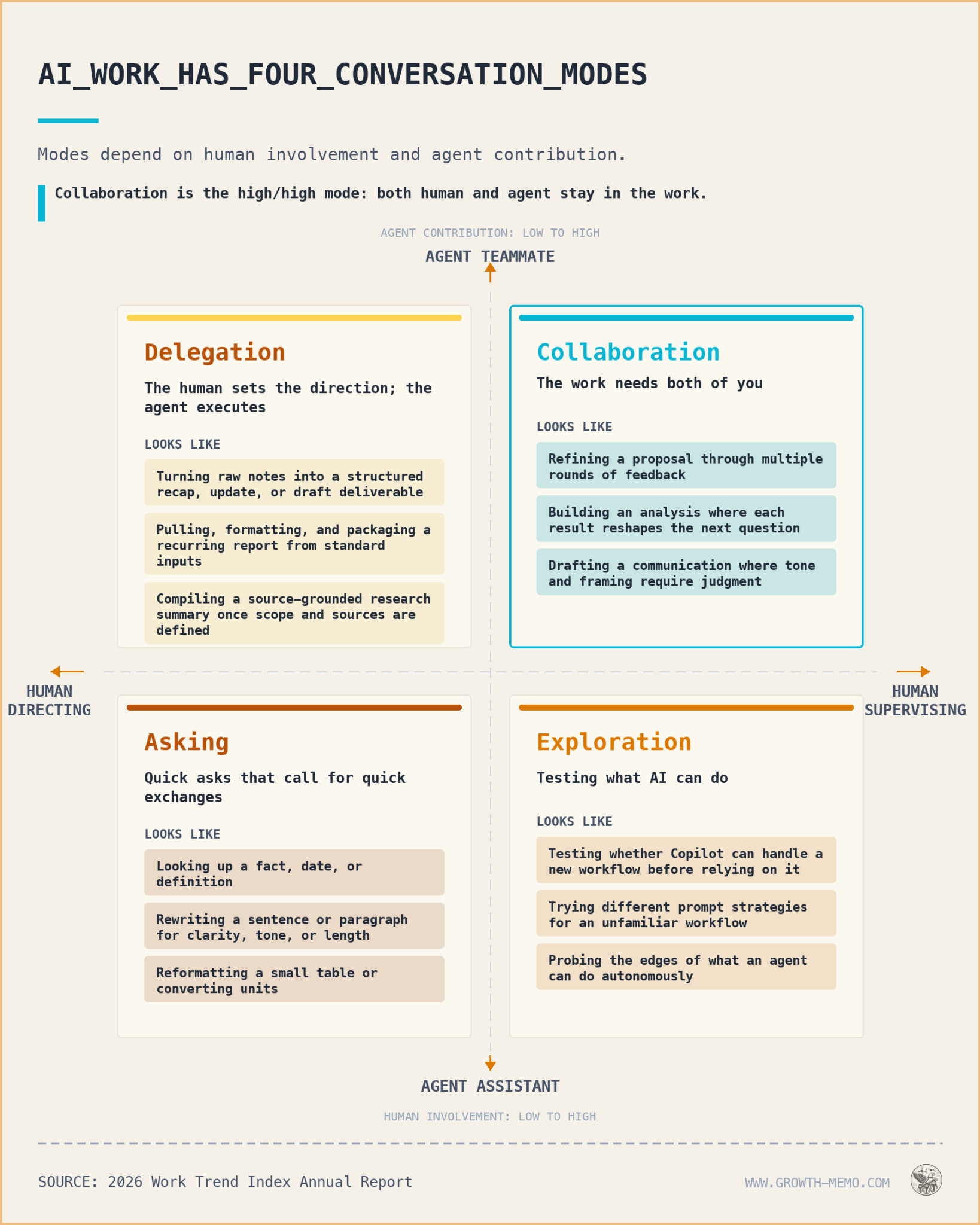

    crushpress.ai community screenshot