Category: News

  • Tackle Misleading AI Overviews: Your Essential Guide

    Tackle Misleading AI Overviews: Your Essential Guide

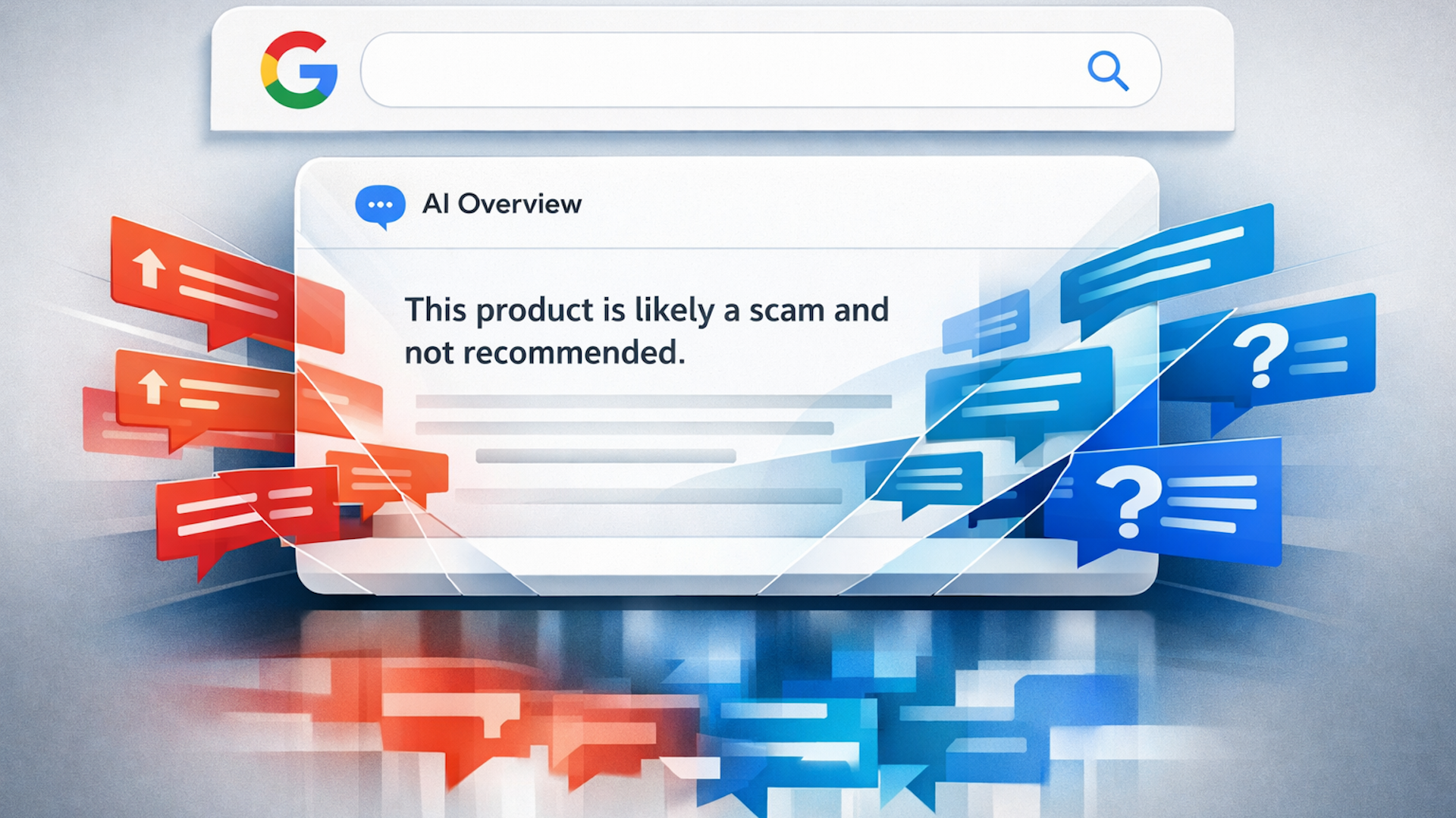
    Have you ever typed a question into Google and noticed that the first answer you get is AI-generated? I think it’s fascinating how Google’s AI Overviews are becoming the new face of search results.

    Personally, I find it intriguing, though I understand why some marketers and online reputation management (ORM) professionals are urging caution.

    The issue stems from Google AI Overviews pulling a lot of their info from online forums like Reddit and Quora. The problem is, this user-generated content isn’t always accurate.

    Google sources its AI overviews from what it deems as “high-authority” sites, with an affinity for conversational content and real user experiences.

    But this approach puts firsthand anecdotes on the same pedestal as factual reporting, which can be problematic.

    Moreover, Google often resurfaces threads that may be outdated or inaccurate—sometimes lacking a timestamp.

    Those of us in ORM have noticed certain troubling patterns within Google AI Overviews.

    Criticism from Reddit quickly becomes prominent, often overshadowing even official brand responses.

    In essence, the AI takes the consensus of comments and transforms these minority opinions into something resembling facts.

    There’s also what I call the amplification effect. In today’s fast-paced media world, algorithms rapidly transform opinions into facts. Think about how quickly TikTok or Instagram engross us with news and trends.

    AI Overviews are no different, often delivering the most compelling, nuanced-free summaries.

    To effectively counter false AI-driven narratives, businesses really need a proactive strategy.

    Consider collaborating with an ORM team to stay ahead by monitoring forums, creating AI-readable content, and addressing known criticism.

    We must adapt to the digital age by staying informed about AI literacy and evolving our reputation management practices.

    With AI Overviews influencing public perception more than ever, it’s crucial for us as brand managers to actively manage our search reputation.


    Inspired by this post on Search Engine Land.


    crushpress.ai community screenshot
  • How AI is Reshaping News Traffic: A 43% Drop Predicted by 2029

    How AI is Reshaping News Traffic: A 43% Drop Predicted by 2029

    I’ve been following this evolving digital landscape closely, and it seems that many news publishers, like myself, are bracing for significant changes in the next few years. A new report from Reuters Institute suggests that we could witness a staggering 43% decline in search traffic by 2029. This shift comes as AI technologies are increasingly dominating search results.

    What concerns me the most is how Google’s AI Overviews and chat experiences are accelerating this trend. We’re seeing traffic losses mount as these technologies make information readily available without users needing to click through to our sites.

    Understanding the Impact. As a publisher, the expectation is that search referrals will drastically reduce. More than 40% of our search traffic may dwindle, with some experts predicting losses exceeding 75% for certain sites.

    Why it Matters. The shift in user behavior is reshaping our strategies. Our traditional SEO efforts might not hold up against the rise of AI-driven content presentation, making it crucial for us to pivot towards answer engine optimization (AEO) and generative engine optimization (GEO).

    The Current Scenario. Already, Google referrals are slipping. According to Chartbeat data, global organic traffic from Google declined by 33% between November 2024 and November 2025, with even steeper drops in the U.S.

    Looking Ahead. It’s clear from industry conversations that AEO and GEO are not just buzzwords—they are the future. As publishers, we need to adapt quickly by restructuring our content and strategies around these AI interfaces to maintain visibility.

    Between the Lines. This shift is about more than just rankings; it’s about controlling content distribution on platforms beyond our purview. Chat referrals, for instance, are incrementally increasing, but as of now, they are negligible compared to the volume Google offers.

    Adapting to Change. We’re urged to consider licensing, revenue-sharing, and negotiated prominence for long-term benefits as the reliability of traditional referrals wanes.

    Future Metrics. As content creators, we need to redefine success metrics. Share of answer, citation visibility, and brand recall are becoming as critical as click-throughs in evaluating impact.

    The Bottom Line. The takeaway for us is clear: while search retains its importance, its metrics of success will change. AI, AEO, and GEO strategies are setting the stage for a new digital frontier.

    Explore the Report. For those interested in deeper insights, the report, ‘Journalism, Media, and Technology Trends and Predictions 2026’, provides an expansive look into these changes.


    Inspired by this post on Search Engine Land.

    crushpress.ai community screenshot
  • Apple Revamps Siri with Google’s Gemini AI: A Game-Changer

    Apple Revamps Siri with Google’s Gemini AI: A Game-Changer

    Apple

    I’ve just learned that Apple is teaming up with Google to enhance its future AI capabilities, including a much-anticipated upgrade to Siri.

    What’s happening: Apple plans to utilize Google’s Gemini AI models and cloud technology to bolster its upcoming Apple Foundation Models. This significant partnership is set to launch later this year.

    Why it matters to me: With Gemini’s integration, Siri is poised to transform into a genuine AI-driven answer engine, fundamentally altering how I, along with millions of iOS users, search for information and interact with digital content.

    Driving the news: According to Apple, after thorough assessments, they found Google’s Gemini model to be the optimal foundation for their AI objectives.

    • Back in September, I discovered that Apple was in discussions with Google about using a custom Gemini model for a revamped Siri.
    • I remember when Apple delayed the Siri upgrade last year, which led to increased scrutiny of their AI strategy.

    What they’re saying: Here’s a statement Google shared via X:

    Apple and Google have entered into a multi-year collaboration under which the next generation of Apple Foundation Models will be based on Google’s Gemini models and cloud technology. These models will help power future Apple Intelligence features, including a more personalized Siri coming this year. After careful evaluation, Apple determined that Google’s Al technology provides the most capable foundation for Apple Foundation Models and is excited about the innovative new experiences it will unlock for Apple users. Apple Intelligence will continue to run on Apple devices and Private Cloud Compute, while maintaining Apple’s industry-leading privacy standards.

    The bigger picture: It’s fascinating to see that Google briefly surpassed a $4 trillion market cap last week, overtaking Apple for the first time since 2019.

    • Google’s Gemini 3 model became available late last year as part of its expansive AI initiatives.
    • Meanwhile, Apple has largely stayed out of the intense AI competition that took off with ChatGPT’s release in late 2022, while competitors invested heavily in models, chips, and cloud infrastructure.

    Inspired by this post on Search Engine Land.


    crushpress.ai community screenshot
  • Google Enhances Shopping Ads: More Promotions for 2026

    Google Enhances Shopping Ads: More Promotions for 2026

    Having worked closely with Google’s Shopping platform, I’ve seen the evolution of their policies first-hand. Recently, they’ve made significant updates for 2026, allowing advertisers more creative ways to engage with consumers through various promotions.

    Google’s updated Shopping policies are expanding eligibility criteria for promotions, offering merchants greater flexibility starting next year. This change is a game-changer for those of us looking to leverage newer promotional formats like subscriptions and localized payment incentives.

    What brought this change? Google is enhancing its promotion guidelines to include more types like subscription discounts, common promotional abbreviations, and specific payment offers in Brazil. These updates aim to align better with current consumer purchasing behaviors.

    Why it matters to me. Promotions are vital for standing out in Shopping results, impacting both visibility and conversion rates. With these updates, I now have the chance to use new promotion formats that resonate with today’s buyers, particularly for subscriptions and cashback deals. The expanded flexibility reduces the risk of disapproval and makes my Shopping ads far more compelling during critical decision-making moments.

    If you’re like me and rely on subscriptions or local payment incentives, this policy update opens up new avenues for visibility and conversion on Google Shopping.

    What’s new? Now, promotions can be linked to subscription fees, with possibilities for free trials or discounts on initial billing cycles. Setting these offers up is straightforward: select “Subscribe and save” in Merchant Center or use the subscribe_and_save redemption option in promotion feeds. Examples could be offering a free first month or a significant discount for the first few subscription periods.

    Additionally, there’s a relaxation on language restrictions. I’m excited that common promotional abbreviations like BOGO, B1G1, MRP, and MSRP are now supported, making it easier to reflect real-world retail lingo without risking ad disapproval.

    In Brazil only, Google is now accommodating promotions linked to specific payment methods, including cashback deals associated with digital wallets. Merchants need to opt for “Forms of payment” in the Merchant Center or use the forms_of_payment redemption restriction. As of now, there are no plans to expand this to other markets.

    Reading between the lines. These policy changes indicate Google’s intent to better align promotional strategies with modern retail dynamics — particularly focusing on subscriptions and localized payment methods, thereby reducing hurdles for merchants like me.

    In summary. By broadening the categories for promotions, Google allows us as advertisers to compete on added value, not just pricing, with upcoming Shopping policy updates set for January 2026.


    Inspired by this post on Search Engine Land.

    crushpress.ai community screenshot
  • Unlock Premium Olympic Advertising with Google’s New CTV Access

    Unlock Premium Olympic Advertising with Google’s New CTV Access

    I’m thrilled to share some exciting news for advertisers. Google has opened the door to Olympic live sports inventory, now accessible through biddable CTV buys, capturing massive reach with enhanced control and measurement.

    Live sports advertising is revolutionizing how we connect with audiences—more programmatic and measurable than ever before.

    Driving the news. I’m particularly excited about Google’s latest move: introducing new abilities to bid on live sports through Display & Video 360. This includes access to NBCUniversal’s Olympic Winter Games inventory, just in time for the bustling 2026 sports calendar.

    Why it matters to us. Live sports consistently engage vast and attentive audiences, and now with Google’s enhancement, advertisers like us gain more control and precision without losing reach.

    What’s new. We can now reach fans directly on the big screen by merging Google audience data with NBCUniversal’s live sports CTV inventory and engage them further across YouTube and Google’s platforms. Google introduces household-level frequency management, powered by AI, to avoid ad overexposure and link CTV impressions to purchases seamlessly.

    Additionally, Google has revamped its Marketplace to make accessing and activating curated sports packages a quick and easy process, saving us time and hassle.

    The big picture. As viewers move across connected TV, YouTube, and social feeds, we’re challenged to maintain their attention across multiple screens. Google’s Display & Video 360 is emerging as the essential hub to capture these moments, from our living rooms to our mobiles.

    The bottom line: By integrating Olympic and live sports inventory into Display & Video 360, Google has made purchasing premium sports advertising more efficient, transparent, and accountable.


    Inspired by this post on Search Engine Land.

    crushpress.ai community screenshot
  • Discover Google’s Universal Commerce Protocol: Revolutionizing AI Shopping

    Discover Google’s Universal Commerce Protocol: Revolutionizing AI Shopping

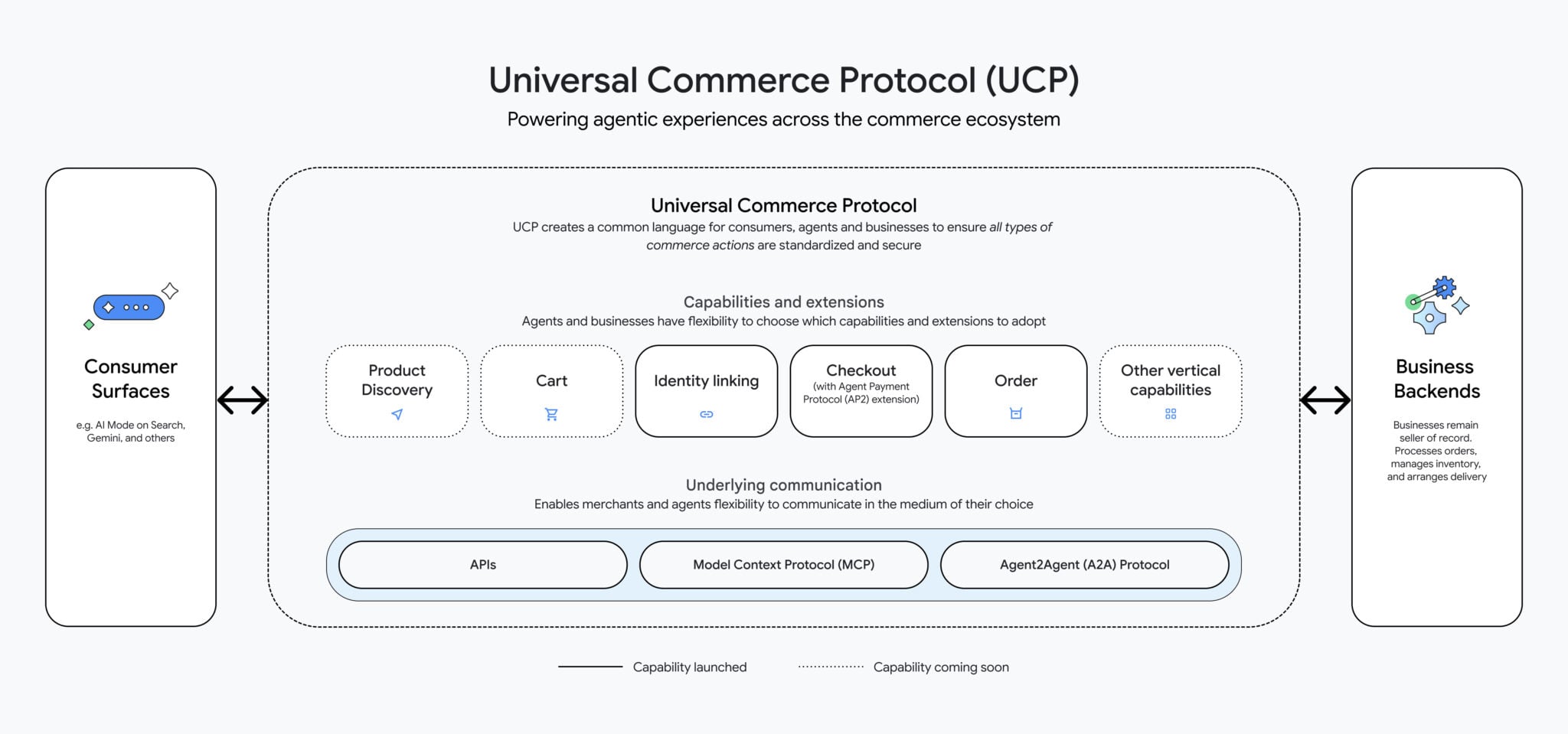
    Have you heard the news? Google has just launched the Universal Commerce Protocol (UCP), an innovative open standard that integrates AI agents throughout the entire shopping experience. From discovering products to making purchases and even receiving support after the sale, UCP facilitates it all.

    In exciting developments for retailers, Google is also rolling out new AI tools. These include branded shopping agents and ad formats that enhance AI-driven discovery, making the shopping experience more streamlined and engaging.

    About UCP

    This protocol offers a common language for AI agents and commerce systems, greatly simplifying the need for custom integrations across different platforms.

    • UCP is compatible with existing standards like Agent2Agent and the Model Context Protocol.
    • The protocol was co-developed with prominent partners such as Shopify, Etsy, Wayfair, and Target.
    • It’s already endorsed by over 20 additional companies in the retail and payments sectors.

    What’s Changing

    The UCP is set to enhance the checkout experience for Google product listings via AI Mode in Search and the Gemini app. Shoppers can make purchases through Google Pay, with options to use saved payment and shipping details. Integration with PayPal is also on the horizon.

    ```json
{
  "alt": "Diagram of Universal Commerce Protocol showing interaction between consumer surfaces and business backends with capabilities like product discovery and checkout.",
  "caption": "Exploring the Universal Commerce Protocol (UCP), this diagram illustrates seamless connections between consumer interfaces and business operations, highlighting essential capabilities such as product discovery and checkout.",
  "description": "This image of the Universal Commerce Protocol (UCP) depicts a framework that connects consumer interfaces with business operations. The diagram highlights capabilities like Product Discovery, Cart, Identity Linking, Checkout, and Order, along with extensions for various vertical capabilities. It shows underlying communication methods including APIs and protocols to facilitate flexible merchant-agent interactions, aimed at enhancing commerce actions' standardization and security."
}
```
    • Google aims to lower cart abandonment and provide retailers with tailored integration options suited to their needs.
    • Upcoming features include loyalty rewards and personalized shopping experiences.

    Business Agent

    In tandem with UCP, Google is unveiling the Business Agent, a branded AI assistant that provides shoppers with direct interaction opportunities on Search. Think of it as a virtual sales associate offering real-time responses in your brand’s own tone.

    • Major retailers like Lowe’s, Michael’s, Poshmark, and Reebok are already on board. Future capabilities may include deeper customization, data training, and a seamless agent-led checkout.

    Direct Offer

    Google is also testing Direct Offers, a fresh initiative within Google Ads tailored for AI adoption. When AI senses that a shopper is likely to make a purchase, a special discount can be presented.

    • This pilot will soon expand to incorporate offers such as product bundles, complimentary shipping, and more enticing incentives.

    Why It Matters

    The rise of agent-led shopping reshapes where and how buying choices are made. Google’s new AI tools and protocols are taking the lead, allowing advertisers to influence these pivotal moments during an AI-driven shopping journey.

    ```json
{
  "alt": "A smartphone screen displaying 'Meet AI Mode' with a virtual assistant query typed below.",
  "caption": "Explore the future of AI interaction with a sleek smartphone interface showcasing the 'Meet AI Mode' feature.",
  "description": "Image of a smartphone screen highlighting the new 'Meet AI Mode' feature, where a user has typed a query seeking a modern, stylish rug for a dining room. The keyboard and various icons such as GIF, voice input, and settings are visible, providing a glimpse into the seamless integration of AI in everyday tech use. This dynamic interface suggests an empowered user experience with cutting-edge AI capabilities."
}
```

    Tools like Direct Offers and branded agents create new pathways for advertisers to finalize sales efficiently, all while safeguarding profit margins. The balance between conversion improvements and losses in direct site traffic remains an open discussion.

    Bottom Line

    According to Google, agentic shopping is unstoppable. With innovations like UCP and its complementary retail tools, Google ensures that AI-driven commerce remains inclusive and accessible, keeping retailers engaged as agents transform the buying landscape.


    Inspired by this post on Search Engine Land.

    crushpress.ai community screenshot
  • Unlock Creative Freedom with Google’s Expanded Video Limits

    Unlock Creative Freedom with Google’s Expanded Video Limits

    I’ve noticed that Google is testing a new feature in their Performance Max campaigns that could really shake things up for us as advertisers. It seems they’re considering raising the limit on video assets from 5 to as many as 15 per Asset Group. This change could open up a whole new level of creative freedom without needing to fragment our campaigns.

    Why does this matter to us? Well, video content is becoming crucial for the success of Performance Max. The current five-video limit forces us to make tough choices between different formats and ratios, which in turn restricts our reach across platforms like YouTube, Discover, and others. This new limit could lift those restrictions considerably.

    With this potential update, we could include up to 15 videos per Asset Group. This means we can cover all major video ratios and formats without having to duplicate efforts or fragment campaigns. It’s an opportunity for richer, more versatile campaigns.

    For those of us managing multiple video versions, this change could mean significantly streamlined campaign management. We could test more creative ideas without losing out on reach or complicating our campaign structures.

    ```json
{
  "alt": "Interface for selecting up to 15 YouTube videos for an ad campaign, showing tabs for Suggested, Asset library, Search YouTube, and Upload.",
  "caption": "Easily curate up to 15 YouTube videos for your next ad campaign. Navigate through options with a streamlined interface for effective content selection.",
  "description": "This image shows a user interface for selecting YouTube videos to use in an advertisement. The interface features tabs including Suggested, Asset library (highlighted), Search YouTube, and Upload. Options for viewing content in 'Cards' or 'Table' format are available. A 'New' button allows for adding new content, while a filter option can refine selections. Ideal for digital marketers and SEO professionals managing video ad campaigns."
}
```

    It’s still early days, with Google not yet making a formal announcement about this update. It could be in testing, or maybe it’s slowly being rolled out. Keep an eye on any new developments in this area.

    This update first came to light when Growth Marketing Manager Molly Pritchard shared the new option on her LinkedIn profile. It sure caught my attention!

    Bottom line? This may seem like a small tweak, but for those of us utilizing Performance Max, increasing the video cap could greatly enhance our creative strategies with minimal trade-offs.


    Inspired by this post on Search Engine Land.


    crushpress.ai community screenshot
  • Microsoft PMax Update Increases Search Themes for Better Ad Targeting

    Microsoft PMax Update Increases Search Themes for Better Ad Targeting

    As an advertiser, I’m excited to share that Microsoft is empowering Performance Max campaigns by expanding search themes to 50. This change offers us more control, allowing better alignment with high-intent customer searches.

    Just ahead of next week’s major announcements, Microsoft Advertising has confirmed that we can now incorporate up to 50 search themes in our campaigns, a notable increase from previous restrictions.

    Why this matters to me. Search themes serve as strategic signals that guide Performance Max toward the search queries and intent patterns that we prioritize. With this expanded capacity, I have more room to refine how automation interprets customer demand, especially for businesses with diverse product lines or complex structures.

    This update also means I no longer need to compress different intents into a limited number of themes or run multiple campaigns just to portray various product offerings.

    The bigger picture. Microsoft’s focus is shifting towards signal-based control rather than strict keyword targeting. By combining search themes with LinkedIn profile targeting and other audience signals, including impression-oriented remarketing, I can better target high-value customers rather than a generic audience.

    What I’m looking forward to. Next week, Microsoft’s Advertising blog will feature additional updates, suggesting this change is part of a larger initiative to make Performance Max not only more flexible but also more responsive to advertisers’ needs without undermining the automation logic.

    Where I first learned about this. Microsoft Product Liaison Navah Hopkins shared these insights on LinkedIn, along with hints of upcoming updates slated for next Wednesday, January 14th.

    The bottom line for me. By increasing the number of available search themes to 50, Microsoft is improving our control over Performance Max, not through additional complexity, but by widening the range of pivotal signals.


    Inspired by this post on Search Engine Land.

    crushpress.ai community screenshot
  • Boosting Engagement: How Google AI Overviews Shape Search Results

    Boosting Engagement: How Google AI Overviews Shape Search Results

    I’ve recently learned that Google carefully analyzes user engagement to determine when to feature AI Overviews in search results. According to Google VP Robby Stein, these features are only shown if they truly add value for us, the users.

    Stein shared in a CNN interview that Google’s approach to AI-driven results is evolving as they expand ads, personalization, and visual search options within their services.

    Engagement drives AI Overviews. Google conducts tests with AI Overviews for different types of queries, retaining them only when we, the users, find them beneficial. If we don’t interact with these features, they are removed, and Google applies the insights to similar queries.

    Stein explained, “The system will learn — so it’ll try it — and then see if people engage with it for certain kinds of questions… If it doesn’t work, it won’t show up again.”

    Why it matters. As someone interested in SEO, I understand that appearing in AI Overviews is significant. However, it’s becoming clear that maintaining those spots hinges on user engagement. If we don’t interact with these overviews for certain queries, Google may choose not to display them, affecting AI visibility for different brands and publishers.

    AI and personalization. While Google incorporates some personalization in AI search, Stein mentioned that these are smaller adjustments rather than extensive reshaping of results:

    “For instance, if you’re someone who frequently clicks on videos, those results may appear higher for you. However, the adjustment is minor because we want the user experience to remain consistent.”

    Ads and monetization in AI search. It’s interesting to note that Google is actively experimenting with ads within AI-powered search experiences, including AI Overviews and AI Mode.

    Stein explained that ads will appear “when helpful,” in line with Google’s longstanding ad philosophy. He also noted that “the vast majority of Google searches do not have ads.” Key use cases for AI-driven ads include shopping, comparisons, and product research.

    Furthermore, Stein emphasized transparency in distinguishing sponsored content as a priority.

    Visual search growth. Visual search is apparently exploding in popularity, with usage up 70% year over year. Around 1 billion of us are now using visual search tools like Google Lens to find information visually, such as discovering products, matching outfits, and solving real-world queries.

    The CNN interview. You can watch the full CNN interview here.


    Inspired by this post on Search Engine Land.


    crushpress.ai community screenshot
  • Unlock Performance Max Potential with A/B Asset Testing

    Unlock Performance Max Potential with A/B Asset Testing

    Google has rolled out a new Beta feature that allows us, Performance Max advertisers, to A/B test asset sets. This expansion takes last year’s retail experiment to an exciting new level, now available for all campaigns.

    With this update, I can compare two sets of assets while keeping the ‘common assets’ steady across both versions. By accessing the Experiments page under the Assets sub-menu, I can determine which creative combinations yield the best results.

    I saw a similar experiment rolled out for retail campaigns last year, and I’m thrilled to see it expand to all Performance Max campaigns.

    Why it matters to me. Performance Max campaigns rely heavily on automation, often making it difficult for me to test specific creative assets. This new capability gives us more control over asset-level performance without compromising the integrity of the entire campaign.

    The big picture. From my perspective, tests must run for at least four weeks to consider the learning phase of P-Max and ad delivery stabilization. While the results aren’t immediate, they’ll allow me to make more informed choices about which images, headlines, and videos drive engagement.

    Between the lines. Asset-level A/B testing could be a pivotal factor in enhancing my Performance Max ROI, particularly when managing diverse creative and asset formats.

    First seen. This update caught my attention when web marketer Dario Zannoni highlighted it on LinkedIn.

    The bottom line. Although still in Beta, this experiment type offers a new degree of transparency and control over automated campaigns, potentially transforming how I approach asset strategies in Performance Max.

    Dig deeper. For more insights on this feature, check out About Performance Max optimization experiments: A/B testing assets (Beta).


    Inspired by this post on Search Engine Land.

    crushpress.ai community screenshot