Category: News

  • Google Prioritizes Trust Over Ads in Gemini’s AI Evolution

    Google Prioritizes Trust Over Ads in Gemini’s AI Evolution

    Recently, I was fascinated to learn that Google is taking a firm stance by keeping ads out of Gemini, its conversational AI, for the time being. As the CEO of Google DeepMind, Demis Hassabis, stated, they are focusing on ensuring trust and high-quality assistance rather than pursuing monetization right now.

    What’s New. At the World Economic Forum in Davos, Hassabis confirmed that Google has “no plans” to introduce ads into Gemini just yet. He stressed the significance of improving the AI assistant’s capability and usability across various platforms before thinking about monetizing it.

    The Contrast. This announcement stands in stark contrast to OpenAI’s recent decision to start testing ads in the free and budget-friendly tiers of ChatGPT. Hassabis found this move “interesting” and hinted it might be more about immediate revenue needs than a thoughtful product strategy.

    Why We Care. For me, Google’s consistent decision to exclude ads from Gemini clearly suggests that monetizing AI won’t mimic the strategies we’ve seen in search or social media anytime soon. This cautious approach could initially limit ad opportunities in conversational AI. With competitors like OpenAI exploring ads, advertisers may need to experiment with these formats outside of Google’s ecosystem first.

    Looking ahead, I believe Google’s approach hints at any potential future ad integration in Gemini being more restrained, prioritizing trust and taking longer to scale. This will influence how brands plan their AI-driven media strategies.

    Not the First Denial. Interestingly, this is not the first time Google’s leadership has publicly opposed the idea of ads in Gemini. In December, Google Ads President Dan Taylor clarified that ads wouldn’t be a part of Gemini in 2026, indicating a unified stance on keeping it ad-free, at least for now.

    Trust at Stake. Hassabis also expressed concerns about integrating advertising into such a personal AI assistant. He emphasized that maintaining unbiased and genuinely helpful recommendations is crucial to avoid eroding user trust.

    Bottom Line. It’s fascinating to see Google, a company whose core business revolves around advertising, showing this level of restraint. By keeping AI assistants like Gemini free from ads, at least for now, Google aims to avoid blurring the line between help and influence as it enhances their capabilities.

    Dig Deeper. For more insights, you can check out the detailed article on Google’s AI strategies on Substack.


    Inspired by this post on Search Engine Land.


    crushpress.ai community screenshot
  • OpenAI Unveils ChatGPT Ads: A New Era for Conversational Marketing

    OpenAI Unveils ChatGPT Ads: A New Era for Conversational Marketing

    I’ve recently discovered that OpenAI is moving ahead with plans to introduce ads in ChatGPT, aiming for a launch as soon as February. This move signals a quicker than anticipated step into the vast world of advertising.

    What’s happening. It’s fascinating to learn that OpenAI has begun testing these ads with selected advertisers. Unlike the traditional pay-per-click model, they are opting for a pay-per-impression (PPM) approach. The initial test appears limited, with advertisers spending less than $1 million each, and there are currently no self-service buying options.

    Why we care. The introduction of ads within ChatGPT could revolutionize the advertising landscape by integrating with conversational AI. However, it seems that OpenAI’s initial model focuses on securing revenue over allowing advertisers to measure ad performance. Although this PPM model limits traditional performance tracking, it offers a unique opportunity for brands to access a protected, intent-driven space, potentially influencing the future of conversational advertisements.

    Getting involved at this stage might just provide advertisers with the chance to shape formats, pricing strategies, and standards before ChatGPT advertising fully scales up.

    The backdrop. Just last week, OpenAI officially announced its advertising plans. This accompanies the launch of ChatGPT Go, their $8/month ad-supported plan. It’s interesting to note that free users will see ads, unlike Plus, Pro, or Enterprise users – at least for the time being.

    Why impressions. The PPM model secures revenue for OpenAI without user interactions with the ads, but it does offer advertisers limited insight into how their ads perform. OpenAI hinted that user engagement, like follow-up questions regarding sponsored products, could act as a future signal of interaction and possibly, an additional monetization strategy.

    The tension. OpenAI CEO Sam Altman has often described ads as a “last resort.” This raises questions about whether escalating infrastructure costs are speeding up OpenAI’s advertising venture. While CFO Sarah Friar claims that revenue growth matches the increase in compute expenses, critical details about profitability remain elusive.

    Between the lines. Ads will be positioned at the bottom of ChatGPT responses, clearly marked and separated from organic content, which seems like a careful rollout prioritizing user trust while exploring commercial possibilities.

    Bottom line. OpenAI is transitioning swiftly from policy to practice with these impression-based ads, focusing on scale and revenue. Yet, numerous questions about their efficacy, transparency, and future steps linger.


    Inspired by this post on Search Engine Land.

    crushpress.ai community screenshot
  • Is Organic Search Truly Declining? An In-Depth Analysis

    Is Organic Search Truly Declining? An In-Depth Analysis

    Organic search traffic down

    I recently came across some fascinating data regarding organic search traffic trends, and I can’t wait to share it with you. Contrary to some alarming reports, organic search traffic has only dipped by 2.5% year over year, far from the drastic declines we often hear about, ranging from 25% to 60%. This significant insight comes from a comprehensive study conducted by Graphite using Similarweb data from a plethora of the largest U.S. websites.

    This revelation certainly questions the exaggerated claims that the rise of AI tools, like ChatGPT, is rapidly taking over traditional search methods and rendering SEO obsolete.

    What’s really happening? Many have suggested through surveys and anecdotes that organic traffic is crumbling, with large language models diverting user searches away from traditional search engines. However, the data collected by Graphite tells a different and more reassuring story.

    In their study, Graphite utilized Similarweb’s visit data to analyze organic search traffic from the top 40,000 U.S. sites over periods from February to December 2024 and January to November 2025. The findings revealed a minor decrease rather than a major disruption.

    Google’s stance aligns with these findings as well. The company stated in August 2025 that organic click volumes were largely stable year over year.

    By the numbers. Traffic patterns differ significantly by the size of the sites. The largest sites, ranking within the top 10, witnessed a 1.6% increase in organic traffic. Mid-sized publishers, particularly those ranked between the top 100 and 10,000, faced more noticeable declines.

    • Organic SEO traffic: -2.5% YoY
    • Search engine traffic overall (2025): +0.4%
    • Google traffic (2025): +0.8%
    • Organic vs. paid clicks: ~90% organic, ~10% ads
    • AI Overview CTR impact: -35% when present
    • AI Overview prevalence: ~30% of SERPs

    AI Overviews: Impact but not devastation. While AI Overviews do affect click-through rates when they occur, their presence isn’t as widespread as often presumed.

    • AI Overviews are featured in roughly 30% of search queries, predominantly informational ones.
    • Commercial and transactional search terms are notably less impacted.

    Google ads aren’t “stealing” organic clicks. There’s a growing belief that Google is redirecting organic traffic towards its paid ads. However, data suggests only a slight shift.

    • The percentage of clicks on ads increased by about two points.
    • Despite this, organic results still garner nearly ten times more clicks than paid ads do.

    Why this matters. SEO remains an immensely valuable channel. While AI is transforming the presentation and user interaction with search results, the demand for search isn’t disappearing. What’s evolving is SEO itself, with more SERP features, AI-driven answers, and heightened competition for fewer clicks, particularly on informational queries. Now more than ever, effective strategy is crucial.

    About the data. This analysis is grounded in Similarweb traffic estimates for over 40,000 of the largest U.S. sites, utilizing a blend of opt-in user panels, ISP and mobile carrier data, public web signals, and direct site measurements. For accuracy, Graphite compared Similarweb’s trends with first-party data from Google Search Console and Google Analytics across various websites, discovering a median correlation of 0.86.

    Curious about the complete analysis? Check out Debunking The Myth That Search Is Dying


    Inspired by this post on Search Engine Land.


    crushpress.ai community screenshot
  • Urgent: Switch to Google’s New Merchant API or Risk Ad Interruptions

    Urgent: Switch to Google’s New Merchant API or Risk Ad Interruptions

    As someone deeply invested in digital advertising, I recently learned about Google’s impending changes to their Shopping API. If you rely on Shopping and Performance Max campaigns like I do, switching to Google’s Merchant API isn’t just recommended—it’s essential to keep things running smoothly.

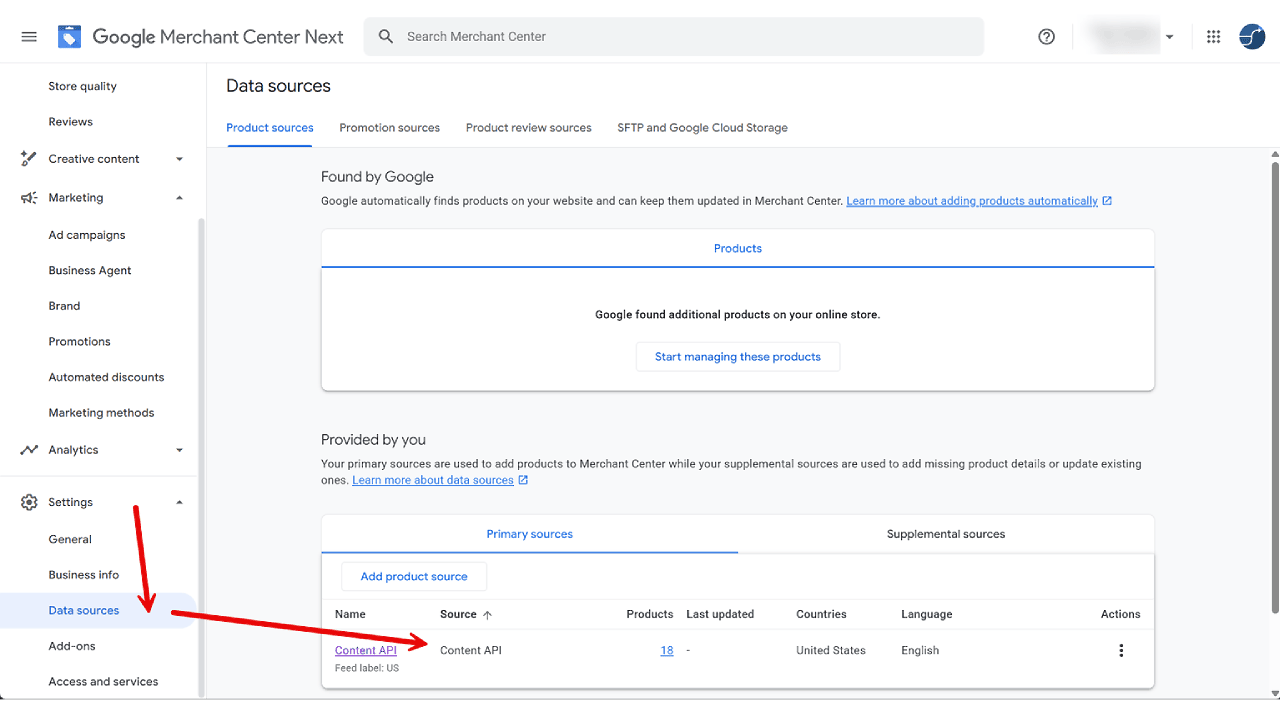
    What’s happening. Google plans to phase out older API versions, making the Merchant API the go-to for all things Shopping Ads. I checked my own campaigns in Merchant Center Next under Settings > Data sources to see which API I’m using. Any listing marked as “Content API” needed my immediate attention.

    ```json
{
  "alt": "API users must switch to Merchant API by specific dates, options for different user types.",
  "caption": "Attention API users! Transition to Merchant API for enhanced management. Check deadlines for your user group.",
  "description": "This informative image outlines the transition to Merchant API, detailing deadlines for Merchant API beta users (by February 28, 2026) and Content API users (by August 18, 2026). Non-API users are encouraged to start integration for automated product uploads and inventory management. The design features bold text and action buttons for easy navigation, ensuring users stay informed and take necessary steps on time."
}
```

    Why this matters to us. Google has been actively notifying us advertisers to make the move to the new Merchant API. For those in beta, the deadline is February 28th, and for others using Content API, it’s August 18th. If I miss this, my campaigns that depend heavily on product feeds might just stop working. That’s not a risk I’m willing to take.

    ```json
{
  "alt": "Google Merchant Center Data Sources page displaying product source information.",
  "caption": "Explore how Google Merchant Center automates product discovery and management with streamlined data sources.",
  "description": "The screenshot shows the Data Sources section in Google Merchant Center, highlighting both Google-found and user-provided product sources. The interface displays a primary source named 'Content API' with 18 products listed. On the left, various navigation options include Store Quality, Marketing, and Analytics. The page invites users to manage products that Google found on their online store. This overview helps businesses understand how to integrate product data efficiently. Keywords: Google Merchant Center, data sources, Content API, product management."
}
```

    The risk. I realized that feed labels don’t seamlessly transfer during the migration. Overlooking this can cause significant issues in Shopping and Performance Max campaigns, which rely on these labels for structure or bidding strategies. Without proper updating, my campaigns could quietly fail.

    ```json
{
  "alt": "Notice about Merchant API replacing Content API, with key dates for transition in 2026.",
  "caption": "Attention sellers: Switch to Merchant API by 2026 for seamless access to Google services, as Content API will soon be retired.",
  "description": "The image is a notice confirming the Merchant API as the replacement for Content API for Shopping. Key transition dates include February 28, 2026, when Merchant API v1beta will be discontinued, and August 18, 2026, when Content API for Shopping will cease. Users must switch to Merchant API v1 by these dates to maintain access to Merchant Center. This change is essential for sellers to continue their organic and ad experiences on Google platforms efficiently. Keywords: Merchant API, Content API, deprecation, Google Shopping, transition dates, API switch."
}
```

    What to do now. Google’s suggesting that we complete this migration sooner rather than later. On my end, that means reviewing my feed labels, reconnecting my data feeds, and making sure everything’s back on track. This transition process started in mid-2024 and is becoming urgent as legacy APIs are on their way out.

    Bottom line. Ignoring this isn’t an option for me. This change is more than just a backend tweak—it’s a potential revenue disruptor if not addressed promptly.

    First seen. I first caught wind of this update through Google Shopping Specialist Emmanuel Flossie. He flagged the issue on LinkedIn.


    Inspired by this post on Search Engine Land.


    crushpress.ai community screenshot
  • SEO Insights 2026: What Remains Constant Despite Trends

    SEO Insights 2026: What Remains Constant Despite Trends

    As the year turns, I find myself reflecting on the constant buzz of bold predictions in the search industry. New ideas often steal the spotlight, but true SEO success still relies on trust, accessible data, and meeting user needs, rather than chasing fleeting novelties.

    Every year, the search industry is bombarded with buzzwords and innovations that promise revolutionary changes. However, sustainable online success isn’t about hopping on the latest trend; it’s about understanding what truly remains constant in SEO.

    FOMO is bad for you

    I’ve often been swept up in the excitement surrounding the ‘next big thing.’ Many times, these innovations are touted as game-changers. Yet, history shows us that few have truly disrupted the playing field.

    Consider innovations like Voice Search, Universal Search, and Google Instant. These once heralded shifts now seem like mere footnotes in SEO evolution. Even technologies like AI and LLMs have not overturned the industry, despite initial hype.

    While AI tools offer clear benefits in coding and software development, their impact on organic search remains limited. Despite dire warnings, no AI-driven competitor has managed to seize significant search market share.

    ```json
{
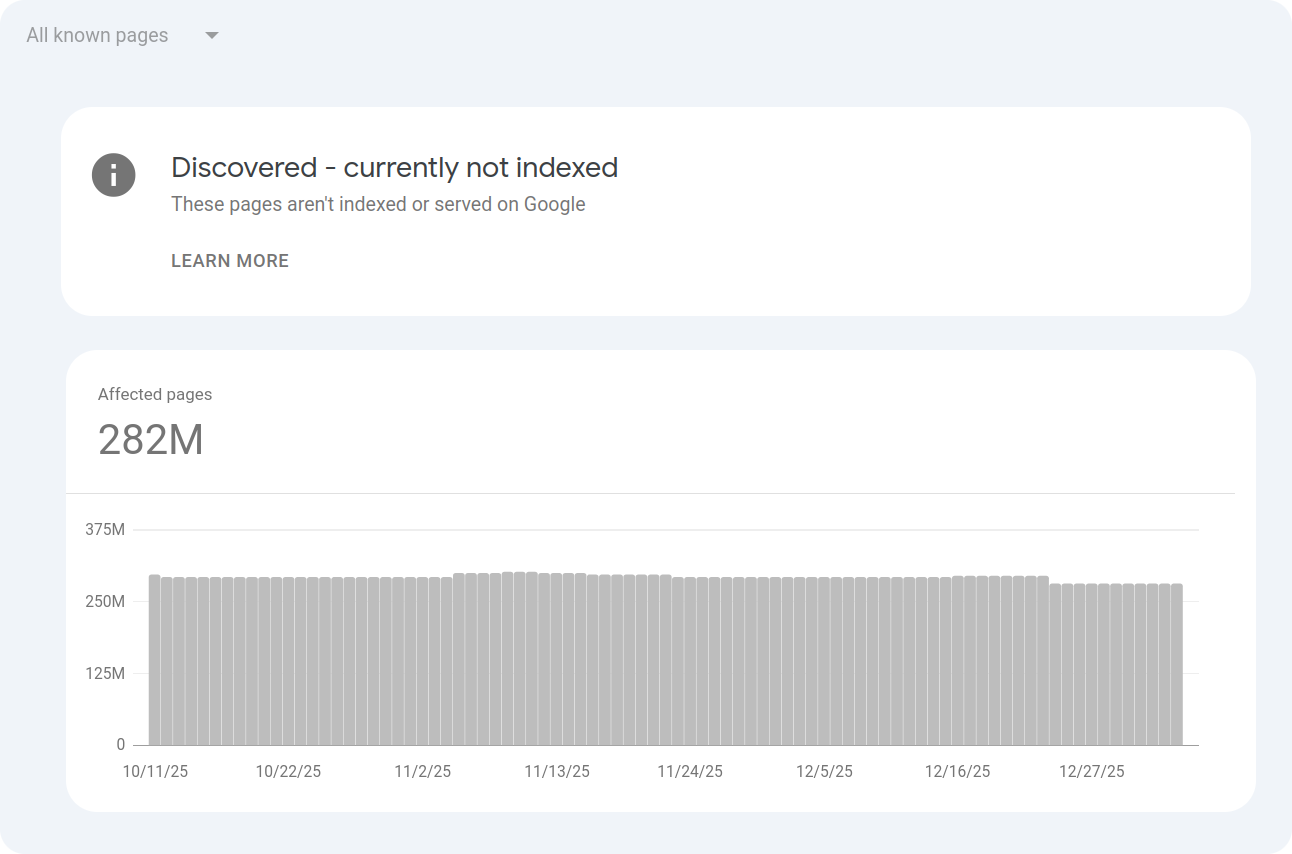
  "alt": "Google Search Console screenshot showing 282M discovered pages not indexed from 10/11/25 to 12/27/25.",
  "caption": "A snapshot of Google Search Console reveals a staggering 282 million pages discovered but not yet indexed over a two-month period.",
  "description": "This image displays a Google Search Console graph indicating 282 million pages were discovered but are currently not indexed. The graph spans from 10/11/25 to 12/27/25, showing consistent page discovery over the period. Key terms include 'Google Search Console', 'not indexed', and 'page discovery'."
}
```

    AI’s reliance on unverified inputs can lead to confusion. This is why Google’s dominance persists, and I believe it will continue to be a leader in ecommerce search.

    It’s all about data

    For businesses, whether focusing on Google or LLM-based alternatives, the core remains the same: data must be crawlable. Fast, trustworthy data is at the heart of every ranking system.

    Rather than succumbing to hype, I focus on understanding my customers’ needs and ensuring my platforms are easily crawlable.

    Customer satisfaction continues to be SEO’s main goal. Meeting client expectations and ensuring their needs are prioritized will never go out of style.

    ```json
{
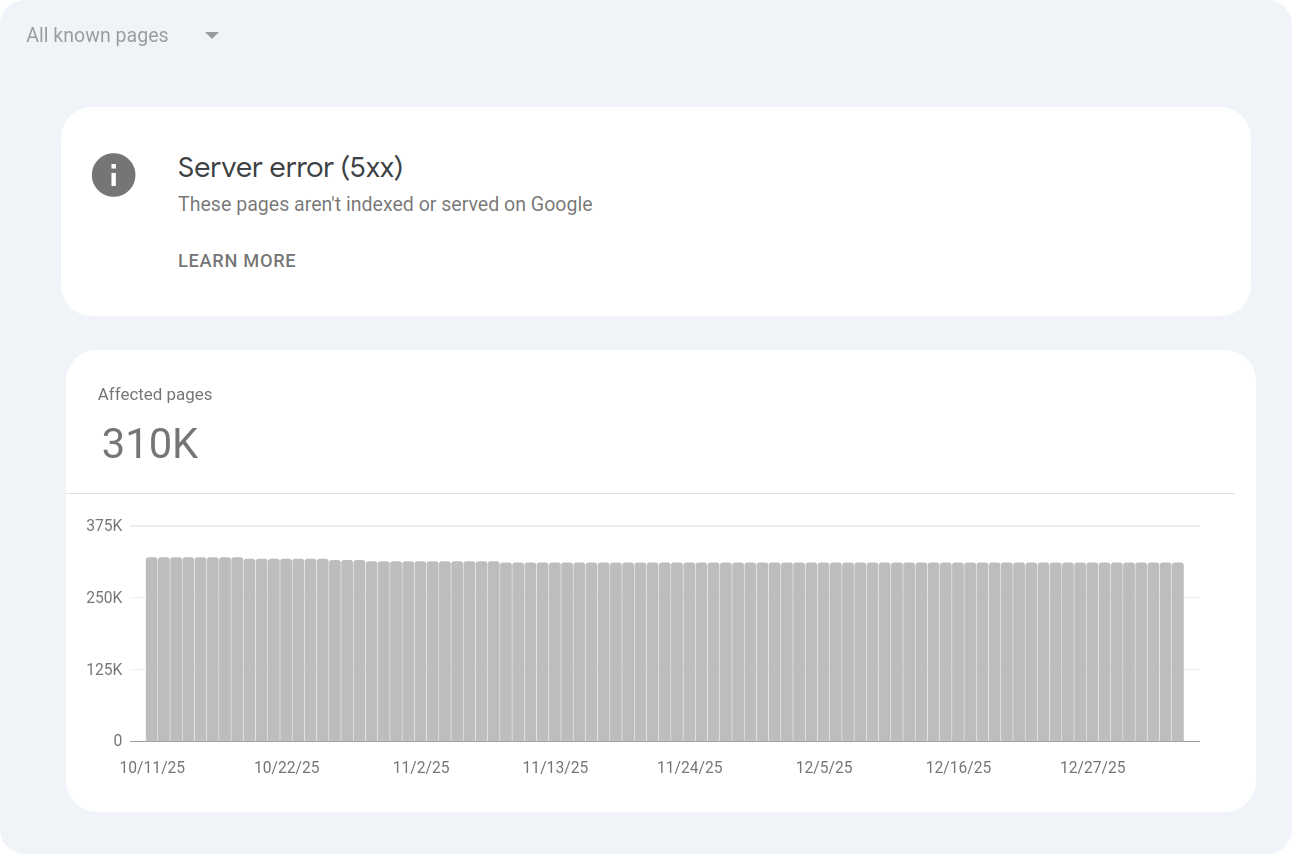
  "alt": "Screenshot showing server error 5xx with 310K affected pages and a bar chart of data over a timeline.",
  "caption": "A server error 5xx issue has impacted 310,000 pages, as highlighted in this analytical graph, challenging SEO efforts.",
  "description": "This image displays a server error notification indicating a 5xx error with 310K affected pages, preventing indexing or serving on Google. Accompanied by a horizontal bar chart, it shows consistent data across a timeline from October to December 2025. This image highlights significant SEO challenges due to server issues, crucial for web administrators focusing on site performance and visibility optimization."
}
```

    Furthermore, ensuring that my site is crawlable is essential, especially in competitive industries like retail or travel.

    Factors such as brand recognition and site performance still matter. They only enhance SEO if a platform is successfully crawled and understood.

    So, as we welcome a new year, I remind myself not to get caught up in the latest trends. A focus on the enduring elements of SEO will make all the difference in 2026 and beyond.

    What to do next

    There’s no rush to adopt every new tool. I believe it’s important to adopt innovations that genuinely align with my goals and bolster my existing strengths.

    My main focus remains on perfecting my craft and ensuring my platform is fast, reliable, and well-understood by search engines. This holistic approach will ultimately define my success in 2026.


    Inspired by this post on Search Engine Land.

    crushpress.ai community screenshot
  • Unveiling Google’s New AI Overviews with Gemini 3 Pro

    Unveiling Google’s New AI Overviews with Gemini 3 Pro

    Recently, I’ve noticed that Google has started using Gemini 3 Pro to create AI Overviews on their search platform. This change primarily enhances the handling of more complex search queries.

    Back in November, Google announced this improvement for AI Mode results. Then, in December, they began implementing Gemini 3 Flash for AI Mode. Now, it’s exciting to see Google integrating Gemini 3 Pro for generating AI Overviews.

    Gemini 3 Pro is now crafting AI Overviews for complicated queries in English, accessible globally to all Google AI Pro & Ultra subscribers.

    What Google Shared with Us. Robby Stein, VP of Product at Google Search, expressed this in his recent update:

    • “Update: AI Overviews now tap into Gemini 3 Pro for complex topics.”
    • “Behind the scenes, Search will intelligently route your toughest Qs to our frontier model (just like we do in AI Mode) while continuing to use faster models for simpler tasks.”
    • “Live in English globally for Google AI Pro & Ultra subs.”

    Why It Matters to Me. The AI Overviews you see might look quite different than they did recently. Google’s consistent efforts to refine its Gemini models signify ongoing improvements in their AI technologies within Google Search, which includes both AI Overviews and AI Mode.


    Inspired by this post on Search Engine Land.


    crushpress.ai community screenshot
  • Lessons Learned from a Costly PPC Decision

    Lessons Learned from a Costly PPC Decision

    Amy Hebdon shares lessons from early mistakes in her career, emphasizing the importance of managing relationships alongside campaigns.

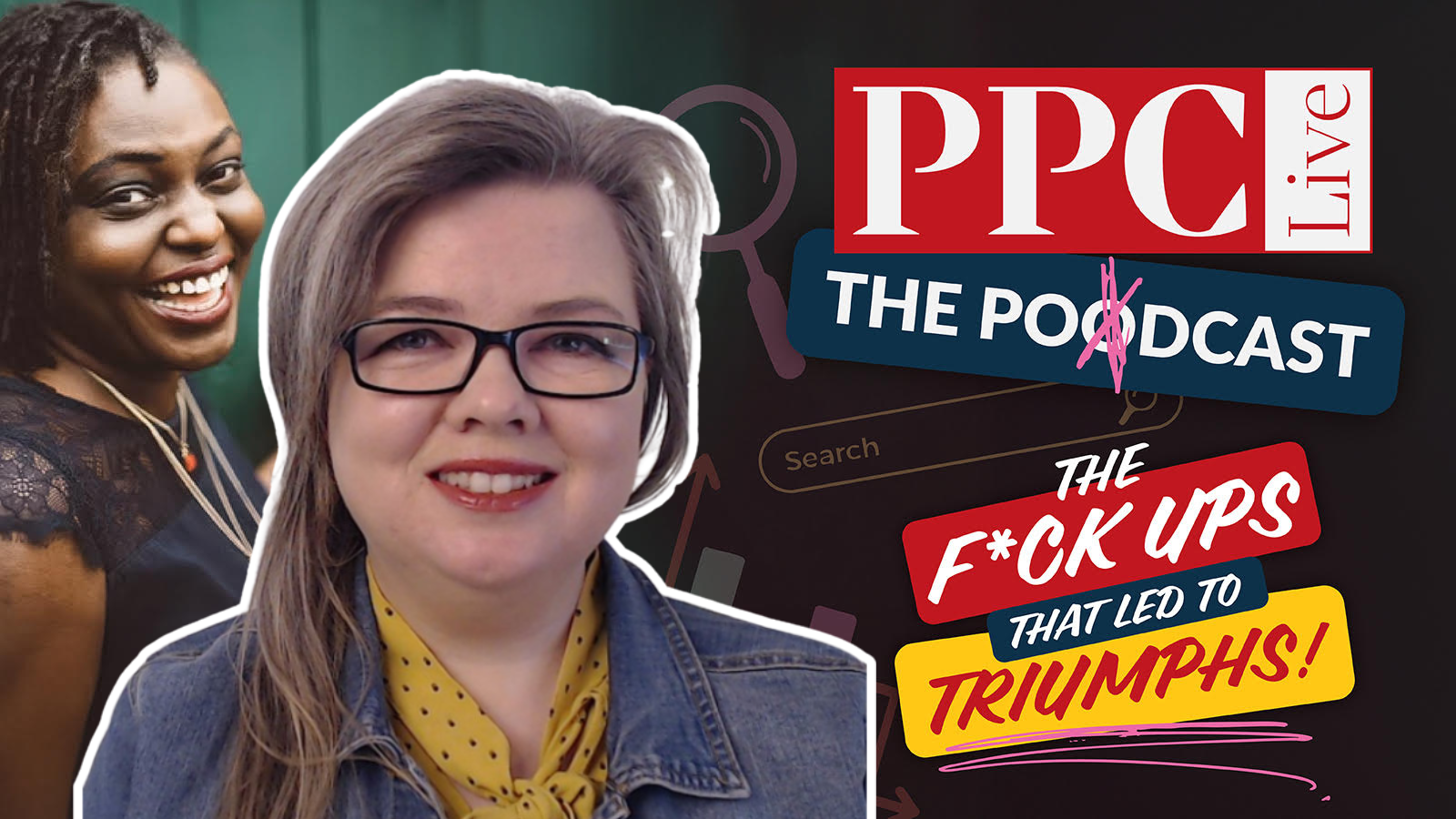
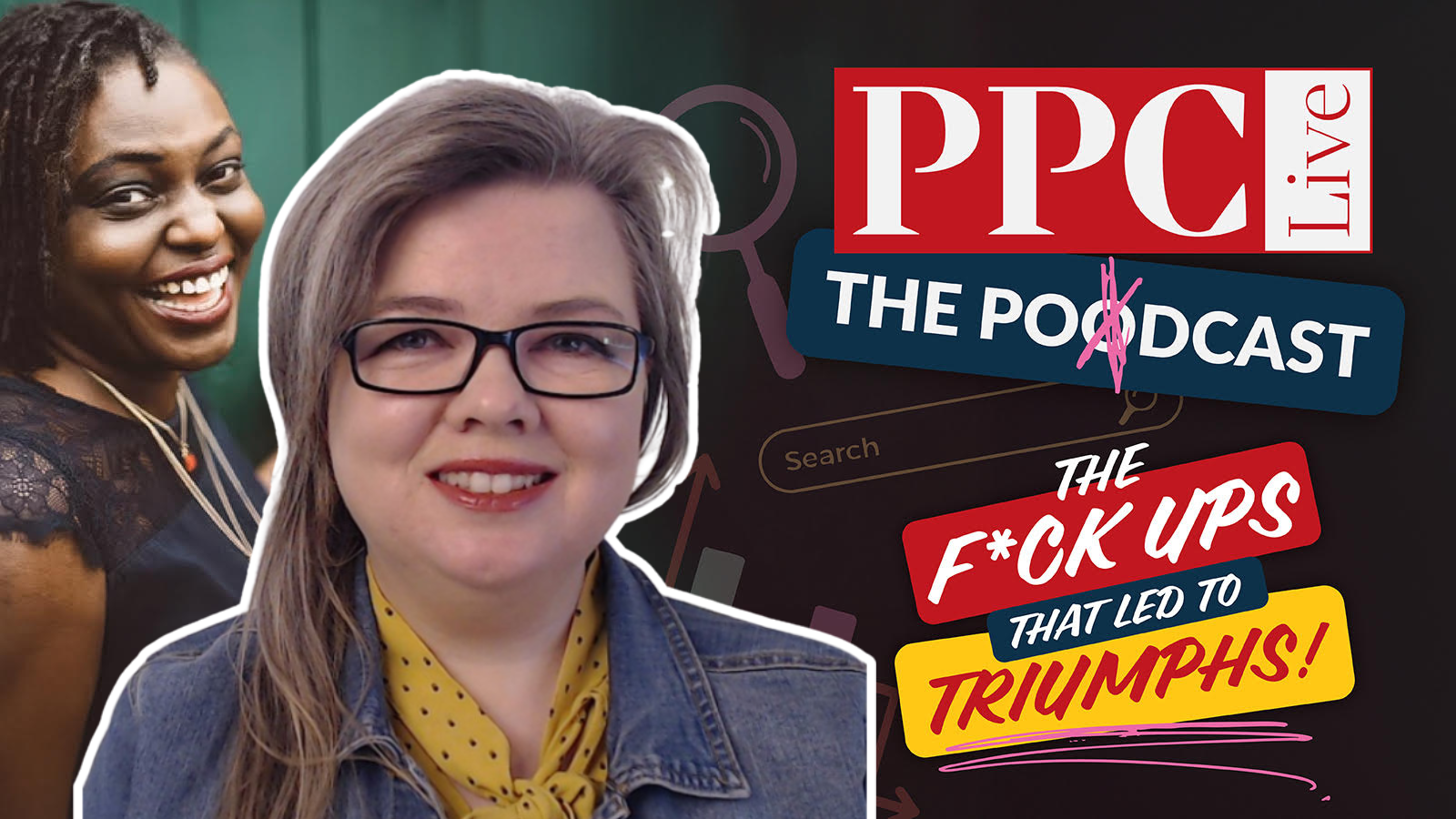
    I recently had the opportunity to interview Amy Hebdon, an international expert in paid search and the founder of Paid Search Magic, on episode 337 of PPC Live The Podcast. We talked about real-life experiences behind paid media initiatives, focusing on the challenges and insights rather than just techniques. Amy’s vast industry experience makes her perspectives invaluable for anyone steering through complex digital marketing campaigns.

    Early career mistakes and learning experiences

    Amy recounted an eye-opening experience from her early career while managing a fitness client’s creative assets that didn’t align with Google Ads guidelines. Despite her efforts to safeguard the account, her tactless approach during a high-stakes meeting with leadership caused friction with the creative team. Reflecting on it, Amy realized that while her decisions were valid, better communication could have preserved vital working relationships for future collaboration.

    Accountability and oversight in campaign management

    I also learned about another incident early in Amy’s career, where she took sole charge of a low-touch account that went inactive due to an expired insertion order. This experience underscored the importance of personal accountability, regular check-ins, and structured processes—even when managing less significant campaigns. Amy pointed out that both her oversight and the client’s lack of internal checks contributed to this oversight.

    Stakeholder management and communication

    Amy often emphasizes the critical nature of understanding stakeholders’ perspectives and nurturing relationships diligently. She reflects on how decisions that might seem tactical can have relational impacts, highlighting the need for empathy, strategic communication, and objectivity in managing conflicts or escalations.

    Lessons on team support and leadership

    Another key lesson from Amy is the value of a supportive team and managers who prioritize shared objectives over placing blame. Effective leadership, she believes, involves fostering collaboration, redistributing workload when necessary, and cultivating an environment where mistakes can be openly addressed without fear. For managers, promoting accountability and transparency within teams bolsters both performance and professional growth.

    Strategic focus over tactics

    Amy stresses that achieving success in paid media demands a strategic approach over purely tactical execution. Merely focusing on bid settings or platform features often overlooks the broader goal of conversion optimization and audience alignment. Amy warns that even technically perfect campaigns can falter if they aren’t aligned with overall business objectives, urging a strategic evaluation over rushing the tactical details.

    Navigating AI and automation in PPC

    With AI gaining importance in digital marketing, Amy highlights the risks of over-relying on automated outputs. Although AI may produce results that seem right, they often lack accuracy. Marketers need a robust foundational knowledge to critically assess these results. Strategy, judgment, and expertise are crucial in differentiating meaningful insights from the noise generated by automation.

    Reflections and career philosophy

    In conclusion, Amy reflects on how inevitable mistakes are a valuable part of any career in PPC. With time, marketers can understand these errors in context, learn from them, and avoid letting them define their careers. She describes her career as “practical magic,” blending technical precision with strategic insights to achieve results, knowing that true success comes from both patience and meticulous planning.


    Inspired by this post on Search Engine Land.

    crushpress.ai community screenshot
  • Google Ad Clicks Surge to Five-Year Peak with Q4 Spending Boom

    Google Ad Clicks Surge to Five-Year Peak with Q4 Spending Boom

    During the final quarter of 2025, I noticed a remarkable 13% rise in spending on Google search ads compared to the previous year, as reported by Tinuiti’s latest benchmark. It was eye-opening to see this surge in click growth, marking the strongest pace since early 2021, particularly as average CPCs slightly declined for the second quarter in a row. The expansion of AI-driven results seemed to be increasing the overall query volume, including those crucial commercial searches.

    Why we care. As I’ve observed, Google search ad clicks are skyrocketing while CPCs stay flat. This trend is largely due to Amazon’s strategic withdrawal from U.S. Google Shopping auctions, which has opened the door for advertisers to find both opportunities and challenges as spending patterns shift between search and shopping.

    ```json
{
  "alt": "Line graph showing Google US Paid Search Y/Y Growth from Q4 2024 to Q4 2025, highlighting trends in spend, clicks, and CPC.",
  "caption": "Exploring year-over-year growth in Google US Paid Search, this graph illustrates trends in spending, clicks, and cost-per-click from late 2024 through 2025.",
  "description": "This line graph depicts the year-over-year growth for Google US Paid Search from Q4 2024 to Q4 2025. It shows three lines representing different metrics: Spend (orange), Clicks (blue), and Cost-Per-Click (CPC, purple). The graph highlights the trends, with spend and clicks rising towards the end of 2025, while CPC decreases. The data is sourced from anonymized Tinuiti advertiser data, 2025, providing insights into digital advertising performance over the observed period."
}
```

    Additionally, AI-driven query growth is broadening the search funnel, offering more chances to connect with customers earlier in their buying process.

    ```json
{
  "alt": "Line graph showing year-over-year growth in Google US Shopping Ads from Q4 2024 to Q4 2025, depicting trends in spend, clicks, and CPC.",
  "caption": "This line graph illustrates the year-over-year growth of Google US Shopping Ads from late 2024 to 2025, highlighting fluctuations in ad spend, clicks, and CPC over the quarters.",
  "description": "The image features a line graph representing the year-over-year growth of Google US Shopping Ads, focusing on Performance Max and Standard Shopping Campaigns from Q4 2024 to Q4 2025. The graph includes three lines: orange for spend, blue for clicks, and purple for cost-per-click (CPC). Notable trends include an increase in spend and clicks with CPC showing varied performance. This analysis provides insights into advertising dynamics over the specified period."
}
```

    Shopping ad trends: During the holiday season, I followed how Google Shopping ad expenditure jumped 16% year over year, propelled by Target and Walmart stepping up while Amazon’s absence left a noticeable gap in auctions. Meanwhile, Shein and Temu maintained smaller roles. Interestingly, CPCs for Shopping Ads weakened slightly, falling 1% year over year.

    ```json
{
  "alt": "Bar chart showing Google Performance Max share for spend and sales across five quarters from Q4 2024 to Q4 2025.",
  "caption": "Tracking the shifts in Google Performance Max shares across spend and sales from late 2024 to 2025 reveals dynamic retail strategies.",
  "description": "This bar chart illustrates the Google Performance Max share of Google Shopping for median retailers with both PMax and Standard Shopping Campaigns. Data spans from Q4 2024 to Q4 2025, covering five quarters. The chart indicates a progressive change in the share percentage; for example, Q4 2024 shows a 69% share in spend, decreasing slightly in subsequent quarters. The sales shares display similar trends, signifying strategic adjustments. This visual is useful for understanding advertising trends over time."
}
```

    Performance Max. PMax campaigns captured my attention as they represented 62% of total Google Shopping spend and 61% of sales, which, although slightly down from the last year, showed an increase from earlier in 2025. Non-shopping inventory, such as video and display, accounted for 39% of PMax spending, with YouTube video making up 13% of impressions beyond search.

    ```json
{
  "alt": "Line graph showing Google Performance Max share of spend by ad type from Q4 2023 to Q4 2025 for Video and Non-Shopping Search and Display.",
  "caption": "Trends in Google ad spending reveal a rise in Non-Shopping Search and Display ads, peaking at 32% by Q4 2025, while Video ads maintain a consistent 7%.",
  "description": "This line graph depicts the Google Performance Max share of spend by ad type from Q4 2023 to Q4 2025. The orange line represents Non-Shopping Search and Display, which shows a significant increase, reaching 32% by Q4 2025. The blue line indicates Video ads, maintaining a steady trajectory around 7%. The data source is anonymized Tinuiti advertiser data from 2025. This graph highlights key trends in digital marketing investment, showcasing the growing importance of search and display strategies."
}
```

    Text ads. It’s exciting to note that Google text ad clicks reached a 19-quarter high, climbing 9% year over year. Spending was up by 11%, with CPC growth remaining modest at 2%. Brand keyword CPC growth saw a slowdown to just 2% year over year, with declining CTRs counterbalanced by strong impression growth, likely driven by AI-driven overviews in search results.

    ```json
{
  "alt": "Line graph of Microsoft US Paid Search Y/Y Growth in 2025 showing trends for Spend, Clicks, and CPC.",
  "caption": "Microsoft's US Paid Search sees dynamic changes in Spend, Clicks, and CPC throughout 2025, reflecting adaptive marketing strategies.",
  "description": "This line graph illustrates the year-over-year growth trends in Microsoft's US Paid Search for 2025. The data tracks Spend, Clicks, and CPC over four quarters. The graph shows a prominent rise in Spend by Q1, peaking in Q2, with a slight decline towards Q3, and stabilization in Q4. Clicks show gradual growth while CPC experiences fluctuation but ends higher. The graph's source is anonymized Tinuiti advertiser data."
}
```

    Microsoft search growth. Microsoft appeared to outpace Google in paid search spend growth, with a 16% year-over-year jump in Q4, rising from 12% in Q3. Click growth slowed slightly to 10%, while CPCs increased by 5%, as Amazon kept its presence in Microsoft Shopping listings.

    ```json
{
  "alt": "Line graph showing Amazon US Google Shopping Ads impression share from 2020 to 2025.",
  "caption": "Tracking Amazon's competitive edge, this graph reveals fluctuating Google Shopping Ads impression shares from 2020 to 2025.",
  "description": "This line graph illustrates the Amazon US Google Shopping Ads impression share for the years 2020 through 2025, with each year represented by a distinct colored line. The timeline spans from January to December 2025, indicating fluctuating market presence. The data is derived from anonymized Tinuiti advertiser data, showcasing trends in Amazon's advertising reach and competitive positioning in the US Google Shopping landscape."
}
```

    Amazon advertising. I observed that Sponsored Products clicks on Amazon rose by 23% year over year, showcasing an intriguing pattern despite a 1% drop in average CPCs. Sponsored Brands experienced modest spend growth (+2%) but with declining clicks, whereas Sponsored Display spending fell 47%. Meanwhile, Amazon DSP spending rose 31% year over year, propelled by offsite inventory and premium placements like Prime Video ads.

    ```json
{
  "alt": "Bar chart of Q4 2025 YouTube Ads showing 13% growth in spend, 38% growth in impressions, and 18% decline in CPM.",
  "caption": "In Q4 2025, YouTube ad impressions rose by 38%, while ad spend increased by 13%, but CPM saw an 18% decline. Explore the shifts in advertising dynamics.",
  "description": "This image presents a bar chart depicting the year-over-year growth metrics for YouTube Ads in Q4 2025. Data sourced from anonymized Tinuiti advertiser statistics indicates a 13% increase in ad spend and a 38% increase in impressions. Contrastingly, CPM has decreased by 18%. The visualization employs pink bars to represent growth percentages, serving as an insightful snapshot of advertising trends."
}
```

    Walmart trends. Sponsored Products were a dominant force in Walmart’s search ad spend, accounting for 89% with conversions remaining high through the holiday season. Display ad spending grew to 35% of the total, with 60% geared toward offsite inventory targeting.

    Video and streaming ads. I found it fascinating that YouTube ad spending increased by 13% year over year, coupled with a sharp 38% rise in impressions and an 18% drop in CPMs. Video now commands 66% of Google Demand Gen spending. Across traditional streaming platforms, Prime Video ad spending surged 31% from Q3 to Q4, overtaking Netflix in CPMs, while TV screens dominated spending, with phones crucial for direct-response formats.

    The bottom line. Google’s search and shopping landscapes continue to thrive, driven by AI-enhanced query growth and evolving retailer participation, presenting both opportunities and challenges. Meanwhile, Microsoft and Amazon are advancing their ad offerings, providing me with diverse options to engage high-intent audiences across search, display, and streaming.

    Dig Deeper. Digital Ads Benchmark Report Q4 2025


    Inspired by this post on Search Engine Land.


    crushpress.ai community screenshot
  • Discover the Next Wave: Ads Coming to ChatGPT Conversations

    Discover the Next Wave: Ads Coming to ChatGPT Conversations

    I’ve just learned that OpenAI is about to begin testing advertisements within ChatGPT in the U.S. over the next few weeks. These ads will appear at the bottom of chatbot responses and will be clearly labeled. They’ll only show up when there’s a relevant sponsored product or service that aligns with the conversation.

    Who will see ads:

    • Logged-in adult users on the free tier
    • Users subscribed to ChatGPT Go, OpenAI’s affordable $8/month plan
    • Pro, Business, and Enterprise subscriptions will remain ad-free
    • No ads for users under 18

    Why this matters to us. Placing ads in ChatGPT introduces a new, high-intent opportunity where people are actively asking questions and making decisions. Unlike traditional search or social ads, these are right within relevant discussions, offering context-rich exposure with explicit user controls. If this scales successfully, it could become a new powerful channel for performance and discovery, perfect for brands targeting intent-driven, educational, or consideration-stage marketing.

    The bigger picture. OpenAI expresses that introducing ads is part of a larger strategy to make powerful AI more accessible to the masses. ChatGPT Go, launched in 171 countries last year, is now available in the U.S., bringing expanded features like image generation and memory at a more affordable rate. These ads are intended to help reduce usage limits for free users and stabilize costs.

    What stays unchanged. OpenAI assures us that these ads will not influence ChatGPT’s responses and that our conversation data will remain private and won’t be sold to advertisers. Also, ads won’t be placed near sensitive topics such as politics, health, or mental health.

    OpenAI’s advertising principles. Their approach is driven by alignment with their mission, maintaining answer independence, ensuring conversation privacy, and providing user control. I’ll have the ability to see why I’m shown a particular ad, dismiss it, turn off personalization, or clear any ad-related data whenever I choose.

    The overall perspective. With infrastructure commitments exceeding $1.4 trillion and a $20 billion annualized revenue run rate reported, OpenAI faces the challenge of discovering scalable revenue streams. Advertising, a financial powerhouse for giants like Google and Meta, might just be the answer to cover these costs while expanding AI accessibility.

    Looking deeper. CEO Sam Altman has previously mentioned that introducing ads could potentially erode trust. However, OpenAI is framing this test as cautious and user-centric, emphasizing that it won’t prioritize time spent or revenue over user experience.

    What’s on the horizon. While ads aren’t live yet, testing is set to begin soon. OpenAI plans to refine the advertising experience based on user feedback as they experiment with monetizing their flagship ChatGPT product.


    Inspired by this post on Search Engine Land.

    crushpress.ai community screenshot
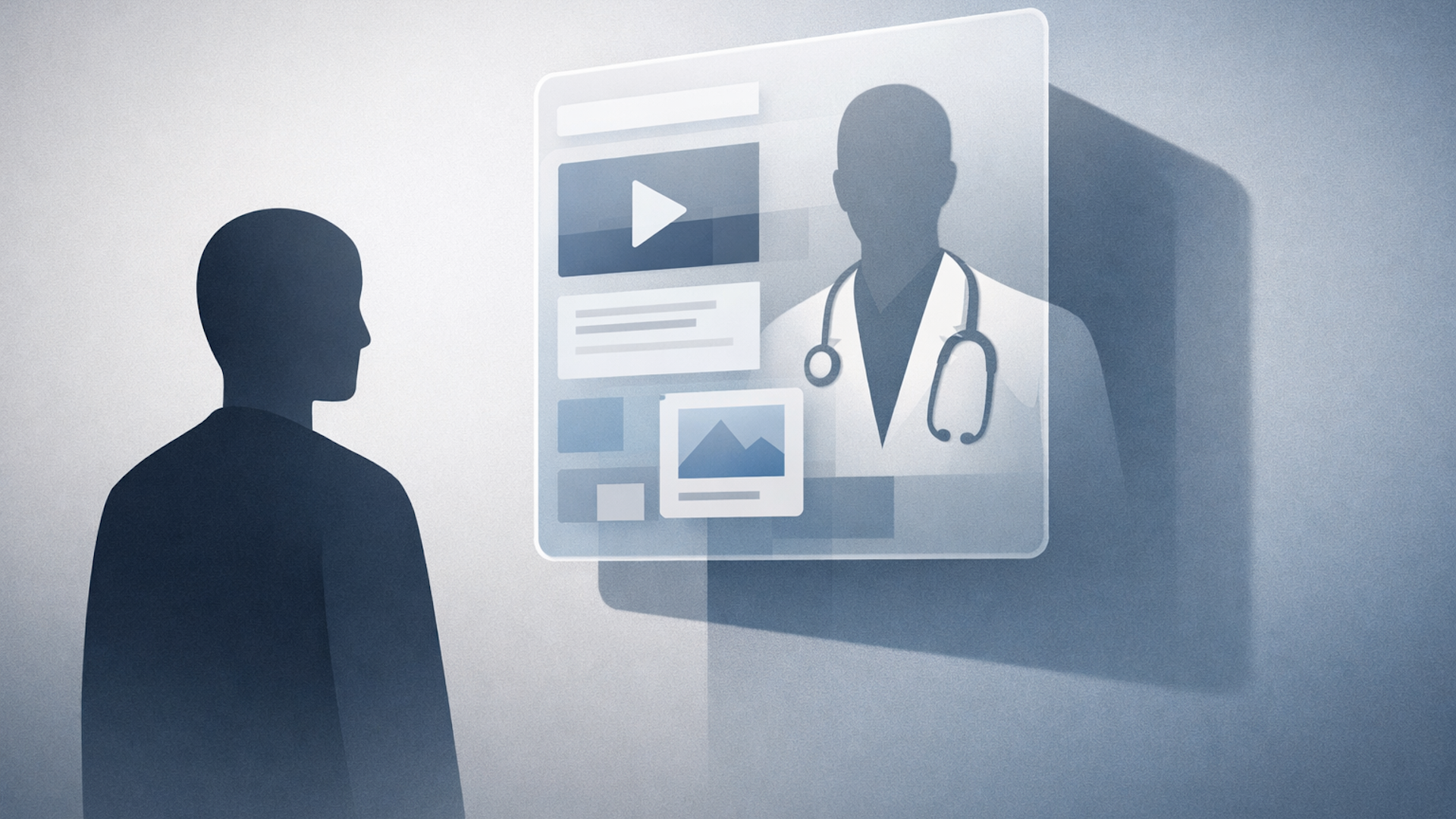
  • How Google AI Leans on YouTube for Health Advice: A Closer Look

    How Google AI Leans on YouTube for Health Advice: A Closer Look

    I’ve been following the developments around Google’s AI health summaries, and recently, I stumbled upon a study that really caught my attention. It turns out that Google’s AI often relies on sources like YouTube, which aren’t always thoroughly vetted by medical professionals.

    Most of the health advice summarized by Google’s AI Overviews is sourced from non-medical platforms, raising concerns about the potential for misleading or unsafe information on critical health topics. This revelation has prompted discussions about the reliability of these sources.

    What’s happening: According to The Guardian, Google’s AI Overviews occasionally showcase incorrect or even risky health information, a claim supported by medical charities and experts who reviewed this content.

    Examples of such cases include incorrect advice about diets for pancreatic cancer and misleading interpretations of liver blood test results. Google, however, stands by its AI, arguing that the instances were taken out of context and that their Overviews generally link to trustworthy sources.

    The bigger issue: Our friends at SE Ranking conducted an in-depth analysis of where AI Overviews derive their information. They assessed 50,807 health-related searches in Germany, unveiling a significant insight.

    Nearly two-thirds of the citations for Google AI Overviews originate from sources that lack strong medical or evidence-based credibility, highlighting a concerning trend.

    By the numbers: YouTube emerges as the top-cited source for these AI-produced health summaries, accounting for a whopping 4.43% of all citations. This percentage is considerably higher than that of more traditional medical sources like hospitals or health associations.

    In total, 34.45% of citations come from more reliable medical sources. Interestingly, academic journals and government health entities only make up about 1% of citations. This reliance on video content is notable; despite YouTube’s first-place standing in AI citations, it ranks just 11th in organic search results.

    There is also a misalignment in source credibility, as only 36% of pages cited by AI appear in Google’s top 10 organic search results.

    Why we care: As someone deeply invested in public safety, I find it crucial to highlight that Google’s AI Overviews serve as a primary layer of health information, especially for sensitive topics like Your Money or Your Life issues. Given that over 82% of health inquiries prompt these AI-generated summaries, ensuring their quality is paramount for public well-being. Google must be held to the same rigorous standards it demands from others in this domain.

    The study: If you’re interested in delving deeper, check out this insightful study that compares the frequency of YouTube references in AI Overviews against those from reputable medical sites.


    Inspired by this post on Search Engine Land.

    crushpress.ai community screenshot