Category: News

  • Google Hints at Ads in Gemini: A Shift in Strategy

    Google Hints at Ads in Gemini: A Shift in Strategy

    How to use Google Gemini for better SEO

    I recently came across some interesting news about Google and its potential plans to incorporate ads into its Gemini AI app. A senior executive at the company shared with WIRED that ads in Gemini are not out of the question — a stark contrast to previous denials just a few months ago.

    What’s changed: Back in January, Google DeepMind CEO Demis Hassabis assured reporters at Davos that there were no plans to introduce ads in Gemini. However, now Google’s SVP Nick Fox has hinted otherwise, mentioning that insights gained from ads in AI Mode could eventually be applied to Gemini.

    The current strategy. Instead of rushing into ads within Gemini, Google is leveraging AI Mode — a search product powered by Gemini — as a testing ground for advertising formats in AI settings.

    Here’s how they’re currently managing it:

    • Ads are distinct from organic results and clearly labeled.
    • Only relevant ads are displayed — if there’s nothing that fits, no ads are shown.
    • Google’s extensive experience in search ads informs this approach.

    Why we care. Advertising is at the core of Google’s business model. How they introduce ads into AI products like Gemini will have a significant impact on the industry and influence how AI companies monetize their free services. Brands that can position themselves effectively within these conversational AI platforms now will gain a crucial advantage.

    The bigger picture. Google, with its strong financial backing, is in a comfortable position to proceed at a steady pace, having surpassed $400 billion in revenue in 2025. In contrast, OpenAI is under pressure to more than double its $30 billion revenue target this year and has already begun testing ads in ChatGPT’s free tier.

    Between the lines: Fox’s remarks are strategically cautious but enlightening. By framing Gemini ads as a “prioritization question” rather than a debate of values, Google hints that it’s more about when the ads will appear, not if.

    What to watch: There’s an intriguing aspect of Gemini called Personal Intelligence, which extracts data from a user’s Gmail, Photos, and Calendar. Fox considers personalization to be critical for search, and it may eventually integrate into the broader Search experience. If that occurs, advertisers could tap into a new realm of contextual targeting, though user data will strictly remain unsold and unshared.

    What’s next. Advertisers should start preparing now. As Google fine-tunes AI ad formats in AI Mode, these insights will make their way to Gemini. Brands that master the art of being relevant in context-driven, conversational AI environments will be well ahead when the opportunity for advertising in Gemini fully materializes.

    Dig deeper. For a more detailed exploration of Google’s advertising strategy in Gemini, check out the full article on WIRED.


    Inspired by this post on Search Engine Land.


    crushpress.ai community screenshot
  • Google AI Drives 42% Drop in Search Clicks: A Closer Look

    Google AI Drives 42% Drop in Search Clicks: A Closer Look

    Seeing the shifts in Google’s search traffic firsthand, I’ve noticed publishers losing organic search traffic, yet there’s a silver lining with breaking news traffic soaring by 103%, and Google Discover clicks surging.

    Google’s AI Overviews might be cutting into traditional search clicks, but I believe publishers can still find significant growth through breaking news and Google Discover according to recent insights from Define Media Group.

    Organic search clicks have dropped 42% since AI Overviews began expanding in Google Search, based on Define Media Group’s analysis of Google Search Console data from 64 sites. It’s quite revealing!

    Why we care. AI-generated answers are dramatically reshaping how search traffic is distributed. While evergreen content loses clicks, real-time news coverage and Discover distribution are becoming more potent channels for us publishers.

    By the numbers. In Google Search, Discover, and Google News, breaking news traffic has grown 103% from November 2024 to early 2026 within the company’s dataset. However, losses have mainly hit informational and evergreen content.

    Here are some figures to consider: organic search traffic averaged 1.7 billion clicks per quarter from Q1 2023 through Q1 2024. Post AI Overviews launch, traffic took a 16% plunge immediately and couldn’t recover. As Google expanded AI Overviews in May 2025, these declines accelerated. By Q4 2025, search traffic had fallen 42% from the pre-AI Overviews baseline.

    Discover’s role: Google Discover, which has grown by 30% across the portfolio, is becoming a primary growth engine for breaking news distribution, rising steadily even as web search traffic dips. It’s the first time Discover and web search have driven almost equal traffic.

    Interestingly, the report highlights a significant increase in Discover traffic following the December 2025 Google core update, although some gains eased after the February 2026 Discover core update. Yet, according to Chartbeat data, Discover was the main driver of Google referrals to news sites last summer.

    Why is this happening? AI Overviews appear less frequently for news queries compared to other topics. Reports show that AI Overviews appeared for only about 15% of news queries, which is nearly three times less often than in categories like health and science.

    It seems news queries frequently trigger the Top Stories carousel, linking directly to publisher articles, especially for major events such as international conflicts. Define Media Group suggests that Google may avoid AI summaries for breaking news due to rapid changes and high accuracy needs.

    The report. BREAKING! News Thrives in the Age of AI


    Inspired by this post on Search Engine Land.


    crushpress.ai community screenshot
  • Revamp Your Ads: Google’s Smart Asset Layout for Demand Gen

    Revamp Your Ads: Google’s Smart Asset Layout for Demand Gen

    Why Google Ads auctions now run on intent, not keywords

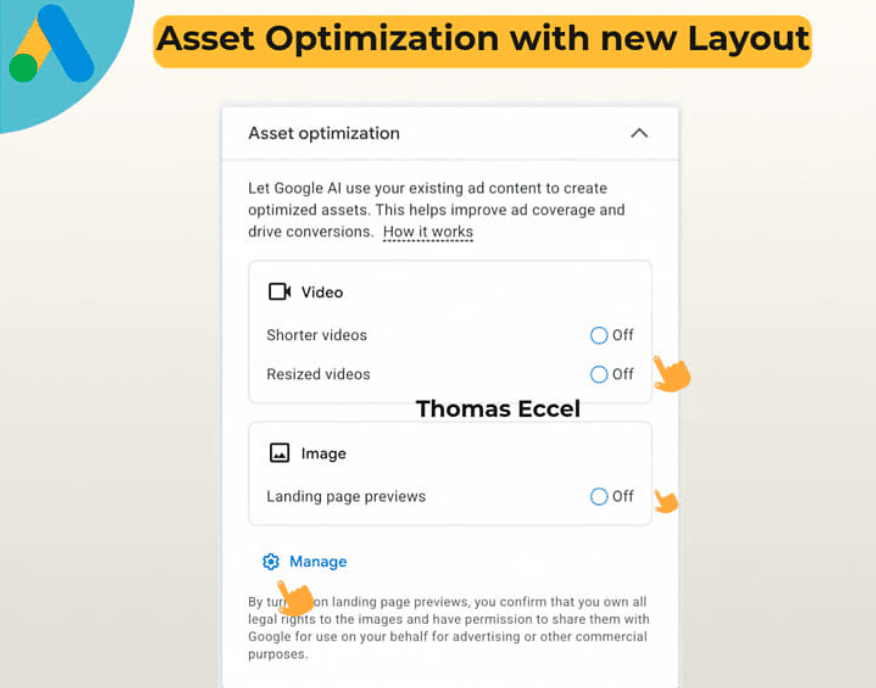
    I just discovered that Google Ads has given the Asset Optimization layout for Demand Gen a sleek makeover. The updated panel enables advertisers like me to easily streamline creative formatting and placement through a few toggles.

    Why we care. If you’re managing a large volume of creative, this central panel makes life much easier. It reduces manual labor by allowing us to enable or disable automation features quickly.

    What’s new. This layout refresh organizes three main automation features into a more user-friendly interface:

    Auto-generated shorter videos let AI trim existing videos for broader placements.

    Automatic video resizing ensures our videos fit multiple aspect ratios, optimizing for wider coverage.

    ```json
{
  "alt": "Google Ad asset optimization settings with new layout options for video and image.",
  "caption": "Explore the new asset optimization layout in Google Ads, offering improved ad coverage with video and image settings.",
  "description": "This image showcases the new layout for Google Ad asset optimization, featuring toggle options for video adjustments like shorter and resized videos, and image landing page previews. The interface aims to enhance ad coverage and drive conversions using AI. Key elements include option toggles set to 'Off' and a manage link for further customization. Ideal for advertisers looking to optimize their content."
}
```

    Landing page image pulls pull images directly from our landing pages, creating added creative variations effortlessly.

    How it works. The new panel displays simple toggles like Resized videos and Image assets, making it straightforward for us to activate or deactivate each feature without sifting through several submenus.

    Bottom line. If you’re running Demand Gen campaigns like me, it’s time to dive into the Asset Optimization panel and review which automations are turned on. Don’t miss out on features like video resizing and landing page image pulls as they can expand your reach effortlessly.

    And, ensure your landing pages are visually appealing; Google will draw directly from them. As more AI tools roll out, I’m shifting my workflow to focus on high-quality source assets and letting Google handle the optimization of formats and placements.


    Inspired by this post on Search Engine Land.

    crushpress.ai community screenshot
  • Explore the World Conversationally with Google’s ‘Ask Maps’

    Explore the World Conversationally with Google’s ‘Ask Maps’

    I’ve always loved exploring new places, and now Google Maps is making it even more exciting with its new feature, ‘Ask Maps.’ This AI-powered addition transforms the way I interact with maps by allowing me to simply ask questions and receive personalized recommendations.

    Google has introduced this conversational AI feature to assist us in navigating complex real-world queries. ‘Ask Maps’ leverages Google’s Gemini AI models to provide us with personalized, actionable answers tailored to our preferences and needs.

    What’s new and exciting? Now, I can ask questions like, “Is there a public tennis court with lights that I can play at tonight?” or “My phone battery is low — where can I quickly charge it nearby?” The magic of ‘Ask Maps’ is in its ability to give me a conversational response complete with a custom map view.

    Key capabilities include:

    • Personalized recommendations — Google Maps remembers my search and save history, which means it knows I love vegan restaurants before I even ask!
    • Trip planning — I can request recommended stops along my route and receive insightful details like directions, ETAs, and tips from over 500 million community contributors.
    • Direct action — I love how I can book reservations, save interesting places, or easily share them with friends right from the response.

    Why do I care? ‘Ask Maps’ is revolutionizing the way I discover places by shifting the focus from simple keyword searches to interactive, AI-driven recommendations. Businesses wanting to be noticed need rich, accurate, and engaging Google Maps profiles as this is the data utilized by Google’s AI for recommendation making.

    What to keep an eye on: ‘Ask Maps’ is already being rolled out in the U.S. and India for both Android and iOS, with desktop access coming soon. I’m excited about these advancements!

    What’s next? As AI plays a bigger role in how we find places, it’s crucial for advertisers and local businesses to keep their listings accurate and review-rich to make the most of Gemini’s capabilities. I’m looking forward to how this changes the landscape for businesses.


    Inspired by this post on Search Engine Land.


    crushpress.ai community screenshot
  • Transform Your Yahoo Experience with MyScout’s Personalized AI Homepage

    Transform Your Yahoo Experience with MyScout’s Personalized AI Homepage

    Today, I’m excited to share that Yahoo has rolled out MyScout, a new and personalized homepage within its Scout AI platform. This feature transforms Yahoo’s AI search into a daily dashboard tailored just for me.

    How MyScout Works. As a logged-in user, I have the power to customize my homepage with tiles that gather information from various Yahoo properties like Mail, News, Sports, Finance, and Games. Here are some of the features I find useful:

    • Inbox previews from Yahoo Mail.
    • Live stock updates from my Yahoo Finance watchlists.
    • The latest news topics and trending stories.
    • Scores and schedules for my favorite sports teams.
    • Weather updates, shopping comparisons, and fun games.

    I can easily add, remove, reorder, or create tiles to follow topics or queries that interest me.

    • Certain tiles provide real-time updates, like stock prices.
    • Others refresh throughout the day with new emails, sports scores, and breaking news.
    • As the system learns from my activities, it promises a more “agentic and personalized” experience.

    New Publisher Features. Yahoo emphasizes supporting the open web by directing users to the original sources of AI-generated answers. With this goal in mind, Yahoo News introduces new publisher features to help grow my recurring audience:

    • Publisher brand pages that consolidate my articles, videos, and social media feeds on Yahoo.
    • A follow feature allowing users to subscribe to my content and receive curated newsletters in their inbox.

    Availability: MyScout, part of Yahoo Scout, is now in beta for U.S. users at Scout.com and through the Yahoo Search app on iOS and Android.

    Yahoo’s Announcement. For more details, check out the official announcement: Yahoo Introduces MyScout, the First Personalized Homepage for AI Answers


    Inspired by this post on Search Engine Land.

    crushpress.ai community screenshot
  • Why 80% of PMax Advertisers Are Embracing CTV Ads

    Why 80% of PMax Advertisers Are Embracing CTV Ads

    As someone who watches the advertising landscape closely, I find it fascinating how quickly things have changed. It’s incredible to note that eight out of ten Performance Max advertisers are now receiving connected TV (CTV) impressions via YouTube. This shift, as highlighted by Mike Ryan from Smarter Ecommerce, shows how Google has significantly expanded the reach of this channel. The pace of change is continuing to accelerate.

    Let me walk you through how we got to this point. In Q2 2025, Google began serving CTV ads using standard product feed images. This meant that even advertisers without video assets began generating TV impressions simply from their existing catalog photos. Then, in January 2026, Google announced shoppable CTV ads. Now, viewers can browse products and even purchase directly from their TV screens using QR codes that link to the Google Merchant Center product feeds.

    As someone invested in digital advertising, I care a lot about these changes. CTV is no longer a niche investment. If you’re running Performance Max, chances are you’re already on the big screen, and Google has been ramping up what this means for commerce. They’re automatically turning your product feed images into TV ads and allocating your budget to CTV impressions without needing action on your part.

    Without actively checking your channel performance breakdown, you could be unaware of where your budget is going or whether the auto-generated creatives are appealing enough for a 65-inch screen. Here’s what I recommend advertisers do right now:

    Firstly, pull your Channel Performance report. Google’s native channel breakdown will give you a clear picture of how much of your PMax spend and impressions are directed toward CTV. You might be surprised by the findings.

    Next, audit your feed images. Since Q2 2025, these product photos are being used automatically to create CTV ads. Images that worked well in a Shopping context might not translate perfectly to a 65-inch TV, so it’s essential to clean them up.

    ```json
{
  "alt": "Chart showing an increase in PMax advertisers with CTV impressions from Jan 2023 to Oct 2025.",
  "caption": "PMax advertisers are seeing a surge in Connected TV (CTV) impressions, with notable growth from early 2023 to late 2025.",
  "description": "The image displays a line graph illustrating the rise in the percentage of PMax advertisers receiving CTV impressions from January 2023 to October 2025. It highlights key trends such as the introduction of CTV ads by Google in Q2 2025 and the announcement of shoppable CTV ads earlier in the year. Data source: smarter-ecommerce.com, gathered from 926 Google Ads accounts in the ecommerce sector."
}
```

    Furthermore, check if shoppable CTV applies to you. If your campaigns are linked to a Merchant Center feed, they might already qualify for shoppable CTV formats. Google reports that Demand Gen campaigns including TV screens have driven 7% more conversions while maintaining the same ROI. Understanding whether this inventory benefits you or is just wasted is vital.

    Finally, consider the creative aspect. Using feed images as CTV ads should be seen as a starting point, not the end goal. Advertisers who develop purpose-built video assets specifically for TV screens will undoubtedly have an advantage over those who rely on auto-generated formats.

    Looking at the bigger picture, YouTube CEO Neal Mohan recently confirmed that TV has now surpassed mobile as the primary device for YouTube viewing in the United States by watch time. YouTube continues to be the number one streaming platform in the U.S. for the second year in a row. Many PMax advertisers are already taking part in this large-scale shift. However, the real question is whether they’re doing so intentionally or just following the current trends blindly.

    For those like me who want to dive deeper into this topic, I recommend checking out the article “YouTube Viewing on TV Now Surpasses Mobile, Desktop in U.S.” for more insights.


    Inspired by this post on Search Engine Land.

    crushpress.ai community screenshot
  • Unlock Insights with Google’s New Branded Queries Filter

    Unlock Insights with Google’s New Branded Queries Filter

    I recently discovered a fantastic update from Google Search Console that’s now available for all eligible sites. This new feature shows exactly how much traffic comes from branded versus non-branded search queries, and I couldn’t wait to explore its potential.

    Google’s branded queries filter, which was announced on November 20, allows us to separate branded and non-branded search traffic in the Performance report. This is a game-changer for anyone who’s struggled with manual regex filters or keyword lists to achieve similar results.

    Why I care. As someone deeply invested in understanding brand demand versus discovery traffic, this new native segmentation in Search Console makes life so much easier. Finally, I can accurately measure and compare these insights.

    What Google announced. Today, Google confirmed through a LinkedIn post that this branded queries filter is accessible to us all. It helps analyze the queries driving traffic by autofiltering between branded and non-branded ones.

    Exploring the details. This filter can be found in the Search results Performance report and allows queries to be segmented into two main groups:

    Branded: These queries include our brand name, its variations, any misspellings, and brand-related products and services.

    Non-branded: This group covers all other types of queries.

    When applying the filter, Search Console restricts metrics like impressions, clicks, CTR, and average position, focusing solely on the selected group. The filter works across all search types including Web, Image, Video, and News.

    Notable insights. Google also enriched the Insights report with a new card that breaks down clicks between branded and non-branded traffic, providing a clearer picture of brand recognition.

    As Google explained, this feature helps us measure the traffic from users already familiar with our brand compared to those discovering it for the first time.

    Understanding Google’s classification. Google employs an AI-driven system to classify queries as branded. This system can adeptly recognize brand names in various languages, handle misspellings or variations, and detect queries that mention unique brand products or services.

    There might be occasional misclassifications due to the contextual nature of brand detection, and Google clarifies that this filter doesn’t impact search rankings.

    Keeping an eye out. With today’s announcement, this feature is supposedly available for all eligible sites. However, some sites might not qualify yet due to specific query and impression volume requirements.


    Inspired by this post on Search Engine Land.

    crushpress.ai community screenshot
  • Google Unveils New Merchant Center Hub for Agency Efficiency

    Google Unveils New Merchant Center Hub for Agency Efficiency

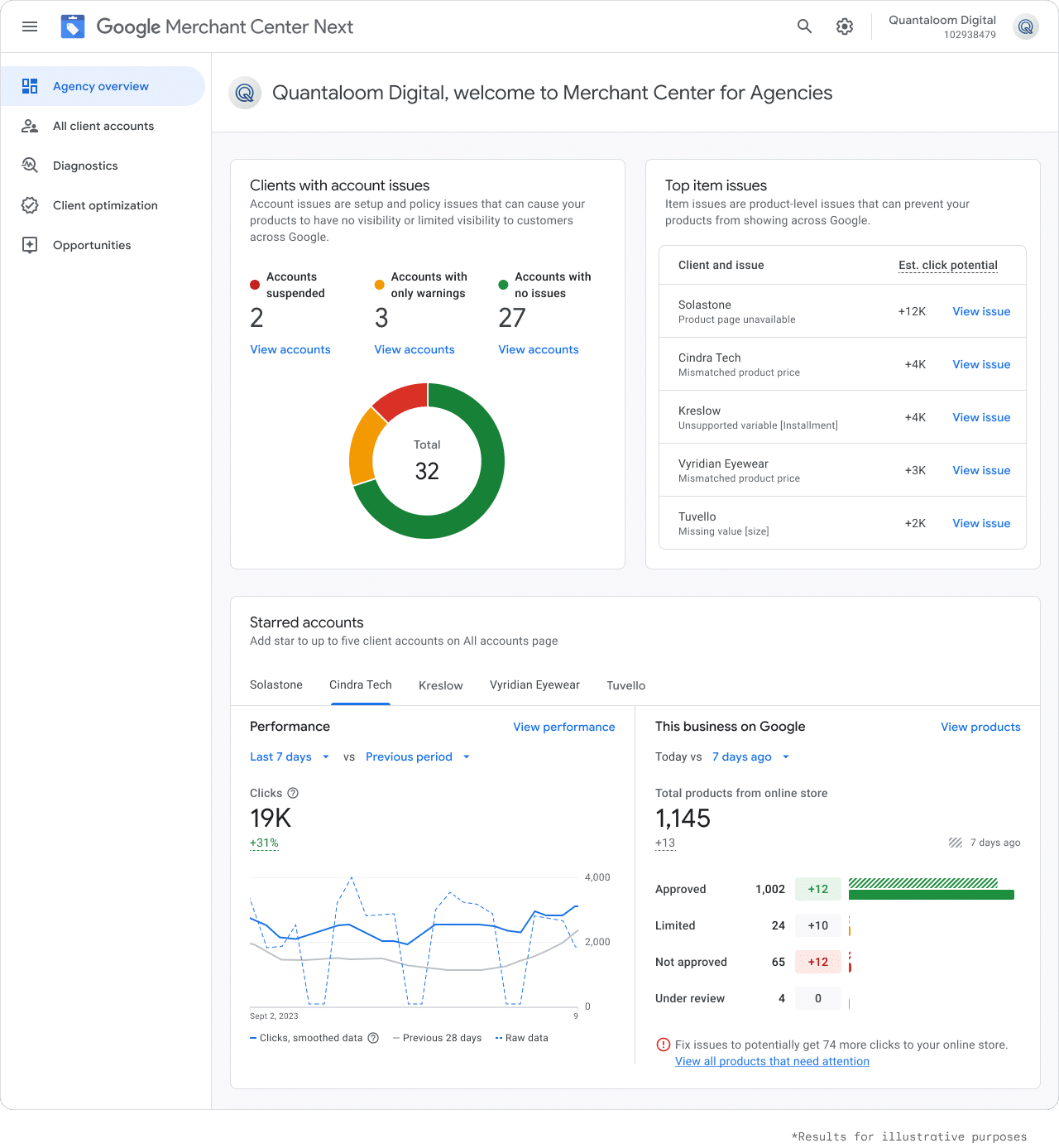
    I’m excited to share that Google has launched a dedicated Merchant Center hub for agencies in the U.S. and Canada. This hub allows us, as agency professionals, to use a single login to efficiently manage all of our merchant clients. It’s designed to provide proactive alerts, making it easier than ever to catch and address issues quickly.

    With the new Merchant Center, I have access to a unified dashboard that keeps all client accounts seamlessly integrated, saving time and reducing complexity in monitoring and optimization tasks.

    What’s included:

    This platform includes a comprehensive dashboard, which allows me to manage all client accounts from a single login experience. In addition to this convenience, it offers proactive diagnostics that help surface critical alerts across the entire client portfolio.

    ```json
{
  "alt": "Google Merchant Center dashboard for Quantaloom Digital showing account and item issues, performance metrics.",
  "caption": "Quantaloom Digital's Merchant Center offers insights into account issues, item problems, and performance metrics, guiding optimization for online visibility.",
  "description": "This image displays the Google Merchant Center dashboard for Quantaloom Digital, focusing on various metrics and insights. It includes sections highlighting accounts with issues, such as suspended, warning, and stable accounts. Pie and line charts illustrate account performance over time. A list identifies top item issues for clients, like product page unavailability and mismatched prices. Keywords: Google Merchant Center, dashboard, Quantaloom Digital, account issues, performance metrics."
}
```

    Another significant feature is the merchandising opportunity tools, which enable us to identify areas for performance improvement that feeds directly into Google Ads. These tools are indispensable for enhancing return on investment for our clients.

    Why we care. Managing multiple merchant accounts across Google’s ecosystem has traditionally been a logistical headache, switching between various logins and dashboards. This centralized approach ensures that potential issues are flagged and resolved more swiftly, preventing unnoticed revenue drains. Moreover, the built-in merchandising tools enable me to actively enhance performance across all client portfolios, making it much more than just a monitoring platform.

    Early results. I learned about Socium, a digital marketing agency that tested this product during the holiday rush. By consolidating client promotions, inventory, and diagnostics into one place, they managed to resolve monitoring tasks 50% faster.

    ```json
{
  "alt": "Client optimization report showing top out-of-stock products for Kreslow and Solastone with clicks and stock details.",
  "caption": "Explore the client optimization report highlighting top out-of-stock products from Kreslow and Solastone. Discover insights into clicks and inventory status.",
  "description": "This image displays a client optimization report detailing top out-of-stock products for two clients, Kreslow and Solastone. It includes metrics such as paid clicks, organic clicks, and total out-of-stock counts. The report is organized in a tabular format with product descriptions like 'Boost Spin Elite Titanium' and 'Verde Fontaine Granite Tile.' This visualization aids in understanding product performance and inventory challenges."
}
```

    The big picture for agencies. Every minute spent on account monitoring and diagnostics detracts from strategic planning. Tools that streamline these processes, especially during peak times like Q4, allow us to focus on high-value tasks that truly benefit our clients. Agencies managing large retail portfolios should definitely consider integrating this system before the next busy season.

    What’s next. For those interested in diving deeper, full details are available on Google’s Help Center. The rollout of this innovative hub is live now in the U.S. and Canada.


    Inspired by this post on Search Engine Land.

    crushpress.ai community screenshot
  • PPC Challenges: AI’s Limited Impact and Growing Platform Opacity

    PPC Challenges: AI’s Limited Impact and Growing Platform Opacity

    PPC is becoming an increasingly difficult landscape to navigate, and even though AI provides some help, it doesn’t save the day. Meanwhile, platform transparency continues to decline, leaving us in the dark about budget management.

    The latest survey of PPC professionals reveals a challenging environment characterized by less transparent platforms, diminishing effectiveness of traditional measurement methods, and AI tools that have yet to revolutionize our daily routines.

    Why I care. As someone deeply invested in PPC, it’s notable that over half of practitioners (53%) believe PPC has become tougher compared to two years ago. The issue isn’t just competition; it’s the increasing number of decisions being made by platforms out of advertisers’ view, which contributes to this growing complexity.

    Considering that a whopping 89% of digital ad spend goes to just three companies, those of us who don’t have private measurement tools are essentially navigating without a compass.

    By the numbers:

    ```json
{
  "alt": "Doughnut chart showing PPC campaign difficulty change over two years. 53% find it harder, 16% find it easier.",
  "caption": "Over half of marketers find managing PPC campaigns harder than two years ago, while 16% think it's easier.",
  "description": "This image features a doughnut chart depicting survey results on PPC campaign management difficulty over the past two years. The chart shows 53% of respondents reporting it as harder, while 16% find it easier. The remaining respondents are split, with 31% stating it feels about the same. The chart is color-coded, with dark red indicating 'much harder' at 12%, red for 'somewhat harder' at 41%, light green for 'somewhat easier' at 13%, and dark green for 'much easier' at 3%. This visual provides insight into the shifting challenges of PPC management."
}
```
    • 1,306 respondents participated in the survey conducted between November and December 2025, representing agency, freelance, and in-house roles.
    • 62% identified platform opacity as the main reason for increased PPC complexity, with 53% pointing to the loss of effective measurement tools.
    • 5.2 hours/week are saved on average with AI tools, though the majority of us (55%) save only 1–5 hours; almost nobody reports saving over 20 hours.
    • 59% are now using LLMs for ad copy, up significantly from 42% the previous year, marking it as the fastest-growing AI use case.
    • 73% of in-house teams now manage PPC entirely in-house, a significant increase from 44% two years ago.
    • 20% of clients are considering replacing agency work with AI, compared to just 12% planning to switch agencies.
    • $1 trillion was spent globally on digital ads in 2025, with 89% directed towards Google, Meta, or Amazon.

    What they’re saying. Among PPC features, exact match keywords remain the most reliable, with 75% of us using them frequently. However, AI Max for Search sees minimal adoption, with 34% never having used it, possibly due to it being one of Google’s newest updates. Across the board, auto-apply recommendations are viewed with skepticism.

    Between the lines. The underlying theme in the report revolves around agency survival. Many of us (62%) highlight the challenges of finding talent and increasing revenue, with the real threat being clients opting to manage PPC internally using AI.

    The big picture. We’ve developed a cautious yet practical approach to incorporating AI — leveraging it for tasks like copywriting and research while being wary of its ability to make autonomous decisions. The more pressing issue that remains unaddressed is that platforms are gaining control and giving us less control over visibility, with no easy solution on the horizon.

    Dig deeper. For more insights, check out The State of PPC Global Report 2026.


    Inspired by this post on Search Engine Land.


    crushpress.ai community screenshot
  • How Meta’s New Digital Tax Policy Impacts Advertisers

    How Meta’s New Digital Tax Policy Impacts Advertisers

    I recently learned that starting July 1st, Meta plans to directly charge us, the advertisers, for Europe’s digital services taxes. This change will add as much as 5% to our ad spend, which is quite a noticeable increase.

    The numbers. The fees will align with each nation’s specific digital service tax rates, which means:

    • France, Italy, Spain: 3%
    • Austria, Turkey: 5%
    • UK: 2%

    How it works in practice. Meta has informed us that if I run a $100 ad targeting Italy, it’ll cost $103, excluding any VAT. This directly affects my budget considerations.

    The fine print. It’s important to note these fees are based on the ad’s target location, not where I, the advertiser, am based. Thus, even if I’m in the U.S., targeting users in France means I’ll adhere to their rate.

    Why I care. This upcoming change will undeniably raise costs for my European campaigns starting July 1st. With no option to avoid it, I must prepare for increased CPM and CPA benchmarks, meaning my current budget won’t go as far, and my ROAS targets might need reevaluation.

    Because these adjustments are based on delivery location, even non-European companies must take note. The reach of this change is broad.

    The big picture for advertisers. Meta’s not alone; both Google and Amazon have similar strategies. It’s a significant shift that demands I, and others involved in European advertising, revisit our cost models to appropriately plan for these increased expenses.

    The backdrop. Digital services taxes have long been contentious between Europe and Washington, adding a layer of geopolitical complexity to the already intricate compliance issues faced by global advertisers like myself.

    Dig deeper. If you’re interested in more detailed information about how Meta is addressing Europe’s digital taxes, you can find additional insights in this Bloomberg article (subscription required).


    Inspired by this post on Search Engine Land.


    crushpress.ai community screenshot