Category: Local

  • How Tripadvisor Supports Local SEO for Travel Businesses

    How Tripadvisor Supports Local SEO for Travel Businesses

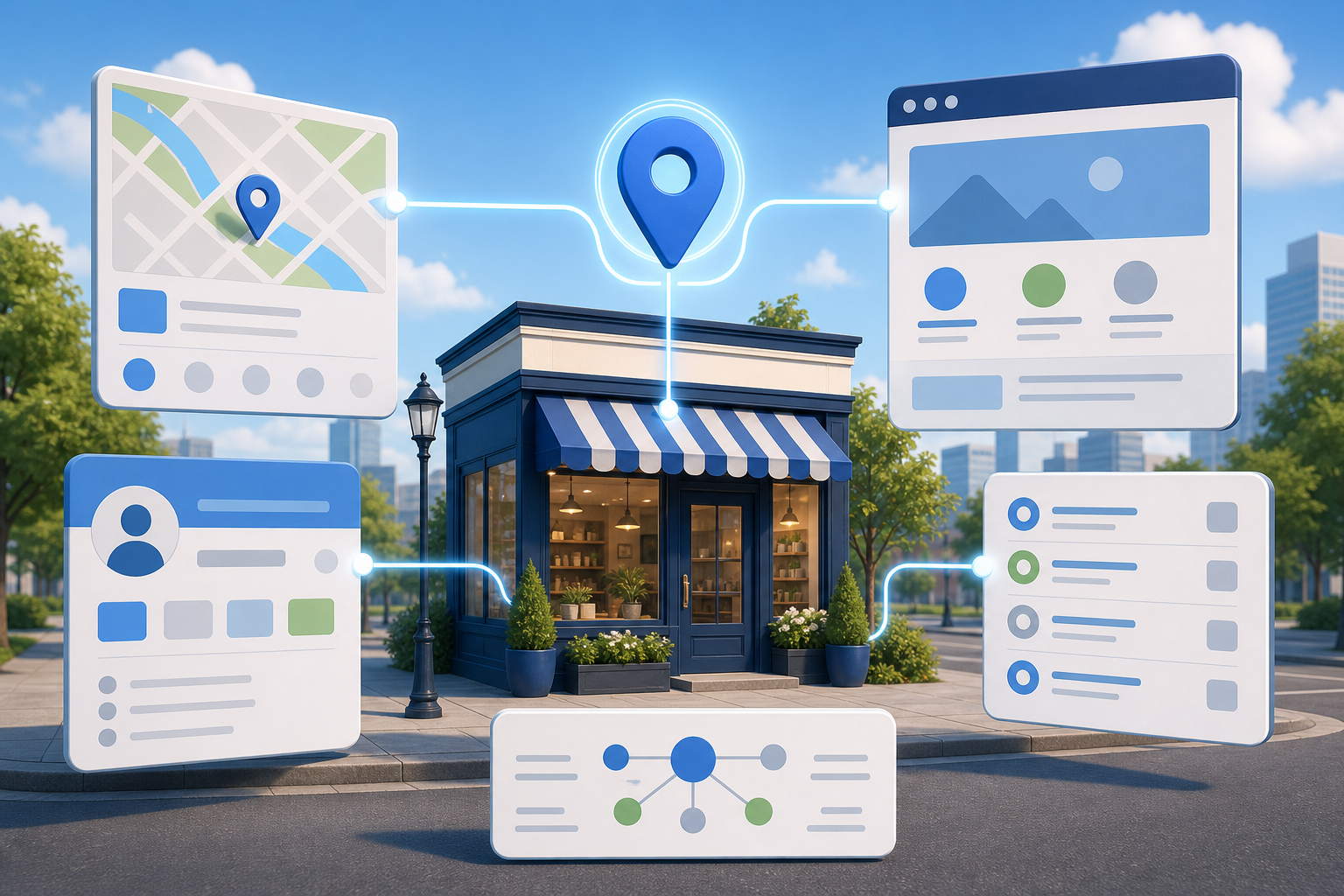
    If you market a hotel, restaurant, tour, or attraction, a weak Tripadvisor listing can shape the decision before a traveler reaches your website. The platform can occupy valuable search-result space for your business name, appear during category discovery, and expose reviews, photos, and business details while the customer is deciding where to book.

    Your goal is not to make Tripadvisor the center of your local SEO strategy. It is to manage the listing as one coordinated part of your search presence: accurate business facts, a clearly described experience, fresh evidence, useful customer language, and a credible path from discovery to action.

    Tripadvisor influences discovery before it influences rankings

    Tripadvisor performs three jobs at once. It is a search result, a comparison marketplace, and a reputation page. That combination matters because travelers visiting it are often beyond general inspiration and actively comparing places, experiences, or meals.

    The scale is difficult to dismiss: Tripadvisor receives about 490 million monthly visits. Its large, programmatically structured collection of indexable destination, category, and business pages also gives it substantial visibility in conventional search results. In some tourism and hospitality searches, a Tripadvisor listing can even appear above the business’s own website.

    That does not mean optimizing Tripadvisor will directly raise your website or Google Business Profile rankings. There is no defensible reason to report it as a guaranteed ranking shortcut. Its local SEO contribution is broader and more practical:

    • Search-result coverage: A complete listing gives searchers a credible third-party result when they look for your brand, location, or business type.
    • Internal discovery: Categories, tags, reviews, and profile content help Tripadvisor understand where the business belongs within its own marketplace.
    • Entity consistency: Matching identity information across Tripadvisor, your website, and Google Business Profile reduces ambiguity about which business each page represents.
    • Decision support: Current photos, detailed reviews, and clear descriptions answer questions that might otherwise stop a booking.
    • Qualified referral traffic: Visitors who reach your website after comparing options on Tripadvisor may arrive with stronger intent than someone conducting broad destination research.

    Tripadvisor can also contribute to AI discovery, but the mechanism should be described carefully. Detailed profile text and factual owner responses create more explicit language about your amenities, audience, setting, and experiences. That gives AI-driven search systems more context to interpret; it does not guarantee that an AI answer will mention or recommend you. For AEO and GEO, prioritize clear passages and verifiable details, not inserted keyword strings.

    Fix identity, duplicates, categories, and tags before polishing copy

    Isometric illustration of duplicate map listings merging into one organized listing for a boutique inn.

    A beautifully written description cannot repair a fragmented business identity. Begin with the fields that determine which entity the listing represents and where it can be discovered.

    1. Look for duplicate and outdated listings. Search Tripadvisor and conventional search results using the exact business name, previous names, address, and common variations. Do this before creating anything new. A duplicate can divide attention, reviews, photos, and brand signals between competing pages.
    2. Claim and verify the correct listing. Use the profile representing the current operating business. Resolving duplicates can require official business documents and information that matches Google Business Profile, so keep the legal and customer-facing identity records available.
    3. Align the core facts. Check the operating name, address, website, primary business type, and other defining details against your website and Google Business Profile. Consistency means the facts agree; it does not mean every platform needs an identical marketing description.
    4. Select accurate categories and tags. Represent the full set of experiences the business genuinely provides. Tripadvisor uses these classifications for internal discovery and curated collections, so an omitted attribute can prevent an otherwise suitable business from appearing in a relevant list.
    5. Complete the decision-making fields. Describe the experience, amenities, menu, and other material offerings that a prospective guest needs to understand. Remove details that are no longer true.
    6. Review the public page as a customer. Confirm that the lead image, summary information, categories, and recent customer feedback create one coherent expectation. Owner dashboards can hide how disconnected a listing feels when its public elements are viewed together.

    Do not add categories merely because they attract desirable searches. If the listing claims a romantic dining experience, family-oriented amenity, or particular type of cuisine, the photos, menu, description, and customer feedback should support that claim. A misleading classification may win an impression but lose the booking when the visitor inspects the page.

    Use this priority order when resources are limited: correct identity, remove duplication, choose the right categories, update the offer, refresh the visual evidence, and then refine promotional wording. The early steps determine whether the right listing can be found; the later steps help it convert.

    Reviews and images should explain the experience, not decorate it

    Traveler photographing a guide presenting a regional dish to a small group inside an independent restaurant.

    Write owner responses that add useful context

    A review response is not only reputation management. It is public content attached to a specific customer experience. A thoughtful reply can turn a vague mention into a clearer explanation of what the business offers.

    If a guest says only that the pool was enjoyable, for example, a useful response can acknowledge the comment and mention a relevant family feature or activity, provided that feature genuinely exists. This creates additional semantic context around the property’s amenities. The response should still sound like a reply to a person, not a paragraph built to carry search terms.

    A reliable response structure is:

    • Acknowledge the specific experience. Refer to what the customer actually mentioned instead of opening with a generic template.
    • Add one relevant clarification. Explain a feature, setting, audience, or use case that helps the next reader understand the experience. Only add details you can substantiate.
    • Close naturally. Keep the response proportionate to the review. Repeating the business name, location, and service keywords adds clutter rather than value.

    You can also encourage more informative reviews without scripting praise. After the visit, invite the customer to describe which experience they booked, what stood out, who the experience suited, or what they would tell another traveler. That produces more decision-useful language than asking only for a star rating.

    Review velocity matters as an operational signal, but do not confuse velocity with sudden volume. The sustainable objective is a continuing stream of feedback from real customers, followed by regular owner attention. A burst of requests followed by months of silence leaves the listing looking less current and gives you fewer recent customer questions to learn from.

    Use current images as evidence of what someone can book

    Travel and hospitality decisions are visual. The strongest images quickly show what the guest will receive: the room, dish, view, activity, atmosphere, or defining feature. Replace photos that show an old menu, previous decor, unavailable amenities, or an experience that no longer represents the business.

    You do not need to guess which creative deserves the lead position. If you already publish comparable photos on Instagram, use the engagement data as a directional signal for which subjects and compositions attract attention, then confirm that the selected image accurately represents the bookable experience. Popularity is useful only after accuracy.

    Captions should describe the image in natural language. A practical formula is: what is shown, where or how it is experienced, and who or when it may be relevant. For example, a dish caption can identify the meal, the terrace or dining setting, and the season in which it is offered. Include audience claims such as “popular with solo travelers” only when you have a real basis for them. A string of location and service keywords does not help a traveler understand the image.

    Manage Tripadvisor as a measurable local search channel

    Profile optimization becomes difficult to defend when the only metric is average rating. Rating matters to customers, but it does not tell you whether the listing is accurate, discoverable, engaging, or sending qualified demand.

    Track the channel in layers:

    • Presence: Record whether the correct Tripadvisor page appears for your business name and relevant local discovery searches. Note duplicate or outdated results separately.
    • Profile health: Monitor completeness, category accuracy, current menu or experience information, image freshness, and unanswered-review backlog.
    • Activity: Watch review velocity, owner response activity, new image publication, and recurring themes in customer language.
    • Engagement: Use the interaction and click information available to the account to identify whether people are moving beyond a listing impression.
    • Business outcomes: In your web analytics, segment Tripadvisor referral visits and evaluate them against the booking, reservation, enquiry, or purchase action that matters to the business.

    Capture a baseline before making a substantial change. Compare equivalent reporting periods and annotate major profile updates, promotions, closures, and seasonal offer changes. This will not prove that a single caption or response caused a result, but it will prevent you from attributing every movement to the most recent edit.

    Website traffic is only one part of the journey. Tripadvisor also functions as a comparison environment where a customer may make a decision without visiting your domain. Read referral traffic alongside profile engagement and actual bookings rather than declaring the channel successful or unsuccessful from sessions alone.

    A manageable recurring workflow is to inspect identity fields and duplicates, clear the review-response backlog, replace outdated images or offer information, record emerging customer themes, and review referral outcomes. Assign ownership to a person or role. A listing that belongs vaguely to “marketing” is likely to remain untouched until a negative review or incorrect detail creates urgency.

    Key takeaways

    • Use Tripadvisor as a distributed local landing page and comparison surface, not merely a place to collect ratings.
    • Resolve duplicate listings and align core identity information with your website and Google Business Profile before rewriting promotional copy.
    • Choose categories and tags for experiences the business actually delivers; those classifications affect internal discovery and customer expectations.
    • Respond to reviews with one useful, factual layer of context instead of inserting keywords or repeating a template.
    • Refresh images, captions, menus, and experience details whenever the public offer changes.
    • Measure profile health, engagement, qualified referral traffic, and business outcomes separately so you can see where the journey is improving or breaking.

    Start with a duplicate and identity audit of the listing that already exists. Once the correct entity is established, improve one decision layer at a time: classification, offer clarity, reviews, images, and measurement. That sequence turns Tripadvisor from an unmanaged reputation page into a useful part of your local search system.

    References

  • Google AI Search and Local Visibility: A Practical Guide

    Google AI Search and Local Visibility: A Practical Guide

    Your Google Business Profile is accurate, your location page is live, and you rank for at least some local searches. The uncomfortable question is what happens when a potential customer asks Google an open-ended local question and receives an AI-generated answer instead of a familiar list of links.

    The practical response is not to chase a separate set of AI keywords. Make your business identity easy to verify, keep every important fact consistent, and publish enough location-specific information for an answer system to understand when your business is relevant. That work supports local packs, conventional results, AI Overviews, and other AI-assisted discovery without betting your strategy on one interface.

    Local AI visibility starts with a resolvable business identity

    A storefront is connected to matching map, profile, website, directory, and structured-data symbols that converge on one location pin.

    Google does not have to rely on one page or database to decide what your business is. It can compare on-page content, site structure, Google Business Profile data, citations, reviews, and schema markup. Agreement among those signals gives the system a coherent entity to work with. Contradictions force it to choose between competing versions of your name, location, hours, services, or status.

    That distinction matters because local AI optimization is not simply another ranking exercise. A system may need to establish that your business exists, determine where it operates, understand what it offers, and decide whether the evidence is strong enough to include in an answer. Schema can make facts explicit, but it cannot turn conflicting information into reliable information.

    You should also avoid treating every Google AI experience as the same destination. Google Search is oriented toward information, engagement, and connections to the web, while Gemini is positioned more as an assistant for productivity and creation. Those products share technology but follow different objectives, and their eventual degree of convergence remains unsettled. Build facts that can travel across systems instead of optimizing around a guessed interface.

    Key takeaways

    • Treat local visibility as an entity-confidence problem before treating it as a content-volume problem.
    • Create one approved record of your business name, location, contact details, hours, services, and service area.
    • Make visible page content, Google Business Profile data, citations, reviews, internal links, and structured data tell the same story.
    • Use schema to confirm facts that people can also see on the page, not to introduce a more convenient version of the business.
    • Measure factual accuracy and visibility separately across standard search, local results, AI Overviews, and Gemini.

    Write a canonical local fact sheet before editing schema

    Most consistency problems begin inside the business. The website owner has one phone number, the operations team has another, and an old directory still lists the number used before a move. A schema plugin then reproduces whichever version happened to be entered during setup.

    Create a canonical fact sheet for each location. This is an internal operating record, not marketing copy. Give one person or team responsibility for approving changes, then use the record whenever you update the website, profiles, directory listings, or structured data.

    1. Identity: Record the customer-facing business name, the most accurate primary business category, and a short factual description of the operation.
    2. Location: Distinguish a staffed customer-facing location from an office, headquarters, mailing address, or service area. Do not let one address imply a function it does not have.
    3. Contact details: Choose the public phone number, canonical location-page URL, and any official appointment or enquiry URL.
    4. Availability: Record normal operating hours and identify services that follow different schedules. If customers can visit only by appointment, say so in visible language.
    5. Offerings: Use the service names customers will see on the website and confirm which location actually provides each one.
    6. Geographic scope: List the areas the business genuinely serves. Keep a service area distinct from an address and from places you merely hope to target.
    7. Official profiles: Maintain the URLs of the Google Business Profile and other profiles that clearly represent the same business entity.

    Resolve ambiguity instead of encoding it

    A fact sheet is useful only if it contains decisions. If the storefront sign, website header, and profile use different names, do not copy all three into different schema fields. Decide which customer-facing identity is correct, determine whether the alternatives still serve a legitimate purpose, and plan a coordinated correction.

    Apply the same discipline after a relocation, rebrand, acquisition, phone-system change, or adjustment to opening hours. Old information is not harmless just because it appears on a low-priority page. It can still create another version of the entity for machines and customers to reconcile.

    Do not place aspirational claims on the fact sheet. A city you want to enter is not yet a service area. A service you plan to launch is not an available offering. A shared building is not evidence of a customer-facing branch. Structured data should describe the operation customers can actually use.

    Align every place Google can compare

    Once the canonical record is approved, audit the surfaces that can confirm or contradict it. Work from high-consequence identity facts down to descriptive enhancements. A wrong address, closed status, or phone number can block a customer journey; a less-than-perfect description usually does not deserve priority over those failures.

    SignalWhat to inspectCommon conflictCorrective action
    Visible website contentHeader, footer, contact page, location page, service pages, and booking instructionsThe footer shows current hours while an old contact page shows a previous scheduleUpdate the reusable template and every page that states the fact
    Internal links and site structureNavigation, location finders, breadcrumbs, service links, and XML sitemap entriesCurrent pages still point to a retired location URLLink to the canonical live location page and remove obsolete paths from normal navigation
    Google Business ProfileName, category, address or service area, phone, hours, website URL, and listed servicesThe profile and website describe different operating scopesCorrect the underlying business record, then update both surfaces from it
    Citations and directoriesProminent industry, regional, and customer-facing listingsAn old brand, address, or phone number remains activeCorrect the profiles most likely to be encountered or reused, keeping the same canonical facts
    Reviews and reputation contextRecent customer language and references to a location, brand, or serviceCustomers continue to refer to a former name or locationDo not rewrite customer reviews; clarify the transition on properties the business controls
    Structured dataRendered JSON-LD, not only the fields displayed in a plugin dashboardA theme or second plugin emits an outdated duplicate business entityFix the generating component and leave one coherent representation of each entity

    Do not turn consistency into a demand that every description be word-for-word identical. A directory may need a short category label while a service page needs a detailed explanation. The facts must agree even when the wording and level of detail differ.

    Audit from the customer’s point of view as well as the database owner’s. If one page says a branch is open but its booking link offers no way to select that branch, the site is making two operational claims. Fix the journey, not just the sentence.

    Use LocalBusiness schema as a confirmation layer

    LocalBusiness structured data converts important business facts into explicit relationships and properties. Its value is clarity: it can help a machine distinguish the entity’s name from a page heading, the business address from a publisher address, and the location URL from a general site URL. In AI-assisted local search, that clarity helps reduce uncertainty about who the business is, what it does, and where it operates.

    It is not a private channel for claims that the visible page cannot support. If the page says the office closes at one time and openingHoursSpecification says another, the markup has created a conflict. If areaServed lists places the page never discusses and the business does not genuinely serve, the markup is not providing stronger optimization; it is weakening the integrity of the entity record.

    • Use the most specific LocalBusiness subtype that accurately represents the business. Specificity is useful only when it is true.
    • Give each real location a stable page URL and a stable @id so repeated references can point to the same entity.
    • Match name, url, telephone, address details, and opening hours to the approved record and visible page.
    • Add areaServed only for genuine service coverage. Do not use it as a list of geographic keywords.
    • Use sameAs for official profiles that represent the same entity, not for any page that happens to mention the business.
    • Include only properties your team can keep current. More markup creates more maintenance obligations.
    • Inspect the rendered output after theme, plugin, template, or location-data changes. A correct admin form does not prove that the live page emits one correct graph.

    Keep multi-location entities separate

    A multi-location organization should not collapse every branch into one ambiguous local entity. Give each genuine location its own visible facts and structured-data identity, then connect it to the parent organization where that relationship is accurate. This lets a system answer a local question with the appropriate branch instead of inheriting a headquarters address, organization-wide phone number, or service that is unavailable locally.

    The same caution applies to practitioners operating inside a larger business. Represent a practitioner, department, location, and parent organization as distinct entities when they are distinct in the real world. Do not merge them merely because one plugin form is easier to complete.

    No schema property guarantees a local ranking, an AI citation, or inclusion in an AI Overview. The useful test is narrower: does the markup make the correct business easier to identify without disagreeing with the rest of the web presence?

    Create answerable local pages, then keep them synchronized

    An organized set of illustrated local website pages receives synchronized business details from a central hub connected to an abstract search assistant.

    Consistency helps a system trust a fact, but it does not establish relevance to every local question. Your location pages must also explain the decisions customers are trying to make. A page containing only a business name, map, phone number, and generic brand copy identifies a place but says little about why that place fits a particular need.

    Write for local decisions

    Start the page with a plain statement of what the location provides and where it provides it. Then answer the questions that materially change whether someone can use the business.

    • Which services are available at this location, and which are not?
    • Is the address a place customers can visit, or does the business travel to them?
    • What geographic area does the team actually serve?
    • Are there appointment, access, delivery, or availability conditions a customer needs to know before acting?
    • What should a customer do next: call, book, request a quote, visit, or choose another location?
    • Which page provides the best supporting detail for each important service?

    Use internal links to connect a location to the services genuinely available there, and connect service pages back to the appropriate locations. That structure gives people a usable path and gives machines a clearer relationship between the organization, its branches, and its offerings.

    Avoid manufacturing near-identical city pages that change only a place name. They repeat a target phrase without adding evidence about local availability. If you cannot state what is operationally different or specifically useful for a location, strengthen the primary service-area or location page instead of multiplying weak pages.

    Use a change protocol

    Local information drifts when operational changes are handled as one-off edits. Treat every change to a name, address, phone number, schedule, service, location status, or service area as a coordinated release.

    1. Approve the new fact in the canonical record and note when it becomes effective.
    2. Update the visible website content, including reusable headers, footers, contact modules, and booking instructions.
    3. Update the structured-data generator and inspect the JSON-LD rendered on the live page.
    4. Update the corresponding Google Business Profile fields.
    5. Correct important citations and official profiles that still expose the previous fact.
    6. Check internal links, redirects, sitemap entries, and location finders if a URL or location status changed.
    7. Record what was changed so a later audit can distinguish an overlooked property from a system that has not yet reflected the update.

    Measure each discovery surface separately. For standard search, local results, AI Overviews, and Gemini, record whether the business appears, whether the displayed facts are correct, which page or profile is surfaced, and whether the result offers a usable next action. A correct answer with no visibility is a relevance problem. Visibility with the wrong hours or location is an entity-accuracy problem. Those failures need different fixes.

    Begin with one commercially important location and one service customers regularly seek there. Approve its fact sheet, compare every major signal, repair the highest-consequence conflict, and only then expand the process across the rest of the business. That gives you a repeatable local AI visibility system rather than another markup project that goes stale after launch.

    References

  • Local Business Contact Page SEO: A Practical Blueprint

    Local Business Contact Page SEO: A Practical Blueprint

    If your contact page contains only a phone number and a form, your customer still has work to do. They must find out when you are open, whether they can text you, where to park, which payment methods you accept, and what will happen after they submit an inquiry.

    Those missing details also make your business harder for search systems to interpret. Google can crawl and interpret a contact page to extract business details, so this page should function as a complete local business record as well as a conversion page.

    Give the contact page three clear jobs

    A useful contact page answers three questions without making the visitor search the rest of your site:

    • Have I found the right business? The page confirms your name, brand, location, and what you do.
    • Can this business meet my practical needs? The visitor can check hours, service options, amenities, directions, parking, and payment methods.
    • What should I do next? The page presents a visible action and explains what happens after the customer takes it.

    That makes the contact page closer to a focused local landing page than an administrative endpoint. It still needs to be concise, but concise does not mean incomplete. The goal is to put every fact needed for a call, visit, message, pickup, delivery, or appointment in one dependable place.

    Key takeaways

    • Publish a complete business identity, not just a name, address, and phone number.
    • Make shared details agree with your Google Business Profile.
    • Answer practical questions about contacting, visiting, buying, and arriving.
    • Support your claims with verifiable reviews, credentials, awards, and local involvement.
    • Use a prominent call to action, explain the follow-up process, and track completed actions.

    Publish one complete and consistent business record

    Illustration of a storefront linked to matching phone, location, hours, and email icons across a computer, smartphone, card, map tile, and directory panel.

    Start with facts before rewriting headlines or changing the design. Open the contact page beside your Google Business Profile and compare every field they share. A customer should not see one phone number on the page, another on the profile, and unexplained hours somewhere else.

    Make the business identity unmistakable

    Use the same recognizable logo that appears on your signage and other marketing materials. State the full customer-facing business name prominently. If you use a slogan, keep it accurate and useful; forcing location phrases or service keywords into it will make the page sound less credible.

    Follow the identity block with a short introduction that says what you do, where you operate, and why someone would choose you. A practical pattern is: business type, location, main area of expertise, and a genuine differentiator. This gives a first-time visitor enough context to confirm that they reached the intended company.

    Include the details customers otherwise have to hunt for

    • Full business name: Use the name customers encounter on your storefront, Google Business Profile, invoices, and other public materials.
    • Complete address: Include every part needed to reach the correct entrance or unit.
    • Phone number: Make it easy to select on a mobile device and label its purpose if you publish more than one number.
    • Text number: If texting is supported, say so explicitly. Do not leave visitors guessing whether the main number accepts messages.
    • Contact form and email address: Provide an alternative when the form fails, the request needs an attachment, or the visitor prefers email.
    • Operating hours: Publish normal hours and keep special or holiday variations current.
    • Social profiles: Link only to profiles you actively associate with the business.
    • Ways to buy: State whether you offer in-store shopping, curbside pickup, delivery, appointments, or another relevant arrangement.
    • Map and directions: Embed the Google Map connected to the business and include a direct link to its Google Maps listing. A generic pin for the street address can be less useful than the actual business listing.
    • Accepted payment methods: Tell customers what they can use before they arrive or place an order.
    • Parking information: Explain where customers can park and identify any instructions they need before reaching the entrance.

    The shared facts on this page and your Google Business Profile should agree. That does not mean every channel must contain identical prose. It means the business name, location, contact routes, hours, service options, and applicable attributes should not contradict one another.

    When something changes, update both records as part of the same task. Assign an owner for the page and include it in the workflow for holiday hours, phone changes, relocations, new payment methods, and revised pickup or appointment policies. A technically polished page with stale operational information still fails the customer.

    Remove friction from calling, visiting, and buying

    A customer holds a phone with icon-based contact actions while a clear route leads to an accessible local shop with parking, a bicycle rack, and welcoming staff.

    Visitors do not all arrive with the same intention. One wants to call immediately. Another needs directions. A third is checking whether curbside pickup is available. The page should support those paths without forcing everyone through the contact form.

    • For callers: Place the phone number near the primary call to action and show the hours during which a response is available.
    • For people who want to text: Label the text option and set an expectation for how the conversation continues.
    • For visitors traveling to you: Pair the address with the business map, a Google Maps link, parking instructions, and any arrival detail that prevents confusion.
    • For shoppers: State whether the relevant option is in-store service, pickup, curbside collection, delivery, an appointment, or some combination.
    • For people comparing fit: Publish relevant amenities and business attributes in plain language rather than assuming they will infer them from photos.
    • For written inquiries: Offer both the form and an email address, then explain what information will help your team respond.

    Put the most common action early on the page, but do not hide the supporting details below a long promotional introduction. Someone standing outside your building needs the address, hours, map, and parking information more than another paragraph about brand values.

    Amenities deserve particular attention because they often decide whether a customer can use a business at all. Review the attributes shown on your Google Business Profile, confirm which ones are still accurate, and reproduce the applicable facts on the page. Add other genuinely useful amenities that are specific to your location. Do not claim an attribute merely because it sounds desirable.

    If you operate multiple locations, do not mix several addresses, phone numbers, and sets of hours into an unlabeled block. Make the selected location obvious, separate its facts from every other branch, and ensure each call to action reaches the right team or destination.

    Put trust and local relevance beside the decision

    Reaching the contact page does not mean the visitor has decided to contact you. They may be looking for one final reason to proceed or one warning sign that tells them to leave. Place evidence close to the action instead of expecting them to visit a separate company-history page.

    Explain what happens after contact

    Uncertainty is a conversion barrier. State the expected response time, whether the visitor will receive a confirmation, and what the next step normally involves. If different channels have different processes, explain them separately. A form submission might lead to a callback, while an appointment request might require confirmation before the time is reserved.

    Make those expectations operationally honest. A vague promise such as “we respond quickly” gives the customer no usable information. A clearly stated response window is better, but only if your team can maintain it. If you cannot commit to a window, describe the sequence instead: confirmation, review, and follow-up.

    Use proof that a visitor can verify

    • Associations and memberships: Name relevant industry groups, chambers of commerce, professional organizations, neighborhood associations, and community groups. Link to your business entry on the organization’s site when one exists.
    • Ratings and credentials: Display current credentials and any applicable Better Business Bureau information without overstating what the rating or membership means.
    • Awards and press: Identify the award or coverage and link to the organization or publication that issued it.
    • Reviews and testimonials: Use external reviews or testimonials that include enough context to feel authentic, such as the reviewer’s name, photo, city, or public profile when you have permission to publish those details.

    Verification matters more than the number of badges. An unfamiliar logo with no explanation can become visual clutter. A named organization, a clear relationship, and a link to an independent listing give the visitor something they can evaluate.

    The page can also serve existing customers. Include a clear link for leaving a Google review where appropriate, especially for repeat customers who arrived looking for your contact details. Keep that request separate from the main inquiry action so a new customer does not mistake it for the contact route.

    Replace generic local copy with specific local evidence

    Calling yourself a trusted local business does not establish local relevance. Show it through details: team names and photographs, areas of expertise, the customer needs you handle, neighborhoods you serve, current guarantees, local events, volunteer work, and partnerships.

    Only include details that help someone decide or verify. A list of neighborhood names added solely for keyword coverage is not useful local content. A short explanation of where you work, which services are available there, and what a customer should expect is useful.

    Specificity also helps systems answer constrained questions about fit. Clear amenities and business attributes can help traditional and AI-powered search understand whether a location meets a particular need. That is not a guarantee of visibility or rankings. It is a reason to publish accurate facts that a search system does not have to infer.

    Make the next action obvious, reliable, and measurable

    Choose a primary call to action that matches the way the business actually converts inquiries. “Request an appointment,” “Call the store,” “Get directions,” and “Ask about pickup” each describe an outcome. “Submit” describes only what the button does.

    Repeat the primary action at sensible decision points: after the identity and contact details, after the trust evidence, and near the end. Keep its wording consistent. Secondary actions can support visitors with a different intent, but they should not make every option look equally important.

    Treat the form as a working contact channel

    • Pair the form with an email address so customers have a fallback.
    • Tell the visitor what happens after submission and how your team will respond.
    • Use an appropriate spam control, such as reCAPTCHA, a form plugin’s protection, a double opt-in process, or an obfuscated public email address.
    • Test the spam protection on a phone and with keyboard navigation so it does not block legitimate inquiries.
    • Send submissions to a monitored destination and verify that confirmation messages and internal notifications arrive.
    • Track a successful form completion as a conversion. Measuring a button click alone can count attempts that failed validation or never reached your team.

    Tracking should reflect the actions that matter to the business. At minimum, verify the form completion event. If calls, text messages, map visits, appointment requests, or pickup inquiries are important contact paths, decide which of those interactions should also be measured. Analytics cannot repair a broken contact experience, but it can reveal which routes customers use and whether a redesign disrupted them.

    Run this publishing audit from a customer’s point of view

    1. Confirm identity. Check the full name, logo, location, business description, and differentiator.
    2. Reconcile business data. Compare the address, phone and text numbers, hours, service options, and applicable attributes with the Google Business Profile.
    3. Test every contact route. Call the number, open the text option, send the form, use the email link, and confirm that each route reaches the intended destination.
    4. Test the visit. Open the embedded map and Google Maps link, then verify that they lead to the actual business listing. Read the parking and arrival instructions as though you have never visited.
    5. Check practical fit. Confirm that payment methods, shopping options, amenities, and appointment requirements are accurate.
    6. Verify the proof. Open association, award, press, review, and credential links. Remove expired claims and unexplained badges.
    7. Complete the primary action. Use both a mobile and a larger screen. Confirm that the call to action is visible, the form is usable, the confirmation appears, the inquiry reaches the team, and the conversion is recorded.
    8. Assign maintenance. Identify who will update the page when hours, staff, contact details, service methods, parking, amenities, or credentials change.

    Start your first pass with the facts, not the design. Reconcile the page with your Google Business Profile, fix every broken contact route, and then add the missing visit details and proof. Once a customer can identify you, assess fit, trust the business, and complete the next step without guessing, the contact page is doing its real job.

    References

  • Why Stable Local Rankings No Longer Guarantee Engagement

    Why Stable Local Rankings No Longer Guarantee Engagement

    Your map-pack position has not moved, yet calls and website visits are down. Before you blame demand, seasonality, or your sales team, inspect the result customers actually saw. An AI-generated local answer may have shortened the list, substituted different businesses, or removed the call and website controls that once turned visibility into action.

    Your local search program now has to answer four separate questions: Was your business available to the search system? Was it included in the result? Could the searcher act from that result? Did the interaction become a lead or customer? A ranking report answers only part of the second question. Here is how to measure and improve the rest of the funnel.

    A stable rank can conceal a smaller conversion opportunity

    The traditional local pack gave businesses a familiar bargain: earn a prominent position and receive a visible route to a phone call, website visit, or direction request. AI local results change both sides of that bargain. They can show fewer businesses, choose a different set of businesses, and present a generated explanation without the action buttons attached to a conventional listing.

    The reduction is not merely theoretical. Sterling Sky’s 2026 market analysis found that AI local packs surfaced only 32% as many unique businesses as traditional map packs. The total number of visible businesses fell in 88% of the 322 markets examined. That does not establish an identical loss for every industry or location, but it shows why a business can retain its conventional rank while losing exposure in the interface customers increasingly encounter.

    Advertising adds another layer. Sponsored listings, Local Services Ads, and expanded Google Ads units can occupy space around or inside local results. In some layouts, organic listings lose their direct call or website controls even when the businesses themselves remain visible. Your listing can therefore register an impression without offering the same conversion opportunity that an impression used to represent.

    This is the practical meaning of zero-click local search. It does not always mean that the searcher received no value or that your business received no exposure. It means the result may satisfy part of the decision journey inside Google while giving you less traffic, less interaction data, and fewer immediate actions.

    Key takeaways

    • A traditional map-pack rank measures one result type, not your visibility across AI answers, paid local units, and other discovery surfaces.
    • Track inclusion and actionability separately. Being named in an AI answer is not equivalent to receiving a call button or website link.
    • Treat a decline in actions per impression as a funnel diagnosis problem before treating it as a ranking problem.
    • Audit business identity, primary category, services, and real-world positioning before investing in another round of authority building.
    • Use paid local search to fill a verified conversion gap, then judge it by qualified outcomes rather than the visibility it buys.

    Build a scorecard around the local search funnel

    A storefront signal moves through four connected stages, with some signals dropping away before a customer reaches a business reception desk.

    Start by retiring the idea that one visibility number can describe local performance. A useful scorecard separates availability, inclusion, actionability, and outcomes. This distinction prevents you from applying the wrong fix to the wrong failure.

    What you observeWhat it may meanWhat to inspect next
    Traditional rank is stable, but calls and website visits fallThe visible surface or its action controls changedCapture the actual results, including AI packs, ads, and the presence of call, website, booking, and direction controls
    Your business appears in the traditional pack but not the AI local answerYou may have an eligibility, classification, or corroboration gapCompare your business name, primary category, services, local pages, structured data, and third-party descriptions
    Your business is mentioned by AI, but no direct action followsYou have exposure without an immediate conversion pathCheck whether the result links to your site or profile, then strengthen owned conversion paths and evaluate paid coverage
    Impressions remain steady while the action rate declinesThe denominator may include less actionable exposureReview calls, clicks, bookings, and direction requests independently instead of treating impressions as visits
    Both impressions and actions move sharplyDemand, seasonality, tracking issues, campaigns, or interface changes may be interactingAnnotate known platform issues and paid activity before assigning the movement to SEO

    Build the scorecard from a fixed set of commercially important service-and-location queries. For each query, record which surface appears, which businesses are included, how each business is described, and which action controls are available. Keep the location, device context, and query wording consistent when comparing observations. A national rank scan cannot represent what a customer sees from a particular service area.

    Add an AI inclusion measure alongside your conventional rank: the share of sampled AI local answers in which the business appears. Label it as a sampled visibility metric, not an official Google ranking. Also record the context of the mention. A recommendation for your core service is materially different from a passing mention or an appearance for a service you do not provide.

    For engagement, calculate a diagnostic action rate by dividing recorded profile actions by impressions, while preserving calls, website clicks, bookings, and direction requests as separate lines. This rate is not a perfect conversion metric. AI-generated mentions can count as impressions even when they do not produce the familiar listing actions, and current reporting does not cleanly separate every organic, paid, and AI exposure. Its value is diagnostic: it tells you when the relationship between exposure and action has changed.

    Do not stop at Google Business Profile data. Connect tagged website visits, call records, booking completions, form submissions, and qualified leads wherever your systems permit. A call count tells you whether the interface generated activity. A qualified-lead count tells you whether that activity was commercially useful. Preserve both because a campaign can raise calls while lowering lead quality.

    Annotate the scorecard when advertising changes, tracking fails, an API issue is known, or seasonal demand moves. U.S. action trends have been less stable than trends in markets exposed to fewer search-interface experiments, which supports investigating result-format changes without proving they caused every decline. An annotation keeps a coincidental movement from becoming an expensive SEO diagnosis.

    Fix AI eligibility before chasing another ranking gain

    Traditional local SEO asks how strongly a business competes on proximity, relevance, prominence, reviews, citations, and engagement. AI-mediated local search adds an earlier gate: whether the system considers the business an appropriate candidate for the specific request.

    This is the difference between ranking and eligibility. A ranking problem means the system understands what you are and prefers another eligible business. An eligibility problem means the system may not place you in the candidate set at all. More links or reviews will not reliably solve a classification mismatch.

    Run the eligibility audit in this order:

    1. Write the real-world promise in one sentence. State what the location actually does, for whom, and where. Use this as the control statement against which every profile, page, and citation is checked.
    2. Verify the business name. It should represent the name used in the real world, not a string expanded with services or locations for ranking purposes. A manipulated name may create inconsistency instead of clarity.
    3. Reassess the primary category. Choose the category that best describes the location’s main operation. Do not use an aspirational category simply because it matches a valuable query.
    4. Reconcile services with operations. The profile service list, local landing page, navigation, visual assets, and customer-facing language should agree about what the location provides. Remove stale services and add real services that are missing.
    5. Check location boundaries. Make the address, service area, hours, and availability claims consistent wherever they appear. Do not imply a staffed location or service footprint that does not exist.
    6. Inspect the machine-readable version. LocalBusiness JSON-LD should mirror the visible page and the verified business facts. Use the most specific accurate business type available, and keep core properties such as name, URL, telephone, address, opening hours, and service information aligned with the customer-facing content.
    7. Retest the query set. Separate queries where you are absent from queries where you appear but rank poorly. The first group remains an eligibility investigation; the second can move into competitive ranking work.

    Structured data is a consistency mechanism, not a way to manufacture eligibility. Marking up a service that the location does not visibly offer creates another contradiction. The same principle applies to categories and landing pages: describe the operation precisely before trying to make it look broader.

    This audit matters because business name, primary category, and real-world service positioning can influence inclusion in AI local results. When strong traditional performance coexists with repeated AI exclusion, inspect those signals before concluding that you need more generic authority.

    Give AI systems corroborating local evidence

    Glowing map, photo, calendar, review, and route symbols connect a neighborhood shop to a translucent AI prism and a mobile search surface.

    Your Google Business Profile is still central, but it is no longer the whole representation of your business. AI systems encounter business facts and reputation signals across maps, directories, review platforms, community discussions, social channels, and your own site. If those descriptions disagree, the system has to decide which version is trustworthy.

    Data freshness is therefore a visibility issue, not an administrative detail. When local records stagnate, AI systems can reproduce inconsistencies and reduce a brand’s control over how each location is represented. Correcting Google while leaving Apple Maps, Yelp, Tripadvisor, local directories, and important niche platforms untouched leaves the underlying ambiguity in place.

    Create one governed record for each location. It should hold the approved name, address or service area, phone number, URL, hours, primary category, secondary categories, active services, accessibility details, and a short factual description. Give local operators a defined way to report temporary hours, moves, closures, and service changes. Central control protects identity; local input keeps the record true.

    Then audit the places that can independently corroborate that record:

    • Major map and review ecosystems: correct identity and operational facts, resolve duplicate listings, and update stale categories or hours.
    • Industry and local directories: prioritize sources that customers in the market genuinely use rather than creating large volumes of low-value listings.
    • Community references: earn accurate mentions through real associations, events, partnerships, sponsorships, customer recommendations, and local coverage. Do not manufacture forum conversations or undisclosed endorsements.
    • Owned location pages: include the services, service boundaries, hours, contact route, local proof, and useful answers that belong to that specific location. Avoid pages that differ only by a place name.
    • Reviews and responses: monitor whether customer language reflects the services and experience you actually want associated with the location. Respond to factual problems and operational changes rather than inserting target phrases into every reply.
    • Photos and video: publish current, high-quality visuals that show the premises, team, equipment, products, or service process when those elements are relevant and safe to display. Visuals should provide evidence, not decorative stock imagery.

    Fresh visual material deserves special attention because AI systems can use photos and video as clues about services, intent, and business classification. A profile categorized one way but illustrated with unrelated or outdated imagery sends a weaker signal than a profile whose words and visuals describe the same real operation.

    Local publishing can expand discovery beyond the immediate map result. Google’s February 2026 Discover update was designed to favor more locally relevant recommendations, reduce sensationalism, and elevate original, in-depth work from sites with subject expertise. Discover is not a substitute for map visibility, but it creates another reason to publish genuinely local expertise instead of thin service-and-city permutations.

    Useful local content answers questions that arise before and after the initial business search: service limitations, preparation, availability, local conditions, the decision process, and what happens next. Assign the content to someone who understands the location’s work. A central team can supply structure and quality controls, but it should not invent local facts on the location’s behalf.

    Recover the next customer action on every surface

    Eligibility gets you considered. Corroboration makes you easier to trust. Neither guarantees that the result will contain a usable conversion control. You still need a plan for the next action when Google changes the interface.

    Start with the result itself. For every priority query, note whether the searcher can call, visit the site, request directions, book, or continue into another Google experience. If the business is visible but the intended action is missing, classify that as an actionability gap. Do not send the SEO team looking for a ranking fix when the interface is the constraint.

    Strengthen the paths you control. A location page should make the phone number, booking route, hours, service area, and next step easy to find. It should also answer the deeper questions that remain after a generated summary. That matters because AI Mode queries are about three times longer than traditional searches, frequently lead to follow-up questions, and use voice or images in nearly one in six cases. Customers are increasingly expressing the full situation, not merely typing a category and city.

    Organize content around those fuller decisions. Explain which needs the location handles, which it does not, where service is available, what information a customer should have ready, and which contact route fits the request. Use direct language that can be understood in a conversational answer. Do not bury a crucial eligibility or booking condition in promotional copy.

    Paid local search becomes a tactical option when a high-value organic result repeatedly lacks the call or website control you need. Test Local Services Ads or another appropriate paid format against the specific gap you observed. Set a controlled budget, separate paid calls from organic calls where measurement permits, and evaluate qualified leads, booked work, and acquisition cost. Buying back a prominent button is useful only when the resulting customers justify the spend.

    Do not assume every location needs permanent paid coverage. A location that already receives actionable organic visibility may gain little from paying for duplicate exposure, while a location pushed below ads or stripped of direct controls may have a clearer case. The decision belongs in the scorecard: interface gap, paid coverage, qualified outcome, and cost.

    For a multi-location organization, review performance at the location level before rolling out a network-wide response. AI inclusion, ad pressure, community signals, demand, and conversion economics can differ by market. Use central standards for data, schema, measurement, and brand identity, then let each location supply the facts, media, relationships, and service detail that make its local evidence genuine.

    Begin with one priority query and trace it from result format to qualified outcome. Record whether the location was eligible, included, actionable, and commercially successful. Once that chain is visible, you can fix the actual break instead of defending a rank that no longer guarantees the engagement you need.

    References

  • Local SEO Agencies for 2026: A Practical Hiring Guide

    Local SEO Agencies for 2026: A Practical Hiring Guide

    You may already have several agency tabs open and still not know who should be trusted with your listings, reviews, location pages, and reporting. The phrase local SEO can describe a strategic partnership, a standardized managed service, software your team operates, or a narrow fulfillment task.

    Your decision gets easier when you stop asking which agency is best in the abstract and ask which operating model fits your business. Use the framework below to build a defensible shortlist, test each sales claim, and define an engagement you can exit without losing control of your accounts or data.

    Key takeaways

    • Choose the agency for the constraint you actually have: one-location execution, franchise governance, Canadian or bilingual visibility, international localization, software-assisted control, or citation fulfillment.
    • Treat Google Business Profile management, review operations, localized content, citation management, reporting, and AI visibility as separate capabilities. A provider can be strong in one and limited in another.
    • Reweight any published ranking around your business model. A missing must-have capability should disqualify a candidate even when its overall score is high.
    • Ask the people assigned to your account for concrete artifacts: a change log, citation report, content brief, review workflow, location-level report, and ownership plan.
    • Keep business-critical accounts, data, domains, tracking assets, and content under business-controlled ownership. Contract for a usable handoff before work starts.

    Build a scorecard around the work you need

    A hand places evaluation tokens beside unbranded proposal folders and objects representing maps, reviews, content, account access, team capacity, and reporting.

    Start with the eight criteria used in a 2026 evaluation of 73 firms. Its weighting provides a useful first draft:

    • Average review score, 20%: satisfaction signals gathered across review platforms.
    • Google Business Profile management, 18%: the ability to optimize and maintain profiles.
    • Local SEO expertise, 15%: depth in local search strategy and execution.
    • Review management systems, 12%: the process for collecting, routing, answering, and learning from customer feedback.
    • Localized content creation, 10%: the ability to produce useful content for specific places rather than interchangeable pages.
    • Media references, 10%: external recognition and coverage.
    • Leadership experience, 8%: the strength and tenure of the leadership team.
    • Specialty, 7%: the distinct use case the provider is designed to serve.

    Those percentages add up cleanly, but they are not universal. Media references and leadership experience together receive the same weight as Google Business Profile management. That may be reasonable for a broad assessment, but it may not reflect your risk. A franchise with inconsistent listings can fail operationally even when its agency has excellent press. An agency seeking citation fulfillment does not need to pay a specialist to build its entire content strategy.

    Add a Gate column and an Evidence column before you score anything. A gate is pass or fail: multilingual delivery, location-level permissions, white-label reporting, or hands-on profile management. Evidence is what the candidate must show to earn credit: an anonymized report, a real workflow, a sample deliverable, or access to the person who will do the work. Do not let a high review average compensate for a failed gate.

    Your gates should follow your operating model:

    • Single-location business: confirm how much work is managed for you and how much must be completed inside a dashboard by your team.
    • Multi-location or franchise brand: require centralized governance, location-level exceptions, permission controls, and reporting that exposes weak locations instead of hiding them in an average.
    • Canadian or bilingual business: require evidence of regional directory knowledge and content workflows for every language you publish.
    • International organization: test cultural and market adaptation, not translation alone. The team should be able to explain how local business information, review handling, citations, and content vary by market.
    • Agency or reseller: decide whether you need invisible fulfillment, strategic consulting, or both. White-label reporting does not automatically include strategy.

    Match seven 2026 contenders to their actual use cases

    The seven providers below should not be treated as interchangeable full-service agencies. First Page Sage appears at No. 1 in a ranking it publishes, so the order is not independent validation. Use these names for discovery, then verify every candidate against your own gates and evidence requirements.

    Provider and published review averageBest starting fitListed strengthsWhat you should test
    First Page Sage
    4.8/5
    Local and multi-location businesses prioritizing lead generationAdvanced local SEO, comprehensive profile and review management, premium content, and AIO/GEO servicesAsk for milestone ownership and a delivery calendar. Its thorough process has also been associated with longer project timelines.
    BrightLocal
    4.5/5
    Teams that want software, citation tools, rank tracking, and operational controlSpecialized local SEO delivered through a software-driven model with managed-service optionsTest the exact reporting and customization your larger campaigns require; customization can become limiting at scale.
    Hibu
    4.2/5
    Small and micro-businesses, including organizations that value standardized deliveryComprehensive profile management plus listings, website design, and digital advertisingClarify which services are necessary for your location and who will help you operate the platform. The breadth can be more complex than a single location needs.
    Local SEO Search
    4.4/5
    Canadian businesses and organizations serving francophone marketsCanadian directory submissions, regional expertise, and bilingual optimizationIf you operate across the Canadian border, require a separate explanation of the cross-border strategy rather than assuming the Canadian model transfers.
    Rank Locally
    4.1/5
    Owners who prefer mobile monitoring and app-based managementMobile local search optimization, real-time ranking information, alerts, and comprehensive review managementInspect desktop reporting and the wider content and SEO workflow. Its mobile emphasis may not cover a broader campaign by itself.
    GeoTarget
    4.0/5
    Brands operating local campaigns across countries or languagesInternational local SEO, multilingual optimization, global citation building, translated content, and comprehensive review managementConfirm which markets receive original localization work. Its premium international scope may be unnecessary for a small, single-market company.
    Citation Vault
    4.3/5
    Agencies that need white-label citation and directory fulfillmentNAP consistency, directory management, execution transparency, and white-label reportingDo not mistake fulfillment for a complete local SEO strategy. It is a citation specialist, not a substitute for profile, content, review, and measurement leadership.

    A review average is a signal, not a decision. Ask which platforms contributed to it, how recent the reviews are, whether the reviewers bought the service you need, and which complaints recur. The score matters less than whether the underlying comments describe the team, communication, deliverables, and operating model you are evaluating.

    Demand proof from the delivery team, not just the sales deck

    The best-looking case study may have been produced by a different team, for a different business model, under a different scope. Ask the people assigned to your account to walk through representative artifacts. A capable agency should be able to explain the decisions behind its work without exposing another client’s confidential information.

    Google Business Profile operations and account control

    • Who will audit each profile, make changes, approve changes, and respond when information is disputed?
    • Which fields and recurring updates are included, and which requests become extra work?
    • Can the team show an anonymized audit and change log for one representative location?
    • How are shared brand rules applied while preserving legitimate location differences?
    • What happens when a location opens, closes, moves, changes hours, or needs a duplicate resolved?
    • Will your business retain the highest available ownership level while the agency receives only the access it needs?

    Keep access under a business-controlled identity and use role-based permissions where the platform supports them. Informal credential sharing creates a security and handoff risk. If a provider insists on controlling the account through its own identity, require a safer access structure before authorizing work.

    Reviews, local content, citations, and structured data

    • Reviews: request the full workflow from customer request to internal routing, response approval, and escalation. Complaints involving privacy, legal exposure, safety, or an active dispute should go to a designated person in your business rather than receiving an improvised agency response.
    • Localized content: ask for one example from brief through publication. Look for actual local evidence, a clear search need, a useful next action, and differences that extend beyond replacing a city name.

    • Citations: request an inventory showing the directories checked, records corrected, duplicates found, unresolved exceptions, and completion evidence. A submission count alone does not show that business information became consistent.
    • Structured data: establish who owns LocalBusiness or Organization JSON-LD, who validates it, and how it is updated when an address, telephone number, service, or opening hour changes. The markup should reflect the same factual business identity shown on the site, profiles, and citations.

    These workstreams have to agree. A perfectly formatted citation cannot repair an outdated location page. JSON-LD cannot make conflicting business information disappear. A thoughtful review response does not solve a broken escalation process. Ask the agency to identify the system of record for each business field and explain how changes propagate.

    AI search and generative visibility

    If AIO or GEO appears in the proposal, make the provider define the deliverable. AI visibility should not be reduced to an unexplained score. Require a named set of customer questions, the models or interfaces being observed, date-stamped evidence, and separate reporting for mentions, citations, links, and measurable referral activity.

    • Which customer questions will be tracked, and why do they represent commercial or informational demand?
    • Which business entities, services, locations, and attributes should an answer identify correctly?
    • How will the team distinguish a brand mention from a recommendation, citation, link, or visit?
    • Which changes are intended to improve machine-readable clarity: entity consistency, useful local content, structured data, citations, or authoritative mentions?
    • How will the agency preserve evidence when generated answers vary between prompts or observations?

    The agency does not need to promise control over a model’s answer. It does need to show what it will change, what it will observe, and how it will keep measurement separate from speculation.

    Scope the first engagement so failure is contained

    A business owner and agency team examine three illuminated miniature storefronts inside a transparent pilot boundary while account keys and data remain with the owner.

    Do not begin with a vague line item for ongoing optimization. Put the operating system for the engagement into the statement of work. That gives a good provider a clear target and protects your budget if the fit is wrong.

    • Asset inventory: list every location, profile, domain, analytics property, tracking asset, directory account, content repository, and structured-data implementation in scope.
    • Baseline: record the queries, locations, profile condition, citation issues, review workflow, landing pages, conversions, and AI-search observations that will be compared later. Define each metric before reporting begins.
    • Deliverables: name the profiles, pages, reports, citations, review processes, and technical changes included. Assign an owner and approval path to each.
    • Change register: require a record of what changed, where it changed, why it changed, who approved it, and when it was published.
    • Location-level reporting: preserve individual location results alongside any portfolio summary. An average can hide a location that is losing visibility or carrying unresolved data problems.
    • Commercial boundaries: separate setup fees, recurring service fees, software charges, per-location costs, and advertising spend. Mark any subcontracted work.
    • Handoff: specify account access, exports, working files, content rights, tracking continuity, and the process for removing agency permissions when the relationship ends.

    Use acceptance tests instead of aspirations. A profile-management deliverable is accepted when approved fields are updated and logged. Citation work is accepted when specified records have evidence and unresolved cases are documented. Local content is accepted when it follows the approved brief and passes factual review. AI-search reporting is accepted when the tracked questions, surfaces, observation dates, and evidence are visible.

    You can send the same evidence request to every shortlisted provider: identify the proposed account team, show an audit sample, a profile change log, a review workflow, a localized content brief, a citation report, a location-level performance report, the AI-visibility methodology, and the ownership and handoff terms. Ask the provider to mark anything handled by software, a subcontractor, or your own staff.

    Then make the decision in the right order: enforce your non-negotiable gates, compare proof, confirm the delivery team, and only then weigh reputation and price. You are not buying the label local SEO. You are choosing who will maintain the public facts, customer signals, content, and measurement systems that help people and machines understand each location.

    References

  • Local Discovery in Google and ChatGPT: A Practical Plan

    Local Discovery in Google and ChatGPT: A Practical Plan

    If your business appears in Google for one service but disappears for a broader search, adding more reviews may not solve the problem. If ChatGPT overlooks you, turning every keyword into a long conversational question may not solve it either.

    Local discovery starts with recognition: can the system confidently identify what your business is, what it offers and where it operates? Selection comes next. Your strategy should strengthen that identity first, then give Google, ChatGPT and prospective customers enough evidence to choose you.

    Google has to recognize you before it can rank you

    Google does not begin every local search by lining up all nearby businesses and comparing reviews, links and proximity. It first has to decide which businesses plausibly satisfy the query. That eligibility decision precedes the familiar ranking competition.

    This distinction changes how you diagnose weak local visibility. A business that is not recognized as an eligible match cannot review its way to the top of that result set. The immediate problem is interpretation, not popularity.

    Your business name and primary category are central to that interpretation. Google processes them as a combined identity signal: the name communicates how the business identifies itself, while the category supplies a structured description of what kind of business it is. Together, they create an entity boundary around the searches Google can confidently associate with you.

    The boundary changes with query breadth. A narrow service query may require a close match between the requested service and your recognized identity. A broad query such as “restaurants” creates a larger eligible set because many categories and business concepts can satisfy it. Once the set exists, reviews, clicks, relevance and real-time facts such as whether a location is open can help distinguish the candidates.

    A highly specific business name can reinforce a niche interpretation while making a broader interpretation less obvious. That is not a reason to add keywords to your official business name. It is a reason to keep the name accurate, choose the most truthful primary category and understand which queries that combination naturally supports.

    Run this eligibility audit before starting another general link or review campaign:

    1. List your commercially important query families. Write the service and location combinations customers actually use, including both specialist and broad category terms.
    2. Separate narrow queries from broad ones. “Emergency dentist in [area]” asks for a more specific interpretation than “dentist in [area].” Do not assume one result represents the other.
    3. Place your exact business name and primary Google Business Profile category beside each family. Ask whether that pair makes you an obvious candidate without relying on a human to infer services that are not stated.
    4. Mark each family clear, ambiguous or outside the boundary. “Outside” is acceptable when the service is not genuinely part of your business. The objective is accurate eligibility, not visibility for every adjacent phrase.
    5. Correct factual mismatches first. If the primary category understates or misrepresents the core business, fix that identity issue before treating reviews or links as the main remedy.

    You can use result patterns as a working diagnosis, although they are not proof of Google’s internal decision. If you are absent for a highly specific service you genuinely provide, inspect the identity and service signals first. If you appear for specialist queries but not broader ones, your entity boundary may be too narrow. If you appear consistently but lose position, selection signals are the more plausible next area to investigate.

    Design for the short local prompts people actually use

    Using ChatGPT does not automatically turn a local transaction into a long conversation. In observed local healthcare and aesthetic service searches, 75% of sessions contained at least one keyword-style prompt. Participants often entered compact combinations such as a service and location instead of explaining their full situation in a sentence.

    The same behavior appeared in the length of the interaction. Forty-five percent of sessions ended after one prompt, the overall average was about 2.1 prompts and 34% of follow-up prompts simply asked for more results. These observations came from a limited set of local healthcare and aesthetic tasks, so they should not be treated as a universal law for every market. They do, however, give you a strong reason not to abandon concise service-and-location language.

    For a one-shot prompt, your first-answer visibility matters. You cannot depend on every user conducting a long dialogue that eventually uncovers your business. You need to be understandable from compact intent such as “dentist 11214,” “chiropractor [city]” or “hair transplant [area].”

    Give each real service a clear discovery layer

    A service page should make its basic proposition recoverable without requiring interpretation across several paragraphs. Near the beginning of the page, state:

    • The plain-language name of the service.
    • The business or practitioner providing it.
    • The city, neighborhood or genuine service area.
    • What the service includes and, just as importantly, what it does not include.
    • The next step a prospective customer can take.

    This is not an instruction to repeat the same keyword mechanically. It is an instruction to remove avoidable ambiguity. If a visitor has to infer the service from brand language such as “complete transformation solutions,” an automated system has to resolve the same ambiguity.

    Do not create a separate thin page for every rearrangement of the same phrase. Build pages around real distinctions: a separate service, a location where the service is genuinely available or a decision that needs materially different information. A page should exist because the offer is distinct, not because the word order changed.

    Add the evidence a person needs after discovery

    Keyword clarity may help a system understand the candidate, but it does not finish the customer’s decision. People searching for local services still move among websites, social profiles and reviews. Your page should therefore answer the practical questions that arise after recognition: availability, location, relevant qualifications, service scope, appointment process and any constraints that could make the business unsuitable.

    Keep transactional content concise, but do not remove useful explanations merely to imitate a short prompt. Longer, question-led content remains valuable when the user’s intent is informational. The mistake is making an extended conversational format the only place where a transactional service is named clearly.

    Build one consistent local facts layer for both paths

    A central business building and fact symbols connect consistently to a map interface and a conversational assistant interface.

    You do not need a “Google identity” and a separate “ChatGPT identity.” You need one accurate public description of the business that remains coherent wherever a customer or system encounters it. The platforms can produce different results, but contradictory source facts make recognition harder in either environment.

    Fact to alignWhy it mattersWhat to inspect
    Business nameEstablishes the entity’s self-identificationGoogle Business Profile, website header and contact information, major public profiles
    Primary categoryDefines the structured business type and helps set the eligibility boundaryWhether it truthfully represents the core offer rather than a secondary service
    ServicesConnects narrow prompts with specific capabilitiesProfile services, service-page headings and visible descriptions
    Location or service areaConnects the business to local intentContact page, location pages and public profiles
    Hours and availabilityCan affect results when the user needs an open businessHoliday hours, temporary closures and discrepancies between profiles and the site
    Decision evidenceHelps an eligible candidate earn selectionReviews, qualifications, policies, service details and clear next steps

    Start with the highest-authority fields you directly control. Confirm the exact business name, primary category, current hours, location and core services in Google Business Profile. Then compare those facts with the website. Correct contradictions before expanding the site with more articles.

    Next, standardize the vocabulary used for genuine services. A business can keep its brand voice while still using the ordinary nouns customers put into short prompts. If your profile calls an offering one thing, the service page calls it another and customers use a third term, connect those terms explicitly in visible copy instead of expecting a system to infer the relationship.

    Structured data belongs after this factual alignment. If you publish local business or service markup, make it reflect the verified information visible on the page. Do not use markup to introduce an alternative identity, an unsupported service or different hours. Machine-readable inconsistency is still inconsistency.

    Apply corrections in this order:

    1. Identity: official name, core business type and primary category.
    2. Offer: the services the business actually provides and the distinctions among them.
    3. Place and time: location, service area, hours and availability.
    4. On-page explanation: one substantial destination for each real service-and-location need.
    5. Selection evidence: accurate reviews, qualifications, policies and useful decision details.

    This order prevents a common waste of effort. Reviews and links may strengthen an eligible candidate, but they do not repair a basic misunderstanding about what the business is. Identity work and selection work support different stages of discovery.

    Measure recognition separately from selection

    A visual sequence moves from identifying one relevant storefront on a street to narrowing several business cards and highlighting a final choice.

    A single visibility score will hide the problem you need to fix. Build a small, repeatable prompt set and record two separate outcomes: whether your business enters consideration and what happens after it does.

    Start with 12 prompts as a manageable diagnostic baseline. This is a working set, not a platform requirement:

    • Four narrow prompts: a specific service plus city, neighborhood or postal code.
    • Four broad prompts: the primary business category plus the same locations.
    • Four constraint prompts: a service and location combined with a real decision factor such as current availability or a relevant specialty.

    Run the same core set in Google and ChatGPT. For ChatGPT, also test the natural follow-up “more results” because expansion requests made up a substantial share of the observed follow-ups. Preserve the exact wording instead of rewriting prompts between checks; otherwise, you will not know whether the business changed or the test changed.

    For every prompt, record:

    • Inclusion: did the business appear at all?
    • Interpretation: was it described as the correct type of business and matched to the correct service?
    • Accuracy: were the location, hours, service and other stated facts correct?
    • Selection: did it appear in the initial result or only after expansion, and what evidence was presented with it?
    • Context: the date, prompt wording and any visible citation or destination, so the observation can be compared later.

    Do not treat a manual prompt check as a permanent rank. Results can vary, and the two platforms do not expose the same discovery process. The value of the record is diagnostic: it shows repeated patterns across a controlled set.

    Use those patterns to choose the next action:

    Observed patternLikely area to inspect first
    Absent from narrow and broad Google queriesBusiness identity, primary category and basic location eligibility
    Present for narrow Google queries but absent for broad onesWhether the recognized entity boundary is narrower than the intended market
    Present in Google but absent from ChatGPT checksWhether public service-and-location information is explicit, consistent and supported by usable decision details
    Present in ChatGPT but absent from relevant Google resultsGoogle Business Profile identity and the name-category relationship
    Present in both but rarely selected earlyReviews, accurate availability, usefulness of landing pages and other selection evidence
    Present with incorrect factsThe conflicting public profile or page before any visibility campaign continues

    These are triage rules, not claims about a platform’s private logic. Use them to decide where to inspect, then verify the underlying facts. Change one class of signal at a time – identity, service content or selection evidence – and rerun the same set. A change log will tell you more than an expanding collection of unrelated prompts.

    Key takeaways

    • Local visibility begins with eligibility. Google must recognize the business as a plausible match before reviews, links and other ranking signals can differentiate it.
    • Your business name and primary category form a combined identity signal. Audit that pair against both narrow service queries and broad category queries.
    • Do not abandon keywords for elaborate ChatGPT prompts. In one set of local healthcare and aesthetic searches, 75% of sessions included keyword-style input and 45% ended after one prompt.
    • Use one consistent facts layer across your profile, website, public profiles and structured data: accurate identity, services, location, hours and decision evidence.
    • Track recognition separately from selection. Absence, incorrect interpretation and weak placement are different problems and require different work.

    Your next move is small and concrete: choose four narrow queries and four broad ones, place your exact business name and primary category beside them, and mark where the match becomes ambiguous. That sheet will show whether you need to repair recognition or strengthen the evidence that earns selection.

    Once the identity is clear, carry the same service and location facts through the pages and profiles a customer can encounter. Then repeat the same prompts. Local discovery becomes manageable when you stop treating every absence as a ranking problem.

    References

  • Pipe Relining Market Leadership: A Practical Growth System

    Pipe Relining Market Leadership: A Practical Growth System

    If you run a pipe relining business, your hardest competitor may not be another relining contractor. It may be the assumption that a damaged pipe has to be excavated and replaced. Until you change that assumption, prospects are comparing an unfamiliar solution with a familiar one, and price becomes their shortcut for making the decision.

    Market leadership comes from owning the path between the first sign of trouble and a confident repair decision. You have to explain the method, show what is happening inside the customer’s pipe, compare the full consequences of each option, and prove that your company can deliver. That requires a coordinated education, evidence, local SEO, and operational strategy.

    Lead the decision process, not just the service category

    Many prospective customers do not begin by looking for a Cured-in-Place Pipe contractor. They begin with a symptom, a disruption, or a feared consequence: recurring sewer backups, a deteriorating line under a parking lot, or the possibility that repair will destroy finished surfaces.

    This creates an unusual market-leadership opportunity. The contractor that merely promotes relining enters the journey after the buyer has formed an opinion. The contractor that teaches property owners how to understand the failure and evaluate trenchless repair can influence the criteria used to choose a solution.

    Map your content and sales process to four decisions the customer must make:

    1. What is happening? Help the buyer connect symptoms such as recurring backups with the need for an inspection. Do not jump from a symptom to a diagnosis you cannot yet verify.
    2. What repair methods are available? Explain conventional dig-and-replace and trenchless relining in plain language. Clarify that CIPP rehabilitates an existing line from inside instead of requiring the entire run to be excavated.
    3. Which method fits this pipe and property? Use inspection evidence, access conditions, disruption risk, surface-restoration requirements, and project constraints to make the recommendation specific.
    4. Why should this contractor perform the work? Show diagnostic capability, training, completed-project evidence, warranty terms, and experience with the relevant property and regional conditions.

    This sequence changes the competitive frame. You are no longer asking a buyer to accept a broad claim that relining is better. You are helping them determine when it is appropriate, what it avoids, and how to verify the expected result. A company that makes those decisions easier can build authority before an estimator arrives.

    Audit your current website against the same sequence. If it starts with equipment, company history, or an unsupported superlative, it is starting where your company wants to talk rather than where the buyer needs help. Give the symptom, diagnostic process, available options, and decision criteria priority.

    Make inspection evidence the center of the sales process

    A technician points to a sewer-camera image of a cracked, root-damaged pipe while a property manager reviews the evidence beside inspection equipment and a relined pipe sample.

    Pipe relining is difficult to evaluate from the surface. That makes video inspection more than a technical step. It is the bridge between an invisible problem and an understandable recommendation.

    Show the customer the relevant footage and explain what is directly visible. Identify the location being inspected, describe the observed condition, and separate observation from interpretation. Then connect that evidence to the proposed scope. A generic presentation about CIPP cannot do the job of footage from the buyer’s actual line.

    A useful inspection package should answer six questions:

    • Which pipe or section was inspected?
    • What can be seen in the footage?
    • What remains uncertain or outside the inspection’s scope?
    • Which repair options are technically plausible?
    • What property disruption would each option create?
    • What evidence will document the completed work?

    The option comparison must also include the complete project consequence. Excavation pricing alone may omit surface restoration and the operational cost of opening landscaped areas, floors, walkways, or parking lots. A relining proposal that discusses only its own contract price makes it harder for the customer to compare the alternatives fairly.

    Create a consistent comparison sheet covering the direct repair, excavation, surface restoration, access requirements, expected disruption, warranty coverage, and important exclusions. Use the customer’s known conditions where possible. Mark unknown amounts as unknown rather than quietly treating them as zero.

    Pipe Restoration Solutions describes trenchless repair as often costing 40%-60% less than conventional replacement and offering a 50-year warranty. Those are commercially meaningful claims, but they should not be treated as universal industry outcomes. If your company publishes a savings range, document how it was calculated, identify the project types it covers, and state what costs were included. If you advertise a long warranty, give the buyer the actual coverage, exclusions, transfer conditions, and claim process before asking them to rely on the headline term.

    This level of qualification does not weaken your message. It makes the message defensible. It also gives search engines, AI answer systems, salespeople, and prospects one consistent version of the claim instead of several incompatible versions scattered across the site.

    Build search visibility around the questions before the call

    A pipe relining content strategy should follow search intent, not the company’s internal service menu. A facility manager searching for help with recurring sewer backups has a different immediate need from an HOA board member investigating how to repair a sewer line without digging. Sending both to a thin service page forces them to do the diagnostic and comparison work themselves.

    Cover the four content clusters that support a decision

    • Symptoms and consequences: recurring backups, repeated spot repairs, inaccessible lines, and concern about damage to finished surfaces.
    • Methods: what CIPP is, how trenchless relining differs from excavation, what an inspection does, and when relining may not be the appropriate choice.
    • Commercial evaluation: total project cost, disruption, access, restoration, schedule considerations, warranty terms, and the evidence a buyer should request.
    • Property and regional context: pages that connect the service to actual local conditions, property types, and operational constraints.

    Each important page should begin with a direct answer to the query, then add the evidence and qualifications needed to act on it. State who the method may suit, what must be inspected first, which alternatives should be compared, and what the customer should ask a contractor to document. Add a clear next step, such as arranging an inspection, only after the page has earned it.

    Case studies should be decision tools rather than galleries. Identify the property context, the problem observed, the diagnostic evidence, the alternatives considered, the chosen scope, and the documented result. Before-and-after footage is especially useful when the same locations or pipe sections can be compared clearly. Obtain any necessary permission before publishing customer, property, or location information.

    Localize the diagnosis without fragmenting the brand

    Local pages should explain why the service matters in that market. California positioning may need to address root intrusion and seismic concerns, while Florida positioning may need to address corrosive soil, high water tables, and hurricane-related ground shifts. Do not assume every condition applies to every property. Connect a regional issue to the need for inspection instead of presenting geography as a diagnosis.

    A credible location page needs more than a swapped city name. Include the service area you can actually cover, relevant local property contexts, market-specific inspection or project evidence, the team or operating capability serving that area, and any constraints that affect delivery. If you cannot support a regional claim with local knowledge or evidence, narrow the claim.

    Keep the business name, service description, locations served, warranty wording, and core method explanation consistent across your site and business profiles. Where it accurately represents visible page content, structured data such as LocalBusiness, Service, VideoObject, and FAQPage can make those entities and assets easier for machines to interpret. Markup does not create authority by itself, and it should never describe services, locations, ratings, videos, or questions that the page does not visibly contain.

    For AI-search visibility, write answers that can stand on their own without stripping away essential qualifications. Use descriptive headings, name the property and repair context, keep important comparisons in visible text, and place the supporting inspection or project evidence next to the claim it supports. This cannot guarantee that an AI system will cite your page, but it gives that system a clearer, more internally consistent body of information to evaluate.

    Turn operational discipline into a defensible authority moat

    A three-person pipe relining crew checks a finished liner sample and calibrated equipment in a clean, organized service bay.

    Marketing cannot sustain a leadership position that operations do not support. The visible authority must come from real diagnostic capability, continuing technical training, consistent project documentation, and repeatable communication with the customer. These practices also produce the raw material that makes your content difficult for a less disciplined competitor to copy.

    Build a proof-production loop into the job workflow:

    1. Capture and label the initial inspection evidence.
    2. Record the condition, recommendation, alternatives, and scope limitations in consistent language.
    3. Document the completed project with comparable post-work evidence.
    4. Obtain permission and remove sensitive details before using customer material publicly.
    5. Convert suitable projects into case studies, sales examples, local proof, and answers to recurring questions.
    6. Feed new objections and field observations back into the inspection script, proposal, and website.

    The same loop should inform training. If prospects repeatedly misunderstand the cost comparison, update the comparison sheet and the page that attracts those prospects. If salespeople routinely have to explain a warranty exclusion that the website omits, fix the public wording. If local pages attract inquiries outside your operating footprint, clarify the service area rather than allowing lead volume to hide poor fit.

    Measure whether the system is becoming more useful, not merely larger. Track the percentage of completed jobs with usable before-and-after documentation, the questions that delay proposals, conversion rates for symptom and comparison pages, inspection-to-proposal progression, proposal outcomes by repair scenario, and leads that fall outside the claimed service area. These measures expose gaps between positioning and delivery.

    Market-share claims deserve the same discipline. Terms such as largest, leading, and number one need a defined category, geography, measurement, and time period. Small-diameter pipe relining is not the same category as every form of trenchless infrastructure work. If you cannot define and substantiate the claim, lead with verifiable capabilities and project evidence instead.

    Key takeaways and a 90-day execution plan

    The practical principles are straightforward:

    • Win the category-education decision before trying to win the contractor decision.
    • Use inspection footage to connect an invisible problem with a specific recommendation.
    • Compare total project consequences, not isolated contract prices.
    • Organize content around symptoms, methods, commercial evaluation, and local context.
    • Qualify savings, warranty, geographic, and leadership claims so they remain defensible.
    • Make project documentation part of operations so authority compounds with every suitable job.

    You can put the system into motion over the next 90 days without rebuilding everything at once:

    1. Days 1-30: Audit the path from the first symptom query to the inspection request. Inventory every cost, warranty, coverage, and market-leadership claim. Flag anything that lacks a definition, evidence, or qualification.
    2. Days 31-60: Standardize the inspection presentation, option-comparison sheet, and before-and-after documentation process. Update one high-intent symptom page and one repair-method comparison page using the same language.
    3. Days 61-90: Publish one evidence-rich local page for a market you actually serve, add a qualified case study, implement applicable structured data, and measure whether visitors progress to appropriate inspection requests.

    Start with the customer journey that produces your most consequential inquiries. Make its diagnosis, comparison, proof, and next step coherent from search result to inspection review. Once that path works, expand the model across services and markets. That is how a pipe relining company turns expertise into a leadership position buyers can see and verify.

    References

  • How to Choose the Right HVAC Marketing and SEO Agency

    How to Choose the Right HVAC Marketing and SEO Agency

    You are probably not short on HVAC agencies willing to sell you SEO, leads, a new website, paid ads, or some combination of all four. The difficult part is working out which one can solve your actual growth problem without putting your website, accounts, and reporting inside a black box.

    The right choice starts before the sales calls. Define the job, score evidence consistently, inspect the proposed work, and protect the assets you may need to take elsewhere. This framework will help you do that without choosing solely on a polished pitch or a familiar agency name.

    Know what you need the agency to fix

    An HVAC SEO agency and an HVAC marketing agency are not interchangeable. An SEO specialist concentrates on organic visibility, local search, technical improvements, and content. A broader marketing agency may also handle brand development, paid search, media buying, website production, creative work, and lead management.

    Neither model is inherently better. The useful question is whether the agency’s operating model matches the constraint in your business. Paying for a comprehensive marketing program when your main problem is an unindexable website wastes scope. Hiring a narrow technical specialist when you also need a new brand, paid demand, and call attribution leaves important work without an owner.

    Identify the bottleneck before you request proposals

    Write down one primary problem and one secondary problem. Use observable business conditions rather than channel labels:

    1. Local discovery problem: People in profitable service areas do not find you when they search for the services you provide.
    2. Website problem: The site is difficult to crawl, slow to update, poorly organized, or unable to support distinct services and locations.
    3. Conversion problem: Traffic reaches the site, but calls, forms, booking actions, and lead routing are not measured or do not work reliably.
    4. Demand problem: Organic search cannot provide the immediate coverage you need, so paid acquisition must operate alongside longer-term SEO work.
    5. AI discovery problem: Your company is difficult to identify, understand, or cite when people use generative search and answer systems to evaluate local providers.

    Then define the outcome in business language. Qualified calls, booked appointments, accepted estimates, and revenue attributed to organic or paid acquisition are decision metrics. A larger keyword list or a higher volume of published pages can describe activity, but neither proves that the activity helped the business.

    Match the operating model to that bottleneck

    • Choose a local SEO and web specialist when your location signals, service pages, site structure, and conversion paths need to be rebuilt together.
    • Choose a technical SEO specialist when you already have capable writers and marketers but need help with crawling, indexing, templates, internal linking, and existing content.
    • Choose an integrated SEO and PPC team when paid search must generate demand while the organic program develops.
    • Choose a full-service HVAC marketing agency when brand, creative, media, web, SEO, and reporting need one accountable operator.
    • Add generative engine optimization, or GEO, to the brief when visibility in AI-mediated discovery matters. Require concrete deliverables rather than accepting the label as proof of a capability.

    This first decision will narrow the field more effectively than searching for the best agency in the abstract. Best only makes sense in relation to the work you need done.

    Score agency evidence before listening to the pitch

    A marketing manager examines anonymous case-study materials, website mockups, and reference documents with a magnifying glass.

    A practical HVAC agency evaluation model assigns the greatest weight to relevant client work, leadership, and reviews, while still examining agency stability, specialization, GEO capability, and outside authority signals. The percentages below give you a consistent starting point for comparing candidates.

    CriterionWeightEvidence to request
    Past HVAC clients25%Comparable campaigns, the initial problem, completed work, measurement method, and outcome
    Founder status and leadership experience20%The leader responsible for strategy and the seniority of the person supervising your account
    Average reviews20%Independent reviews, with extra attention to feedback from HVAC businesses
    Year founded and median employee tenure10%Evidence of organizational stability, retained expertise, and adaptation as search has changed
    Specialty10%Depth in HVAC, SEO, local search, and the particular services included in your brief
    GEO offering10%Defined deliverables, target systems, measurement, and examples of how the work differs from conventional SEO
    Media references5%Relevant recognition that supports expertise rather than merely repeating promotional claims

    Do not score a logo page as if it were a case study. A client name shows that a relationship may have existed; it does not show what the agency controlled, how long the engagement ran, or what changed. Ask each candidate to walk you through one comparable HVAC engagement from diagnosis to measurement. The person presenting it should be able to separate the agency’s work from seasonality, paid media, brand demand, and changes made by the client.

    Leadership deserves attention because the senior expert in the sales meeting may not touch your campaign again. Ask who will make strategic decisions, who will approve content, who will investigate a decline, and how many handoffs sit between you and that person. Founder involvement can be useful, but only when it produces real access or a repeatable operating standard.

    Reviews need similar scrutiny. Feedback from HVAC clients is more relevant than generic praise because it is more likely to reflect the service-area, lead-quality, and operational issues you face. Look for descriptions of communication, reporting, execution, and problem resolution. Repeated praise for responsiveness is meaningful; repeated complaints about account turnover or inaccessible data are also meaningful.

    You can adjust the weights when the assignment demands it. A website rescue may justify more emphasis on technical capability. A multi-location program may justify more emphasis on local operations and account leadership. Keep the same scorecard for every agency in the process so a charismatic meeting does not quietly change the standard.

    Inspect the work behind SEO, local visibility, and GEO

    An illustrated HVAC service area connects homes, a technician, a service vehicle, location pins, a website icon, and linked information nodes.

    A proposal should show how the agency will move from diagnosis to implementation. If it contains only recurring activities – publish content, build links, optimize profiles, send reports – you still do not know what will be changed, who will change it, or how the work connects to a qualified lead.

    Local search needs an operating plan

    For an HVAC company, local SEO spans more than a Google Business Profile. The agency should explain how it will coordinate business information, services, locations, website pages, internal links, reviews, and conversion tracking. Ask for a responsibility map covering:

    • Who owns and administers each Google Business Profile.
    • How service and service-area information will stay consistent across the profile, website, and important listings.
    • Which locations or service areas deserve dedicated pages and what prevents those pages from becoming near-duplicates.
    • How technicians, office staff, or customers will supply the real details needed to make content accurate.
    • How reviews will be requested and monitored without handing reputation management to an unapproved automation.
    • How calls, forms, and booking actions will be attributed without making the agency the permanent owner of your tracking infrastructure.

    A plan should also distinguish between work that the agency can complete independently and work that depends on your team. If every useful page needs technical review from an HVAC expert, put that approval step in the workflow before the publishing schedule is agreed. Otherwise, the apparent content capacity in the proposal will not match the capacity of the real process.

    Technical SEO must end in implemented fixes

    An audit is a diagnostic artifact, not the outcome. Ask which findings the agency can implement, which require your developer or platform vendor, how priorities will be chosen, and how completed fixes will be checked. The proposal should address crawling, indexing, templates, duplicate pages, internal linking, mobile usability, page performance, and measurement where those issues are present. It should not promise to find every one of them before access and analysis.

    Ownership matters here. Keep the domain registration, website administrator account, hosting relationship, analytics property, search-console property, advertising accounts, and business profiles under credentials controlled by your company. Give the agency the access it needs through named users or partner permissions. If the agency owns the primary accounts, ending the relationship can also mean losing history, access, or operational continuity.

    Content should answer service decisions, not fill a calendar

    Ask the agency to map proposed content to the decisions a customer makes: identifying a problem, deciding whether service is urgent, comparing repair and replacement paths, understanding a system or service, checking geographic availability, and choosing a provider. That produces a useful content architecture. A list of loosely related keywords does not.

    The editorial workflow should identify who creates the brief, who verifies HVAC claims, who approves the page, who adds internal links, and who updates it when the underlying business information changes. Require a sample brief and a sample finished page before signing. They will tell you more about the agency’s judgment than a slide describing content quality.

    GEO needs a definition you can audit

    GEO is increasingly included when HVAC agencies are evaluated because businesses want to appear in AI-powered search environments such as ChatGPT. That does not make every GEO package substantive. Ask the agency to name the systems, prompts, entities, pages, and signals it will monitor. It should be able to explain what is new work, what overlaps with SEO, and what remains uncertain.

    A credible plan may improve the clarity and consistency of business facts, publish direct answers to customer questions, strengthen service and location pages, add appropriate structured data, and monitor whether the company appears for relevant questions. Structured data can make facts easier for machines to interpret, but it does not guarantee a recommendation, citation, ranking, or inclusion in an AI response. Treat any guaranteed AI placement as a sales claim, not a deliverable.

    Reporting should connect visibility to the lead path

    Require a sample report before choosing an agency. It should separate completed work, visibility indicators, website behavior, conversions, lead quality, and business outcomes. It should also make anomalies visible rather than hiding them inside a single percentage.

    • Completed work: pages changed, technical fixes deployed, profile updates, content published, and experiments launched.
    • Visibility: relevant organic queries, local discovery, important landing pages, and AI visibility where GEO is in scope.
    • Conversions: calls, forms, bookings, and other actions, with tests showing that tracking works.
    • Lead quality: which tracked inquiries became valid opportunities rather than spam, job seekers, existing-customer requests, or calls outside the service area.
    • Business results: accepted work or revenue where your systems and sales process can connect those outcomes responsibly.

    The report is only useful if someone can explain what changed and what decision follows. Ask who leads the reporting meeting and what happens when traffic rises but qualified calls do not, or when rankings fall while booked work remains stable. The answer reveals whether the team manages a business system or merely distributes charts.

    Build the shortlist around agency fit, not fame

    Different agencies are designed for different assignments. The following established profiles can help you identify the operating model to investigate. They are starting points for due diligence, not automatic endorsements.

    AgencyEstablished profileConsider when
    First Page SageFounded in 2009, with a thought-leadership-based SEO approach; named HVAC work includes Windy City Ventures and Four Seasons Heating & Plumbing.You want an SEO-led content and authority program and can support subject-matter input.
    Lemon SeedFounded in 2019, with a broad HVAC marketing scope and an emphasis on brand design; named work includes Krueger and Climate Plus.Your assignment combines brand, creative, and digital marketing rather than SEO alone.
    MediagisticFounded in 1999, combining traditional marketing, SEO, and media buying for larger organizations.You need an enterprise-oriented, multi-channel program that includes media beyond organic search.
    Marketing EyeFounded in 2004, with a technical SEO focus centered on improving existing web content.You have an internal marketing team and need specialized technical or optimization support.
    LocaliQFounded in 2004, with geotargeted SEO for small businesses and services that can scale as the business grows.Local visibility and flexible scope matter more than a highly customized enterprise engagement.
    ScorpionFounded in 2001, offering a comprehensive set of integrated digital services.You want fewer handoffs across marketing functions and prefer an integrated provider.
    HVAC WebmastersAn HVAC-focused digital provider with strengths in local SEO and web design.Your website and local search presence need to be improved as one project.
    Metric TheoryFounded in 2012, combining PPC and SEO.You need paid lead generation to operate alongside organic growth.

    Use this kind of profile table to choose several different operating models for the first round. You might speak with a local specialist, an integrated provider, and an SEO-led content firm. The point is not to collect the largest possible list. It is to test which model understands the assignment and produces the strongest evidence.

    Then replace the public profile with current facts. Confirm who will serve the account, whether the relevant specialty still exists in-house, which services are subcontracted, and whether the agency has conflicts in your market. An agency’s founding year and past clients can support a shortlist, but your result will depend on the team and process assigned to you.

    Run a structured selection process and protect the exit

    Give every finalist the same brief. Include your services, service areas, business model, website platform, current channels, internal resources, approval constraints, available historical data, and primary outcome. State what you believe is wrong, but invite the agency to challenge the diagnosis with evidence.

    Ask each finalist to answer the same questions:

    1. What is the first business or search problem you would investigate, and what evidence would change your mind?
    2. Which parts of the work will your team implement, and which parts remain our responsibility?
    3. Who will lead strategy, create deliverables, approve work, and speak with us when performance changes?
    4. Which comparable HVAC engagement can you explain from initial condition through measurement?
    5. How will you distinguish qualified leads from raw calls and form submissions?
    6. How will local SEO work differ across our real locations or service areas?
    7. What does GEO include, which systems will you monitor, and what outcomes will you refuse to guarantee?
    8. Which software, content, tracking numbers, accounts, and data remain ours if the engagement ends?
    9. What is included in the management fee, and which costs – such as media spend, software, production, or development – are separate?
    10. What would make you advise us not to hire your agency?

    The last question is useful because every agency has a boundary. A technically focused firm should be able to say that it is not your outsourced brand department. A full-service agency should be able to explain when its scope is unnecessarily broad. Clear exclusions are more trustworthy than a claim that one team is ideal for every HVAC business.

    Put ownership and handoff terms in the agreement

    Do not rely on a verbal assurance that everything is yours. The agreement should identify ownership and access for the domain, hosting, website, source files, content, business profiles, analytics, search data, advertising accounts, audiences, call-tracking numbers, recordings, creative assets, and reporting history. It should also explain what is exportable and what depends on licensed software.

    If an agency insists on owning your primary domain or core business accounts, keep those assets in company-controlled accounts and grant permission instead. The downside is not theoretical: losing an account during a transition can interrupt publishing, advertising, measurement, or customer access. Where a platform does not support transferable ownership, document the migration process before work begins.

    Also confirm cancellation terms, notice requirements, final deliverables, data export, migration assistance, approval authority, subcontracting, geographic exclusivity, and the treatment of unused media funds. Have an appropriate legal or financial professional review terms that create material exposure for your business.

    Watch for red flags that make comparison impossible

    • Guaranteed rankings, lead volumes, or placement in AI answers without stated assumptions and dependencies.
    • A senior sales team that will not introduce the people who will operate the account.
    • Reports built around impressions, rankings, or traffic with no working path to calls, bookings, and lead quality.
    • Case studies that omit the agency’s actual contribution, time frame, measurement method, or relevant starting condition.
    • Content volume presented as a strategy without a topic map, expert-review process, or update plan.
    • A GEO package that cannot name its deliverables, monitoring method, target systems, or relationship to ordinary SEO.
    • Agency ownership of the domain, primary profiles, advertising accounts, or analytics without a clear business reason and transfer process.
    • A proposal that gives every tactic equal priority and never states what should happen first.

    Key takeaways

    • Define the business bottleneck before deciding whether you need an SEO specialist, local web partner, integrated PPC team, or full-service marketing agency.
    • Weight relevant HVAC work, leadership, and client reviews more heavily than awards, sales polish, or a long menu of services.
    • Require implementation responsibilities, approval steps, and measurement methods for local SEO, technical work, content, and GEO.
    • Compare finalists against the same written brief and ask to meet the people who will actually run the account.
    • Treat GEO as an auditable workstream. Structured data and optimized content can support machine understanding, but no agency can guarantee an AI recommendation.
    • Keep your domain, profiles, analytics, advertising accounts, content, and core data under company control, with a documented handoff path.

    Your next step is simple: write the one-page brief and the scorecard before booking another sales call. Once every agency is answering the same problem under the same standard, the decision becomes less about confidence in the room and more about evidence, fit, and control of the work after the contract is signed.

    References

  • Google Maps Feature Updates: A Local Business Playbook

    Google Maps Feature Updates: A Local Business Playbook

    If your local search strategy stops at accurate hours, fresh photos and review volume, these Google Maps updates widen the job. Maps can now answer practical questions about a visit, highlight places attracting attention nearby and let reviewers publish under nicknames.

    For your business, this is not a new ranking trick. It is a reason to make visit-critical facts easier to find, give customers accurate details to repeat and monitor how your location is presented beyond ordinary search results.

    What changed, and where each feature appears

    A continuous neighborhood scene shows a customer checking visit details, people gathering at a popular business, and a reviewer using a generic profile avatar.

    The three additions affect different stages of local discovery. One helps people prepare for a place they are considering. Another introduces places through nearby trends. The third changes the identity a reviewer can display. Treating them as a single SEO update hides those distinctions.

    Key takeaways

    Launch scope matters when you audit the experience. A business outside the United States should not interpret the absence of Know before you go as an optimization failure. Likewise, test the surface on the platform named for the feature: Explore is a mobile experience, while reviewer nicknames were announced for Android, iOS and desktop.

    Know before you go rewards useful operational detail

    Know before you go addresses the questions that sit between discovery and a visit. A customer may already like your business but still need to know where to park, whether a reservation is necessary or how to request an item that is not obvious from the standard menu.

    Google Maps assembles these insider tips from user reviews and other information available online. That makes the consistency of your public information more important than any isolated piece of copy. If your website describes one reservation process while recent reviews describe another, a user may encounter the conflict before reaching your site.

    1. Collect the questions customers repeatedly ask before arriving. Start with practical friction: access, parking, reservations, menu availability, entry procedures and anything visitors routinely misunderstand.
    2. Check whether the correct answer is visible on your Google Business Profile and on the relevant page of your website. Do not bury a critical instruction in a social post that will quickly disappear from view.
    3. Use one clear answer across your location page, booking flow, menu and customer-service material. If exceptions exist, state the condition that changes the answer instead of publishing a vague promise.
    4. Add LocalBusiness structured data where it accurately represents visible page content. Schema can reinforce machine-readable consistency, but it does not prove that Google Maps will use a field in an insider tip.
    5. Read recent reviews for recurring operational descriptions. You are looking for both useful language and persistent misunderstandings, not merely positive or negative sentiment.

    When requesting feedback, ask for an honest account of the visit rather than prescribing phrases. Repeated, natural descriptions are more useful to prospective customers than a collection of reviews that sound as though the business wrote them.

    If Maps displays an inaccurate tip, correct the underlying public facts first. Update the official listing and the page that should answer the question. When a review contains the misunderstanding, a short factual response can give future readers the current information. Do not assume you have direct editorial control over the generated tip.

    The strategic shift is straightforward: operational content is now discovery content. A parking instruction may not resemble a conventional target keyword, but it can remove the final obstacle between a Maps view and a real visit.

    Trending Explore results create a different competitive set

    Users can swipe up in the Explore tab to see restaurants, activities and attractions gaining attention nearby. The inputs can include travel platforms such as Viator and Lonely Planet as well as local influencers.

    This is not the same intent as searching for a named business or a fixed category. A person browsing Explore may have no settled destination. Your competition therefore includes any nearby experience that can satisfy the person’s available time and interest, not only businesses sharing your primary category.

    • Describe the experience, not only the business type. Your location page should make it clear what a visitor can actually do, see, order or participate in.
    • Keep time-sensitive information visibly current. If an activity, menu or attraction has ended, remove or revise the page that still presents it as available.
    • Make legitimate local coverage easier by maintaining a clear press or contact route, accurate location information and pages that can be cited without interpretation. Coverage should follow a real experience or development; manufactured buzz is not a durable discovery strategy.
    • Review the mobile experience around your location. Note which businesses and activities appear in Explore, what makes their presentation understandable and whether your own public information communicates an equally concrete reason to visit.

    Do not report an Explore appearance as a conventional ranking gain. Save the query or browsing context, location and visible placement when you document it. That prevents a temporary discovery surface from being confused with movement in ordinary Maps search.

    There is also no supported basis here for claiming that a creator mention guarantees inclusion. The useful conclusion is narrower: Google’s nearby discovery experience can draw on an ecosystem wider than your listing. Your local visibility work should therefore include accurate owned content, genuine third-party coverage and a clearly described visitor experience.

    Review nicknames change identity, not accountability

    A reviewer can now choose a nickname and profile if they prefer not to publish under their real name. That changes what a business sees, but it does not turn the review into an account-free submission. The review remains linked to the person’s Google Account, and Google says its systems continuously monitor for fake reviews.

    Your reputation workflow should not treat a nickname as proof that a review is fraudulent. A visible legal name was never proof that every claim was accurate, and a nickname is not proof that every claim is false. Triage the content instead of making assumptions about the label attached to it.

    • Look for concrete details that can be checked against the transaction or operating conditions.
    • Determine whether the review identifies a correctable issue, even if you cannot identify the customer.
    • Compare the complaint with themes in other recent feedback. Repetition may reveal an operational problem that an isolated score does not.
    • Separate an unfavorable opinion from evidence of manipulation or abuse. A negative review is not automatically fake.

    Respond in the same professional manner you would use for a named reviewer. Address the substance, correct verifiable misinformation without exposing private customer information and offer an appropriate route for resolving a genuine service problem. Publicly attacking a reviewer for using a nickname distracts from the facts and can make the response more damaging than the original review.

    Update internal reporting as well. If your team tracks suspicious reviews, record the actual reason for concern rather than using nickname status as a proxy. That keeps authenticity decisions separate from a reviewer’s choice about public identity.

    Turn the updates into a repeatable local visibility routine

    A shop owner and employee verify accessibility, seating, pickup details, photos, a map listing, and customer feedback as part of a routine.

    You do not need to rebuild your local strategy around these features. Add a focused Maps review to the content and reputation work you already perform.

    1. Confirm the relevant market and platform before diagnosing a missing feature.
    2. Open the place page as a prospective visitor and record any insider tips that appear. Check each factual statement against current operations.
    3. Browse the nearby Explore experience on mobile. Document it separately from ordinary search results.
    4. Audit your listing, website, booking journey and structured data for conflicting answers to common pre-visit questions.
    5. Review recent customer language for facts Maps could summarize, along with misunderstandings that need correction.
    6. Check whether your review-response process evaluates the content of nickname reviews rather than dismissing them on identity alone.

    Measure the outcomes in separate buckets. Accuracy asks whether Maps and your owned pages present the right facts. Discovery asks where the business appears when someone explores nearby options. Reputation asks what customers repeatedly describe and whether your responses resolve uncertainty. Keeping those buckets separate stops you from calling every change a ranking change.

    Start with a location where pre-visit questions are common. Correct the public facts, make the answers concise and revisit the Maps experience after material changes to your menu, access, reservations or visitor process. The goal is not to feed a feature with promotional language. It is to leave Google and your customers with fewer conflicting versions of the truth.

    References

  • Keyword-Rich Google Reviews: A Practical Local SEO System

    Keyword-Rich Google Reviews: A Practical Local SEO System

    If your review request says only, Please leave us a review, you are leaving the hardest part to the customer: deciding what to write. Most people respond with a star rating and a few generic words. That may reflect a happy customer, but it tells Google and the next buyer very little about what your business actually does.

    You can get more useful Google reviews without telling customers which keywords to insert. The better approach is to ask a few experience-based questions that help them remember the service, product, need, attribute, or outcome that mattered. Their answers stay authentic while becoming far more relevant to local search and purchase decisions.

    Why specific review language matters beyond rankings

    Keywords inside reviews are not a dependable shortcut to higher local rankings. Their direct ranking influence remains debated, so no honest review strategy should promise a position change. The stronger case is visible on the search result and Business Profile itself: specific review language can shape review justifications, Place Topics, highlighted snippets, menu features, AI-generated summaries, and answers to customer questions.

    That distinction should change your goal. You are not trying to manufacture a ranking signal. You are building a body of customer evidence that helps Google understand your offerings and helps a searcher confirm that you handle the exact need behind their query.

    The same restraint applies to AEO and GEO claims. Detailed reviews can improve the material available to Google’s local AI features. That does not establish that repeating keywords will make every external AI assistant or frontier model recommend your business. Keep the promise tied to the surfaces you can actually observe.

    Key takeaways

    • Ask customers about their experience, not about your target keywords.
    • Prompt for the service or product, the original need, one distinguishing detail, and the outcome.
    • Use different prompts for different customer journeys instead of sending one universal script.
    • Let every customer choose their own language; similar reviews should not read as if one person wrote them.
    • Measure review specificity and visible Business Profile features before treating rankings as an outcome.

    Seven places where detailed reviews can do useful work

    A review does not stay confined to the review tab. Google can reuse its language across several parts of the local experience. Each surface affects discovery or decision-making differently.

    1. Review justifications: A relevant phrase from a review can appear with a local result and help explain why that business matches the query. A searcher looking for a particular repair, treatment, product, or service can see direct customer evidence before opening the profile.
    2. Place Topics: Google can turn recurring review terms into clickable topics. These labels advertise the subjects customers repeatedly discuss and let people filter the review set around a particular interest.
    3. Highlighted review snippets: Frequently relevant terms can be bolded within three review snippets on a Business Profile. The effect is small but useful: the language connected to the searcher’s need becomes easier to scan.
    4. Menu Highlights: For restaurants, Google can derive highlighted dishes and menu themes from customer reviews and photos. Reviews that naturally name a dish, drink, dietary option, or dining occasion give this feature more precise material to work with. Any ranking benefit should still be treated as possible rather than guaranteed.
    5. AI-generated business attributes: Google can use review language to describe qualities such as a cozy atmosphere. You cannot directly edit that generated description, but detailed and consistent customer observations give the system clearer evidence than a collection of reviews saying only that everything was great.
    6. AI review summaries: Repeated sentiments can be condensed into a summary of what customers commonly appreciate or criticize. Specific feedback makes that summary more informative because it connects sentiment to a service, product, attribute, or part of the experience.
    7. Answers to customer questions: Review content can help Google answer questions about a business. A detailed review may therefore remain useful long after publication by supplying information relevant to a future customer’s question.

    These features share one requirement: Google needs meaningful language to extract. A generic compliment contains positive sentiment but almost no context. A review that identifies what was purchased, why it was needed, and what stood out contains entities, attributes, and relationships that both machines and people can interpret.

    Build prompts around the experience, not a keyword list

    A business professional invites a customer to recall the need, service, quality, and outcome while leaving feedback on a phone.

    Start with what customers can truthfully describe. Search volume may help you understand demand, but it should not determine the words you ask a reviewer to use. If the requested phrase does not sound like a customer’s memory of the transaction, the resulting review will feel staged.

    A practical prompt has four core ingredients. Local context can be added when the location was genuinely part of the service, but it should never be tacked onto every review merely to repeat a city name.

    Prompt ingredientWhat it capturesNatural question
    OfferThe service, product, treatment, dish, or categoryWhat did you choose or ask us to help with?
    Need or occasionThe problem, use case, event, or buying intentWhat brought you to us?
    AttributeA meaningful quality of the work or experienceWhat part of the experience stood out?
    OutcomeThe result or change the customer experiencedHow did things turn out?
    Local contextA service area, venue, or neighborhood that was actually relevantWhere did the service take place, if that detail would help someone else?

    You rarely need all five ingredients in one message. Choose the two or three that fit the transaction. A restaurant customer can name a dish, an occasion, and an atmosphere. A home-service customer can name the repair, the initial problem, and the result. A consultant’s client may be better able to discuss the project, an aspect of the process, and the business outcome.

    1. Inventory real customer journeys. List the major services, product groups, menu categories, or project types people actually buy. Use customer-facing names rather than internal department labels.
    2. Identify details customers can observe. Focus on attributes they experienced directly, such as the item ordered, the issue addressed, the communication they received, or the atmosphere they encountered. Do not prompt them to endorse a claim they cannot verify.
    3. Turn each detail into a memory cue. Ask what they chose, what brought them in, what stood out, or how the situation ended. A question produces natural language; an exact phrase produces compliance.
    4. Match the prompt to the transaction. Connect your review system to the service or product category so a customer receives relevant cues. This also prevents every review from repeating the same structure.
    5. Leave authorship with the reviewer. State that they should use their own words and include only details that reflect their experience. Never provide a completed testimonial for them to paste.

    Consider the difference between telling a customer to mention emergency furnace repair Toronto and asking what problem brought them in, which service they received, and what happened afterward. The first request exposes the SEO agenda. The second can elicit the same relevant concepts if they are true, without dictating the review.

    Review request templates that produce natural detail

    Use these as frameworks, not universal scripts. Replace the bracketed text, remove any cue that does not fit, and place your direct Google review link at the end. Send the request while the experience is still easy for the customer to recall.

    For an appointment or local service

    Template: Thank you for choosing [business name]. If you would like to leave an honest Google review, it helps other customers when you mention what you needed help with, which service you received, and what stood out. Please use your own words and include only what reflects your experience: [review link]

    This version can naturally produce a service name, a problem, and an attribute. If your business offers many services, populate the message with the broad category the customer actually purchased, but do not insert a target phrase and ask them to repeat it.

    For a restaurant, cafe, or product-led visit

    Template: Thanks for visiting [business name]. If you leave a Google review, you might tell people what you ordered, what you especially noticed, and what kind of visit or occasion it suited. Your honest experience in your own words is what matters: [review link]

    Naming an actual dish or product gives Google more useful material for topics, snippets, and restaurant highlights. The occasion can be equally valuable because a future customer may be deciding whether the business suits a family meal, quick lunch, special event, or another specific need. Keep only the examples that are accurate for your business; do not seed an occasion the customer did not mention.

    For a longer project or professional engagement

    Template: Thank you for working with [business name] on [project category]. If you are comfortable leaving a Google review, it would be useful to describe what you wanted to accomplish, any part of the process that mattered to you, and the outcome. Please share only what you experienced and use your own wording: [review link]

    Longer engagements often contain more detail than a customer can fit into an unprompted response. The three cues give the review a useful arc without scripting praise: initial need, experienced process, and outcome.

    Whichever template you use, keep the request easy to answer. A long questionnaire creates work, and a customer may abandon it or respond mechanically. Three short cues are usually enough to unlock detail while preserving freedom.

    Measure review quality without turning it into keyword policing

    Two colleagues sort varied review cards by detail and usefulness using icons, colored trays, a magnifying glass, and an authenticity symbol.

    Do not evaluate this program only by searching your target phrase and watching the map order. Local results can move for many reasons, and a ranking-only scorecard encourages increasingly aggressive prompts. Measure the change you directly asked customers to make: more specific, more informative feedback.

    Use a small review-quality scorecard

    Choose a consistent review window and record the same fields for every new review. You do not need sophisticated sentiment software to begin.

    • Detail rate: What share of new reviews names at least one actual service, product, menu item, need, attribute, or outcome?
    • Priority-topic coverage: Which important customer journeys appear in reviews, and which remain absent?
    • Language diversity: Do customers describe similar experiences in their own ways, or do the reviews repeat your request almost word for word?
    • Profile presentation: Are relevant Place Topics, review justifications, highlighted snippets, menu features, or AI summaries appearing or changing?
    • Customer response: Are the profile interactions and leads you already track improving alongside richer reviews? Treat correlation as a reason to investigate, not automatic proof of causation.

    If detail rate improves but every review sounds alike, the prompt is too prescriptive. If reviews remain generic, the cues may be too broad. If one service dominates the language, segment the request so other genuine customer journeys receive prompts suited to them.

    Watch for five signs that optimization has gone too far

    • You ask reviewers to include an exact search query.
    • You add a city or neighborhood even when location was irrelevant to the experience.
    • You provide a finished sentence for the customer to paste.
    • You send every customer a long list of services and attributes to mention.
    • You judge success by keyword counts while ignoring whether the review helps a buyer make a decision.

    The corrective action is simple: replace the desired wording with a question about the real experience. If you want reviews to mention a service, ask what the customer needed. If you want a relevant attribute to emerge, ask what stood out. If you want outcome language, ask what changed. The customer’s answer determines whether the concept belongs in the review.

    Start with the customer journey that generates the most review requests. Replace the generic ask with three cues covering the actual offer, one memorable detail, and the outcome. Once new reviews become more specific without becoming repetitive, adapt the same structure to the next journey. You will end up with reviews that sound like customers, explain the business clearly, and give Google’s local features something meaningful to use.

    References