Category: AI SEO

  • Mastering Prompt-Level SEO for AI Search: A Guide to Experiments

    Mastering Prompt-Level SEO for AI Search: A Guide to Experiments

    As someone deeply invested in the world of AI and SEO, I’ve seen firsthand how important it is to optimize brand visibility in AI-generated responses. More and more, people are leaning on these AI models to get answers, recommendations, and even travel tips.

    Imagine if your brand isn’t popping up in these responses? It’s a bit worrying, right? But here’s the big question—can we actually sway these outcomes? And, crucially, what strategies can improve your brand’s presence and visibility?

    This is where structured experimentation truly shines. Unlike haphazard strategies, prompt-level SEO demands repeatable testing frameworks to pinpoint what really drives those AI responses.

    Build prompt-level SEO tests with a hypothesis framework

    There are no shortages of tips on boosting your brand’s AI presence. However, experimentation is the only way to find what truly resonates with your industry and your brand.

    To this end, I use hypothesis-driven testing to structure experiments for my brands. It’s a systematic approach, one we can replicate across various tests and scenarios.

    This structure breaks down into three parts: if, then, because.

    • If: Establish your hypothesis: what action will be taken?
      • “If we include more granular product specifications in our content.”
    • Then: Predict the result of executing the hypothesis.
      • “Then we anticipate our brand appearing in more product-specific prompts.”
    • Because: Lay out why you believe this outcome will happen.
      • “Because AI models prioritize detailed and specific information in their responses.”

    By sticking to this framework, you not only think through each test carefully but can later verify if specific elements have been previously tested, what theories were applied, and what results emerged. It’s beneficial, especially as the AI landscape evolves.

    After all, as the AI model world changes, the validity of the test elements may merely shift—altering the “because” portion of our framework.

    Your customers search everywhere. Make sure your brand shows up.

    The SEO toolkit you know, plus the AI visibility data you need.

    Start Free Trial
    Get started with
    Semrush One Logo

    Key considerations before running prompt-level SEO tests

    Before jumping into best practices for testing, here are some essential considerations for running these experiments:

    • Model updates: AI models are frequently updated. As models transition from versions like 4.1 to 4.2, revisit your results—understand how these updates affect both inputs and outputs.
    • Prompt drift: Have you ever rerun an identical prompt twice on the same day? Often, the outcomes vary. Repeating prompts consecutively helps establish a real baseline. It’s quite similar to the variability seen in personalized search results. While brands adjust to this variance, certain averages become the benchmark, and prompt testing functions much the same way.

    With the framework in mind, let’s explore the core elements of tests applicable to prompt-specific scenarios.

    How to isolate variables: A methodological approach

    Creating reliable prompt-level SEO experiments involves isolating a single causal variable. This ensures that any changes in AI responses are confidently linked to a particular action.

    1. Content changes

    When you’re experimenting with content modifications, ensure the changes are precise. A common mistake is updating too much simultaneously (for example, changing a product description while altering the page’s schema).

    • Best practice — The single-paragraph swap: Focus on changing a single, specific piece of text on the page, such as a product description or an FAQ answer.
    • Methodology: For proper isolation, conduct A/B testing with a control page that holds the original content and a test page with the modified content. Design the prompt to target the changed information. Track the brand’s inclusion rate and response position over a set period, like seven days.
    ```json
{
  "alt": "The CapmatchOne logo with a gradient circle and bold text.",
  "caption": "Discover innovation with the CapmatchOne logo, featuring sleek typography and a modern gradient circle.",
  "description": "The CapmatchOne logo features bold, modern typography coupled with a gradient circle, symbolizing connection and innovation. The sleek design conveys a sense of progress and creativity. This image can be used for branding or promotional purposes, appealing to audiences interested in innovative solutions and forward-thinking designs."
}
```

    2. Structured data

    Structured data, or schema, delivers clear signals to search engines and AI models. Testing this means isolating the schema update as the only change to the page.

    • Variable isolation: Experiment by adding new properties (such as brand, model, or offer details) without changing the visible HTML text, isolating the machine-readable layer’s impact.
    • Specific experiment — FAQ schema: A highly successful strategy involves adding FAQ schema to pages that already have Q&A sections in HTML, indicating the explicit schema markup’s effect on AI ingestion.

    3. Before-and-after prompt testing

    This method establishes a strict baseline, introduces a change, and then repeats the prompt query. It functions as a critical control technique when true A/B testing on the AI model isn’t feasible.

    Protocol
    • Phase 1 (baseline): Execute 5-10 target prompts daily over seven consecutive days to develop a comprehensive average of inclusion and position-in-response, also accounting for prompt drift.
      • Action: Implement the isolated change, such as a content or schema update.
    • Phase 2 (measurement): Re-run the identical set of prompts daily over the next seven days.
      • Analysis: Compare the average inclusion rate and position from Phase 1 to Phase 2, a method essential for initial presence score analysis, such as using 25 keywords and prompts across three buckets totaling 75 queries.

    Encouraging reproducible experiments

    Given the rapid development of AI models and limited model insights, reproducibility can be a challenge. However, the aim is to transition from single successful experiments to constructing a durable methodology.

    Mandatory frameworks

    Ensure every test is meticulously documented using the “if, then, because” hypothesis structure. This process archives the premise, action, and expected result, enabling future teams to quickly assess a test’s ongoing relevance as AI models change and evolve.

    Technical integrity

    • Version control: Record the specific model and version used in tests (e.g., “Gemini 4.1.2”), which simplifies comparison following a model update.
    • Prompt libraries: Maintain a well-organized, time-stamped collection of exact prompt queries used during baseline and measurement stages, tracking inclusion rate, position-in-response, and sentiment/framing for each inquiry.

    Infrastructure consistency

    Clearly define the testing environment (e.g., clear browser cache, no login state) and, whenever possible, use APIs or synthetic testing platforms to control for personalization and location bias, similar to managing personalized search results in traditional SEO.

    See the complete picture of your search visibility.

    Track, optimize, and win in Google and AI search from one platform.

    Start Free Trial
    Get started with
    Semrush One Logo

    The essence of effective prompt-level SEO lies in its rigorous methodology. By embracing a hypothesis-driven mindset, precisely isolating variables, and establishing robust before-and-after testing protocols, you can leave speculation behind.

    Following these guidelines, we can pave a clear path toward significantly influencing AI model responses through controlled, thoroughly documented, and reproducible experiments.


    Inspired by this post on Search Engine Land.


    crushpress.ai community screenshot
  • SEO in 2026: Building Recognition Over Rankings

    SEO in 2026: Building Recognition Over Rankings

    As I see it, the focus of SEO in 2026 has shifted dramatically. Now, recognition has taken precedence over traditional rankings. It’s fascinating how visibility today is essential and influenced by factors like authority, brand presence, and clarity of information across the entire web, not just our position on the search results page.

    For almost two decades, our main goal was to secure the top spot on search results. It felt like a game where rankings equaled visibility and traffic. But now, that premise is evolving faster than ever, reshaping the very essence of SEO.

    AI overviews and platforms are altering how people interact with online information. We’re noticing zero-click searches becoming the norm, demanding a shift from traditional tactics to a fresh perspective where recognition is the ultimate goal.

    SEO has always followed the algorithm’s lead, adapting to its signals. Yet, this time, the change feels deeper. I find myself questioning how we can ensure our brand is preferred in a conversation, moving beyond just ranking well.

    With AI transforming what searchers see, our high-ranking pages need more than just good positioning. They require acknowledged authority — being known, cited, and trusted beyond our own domains. This approach ensures that when AI platforms provide answers, our brand stands recognized.

    ```json
{
  "alt": "The CapmatchOne logo with a gradient circle and bold text.",
  "caption": "Discover innovation with the CapmatchOne logo, featuring sleek typography and a modern gradient circle.",
  "description": "The CapmatchOne logo features bold, modern typography coupled with a gradient circle, symbolizing connection and innovation. The sleek design conveys a sense of progress and creativity. This image can be used for branding or promotional purposes, appealing to audiences interested in innovative solutions and forward-thinking designs."
}
```

    User behavior is also shifting. I see more users getting their answers directly from AI without even clicking further. This world demands that our strategy aligns not just with ranking questions, but with how our brand becomes the preferred conversation choice.

    It’s crucial to understand how AI ‘chooses’ which brands to recognize. It requires a brand’s consistent presence across various platforms and discussions, beyond just search engine results. It’s about accumulating recognition over time and ensuring we’re part of those trusted domains.

    Recognition also involves having clear entity presence, being cited in meaningful contexts, and ensuring authority across relevant topics. For me, this extends beyond just SEO; it’s building our presence across the vast digital landscape.

    True recognition requires a deliberate and strategic approach. It might be slower to achieve but offers a long-term durable advantage. It’s about setting ourselves up to become respected authorities that AI systems—and users—genuinely trust.


    Inspired by this post on Search Engine Land.


    crushpress.ai community screenshot
  • Top 8 GEO Metrics for Brand Visibility in 2026

    Top 8 GEO Metrics for Brand Visibility in 2026

    I’ve been navigating the rapidly evolving world of AI-driven search, and I’ve realized that search visibility now means more than just rankings. AI has redefined where discovery takes place, reaching across platforms like Google, ChatGPT, and Perplexity.

    <!–<!–>Generative engine optimization (GEO) is my way of adapting how my brand is retrieved and represented in these systems.

    /wp:paragraph –>

    I’ve noticed traditional <!–<!–>SEO metrics aren’t capturing the full picture of visibility anymore. AI-generated summaries mean that users are clicking traditional search results far less often — only <!- 8% of the time –><!–>8% of the time, according to some studies.

    /wp:paragraph –>

    This realization highlighted a gap in measurement that GEO metrics can fill for me.

    What Visibility Means in Generative Search

    For me, GEO focuses on whether AI can find and use my content to generate answers. It’s not just about being indexed; it’s about how my content is utilized—cited or summarized in AI responses.

    With GEO, I’m shifting my focus from rankings to ensuring my content is clear and trusted in context.

    In practice, I’m optimizing for extractability, credibility, and relevance—key aspects that make GEO metrics valuable.

    Your customers search everywhere. Make sure your brand shows up. Start Free Trial.

    8 Core GEO Metrics to Track in 2026

    I find tracking GEO performance through these eight metrics essential because they highlight presence, influence, and downstream impact.

    1. AI Citation Frequency

    This metric tells me how often my brand or content is cited in AI-generated answers—a clear sign my content is valuable enough to be referenced by generative systems.

    I track this across platforms like Google AI Overviews, ChatGPT search, and others, focusing on citation at the topic level.

    2. Share of Model Voice (SOMV)

    For me, SOMV is a measure of my brand’s presence in AI-generated answers, comparing visibility to competitors.

    This metric is useful especially in competitive categories, where share matters more than visibility due to compressed consideration sets in AI answers.

    3. Answer Inclusion Rate

    Answer inclusion rate helps me see how often my content contributes to AI-generated answers, providing insight beyond just citation frequency.

    I track inclusion for a range of prompts to see which content formats AI prefers to retrieve and summarize.

    4. Entity Recognition and Authority

    To ensure AI systems understand my brand, I focus on entity recognition—making sure AI correctly connects my brand to its key details and associations.

    This involves consistently managing the signals AI systems use, like structured data and corroborating signals.

    5. Sentiment in AI Responses

    Understanding how AI describes my brand is crucial. I track sentiment in AI-generated responses to manage perception before users reach my site.

    I focus on ensuring positive framing and correcting any misconceptions or outdated information.

    6. Prompt Coverage

    Prompt coverage shows me how well my brand surfaces across conversational and intent-rich prompts, which are crucial in AI search contexts.

    ```json
{
  "alt": "The CapmatchOne logo with a gradient circle and bold text.",
  "caption": "Discover innovation with the CapmatchOne logo, featuring sleek typography and a modern gradient circle.",
  "description": "The CapmatchOne logo features bold, modern typography coupled with a gradient circle, symbolizing connection and innovation. The sleek design conveys a sense of progress and creativity. This image can be used for branding or promotional purposes, appealing to audiences interested in innovative solutions and forward-thinking designs."
}
```

    For instance, I look at a variety of prompt types, including informational and decision-stage, to gauge comprehensive visibility.

    7. Content Retrieval Success Rate

    This metric evaluates how often AI systems pull from my content. If content isn’t easily parsed or updated, it may not appear in AI outputs.

    I check various technical factors to enhance content retrieval, from crawlability to schema use.

    8. Conversion Influence After AI Interaction

    This involves measuring how AI visibility impacts business outcomes, tracing the journey from AI interaction to conversion.

    Even with fewer sessions, AI-driven visits tend to be high-intent, so I track conversion quality and influence closely.


    Tools and Methods for Tracking GEO Metrics

    I find GEO measurement requires a combination of tools, audits, and tests, as no single platform currently captures the entire picture.

    Emerging GEO Analytics Platforms

    Using tools from both SEO giants and GEO-native products, I track brand visibility across AI-driven search.

    Platforms like Semrush and SE Ranking provide visibility trends tied to AI, which are invaluable in aligning strategies.

    Prompt Testing Frameworks

    Manually testing prompts is still vital. I create a controlled prompt set and consistently observe how my brand is included across AI platforms.

    By tracking over time, I identify patterns and adjust my strategies accordingly.

    Analytics and Logs

    I utilize analytics tools like GA4 to identify AI platform traffic and its influence on conversions.

    These insights guide me in understanding AI’s business impact, including direct and branded search changes.

    Search Console and Traditional SEO Tools

    Despite declining clicks, Search Console remains vital, showing me where AI Overviews are impacting demand and where restructuring is needed.

    Traditional SEO tools are also key for technical health and competitive research, laying the groundwork for comprehensive GEO measurement.

    How to Build a GEO Measurement Framework

    Starting with a baseline, I choose core topics that should be associated with my brand and map prompts accordingly.

    By building a dashboard across visibility, accuracy, technical, and business impact categories, I lay out clear actions and align them with business goals.

    Ultimately, my GEO strategy must adapt according to metrics and business objectives, ensuring dynamic business value.

    See the complete picture of your search visibility. Start Free Trial.


    Inspired by this post on Search Engine Land.


    crushpress.ai community screenshot

    <!–<!–>Generative engine optimization (GEO) is my way of adapting how my brand is retrieved and represented in these systems.

    /wp:paragraph –>

    I’ve noticed traditional <!–<!–>SEO metrics aren’t capturing the full picture of visibility anymore. AI-generated summaries mean that users are clicking traditional search results far less often — only <!- 8% of the time –><!–>8% of the time, according to some studies.

    /wp:paragraph –>

    This realization highlighted a gap in measurement that GEO metrics can fill for me.

    What Visibility Means in Generative Search

    For me, GEO focuses on whether AI can find and use my content to generate answers. It’s not just about being indexed; it’s about how my content is utilized—cited or summarized in AI responses.

    With GEO, I’m shifting my focus from rankings to ensuring my content is clear and trusted in context.

    In practice, I’m optimizing for extractability, credibility, and relevance—key aspects that make GEO metrics valuable.

    Your customers search everywhere. Make sure your brand shows up. Start Free Trial.

    8 Core GEO Metrics to Track in 2026

    I find tracking GEO performance through these eight metrics essential because they highlight presence, influence, and downstream impact.

    1. AI Citation Frequency

    This metric tells me how often my brand or content is cited in AI-generated answers—a clear sign my content is valuable enough to be referenced by generative systems.

    I track this across platforms like Google AI Overviews, ChatGPT search, and others, focusing on citation at the topic level.

    2. Share of Model Voice (SOMV)

    For me, SOMV is a measure of my brand’s presence in AI-generated answers, comparing visibility to competitors.

    This metric is useful especially in competitive categories, where share matters more than visibility due to compressed consideration sets in AI answers.

    3. Answer Inclusion Rate

    Answer inclusion rate helps me see how often my content contributes to AI-generated answers, providing insight beyond just citation frequency.

    I track inclusion for a range of prompts to see which content formats AI prefers to retrieve and summarize.

    4. Entity Recognition and Authority

    To ensure AI systems understand my brand, I focus on entity recognition—making sure AI correctly connects my brand to its key details and associations.

    This involves consistently managing the signals AI systems use, like structured data and corroborating signals.

    5. Sentiment in AI Responses

    Understanding how AI describes my brand is crucial. I track sentiment in AI-generated responses to manage perception before users reach my site.

    I focus on ensuring positive framing and correcting any misconceptions or outdated information.

    6. Prompt Coverage

    Prompt coverage shows me how well my brand surfaces across conversational and intent-rich prompts, which are crucial in AI search contexts.

    ```json
{
  "alt": "The CapmatchOne logo with a gradient circle and bold text.",
  "caption": "Discover innovation with the CapmatchOne logo, featuring sleek typography and a modern gradient circle.",
  "description": "The CapmatchOne logo features bold, modern typography coupled with a gradient circle, symbolizing connection and innovation. The sleek design conveys a sense of progress and creativity. This image can be used for branding or promotional purposes, appealing to audiences interested in innovative solutions and forward-thinking designs."
}
```

    For instance, I look at a variety of prompt types, including informational and decision-stage, to gauge comprehensive visibility.

    7. Content Retrieval Success Rate

    This metric evaluates how often AI systems pull from my content. If content isn’t easily parsed or updated, it may not appear in AI outputs.

    I check various technical factors to enhance content retrieval, from crawlability to schema use.

    8. Conversion Influence After AI Interaction

    This involves measuring how AI visibility impacts business outcomes, tracing the journey from AI interaction to conversion.

    Even with fewer sessions, AI-driven visits tend to be high-intent, so I track conversion quality and influence closely.


    Tools and Methods for Tracking GEO Metrics

    I find GEO measurement requires a combination of tools, audits, and tests, as no single platform currently captures the entire picture.

    Emerging GEO Analytics Platforms

    Using tools from both SEO giants and GEO-native products, I track brand visibility across AI-driven search.

    Platforms like Semrush and SE Ranking provide visibility trends tied to AI, which are invaluable in aligning strategies.

    Prompt Testing Frameworks

    Manually testing prompts is still vital. I create a controlled prompt set and consistently observe how my brand is included across AI platforms.

    By tracking over time, I identify patterns and adjust my strategies accordingly.

    Analytics and Logs

    I utilize analytics tools like GA4 to identify AI platform traffic and its influence on conversions.

    These insights guide me in understanding AI’s business impact, including direct and branded search changes.

    Search Console and Traditional SEO Tools

    Despite declining clicks, Search Console remains vital, showing me where AI Overviews are impacting demand and where restructuring is needed.

    Traditional SEO tools are also key for technical health and competitive research, laying the groundwork for comprehensive GEO measurement.

    How to Build a GEO Measurement Framework

    Starting with a baseline, I choose core topics that should be associated with my brand and map prompts accordingly.

    By building a dashboard across visibility, accuracy, technical, and business impact categories, I lay out clear actions and align them with business goals.

    Ultimately, my GEO strategy must adapt according to metrics and business objectives, ensuring dynamic business value.

    See the complete picture of your search visibility. Start Free Trial.


    Inspired by this post on Search Engine Land.


    crushpress.ai community screenshot
  • Is Your WordPress Blocking AI Bots? Discover the Hidden Barriers

    Is Your WordPress Blocking AI Bots? Discover the Hidden Barriers

    When I first looked at my SEO data, everything seemed perfectly fine. All metrics from Google Search Console, traffic, and indexing were normal without any red flags. But then, I decided to dig deeper using Scrunch, our AI citation monitoring tool, to examine the platform presence for searchinfluence.com over the past 30 days.

    Here’s what I found: Google AI Mode showed a presence of 37.8%, Copilot at 22.2%, Google Gemini at 16.3%, ChatGPT at 9.6%, and Perplexity at 7.8%. Alarmingly, both Claude and Meta AI were at 0.0%.

    ```json
{
  "alt": "Bar chart showing rate-limiting of AI training crawlers vs. user-facing crawlers. Amazonbot leads with 51% throttling.",
  "caption": "AI training crawlers like Amazonbot face significant throttling, with up to 51% rate-limiting, unlike user-facing crawlers.",
  "description": "This chart illustrates the percentage of HTTP 429 rate-limiting experienced by AI training crawlers versus user-facing crawlers from April 4-10, 2026. Amazonbot is most heavily throttled at 51%, while ClaudeBot and GPTBot both face 29% throttling. PerplexityBot and ChatGPT-User encounter no rate-limiting. The data is sourced from Cloudflare GraphQL Analytics via searchinfluence.com, excluding Bytespider."
}
```

    Two platforms had zero presence. Given that every crawler reads the same site, differences in content quality or topical authority couldn’t explain this discrepancy. The only factor that varied was crawler access.

    ```json
{
  "alt": "The CapmatchOne logo with a gradient circle and bold text.",
  "caption": "Discover innovation with the CapmatchOne logo, featuring sleek typography and a modern gradient circle.",
  "description": "The CapmatchOne logo features bold, modern typography coupled with a gradient circle, symbolizing connection and innovation. The sleek design conveys a sense of progress and creativity. This image can be used for branding or promotional purposes, appealing to audiences interested in innovative solutions and forward-thinking designs."
}
```

    To understand this further, I analyzed seven days of Cloudflare logs and discovered 29,099 bot requests, with 65.8% involving AI bots. The requests rate-limited with HTTP 429, or “too many requests,” were interestingly varied by bot user-agent.

    ```json
{
  "alt": "Flowchart showing request path for ClaudeBot/GPTBot with focus on where 429 error fires.",
  "caption": "Unraveling the mystery of the 429 error, this infographic visually maps the request path for ClaudeBot/GPTBot and reveals the platform level where issues arise.",
  "description": "This flowchart details the request path for ClaudeBot/GPTBot/Amazonbot through Cloudflare, WP Engine Edge, and WordPress Origin. It highlights that the 429 error fires at the WP Engine Edge level, which is not visible to customer dashboards and lacks documented opt-out. The chart illustrates stages of the request process and their controllability, emphasizing the point of error data for developers and SEO analysts."
}
```

    Training crawlers that make bulk requests are throttled, while user-facing crawlers that mimic human pacing during live queries aren’t. For example, ClaudeBot made 20,583 crawl requests for each referral returned.

    ```json
{
  "alt": "Bar graph showing block rates of AI bots by user-agent.",
  "caption": "This chart reveals selective blocking of AI bots by their user-agents, with some completely blocked while others are allowed.",
  "description": "The image presents a bar graph depicting the block rate of various AI bots by user-agent on searchinfluence.com as of April 2026. Amazonbot, ClaudeBot, and Bytespider are 100% blocked, while GPTBot is 80% blocked. CCBot and anthropic-ai show 0% block rate. The graph highlights selective blocking, where some user-agents face significant access restrictions, while others pass without blocks. Keywords: AI bots, user-agent, block rate, HTTP response."
}
```

    My assumption was that the 429 errors originated from Cloudflare, perhaps due to a web application firewall (WAF) or security plugin interference. I went down a rabbit hole investigating multiple layers. It was time-consuming and ultimately unnecessary.

    ```json
{
  "alt": "Bar chart comparing bot crawl success rate and AI citation presence across four platforms.",
  "caption": "Exploring bot crawl success versus AI citation presence: Google and Perplexity excel, while ChatGPT and Claude face challenges.",
  "description": "This bar chart presents a comparison between bot crawl success rate and AI citation presence for four platforms: Google AI Mode Googlebot, ChatGPT GPTBot, Perplexity PerplexityBot, and Claude ClaudeBot. Google and Perplexity show 100% crawl success, but only Google achieves significant citation presence at 37.8%. ChatGPT and Claude face lower citation visibility. Data from Cloudflare GraphQL Analytics and Scrunch AI highlight the discrepancies between access and citation outcomes."
}
```

    The truth emerged when I performed a reproduction test using curl requests, revealing that the block was based on user-agent, not path or rate. The realization hit when I discovered the x-powered-by header: WP Engine hosted our site, and the block came from their platform infrastructure.

    I then tested other AI bot UAs and crafted a fingerprint for each, discovering that the blocklist was outdated. While some bots were blocked, others like Common Crawl passed through unaffected.

    In conclusion, while WP Engine’s firewall, documented on their support page, was intended as a security measure, it wasn’t transparent to customers. Identifying these blocks requires specific diagnostic steps, and the process taught me much about managed hosting’s hidden layers.


    Inspired by this post on Search Engine Land.


    crushpress.ai community screenshot
  • Discover and Fix Your Content Weakness in AI Search

    Discover and Fix Your Content Weakness in AI Search

    As I delved into the complexities of the AI search pipeline, I realized it’s a multiplicative system where even one weak link can constrain the overall results. I knew that understanding this could transform the visibility of my content.

    The AI search pipeline consists of 10 crucial gates: Discovered, Selected, Crawled, Rendered, Indexed, Annotated, Recruited, Grounded, Displayed, and Won. Each gate is a critical checkpoint determining whether my content reaches its audience effectively.

    If there’s a weakness at any of these gates, it can hinder the entire process, which reminded me of the “Straight C” principle: a system’s weakest link limits its potential. By focusing on fixing the weakest area first, I can leverage the most impactful improvements.

    Brent D. Payne once highlighted this principle, and it stuck with me: “better to be a straight C student than three As and an F.” Identifying flaws and prioritizing them by impact ensures my content gets the attention it deserves.

    Phase 1 of the pipeline (Discovery to Indexing) is mainly about infrastructure, while Phase 2 (Annotation to Winning) becomes competitive. My aim is to master both phases, ensuring my content passes smoothly through each gate.

    ```json
{
  "alt": "The CapmatchOne logo with a gradient circle and bold text.",
  "caption": "Discover innovation with the CapmatchOne logo, featuring sleek typography and a modern gradient circle.",
  "description": "The CapmatchOne logo features bold, modern typography coupled with a gradient circle, symbolizing connection and innovation. The sleek design conveys a sense of progress and creativity. This image can be used for branding or promotional purposes, appealing to audiences interested in innovative solutions and forward-thinking designs."
}
```

    I know that for some gates, the fixes are more straightforward, especially in Phase 1, where technical solutions are well-documented. In Phase 2, however, it becomes a battle of algorithmic performance, and differentiating my content means standing out against my competition.

    Each stall at a gate indicates an area needing attention, and fixing these can vary greatly. It could be anything from enhancing server speed (for Crawled) to refining my entity signals for better Annotation.

    By understanding where the bottlenecks are, I can strategically focus on improvements that elevate my content’s presence, making it more likely for AI systems to prefer my content over competitors’.

    This approach becomes even more apparent when I dive into the details of entity optimization, understanding that if my brand’s entity is clear and confident, it greatly improves my content’s performance in downstream gates.

    ```json
{
  "alt": "Diagram with three boxes labeled Sitewide Claim, Web-wide Proof, and Per-item Frame, detailing an outside-in approach.",
  "caption": "Discover an innovative approach with three scopes: sitewide claim, web-wide proof, and per-item frame, designed to bring everything together seamlessly.",
  "description": "This image presents a diagram illustrating an approach built from the outside-in, focusing on three main scopes: sitewide claim with structure and schema, web-wide proof with independent corroboration, and per-item frame to bring it all together. The background is navy and cream with a decorative element in the top right corner."
}
```

    By optimizing my entity, I enhance clarity not just at a single gate, but across multiple, amplifying the benefits exponentially. As I prepare content, I want to audit what I already have, use what’s working, and expand strategically where necessary.

    The realization that I should work from an outside-in approach revolutionized my content strategy. Instead of focusing purely on creation, I began valuing connecting existing proof with claims and framing them effectively.

    The temporal triad—Return on Past Investment (ROPI), Return on Investment (ROI), and Return on Future Investment (ROFI)—guides my strategy. Before I create something new, I assess what can be leveraged from what I already have and plan strategically for the future.

    Understanding this diagnostic framework, I could apply it universally across different AI engines, enhancing my content’s potential to be recommended, ensuring visibility and engagement.


    Inspired by this post on Search Engine Land.


    crushpress.ai community screenshot
  • Boosting Brand Authority: The Key to Winning in AI Search

    Boosting Brand Authority: The Key to Winning in AI Search

    I’ve discovered a fascinating truth about search in the age of AI: brand authority often outshines topical authority. The landscape of search has shifted, and it’s time for us to adapt.

    While topical authority remains a beloved concept among SEO consultants pitching content, brand authority holds the reins in today’s AI-driven search landscape. Marketers have long discussed brand authority, though it was often dismissed or left to brand teams post-sitemap adjustments.

    AI’s emergence has upended the traditional approach, revealing underlying issues. Search is crucial for the global economy, and the industry’s marketing approach needs re-examination. More content doesn’t automatically confer authority. In fact, AI search champions brands gaining notable visibility, mentions, and real demand.

    Too many SEOs overlook the reasons people choose, trust, and remember brands. In this new world of AI search, such ignorance stands out even more. That’s why brand authority prevails—but not in the way our typical SEO tools might suggest.

    Previously, the meaning of topical authority was intended to highlight genuine expertise through useful work, citations from others, and a growing associated reputation. This builds your brand’s association with a topic, which in turn, creates authority and fosters brand development.

    However, the industry often marketed topical authority commercially, emphasizing volume over value. Technical SEO became a niche, links were outsourced or repackaged, but content was the consistent agency engine.

    Pre-AI, this made sense. Creating good content involved rigorous processes and offered substantial value, earning rankings and supporting commercial interests. In contrast, topical authority introduced the misguided idea that mere keyword coverage equated to expertise, diluting the concept’s original intent.

    Another intriguing aspect of authority is understanding what others say about you, rather than solely focusing on self-published content. Google’s Jun Wu highlighted the importance of ‘mention information’—how search engines discern topics, identify sources, and map relationships.

    Our modern term for this is brand co-occurrence. Being consistently mentioned by authoritative sites and communities solidifies your brand’s association with a topic, elevating market perception and authority.

    ```json
{
  "alt": "The CapmatchOne logo with a gradient circle and bold text.",
  "caption": "Discover innovation with the CapmatchOne logo, featuring sleek typography and a modern gradient circle.",
  "description": "The CapmatchOne logo features bold, modern typography coupled with a gradient circle, symbolizing connection and innovation. The sleek design conveys a sense of progress and creativity. This image can be used for branding or promotional purposes, appealing to audiences interested in innovative solutions and forward-thinking designs."
}
```

    Many might pitch the concept of topical authority as building a comprehensive keyword strategy, but actual authority requires originating valuable data and sharing insights that engage audiences and capture media attention.

    The changing economic landscape of AI means that traditional advertising methods through content must evolve. With AI offering direct answers, the value of certain traditional SEO practices is diminishing. Users, like my AI-liking father, prefer quick, synthesized information over cumbersome web browsing.

    The rise of AI citations in search metrics has become a focus, but they differ from authentic human endorsements. Real influence is reflected through human testimonies, where your brand is discussed, cited, and recommended.

    If measuring brand authority, brand searches present a clearer indicator of growth. If more people search specifically for your brand, it signals rising demand and market presence—a more accurate reflection of impact than solely relying on AI citations.

    Traditional SEO still plays a role, ensuring you’re found where it matters—be it in search rankings or marketplaces. Yet, brand authority distinctly drives recommendations, and AI search is starting to favor consolidated options, often mentioning specific brands and solutions.

    The future echoes the demand for meaningful engagement and widespread brand visibility. Though SEO isn’t dead, a simplistic keyword-centric approach is fading. A holistic approach integrating positioning, PR, reviews, and content as interconnected elements is pivotal.

    In an era where fitness and visibility are equal determinants of success, brands must excel in products and services while ensuring their market presence is robust and omnipresent. After all, brand authority is what truly wins, confirming that mediocrity no longer warrants attention.


    Inspired by this post on Search Engine Land.


    crushpress.ai community screenshot
  • Enhance AEO with Must-Have Tools for Today

    Enhance AEO with Must-Have Tools for Today

    I recently found myself attempting to map out a Lumascape of answer engine optimization (AEO) tools. It’s a daunting task, and my computer simply doesn’t have the bandwidth for that!

    Instead, I pivoted to focus on a select few tools I’ve been using effectively to boost my clients’ visibility in AI search results.

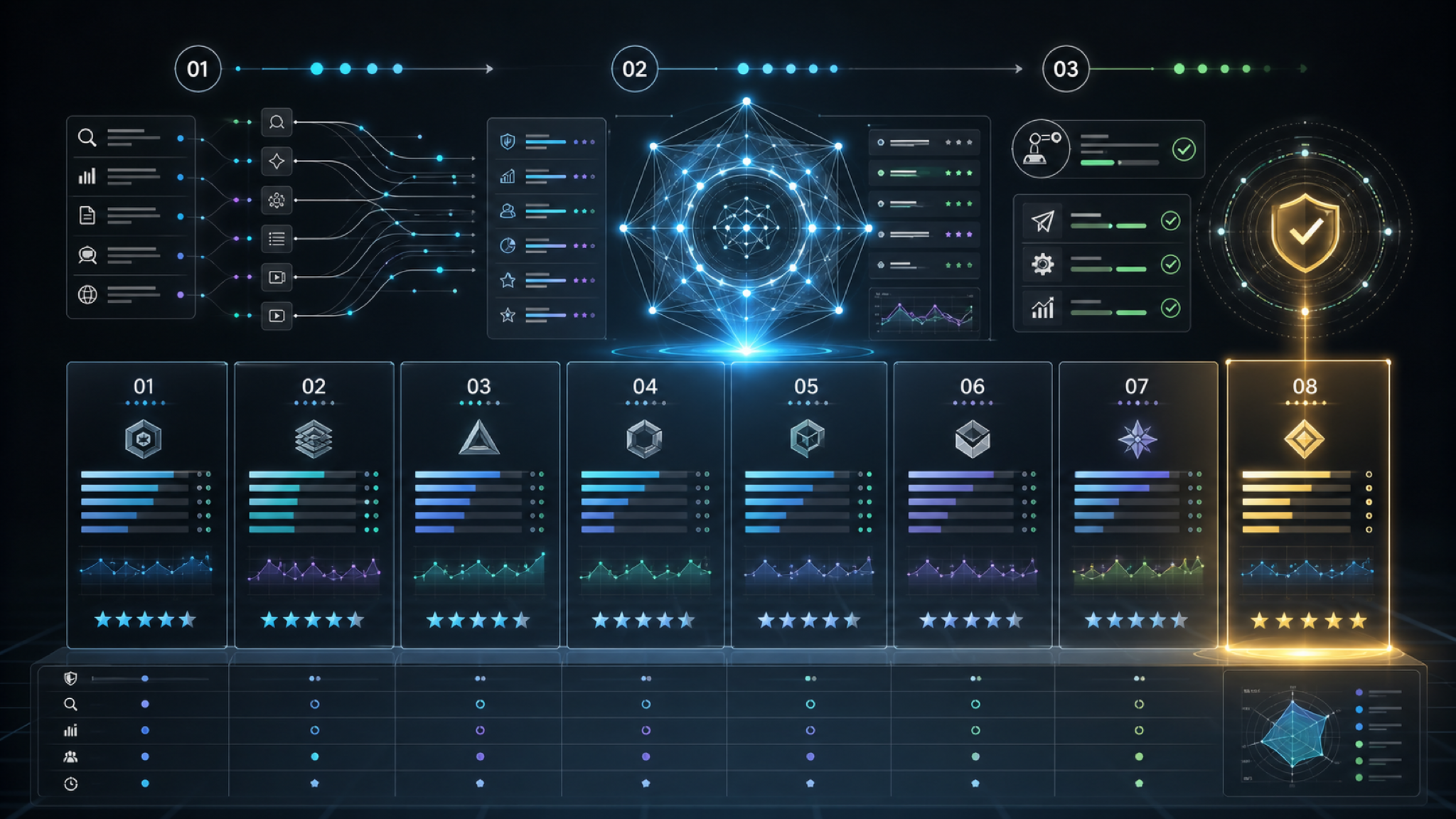
    Here, I’m sharing a concise list: four tools that I consistently rely on, alongside three others I’m currently evaluating for potential integration into my workflow.

    1. AI Assistants: ChatGPT, Claude, Perplexity

    These AI assistants have proven invaluable. When used with intentionality, they serve as powerful tools for research and analysis in AEO.

    For AEO, they assist in several key areas:

    • Competitive landscape research.
    • Content gap analysis.
    • Prompt testing.
    • Entity and topical coverage audits.
    • Structured content drafting.

    The difference from casual usage lies in applying a specific AEO research methodology.

    Why They’re Essential

    Understanding AI systems processing is key to AEO, and regularly engaging with these tools analytically is the most direct way to gain that knowledge.

    By querying AI with your audience’s prompts, you glean insightful data on sources, entities, and answer structures.

    Competitive Strengths

    These platforms each offer unique advantages:

    • ChatGPT is well-known for its broad synthesis of general knowledge.
    • Claude provides nuanced, analytical responses.
    • Perplexity excels with its clear citation methods, beneficial for AEO research.

    What You Can’t Do Without Them

    They are crucial for firsthand AEO status assessment, including:

    • Manual prompt testing: Assess your brand representation.
    • Competitive research: Use category-level queries to analyze competitor presentation.
    • Topical gap analysis: Identify missed opportunities.
    • Structural content analysis: Understand preferred AI answer formats.

    Caveats

    AI outputs are variable, influenced by many factors. These tools help build intuition and hypotheses that should be validated with quantitative data.

    Beware of the time-consuming nature of manual testing. Establish a framework and stick to it.

    2. Profound

    Profound specializes in AEO intelligence, tracking how AI platforms interact with and cite your content. It also measures brand mention frequency, sentiment, and competitor visibility.

    Why It’s Essential

    Profound provides direct insights into your brand’s presence in the AI answer ecosystem, shifting the focus from rankings to visibility in AI responses.

    Competitive Strengths

    Its cross-platform view offers comparative insights, allowing you to see how your citation share compares to competitors.

    What You Can’t Do Without It

    Without it, quantifying your brand’s presence in AI-generated answers becomes difficult. It also tracks citation shares and identifies content driving AI mentions.

    It’s a costly tool, but valuable for identifying areas where your brand is losing ground to competitors.

    Caveats

    As the tool evolves rapidly, the data remains a timely reflection of AI outputs. Remember, these metrics are signals, not precise rankings.

    3. Google Trends and Google Keyword Planner

    Google Trends shows search interest trends, while Keyword Planner gives search volume estimates, both critical for AEO strategy.

    Why They’re Essential

    Understanding demand is crucial for content optimization in AI answers. These tools provide reliable data on trending topics and search volume.

    ```json
{
  "alt": "The CapmatchOne logo with a gradient circle and bold text.",
  "caption": "Discover innovation with the CapmatchOne logo, featuring sleek typography and a modern gradient circle.",
  "description": "The CapmatchOne logo features bold, modern typography coupled with a gradient circle, symbolizing connection and innovation. The sleek design conveys a sense of progress and creativity. This image can be used for branding or promotional purposes, appealing to audiences interested in innovative solutions and forward-thinking designs."
}
```

    Competitive Strengths

    While Google Trends offers momentum analysis, Keyword Planner’s forecasting can prioritize content based on future demand.

    What You Can’t Do Without Them

    Build a dynamic AEO strategy by monitoring demand trends and identifying emerging topics and seasonal patterns.

    Caveats

    These tools reflect traditional search behavior, not AI-acre queries, and Keyword Planner requires an active Google Ads account.

    Always use them as a guide, not a complete picture, of AI demand.

    4. Google Search Console and Google Analytics

    These are essential for tracking search performance and on-site behavior, revealing insights into AI platform traffic and content effectiveness.

    Why They’re Essential

    They help diagnose whether AI-cited content is also visible in traditional search and track AI-driven visits and engagement.

    Competitive Strengths

    GSC offers unmatched query data, while GA4’s cross-channel tracking reveals AI platform engagement.

    What You Can’t Do Without Them

    Understanding AEO’s business impact and addressing indexing issues rely on these insights.

    They illuminate high-impression, low-CTR content, indicating potential AI Overview cannibalization.

    Caveats

    GSC data is Google-centric and has some limitations, while GA4 requires precise configuration for accurate tracking.

    Rapid-Fire Roundup

    With numerous tools still to explore, consider testing these emerging options to assess their AEO value:

    5. AI Trust Signals

    This tool evaluates credibility signals influencing AI citation decisions. It’s a new dimension worth exploring as AI citation mechanics advance.

    6. Ahrefs

    Ahrefs shines with backlink analysis and content gap insights, indirectly supporting AEO by building authority signals.

    Its Content Explorer helps identify high-performing content likely to be referenced by AI.

    7. Roadway AI

    This AI-native platform focuses on marketing growth activities, including attributing AEO signals to revenue.

    Keep an eye on this developing option as it may gain importance quickly.

    The Reality of AEO Tools: Fast-Moving and Imperfect

    The AEO landscape is evolving, with tools still catching up. Prioritize consistent measurement, analysis, and testing to extract actionable insights.

    Aiming for perfect setup may be unrealistic, but if a tool shows how it enhances your AEO efforts, that’s a positive start.

    Consult industry colleagues with firsthand tool experience before committing, as better or cheaper alternatives may emerge soon.


    Inspired by this post on Search Engine Land.

    crushpress.ai community screenshot
  • Maximize AI Visibility: Influence, Signals, and Citations

    Maximize AI Visibility: Influence, Signals, and Citations

    I’ve seen how crucial it is to understand that AI visibility starts long before users hit that search bar and ends with citations.

    These insights are vital in shaping what gets seen, summarized, and cited by AI systems.

    Currently, the focus has shifted towards improving the AI ROI story, and I’m right in the thick of it, learning what strategies truly work.

    This year, attending SMX Advanced will be more enlightening than ever, bringing unique perspectives and strategies.

    Let’s dive into why influence matters everywhere, and how it impacts AI citations.

    Rand Fishkin’s study, ‘Influence Happens Everywhere,’ reveals that, although Google commands the majority of search traffic, it’s the influence happening outside of search that truly dictates what people look for online.

    For many, wandering through social media or news sites builds their understanding and interest long before the actual search occurs.

    Despite the exciting growth of AI tools, achieving a stable presence online requires understanding how fragmented channels contribute to this influence.

    When crafting content, it’s essential to dominate the influence phase so thoroughly that an AI assistant doesn’t just suggest your brand—it demands it.

    That’s the strategic thrust behind the discussions at SMX Advanced in Boston and why I align my content calendar accordingly.

    My colleagues at Search Engine Land are among those shaping these discussions. Insights from thought leaders like Dave Davies and Carolyn Shelby are invaluable.

    They emphasize the importance of structured visibility signals and entity recognition, helping AI systems select the right brands to highlight.

    In my own analysis, the various AI models like ChatGPT, Perplexity, and others have unique methodologies for selecting sources, reinforcing the idea that an engaged, multi-platform strategy is critical.

    So, what does full-stack content truly mean today? It’s more than crafting blog posts; it’s about commanding entire topics with authority and depth, enhanced by AI tools like Jasper’s Enterprise Suite.

    ```json
{
  "alt": "The CapmatchOne logo with a gradient circle and bold text.",
  "caption": "Discover innovation with the CapmatchOne logo, featuring sleek typography and a modern gradient circle.",
  "description": "The CapmatchOne logo features bold, modern typography coupled with a gradient circle, symbolizing connection and innovation. The sleek design conveys a sense of progress and creativity. This image can be used for branding or promotional purposes, appealing to audiences interested in innovative solutions and forward-thinking designs."
}
```

    The ability to integrate real-time data, identify competitive content gaps, and create diverse multimedia content packages mean we’re shifting from simply generating content to dominating entire narratives.

    But AI tools can only serve the overarching strategy if our content offers the original insights that help us stand out in AI retrieval systems.

    This year, Purna Virji’s insights at SMX Advanced will challenge us to think critically about the real ROI in AI investment.

    I’m particularly interested in seeing how Google Vids is democratizing video content by eliminating the high entry barriers of previous video production methods.

    Now, video content can be produced and localized for a multitude of markets rapidly, a paradigm shift in how we engage audiences across the globe.

    The standards AI is setting for content — whether text, video, or multimedia — require a strategic framework that aligns with evolving platforms like GEO and AEO.

    For those in the trenches like me, adjusting focus towards an integration of structured data and earned media becomes imperative.

    The real challenge isn’t in the buzzwords but effectively navigating the volatile landscape of AI-driven citations.

    I recognize the adjustments needed in approach, especially when considering the stark differences in referral and conversion rates from traditional search versus AI platforms.

    So, practical actions for the rest of 2026? Audit your AI presence thoroughly, stop gating original research, secure your place in vibrant communities, and refine your focus towards citatability rather than simple visibility.

    Ultimately, the brands ready to adapt will continue to thrive in this AI-enhanced environment.

    Indeed, the bots are crawling, and it’s time I ensured my brand is worth citing.


    Inspired by this post on Search Engine Land.


    crushpress.ai community screenshot
  • Mastering Effective SEO Agent Skills: A Personal Journey

    Mastering Effective SEO Agent Skills: A Personal Journey

    I’ve been on a journey to develop over 10 SEO agent skills in just 34 days. Six of these succeeded on the first attempt, while the remaining four taught me invaluable lessons, especially about the overlooked importance of folder structure that many LinkedIn posts on AI SEO skills seem to miss.

    The reliability of these agents isn’t about crafting superior prompts; it lies in the architecture that supports them. Here’s my blueprint for building an agent from scratch, testing it diligently, refining it, and deploying it with full confidence.

    Here’s why many AI SEO skills don’t make the cut.

    A typical AI SEO prompt seen on platforms like LinkedIn usually looks something like this:

    You are an SEO expert. Analyze the following website and provide a comprehensive audit with recommendations.

    And that’s where it ends. One simple prompt, often coupled with some formatting directions, is shared with the world. The post then earns hundreds of likes, yet the output—while polished—is often up to 40% inaccurate.

    I know because I’ve been there. Initially, I tasked an agent to identify SEO issues on a website, and while it came back with 20 findings, eight were non-existent. The agent hadn’t truly visited many of the reported URLs.

    ```json
{
  "alt": "The CapmatchOne logo with a gradient circle and bold text.",
  "caption": "Discover innovation with the CapmatchOne logo, featuring sleek typography and a modern gradient circle.",
  "description": "The CapmatchOne logo features bold, modern typography coupled with a gradient circle, symbolizing connection and innovation. The sleek design conveys a sense of progress and creativity. This image can be used for branding or promotional purposes, appealing to audiences interested in innovative solutions and forward-thinking designs."
}
```

    Here are three key issues that doom single-prompt skills:

    • No tools: The agent can’t physically verify the website; it relies on training data to guess. Queries about canonical tags, for instance, result in assumptions rather than real-time analysis of HTML.
    • No verification: There’s no check on the truthfulness of output. An agent might report missing meta descriptions across 15 pages, but without verification, we don’t know if these pages are even indexed correctly or intentionally set as noindexed.
    • No memory: The agent’s feedback varies wildly with each use, showing inconsistency due to the lack of a template or structured history of previous runs.

    In essence, if your skill is just a prompt within a lone file, you’ve got a 50/50 chance at best.

    Every agent in my system has a dedicated workspace. Consider it akin to a new employee’s desk, equipped with all necessary resources. For example, our agent designed to crawl and map website architecture works within this kind of structured environment:

    agent-workspace/
      AGENTS.md          instructions, rules, output format
      SOUL.md            personality, principles, quality bar
      scripts/
        crawl_site.js    tool the agent calls to crawl
        parse_sitemap.sh tool to read XML sitemaps
      references/
        criteria.md      what counts as an issue vs noise
        gotchas.md       known false positives to watch for
      memory/
        runs.log         past execution history
      templates/
        output.md        expected output structure

    The workspace includes six key components services that just one prompt couldn’t dream of covering fully.

    Within AGENTS.md, I’ve articulated a meticulous methodology comprising thousands of words. Instead of a simple instruction like “crawl the site,” I detailed each step: “Start with the sitemap; if it doesn’t exist, check various routes like /sitemap.xml, /sitemap_index.xml, and robots.txt for references.”

    ```json
{
  "alt": "Flowchart depicting the sandbox training loop for auditing with steps including audit, comparison, and deployment.",
  "caption": "Explore the Sandbox Training Loop: A detailed flowchart guiding the auditing process from sandbox simulation to real-site deployment.",
  "description": "This flowchart outlines the Sandbox Training Loop, a process used in auditing to ensure accuracy and efficiency. It begins with the Sandbox Site, where known issues are planted, followed by an audit by the agent. The results are compared to known issues, and adjustments are made depending on whether issues are missed or false positives occur. The loop continues until the audit is clear, leading to deployment on real sites. This process is essential for refining auditing practices."
}
```

    Scripts represent the tools the agent utilizes. Instead of writing curl commands from scratch for each crawl, the agent can run node crawl_site.js -url to analyze website data, which is far more efficient and reliable.

    References consist of criteria that help the agent distinguish between significant issues and noisy false positives, using a wealth of knowledge I’ve amassed over two decades.

    To ensure that every execution is informed by the past, I keep meticulous logs under memory, serving as institutional knowledge that empowers consistency across agent runs.

    Through templates, I outline the exact format I expect from the output, thereby maintaining high quality across multiple iterations of the same task.

    Building from scratch, the first naive attempt involved simple instructions that inevitably failed when confronted with modern CDNs. By iterating and incorporating tools like crawl_site.js, enhancing with rate limiting, and tackling JavaScript rendering, I’ve honed an architecture that delivers consistent outputs across runs.

    The path involves a series of iterations where each failure metamorphoses into a permanent lesson, gradually shaping a sophisticated system. This methodically structured approach ensures that what we build is not just technically proficient but measurably better with every successive run.


    Inspired by this post on Search Engine Land.


    crushpress.ai community screenshot
  • Transforming SEO: A Guide to Semantic and Programmatic Success

    Transforming SEO: A Guide to Semantic and Programmatic Success

    As I dive into the world of Programmatic SEO (pSEO), I understand that many people in the industry view it with suspicion, associating it with low-quality pages and duplication. Often, it’s seen simply as replicating city names on static templates.

    Google’s policies on content spam are clear: strategies that generate unoriginal content just to influence rankings will not be tolerated.

    In the modern landscape, pSEO isn’t about mass page generation. Instead, I aim to address thousands of search intents with local specificity and semantic depth, achieving what isn’t possible manually.

    Here, I share my blueprint for transitioning from syntax-based to semantics-based pSEO, using methods we’ve tested with major companies in Brazil.

    When embarking on a pSEO project, it’s common to start with templates. Yet, this approach often misses the mark. For instance, the intent behind “Best Hotel in [Las Vegas]” differs from “Best Hotel in [Orlando],” focusing on entirely different priorities and amenities.

    I leverage AI to make content more granular, ensuring that each page addresses unique travel intents rather than generic keywords. My goal isn’t just to create a thousand pages, but a thousand pages that each fulfill a specific travel need.

    Before creating content, I must answer a vital question: where does my domain have authority to rank? Failed pSEO projects often miss this step, targeting areas without established authority. My solution involves deep analysis using real Google Search Console data.

    ```json
{
  "alt": "The CapmatchOne logo with a gradient circle and bold text.",
  "caption": "Discover innovation with the CapmatchOne logo, featuring sleek typography and a modern gradient circle.",
  "description": "The CapmatchOne logo features bold, modern typography coupled with a gradient circle, symbolizing connection and innovation. The sleek design conveys a sense of progress and creativity. This image can be used for branding or promotional purposes, appealing to audiences interested in innovative solutions and forward-thinking designs."
}
```

    Through cluster audits, priority definitions, and strategic calendar alignment, I ensure my pSEO actions enhance topical authority while addressing existing semantic gaps.

    Brand consistency is a hurdle when adopting AI. By implementing context governance, I ensure AI-generated content remains true to the brand’s voice, using guidelines to prevent deviations.

    For internal linking, I adopt the semantic mesh strategy to ensure that every page connects logically, directing the user through a logical journey rather than dead ends.

    In practice, understanding regionalization and seasonality at scale is crucial. Ânima Educação in Brazil is a perfect case study, showing how strategic pSEO leads to precision and considerable business impact.

    As I scale content, monitoring with technical SEO agents helps maintain site quality, foreseeing issues like indexing problems or high LCP in real time.

    In summary, successful SEO is about integrating the efficiency of technology with the nuanced human touch to deliver timely and relevant content to users.


    Inspired by this post on Search Engine Land.


    crushpress.ai community screenshot