Author: shivamcrushpressai

  • How to Build Vibe-Coded SEO Tools That Earn Search Demand

    How to Build Vibe-Coded SEO Tools That Earn Search Demand

    You have found a search query that deserves more than another long page. The user needs to calculate, compare, filter, check, choose or generate something, and an interactive tool could finish that job faster than prose.

    An AI coding assistant can shorten the path from idea to working interface. It cannot decide whether the idea deserves a page, make unreliable logic trustworthy or turn a frustrating widget into a useful search result. Your advantage comes from choosing the right task, specifying it clearly and building the surrounding page as carefully as the tool.

    Key takeaways

    • Start with a repeatable user decision, not a keyword that merely contains the word calculator or generator.
    • Choose the smallest interface that removes a meaningful step from the user’s work.
    • Write the rules, inputs, outputs, edge cases and failure states before asking AI to generate code.
    • Keep the methodology, assumptions and useful supporting information visible in ordinary page content.
    • Verify the logic independently, then test accessibility, mobile use, performance, privacy and analytics.
    • Scale a tool format only after real search and usage data show that people can find and complete it.

    Choose a task that deserves an interactive result

    Vibe coding is the use of natural-language instructions to generate and refine software with an AI coding assistant. For an SEO team, its immediate value is a shorter prototyping loop. A marketer can describe a calculator, selector or comparison interface, inspect a working version and refine the behavior without waiting for every experiment to enter a development roadmap.

    That lower barrier creates a new problem: it becomes easy to publish tools nobody needs. A useful tool compresses a task. It accepts information the user already has, applies a defensible rule and returns an answer that changes what the user does next.

    Before you build, test the idea with these questions:

    1. What decision is the user trying to make? Write it as a sentence that ends with an action, such as choosing an option, checking likely eligibility or finding a date.
    2. Which inputs change the answer? If every visitor receives the same result, you probably need a concise answer page rather than a tool.
    3. Can you explain the transformation? You should be able to state how each input affects the result without hiding behind the AI that wrote the code.
    4. Is the result useful immediately? A tool should return the answer, show the important assumptions and make the next step obvious.
    5. Can you maintain the rules? If rates, deadlines, program criteria or product data change, someone must own those updates.

    The interface should follow the task. A calculator fits deterministic arithmetic. An eligibility checker fits a set of explicit conditions. A checklist fits a process with completion states. A calendar or countdown fits a date-based question. A dynamic table fits comparison across variables. A persona selector fits a situation in which different users care about different parts of the same offer. A generator fits a request for a novel output, provided you can keep the output relevant and safe.

    Calculators, checklists, calendars, countdown timers and generators have all worked as the central experience on search-focused tool pages. Their simplicity is part of the lesson. You do not need a miniature software platform when a focused control and a clear result eliminate the user’s immediate friction.

    Persona controls deserve special attention. A traveler arranging an airport transfer with children has different concerns from someone traveling alone. Tabs can let each visitor identify their situation and reveal the safety, convenience or flexibility information that matters to them. The control is useful because it resolves a real information-selection problem, not because tabs look more sophisticated than headings.

    Use your own search data to find comparable opportunities. Group Search Console queries by the task behind them. Look for repeated questions involving cost, quantity, dates, eligibility, compatibility, comparison or selection. Read the landing page for each group and identify the manual work it still leaves to the visitor. Then inspect the search results. A results page filled with explanations can expose an interface gap, but only when the query actually requires interaction.

    Reject an idea when the answer is static, the underlying data cannot be maintained, the result would imply certainty you cannot support or the tool would collect sensitive information without a necessary reason. Faster code generation does not improve a weak premise.

    Turn the idea into a behavior contract before prompting

    An exploded blank web interface connects input, control, processing and result modules, surrounded by empty, valid, warning and completed states.

    A loose prompt such as “build an SEO calculator” delegates the product decision to a model that does not know your audience, business rules or tolerance for error. The first deliverable should be a behavior contract: a plain-language specification detailed enough that another person could predict what the tool will do.

    Include the following in that contract:

    • User and job: who is using the tool, the question they bring and the decision the result should support.
    • Inputs: every field, its format, unit, valid range, default state and whether it is required.
    • Rules: the calculation, decision tree, data mapping or content-selection logic in plain language.
    • Output: the primary answer, supporting explanation, assumptions, rounding behavior and next action.
    • Edge cases: empty fields, invalid values, unavailable combinations, boundary conditions and conflicting selections.
    • States: the initial view, active input, validation error, completed result, loading state and external-service failure where relevant.
    • Data ownership: where changeable rules come from, who approves them and how an expired rule will be detected.
    • Privacy boundary: which inputs stay in the browser, which are transmitted and what does not need to be collected at all.
    • Measurement: the user actions that indicate a start, successful completion, error or valuable next step.
    • Accessibility: labels, keyboard behavior, focus movement, error announcements and a result that does not depend on color alone.

    Now split generation into reviewable stages. Ask for the input model and core logic before visual polish. Review those rules. Ask for the smallest working interface. Review it on narrow and wide screens. Add validation and error states. Review them with a keyboard. Add tracking only after the event names and permitted data are clear. Small changes make it easier to see when a later prompt breaks behavior that already worked.

    Keep reference outcomes outside the generated implementation. Work through representative cases manually or with an independently reviewed calculation, record the expected result and compare the tool against it. If the model writes both the logic and the only test that declares that logic correct, the same misunderstanding can appear on both sides.

    Do not expose credentials in browser code or paste private production data into a coding prompt. Bring a developer into the loop when the tool requires authentication, sensitive data, payments, complex integrations or infrastructure that must handle material scale. Vibe coding changes prototype speed; it does not remove engineering, security or operational ownership.

    Build a page that remains useful without operating the tool

    The tool should be the main event, but it should not be the page’s only intelligible content. A person, crawler or answer system should be able to understand the purpose, method and limitations without guessing what happens after every possible interaction.

    A strong tool page usually follows this order:

    1. State the job. Use a short opening that identifies what the tool returns and the information the visitor will need.
    2. Present the interface. Keep labels explicit, put units beside their fields and avoid making users read a long preamble before they can begin.
    3. Explain the result. Show the answer in selectable text, name the assumptions and say what the user can do with it.
    4. Show the method. Describe the formula, rules or decision path in language a qualified reader can audit.
    5. Prevent predictable mistakes. Cover confusing inputs, common interpretation errors and cases the tool does not handle.
    6. Support the next step. Add the relevant walkthrough, comparison, application path or related resource.
    7. Expose maintenance context. When the tool depends on changeable criteria, identify what the criteria cover and make updates visible on the page.

    This combination can be more competitive than either a bare widget or a text-only page. An eligibility page that paired its interactive check with a transparent algorithm, application-error guidance, historical updates and a walkthrough reached the first page within three days in one documented launch. Treat that outcome as an example of what strong intent satisfaction can enable, not as a ranking timetable you can promise.

    Make the experience legible to search and answer systems

    • Give the page a stable canonical URL. Do not create indexable URLs for every input combination unless each state represents a durable search intent and has unique, maintainable value.
    • Keep the task definition, input meanings, method, assumptions and limitations in ordinary HTML content. Do not place all useful context inside a canvas, image or interaction-only state.
    • Write labels and explanations with explicit entities and units. “Monthly cost in Canadian dollars” is clearer than “Amount,” both for a visitor and for a system extracting meaning.
    • Return a result that can be selected, copied and understood out of context. A number without its unit, period or qualifying condition is not a complete answer.
    • Use accessible control semantics. Tabs should behave like tabs, form controls need associated labels, and keyboard focus should move predictably when an error or result appears.
    • Apply JSON-LD only when the selected type accurately describes the visible page. Keep names, descriptions and other marked-up claims consistent with what the visitor can verify. Structured data can clarify a page; it cannot repair misleading logic or missing content.
    • Link the tool from pages that already serve the same intent. A relevant guide can explain the problem and hand the calculation to the tool, while the tool can return users to the deeper explanation.

    Performance is part of the product decision. A simple formula does not need a heavy application shell. Load only what the interaction uses, reserve space for results so the layout does not jump and make external-service failures understandable. If a remote API is optional, decide whether a local fallback can still answer part of the user’s question.

    Verify logic and consequence, not just appearance

    A polished result can still be wrong. Build a test matrix before publication and repeat it whenever a rule, dependency or generated component changes.

    Test caseWhat to verify
    Empty stateThe tool explains what is required without showing a misleading default result.
    Invalid inputThe message identifies the field, explains the correction and preserves valid work.
    Boundary conditionThe rule changes at the intended point and the explanation matches the output.
    Representative inputThe result agrees with an independently established reference outcome.
    Conflicting selectionsThe interface prevents or clearly resolves combinations the rules do not support.
    Refresh, back and shared stateThe page retains, resets or reconstructs inputs according to the behavior contract.
    Keyboard and assistive useEvery control, error and result can be reached and understood without a pointer.
    Dependency failureThe page avoids false answers and gives the user a safe next step.

    If the output could influence a medical, legal or financial decision, do not let an AI-generated implementation become the final authority. Have the rules and wording reviewed by an appropriately qualified person, distinguish an estimate from a determination and state the limits beside the result. The specific downside is false confidence: an interface can make uncertain or incomplete logic look definitive.

    Measure task completion before you scale the format

    A researcher observes three people testing a blank web tool, with one reaching a result, one seeing a warning and one hesitating at a control.

    Organic visits tell you that a page was discovered. They do not tell you whether the tool worked. Instrument the interaction as a short funnel: tool view, meaningful start, validation error, successful completion and result action. A result action might be copying the answer, opening a relevant application page, viewing a recommended option or continuing to a related guide.

    Do not send raw personal inputs into analytics simply because the interface makes them available. Record the minimum event information needed to diagnose the experience. For many tools, the event name, tool version, broad error type and completion state are more useful than the user’s exact values.

    Read search and product signals together:

    • Impressions increase but clicks do not: check whether the title and description make the utility clear and whether the page is appearing for the intended task.
    • Clicks arrive but starts are scarce: check query-to-page fit, the placement of the interface and whether the required inputs feel disproportionate to the promised answer.
    • Starts are healthy but completions are weak: inspect validation events, confusing labels, mobile controls, load failures and unnecessary fields.
    • Completions occur but the next step is ignored: confirm that the action logically follows the result. Do not force a commercial call to action onto an informational task.
    • Usage is strong but search discovery is weak: improve internal links, visible explanations and query alignment before rebuilding a tool users already understand.
    • Search traffic grows but rule maintenance slips: pause expansion and fix ownership. An outdated answer becomes more harmful as its audience grows.

    A dedicated category can become worthwhile once several tools serve related demand and each has a clear purpose. One documented category containing ten simple tool pages generated more than 5,000 clicks in two months, even with seasonal variation. That is a useful proof of possibility, not a portfolio benchmark. Your decision to scale should depend on your own query demand, completion data, maintenance cost and downstream value.

    When a format works, standardize the repeatable parts: the input shell, validation patterns, result component, methodology section, analytics events, accessibility behavior and update record. Keep the rules and explanatory content specific to each task. A shared component system speeds later launches; duplicated thin pages merely multiply maintenance.

    Start with one Search Console query family in which users must perform work after reading the current answer. Write the behavior contract, calculate the reference outcomes and build the smallest interface that completes that work. If people can find it, finish it and trust the explanation, you have a format worth extending.

    References

  • Discover Your AI Rankings with Profound’s Agent Analytics

    Discover Your AI Rankings with Profound’s Agent Analytics

    As a Profound customer, I’m excited to share that I can now clearly see where my site and pages stand in terms of AI citations compared to other peers in the Profound Agent Analytics Network.

    This feature empowers me with detailed insights, allowing for a competitive analysis that helps in enhancing my digital strategy and boosting my AI visibility effectively.


    Inspired by this post on Try Profound Blog.


    crushpress.ai community screenshot
  • Exciting Changes: Google Ads to Auto-Link YouTube Channels

    Exciting Changes: Google Ads to Auto-Link YouTube Channels

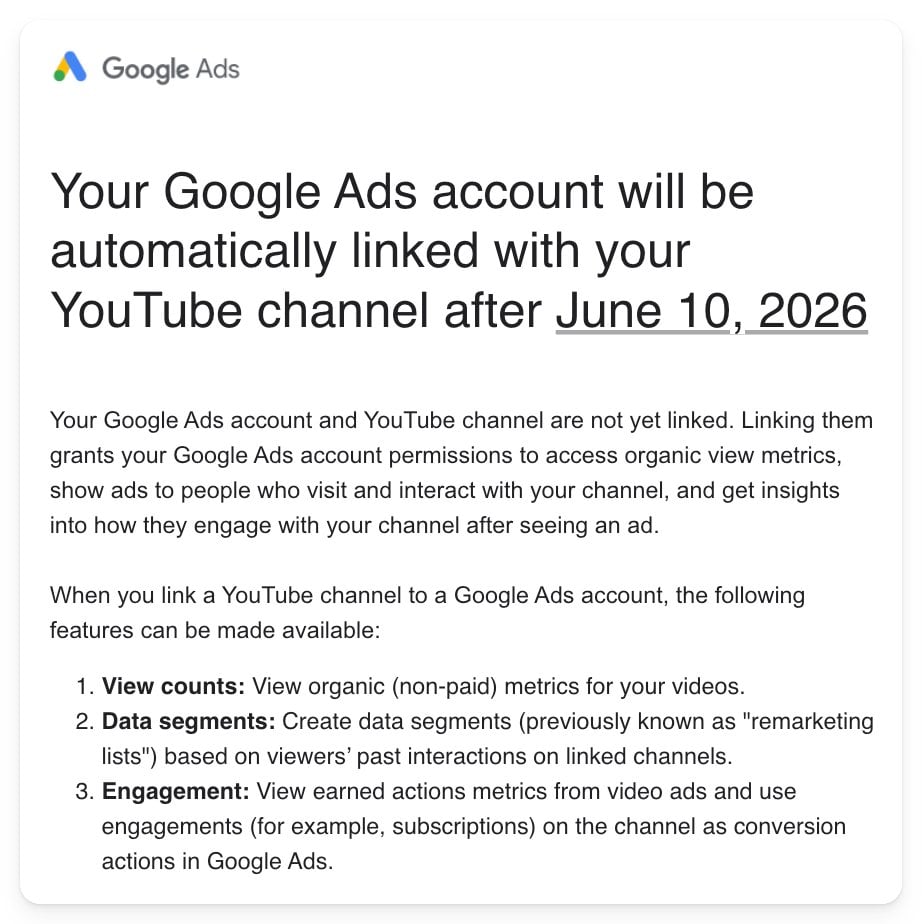
    Starting June 10, I’ll enjoy seamless access to valuable YouTube engagement data through Google Ads, all thanks to an automated linking feature.

    I received a notification from Google alerting me that my Google Ads accounts will soon be automatically linked to any associated YouTube channels. This change comes into effect on June 10, 2026, and eliminates the need for manual connections.

    Now, without lifting a finger, I can access a world of video engagement data and targeting features directly through Google Ads.

    Why it matters to me. By linking my YouTube channel, I can now dive into deeper insights and leverage more advanced targeting options that I might have otherwise overlooked.

    With this automation, video data becomes a standard tool in my campaign optimization arsenal.

    Take a closer look. I’ll have instant access to organic video metrics like view counts right within Google Ads.

    I’m also able to create audience segments based on user interactions with my YouTube content, such as video views and channel engagement.

    ```json
{
  "alt": "Notification about Google Ads and YouTube channel linking on June 10, 2026.",
  "caption": "Get ready for seamless advertising! Google Ads will link to your YouTube channel by June 10, 2026, streamlining access to metrics and engagement insights.",
  "description": "This image is a notification indicating that Google Ads accounts will automatically link with YouTube channels starting on June 10, 2026. The message highlights the benefits of this integration, such as gaining access to view counts, data segments, and engagement metrics. This update aims to enhance advertising strategies and user interaction analytics on YouTube through Google Ads."
}
```

    Extra benefits. This integration means I can track ‘earned actions’ like subscriptions or additional views spurred by my ads, making these interactions valuable conversion signals.

    Such insights offer a clearer picture of how my video campaigns impact user behavior beyond mere clicks.

    What I’m watching for. It’ll be fascinating to see how my measurement strategies evolve with the integration of organic and paid video data, and whether this encourages a broader adoption of engagement-based conversion tracking.

    The bottom line. Google is making it impossible to ignore YouTube insights, turning automatic linking into a necessary step for honing targeting, measurement, and performance.

    First spotted. Multiple advertisers, including myself, were informed by Google. Notable mentions are Menachem Ani, Hana Kobzová, and Arpan Banerjee.


    Inspired by this post on Search Engine Land.


    crushpress.ai community screenshot
  • Google

    Google

    As a passionate follower of SEO developments, I find Google

    ```json
{
  "alt": "The CapmatchOne logo with a gradient circle and bold text.",
  "caption": "Discover innovation with the CapmatchOne logo, featuring sleek typography and a modern gradient circle.",
  "description": "The CapmatchOne logo features bold, modern typography coupled with a gradient circle, symbolizing connection and innovation. The sleek design conveys a sense of progress and creativity. This image can be used for branding or promotional purposes, appealing to audiences interested in innovative solutions and forward-thinking designs."
}
```

    Inspired by this post on Search Engine Land.


    crushpress.ai community screenshot
  • AI Legal Risk for Business: A Practical Exposure Audit

    AI Legal Risk for Business: A Practical Exposure Audit

    Your AI legal risk probably isn’t sitting in an experimental lab. It’s in ordinary work: a marketer pastes customer information into a model, an editor publishes an unsupported product claim, or a team promises exclusive ownership of material that a machine largely produced.

    You can find much of that exposure before it becomes a dispute. The practical job is to map each AI workflow, identify what enters and leaves it, assign a human decision-maker, and retain enough evidence to explain what happened. This is an operational risk framework, not a legal opinion. If an AI use could affect contractual rights, regulatory duties, intellectual property, or an individual’s interests, have qualified counsel assess the specific facts and jurisdiction.

    Map the workflow, not just the AI tool

    An isometric office scene follows an AI-assisted task from a customer record through generation, editorial review, managerial approval, publication, and evidence storage.

    A list of approved tools is useful, but it isn’t an exposure audit. The same model might be used for harmless brainstorming, confidential document analysis, public product claims, or automated customer responses. Those uses don’t carry the same consequences.

    AI is accelerating familiar legal risks involving intellectual property, privacy, consumer protection, misinformation, and liability. That is good news for your first review: you don’t have to predict an entirely new field of law. You have to locate where AI touches obligations the business already has.

    Build the inventory around use cases. Give each recurring workflow its own row, even when several rows use the same vendor. Record:

    • The team and accountable owner.
    • The business purpose and any decision the output influences.
    • The data, documents, prompts, images, code, or other material sent to the system.
    • Whether inputs contain personal, confidential, licensed, or third-party material.
    • Where the output goes: private notes, an internal system, a client deliverable, a website, JSON-LD, an advertisement, or a customer-facing assistant.
    • The human review required before the output is used.
    • The provider, account type, model or feature used, and relevant retention or training settings.
    • The evidence retained, including sources, revisions, approvals, and important vendor terms.

    That last point matters because AI features change. Recording only the vendor name may not let you reconstruct a decision later. Capture the actual product or feature closely enough that the workflow owner can explain which system handled the information.

    AI workflowExposure to examineEvidence to retain
    Marketing copy, SEO content, and schema markupUnsupported claims, copied expression, unclear ownershipClaim sources, human revisions, reviewer approval
    Customer-facing chatbotIncorrect answers, misleading representations, personal-data handlingApproved answer set, test results, escalation rules, retention decision
    Internal document summarizationPersonal, confidential, or licensed material sent to a providerPermitted data class, access controls, provider settings, deletion terms
    Generated design, image, or codeThird-party rights, license restrictions, protectability, promised ownershipInput provenance, similarity or license checks, material human changes

    Flag a workflow for deeper review when it publishes externally, processes personal or confidential data, makes a consequential recommendation, creates something the business expects to own, or acts without a human approval step. These are screening signals, not legal conclusions. Their purpose is to keep a risky use from disappearing inside a generic label such as “content assistance.”

    Separate input rights, output risk, and ownership

    Teams often compress every intellectual-property question into “Can we use AI for this?” That question is too broad to answer. Break it into three decisions: whether you may submit the input, whether you may use the output, and whether anyone can claim enforceable ownership of the finished work.

    Check the material going into the model

    Permission to read or possess a file does not automatically settle whether it may be uploaded to an external system. A customer brief, licensed image library, unpublished manuscript, source-code repository, or partner document may be governed by a contract, confidentiality term, or access restriction.

    Before submission, identify who supplied the material, what rights the business received, whether the provider may retain or use it, and whether the workflow exposes it to anyone who was not already authorized. If the answer depends on contract language, stop and have counsel interpret that language. Guessing can compromise confidentiality or create a breach that cannot be fixed by deleting the eventual output.

    Inspect the output for third-party material

    A polished answer is not proof of clean provenance. AI output can unintentionally incorporate protected material, creating a practical infringement risk even when the user never requested a copy. Review distinctive text, images, code, characters, slogans, and other recognizable elements before release. For code, inspect dependencies and license implications rather than relying only on a general plagiarism check.

    Give the reviewer the prompt, known source material, and intended channel. Asking whether an output merely “looks original” is too subjective. Ask whether its important elements can be traced, whether suspicious passages require a targeted search, and whether the business could defend its permission to use them.

    Document the human contribution you expect to own

    The U.S. Copyright Office position reflected in the available guidance is that purely AI-generated work is not protected and human creativity must materially shape the work for protection to become possible. Typing a prompt and accepting the first result is therefore a weak foundation for an ownership promise.

    Preserve evidence of the human work that made the final result distinct: the original brief, independently created structure, source selection, rewritten sections, editorial judgments, discarded drafts, compositional decisions, and final approval. The aim isn’t to save meaningless activity. It is to show where a person exercised creative control.

    This distinction belongs in client and contractor workflows. Don’t promise that a customer will receive exclusive, fully protectable rights merely because your contract uses the word “deliverable.” Align the promise with the provider’s terms, third-party licenses, the human contribution, and counsel’s view of the governing law.

    Patent questions need separate treatment. Revised U.S. Patent and Trademark Office guidance has left practical questions about human-conceived inventions developed with AI. If AI materially contributed during invention or development, preserve the chronology and involve patent counsel before making inventorship or filing decisions.

    Treat every public claim as your company’s own statement

    A disclaimer that content was “AI assisted” does not make a false statement accurate. Once your business publishes an output, customers, regulators, partners, and search systems encounter it as a representation made under your brand.

    The dangerous errors are not limited to obvious nonsense. Generative systems can produce invented facts, fabricated citations, and reasoning that sounds coherent but does not support the conclusion. A fluent paragraph can therefore pass an ordinary copy edit while failing a factual review.

    Review claims rather than prose. Maintain a simple claim ledger for externally published material. For each substantive assertion, record:

    • The exact claim a customer will see or reasonably infer.
    • The evidence that supports it, with enough detail for another reviewer to locate that evidence.
    • The product, service, market, audience, and period to which it applies.
    • Important qualifiers that must remain attached to the claim.
    • The person who approved it and the event that should trigger re-review.

    This is especially important for comparisons, rankings, prices, performance statements, testimonials, guarantees, and claims about safety, health, money, or legal outcomes. Those claims warrant specialist review because an error can cause more than a correction or ranking loss.

    SEO and AEO teams should apply the same standard to structured data. A false or stale statement does not become safer because it appears in JSON-LD instead of visible copy. Confirm that product attributes, prices, availability, ratings, organizational facts, author information, and FAQ answers match the page and the underlying business records. If automation updates those fields, assign an owner to the feed and define what happens when the source system and published markup disagree.

    Use a release gate that is proportional to consequence:

    1. Extract each factual and implied claim from the draft.
    2. Verify it against evidence that actually supports the same scope and wording.
    3. Open every citation; don’t accept a plausible title, quotation, or URL without checking it.
    4. Restore necessary qualifiers, limitations, and effective dates that generation or editing removed.
    5. Confirm that the visible page, metadata, schema, advertisement, email, and chatbot answer do not make conflicting representations.
    6. Record the reviewer and approval before publication.

    Keep unverified material out of production. A visible internal status such as “UNVERIFIED – DO NOT PUBLISH” is more reliable than hoping a placeholder citation will be remembered during the final edit. If evidence cannot be found, remove or narrow the claim rather than polishing it.

    Keep personal data out until its handling is defensible

    Privacy exposure begins when information enters the workflow, not when the generated answer is published. Personal data may appear in prompts, uploaded documents, chat histories, feedback, retrieval indexes, output logs, analytics, or support transcripts.

    The regulatory landscape includes frameworks such as the GDPR in the European Union, PIPEDA in Canada, and the CCPA in California. Their requirements differ, so a generic global statement that “we comply with privacy law” is not an operational control. Determine which people, data, activities, and jurisdictions are involved. Have a privacy professional or qualified counsel decide the applicable legal basis and obligations.

    Before approving a workflow involving personal data, require clear answers to these questions:

    • What personal data is required, and can the task be completed with less data?
    • Why is the business using it, and is that use compatible with what the person was told?
    • Does the provider use prompts, files, outputs, or feedback to train or improve its systems?
    • How long are inputs, outputs, logs, backups, and derived data retained?
    • Where is the data processed, who can access it, and which other providers receive it?
    • Can the business locate, correct, export, restrict, or delete the data when required?
    • What security, incident-notification, deletion, and audit commitments appear in the contract?
    • Who owns the response when a customer or regulator asks how the data was handled?

    If the owner cannot answer those questions, don’t send the data yet. Use approved enterprise controls where available, remove unnecessary identifiers, or redesign the workflow around synthetic or non-personal material. Redaction is not automatically anonymization: remaining details may still make someone identifiable when combined. Ask the privacy lead to assess that risk when the data is sensitive or the context is distinctive.

    Separate privacy from confidentiality during the review. A document can contain no personal data and still expose trade secrets, contract-restricted information, security details, or a client’s confidential plans. Conversely, information may be publicly visible yet remain personal data governed by a specific use and jurisdiction. Give each category its own permission rule.

    Prepare a response path before an incident. The workflow owner should know how to pause the use, identify the account and provider involved, preserve necessary evidence without spreading the data further, contact privacy and security personnel, and route rights requests or regulator communications. Once a request or incident exists, don’t improvise deletion or send a casual explanation. Preservation, notification, and response duties can conflict, so counsel should direct the specific response.

    Build controls people can use at the moment of decision

    An employee pauses before entering customer information while a colleague verifies rights, accuracy, privacy, and release controls built into the workstation.

    A long AI policy won’t help if an employee cannot tell whether a customer file is allowed in a particular feature. Convert policy into a small operating system that answers the questions people face while working.

    • An AI use register with a named business owner for every recurring workflow.
    • An approved-tool matrix showing which accounts and features may handle public, internal, confidential, personal, and sensitive material.
    • A review matrix defining who approves public claims, intellectual-property-dependent work, personal-data uses, and consequential decisions.
    • A contract checklist covering provider data use, retention, deletion, security, intellectual property, notice of material changes, responsibility, and liability terms.
    • An evidence pack for each higher-exposure workflow containing the purpose, data decision, test results, human review, source records, and current approval.
    • A reporting route that lets staff pause questionable work without having to prove a legal violation first.

    Assign one accountable owner, but involve the functions that control the underlying risk. Marketing or SEO can own publishing accuracy; privacy can decide data handling; security can assess access and incident controls; procurement can preserve vendor commitments; and counsel can interpret rights, duties, and disputed contract language. “Legal owns AI” is not a workable substitute for operational ownership.

    Test the control with a real workflow. Ask a person unfamiliar with the project to locate the approved tool, permitted data class, required reviewer, evidence record, and stop condition. If those answers live in separate inboxes or depend on knowing whom to ask, the control is not ready for routine use.

    Key takeaways

    • Audit AI by business use, input, output, audience, and decision – not by vendor name alone.
    • For intellectual property, answer three separate questions: may you submit the input, may you use the output, and can you support the ownership being promised?
    • Verify every external claim and citation as a representation made by your company, including claims encoded in metadata and schema.
    • Do not process personal or confidential data until purpose, provider handling, retention, access, deletion, and response ownership are clear.
    • Keep evidence of meaningful human contribution, factual review, permissions, settings, and approval.
    • Escalate uncertain rights, high-consequence uses, incidents, and jurisdiction-specific questions to qualified counsel.

    Know when to stop the workflow

    Pause and obtain specialist advice when a workflow depends on unclear contract rights, sends sensitive or confidential information to an unapproved provider, appears to reproduce distinctive protected material, influences a high-consequence decision, or makes a claim that could materially affect someone’s health, safety, finances, legal position, employment, or access to a service.

    Stop routine handling immediately if you receive a demand letter, rights request, security alert, regulator inquiry, or credible complaint about harmful or misleading output. Don’t destroy records, admit liability, or continue publishing while the facts are unclear. Preserve the relevant evidence and let the appropriate legal, privacy, security, or compliance professional direct the response.

    Start with one live, public-facing AI workflow this week. Map its inputs, claims, data, reviewer, and evidence trail. Fix the first unresolved permission or approval gap before expanding the audit. That single completed workflow will give your team a control pattern it can repeat across the business.

    References

  • How to Build the Data Foundation for AI-Powered Ads

    How to Build the Data Foundation for AI-Powered Ads

    You’ve connected your ad accounts to an AI system, and it can see every impression, click, conversion and campaign change. That may look like a strong data foundation. It isn’t. The system still can’t tell whether a lead became a customer, whether an order was profitable or whether operations can fulfill the demand it creates.

    Before you let AI move budget or restructure campaigns, you need a business outcome layer between the advertising platforms and the agent. Build that layer well, and automation can pursue results your company actually values. Skip it, and the agent will optimize the numbers it can see – even when those numbers point away from profit.

    Give the AI an optimization contract before giving it data

    An ad platform knows what happened inside its own boundary. It can report delivery, interactions and the conversions attributed to its ads. It usually doesn’t know the quality of a sales lead, the margin on a product, the value of a renewed account or the amount of work your team can fulfill. An agent using only those platform signals operates inside a closed optimization loop.

    More integrations won’t fix that problem until you define what the agent is supposed to optimize. Write an optimization contract that answers six questions:

    1. What is the business outcome? Name the final result, such as closed-won revenue, a completed order or contribution margin. Don’t use a platform conversion label as the definition.
    2. Which outcomes are eligible? State whether cancellations, invalid leads, duplicate orders, returning customers or other disqualified records should count.
    3. How is an outcome valued? Identify the field that carries realized revenue, margin or an approved stage value. Document its currency and whether the value is gross, net or estimated.
    4. When is the result mature enough to use? A form submission arrives quickly; a qualified opportunity or completed sale may arrive later. Define the lifecycle point at which the business accepts the result.
    5. What constraints outrank performance? Inventory, sales capacity, service availability, geographic coverage and fulfillment limits can all make additional conversions undesirable.
    6. What may the AI change? Separate analysis, recommendations and account changes. Specify allowed actions, approval requirements, financial limits and rollback conditions.

    This contract prevents a proxy from quietly becoming the objective. In lead generation, a form submission is an early signal, not proof of revenue. Map the progression from submission to qualification, opportunity and closed business. If only the submission reaches the ad platform, call it a proxy in reporting and keep the later CRM result on the business scorecard.

    For ecommerce, order revenue is still incomplete when products have different margins or fulfillment constraints. A campaign can improve reported return on ad spend by selling more of a low-margin product or promoting something the business cannot readily fulfill. That is why CRM outcomes, product economics and operational signals belong in the decision model.

    Do not ask the model to invent missing business values. If sales has not agreed on what a qualified opportunity is, or finance cannot identify the value field to use, the agent should expose the gap rather than manufacture a score. In that state, it can still draft creative, summarize performance and recommend investigations. It is not ready to control spend autonomously.

    Build a business outcome layer across five data domains

    Five symbolic data domains for customers, advertising, sales, transactions, and operations connect to one central business outcome hub.

    A useful advertising data model keeps different kinds of evidence separate. Platform delivery data, customer outcomes and operational constraints answer different questions. Flattening them into a single conversion column destroys the distinctions the agent needs.

    Data domainWhat it tells the AIRecords and fields to connectHow it should affect decisions
    Advertising platformsWhat was delivered and what the platform attributedCampaign, ad, creative, audience, click, conversion, timestamp and platform-reported valueDiagnose delivery and compare tactics inside the platform
    Web or app analyticsWhat happened during observable visitsSession, landing page, traffic source, on-site events and consent stateExplain journeys and identify experience or measurement problems
    CRM or order systemWhat became a valid lead, customer, order or realized revenueLead, customer or order ID; lifecycle status; outcome value; new or returning status; cancellation or invalidation stateAnchor business reporting and train toward genuine downstream outcomes
    Product economicsWhich sales create business valueProduct or SKU, margin measure and the date for which that value appliesPrefer valuable demand rather than revenue alone
    OperationsWhat the business can sell and fulfillAvailability, capacity, service area and fulfillment constraintSuppress or limit spend when additional demand would create an operational problem

    Competitive intelligence can sit beside these five domains, but it should not become the outcome label. Adthena says its ChatGPT advertising product monitors more than 300,000 daily prompts to surface brands, placements, messages and share of voice. That kind of market visibility can help you form targeting and creative hypotheses. It cannot tell you whether your own acquired customer was profitable or incremental.

    The next job is making the records joinable. Your data contract should specify:

    • A stable lead, customer or order identifier in the business system.
    • Platform click, campaign, ad and creative identifiers where collection and use are permitted.
    • Separate timestamps for the interaction, conversion, lifecycle update and data ingestion.
    • A controlled vocabulary for statuses such as qualified, won, cancelled and invalid.
    • The owner, currency, unit and calculation method for every monetary field.
    • The system that originated each field and the last time it was refreshed.
    • Identity-matching rules, including what the pipeline does when it cannot safely match a person or order.
    • Retention, access and consent rules appropriate to the data you are permitted to use.

    Those details are not housekeeping. They determine whether the same customer becomes one outcome or several apparent outcomes, whether last month’s campaign receives credit for this month’s sale and whether a stale margin value drives a current budget decision.

    Time deserves special treatment because the systems do not necessarily place the same conversion in the same period. Ad platforms may credit a conversion to the day of the ad interaction, while analytics and CRM reporting commonly place it on the day the conversion occurred. This difference in attribution dates can make two accurate reports disagree at a daily or monthly boundary. Preserve both the event date and the platform credit date instead of overwriting one with the other.

    Build the pipeline from the business result backward. First identify the accepted outcome in the CRM or order system. Then attach identity and campaign metadata, enrich the outcome with product and operational values, and only then send an approved signal back to the ad platform through offline conversion tracking or a direct connection. Keep the unmodified business record as well. You will need it when you reconcile totals or change the value logic later.

    Reconcile the systems without forcing their numbers to match

    Google Ads, Meta Ads, analytics and a CRM can all be working as designed while showing different conversion totals. They observe different parts of the journey, use different attribution rules and handle identity, privacy gaps and modeled conversions differently. Treating disagreement as proof that one tool is broken sends teams into endless tracking rebuilds.

    Consider a buyer who clicks a Meta ad, encounters YouTube retargeting, searches for the brand and then buys within a week. Meta and Google may each report a conversion because neither platform has the complete cross-platform path. Analytics and the CRM may record one sale and credit the final paid-search visit. The platform conversions are not two additional customers; they are different claims on the same customer journey.

    Your reporting model should therefore preserve three views:

    • Business outcomes: valid customers, orders, deals and revenue recorded by the CRM, commerce platform or finance system.
    • Attributed outcomes: conversions and value claimed by each advertising platform under its own rules.
    • Journey evidence: observable sessions, touchpoints and on-site behavior captured by analytics.

    Never add attributed outcomes across platforms and present the sum as company revenue. Use the business system to answer how much happened. Use platform and analytics data to explain which interactions were observed and where performance changed.

    A practical reconciliation process looks like this:

    1. Choose the CRM, order system or finance record that defines the total business outcome. Document why it is authoritative and which statuses it includes.
    2. Align time zones, currencies, conversion definitions and reporting dates before comparing systems.
    3. Break the comparison down by outcome type, campaign group, new versus returning customer and lifecycle stage where those fields are available.
    4. Compare platform-attributed results with business outcomes, but do not demand equality. Record the ratio between them for each stable reporting segment.
    5. Investigate abrupt ratio changes. A jump can indicate a tagging failure, a changed attribution setting, a new sales lag, missing offline imports or a real shift in the customer journey.
    6. Annotate known changes to schemas, consent behavior, campaigns and operational availability so the AI does not interpret a measurement change as a performance change.

    Ratios are especially useful because the normal gap between systems can be more informative than an impossible attempt at perfect agreement. If a platform usually reports more attributed orders than the order system and that relationship remains stable, you have a usable baseline. If the relationship suddenly changes, investigate before the agent moves budget.

    Attribution still cannot answer the causal question: would the customer have converted without the ad? Attribution allocates credit after a conversion exists. Incrementality estimates the conversions that would not have happened without the campaign. Keep those jobs separate in your data model.

    When the budget and data volume can support a meaningful control group, you can test incrementality through geographic holdouts, audience holdouts or carefully designed pauses. Time-based pauses are vulnerable to seasonality and other concurrent changes, while any test with an indistinct control group can produce an inconclusive result. These methods are different from attribution reporting; do not let an agent treat an attributed conversion as proof of incremental impact.

    The decision hierarchy is simple: business records tell you how much happened, attribution tools describe the credit assigned to observed interactions, and controlled experiments provide evidence about what caused additional outcomes. Your AI should preserve that hierarchy rather than collapse it into one synthetic score.

    Expand the agent’s permissions only after the data proves reliable

    A glowing AI core passes through sequential security gates as validated data signals unlock access to advertising controls.

    Generating headlines or summarizing a dashboard is not the same as running an advertising account. A true agent can adjust budgets, bids, targeting or campaign structure. That power also accelerates mistakes when business data is missing or misaligned. Because those actions spend real money, enforce limits in the surrounding system rather than relying on a prompt to remember them.

    Stage 1: Observe in read-only mode

    Let the agent read platform, CRM, product and operational data without changing an account. Run this stage through a period long enough to include the normal delay between an ad interaction and the business outcome you care about.

    Review whether it joins the correct records, respects lifecycle updates and explains discrepancies without summing incompatible numbers. Every conclusion should identify the metric definition, originating system and data timestamp it used. If the agent cannot show that lineage, you cannot reliably audit its reasoning.

    Stage 2: Produce structured recommendations

    Require each recommendation to contain the proposed action, business objective, evidence, applicable constraint, estimated exposure and rollback condition. A person should approve the action while you compare recommendations with actual downstream outcomes.

    This stage exposes a common failure early: the model may recommend scaling a campaign because platform return improved even though CRM quality, product margin or capacity deteriorated. Rejecting that proposal is not a prompt-tuning exercise. It means the optimization contract, data mapping or decision rule still needs work.

    Stage 3: Allow bounded execution

    Once recommendations are consistently traceable to accepted business outcomes, allow only a narrow set of reversible actions. Put the following controls outside the model:

    • An allowlist of accounts, campaigns and action types the agent may touch.
    • Per-action and cumulative financial limits over a defined period.
    • A freshness gate that blocks changes when CRM, margin or operational data is late.
    • A completeness gate that blocks optimization when essential outcome fields are missing.
    • A cooldown that prevents repeated changes before delayed results can arrive.
    • A before-and-after audit record containing the input data version, decision, approver and resulting account state.
    • A rollback procedure and kill switch that do not depend on the agent remaining available.

    Fail closed when the business context disappears. If the inventory feed stops updating, the CRM import fails or a margin table changes schema, the safe response is to pause autonomous changes and alert an operator. Continuing with platform-only data recreates the closed loop you built the foundation to avoid.

    Keep experimentation separate from routine optimization as well. Mark campaigns, regions or audiences participating in a holdout so the agent cannot erase the control group in pursuit of short-term attributed performance. An autonomous optimizer should execute the experiment design, not silently rewrite it.

    Key takeaways: your AI advertising readiness check

    Your foundation is ready for controlled automation when you can answer yes to every item below:

    • The optimization objective maps to an accepted CRM, order or finance outcome rather than a platform conversion label alone.
    • Early proxies such as clicks, form submissions and attributed conversions are clearly distinguished from realized business results.
    • Outcome values have documented owners, currencies, units, calculation methods and validity dates.
    • Campaign, customer and order records can be joined without counting one business outcome as several customers.
    • Interaction, conversion, attribution and ingestion timestamps remain separate.
    • Product margin and operational constraints reach the decision layer before the agent allocates budget.
    • CRM totals, analytics journeys and platform attribution remain separate views, with normal discrepancies monitored rather than erased.
    • Incrementality evidence is labeled separately from attribution evidence.
    • Missing or stale business data automatically blocks account changes.
    • Every permitted action has an enforced limit, audit trail, rollback path and independent kill switch.

    If any essential item fails, keep the system in read-only or recommendation mode. That is still useful automation. It becomes unsafe automation only when the authority to spend grows faster than the quality of the data underneath it.

    Start with one campaign group and one downstream outcome that sales, finance or commerce operations already recognizes. Connect that result, reconcile it against platform reporting and let the AI recommend changes before it executes them. Expand to more campaigns and wider permissions only after the outcome remains traceable from ad interaction to business record.

    References

  • Unlock Local Visibility: Harness AI in Local Search Now

    Unlock Local Visibility: Harness AI in Local Search Now

    I recently discovered how AI is revolutionizing the way customers find local businesses. Tools like Google AI Overviews, Gemini, and Ask Maps are paving the way for more detailed, conversational searches.

    It’s clear to me that traditional search rankings are no longer the sole factor in gaining visibility. Ensuring your business details are complete and accurate—like your Google Business Profile, reviews, and local content—can make a big difference.

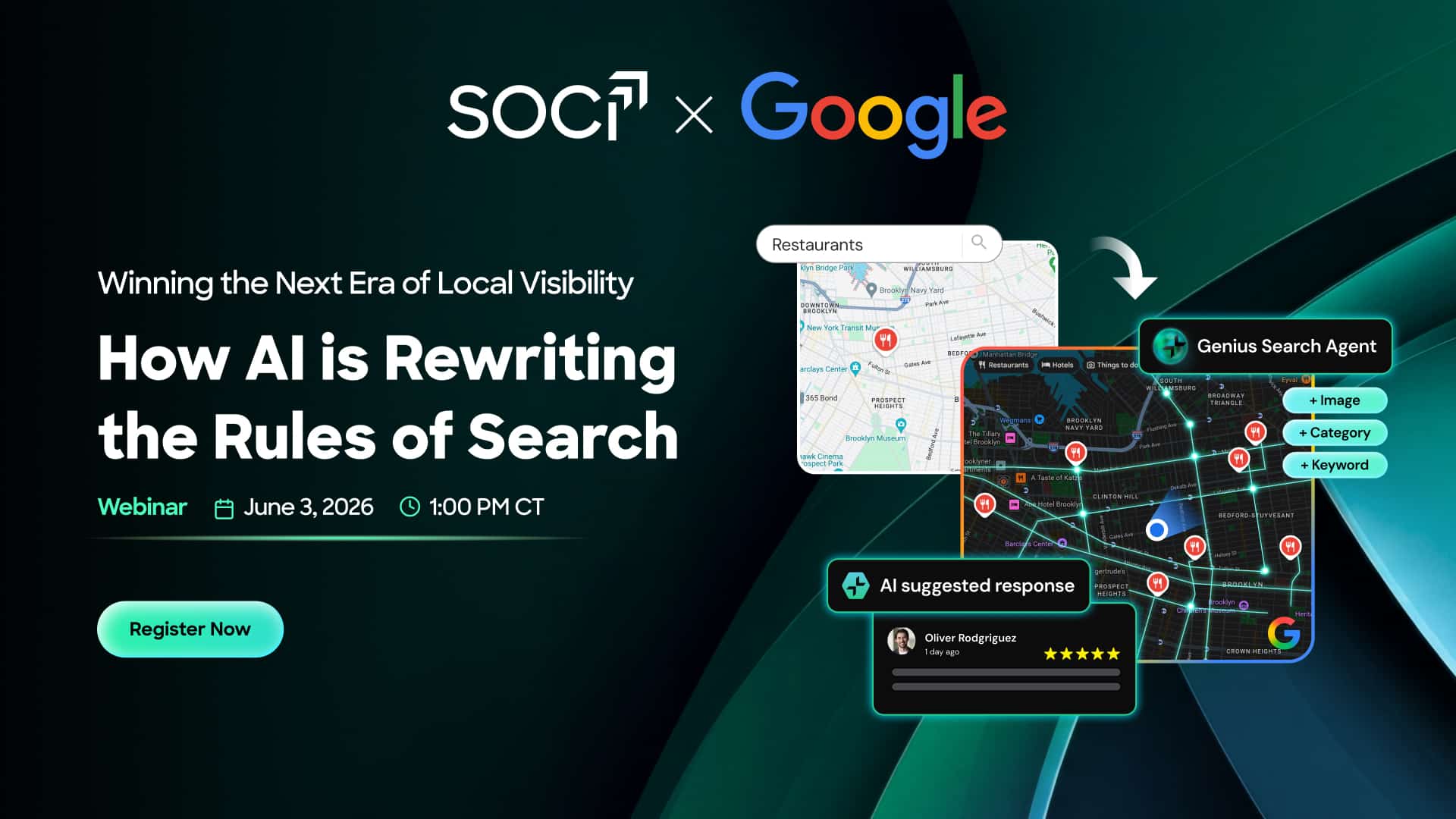
    I’m excited to join SOCi and Google for an exclusive webinar, Winning the Next Era of Local Visibility, on June 3. It’s a golden opportunity for anyone looking to stay ahead of the curve.

    During this webinar, I look forward to learning:

    • How AI is transforming local search dynamics.
    • The types of signals that AI considers for recommendations.
    • Strategies to boost visibility on Search, Maps, and Gemini.
    • The implications of Ask Maps for your brand.

    I’m convinced that AI is already shaping customer discovery, so it’s crucial to ensure your business isn’t left behind.

    Register now to secure your spot.


    Inspired by this post on Search Engine Land.


    crushpress.ai community screenshot
  • Uncovering the Hidden Flaw in a ‘Perfect’ PPC Campaign

    Uncovering the Hidden Flaw in a ‘Perfect’ PPC Campaign

    I recently sat down with Veronika Höller for an enlightening discussion on PPC campaigns in an episode of PPC Live The Podcast. We delved into a scenario where a seemingly flawless campaign was secretly underperforming, uncovering the real issue beneath the surface.

    From “perfect” campaigns to zero revenue

    Initially, Veronika encountered an impeccably organized account. It had all the right elements: a clean structure, compelling creatives, and well-allocated budgets with conversions rolling in. But there was one glaring omission—it wasn’t generating any revenue.

    This discrepancy prompted us to investigate further, revealing that while surface metrics such as impressions, clicks, and conversions appeared promising, the true business impact was lacking. The unraveling began here.

    The real issue: nothing stood out

    The breakthrough came not from within the account but by stepping outside it. During competitor research, Veronika noticed that the brand’s messaging was indistinguishable from its competitors. There was no compelling reason for users to choose their products over others.

    From a user’s perspective, the ads weren’t incorrect; they were simply forgettable. In a saturated market, being simply “good” wasn’t enough. The revelation was not about performance but positioning.

    Starting again — from scratch

    Veronika boldly decided to reconstruct everything from the ground up. This involved crafting new messaging, developing fresh creatives, and establishing a comprehensive strategic blueprint. A pivotal change was identifying not only the ideal customer but also defining who they were not targeting, utilizing anti-ICPs to refine the messaging.

    This reset also incorporated enhanced localization, creating tailored landing pages for different markets, and formulating platform-specific strategies instead of simply recycling campaigns across channels. It was much more than optimization—it was a complete overhaul, and it succeeded.

    The mistake that nearly broke everything

    Looking back at earlier times in her career, Veronika recalled a major misstep that will resonate with many PPC professionals. She had implemented a recommended target CPA but failed to adjust the budget accordingly.

    This oversight led to a halt in campaign delivery and a significant drop in performance, all of which went unnoticed over the weekend. By Monday, the damage was done, and the client was understandably upset.

    Owning the mistake — and fixing it fast

    Veronika didn’t shy away from the situation. She promptly admitted her mistake, provided an explanation, and took full responsibility. This transparency shifted the client’s initial frustration into collaboration, as there was no defensiveness, only a structured plan for resolution.

    The takeaway was invaluable: one must never apply recommendations blindly and should always consider the entire context before implementing changes.

    Why failure is part of getting good

    For Veronika, mistakes aren’t something to avoid—they’re a stepping stone to mastery. “You can only be good if you fail,” she asserted.

    This philosophy now influences her work approach and mentorship style. Mistakes signal progress, experimentation, and improvement.

    Furthermore, sharing these experiences helps others steer clear of similar pitfalls.

    The biggest issue she still sees today

    Despite evolving PPC landscapes, tracking remains a persistent issue. Many setups suffer from flawed implementations, reliance on micro conversions, and misconfigurations in tools like Google Tag Manager.

    In a world dominated by smart bidding and automation, inaccurate data not only constrains performance but leads it astray. Even the most stellar campaigns can falter without precise tracking.

    AI won’t fix average marketing

    Veronika emphasized that AI isn’t a magic bullet for improving outcomes. Feeding it mediocre data yields mediocre results.

    Many marketers erroneously rely on AI tools for account analysis without a proper understanding of the necessary enhancements. AI can’t create uniqueness; it can only optimize existing inputs. Distinctive strategies still demand human ingenuity.

    The mindset that matters now

    The most significant takeaway isn’t about tactics; it’s about mentality.

    Perfection isn’t the goal. Avoid following recommendations blindly, and don’t assume tools will think for you. Instead, rely on your instincts, experiment, and accept that mistakes are a valuable part of the journey.

    In performance marketing, the real hazard isn’t failure but becoming invisible by playing it safe.


    Inspired by this post on Search Engine Land.


    crushpress.ai community screenshot
  • Google FAQ Rich Results Retirement: A Practical Action Plan

    Google FAQ Rich Results Retirement: A Practical Action Plan

    You may still have FAQ sections, FAQPage JSON-LD, reporting filters, and client promises built around Google’s expandable FAQ listings. The listing has gone away, but that does not mean every FAQ or every line of FAQ markup should disappear with it.

    Your job now is to separate the retired Google Search feature from the content and data that may still serve a purpose. That distinction will tell you what to remove, what to retain, and what to measure.

    What Google retired, and when each dependency changes

    Google ended support for FAQ rich results on May 7, 2026. The visible consequence is straightforward: adding valid FAQPage structured data no longer makes a page eligible for an FAQ rich result in Google Search.

    The retirement also affects the tools around the feature. Google’s announced schedule separates the wind-down into three operational milestones:

    MilestoneWhat changesWhat you should do
    May 7, 2026FAQ rich results stop appearing in Google Search.Stop treating FAQ markup as a Google rich-result opportunity.
    By June 2026Google planned to remove the FAQ search appearance, the dedicated rich-result report, and FAQ support in the Rich Results Test.Replace reports, tests, and documentation that depend on those surfaces.
    By August 2026Google plans to remove FAQ rich-result support from the Search Console API.Update API jobs before missing FAQ-specific data or filters can break them.

    These milestones affect eligibility, reporting, testing, and API access. They do not delete the visible questions and answers on your pages. They also do not establish that FAQPage markup is harmful. The retirement notice alone is not evidence of a penalty.

    Key takeaways

    • Stop approving FAQ schema work on the promise of a Google FAQ rich result.
    • Do not remove useful visible answers merely because the associated search enhancement has retired.
    • Keep the markup only when you can identify a remaining consumer or justify its maintenance cost.
    • Remove FAQ-specific dependencies from Search Console reports, alerts, dashboards, and API jobs.
    • Measure the change with page cohorts and query data, not a single sitewide before-and-after chart.

    Decide whether to keep or remove FAQPage markup

    There is no universal requirement to purge FAQPage from every site. The right decision depends on what consumes the markup, how it is maintained, and whether it remains accurate.

    DecisionUse it whenMain risk to control
    Keep itA verified non-Google search engine, application, internal knowledge system, or publishing workflow consumes it, and the data stays synchronized with the visible page.Do not assume another system uses the markup merely because it can parse JSON-LD.
    Remove itThe only documented purpose was Google FAQ rich-result eligibility, or the implementation produces stale, duplicated, or misleading data.Target FAQPage specifically so you do not erase unrelated structured data.
    Keep it temporarilyYou cannot yet identify every downstream dependency.Give the uncertainty an owner and review date so temporary markup does not become permanent by neglect.

    The phrase “other systems may use it” is not a business case by itself. Ask for evidence: a documented integration, a consuming application, a test that shows the data being ingested, or a named team that depends on the output. Without one of those, you are maintaining code for a hypothetical benefit.

    Retention also has a cost. Automatically generated markup can drift away from the visible answer, survive after an FAQ is deleted, or duplicate data emitted by a theme and a plugin. That creates audit noise and makes future structured-data incidents harder to diagnose. If no verified consumer remains, removing that unused layer is a reasonable cleanup.

    Audit the implementation before touching production

    1. Find every emitter. Search templates, plugins, block settings, custom fields, tag-management rules, and rendered HTML for FAQPage. Check both server-generated source and JavaScript-rendered output.
    2. Map pages to templates. Record the canonical URL, template or content type, markup generator, owner, and any known consumer. This distinguishes a centralized fix from hundreds of apparent page-level fixes.
    3. Check for duplicate output. A page may receive one graph from an SEO plugin and another from its theme or page builder. Removing one does not necessarily remove the other.
    4. Separate schema types. Confirm that the proposed change removes only the FAQ node and its intended relationships. Preserve unrelated Article, BreadcrumbList, Product, organization, or other data unless your audit finds a separate reason to change it.
    5. Verify visible parity. If you retain FAQ markup, each marked-up question and answer should still correspond to content a visitor can access on that page.
    6. Test a representative sample. Include different templates, locales, device-rendering paths, and pages with nested structured-data graphs. A successful test on one hand-built page does not prove that a shared template is safe.

    If you remove the markup, use a staged release or a small controlled page group where your publishing system allows it. Capture the prior output first, verify that the visible FAQ still works, and compare the full structured-data graph before and after deployment. A broad search-and-delete operation can remove braces, graph relationships, or neighboring schema that were never part of the retirement.

    Repair Search Console reports and API jobs before they fail silently

    An obsolete accordion-shaped module is disconnected from a linked browser, structured-data, reporting, and API workflow on a worktable.

    The reporting change deserves as much attention as the markup. A dashboard can keep loading while an FAQ filter returns no rows, a chart becomes permanently flat, or an alert stops firing. That is more dangerous than an obvious error because the report still looks operational.

    Inventory every place where FAQ search appearance is used: saved Search Console views, exported workbooks, business-intelligence models, scheduled reports, client templates, annotations, anomaly alerts, and API queries. For each dependency, decide whether to remove the component, replace it with page-level reporting, or preserve the historical series as a closed metric.

    1. Preserve available history. Keep any existing FAQ-specific exports with their original date range and definitions. Historical data remains useful for explaining why an old report or traffic pattern differs from a new one.
    2. Retire the metric explicitly. Label the series as discontinued rather than allowing it to fall to zero without explanation. A zero can be misread as an implementation failure.
    3. Remove brittle filters. Update queries and transformation steps that expect an FAQ appearance value. Jobs should handle its absence without discarding otherwise valid Search Console rows.
    4. Test empty and missing states. Confirm that dashboards, alerts, and API pipelines behave correctly when FAQ-specific data is unavailable, not merely when its value is zero.
    5. Update stakeholder language. Replace promises to “earn FAQ rich results” with goals you can still observe, such as answering a query clearly, improving organic engagement, or reducing duplicated support content.

    Do not merge the date of Google’s presentation change with the date you remove code. Record both. Otherwise, a later analyst may blame a traffic movement on your deployment when the search feature had already disappeared, or attribute a template change to Google when it happened weeks later.

    Measure the traffic effect without inventing causation

    An analyst compares two separate streams of abstract signals using transparent dividers and balanced measuring instruments.

    FAQ rich results could occupy extra search-result space and influence click behavior, so affected pages deserve closer monitoring. A sitewide organic trend will not isolate that effect. Most pages never had the same FAQ visibility, query mix, ranking stability, or search-result competition.

    Build a page cohort from URLs that carried FAQ structured data and, where your historical records allow it, distinguish pages that actually received FAQ search appearances from pages that were merely eligible. Eligibility is not the same as an impression.

    1. Choose a comparison group. Use pages with a similar purpose and query profile that did not depend on FAQ presentation. The comparison will not create a perfect experiment, but it is more informative than comparing the whole site with itself.
    2. Track impressions, clicks, click-through rate, and average position together. A click-through-rate decline while impressions and position remain broadly stable is more consistent with a presentation change than a simultaneous loss of rankings and visibility.
    3. Inspect page-query pairs. Brand queries, broad informational searches, and long-tail questions can behave differently. Page totals can hide one group falling while another grows.
    4. Annotate both the Google milestones and your deployments. Include the retirement, reporting changes, content edits, template releases, migrations, and other material SEO work in the same analysis window.
    5. Follow the business outcome. Check whether affected pages still generate the actions that matter, such as product discovery, qualified visits, support deflection, leads, or sales. A presentation loss matters differently when click volume changes but useful outcomes do not.

    A before-and-after chart cannot prove that FAQ retirement caused a change. Rankings, seasonality, query demand, competing search features, and your own releases can move at the same time. Use the cohort analysis to identify where investigation is warranted, not to manufacture certainty the data cannot support.

    Keep the answers, but remove the obsolete SEO promise

    A useful FAQ section can still solve a reader’s next problem. It can clarify eligibility, compatibility, pricing logic, implementation constraints, returns, terminology, or a decision that would otherwise send the visitor back to search. None of that value depends on an expandable Google result.

    Review FAQ content as content, not as a schema container. Keep a question when it represents a real decision or recurring point of confusion. Rewrite it when the answer is vague, promotional, outdated, or dependent on information that appears elsewhere. Remove it when it exists only to repeat a keyword or restate the main body.

    • Use the wording a reader would recognize, but do not create several near-identical questions for minor keyword variations.
    • Answer the question in the opening sentence, then add conditions, exceptions, evidence, or a next step.
    • Name the product version, location, customer type, plan, or other qualifier whenever the answer changes across those boundaries.
    • Link to a deeper page when the reader needs a procedure or full explanation; do not compress a complex guide into an evasive two-line answer.
    • Assign an owner to answers that depend on policies, features, prices, or other changeable facts.
    • Keep marked-up data synchronized with visible content if you decide to retain the JSON-LD.

    The same discipline helps answer-engine and generative-search work, but do not replace one unsupported promise with another. FAQPage markup is not a guaranteed route into an AI answer, citation, or model response. Clear visible content, precise scope, consistent entity information, and accessible supporting detail are useful publishing practices; none guarantees selection by a search engine or model.

    Be especially careful with thin FAQ pages created solely to win the retired enhancement. If a page contains unique information or attracts useful demand, improve it. If it duplicates a stronger resource, consider consolidation only after checking its traffic, links, internal references, and destination. Do not delete or redirect a URL merely because its structured-data feature disappeared.

    Turn the retirement into a controlled cleanup

    Start with a single inventory that joins code, content, reporting, and ownership. Give every FAQ implementation one status: retain for a verified consumer, remove as Google-only legacy code, or investigate because the dependency is unknown.

    Resolve the unknown group first. It carries the greatest operational risk: deleting it may break an unrecorded integration, while leaving it indefinitely creates unmanaged data. Once every row has an owner and reason, update the template, reporting pipeline, documentation, and stakeholder expectations as one change set.

    Your next concrete action is simple: search a rendered sample of each major page template for FAQPage, record what generates it, and write down who still consumes it. If no one can answer the last question, you have found the first dependency to investigate.

    References