Author: shivamcrushpressai

  • How to Automate WordPress Schema for AI Search Visibility

    How to Automate WordPress Schema for AI Search Visibility

    You have useful pages, a WordPress schema tool, and no clear way to tell whether AI search systems can understand the site. The missing piece is usually not another markup type. It is a dependable connection between what each page says, how its meaning is represented in JSON-LD, and what happens every time an editor changes it.

    Your goal is not to generate the largest possible block of schema. It is to publish accurate, retrievable, maintainable structured data without losing editorial control. That requires a content contract, an automated processing lifecycle, explicit exceptions, and measurements that distinguish successful generation from actual search visibility.

    Key takeaways

    • Schema helps machines interpret a page, but it cannot compensate for blocked access, weak answers, interchangeable content, or missing authority signals.
    • Choose schema from the visible purpose of the page. Do not force every WordPress URL into Article, BlogPosting, FAQPage, or Speakable markup simply because your tool supports those types.
    • Automate the complete publishing lifecycle: detect changes, queue work, generate markup, validate it, store it, inject it, retry failures, and report exceptions.
    • Keep global exclusion rules and per-page switches. Editors need a safe way to stop incorrect markup without changing code.
    • Measure coverage, validity, queue health, and content-to-schema consistency before treating rankings, citations, or AI mentions as evidence that the automation worked.

    Schema supports AI visibility, but it does not create it

    JSON-LD is a translation layer. It gives machines explicit labels for a page, its subject, and the relationships among named entities. It does not make a thin page authoritative, turn an unsupported claim into a fact, or guarantee that Google AI Overviews, ChatGPT, Gemini, or Microsoft Copilot will cite the URL.

    A practical AI visibility model has five connected parts: retrievability, alignment, differentiation, authority, and entity mapping. Schema mainly strengthens retrievability and entity interpretation. It can also reinforce alignment by making the page type and relationships explicit, but the visible content still has to do most of the work.

    • Retrievability: The relevant content must be accessible, rendered, and easy to extract. A technically perfect JSON-LD block is useless when the page itself is unavailable to the system evaluating it.
    • Alignment: The page should answer the query directly, using headings and concise passages that make the answer easy to locate. Schema can identify the page, but it cannot supply an answer that is absent from the body.
    • Differentiation: Original data, concrete examples, case material, or a defensible point of view gives an answer-selection system a reason to use your page instead of another broadly similar result.
    • Authority: Clear authorship, relevant citations, reputable links, and external recognition help support trust. Adding an author field to JSON-LD does not manufacture expertise that the site never demonstrates.
    • Entity mapping: Consistent names and meaningful internal links clarify how people, organizations, products, topics, and pages relate to one another. Structured data should encode those real relationships rather than inventing new ones.

    Informational intent deserves particular attention. In one reported query set, 88.1% of queries that triggered AI Overviews were informational. That does not mean every informational page will appear. It means your template should reveal a clear answer early, then provide the evidence, qualifications, and detail that make the answer worth selecting.

    Diagnose the weakest layer before editing schema. If the page cannot be retrieved, fix access and rendering. If the answer is buried, revise the content structure. If the page is indistinguishable from competing pages, add original value. If the markup contradicts the visible page, fix the automation. Treating all four failures as a schema problem wastes time and can leave the actual visibility constraint untouched.

    Define a content-to-schema contract before you automate

    Editorial content objects cross a translucent bridge into matching connected data entities while an editor manages an exception lane.

    A schema generator needs rules, not just a prompt. Before you connect it to the WordPress publish action, define what each content template means, which visible fields are authoritative, and which conditions make a schema feature ineligible.

    Visible page conditionSchema decisionAutomation rule
    An editorial page has a headline, body, publication context, and author informationUse Article or BlogPosting as the main typePopulate it from saved WordPress fields and approved editorial metadata
    A general page explains a service, organization, policy, contact route, or other non-editorial subjectUse WebPage as the main typeDo not force Article merely because the URL appears in the WordPress Pages or Posts interface
    The rendered page contains a genuine question-and-answer sectionAdd FAQPage where appropriateGenerate only from questions and answers that remain visible and factually supported on that URL
    The page contains short, stable passages suitable for spoken deliveryAdd Speakable markup where appropriatePoint only to visible passages that still make sense when read without the surrounding layout
    The page is excluded by its purpose, URL pattern, category, tag, or editorial decisionSuppress some or all schema outputRecord the exclusion as intentional rather than reporting it as a processing failure

    The contract should answer five questions for every template:

    1. What is the human purpose of this page? A tutorial, company page, legal notice, category archive, and sales page are not interchangeable just because WordPress stores them in similar tables.
    2. What is the main entity? Name the person, organization, product, service, event, or subject the page is actually about. Use the same public name throughout the page, metadata, schema, and relevant internal links.
    3. Which primary type describes that purpose most narrowly without overstating it? Choose the type after classifying the content, not from a site-wide default that happens to be convenient.
    4. Which secondary features are visibly supported? FAQPage and Speakable should be conditional additions, not default decorations applied to every URL.
    5. What should stop output? Draft status, missing required fields, conflicting metadata, an exclusion rule, unsupported generated text, or an editorial override should prevent publication or route the item for review.

    Keep the visible page and the structured representation synchronized. If an editor changes a headline, removes an FAQ, replaces an author, or materially rewrites the answer, the corresponding JSON-LD must change too. If an on-page FAQ is disabled, FAQPage markup should normally be suppressed unless the same questions and answers remain visible elsewhere on that page. Separating those controls in the interface can be useful, but the publishing policy still needs to prevent invisible or contradictory claims.

    Entity mapping also needs editorial discipline. Name important entities explicitly, link them to the most relevant internal destination, and avoid switching casually among abbreviations, product labels, or organization names. Automation can preserve a relationship model once you define it. It cannot reliably decide that two inconsistent names represent the same real-world entity without authoritative site data.

    Automate the publishing lifecycle, not just JSON generation

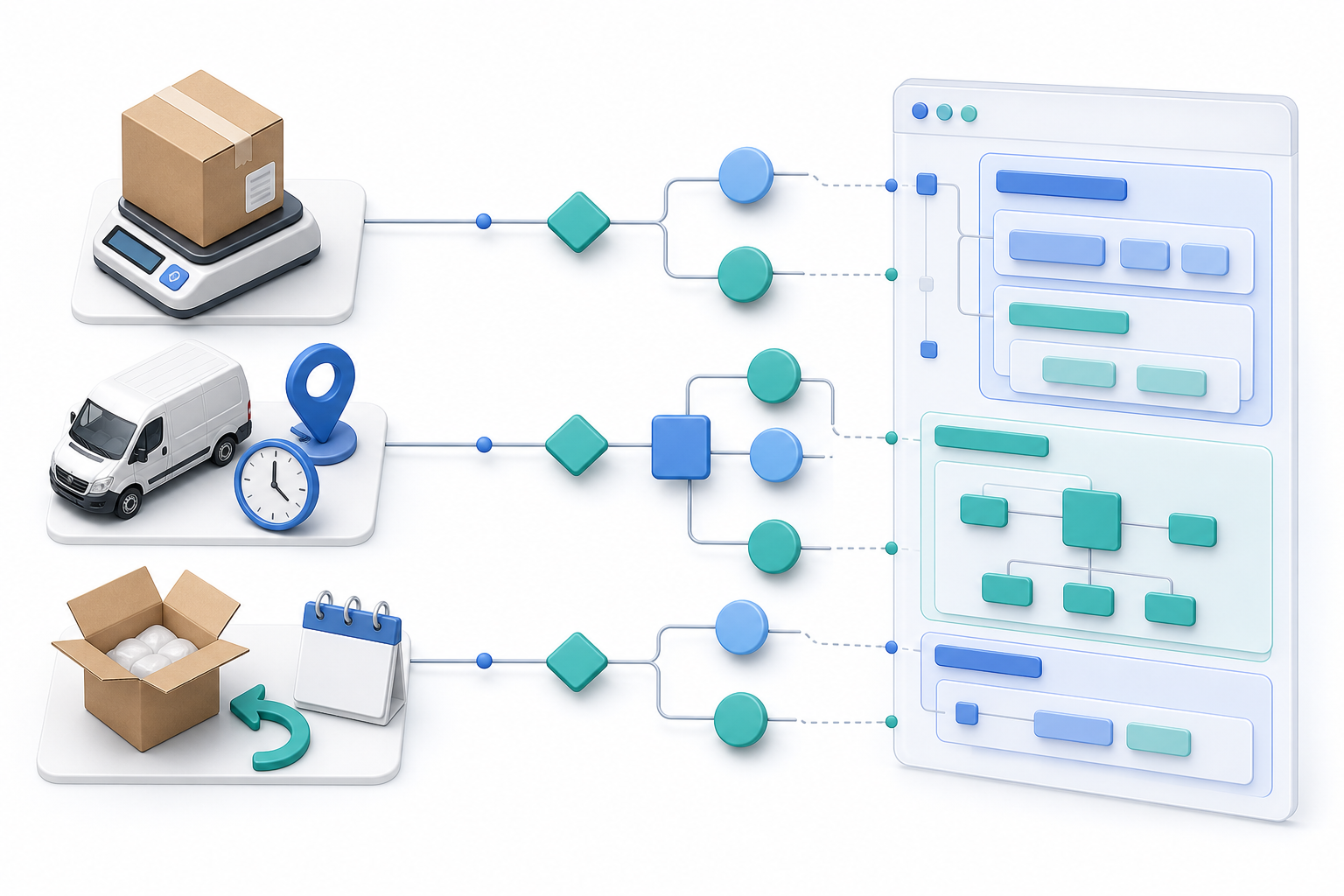
    A circular publishing workflow moves a web page through generation, validation, deployment, scanning, and feedback, with one flawed item diverted for review.

    Generating JSON-LD once when somebody clicks Update is not a dependable system. Model calls can fail, scheduled tasks can stall, fields can be incomplete, and bulk edits can trigger more work than the site can safely process at once. A production workflow needs a queue and an observable state for each job.

    1. Detect a meaningful content event. Queue work when a page is first published or when an update changes a field that affects the structured representation. Do not regenerate merely because an unrelated administrative value changed.
    2. Capture the authoritative page state. Wait until WordPress has saved the canonical title, body, author data, taxonomy, URL, and feature settings. Generating from a half-saved state is how stale or contradictory markup reaches the front end.
    3. Queue the job. Give it a visible status such as queued, processing, completed, needs attention, or intentionally excluded. Editors should not have to infer processing state from whether markup eventually appears.
    4. Generate from constrained inputs. Supply approved fields and explicit rules. If AI is used for FAQ or Speakable content, require the output to remain grounded in facts already supported by the page.
    5. Validate before injection. Confirm that the output is valid JSON-LD, contains the intended type, and matches the rendered content. Syntax validation alone is not enough.
    6. Persist a known-good result. Store successful output separately from an in-progress attempt so a transient failure does not replace valid markup with an empty or malformed block.
    7. Inject and verify. Confirm that the structured data appears on the public canonical page, not only inside the WordPress dashboard or a preview response.
    8. Retry and escalate failures. Retry transient errors, cap repeated attempts, and move persistent failures into a visible attention state with enough diagnostic detail to act on them.

    WordPress scheduling deserves special treatment. WP-Cron depends on site activity and can become unreliable in some hosting configurations. Your automation should expose queue health, include retry logic, and provide a safe fallback when scheduled processing does not run. A job that remains queued indefinitely is not a successful automation simply because no error message appeared.

    Use event-driven regeneration as the default. A weekly or monthly refresh can be useful for pages whose generated markup may become stale even without an editor touching them, but a refresh schedule should not conceal a broken update trigger. You also need a controlled bulk rebuild for migrations, major template changes, prompt changes, or schema-policy revisions. Bulk work should enter the same queue and validation path as ordinary updates so it does not bypass your safeguards.

    Build exceptions into the lifecycle from the start. Global rules based on URL patterns, categories, and tags are useful for entire content families. Per-page switches are necessary for edge cases. The most practical control set lets an editor disable the main schema, FAQ output, Speakable output, visible generated FAQs, or all injection without deleting the saved page or changing PHP.

    Make intentional exclusions visible in reporting. Otherwise, an excluded legal page and a failed editorial page both look like missing coverage, and your dashboard sends the team toward the wrong fix.

    Guard the output, then measure the system behind it

    Stop inaccurate or duplicate markup before it ships

    Before enabling a new injector, inspect what the theme, SEO plugin, ecommerce plugin, and custom code already publish. Two tools can emit competing descriptions of the same page. More schema is not automatically better; duplicate or contradictory entities make the machine-readable version less clear.

    • Open the public page and locate every JSON-LD block, not just the block displayed in your plugin dashboard.
    • Identify which component owns each block and decide which system is authoritative for each schema type.
    • Compare names, URLs, authors, dates, questions, answers, and entity relationships with the rendered page.
    • Check that excluded pages contain no residual output from a cache or a second plugin.
    • Validate the final public URL with an appropriate structured-data testing tool, including Google Rich Results validation when you are targeting a supported Google search feature.

    A passing rich-results test confirms only what that validator checks. It does not promise an AI Overview, an LLM citation, a ranking gain, or even display of a rich result. Keep validation and visibility reporting separate so the team does not turn technical eligibility into a performance claim.

    AI-generated FAQs require an additional content check. Reject questions the page does not genuinely answer, answers that introduce unsupported facts, and wording that conflicts with the main body. If an answer would need a subject-matter review before appearing as ordinary prose, it needs the same review before appearing in JSON-LD. Hiding it inside machine-readable markup does not reduce the accuracy requirement.

    Review the data path as carefully as the markup. Confirm what page content leaves WordPress, where schema documents and logs are stored, whether the model API key is transmitted to an intermediary, how connectivity can be disabled, and what happens to queued work when access or billing changes. Sites handling confidential, regulated, or unpublished information should not send that material to an external model without an approved data-handling policy.

    The WordPress implementation also needs ordinary application security. Administrative actions should verify nonces and permissions. Inputs should be sanitized, displayed values escaped, JSON output encoded safely, and database queries prepared through WordPress APIs. Logs should reveal failures without exposing API keys, private content, or unnecessary personal data.

    Measure coverage, operations, and outcomes separately

    The number of schema documents generated is a workload metric, not a visibility result. Use three measurement layers so you can tell where the system is failing:

    • Coverage and correctness: Track eligible pages, completed pages, intentional exclusions, missing output, validation errors, content mismatches, and duplicate emitters. Break coverage down by Article, BlogPosting, WebPage, FAQPage, and Speakable so a healthy total does not hide a broken type.
    • Operational health: Track queued, processing, retried, failed, and attention-required jobs. Show recent activity and the age of unresolved work. A queue total without failure context cannot tell an editor whether to wait or intervene.
    • Search outcomes: Monitor the landing pages and query families the work was intended to help. Review search visibility, engagement, brand mentions, and inclusion in relevant AI-generated answers where you can observe them. Keep these outcomes tied to the page and deployment change rather than claiming a site-wide effect from a schema count.

    Record the deployment date, affected template, schema-policy version, and URLs changed. First confirm that coverage and validity improved. Then examine retrieval and search engagement. Finally, run consistent AI visibility checks for the questions that matter to the business. If the technical layers are healthy but the page remains absent, return to answer quality, differentiation, authority, and entity clarity instead of generating a larger JSON-LD block.

    Start with one WordPress content template whose fields and editorial purpose are predictable. Write its content-to-schema contract, connect it to the queue, add validation and exclusions, and watch the full update cycle on public pages. Expand only after that template produces accurate markup and actionable failure states. Schema automation becomes valuable when it is quiet, observable infrastructure rather than a recurring cleanup project.

    References

  • Google Content Quality: A Publisher Accountability Framework

    Google Content Quality: A Publisher Accountability Framework

    If you approve sponsored pages, let partners contribute content, publish at AI speed, or operate an acquired domain, your quality risk starts before anyone writes the copy. It starts with why the page exists, why it belongs on your site, and who is answerable for it.

    A polished page can still be vulnerable when its main purpose is to borrow a trusted domain’s ranking signals for an unrelated query. A byline, disclosure, or human edit doesn’t automatically fix that mismatch. You need a publishing system that can distinguish legitimate monetization from reputation exploitation before the distinction is made for you.

    Quality is a publishing-system decision, not a copy score

    Google’s site reputation abuse policy targets content that uses an established site’s reputation to gain search visibility it would struggle to earn on its own. The policy was introduced in March 2024 and refreshed in November 2024. The later clarification matters: involvement or oversight by the host publisher doesn’t necessarily resolve the problem if exploiting the host’s ranking signals remains the main purpose.

    That makes readability a weak proxy for safety. An accurate, well-edited page can still have a reputation-abuse problem. A poorly written page can be low quality without being reputation abuse. A sponsored page can provide genuine audience value, but its commercial label alone tells you neither whether it belongs nor whether it deserves search visibility.

    The practical question is not merely, Is this content good? Ask, Why is this content being published here? That forces you to inspect audience fit, editorial value, commercial intent, operational control, and dependence on the host site’s authority.

    Publisher accountability and platform accountability must also remain separate. A reported European Commission investigation was being prepared under the Digital Markets Act around allegations that Google’s enforcement disadvantages news publishers that rely on promotional or sponsored content. Those allegations do not establish that every affected page was legitimate, or that every enforcement action was wrong. They do show why publishers need defensible practices while platforms need clear, consistent boundaries.

    Key takeaways

    • Judge content by its purpose, audience fit, and added value, not by polish alone.
    • Sponsored, affiliate, partner, and white-label content need explicit ownership and the same factual standards as editorial work.
    • Human review and disclosure are controls, not automatic exemptions from reputation-abuse concerns.
    • AI scale and acquired-domain history create different risks, so audit them separately.
    • Keep a decision record for commercially sensitive content so you can explain why it belongs, who approved it, and what evidence supports it.

    Run a purpose test before revenue content enters production

    The cheapest time to reject a risky page is before a partner brief, keyword list, or AI prompt becomes a finished asset. Add a purpose gate to intake and make the requester answer the following questions in writing.

    1. Does the topic match the audience promise? A regular reader should understand why this subject appears under your brand. Domain fit is an internal governance test here, not a claim that Google publishes a numerical relevance threshold.
    2. Would you still publish it without the site’s existing search reputation? This counterfactual exposes pages whose business case depends almost entirely on borrowed visibility. It is a diagnostic question, not an official safe harbor.
    3. What value does the publisher add? Identify the reporting, analysis, expert judgment, original data, useful tool, or editorial transformation that would disappear if the page were moved to a generic host.
    4. Who selected the topic and target query? Record whether the idea came from your newsroom, an advertiser, an affiliate team, a lead-generation partner, or an outside vendor. The origin does not decide quality by itself, but hidden control makes accountability impossible.
    5. Can the commercial relationship be understood immediately? State who funded, commissioned, supplied, or benefits from the content. Disclosure protects reader understanding, though it does not repair weak relevance or unsupported claims.
    6. Who has final authority? Name the person who can demand evidence, reject the draft, correct it after publication, or remove it even when doing so conflicts with a revenue commitment.
    7. Is the page part of a broader pattern? A single defensible page can look different from a scaled directory targeting unrelated, lucrative queries. Review the program, vendor, template, and folder rather than approving each URL in isolation.

    No answer should operate as a standalone pass or fail. The strongest warning pattern is weak audience fit, little publisher-added value, and a business case that collapses without the host domain’s reputation. Better prose cannot solve that combination.

    Use the completed gate to choose an explicit outcome. Publish through the normal editorial workflow when the page serves the established audience and adds defensible value. Revise when the value is real but ownership, disclosure, evidence, or positioning is unclear. Decline or relocate the concept when the only persuasive reason to place it on the site is the site’s ability to rank.

    Do not reduce this decision to whether a page is sponsored. Advertising can support legitimate publishing. The accountability failure occurs when the commercial arrangement changes what gets published while obscuring who made the decision, what the reader receives, or why the content belongs on that property.

    Build an evidence trail into the editorial workflow

    An editor and reviewer trace blank content cards to source documents, an interview recorder, a camera, and approval records.

    A policy that lives in a slide deck will fail when a sales deadline, vendor backlog, or traffic opportunity arrives. Put the decision fields inside the workflow used to request, draft, approve, publish, update, and retire content.

    Every commercially sensitive or externally produced URL should have a release record containing:

    • the requesting team or partner;
    • the intended reader and the reader’s actual task;
    • a short explanation of why the topic belongs on the site;
    • the commercial arrangement and beneficiaries;
    • the publisher-added value;
    • the evidence checked for factual claims;
    • the use of AI, syndication, templates, or outside production;
    • the accountable editor and final approver;
    • the corrections contact; and
    • the condition that would trigger revision, deindexing, or removal.

    Separate contribution from publication authority. A partner may submit a draft, but that does not require giving the partner direct publishing access. An editor may improve style, but someone must also approve the claims, audience fit, and commercial framing. On a small team, one person may hold several roles; the decisions still cannot be anonymous.

    Review at the program level as well as the page level. Track live URLs by partner, author, directory, template, and business model. Flag pages with no active owner, unusual growth in output, repeated corrections, unresolved factual questions, or a commercial relationship that is missing from the visible page. These indicators tell you where to inspect; they should not be blended into a fictional universal quality score.

    Keep Search and Discover performance separate in reporting. A burst of distribution does not prove that a page is accurate, original, or aligned with your audience. Treat sudden success as a reason to inspect the production pattern, especially when it follows a new vendor, template, topic cluster, or domain acquisition.

    Structured data belongs to the same accountability system. JSON-LD should reflect the visible page and the real publishing relationship. It cannot turn a misleading page into a trustworthy one, and it should not identify an author, publisher, date, or content type that the reader cannot reconcile with what is on the page. Validate markup, but also verify that the entities and relationships represented by it are true.

    Corrections complete the loop. Give readers and staff a clear route to report an error, assign the report to an owner, record the decision, and update every place where the claim appears. If the same mistake repeats across a template or partner feed, fix the production mechanism rather than patching URLs one at a time.

    Control AI scale and inherited domain reputation separately

    AI-generated spam and acquired-domain abuse can appear together, but they fail in different ways. AI increases the speed and volume at which unsupported or fabricated claims can be published. An expired domain can provide the appearance of inherited trust even when its new subject, ownership, and editorial operation have little connection to the property people previously encountered.

    The distribution risk is not theoretical. Fake AI stories were documented receiving tens of millions of Google Discover views within a week. A database tracking the wider pattern had more than 8,300 French entries, alongside 300 English and 150 German entries. The suspected playbook included buying expired domains with previously trusted reputations and filling them with fabricated material.

    For AI-assisted production, make review capacity the constraint on output. A draft should not move directly from generation to publication. Require an accountable editor to inspect factual assertions, names, dates, quotations, links, and the relationship between the headline and body. Record what was checked and what changed. If the team cannot review the additional volume, reduce the volume rather than silently lowering the release standard.

    Set operational stop conditions. Pause a prompt, template, vendor, or automated workflow when errors repeat, corrections begin clustering, supporting evidence cannot be located, or pages are shipping without assigned reviewers. A halt should apply to the mechanism producing the risk, not merely to the latest URL caught with an error.

    For an acquired or expired domain, complete a separate due-diligence record before publishing at scale:

    • Document the domain’s former topic, audience, ownership, and publishing identity.
    • Map legacy URLs and redirects, especially those receiving links or visits for a subject the new operation no longer covers.
    • Identify whether the new business plan depends on preserving signals from unrelated historical content.
    • Do not redirect unrelated legacy URLs wholesale to new commercial pages merely to retain visibility.
    • Review sudden changes in topic, publishing volume, authorship, templates, and monetization as one combined pattern.
    • Keep access, ownership, and security records so an unexplained publishing change can be investigated quickly.

    Google said its systems keep most spam out of Discover while acknowledging that a more specific fix was being developed for the reported fake-AI pattern. That is a useful warning for publishers: enforcement can lag a new tactic on a particular surface. Your controls must protect readers even during that gap; temporary distribution is not evidence that the tactic is acceptable.

    Respond to a visibility change without destroying good content

    A publishing team inspects and sorts modular web-page tiles while preserving healthy pages and isolating others for review or repair.

    When traffic drops, broad panic edits can erase evidence and damage pages that were not part of the problem. Find the boundary first. Your goal is to identify the shared production decision behind affected URLs, not to rewrite every headline on the site.

    1. Locate the affected surface. Separate ordinary Search from Discover, then compare directories, templates, content types, authors, partners, publication periods, and commercial models.
    2. Map the pattern. Review affected and unaffected pages from the same workflow. That comparison helps distinguish a program-level issue from a weak individual URL.
    3. Freeze the implicated mechanism. Pause new output from the relevant partner, prompt, template, or directory while you inspect it. Preserve briefs, drafts, approvals, change histories, and access logs.
    4. Classify the failure. Decide whether the main problem is factual accuracy, absent editorial value, audience mismatch, hidden commercial control, scaled off-topic publishing, or reliance on an acquired domain’s former reputation.
    5. Choose the remedy that matches the cause. Correct demonstrable errors, add missing value where the topic legitimately belongs, clarify real relationships, consolidate duplication, or remove content whose purpose cannot be defended. Cosmetic rewrites will not fix a purpose problem.
    6. Repair the workflow. Change permissions, intake requirements, review ownership, vendor terms, prompts, templates, or monitoring so the same mechanism cannot immediately recreate the pages you just addressed.

    Keep the evidence even when the platform gives you little explanation. For every disputed group of pages, you should be able to show its intended audience, commissioning path, commercial relationship, factual support, editorial contribution, accountable owner, and corrective action. That packet is useful for internal decisions whether or not it produces a platform remedy.

    Google still carries responsibility for defining its boundaries, applying them consistently, addressing false positives, and distinguishing manipulation from ordinary publishing models. The reported European scrutiny is important precisely because legitimate publisher revenue and search-quality enforcement can collide. Publisher governance does not settle that dispute, but it prevents a weak internal process from becoming the only available explanation.

    Before your next partner campaign or AI-scaled batch goes live, audit the directory with the clearest mismatch between site audience and commercial topic. Give each page an owner and a written purpose. Pause anything that cannot explain both why it belongs and what your publication adds. That is a manageable change, and it moves quality accountability to the point where you can still act.

    References

  • How to Improve AI Search Visibility With Practical AEO

    How to Improve AI Search Visibility With Practical AEO

    Your page ranks well, yet your brand disappears when a buyer asks an AI assistant the same question. That is not necessarily an SEO failure. It means the page that wins a search result is not automatically the content an answer engine chooses to mention, cite, or summarize.

    You can close that gap with Answer Engine Optimization, or AEO. The practical work is to identify the questions that matter, see how AI platforms answer them, and make your strongest pages easier to understand, verify, and represent accurately.

    A high Google ranking and an AI mention are different outcomes

    A conventional search result helps someone choose which page to visit. An AI-generated response tries to answer the question inside the interface. Those outcomes overlap, but they are not interchangeable. A page can rank because it is relevant and authoritative while still failing to supply a concise, well-scoped answer that can be used without losing its meaning.

    That is why a strong Google position does not guarantee visibility in AI-generated answers. ChatGPT, Gemini, and Perplexity can also differ in what they mention, how they phrase an answer, and whether they expose a citation. Treat visibility as question-specific and platform-specific, not as a permanent property of your domain.

    This does not make SEO obsolete. Pages still need to be accessible, coherent, and worth discovering. AEO adds another requirement: the information must be usable as an answer. A useful working distinction is that SEO improves discoverability, while AEO improves answer usability and brand representation.

    Apply a simple editorial test to every important page: if someone extracted a short passage from this page, would it state the answer, identify the subject, preserve the necessary qualification, and point to credible support? If the passage only makes sense after reading the entire page, the information may be too dependent on context to work well in an AI answer.

    Key takeaways

    • Google rankings and AI-answer visibility are related opportunities, not equivalent outcomes.
    • Optimize around real audience questions rather than a vague domain-wide visibility score.
    • Give each important question a direct answer, a clear scope, and support that can be checked.
    • Use JSON-LD to clarify meaning and relationships, not to manufacture authority.
    • Measure whether your brand is cited and represented accurately, not merely whether its name appears.

    Build a question-level AI visibility audit

    An analyst compares blank answer panels on a laptop, tablet, and phone while sorting colored cards and source markers on a desk.

    Start with the decisions your audience is trying to make. A generic prompt about your industry may produce interesting output, but it rarely tells you which page to improve. A question such as “What should an in-house marketing team check before choosing an AI SEO platform?” gives you an audience, a decision, and a standard against which to assess the answer.

    Create a prompt inventory from real intent

    Group prompts by the job behind them. The wording will vary by market, but most useful inventories include questions about understanding a category, evaluating an approach, comparing options, implementing a process, managing risk, and fixing a problem.

    • Category questions: What is [category], and when is it useful?
    • Evaluation questions: What should [audience] check before choosing [category]?
    • Comparison questions: How do [option A] and [option B] differ for [use case]?
    • Implementation questions: How should [audience] put [approach] into practice?
    • Risk questions: What can go wrong with [approach], and how can it be prevented?
    • Troubleshooting questions: Why is [expected outcome] not happening even though [condition] is true?

    Use natural language. Do not insert your brand into every prompt, because that only tests whether an assistant can repeat a premise you supplied. Keep a separate set of branded prompts for questions about your company, products, or reputation.

    Record the answer as evidence, not as an impression

    Run the same prompt set across the AI platforms that matter to your audience. Preserve the exact wording and record enough context to make the observation reproducible. Generated answers can change with platform context and over time, so a screenshot without the prompt and conditions is a weak baseline.

    • The exact prompt and the audience or use case it represents.
    • The platform, account state, location if relevant, and date observed.
    • The answer’s main recommendation or conclusion.
    • Whether your brand was absent, mentioned, or cited with a link.
    • The exact URL cited when the interface exposes one.
    • Whether the description of your brand was accurate, incomplete, outdated, or misleading.
    • Which competing brands, publications, or generic resources were used instead.
    • The missing claim, explanation, evidence, or entity relationship that may have created the gap.

    Do not turn a single response into a trend. Repeat the audit on a fixed schedule and after meaningful changes to your content. Keep the prompts stable so you can distinguish a visibility change from a change in the test itself.

    Prioritize the questions closest to a decision

    Not every absence deserves a project. Prioritize a prompt when it is important to the audience, connected to a real business decision, and answerable with evidence you can stand behind. An inaccurate description of your brand deserves attention before a harmless omission because the wrong answer can shape the decision in the wrong direction.

    If you have no credible support for the answer you want an AI system to give, rewriting the page is not the first task. Build the evidence, clarify the offering, or narrow the claim. AEO cannot make an unsupported position trustworthy.

    Rework important pages into usable answer sources

    Scattered information fragments become organized content modules, and an abstract AI orb retrieves one intact module from the structured page.

    The unit of AEO work is not merely the keyword. It is the answerable claim attached to a specific question. One page may support several claims, but each claim should be understandable without forcing a reader or an answer system to reconstruct your argument from scattered marketing copy.

    Use an answer-first structure

    Place the direct answer near the heading that introduces the question. Do not bury it beneath a history lesson, a brand statement, or a string of rhetorical questions. The opening answer should identify the subject by name, state the conclusion plainly, and include any qualification that would make the statement misleading if omitted.

    • Question or descriptive heading: Make the information need visible without forcing every heading into an awkward question.
    • Direct answer: State what is true, for whom it is true, and under which conditions.
    • Scope: Clarify what the answer includes, excludes, or depends on.
    • Support: Explain the mechanism, evidence, criteria, or process behind the conclusion.
    • Next decision: Tell the reader what to check, compare, or do with the answer.

    Pronouns often make extracted passages ambiguous. A sentence such as “It helps them improve results” loses its meaning outside the surrounding paragraph. Name the product, process, audience, and outcome when clarity requires it. You do not need to repeat the brand in every sentence, but the core answer should remain intelligible when read on its own.

    Support the claim instead of decorating it

    Words such as leading, advanced, seamless, and best do not explain why a claim should be believed. Replace them with the actual capability, constraint, comparison criterion, or evidence. If the evidence is unavailable, remove the stronger claim rather than hiding the gap behind confident language.

    • Define the comparison set before claiming that an option is faster, easier, or more complete.
    • Separate verifiable facts from your company’s interpretation or recommendation.
    • Explain how a conclusion was reached when the method affects whether it applies to the reader.
    • Keep limitations beside the claim they qualify, not in a distant disclaimer.
    • Link to the page that contains the underlying evidence rather than repeatedly citing a promotional summary.
    • Remove stale claims when the product, process, or market has changed.

    This discipline helps human readers as much as answer engines. Someone deciding whether to trust you can see the boundary between what you know, what you recommend, and what remains uncertain.

    Give each page a clear role

    When several pages answer the same question differently, your own site becomes a source of ambiguity. Choose a clear explanatory page for the main answer. Use supporting pages for narrower use cases, evidence, implementation details, or updates, and connect them with descriptive internal links.

    Avoid publishing a large collection of near-identical FAQ pages just to cover wording variations. That creates maintenance work and makes contradictions more likely. Strengthen the page that best satisfies the underlying intent, then cover genuinely different questions where the answer or decision changes.

    Clarify your entity, evidence, and structured data

    An answer engine cannot represent a brand accurately when the brand’s own pages are vague about what the organization is, what it offers, and how its products or services relate to it. Entity clarity starts in visible language before it reaches markup.

    Make identity consistent across the site

    Use one preferred brand name and a stable description of the category you serve. State the relationship between the organization, its offerings, and the audiences they are designed for. If geography, availability, compatibility, or business model changes the answer, make that boundary explicit on the relevant page.

    • Confirm that the home, about, product, service, and contact pages use compatible descriptions.
    • Distinguish the company from similarly named products, people, or organizations.
    • Use the same official names in navigation, headings, metadata, and structured data.
    • Give important claims a stable page that other pages can reference.
    • Remove old positioning that conflicts with the way the brand currently describes itself.

    Use JSON-LD as a map of visible meaning

    JSON-LD can clarify which entity a page is about and how that entity relates to the content. It should describe information a visitor can also find on the page. It should not introduce awards, ratings, prices, capabilities, or relationships that the visible content does not support.

    • Identify the page’s main entity and its relationship to the publishing organization.
    • Keep names, identifiers, and canonical URLs consistent with visible page content.
    • Represent only claims that are current and verifiable.
    • Validate the generated markup after changes to themes, templates, or plugins.
    • Update structured data when the underlying product, service, author, or page meaning changes.

    Structured data is a map, not evidence. It can reduce ambiguity, but it cannot turn a weak claim into a credible fact or force an AI platform to cite the page. If the markup and visible copy disagree, correct the underlying content and the markup together.

    Build corroboration beyond your own domain

    A brand claim is easier for a reader to trust when credible third parties can describe or verify it. Seek accurate coverage, profiles, partnerships, and expert contributions in places your audience already considers relevant. The goal is not to place the brand name everywhere. It is to make the important facts about the brand consistent and independently checkable.

    When someone else mentions your organization, check whether the description matches your current positioning and points to the appropriate page. A prominent mention that misclassifies the business can reinforce the wrong interpretation. Correct material errors where a correction path exists, and remove conflicting language from your own site so the same confusion does not return.

    Measure representation quality, not vanity mentions

    A brand mention is not automatically a successful AEO outcome. The name may appear in an irrelevant list, be attached to an outdated capability, or be presented without a source the user can inspect. Your scorecard should preserve those distinctions.

    • Answer coverage: How much of the tracked question set receives a useful answer that includes your brand when it is genuinely relevant?
    • Citation coverage: How often does the interface connect the claim to a page the user can inspect?
    • Representation accuracy: Are the category, capability, audience, limitations, and relationships described correctly?
    • Source-page fit: Does the cited page directly support the claim, or does it force the user to search again?
    • Independent corroboration: Are important claims supported only by owned pages, or can relevant third parties verify them?
    • Decision alignment: Is visibility improving for questions connected to actual audience decisions rather than incidental prompts?

    Keep these measures separate until you understand the pattern. Combining them too early into a single visibility score can hide the difference between being absent, being cited accurately, and being mentioned incorrectly.

    Observed stateWhat to inspectNext action
    Your brand is absent while another source is citedWhether the cited material answers the question more directly, has clearer support, or resolves an entity ambiguityImprove the relevant answer and evidence without copying the competing page
    Your brand is mentioned without a citationWhether a canonical page clearly supports the descriptionStrengthen that page and align visible identity references with JSON-LD
    Your brand is cited accuratelyWhich claim, passage, and page appear to support the answerPreserve the useful content and extend coverage to closely related decisions
    Your brand is described inaccuratelyConflicting pages, stale third-party descriptions, and unsupported structured dataCorrect the authoritative copy, consolidate conflicting explanations, and pursue material corrections where possible
    The answer changes materially between observationsPlatform context, prompt wording, cited pages, and answer scopeRecord the variability and avoid claiming a stable visibility gain until the pattern is clearer

    Do not chase every generated answer at once. Choose a question cluster tied to a real customer decision, establish the baseline, improve the page that should support the answer, align its entity signals and JSON-LD, and then run the same audit again.

    If the representation becomes clearer and more accurate, expand to the next decision cluster. If it does not, inspect the missing proof, conflicting entity information, and cited alternatives before publishing more content. That turns AEO from a collection of guesses into a repeatable visibility program.

    References

  • Google Shipping and Returns Policy Markup: A Setup Guide

    Google Shipping and Returns Policy Markup: A Setup Guide

    If you sell products online without using Merchant Center, Google does not have to infer your delivery charges, delivery expectations, or return terms from scattered pages. You can now provide shipping and return policy information through Search Console or site markup.

    The implementation is only reliable when the data matches checkout, customer-service rules, and the policy customers can read. Before touching JSON-LD, decide which rules are your store-wide defaults, which products are exceptions, and which system owns each value.

    Write down the operational policy before you encode it

    Structured data compresses a policy into machine-readable fields. It cannot resolve an unclear policy for you. If your shipping page, checkout, support team, and warehouse operate from different assumptions, markup will publish one of those inconsistencies more efficiently.

    Build a policy matrix with one row for every market whose terms materially differ. Record the answers to these questions:

    • Where do you ship?
    • Which shipping service does the policy describe?
    • What does the customer pay, and in which currency?
    • How long can handling take before the parcel enters the carrier network?
    • How long can transit take after handoff to the carrier?
    • Which countries are covered by the return policy?
    • Is the return window finite, unlimited, or unavailable?
    • If the window is finite, what event starts it: purchase, dispatch, delivery, or another event stated in your customer-facing terms?
    • Which return methods are allowed?
    • Who pays the return cost?
    • Which products or conditions are excluded?

    Keep handling time separate from transit time. Handling is under the merchant’s control; transit begins after carrier handoff. Combining them into an attractive but unsupported delivery promise creates a mismatch precisely where a shopper is looking for certainty.

    Use the policy customers can actually claim, not an aspirational service level. A lower shipping charge, faster delivery estimate, longer return window, or broader free-return promise can affect purchase decisions. If checkout or support will not honor it, do not publish it in structured data.

    Choose Search Console or Organization markup deliberately

    Search Console and structured data are two publishing routes for the same operational truth. Your choice should be based on ownership and maintainability, not on which route appears more technical.

    Publishing routeBest fitMain control to establish
    Search ConsoleYou want a no-code route and have a straightforward store-wide policy.Name the person responsible for updating the settings whenever operations or terms change.
    Organization JSON-LDYour team already manages structured data through code, a CMS, or a schema layer.Keep the values version-controlled or otherwise traceable to the policy owner.
    Merchant CenterYour shopping program already treats its account or feed data as the commercial source of truth.Do not add a separately maintained policy unless you can guarantee that the systems remain aligned.

    Search Console is often the smaller change when you do not use Merchant Center and do not want to alter templates. Organization JSON-LD is usually easier to audit alongside other website releases. Neither route improves a weak policy, and neither should become a forgotten copy of information maintained elsewhere.

    Avoid entering one version in Search Console while a plugin emits another version in the page source. Google may encounter both, but you should not assume it will resolve the conflict in the way you intended. Pick a primary owner, document any secondary output, and update both in the same change workflow if both must exist.

    Map your policy to the JSON-LD concepts

    Top-down illustration of shipping and return objects flowing through connected nodes into nested structured-data modules.

    At the Organization level, the conceptual structure has two branches. Shipping information is expressed through shippingDetails using OfferShippingDetails. Return information is attached through hasMerchantReturnPolicy using MerchantReturnPolicy.

    The following map is more useful than copying a generic snippet because it forces every machine-readable value back to an operational answer:

    Business questionStructured-data conceptWhat to verify
    Where does this shipping rule apply?shippingDestinationThe destination matches an area that checkout actually serves.
    What does shipping cost?shippingRateThe value and currency describe the selected service without hiding a condition that changes the charge.
    How long before carrier handoff?handlingTimeThe range reflects normal fulfillment commitments rather than the fastest observed order.
    How long after carrier handoff?transitTimeThe range belongs to the destination and service represented by this shipping rule.
    Where does the return policy apply?applicableCountryThe country is covered by the customer-facing terms.
    What kind of return window applies?returnPolicyCategoryThe category agrees with whether returns are finite, unlimited, or unavailable.
    How long is a finite window?merchantReturnDaysThe duration matches the policy page and the event from which your published terms calculate it.
    How can an item be returned?returnMethodThe encoded method is genuinely available to customers in the covered market.
    Who bears the return cost?returnFeesThe value reflects the ordinary case and does not erase important conditions or deductions.

    Use the defined Schema.org value expected by a category, method, or fee field rather than inserting promotional prose such as “easy returns.” JSON-LD describes the rule; the visible policy page explains qualifications, procedures, deadlines, item condition requirements, refund timing, and exceptions.

    Connect the policy to your existing canonical Organization entity instead of creating unrelated Organization objects in several plugins. A stable @id helps the graph refer to the same business, but it does not excuse conflicting values. Inspect the final rendered source because the output seen by a crawler can differ from what a CMS form displays.

    Do not let a store-wide default erase product exceptions

    Illustration of a general store policy covering most packages while separate policy paths lead to an oversized item and a sealed personal-care product.

    An Organization-level policy works as a default. It becomes misleading when a substantial set of offers follows different rules. Customized goods, clearance inventory, oversized products, subscriptions, perishable items, and digital products can all require different treatment depending on how your business operates.

    Do not encode the most generous policy as universal merely because it produces the cleanest markup. Decide how each exception should be handled:

    • If a different rule applies to a market, represent that market separately rather than blending incompatible destinations, currencies, charges, or delivery estimates.
    • If a product class has a different return rule, do not allow the organization default to make an unconditional promise that the product page later withdraws.
    • If your implementation supports properly scoped offer-level information, use it for genuine product exceptions and keep it synchronized with the offer.
    • If you cannot represent an exception accurately, narrow or omit the affected machine-readable claim instead of publishing a false universal rule.
    • Explain detailed conditions on a crawlable customer-facing policy page. Do not expect a compact structured-data object to carry the entire contract.

    Pay particular attention to conditional free shipping and conditional free returns. A rate that depends on basket value, membership, location, product class, or selected service is not simply a universal zero-cost rate. Encode only the condition your implementation can represent faithfully, and leave the full qualification visible before purchase.

    Validate the output and the promise

    Syntax validation is necessary, but it only proves that a machine can parse the data. A valid object can still describe the wrong destination, currency, service, timing, fee, or return window.

    1. Open the rendered page or server response that contains the Organization data. Confirm that the expected JSON-LD is present for an ordinary crawler and is not merely visible inside an administration screen.
    2. Parse the JSON-LD with a structured-data validator. Fix malformed JSON, unsupported value shapes, missing relationships, and duplicate entities.
    3. Compare every emitted value with the shipping page, returns page, checkout calculation, and current support instructions.
    4. Test representative destinations and product exceptions. A default that is correct for the easiest order may be wrong for the rest of the catalog.
    5. Check Search Console after publication for the status Google exposes, but do not treat the absence of an error as proof that the policy will be displayed.
    6. Add shipping and return data to your release checklist. Changes to carriers, fulfillment locations, service levels, charges, destinations, or return terms should trigger the same review.

    Structured data makes information eligible for machine use; it does not command a particular Search appearance or guarantee rankings. Judge the deployment first by accuracy, consistency, and maintainability. Any additional visibility is downstream of those basics.

    Key takeaways

    • You can provide shipping and return policy information through Search Console or website markup without using Merchant Center for the task.
    • Define destination, charge, handling, transit, return window, method, fees, and exceptions before encoding anything.
    • Use Organization-level data for a genuine default, not as a shortcut that conceals product or market differences.
    • Choose one operational source of truth and prevent Search Console, Merchant Center, plugins, templates, checkout, and policy pages from drifting apart.
    • Validate both the JSON-LD structure and the commercial promise represented by every value.

    Start with the policy matrix, assign an owner, and publish the smallest accurate default through the route your team can maintain. Once that default survives a comparison with real checkout scenarios and known exceptions, you have markup worth exposing to Google.

    References

  • How to Measure AI Search Impact on Leads and Revenue

    How to Measure AI Search Impact on Leads and Revenue

    Your AI visibility dashboard says brand mentions are up. The awkward question comes next: did that change create a qualified visit, put you on a buyer’s shortlist, or contribute to revenue? If the answer is “we think so,” you don’t yet have business-impact measurement.

    You don’t need one perfect attribution model. You need a measurement chain that separates exposure, response quality, site behavior and commercial outcomes. That structure lets you show what AI search influenced, what it directly produced and what remains unproven.

    Start with a measurement chain, not one AI metric

    Four connected transparent chambers represent AI exposure, response quality, website behavior, and commercial outcomes.

    AI search affects buyers before, during and sometimes instead of a website visit. A prospect may see your brand in an answer, investigate it later through branded search and convert without leaving a traceable AI referrer. Another prospect may click an AI citation immediately but never become a suitable customer. Those are different outcomes and should not be collapsed into one number.

    Build your reporting around four connected layers:

    Measurement layerQuestion it answersUseful metricsWhat you can decide
    AI exposureDoes the brand appear for commercially relevant prompts?Presence rate, competitive mention share, visibility by buyer stageWhere the brand is absent or losing ground
    Response qualityHow is the brand represented?Citation rate, recommendation rate, accuracy, sentiment, cited domainWhether content and entity signals need attention
    Owned behaviorWhat happens when people reach the site?AI-referred visits, landing pages, conversion rate, qualified-lead rateWhether the visit matches the page and offer
    Commercial outcomeDoes the activity reach the pipeline?Qualified leads, opportunities, pipeline value, closed revenueWhether investment should expand, change or stop

    Visibility is a leading indicator of potential influence. Revenue is a lagging business result. A visibility increase is therefore useful, but it is not proof that AI search caused a sale. Your report should preserve that distinction rather than attaching revenue language to every upward mention chart.

    Choose one commercial outcome before you configure the dashboard. It might be qualified demo requests, completed purchases, sales-accepted leads or pipeline value. If the team cannot agree on the outcome that matters, more AI visibility data will only produce a more elaborate disagreement.

    Build a prompt panel around real buying decisions

    Your results are only as meaningful as the prompts you monitor. A collection of convenient questions can make visibility look strong while missing the decisions that create demand. Start with situations in which a buyer could reasonably discover, evaluate or reject your brand.

    1. Map the decisions. Include the problems your product solves, category discovery, alternative searches, comparisons, implementation concerns and purchase objections. Keep navigational brand prompts separate; they measure whether an engine understands your entity, not whether it discovers you unprompted.
    2. Assign buyer stages. Label each prompt as problem discovery, category exploration, evaluation or purchase validation. This prevents a large group of broad informational prompts from drowning out a smaller group with clear buying intent.
    3. Record the context. Store the exact prompt, intended audience, product or service line, country, language, AI platform or search surface and any account state that could affect the answer. A changed prompt is a new observation, not a continuation of the old one.
    4. Separate platforms and surfaces. Do not merge conversational answers, citation-led answer engines and search-result AI features at collection time. They can expose the brand differently and send different kinds of traffic. You can create a roll-up later while retaining the underlying results.
    5. Freeze a core panel. Keep the prompts used for trend reporting stable. Place newly discovered questions in an exploratory panel until you deliberately add them to the benchmark. Otherwise, a changing prompt mix can create an apparent gain or loss with no real change in performance.

    Give every tracked prompt a persistent ID. The corresponding record should contain the run date, captured answer, brand presence, competitor presence, recommendation status, cited URLs, factual accuracy, sentiment and business importance. This is enough to reproduce a result and explain why a summary metric moved.

    Weight prompts only when the weights reflect a documented business judgment. A purchase-validation prompt may matter more than a general definition, but the weighting is yours; it is not an objective property of the AI platform. Keep the unweighted result beside the weighted one so stakeholders can see how much the chosen model affects the headline.

    Run your core panel on a consistent schedule and retain every observation. The right cadence depends on your reporting cycle and sales cycle. Checking constantly can magnify ordinary answer variation, while checking only around a campaign makes it impossible to establish a useful baseline.

    Measure the quality of visibility, not just the mention

    The cleanest starting metric is the percentage of relevant AI-generated answers that mention your brand:

    Brand visibility score = answers mentioning your brand / total eligible answers x 100

    If the brand appears in 22 of 100 eligible answers, its visibility score is 22%. The calculation is simple. The difficult part is defining an eligible answer consistently.

    Decide whether the unit is a unique prompt or an individual answer run. If you run a prompt more than once, each response is a separate observation unless your method explicitly aggregates repetitions first. Define how failed generations, unavailable AI features and answers that cannot reasonably include a brand are handled. Log exclusions instead of quietly removing them.

    Presence alone can hide the difference between useful exposure and a damaging or irrelevant mention. Add these dimensions without forcing them into an opaque composite score:

    • Owned citation rate: the share of eligible answers that link to or cite a page you control. Keep this separate from third-party citations that mention the brand.
    • Recommendation rate: the share of eligible answers that include the brand as a suitable option, not merely as background information.
    • Competitive mention share: your brand’s mentions divided by mentions of all tracked brands in the same answer set. Use the same competitor list throughout a reporting period.
    • Representation: whether the answer describes the brand positively, neutrally or negatively. Record the supporting passage so a reviewer can verify the label.
    • Accuracy: whether the description, capabilities and limitations are factually correct. Accuracy must be separate from sentiment; a flattering but false description is still a problem.
    • Buyer-stage coverage: visibility at discovery, evaluation and purchase validation. An overall score can conceal a brand that appears in educational answers but disappears when buyers ask what to choose.

    Keep the captured answer behind every coded value. Store the exact wording, citations, date, surface and visible model information where available. Without that evidence, a drop in sentiment or citation rate turns into an argument about labeling rather than a diagnosis.

    Compare the brand against its own stable baseline and against competitors on the same panel. A higher score on an easier prompt set is not an improvement. A lower score caused by adding difficult purchase prompts is not necessarily a decline. The denominator, prompt mix and collection method belong next to the result.

    Connect AI exposure to pipeline without inventing causality

    An analyst's hands examine several evidence paths between an abstract AI response, website activity, sales opportunities, and revenue tokens.

    Capture direct AI referrals before you aggregate them

    Create an AI-referral channel in your analytics setup, but preserve the original referrer, source, landing page and campaign data. If every AI visit is rewritten into one generic bucket, you lose the ability to compare platforms, pages and prompt themes later.

    Carry the acquisition source and first landing page into the lead or customer record where your consent and privacy configuration allow it. Connect that record to the outcomes your business already trusts: qualification status, opportunity creation, pipeline value and closed revenue. A click is direct evidence of a visit. It becomes business evidence only when it can be joined to a meaningful outcome.

    Track rates as well as totals:

    • AI referral conversion rate = conversions from AI-referred sessions / AI-referred sessions.
    • AI-referred qualified-lead rate = qualified leads from AI referrals / leads from AI referrals.
    • AI-sourced opportunity rate = opportunities attributed to an AI first touch / AI-sourced leads.
    • AI-sourced pipeline and revenue = the value assigned under your documented attribution rule, reported by acquisition cohort.

    Report the numerator and denominator beside each rate. A strong rate from a small number of visits means something different from the same rate across a mature channel. It may justify further observation, but it should not be presented with the confidence of a large, stable cohort.

    Add declared and assisted influence

    Referral tracking misses people who learn about you in an AI answer and return through another route. Add a self-reported discovery field to important conversion forms: “How did you first hear about us?” Include “AI assistant or AI search” as an option and an optional field asking which service or query they remember.

    Give sales teams a consistent field for AI-search influence rather than leaving it in unsearchable notes. If a buyer says an AI assistant placed the brand on the shortlist, that is useful declared influence. It is not the same as a traceable AI referral, and the two should remain separate.

    Maintain distinct attribution views:

    • Direct: a traceable AI referral occurs before the conversion under your selected attribution rule.
    • Assisted: an AI referral appears somewhere in the measurable journey but is not assigned the primary conversion credit.
    • Declared: the buyer reports discovering or evaluating the brand through AI search.
    • Correlated: AI visibility and a business result move together, but no person-level connection is available.

    Do not add these figures together. One customer can appear in more than one view. Present them as overlapping evidence, and deduplicate only when your data genuinely supports record-level matching.

    Match visibility cohorts to the sales cycle

    A visibility reading and a revenue result rarely mature at the same moment. Group results by the period in which the AI exposure or referral occurred, then allow that cohort to move through the normal buying cycle. Comparing this week’s prompt visibility with this week’s closed revenue can connect unrelated events, especially in a business with a long evaluation process.

    For stronger evidence, use a controlled content program. Select comparable prompt clusters, capture a baseline, improve the pages supporting one cluster and leave the comparison cluster stable where practical. The improvement package might include fresher facts, clearer answer blocks, stronger entity naming, accurate structured data and easier-to-cite supporting evidence. Measure both prompt visibility and downstream outcomes using the same method.

    This is not automatically a randomized experiment. Demand, competitor activity, search changes and AI model changes can still affect the result. Record those possible explanations and describe the finding as a tested association unless the design supports a stronger causal claim.

    Turn metric combinations into decisions

    PatternWhat to check firstPractical next action
    Visibility falls while competitor share risesThe prompts, buyer stages and cited pages where competitors replaced youRefresh or create material for the losing decision points; inspect accuracy, entity clarity and citation-worthiness
    Mentions rise but owned citations stay flatWhether third-party pages are defining the brandStrengthen pages that directly substantiate the claims AI answers make about you
    Citations rise but referred visits stay flatPrompt intent, answer completeness and gaps in referrer trackingCheck high-intent prompts, branded-search movement and declared influence before calling the citations worthless
    AI visits rise but qualified conversions do notThe match between the answer, landing page, audience and offerFix the prompt-to-page journey; do not respond by chasing more low-fit visibility
    Pipeline rises while visibility stays stableOther channels, campaign activity and self-reported discoveryDo not assign the increase to AI search without connecting evidence
    Visibility and qualified pipeline rise togetherCohort timing, attribution overlap and external changesRepeat the intervention on another prompt cluster before expanding the claim

    A useful scorecard shows the path from prompt to money and exposes every break in that path. It should also make “we don’t know yet” an acceptable result. That is more useful than a confident revenue number built on hidden assumptions.

    AI search impact measurement FAQ

    What is a good AI visibility score?

    There is no universal good score. A useful benchmark compares your brand with its previous performance and named competitors on the same prompt panel, platform mix and collection method. The commercial importance of the prompts matters more than an impressive percentage built from easy questions.

    Are AI referral visits enough to prove impact?

    No. They prove that identifiable visits occurred, and connected conversion records can show direct commercial outcomes. They do not capture every buyer exposed to an AI answer. Use direct referrals alongside declared influence, assisted journeys and prompt visibility, with each view labeled separately.

    Should results from every AI platform be combined?

    Keep platform and surface results separate during collection. Combine them only for an executive roll-up that retains access to the underlying data. Otherwise, a gain on one surface can hide a loss on another, and you will not know which content or distribution problem to fix.

    How often should AI search impact be reported?

    Match collection to a consistent reporting rhythm and match commercial evaluation to the sales cycle. Visibility can be reviewed before revenue matures, but the two should not be judged over mismatched windows. Keep the core prompts and method stable between reports.

    Your next move is to freeze a commercially relevant prompt panel, capture its baseline and make sure AI acquisition data reaches the business outcome you already use. Let the first cohort mature, make one content decision from the evidence and repeat the measurement unchanged. That is how AI visibility becomes an accountable growth program rather than another awareness chart.

    References

  • Google Ads Editor 2.11: A Practical Upgrade Playbook

    Google Ads Editor 2.11: A Practical Upgrade Playbook

    If you manage a large Google Ads account, version 2.11 gives you something more valuable than a longer feature list: better places to intervene. You can now act on irrelevant Performance Max searches, apply selected safety controls across an account, inspect more of the traffic behind automation, and catch broken destinations before they quietly waste spend.

    The practical question is not whether to switch on everything. It is which controls should become standard, which automation deserves a contained test, and which account changes need a migration plan. Use this playbook to turn the upgrade into a cleaner operating process rather than another round of disconnected edits.

    Key takeaways

    • Use Performance Max search term reporting to identify unmistakably irrelevant demand, then apply campaign-level negative keywords to the campaigns where that demand is a poor fit.
    • Treat account-level placement and IP exclusions as shared policy. Do not apply a global exclusion to solve a problem that belongs to one campaign.
    • Combine asset-group tracking parameters, improved previews, and scheduled link checks into one pre-publish quality-control routine.
    • Test Smart Bidding Exploration only where conversion values and return targets are trustworthy enough to judge the resulting traffic.
    • Use AI-assisted campaign creation and video generation to accelerate production, while keeping offer, audience, claim, measurement, and brand decisions under human review.
    • Inventory campaign types that are being phased out before changing bulk workflows, especially legacy App install and affected Display formats.

    Protect Performance Max spend before expanding automation

    The most consequential control in Google Ads Editor 2.11 is the ability to add campaign-level negative keywords to Performance Max. That closes an important operational gap: you can inspect the searches associated with a campaign and prevent clearly irrelevant queries from continuing to consume attention and budget.

    Do not turn the new control into an aggressive pruning exercise. A negative keyword says that a query should not be eligible; it does not merely express disappointment with recent performance. A relevant query with weak results may point to the offer, landing page, creative, conversion tracking, or bidding strategy. Excluding it can hide the problem instead of fixing it.

    A disciplined first pass looks like this:

    1. Open the Performance Max search term reporting available in version 2.11 and collect the queries that appear unrelated to the campaign’s actual offer.
    2. Separate obvious mismatches from uncertain cases. A query for a product you do not sell is a stronger negative candidate than a relevant query that has not converted yet.
    3. Check whether the mismatch applies to the entire campaign. If another asset group or offer inside that campaign could legitimately serve the query, investigate the campaign structure before excluding it.
    4. Add the clearest campaign-level negatives first. Keep ambiguous terms in a review list rather than forcing an immediate decision.
    5. After posting, revisit search terms and conversion quality. The purpose is to remove poor-fit demand without cutting off useful discovery.

    This creates a useful loop: reporting shows what automation is finding, negatives express what the campaign must avoid, and the next review shows whether traffic quality improved. The control and the report are more useful together than either feature is alone.

    Reserve account-level exclusions for true account-wide rules

    Version 2.11 also supports account-level placement and IP exclusions. Their larger scope makes setup faster and helps maintain consistent brand-safety rules, but it also increases the cost of a mistaken edit.

    Use a simple distinction: account-level settings are policy; campaign-level settings are tactics. A placement that is unacceptable for every brand message belongs in a shared exclusion. A placement that conflicts with one audience, market, or offer may need narrower treatment. The same logic applies to IP exclusions: promote a value to the account level only when every affected campaign should inherit it.

    Before posting a global exclusion, ask which campaigns could lose eligible traffic and whether any legitimate exception exists. Record the business reason beside the change in your operating notes. That short explanation makes later audits much easier than trying to reconstruct intent from the excluded value alone.

    Turn the new visibility features into a QA system

    A magnifying lens inspects abstract search-query cards while irrelevant items are excluded and a broken destination link is flagged.

    More reporting is useful only when it changes a decision. Google Ads Editor 2.11 gives you two complementary views: Performance Max search terms help explain the demand entering a campaign, while asset-group-level tracking parameters provide more granular measurement control after an interaction.

    Keep those jobs separate. Search term reporting helps you judge query relevance and discover themes that deserve attention. Asset-group tracking helps preserve the identity of the traffic in downstream measurement. Do not use a tracking parameter as a substitute for clear campaign naming, and do not assume a promising query is valuable until the conversion data supports it.

    Create one tracking convention before editing multiple asset groups. The names should be stable, readable, and distinct enough that an analyst can identify the originating campaign and asset group without opening Editor. If each operator invents a different pattern, the new granularity will produce fragmented data rather than better attribution.

    Then make destination checks part of the same workflow. Version 2.11 can run scheduled link checks that flag broken URLs. That matters because bidding, targeting, and creative optimization cannot recover a conversion path that ends at an unavailable page.

    A workable destination-control process has four parts:

    • Schedule link checks at a cadence that matches how often your site, feed, offers, and landing pages change.
    • Route flagged URLs to a named owner. An alert without ownership becomes a recurring observation, not a repair process.
    • Prioritize destinations attached to active campaigns and current lead or purchase paths.
    • After a repair, verify both the destination and its tracking parameters. A page can load correctly while still losing the information your analytics setup needs.

    Use the improved ad preview support as the visual part of this check. Review the ad experience, destination, message continuity, and tracking together before posting a large batch. This catches a common class of mistakes: each component appears valid in isolation, but the ad promise, landing page, and measurement labels do not describe the same offer.

    Choose where Google’s AI may explore

    Google Ads Editor 2.11 adds several forms of assistance, but they do different jobs. Smart Bidding Exploration changes how the system pursues demand. AI-assisted Search campaign creation changes the setup workflow. Video generation changes how assets are produced. Editable lead forms reduce maintenance work. Grouping them all under one automation policy would blur materially different risks.

    Give Smart Bidding Exploration a measurable boundary

    Smart Bidding Exploration lets Google’s AI pursue additional conversions around high-performing queries while working with more flexible return-on-ad-spend targets. The opportunity is broader discovery. The tradeoff is that greater bidding flexibility can change the traffic mix and the economics you observe.

    Start with measurement readiness, not enthusiasm for the feature. Confirm that the campaign’s conversion actions represent real business outcomes, conversion values are meaningful, and the accepted ROAS flexibility is understood by the person accountable for margin or lead quality. If those inputs are unreliable, the system may optimize consistently toward a target that does not represent the result you need.

    Scope the first use deliberately. Keep a record of the campaign’s objective, the return constraint you are willing to relax, the conversion outcomes you will inspect, and the query-quality signals that would cause you to stop. This gives you a decision rule before the results tempt you to rationalize either success or failure.

    Use generative features for production, not final approval

    The AI-assisted Search campaign flow can guide campaign creation, while video generation can turn existing assets and styles into on-brand material for YouTube. These features can reduce setup and production friction, but they do not know which commercial claims your organization has approved or which creative nuance matters most to your customer.

    For an AI-assisted Search build, review the business inputs in a fixed order: campaign goal, offer, geographic and audience intent, query relevance, ad claims, destination, conversion action, and bidding constraint. The guided flow can help assemble the campaign, but your review must establish that those parts tell one coherent story.

    Apply a similar check to generated video. Confirm that the source assets are current, the style fits the campaign, the resulting message is accurate, and the call to action leads to the intended page. Generation should shorten the route to a reviewable asset; it should not remove brand, legal, or measurement approval.

    Editable lead form assets solve a different problem. You can update a form directly instead of rebuilding it from scratch. Use that convenience to fix outdated copy or fields, then test the complete submission path after the edit. A form that looks correct but does not deliver usable leads is still broken.

    Upgrade large accounts in controlled batches

    Campaign modules move through an upgrade process in separated batches while an operator monitors testing and a rollback lane.

    The operational improvements in version 2.11 are especially relevant when account size makes every download, import, and review noisy. Selective campaign syncing in CSV and download workflows lets you focus on the campaigns involved in the current job instead of treating the whole account as one unit of work.

    Use that selectivity to separate changes by risk. Controls and exclusions should not be buried in the same review batch as generated assets, tracking updates, and bidding exploration. Smaller, purpose-specific batches make it easier to identify which edit caused an unexpected result.

    A practical upgrade sequence is:

    1. Inventory active campaign types and identify legacy App install campaigns, affected Display ad types, and Manual CPV workflows that may need migration attention.
    2. Download or sync only the campaigns you intend to inspect or change.
    3. Apply protective controls first: clear Performance Max negatives, approved account-level exclusions, and scheduled link checks.
    4. Standardize asset-group tracking parameters and verify destinations and previews before posting.
    5. Update lead forms and production assets in a separate batch so their review is not mixed with targeting or bidding changes.
    6. Introduce Smart Bidding Exploration or AI-assisted creation in deliberately selected campaigns with documented goals and review criteria.
    7. Assign an owner and next review action for search terms, broken-link alerts, tracking quality, and automation outcomes.

    The format changes deserve attention before they become an urgent cleanup. Version 2.11 signals the phaseout of legacy App install and certain Display ad types, along with a move toward Video View Campaigns in place of Manual CPV bidding. Treat that as a migration prompt, not proof that every existing campaign has already changed. Identify dependencies, decide what the replacement campaign must preserve, and move deliberately rather than recreating an old structure under a new label.

    Your first session with 2.11 can stay narrow: choose one Performance Max campaign, review its search terms, apply only defensible negatives, check its destinations and tracking, and record what you will inspect next. Once that loop works, turn it into the account standard and then widen the rollout.

    References

  • Microsoft Publisher Ad Safety: A Clarity Compliance Plan

    Microsoft Publisher Ad Safety: A Clarity Compliance Plan

    If your site earns revenue from Microsoft Advertising inventory, a missing analytics implementation can now become a billing problem. Impressions and clicks from pages without activated Microsoft Clarity can be filtered out as nonbillable, even when the rest of your publisher setup appears healthy.

    Your goal is not merely to add a tag to the homepage. You need to know that every monetized page type loads Clarity, has Consent Mode activated, and remains covered when templates, consent tooling, or tag rules change.

    Treat Clarity as a page-level revenue requirement

    Microsoft requires third-party publishers to install Clarity and activate Consent Mode to continue receiving paid impressions and clicks through Microsoft Advertising. The important operational detail is where enforcement happens: billing eligibility is tied to traffic from pages where Clarity is active.

    That creates several possible partial-compliance states. Your Clarity account may exist while a newly launched template omits its code. The homepage may pass while an archive, community, or commerce template does not. A consent banner may display while Consent Mode has not actually been activated for Clarity. Each case looks superficially complete but leaves affected inventory exposed.

    The failure may not appear as a broken page or a rejected ad request. It can surface later as an unexplained difference between the activity you expected to monetize and the impressions or clicks treated as billable. That is why an account-level check is too coarse. Compliance needs to be tested at the same level at which your site serves inventory: the live page.

    Build the implementation around monetized templates

    A central website template branching into several page layouts, each with an ad placeholder, analytics module, and shared consent layer.

    Start with a map of your ad-bearing surfaces, not a count of all published URLs. A large site may generate many URLs from a relatively small set of templates. If you verify the actual rendering paths, you can cover the inventory systematically and repeat the audit after a release.

    1. Inventory every monetized surface. List the templates, applications, subdomains, and partner-managed experiences that actually carry Microsoft Advertising inventory. Include alternate mobile, regional, logged-in, and cached variants where they use different rendering paths.
    2. Identify the injection point for each surface. Record whether Clarity is delivered through a shared site template, a tag manager, an application component, or another controlled mechanism. Do not assume one global configuration reaches every publishing system.
    3. Choose the measurement scope deliberately. A sitewide installation reduces the chance that a new monetized route will be missed. A narrower deployment limits measurement to the surfaces that need it. Either approach must cover every page whose Microsoft Advertising impressions and clicks you expect to be billable.
    4. Install Clarity on every in-scope rendering path. The correct technical location varies by CMS and application architecture. The acceptance criterion does not: a representative live page must execute Clarity and send behavioral activity to the intended Clarity property.
    5. Activate Consent Mode. Installing Clarity alone does not satisfy the stated requirement. Confirm that Consent Mode is enabled and that Clarity’s behavior corresponds to the consent choices presented by your site.
    6. Assign owners and retain evidence. Record the tested URL, template, result, date, and responsible owner. Give ad operations responsibility for inventory scope, engineering or analytics responsibility for execution, and your privacy owner responsibility for consent configuration.

    That ownership split matters because the requirement crosses three systems that are often managed separately. Ad operations knows where inventory exists. Engineering or analytics knows how the tag is deployed. Privacy specialists know how the site’s consent experience is intended to behave. A launch can fail when any one of those teams assumes another team verified the complete path.

    Validate live behavior, not just the presence of code

    Desktop, tablet, and phone displaying abstract publisher pages while a magnifying lens highlights an active consent and analytics connection.

    A code snippet in a template is implementation evidence, but it is not proof that the finished page works. Production consent rules, tag conditions, application errors, content security controls, and alternate templates can change what actually executes. Test representative live URLs and confirm the result at each layer.

    ControlPass conditionTypical coverage gap
    Clarity executionAn interaction on a representative live URL produces the expected behavioral data in the intended Clarity property.A Clarity property exists, but the tested route does not load or execute its implementation.
    Consent ModeConsent Mode is activated and Clarity’s observed behavior matches the consent choices exercised during the test.The consent interface appears on the page, but Clarity is not connected to the site’s consent handling.
    Template coverageAt least one live URL from every monetized template and material variant passes the execution and consent checks.The main article template passes while another ad-bearing route remains unmeasured.
    Billing investigationA change in billable impressions or clicks is checked against page-level deployment evidence before the team draws a conclusion.A missing template implementation is hidden inside aggregate traffic or revenue reporting.
    Release resilienceThe checks are repeated after changes to the CMS, theme, tag manager, consent platform, application shell, or ad layout.A compliant implementation quietly drifts out of coverage after a later release.

    Do not infer full compliance because you can see activity in Clarity. That proves that some pages are reporting, not that every monetized page is reporting. The reverse is also important: a billing change does not by itself prove a Clarity failure. Compare the affected page types and deployment evidence before you diagnose the cause.

    Add this matrix to the release criteria for any system that can create or modify ad-bearing pages. A one-time audit fixes the current implementation. A release check prevents the next template, redesign, or consent change from recreating the same exposure.

    Keep eligibility, ad safety, and optimization distinct

    Clarity now has more than one role in a Microsoft publisher operation. Separating those roles will help you avoid making claims that the data cannot support.

    • Revenue eligibility: Clarity and Consent Mode are required controls, and uncovered page traffic can be excluded from billable impressions and clicks.
    • Ad-safety visibility: Microsoft is using the added transparency to support its editorial and safety standards and give advertisers more confidence in where their ads appear.
    • Publisher optimization: click, scroll, and engagement patterns can help you identify friction in the user experience and improve conversion paths.

    Do not treat the presence of Clarity as automatic editorial approval. Instrumentation gives Microsoft visibility into the page and makes the required control enforceable; it does not remove your responsibility to maintain acceptable content, placements, and user experience.

    Likewise, do not treat behavioral analytics as a reason to maximize ad interactions at any cost. Use the data to notice broken journeys, unclear navigation, unread content, or conversion friction. An increase in clicks is not inherently an improvement if the placement confuses the user or undermines the quality of the page.

    Consent Mode also needs to be treated as an operational privacy control, not a checkbox. Its required activation does not replace accurate notices, appropriate consent choices, or review of the rules that apply to your audience and configuration. If your team is uncertain about those obligations, have the deployment reviewed by the person responsible for privacy or by qualified legal counsel before broadening data collection.

    Key takeaways for publisher teams

    • Microsoft requires third-party publishers to install Clarity and activate Consent Mode for paid impressions and clicks through Microsoft Advertising.
    • The financial consequence is page-specific: activity from pages without active Clarity can be filtered as nonbillable.
    • An account, homepage, or global tag-manager check is insufficient when monetized templates have different rendering paths.
    • Validate Clarity execution, incoming behavioral data, Consent Mode, and template coverage on representative live URLs.
    • Repeat the audit after CMS, theme, application, tag-manager, consent, or ad-layout changes.
    • Use Clarity’s behavioral insights for user-experience and conversion decisions without confusing analytics data with editorial approval.

    Before your next publisher release, select a live URL from every monetized template and run it through the validation matrix. Fix any uncovered rendering path before you spend time investigating downstream revenue discrepancies. That small release discipline turns Clarity compliance from a fragile installation into a maintained revenue control.

    References

  • How to Build Agency AEO Growth Services That Clients Keep

    How to Build Agency AEO Growth Services That Clients Keep

    If you run an agency, the difficult part of adding answer engine optimization is not deciding whether the market sounds promising. It is defining what a client can buy, what your team will actually do, and how you will show progress when AI-generated answers are variable and citations are never guaranteed.

    The durable version of an AEO service is neither a renamed SEO retainer nor a dashboard sold as strategy. It is a managed operating system for finding representation gaps, strengthening the evidence available about a brand, improving answer-ready assets, and measuring what changes across a clearly defined sample of questions and answer surfaces.

    Choose a service promise you can actually control

    A weak AEO offer promises visibility in AI. That phrase leaves every important question unanswered. Visibility where? For which audience, market, product, and question? Does a brand mention count, or must the answer cite an owned page? Who decides whether the representation is accurate?

    An even riskier offer promises rankings or citations in a named assistant. Answer systems do not give your agency a stable position that it can own. Outputs may change with the wording of a question, the system being used, available context, location, personalization, and later product changes. You can improve the inputs and monitor observed outputs, but you cannot honestly guarantee a particular answer.

    A workable promise is more precise: your agency will identify where answer systems omit, misunderstand, or fail to substantiate the client’s brand; improve the accessible evidence that supports accurate answers; and monitor representation across an agreed set of questions and surfaces.

    Agency-focused platform plans are already being positioned around developing, refining, and scaling an AEO practice. The platform layer may support that work, but it does not define the service for you. Your offer still needs boundaries, acceptance criteria, owners, and a defensible measurement method.

    Separate commitments from hoped-for outcomes

    Your contract and proposal should distinguish work you control from outcomes you influence.

    • You can commit to documenting the question set, systems, markets, and entities included in the engagement.
    • You can commit to recording a reproducible baseline and preserving the underlying observations.
    • You can commit to auditing owned content, entity information, structured data, technical access, and supporting evidence.
    • You can commit to producing and implementing approved recommendations within an agreed scope.
    • You can commit to reviewing answers for presence, citation, and factual accuracy using a consistent method.
    • You cannot guarantee inclusion, placement, wording, citation, referral traffic, or revenue from a third-party answer system.

    This distinction does not weaken the offer. It makes the offer credible. A client can still hold you accountable for the quality and completion of the work without treating a changing third-party output as if it were paid media inventory.

    Use three offer types for three different buying situations

    Do not force every prospect into the same retainer. Package the service around the decision the client needs to make.

    • AEO diagnostic: Use this when the client does not yet know where the problem is. Deliver a defined question set, observation baseline, representation and evidence gaps, technical findings, and a prioritized implementation backlog. The diagnostic ends with a decision, not a folder of screenshots.
    • AEO implementation: Use this when the client knows which product, market, or content area needs work. Scope the pages, claims, technical changes, structured data, internal links, and approval responsibilities before production begins.
    • Managed AEO program: Use this when the client needs recurring observation, content maintenance, entity governance, implementation, and reporting. The managed program should include change detection and prioritization, not merely repeated reports.

    The diagnostic is an entry product. Implementation proves that your agency can resolve the gaps it identifies. The managed program protects and extends the resulting body of evidence. That progression gives the client a sensible buying path without pretending every company is ready for an open-ended program on day one.

    Build delivery around a repeatable unit of work

    Professional hands move a modular content unit through research, evidence, refinement, and quality-review stations.

    AEO becomes difficult to scale when the unit of work is an entire brand. That scope is too vague for production, capacity planning, or measurement. Define each work unit as a combination of an audience, a decision stage, a question cluster, an entity or offer, and a market or language.

    For example, category discovery for a first-time buyer is a different work unit from implementation questions asked by an existing customer. Even when both concern the same product, they require different evidence, pages, answer formats, reviewers, and success signals.

    A practical question inventory can cover category discovery, problem diagnosis, comparisons, objections, implementation, compatibility, trust, and brand verification. Keep each question only when you can explain who asks it, what decision it supports, and what approved evidence the client can contribute. A long list of synthetic prompts with no connection to a real audience creates reporting volume, not strategy.

    Use one operating sequence from discovery through learning

    StageQuestion it answersRequired outputCompletion test
    DiscoveryWhere does the client need to be understood?Prioritized audience, decision stage, question cluster, entity, and market combinationsEvery included question has a business reason and an owner
    BaselineWhat do the selected answer surfaces show now?Observation log containing the exact question, answer, citations, date, surface, and relevant contextAnother team member can understand how each observation was collected
    DiagnosisWhy might the brand be absent, unsupported, or misrepresented?Gap map covering content, claims, entities, technical access, structured data, and third-party corroborationEach gap is connected to evidence and a proposed action
    ImplementationWhat will the agency change?Approved page edits, new assets, technical work, structured data, internal links, or escalation itemsEvery shipped change has a URL, owner, approval record, and change note
    MonitoringWhat changed in the observed answer landscape?Comparable observations and a material-change logReporting distinguishes a changed output from a changed measurement method
    LearningWhat should happen next?Prioritized recommendation with rationale, dependency, and expected roleThe client can approve, reject, defer, or assign the recommendation

    Create a claim ledger before producing content

    Many apparent content problems are really evidence-governance problems. The agency finds inconsistent product names, outdated descriptions, unsupported superlatives, conflicting location details, or claims that exist only in a sales deck. Publishing more pages without resolving those conflicts can multiply the ambiguity.

    Maintain a claim ledger with the claim, canonical wording, supporting evidence, approved public URL, responsible subject-matter expert, required reviewer, applicable market, and review status. Add restrictions when a statement is valid only for a particular product version, customer group, or jurisdiction.

    The ledger becomes the bridge between strategy and production. Writers know what they may state. developers know which visible content structured data can describe. Account teams know which factual questions require client approval. Reviewers can correct one canonical record instead of rediscovering the same conflict in every draft.

    Give every deliverable an acceptance test

    A deliverable is not complete merely because a file exists. Define what must be true before it moves to the next stage.

    • A question set is complete when each question is tied to an audience, decision, entity, and market.
    • An observation is complete when it preserves the exact input, output, citations where exposed, collection context, and date.
    • A content brief is complete when it identifies the user question, direct answer, approved claims, supporting evidence, page purpose, internal-link needs, and reviewer.
    • A page revision is complete when approved changes are live, visible content is internally consistent, relevant links work, and any structured data accurately describes the page.
    • A recommendation is complete when it names the problem, evidence, proposed action, owner, dependency, and decision required.
    • A report is complete when it explains what changed, what did not, what remains uncertain, and what the client should decide next.

    Structured data belongs inside this system, but it is not a standalone visibility switch. Use it to describe eligible, visible, accurate page content. Do not add markup for claims the page does not make, and do not use schema as a substitute for resolving thin, contradictory, or unapproved information.

    Make ownership explicit at the handoffs

    Your agency can own observation design, analysis, recommendations, production within scope, quality assurance, and reporting. The client should own factual approval, legal or regulatory review, access decisions, internal policy, and the appointment of subject-matter experts. Prioritization and interpretation of business impact are shared responsibilities.

    Put those responsibilities in the statement of work. If a client cannot provide an approved source for a material claim, the safe action is to omit or qualify the claim, not to make the copy sound more certain. If development access is unavailable, label implementation as a client dependency rather than carrying unshipped recommendations as agency work in progress.

    Measure observed visibility without inventing certainty

    An analyst uses observation instruments to compare changing abstract answer windows and source connections over time.

    An AEO report should help the client make a decision. A single visibility score rarely does that because it can conceal the prompt set, answer surfaces, collection method, and type of appearance being counted. Preserve the observations first; calculate summaries second.

    Record enough context to make comparisons meaningful

    For every observation, record the prompt verbatim, the answer surface, the displayed answer, cited URLs where citations are exposed, date collected, market or locale, and relevant account or personalization state when known. Also record whether the client is mentioned, cited, described accurately, and associated with the intended entity or offer.

    Do not quietly change the question set between reports. Add, remove, or rewrite questions through a logged change process, then separate continuing questions from new ones. Otherwise an apparent visibility improvement may be nothing more than a different sample.

    Treat every result as an observation, not a permanent ranking. Repeated observations collected with the same method can reveal a useful pattern. One favorable answer is not a trend, and one unfavorable answer is not proof that an implementation failed.

    Report a small set of interpretable measures

    • Observed answer presence: the share of tracked observations in which the client receives a clear brand or entity mention. Report the numerator and denominator with the percentage.
    • Observed citation presence: the share of observations in which an approved client-controlled page is cited, limited to surfaces that expose citations.
    • Representation accuracy: the share of checked factual statements that match the client’s approved claim ledger. Show serious inaccuracies separately because an average can hide them.
    • Evidence coverage: the share of priority claims that have an approved canonical page and supporting evidence available for public use.
    • Implementation completion: accepted recommendations shipped, blocked, rejected, or awaiting approval. This exposes whether progress is constrained by strategy, production, access, or governance.
    • Business signals: relevant conversions, qualified inquiries, assisted journeys, referral activity, or customer-reported discovery when the client can measure them. Keep these separate from visibility measures.

    Do not combine these into a proprietary score unless the client can see and understand the inputs. Presence, citation, accuracy, and business impact answer different questions. A brand can be mentioned without being cited, cited inaccurately, or represented accurately without producing a measurable visit.

    Use reporting to choose the next action

    Organize the client report around decisions rather than channels. Start with material changes in observed answers. Then show work shipped, unresolved representation risks, business signals, dependencies, and the next prioritized actions. Attach the observation log so the client can inspect the evidence behind the summary.

    Be careful with causal language. A before-and-after change in an AI answer can justify further investigation, but it does not prove that one page edit caused the change. Say that the output changed after implementation, describe other known changes, and preserve uncertainty unless the evidence supports a stronger conclusion.

    Last-click reporting is also incomplete for this work. An answer can influence how someone frames a problem or evaluates a brand without producing a visit. That does not justify claiming invisible revenue. It means you should report direct outcomes where they exist, assisted signals where the client can observe them, and visibility evidence as a separate layer.

    Design sales and delivery to support profitable growth

    The fastest way to make an AEO practice unprofitable is to sell every prospect a custom definition of AEO. Growth comes from qualifying clients against the same operating model, limiting the first scope, learning from delivery, and expanding only where the evidence supports more work.

    Qualify for evidence, access, and decision speed

    A promising client has a real product or expertise to represent, differentiated claims it can substantiate, public pages the agency may improve, internal reviewers who can approve factual changes, and a buyer journey containing questions that answer systems can meaningfully address.

    A poor fit expects guaranteed citations, treats generated copy as a replacement for expertise, cannot identify an approved factual owner, refuses implementation access, or wants schema to compensate for missing public information. Those conditions do not make AEO impossible, but they change the first engagement. Governance and access must be fixed before a visibility retainer can do useful work.

    Use discovery questions that expose those conditions early:

    • Which audience questions affect discovery, evaluation, trust, or implementation?
    • Where is the brand currently described inaccurately or inconsistently in public?
    • Which claims are both important and supported by evidence the client may publish?
    • Who approves product facts, legal language, technical changes, and final content?
    • Which websites, content systems, analytics, and structured-data implementations can the agency access?
    • Which answer surfaces, markets, languages, entities, and offers belong in the first scope?
    • What observable outcome would justify continuing, expanding, changing, or stopping the program?

    Make the first engagement deliberately bounded

    A useful initial scope centers on one business line, a defined audience, a bounded question set, named answer surfaces, specified owned assets, and an agreed collection method. Include the implementation rights and approval process in the scope. An audit without permission or capacity to change anything can diagnose the problem but cannot test the working relationship.

    The proposal should also state what is outside the engagement: additional markets or languages, unrelated product lines, net-new web development, digital PR, legal review, unbounded content production, or unsupported third-party corrections. Add a change process for these items instead of relying on goodwill when they appear.

    Set a decision gate at the end of the initial engagement. The options are to stop because the opportunity or access is weak, continue implementation in the same scope, expand to another question cluster or entity, or move into managed monitoring and maintenance. This makes renewal a strategy decision grounded in delivered evidence rather than an automatic extension of the contract.

    Price the operating burden, not the AEO label

    Your cost is driven by scope variables the client can understand: number of entities, offers, question clusters, answer surfaces, markets, languages, owned properties, content assets, approval paths, integrations, and reporting requirements. Separate setup work from recurring work. Separate agency implementation from changes the client’s developers or legal reviewers must perform.

    Build an internal service inventory with three groups:

    • Fixed work: access setup, stakeholder alignment, measurement design, initial entity inventory, claim-ledger structure, and baseline configuration.
    • Variable work: observations, question clusters, page audits, content briefs, revisions, schema changes, markets, languages, and approval rounds.
    • Escalation work: custom development, legal or regulatory review, crisis-level misinformation, digital PR, third-party data correction, and work outside controlled properties.

    Estimate and price from that inventory. A client with one brand but many markets and approval layers may require more operating effort than a client with several simple product pages. Brand count alone is not a reliable proxy for workload.

    Standardize the practice before adding more accounts

    Standardization should cover the method, not force every client into identical recommendations. Reuse the intake form, question taxonomy, observation fields, claim-ledger structure, audit checklist, prioritization rubric, brief template, quality-assurance steps, report format, and change log. Customize the facts, audience, risks, and actions inside those structures.

    When evaluating tools, start with the operating requirements rather than a feature list. Check whether the system supports account separation, permissions, repeatable observation records, prompt and surface metadata, exports, history, workflow handoffs, and a usable audit trail. Confirm that your team can retrieve the underlying evidence instead of relying only on a composite score. A platform should reduce collection and coordination work without becoming the only place the agency’s reasoning exists.

    Create a quality gate before anything reaches the client. Verify entity names, URLs, markets, prompt labels, citations, factual classifications, calculations, and comparisons. Require a human reviewer for representation accuracy and consequential recommendations. Automation can collect and organize observations, but it should not silently decide whether a nuanced claim is correct.

    Turn completed work into evidence for expansion

    A useful case record does not need a dramatic percentage. Document the client’s original problem, the controlled scope, baseline observations, diagnosed gaps, exact changes shipped, later observations collected with the same method, relevant business signals, and unresolved limitations. This gives sales a credible example and gives delivery a reusable pattern.

    Expand only when the next scope has a clear reason. A newly discovered representation gap, uncovered question cluster, additional market, recurring maintenance need, or measurable operational bottleneck can justify more work. More prompts and more dashboards, by themselves, do not.

    Key takeaways

    • Sell a managed process for improving and monitoring brand representation, not a guarantee of rankings or citations.
    • Define the unit of work by audience, decision stage, question cluster, entity or offer, and market or language.
    • Connect every observation to context, every claim to approved evidence, and every recommendation to an owner and decision.
    • Keep answer presence, citation presence, factual accuracy, evidence coverage, implementation progress, and business impact as separate measures.
    • Use a bounded initial engagement to test access, approvals, implementation, and measurement before expanding the account.
    • Standardize intake, observation, governance, production, quality assurance, and reporting while customizing the client-specific facts and actions.

    Your next move is to choose one suitable client or internal brand and draft the service before buying more tooling. Name the audience, question cluster, entity, surfaces, approved evidence, deliverables, owners, measurement method, exclusions, and decision gate on a single page. Any field you cannot complete is the part of the practice that needs work first.

    References

  • Engineering-Led Franchise Growth: A Repeatable Launch System

    Engineering-Led Franchise Growth: A Repeatable Launch System

    If your franchise openings keep slipping even though engineering and marketing each appear to be on schedule, the problem is probably the schedule itself. You have two launch plans: one controls the physical location, while the other controls how customers find and understand it.

    Engineering-led growth replaces those parallel plans with one location-level release process. It does not put engineers in charge of marketing. It gives both teams the same site assumptions, brand standards, decision gates, and definition of ready. That is how you make speed repeatable instead of depending on last-minute coordination.

    Approve sites on demand and engineering feasibility

    A promising trade area is not automatically a workable franchise site. Marketing can establish whether the location has a plausible customer base. Engineering must determine whether the building can support the concept without expensive redesign, utility work, or brand compromises. Neither answer replaces the other.

    Reviewing utility requirements and customer behavior during site selection gives you a more useful decision than reviewing them in separate meetings. Marketing should not use utility data to predict demand, and engineering should not treat expected traffic as proof that a site is feasible. Put the two views next to each other so you can test whether the proposed location can support the demand pattern you expect.

    Before a site advances, require clear answers to these questions:

    • Can the available utilities support the equipment and operating loads required by the concept?
    • Which parts of the standard layout or equipment package conflict with local conditions or codes?
    • When does marketing expect the busiest operating periods, and has the design accounted for that operating pattern?
    • Which standardized components have long or uncertain procurement paths?
    • Which unresolved assumptions could change the opening date, project economics, or customer experience?

    Capture the answers in a site-acceptance brief. It should contain the location identifier, customer-demand case, expected peak periods, proposed layout, equipment requirements, utility loads, known local deviations, procurement risks, unresolved issues, and the person responsible for each decision. End it with an explicit outcome: approved, rejected, or approved subject to named conditions.

    That final line matters. A collection of favorable comments is not an approval. If nobody can say who accepted a site assumption, the disagreement usually resurfaces after drawings, purchasing, and launch commitments have already been made.

    If a feasibility issue affects a lease, code compliance, or a substantial capital commitment, do not resolve it with an informal growth-team vote. Route it to the qualified engineering, legal, and financial professionals responsible for that risk before the commitment becomes difficult to reverse.

    Turn brand standards into a controlled design system

    Designers and engineers assemble three differently shaped storefront models from the same organized set of facade, interior, lighting, and mechanical components.

    Standardization speeds a rollout only when it captures decisions the next location can safely reuse. Copying the last drawing set is not standardization. It also copies assumptions that may belong to a different building, jurisdiction, utility service, or equipment package.

    A scalable design system separates four kinds of information:

    1. Core prototype requirements: the equipment specifications, brand-critical layout rules, operating requirements, and utility-load assumptions that define the concept.
    2. Site-specific conditions: the local codes, available utilities, physical constraints, and other conditions that prevent a literal copy of the prototype.
    3. Approved options: substitutions or alternate layouts that have already been reviewed and can be selected when the default does not fit.
    4. Controlled exceptions: deviations that need a named approver, a stated reason, and a record of their effects on cost, schedule, operations, and the customer promise.

    This reflects the practical requirement to keep equipment specifications, layouts, utility loads, and local-code compliance aligned across locations. The prototype establishes intent. The local overlay shows what must change. The exception record prevents those changes from quietly becoming a new, undocumented standard.

    Make every change improve the next opening

    Do not treat a change order as a single-project accounting event. Classify why it happened. A client-requested improvement, an unknown site condition, a late equipment substitution, and a recurring prototype defect require different responses.

    For every material change, record:

    • what changed and why;
    • which location and design version were affected;
    • whether the cause could exist at other locations;
    • the effect on the opening plan, purchasing, operations, and public launch information;
    • who approved the change; and
    • whether the prototype, approved-options library, or site checklist must be updated.

    Some rollout providers offer a zero-change-order assurance based on upfront modeling. Treat that as a commercial commitment that needs a precise definition, not as permission to assume that nothing will change. Ask which baseline design it covers, which client changes or concealed conditions are excluded, how substitutions are handled, and what remedy applies when a covered change occurs.

    Your operational goal is not to suppress every change. It is to prevent avoidable changes and convert recurring ones into better standards.

    Connect design release to procurement

    A standard component saves time only if the purchasing team knows when it is needed, whether it is available, and which alternatives are approved. Early procurement coordination is therefore part of design control, not a task that begins after the drawings are complete.

    Every released package should identify the selected component, approved substitute, decision deadline, purchasing owner, and locations affected by a shortage. If a substitution changes utility needs, layout, service capacity, or a customer-facing feature, send it back through engineering and launch review. Do not let purchasing solve a supply problem by creating an undocumented design problem.

    Building information modeling can support this process by making coordination and reusable design information easier, but the model is not the operating system by itself. BIM is useful for efficient franchise design only when teams also maintain ownership, version control, exception rules, and release decisions.

    Release the physical location and digital entity together

    Each franchise location exists in two forms. One is the physical site that engineering, construction, and operations must make usable. The other is the digital entity that customers, search engines, maps, and AI answer systems encounter. They describe the same business, so they should not be managed as unrelated projects.

    A store can be physically ready but difficult to discover. It can also be heavily promoted while its opening date, available services, or contact information remains uncertain. Aligning infrastructure with SEO, content, and the digital launch prevents both failures.

    Create one controlled location record before producing location pages, structured data, listings, or campaign assets. At minimum, it should hold:

    • Identity: the approved brand and location name, street address, location identifier, and customer-facing contact information.
    • Launch state: whether the site is proposed, coming soon, approved to open, open, delayed, or otherwise unavailable.
    • Operating facts: approved hours, services, equipment-dependent capabilities, and other promises a customer can act on.
    • Timing: the internally approved opening target and the public date or status that marketing is allowed to publish.
    • Evidence and ownership: who validated each field, when it was last checked, and which system is authoritative when records disagree.

    Assign validation by subject. Engineering confirms site capabilities and design-dependent facts. Operations confirms staffing-dependent hours and the actual opening decision. Marketing turns approved facts into useful customer content. One accountable location owner resolves conflicts and controls the release.

    Use the location record as the source for search and AI visibility

    The visible location page, its structured data, external business profiles, and campaign landing pages should express the same operational truth. Structured data cannot repair a page that displays conflicting information, and a polished page cannot correct an inaccurate opening status distributed elsewhere.

    Use a controlled sequence:

    1. Publish pre-opening information only after the address, launch state, and public wording have been approved. If the date is not firm, say that the location is coming soon instead of inventing precision.
    2. Generate visible content, structured data, and external profile updates from the approved location record.
    3. When the opening is authorized, update the page, markup, profiles, hours, and active campaigns through one release checklist.
    4. After opening, reconcile the public record with any site-specific deviations discovered during commissioning or early operation.

    This consistency does not guarantee a search ranking, an AI citation, or customer demand. It does remove preventable contradictions that make the location harder for people and machines to interpret. It also stops marketing from advertising a prototype feature that the completed site cannot deliver.

    Manage the rollout with gates and shared metrics

    A cross-functional team coordinates around a storefront model, with inspection tools, digital devices, material samples, and connected status lights arranged on the table.

    Parallel status meetings tell you what each department is doing. Gates tell you whether a location is allowed to move forward. That distinction becomes more important as the number of sites grows, because activity can increase while unresolved decisions accumulate.

    GateDecision questionRequired evidencePossible outcome
    Site acceptanceDoes this location satisfy both the demand case and engineering constraints?Site-acceptance brief with utility, layout, code, demand, and procurement assumptionsApprove, reject, or approve with named conditions
    Design releaseIs the site-specific design ready to purchase and build?Approved design package, exception record, selected components, and unresolved-item ownersRelease or hold for correction
    Launch readinessDo the physical site and public location facts support opening?Operational approval plus a validated digital location recordOpen, delay, or restrict the launch scope
    Rollout learningWhat should change before the next location reaches the same gate?Change causes, operational exceptions, customer-demand observations, and digital discrepanciesUpdate the standard or correct the individual site

    Track measures that reveal where the system loses time and accuracy:

    • elapsed time from site submission to an explicit acceptance decision;
    • days blocked by missing information or an unnamed decision owner;
    • first-pass acceptance of site-specific design packages;
    • change orders grouped by cause rather than reported only as a total;
    • variance between the approved opening target and actual opening;
    • percentage of required digital fields validated at launch approval; and
    • post-opening exceptions that should modify the prototype or launch checklist.

    Define the clock behind every speed claim. When a provider reports turnaround 50% quicker than industry norms, ask what starts and stops the measurement, which locations form the comparison, and whether client, permitting, procurement, or site delays are excluded. A percentage without a shared baseline cannot manage your rollout.

    Give one person accountability for the complete location record and gate decision, but keep subject-matter responsibility with the relevant teams. The owner should not overrule engineering on technical compliance or invent marketing facts. The owner makes sure disagreements are visible, routed, and resolved before the location advances.

    Use recurring rollout meetings to review exceptions, blocked gates, and decisions due. Routine activity belongs in the shared record. If the meeting is consumed by reading departmental updates aloud, the team has no time left to solve the cross-functional constraints that actually move the opening.

    Key takeaways

    • Do not approve a site on customer demand alone. Pair the market case with utility, layout, equipment, code, and procurement feasibility.
    • Separate prototype requirements from local conditions, approved options, and controlled exceptions. Copying drawings is not a scalable standard.
    • Classify every material change by cause and update the reusable system when the cause can recur.
    • Maintain one validated location record for physical readiness, visible content, structured data, profiles, and campaign facts.
    • Replace parallel departmental schedules with explicit site acceptance, design release, launch readiness, and rollout-learning gates.
    • Measure blocked decisions and change causes, not just opening dates. Those leading indicators show where the next delay is forming.

    Start with one active location. Build its site-acceptance brief, design exception record, digital location record, and gate definitions before the next rollout meeting. If the team cannot identify the evidence required to release that location, you have found the constraint to fix before adding more sites.

    References