I’m thrilled to share that Profound Agents now offer direct integration with Contentful CMS. This integration brings native Contentful support right to your AEO automation stack, enhancing your strategy and capabilities.
With this development, I’m sure you’ll find managing content and automations far more streamlined and efficient. Having the power of Contentful within reach means we can align more closely with modern content management needs.
I’m eager to see how this integration will open up new avenues for optimizing our automated processes and elevating overall performance.
I’ve noticed something quite unexpected happening with Google Ads lately. It seems that their system tool is re-enabling paused keywords automatically, which has led to increased campaign expenses without warning.
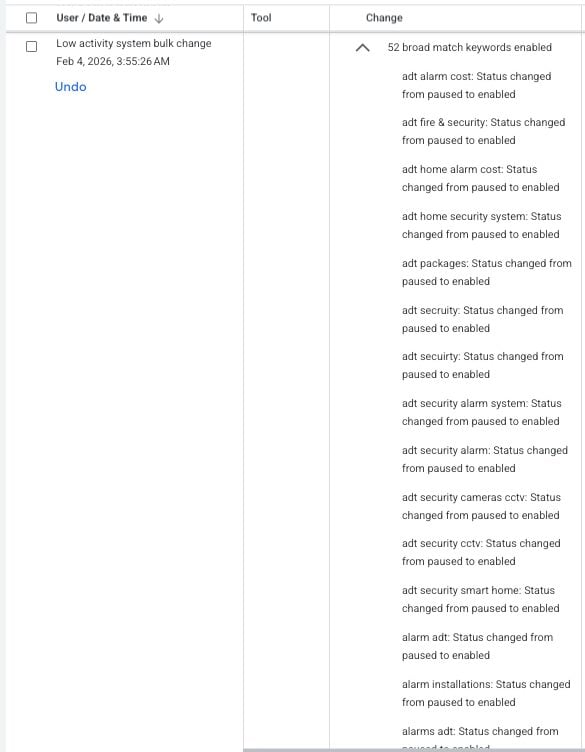
Some advertisers, including myself, have observed a Google Ads tool—created for low-activity bulk changes—unexpectedly switching paused keywords back to active. This unusual behavior has been a surprise to many account managers, like myself, who haven’t come across this issue before.
What’s happening? The activity logs are showing entries linked to Google’s ‘Low activity system bulk changes’ tool executing actions that enable previously paused keywords. These logs appear as automated bulk updates and, thankfully, have an ‘Undo’ option available.
In the past, this tool mainly paused inactive elements rather than reactivating them, so this change in behavior is quite perplexing.
What’s unclear? Google hasn’t issued any public documentation to explain this behavior, leaving us unsure whether it’s an intentional feature, a limited test, or a mere bug.
I find myself wondering what exactly triggers this reactivation and how widespread this phenomenon is becoming.
Why does this matter? If like me, you’re diligently managing your campaigns, unexpected keyword reactivation can change your campaign delivery in ways you didn’t plan for, impacting budgets, pacing, and overall performance—particularly if you’ve paused keywords for a specific reason.
For both agencies and in-house teams, this change is raising concerns about automated systems potentially overriding manual settings.
What steps should we take now? As account managers, we might want to regularly check change histories, be on the lookout for any unexpected keyword activations, and use the ‘undo’ function promptly if we notice unplanned changes.
Until Google clarifies the situation, more careful monitoring of campaigns relying heavily on paused keywords might be necessary.
First Alerted This issue was first brought to light by Performance Marketing Consultant Francesco Cifardi on LinkedIn.
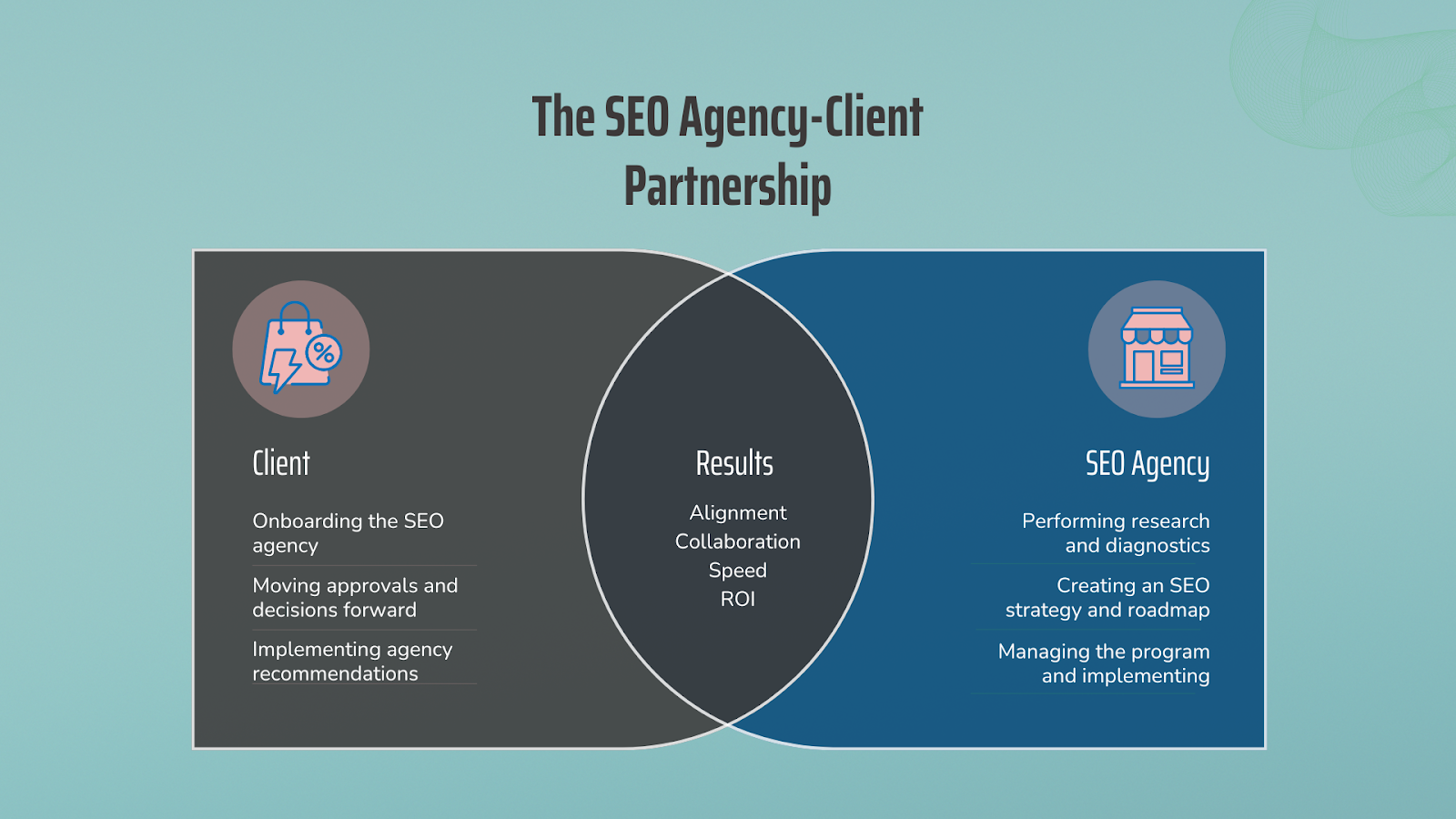
From the very first kickoff to the technical execution phases, I’ve learned that the true value of hiring an SEO agency lies in our partnership and collaboration. Together, we can eliminate bottlenecks, empower cross-functional teams, and clearly demonstrate the ROI of our SEO investment.
Hiring an SEO agency can truly transform how your brand stands out in search results. But remember, an agency’s effectiveness relies heavily on the partnership we build. Realizing the full potential of SEO requires a shared commitment to our goals and maintaining high momentum.
Here’s what I’ve discovered about maximizing the benefits of working with my SEO agency: Alignment leads to faster progress, which makes it easier for us to prove the value of our efforts.
To ensure we get the most out of this partnership, it’s crucial to align our SEO strategy with what truly drives our business. The company sets the business goals, and it’s the agency’s job to attract the traffic that helps achieve them.
Having open discussions with the agency about how to align these goals right from the start enhances the effectiveness of our SEO program. Including cross-departmental stakeholders only reinforces the alignment and ensures everyone is on the same page.
When the entire team understands the foundation of SEO, they can comprehend its role and their contribution to its success. In this spirit of collaboration, I facilitate SEO training across teams to empower everyone involved.
I always come to the kickoff meeting fully prepared, ready to set agendas for productivity. Sharing pain points, detailing business operations, and clarifying the program’s scope helps everyone understand what to expect and what’s expected of them.
Regular communication with my agency, whether through emails, Slack, or meetings, is vital. Clear reporting methods are another key aspect, ensuring everyone remains accountable and the results are measurable.
Switching from seeing the agency as just a vendor to viewing them as a true expert partner helps cultivate trust in their guidance, the very reason I hired them in the first place.
By giving our agency visibility into past and present performance data, I ensure they have all vital information for optimizing our SEO efforts from day one. This setup includes access to essential tools and crucial performance metrics.
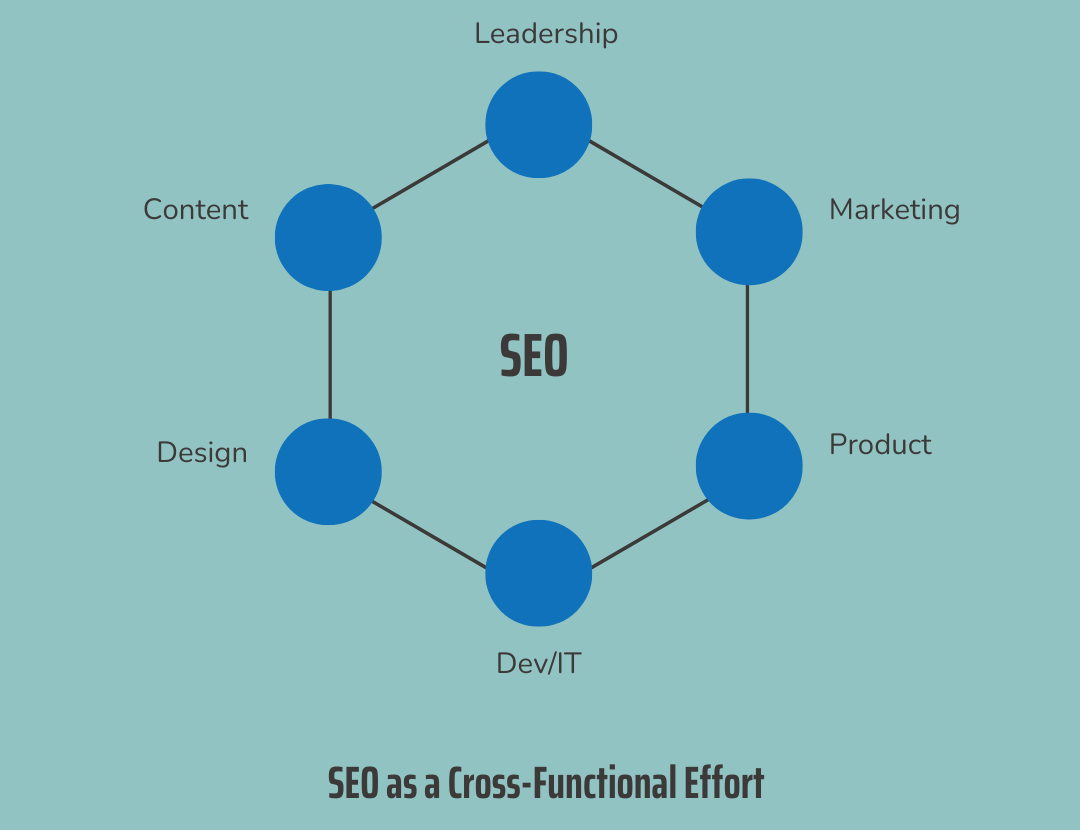
SEO isn’t just an isolated activity—it requires contributions from multiple teams within the company. By including team leaders early in planning, I make sure everyone is engaged and accountable, from SEO briefings to content collaboration.
My agency excels in SEO, but I bring invaluable brand knowledge to create content that aligns both with business goals and customer needs. By maintaining active involvement in content development, we produce material that truly resonates.
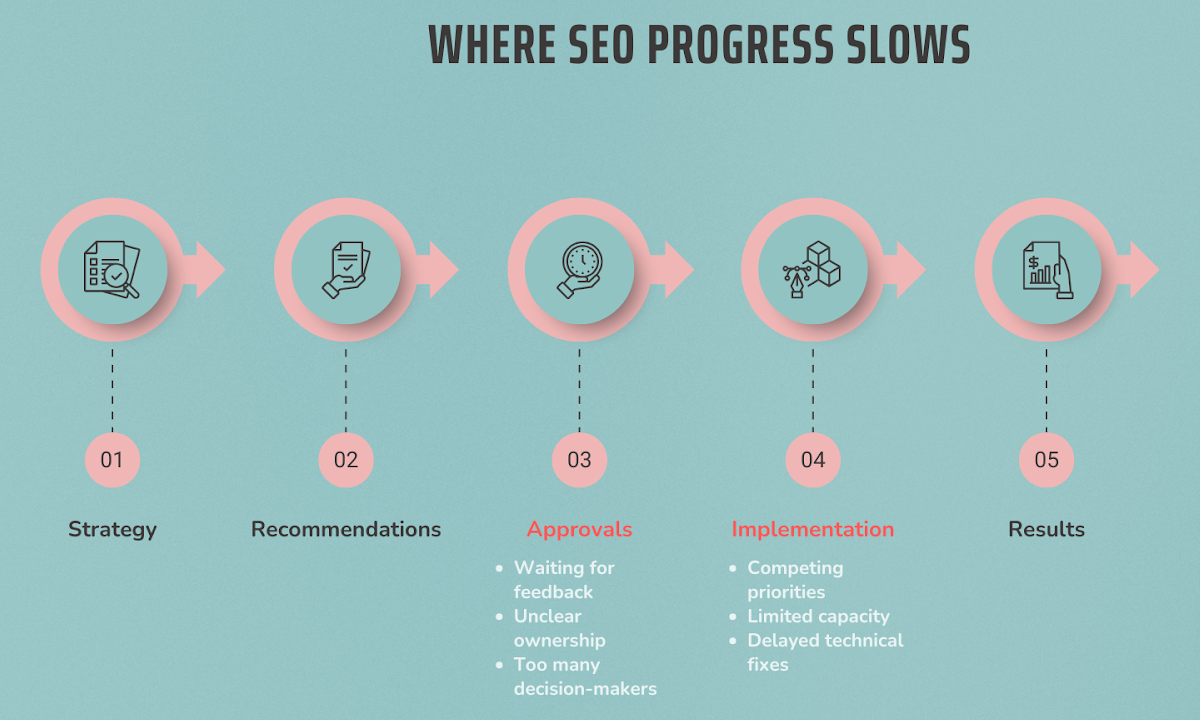
Streamlining content reviews and setting clear guidelines helps eliminate approval hurdles that can slow down our SEO progress. Prioritizing high-impact tasks ensures we stay competitive in search results.
Each implementation, however small, contributes significantly to our overall SEO success. I prioritize these tasks during planning phases and involve technical teams early to ensure seamless execution.
Maintaining engagement with my agency beyond the initial excitement stage is crucial for ongoing success. Continual communication, involvement in reviews, and flexibility help adjust to shifting business landscapes effectively.
Ultimately, strong SEO results are built on strong partnerships. By working together, my agency and I drive our SEO program forward, creating a strategic and valuable business initiative.
On episode 341 of PPC Live The Podcast, I had the pleasure of chatting with Andrea Cruz, Head of B2B at Tinuiti. We delved into a challenge that many senior marketers face: the struggle of providing immediate answers when clients press for details without prior notice.
We explored how missteps in communication can amplify client stress, and how adopting a proactive mindset can turn these challenges into pivotal moments of growth in one’s career.
As Cruz progressed from a hands-on marketer to leading entire teams, she encountered the challenge of advocating for projects she wasn’t directly managing daily. This shift brought new struggles, especially when clients questioned campaign performance or outcomes.
In those moments, freezing or delaying responses can damage trust. Cruz realized that senior leaders must offer clear direction, even without knowing every detail, to maintain confidence in discussions.
Through her experiences and mentorship, Cruz honed a technique for buying time without losing trust: asking thoughtful questions. This strategy not only buys time but also ensures that the responses are precise and address the core of the client’s concerns.
Her method includes asking clients to clarify expectations, requesting additional context, and confirming their understanding. This approach is crucial, especially in emotionally charged situations, and, for Cruz, it allowed her to manage complex conversations effectively despite being a non-native English speaker.
At Tinuiti, the focus is on a solutions-driven culture over assigning blame. By addressing ‘Where are we now?’ and ‘How do we get where we want to be?’, teams foster a safe space to discuss errors and learn from them. Cruz believes that leaders should set the standard by openly sharing their own mistakes.
Cruz advocates for proactive communication, urging teams to address issues before clients notice. Tailoring communication styles to client preferences fosters stronger relationships and transforms agencies into strategic partners.
Common mistakes in B2B advertising include spreading budgets too thin and underfunding campaigns. Cruz emphasizes that it’s better to focus on fewer channels with adequate resources to avoid ineffective outcomes.
Regarding AI, Cruz warns against limiting its use to basic tasks and shares how her team is leveraging AI for advanced operations, enhancing strategic execution.
Cruz’s message is clear: growth requires preparation and a willingness to adapt. By anticipating client needs and embracing experimentation, marketers can turn pressure into golden opportunities.
Your brand can rank well, publish strong content, and still appear inconsistently in AI answers. The usual weak point is not a missing optimization trick. It is the gap between product data, page copy, schema, PR language, and local information. When those inputs disagree, AI systems have to assemble an uncertain version of your brand.
You need an operating system for visibility: one controlled fact layer, a publishing pipeline that catches contradictions, equivalent human and machine representations, and a repeatable way to measure what AI systems actually say. Build that foundation before you optimize individual pages or chase whichever AI platform is attracting attention.
Choose the decisions you need to influence, not a favorite engine
ChatGPT, Google AI Overviews, Perplexity, and Bing do not present information in identical ways. Their interfaces, answer formats, and potential value to a brand differ, so platform prioritization should follow your business objective. It should not define your underlying information architecture.
Start by building a query portfolio. This is a controlled set of questions representing the decisions you want to influence. It gives content, SEO, product, and PR teams a shared target that is more useful than a broad instruction to improve AI visibility.
Entity identification: Questions asking what your company, product, service, or expert is. These expose naming, category, and relationship problems.
Category discovery: Questions asking which options fit a need. These show whether the brand is associated with the right problem and audience.
Comparison: Questions asking how alternatives differ. These test whether your differentiators are specific, supported, and easy to retrieve.
Verification: Questions about specifications, policies, locations, availability, qualifications, or other concrete facts. These are where stale or contradictory information becomes especially visible.
Action: Questions asked immediately before a visit, signup, inquiry, or purchase. These reveal whether AI answers can connect a recommendation to a useful destination.
For every query, record the audience intent, facts a correct answer must contain, the preferred evidence URL, acceptable variations in wording, and conditions that would make the answer wrong. A mention is not automatically a success. A brand can be mentioned in the wrong category, cited with an unsupported claim, or recommended to an unsuitable audience.
Run the same portfolio across the platforms relevant to your audience. Keep the prompts stable long enough to identify patterns. If you change the questions, grading rules, and target platforms simultaneously, you cannot tell whether visibility improved or the test simply became easier.
Build a canonical fact layer before producing more content
Create one record for each important company, product, service, location, person, and named methodology. A useful record includes:
Identity: Preferred name, approved aliases, category, parent organization, and relationships to other entities.
Core assertions: The facts that must remain stable, such as what the entity does, who it serves, and which features or qualifications can be claimed.
Evidence: The canonical page and any approved supporting URLs for each material assertion.
Scope: Geographic, product-version, audience, or time limitations that prevent a qualified fact from becoming an unqualified claim.
Ownership: The person or team allowed to approve a change, plus the date on which the record was last verified.
Distribution: The templates, schema fields, feeds, profiles, and communications that consume the record.
Keep facts separate from expression. Your product page, comparison page, press release, and local landing page do not need identical sentences. They do need to agree on names, relationships, capabilities, qualifiers, and evidence. This lets writers adapt the message without quietly creating a second version of the truth.
Infrastructure layer
What it controls
Release control
Entity registry
Names, relationships, approved facts, qualifiers, and evidence
A named data owner approves material changes
Canonical pages
The visible explanation and primary evidence for each entity
Editors reconcile copy with the registry before publication
Structured data
Machine-readable facts and relationships already supported by the page
Templates validate and values match visible content
External and local distribution
PR terminology, profiles, partner descriptions, and regional facts
Briefs inherit approved language and preserve local qualifiers
Evaluation log
Prompts, answers, citations, errors, and changes over time
Tests use a stable query set and written grading rules
Do not use schema to introduce a claim that the visible page does not support. Structured data should clarify the page, not act as a hidden correction layer. When copy and markup conflict, fix the fact at its owner and update every dependent surface. Patching only the schema leaves the contradiction in circulation.
Put every important asset through five visibility gates
Technical parsing gate: Confirm that the canonical URL, response, crawl controls, rendered content, and schema.org markup behave as intended. Block release when markup is invalid, a value required by your template is empty, or structured data disagrees with the page. Validate the appropriate Product, Review, FAQ, organization, person, or other supported types where they accurately describe the content.
Brand signal gate: Compare names, categories, relationships, and core claims with the entity registry. Block release when an unapproved alias changes the entity’s meaning, a press message introduces a different category, or a differentiator cannot be connected to evidence.
Accessibility and retrieval gate: Make each important passage understandable when retrieved without the rest of the page. Lead with the answer, use descriptive headings, name the entity instead of relying on vague pronouns, attach units and qualifiers to numbers, and keep evidence near the claim it supports. Block release when the main answer depends on a heading, footnote, image, or previous paragraph that a retrieval system may not capture with it.
Authority and de-duplication gate: Identify the primary URL for the topic and compare it with existing assets. Block release when two pages give conflicting answers or when a new page merely creates another candidate authority. Decide whether to update the canonical page, narrow the new page to a distinct intent, or reconcile the conflict before publishing.
Localization gate: Verify which facts are global and which vary by market. Block release when a regional page inherits an unsupported global claim or omits a location, currency, availability, policy, or language qualifier that changes the answer.
Put these checks inside the CMS workflow or the ticket system your teams already use. Each gate needs three fields: pass or fail, evidence, and an owner for remediation. A checkbox without evidence becomes ceremonial; a failed check without an owner becomes permanent backlog.
Apply the full pipeline first to your highest-value entity templates rather than every URL at once. Product, service, location, and expert pages are good candidates because a template-level correction can improve many assets while keeping their facts aligned.
Do not create a machine-only version of reality
Machine-friendly delivery can reduce parsing overhead, but it does not excuse content divergence. Cloudflare’s Markdown for Agents illustrates the distinction. When a client requests Accept: text/markdown, the feature can fetch the origin HTML, convert it at the edge, return Markdown, and include both Vary: accept and a token estimate. Cloudflare claims the converted representation can reduce token use by up to 80% compared with HTML. That is a vendor-supplied maximum, not a guaranteed result for every page.
The strategic risk is not Markdown itself. The risk appears when an origin server recognizes the Markdown request and returns different facts, altered product data, hidden instructions, or richer claims than a person sees. The same URL then has two candidate representations of reality, and every consuming system must trust one, compare them, or ignore the alternate version.
If you introduce content negotiation or another alternate representation, use these controls:
Fix the HTML first. If the page is too cluttered or ambiguous to transform reliably, improve its structure rather than treating Markdown as a repair layer.
Generate, do not rewrite. Derive the machine-friendly response from the same approved human-facing content. Do not maintain a separate set of claims.
Prevent origin-level branching. If the origin does not need to know that Markdown was requested, normalize or strip the signal before it reaches templates that could vary the content.
Separate caches correctly. Preserve the relevant Vary behavior so HTML and Markdown responses are not served to the wrong request.
Test semantic parity. Compare names, claims, numbers, qualifiers, links, tables, labels, and disclosures after conversion. A raw text diff is less useful than checking whether both representations support the same conclusions.
Inspect context loss. Markdown can flatten visual relationships. Review tables, captions, comparison layouts, footnotes, and nearby disclaimers to ensure a converted passage does not become misleading.
Keep the feature reversible. Monitor errors and maintain a quick way to disable the alternate response if parity fails.
Treat Markdown as a transport optimization. It may make approved information cheaper to process, but it should never become a private channel for information you are unwilling to show users.
Operate AI visibility with owners, metrics, and a 90-day rollout
The technical owner is accountable for rendering, schema, crawl accessibility, content transformations, evaluation tooling, and the technical gates.
The visibility owner aligns product, content, PR, localization, and leadership around approved entities, shared targets, and remediation priorities.
Do not assign AI visibility to SEO while allowing every other team to alter the inputs independently. Give product, PR, content, and localization teams shared objectives tied to the gates they control. Otherwise, SEO will keep detecting contradictions after publication instead of preventing them.
Separate input quality from observed AI outcomes
Your dashboard should show whether the information supply chain is healthy and whether external systems are interpreting it as intended. Keep those two classes of measurement separate.
Leading indicators should include schema validation status on priority templates, unresolved conflicts between canonical facts and published pages, gate pass rates for new assets, unverified entity records, and localization exceptions. These metrics tell you whether the organization is producing clean inputs.
Outcome indicators should include brand mentions for eligible queries, citations to approved evidence pages, factual accuracy, sentiment where it can be graded with a written rubric, AI-referred visits, and conversions from those visits. These metrics tell you what happened after the information entered the wider ecosystem.
Define Share of Model internally before putting it on an executive dashboard. One defensible definition is the number of eligible tested answers that mention the brand divided by the total number of eligible answers in a fixed query portfolio. Define supported citation rate separately as the share of checked citations that genuinely support the associated claim. Do not blend the two: being mentioned and being used as evidence are different outcomes.
For every test, retain the prompt, platform, date, answer, cited URLs, and grading decision. Use the same rubric on each run. AI answers can vary, so treat an individual response as an observation rather than a trend. Repeated tests with a stable denominator are what make changes interpretable.
Days 1-30: Audit. Select the entities most connected to revenue, reputation, or customer decisions. Build the initial query portfolio, map every material claim to its current URLs, inspect schema and external descriptions, and log contradictions. Assign an owner to each disputed fact before rewriting content.
Days 31-60: Infrastructure. Create the entity registry, add the five gates to your publishing workflow, validate priority templates, establish canonical evidence pages, and add parity tests for any alternate representation. Build the first dashboard from the same fixed query portfolio used in the audit.
Days 61-90: Accountability. Give product, content, PR, SEO, and localization teams objectives tied to the gates they control. Review citation and accuracy failures together, fix them at the canonical fact layer, and verify that corrections reached every dependent surface. If compensation will eventually depend on these metrics, make the definitions auditable and resistant to gaming before attaching incentives.
Key takeaways
Choose AI platforms after defining the audience questions and business decisions you need to influence.
Control important names, claims, relationships, qualifiers, and evidence in one canonical entity registry.
Require technical, brand, retrieval, authority, and localization gates before important content is published.
Keep human-facing HTML and machine-friendly representations semantically equivalent.
Measure mentions, citations, correctness, and business outcomes separately against a stable query portfolio.
Start this week with one commercially important entity. Identify its canonical facts, trace where those facts are repeated, and run tenaciously through every conflict until the page, schema, communications, and AI test answers agree. Once that entity can move through the pipeline cleanly, turn the process into a reusable template and expand it to the next one.
Your paid acquisition account has stalled, and every obvious lever looks familiar: raise the budget, loosen the target, switch bid strategies, or rebuild the audience. Those changes may increase delivery, but they won’t necessarily fix the constraint. They can also spend more money while making the underlying problem harder to see.
A better optimization process starts by separating five jobs that ad platforms often blur together: measuring demand, valuing a customer, producing effective creative, controlling delivery, and deciding how much you can afford to pay. Once you know which job is failing, the next action becomes much clearer.
Diagnose the constraint before changing the bid
Bidding is only one layer of paid acquisition. It determines how the platform competes for opportunities, but it cannot repair an unattractive offer, an incorrect conversion value, stale creative, broken tracking, or a landing page that contradicts the ad.
This matters more as platforms automate auction decisions. Google Smart Bidding can evaluate signals such as device, location, behavior, and intent in real time, while Meta predicts outcomes instead of relying only on static audience definitions. That makes repeated bid-strategy changes a weak substitute for diagnosing the input that is actually limiting performance. In many accounts, creative has become a more important performance constraint as bidding has become more automated.
Start each review with an observed pattern, not a proposed setting change. The pattern won’t prove a cause, but it will tell you what to inspect first.
Observed pattern
Check first
Next controlled action
Spend remains below budget
Delivery status, eligibility, audience restrictions, asset coverage, and whether the target is too restrictive
Resolve policy or tracking issues, then add genuinely distinct eligible assets before paying more for the same opportunities
Traffic remains steady but conversion efficiency weakens
Offer, landing-page experience, message match, and conversion tracking
Test the promise or page while holding the delivery setup as stable as practical
Acquisition cost rises while the same ads continue running
Creative fatigue, declining response, and loss of message relevance
Introduce a new concept, not merely another crop or minor wording change
Reported ROAS looks healthy but profit or cash generation does not
Conversion-value rules, margins, refunds, customer mix, and attribution assumptions
Reconcile platform value with contribution economics before scaling
Blended ROAS is acceptable but new-customer volume is weak
New-versus-returning customer identification and the value assigned to acquisition
Separate customer types and define an explicit new-customer value
Keep this diagnosis conditional. A rising acquisition cost can accompany creative fatigue, but it can also come from a changed offer, a measurement failure, a different product mix, or stronger auction pressure. Check those alternatives before declaring the creative responsible.
The practical rule is simple: don’t change bids, budgets, audiences, creative, and landing pages in the same optimization pass. If every layer moves, you may improve the headline metric without learning why. You also lose a reliable control when performance later reverses.
Define what a new customer is worth before asking for ROAS
A target ROAS is meaningful only when the conversion value behind it is meaningful. ROAS is conversion value divided by ad spend. If the value sent to the platform exaggerates the economics, the campaign can hit its platform target while missing the business target.
Separate accounting value from optimization value. Accounting value describes what happened, such as recorded order revenue. Optimization value tells the bidding system how strongly one outcome should be preferred over another. The two can be related without being identical, but any adjustment needs a documented economic reason.
For acquisition, build the value from contribution rather than topline revenue. A useful working relationship is:
First-purchase contribution should reflect the money left after the costs that move with the sale. Future contribution should include only behavior you can support with customer data and a clearly defined observation window. If repeat-purchase evidence is weak, keep the future component conservative. Raising it to make a campaign appear scalable only authorizes the platform to spend against an assumption.
Then document the valuation inputs in one place:
The conversion event being optimized.
How the platform identifies a new customer and what happens when identity is uncertain.
The ordinary value attached to the transaction.
The additional value, if any, attached to acquiring a new customer.
Which margins, refunds, cancellations, discounts, and fulfillment costs are reflected.
Whether future customer contribution is included and what evidence supports it.
The target ROAS applied to that value.
The owner responsible for reconciling platform reporting with actual customer economics.
The current limitation is important: the suggested value is applied broadly rather than being customized for each auction, campaign, or product. A single value can therefore hide meaningful differences between a low-margin first order, a high-margin product, and an acquisition source associated with stronger repeat behavior. Treat the suggestion as a bidding input, not as a universal statement of customer value.
If your economics differ materially by product or customer type, preserve that detail in your own analysis even when the platform setting cannot. Review performance by the segments that change contribution, then decide whether the broad value is conservative enough for the full mix. Don’t increase the budget merely because the platform reports that the modeled target has been reached; confirm that new-customer contribution supports the additional spend.
Make creative production part of the media plan
Automated bidding needs useful choices. If every asset repeats the same visual, claim, and opening line, the system has little meaningful variation to match with different people and contexts. More files do not automatically create more learning; distinct ideas do.
Meta’s Andromeda system puts substantial weight on creative signals when retrieving and ranking ads. Weak creative can therefore restrict meaningful delivery as well as reduce response after an impression. Google has also increased the role of assets in formats such as Performance Max and Demand Gen. The operational consequence is that creative planning can no longer sit downstream from media planning. Your spend plan needs enough creative capacity to supply new hypotheses while the campaign is running.
Build a creative queue around questions, not deliverables. Each concept should test a reason someone might act:
Problem framing: Which pain, missed opportunity, or desired outcome earns attention?
Audience state: Is the person discovering the category, comparing approaches, or choosing a provider?
Claim: What specific benefit does the ad promise, and can the landing page support it?
Proof: What demonstration, product detail, customer evidence, process explanation, or constraint makes the claim credible?
Presentation: Which opening line, visual style, format, or spokesperson makes the idea understandable quickly?
Action: What should the person do next, and does the call to action match the commitment required?
Distinguish concept variation from execution variation. Changing a background color, aspect ratio, or button label can help adapt a proven concept, but it usually does not test a new reason to buy. A concept changes the argument. An execution changes how that argument is expressed. Your library needs both, and the campaign report should label them separately.
Use one clear hypothesis for each planned comparison. For example: a demonstration may answer uncertainty better than a feature list, or an outcome-led opening may be more relevant than a product-led opening. Hold as much of the rest of the path stable as the platform allows. Automated delivery may not distribute impressions evenly, so don’t call a winner from surface engagement alone. Check whether the intended acquisition outcome improved, whether the customer mix changed, and whether the result persisted after the platform found its preferred delivery pockets.
Refresh creative in response to evidence, not an arbitrary calendar. Watch for a sustained pattern across delivery and business metrics: response weakening, acquisition cost rising, frequency or repeated exposure increasing where available, and the offer or measurement remaining unchanged. A single bad day is not a creative diagnosis. A recurring decline across the same concept is a reason to advance the next prepared hypothesis.
Run one optimization loop across media, creative, and finance
Paid acquisition breaks down when each team optimizes its own proxy. Media can maximize platform value, creative can maximize engagement, and finance can judge blended profitability, yet no one can explain whether the next customer is worth the next unit of spend. Use one shared loop that connects the auction decision to the business outcome.
Name the decision. Write the business question before opening the ad platform. Examples include whether to increase acquisition spend, replace a fatigued concept, or change the value assigned to a new customer.
Choose the decision metric. Use the metric that answers that question. New-customer contribution is more relevant to an acquisition decision than blended revenue that includes returning buyers.
Record the current inputs. Capture the bid strategy, target, budget, conversion definition, value rules, customer classification, live creative concepts, landing page, offer, and relevant tracking status.
State the suspected constraint. Explain the mechanism. Avoid labels such as underperformance when you mean that the creative is repetitive, the target is uneconomic, or the page fails to support the promise.
Make the smallest useful change. Change the layer implicated by the diagnosis while preserving a usable comparison wherever practical.
Read the result through the customer economics. Check delivery and response metrics to understand the mechanism, then judge the decision using acquisition cost, contribution, customer type, and the quality of the measured outcome.
Keep the learning. Record what changed, what remained stable, what the platform did, and what decision followed. Feed creative learning into the next brief and value learning into the next budget discussion.
This process also prevents a common category error: treating a platform forecast as proof of incrementality. Attribution tells you which outcomes the system assigned to an ad interaction. It does not, by itself, establish how many of those outcomes would have happened without the spend. Keep that distinction visible when branded demand, returning customers, or existing high-intent audiences can influence reported performance.
Set ownership at the handoffs. Media should flag delivery and auction symptoms. Creative should maintain the hypothesis queue and concept labels. Analytics should protect event definitions and customer classification. Finance or the commercial owner should approve the contribution logic behind allowable acquisition cost. The shared review should end with one decision, one owner, and the evidence required to revisit it.
Key takeaways
Diagnose economics, measurement, creative, delivery, and the customer journey before assuming the bid is the constraint.
Base new-customer value on contribution and defensible future behavior, not revenue or a premium chosen to make ROAS look better.
Treat Google’s experimental ROAS-linked value suggestion as a broad bidding input; it does not yet adapt the value by auction, campaign, or product.
Give automated systems distinct creative concepts, not a folder of cosmetic variants expressing the same idea.
Refresh creative when a repeatable performance pattern supports the diagnosis, not because a calendar date arrived.
Change one implicated layer at a time and judge the outcome against new-customer economics.
At your next account review, bring a one-page valuation sheet and a queue of creative hypotheses. Pick the clearest constraint, make one controlled change, and record what would justify scaling, revising, or stopping it. That turns optimization from a series of platform reactions into a repeatable acquisition decision system.
We’re stepping into an era where the visibility of web content is spreading across a multitude of search and social platforms. Google has always been a force to reckon with, but it’s no longer the only player in the search experience. Video-based social media platforms like TikTok and community sites such as Reddit are carving out spaces as go-to search engines for their dedicated audiences.
This evolving landscape is reshaping how we consume news content. Google’s news SERP is adapting to the era of personalized query responses afforded by LLMs and the influence of social media platforms. To keep up, Google has introduced AI-powered SERP features like AI Overviews and AI Mode. These features prioritize content that is “helpful, reliable, and people-first,” drawing heavily from social media platforms.
As search and social media intertwine more closely than ever before, we need to embrace a new strategy. This involves creating newsroom teams comprising social media experts, SEO specialists, and AI enthusiasts working together towards a unified content visibility goal.
When I optimize news content for social platforms, I also consider the potential performance of these posts on the Google SERP. I’ll delve into optimizing specific SERP features, but first, let’s explore making news content friendly for social platforms.
First, let me offer some sanity tips. It’s tempting to optimize content for every social media platform, but I find it more effective to focus on one or two where my audience is active and my growth opportunities are highest. By reviewing analytics and conducting audience surveys, I can identify the platforms where my audience consumes news content.
Optimize News Content for Social Media Platforms
I begin by considering how my content might appear on different platforms. Here’s my breakdown of which content types work best on each platform and how they might appear on Google:
YouTube
Creating YouTube video content involves following video SEO best practices. With guidance from this comprehensive YouTube SEO guide, I create a successful video strategy by ensuring my video titles align with the content.
Google prioritizes YouTube’s search ranking through relevance, engagement, and quality. I make sure my metadata accurately reflects my video content to ensure it stands out as relevant in a search.
One trend I’ve noted is that older event content on YouTube continues to rank well on Google, even after related articles have faded. Similarly, explainer videos show longevity on the SERP.
Facebook
Facebook, though perhaps not as trendy as it once was, still reaches a diverse audience. This platform excels with community-based content and entertainment news that incites conversation.
Even though Facebook’s dedicated news tab was removed, its posts are becoming more visible on Google’s SERP, which might make it worth reconsidering from a search perspective.
X
Since Elon Musk’s takeover, X’s audience has shifted more to the political right, while its role as a hub for breaking news, live updates, and political content remains strong. Sports content also performs well here, especially in the U.S.
Instagram
For Instagram, focusing on visually-driven stories, such as celebrity fashion and health topics, is key. The platform also performs well for sports highlights, often appearing in Google’s dedicated publisher carousel or “What people are saying.”
Reddit
Reddit’s unique user base requires a specific strategy to engage niche communities outside other platforms. Whether the content is about tech trends, health, or sports, it’s crucial to understand Reddit’s audience and adhere to its guidelines.
TikTok
The predominantly young, diverse user base on TikTok gravitates towards visual, conversational, and opinion-based content. Short-form videos that are authentic and engaging perform best.
Pinterest
Pinterest might be old-school, but it’s growing with Gen Z, making it ideal for lifestyle content. When I create on Pinterest, I focus on fashion, DIY, and motivational content, using high-quality visuals and a more relaxed posting schedule.
Social Content Opportunities by Google SERP Feature
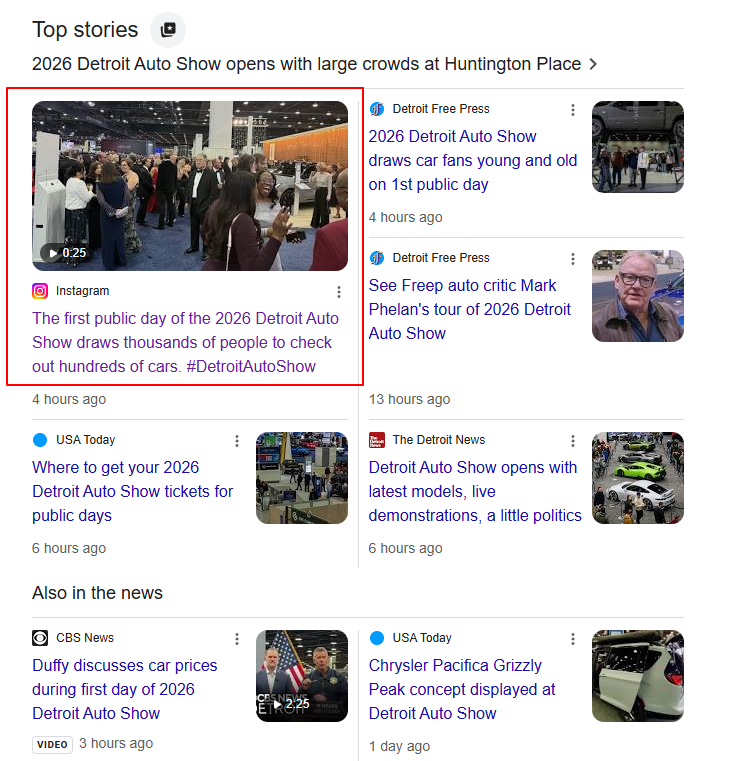
Understanding how social content appears in different SERP features helps me maximize visibility. For instance, Top Stories capture breaking news while the “What people are saying” feature emphasizes emotionally engaging user-driven content.
Threat or Opportunity?
Instead of viewing social media content on Google’s SERPs as competition, we can leverage it as an opportunity to increase visibility. Our focus should be on integrating social-forward strategies to expand brand engagement and not solely relying on traditional SEO tactics.
Welcome to my comprehensive guide on Generative Engine Optimization (GEO). In this ever-evolving digital landscape, mastering GEO has become essential for anyone wanting to enhance their brand’s visibility in AI-driven responses on platforms like ChatGPT, Gemini, Perplexity, and Claude.
I’ve compiled the latest strategies and data to help you navigate this dynamic area. By following these insights, you’ll not only improve how your brand appears but also engage more effectively with AI-optimized content, ensuring you stay ahead in the competitive digital marketing arena.
Join me on this journey to master GEO and transform your approach to online branding and content visibility. With focused strategies, my guide covers everything you need to know to make informed decisions and attain greater engagement with your audience.
Your SaaS dashboard shows fewer visits from AI assistants. Before you rewrite the content roadmap or declare the channel dead, find out exactly which line moved. A fall in standalone-assistant referrals, a shift toward workflow-embedded tools, and poor landing-page routing are three different problems. They require three different responses.
The goal isn’t to recover every lost session. It is to make your product easy to retrieve at the right moment, send qualified users to a page that resolves their question, and measure whether those visits produce meaningful actions.
Key takeaways
A decline in attributed AI referrals is not the same as a decline in AI visibility. Referral analytics capture recognized visits, not every citation, recommendation, or answer that produces no click.
The widely discussed 53% decline applied to standalone AI discovery sessions in one SaaS dataset. It occurred while workflow-embedded Copilot traffic grew by more than 20 times, so the pattern is better read as channel redistribution than universal disappearance.
Internal search deserves its own landing-page segment. About 41% of the dataset’s LLM sessions landed on search-result pages, which can reveal that an assistant could not identify a better direct answer.
Compare equivalent buying periods. The dataset peaked in July and weakened through Q4, making a simple month-over-month chart especially easy to misread.
Prioritize landing-page relevance, qualified actions, referrer mix, and content penetration. Total sessions alone cannot tell you whether your AI search strategy is improving.
Read the decline as a distribution problem first
The 53% figure does not establish that every SaaS company lost half its AI audience. It describes a decline in discovery sessions from standalone AI tools within a particular dataset. Between November 2024 and December 2025, that dataset recorded 774,331 sessions attributed to large language models.
Its referrer mix was highly concentrated: ChatGPT accounted for 82.3% of the sessions. When one platform supplies that much traffic, a change in its usage, interfaces, link behavior, or audience mix can dominate the aggregate chart. A top-line decline can therefore hide growth elsewhere.
Copilot demonstrates the point. It generated 148 sessions near the end of 2024, grew by more than 20 times by May 2025, and then averaged 3,822 sessions per month from June through December. It had become the second-largest AI referrer by the end of 2025.
The pattern is consistent with intent moving into the user’s existing workflow. Someone already working in an embedded assistant may ask a product or implementation question without opening a separate discovery tool. That does not settle the larger question of whether agents will replace parts of SaaS. It does tell you that measuring all AI platforms as one homogeneous channel will produce poor decisions.
Start by classifying the shape of your own decline:
Pattern in your analytics
Working interpretation
Next check
Standalone assistants fall while an embedded assistant grows
Referrer mix is changing
Compare landing pages, intent, and conversion by platform
AI and other non-paid channels weaken in the same period
Demand or B2B seasonality may be involved
Compare equivalent periods and commercial outcomes
AI sessions increasingly land on internal search
Assistants may not be resolving a direct destination
Inspect the query, result quality, and crawl path
AI sessions fall but qualified actions hold steady
Lost visits may have been lower-value, or attribution may have shifted
Review conversion counts, not only conversion rate
Sessions hold steady while qualified actions fall
Landing-page relevance or intent quality has deteriorated
Audit the promise-to-page match for the affected referrers
These are diagnostic hypotheses, not conclusions. Use them to choose the next report or page inspection rather than to explain the result in advance.
Audit measurement before changing your content
An analytics tool’s AI channel is a record of identifiable referrals. It is not a complete count of how often an assistant mentions your company, uses your information, recommends your product, or answers a question without sending a visit. Call the metric what it is: attributed AI referral sessions.
Lock the channel definition
Export the referrer rules behind your AI segment. Keep the same platform list, source normalization, bot filtering, and session definition throughout the comparison. If you add a newly discovered referrer halfway through the audit, recalculate the earlier period under the same rule set. Otherwise, taxonomy maintenance will look like growth.
Keep an explicit “unknown or unclassified” bucket. Do not silently assign direct traffic to AI just because a visitor viewed an AI-oriented page. That may be a useful hypothesis for investigation, but it is not referrer evidence.
Build a platform-by-page-type view
For each complete month, split AI referrals by platform and landing-page template. At minimum, separate the homepage, product or feature pages, pricing, comparisons, documentation, blog content, and internal search results. Preserve the full landing URL in the underlying export so query parameters do not disappear inside a grouped page report.
This matrix exposes changes that a channel total conceals. ChatGPT might stop sending exploratory blog visits while Copilot begins sending fewer but more commercial visits to product documentation. Calling that a single traffic decline would erase the useful part of the change.
Use seasonally comparable periods
SaaS discovery in the observed dataset peaked in July and declined through Q4, alongside normal B2B work, budget, and holiday cycles. That is not a universal calendar for every SaaS company. It is a warning against treating an autumn-to-December decline as proof of an AI-specific loss.
Compare the same quarter year over year when you have consistent data. If you do not, compare AI referrals with non-paid search, direct visits, demo activity, and other demand indicators over the same months. A decline shared across channels points toward a different diagnosis than an isolated fall from one AI platform.
Measure penetration, relevance, and outcomes
Create a small scorecard with definitions your team can reproduce:
Referrer share: each AI platform’s sessions divided by all attributed AI referral sessions. This shows concentration and redistribution.
Landing-page relevance rate: AI sessions reaching a page that directly answers the apparent intent divided by all AI sessions. Define the intended destination for each query or intent class before scoring it.
Commercial action rate: trials, demos, sign-ups, or another agreed activation event divided by AI sessions. Report the action count beside the rate so a tiny denominator does not mislead you.
AI landing-page penetration: eligible product, comparison, pricing, and answer pages receiving at least one attributed AI visit divided by all eligible pages. Use this as an internal coverage metric, not an industry benchmark.
Search-result dependency: AI sessions landing on internal search divided by all AI sessions. A rising share deserves a query-level inspection even when total traffic is stable.
Keep visibility and referral performance as separate columns. If you monitor assistant mentions or citations, compare them with clicks rather than combining them into an invented all-purpose score. Visibility can remain stable while click behavior changes.
Treat internal search landings as a retrieval clue
Internal search was the largest destination class in the observed traffic. Search-result pages received 320,615 sessions, or about 41% of all LLM referrals, exceeding blog, pricing, and product destinations.
That does not mean internal search was the best content. A more useful interpretation is that the assistant found a searchable route but not a confident direct answer. Your search interface became a fallback discovery layer.
Open the top AI-referred search URLs and inspect them as a user and as a crawler:
Reproduce the query from the landing URL. Confirm that it returns relevant results rather than an empty state, generic category, or different query after a redirect.
Check whether the public result can be fetched without authentication, cookies, or a browser-only interaction. If useful results appear only after client-side execution, provide a crawlable path to the primary answer.
Expose the query, result summary, and important destination links in visible HTML. A search shell with no meaningful server response gives an assistant little to interpret.
Verify the status code, robots directives, canonical target, and rendering behavior. A result page should not claim to be a successful answer while returning an error, canonicalizing to an unrelated page, or hiding every result from crawlers.
Trace each recurring high-intent query to its best permanent destination. If people repeatedly search for pricing, a named integration, a comparison, or a specific capability, create or improve the dedicated page and link it prominently.
Make the onward path explicit. A useful result should lead directly to the relevant product, pricing, comparison, documentation, or contact page instead of forcing another search.
Do not respond by indexing every possible internal-search combination. Unlimited query parameters, spelling variants, and empty result sets can create a large collection of duplicate or low-value URLs. Keep crawlable search states finite and useful. Promote recurring, commercially meaningful questions into governed landing pages with stable URLs, original answers, and intentional internal links.
Think of public search as an interface an AI system may use, not as a substitute for information architecture. If the same search query repeatedly attracts referrals, the durable fix is usually a direct answer page that no longer requires the fallback.
Rebuild around moments of intent, then test one cycle
Workflow-embedded assistants change when discovery happens. The user may already be writing a specification, comparing tools, diagnosing an integration, or preparing a purchase request. Your page has to resolve that immediate task. A broad brand narrative is rarely enough on its own.
User’s moment of intent
Best destination
Information that must be visible
“What does it cost?”
Pricing or plan page
Pricing basis, plan differences, limits, conditions, and the next buying step
“Can it handle this use case?”
Capability or use-case page
Direct answer, supported inputs, prerequisites, limitations, and a relevant example
“How does it compare?”
Comparison page
Decision criteria, material differences, suitability, migration considerations, and current facts
“How do I complete this task?”
Documentation or task page
Prerequisites, ordered steps, expected result, failure points, and the appropriate next action
“Where is the relevant feature or resource?”
Help, navigation, or curated search page
Exact destination, concise context, and direct links without another discovery loop
Make critical facts available in the main page content. Do not leave pricing conditions, compatibility, product limits, or differentiators only inside images, tabs that never render for a crawler, or downloadable collateral. Clear headings, concise answers, comparison tables, and descriptive internal links make the page easier for people and retrieval systems to interpret. The broader SaaS pattern favors transparent, crawlable, comparison-oriented information.
Use structured data to clarify, not manufacture, the answer
JSON-LD should describe the content a visitor can verify. Use the most accurate entity types for the page, such as Organization and SoftwareApplication where they genuinely apply. Represent offers only when the visible pricing information is current and complete enough to support them. Use FAQPage only for questions and answers that are actually present for the reader, and BreadcrumbList only when it reflects the real hierarchy.
Keep names, URLs, product descriptions, and relationships consistent between markup and visible copy. Do not stack loosely related schema types in the hope of earning AI visibility. Structured data can reduce ambiguity; it cannot repair a missing price, an evasive comparison, an inaccessible result, or an unsupported claim.
Run a controlled repair cycle
Freeze the baseline. Save monthly sessions, referrer share, landing-page type, search-result dependency, qualified actions, and your current channel rules.
Choose pages from three evidence-backed groups: high-intent pages receiving no AI referrals, internal-search URLs receiving AI referrals, and pages that attract visits but fail to resolve the apparent intent.
Repair the answer path. Put decisive facts in visible content, connect recurring searches to permanent destinations, improve internal links, and align JSON-LD with the finished page.
Annotate the publication and crawl dates. Keep unrelated template and attribution changes out of the same evaluation window where practical.
Review one complete reporting period using the frozen definitions. Compare platform mix, relevant landings, action counts, and search dependency before looking at the aggregate traffic line.
The decision after that cycle should follow the observed failure. If one referrer is shrinking while another is growing, adapt destinations to the growing moment of intent. If search-result dependency is rising, repair retrieval and information architecture. If comparable periods weaken across several acquisition channels, do not blame AI alone. If qualified actions hold while raw visits fall, protect the pages producing those actions before chasing volume.
Your first move can be small: open a platform-by-page-type report, select the highest-traffic internal-search landing, and follow its path to the page that should have answered the query directly. Repairing that path gives you a measurable change. A generic push to publish more does not.
Your brand can rank well in conventional search and still disappear when a buyer asks an AI system which vendors, products, or approaches deserve consideration. Publishing another generic page rarely fixes that gap. AI visibility depends on whether your expertise is clear on your own site, connected across a topic, and corroborated elsewhere on the web.
Your goal is not to force a brand mention. It is to make your brand an accurate, explainable, and well-supported choice when an answer engine assembles a response. That requires coordinated work across content, technical SEO, social discovery, expert participation, digital PR, and measurement.
Key takeaways
Audit the questions behind real buying decisions, then record which brands are named, how they are described, and which domains support the answer.
Build one coherent topic cluster around each important decision instead of publishing disconnected pages that repeat the same keywords.
Treat your website as the place where facts and expertise are made clear, while using independent coverage, communities, video, and experts to establish corroboration.
Keep SEO and social discovery in the plan. AI referral traffic alone does not represent the full discovery journey or justify abandoning channels that already drive demand.
Measure mentions, recommendations, citations, sentiment, factual accuracy, and commercial outcomes separately. A single visibility score will hide the problem you need to fix.
AI visibility is a consensus problem, not a page problem
Traditional SEO often begins with a page: Can it be crawled, understood, and ranked for a query? Those questions still matter, but AI-generated recommendations add another layer. The system must connect your brand to a category, understand why it may fit the request, and find enough support to include it confidently.
This is why AI optimization increasingly concerns authority in a semantic environment. Repeating a target phrase does not establish that your company is a credible answer. The relationship among your brand, expertise, audience, use cases, limitations, and evidence has to remain intelligible across multiple pages and external conversations.
For B2B companies, the practical consequence is immediate: buyers are already using ChatGPT during vendor research. A response may introduce the shortlist, narrow it, or validate a decision that began elsewhere. If your marketing team monitors only conventional rankings, it may miss that part of the buying journey.
Owned content is necessary, but it is not the whole evidence base. In one cited-source analysis, only 25% of sources used in generated responses were brand-managed. That figure should not be treated as a universal quota, but it exposes the strategic weakness in an owned-only plan: a company cannot create independent validation by publishing more claims about itself.
Social discovery contributes to that validation before the buyer opens an AI tool. eMarketer found that about two-thirds of U.S. consumers use social platforms like search engines. OtterlyAI also measured Reddit at up to 6.4% of AI citation links in its analysis. Neither number proves that a Reddit campaign will cause an AI recommendation. They do show why real community discussion cannot be dismissed as activity outside SEO.
Do not interpret this shift as permission to move the entire search budget into generative platforms. A 12-month review of 973 ecommerce sites attributed about 0.2% of traffic to ChatGPT referrals, while Google organic traffic was nearly 200 times larger. That sample is not a forecast for every business, especially a B2B company with a long sales cycle. It is a useful guardrail: build AI visibility alongside the channels that already produce discovery, visits, and transactions.
Build owned authority that an answer engine can interpret
Start with a buying decision, not a keyword list. A useful root topic might be choosing a platform for a regulated team, comparing implementation approaches, estimating the resources a migration requires, or deciding whether a product fits a specific operating constraint. The pillar page should resolve that decision. Supporting pages should handle the questions a buyer must answer before trusting the conclusion.
Turn the topic into a connected decision path
Write the decision statement. Name the exact choice the cluster helps a reader make, including the audience and relevant constraint.
List the dependent questions. Cover definitions, eligibility, alternatives, implementation, evidence, limitations, and the situations in which another approach is a better fit.
Assign one page to each distinct intent. Combine overlapping ideas instead of creating several thin pages that compete to answer the same question.
Link every supporting page back to the decision page. Add lateral links only where the next page genuinely advances the reader’s decision.
Remove or repair orphaned material. A useful page that has no place in the topic path is hard for readers and crawlers to interpret as part of your authority.
This is the practical value of content siloing. A tightly connected topic network can improve navigation, crawlability, and the site’s ability to demonstrate subject relevance. The operative word is connected: each supporting page should reinforce the core topic through purposeful internal links. A silo should not become a sealed folder that prevents readers from reaching useful material elsewhere.
Make every important page quotable without making it shallow
A page can be comprehensive and still conceal its answer. Put a direct response near the question it resolves, then supply the reasoning a buyer needs to trust and apply it. A dependable section pattern is:
State the answer in plain language.
Define the audience, conditions, or use case for which the answer holds.
Explain the mechanism or reasoning behind it.
Provide the available evidence and identify its limits.
Name exceptions, tradeoffs, or conditions that change the recommendation.
Link to the next question in the decision path.
That structure gives an answer engine a concise passage to interpret without depriving the reader of context. It also makes weak claims easier for your editors to spot. If a recommendation cannot survive a paragraph about limitations, it probably is not ready to be published as guidance.
Keep the entity facts consistent
Review the language used on your homepage, about page, product pages, comparison pages, author profiles, and support material. Your company name, product names, category, audience, capabilities, and important limitations should not change casually from one page to another. Variation in prose is natural; variation in core facts creates ambiguity.
Structured data can clarify facts that are already present and accurate, but markup cannot manufacture authority or third-party agreement. Use schema to describe the visible page and its entities precisely. Do not use it to imply awards, reviews, authorship, expertise, or organizational relationships that a reader cannot verify on the page.
Finish the owned-content audit with a harder question: what would an independent evaluator need before repeating this claim? The answer might be a documented methodology, named expert, clear product limitation, customer evidence, original data, or comparison criteria. Put that substance into the content before pursuing distribution. Promotion amplifies whatever is already there, including vagueness.
Create the external proof your website cannot supply
AI systems draw on a web in which discovery is fragmented. A buyer may encounter a problem on a social platform, learn terminology from a video, compare options in a community, search Google for detail, and finally ask ChatGPT to narrow the field. Waiting until the final prompt means surrendering the earlier stages that created familiarity and trust.
Your external-authority plan should answer a simple question: where do people in this category verify claims they do not want to accept from a vendor? Depending on the market, the useful surfaces may include professional communities, Reddit discussions, YouTube demonstrations, Facebook groups, industry publications, independent experts, or creator channels. Choose them because your buyers and credible evaluators use them, not because they appear on a generic channel checklist.
Sector evidence must stay in its sector. In a beauty-focused citation analysis, Reddit, YouTube, and Facebook frequently appeared among cited domains. That pattern makes those platforms reasonable places for a beauty brand to investigate. It does not prove that the same ordering applies to enterprise software, healthcare, financial services, or local businesses. Run the citation audit for your own prompts before allocating resources.
Use communities to learn and contribute, not manufacture consensus
Community visibility is earned through useful participation. Hidden brand accounts, scripted praise, or coordinated voting can create reputational damage and leave you with unreliable feedback. A better workflow is to identify recurring questions, let a qualified person answer transparently, disclose the relationship to the company, and document objections that deserve a fuller response on your site.
Track the language people use when they describe the problem, but do not simply copy it into sales copy. First separate genuine customer vocabulary from misconceptions. Then update definitions, FAQs, product explanations, and support material so the next reader encounters a clearer answer. Community listening becomes authority work when it improves the accuracy of your public knowledge, not merely the frequency of your brand name.
Treat video as a searchable evidence format
A useful video should resolve a specific question with enough substance to stand outside a campaign. State the question early, identify the qualified speaker, name the product or method consistently, demonstrate the process where possible, and provide accurate captions. AI systems can interpret spoken language, on-screen text, and captions, so the clarity of the explanation matters more than decorative production.
High production value is not a prerequisite for testing the channel. Internal specialists who can explain a difficult decision clearly may be more useful than a polished advertisement. External creators can also help when their audience and expertise fit the question. Some creator arrangements have been reported at as little as $500, but that is an example rather than a market-wide price or a promised visibility result. Evaluate subject fit, disclosure, content rights, factual review, and audience quality before evaluating reach.
Expert language can be especially influential in high-trust categories, but qualifications must be real and relevant. Beauty queries, for example, may favor language such as dermatologist recommended. A software architect, clinician, lawyer, engineer, or financial professional does not become a transferable endorsement badge for every claim. Match the expert to the subject, state the nature of the relationship, and keep the conclusion within that person’s competence.
Give SEO, social, PR, and subject experts one brief
Separate teams often optimize separate artifacts: the SEO team owns the article, social owns the clip, PR owns the quote, and the expert reviews each one at the end. That produces inconsistent language and disconnected evidence. Use one authority brief containing:
The buying question being resolved.
The audience and conditions attached to the answer.
The approved factual explanation and its limitations.
The expert or evidence that supports it.
The owned page that carries the complete answer.
The external surfaces where people already discuss or validate the issue.
The inaccurate or unsupported claims the team must not repeat.
The teams can still adapt the format for each platform. What remains stable is the underlying meaning. That consistency helps a buyer recognize the same expertise across search results, social conversations, videos, citations, and your website.
Measure recommendation visibility as a system
Do not begin with a dashboard vendor’s composite score. Begin with a controlled set of questions that reflects how your audience discovers, evaluates, validates, and chooses. Include unbranded category questions, comparison questions, constraint-based questions, problem-solving prompts, and branded validation prompts. If every test includes your company name, you are measuring recognition after the answer has been suggested, not whether the brand enters consideration unaided.
For each prompt, keep a dated snapshot by platform and record the fields below. Use consistent wording when comparing snapshots so a prompt rewrite does not masquerade as a visibility change.
Field
What to record
What it helps you diagnose
Prompt
The exact buyer question and journey stage
Whether you are testing a commercially meaningful decision
Brand inclusion
Absent, mentioned, compared, or recommended with conditions
How strongly the system connects the brand to the category
Description
The claims, audience, strengths, and limitations attached to the brand
Whether the generated representation is accurate and useful
Citations
The domains and specific pages supporting the response
Which owned or external surfaces shape the answer
Sentiment
Positive, neutral, mixed, or negative language with the relevant passage
Whether visibility is helping or harming consideration
Competitors
Which alternatives appear and what evidence supports them
The authority gap you need to investigate
Next action
The content, correction, distribution, or evidence task prompted by the result
Whether monitoring produces an operational decision
Do not blend all of those observations into one number too early. Being cited as a source is different from being named as an option. Being named is different from being recommended. A recommendation based on an inaccurate claim may be more dangerous than a clean absence because it creates expectations your product cannot meet.
Read each visibility gap as a different problem
Your brand is absent and third-party pages dominate the citations: investigate external validation and distribution before commissioning another generic landing page.
Your page is cited but your brand is omitted: check whether the page answers the topic well but fails to connect the expertise, method, or product to a clearly identified organization.
Your brand is named inaccurately: correct the canonical facts on owned pages, then locate prominent external pages that repeat the error. More content will not help if it introduces another version of the facts.
Your brand appears only in branded prompts: strengthen the connection between the brand and the broader category, use case, or problem rather than pursuing more recognition among people who already know the name.
Your brand is recommended without credible support: inspect the recommendation instead of celebrating it. Unsupported visibility is fragile and can expose buyers to claims you would not make yourself.
Your brand is visible but commercial outcomes do not change: review whether the prompts represent real buying decisions, whether the recommendation reaches the right audience, and whether your site completes the journey clearly.
Keep leading and outcome measures separate. Leading measures include topic coverage, internal-link completeness, factual consistency, independent mentions, citation-source diversity, and the accuracy of generated descriptions. AI outcomes include citation, mention, comparison, and qualified-recommendation visibility across the fixed prompt set. Commercial outcomes include the visits, inquiries, assisted conversions, sales feedback, and branded demand your existing analytics can substantiate.
Sentiment deserves its own view. Positive brand sentiment has been correlated with stronger AI visibility, but correlation does not establish a simple causal lever. Do not reduce the lesson to generating positive posts. Use negative or mixed discussion to find product shortcomings, unclear positioning, service failures, or missing evidence that marketing alone cannot repair.
Select the buying decision with the strongest commercial relevance and run this process end to end: capture the prompts, inspect the citations, repair the owned topic path, identify the missing external proof, and assign the work through one authority brief. Expand only after the next snapshot shows what changed and the business can explain why. That is how AI visibility becomes an operating discipline instead of another publishing quota.