Month: July 2026

  • Choosing an AI Model in 2026: Performance, Cost and Fit

    Choosing an AI Model in 2026: Performance, Cost and Fit

    The strongest AI model on a leaderboard is not automatically the right model for a product, research program or engineering team. Cost, latency, deployment control and input formats can matter as much as raw reasoning performance.

    A comparison reported by First Page Sage Blog evaluated 42 large language models and ranked 15 of them using benchmark, pricing and technical data available in June 2026. Its findings offer a useful starting point, provided buyers treat the ranking as a decision aid rather than a universal purchasing order.

    How the source built its model ranking

    The source weighted eight factors: the Artificial Analysis Intelligence Index at 25%, SWE-bench Verified at 20%, GPQA Diamond at 15%, and context window, output speed and blended API cost at 10% each. Supported modalities and open-weight availability each accounted for the remaining 5%.

    Those measures address different questions. SWE-bench Verified tests the resolution of real GitHub issues in a standardized environment, while GPQA Diamond focuses on graduate-level science questions. Context size indicates how much material a model can accept in one call; it does not, by itself, prove that the model will use every part of a long prompt effectively. Speed affects interactive experiences, and open weights can support self-hosting or fine-tuning without dependence on a single API vendor.

    When public data was missing, the source applied a conservative below-average score. That choice makes a complete ranking possible, but it can also push models with incomplete reporting below models with more extensive published results.

    Key takeaways

    • Claude Fable 5 led the composite ranking. First Page Sage reported an Intelligence Index score of 60, 95.0% on its standardized SWE-bench source and a blended price of $7.70 per million tokens.
    • GLM-5.2 stood out among open-weight choices. It was reported at 82.8% on SWE-bench Verified, with a $0.90 blended cost and an MIT license.
    • Qwen 3.7 Max was the speed leader. Its reported output rate of 198 tokens per second makes it especially relevant to interactive products.
    • DeepSeek V4 Flash had the lowest estimated blended price. The source listed it at about $0.15 per million tokens, while noting that its Intelligence Index score was unavailable.
    • No single benchmark settles the decision. Capability, latency, price, modalities, context and deployment requirements need to be considered together.

    Match the model to the workload

    The most useful way to read the reported results is by operating constraint. A team paying for failed reasoning has different priorities from one serving millions of short customer interactions.

    Primary needModel highlighted by the sourceReported reason to consider it
    Maximum overall capabilityClaude Fable 5Highest composite and standardized coding scores in the dataset
    Long-running software agentsClaude Opus 4.8Strong coding and command-line results at a lower price than Fable 5
    One multimodal platformGPT-5.5Text, vision, audio and image generation in one model
    Low-cost open-weight codingGLM-5.2Strong reported SWE-bench performance, MIT licensing and a $0.90 blended price
    High-speed user interfacesQwen 3.7 MaxFastest confirmed output rate in the comparison
    Scientific and multimodal researchGemini 3.1 Pro94.1% reported GPQA Diamond performance and support for text, vision, audio and video
    Lowest API costDeepSeek V4 FlashLowest estimated blended price in the dataset
    Self-hosted multimodal deploymentLlama 4 MaverickOpen weights and compatibility with major inference frameworks

    Where benchmark comparisons need caution

    The source explicitly warned that SWE-bench Verified results above roughly 80% should be interpreted carefully because of debate about saturation and practical utility. It also noted that standardized harness results may differ from developer-published figures produced with proprietary tools.

    Several entries carry additional uncertainty. MiniMax-M3’s 80.5% SWE-bench result was flagged for possible training-data contamination. Grok 4’s Intelligence Index was estimated rather than officially confirmed, while Llama 4 Maverick lacked published SWE-bench Verified and GPQA Diamond figures in the materials reviewed. GPT-5.3 Codex also lacked a standardized SWE-bench Verified result, and the listed Intelligence Index figure was preliminary.

    Pricing deserves similar scrutiny. A blended figure depends on the assumed balance of input and output tokens, while self-hosting introduces infrastructure and operational costs that an API price does not capture. Latency can also vary by provider even when the underlying model is the same.

    A practical way to make the final choice

    1. Define the task and the cost of an incorrect result.
    2. Eliminate models that fail hard requirements such as data residency, modalities, context capacity or licensing.
    3. Shortlist options using benchmark results that resemble the actual workload.
    4. Run the same representative test set against every shortlisted model.
    5. Measure quality, latency and total cost together, including retries and human review.

    Model rankings will continue to move, but a repeatable evaluation process is more durable than any leaderboard position. The best deployment is the one that meets a clearly defined quality threshold at an acceptable operational cost.


    Inspired by this post on First Page Sage Blog.


    crushpress.ai community screenshot
  • How a £50 Meta Campaign Became a £1,000 PPC Lesson

    How a £50 Meta Campaign Became a £1,000 PPC Lesson

    A small budget error can become an expensive account-management problem when it is paired with weak monitoring. Google Ads specialist Heather Robinson’s account of a Meta campaign overspend illustrates how routine work, rather than unfamiliar technology, can create the greatest operational risk.

    As reported by Search Engine Land, the campaign was supposed to spend £50 over one weekend but ultimately exceeded £1,000. The episode offers practical lessons about launch controls, conversion tracking, client communication and the proper role of AI in paid media.

    How one budget setting changed the campaign

    Robinson said the £50 budget was configured as a daily amount rather than a lifetime limit. The campaign was then left running for three weeks and was not reviewed until she prepared for a client meeting.

    The distinction between the two budget types was decisive. A lifetime budget is intended to govern spending across a campaign’s scheduled duration, while a daily budget communicates an ongoing daily spending target. Selecting the wrong option therefore changed both the amount the platform could spend and the length of time during which it could continue doing so.

    According to Robinson, the underlying problem was complacency rather than a lack of platform knowledge. Repetition had made the setup feel automatic, while a heavy workload and the absence of another reviewer allowed the incorrect setting to pass unchecked.

    Key takeaways for paid media teams

    • Familiar campaign types still require a complete pre-launch review.
    • Budget type, amount, dates and post-launch delivery should be checked separately.
    • Tracking must represent genuine business outcomes, not merely convenient website actions.
    • AI can accelerate analysis, but an experienced person should remain accountable for approval.
    • When an error affects a client, direct disclosure and a prevention plan can help preserve trust.

    A checklist must extend beyond the launch button

    The incident led Robinson to introduce a structured checklist for every Google Ads and Meta launch, regardless of how familiar the work appears. That response matters because experience and process solve different problems: experience helps a marketer make informed decisions, while a checklist protects against skipped steps, interruptions and misplaced confidence.

    A useful control should cover campaign settings before publication and confirm actual behavior afterward. Budget amount and type, start and end dates, targeting, creative, conversion actions and account ownership all deserve explicit review. An early delivery check then tests whether the live campaign matches the approved plan. For higher-risk launches, a second reviewer can provide additional protection, but even an individual practitioner can create separation by reviewing the setup after a pause rather than approving it immediately.

    Futuristic web browser and analytics dashboard overlap amid neon data streams, illustrating the convergence of SEO, PPC and AI-driven search marketing.
    Organic visibility, paid media and artificial intelligence merge into one connected search ecosystem, where vivid data streams link a creative website with a powerful analytics dashboard.

    Correct spending is not enough if measurement is wrong

    Robinson identified inaccurate conversion tracking as the most common problem she encounters when auditing new client accounts. She linked many of those problems to mistakes made during migrations from Universal Analytics to GA4, leaving some advertisers optimizing toward actions that do not produce revenue.

    In one example she discussed, an ecommerce account had spent a year treating use of the site’s search bar as the optimization goal instead of completed purchases. Once that configuration was corrected, the account effectively had to begin rebuilding its machine-learning signals around the right outcome.

    This broadens the lesson beyond budget control. A campaign can obey its spending limit and still make poor decisions if the conversion signal is misconfigured. Before evaluating automated bidding or creative performance, advertisers should verify what each primary conversion represents, whether it fires at the correct moment and whether it corresponds to a meaningful business result.

    Accountability and human review remain essential

    Robinson chose to disclose the overspend during a scheduled face-to-face meeting, accept responsibility and explain how she would prevent a recurrence. Search Engine Land reported that the client was unhappy but valued her transparency; nearly a decade later, the company remains a client. The outcome does not make the error harmless, but it shows why a candid explanation is more constructive than blaming the advertising platform or minimizing the impact.

    The same accountability principle applies to AI. Robinson uses AI for tasks such as reviewing search-term reports and identifying possible optimization opportunities, but she does not treat it as a substitute for manual checks. She also warned that unreviewed AI-generated ads can produce repetitive, low-quality messaging.

    Paid media platforms will continue adding automation and new features. The durable response is to test them within clear controls, keep a person responsible for final decisions and turn each failure into a stronger operating process.


    Inspired by this post on Search Engine Land.


    crushpress.ai community screenshot
  • Google Brings Top Stories Into Mobile AI Overviews

    Google Brings Top Stories Into Mobile AI Overviews

    Google is placing news updates and Top Stories inside some AI Overviews, giving timely reporting a more prominent position within its AI-generated search experience. The change affects how mobile users may encounter coverage of developing topics and how publishers can earn visibility from those searches.

    Search Engine Land reports that a Google spokesperson confirmed the feature is fully rolled out in the United States on mobile. However, it appears only for some queries, so neither users nor publishers should expect it on every AI Overview.

    What Google has added to AI Overviews

    For eligible searches about developing subjects, an AI Overview can now include a prominent carousel featuring timely articles. This introduces a recognizable news-discovery element directly into a search feature that otherwise summarizes information and presents supporting links.

    The carousel can also highlight Preferred Sources, according to the announcement described by Search Engine Land. That connection matters because it gives users another way to encounter publishers they have chosen while exploring a topic through Google’s AI search interface.

    Key takeaways

    • Top Stories and news updates can appear within AI Overviews for some developing-topic searches.
    • Google confirmed that the rollout is fully live for mobile users in the United States.
    • The news carousel can feature Preferred Sources alongside other timely coverage.
    • The format may create additional opportunities for publishers to receive visits from Google’s AI search features.

    Why the placement matters to news publishers

    The practical significance is placement. A publisher link shown prominently inside an AI Overview may be easier to notice than one competing only in the conventional results below it. For news organizations, that creates a potential route from an AI-generated answer to the original reporting.

    Mobile Google results for "taco bell lettuce" showing an AI Overview and two news cards about a lettuce outbreak.
    A Google mobile search for "taco bell lettuce" displays an AI Overview naming shredded iceberg lettuce and news cards from CNN and the New York Post.

    That opportunity should not be mistaken for a guaranteed traffic increase. The source does not provide click-through data for this feature, and its availability is limited by query, device and geography. Actual results will depend on when Google displays the carousel, which sources it selects and whether users choose to open an article after reading the overview.

    Even with those caveats, the design addresses an important tension in AI search: summaries can satisfy part of a user’s information need before a website visit occurs, while prominent article links can give readers a clear path to fuller coverage. The new treatment could therefore be more consequential for publishers than a subtle citation or less visible source link.

    How editorial and SEO teams should respond

    The report does not identify a new optimization method or a special eligibility process. Publishers should therefore avoid treating the rollout as evidence of a new ranking formula. A more grounded response is to monitor whether timely stories begin appearing in these carousels and whether those appearances produce measurable referral traffic.

    Editorial, audience and SEO teams can evaluate the change through a few practical questions:

    Futuristic web browser and analytics dashboard overlap amid neon data streams, illustrating the convergence of SEO, PPC and AI-driven search marketing.
    Organic visibility, paid media and artificial intelligence merge into one connected search ecosystem, where vivid data streams link a creative website with a powerful analytics dashboard.
    • Do relevant mobile searches trigger an AI Overview with a news carousel?
    • Which publishers and article formats receive prominent placement?
    • Are Preferred Sources visibly represented when the feature appears?
    • Do analytics show changes in Google referrals to timely coverage?

    Observations should be separated from assumptions. Seeing a story in one result does not establish a repeatable tactic, while the absence of a carousel on a particular search does not mean the rollout is unavailable. Testing across suitable developing-topic queries can help teams understand the feature without overstating what limited examples prove.

    The broader direction for AI-powered search

    Search Engine Land connects this rollout to Google’s earlier announcement about adding fresh perspectives, updates and more prominent links to AI Overviews. Top Stories puts that direction into a concrete interface: timely source material is surfaced within the AI response rather than left entirely to the standard results.

    The next question is whether this visibility consistently translates into meaningful visits for publishers. Broader availability, clearer performance evidence and continued observation will be needed before the feature’s impact on news traffic can be judged.


    Inspired by this post on Search Engine Land.


    crushpress.ai community screenshot
  • Google Demand Gen Adds Feeds for Non-Retail Advertisers

    Google Demand Gen Adds Feeds for Non-Retail Advertisers

    Google’s Demand Gen campaigns can now draw from business data feeds, giving advertisers outside traditional retail a way to build dynamic ads from structured inventory information. The change matters most to businesses whose available offers, properties, trips, or vehicles change too often for practical manual creative updates.

    Search Engine Land reports that the feature does not require a Google Merchant Center feed. However, its initial reach has an important boundary: business data feeds currently work only on the Google Display Network portion of Demand Gen, rather than across all of the campaign type’s inventory.

    What business data feeds change in Demand Gen

    A business data feed is a structured collection of information that an advertising system can use to assemble or update ads dynamically. Instead of treating every creative variation as a separate manual task, an advertiser can supply organized records representing available inventory or services.

    According to Search Engine Land, Demand Gen can use those records to display content based on audience interests and available inventory. That shifts part of creative maintenance from repeatedly editing individual ads to keeping the underlying business data accurate and current.

    Why the update extends beyond ecommerce

    Merchant Center is closely associated with retail product feeds. Requiring it can be an awkward fit for advertisers whose inventory is not a conventional catalog of products. The new feed option gives those businesses a route to dynamic advertising without forcing their data into a retail-oriented workflow.

    The source identifies three example industries that could benefit:

    • Travel businesses promoting available destinations or offers
    • Real estate advertisers working with changing property inventory
    • Automotive advertisers presenting available vehicles

    These examples share a common operational challenge: availability changes, while the underlying ad format may remain consistent. A structured feed can help connect that changing information to reusable creative, reducing the need to revise assets one by one.

    Futuristic web browser and analytics dashboard overlap amid neon data streams, illustrating the convergence of SEO, PPC and AI-driven search marketing.
    Organic visibility, paid media and artificial intelligence merge into one connected search ecosystem, where vivid data streams link a creative website with a powerful analytics dashboard.

    Key takeaways for campaign teams

    • Business data feeds can now be connected to Demand Gen campaigns.
    • The capability supports dynamic content based on audience interests and available inventory.
    • A Google Merchant Center feed is not required.
    • Travel, real estate, and automotive are among the industries highlighted by the source.
    • Support is currently limited to the Google Display Network within Demand Gen.

    The main constraint affects campaign planning

    The Display Network limitation means advertisers should not assume that feed-driven creative will automatically appear everywhere a Demand Gen campaign can run. Campaign design, expectations, and reporting should account for the difference between the supported placement environment and the campaign’s broader inventory.

    That distinction also makes controlled evaluation important. Teams can assess whether feed-powered ads reduce production work and produce more relevant combinations, but results from the supported inventory should not be generalized to placements where the feature is unavailable.

    What advertisers should prepare before using feeds

    The reporting establishes the capability, but it does not provide performance results. Advertisers should therefore treat improved relevance as a potential benefit rather than a guaranteed outcome. Feed quality, inventory accuracy, creative suitability, targeting, and measurement still influence whether automation produces useful ads.

    A practical readiness review should focus on whether business records are consistently structured, updated when availability changes, and suitable for customer-facing creative. Clear ownership of the feed is also essential: automating ad assembly can reduce manual asset work, but inaccurate source data can distribute mistakes just as efficiently.

    The update gives non-retail advertisers a more natural path into dynamic Demand Gen creative. Its near-term value will depend on disciplined data maintenance and realistic planning around the current Display Network boundary.


    Inspired by this post on Search Engine Land.


    crushpress.ai community screenshot
  • Google’s AI Search Click Claims Raise Measurement Questions

    Google’s AI Search Click Claims Raise Measurement Questions

    Google says AI-powered results are generating substantial traffic for websites, but the headline number does not settle the debate over whether publishers are receiving a fair share of search visits. The more useful question for site owners is how that aggregate claim relates to their own impressions, clicks and conversions.

    Search Engine Land reported the claim alongside evidence pointing in the other direction. That tension makes measurement and transparency more important than any single traffic total.

    What Google is claiming about AI-driven clicks

    According to Search Engine Land, Google executive Nick Fox said Search sends billions of clicks to the web each day. He also said AI features within Search now send billions of clicks to websites each week.

    Fox’s explanation is that allowing people to ask a wider range of questions encourages greater use of Google Search. He presented that increased activity as a source of additional outbound traffic rather than evidence that Search is becoming a closed destination.

    The reported statement is notable because, as Search Engine Land observed, it is the first time Google has described the volume of website clicks from its AI search features in these terms. It remains a broad company claim, however, rather than a dataset publishers can independently examine.

    Why a large total does not resolve the publisher concern

    Billions of weekly clicks can sound conclusive while leaving several important questions unanswered. An aggregate count does not reveal how clicks are distributed among websites, how the total compares with earlier periods or what proportion of AI-result impressions produce an external visit.

    Large overall totals and falling click rates are not automatically contradictory. Both could occur if search usage expands while a smaller percentage of individual searches leads to a website. That is a general measurement distinction, not proof that it explains Google’s results.

    The counterevidence cited by Search Engine Land illustrates the gap. One referenced study put zero-click searches at 68%, while another report associated AI Overviews with a 42% reduction in clicks. Those findings use different frames from Google’s overall totals, so they should not be treated as direct like-for-like comparisons. They do show why publishers want more detailed evidence.

    Futuristic web browser and analytics dashboard overlap amid neon data streams, illustrating the convergence of SEO, PPC and AI-driven search marketing.
    Organic visibility, paid media and artificial intelligence merge into one connected search ecosystem, where vivid data streams link a creative website with a powerful analytics dashboard.

    Key takeaways

    • Google says Search delivers billions of website clicks daily and that its AI features account for billions weekly.
    • The claim describes total scale but does not show click-through rates, historical changes or traffic distribution.
    • Studies cited by Search Engine Land report substantial zero-click behavior and lower click activity when AI Overviews appear.
    • Site owners should evaluate their own search performance instead of treating an ecosystem-wide total as a traffic forecast.

    What site owners can measure now

    Publishers cannot reconstruct Google’s global figures from their own analytics, but they can examine whether search visibility is still producing business value. The most useful review compares impressions, clicks, click-through rate and conversions over consistent periods, with separate attention to query groups and landing-page types.

    A page can gain impressions while losing clicks, or preserve traffic while attracting visitors with different intent. Looking only at total sessions can hide those changes. Likewise, rankings alone do not show whether a search feature answers the user’s question before a visit occurs.

    Search Engine Land also noted Google’s work on preferred sources, recipe links and link presentation within AI experiences. These changes suggest that link placement remains an active product issue, but their practical effect should be judged through observable performance rather than assumed from the existence of a feature.

    The data needed to make the claim meaningful

    The core limitation is the absence of enough disclosed data to test Google’s framing. Search Engine Land reported that Google has not shared the underlying click information, even as AI performance reporting has reached Google Search Console users.

    Useful context would distinguish conventional results from AI features, show changes over time and clarify whether traffic is concentrated among a small group of destinations. Without that detail, Google’s statement establishes scale but not the impact on a typical publisher.

    As AI results evolve, the debate will move forward only when broad traffic claims can be compared with consistent, feature-level measurements. Until then, publishers have good reason to treat both Google’s totals and alarming decline studies as signals requiring context, not complete verdicts.


    Inspired by this post on Search Engine Land.


    crushpress.ai community screenshot
  • A Decision Guide to Eight Insurance GEO Agencies in 2026

    A Decision Guide to Eight Insurance GEO Agencies in 2026

    Insurance companies evaluating generative engine optimization agencies face a specialized buying decision: a partner may understand AI search without understanding insurance, or know insurance marketing while offering little evidence of a mature GEO practice.

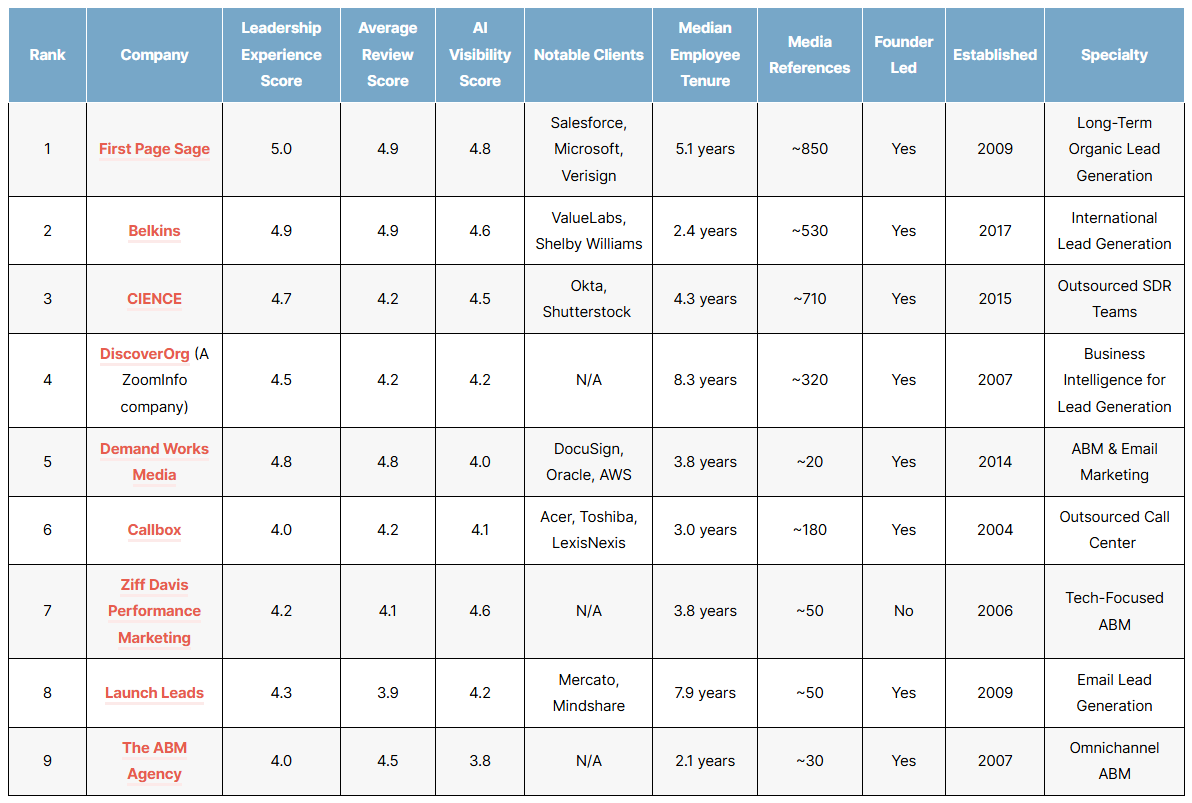
    A comparison published by First Page Sage Blog highlights eight agencies with different combinations of AI visibility, sector knowledge, content capabilities, and channel coverage. Because First Page Sage evaluated the market and ranked itself first, buyers should treat the results as a vendor-produced shortlist rather than an independent industry benchmark.

    How the reported comparison was constructed

    First Page Sage Blog says its team assessed 38 agencies and selected eight. AI visibility carried 25% of the evaluation, while the depth of each GEO offering and aggregated client reviews each represented 20%. Leadership experience accounted for 15%, with media references and notable insurance clients contributing 10% apiece.

    This framework rewards more than conventional search performance. It considers whether an agency can help a brand appear in answers from platforms such as ChatGPT, Perplexity, Claude, and Google Gemini, while also examining evidence such as GEO research, case studies, reviews, leadership credentials, media citations, and client portfolios. The source does not describe independent auditing of the scores, so the numbers are most useful as comparison points to investigate further.

    The eight-agency scorecard at a glance

    The following table preserves the source’s ranking and its four scored dimensions. A higher position reflects the complete weighted framework, not AI visibility alone.

    RankAgencyAI visibilityGEOReviewsLeadership
    1First Page Sage4.95.04.94.9
    2Genevate4.64.84.84.3
    3Focus Digital4.34.54.84.2
    4Amsive4.34.44.74.4
    5BrightFire4.24.24.84.4
    6EWR Digital4.44.44.64.2
    7Neilson Marketing4.14.04.74.3
    8Digital Logic4.24.34.64.3

    Match the agency model to the insurance buyer

    For a GEO-led content program, the source places First Page Sage at the front of the field. It describes an in-house insurance content operation covering regulatory reports, interviews, compliance topics, and commercial landing pages. The publisher also reports that its insurance clients average $1.7 million in new net revenue annually, alongside a 1.7% landing-page conversion rate and 63% average engagement rate. Those are vendor-reported campaign claims and should be validated against comparable client references, attribution rules, and contract scope.

    Genevate and Focus Digital represent two alternatives for organizations prioritizing GEO expertise over deep insurance specialization. The source characterizes Genevate as combining AI-focused optimization with public relations and reputation work, while Focus Digital emphasizes thought-leadership content for smaller and mid-market companies. It also cautions that both portfolios contain less insurance experience than those of sector-focused competitors. EWR Digital occupies related territory, combining B2B SEO, digital PR, and AI search visibility, but with a portfolio reportedly weighted toward other professional-services sectors.

    Amsive is positioned for larger insurers that need data, paid media, email, direct mail, organic search, and programmatic execution under one relationship. First Page Sage Blog identifies USAA and Allstate as notable clients, but says GEO is one component of a broader performance-marketing operation rather than the agency’s defining specialty.

    BrightFire, Neilson Marketing, and Digital Logic are more closely aligned with traditional insurance marketing needs. The source describes BrightFire and Neilson as insurance-focused specialists, with Neilson bringing more than 30 years of sector experience. Digital Logic is presented as a practical option for independent agencies and regional brokerages. In each case, however, the report finds less public evidence of a developed GEO methodology than it attributes to the higher-ranked GEO specialists.

    Key takeaways

    • No single score captures both AI-search capability and insurance fluency.
    • First Page Sage leads its own published ranking, making independent validation especially important.
    • Genevate, Focus Digital, and EWR Digital emphasize GEO or AI visibility but reportedly have less insurance depth.
    • Amsive suits complex multichannel programs, while BrightFire, Neilson Marketing, and Digital Logic lean toward established insurance marketing services.

    What to verify before selecting a partner

    A useful procurement process should test the claims behind the scorecard. Buyers can ask each finalist to show insurance-specific work, explain how AI visibility is measured, distinguish citations from referral traffic, and identify which activities are handled in-house. Case studies should clarify baselines, time periods, attribution methods, and whether reported outcomes came from GEO, traditional SEO, paid media, or several channels working together.

    Fit also depends on operating needs. A carrier coordinating multiple channels may value Amsive’s breadth, while an independent agency may prefer a managed insurance-marketing provider. An insurtech seeking stronger brand representation in AI answers may place more weight on GEO and digital PR. The most defensible choice will be the agency that can connect its proposed work to the buyer’s audience, compliance review process, distribution model, and measurable business objective.

    As AI discovery develops, documented methodology and transparent measurement should matter more than labels alone. A short paid pilot with agreed reporting standards can reveal whether an agency’s claimed specialization translates into useful visibility and qualified demand.


    Inspired by this post on First Page Sage Blog.

    crushpress.ai community screenshot
  • A Buyer’s Guide to eCommerce ASO Agencies for 2026

    A Buyer’s Guide to eCommerce ASO Agencies for 2026

    Choosing an agentic search optimization agency requires more than comparing who mentions AI most often. eCommerce teams need to decide whether they want a specialist in AI discovery, an analytics-led partner, or a broader marketing agency that can add ASO to an existing program.

    First Page Sage Blog evaluated seven agencies for its 2026 shortlist. The comparison below reorganizes its findings around buyer fit while keeping the source’s scores and claims clearly attributed.

    ASO extends product discovery into purchasing

    Agentic search optimization, or ASO, prepares a brand to be found, assessed, and potentially acted on by AI agents. For an online retailer, that can involve clear product information, credible comparison content, consistent brand signals, and technical systems that machines can interpret.

    This makes ASO broader than simply appearing in a generated answer. An agency may also need to address how an agent evaluates alternatives and whether product or checkout infrastructure can support a transaction. The right scope therefore depends on whether a retailer needs visibility alone or an end-to-end agentic commerce program.

    How to interpret the reported ranking

    According to First Page Sage Blog, its weighted model assigned 25% to ASO expertise; 20% each to AI visibility, leadership experience, and average reviews; 10% to notable eCommerce clients; and 5% to estimated media references. The visibility assessment covered platforms such as ChatGPT, Perplexity, Claude, and Google Gemini.

    • Capability signals: ASO expertise, AI visibility, and relevant leadership experience.
    • Market signals: review ratings, client portfolios, and estimated media citations.
    • Important limitation: the publisher evaluated and ranked itself first, so buyers should treat the table as a sourced shortlist rather than an independent verdict.

    The reported scores can help narrow the field, but they do not reveal pricing, staffing, contract terms, implementation capacity, or results for a particular catalog. Those points still require direct verification.

    The seven-agency shortlist at a glance

    The following table preserves the source’s order and two principal scores while translating each profile into the type of engagement it appears designed to support.

    RankAgencyASO expertiseAI visibilityPositioning reported by the source
    1First Page Sage5.04.9Full-stack ASO, GEO, SEO, and thought leadership
    2Genevate4.84.6Specialist work across GEO, ASO, and emerging AI platforms
    3Focus Digital4.54.5Conversion-focused programs for small and mid-market retailers
    4Driven Metrics4.44.4Attribution modeling and agent-conversion diagnostics
    5Tinuiti4.34.2Full-funnel performance marketing with an AI SEO offering
    6SmartSites3.94.0Traditional eCommerce marketing with developing ASO services
    7Aumcore3.73.7Voice and AI search optimization with emerging ASO capabilities

    First Page Sage describes its own program as spanning AI representation audits, comparison content, and machine-actionable checkout readiness. It also reports that research led by its president, Evan Bailyn, analyzed 2,417 agentic search commands and organized ASO into retrieval, evaluation, and action stages. Because these claims come from the agency itself, prospective clients should request supporting methodology and relevant case evidence.

    The other profiles suggest several distinct choices. Genevate is presented as an AI-search specialist, although the source flags its smaller scale. Focus Digital may suit cost-conscious small or mid-market brands seeking conversion support, while Driven Metrics emphasizes measurement and diagnostics. Tinuiti and SmartSites offer broader marketing coverage, but the source characterizes their ASO practices as less specialized. Aumcore may be relevant when voice and conversational search are also priorities.

    Questions to resolve before selecting a partner

    1. What will the agency optimize? Confirm whether the scope covers discovery, product evaluation, structured product information, and transaction readiness.
    2. How will progress be measured? Ask for platform-level visibility reporting and a defensible connection between agent activity and commercial outcomes.
    3. Can the team handle the catalog’s complexity? Multi-SKU, multi-market, or enterprise programs may require different staffing and technical capacity than a smaller direct-to-consumer store.
    4. Which claims can be demonstrated? Request relevant case studies, references, sample deliverables, and an explanation of how reported improvements were attributed.

    Key takeaways

    • First Page Sage Blog ranked First Page Sage, Genevate, and Focus Digital in the first three positions.
    • The list spans dedicated AI-search specialists, conversion and analytics firms, and full-service performance agencies.
    • Published scores are useful for screening, but the source’s self-ranking and estimated inputs make independent due diligence essential.
    • The strongest choice is the agency whose scope, measurement approach, and delivery capacity match the retailer’s actual operating needs.

    As agent-assisted shopping develops, retailers will benefit from treating ASO as an operational capability rather than a one-time visibility campaign. A tightly defined pilot can expose whether an agency can connect content, product data, measurement, and commerce infrastructure before the relationship expands.


    Inspired by this post on First Page Sage Blog.


    crushpress.ai community screenshot
  • How to Build SEO Reports Around Revenue, Leads and Risk

    How to Build SEO Reports Around Revenue, Leads and Risk

    An SEO report can be technically accurate and still fail its audience. Rankings, impressions, and sessions describe search activity, but executives usually need to know whether that activity produced revenue, leads, sales, or a meaningful reduction in acquisition cost.

    The solution is not to discard operational SEO data. It is to separate diagnostic metrics from decision-making metrics, then present each at the level where it is useful.

    Start with the decision the report must support

    Before selecting charts, define the business question. Leadership may need to decide whether to maintain investment, shift resources toward higher-value pages, or compare organic search with other acquisition channels. The report should make that decision easier.

    Search Engine Land argues that stakeholder reporting should begin with an existing corporate goal rather than whatever data happens to be available. If the goal concerns revenue or lead generation, the headline measures should show SEO’s contribution to that outcome. Rankings can explain performance, but they are not a substitute for it.

    Build a measurement chain from visibility to value

    A useful report connects early search signals to later commercial results. Visibility can lead to visits, visits can produce qualified actions, and those actions can become orders, opportunities, or revenue. Reporting should reveal where that chain is working and where it breaks.

    Conversions by channel, cost per lead, cost per acquisition, profitability, and revenue contribution can therefore serve as executive-level indicators. Engagement and branded search may add context, especially when they help explain growing demand or stronger audience intent. Their role should be explicit rather than presented as proof of value on their own.

    The same standard applies to referrals from ChatGPT, Perplexity, AI Overviews, and other AI-driven discovery experiences discussed by the source. A rising visit count is only an intermediate signal. The commercially relevant question is whether those visits generate qualified leads, sales, or revenue.

    Futuristic web browser and analytics dashboard overlap amid neon data streams, illustrating the convergence of SEO, PPC and AI-driven search marketing.
    Organic visibility, paid media and artificial intelligence merge into one connected search ecosystem, where vivid data streams link a creative website with a powerful analytics dashboard.

    Key takeaways

    • Lead with revenue, orders, qualified leads, profitability, or acquisition cost when those measures match the business goal.
    • Use rankings, impressions, and traffic as diagnostic evidence, not as the main executive result.
    • Measure AI referral traffic by the same commercial standard applied to conventional organic search.
    • Keep technical detail available for practitioners while giving leadership a shorter decision-focused view.
    • Explain attribution limits and disclose negative movement before stakeholders have to uncover it themselves.

    Design two reporting layers for two audiences

    Executive reporting and operational reporting have different jobs. A leadership view can open with business contribution, compare results with the relevant target, and identify risks or decisions. A practitioner appendix can retain keyword movement, indexing data, technical findings, page-level traffic, and other evidence needed to diagnose causes.

    This layered structure prevents technical teams from losing visibility into their work while keeping the main narrative commercially focused. It also improves the language of the report. A title centered on organic search’s contribution to new business sets a different expectation than a generic SEO performance label, even when both draw from the same underlying data.

    Branded search and direct visits may also deserve supporting roles when they move alongside organic investment. They do not fit perfectly within conventional channel attribution, so they should be presented as contextual indicators rather than automatically assigned to SEO.

    Handle attribution and declining traffic without false precision

    Organic search rarely receives clean credit for every sale or lead it influences. Overly elaborate attribution can create a precise-looking number that stakeholders cannot interpret or trust. A documented, consistently applied estimate is often more useful, provided the report explains what is counted, what is excluded, and where uncertainty remains.

    The source also notes that traffic is declining for many sites, particularly those historically dependent on clicks to informational pages. When that affects performance, the report should address it directly. Early disclosure protects credibility and creates room to discuss whether commercial outcomes, branded demand, or higher-intent visits tell a different story.

    A gradual transition is practical: introduce one or two business-led measures beside the current dashboard, validate the definitions with finance or sales, and move diagnostic metrics into a secondary layer over time. The strongest SEO report is ultimately the one that lets leadership see value, understand uncertainty, and make the next investment decision with confidence.


    Inspired by this post on Search Engine Land.


    crushpress.ai community screenshot
  • Why Conversion Totals Differ Across Advertising Platforms

    Why Conversion Totals Differ Across Advertising Platforms

    A conversion total in an advertising dashboard is not a count of unique customers. It is a platform’s calculation of how many outcomes qualify for credit under its own attribution rules.

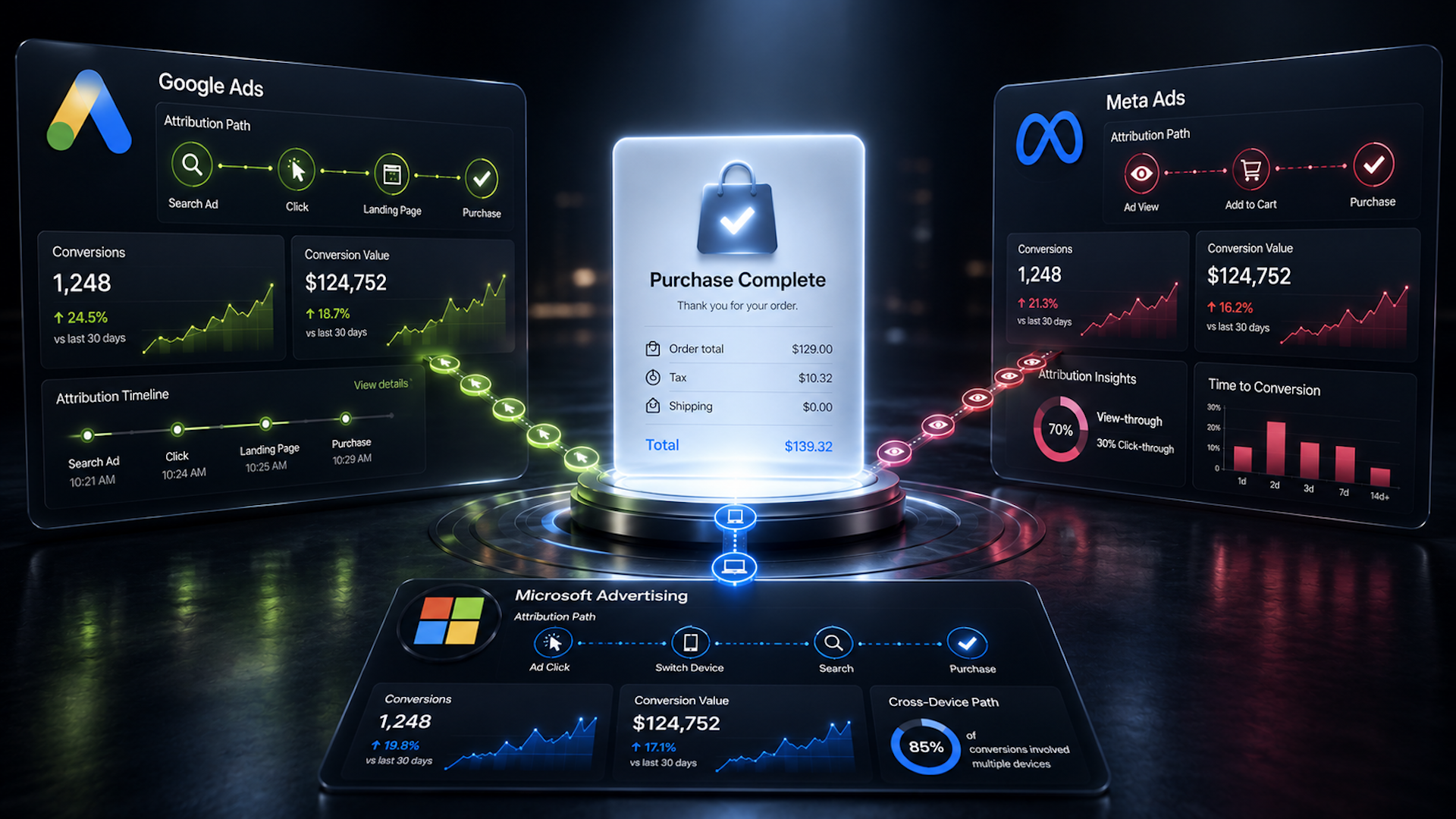
    That distinction explains why Google Ads, Meta, Microsoft Advertising, analytics software, a CRM, and financial records can show different results without any single system necessarily being broken. The useful question is not which dashboard has the one true number, but what each number measures and which decisions it can support.

    One sale can generate several conversion claims

    The business records one purchase, but multiple platforms may identify an eligible interaction before that purchase. Each platform evaluates the journey from inside its own environment, so the same customer can appear as a conversion in more than one dashboard.

    Search Engine Land describes platform reporting as generous rather than inherently false. Advertising companies have a commercial incentive to demonstrate value, but the larger structural issue is that their systems use different windows, signals, models, and identity data. Adding their reported conversions together therefore does not produce a reliable customer or revenue total.

    Seven choices that change the reported total

    Several measurement decisions can alter which platform receives credit and how much credit it reports:

    1. Attribution window: According to the source, Meta defaults to a seven-day click window plus a one-day view window, while Google Ads using data-driven attribution can look back as far as 90 days. Different periods naturally capture different sets of conversions.
    2. Eligible interaction: Meta can treat actions such as a carousel swipe, video view, or post share as engagement. Google Ads and Microsoft Advertising generally require an ad click, the source reports.
    3. View-through credit: Display, programmatic, affiliate, and YouTube reporting may connect a conversion to an ad impression even when the person never clicked. Web analytics, ecommerce, and CRM systems may not be able to observe that impression.
    4. Credit distribution: The source says Google’s data-driven model can assign fractional credit across interactions in the Google Ads environment. Meta typically uses a one-touch, last-touch approach. These models can describe the same journey differently.
    5. Platform visibility: Google sees Google Ads activity and Meta sees Meta activity. A broader analytics or business system may observe email, organic, affiliate, paid social, and direct visits, then apply its own attribution logic.
    6. Modeled conversions: Platforms estimate outcomes when privacy restrictions or missing identifiers interrupt direct observation. Search Engine Land points to Google’s enhanced conversions and Consent Mode, as well as Meta’s data-matching methods, as examples.
    7. Cross-device matching: Google and Meta can model activity across devices believed to belong to the same person. A business system without the same identity signals may treat those sessions separately.

    Use each measurement system for the right job

    Platform conversions are operational metrics. They help bidding systems optimize campaigns and help media teams compare performance within a platform. Revenue records, completed orders, qualified opportunities, and other verified business outcomes serve a different purpose: they establish what the organization actually received.

    Even a clean implementation with consistent tags and triggers will not force the systems to agree, because correct tracking cannot eliminate differences in attribution policy. A large unexplained change may still justify an audit, but a stable gap can simply reflect known methodological differences.

    Futuristic web browser and analytics dashboard overlap amid neon data streams, illustrating the convergence of SEO, PPC and AI-driven search marketing.
    Organic visibility, paid media and artificial intelligence merge into one connected search ecosystem, where vivid data streams link a creative website with a powerful analytics dashboard.

    View-through reporting deserves particular care. It can help assess channels such as YouTube, but it should not automatically be treated as proof that an impression caused the sale. The source recommends validating this kind of credit with incrementality rather than relying on attribution alone.

    A practical way to interpret conflicting dashboards

    A useful measurement process starts by separating optimization from accounting. The business can define a verified outcome, document each platform’s attribution window and eligible interactions, and distinguish clicked, viewed, and modeled conversions in reporting.

    Teams can then compare directional movement across two layers: platform metrics and business results. If campaign indicators improve while verified sales, revenue, or lead quality deteriorate, the discrepancy deserves investigation. If both layers move together, the platform data may remain useful even when the totals never reconcile exactly.

    More mature measurement can incorporate incrementality testing, marketing mix modeling, and first-party customer data. The source also argues for returning stronger business signals to advertising systems, including lifetime value, customer acquisition cost, product margin, returns, and lead quality. Those inputs direct optimization toward commercial value rather than the easiest conversion to count.

    Key takeaways

    • A platform conversion is an attribution claim, not automatically a unique sale.
    • Windows, engagement rules, view-through credit, modeling, and cross-device matching all affect reported totals.
    • Platform dashboards are best suited to campaign optimization; verified business systems remain the basis for accounting.
    • Trends should be checked against real outcomes instead of judging performance by one dashboard in isolation.
    • Incrementality and first-party business signals can move measurement closer to actual commercial impact.

    The next step is to make every reported conversion interpretable: document how it was counted, identify the decision it should inform, and connect optimization to outcomes the business can verify.


    Inspired by this post on Search Engine Land.


    crushpress.ai community screenshot
  • Meta Business Agents Shift Commerce Into Messaging

    Meta Business Agents Shift Commerce Into Messaging

    Meta is positioning business messaging as more than a support channel. Its new Business Agent is designed to help companies handle discovery, sales and service inside conversations on WhatsApp and Instagram Direct.

    For marketers, the important question is not whether this is a better chatbot. It is how customer journeys change when product research, lead qualification and checkout can happen without a visit to the company website.

    What Meta Business Agent is designed to do

    Search Engine Land reported on the launch announcement from Meta Conversations 2026 in London. The article describes an autonomous AI agent that can interpret context, continue multi-turn conversations and follow a company’s brand voice across languages.

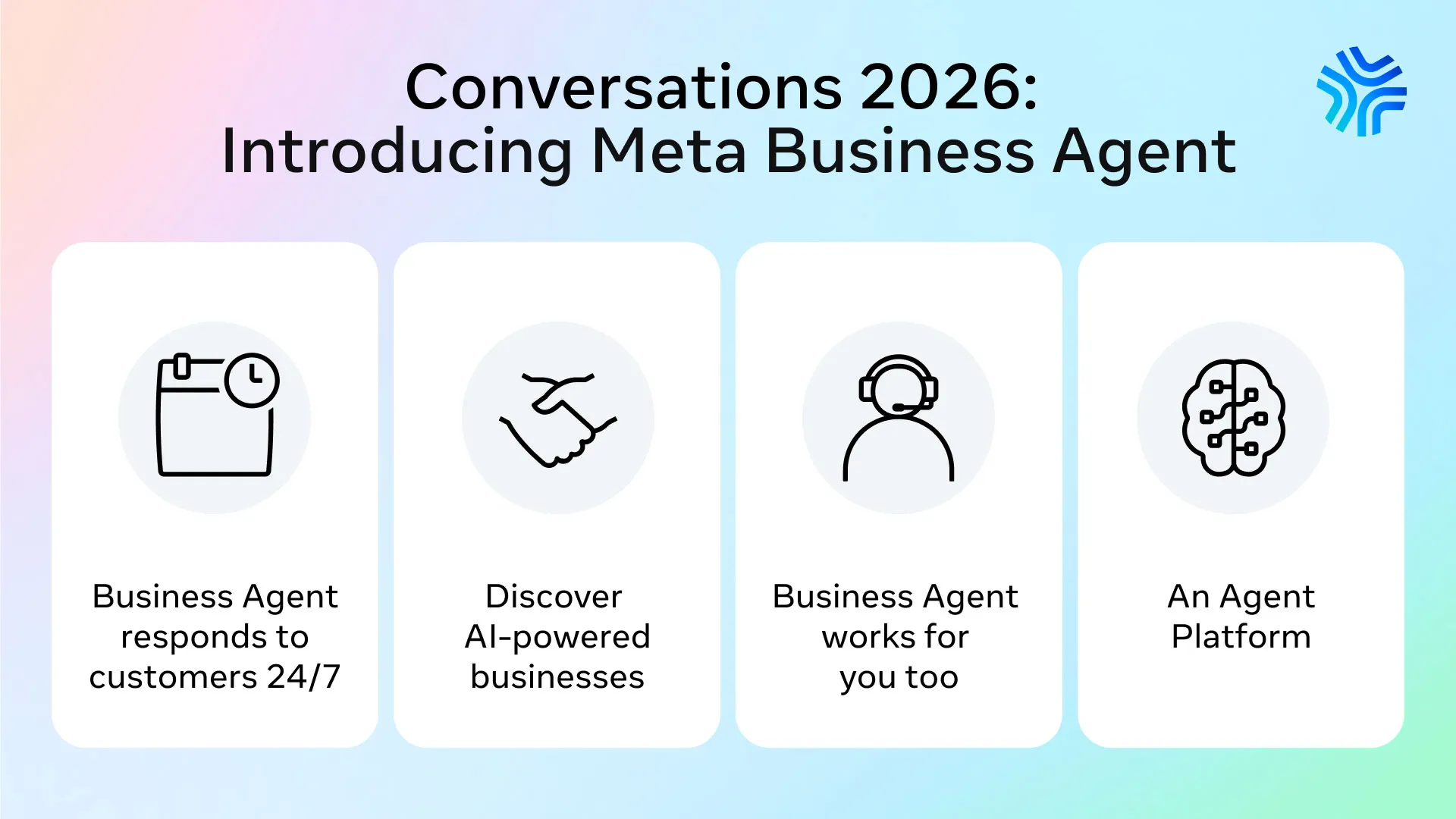
    Conversations 2026 slide introducing Meta Business Agent with four feature cards and icons.
    A Conversations 2026 slide introduces Meta Business Agent through four cards covering 24/7 customer response, AI business discovery, agent support, and an agent platform.

    In demonstrations observed by the publication’s contributor, agents answered support requests, qualified leads, retrieved current inventory through API connections and guided customers through checkout in one WhatsApp thread. Those demonstrations illustrate the intended workflow, but they should not be treated as independent evidence that every deployment will perform equally well.

    The agent can reportedly learn from a business’s Meta channels and website. Companies can also supply operational information such as prices and inventory, then add instructions covering tone, availability and how products should be represented.

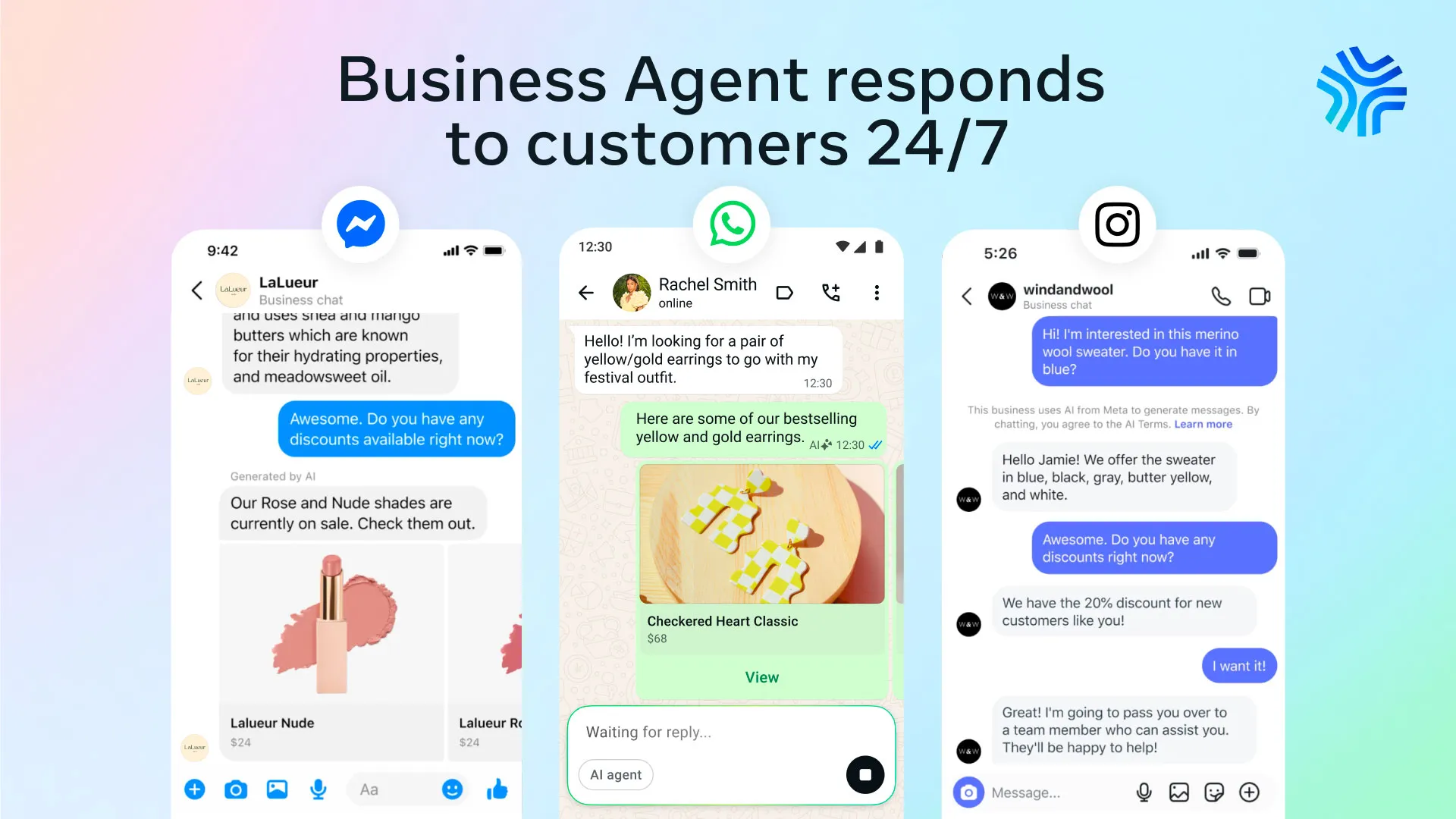
    Three phone chat screens beneath the headline "Business Agent responds to customers 24/7," with messaging app icons.
    Three mobile chat examples show customers asking businesses about products and discounts through Messenger, WhatsApp, and Instagram beneath a 24/7 agent headline.

    Key takeaways for marketers

    • Business messaging can cover several stages of the journey, from initial questions and lead qualification to order updates and purchases.
    • Meta is adding business discovery within WhatsApp search, creating another surface where accurate business information may influence visibility.
    • Product feeds can be browsed within WhatsApp or Instagram Direct, reducing the need to send every shopper to a website.
    • The system can support non-ecommerce goals, including appointment scheduling and other lead-generation tasks.
    • Reliable data, clear operating instructions and human supervision will be central to useful customer interactions.

    The website may no longer anchor every conversion

    A conventional digital funnel often directs an ad, social post or search result toward a landing page. Meta’s model compresses that journey: a person may discover a business, ask questions, browse products and complete a transaction within messaging.

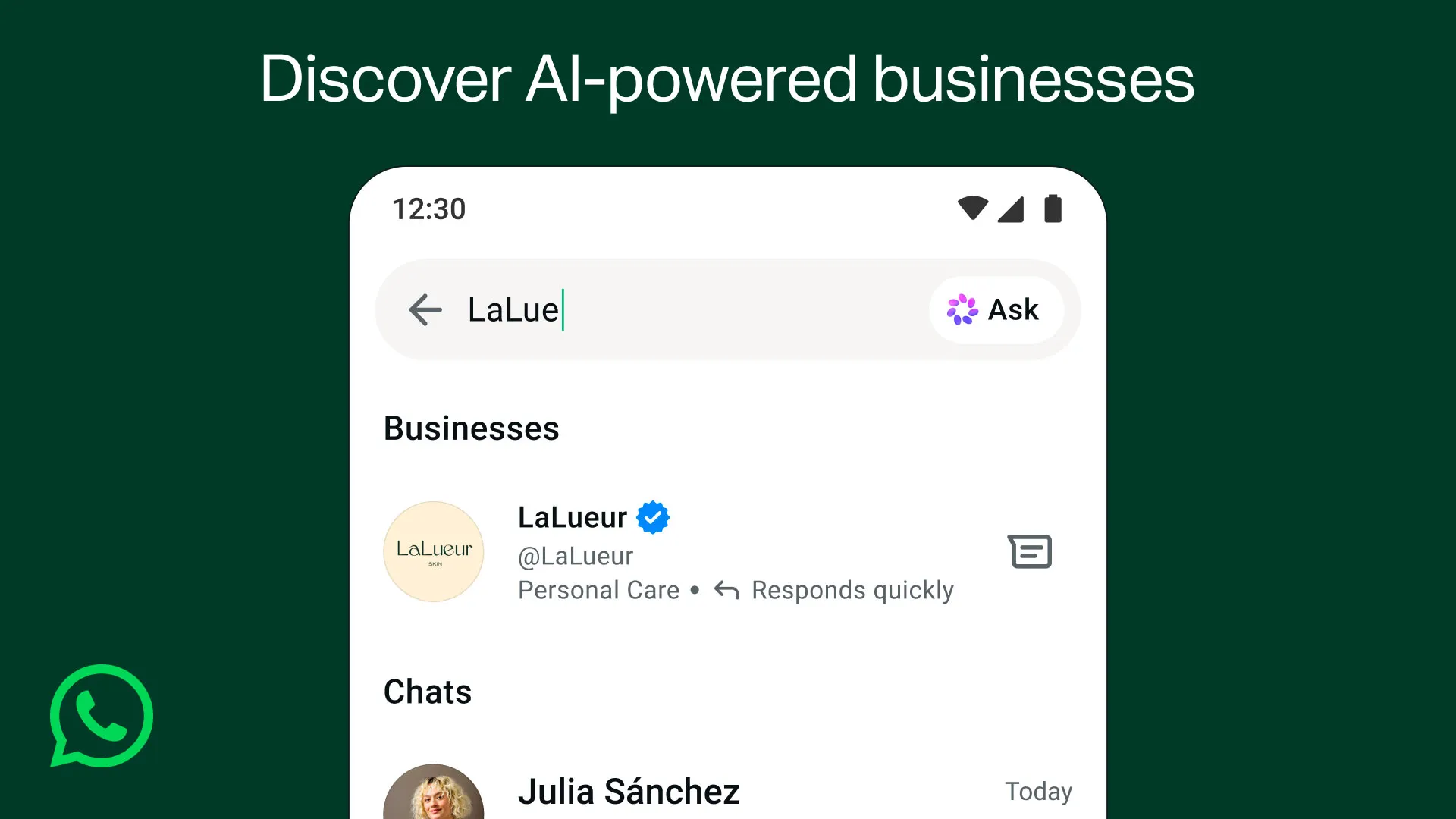
    Search Engine Land also says enhanced discovery features will allow people to find businesses through the WhatsApp search bar. A shared business can become a conversation with a tap when it uses the feature, while a shared restaurant can lead to a directions request within the chat.

    Phone mockup showing an AI-powered business search for LaLueur, with a business result and chat list.
    A phone interface under the heading Discover AI-powered businesses shows a search for LaLue, a verified LaLueur profile, and the start of a chat list.

    This does not make websites irrelevant. Sites can still provide detailed information and support other acquisition channels. The practical change is that website sessions may capture a smaller portion of the customer journey, making channel-level measurement less complete unless messaging interactions are incorporated into reporting.

    Data quality and escalation will determine the experience

    An agent cannot give dependable answers about availability, pricing or policies when its source information is incomplete or stale. Connecting an AI interface to operational systems therefore creates a data-management responsibility as well as a marketing opportunity.

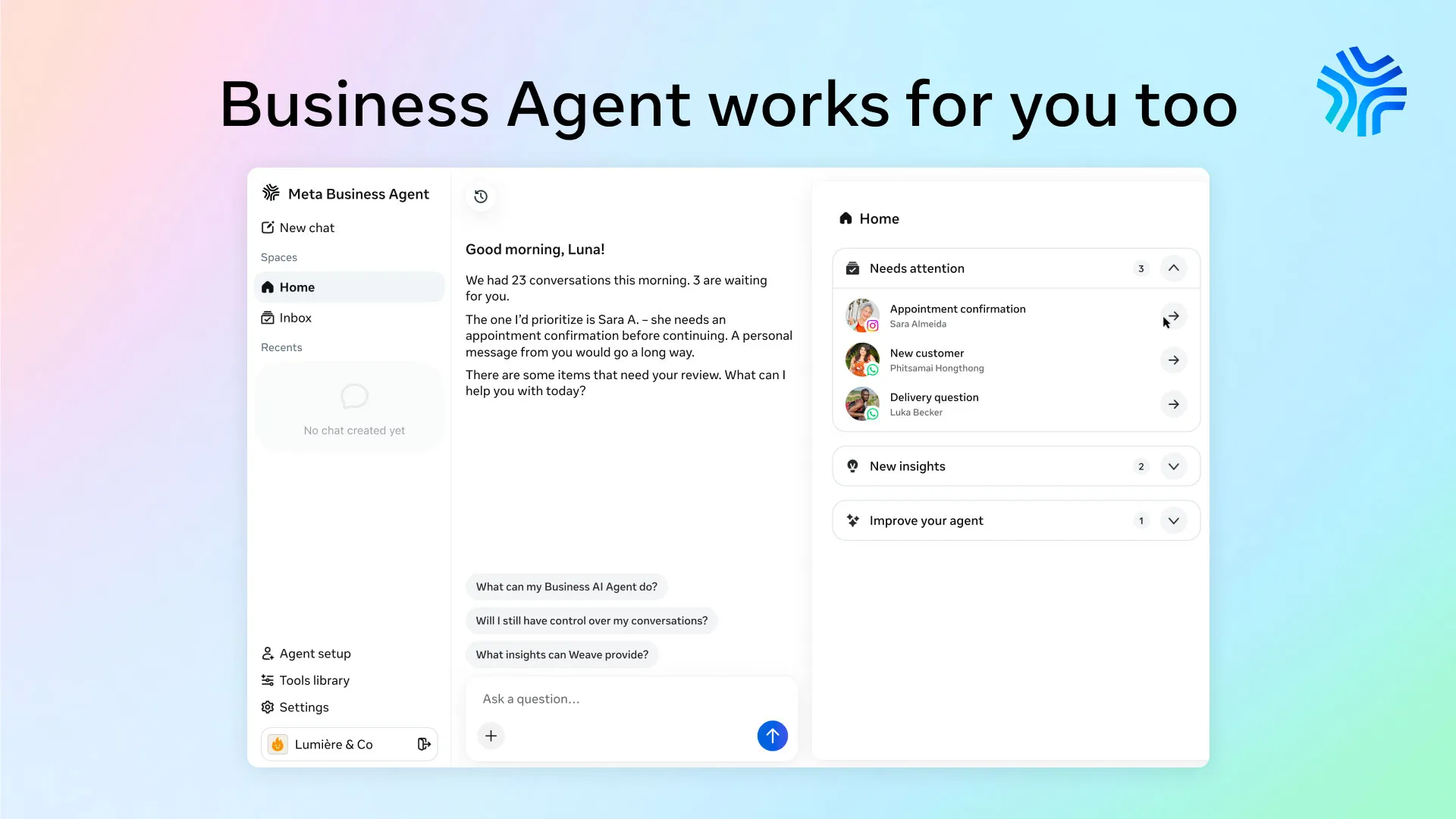
    Business Agent works for you too headline above a Meta Business Agent dashboard with chat and task panels.
    A Meta Business Agent interface shows navigation, a morning conversation summary, suggested questions, and a Home panel listing items that need attention.

    Meta’s control environment, as described in the source, lets a business monitor active conversations, transfer selected chats to a person and provide feedback based on those interactions. That human handoff is important for unusual requests, sensitive cases and conversations where the agent lacks enough information.

    Teams evaluating the product should define which information the agent may use, who owns updates to that information and which situations require escalation. They should also review whether its language reflects the brand accurately instead of assuming that initial instructions will cover every customer scenario.

    Futuristic web browser and analytics dashboard overlap amid neon data streams, illustrating the convergence of SEO, PPC and AI-driven search marketing.
    Organic visibility, paid media and artificial intelligence merge into one connected search ecosystem, where vivid data streams link a creative website with a powerful analytics dashboard.

    A practical way to assess the channel

    The strongest starting point is a narrow customer task with clear source data and an obvious success condition, such as answering routine product questions or scheduling an appointment. Marketers can then examine conversation quality, handoff frequency and the effect on the wider customer journey before expanding the agent’s responsibilities.

    The report does not provide detailed rollout, eligibility or performance information, so planning should remain conditional on what Meta makes available to each business. Even so, the strategic direction is clear: discovery and commerce are moving deeper into messaging, and marketing teams will need to treat those conversations as managed customer experiences rather than isolated chatbot exchanges.


    Inspired by this post on Search Engine Land.


    crushpress.ai community screenshot