I’ll be honest; the ongoing discourse around the GEO debate feels like a distraction from a much more significant transformation. AI systems are reimagining how brands, sources, and recommendations are surfaced, demanding our full attention.
It’s both impressive and frustrating how search has managed to spark such passionate debate at a time when it should be becoming more pivotal to clients. Yet, our industry is stuck in arguments that render us irrelevant.
So, who truly owns the future of search? That’s the real question we need to tackle.
Who defines the next phase of search? Who secures the budget? Who articulates the shift from a list of links to a machine-driven recommendation system?
The phrase “it’s just SEO” has caused considerable damage. It sounds like the calm, seasoned wisdom you’d expect from a search veteran. However, it lacks strategic depth. It’s a meme that constrains one of the most substantial commercial opportunities in years.
Why Memes Matter in Search
Memetics isn’t a new concept. Richard Dawkins introduced it in “The Selfish Gene” in 1976, suggesting that ideas spread through culture in a fashion similar to genes. Susan Blackmore expanded on this, claiming we’re essentially ‘meme machines’ built to propagate cultural information. The most resilient ideas aren’t necessarily true; they’re the stickiest.
Take “Happy Birthday to You,” it’s memorable and universally known not because it’s brilliant, but because it’s easy to replicate and emotionally fulfilling. Slogans and professional clichés endure for their simplicity and utility, not their accuracy.
SEO and GEO are entangled in a memetic struggle. This issue is amplified as the phrase “it’s just SEO” became predominant when GEO appeared, driving a wedge into meaningful conversation.
When GEO first came into the discussion, reactions varied. While some recognized the need for new tools and methods, others viewed it as a threat, repelling it with the phrase “it’s just SEO” — turning it into a chant and then a weapon. It was an ideal meme, short and socially protective.
The follow-up meme “GEO grifter” did even more harm, framing advocates of GEO as opportunists and stifling exploration and innovation. This behavior causes harm when consensus forms based solely on repetition, with the algorithms rewarding those repeating the framing, creating a false sense of agreement.
Clients Seek Certainty, Not Acronyms
I’ve observed firsthand at conferences like BrightonSEO that many marketers are already leveraging generative systems. They don’t need debates over terms; they’ve adapted to new processes accordingly.
SEO has always been difficult to sell against paid counterparts due to previous uncertainties and failures. Nonetheless, good SEO generates tangible success. Failing to clarify the changes will see budgets drift elsewhere, especially to paid avenues.
The B2B Institute’s Findings
According to LinkedIn’s B2B Institute, growth for B2B brands stems from being easy to locate. Digital environments now demand visibility across new platforms.
The report views GEO as an extension of SEO and emphasizes establishing authority, relevance, and credibility. Discoverability is altering, yet core principles endure.
The 9 a.m. to 5 p.m. Dilemma
“It’s just SEO” oversimplifies a vast concept. When someone insists GEO is “just SEO,” I must ask — which kind? Each interpretation involves different practices and focuses.
If our response to generative systems is “helpful content,” we’re on the wrong track. The future demands more than vague promises; it requires adopting digital PR, brand strategies, and tactical marketing insights.
No Name, No Funding
Markets can’t invest in what they don’t recognize. Naming GEO is crucial as it turns abstract threats into actionable categories. Without a name and a defined category, the industry will fail to secure the investments needed to thrive in an altered landscape.
Ultimately, whether we call it GEO, AI search visibility, or SEO evolved, defining it ensures survival and growth. Brands that embrace this will capture opportunities that arise as search evolves.
A New Framing for Change
It’s time to acknowledge change and redefine the narrative. The transformation involves becoming the recommended brand — present, visible, and credible. It’s about expanding SEO to embrace the broader spectrum of digital marketing.
Adapting to these shifts will ensure brands maintain their visibility as search continues to evolve. Those clinging to outdated debates are at risk of missing out entirely.
Your traffic graph dropped during the May core update, and now you need to know whether to rewrite pages, change your SEO strategy, or simply wait. Start by resisting the urge to make sitewide edits. A core update can expose weak content, but it can also coincide with changes in demand, search-result layouts, competitors, or tracking.
The useful response is a page-level diagnosis. You want to identify where visibility changed, determine what those pages now fail to deliver, and improve them without destroying content that still works.
Anchor your diagnosis to the actual rollout
The official rollout ran from May 21 through June 2. Noticeable ranking movement appeared by May 23 and continued into the following week. This was the second core update of 2026, so earlier changes in your reporting may belong to a different event.
Build clean comparison periods
In Google Search Console, compare May 7-20 with June 3-16. These are equal 14-day periods immediately before and after the rollout, without mixing rollout days into either side. If your business has strong weekly or seasonal patterns, compare each period with the equivalent days from a normal prior period as a second check.
Export clicks, impressions, click-through rate, and average position by query and page. A chart of total clicks is not enough. It can tell you that performance changed, but not why.
Separate ranking losses from other traffic losses
If positions declined across several important queries for the same pages, investigate relevance, usefulness, and competition. If impressions declined while positions remained broadly stable, check whether search demand or the set of queries triggering those pages changed. If positions and impressions held steady but click-through rate fell, inspect the live results for new answer features, stronger titles, or a changed search intent.
Also rule out unrelated technical problems. Check whether affected URLs are indexed, canonicalized as intended, crawlable, and returning the correct status code. Review analytics changes, security incidents, migrations, and major template releases. A core-update diagnosis cannot fix a broken canonical or missing tracking tag.
Find the losses that actually need intervention
Sitewide averages hide the decisions you need to make. Group affected URLs by topic, search intent, template, author, and content type. Then calculate the change for each group. A fall concentrated in old comparison pages calls for a different response than a decline across every page using the same template.
Start with URLs that combine three traits: a material visibility loss, meaningful business value, and a problem you can clearly describe. Do not prioritize a page merely because its percentage decline looks dramatic. A page that fell from ten impressions to two is usually less urgent than one that lost a large share of qualified visits.
Inspect the queries that disappeared
For each priority URL, compare its pre-update and later query sets. Ask whether it lost its main query, a cluster of secondary questions, or visibility for terms that never matched its real purpose. Losing poorly matched impressions may not require a repair. Losing the queries that express the page’s central promise does.
Search those important queries manually and examine the pages now appearing above yours. Look for differences in intent, scope, specificity, first-hand evidence, freshness, and format. The goal is not to copy competitors. It is to understand what searchers can accomplish with the current results that they cannot accomplish with yours.
Look for patterns across winners and losers
Your unaffected and improving pages are useful controls. Compare them with declining pages from the same site. If both groups share the same design, author box, and schema, those elements are less likely to explain the difference. If losses cluster around thin location pages, outdated tutorials, or articles built from the same generic outline, you have a stronger hypothesis to test.
Audit for satisfaction, not an imaginary update factor
The update was intended to favor relevant and satisfying content. That direction is more useful than hunting for a new word-count target, schema type, or keyword-density rule. Google has not provided a single prescribed fix for pages that lost visibility.
Test whether the page fulfills its promise
Read the title, opening, and major headings without relying on your memory of the page. They should define one clear task or question. Then check whether a reader can complete that task without returning to search for missing steps, definitions, evidence, or limitations.
Remove introductions that delay the answer. Put the central answer or decision criteria near the relevant heading, then support it with explanation. If the query requires a procedure, make the sequence explicit. If it requires a choice, explain who each option suits and what changes the decision.
Add value that another generic page cannot reproduce
A rewrite that merely changes wording preserves the original weakness. Add the missing substance: a worked example, a transparent method, a limitation, an expert interpretation, a screenshot that proves a step, or an explanation of what happens when the standard advice fails. Keep only material that helps the reader act or decide.
For factual or high-consequence claims, make the basis visible. Identify the responsible organization or expert where that identity matters. Link to supporting material you actually used. Show when the page was reviewed, and update that date only after a meaningful review. An unexplained assertion does not become trustworthy because it sounds confident.
Check ownership, duplication, and internal competition
Decide which URL should own each core intent. Several pages targeting the same question can divide internal links and leave each version incomplete. Consolidate genuine duplicates when one stronger destination can serve the reader. Keep separate pages when the intents, audiences, or required answers are materially different.
Update internal links so descriptive anchor text points to the intended owner. Make sure related pages support one another instead of repeating the same opening-level information. Do not delete a large group of URLs solely because traffic fell during the rollout; first determine whether each page has a distinct, supportable purpose.
Improve search and AI visibility without conflating them
A Google core update and visibility inside frontier language models are not the same measurement system. A decline in Google rankings does not prove that ChatGPT, Claude, or another answer engine stopped citing you for the same reason. Track conventional search performance and AI citations separately, even when the same content improvements may benefit both.
For answer-oriented visibility, make important facts easy to locate and interpret. Use descriptive headings, answer the stated question directly, name entities consistently, and keep qualifications beside the claim they modify. Tables should represent real comparisons, while lists should represent genuine steps or criteria. Formatting cannot compensate for an unsupported answer, but it can make a strong answer easier to extract correctly.
Apply JSON-LD only when it accurately describes visible content and the page’s real entity relationships. Schema is packaging, not evidence. Adding more markup will not repair stale facts, unclear authorship, duplicated intent, or an answer that misses the query.
Measure AI visibility with a stable set of prompts tied to your customers’ questions. Record whether your brand is mentioned, cited, represented accurately, or omitted. Keep that record beside, but not merged into, your Search Console analysis. This prevents a gain in one channel from concealing a loss in another.
Make controlled changes and preserve what you learn
Create a change log for every priority URL. Record the date, the affected query or intent, your diagnosis, and the substantive edits. That turns recovery work into a testable process. Without a log, several teams can modify the same page and leave you unable to connect later movement with a plausible cause.
Work in related batches rather than changing the entire site at once. Start with a small group that shares a documented weakness. Recheck query-level performance after those pages have accumulated enough impressions for a meaningful comparison. Keep the changes if the intended queries recover without harming conversions or accuracy; revise the hypothesis if they do not.
Do not judge success only by restored clicks. A revised page may attract fewer but better-matched visits. Review conversions, qualified leads, engaged visits, and the queries now associated with the page. The objective is durable visibility for the right need, not the recreation of every impression that existed before May 21.
Key takeaways
Use May 21 through June 2 as the rollout window, and keep those dates out of your before-and-after comparison periods.
Diagnose changes by page and query; total traffic alone cannot distinguish ranking, demand, click-through, and technical problems.
Prioritize valuable pages with a clear loss and a specific weakness instead of rewriting the whole site.
Improve intent match, distinct value, evidence, ownership, and internal linking before reaching for more schema.
Measure Google rankings and AI-answer visibility separately, with a written change log for both.
Your next move is simple: export the two 14-day comparison periods, select the five affected URLs with the greatest business value, and write one testable diagnosis for each. Make only the changes that diagnosis supports. That gives you a recovery plan you can measure instead of a collection of update myths.
Your campaign is profitable, lead quality looks good, and someone wants to double the budget. The tempting assumption is that twice the spend will produce twice the revenue.
That only works when the campaign has profitable demand left to capture. Before you raise the budget, verify the business value behind the reported ROAS, confirm that budget is the real constraint, and decide how much efficiency you are prepared to trade for additional volume.
High average ROAS does not prove the next dollar will perform
The ROAS in your dashboard describes the spend you have already made. It does not tell you what the next dollar will return. A tightly constrained campaign may be collecting the easiest conversions: high-intent searches, familiar audiences, strong locations, or the most responsive hours. More budget can push delivery into less efficient opportunities.
That is why budget scaling should be judged on marginal performance. Calculate incremental ROAS as additional revenue divided by additional spend. If spend rises but qualified revenue barely moves, the campaign has not scaled successfully, even if its blended ROAS still looks respectable.
You also need an economic floor. Your target should reflect gross margin, fulfillment costs, returns, sales costs, and any other expense that changes when you acquire another customer. A campaign can exceed a platform ROAS target and still produce weak profit.
Key takeaways
Scale only when the campaign is constrained by budget and still has qualified demand available.
Validate conversion tracking, lead quality, order value, and profitability before trusting a high ROAS.
Increase budget in controlled steps and avoid changing bids, targeting, creative, and budget at the same time.
Judge the test by incremental qualified revenue and profit, not spend growth alone.
Validate the business result before funding it
A scaling decision is only as reliable as the conversion signal behind it. Run this audit before approving more spend:
Check conversion tracking. Confirm that each important action fires once, carries the correct value, and represents a result the business actually wants. Remove duplicate, test, or low-value actions from the primary optimization signal.
Trace leads to outcomes. Compare campaigns using qualified opportunities, closed sales, or another downstream milestone. A form submission is not equivalent to revenue when lead quality varies.
Reconcile order value. Check whether the value sent to the ad platform reflects cancellations, refunds, discounts, and unusually large purchases that can distort the average.
Compare revenue with profit. Establish the lowest acceptable return before scaling. This gives you a stopping rule if marginal efficiency declines.
Confirm operational capacity. Make sure sales, inventory, fulfillment, and customer support can absorb more volume. Paying for demand that the business cannot serve is not productive growth.
If any of these checks fails, fix the measurement or business constraint first. Increasing the budget would amplify the uncertainty rather than resolve it.
Prove that budget is the constraint
A strong campaign can have limited scale for reasons that money cannot fix. Search demand may be finite. Targeting may be narrow. Inventory may be unavailable. The sales team may reject additional leads. Budget should rise only when the evidence points to a spend constraint.
What you observe
Likely interpretation
What to do next
The campaign regularly reaches its budget while qualified conversions remain profitable
Budget may be limiting useful demand
Run a controlled budget increase
The campaign does not consistently spend its current budget
Budget is probably not the immediate constraint
Investigate demand, bids, eligibility, targeting, and creative
Platform ROAS is high but downstream lead quality is weak
The optimization signal does not match business value
Repair tracking and feed stronger outcomes back into optimization
Spend rises but qualified revenue stays nearly flat
Marginal demand is weak or already exhausted
Stop increasing budget and diagnose the expansion
More orders create stock or service problems
The constraint sits outside advertising
Resolve operational capacity before buying more demand
Do not treat a platform recommendation to spend more as sufficient evidence. It can identify delivery capacity, but your business data must determine whether that capacity is worth buying.
Scale in stages with a written stopping rule
Large budget changes can disturb a stable campaign and make the result harder to interpret. In Microsoft Advertising, changes beyond 15% may introduce volatility or a renewed learning period. Other platforms have their own behavior, so check the system you use and favor measured adjustments.
Save the baseline. Record spend, qualified conversions, qualified revenue, profit, cost per acquisition, ROAS, and conversion volume before the change.
Name the hypothesis. Write down why more budget should capture additional profitable demand. For example, the campaign is repeatedly constrained while downstream conversion quality remains stable.
Set the guardrails. Define the minimum acceptable marginal ROAS or maximum acceptable acquisition cost. Include lead-quality or profit requirements where platform revenue is incomplete.
Change the budget only. Keep bidding strategy, targeting, ads, landing pages, and conversion definitions stable. Otherwise, you will not know what caused the result.
Allow the campaign to settle. Avoid reacting to an isolated day. Wait until you have enough conversion volume to compare the new period with the baseline while accounting for normal business conditions.
Choose the next action. Increase again only if incremental volume meets the guardrails. Hold when the result is promising but uncertain. Reduce the budget when additional spend fails the profitability test.
Document each change with its date, amount, rationale, and result. This creates a usable scaling history and prevents a sequence of undocumented increases from turning into a permanent efficiency loss.
Read the result as a business decision
A lower blended ROAS after scaling is not automatically a failure. Additional volume can justify some efficiency loss if the new customers or leads remain profitable. The decision depends on what happened at the margin.
Spend and qualified profit both rise: the campaign has demonstrated headroom. Consider another controlled increase.
Spend rises, revenue rises, but profit does not: you have crossed the economic limit. Return to the last profitable level or improve margins and conversion quality before testing again.
Spend rises but qualified volume barely changes: more budget is not solving the active constraint. Examine demand, auction eligibility, targeting, the offer, and the landing experience.
Platform conversions rise while sales outcomes weaken: the campaign is optimizing toward the wrong signal. Pause scaling and reconnect optimization to verified business outcomes.
Your next budget increase should be earned by evidence. Establish the profit floor, verify headroom, make one controlled change, and fund the next step only when the additional spend produces business value.
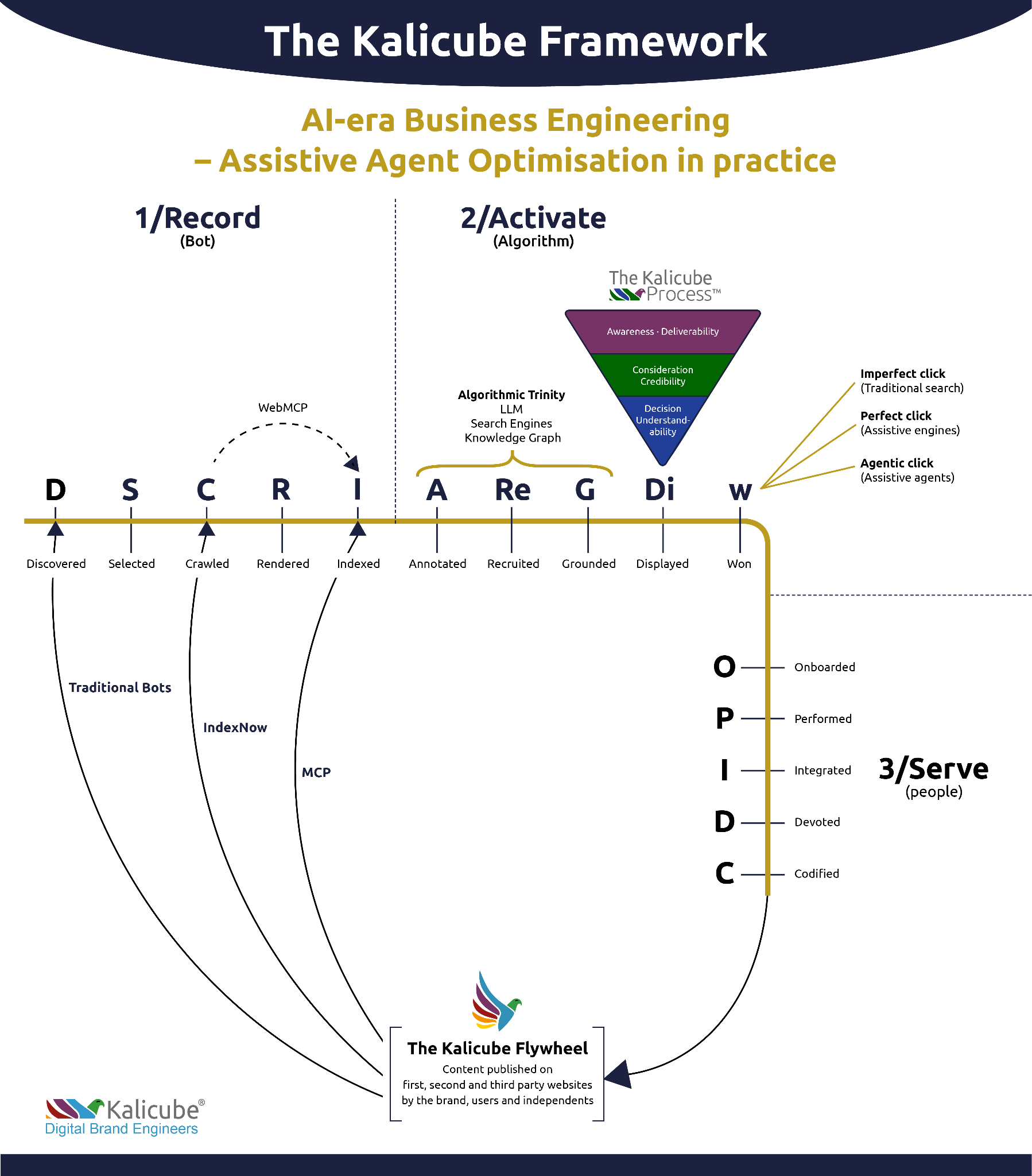
When I consider the impact of SEO on customer success, it’s fascinating to see how much of the invaluable evidence lives within the operations of our customer success, support, and delivery teams. These insights are crucial for AI systems, and SEO is our tool to make them visible.
n
nnn
SEO has evolved to extend beyond mere conversions, embedding itself in the core operations of our business where crucial AI signals are generated. This expansion allows us to surface invaluable operational data.
n
nnn
AI systems, when recommending our brand, consider several post-sale metrics such as the accuracy of onboarding, success of integrations, and levels of customer advocacy. These insights often lie within our internal teams, rather than in our marketing content.
n
nnn
This presents a significant SEO opportunity. There is a treasure trove of evidence in CRMs and support platforms that can influence AI visibility if codified properly into machine-readable formats.
n
nnn
Bots and algorithms need to understand the intricacies of our business, from what we provide to how it satisfies our customers. I’m excited to explore how each element contributes to this understanding.
You probably have a prompt that everyone on your team is supposed to use. It may be buried in a document, copied from an old chat, or rewritten from memory whenever someone starts a draft. That works until the prompt changes, a rule gets dropped, or two people interpret it differently.
A reusable AI content skill gives those recurring instructions a stable home. Build it well, and you can spend less time rebuilding prompts while keeping voice, quality, and answer-engine requirements consistent across projects.
Move durable decisions out of individual prompts
The first decision is what deserves to become a skill. A useful candidate appears repeatedly, applies across multiple assignments, and should produce a consistent result regardless of who starts the workflow. Saving recurring instructions for reuse can reduce repetition while helping teams apply the same writing style, AEO practices, and content standards.
Do not turn every long prompt into a permanent asset. Campaign facts, temporary offers, target keywords, product claims, and assignment-specific angles belong in the content brief. If you embed them in a reusable skill, they can quietly leak into unrelated work or become outdated.
Put in the reusable skill
Keep in the content brief
Brand voice and prohibited language
The audience for this specific page
Required content structure
The query, topic, and search intent
AEO and editorial quality checks
Approved facts, claims, and references
Citation and uncertainty rules
Campaign messaging and calls to action
Standard output format
Deadlines, owners, and publishing details
Use a simple test before promoting an instruction: would you want it applied to the next unrelated assignment? If the answer depends on the topic, client, campaign, or date, leave it in the brief.
Write the skill as an operating contract
A skill should tell the AI what job it is doing, what information it needs, which rules are mandatory, and how to recognize an acceptable result. Vague instructions such as “write high-quality SEO content” leave too much room for interpretation. Replace them with observable requirements.
Skill field
What to write
Purpose
The narrow outcome this skill produces, such as an answer-first educational page.
Use when
The assignments that should trigger it, plus cases where it should not be used.
Required inputs
The audience, intent, approved facts, desired action, and output destination.
Non-negotiable rules
Voice, claim boundaries, citation requirements, prohibited language, and compliance constraints.
Method
The sequence for interpreting the brief, drafting, checking, and revising.
Output contract
The required headings, markup, metadata, fields, or schema-ready information.
Quality checks
Conditions the result must meet before it can be returned.
Escalation rule
What the AI must flag instead of guessing when information is missing or contradictory.
Write rules so an editor can verify them. “Use a direct answer near the opening” is testable. “Make it engaging” is not. “Link factual claims to approved references” is testable. “Sound authoritative” is not.
Define priorities before instructions conflict
Reusable defaults will eventually collide with a project brief. State the order of precedence inside the skill. A practical hierarchy is mandatory legal and brand policy first, assignment requirements next, skill defaults after that, and model discretion last. Adjust that hierarchy to match your organization, but do not leave it implicit.
Add an escalation rule for unresolved conflicts. The AI should identify the clashing instructions and request a decision rather than quietly choosing whichever wording appeared most recently.
Separate writing, optimization, and validation
One giant skill may look efficient, but it becomes difficult to maintain. A change to your brand voice should not require rewriting your structured-data rules. A new citation policy should not disturb the way product pages are organized.
Use a small set of focused layers. A voice skill can control tone, sentence style, terminology, and banned phrasing. A content-type skill can define the structure for an explainer, comparison, landing page, or documentation page. An AEO skill can require a direct response to the main question, intent-aligned headings, clear entities, useful follow-up coverage, and supported claims. A validation skill can check the finished draft for omissions and violations.
Keep validation separate from generation when possible. Asking the same instruction block to draft and approve its own output can hide errors. A dedicated check should compare the result with the brief and return specific failures: an unsupported claim, a missing answer, an inconsistent term, or an invalid output field.
This separation also makes ownership clearer. Brand teams can maintain voice rules, search teams can maintain AEO requirements, subject experts can maintain claim boundaries, and content operations can maintain formatting. Each group can update its layer without reopening the entire workflow.
Test the skill against real editorial failures
A skill is not ready because it worked on the prompt used to create it. Test it with representative briefs: a straightforward assignment, an incomplete one, a request that conflicts with brand policy, and a topic where the supplied evidence does not support a confident claim.
Review the outputs by failure type. Check whether the voice drifted, the answer arrived too late, unsupported details appeared, mandatory fields were omitted, or the AI followed a lower-priority instruction. Record the failure and revise the smallest instruction that caused it.
Change a single rule at a time when practical. Otherwise, you will not know which revision fixed the problem or introduced a new one. Preserve previous versions and note why each update was made. That turns the skill into a managed editorial asset instead of an anonymous prompt that gradually accumulates exceptions.
Watch for rules that belong elsewhere
Repeated exceptions are diagnostic. If editors constantly override the same voice rule for product pages, you may need a separate product-page skill. If factual corrections recur, the problem may be the approved material supplied with the brief rather than the writing instructions. If output fields disappear, strengthen the output contract and validation layer.
Do not solve every failure by adding more words. Remove duplicated rules, merge instructions that mean the same thing, and replace subjective adjectives with checks an editor can observe. A shorter skill with clear boundaries is easier to trust than a long one full of overlapping advice.
Key takeaways
Save stable, recurring editorial decisions as skills; keep assignment-specific facts and goals in the brief.
Define the skill’s purpose, trigger, inputs, mandatory rules, output contract, checks, and escalation behavior.
Use focused layers for voice, content type, AEO requirements, and validation so each can be maintained independently.
Make every instruction observable enough for an editor to verify.
Test against incomplete and conflicting briefs, then revise the smallest rule responsible for each failure.
Version skills and record why they changed so teams know which standard is active.
Start with the instruction block your team copies most often. Remove anything tied to a single assignment, give the remaining rules a clear output contract, and test the skill on work your editors already know well. Once that first skill performs reliably, use the same pattern for the next recurring workflow.
You have retailer audiences in one system, media buying in another, and purchase data somewhere else. The problem isn’t a lack of data. It’s making that data usable across Google without losing control of identity, measurement, or ownership.
A workable plan separates audience activation from conversion measurement, then connects them through a shared data contract. That gives your media team broader reach while preserving a credible path from ad exposure to sale.
Key takeaways
Treat audience activation and conversion ingestion as separate data paths with different owners, permissions, and failure modes.
Use retailer first-party audiences to reach relevant shoppers through Demand Gen on YouTube, Discover, and Gmail.
Define one internal conversion schema before mapping events to Google destinations.
Do not add identifiers merely because an integration supports them. Collection rights, consent, security, and retention rules still apply.
Judge the integration by business outcomes and data reliability, not by audience size or event volume alone.
Separate audience activation from conversion measurement
Audience activation answers, “Who should see the campaign?” Conversion ingestion answers, “What happened after someone saw or engaged with it?” Combining those questions into one vague data project makes ownership unclear and troubleshooting difficult.
Approved retailer audience segments for Demand Gen
Campaign delivery
Where should those audiences encounter the campaign?
Channel, creative, objective, and optimization settings
Conversion ingestion
Which commercial outcome occurred?
Validated offline event sent to the intended Google destinations
Measurement
Did advertising contribute to a purchase?
Reporting that connects exposure and engagement with sales outcomes
Give each path its own owner. The retailer or commerce team should approve audience definitions and permitted uses. The media team should own campaign configuration. Analytics or marketing operations should own event quality, routing, and reconciliation. Privacy and security teams should approve identifier handling across all three.
Define the data contract before building the integration
A shared API does not automatically create shared meaning. If one team calls an order “complete” when payment is authorized and another waits until fulfillment, both can send technically valid events while producing incompatible reporting.
Write an internal event contract before anyone maps fields. For every conversion, document the business definition, originating system, event timestamp, transaction identifier, value and currency when relevant, permitted user identifiers, consent state, destination products, correction process, and accountable owner. Treat this as your business specification, not as a substitute for the API’s required-field documentation.
Next, create a routing matrix. Each row should be an approved event, and each destination column should state whether that event is sent, transformed, or withheld. This prevents the convenience of one-request routing from quietly turning into indiscriminate data distribution.
Teams still using the Campaign Manager 360 API for conversion uploads should evaluate migration to the Data Manager API as the central ingestion layer. Inventory existing event definitions and destination-specific transformations first. Otherwise, a migration can preserve old inconsistencies inside a newer pipeline.
Govern identity matching as a capability, not a shortcut
Better matching can improve audience usefulness and attribution, but every identifier expands your governance obligations. The Data Manager API supports encrypted identifiers such as email addresses and phone numbers. Those fields should enter the pipeline only when you have a documented collection basis, approved advertising use, appropriate protection, and a defined retention policy.
Do not promise a specific match-rate gain. Instead, establish a controlled baseline and watch whether the additional identifier improves eligible audience reach without increasing rejected records, policy risk, unexplained reporting changes, or data-handling complexity. If your team cannot explain an identifier’s origin and permitted use, leave it out.
Launch with evidence gates at every stage
Name the business outcome. Choose the sale or offline conversion that the campaign is meant to influence. Avoid starting with a broad goal such as “send all customer data.”
Confirm the systems of record. Identify which retailer system defines audience membership and which transaction system has authority over the final outcome.
Approve audience rules. Record who qualifies, which brand may use the segment, where it may be activated, and when eligibility ends.
Approve the event contract and routing matrix. Resolve differences in conversion definitions before coding field mappings.
Test data quality. Verify that timestamps survive transformation, transaction identifiers remain stable, values reach only approved destinations, and duplicate events do not inflate reporting.
Run a limited activation. Start with a clearly defined audience and conversion so your team can trace the path from retailer data to Demand Gen delivery and then to the reported purchase outcome.
Reconcile before expanding. Compare accepted and rejected records, destination totals, retailer sales records, and unexplained gaps. Expand to more audiences or destinations only after the first path is trustworthy.
The integration is working when your teams can answer four questions without assembling an emergency spreadsheet: which audience was eligible, where it was activated, which conversion definition was used, and how the reported outcome reconciles with the retailer’s sales record.
Start with one audience, one commercial outcome, and an explicit owner for each data path. Once that loop is reliable, broader activation across Google’s inventory becomes an expansion of a proven system rather than another disconnected campaign.
If your DV360 integration assumes every returned line item or ad group belongs to a type it already recognizes, Demand Gen support creates a practical failure point. A successful API call can still break downstream processing when an unfamiliar resource reaches a strict parser, reporting job, or campaign-management rule.
You can prepare without rebuilding your DV360 workflow. Start by making reads tolerant of Demand Gen resources, then introduce write operations behind explicit controls.
What Demand Gen support changes in DV360
The Display & Video 360 API is adding support for Demand Gen line items, ad groups, and ad formats. Developers and advertisers can retrieve, create, update, and delete the supported Demand Gen resources through the API.
The important detail is not just the new write capability. Demand Gen line items and ad groups can appear alongside standard resources in existing list responses. That means an integration may encounter them even if your team has not started creating Demand Gen campaigns through the API.
Treat this as both a schema-compatibility change and a new automation opportunity. The first job is protecting current workflows. The second is deciding which Demand Gen actions you are ready to automate.
Harden every workflow that reads line items or ad groups
Begin with an inventory of anything that consumes DV360 list responses. Include campaign dashboards, data pipelines, naming-rule checks, budget monitors, approval tools, and internal interfaces. A shared API client does not guarantee that every downstream consumer handles new resource types safely.
Find closed type assumptions. Search for switch statements, enum validation, allowlists, and default branches that reject or misclassify an unfamiliar line-item or ad-group type.
Separate parsing from business eligibility. Your integration should be able to read and retain a Demand Gen resource even when a particular workflow is not authorized to act on it.
Use an explicit unsupported state. Do not silently treat an unrecognized resource as a standard line item. Record its identifier and type, skip the unsafe action, and make the event visible to operators.
Test mixed responses. Exercise the full path with standard and Demand Gen resources in the same collection. Confirm that filtering, pagination, reporting, and batch processing still complete.
Check output contracts. If your DV360 data feeds another system, make sure the receiving schema can preserve a new type instead of dropping the record or failing the entire batch.
The safest behavior is forward-compatible: accept a valid object, preserve what you understand, and block only the operation that lacks a defined rule. This contains the impact of future resource additions as well.
Add create, update, and delete operations in stages
API availability does not mean every mutation should be enabled at once. Give each operation its own release control and validation path.
Start with retrieval. Confirm that you can identify Demand Gen line items and ad groups, store them correctly, and display them without exposing unsupported controls.
Enable creation in a constrained workflow. Validate inputs before the request, record the request and resulting resource identifier, and prevent an automatic retry from creating duplicates.
Permit updates by field. Use an allowlist of fields your integration intentionally manages. Do not send a broad object copied from a read response when only one value needs to change.
Protect deletion separately. Require an explicit resource-type check, a clear ownership rule, and confirmation that the target identifier belongs to the intended advertiser and campaign.
Keep read and write permissions conceptually separate. A reporting integration may need to understand Demand Gen objects without receiving authority to modify them. A campaign-management service may need update access but no delete path.
For each mutation, log the resource type, operation, target identifier, result, and calling workflow. That record gives your team a usable trail when an automated change needs investigation.
Plan around partial rollout and mixed account availability
Use a capability gate for Demand Gen writes. If a request shows that support is unavailable, return a clear status to the operator and keep the rest of the DV360 workflow running. Do not translate an availability problem into a generic campaign failure.
Your release sequence should cover three states: no Demand Gen resources returned, Demand Gen resources returned but writes disabled, and full management enabled. Test rollback too. Turning off creation or updates should not stop the integration from reading resources that already exist.
Operational ownership matters here. Assign one person or team to review unsupported-type logs during rollout, approve write enablement, and decide when an account is ready. Without that owner, compatibility warnings tend to sit unnoticed until a scheduled job fails.
Key takeaways
Existing list queries may return Demand Gen line items and ad groups, so read compatibility comes before new campaign automation.
Parse valid resources independently from deciding whether a workflow may act on them.
Release create, update, and delete capabilities separately, with validation, logging, and operation-specific controls.
Expect mixed availability during the June 10 to June 24 rollout window and make write support capability-driven.
Keep Demand Gen reads working even when you disable mutations or roll back an automation release.
Start with one concrete check: run a mixed-resource response through every DV360 consumer you operate. Once those paths can identify, preserve, and safely skip Demand Gen objects, you have a stable base for adding campaign management at your own pace.
You are not hiring an enterprise SEO agency because your team needs more keyword ideas. You are hiring because something has become difficult to coordinate: technical changes stall, content quality varies across business units, reporting does not connect visibility to revenue, or your brand is missing from AI-generated answers.
The agency landscape becomes easier to navigate when you stop looking for a universal winner. Start with the constraint you need removed, then make each contender prove that its delivery model can work inside your organization.
Read the landscape by operating model, not ranking
A June 1, 2026 evaluation weighted leadership experience at 30%, notable clients at 25%, third-party review averages at 25%, years in business at 12%, and company size at 8%. That lens favors established vendors with recognizable accounts. It does not establish pricing, contract flexibility, technical depth, international coverage, or the quality of the people assigned to your account.
There is another limitation worth keeping visible: First Page Sage produced the ranking and placed itself first. Treat the order as a discovery aid, not an independent verdict. The more useful information is how the firms differ.
A demand team that wants organic and paid search managed as connected acquisition channels
Use the size bands as capacity signals, not quality scores. A larger company may offer more specialists and coverage, but your account can still receive a small delivery team. A smaller firm may provide better access to senior people, but it may have less room to absorb a sudden international rollout. Ask who will actually do the work.
Define the bottleneck before you build the shortlist
An enterprise SEO brief that asks for more traffic invites generic proposals. Replace it with an operating problem. Your brief should name the business outcome, the part of the search system that is failing, and the internal constraint the agency must work around.
If authority is the problem: ask how the agency will extract expertise from executives, product leaders, sales teams, or clinicians without turning every page into a slow approval project. Thought-leadership capability matters more than raw publishing volume.
If technical scale is the problem: describe the platforms, templates, faceted navigation, migrations, international sites, and release process in scope. Look for an agency that can translate crawl and indexation findings into requirements your engineers can ship.
If fragmented channels are the problem: decide which relationship must improve: SEO and paid search, search and social, brand and demand generation, or content and video. Favor the operating model built around that connection.
If AI visibility is the problem: define what you mean by success. It could include accurate brand representation, stronger coverage of customer questions, clearer entity relationships, or visibility in relevant AI answers. Do not accept a promise of guaranteed inclusion.
If market expansion is the problem: require evidence from the actual region, language, search environment, and approval structure involved. A generic global capability claim is not a substitute for local operating knowledge.
This step may remove impressive names from consideration. That is useful. A well-known full-service agency can still be the wrong choice for a technical migration, while a focused specialist can be wrong for a multinational program requiring continuous coverage across several disciplines.
Make every contender prove enterprise readiness
Client logos show that a commercial relationship existed. They do not tell you what the agency owned, whether the work resembled your problem, or whether the people responsible are still there. Ask for evidence that exposes the delivery system behind the pitch.
A named account team: request each person’s role, expected involvement, location, and relevant experience. Clarify which people are committed to delivery and which appear only during sales.
A sample diagnostic: give contenders a bounded scenario from your environment and ask how they would investigate it. You are testing prioritization and reasoning, not collecting free consulting.
Redacted working artifacts: ask to see a technical requirement, content brief, editorial workflow, measurement specification, or executive report. Polished case-study slides reveal less than the documents teams use every week.
A route from recommendation to release: have the agency explain who converts an SEO finding into an engineering ticket, who validates the implementation, and what happens when another team blocks it.
Content governance: ask how subject-matter experts, legal reviewers, brand teams, editors, and local markets participate. The answer should cover ownership and approvals, not merely writing.
Measurement ownership: require a clear distinction between activity, search visibility, qualified visits, conversions, pipeline, and revenue. Confirm who supplies each data set and how disagreements will be resolved.
AI-search methods: ask which work is distinct from established SEO and which work overlaps with technical accessibility, entity clarity, authoritative content, structured data, and off-site reputation. A credible answer should acknowledge uncertainty and avoid guaranteed placements.
Capacity under pressure: present a plausible launch, migration, or reputation issue and ask how staffing and escalation would change. The answer will tell you more than the agency’s total headcount.
References should also be problem-specific. Speak with a client whose organization resembles yours in complexity and ask what slowed the engagement, how senior access changed after the sale, and which promised capability required the most client-side support.
Use a decision scorecard that procurement cannot flatten
Procurement comparisons often make unlike services look interchangeable. Prevent that by marking each criterion as pass, concern, or fail and recording the evidence beside it. Do not average away a failure in an area that can stop the engagement.
Decision area
Question to settle
Evidence to retain
Strategic fit
Does the proposed program address the bottleneck in your brief?
Problem statement, priorities, exclusions, and expected business outcome
Technical execution
Can recommendations survive your CMS, engineering, security, and release constraints?
Sample requirements, validation process, and ownership map
Content operations
Can the agency obtain expertise and move work through your approvals?
Workflow, role definitions, briefs, and quality controls
SEO, AEO, and GEO scope
Are conventional search and AI discovery connected without vague claims?
Defined activities, measurement limits, and reporting examples
Measurement
Can the agency connect its work to outcomes your leadership recognizes?
Metric definitions, data dependencies, attribution assumptions, and reporting cadence
Team quality
Are the proposed specialists the people who will serve the account?
Named staffing plan, responsibilities, availability, and escalation path
Commercial clarity
Can you tell what is included and what triggers more cost?
Deliverables, dependencies, change process, renewal terms, and exit provisions
Treat access to the delivery team, measurement ownership, and implementation responsibility as gates. A strong brand name or attractive review average should not compensate for ambiguity in those areas. Record concerns during the pitch process; memory becomes generous once polished proposals arrive.
Key takeaways
Choose an operating model that fits your bottleneck, not the agency with the highest overall rank.
Use company size as a capacity clue, then verify the people and time assigned to your account.
Replace client-logo proof with relevant artifacts, named team members, and problem-specific references.
Define AI-search success before buying GEO or AEO services, and reject guaranteed-inclusion claims.
Make technical execution, measurement ownership, and delivery-team access non-negotiable gates.
Your next move is to write a brief around the constraint that is costing your organization the most. Send the same scenario and evidence requests to every contender. The right agency will make the work, ownership, and tradeoffs clearer before the contract is signed.
Your team may already have AI tools, prompt libraries, and a growing pile of experiments. Yet campaigns still wait for handoffs, content still gets trapped in review, and nobody can explain whether AI has improved a business outcome.
That is the gap between adopting AI and transforming marketing with it. You close the gap by redesigning a small number of important workflows, preserving expert judgment, and measuring what becomes faster, better, or more visible.
Key takeaways
Treat AI transformation as an operating-model change, not a software rollout.
Begin with a recurring workflow that has costly handoffs, usable inputs, and an outcome you already measure.
Assign AI the repetitive work while keeping named people responsible for claims, decisions, and publication.
For SEO, AEO, and GEO, improve the underlying content and entity signals before automating distribution.
Scale only after the workflow produces reliable gains under documented controls.
Transform workflows before you transform job titles
AI changes the economics of routine marketing work. A strategist can classify a large set of queries, a content lead can generate several structural options, and an analyst can turn raw results into a first-pass explanation without waiting for a specialist to complete every intermediate step.
The useful idea behind positionless marketing is that work can move across traditional role boundaries when people have the right context and AI support. It does not mean expertise becomes unnecessary. It means specialists spend less time acting as queues for routine requests and more time setting standards, resolving ambiguity, and reviewing consequential decisions.
Look at one current workflow and mark every place where work stops. For each stop, ask why it exists:
Missing information: Fix the intake form or data connection.
Routine transformation: Let AI summarize, classify, format, or generate a controlled draft.
Specialist judgment: Keep the decision with a qualified person and give that person better evidence.
Unclear ownership: Name one person who is accountable for the final outcome.
Habit: Remove the handoff if it no longer protects quality, compliance, or customer trust.
This exercise prevents a common failure: inserting AI into an inefficient process and producing the same bottleneck at greater speed.
Choose a first workflow with evidence, not enthusiasm
Your first use case should be important enough to matter and contained enough to inspect. Avoid choosing a task merely because a model can perform it in a demonstration. Choose a workflow where you can compare the new process with a credible baseline.
Selection signal
What a strong candidate looks like
Reason to pause
Frequency
The team repeats the workflow often and follows a recognizable pattern.
The task is rare, novel, or different every time.
Input quality
The necessary briefs, customer data, content, or performance records are accessible.
Inputs are missing, contradictory, or prohibited from use.
Verifiability
A reviewer can check the output against defined requirements.
Accuracy depends on hidden assumptions or unavailable evidence.
Business connection
The workflow influences a metric the team already monitors.
The expected benefit is described only as producing more material.
Risk
Mistakes can be caught before they affect customers or systems.
An error could immediately create legal, financial, reputational, or security harm.
A content-refresh workflow is often easier to evaluate than an autonomous campaign system. It has observable inputs, reviewable outputs, and a clear publication checkpoint. You can assess whether the revised page is more accurate, more complete, easier to extract answers from, and better aligned with real demand.
Write a short pilot brief before configuring a tool. Name the workflow, its owner, the current baseline, the desired change, the allowed inputs, the approval requirement, and the condition that would stop the pilot. If you cannot fill in those fields, the use case is not ready.
Build the workflow around human decisions
A dependable AI workflow makes responsibility visible. A prompt alone is not a process, and a human somewhere in the loop is not a sufficient control. You need to specify what the system does, what a person decides, and what evidence the reviewer sees.
Define the trigger. State what starts the workflow, such as a decline in qualified traffic, a new product release, or an approved campaign brief.
Constrain the inputs. Identify the documents, datasets, brand rules, and page versions the system may use.
Assign the machine task. Describe a bounded action such as clustering queries, finding unsupported claims, proposing headings, or drafting schema properties from approved page content.
Name the human decision. Make one person responsible for validating intent, factual accuracy, positioning, and risk.
Set the publication gate. Define what must be true before an output can reach a website, advertising account, customer, or external system.
Capture the result. Record edits, rejected suggestions, performance changes, and failure patterns so the workflow can improve.
For an SEO, AEO, or GEO refresh, the machine might collect relevant page material, map questions to existing passages, identify missing context, and draft clearer answers. The editor should confirm the search intent, verify every substantive claim, preserve the brand’s position, and decide whether the update deserves publication.
Apply the same rule to JSON-LD. AI can help map visible facts into structured fields, but it should not invent awards, reviews, authorship, prices, availability, or other properties that the page and business records do not support. Structured data should describe the page accurately; it is not a place to add claims solely for machines.
Measure transformation at the workflow and market levels
Counting generated assets tells you how busy the system is. It does not tell you whether marketing improved. Use a scorecard that connects operational change to audience and business outcomes.
Workflow measures: Track elapsed time, rework, approval delays, cost, and the share of outputs that pass review.
Quality measures: Check factual accuracy, brand fit, completeness, originality, and compliance with the brief.
Search measures: Monitor whether important pages are crawlable, indexed where relevant, aligned with intended queries, and earning useful search visibility.
Answer-engine measures: Test whether priority questions receive accurate answers, whether your brand is represented correctly, and whether cited pages support the generated claims.
Business measures: Connect the workflow to qualified visits, leads, assisted conversions, retention, revenue, or another outcome your organization already trusts.
Use a fixed evaluation set for AI visibility. Select questions that reflect actual customer needs across discovery, comparison, and decision stages. Run the same questions under consistent conditions, save the responses, and review representation as well as mentions. A brand citation is not useful if the surrounding answer is inaccurate or positions the company for the wrong problem.
Do not promise that content, schema, or a particular publishing pattern will force inclusion in an AI-generated answer. These systems make their own retrieval and response decisions. Your controllable work is to publish accessible, specific, well-supported information; clarify entities and relationships; maintain consistency across owned properties; and measure how representation changes.
Review the scorecard with the people who operate the workflow. If speed improves while corrections rise, narrow the machine’s task or strengthen the input. If quality improves but publication remains slow, inspect the approval path. If content output rises without a market result, stop rewarding volume and reconsider the use case.
Scale only what you can govern and improve
Governance should live inside the workflow rather than in a policy document nobody consults. Give each production process an approved model or tool, data rules, an accountable owner, a review threshold, an audit trail, and a rollback path.
Separate public, internal, confidential, and restricted inputs before anyone sends data to a model.
Require stronger approval for customer-facing claims, regulated topics, pricing, legal language, and changes that execute automatically.
Store the prompt or instruction version, relevant inputs, output, reviewer, and final disposition when traceability matters.
Maintain examples of acceptable outputs and known failures so evaluation is based on shared standards.
Retest the workflow when the model, data connection, prompt, brand policy, or publishing system changes.
Keep a manual route available when the system is unavailable or its output cannot be verified.
Then expand by capability, not by buying more tools. A reliable classification step can support content planning, lead routing, and feedback analysis, but each new workflow still needs its own inputs, reviewer, risk threshold, and outcome metric.
Start with the workflow your team complains about most, provided its output can be checked before release. Map its delays, assign the decisions, and establish the scorecard before automating anything. When that process becomes measurably faster and more reliable, you will have an operating pattern worth extending.
If your pages rank in search but rarely appear in AI-generated answers, adding a few schema fields won’t solve the whole problem. AI visibility depends on whether a system can find your answer, understand what it means, judge it worth referencing, and connect it to a credible brand.
You need an operating system for those four jobs. The framework below connects query selection, brand context, citation-worthy content, structured data, and measurement so you can improve AI readiness without abandoning the SEO work that already drives traffic and revenue.
Choose the answers your business needs to own
“Get mentioned by AI” is too vague to guide a content team. Start with the questions that matter during a real buying journey. A software company might need to appear when someone compares approaches, checks compatibility, evaluates risk, or looks for implementation help. A local business may care more about suitability, location, availability, and service details.
Create a query-to-page map before you create new pages. For every priority question, record:
The exact decision the searcher is trying to make.
The audience and level of knowledge behind the question.
The page that should provide the best answer.
The facts, examples, or evidence that would make that answer credible.
The next action you want a qualified visitor to take.
Whether the answer is already complete, partly covered, or missing.
This exercise exposes a common failure: several pages loosely target the same subject, but none gives a self-contained answer. Consolidate overlapping pages when they serve the same intent. Keep separate pages when the reader, decision, or required evidence is materially different.
Write the direct answer early on the chosen page. Then support it with definitions, constraints, evidence, alternatives, and next steps. A reader should be able to extract a useful answer without interpreting marketing language, while someone making a serious decision should have enough depth to keep reading.
Give your team and its AI tools durable brand context
AI-assisted SEO drifts when each task begins with a fresh prompt. The tool doesn’t know which audience matters most, which claims require caution, why an old keyword was rejected, or what your CMS can actually support. Team handoffs create the same problem when important decisions live in someone’s memory.
A compact, shared account knowledge base can preserve that context. Separate stable brand rules from changing operational knowledge so people and AI systems can retrieve the right information without treating every old note as permanent policy.
Record the stable rules
Your stable layer should cover five things in plain language:
Company profile: what you sell, where you operate, and what makes the business meaningfully different.
Audience: who you help, what they already understand, and what makes them hesitate.
Style: voice, terminology, claim standards, and examples of acceptable writing.
Keyword and topic map: priority subjects, intended pages, and known overlaps.
Never-do rules: prohibited claims, unwanted angles, legal constraints, and tactics the brand has rejected.
Record decisions and outcomes separately
Your changing layer should capture what was decided, why it was decided, what happened afterward, and what evidence supports the entry. Include campaign outcomes, recurring editorial feedback, technical limitations, experiments, and unresolved questions. Add dates and owners so an old constraint isn’t mistaken for a current one.
You can create a useful first version in a focused 90-minute working session with the people who know the account best. Keep the format simple. Plain-text files in a shared, controlled location are enough to begin. Assign an owner to approve stable-rule changes, while making it easy for the wider team to add new observations to the changing layer.
Require every AI-assisted brief, draft, optimization, and analysis to load the relevant context first. Small teams can load the whole knowledge base. Larger teams can route only the files needed for a task. In either case, a person remains responsible for checking factual accuracy, current policy, and strategic fit.
Publish assets that other people would choose to cite
Clear answers make a page extractable. They don’t automatically make it authoritative. Search engines and AI systems still need reasons to distinguish your page from dozens of competent alternatives.
Build link intent into the brief. Before drafting, ask who would reference the finished work and what they would gain by doing so. Links and references continue to support authority and discovery, but outreach works best when the page supplies something genuinely useful to the recipient’s audience.
A citation-worthy asset usually contains at least one element that isn’t easy to replace:
A clear method that lets someone repeat a process.
A comparison built around explicit, defensible criteria.
First-party observations or data with enough methodology to evaluate them.
A practical framework that simplifies a difficult decision.
A maintained reference page that resolves a recurring question.
A timely interpretation that adds useful context rather than repeating news.
Specificity is the test. “Improve your content” gives nobody a reason to cite you. A documented audit process, decision tree, calculation method, or constraint-based recommendation can become a working reference.
Plan distribution only after the asset passes that test. Identify journalists, practitioners, publishers, partners, and community leaders who already cover the problem. Explain which part of the asset helps their audience. Don’t lead with a link request, a quota, or a swap. Lead with the useful finding, framework, or resource.
Track more than the number of backlinks. Review which pages earned references, the relevance of the referring sites, referral visits, qualified conversions, and whether the asset prompted branded searches or further coverage. Those signals tell you what your market considers worth repeating.
Make page meaning explicit with structured data
Once a page deserves to be found, reduce the effort required to interpret it. Structured data gives machines explicit labels for entities, attributes, and relationships that might otherwise be buried in layout and prose. That matters as search systems move from displaying links toward answering questions and completing tasks.
Google and Bing can use structured data in search experiences, while AI systems can use explicit fields to evaluate relevance and actionability. Clean markup also makes a page less costly to interpret than relying entirely on unstructured HTML. This is why schema is becoming part of the infrastructure for agentic discovery.
Treat schema as a site-wide knowledge graph, not a collection of isolated rich-result tricks. Use this implementation sequence:
Inventory the entities. Identify the organizations, people, products, services, places, events, and resources that your pages describe.
Establish canonical pages. Decide which URL is the primary description of each important entity or concept.
Select appropriate schema types and properties. Mark up what the page actually contains, not what you wish it contained.
Implement JSON-LD consistently. Use templates for repeatable page types while preserving page-specific facts.
Connect relationships. Link an author to their profile, an offering to its provider, and related entities to their canonical identifiers.
Validate against visible content. Every material claim in the markup should agree with what a visitor can read on the page.
Monitor templates after changes. A CMS or design release can quietly remove fields, duplicate entities, or leave stale values across many URLs.
Completeness matters more than decorative volume. Populate relevant properties with accurate values, but don’t add unsupported ratings, prices, authors, FAQs, or availability. Schema clarifies evidence; it doesn’t create evidence and can’t guarantee that an AI system will cite the page.
Also check that the human-readable page provides the details an agent would need to act. If a service page never states eligibility, location, limitations, or the next step, structured data cannot repair the missing information. Improve the page first, then encode its meaning.
Measure AI readiness as a learning system
A single AI visibility score won’t tell you what to fix. Review performance by question, page, and business outcome. Run a repeatable set of representative prompts, record whether your brand appears, note which page or competitor is cited, and compare the response with your intended positioning. Because generated answers can vary, look for recurring patterns rather than treating one response as a verdict.
Pair those observations with conventional evidence: crawl and indexation status, organic queries, referring domains, referral traffic, assisted conversions, and leads or sales. Diagnose the weakest link in the chain:
Not discovered: improve crawlability, internal linking, and distribution.
Discovered but misunderstood: clarify the answer, entities, terminology, and schema.
Understood but not selected: strengthen evidence, differentiation, references, and brand authority.
Selected but not converting: align the cited answer with a useful landing experience and next action.
Record each meaningful change and its result in the changing layer of your knowledge base. That prevents the team from repeating failed ideas and gives future AI-assisted work the context needed to build on what you learned.
Key takeaways
Map commercially useful questions to one clear, complete answer page.
Give people and AI tools a maintained record of brand rules, decisions, constraints, and outcomes.
Create resources with a specific reason for credible people to link to or cite them.
Use accurate JSON-LD to express entities and relationships already supported by visible content.
Measure discovery, interpretation, selection, and conversion separately so you know what to improve.
Start with one high-value question this cycle. Improve its answer, document the relevant brand context, add defensible schema, and put the finished resource in front of people who genuinely need it. That small end-to-end test will teach you more than rolling out disconnected AI SEO tactics across the whole site.