Month: March 2026

  • How to Build Brand Discoverability Across AI and Social Search

    How to Build Brand Discoverability Across AI and Social Search

    You can have a technically sound website, publish consistently, and still be absent when a buyer makes a decision. The buyer may ask TikTok for ideas, watch YouTube to solve a problem, check Reddit for unfiltered opinions, validate a product on Amazon, and then use an AI assistant to narrow the choice.

    Your job is not to publish on every available channel. It is to identify where your audience expects an answer, create the strongest version of that answer, adapt it to each relevant platform, and measure whether your brand survives the journey from discovery to recommendation.

    Treat discoverability as three separate contests

    A glowing geometric token passes through a gateway, stands among competitors on a platform, and is selected by a translucent robotic hand.

    AI visibility matters, but it should not consume your entire search strategy. Traditional search engines still account for roughly 80% of search activity across the measured platforms, with Google alone at about 73.7%. Commerce platforms account for roughly 10%, social networks about 5.5%, and AI tools about 3.2%. Amazon, YouTube, and even Bing each record more searches than ChatGPT in this dataset. Those figures make distributed search behavior impossible to ignore.

    Do not turn those percentages into a generic budget formula. Aggregate search share cannot tell you where your particular customer looks for restaurant recommendations, enterprise software demonstrations, product reviews, or visual inspiration. It does tell you that an AI-only plan leaves substantial existing demand unattended.

    Brand discoverability now involves at least three related contests:

    Discovery layerWhat the user is doingWhat your brand must provideWhat to record
    Direct platform searchSearching inside YouTube, TikTok, Reddit, Pinterest, Amazon, or another specialist platformA native answer in the format people expect thereThe query, visible result, account or URL, and message shown
    Google amplificationEncountering videos, short-form posts, forums, and community discussions in Google resultsClear, accessible content whose subject and value are easy to identifyThe query, result type, originating platform, and destination
    AI recommendationAsking an assistant to explain, compare, shortlist, or recommendConsistent claims, recognizable entities, useful evidence, and credible public discussionThe brand mention, wording, cited material, and whether the answer is accurate

    The layers can reinforce one another. Social videos and community discussions can appear in Google results, while the experiences and opinions published on platforms such as Reddit, YouTube, and TikTok can also influence AI-generated answers. That creates a compounding path from social discovery to search and AI visibility.

    Start your audit with customer questions, not channel names. Take the questions that arise before a purchase, during comparison, and after purchase. For each question, mark where a person would most naturally expect a demonstration, a candid opinion, a visual idea, a product listing, or a durable explanation. A blank in that map is a distribution gap. A platform with no relevant query is probably not a priority, regardless of its popularity.

    Turn each important query into a platform-native answer

    A central geometric object is adapted into several unlabeled media formats arranged around a circular creative workspace.

    A campaign theme such as innovation or quality is too broad to optimize. A query gives you a job to perform: show the setup, explain the limitation, compare the alternatives, validate the purchase, or resolve an objection.

    Create a query-to-answer map with these fields:

    • Question: Write the question in the language a customer would use, not the language in your campaign brief.
    • Intent: Identify whether the person wants inspiration, instruction, validation, comparison, troubleshooting, or a recommendation.
    • Preferred platform: Choose the place where that answer format already belongs.
    • Required proof: Specify what would make the answer believable: a demonstration, clear comparison, documented limitation, customer experience, or product detail.
    • Canonical destination: Decide where the durable, controlled explanation should live when one is needed.
    • Desired association: State the idea you want the audience to connect with the brand if the answer is summarized elsewhere.

    Choose the platform by the answer format

    Different platforms perform different discovery jobs. TikTok often supports rapid recommendations and idea discovery. YouTube suits tutorials, reviews, and problems that benefit from demonstration. Reddit supports detailed discussion and community scrutiny. Pinterest helps with visual inspiration and planning. Amazon helps buyers validate products near a transaction. These distinct roles in the discovery journey should determine where you invest.

    • Use YouTube when the answer must be shown. Put the problem in plain language, demonstrate the process, show the outcome, and include material limitations. A polished introduction is less useful than evidence that the viewer can inspect.
    • Use TikTok or another short-video format for a narrow question. Isolate one decision, misconception, use case, or visible result. Do not compress a complex buying guide until its qualifications disappear.
    • Use Reddit when context and disagreement matter. Answer the actual question, disclose your relationship to the brand, and make the response useful without requiring a click. Promotional copy disguised as community advice damages the trust you are trying to earn.
    • Use Pinterest when the decision begins with visual planning. Organize the material around recognizable use cases, styles, arrangements, or project stages rather than generic brand imagery.
    • Use commerce platforms when validation happens near purchase. Keep names, attributes, claims, images, and positioning consistent with the rest of your public presence.

    Build one evidence core, then change the presentation

    Cross-platform reuse should preserve the answer, not duplicate the file. Begin with an evidence core that contains the customer question, the shortest correct answer, the supporting proof, the important qualification, the brand or product name, and the best next destination.

    1. Define the question precisely. A piece trying to answer several unrelated intents becomes difficult to title, summarize, retrieve, and trust.
    2. State the answer early. Give the viewer or reader enough context to understand your position before asking for attention, a click, or a purchase.
    3. Put proof next to the claim. Show the relevant step, comparison, feature, experience, or supporting detail where the claim is made.
    4. Carry the qualification with the claim. If the answer depends on a use case, audience, product version, or tradeoff, do not leave that condition on another page.
    5. Keep the entity consistent. Use the same brand, product, category, and destination language wherever the answer appears.

    Then adapt the core. A YouTube version can demonstrate the full process. A short video can isolate the most visual decision. A website page can preserve the complete explanation. A community response can address objections in context. A commerce listing can carry the product facts needed for validation.

    A strong YouTube tutorial, for example, has several potential discovery paths: it can appear within YouTube, surface in Google, contribute to an AI-generated answer, travel across other social platforms, and be shared privately. That cross-platform reach is the economic case for building a reusable evidence core. It is not a guarantee that every asset will receive every form of visibility.

    Optimize for eligibility first, competitive selection second

    Being discoverable or indexed only makes your content eligible. It does not make the content the preferred answer. Once several candidates are available, clarity, relevance, evidence, and competitive usefulness determine which candidate is recruited, trusted, displayed, or ignored.

    A useful diagnostic model separates infrastructure work such as discovery and indexing from later competitive tests involving annotation, recruitment, grounding, display, and winning against alternatives. The important shift is from an absolute test – can the system access and understand something? – to a relative test – is it a better answer than the other available candidates? That distinction explains why passing an early visibility gate does not secure the final recommendation.

    Treat this as a diagnostic framework, not as a claim that every search or AI engine exposes an identical public pipeline. Use it to locate the weak point:

    • Discovery and indexing: Can the relevant page, video, profile, thread, or listing be found and accessed? Is the important explanation available outside an image or unexplained clip?
    • Annotation: Is it unambiguous which brand, product, category, problem, and audience the material concerns? Could a reader distinguish your entity from a similarly named alternative?
    • Recruitment: Does the asset directly match the query and expected format, or is the useful answer buried inside a broad campaign message?
    • Grounding: Are important claims accompanied by enough context and evidence to support an answer? Does the qualification remain attached when the claim is summarized?
    • Display: Can the essential answer be represented accurately in a result, snippet, citation, or recommendation without inventing the missing context?
    • Competitive win: Is the answer more useful for this intent than the alternatives, or does it merely repeat the same unsupported claims?

    This model changes how you respond to weak visibility. If an asset is not discoverable, fix access and distribution. If the brand is misidentified, fix entity consistency. If the answer is retrieved but not selected, improve its intent match and proof. If it is cited inaccurately, make the central claim and its limitations harder to separate.

    Social proof becomes especially important when the query asks for experience rather than a product specification. Community discussions, reviews, and demonstrations supply the kind of real-world context people seek, and Reddit threads and YouTube content can appear in Google results and AI-generated responses.

    You cannot manufacture credible advocacy by copying brand claims into community spaces. You can make accurate information easy to verify, correct recurring confusion, participate with transparent affiliation, support customers who publish genuine experiences, and allow independent voices to remain independent. That creates a healthier evidence footprint than a collection of coordinated mentions with no useful detail.

    Measure a query portfolio, not a vanity mention

    A single favorable AI response is not a durable ranking, and a viral social post does not prove discoverability for the questions that drive decisions. Measurement must begin with a stable portfolio of queries and separate direct platform visibility, Google amplification, AI mentions, message accuracy, and business response.

    Citation-monitoring tools can help you record social and AI mentions, identify recurring visibility drivers, and compare results by platform. The value is in the platform-specific observations, not in treating a visibility score as an explanation of cause. A monitoring tool can show you where a brand appeared; it cannot, by itself, prove why an engine selected it.

    Build your scorecard around the same query-to-answer map used for production:

    • Query and intent: Preserve the wording and the job behind it.
    • Platform and context: Record where the query was run and any account or session condition that could affect what you observed.
    • Result: Save the visible URL, account, listing, answer, or discussion rather than reducing the observation to a score.
    • Brand presence: Distinguish a direct citation, an unlinked mention, a product appearance, and complete absence.
    • Message accuracy: Record whether the answer associates the brand with the intended category, use case, strength, and limitation.
    • Evidence path: Note which page, video, thread, review, or listing appears to support the result when that path is visible.
    • Next action: Assign the issue to coverage, access, entity clarity, proof, format, reputation, or conversion.

    Repeat the same observation method after meaningful changes. For AI answers, retain the response and any visible citations instead of translating one run into a permanent rank. For social and Google results, preserve the query and result type. Comparable records are more useful than screenshots collected only when the brand looks successful.

    The pattern across surfaces tells you what to fix:

    • Absent everywhere: You probably have an answer-coverage problem. Create a credible answer for a query that matters before expanding distribution.
    • Visible on a social platform but absent elsewhere: Check whether the answer has a clear subject, durable destination, consistent entity information, and enough context to stand outside its original feed.
    • Mentioned by AI but represented incorrectly: Tighten the public explanation and keep claims, qualifiers, names, and category language consistent across controlled properties.
    • Visible in Google but weak on the native platform: Improve the platform-specific format and the value delivered without requiring the user to leave.
    • Visible across surfaces but producing no useful action: Recheck the query intent, promise, destination, and next step. More exposure will not repair a mismatch between the answer and the decision.

    Prioritize the highest-value unanswered query first, then inaccurate brand representations, then opportunities already working on one surface that can be strengthened on another. This keeps the program tied to customer decisions instead of accumulating low-value mentions.

    Key takeaways

    • Plan for direct platform search, Google amplification, and AI recommendation as separate but connected discovery layers.
    • Choose platforms by the kind of answer the customer expects, not by a blanket requirement to maintain every channel.
    • Build a reusable evidence core for each important query, then adapt its presentation to the native format.
    • Diagnose whether the problem is eligibility, entity understanding, recruitment, grounding, display, or competitive usefulness before changing the content.
    • Track queries, visible evidence, message accuracy, and cross-platform patterns; do not treat an isolated mention as a durable rank.

    Start with the highest-value question your audience cannot currently answer well. Map the expected platform, publish the evidence core, adapt it natively, and add the query to your scorecard. Once that loop works, expand it to the next decision your customer needs to make.


    References

  • AI-Powered Commerce in Google Search: A UCP Readiness Plan

    AI-Powered Commerce in Google Search: A UCP Readiness Plan

    Your product can be visible in Google and still lose an AI-led sale. The failure may have nothing to do with rankings. An AI system might be unable to confirm the right variant, reconcile two prices, understand a shipping condition, or complete the transaction without handing the shopper back to a conventional store journey.

    Google’s Universal Commerce Protocol, or UCP, gives commerce teams a framework for closing that gap. It is still in beta and intended to support purchases within Gemini and AI search environments, so this is a readiness project rather than a reason to replace your working checkout. The practical goal is to make your catalog understandable, your offer trustworthy, and your transaction systems ready for controlled participation.

    AI search is compressing discovery and checkout

    A conventional ecommerce search journey contains several opportunities for the shopper to fill in missing information. They can open a product page, inspect variants, read the returns page, compare prices, add an item to the cart, and correct a mistake before paying.

    An AI-mediated journey can compress those decisions into one request: find a highly rated waterproof hiking boot in size 10 for less than $200, then buy it. In that flow, the system has to identify a suitable product, select the correct variant, verify the price and terms, and connect the choice to checkout. UCP is designed to standardize communication between consumer AI interfaces and merchant checkout systems.

    That changes the unit of optimization. You are no longer optimizing only a page that persuades a person to click. You are also maintaining a set of facts that an AI system can use to decide whether your offer satisfies a constrained request.

    Do not treat UCP as a new ranking shortcut. A transaction protocol cannot repair an ambiguous product record, an unavailable variant, or a policy that conflicts with checkout. Keep three questions separate:

    • Discovery: Can Google understand when the product is relevant to the shopper’s request?
    • Selection: Can the system confirm that a specific product and variant meet every important constraint?
    • Execution: Can the selected offer move through checkout with the correct price, terms, and merchant relationship intact?

    Map one representative product through all three stages before discussing a broad rollout. If your team cannot identify the system that supplies each important fact, you have found a readiness problem.

    Separate product understanding from transaction plumbing

    Cutaway illustration with an upper layer interpreting product variants and a lower layer connecting inventory, payment, delivery, and order confirmation.

    Commerce teams often distribute ownership across SEO, merchandising, feed operations, ecommerce engineering, payments, analytics, and customer service. UCP crosses those boundaries. Someone therefore needs to connect the systems without pretending that one feed or protocol owns the entire customer experience.

    Use this model to define what each layer must provide:

    LayerQuestion it must answerMerchant-controlled inputs
    DiscoveryWhat is this product, and which requests is it relevant to?Product identity, descriptions, category context, and distinguishing attributes
    QualificationDoes the exact offer meet the shopper’s constraints?Variant details, size or other options, price, availability, and product attributes
    TrustAre the commercial terms clear enough to support a decision?Shipping terms, return policy, reliable pricing, and consistent offer information
    TransactionCan the chosen product and variant move through checkout correctly?Checkout integration, selected offer, payment flow, and order handling
    RelationshipWho sells the product and owns the customer relationship?Merchant-of-record status, customer communication, fulfillment, and support

    UCP can build on existing Google Merchant Center shopping feeds. That makes feed quality a sensible starting point, but it does not make the feed your only source of truth. Your product page, catalog platform, policy pages, checkout, and Merchant Center data still need to agree.

    Create a simple ownership register for the fields that affect a purchase. For each field, record its canonical system, business owner, update path, and downstream destinations. Start with product identity, variant identity, price, availability, shipping terms, and returns. When two systems disagree, the register tells the team where the correction belongs.

    This avoids a common operational trap: manually repairing the visible feed while leaving the underlying catalog or policy system unchanged. The temporary correction disappears during the next synchronization, and the contradiction returns. Repair the canonical value first, then verify every downstream representation.

    Build product records that can answer constrained requests

    The fastest way to audit AI-commerce readiness is to turn a buying request into a fact checklist. Consider the request to find a highly rated, waterproof hiking boot in size 10 for less than $200. The candidate record must support several independent decisions: product type, intended use, waterproof status, size availability, price, and rating evidence.

    A page can look complete to a shopper while still leaving one of those decisions unresolved. A lifestyle image might imply outdoor use without confirming waterproof construction. A size selector might show size 10 on the page even though that variant is unavailable. A promotional headline might promise a lower price that is not reflected in the feed or checkout.

    Run a query-to-record audit in this order:

    1. Choose a commercially important product. Use an item with real variants, attributes, and policy conditions. A product with no options will not expose the difficult gaps.
    2. Write realistic constrained requests. Include only requirements your catalog can honestly prove. Do not manufacture a rating, certification, feature, or use case to make the test easier.
    3. Break each request into atomic facts. One fact should answer one decision: product type, attribute, variant, price, availability, shipping condition, or return term.
    4. Locate the canonical value. Identify where each fact originates and where it is transformed before appearing in Merchant Center, on the product page, or at checkout.
    5. Compare every representation. Check the same product and variant across the catalog, feed export, live page, policy content, cart, and checkout.
    6. Classify each failure. Mark a fact as missing, vague, contradictory, stale, or unsupported. Those labels make the remediation clear.
    7. Repair the source and retest. Confirm that the corrected value reaches every surface instead of checking only the system you edited.

    Prioritize facts that can change the purchase decision or the order itself. Product identity and variants come first because the wrong selection creates the wrong order. Price, availability, shipping, and returns come next because they determine whether the offer remains valid at checkout. Rich descriptive copy matters, but it should not conceal a missing operational fact.

    Write product information so that important attributes stand on their own. If waterproof construction affects eligibility, state it as a supported product fact rather than asking a model to infer it from words such as “trail-ready.” If a feature applies only to certain variants, attach it to those variants rather than the entire product family. If the evidence is unavailable, leave the claim out until the business can support it.

    Use the same discipline for product descriptions. Google-oriented copy still needs to help a person, but completeness matters more in an agentic decision. A useful record answers what the item is, which option is being offered, which constraints it satisfies, what it costs, and which conditions apply. Repetition and promotional adjectives do not compensate for a missing fact.

    Treat trust signals as transaction data

    A product package surrounded by linked security, inventory, delivery, returns, payment, and verification symbols, with two visibly inconsistent signals disrupting the network.

    When a shopper browses your store, design, reviews, support content, and policy pages can gradually build confidence. A compressed AI journey gives those cues less room to work. The commercial terms themselves have to carry more of the trust burden.

    That is why free-shipping information, return policies, and reliable pricing belong in the core commerce-data audit. They are not supporting copy to update after the integration. They can determine whether an offer is suitable before checkout begins.

    Check each trust signal for three qualities:

    • Present: The relevant term is available where the product or transaction system needs it.
    • Precise: Conditions, exclusions, applicable regions, variants, or order requirements are stated instead of hidden behind a broad promise.
    • Consistent: The feed, product page, cart, checkout, confirmation, and policy page do not tell different stories.

    Review terms from the perspective of one exact order. Do not ask whether your site “has a returns policy.” Ask which return terms apply to this product, in this condition, for this customer and destination. Do not ask whether you advertise free shipping. Ask whether the selected order actually qualifies and whether checkout produces the same result.

    Use plain operational wording. “Easy returns” is a marketing description, not a usable rule. The real policy should explain the applicable period, product conditions, exclusions, costs, and initiation process as they actually operate. Likewise, a price is useful only when it refers to the selected variant and remains true when the order reaches checkout.

    Contradictions carry a direct commercial cost. A shopper can authorize a purchase based on a term that your checkout, fulfillment team, or support policy cannot honor. That can lead to abandoned transactions, cancellations, returns, support work, and damaged trust. If a condition cannot be represented reliably, keep that offer out of an automated buying path until the systems agree.

    UCP is also designed so that the seller remains the merchant of record and preserves its customer relationship and data. Treat that as an operating responsibility, not just a benefit. Decide who sends confirmations, handles fulfillment questions, processes returns, manages consent, and resolves disputes before accepting an AI-originated order.

    Roll out UCP as a controlled commerce capability

    A beta protocol should not become a hidden dependency for your entire revenue path. Keep your current store and checkout working while you develop the data, governance, and integration needed for AI-assisted transactions. The aim is to learn which parts of your commerce stack are ready without turning early access into a full migration gamble.

    A practical rollout sequence looks like this:

    1. Name one accountable owner. Give that person authority to coordinate SEO, feed operations, merchandising, engineering, payments, analytics, fulfillment, and support.
    2. Define the canonical commerce record. Document where product, variant, price, availability, shipping, and return facts originate.
    3. Audit a narrow product set. Select products that expose meaningful attributes and variants, then complete the query-to-record and trust-signal checks.
    4. Preserve the existing purchase path. Do not remove a proven checkout merely because an AI-native path is being evaluated.
    5. Set release gates. Require accurate product data, consistent policies, correct variant transfer, valid checkout behavior, order confirmation, and clear operational ownership before expanding scope.
    6. Explore the available programs. Google points merchants toward pilot opportunities and related capabilities such as Business Agents and Direct Offers. Evaluate each against the problem it solves rather than enabling every feature at once.
    7. Expand by evidence. Add products only after the previous group can move from request to fulfilled order without unresolved data or policy conflicts.

    Measure the rollout as a funnel with operational checks, not as a single conversion-rate experiment. Your dashboard should distinguish data health, product selection, checkout execution, and post-purchase outcomes. Useful measures include missing or rejected product data, stale offer information, selected products and variants, checkout starts, completed orders, cancellations, returns, and support issues tied to AI-originated transactions. Use only the signals your systems and pilot access can identify reliably.

    Do not combine all failures under “AI traffic.” A product that was never considered has a discovery or qualification problem. A selected product that arrives at checkout with the wrong variant has an integration problem. A completed order that is later canceled because a shipping promise was wrong has a policy or operations problem. The remedy depends on the stage.

    Keep a decision log during the beta. Record which products were included, which systems supplied their facts, which assumptions were made, and why an offer was removed or expanded. That record becomes the foundation for governance when access, interfaces, or program requirements change.

    Key takeaways

    • UCP connects AI consumer interfaces with merchant checkout systems; it does not substitute for accurate product data.
    • Optimize for a purchasable answer: a specific product and variant with enough evidence to satisfy the shopper’s constraints.
    • Assign a canonical source and owner to every fact that can change product selection, price, shipping, returns, or fulfillment.
    • Treat pricing, shipping, and return terms as decision data, then verify that they remain consistent through checkout.
    • Preserve your existing checkout while UCP remains in beta, and start with a narrow, representative product set.
    • Diagnose discovery, qualification, transaction, and post-purchase failures separately so each team fixes the right system.

    Start with one product that has real variants and meaningful policy conditions. Write the request an informed shopper would give an assistant, trace every required fact to its source, and follow the selected offer through checkout. The gaps you find will tell you what to repair before AI-powered commerce becomes a larger part of your Google strategy.

    References

  • Unlock More Creative Control with Google Ads Editor Update

    Unlock More Creative Control with Google Ads Editor Update

    The latest update of Google Ads Editor has really opened up a world of possibilities for me as an advertiser. Now, I’m enjoying enhanced creative flexibility and budget control, which are crucial in today’s fast-paced AI-driven advertising landscape.

    Google has significantly expanded its capabilities in the Ads Editor, providing us with better tools to manage creativity, automation, and budget precision. This is particularly handy as AI-driven campaign types continuously evolve.

    What’s new. With the 2.12 release, I’m excited to explore the updates across Performance Max, Demand Gen, and video campaigns. The focus here is on scaling creative assets and enhancing workflow efficiency.

    Creative expansion. I’m now able to include up to 15 videos per asset group in Performance Max campaigns. This is a game-changer, allowing me to offer more variations for Google’s AI to test. Additionally, the introduction of 9:16 vertical images caters to the growing demand for mobile-first formats.

    Campaign upgrades. Demand Gen campaigns have seen several exciting enhancements. New customer acquisition goals, brand guideline controls, and hotel feed integrations are just a few updates. The new minimum daily budget and streamlined campaign build flow are set to improve campaign stability and setup.

    Video & AI control. I’m appreciating the updates to non-skippable video formats and real-time bid guidance. They offer greater control over performance, and with new text and brand guidelines, I can ensure my AI-generated assets stay true to my brand.

    Budgeting shift. The new total campaign budget feature is ideal for setting fixed spends over defined periods, like promotions or seasonal bursts. It’s great to see Google automatically pacing the delivery, ensuring every dollar counts.

    Workflow improvements. With improvements like account-level tracking templates, better visibility into Final URL expansion performance, and clearer campaign status filters, my campaign management has become much more efficient.

    Why I care. These updates provide me with enhanced creative flexibility and control over AI-driven campaigns, particularly in Performance Max and Demand Gen. Features like increased video limits and total campaign budgets empower me to test more, scale faster, and manage spend efficiently.

    Moreover, the improvements in workflows and brand safeguards make it easier for me to guide automation while ensuring consistency and performance across Google Ads.

    Between the lines. This update is part of a broader trend where, as automation rises, Google provides more ways to guide AI instead of manually controlling every aspect.

    The bottom line. Google Ads Editor 2.12 isn’t about one standout feature. It’s about incremental improvements across creative assets, automation, and control, helping me refine my approach to increasingly AI-driven campaigns.


    Inspired by this post on Search Engine Land.


    crushpress.ai community screenshot
  • Unlock Content Creation with Profound: Harness Prompt Volumes

    Unlock Content Creation with Profound: Harness Prompt Volumes

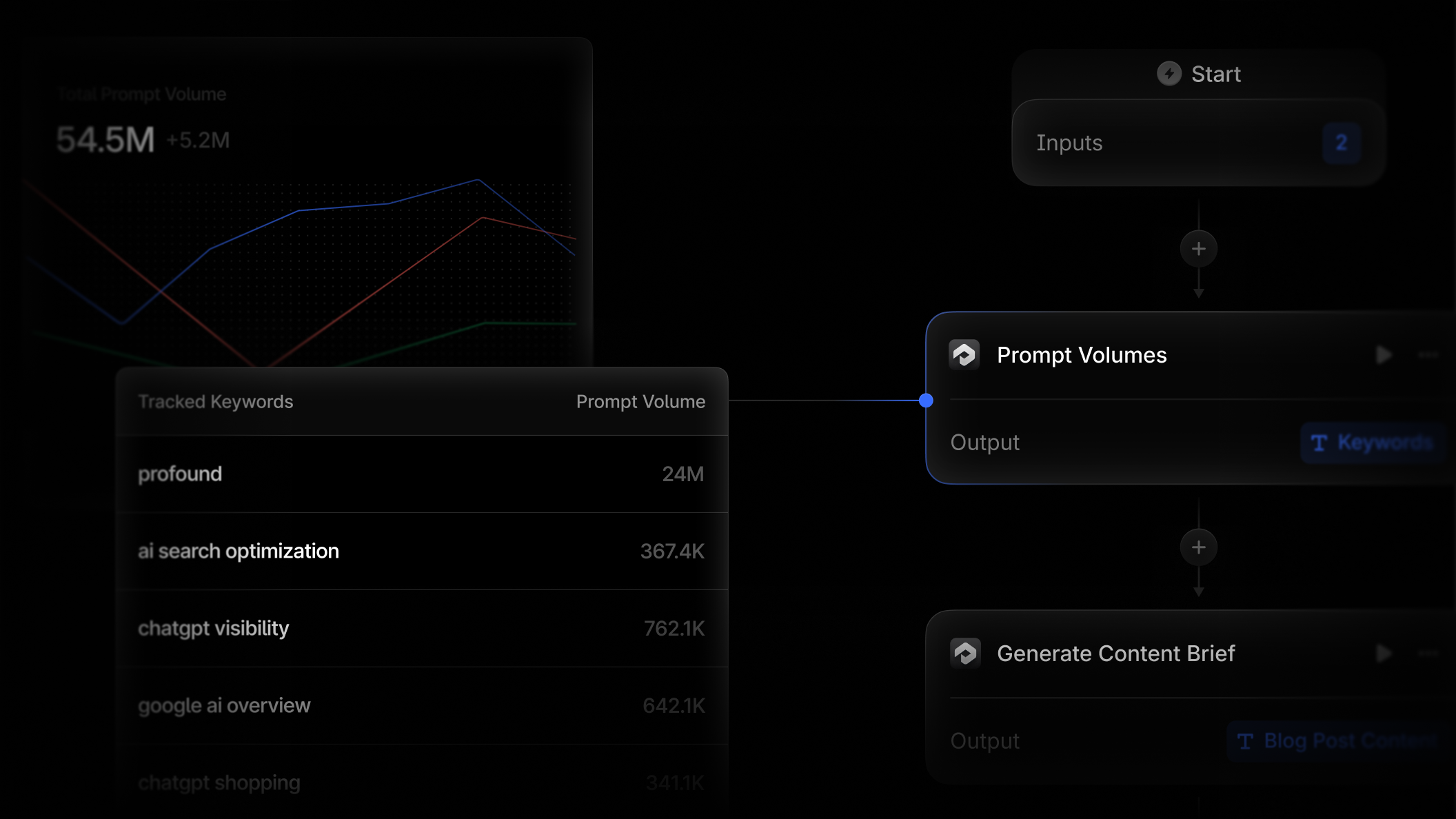
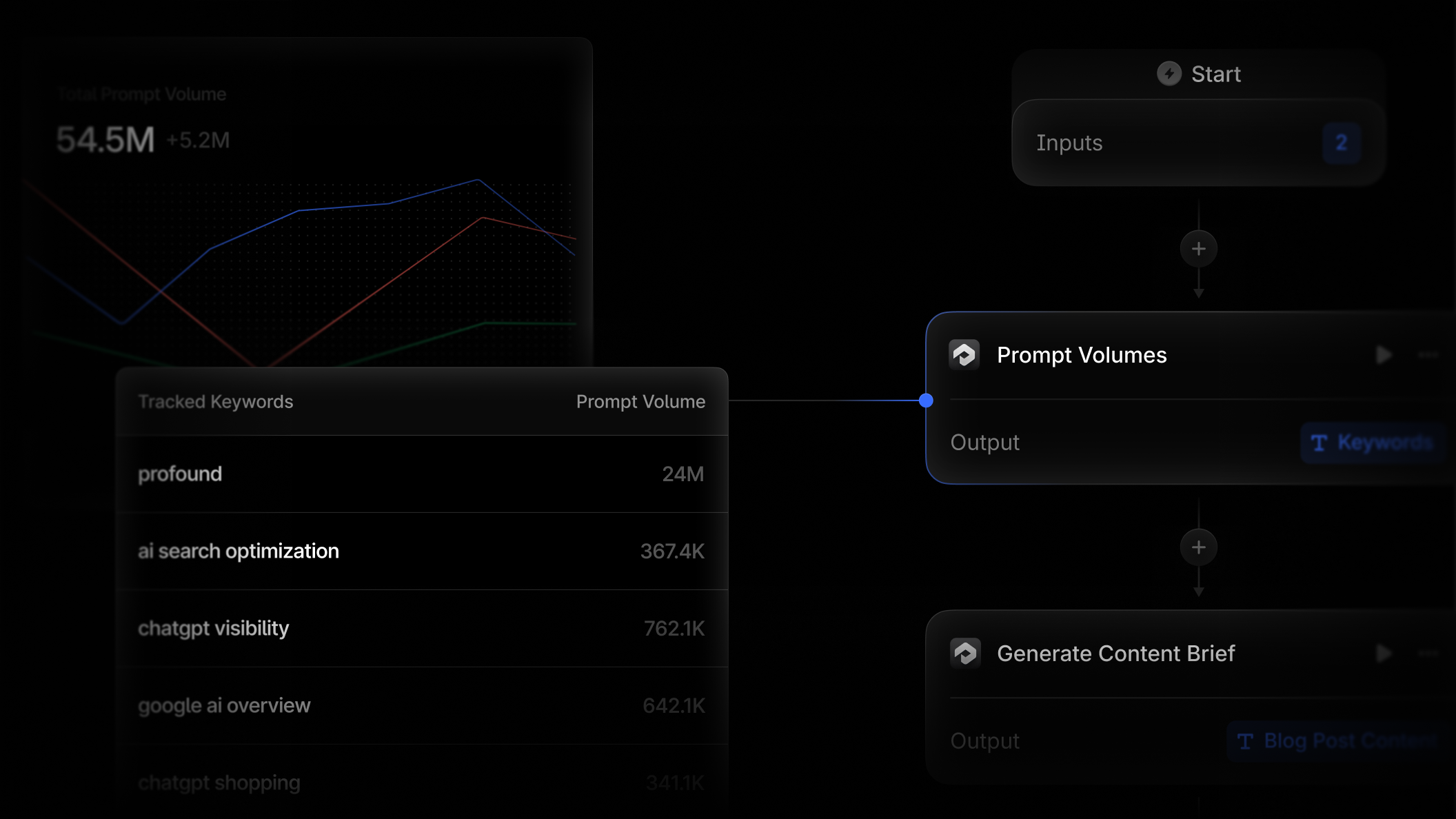
    I’ve found an incredible new way to streamline content creation, competitive analysis, reporting, and monitoring with the latest Profound Agents feature. We can now effortlessly integrate prompt volume data directly into any Profound Agent, bringing together all our workflows into a single platform. This innovation is perfect for marketers looking to enhance efficiency.


    Inspired by this post on Try Profound Blog.


    crushpress.ai community screenshot
  • Google Workspace Integration for AI Agents: A Safe Rollout

    Google Workspace Integration for AI Agents: A Safe Rollout

    You want an AI agent to use the briefs, reports, presentations, and messages already inside Google Workspace. The difficult part is not giving it access. It is deciding what the agent may read, what it may prepare, and what it may change without turning a convenient workflow into an uncontrolled one.

    The safest useful integration starts with one bounded job. Give the agent the minimum context needed for that job, send its output to a review destination, and add approval exactly where an action becomes consequential. Once that path works reliably, you can expand it without guessing which permission or instruction caused a problem.

    Choose the job before you connect the apps

    Google Workspace access can cover several materially different capabilities. An agent may be able to send email and create or retrieve documents. It may also be able to read or write spreadsheet data and extract context from presentations. That does not mean every workflow needs all of them.

    Start by placing the proposed workflow in one of three operating modes:

    • Context mode: The agent retrieves approved material and uses it to answer a question, summarize a campaign, or prepare an analysis. It does not change Workspace data.
    • Draft mode: The agent creates a new review artifact, such as a status report, content brief, proposed spreadsheet update, or email copy. A person decides whether the draft moves forward.
    • Action mode: The agent changes a shared spreadsheet, updates a working document, or sends a message. The result affects other people or systems immediately.

    Use the lowest mode that completes the job. If a content strategist only needs a brief assembled from an approved deck and a campaign document, the agent does not need Gmail sending or spreadsheet write access. If an account lead needs a weekly report, the agent can read the relevant sheet and create a new review document without editing the underlying data.

    This distinction prevents a common design mistake: treating app access as the workflow. Connecting Docs, Sheets, Slides, and Gmail tells you where the agent can operate. It does not define what a successful task looks like, which material is authoritative, or who is accountable for the final action.

    Give every agent workflow an explicit contract

    A limited set of files enters an AI drafting sandbox, where the resulting draft is held for human review before a closed action gate.

    An instruction such as “prepare the client update” leaves too much unresolved. The agent still has to infer which client, which files, which reporting period, which template, and whether “prepare” means draft or send. A workflow contract removes those decisions from the model.

    Define these elements before granting access:

    1. Trigger: State what starts the workflow. It could be a direct request, a defined status in a tracker, or another unambiguous event.
    2. Input boundary: Name the folders, documents, presentations, spreadsheet tabs, or approved messages the agent may use. “Search the drive” is not a useful boundary.
    3. Authority order: Tell the agent which artifact wins when two files disagree. For example, an approved messaging document may take precedence over an older presentation.
    4. Transformation: Describe the work to perform: extract facts, compare values, draft copy, populate a template, or identify missing information.
    5. Output destination: Specify whether the result belongs in a new document, a review queue, a designated spreadsheet area, or a proposed email.
    6. Approval rule: Identify which person or role must approve the result before it is sent or written into a shared source of truth.
    7. Failure behavior: Tell the agent to stop and report missing, conflicting, or ambiguous inputs instead of filling gaps with plausible text.

    A bounded reporting workflow might read like this: use only the named campaign sheet and approved strategy documents; create a new status report in the review location; show which artifacts supplied each material claim; list missing fields separately; do not edit the source sheet or send any message.

    That contract is more valuable than a long general prompt. It gives you observable checkpoints. If the result is wrong, you can determine whether the problem came from retrieval, conflicting context, transformation, or an unauthorized action. Without those boundaries, every failure looks like a vague “AI problem.”

    Treat reading, drafting, and committing as different risks

    A summary can be corrected before anyone uses it. A sent email or an incorrect update to a shared spreadsheet can affect colleagues, clients, and downstream work immediately. Your controls should become stricter as the agent moves from observing information to committing a change.

    Operating modeAgent behaviorSensible default control
    ReadRetrieve approved documents, presentation context, or spreadsheet valuesLimit retrieval to named locations and require a record of the artifacts used
    DraftCreate a new review document containing proposed copy, analysis, or changesWrite only to a designated review destination and mark the result as a draft
    CommitSend a message or alter shared working dataValidate the target, require explicit approval, and record the completed action

    Keep the permission set aligned with the mode. A read-only research workflow should not retain write access “in case it is useful later.” An agent that drafts outreach copy does not need permission to send it. A reporting agent should not be able to edit every spreadsheet merely because its assigned report uses one of them.

    For workflows that eventually need action access, put the approval gate after the draft is visible but before the change is committed. The reviewer should be able to inspect the destination as well as the content. Correct copy addressed to the wrong recipient is still a failed action. Correct data written into the wrong tab or field can be equally disruptive.

    Use these controls at the action boundary:

    • Restrict access to the smallest useful set of folders, files, spreadsheets, and communication functions.
    • Prefer creating a new review artifact over overwriting an existing one.
    • Show the intended recipients, file, tab, and destination before approval.
    • Require a fresh approval when the content or destination changes after review.
    • Record what the agent read, what it produced, who approved it, and what action followed.
    • Maintain a clear way to pause the workflow and revoke its access when behavior is unexpected.

    Do not use a broad permission as a substitute for workflow design. If the connector cannot isolate the resources or actions your job requires, keep the workflow in draft mode. Manual transfer is safer than granting access whose consequences you cannot bound.

    Make Workspace context precise and auditable

    A person selects a few relevant workspace items for an AI assistant while excluded files remain outside the access boundary and an audit trail leads to a secure archive.

    Connecting an agent to more files does not automatically improve its answer. Extra context can introduce duplicate documents, outdated messaging, conflicting numbers, and material that belongs to a different client or campaign. Retrieval needs its own design.

    Build a small context map for each workflow. Name the approved inputs, what each one contributes, and how conflicts should be handled:

    • Documents: Identify the approved brief, policy, template, or messaging file. Do not rely on a title that could match several drafts.
    • Presentations: Specify the deck and the parts relevant to the task. If the workflow depends on notes, links, or material outside visible slide text, verify that the integration actually exposes it before relying on it.
    • Spreadsheets: Name the tab and fields the agent should interpret. Explain unusual headers, calculated fields, status values, and blank cells instead of expecting the agent to infer their business meaning.
    • Email: Separate retrieving approved correspondence from sending a new message. Define which conversations may supply context and which addresses may receive output.

    A spreadsheet deserves particular care. It may look structured to a person while still being ambiguous to an agent. Repeated header rows, unlabeled columns, free-form notes, mixed date formats, and formulas beside manual values can all change what a cell means. Clean the specific input area or provide an explicit field map before using it for an automated decision.

    Require the output to preserve a source trail. For a report or brief, the agent should name the document, deck, or spreadsheet area behind each material section. It should also flag conflicts instead of silently choosing whichever version it retrieved first. This makes review faster and gives you a practical way to correct the context map.

    A useful instruction pattern is: Use only the listed Workspace artifacts. For each material claim, identify the artifact that supports it. If approved inputs conflict or required information is absent, place the issue in a review list and do not resolve it by assumption.

    That requirement matters for content and search workflows. An agent can assemble a polished brief from weak or outdated inputs just as easily as it can assemble one from approved material. Fluency is not provenance. Before a draft enters your publishing, SEO, AEO, or GEO process, a reviewer should be able to see which business facts and positioning statements shaped it.

    Key takeaways

    • Start with one bounded business job, not a blanket connection to every Workspace app.
    • Choose context, draft, or action mode and grant only the access that mode requires.
    • Define the trigger, approved inputs, authority order, output destination, approval rule, and failure behavior before launch.
    • Put human approval immediately before an email is sent or shared data is changed.
    • Require a source trail so reviewers can connect the agent’s output to the document, presentation, or spreadsheet data behind it.
    • Expand access only after the existing workflow is reliable, reviewable, and easy to stop.

    Use a controlled rollout sequence

    Your first workflow should be useful but recoverable. A strong starting point is a context or draft task that reads from a small approved collection and creates a new review document. A poor starting point is autonomous external email or unrestricted editing of a shared operational spreadsheet.

    1. Map the manual task. Write down what starts it, which artifacts a person consults, what judgment is required, and where the finished work goes.
    2. Remove unnecessary access. If an app or folder does not contribute to that exact path, leave it disconnected.
    3. Run in context mode. Check whether the agent retrieves the correct material and reports conflicts or missing information.
    4. Add a review artifact. Let the agent create a new document or other staged output without altering the underlying sources.
    5. Evaluate human corrections. Separate factual corrections from tone changes and formatting preferences. Factual corrections indicate a context or interpretation problem.
    6. Add one action boundary if needed. Introduce a single approved send or write operation, with the destination visible before commitment.
    7. Expand one dimension at a time. Add another data source, destination, or action only after you can explain the current workflow’s behavior.

    Measure reliability, not activity

    Counting generated documents or processed requests tells you how busy the integration is, not whether it is helping. Track signals that expose the quality of the workflow:

    • Completion without repair: Did the workflow reach the intended review destination without someone rebuilding the result?
    • Correction burden: Which facts, recipients, destinations, or spreadsheet interpretations required human changes?
    • Context accuracy: Did the agent use only the approved artifacts and identify conflicting information?
    • Action accuracy: When an action was approved, did it affect the intended message, file, tab, or field?
    • Traceability: Can a reviewer reconstruct the inputs, output, approval, and final action?
    • Safe stops: Did the agent halt when information or authority was missing instead of improvising?

    Pick one recurring workflow and write its contract before connecting anything else. If you cannot state exactly what the agent may read, where it may write, and when it must stop, keep the task in draft mode. That boundary gives you a useful integration now and a defensible path to broader automation later.

    References

  • Why a Social Media Agency with AEO Expertise is Essential

    Why a Social Media Agency with AEO Expertise is Essential

    As I navigate the rapidly evolving world of digital marketing, I’ve discovered that partnering with a social media agency that offers Answer Engine Optimization (AEO) services is a game changer. These agencies have the unique ability to transform social content into enhanced AI visibility, build citations, and drive significant growth for brands like mine.

    If you’re looking to boost your brand’s online presence, understanding the value of AEO services is crucial. I’ve personally seen how they enhance AI recognition, leading to better citations and more impactful growth metrics.


    Inspired by this post on HiGoodie Blog.


    crushpress.ai community screenshot
  • A Marketer’s Playbook for Ads in AI-Assisted Discovery

    A Marketer’s Playbook for Ads in AI-Assisted Discovery

    Your next paid discovery brief may arrive before the format has a stable name. The ad might represent an entire store instead of a single product, while an AI assistant might capture useful engagement before the buyer ever visits your site. A campaign structure built around a keyword, a product, and a click will not give you enough control.

    You do not need to predict which interface will win. You need a preparation model that works across store-level placements, conversational environments, and whatever hybrid appears between them. That means strengthening the advertised object, the evidence around it, the routes a buyer can take, and the measurement required before you commit budget.

    The advertised object is getting larger

    Traditional shopping campaigns make the individual product the center of gravity. Google is testing Sponsored Shops, a Shopping block that groups several products from one retailer with the store name, ratings, and broader brand presence. The impression can therefore introduce an assortment and a merchant, not merely an item.

    Conversational discovery creates a different expansion. OpenAI has begun testing an Ads Manager dashboard with selected partners as it develops advertising around ChatGPT. The exact inventory, interaction model, and optimization system remain early. You should treat them as provisional rather than assume conversational ads will inherit the rules of paid search.

    The practical lesson is that the thing you advertise can sit at several levels. It might be a product, a coherent assortment, a store, or a solution to the need expressed in a conversation. Each level requires different proof and a different continuation after the impression.

    Add the following fields to your campaign planning before a new platform makes them mandatory:

    • User need: the problem, task, or buying situation that triggered discovery.
    • Advertised object: the product, collection, store, or solution path the unit represents.
    • Evidence: the ratings, product details, range, brand facts, and on-page claims that support the promise.
    • Possible interactions: product selection, brand selection, continued conversation, or a direct visit.
    • Continuation: the exact page or in-platform step that follows each interaction.
    • Business event: the observable action that would make the placement valuable.

    This prevents a common category error: treating a larger discovery unit as if it were merely a wider text ad. More visible products do not automatically create a coherent reason to choose the store. A conversational placement does not automatically produce a qualified visit. The advertised object must make sense as a whole.

    Build a discovery asset stack before you buy media

    A modular stack of storefront, product, evidence, inventory, and data elements connects to three abstract discovery interfaces.

    A store-level placement exposes the quality of the catalog as a portfolio. Sponsored Shops could favor merchants with stronger product feeds, useful assortment depth, and credible seller ratings, because several products and the retailer identity appear within the same unit. A weak item is no longer isolated; it can make the entire selection feel less relevant.

    Do not answer that pressure by putting more products into every group. Build an asset stack in which every layer has a defined job:

    1. Catalog facts establish what each product is, what it costs, whether it is available, and how it differs from nearby options.
    2. Assortment logic explains why a set of products belongs together for a particular need. Shared inventory is not enough; the group needs a shopper-facing reason to exist.
    3. Brand evidence gives the buyer a reason to trust the store behind the assortment. Ratings and consistent brand identity matter more when the merchant is part of the advertised object.
    4. Destination continuity carries the same promise from the ad into the next page. The buyer should not have to reconstruct the category, filter, or use case after clicking.
    5. Machine-readable agreement keeps feeds, visible page content, and structured data aligned. JSON-LD should repeat defensible facts shown to the user, not introduce a cleaner but contradictory version of the offer.

    Audit this stack by discovery theme rather than by campaign name. Write the buyer’s need in plain language, select the products that genuinely address it, and inspect every item in that set. Mark missing details, inconsistent naming, stale availability, weak images, unexplained variations, and claims that do not match the destination. Then decide whether the set deserves to be presented as a store-level recommendation.

    Keep product-level optimization intact while you do this. A broad assortment should not bury the strongest item or force unrelated products into the same story. You are adding a portfolio layer above the product layer, not replacing product relevance with brand reach.

    Give every interaction a deliberate next step

    A multi-element discovery unit creates more than one possible click. With Sponsored Shops, the split between clicks on the brand and clicks on individual products is an open measurement and usability question. If you only plan the final conversion page, you will miss the intent expressed by the element the buyer selected.

    Design a continuation for each route that the format exposes:

    • Store or brand interaction: use a focused storefront that confirms the range, positioning, and evidence shown in the unit. Avoid a generic homepage unless it already performs that job.
    • Collection interaction: preserve the discovery theme, relevant filters, and visible product set. Do not make the buyer rebuild the selection from a broad category page.
    • Product interaction: land on the exact item with its important facts, proof, availability, and next action easy to find.
    • In-assistant interaction: identify what the platform can report when the user continues the conversation without visiting your site. Treat unreported engagement as unknown, not as a click or a conversion.

    Put this destination map in the campaign brief before creative production. For every clickable element, record the likely intent, destination, page promise, and success event. If the platform allows distinct tracking parameters for different elements, use them. If it does not, record that limitation before deciding how much you are willing to spend.

    The first visible part of each destination should close the loop opened by the ad. A store-level promise about range should reveal that range. A product promise should show the exact product. A solution-oriented message should answer the need before introducing unrelated navigation. That continuity is more useful than repeating the ad headline word for word.

    Keep paid visibility separate from organic AI visibility in your reporting. Buying placement does not make an unclear page easier for an answer engine to understand elsewhere. Your AEO and GEO work still needs clear naming, consistent facts, direct answers, accessible evidence, and structured data that agrees with the visible page. Paid discovery adds distribution and control; it does not repair weak information architecture.

    Make measurement and budget pass the same gate

    A glowing interaction moves through a branching journey toward a product shelf, consultation doorway, or parcel while paired measurement and budget tokens pass through one gate.

    Use a measurement ladder, not a click counter

    Early ChatGPT advertisers have reportedly received weekly CSV reports containing impressions and clicks, while initial click-through rates have trailed Google Search. Delivery and click data can confirm that an ad ran. They cannot, on their own, tell you whether conversational discovery created valuable demand.

    Measure emerging discovery formats as a ladder:

    • Delivery: impressions, placement, advertised object, unit variant, and any available context about where the ad appeared.
    • Interaction: clicks by element, product selections, brand selections, or reported continuation inside the interface.
    • Progression: meaningful visits to product or collection pages, deeper product exploration, cart activity, lead starts, or another relevant journey event.
    • Outcome: completed purchases, qualified leads, revenue, or the business result attached to the campaign.
    • Incremental value: evidence that the new channel added outcomes rather than taking credit for demand another channel had already created.

    Mark unavailable fields as unavailable. Do not enter zero, because zero means the platform measured the event and found none. Missing element-level interaction data is itself a decision signal: it limits what you can learn about creative, assortment, and destination performance.

    Your tracking taxonomy should identify the platform, placement, advertised object, unit variant, and destination wherever the platform exposes those controls. Keep those dimensions separate. Otherwise, a store click and a product click can collapse into the same campaign total even though they represent different user decisions.

    Write the test decision before launch. State the hypothesis, the variable being changed, the primary business outcome, the supporting engagement signals, the acceptable downside, and the condition that will stop or expand the test. A low click-through rate is not automatically failure for an upper-funnel discovery unit, but it cannot be excused by vague claims about awareness. The downstream evidence must carry the argument.

    Set a budget gate that reflects platform maturity

    Some early ChatGPT advertisers have reportedly been asked for a minimum commitment of $200,000. That creates material financial exposure while reporting and optimization capabilities are still developing. Early access is not valuable merely because access is scarce.

    Before accepting a pilot, require clear answers to these questions:

    • Where can the ad appear, and how is sponsorship disclosed to the user?
    • Which audiences, contexts, placements, products, and destinations can you include or exclude?
    • Which delivery, interaction, conversion, and cost fields can you export, and at what reporting cadence?
    • Can you distinguish a brand interaction from a product interaction?
    • How will conversion measurement work when part of the journey remains inside the assistant?
    • Which campaign changes can you make during the pilot, and what are the stop conditions?

    Ring-fence money you can genuinely treat as experimental. Do not pull budget from a proven acquisition channel simply to claim first-mover status. If the minimum commitment is too large to absorb as a learning cost, or the reporting cannot connect delivery to business outcomes, observing the format is the disciplined choice.

    Move from observation to a pilot when destinations are traceable, controls are understandable, disclosures are clear, and the downside fits the approved test budget. Move from pilot to scale only when the outcome is repeatable and the reporting explains why it happened. Impressions and novelty are not scale criteria.

    Key takeaways for your next planning cycle

    • Plan around the advertised object, which may be a product, assortment, store, or solution path.
    • Treat catalog quality, assortment logic, brand evidence, landing pages, and structured data as one discovery asset stack.
    • Map separate continuations for brand, collection, product, and in-assistant interactions.
    • Measure delivery, interaction, journey progression, business outcomes, and incremental value as distinct layers.
    • Do not fund a large early pilot without exportable reporting, usable controls, explicit stop conditions, and a tolerable downside.

    Your next move is to choose a commercially important discovery theme and complete the advertised-object and destination map for it. Audit the supporting catalog, page evidence, and machine-readable facts before a platform representative puts a media proposal in front of you.

    When access becomes available, ask the platform to map every promised metric and control to that plan. If the gaps prevent a business decision, keep observing. If the path is traceable and the risk is bounded, run a focused pilot with written stop conditions. Emerging discovery inventory should earn its budget on evidence, just like any established channel.

    References

  • How LinkedIn’s LLM-Powered Feed Ranks Your Content

    How LinkedIn’s LLM-Powered Feed Ranks Your Content

    If your LinkedIn reach feels erratic, stop treating the feed like one global leaderboard. The platform is trying to predict relevance for each person, so two professionals with similar networks can still receive different candidates in a different order.

    The useful question isn’t, “How do I please the algorithm?” It is, “Can the system understand who this is for, and will the right readers behave as though it was worth their time?” LinkedIn’s new architecture gives you a practical way to improve both sides of that equation without pretending there is a secret score you can reverse-engineer.

    LinkedIn now makes two separate feed decisions

    Abstract content tiles pass through a broad selection gateway and then a second prism that orders different feeds for three viewers.

    Feed visibility begins with two distinct jobs: retrieval and ranking. Retrieval decides which posts could appear. Ranking decides which of those candidates should appear first. A post that fails the first decision never reaches the second, while a retrieved post can still lose its position to something that better matches the viewer’s current interests.

    Retrieval matches meaning, not just identical wording

    LinkedIn has consolidated previously separate discovery routes into a unified retrieval model. Large language models create embeddings: numerical representations that capture the meaning and context of a post. Those representations can be compared with a member’s professional interests even when the wording isn’t identical.

    Someone engaging with small modular reactor content, for example, may also receive material about renewable energy or a related professional field that uses different terminology. This semantic matching across related concepts matters more than repeating one phrase in every paragraph.

    The GPU-backed system processes millions of posts, can refresh content embeddings within minutes, and can retrieve candidates in less than 50 milliseconds. That speed means a fresh post can become semantically retrievable quickly. It does not guarantee that the post will be selected, ranked highly, or distributed widely.

    Ranking uses a sequence of viewer behavior

    After retrieval, a transformer-based sequential model orders the candidates. It doesn’t evaluate each post in isolation. It examines patterns in a member’s previous behavior, including likes, comments, and time spent viewing content, so the feed can adapt as professional interests change.

    This is an important limit on algorithm advice. A post does not have one universal rank. Its position depends partly on the person receiving it and the sequence of behavior that preceded that feed request. Strong results with one audience segment do not prove that the same post will rank the same way for everyone else.

    LLM-powered also doesn’t mean a chatbot is reading your prose like an editor and awarding points for style. One model represents meaning for retrieval; another uses interaction history to rank candidates. Human-readable quality still matters, but it matters because clear, useful content is easier to match and more likely to hold the right person’s attention.

    Make each post semantically legible

    A blank content card emits a focused constellation of topic symbols that connects with a matching group of professional readers.

    A vague post forces both the model and the reader to guess. A semantically legible post names the professional context, the problem, the affected audience, and the relationship between its main ideas. You can create that clarity without turning the copy into a keyword list.

    1. Write a private audience sentence before drafting: “This is for [role] deciding [specific decision].” If you can’t complete it cleanly, the topic is still too broad.
    2. Name the subject early. Don’t spend the opening on a generic tease that could introduce leadership, software, hiring, finance, or any other field.
    3. Explain the mechanism. State why the change happens, what it affects, or which constraint creates the problem. Adjectives such as “transformative” and “important” don’t supply that context.
    4. Connect the core topic to one relevant adjacent concept. Make the relationship explicit instead of dropping related terms into the copy without explanation.
    5. Show expertise through a process, tradeoff, decision rule, or concrete distinction. Claiming expertise is weaker than making knowledgeable reasoning visible.
    6. End with a question only when the answer can deepen the professional discussion. Ask about a decision, constraint, or experience, not whether readers agree.

    Compare “Big changes are coming. Thoughts?” with this structure: “For [role] deciding [decision], [named development] changes [specific constraint] because [mechanism].” The second version tells the retrieval system what the content concerns and tells the reader whether it deserves attention.

    Semantic retrieval is not permission to stuff a post with synonyms. Use the standard term your audience recognizes, explain it in plain language where necessary, and introduce adjacent terminology only when the relationship adds meaning. A keyword dump can mention everything while communicating almost nothing.

    A coherent series can help you explore a semantic neighborhood: the primary problem, its causes, its operational consequences, and the decisions around it. That does not prove LinkedIn grants account-level authority merely for repeating a topic. It does give each installment a clear chance to match similar professional interests, and it gives you a cleaner way to learn which angle resonates.

    Your network size is not the entire distribution story. Posts that demonstrate expertise and contribute to relevant professional conversations can travel beyond an author’s established connections. The practical move is not to chase every trending subject. It is to contribute when you have a specific connection between the timely topic and the work your intended audience actually does.

    Earn ranking signals without manufacturing them

    Because ranking considers likes, comments, and viewing time, it is tempting to treat every interaction as a lever. Resist that simplification. LinkedIn has not supplied a usable formula that tells you how much each action is worth in every context, and a pause on a post does not necessarily mean approval.

    Design for a meaningful reading experience instead. Give the opening enough information to qualify the audience. Build the body in a logical sequence. Make the promised point before asking for a response. If the subject needs depth, use depth; making a post artificially long in pursuit of viewing time only gives readers more opportunities to leave.

    • Use an opening that identifies the professional issue instead of withholding it behind suspense.
    • Break a complex explanation into distinct decisions, causes, or steps so the reader can follow the reasoning.
    • Ask for a response that requires professional judgment, such as which constraint changes the decision.
    • Reply manually and specifically when someone contributes. Continue the subject they raised instead of posting a generic thank-you.
    • Keep the text and any accompanying media on the same subject. An unrelated video may attract attention while weakening the content’s meaning.
    • Remove prompts whose only purpose is to inflate activity, including requests for a one-word comment with no substantive reason to answer.

    Automated comments and engagement pods are not clever shortcuts. LinkedIn has identified them as policy violations that create artificial discussion. The platform is also deprioritizing engagement bait, irrelevant text-and-video pairings, and generic recycled thought leadership.

    Don’t stretch that policy into a claim that every AI-assisted draft is automatically suppressed. The documented targets are automated engagement and low-value publishing patterns. Judge any drafting tool by the resulting content: Is the reasoning specific? Is the point accurate? Does the copy express a real professional distinction? Would the post still be worth reading if no engagement counter were visible?

    Test audience-topic fit instead of algorithm folklore

    A personalized feed makes casual testing unreliable. When one post performs better than another, the difference could involve the topic, the opening, the audience that received it, those viewers’ recent behavior, or the quality of the discussion. Changing several elements at once leaves you with a result but no useful explanation.

    1. Choose one business-relevant question that a recognizable professional audience needs to answer.
    2. Map the question into a core angle and adjacent angles, such as the cause, implementation constraint, common misreading, and decision tradeoff.
    3. Publish a coherent sequence in which every post stands on its own and names its subject clearly.
    4. Change one structural variable when you want to learn from a comparison: the opening, explanatory depth, example type, or closing question.
    5. Record more than reach. Note whether the people responding appear connected to the intended professional context and whether their comments engage with the actual issue.
    6. Use those observations to choose the next adjacent angle. Don’t turn one strong or weak result into a universal rule about length, timing, hashtags, or a supposed favorite interaction.

    Keep a simple brief beside each draft with these fields: intended reader, decision or problem, core concept, adjacent concept, mechanism or tradeoff, and response prompt. After publication, add what the discussion revealed. This turns a feed result into editorial information you can use rather than a number you can only admire or resent.

    Your own feed is also personalized evidence, not a neutral sample of LinkedIn as a whole. If you use it for topic research, remember that your likes, comments, and viewing behavior help shape what you see next. New members can make that preference-building more deliberate by choosing topics through the Interest Picker during signup. That helps customize the feed from the beginning, but it still does not reveal what every other audience sees.

    Key takeaways

    • Retrieval decides whether a post belongs in the candidate set; ranking decides where that candidate appears for a particular member.
    • Semantic embeddings make clear meaning and related concepts more important than exact-phrase repetition.
    • Ranking uses sequences of behavior, including likes, comments, and viewing time, but there is no dependable public formula for turning those actions into a universal score.
    • Expertise becomes visible through mechanisms, tradeoffs, processes, and useful distinctions, not through generic claims of authority.
    • Automated engagement, pods, bait, mismatched media, and recycled thought leadership create policy or quality risks instead of durable distribution.
    • The cleanest test is audience-topic fit: keep the subject coherent, change one structural variable at a time, and inspect who responds and what they discuss.

    Before your next LinkedIn post, write the private audience-and-decision sentence, rewrite the opening so the subject is unmistakable, and remove any question that can be answered without thought. Then use the quality of the resulting discussion to select the next relevant angle. That is a better compounding system than chasing a secret ranking trick.

    References

  • How to Measure Incremental Ecommerce Growth and Real ROI

    How to Measure Incremental Ecommerce Growth and Real ROI

    Your ecommerce dashboard can show that an affiliate, content page, or campaign touched an order. It cannot tell you, by itself, whether that activity created the order. That gap is where apparently healthy revenue can conceal discounts, commissions, and production costs that bought little or no new demand.

    If you need to decide what to keep, pause, or scale, ask a harder question: what changed because this investment existed? Answering it turns incrementality from a reporting label into a practical way to allocate your budget.

    Key takeaways

    • Attribution records a touchpoint. Incrementality estimates the sales, customer value, or profit caused by that touchpoint.
    • A credible ROI calculation needs a counterfactual: what comparable customers, products, or markets did without the investment.
    • Measure incremental profit after product costs, discounts, commissions, fees, returns, fulfillment, and the investment itself. Attributed revenue is not ROI.
    • Judge each affiliate by the job it performs. Discovery, comparison, trust, conversion assistance, and checkout interception do not deserve the same commission merely because they appear in the same report.
    • Organic content should remove a specific buyer uncertainty, express its evidence clearly for machines, and work across search, AI, social, and other discovery environments.

    Start with profit that would not exist otherwise

    Attribution and incrementality answer different questions. Attribution asks which recorded interaction receives credit. Incrementality asks whether the business outcome would have happened without that interaction.

    This distinction produces four useful categories:

    • Attributed sale: an order assigned to a channel under your reporting rules.
    • Incremental sale: an order caused by an activity that would not have occurred without it.
    • Incremental value: additional value created even when the underlying order might still have happened, such as a larger basket or a conversion enabled by trust the brand could not create alone.
    • Cannibalized sale: an order credited to a paid touchpoint even though the customer was already likely to buy through an unpaid or less expensive path.

    Consider a shopper who reaches checkout and then searches for your brand plus the word “coupon.” A coupon publisher appears, the shopper clicks, and the affiliate platform credits the sale. The touchpoint had high intent, but the brand may have created that intent before the affiliate appeared. If comparable shoppers complete their purchases without the affiliate, the commission is paying for interception rather than growth.

    That does not make every coupon or deal publisher unhelpful. A partner may reach an audience you cannot reach, distribute an exclusive offer, increase the basket, or rescue purchases that would otherwise be abandoned. The important point is that high intent is not evidence of incremental value. You still have to test what changes when the partner is absent.

    Revenue alone also gives you the wrong economic answer. Use a profit bridge that both marketing and finance accept before the test begins:

    • Incremental revenue equals revenue from the exposed group minus the revenue you would expect without the intervention.
    • Incremental operating gain equals incremental revenue minus the product, discount, return, payment, fulfillment, and other variable costs attached to those orders.
    • Net incremental profit equals that operating gain minus commissions, network fees, media, content production, distribution, and other investment costs.
    • Incremental ROI equals net incremental profit divided by the investment cost used in the calculation.

    Agree on the cost boundary and evaluation period first. Otherwise, one team can present gross revenue while another includes commissions and production costs, leaving both with different versions of “ROI.” For a reusable content asset, document how you will treat its creation cost and future maintenance. For an affiliate campaign, include the commission, discount, platform costs, and any placement fee.

    Build a counterfactual before opening the dashboard

    Two matched miniature ecommerce environments sit under glass domes, with one receiving an intervention and producing an additional parcel.

    You cannot observe the same customer both receiving and not receiving an intervention at the same moment. An incrementality test solves that problem by creating a comparison that estimates the missing outcome.

    1. Name the intervention precisely. Test a specific partner, offer, content asset, or distribution method. “Affiliate” and “organic content” are too broad because they combine activities with different jobs and economics.
    2. Choose the eligible unit. Depending on what you can control, this may be a customer, audience, product group, category, or geographic market. The treatment and comparison groups must be similar enough for the difference to be meaningful.
    3. Choose the business outcome before viewing results. Completed orders, incremental revenue, contribution profit, new-customer profit, or basket value can all be valid. Pick the one connected to the investment’s intended job.
    4. Define the counterfactual. A randomized holdout is the cleanest option when it is operationally possible. Otherwise, use comparable markets, audiences, or product groups. A temporary pause can help, but a simple before-and-after comparison is more vulnerable to promotions, seasonality, inventory changes, and other events occurring at the same time.
    5. Protect the comparison. Keep pricing, inventory, promotions, tracking rules, and other material conditions aligned. Record contamination, such as a coupon leaking into the holdout group or customers moving between exposed and unexposed devices.
    6. Calculate the net difference and apply a prewritten decision rule. Decide in advance what evidence would justify scaling, modifying, retesting, or stopping the investment. Do not move the rule after seeing a favorable revenue number.

    When a randomized holdout is not feasible, be candid about the limitation. A matched comparison can inform a decision without proving perfect causality. Record what else could explain the result and reduce your commitment until stronger evidence is available.

    Do not switch off a large revenue partner across the whole business merely to satisfy curiosity. That can create avoidable financial exposure if the partner is genuinely incremental. Use the smallest bounded holdout that can answer the decision, preserve a rollback path, and monitor operational effects while the test runs.

    Watch for measurement shortcuts that inflate ROI

    • Treating attributed sales as the baseline: this assumes causation instead of testing it.
    • Comparing unlike periods: a promotional treatment period and a quiet comparison period cannot isolate the effect of the channel.
    • Pooling unlike partners: a creator introducing the brand and a coupon page appearing at checkout may average into a respectable channel result while having opposite incremental effects.
    • Stopping at revenue: a lift can disappear after discounts, commissions, returns, and fulfillment costs.
    • Judging content only by last-click sessions: content that resolves uncertainty earlier in the journey may influence a sale without owning the final recorded visit.
    • Ending a test when the result looks convenient: define the stopping condition before launch and avoid making a large decision from sparse or unstable observations.

    Judge affiliate partners by the customer decision they change

    Shopper figures move along different paths toward checkout, including one redirected from an exit by an illuminated bridge.

    An affiliate program is not one behavior. Its partners can introduce an unknown brand, shape a comparison, lend trust, distribute an offer, answer a product question, or appear after the customer has already decided to buy. Start your audit by assigning each partner a role.

    Partner roleEvidence worth testingMain measurement risk
    DiscoveryAdditional qualified customers or sales in an exposed audienceCrediting demand created elsewhere
    Comparison and evaluationA change in which product or brand customers chooseCounting shoppers who had already selected your brand
    Trust and recommendationHigher conversion among a comparable audience exposed to the recommendationConfusing audience affinity with the effect of the endorsement
    Exclusive distributionSales or customer value unavailable through your owned channelsPaying for an offer the brand could distribute directly
    Checkout assistanceRecovered orders, additional basket value, or reduced purchase frictionPaying commission on customers who would have completed anyway

    Review and comparison publishers can create real value because they influence which seller receives the order. For a smaller brand, appearing beside established alternatives can provide context and credibility while introducing the brand to another company’s potential customers. Useful formats include comparison sites, listicles, YouTube reviews, communities, forums, and shopping guides.

    Creators can play a similar role even when they do not publish a formal review. A trusted recommendation or distinctive presentation can expose the product to an audience the brand does not already own. The right test compares outcomes among eligible people who did and did not receive that exposure; the creator’s tracked clicks alone do not establish the difference.

    For every partner, ask:

    • Where does the partner usually enter the buyer journey?
    • What customer uncertainty or distribution gap can it resolve that your brand cannot resolve as effectively on its own?
    • Would the same offer, recommendation, or product information exist without the partnership?
    • Does the partner change the probability of purchase, the selected product, the basket value, or the customer acquired?
    • What happens to completed orders and profit when a comparable group cannot use the partner?
    • Does the incremental profit remain positive after commissions, discounts, placement fees, and network costs?

    Do not use a “new customer” label as automatic proof. A first-time buyer may already be at checkout before encountering the affiliate. Conversely, an existing customer can still represent incremental value if a partner causes an additional purchase or a more valuable order that would not otherwise occur. The counterfactual, not the customer label, settles the question.

    Also compare the commercial model with realistic alternatives. A one-time placement in an independent comparison may cost less over its useful life than recurring commissions on every referred order. That does not make fixed-fee coverage universally better; it means you should compare the full cost of ongoing commissions with the cost and durability of a non-affiliate placement.

    Fund organic assets that change a purchase decision

    Organic content has the same incrementality burden, even though its cost structure is different. Publishing more URLs is not a business outcome. The asset has to change what a potential customer knows, trusts, compares, or chooses.

    That matters because discovery now happens across AI experiences, social platforms, and search engines. AI summaries and shopping features can answer part of a customer’s question before a website visit occurs. Clicks therefore remain useful, but they do not capture every valuable discovery touch.

    A defensible organic investment should do three things: reduce buyer uncertainty, remain readable by machines, and work across multiple discovery environments. Turn those principles into a production workflow:

    1. Start with a blocked decision. Choose a real question that prevents the customer from selecting or trusting a product. Product comparisons, fit questions, use-case constraints, offer eligibility, and evidence behind a claim are stronger starting points than a broad keyword with no clear purchase decision attached.
    2. Build the evidence before the prose. Gather the product facts, comparison criteria, limitations, examples, and offer terms required to resolve the question. If the page cannot support its answer, polished wording will not create durable trust.
    3. Make the answer explicit. Use descriptive headings, stable product names, direct answers, visible tables where a comparison is genuinely tabular, and internal links that expose the relationship between products and supporting evidence.
    4. Keep structured data faithful to the page. JSON-LD and other machine-readable markup should restate visible, accurate facts. Markup is packaging for evidence, not a substitute for it.
    5. Adapt the evidence to the discovery environment. A comparison page, creator brief, shopping guide, short video, and community answer may express the same verified facts differently. Preserve the substance while fitting the format and audience.
    6. Test the business effect. A staggered rollout across comparable product groups or markets can provide a counterfactual. Evaluate the outcome at the eligible-group level rather than requiring the content URL to receive the last click on every influenced order.

    Assign the content costs before evaluating it: research, writing, design, expert review, technical implementation, distribution, and updates. Then select an evaluation period that matches how long you expect the asset to remain useful. Changing that period after results arrive is another way to manufacture a favorable ROI.

    Use one decision record for every growth investment

    Affiliate, content, paid media, and other channels become easier to compare when every owner completes the same short record:

    • Hypothesis: which customer behavior should change, and why?
    • Counterfactual: what represents the outcome without the investment?
    • Primary outcome: which business metric decides the result?
    • Cost basis: which variable and investment costs are included?
    • Result: what changed in revenue, operating gain, and net profit?
    • Evidence quality: what contamination, imbalance, or outside event could explain the difference?
    • Action: scale, modify, renegotiate, retest, or stop.

    The action should follow the combination of economics and evidence. Strong attributed revenue with no measurable lift is a reason to change the arrangement, not celebrate the dashboard. Incremental sales with negative net profit call for a lower commission, smaller discount, cheaper distribution, or better margin. A promising but inconclusive result calls for a cleaner test, not an unrestricted rollout.

    Start with the investment making the largest revenue claim and offering the weakest causal proof. Define a bounded holdout before the next promotion or rollout, agree on the profit calculation with finance, and write the decision rule before results appear. Your next growth decision will then be based on value the business actually gained, not credit a platform happened to assign.

    References

  • AI Search Visibility: A Practical Content Optimization System

    AI Search Visibility: A Practical Content Optimization System

    Your page can rank in conventional search and still disappear when someone asks an AI system to recommend a solution, compare options, or explain what to do next. The usual problem isn’t a missing AI keyword. It is that the answer, the entity behind it, or the evidence connecting the two is too difficult to interpret.

    You can fix that systematically. Make each important page useful as a self-contained answer, give every important entity one consistent identity, connect related pages deliberately, and keep the visible content aligned with its JSON-LD. Then measure whether AI systems represent your brand accurately, not merely whether they send a click.

    Start with the answer AI search needs to use

    Traditional SEO helps a search engine discover, index, and rank a URL. Answer engine optimization helps a brand appear when people ask relevant questions through AI-driven experiences such as ChatGPT and Google. Generative engine optimization goes a step further: it makes your information easier to interpret, verify, and incorporate into a generated response.

    These disciplines overlap, but they don’t produce the same artifact. A page written only to attract a click can tease the answer, delay it, or distribute it across several sections. A page prepared for AI search must contain an answer that remains clear when extracted from the surrounding layout.

    Rewrite the page around one answerable job

    Start by naming the job the page performs. A service page might establish who the service is for and what it includes. A comparison page might help a buyer choose between two approaches. A how-to page might resolve one task. If you cannot complete the sentence, this page helps the reader decide or do something specific, its scope is probably too loose.

    1. State the question or decision. Use language your intended reader would recognize. Don’t optimize one page for several unrelated intents simply because their keywords are adjacent.
    2. Give the direct answer early. Put the conclusion before the long explanation. The reader should not have to assemble it from an introduction, a feature list, and a closing paragraph.
    3. Name the subject. Replace ambiguous pronouns with the product, organization, person, service, or method being discussed. A detached passage should still reveal who or what the claim concerns.
    4. Add the conditions that change the answer. Identify who the advice applies to, what assumptions it depends on, and where an exception matters. A precise qualified answer is more useful than an absolute claim that the rest of the page quietly weakens.
    5. Support the conclusion nearby. Keep definitions, reasoning, examples, and relevant evidence close to the statement they support. Don’t force an engine or a reader to infer why a claim is credible from a distant page.
    6. Provide the next decision. Explain what the reader should compare, check, or do after receiving the answer. This turns an extractable passage into a useful one.

    Run an extraction test when the draft is finished. Copy the answer paragraph into a blank document without its title, navigation, images, or preceding sections. Can someone identify the subject, understand the conclusion, see its important limits, and know what to do next? If not, repair the paragraph before adding more optimization around it.

    Answer-ready writing does not mean reducing every page to short fragments. Detailed explanations still matter. The practical goal is layered clarity: a direct answer first, followed by the reasoning and context that make it trustworthy.

    Make your brand and its entities impossible to confuse

    AI visibility depends on more than what one URL says. A reasoning system also has to determine whether the organization in an author biography, the brand in a product description, and the publisher identified in structured data are the same entity. Strong entity authority comes from a consistent, connected, and verifiable ecosystem, not from repeating a keyword more often.

    An entity is a specific thing with an identity: your organization, a product, a service, a person, or a location. Treat each important entity as a record that must remain consistent wherever it appears.

    • Choose one canonical name. Decide how the entity is named, capitalized, and described. Use aliases only when they help readers recognize the same thing.
    • Maintain one canonical page. Give each strategic entity a clear home URL containing its current description, important attributes, and relevant relationships.
    • Define relationships explicitly. State which organization offers a service, which person works for or founded an organization, which product belongs to a brand, and which article concerns which subject. Include only relationships the visible site can substantiate.
    • Remove contradictory facts. Conflicting names, service descriptions, locations, authorship details, or availability statements force machines to choose between versions. Correct the underlying content instead of trying to override it with schema.
    • Connect external identities carefully. A sameAs value should identify the same entity on a reputable external page. It should not point to a loosely related mention, a partner, or a page that merely uses a similar name.

    Use a stable @id for each entity in JSON-LD and reference that identifier wherever the entity reappears. If the Organization node has one identifier on the homepage, another on an article, and a third on a service page, you have created three machine-readable candidates where you intended one identity.

    A small relationship map exposes these mistakes before they spread. Write the important connections in plain language: Organization offers Service; Article is about Service; Person works for Organization; WebSite is published by Organization. Then check whether the visible pages, internal links, and JSON-LD all express the same map.

    Schema can clarify an identity, but it cannot manufacture authority. If a page makes a vague or unsupported claim, wrapping that claim in structured data only makes the ambiguity machine-readable. Build the factual record first; encode it second.

    Use internal links and JSON-LD as one connected system

    Linked content-page tiles sit above a matching lattice of structured data nodes, with light bridges joining the two layers.

    Internal links and JSON-LD solve related problems at different layers. Internal links show readers and crawlers how editorial ideas connect. JSON-LD identifies the entities and properties involved in those connections. When the two layers disagree, neither provides a dependable map.

    Make internal links explain the relationship

    Link from the passage where the relationship is meaningful, using anchor text that describes the destination. A link labeled entity schema implementation tells the reader more than learn more. The surrounding sentence should also explain why the destination matters.

    • Link supporting articles to the canonical page for the product, service, person, or concept they discuss.
    • Link a canonical page back to the strongest supporting explanations when those explanations help a reader evaluate the entity.
    • Connect adjacent answers when a reader genuinely needs both, rather than linking every related keyword to every possible page.
    • Resolve orphaned strategic pages. If no relevant page points to an entity’s canonical URL, the site is signaling that the entity has little structural importance.
    • Review redirects and canonical changes so links continue to resolve to the identity you intend.

    Bring internal-link suggestions into the writing workflow before publication, while the author still has the full context of the page. Automation can surface possible destinations, but an editor should decide whether each link expresses a real relationship and helps the reader continue the task.

    Make JSON-LD describe what the reader can verify

    Basic schema scattered across unrelated templates can become a collection of data islands. Reuse entity identifiers so an Article can reference the same Organization, Person, Product, or Service already defined elsewhere. This creates a coherent content knowledge graph rather than several disconnected descriptions of the same site.

    Structured data lowers the amount of interpretation required to understand your content, but it does not guarantee inclusion or a citation. Its value is clarity. It lets a machine follow an explicit relationship instead of guessing one from layout, navigation, and repeated wording.

    • Match names and descriptions in meaning. The JSON-LD does not have to duplicate every visible sentence, but it must not tell a materially different story.
    • Reference canonical URLs. Don’t let outdated staging paths, redirected addresses, or inconsistent URL variants become entity identifiers.
    • Validate authorship and publisher relationships. Confirm that the named people and organizations are visibly associated with the content in the roles declared.
    • Keep offers and capabilities current. Remove services, availability claims, or product details from structured data when they no longer appear on the page.
    • Describe actions only when they work. Action-oriented schema should correspond to a real pathway a user or agent can complete. Marking up a nonexistent booking, ordering, or contact function creates a promise the site cannot fulfill.
    • Update content and schema together. A change is not complete until the visible page, shared entity record, internal links, and structured data agree.

    This last check prevents schema drift: the gradual separation of what people see from what machines read. Drift reduces confidence precisely when you need AI systems to resolve an identity or capability without guessing.

    Audit visibility by query, citation, and accuracy

    Three query orbs connect through an inspection lens to blank answer cards and source documents, with one connection highlighted for review.

    Organic sessions and rankings still matter, but they cannot tell you whether an AI answer named your brand, cited the right page, or described your offer correctly. Add an output-focused audit rather than replacing your existing SEO reporting.

    Build a stable set of prompts around real audience decisions. Include discovery questions, problem-solving questions, comparisons, and questions that test a capability you want the market to associate with your brand. Keep the wording and intent consistent enough to compare observations over time.

    1. Record the environment. Note the AI system, query, date, and any material context supplied with the prompt. A single answer without its conditions is not a useful baseline.
    2. Check presence. Record whether the brand or entity appears, whether it is merely listed, and whether it contributes meaningfully to the answer.
    3. Check citation quality. Identify the cited URL and whether that page actually supports the claim beside it. A homepage citation is not automatically valuable if a focused service or explanatory page should have been used.
    4. Check representation. Compare names, capabilities, relationships, and qualifiers with your canonical facts. An inaccurate mention is a governance problem, not a visibility win.
    5. Check answer ownership. Note which competing entities or publications provide the explanation when your page does not. Look for a missing answer, unclear entity, weak relationship, or unsupported claim that explains the difference.
    6. Check the site layer. Confirm that the preferred page is indexable, internally linked, canonically consistent, and aligned with its JSON-LD before rewriting its prose again.

    Citation value, model share, and representation accuracy extend measurement beyond page traffic. Model share can be treated as the proportion of your tracked prompts in which your entity earns a meaningful presence. Citation value asks whether the cited page supports a commercially or editorially important answer. Neither metric should be confused with revenue, but both can reveal whether AI systems understand where your brand belongs.

    Don’t change strategy because the brand was absent from one generated response. Look for a recurring failure across your tracked prompt set. If the right page is repeatedly ignored, inspect answer clarity and internal prominence. If the brand appears with the wrong attributes, inspect the canonical entity record and schema alignment. If a competitor supplies the explanation, compare the completeness and specificity of the relevant answer rather than copying its phrasing.

    Schedule a governance check whenever a material business fact changes. A rebrand, retired service, new author role, migrated URL, or changed transaction path can affect several nodes at once. Updating only the most visible page leaves the old version alive in internal links, structured data, archives, or supporting content.

    Key takeaways

    • Optimize each strategic page for one answerable reader job, then test whether its core answer remains clear when removed from the layout.
    • Give every important organization, person, product, or service one canonical identity, one stable @id, and a consistent set of relationships.
    • Use internal links to express editorial relationships and JSON-LD to encode the same relationships for machines.
    • Never use schema to make a claim the visible page cannot verify, and update both layers in the same publishing workflow.
    • Track meaningful presence, citation quality, and representation accuracy across a stable prompt set alongside rankings and traffic.

    Begin with one commercially important entity and the page that should answer its most important question. Repair that page, connect its supporting content, align its JSON-LD, and establish a prompt baseline. Once the identity and relationships hold together there, extend the same system to the next entity instead of attempting a site-wide markup exercise with no governing model.

    References