Tag: Technology

  • Mastering the Google Knowledge Graph: A Complete Guide

    Mastering the Google Knowledge Graph: A Complete Guide

    If you’re curious about how search engines deliver precise information, let me introduce you to the Google Knowledge Graph. This technology, first introduced in 2012, has revolutionized the way we access data online. It transforms Google’s capability by turning its search engine into an interconnected web of knowledge, going beyond simple keyword matching. I want to take you on a journey to explore what the Knowledge Graph is, how it operates, and its vast impact on search and beyond.

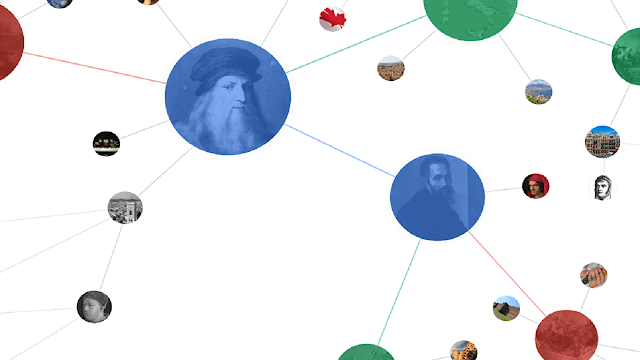
    The core of the Google Knowledge Graph is a colossal database mapping real-world entities and their relationships. Imagine a digital encyclopedia where information is not just archived as text but connected in a network of nodes. Each of these nodes represents entities like “Albert Einstein” or “Theory of Relativity,” while the edges define their relationships, such as “developed” or “born in.” This setup empowers Google to deliver more intuitive and context-aware search results.

    For instance, when I search for “Leonardo da Vinci,” the Knowledge Graph presents a Knowledge Panel that summarizes key details about him, such as his birth, death, and iconic works like the Mona Lisa. This is because the Graph smartly links Leonardo to relevant entities like “Renaissance” and “Florence.”

    The functioning of the Knowledge Graph hinges on a blend of data sources and complex algorithms. Google harnesses data from renowned sources like Wikipedia and Wikidata, alongside other licensed materials. It then employs natural language processing and machine learning to discern entities, their attributes, and relationships from unstructured web data.

    Here’s how it works in three simple steps:

    Entity Extraction: Identifying and classifying nouns such as people and places in the text.

    Relationship Mapping: Understanding connections between entities, like “Barack Obama” being “President of” the “United States.”

    Knowledge Integration: Continuously updating the Graph with new data to maintain accuracy.

    This sophisticated structure enables direct answers to questions. If I type “Who founded Microsoft?”, it swiftly responds with “Bill Gates and Paul Allen,” thanks to the Graph’s linked entities.

    The Knowledge Graph has truly transformed search, making it more user-focused and semantic. Before its existence, Google primarily relied on keyword matches, often resulting in irrelevant results when queries were vague. Now, I can see how it interprets user intent. So, whether I’m searching “jaguar” for an animal, car brand, or football team, the Knowledge Graph prioritizes results based on context clues like my location or previous searches.

    Knowledge Panels are one of the most visible outcomes, providing concise information without necessitating multiple website visits. The Graph also facilitates features like “People Also Ask” and related suggestions, predicting follow-up queries. For businesses and individuals, appearing in the Knowledge Graph boosts authority and visibility.

    Beyond mere search functionality, the Knowledge Graph extends its reach into Google Maps by linking locations to businesses, powers Google Assistant in answering voice queries, and even enhances YouTube by suggesting related content. Its ability to structure data is impactful in industries like e-commerce and healthcare, where understanding relationships can enhance recommendations and aid diagnostics, respectively.

    As I look to the future, the Knowledge Graph’s sophistication is poised to grow with AI breakthroughs. Google’s continual improvements in processing complex queries and integrating real-time data promise even more personalized and predictive user experiences.

    In conclusion, the Google Knowledge Graph forms the bedrock of modern search by enhancing how information is accessed. By understanding entities and their complex interconnections, it equips us with smarter, faster, and more relevant information. Whether you’re a curious individual or a business striving to optimize your presence online, the Knowledge Graph is an influential force shaping our digital interactions. Its evolution holds the promise of making our tech interactions more seamless and insightful.


    Inspired by this post on AnswerEngineOptimization.blog.


    crushpress.ai community screenshot
  • Microsoft Ends Mobile Ad Management: Here’s What You Need to Know

    Microsoft Ends Mobile Ad Management: Here’s What You Need to Know

    I’m here to update you that Microsoft will be saying farewell to its Advertising mobile app in January 2026. This shift will affect how advertisers manage their campaigns on the go.

    As someone who relies on the Microsoft Advertising app for quick interventions or checks, I understand the importance of staying informed. Now, I’ll need to adapt by using the web interface, which will become the sole channel for managing campaigns.

    So, what’s the change? The app is no longer available in the Apple App Store or Google Play, and from January 2026, it will be completely retired. Microsoft’s web UI, rich with features, will be our go-to tool.

    ```json
{
  "alt": "Announcement about retiring the Microsoft Advertising mobile app in 2026.",
  "caption": "Microsoft Advertising announces the retirement of its mobile app by January 2026. Transition to their online platform for future campaign management.",
  "description": "This image is an official announcement from Microsoft Advertising about the retirement of their mobile app. The app will be removed from app stores in November 2025 but will function with updates until January 2026. Users are encouraged to continue managing campaigns through Microsoft Advertising's online platform. This message informs users about changes and provides guidance on adapting to new processes."
}
```

    I first learned about this through marketing specialist Ive Predovan, who shared Microsoft’s email notice via PPC News Feed.

    To wrap it up, if you’ve been managing Microsoft Ads from your phone, it’s time to prepare for change. The transition to the web interface is imminent, leaving us with no choice but to adapt.


    Inspired by this post on Search Engine Land.


    crushpress.ai community screenshot