Tag: SEO

  • Unlocking AEO Success: Your Guide to Google’s Future

    Unlocking AEO Success: Your Guide to Google’s Future

    By 2025, we’ve seen SEO transform into Answer Engine Optimization (AEO), thanks to Google’s focus on providing precise, immediate answers to users’ questions. This shift moves beyond the old strategies of keyword stuffing and backlinking. Let me take you through effective ways to optimize for Google’s answer-focused algorithms, ensuring your site shines.

    Understanding Answer Engine Optimization

    Google’s emphasis on natural language processing and contextual understanding is stronger than ever, supported by AI advancements like BERT and MUM. These tools help Google engage with user queries conversationally, supplying featured snippets, People Also Ask (PAA) boxes, and direct answers. AEO work involves creating content that’s effortlessly parsed by Google as the go-to response.

    My goal? To ensure your content ranks as the most authoritative, concise, and relevant answer. It’s a careful mix of technical editing, clear content, and user-centered design.

    Key Strategies for AEO Success

    1. Target Question-Based Queries

    Today, many users phrase searches as complete questions like, ‘How do I fix a leaky faucet?’ or ‘What is the best diet for 2025?’ To find success, I recommend identifying these queries using tools such as Google’s PAA section, AnswerThePublic, or Semrush. Develop content that offers clear, structured responses.

    Tip: Integrate question-based headings such as ‘Why Does My Wi-Fi Keep Dropping?’ to align content with search intents.

    Example: A post exploring ‘What are the benefits of solar panels?’ should highlight a concise benefit list early on.

    2. Optimize for Featured Snippets

    To capture these valuable spots in Google’s search listings, it’s crucial that I organize your content to deliver succinct, scannable answers. Consider utilizing bullet points, numbered lists, or tables to enhance clarity.

    Format Matters: For a question like ‘How to bake a cake,’ include a list of steps or an ingredients table for easy reference.

    Schema Markup: Incorporate structured data such as FAQ or How-To schema to indicate to Google that your content is ripe for answers.

    3. Leverage Conversational Content

    Google’s AI highly values natural, conversational prose. Imagine you’re responding to a friend’s query. Simple language triumphs over technical jargon unless absolutely necessary, maintaining an accessible yet authoritative tone.

    Example: Swap ‘Optimizing photovoltaic systems’ for ‘How to make your solar panels more efficient.’

    Voice Search: Engage with voice queries, like ‘Hey Google, what’s the quickest way to clean a carpet?’ by integrating long-tail, conversational keywords.

    4. Enhance E-E-A-T (Experience, Expertise, Authoritativeness, Trustworthiness)

    To reward your content with E-E-A-T, Google looks for demonstrated expertise through author bios, citations, and credible links. A health blog, for instance, should have contributions or reviews from certified professionals.

    Build Trust: Include testimonials, case studies, or supporting data to validate your claims.

    Update Regularly: Refresh content to echo 2025 trends as Google values up-to-date information.

    5. Technical AEO: Speed and Mobile Optimization

    It’s not just about content; Google’s criteria include fast-loading, mobile-optimized sites. I suggest using tools like PageSpeed Insights to confirm your site loads swiftly, aiming under two seconds. Optimize images, minify HTML/CSS/JavaScript, and utilize AMP (Accelerated Mobile Pages) if applicable.

    Core Web Vitals: Zero in on Largest Contentful Paint (LCP), First Input Delay (FID), and Cumulative Layout Shift (CLS) to guarantee a flawless user experience.

    6. Engage with Multimedia

    Using images, videos, or infographics to support your answers can ensure that your content stands out. Google appreciates rich media for boosting user comprehension. Consider how a ‘How to tie a tie’ guide with a quick video or visual diagram could climb the ranks.

    Alt Text: Deploy descriptive alt text to boost accessibility and SEO.

    Measuring AEO Success

    Monitor the performance by using Google Search Console and analytic tools. It’s essential to track impressions, clicks, and snippet appearances, tweaking content based on driving queries and maintaining rankings.

    Conclusion

    Answer Engine Optimization is undoubtedly Google’s future in terms of ranking. By honing in on user intent, structured content, and technical brilliance, I can guide your site to become the number one answer hub in 2025. Initiate your AEO journey now and maintain a leading edge ahead.


    Inspired by this post on AnswerEngineOptimization.blog.


    crushpress.ai community screenshot
  • AEO vs SEO: Navigating the Future of Digital Marketing

    AEO vs SEO: Navigating the Future of Digital Marketing

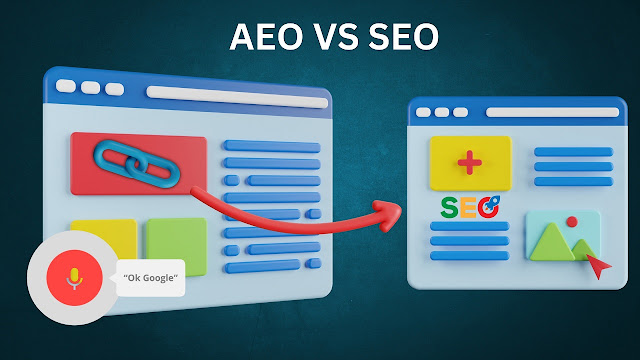
    In today’s fast-paced digital marketing landscape, I’ve noticed two terms gaining traction: SEO (Search Engine Optimization) and AEO (Answer Engine Optimization). While SEO has been a foundational element of online visibility, AEO is becoming essential due to shifts in user behavior and advancements in search technology. Understanding these strategies is vital for staying ahead in 2025 and beyond.

    What is SEO?

    SEO involves enhancing a website to rank higher on search engine results pages (SERPs) for platforms like Google, Bing, or Yahoo. The aim is to boost organic traffic by aligning content with search engine algorithms, focusing on keywords, backlinks, site speed, mobile-friendliness, and user experience. For instance, if I want my blog post on “best running shoes” visible on Google’s first page, I optimize with relevant keywords, meta tags, and high-quality content.

    Even though SEO has been effective for years by catering to users seeking information, the rise of conversational queries with AI tools like ChatGPT, Grok, and voice assistants means SEO alone might not be enough.

    What is AEO?

    AEO, or Answer Engine Optimization, involves optimizing content to directly answer user questions, particularly for AI-driven platforms and voice search. Unlike traditional search engines, answer engines, such as Google’s featured snippets or voice assistants like Siri, aim to provide a single, authoritative answer. AEO targets “position zero,” the immediate response users get.

    For example, if someone asks, “What’s the best way to clean a cast-iron skillet?” an AEO-optimized page would offer a clear, structured response that AI can easily extract, like a bullet list or a succinct paragraph. AEO emphasizes natural language, question-based content, and structured data to align with AI algorithms.

    Key Differences

    Intent Focus:

    SEO: Targets users searching for information, often with broad or exploratory intent. Its goal is to drive clicks to a website.

    AEO: Focuses on users seeking immediate answers, often via voice or AI assistants. It prioritizes providing definitive answers.

    Content Format:

    SEO: Utilizes keyword-rich, long-form content with internal links and backlinks for authority.

    AEO: Prefers concise, structured content like FAQs or snippets that AI can quickly parse.

    Platform:

    SEO: Tailored for traditional search engines such as Google or Bing.

    AEO: Designed for answer engines, including AI chatbots, voice assistants, and featured snippets.

    Why AEO is Gaining Traction

    The increasing popularity of voice search and AI assistants is fueling AEO’s rise. By 2025, it’s expected that over half of all searches will be voice-based, with queries like “What’s the weather today?” or “How do I make sourdough bread?” These require instant, accurate responses—an area where AEO excels. Tools like Grok are transforming how we access information, bypassing traditional SERPs completely.

    AEO complements Google’s shift toward featured snippets and knowledge panels, offering direct answers on search pages. Failing to optimize for AEO could mean missing out on these valuable placements.

    SEO and AEO: Complementary Strategies

    I believe it’s best to integrate SEO and AEO rather than viewing them as either-or strategies. SEO builds long-term traffic and authority, while AEO addresses immediate, high-intent questions. For example:

    Use SEO to rank a detailed guide on “How to Train for a Marathon.”

    Use AEO to optimize FAQs like “What shoes are best for marathon training?” for voice search or AI tools.

    How to Implement AEO

    Create Question-Based Content: Use tools like AnswerThePublic to find common queries.

    Leverage Structured Data: Implement schema markup to help AI understand your content.

    Optimize for Conversational Language: Write as you speak to match voice search patterns.

    Focus on Clarity: Provide direct, concise answers within the first 100 words of your content.

    Conclusion

    While SEO remains crucial for organic traffic, AEO is key to capturing users who need quick answers. By integrating SEO’s depth and AEO’s precision, businesses can succeed in both traditional and answer-driven search environments. In 2025, those who adapt this dual approach will dominate across digital touchpoints.


    Inspired by this post on AnswerEngineOptimization.blog.

    crushpress.ai community screenshot
  • Boost Conversions: Fix These 10 Landing Page Mistakes

    Boost Conversions: Fix These 10 Landing Page Mistakes

    I’ve realized that even with high website traffic, conversions aren’t always guaranteed. In my journey, I discovered how essential it is to look beyond the numbers and focus on optimizing our landing pages.

    Today, I want to share insights about the top 10 common landing page mistakes that most marketers, including myself at some point, tend to overlook. These pitfalls can significantly impact our conversion rates, but thankfully, there are actionable ways to rectify these errors.

    Through this post, I’ll guide you on transforming your landing pages to not just draw visitors, but to effectively convert them into loyal customers. Let’s dive into these crucial aspects and make meaningful changes together.


    Inspired by this post on genmark.ai Blog.


    crushpress.ai community screenshot
  • Unlocking Small Business Growth: A Strategic Marketing Blueprint

    Unlocking Small Business Growth: A Strategic Marketing Blueprint

    Are you ready to transition from merely surviving to thriving? Let me share a proven, systematic approach that successful small businesses use to achieve predictable, profitable growth through strategic marketing.

    In our journey together, I’ll explore the key strategies small businesses implement to scale efficiently and effectively, leveraging the power of strategic marketing to drive meaningful and sustained growth.


    Inspired by this post on genmark.ai Blog.


    crushpress.ai community screenshot
  • Unlock Real Growth: Seed-Stage SaaS Marketing Strategies

    Unlock Real Growth: Seed-Stage SaaS Marketing Strategies

    I recently celebrated a significant milestone—raising a seed round! While it’s exciting, I know the real challenge lies ahead: developing a marketing strategy that genuinely boosts revenue and positions my startup for future success.

    With funding in hand, I’m determined to avoid the pitfalls that often hinder SaaS startups. It’s crucial to focus on building marketing efforts that not only attract attention but also drive meaningful growth.

    Eager to navigate this path effectively, I’ll share insights on how to steer clear of the common mistakes that can derail even the most promising ventures. Growth isn’t just about visibility; it’s about capturing the right audience and converting interest into sustainable revenue.


    Inspired by this post on genmark.ai Blog.


    crushpress.ai community screenshot
  • Harnessing AI for SEO: Elevate Your Digital Reach with AEO

    Harnessing AI for SEO: Elevate Your Digital Reach with AEO

    As I delve into the fascinating world of AI and search engines, it’s clear that they are transforming the landscape of digital visibility. These technological advancements are opening up new possibilities for brands like never before, enabling us to optimize content for innovative AI platforms like ChatGPT and Google AI Overviews.

    I find it exciting to explore how these generative AI tools are reshaping SEO strategies, and I’m not alone. Insights from Andreessen Horowitz reveal an $80B market disruption, highlighting the significant impact this shift is having on SEO practices.

    By embracing these changes, we have the unique opportunity to stay ahead in the competitive digital space. It’s time to learn and adapt, making the most of AI-driven tools to enhance our visibility and ensure that we remain on the cutting edge of digital marketing innovation.


    Inspired by this post on genmark.ai Blog.


    crushpress.ai community screenshot
  • Unlock Real Growth with Meaningful Digital Marketing Metrics

    Unlock Real Growth with Meaningful Digital Marketing Metrics

    I used to rely heavily on vanity metrics, thinking they were the key to my digital marketing success. However, I soon realized that they did little more than paint a pretty picture with no real substance. That’s when I decided to focus on what’s truly important: the numbers that actually drive business growth.

    In today’s digital landscape, it’s crucial to pinpoint which KPIs truly matter. By doing so, I can build reports that genuinely tell the story of my business’s progress. These metrics go far beyond just surface-level statistics.

    It’s all about understanding the complete picture and tailoring my strategy to focus on those key performance indicators that have a tangible impact on my business’s bottom line. Join me as I delve into which digital marketing KPIs deserve our attention.


    Inspired by this post on genmark.ai Blog.


    crushpress.ai community screenshot
  • Unlock E-commerce Success Without Relying on Ads

    Unlock E-commerce Success Without Relying on Ads

    I’ve realized that building a business that thrives solely on advertising is risky. We can’t let our ventures be at the mercy of fluctuating ad performances.

    Instead, let’s explore how to establish e-commerce growth engines. These strategies focus on compounding growth over time, emphasizing customer loyalty and enhancing brand strength.

    By shifting our approach, we can generate sustainable revenue that doesn’t hinge solely on ad spend.


    Inspired by this post on genmark.ai Blog.


    crushpress.ai community screenshot
  • Unlocking Success: How Structured Data Enhances Answer Engines

    Unlocking Success: How Structured Data Enhances Answer Engines

    In the rapidly changing world of search, I’ve discovered that Answer Engine Optimization (AEO) is becoming essential for content creators and marketers like me. Unlike traditional search engines, platforms such as Grok, Google’s featured snippets, and voice assistants focus on delivering precise and prompt answers to user questions. To stand out, I’ve found that using structured data is truly transformative. It enables answer engines to comprehend the content better, boosting the chances of my site appearing in instant answers, rich snippets, or voice search outcomes. Here’s my guide to leveraging structured data for AEO triumph.

    Structured data, to me, is like a format template that simplifies how search and answer engines interpret my webpage’s content. Utilizing schema.org markup, structured data organizes details into machine-readable formats, such as JSON-LD, which describe elements like articles, products, events, or FAQs. This clarity is vital for answer engines, as they rely on well-structured data to provide fast, relevant responses.

    Why does structured data matter for AEO? Well, I’ve observed that answer engines aim to furnish direct answers, frequently extracting information from structured data for featured snippets, knowledge panels, or voice responses. Without employing structured data, my quality content might be ignored. For instance, a blog post like “how to bake a chocolate cake” with proper recipe schema markup stands a better chance of being highlighted as a step-by-step guide than one without. Structured data bridges the disparity between my content and the algorithmic processes powering answer engines, making it indispensable for visibility.

    Here’s how I’ve learned to harness structured data for AEO:

    First, I identify the relevant schema types that suit my content. Common types for AEO include FAQPage for question-and-answer content, HowTo for tutorials or guides, Article for enhancing blog posts, and specific schemas like Recipe, Product, or Event for niche areas. I utilize tools like Google’s Structured Data Markup Helper to explore suitable schemas.

    Then, I implement JSON-LD markup, the preferred format for structured data, due to its simplicity and compatibility with answer engines. I add JSON-LD scripts to my website’s <head> or <body> sections. For example, an FAQ schema can look like this snippet I’ve used:

    Testing the markup using Google’s Rich Results Test is a step I never skip, ensuring everything is error-free.

    Optimizing for conversational queries is next. Answer engines flourish on natural language queries. I structure content to answer questions clearly and employ schema to highlight those answers, boosting chances in voice search or answer boxes.

    Finally, monitoring and refining is key. After integrating structured data, I track performance metrics like impressions, clicks, or appearances in featured snippets using Google Search Console. Continually updating the schema and experimenting with new types keeps my content competitive.

    I’ve identified a few common pitfalls to dodge: using incorrect schema types, overloading with irrelevant markup, and neglecting updates to schema.org as it evolves.

    In conclusion, I find that structured data is a formidable resource for unlocking the potential of answer engines. By implementing it strategically, optimizing for natural queries, and actively monitoring performance, I can position my content to thrive in instant answers and voice search results. As answer engines continually influence search dynamics, mastering structured data positions me ahead, driving valuable traffic and engagement to my site.


    Inspired by this post on AnswerEngineOptimization.blog.


    crushpress.ai community screenshot
  • Master Voice Search: Elevate Your Brand with Alexa AEO

    Master Voice Search: Elevate Your Brand with Alexa AEO

    As I embrace the growing presence of voice assistants like Amazon’s Alexa in daily life, it’s essential to adapt my digital marketing strategies. Answer Engine Optimization (AEO) has emerged as a key player, focusing on delivering concise, accurate answers to voice-driven questions. With over 100 million Alexa-enabled devices worldwide, optimizing for voice search isn’t just a trend—it’s essential for staying competitive in 2025.

    The rise of voice search is revolutionizing how we interact with technology. Alexa, Google Assistant, and Siri are processing billions of queries each month, with Alexa leading smart home integration. A recent 2024 study indicates that 65% of U.S. households own a smart speaker, and 40% of users rely on voice search for shopping, local business queries, and general information. Unlike typed searches, voice queries are naturally conversational and often take the form of questions such as, “Alexa, what’s the best Italian restaurant nearby?” This shift challenges me to develop a new approach to content creation and optimization.

    Understanding AEO for Alexa is about positioning my brand as the top response for voice queries. Alexa derives answers from various sources, including Amazon’s knowledge graph, third-party skills, and indexed web content. To rank as Alexa’s preferred answer, my content must be structured, authoritative, and conversational. AEO is the bridge between SEO and user experience, emphasizing clarity and relevance. For instance, when someone asks, “Alexa, how do I clean a coffee maker?” my goal is to provide a direct, step-by-step guide.

    Key strategies for optimizing for Alexa are crucial. Firstly, targeting conversational keywords is important since voice searches are longer and more natural. Tools like AnswerThePublic and SEMrush help me identify relevant, question-based keywords. A home improvement brand, for instance, might target, “Alexa, how do I fix a leaky faucet?” By incorporating these phrases into FAQs, blog posts, and product pages, I align with user intent.

    Creating structured, concise content that Alexa prefers is vital. Employing schema markup, such as FAQ or How-To schemas, aids search engines in comprehending my content. I break down answers into short sentences or bullet points to increase the chances of being selected as Alexa’s response, just like a recipe site would format a response: “To make pancakes, mix flour, eggs, milk, and sugar. Cook on a hot griddle for two minutes per side.”

    Developing Alexa skills allows brands to deliver customized responses. A fitness company could, for instance, create a skill that answers, “Alexa, what’s a quick morning workout?” with a tailored exercise routine. Skills enhance brand visibility and create a controlled environment for delivering answers, bypassing reliance on web crawling.

    Optimizing for local search is often location-specific. Queries such as, “Alexa, find a coffee shop near me” require me to ensure my business is listed on Amazon’s local services and Google Business Profile. Including city names and “near me” phrases in my content and maintaining consistent NAP (Name, Address, Phone) information is essential.

    Focusing on authority and trust is another priority since Alexa prioritizes credible sources. Building topical authority by creating in-depth content clusters around my niche helps, like a pet care brand could publish a series on dog training, linking related articles to establish expertise. High-quality backlinks and positive reviews further demonstrate trustworthiness.

    Measuring AEO success involves monitoring voice search analytics. Tools like Amazon’s Alexa Developer Console offer insights into skill usage, while SEO platforms like Ahrefs track featured snippet rankings, often correlating with voice answers. By analyzing user engagement metrics, such as time on page and bounce rate, I can refine my content. A/B testing different answer formats also reveals what resonates with Alexa’s algorithm.

    The future of AEO promises exciting developments as Alexa becomes more integrated into smart homes and vehicles. Emerging trends, like multimodal search and AI-driven personalization, will require even more dynamic content strategies. By investing in AEO now through creating conversational, authoritative answers, my brand can secure a competitive edge in the voice-first future.

    In conclusion, optimizing for Alexa through AEO means understanding user intent, delivering precise answers, and leveraging technology like skills and schema. By aligning my content with the conversational nature of voice search, I aim to capture the expanding audience of Alexa users and thrive in this era of answer engines.


    Inspired by this post on AnswerEngineOptimization.blog.


    crushpress.ai community screenshot