I see existing content as a goldmine, but only when I have a practical way to improve it. The hard part is usually finding the time, and that is where Claude has made a large, messy job feel much more manageable for me.
I do not start by building a giant content audit system. I start with one article, run one focused audit, refine the output, and then turn the prompt into a reusable Claude skill. Over time, those one-off audits become a working library I can improve every time I use it.
I use Claude to uncover topical gaps, flag outdated information, check brand voice, and evaluate whether a page is easy for AI systems to retrieve and cite. The real value comes from iteration: each time I improve a skill, the next audit becomes faster and more useful.
Here are six content audit workflows I would build in Claude. The first four work at the page level, so I can start with a single article before moving into larger library-wide analysis.
Page-level audits
When I am not ready to build a full workflow, I start with page-level audits. These audits only require one article, which means I do not need a content inventory, a data export, or a complicated setup. After each session, I ask Claude to turn the process into a reusable skill for future page-level reviews.
1. Brand voice consistency
I use a brand voice consistency audit when a content library has drifted over time. Voice can shift because of new writers, changing services, product updates, or evolving positioning. This audit helps me spot where a page no longer sounds aligned with the brand.
If I do not have detailed brand guidelines with strong examples, I let Claude extract the voice guide from high-quality content. That usually works better than relying on vague phrases like “conversational but authoritative” or “educational, not too formal.”
I pick three to five articles that represent the brand at its best. If possible, I download them as markdown files and ask Claude to describe how the voice works in concrete terms.
- How the articles usually open, such as whether they begin with a direct claim, a counterintuitive statement, or a specific scenario.
- How sentences and paragraphs are built, including average length, range, rhythm, and how paragraphs tend to close.
- Three to five personality dimensions framed as “We say X, but not Y,” with do and don’t examples.
- Words and phrases the brand tends to use, and words or phrases it should avoid.
- Specific constructions, phrases, and conventions the brand never uses.
Instead of accepting a vague voice description, I want Claude to return concrete observations. For example, it might say that articles open with a direct claim rather than a scene-setting paragraph, sentences average 15 to 20 words and rarely exceed 30, and transitions are functional, such as “here’s why that matters,” rather than formulaic, such as “furthermore.”
I also want example pairs, such as: “We’d say ‘the data shows three things,’ not ‘there are multiple factors to consider.’” The goal is not to create a voice guide for writers. The goal is to create one an LLM can understand and apply consistently.
Once I like the output, I ask Claude to save it as a skill and evaluate an article against it. If Claude flags issues I disagree with, I update the skill until the feedback becomes useful and repeatable.
I can then use that skill to find voice inconsistencies in older content, check new drafts for alignment, and even generate more on-brand first drafts. I still edit the output, but the starting point is much stronger.
Dig deeper: How to train Claude to sound like your brand
2. Coverage comparison
When I need to improve content performance, I use a coverage comparison to find topical gaps. This helps me understand what competing pages cover that my article misses.
I use the Claude in Chrome extension to have Claude review the top three to five ranking pages for my target keyword. Then I ask Claude to compare those pages against my content and highlight the most important gaps.
- What competitors are doing well.
- What my article already does well.
- Where I can improve the piece without bloating it.
If I want the output in a table, I ask Claude to format it that way. If I want a downloadable DOCX for review or handoff, I ask for that instead.
When Claude recommends additions I would never publish, I make a note of those exclusions before packaging the workflow into a skill. That way, the skill gets closer to my editorial standards each time I refine it.
3. Freshness audit
Old content adds up quickly, and it is hard to prioritize refreshes while I am also producing new material. A freshness audit skill helps me identify what needs attention without rereading every older article from scratch.
I give Claude an older article and ask it to flag anything time-sensitive: statistics tied to a specific year, named tools or platforms, references to “current” or “recent” trends, and claims that depend on a market, regulatory, or product context that may have changed. I am not asking Claude to rewrite the article yet. I am asking it to build an issue list I can act on.
If my company has launched new products, removed old services, changed positioning, or updated terminology, I include that context in the input. That helps Claude flag what should be added, removed, or revised.
Dig deeper: How to turn Claude Code into your SEO command center
4. AEO and AI retrievability
I use an AEO and AI retrievability audit to understand whether a page is likely to be surfaced in AI-generated answers. Tools such as ChatGPT, Perplexity, and Google AI Overviews tend to favor content that answers questions directly. If an article buries the answer under too much preamble, or structures key information in a way that is hard to extract, it becomes less useful for those systems.
I give Claude the article and the target query, then ask it to evaluate several retrieval signals.
- Whether the article answers the main question directly and early.
- Whether key statements are specific enough for an LLM to quote or cite.
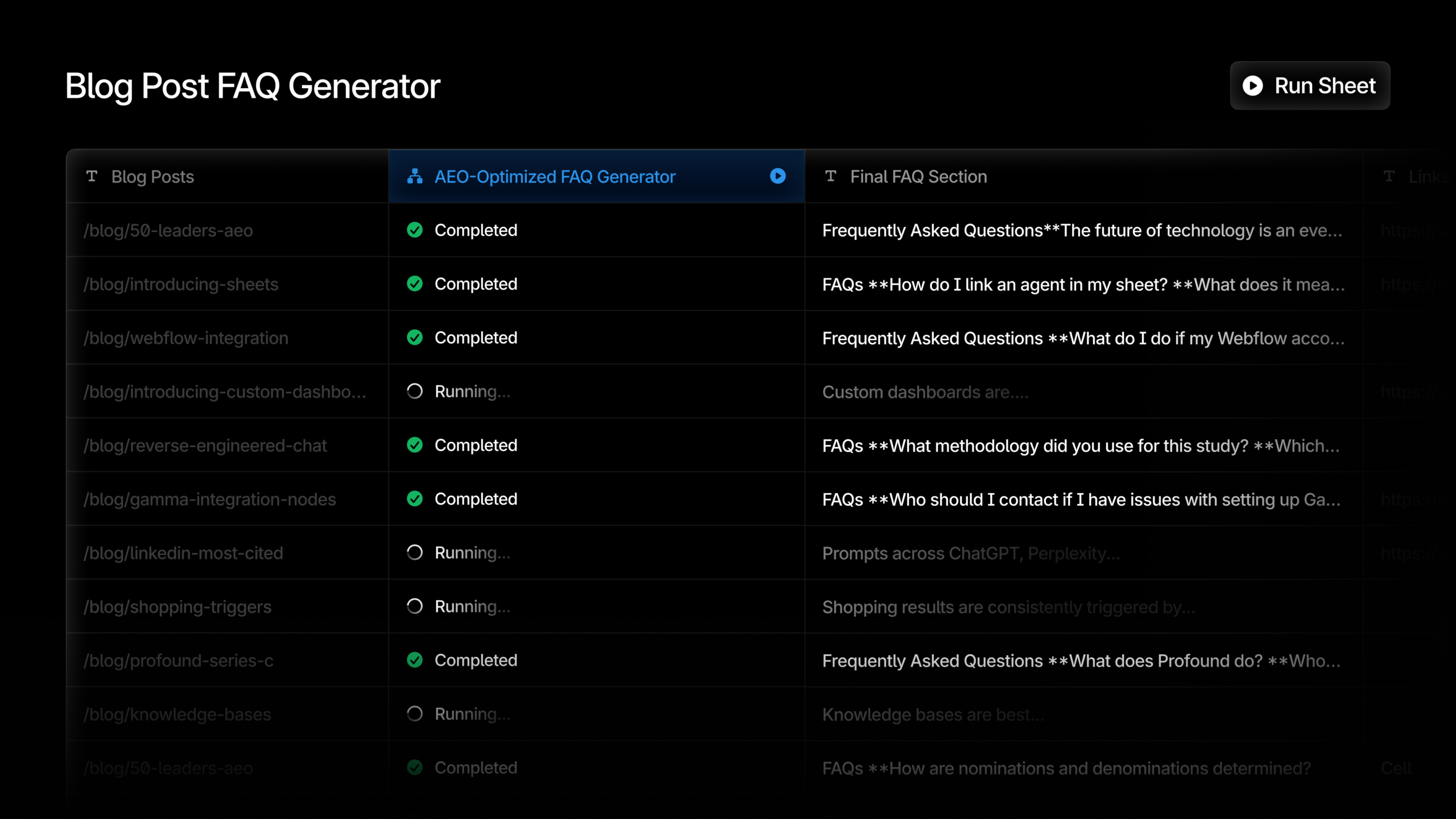
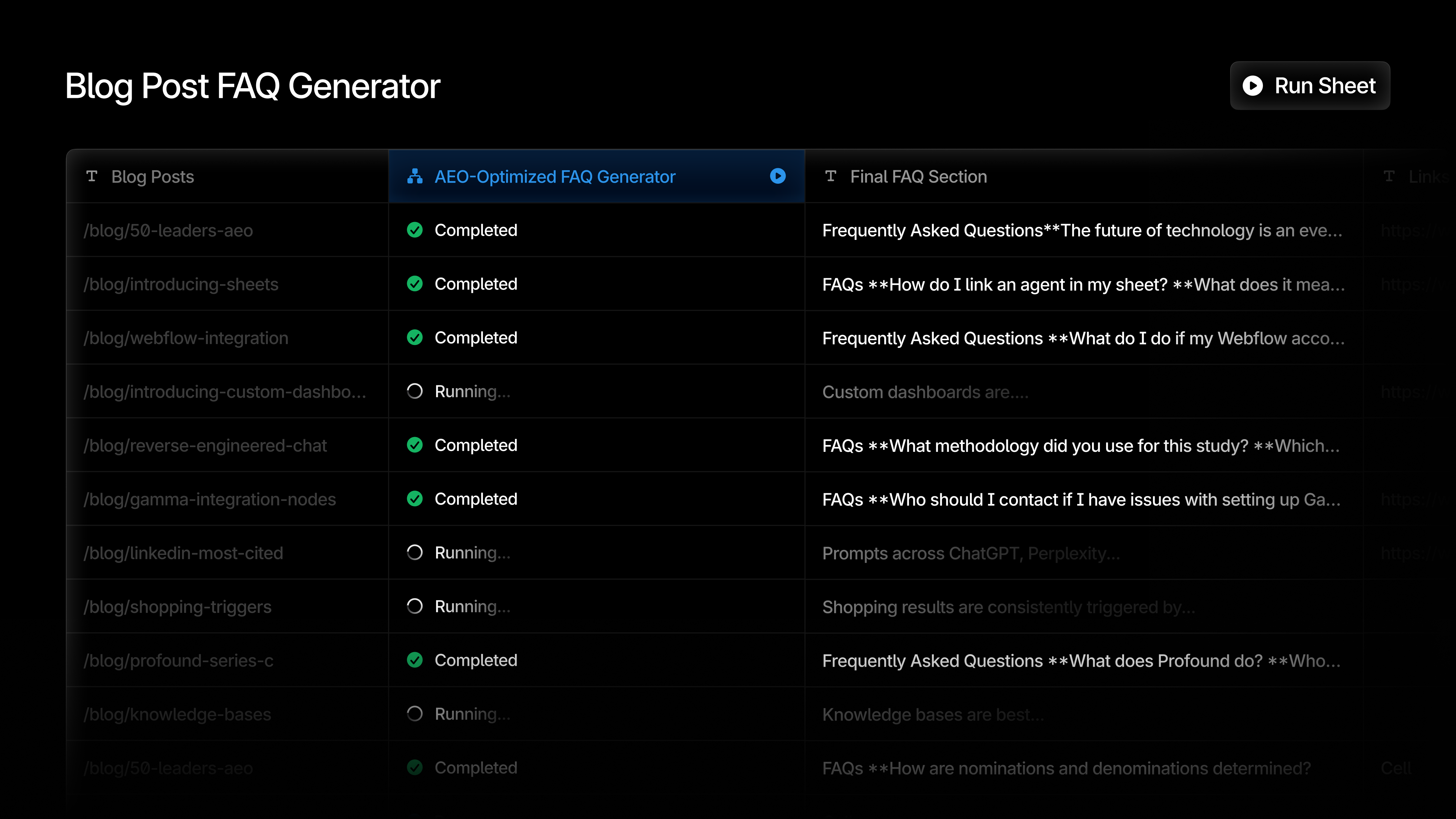
- Where an FAQ-style section would improve clarity.
- Whether the page includes authority signals, such as primary research, first-person experience, outbound citations, or specific examples.
Once I save this as a skill, it becomes an extra editor focused specifically on AI visibility and answer retrieval.
Library-level audits
Once I am ready to move beyond individual pages, I use library-level audits. These require performance data, a content inventory, a connector, or a manual export.
5. Performance triage
When I think about a traditional content audit, performance triage is usually what comes to mind. It helps me analyze a content library and identify the pages that deserve attention first.
Before I begin, I make sure Claude has access to the right data through a connector such as BigQuery or the Semrush API. If that is not available, I export the data I normally use for large-scale audits, such as traffic, clicks, engagement metrics, conversions, rankings, and related performance signals.
I ask Claude to prioritize pages that have suffered meaningful performance drops in the past six to 12 months, pages with high impressions but consistently low click-through rates, and pages that have been live long enough to rank but never gained traction.
I also define what a meaningful performance drop looks like for the site I am analyzing, because traffic patterns vary by industry, audience, and page type. Then I ask Claude for a prioritized list of what is worth investigating and why. From there, I use the page-level audits above to diagnose the problem.
If I have run this analysis before, I give Claude the previous output. That helps the skill learn the kind of prioritization and reasoning I expect.
Dig deeper: How to build a Claude Code-powered second brain for agency work
6. Topical gap analysis
I treat entities as a major part of AEO and semantic search. A topical gap analysis helps me see whether my content library has enough coverage to build authority around the entities tied to my brand.
The core question I ask is simple: what is my content library not covering that it should?
To start, I create a list of target entities. For example, at my agency, I want to be known for SEO and AEO. If I have a clear list of services or products, I can use that instead of a formal entity list.
Using Cowork or Code, I ask Claude to analyze my sitemap and compare it to those target entities. If I have a Screaming Frog export with URLs, page titles, and meta descriptions, I use that as input for a more accurate analysis.
Then I ask Claude to identify topic clusters that are missing or underrepresented based on the target entities, services, or products. If I want prioritization, I can use the Semrush MCP so Claude can check search volume for potential keywords.
Not every gap is worth filling. I filter the results against audience needs, business relevance, and editorial standards. Then I feed those decisions back into Claude so the skill produces better recommendations next time. The final list can go directly into my content creation workflow or be handed off to a content team.
I do not try to audit everything at once
I have seen content audits stall because the scope feels too large, not because the team lacks data. My preferred approach is to pick one audit and one article, run the workflow, save the skill, and use it again on the next piece.
For me, iteration is part of the value. I enjoy taking one Claude skill, improving it, and then chaining it with other skills to uncover more content opportunities. Starting small is what makes the system easier to keep using.
Inspired by this post on Search Engine Land.