Tag: Demand Gen

  • Mastering Demand Gen: B2B and Ecommerce Success Strategies

    Mastering Demand Gen: B2B and Ecommerce Success Strategies

    I’ve discovered that shifting toward Demand Gen in Google Ads transforms the focus from simple keyword targeting to more visually-driven advertising. Relying on outdated methods not only wastes money but also limits the potential of what Demand Gen can achieve. To thrive, I need to see things like a social advertiser rather than just a search advertiser.

    At SMX Next, Jack Hepp from Industrious Marketing shared valuable insights on why many businesses, particularly in the B2B sector and lead generation, find demand gen campaigns challenging, while also providing strategies that are applicable to ecommerce.
    ```json
{
  "alt": "Presentation slide on demand generation with emphasis on reaching 3 billion monthly active users.",
  "caption": "Exploring the shift in demand generation with Google's visual-first advertising approach, aiming to reach 3 billion users.",
  "description": "This presentation slide discusses a shift in demand generation, highlighting Google's focus on visual, discovery-based advertising. It outlines new opportunities, a shift from intent to interest, and unconventional advertising methods. The slide emphasizes reaching 3 billion monthly active users, reinforcing the impact of these new strategies. Presented at SMX, known for exploring search marketing advancements."
}
```

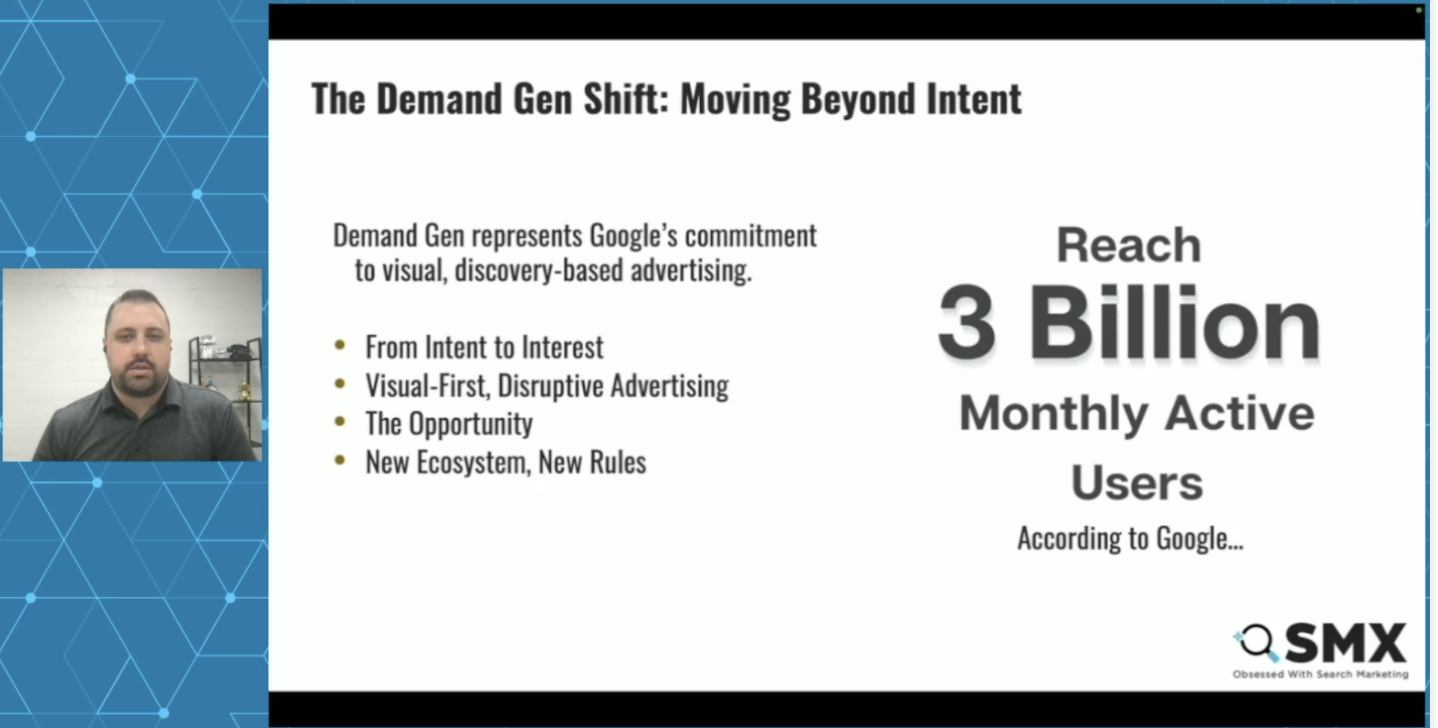
    In transitioning to Demand Gen, I see Google’s move from intent-driven to discovery-focused campaigns. This involves reaching users casually browsing on platforms like YouTube, Gmail, or Discovery feeds rather than those actively searching for my offerings. This approach means that visual assets now play the role that keywords once did.

    Aligning campaign strategies to fit this model requires abandoning old tactics. Here’s what I need to avoid:
    ```json
{
  "alt": "Split screen with a speaker on the left and a marketing formula on the right, titled 'The Winning Formula.'",
  "caption": "Discover the winning marketing strategy: Stop the scroll, define the pain, and provide a solution.",
  "description": "This image features a split screen layout, with a speaker on the left and a marketing strategy formula on the right. The formula, titled 'The Winning Formula,' includes the steps: Stop the Scroll, Define the Pain, and Provide a Solution. The image is part of a presentation by SMX, recognizable by its branding on the bottom right. The blue geometric background adds a professional touch to the composition."
}
```
    • Expecting bottom-of-funnel CPAs from mid-funnel traffic.
    • Employing imprecise, broad targeting.
    • Running dull, uninspired creative.
    • Lack of optimization know-how without negative keywords.

    Seeing success demands that I adopt a mindset similar to social advertising.

    Demand Gen structure consists of campaigns governed by broad parameters (like bidding strategies and conversion goals) and ad groups that dictate audience specifics. Each ad group learns independently, which allows for finely tuned audience segmentation.
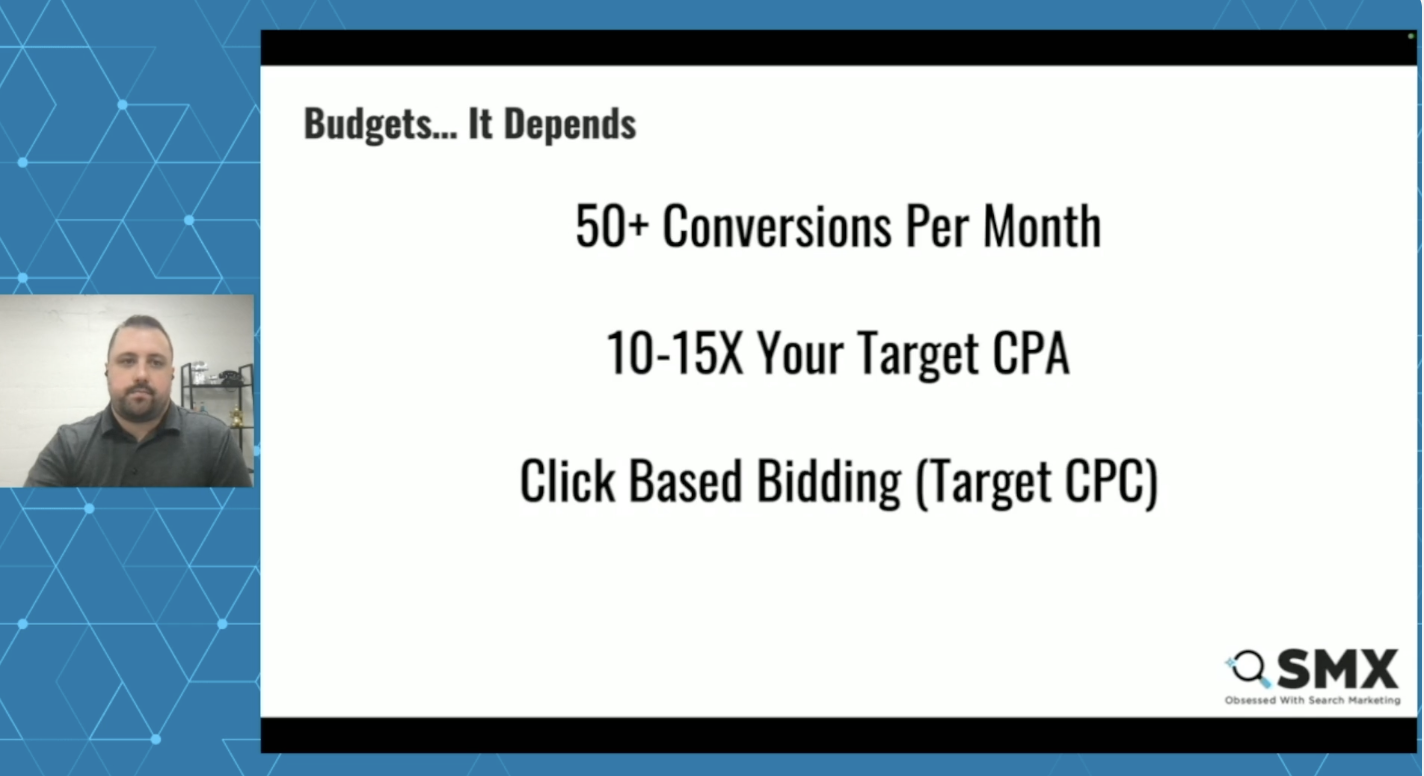
    ```json
{
  "alt": "Presentation slide with guidelines for budgeting conversions per month and bidding strategies.",
  "caption": "Explore effective budgeting strategies with guidelines on monthly conversions and bidding techniques in this insightful presentation.",
  "description": "This presentation slide discusses budgeting strategies, highlighting the need for over 50 conversions per month and recommending a budget of 10-15 times the target CPA. It suggests click-based bidding (target CPC) as a strategy. The slide is part of an SMX presentation, illustrated with geometric patterns alongside the speaker's image, adding a professional touch to the analysis of digital marketing practices."
}
```

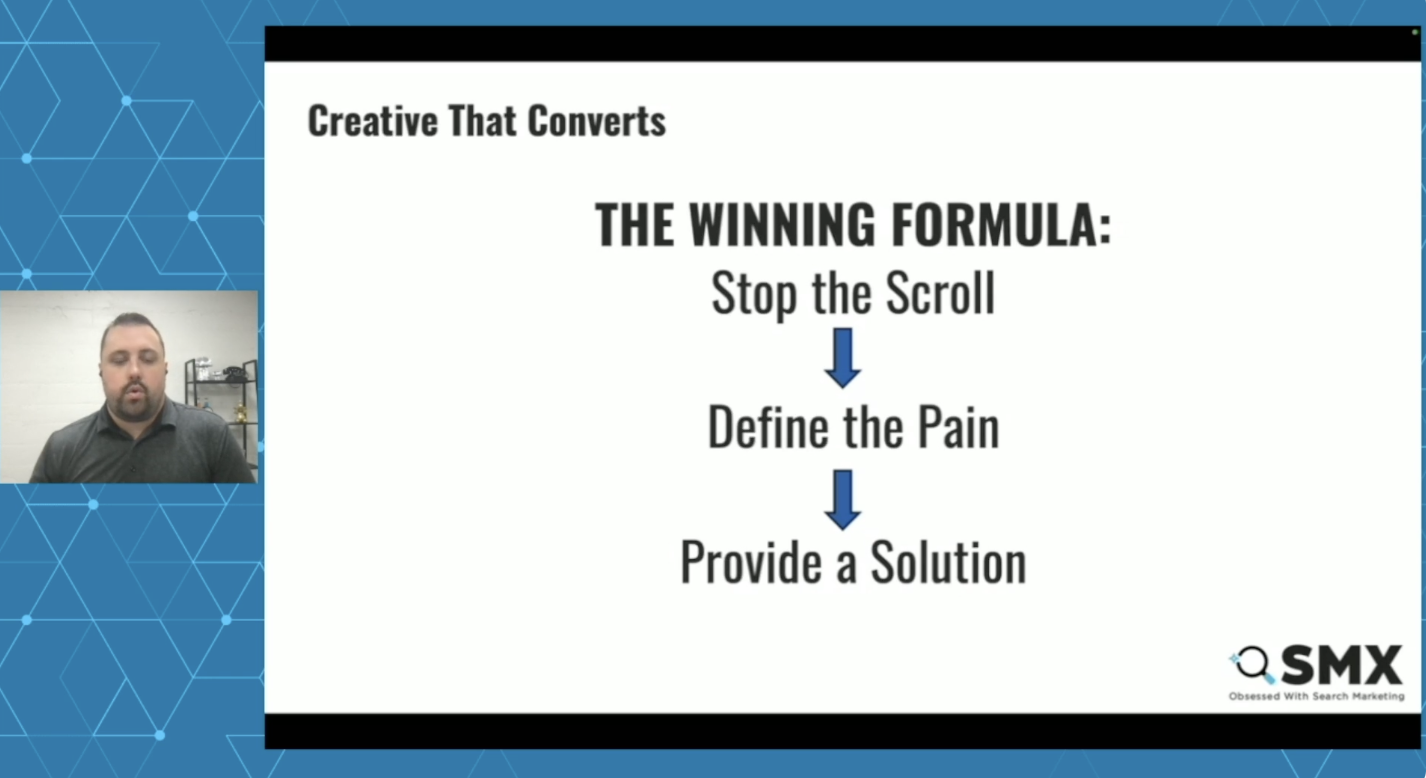
    When crafting interruption-based creative, my goal is to catch attention in the first 3-4 seconds. It’s about highlighting a specific pain point and offering a solution in a way that turns casual browsers into engaged prospects.

    Ensuring my visual content aligns with the customer journey is crucial:
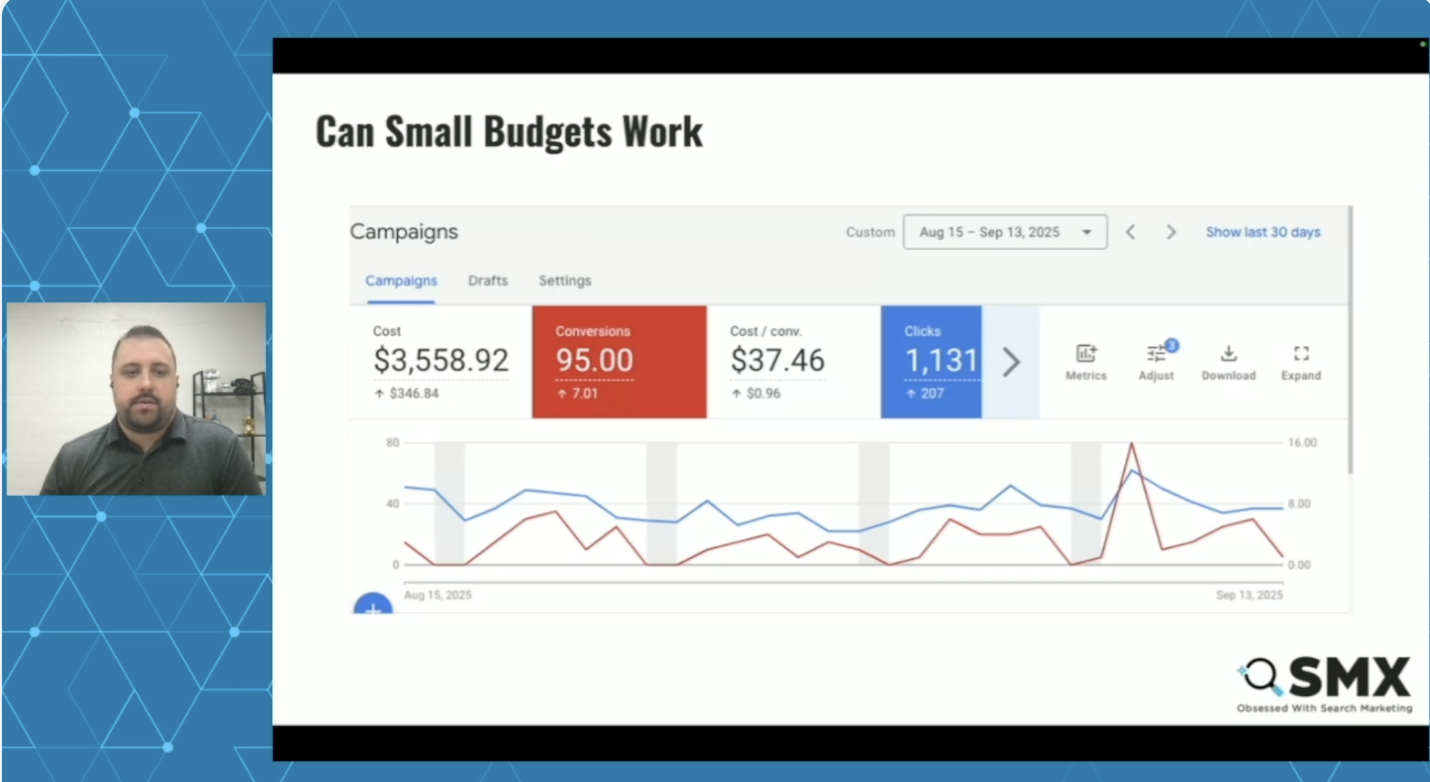
    ```json
{
  "alt": "Presentation slide showing ad campaign performance metrics with speaker on the left.",
  "caption": "Exploring the potential of small budgets in ad campaigns: A detailed analysis of key performance metrics.",
  "description": "The image is a presentation slide titled 'Can Small Budgets Work' displaying digital ad campaign metrics such as cost, conversions, cost per conversion, and clicks within a specified date range. A graph below illustrates performance trends. A speaker is visible on the left, indicating a video presentation. The event is associated with SMX, focused on search marketing strategies."
}
```
    • Cold audiences benefit from educational material.
    • Warm audiences engage with case studies and webinars.
    • Hot audiences are ready for demos or purchase offers.

    When my creative addresses specific problems with bold visuals and compelling headlines, the engagement naturally increases. For instance, targeting specific challenges like cybersecurity for small businesses makes my ads stand out.

    Bidding in Demand Gen focuses on campaign-specific goals. To gather the necessary data, I aim for significant monthly conversions and budget accordingly to enable optimal performance.
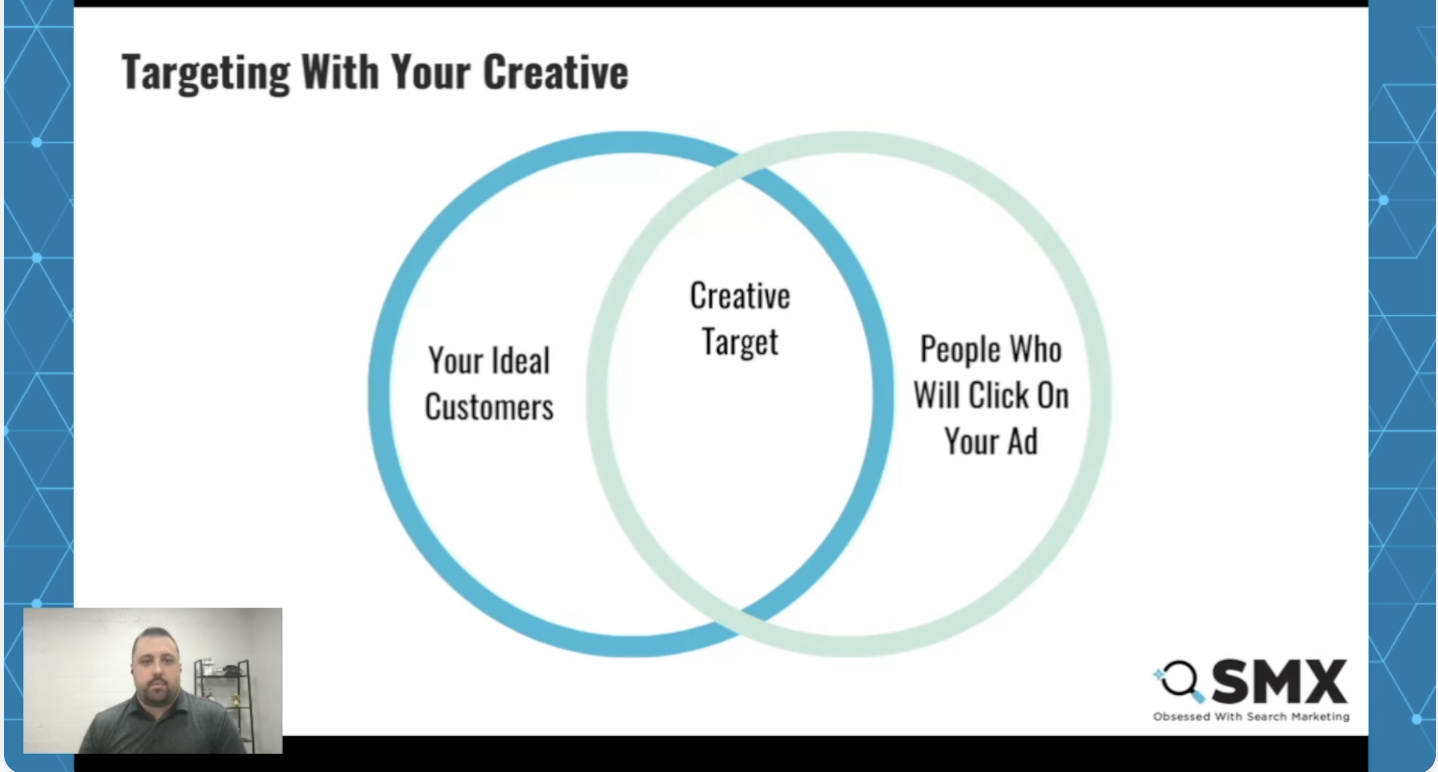
    ```json
{
  "alt": "Venn diagram showing overlapping circles labeled Your Ideal Customers and People Who Will Click On Your Ad with Creative Target in the middle.",
  "caption": "Finding the sweet spot in advertising: Target the right audience by focusing on the creative intersection of your ideal customers and active ad clickers.",
  "description": "This image presents a Venn diagram with two overlapping circles. The left circle is labeled 'Your Ideal Customers' and the right 'People Who Will Click On Your Ad,' illustrating the concept 'Creative Target' as their intersection. This suggests the importance of targeting ads to the right audience. Below the diagram, the SMX logo with 'Obsessed With Search Marketing' is shown, adding context to the marketing theme."
}
```

    Even small budgets can work if strategically planned. By directing efforts at mid-funnel activities, I can achieve the necessary conversions for meaningful insights.

    In building the right audiences, it’s about balance. I avoid extremes of too broad or too narrow segments and focus on custom segments complemented by lookalike data, optimizing as success dictates.
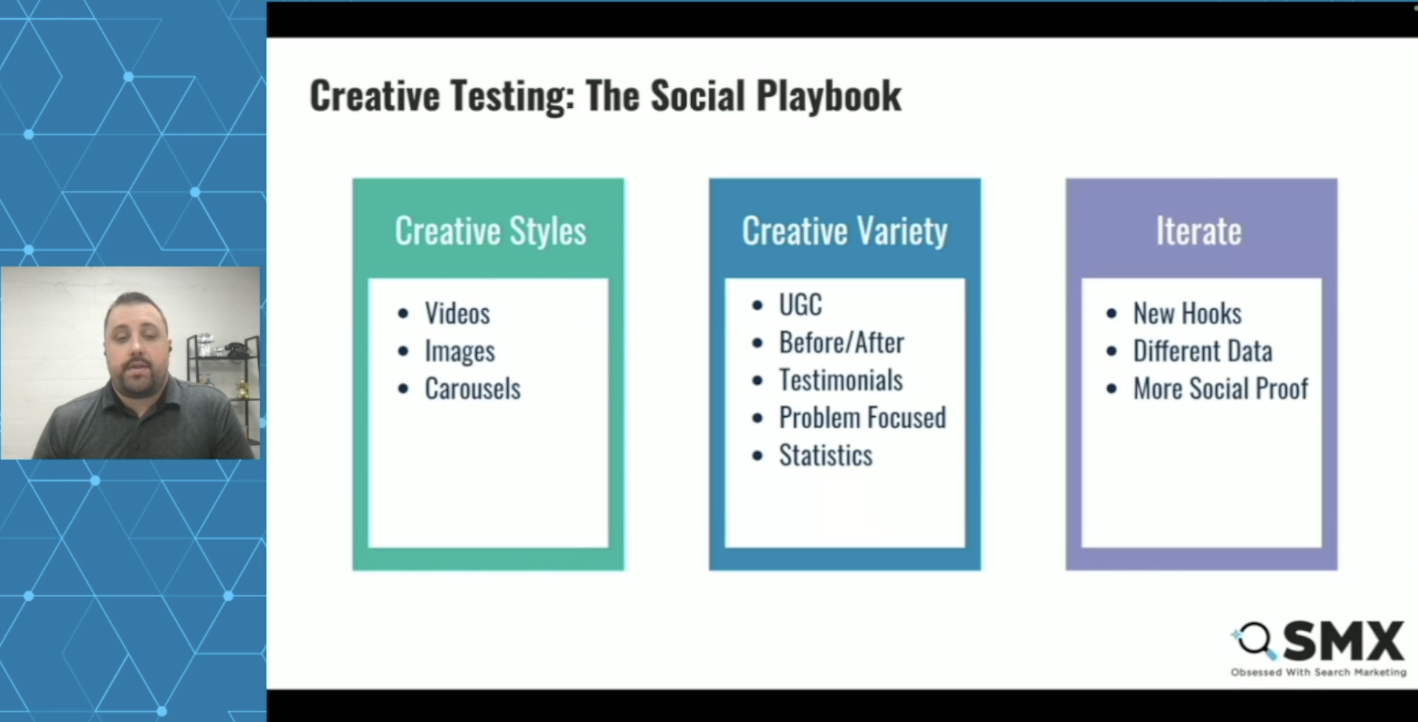
    ```json
{
  "alt": "Presentation slide titled 'Creative Testing: The Social Playbook' shows creative styles, variety, and iteration strategies.",
  "caption": "Exploring 'Creative Testing: The Social Playbook,' this slide unveils diverse styles and strategies for social media marketing success.",
  "description": "This presentation slide, titled 'Creative Testing: The Social Playbook,' outlines strategies for effective social media marketing. It covers 'Creative Styles' such as videos, images, and carousels; 'Creative Variety,' including user-generated content and testimonials; and 'Iterate' with new hooks and social proof. Perfect for those seeking to boost online engagement. Brand logo 'SMX' is visible, emphasizing expertise in search marketing."
}
```

    Aligning the messaging of my creative with the buyer’s stage ensures Google effectively targets potential customers. This strategy steering focuses more on creative, audience, and the offer itself.

    Using targeted exclusions efficiently helps me concentrate effort on engaging users without overly restricting potential reach. It’s a strategic rather than blanket approach.
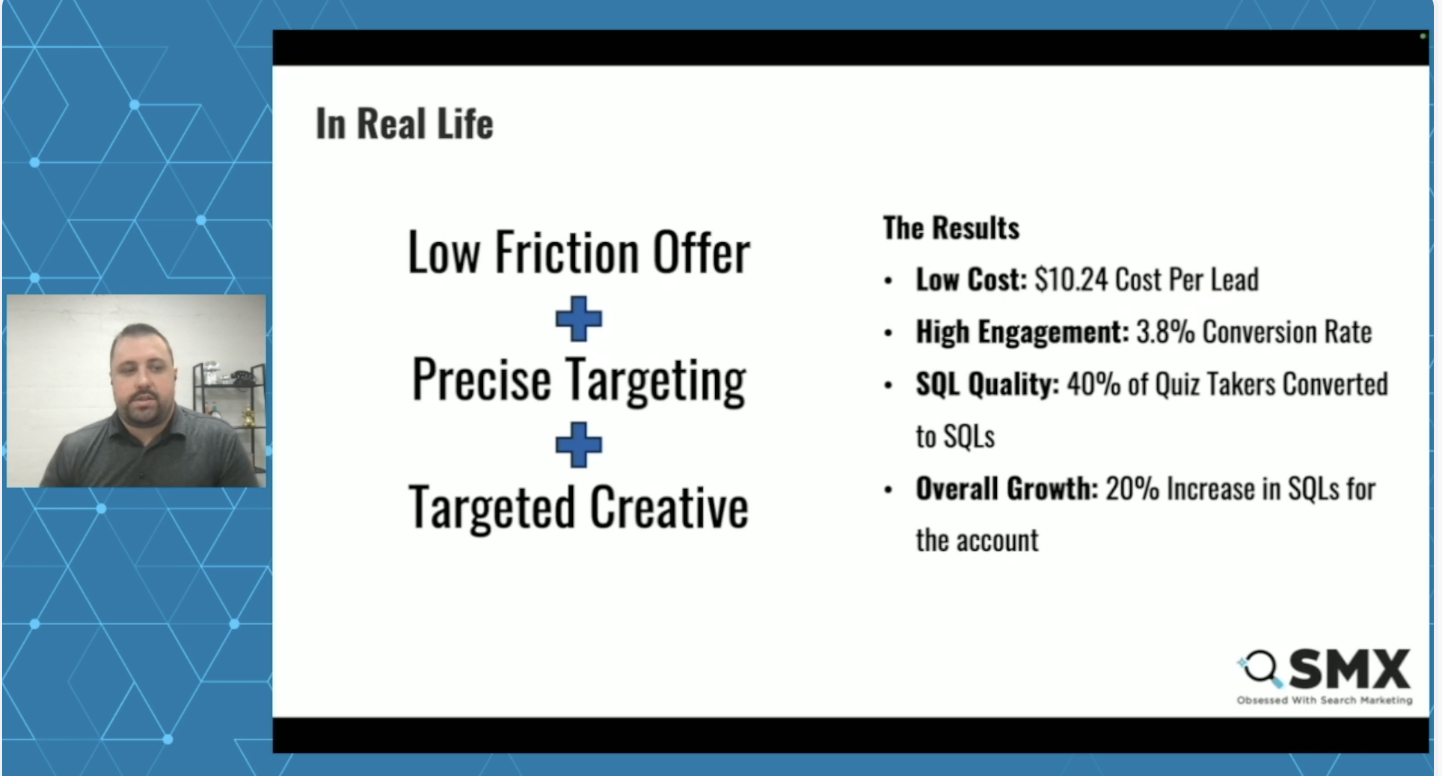
    ```json
{
  "alt": "Presentation slide highlighting low friction offer strategies, precise targeting, and creative targeting with performance metrics.",
  "caption": "Maximize your marketing efficiency with a low friction offer, precise targeting, and creative strategies, achieving impressive results in cost and conversions.",
  "description": "This presentation slide showcases a marketing strategy focused on 'Low Friction Offer,' 'Precise Targeting,' and 'Targeted Creative.' The results displayed include a cost per lead of $10.24, a conversion rate of 3.8%, 40% of quiz takers converting to SQLs, and a 20% increase in SQLs overall. The slide is a part of an SMX presentation, emphasizing techniques for effective search marketing, presented beside a speaker on a blue geometric background."
}
```

    Optimization in Demand Gen focuses on creatively testing different formats and refining audience targeting. I continually test offers to match audience readiness and optimize post-click experiences to enhance campaign effectiveness.

    In a real-world application, a telecommunications company achieved impressive outcomes by clearly defining its offer, targeting, and creative messages. The results highlighted the critical importance of aligning these elements for Demand Gen success.

    Here are the key takeaways for any campaign I plan next:

    • Align creative content with my target customer’s stage in their journey.
    • Identify and target audiences at appropriate points in their journey.
    • Continuously test and refine both creative elements and offers to amplify impact.

    Inspired by this post on Search Engine Land.


    crushpress.ai community screenshot
  • Harnessing AI: Google Transforms Lookalike Audiences

    Harnessing AI: Google Transforms Lookalike Audiences

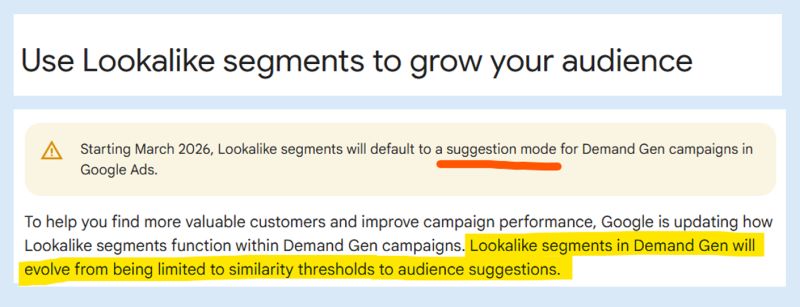
    I’ve noticed some exciting changes coming to Google Demand Gen campaigns. Starting in March 2026, Lookalike audiences will no longer be the rigid framework we’re used to. Instead, they’ll serve as optimization signals, ushering in a new era of AI-driven campaign enhancements.

    Google is updating its Help documentation to reflect this transformation where Lookalike segments shift from strict targeting to a more flexible, AI-enhanced recommendation model.

    Understanding the Transition. Previously, I would choose a specific similarity tier (narrow, balanced, or broad) to dictate exactly who my campaigns targeted. That’s changing.

    Now, Google will use these tiers as signals. The system will intelligently expand its reach beyond my chosen Lookalike lists to engage users predicted to convert.

    Behind the Change. This transition turns Lookalikes from a barrier into an enabling tool. It allows Google’s automation to use intent signals to explore audience performance well beyond predefined limits.

    Interaction with Optimized Targeting. The new Lookalike-as-signal approach resembles Optimized Targeting but doesn’t replace it. When they’re layered, Google mentions it could further expand my reach.

    In practice, this means multiple automation signals will be at play, providing the algorithm more freedom to either reduce CPA or boost conversion rates.

    Opting Out. If I prefer the traditional Lookalike approach, I can opt out via a dedicated form, preserving the old targeting behavior. Absent that, campaigns automatically switch to the new format.

    Why This Matters. This update affects the control I have over ad targeting in Google Demand Gen campaigns. Lookalike audiences will now guide rather than confine targeting, significantly influencing scale, CPA, and performance.

    ```json
{
  "alt": "Google Ads update on Lookalike segments for Demand Gen campaigns starting March 2026.",
  "caption": "Exciting changes are coming to Google Ads in 2026! Lookalike segments will shift to a suggestion mode, enhancing your marketing strategies.",
  "description": "This image highlights an update from Google Ads regarding Lookalike segments in Demand Gen campaigns. Starting March 2026, these segments will default to a suggestion mode, moving beyond similarity thresholds to audience suggestions. This change aims to help advertisers find more valuable customers and enhance campaign performance. Key phrases such as 'Lookalike segments,' 'Demand Gen campaigns,' and 'audience suggestions' are emphasized in the text."
}
```

    Additionally, it indicates an industry-wide move toward automation, similar to shifts driven by Meta Platforms. I’ll need to test thoroughly, rethink strategies, and decide whether to embrace the added reach or opt out for tighter targeting.

    Industry Context. Google’s strategy echoes a broader trend toward AI-first audience expansion, aligned with similar adaptations from Meta in recent years. The advertising landscape is increasingly prioritizing machine-led optimization over detailed manual control.

    The Reasoning. According to digital marketer Dario Zannoni, there are two main reasons for Google’s shift:

    • Stringent Lookalike targeting can limit scale and hinder performance in conversion-focused campaigns.
    • The complexity of maintaining high-quality similarity models makes automation a more viable option.

    The Bottom Line. For performance marketers like me, this marks another step towards automation-centric strategies. Reduced control might be daunting, but similar platform changes have historically yielded performance gains. A fresh testing cycle is on the horizon as I examine the impact of expanded Lookalike signals on CPA, reach, and conversions.

    Observed and Shared. Dario Zannoni initially highlighted this update on LinkedIn.

    Explore Further. For more information, check out Google’s guide to using Lookalike segments to grow your audience.


    Inspired by this post on Search Engine Land.


    crushpress.ai community screenshot
  • Google’s Demand Gen: Unlock Shoppable and Measurable Ads

    Google’s Demand Gen: Unlock Shoppable and Measurable Ads

    I’m excited to share that Google’s Demand Gen updates are making video ads even more shoppable and measurable across platforms like YouTube and Google. With these enhancements, I can now explore new ways to engage with audiences and increase conversions.

    Google is pushing more Demand Gen features into mainstream use, particularly boosting shoppable and travel ads. It’s clear to me that Google is committed to creating a comprehensive performance channel, merging discovery, video, and commerce on both YouTube and Google surfaces.

    What’s new:

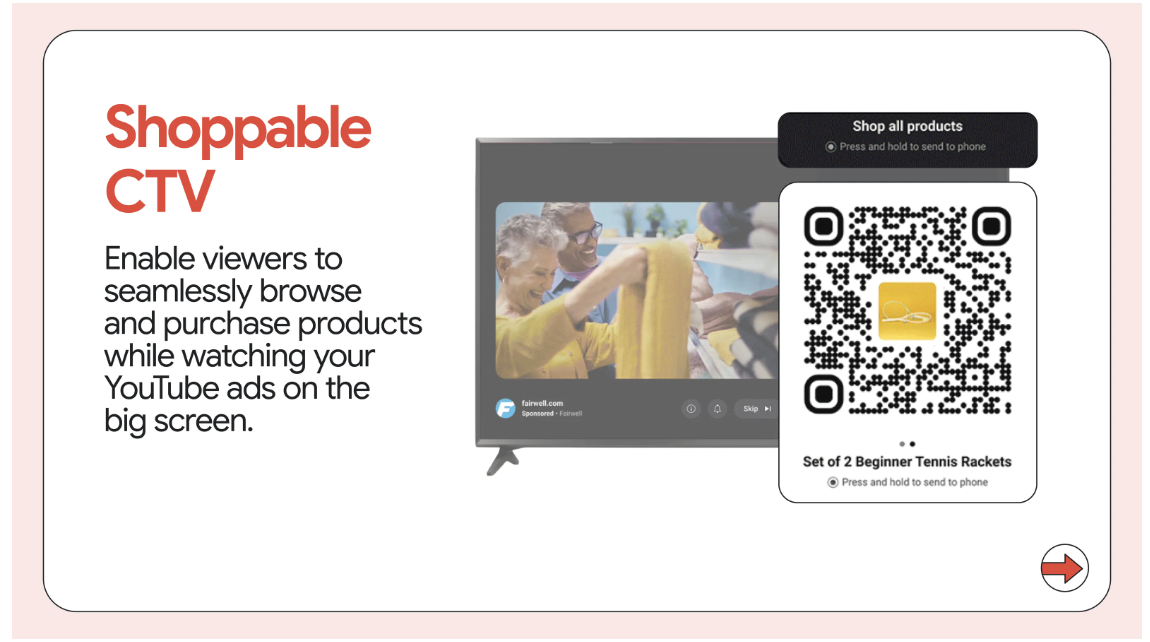
    • Shoppable CTV is now available through Demand Gen, giving viewers the option to browse and purchase products directly from YouTube ads on connected TVs. It’s a game-changer for anyone looking to enhance their advertising strategy.
    ```json
{
  "alt": "Shoppable CTV ad with QR code and smart TV displaying a video.",
  "caption": "Transform your TV into a shopping ally with Shoppable CTV, enabling seamless product browsing with QR codes directly from your screen.",
  "description": "The image showcases a Shoppable CTV advertisement featuring a QR code for product shopping directly from TV screens. A smart TV displays an ad video, while to the right, a QR code invites interaction to explore products such as beginner tennis rackets. The ad emphasizes the ease of browsing and purchasing items while watching YouTube ads on a big screen. Keywords: Shoppable CTV, QR code, smart TV, YouTube ads, product browsing."
}
```
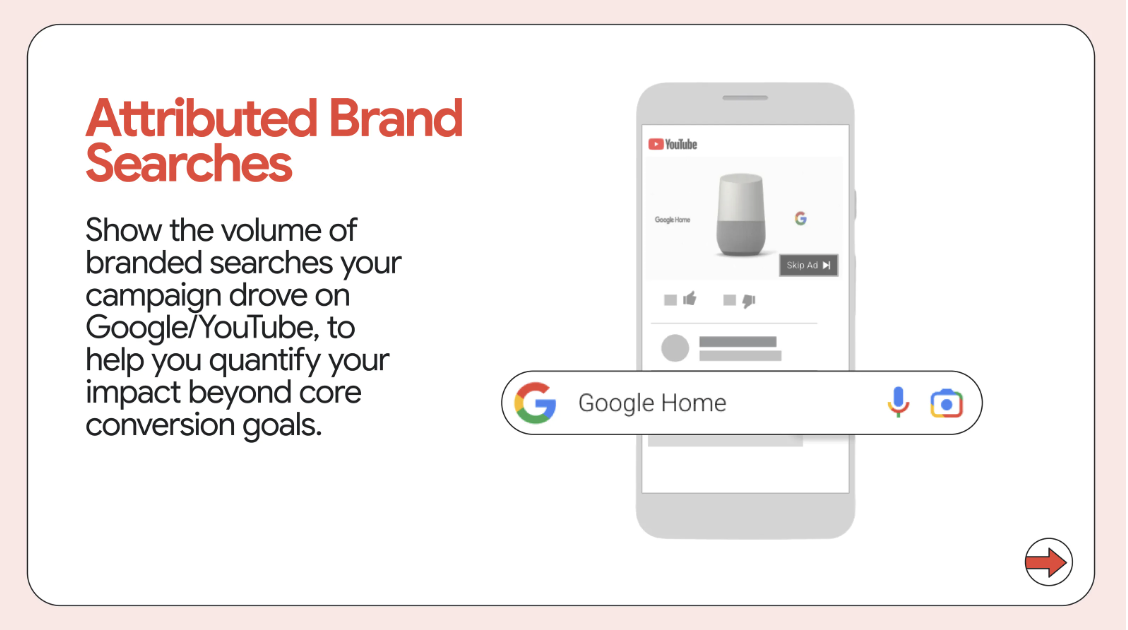
    • Attributed Branded Searches provide advertisers, like me, with insights into how campaigns influence brand search activity on Google and YouTube. Activation requires a Google rep, and it’s a feature that promises to add tremendous value.
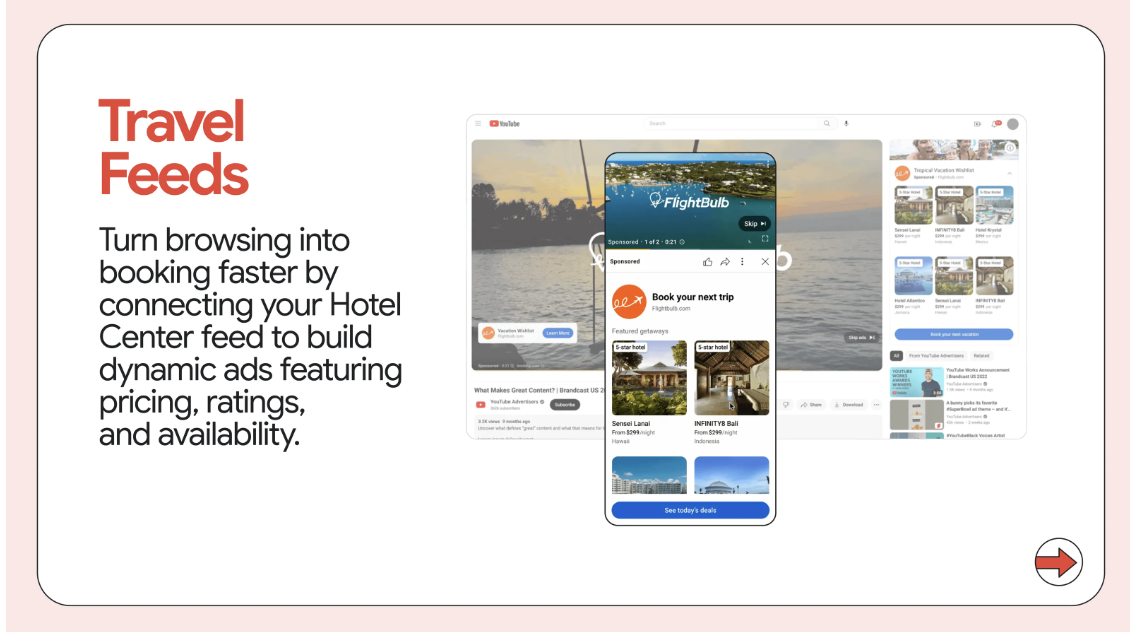
    • Travel Feeds let advertisers like me connect Hotel Center feeds to create dynamic video ads featuring real-time pricing, ratings, and availability.
    ```json
{
  "alt": "Illustration showing a smartphone with a YouTube ad for Google Home and text about attributed brand searches.",
  "caption": "Maximize your brand's visibility by leveraging attributed brand searches on Google and YouTube to enhance campaign effectiveness.",
  "description": "This image illustrates the concept of attributed brand searches, showcasing a smartphone displaying a YouTube ad for Google Home. The design includes text on measuring the impact of branded searches driven by marketing campaigns on Google and YouTube. The image emphasizes tracking beyond core conversion goals, providing valuable insights for digital marketing success. Keywords: attributed brand searches, YouTube ad, Google Home, digital marketing, campaign impact."
}
```

    By the numbers:

    • According to Google, Demand Gen campaigns featuring TV screens result in 7% more conversions at the same ROI. That’s a significant increase in performance for anyone leveraging these tools.
    • For example, LG Electronics reported a 24% higher conversion rate compared to paid social media, while reaching high-value customers at a 91% lower CPA.

    Why we care. With these updates, Demand Gen becomes more competitive with paid social channels, offering actionable and measurable solutions. Shoppable CTV transforms TV impressions into direct sales opportunities, while attributed branded search proves Demand Gen’s effectiveness beyond a simple last-click model. Travel feeds, on the other hand, streamline the process from browsing to booking.

    All these features offer advertisers like me the chance to drive incremental conversions, engage high-value audiences at a lower CPA, and better justify upper-funnel investments with clearer performance metrics — all within Google’s integrated ecosystem.

    ```json
{
  "alt": "Advertisement for Travel Feeds showing dynamic hotel booking ads on a mobile device within a YouTube interface.",
  "caption": "Discover how Travel Feeds effortlessly turns browsing into booking with dynamic, interactive ads. Elevate your hotel's visibility with engaging content and real-time availability.",
  "description": "The image features a travel advertisement highlighting 'Travel Feeds', showing a mobile device with dynamic hotel booking ads over a YouTube interface. The ad promotes connecting Hotel Center feeds to create ads displaying pricing, ratings, and availability. The design suggests a seamless integration of advertisements into user experiences, enhancing booking efficiency for travelers. Keywords include Travel Feeds, hotel booking, dynamic ads, and YouTube advertising."
}
```

    Between the lines. It’s evident that Google is positioning Demand Gen as a formidable alternative to paid social by utilizing premium video resources, first-party data, and enhanced measurement. This move is particularly strategic as advertisers seek scalable performance beyond traditional social media platforms.

    Bottom line. With advancements like shoppable CTV, reinforced brand attribution, and travel-focused automation, Demand Gen is evolving into a versatile performance tool — a significant aspect of Google’s strategy to secure larger budgets higher up the advertising funnel.

    Dig deeper. Explore the latest product features in January’s Demand Gen Drop.


    Inspired by this post on Search Engine Land.

    crushpress.ai community screenshot
  • Maximize Ecommerce Success with Demand Gen & Performance Max

    Maximize Ecommerce Success with Demand Gen & Performance Max

    When Google introduced Demand Gen campaigns in 2023, I saw them as a promising way to boost engagement across platforms like YouTube, Discover, and Gmail.

    Initially, they felt experimental, straddling the line between awareness and performance, but they’ve come a long way since.

    Now, the creative flexibility and enhanced audience control make Demand Gen a go-to campaign type for my ecommerce clients.

    This strategy allows me to scale revenue in a controlled manner, maintaining brand consistency while testing creative approaches to drive conversions.

    I’ve found that Demand Gen delivers the best results when strategically paired with Performance Max and Search campaigns.

    Advertising with Demand Gen is ideal if you crave more control.

    One major drawback of Performance Max is its lack of transparency and manual control.

    If precise targeting, placement, or creative control is essential, Demand Gen stands out as the better option.

    Performance Max auto-generates ads from your uploads, relying on Google’s AI to mix and match for the best performance.

    This makes it crucial to provide top-notch creative assets.

    For example, a fitness brand might create separate asset groups for products like leggings, shorts, and vests.

    While this helps target relevant audiences, the control isn’t exhaustive.

    However, Demand Gen offers far superior flexibility.

    It allows me to upload, preview, and tweak ad combinations before launch, adapting each creative to its unique placement.

    For instance, I can customize YouTube ads for in-feed, in-stream, and Shorts placements.

    This control is perfect for ecommerce brands focusing on creative precision, message testing, and maintaining a strong visual identity.

    Dig deeper: The Google Ads Demand Gen playbook

    Using Demand Gen alongside Performance Max can be incredibly effective if you leverage their roles within the customer journey. They enhance each other rather than compete.

    Demand Gen builds awareness and sparks interest by reaching higher-funnel audiences before they actively start product searching.

    Conversely, Performance Max focuses on converting lower-funnel users who are primed to purchase.

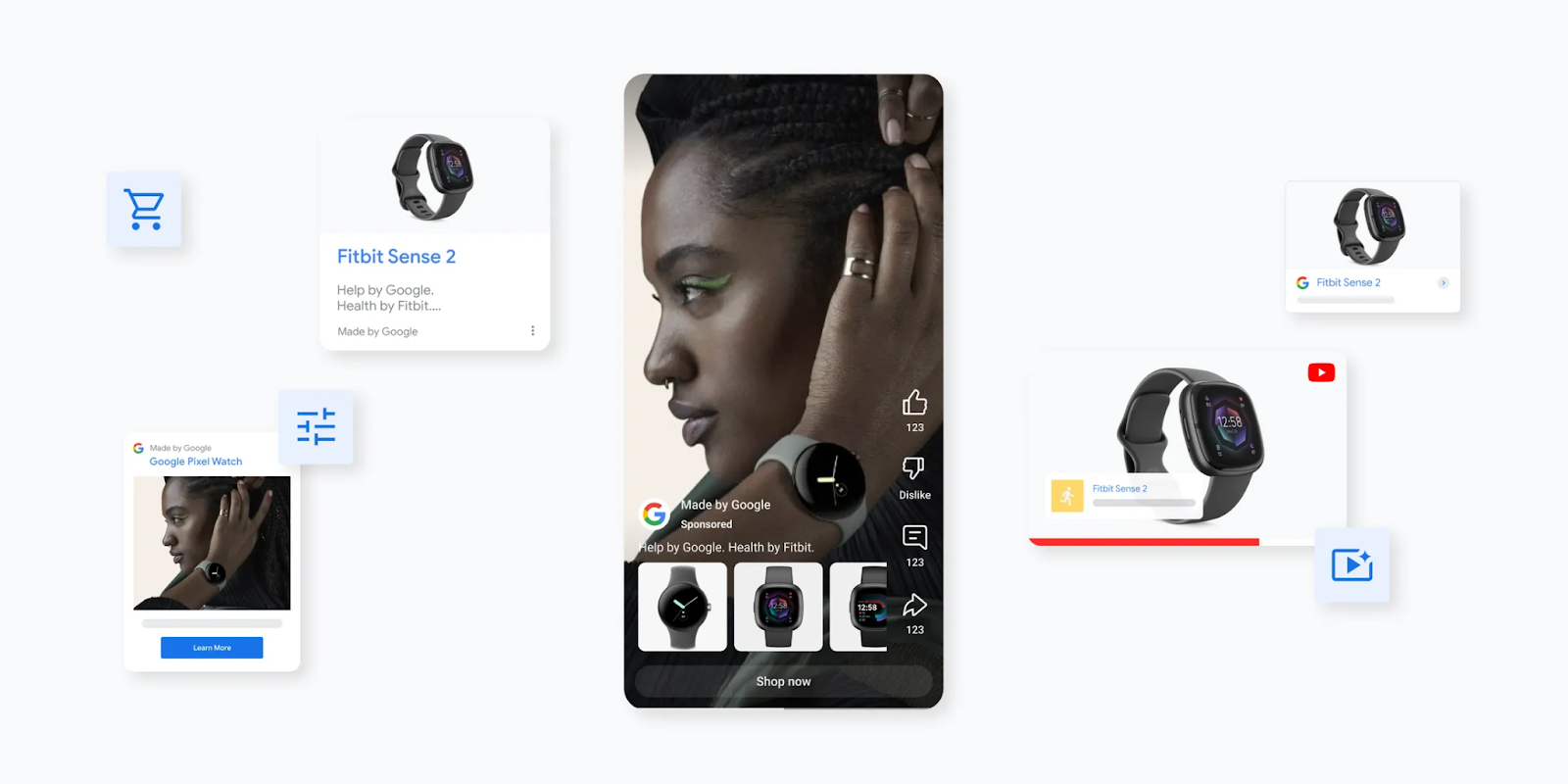
    ```json
{
  "alt": "Collage featuring the Google Pixel Watch and Fitbit Sense 2 with various display cards and interactive elements.",
  "caption": "Discover seamless integration with Google Pixel Watch and Fitbit Sense 2. Explore features and styles that keep you connected and healthy, right at your fingertips.",
  "description": "The image showcases a collage of the Google Pixel Watch and Fitbit Sense 2, emphasizing their sleek design and advanced functionality. The central focus is a profile of a person interacting with the Google Pixel Watch, surrounded by smaller display cards of the Fitbit Sense 2. Interactive social media elements like likes and dislikes hint at user engagement. The arrangement suggests an interactive and user-friendly interface, highlighting features like health tracking and connectivity options. Keywords: Google Pixel Watch, Fitbit Sense 2, health tech, smartwatches."
}
```

    For example, a fitness retailer might utilize Demand Gen for lifestyle videos and discovery ads promoting their latest activewear.

    When a potential customer begins to research or exhibit purchase intent, Performance Max engages with tailored Shopping and Search ads to finalize the sale.

    I’ve set up feed-only Performance Max campaigns, providing only a product feed within the asset group.

    This restricts Performance Max activities to Shopping placements, focusing it sharply on direct conversions.

    Meanwhile, Demand Gen operates across platforms like YouTube, Gmail, Discover, and Shorts, covering the upper and mid-funnel with more visual, creative content focused on awareness.

    This configuration minimizes overlap between campaign types while ensuring user engagement throughout the funnel, from brand discovery to purchase.

    For larger accounts with flexible budgets, this dual structure drives holistic performance and clearer attribution.

    In contrast, smaller accounts seeking efficiency should prioritize mastering high-intent campaigns before layering in Demand Gen once the core conversions are stable.

    The diverse campaign types now offer advertisers more flexibility than ever, yet it requires understanding Google’s restructuring of video and discovery products.

    Dig deeper: Why Demand Gen is the most underrated campaign type in Google Ads

    Since July 2025, Google’s Video Action Campaigns (VACs) have been replaced by Demand Gen.

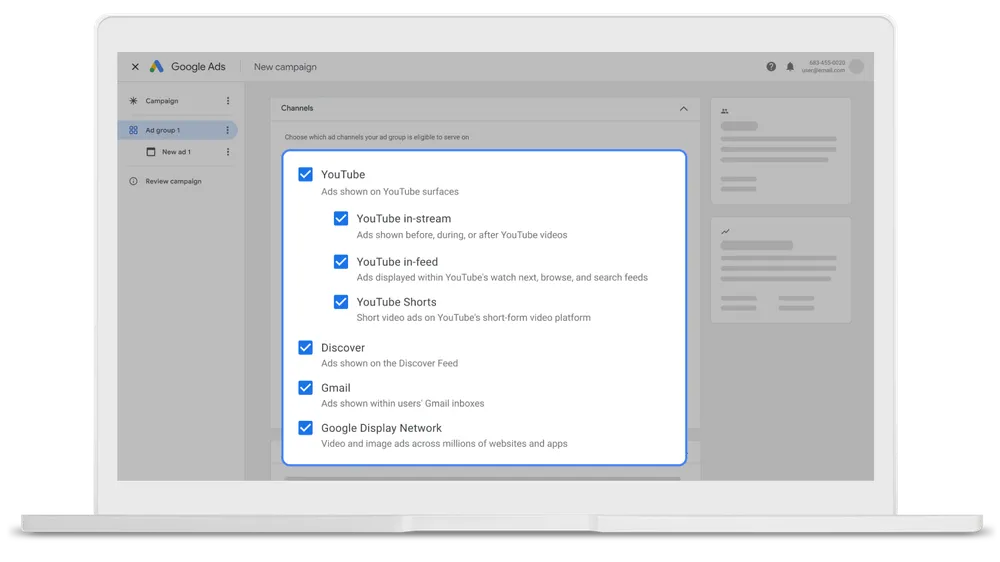
    It streamlines Google’s visual placements into one campaign type, including YouTube in-stream, Shorts, in-feed, Gmail, and Discover.

    This change is significant. VAC was successful for ecommerce, particularly for conversion-centric video. Its removal underscores Google’s encouragement to embrace Demand Gen.

    The advantage is that Demand Gen provides stronger creative control and diverse testing options across YouTube placements.

    If you previously ran VAC campaigns, they are now under Demand Gen. Ensure your top-performing assets and audiences have migrated correctly, then use the new controls to optimize performance.

    Audience control is a significant benefit of Demand Gen, and it’s a reason why I consistently use it for ecommerce.

    Demand Gen allows precise audience creation, letting me decide who sees the ads.

    I can select placements, merge audience types, and allocate the budget strategically.

    It’s the only Google Ads campaign type supporting lookalike audiences, valuable for brands focused on acquiring quality leads.

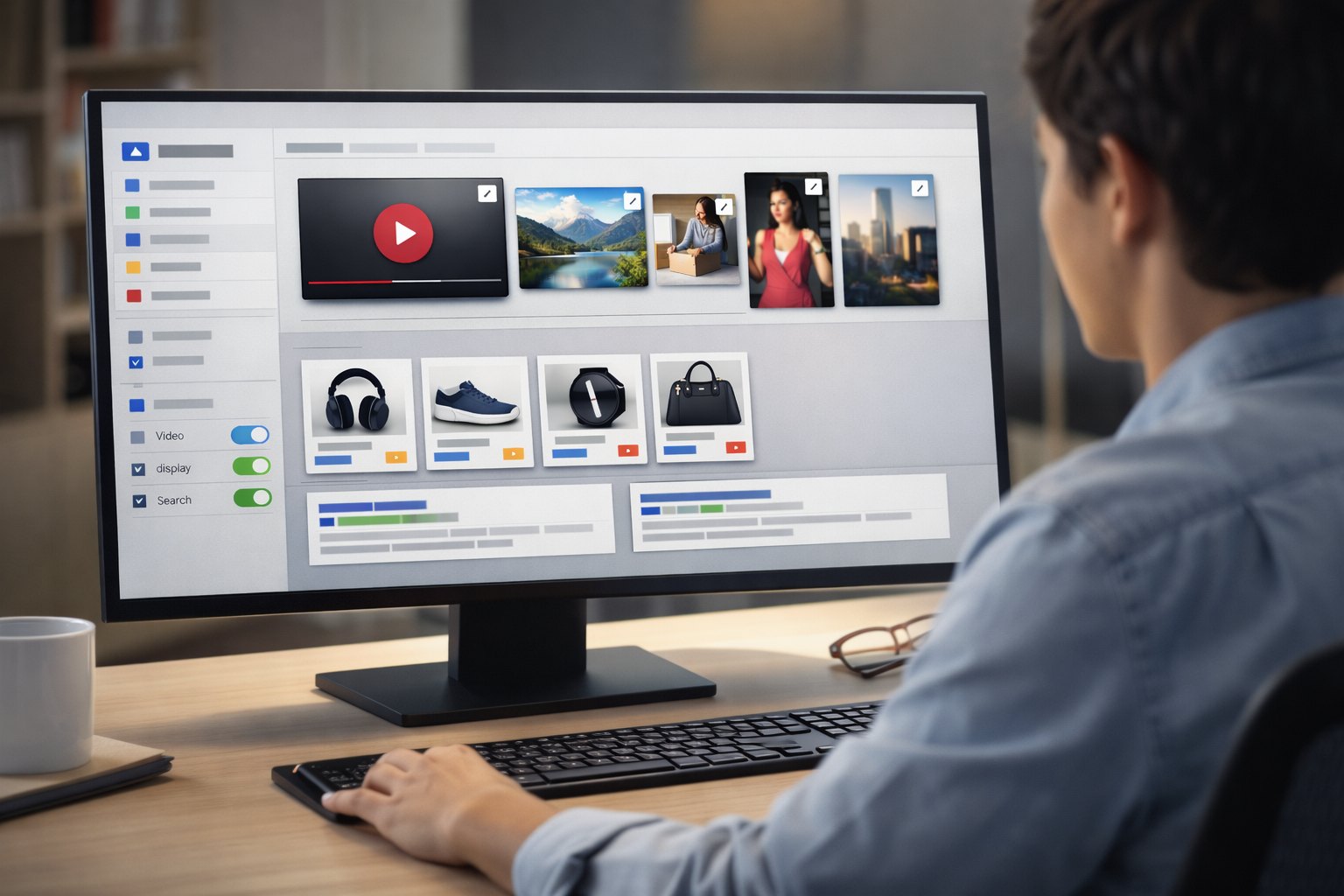
    ```json
{
  "alt": "Google Ads campaign settings screen showing various ad channel options.",
  "caption": "Maximize your reach by choosing from various Google Ads channels like YouTube, Discover, and Gmail to tailor your advertising strategy.",
  "description": "This image displays a Google Ads campaign setup screen on a laptop. The interface allows users to select ad channels including YouTube, Discover, Gmail, and the Google Display Network. Each option is highlighted with checkboxes that can be selected to target specific audiences and surfaces. This setup enhances the versatility and reach of digital marketing campaigns, providing advertisers with the tools to optimize ad delivery across multiple Google platforms."
}
```

    While Performance Max utilizes audience signals over fixed targeting, Demand Gen excels for control, testing, and segmentation strategies.

    In mid-2025, Google rolled out an open beta for advertisers to opt out of specific Demand Gen channels manually.

    This means I can now control ad display, excluding Discover or YouTube Shorts if they don’t align with my objectives or creative format.

    This small but significant update offers more control, a feature often lacking in many of Google’s automated campaign types.

    Dig deeper: Google Ads rolls out channel control for Demand Gen campaigns

    In early 2025, Google introduced product feed integration for Demand Gen campaigns. This change allows me to link the Google Merchant Center feed, incorporating live product data directly into visual ads.

    This development bridges performance and branding for ecommerce, enabling storytelling through creative visuals while displaying actual products.

    For instance, a fashion retailer can showcase a new collection in a video advert while featuring shoppable product cards below.

    This update positions Demand Gen as a hybrid between Shopping and Display, a much-anticipated capability among ecommerce advertisers.

    Demand Gen typically demands a larger budget than other campaign types.

    Google recommends starting at about £100 per day per campaign or 20 times your target CPA/tROAS, whichever is higher.

    Practically, the £100-per-day baseline is a viable starting point for effective data collection and optimization. Lower budgets restrict data flow and slow progress.

    Demand Gen complements your broader Google Ads strategy, rather than replacing Search or Performance Max.

    It’s a premium, visually led campaign type that boosts awareness leading to conversions, particularly effective when you have accurate measurement, a clean product feed, and clearly defined audiences.

    The table compares Demand Gen and Performance Max on key aspects that matter to advertisers.

    Dig deeper: Google pushes Demand Gen deeper into performance marketing

    Performance Max excels in scale but can be opaque.

    Demand Gen offers the control advertisers have demanded—genuine creative testing, audience precision, and placement visibility.

    For sustainable ecommerce growth, I recommend using both. Performance Max captures demand, while Demand Gen creates it.

    Together, they form a comprehensive framework for scalable and sustainable growth.


    Inspired by this post on Search Engine Land.

    crushpress.ai community screenshot