I’ve recently discovered an exciting development in Google Ads that’s set to revolutionize how we track and measure our advertising success. The platform is now testing a beta feature that allows us to link external data sources directly into the conversion action settings. This move aims to strengthen the bridge between our first-party data and campaign measurement.
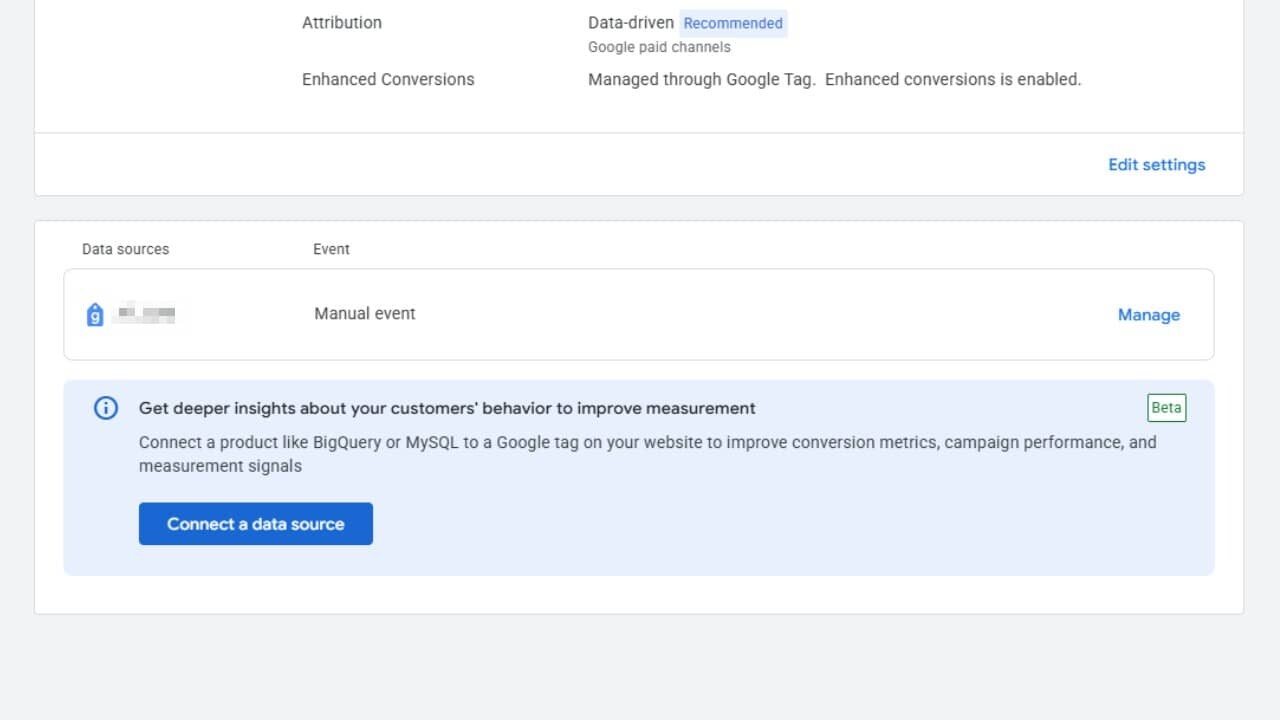
How does this work, you might ask? In the conversion action details, a new section titled “Get deeper insights about your customers’ behavior to improve measurement” encourages us to connect our external databases to our Google tag, offering a seamless integration experience.
This integration supports platforms like BigQuery and MySQL, with the primary goal of enriching our conversion metrics and enhancing performance signals. Notably, this feature is highlighted within the data attribution settings and is gradually being rolled out in its Beta phase.
Why do we care? The ability to directly integrate these data sources reduces the hassle of syncing offline or backend data with ad measurements. This beta feature from Google Ads simplifies connecting first-party data to conversion tracking, improving our measurement accuracy and campaign optimization.
By harnessing the power of platforms like BigQuery or MySQL, we’re able to incorporate richer customer data into our signals, crucially offsetting any data loss resulting from recent privacy changes. In practical terms, this means smarter bidding, clearer attribution, and the potential for a stronger ROI.
Beneath the surface, embedding these data connections directly within conversion settings—rather than relying on separate pipelines—democratizes advanced measurement tactics, making them accessible not only to large enterprises but to advertisers like you and me.
As ad platforms compete for superior measurement accuracy, these native data integrations are emerging as a pivotal advantage, particularly for brands heavily investing in proprietary customer data.
I’ve always found it challenging to keep my Google Ads campaigns running smoothly without a hitch. When I heard about Google Ads’ new diagnostics hub for data connections, I knew I had to explore it. This tool promises to catch issues early, which could significantly enhance my conversion tracking and overall campaign performance.
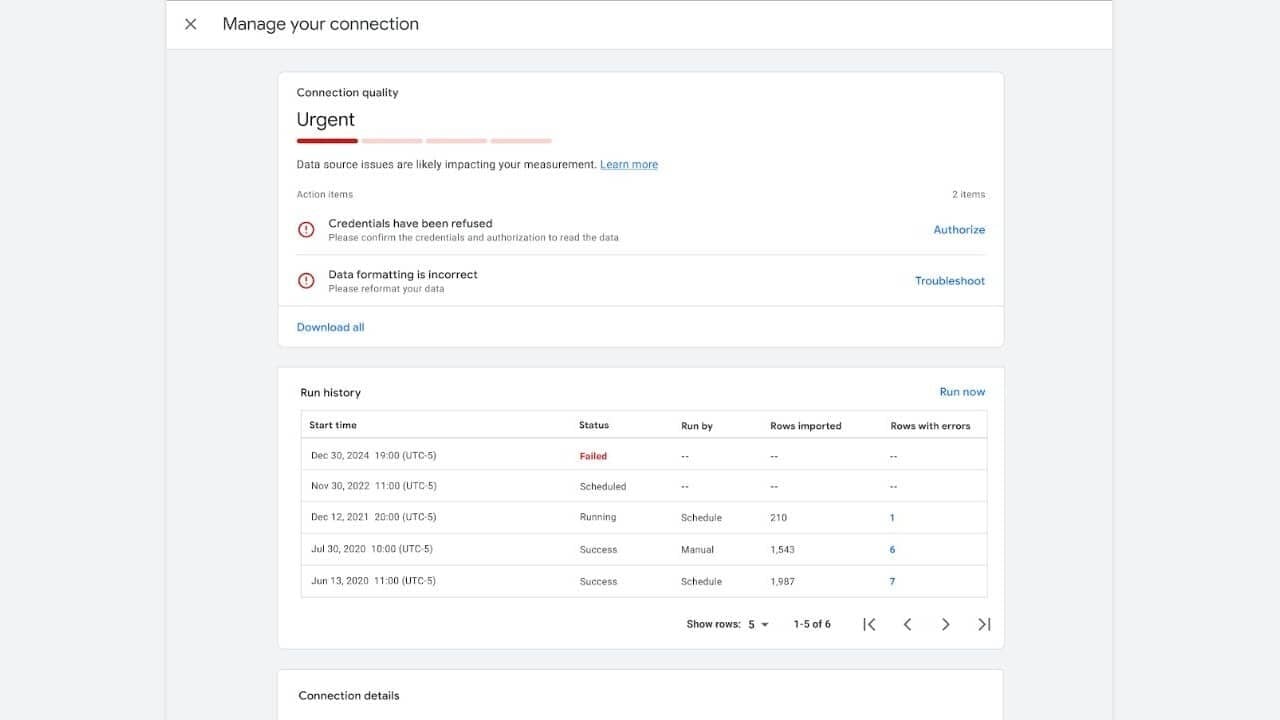
Recently, Google Ads introduced a data source diagnostics feature within their Data Manager. It’s designed specifically to help people like me monitor the health of my data connections. The tool is a lifesaver, flagging issues linked to offline conversions, CRM imports, and tagging mismatches.
How it works. The dashboard is centralized, and it assigns clear connection status labels like Excellent, Good, Needs Attention, or Urgent. It also provides actionable alerts, which is a huge plus for me. I can easily identify problems such as refused credentials, formatting errors, or failed imports. Additionally, there’s a run history that displays recent sync attempts and error counts.
Why we care. I’ve noticed that when conversion data breaks, campaign optimization collapses too. It’s the minor data connection failures that can distort conversion tracking and weaken automated bidding. This diagnostics tool is crucial as it helps my team and me spot and fix issues early, safeguarding our campaign performance and reporting accuracy. If you’re relying on CRM imports or offline conversions like I am, it’s truly a needed safety net.
Who benefits most. If you’re running complex conversion pipelines like I do, including Salesforce integrations and offline attribution setups, this feature is a game-changer. It addresses disruptions that could otherwise ripple through our bidding and reporting process.
The bigger picture. As we increasingly depend on accurate first-party data for automated bidding, having visibility into data pipelines has become as crucial as the campaign settings themselves.
Bottom line. Google Ads has effectively given us an early warning system for data failures, helping us fix broken connections before they affect performance.
First seen. I learned about this update when Digital Marketer Georgi Zayakov shared it on LinkedIn. I’m grateful to Georgi for sharing this valuable insight.
I’ve noticed that while many search teams are celebrating improved rankings, greater visibility, and a surge in traffic, the feedback regarding pipeline, revenue, and sales outcomes isn’t exactly echoing this enthusiasm.
Even when SEO KPIs are all green and the graphs are trending upward, the business outcomes don’t always reflect this apparent success.
Search performance can seem robust on the surface, yet falter in areas that the search teams don’t own or fully understand.
The immediate inclination might be to examine attribution models, data quality, or the KPIs themselves.
However, often the breakdown occurs post-click, in spaces the search teams don’t control.
Despite advancements in automation, software, and workflows making search efforts easier to scale, there’s more to it than execution; it’s about understanding and control.
This is a long-standing challenge, one that scaling often exacerbates.
An early halt or too shallow an analysis limits the understanding of performance within the broader business context.
In larger organizations, siloed operations widen the gap. Without tight CRM and sales integration with search, the journey often lacks a unified owner.
Leadership pressure can further exacerbate these issues.
When results appear promising yet fail to impact the bottom line, the ambiguity becomes troubling. Though not new, this dynamic is increasingly apparent.
To bridge these gaps, focusing on five key breakpoints can be pivotal.
1. Intent Misalignment
Intent forms the backbone of how we tailor content and target our audiences through search, yet it’s sometimes out of sync with deeper factors like buying stages, urgency, or seasonal sales expectations.
Even when aligned with the latest research, the readiness or stage of a prospect can remain elusive.
Understanding the problem a searcher aims to solve and comparing it with sales’ positioning can bridge the gap between search and actual sales, refining the way teams optimize their approaches.
It’s awkward when leads driven by search don’t convert to customers, sparking tensions around conversion quality.
While technically compliant leads meet criteria, issues like unaligned CTAs or vague follow-ups often go unnoticed, focusing on conversion rate optimization as a quick fix when it’s usually more complex.
Conversions rarely guarantee committed customers, making it crucial to evaluate if the initial search promise and subsequent visitor journey align with their intentions.
Achieving a shared understanding of what qualifies as a marketing or sales-ready lead is vital, particularly when definitions, scoring models, and expectations vary.
Aligning on these criteria aids in demonstrating search’s true value to the business, though it may require navigating uncomfortable discussions.
I’m not critiquing search leaders; these challenges aren’t new, nor are they solely search team’s problems, but cross-functional issues needing better communication, agreed definitions, and ownership.
Rather than perfection, marketing leaders need actionable insights and a unified understanding of results.
The true danger isn’t declining performance but thriving metrics with unclear reasons behind them, impeding confident scaling efforts.
Every move aims to enhance credibility and influence far beyond traditional KPI mastery. Embrace understanding over sheer execution.
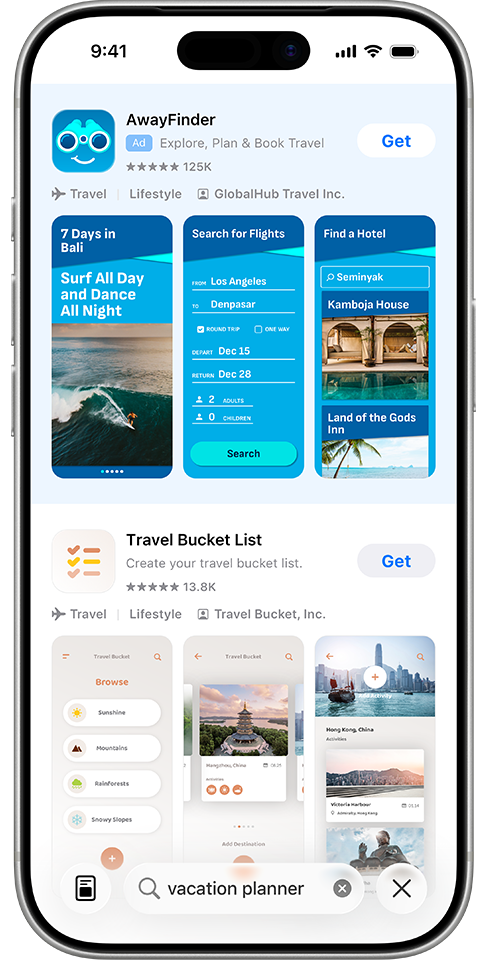
I’ve got some exciting news for those of us tracking changes in the digital advertising space. Apple’s expanding ad opportunities within the App Store search results, offering advertisers new chances to connect with users right at the moment they’re ready to download apps.
Starting March 3rd, there will be more ad slots in the UK, and following closely, Japan will see these changes too. By the end of March, this rollout is expected to reach all Apple Ads markets.
Why is this important? With more ad slots in the App Store, we have more chances to capture installs. But, this also means heightened competition for those high-intent queries, which could drive costs upward. Since we can’t pick our ad placements, ensuring creative relevance, refining keyword strategies, and monitoring conversion tracking have never been more crucial.
What’s changing? Previously, there was just a single sponsored ad spot at the top of the search results. Now, multiple ads can show up for a search query, not only in the top spot but also further down the page.
Devices running iOS and iPadOS 26.2 or later will support these additional placements.
How eligibility works: There’s no need for us advertisers to tweak anything to tap into the new ad slots. Our existing search results campaigns are automatically eligible for these new positions.
While we can’t choose our placement or bid for a specific spot, Apple determines where our ads appear within search results.
Ad formats and pricing remain constant. Ads look the same, relying either on a standard product page or a custom one. If we want, we can even direct users to specific in-app destinations via optional deep links.
Billing remains unchanged, continuing on a cost-per-tap or cost-per-install basis.
Matching ads to searches: Ads in search results still hinge on keywords—those we choose or those suggested by Apple. According to Apple, their relevance-based matching achieves an average conversion rate exceeding 60% for top-of-search ads.
Placement is a mix of relevance and bid, but relevance remains non-negotiable. Even a high bid won’t allow an ad into auctions if it’s not a strong match for the user’s query.
What should we keep an eye on? More ad slots could lead to greater opportunities, albeit with increased competition on the same search results page. It’s prudent to keep a close eye on performance metrics, query alignment, and conversion rates as the global rollout of this feature proceeds.
Looking ahead: As March progresses, more App Store search ads will be seen in all Apple Ads markets. For those of us in app marketing, this shift represents a significant transformation in how search visibility and competition will play out within the App Store.
Entering into the world of PPC advertising for 2026, I realize how easily we can be misled by trends. AI, creative scaling, and marketing models promised us efficiency, but often ended up costing more than delivering. So how can we reset our PPC priorities as we step into the new year?
In 2025, PPC advice revolved heavily around AI and glittering new tools, sounding both promising and expensive. We found ourselves succumbing to platform narratives rather than aligning with business needs, causing budgets to balloon without corresponding efficiency gains.
As 2026 dawns, it’s high time to break free from these outdated beliefs. This article highlights three PPC myths that looked appealing in theory and quickly spread in 2025 but often led to poor decisions.
My objective is straightforward: rethink priorities and avoid repeating costly mistakes.
Myth 1: AI Outshines Manual Targeting
We’ve been told countless times to trust AI for targeting while manual structures are deemed obsolete. But is that truly the case?
The truth depends on conditions. AI thrives on volume and quality signals. Without these, the AI delivers no meaningful results, just automated processes that mask poor performance.
For instance, ecommerce brands often find value in feeding purchase data back into Google Ads, assuming they generate enough conversions. Only then does outsourcing targeting to AI hold potential.
If your campaigns struggle with low conversions or rely primarily on lead optimization, manual intervention may still be necessary.
How to Reset Priorities
Before turning everything over to AI, there are critical questions to ask:
Are campaigns optimized against a business-level KPI like CAC or ROAS?
Do the ad platforms receive sufficient conversion data?
Are conversions reported promptly, with minimal delay?
If any answer is no, consider revisiting PPC fundamentals for 2026. Do not hesitate to apply traditional methods when needed. In 2025, I turned around a client’s fortunes by using match-type mirroring structures, even though it contradicted the common best practices.
The success was based on historical performance data:
Match Type
Cost per Lead
Customer Acquisition Cost
Search Impression Share
Exact
€35
€450
24%
Phrase
€34
€1,485
17%
Broad
€33
€2,116
18%
Here, Google Ads did exactly what it was told—focus on lower cost per lead, disregarding business impact like KPIs.
I regained control by focusing on high-performing audiences with unsaturated potential, via exact match keywords. If you’re unfamiliar with traditional structures, advanced semantic techniques can offer an excellent starting point without over-reliance on automation.
Myth 2: More Ads Lead to Better Results
This myth frustrates me as it sounds logical but rarely pans out. The argument is simple: more creative variation equates to better ad auction performance. But more often, it increases creative costs without the promised results, helping agencies more than advertisers.
Creative volume adds value only when backed by high-quality conversions. Without them, extra ads only mean more materials rotating meaninglessly.
How to Correct Course
True value still lies in creative diversification that matches messages to audiences and contexts. This isn’t a novel concept. The same principles apply:
Have a strategic approach to creative testing; testing without intent is wasteful.
Plan measurement in advance to avoid setting yourself up for failure.
Ensure business-level KPIs are present in enough volume to make a difference.
When resources are tight, rotating ads without direction is common. Focus on Conversion Rate Optimization (CRO) instead:
Enhance tracking for better performance.
Refine customer journeys to boost conversion rates and signal volume.
Align higher-margin products with more efficient spending.
Explore new networks or channels with saved creative budget.
Myth 3: MMM Will Offer Clear Clarity
Finding 10 marketers who believe GA4 is effective is challenging, indicating Google’s missteps. The misalignment with ad platform data breeds mistrust, leading to the belief that advanced solutions are needed. Yet, this often results in higher costs with average outcomes.
Most brands don’t have the scale required for Marketing Mix Modeling (MMM) to yield insightful results. Instead, it’s best to master existing tools.
The usual brand setup looks like this:
Concentrated media spend across a handful of channels, mainly Google and Meta, with YouTube, LinkedIn, or TikTok as extras.
Reliance on a narrow but consistent customer base, risking long-term stability.
Marginal marketing impact beyond the core audience.
In such settings, MMM adds abstraction, not clarity. Staying grounded in fundamentals remains vital, not modeling complexities.
Strategies to Add Value Instead
Before considering advanced tools, ensure you’re getting the basics right:
Stand out clearly from competitors.
Boost margins, even with simple budget plans.
Build a strong data foundation, emphasizing tracking, CRO, and conversion paths.
Expand your channel or network options.
Align creative execution with genuine customer pain points.
Smooth out any marketing execution kinks.
While advanced tools gain importance with complexity, deploying them too soon obscures accountability rather than offering real insights.
The True Issue Lies in Misuse
The thread linking these PPC myths isn’t the capabilities like AI, creativity, or analytics—it’s how they’re misused. Platforms fulfill the roles they are set for, optimizing within the provided signals and limitations.
Business fundamentals are what break in these scenarios, rather than AI fixing our problems.
Instead of pursuing the next shiny distraction, 2026 should be about focusing on core business strategies and executing with precision for profitable scaling.
Hey there! Navigating the ever-evolving landscape of Google Ads can be quite the adventure. I’ve gathered some important insights to help us optimize our PPC campaigns by addressing common pitfalls like inconsistent tracking, outdated negative keywords, and an over-reliance on AI.
Google Ads is in a constant state of evolution. This means new challenges and mistakes often pop up as we optimize and manage our PPC campaigns. Let me share some insights on the most prevalent Google Ads mistakes in 2026, so we can dodge them effectively this year.
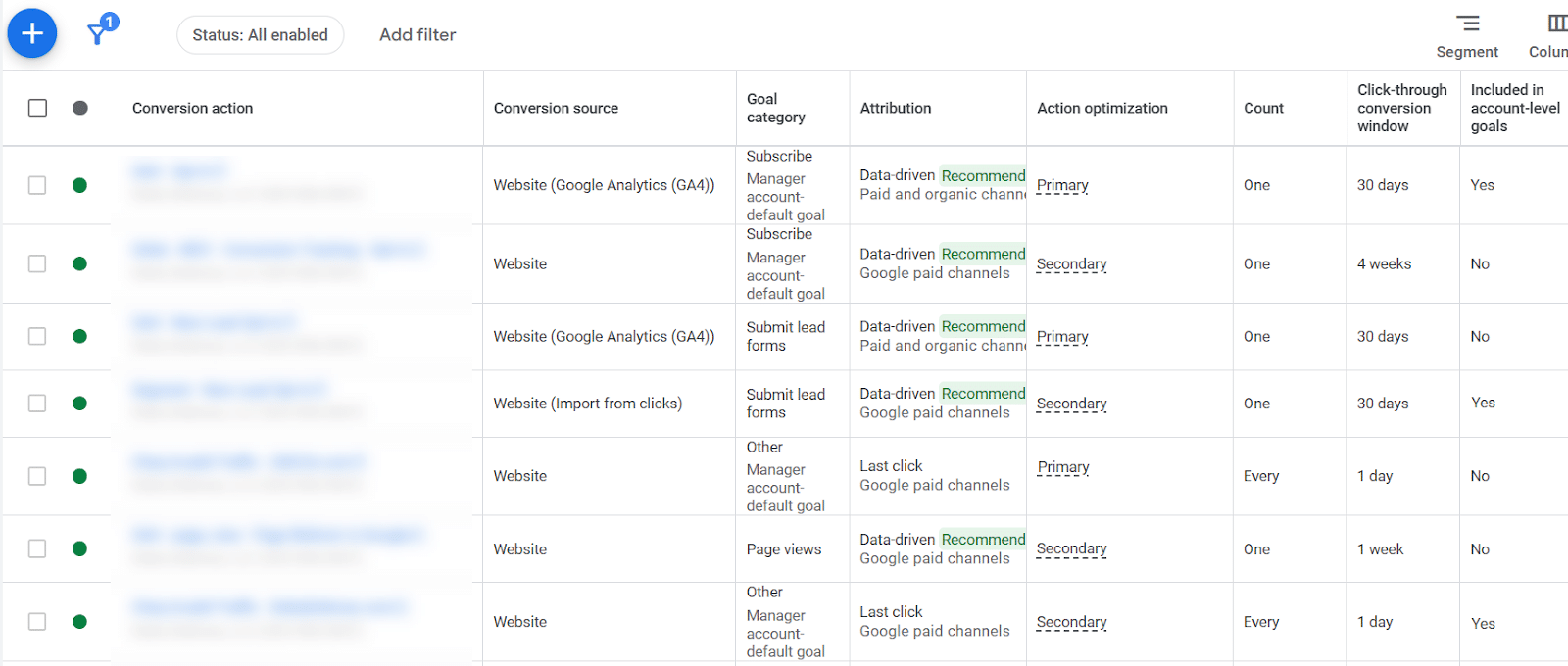
Optimization decisions hinge on conversion data. If our conversion tracking is inconsistent, it skews the entire account’s data, making it difficult to draw accurate insights.
Converting varying attribution methods, count types, and conversion windows means data is applied unevenly across our account, complicating any assessment of click value.
Occasionally, we might override tracking settings at the campaign level, achieving accuracy there but inconsistent data at the account level. Ensuring consistent application of conversion data is something I prioritize in my management tasks.
I’ve noticed many people losing sight of ‘exact match’ keywords as Google encourages broad match by making it the default setting in their interface. Yet, exact match is invaluable, consistently proving to be the highest-converting match type for many of us.
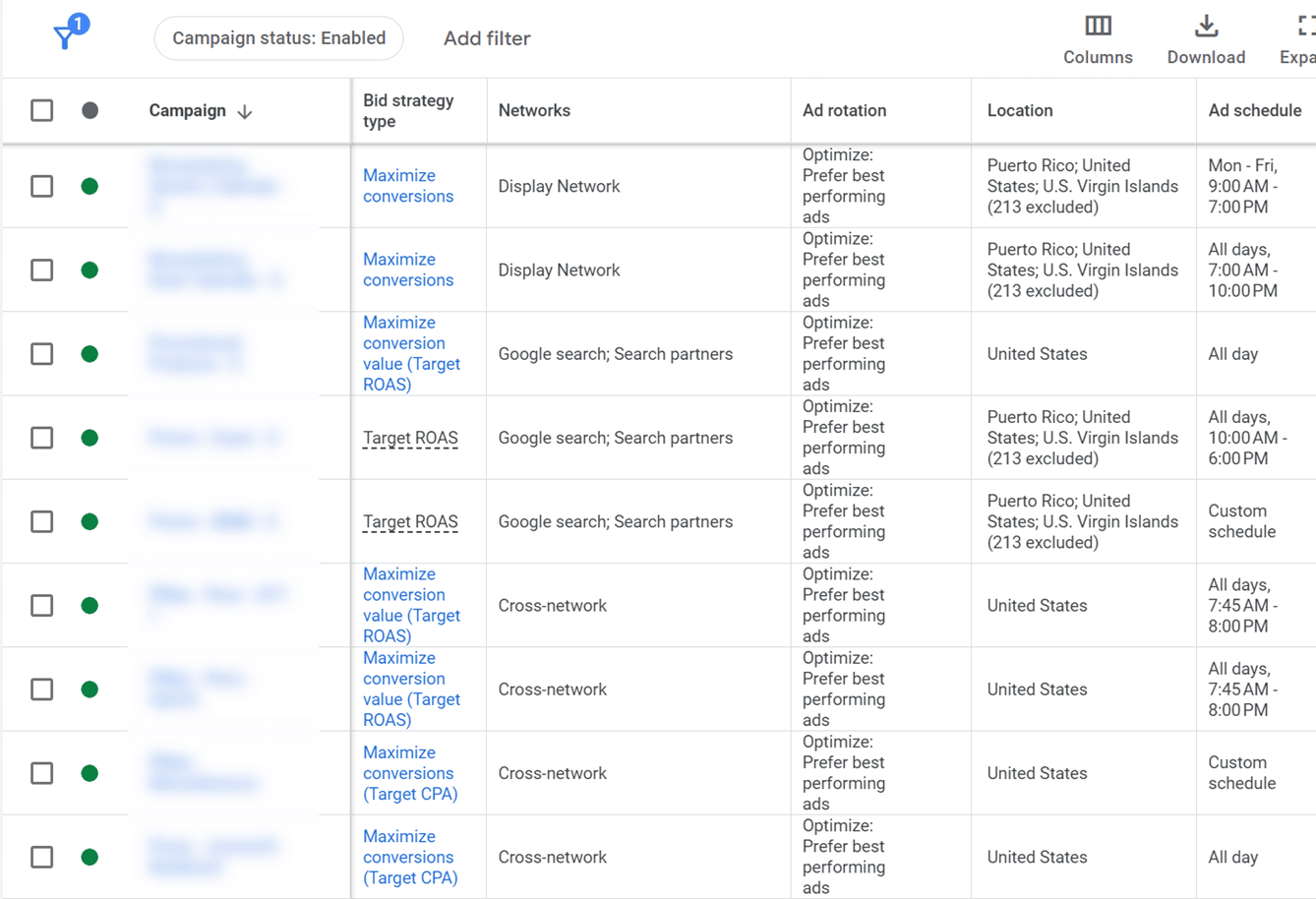
When campaigns vary widely in excluded regions, ad schedules, and bid strategies, it’s crucial to re-evaluate our settings. Consistency in campaign settings is vital to keeping everything running smoothly.
Ad strength directly affects how much control Google has over our ad content. Lower ad strength means more control for us, which I’ve found leads to higher conversion rates despite common misconceptions about its impact on quality scores.
The flexibility of match types has loosened in recent years, leading to search terms triggering multiple keywords. This duplication, without exact matches, can cause inconsistent messaging. I always make sure our keyword list includes top-performing search terms.
Broad match keywords can lead to different results based on our bidding strategies. I learned the importance of matching bid strategies with the right keyword types. After all, different goals require different approaches.
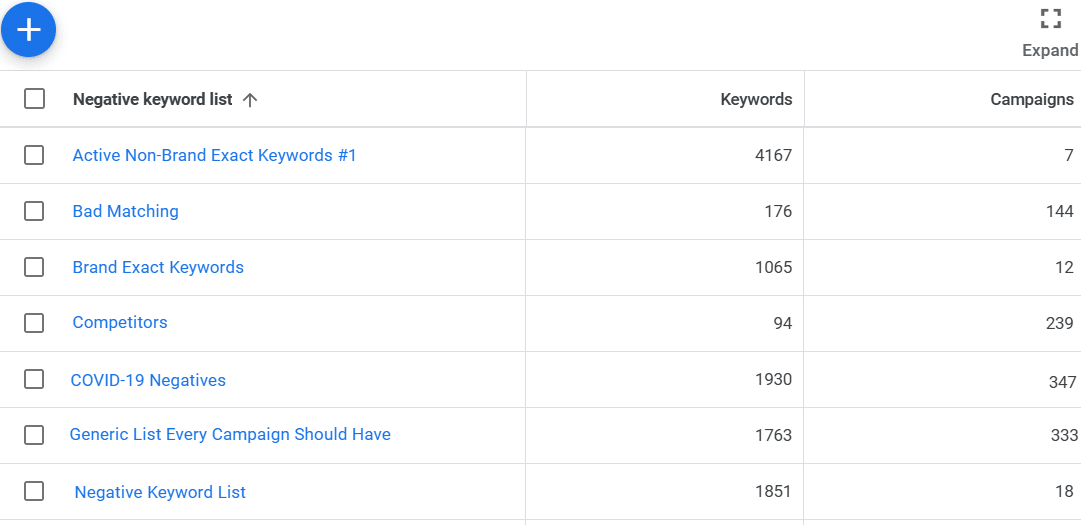
Blinded by our auto-pilot tendencies, we might use outdated negative keyword lists without review, which leads to keyword blocking and lost opportunities. It’s essential to review these regularly to prevent conflicts.
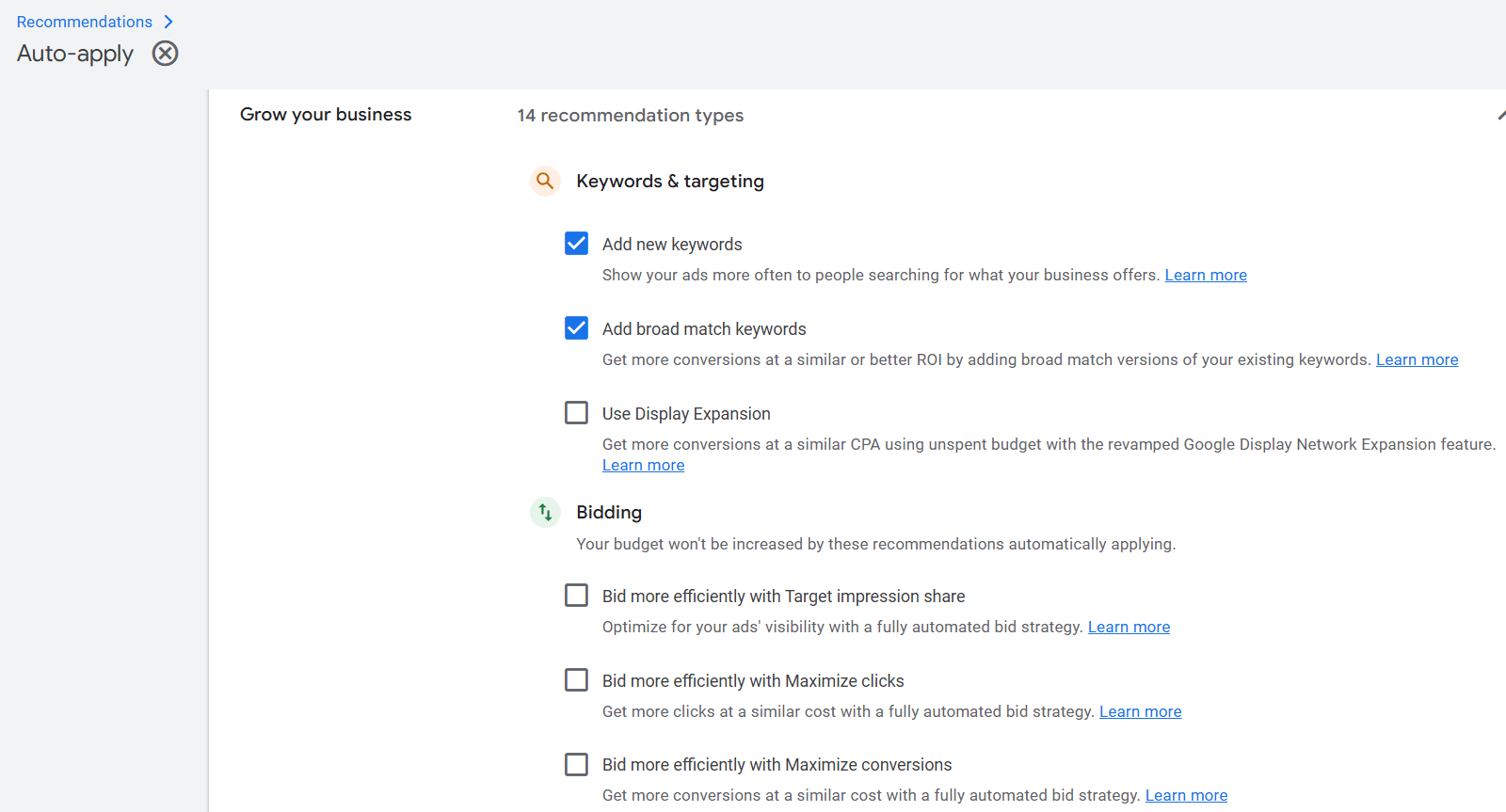
Having auto-apply turned on in Google Ads can lead to unexpected changes like added keywords or modified bid strategies. Turning it off gives me the power to make well-thought-out decisions instead.
Finally, while AI offers tremendous capabilities, believing it’s wiser than us can be a major pitfall. I always remember that it’s best used as a tool that complements our judgment and expertise in ensuring successful campaigns.
When I first heard about Google’s upcoming changes to the Ads API, I realized this could be a game-changer for many advertisers. Starting February 2nd, the Google Ads API will stop accepting new users of session attributes or IP address data in conversion imports. If you’re like me, and already using these fields, you might wonder what this means for your current set-up.
This shift marks Google’s efforts to guide us all toward the Data Manager API, which they aim to make the primary hub for complex conversion and user data transfer. It’s becoming clear that the Google Ads API is honing its focus on core functions like campaign management and conversion workflows, leaving the heavy lifting to the Data Manager API.
Here’s why this change matters to us: it directly influences whether our conversions are effectively captured. Blocking session attributes or IP data can cripple our conversion tracking and reporting, affecting performance insights and automated bidding strategies. Transitioning to the Data Manager API secures our data flow, ensures richer data signals, and aligns with Google’s long-term vision for measurement infrastructure.
Who needs to act? If you’re a new developer trying to use session attributes or IP addresses with the Ads API, you’ll be blocked from doing so. For those of us already on this path, our operations continue, but the expectation to migrate is loud and clear, underscored by Google’s developer-token allowlisting requirements.
What happens if we don’t transpose our setup? Post-change, some conversion imports will hit a roadblock with a CUSTOMER_NOT_ALLOWLISTED_FOR_THIS_FEATURE error, indicating rejection due to session attributes or IP address inclusions.
To fix this, we need to promptly update our systems: temporarily exclude session attributes and IP data from Ads API imports, reroute this information through the Data Manager API, and ultimately phase out Ads API conversion imports once our new setup is fully integrated.
The bottom line for those of us using the existing system is that while Google isn’t snipping the cord immediately, the roadmap is clear: if our tracking relies on session attributes or IP data, embracing the Data Manager API isn’t just advisable, it’s imperative.