Tag: Automation

  • Embrace Positionless Marketing: Think Beyond Traditional Limits

    Embrace Positionless Marketing: Think Beyond Traditional Limits

    In 1997, Apple launched a groundbreaking campaign that I often think about: “Think Different”. It celebrated those who dared to break the mold, challenging norms to change the world. Apple grasped a vital truth: the constraints stifling creativity weren’t real; they were assumed, passed down through tradition.

    Fast forward to today, and I see that marketing finds itself in a similar “Think Different” moment. The barriers that once constrained our industry have vanished. Thanks to technology, AI generates countless variations, data platforms provide up-to-the-minute insights, and orchestration tools bridge every channel instantaneously.

    Yet, I notice many marketers are still functioning within an outdated paradigm. They wait for others—the data teams, creative teams, or engineers—to move projects along, not realizing technology has already unlocked those doors.

    We no longer need to follow a linear, assembly-line process that passes tasks from one department to the next. The box has disappeared, but old habits die hard.

    Here’s to the marketers who refuse to wait for approval

    I find inspiration in those who see a customer need at 3 p.m. and launch a personalized campaign by 4 p.m., driven by urgency rather than seeking permission.

    These are the marketers who don’t send multiple briefs to multiple teams—they pull the data, create content, and execute campaigns independently. Not to sideline experts, but to seize on moments that matter now.

    Their constant experimentation, running multiple tests and iterations, proves essential in crafting insights. They know, as I do, that perfection comes from trial and error, not waiting around for analysis.

    Here’s to the ones who see campaigns where others see dependencies

    For them, it’s not about passing data to an analytics team; it’s about directly accessing and utilizing customer insights instantly.

    They bypass traditional creative approvals with AI tools that produce tailored assets swiftly, enabling personalization on a grand scale.

    They aren’t beholden to engineering delays but leverage orchestration platforms to automate journeys smoothly, sans tickets.

    They’re not reckless nor cowboys

    Instead, they work at the speed technology allows, guided by strategic thinking and judgment rather than rigid processes.

    This ethos is at the heart of Positionless Marketing: using Data, Creativity, and Optimization powerfully and in tandem, not due to a lack of specialists, but because technology removed those earlier dependencies.

    This isn’t just about speed; it’s about potential

    In times when marketers managed long processes, their role was merely about coordination. Today, I see it as enabling potential, pushing everyone, including you and me, to do what we’re capable of with unchained boundaries. I no longer see the brief as a roadblock, but a stepping stone to instant creativity and autonomous coordination.

    Teach people to think outside the box by showing them there is no longer a box

    Now, I can see how the data analyst can transcend report creation to build real-time predictive models. The campaign manager can independently design, test, and optimize entire journeys. The creative strategist can not only craft briefs but execute ideas across platforms.

    This is the real impact of technology; not just getting the work done, but dismantling barriers that once held us back, releasing the talents we’ve always possessed.

    The Positionless Marketers of today are doing the same thing

    They refuse to delay action when immediate responses are needed. They reject the notion that insights take forever when available in seconds. They aren’t bound by bygone constraints.

    By thinking differently, not for defiance’s sake, but because the past ways no longer align with the new potential.

    Apple once said, “The people who are crazy enough to think they can change the world are the ones who do.” In our era, those who believe they can seamlessly deliver customized experiences and instigate rapid-fire campaigns without relying on dependencies will lead the charge.

    The constraints are gone. The assembly-line marketing box can no longer exist.


    Inspired by this post on Search Engine Land.


    crushpress.ai community screenshot
  • Best AI Tools for PPC and Social Campaigns You Need Now

    Best AI Tools for PPC and Social Campaigns You Need Now

    As a performance marketer, I’ve realized that leveraging AI is crucial for growth and efficiency, especially as we advance into 2026 and beyond.

    Anyone not exploring new AI tools to enhance or streamline their PPC efforts is missing out on a significant opportunity for their brand or clients.

    The rapid pace at which these tools evolve can make it feel like a full-time job to keep up, which is why my agency prioritizes AI in our knowledge-sharing sessions.

    As a team, we’ve distilled our top picks for creative, campaign management, and AI search measurement tools.

    This article will guide you through essential tools in each category, providing quick reviews and highlighting my current favorite.

    One key piece of advice before diving in: Be cautious about long-term contracts with AI tools, as today’s sensation might be tomorrow’s obsolete tool.

    AI Creative Tools for Paid Social Campaigns

    With numerous tools available for generating creative assets, each offers unique benefits but also carries the risk of creating subpar AI content.

    Whatever tool you choose, ensure it undergoes rigorous testing and is backed by a robust human-in-the-loop process to maintain quality, accuracy, and brand alignment.

    Here’s a summary of tools we’ve evaluated:

    • AdCreative.ai: Generates images, video creatives, ad copy, and headlines efficiently, with data-backed scoring.
    • Creatify: Excels in video ads and supports diverse formats.
    • WASK: Merges AI creative generation with campaign optimization and competitor analysis.
    • Revid AI: Suited for story format creation.
    • ChatGPT: A familiar, free tool that gives marketers an edge in crafting effective prompts.

    Currently, I favor AdCreative.ai. It simplifies brainstorming creative concepts and testing variations quickly.

    It offers significant advantages like:

    • Creating multiple variants swiftly to keep creative fresh and combat ad fatigue.
    • Reducing dependence on external designers for repetitive or template-based content.
    • Experimenting with various creative elements rapidly to determine winning combinations.
    • Providing data-driven insights such as creative performance predictions.

    However, always ensure you establish:

    • Guardrails to prevent off-brand outputs with clear voice guides and style rules.
    • Verification processes to catch errors in technical claims or data.
    Dig deeper: How to get smarter with AI in PPC

    AI Campaign Management and Workflow Tools for Performance Campaigns

    In the realm of workflow automation tools like Zapier, Workato, and Microsoft Power Automate, our agency prefers n8n for its flexibility in creating agentic workflows and integrations.

    ```json
{
  "alt": "SEMRUSH ad promoting AI optimization with brand share of voice chart at 70%.",
  "caption": "Explore the future of search with SEMRUSH's AI Optimization. Discover if your brand will be seen in the changing digital landscape.",
  "description": "This SEMRUSH advertisement highlights the importance of AI optimization in modern search strategies. The image features a brand share of voice chart indicating 70%, along with a list of AI tools like Perplexity, Gemini, ChatGPT, and Claude. A call-to-action button invites users to get a demo. The vibrant purple design emphasizes innovation and technology. Keywords: AI optimization, SEMRUSH, brand visibility, search tools, digital marketing."
}
```

    Our primary n8n use cases include:

    • Lead management: Enhance and route leads automatically with the integration of Clearbit and CRMs.
    • UTM cleanup: Normalize UTM parameters automatically for accurate CRM entry.
    • Data reporting: Fetch metrics, structure data, and use AI to summarize insights, sharing them via Slack or collaborative tools.

    Be aware of potential challenges with n8n:

    • Requires technical knowledge of APIs, JSON, and authentication methods.
    • Security setups are necessary to protect data; misconfigured systems can pose risks.
    • Lacks some ad platform integrations which require more manual work.
    Dig deeper: Top AI tools and tactics you should be using in PPC

    AI Search Visibility Measurement Tools

    Most SEOs rely on platforms like Semrush, Moz, and SE Ranking, yet tracking AI search visibility requires specialized tools like Profound.

    Profound provides valuable persona-level and competitor-level insights, linking them to strategic levers for actionable insights.

    It offers quick access to insights like:

    • Benchmarks against competitors showing AI visibility strengths and gaps.
    • Messaging intel from AI about brand solutions to refine content and messaging.
    • Signals improving brand consistency and favorability in AI results.
    • Trends in AI’s influence on search results and user behavior.
    • Insights revealing AI model-generated brand narratives.
    • Opportunities to influence brand perception in AI answers.

    Choosing a tool quickly is crucial to gather data on shifting AI search trends and adjust strategies effectively.

    Dig deeper: Scaling PPC with AI automation: Scripts, data, and custom tools

    What Remains True as the AI Toolset Evolves

    While I strive for my content to remain relevant over time, I’m aware that this piece may become more of a historical reference.

    Nonetheless, the need to:

    • Stay updated on AI developments.
    • Vigorously test new capabilities and features.
    • Foster strong knowledge-sharing within the team remains essential.

    Though AI in performance marketing has grown rapidly, there’s still room for teams that adapt quickly, conduct strategic testing, and pivot effectively to differentiate themselves.

    Dig deeper: AI agents in PPC: What to know and build today


    Inspired by this post on Search Engine Land.

    crushpress.ai community screenshot
  • Mastering SEO Tool Evaluation in 2026: Avoid Budget Pitfalls

    Mastering SEO Tool Evaluation in 2026: Avoid Budget Pitfalls

    As I navigate the ever-evolving world of SEO, evaluating tools in 2026 has become a complex task. Rising costs and the AI frenzy often make it difficult to justify the investment in new platforms.

    The challenge lies in demonstrating the business value of these tools to leadership, who are more interested in results than in the number of keywords we can track or the speed of content optimization.

    Most tools fail to meet the demand to connect SEO work directly to business outcomes. The offerings often come bundled in convoluted packages, further complicating the decision-making process.

    This article offers a framework to approach SEO tool evaluation in 2026, focusing on must-have features, efficient tool comparison methods, and effective vendor conversations.

    Understanding the forces reshaping SEO tools can help. Many platforms lag in connecting SEO to measurable business value, complicating budget approvals.

    AI advancements are setting new expectations. Whether to train a custom AI agent or invest in a ready-made tool is a key question every team faces.

    Small teams need automation that truly saves time. Without context, many tools only generate noise, failing to deliver tailored insights for specific markets or businesses.

    Technical SEO tools remain relatively stable, yet the assumption that AI can solve all problems presents a budgeting challenge.

    Real impact in tool evaluation lies in focus areas like advanced data analysis, SERP intelligence, meaningful automation, robust multilingual support, and transparent pricing.

    To avoid wasting time comparing tools, start with clear pricing, align tests with typical weekly tasks, and ensure you always secure a free trial.

    When it comes to vendor interactions, concise goals and informed questions can streamline discussions and facilitate more productive evaluations.

    Business considerations should include presenting a range of options, avoiding overpromising, and ensuring that proposed tools align with strategic business objectives.

    As we look to the future of SEO tools, connecting searches to tangible business outcomes will define premium offerings, though such solutions remain rare.


    Inspired by this post on Search Engine Land.

    crushpress.ai community screenshot
  • Ignoring Google’s Warnings: A Costly Lesson in PPC Management

    Ignoring Google’s Warnings: A Costly Lesson in PPC Management

    I recently had a thought-provoking conversation with Nils Rooijmans, a respected figure in the world of Google Ads and a top PPC influencer. He shared with me a critical experience that highlights the importance of not overlooking Google’s consent mode warnings.

    On episode 333 of PPC Live The Podcast, Nils revealed how a seemingly small oversight led to a significant drop in conversions and traffic for one of his managed accounts. This experience serves as a stark lesson for all of us in the paid search industry.

    The story began with a rushed account onboarding after Nils’ existing client acquired another company involved in airport parking services. The client sought to avoid additional fees for a proper onboarding process, setting the stage for future challenges.

    Nils agreed to transition the account into their existing setup gradually. However, this compromise led them to neglect the new account, which soon proved to be an expensive mistake.

    After six weeks of minimal oversight, clicks and conversions plummeted. Upon investigation, Nils found that Google had been sending warnings about incorrect consent management implementation, threatening to halt conversion tracking if unresolved.

    Ignoring these emails, originally thought to be routine noise, allowed the issue to escalate. As Nils admitted, this oversight stopped Google from processing conversion data, leading their smart bidding algorithm to adjust bids, reducing traffic further.

    The root cause was identified as a bypassed onboarding process. Without this critical step, the account missed essential safeguards, including monitoring scripts and regular health checks.

    Breaking this news to the client was complicated, especially since the financial implications were severe. The CFO demanded compensation despite actual bookings continuing, demonstrating further complications from the original oversight.

    Technically resolving the issue was also challenging. Although Google support was contacted multiple times, they couldn’t fix the flagged domain problem, necessitating a workaround.

    This story taught several key lessons: never skip onboarding, monitor conversion tracking meticulously, and pay close attention to Google’s communications. These steps can prevent minor issues from becoming major problems.

    In the broader picture, embracing mistakes as learning opportunities strengthens team dynamics and enhances PPC strategies. Nils’ experience is a testament to the value of maintaining vigilance and the power of systematic approaches in digital marketing.


    Inspired by this post on Search Engine Land.


    crushpress.ai community screenshot
  • Effortless YouTube and Google Ads Integration Boosts Advertiser Insights

    Effortless YouTube and Google Ads Integration Boosts Advertiser Insights

    Recently, I’ve noticed Google has started automatically linking YouTube channels with Google Ads accounts. This innovation allows advertisers like me to quickly tap into valuable audience data, though it does require careful permission management.

    When Google’s system detects a strong connection between a YouTube channel and a Google Ads account, it takes action by linking them. This gives us richer audience signals without us having to do a manual setup.

    What’s happening now? Google will set up these links automatically if a strong relationship is identified, notifying us 30 days in advance. This email notification allows us to decide whether to opt out or connect sooner.

    How does it work?

    During the 30-day period, if no one opts out, the link will be completed automatically. If I manage both accounts, I can even connect them immediately. There’s flexibility here, too, as I can always adjust permissions or unlink later if needed.

    Why this matters to us. This development simplifies how we, as advertisers, access YouTube audience data. It makes it straightforward to target viewers and construct data segments. However, it also introduces uncertainties about control over our assets and the permissions we’ve set.

    Benefits for advertisers. Once linked, I can:

    • Use YouTube interactions to run more effective ads.
    • Leverage organic views and earned actions for performance insights.
    • Create data segments from how audiences engage with my channel.
    • Consider channel engagement as conversion activities, like subscriptions.

    Limitations I’ve noticed

    • Channel owners gain no control over the actual Google Ads account.
    • Copy or edit capabilities for channel videos are not given to advertisers.
    • If personalized ads are disabled, audience data reports are also turned off.
    • Restrictions on Video Ads Certification (VAC) are still applicable; removal of these is specific to the linked Ads account.

    Managing these links. If I, as an admin, choose to opt out, I can easily do so through the links provided in the notification emails from Google. If opted out, the link won’t be made. Meanwhile, manual linking can always be done via the traditional Google Ads settings menu.

    Initial discovery. The new auto-linking feature was first highlighted by Hana Kobzová, founder of PPC News Feed. More on this can be read here.

    Final thoughts. With Google’s new auto-linking, we as advertisers can enjoy less setup hassle and better YouTube performance insights. However, it’s crucial to monitor our notifications to ensure that data sharing aligns with our privacy preferences and company policies.


    Inspired by this post on Search Engine Land.


    crushpress.ai community screenshot
  • Comparing Google & Microsoft: Unraveling Performance Max

    Comparing Google & Microsoft: Unraveling Performance Max

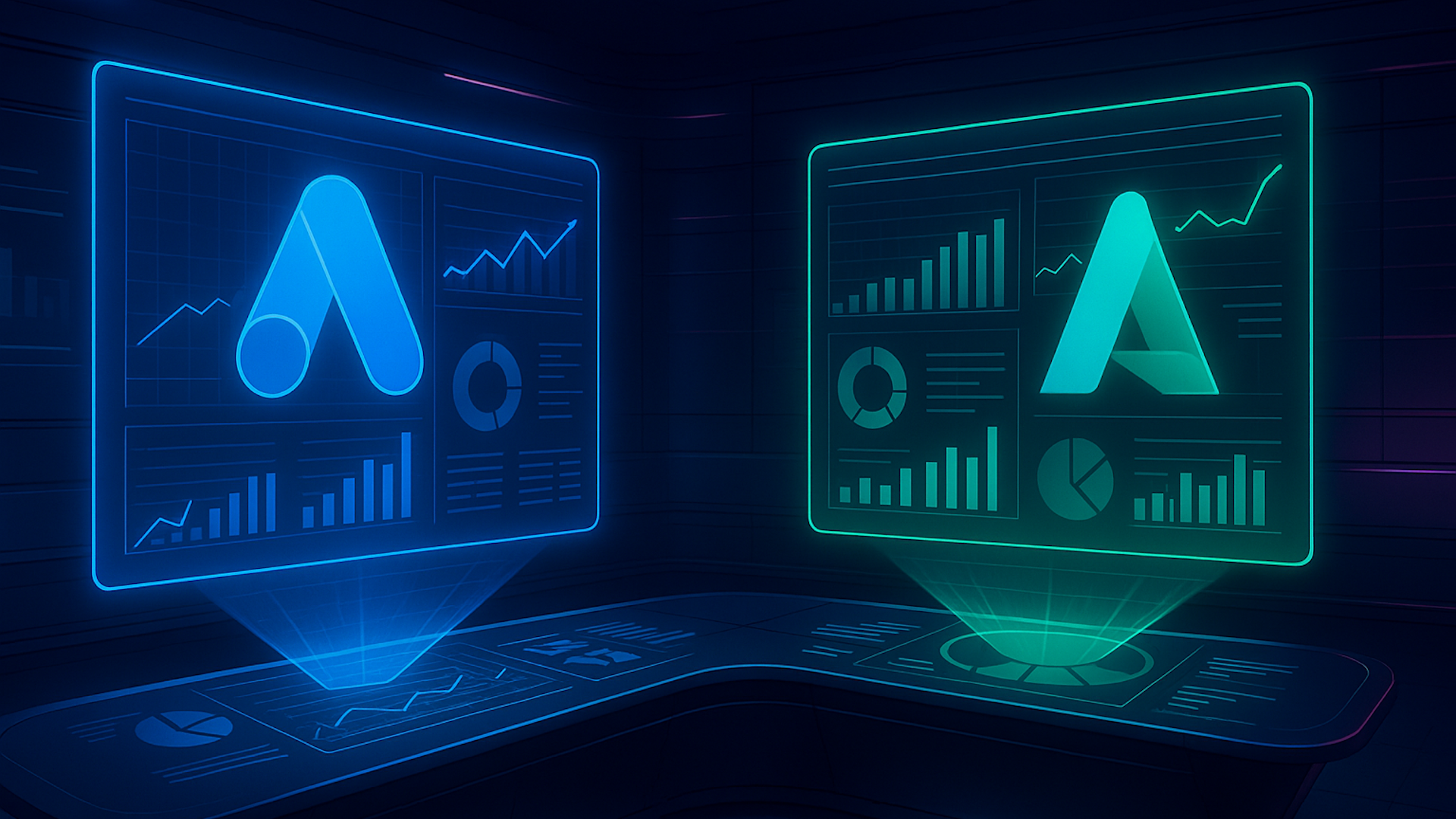
    In the ever-evolving world of AI-driven advertising, I’ve noticed that Performance Max campaigns have become absolutely crucial. Both Google and Microsoft offer these innovative opportunities, allowing advertisers to bring together creative assets, audience signals, and automation into a single seamless campaign type.

    While Google and Microsoft share this foundational concept, they execute it uniquely. I am excited to offer an in-depth comparison of Google PMax and Microsoft PMax as they stood toward the end of 2025, hoping to shed light on the intricacies that could shape your 2026 advertising strategies.

    What I found universally true across both platforms is the replacement of ad groups with asset groups. These groups encompass a blend of creatives, such as images and headlines, along with audience signals, but also carry an absence of any prioritization.

    Significantly, PMax is built for automation. Both platforms request the use of Maximize Conversions or Maximize Conversion Value strategies, underlining the need for conversion tracking that can keep pace with no less than 30 conversions in a month.

    Goal alignment is another crucial aspect. I realized that accurate reflection of business goals in your campaigns is imperative, for an artificially low ROAS target will likely backfire by yielding unexpectedly lower returns.

    Search term visibility is an area where Google offers broader negative keyword support, unlike Microsoft who is still piloting this feature. However, Microsoft’s PMax creatives have been involved in AI placements longer, demonstrating proven results and thus indicating a stronger track record in this area.

    Google’s PMax has evolved impressively, offering tools such as channel-level reporting and video asset support, which are particularly beneficial for visual marketing endeavors.

    On the flip side, Microsoft’s edge, especially for B2B advertising, includes higher campaign limits, impression-based remarketing, and the integration of LinkedIn targeting signals, appealing for advertisers looking at high-quality lead generation.

    Reflecting on both platforms, I believe PMax should be seen as a tool for incrementality rather than a replacement for proven search campaigns. The optimal approach involves leveraging both platforms’ strengths, whether it’s Google’s affinity for creative automation or Microsoft’s prowess in B2B targeting and remarketing.


    Inspired by this post on Search Engine Land.

    crushpress.ai community screenshot
  • Marketing’s Evolution: Embracing Engineering and AI

    Marketing’s Evolution: Embracing Engineering and AI

    For a significant part of my marketing career, creativity, intuition, and an almost magical knack for connecting with audiences drove our success. We’d brainstorm campaign ideas, spend weeks executing them, and then eagerly analyze the outcomes.

    I have Theodore Levitt’s “The Marketing Imagination” sitting on my bookshelf. It reminds me of how we’ve longed for unified insights about customers. Yet, our technology often offers a fragmented view, never capturing the customer’s full journey. The idea of one tool to give us a panoramic view remains elusive—a mythical nirvana.

    Today, our landscape is changing rapidly. A new paradigm emerges—marketing driven by data and precision, resembling the structured work of engineers rather than the whimsical world of Mad Men. For me, this shift is thrilling as it blends art with systems and processes familiar to developers.

    This transformation isn’t theoretical; it’s the heartbeat of digital evolution. The central idea of “The Digital Helix” presents marketing as a constant growth engine, energized by data and adapting to customer signals in real-time.

    From Campaigns to Continuous Systems

    In the past, marketing campaigns had distinct start and end points. We worked through long phases—briefing, creating, launching, measuring, and then repeating the cycle. But modern digital customers are restless, navigating multiple channels and expecting immediate brand interaction.

    This demands a transition from episodic campaigns to perpetual systems—self-correcting, learning, and evolving without the need for interruption. In engineering, this is continuous integration; in marketing, it allows us to alter messaging, content, and offers dynamically, mid-course.

    Here, marketing transforms into a form of system design. It requires ongoing engineering and a mindset of agility and continuous learning. We, as marketers, must blend creativity with practical engineering approaches to thrive.

    Why the Shift is Happening Now

    There are five core reasons why marketing is evolving into an engineering mindset.

    1. Data as the Core Material

    Much like engineering relies on inputs, marketing is driven by data. Every customer interaction, be it a click, search, or video pause, serves as input to our decision-making engine. We harness real-time customer data to guide strategies and automate responses, ensuring marketing decisions are precise and predictive.

    Data is not a secondary consideration; it is the foundation of our marketing experience. It provides direction, allowing us to construct innovative ideas and guide our strategies effectively every day.

    2. Modular, Reusable Assets

    Developers often rely on libraries and frameworks. Similarly, marketing now focuses on creating modular content pieces that can be reused across platforms—enhancing efficiency and coherence.

    Leading brands are designing “APIs for brand” to streamline the use of logos, imagery, and narratives, echoing engineering practices like version control and modularity, akin to Lego or Tesla’s methodologies.

    3. Agile Becomes the Default

    Agility is crucial. Long planning cycles can’t match the pace of changing customer preferences. We adopt sprint-based workflows, borrowing from Agile methodologies, to test, iterate, and optimize marketing strategies on-the-go.

    4. Journeys as Living Architectures

    The traditional customer funnel evolves into a dynamic experience architecture. We guide customers through personalized pathways, continually adjusting based on real-time behaviors—akin to managing traffic systems.

    5. AI and Automation as the Toolchain

    AI and automation streamline our marketing processes, much like toolchains in development. These technologies enhance efficiency and personalization, empowering us to focus on creative storytelling while managing complex data flows.

    Engineers with Empathy — Marketing’s New Mandate

    This integration of data and humanity enhances rather than replaces the marketer’s role. We rely on empathy and creativity within scalable systems to connect with audiences genuinely and effectively.

    Tomorrow’s marketers need to blend engineering skills with storytelling capabilities—testing, refining, and optimizing narratives just like prototypes.

    The transformation of marketing is not merely theoretical—it reflects a broader integration of engineering principles, creating a more responsive and anticipatory approach to customer engagement.


    Inspired by this post on Search Engine Land.

    crushpress.ai community screenshot