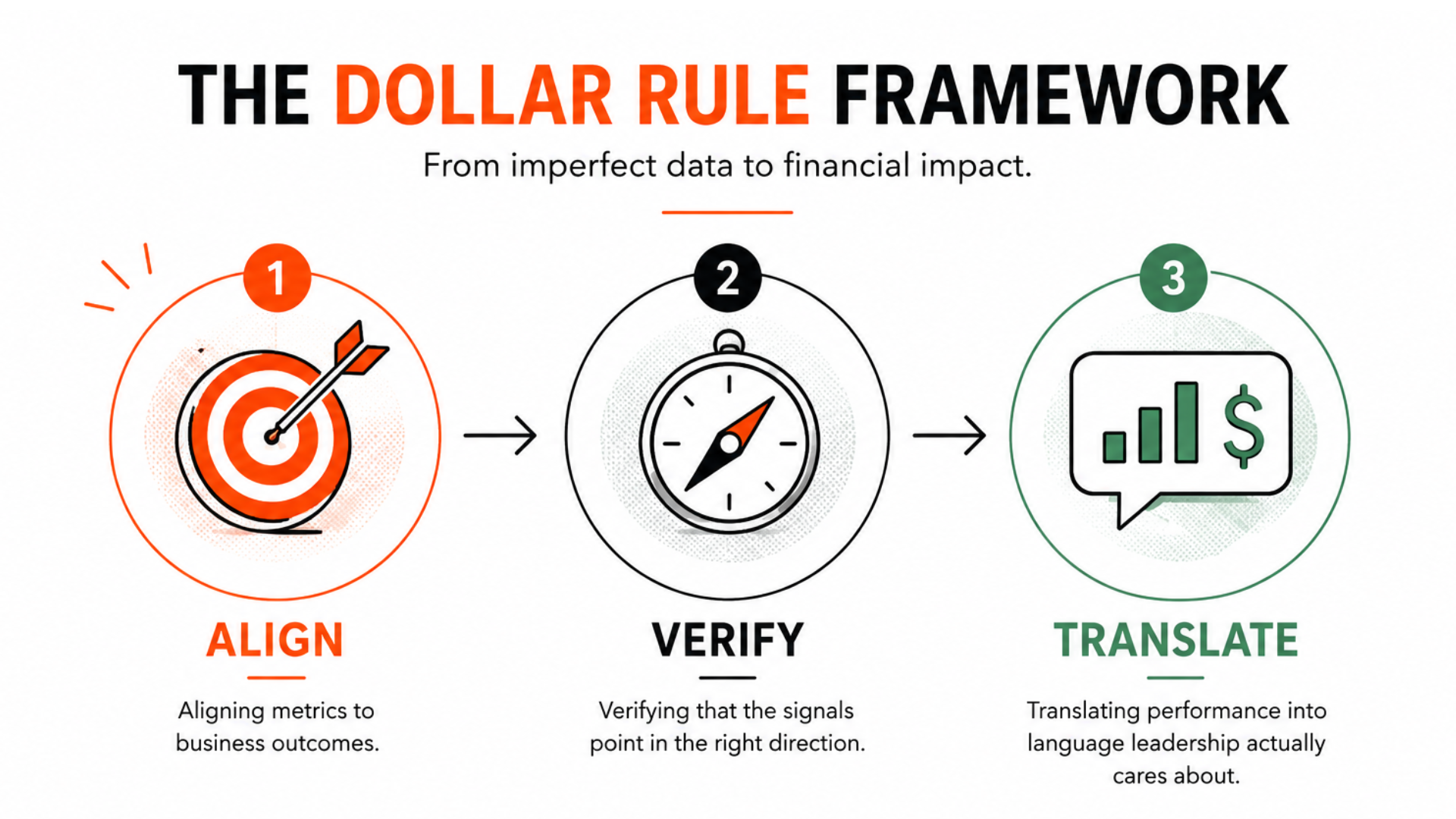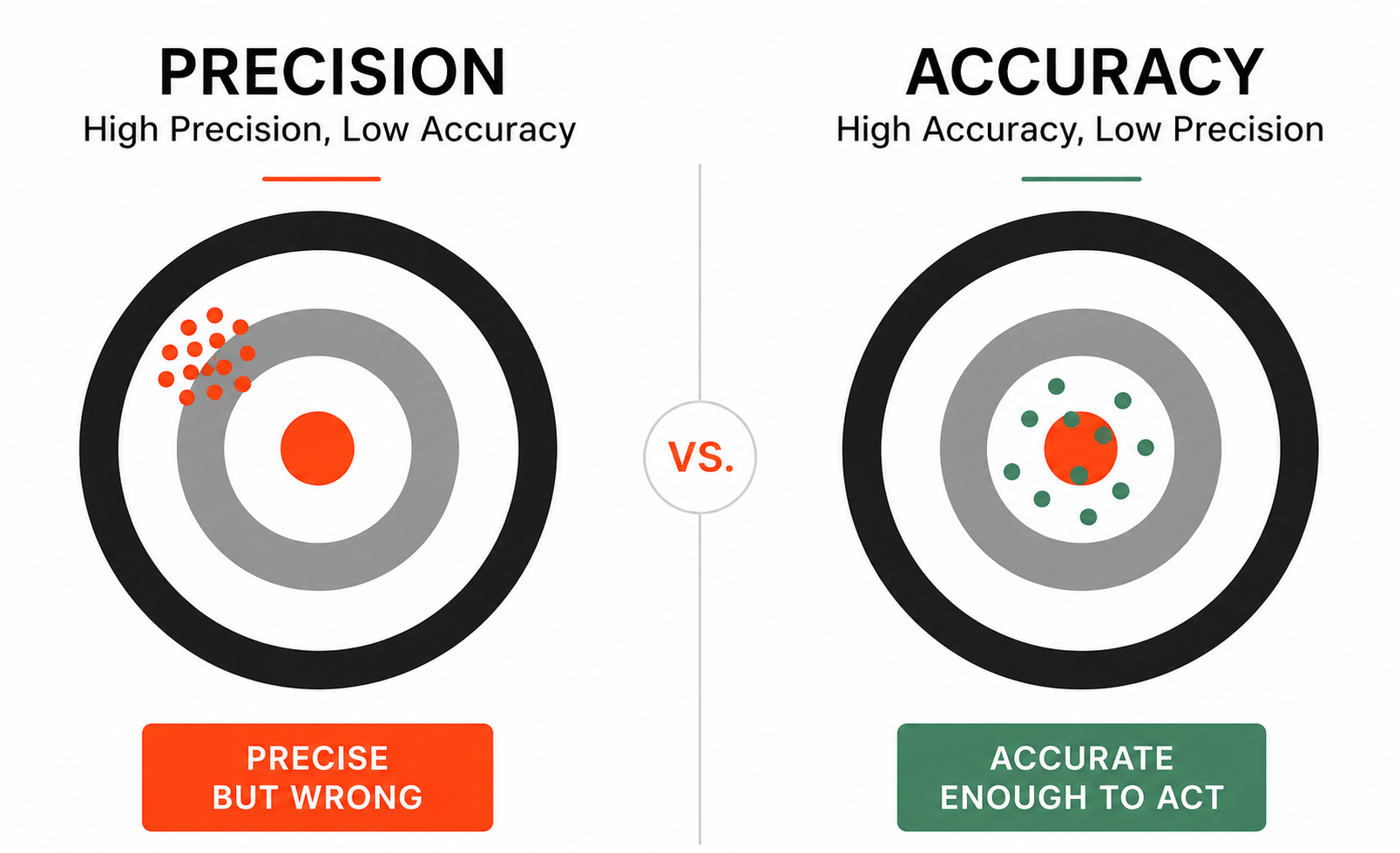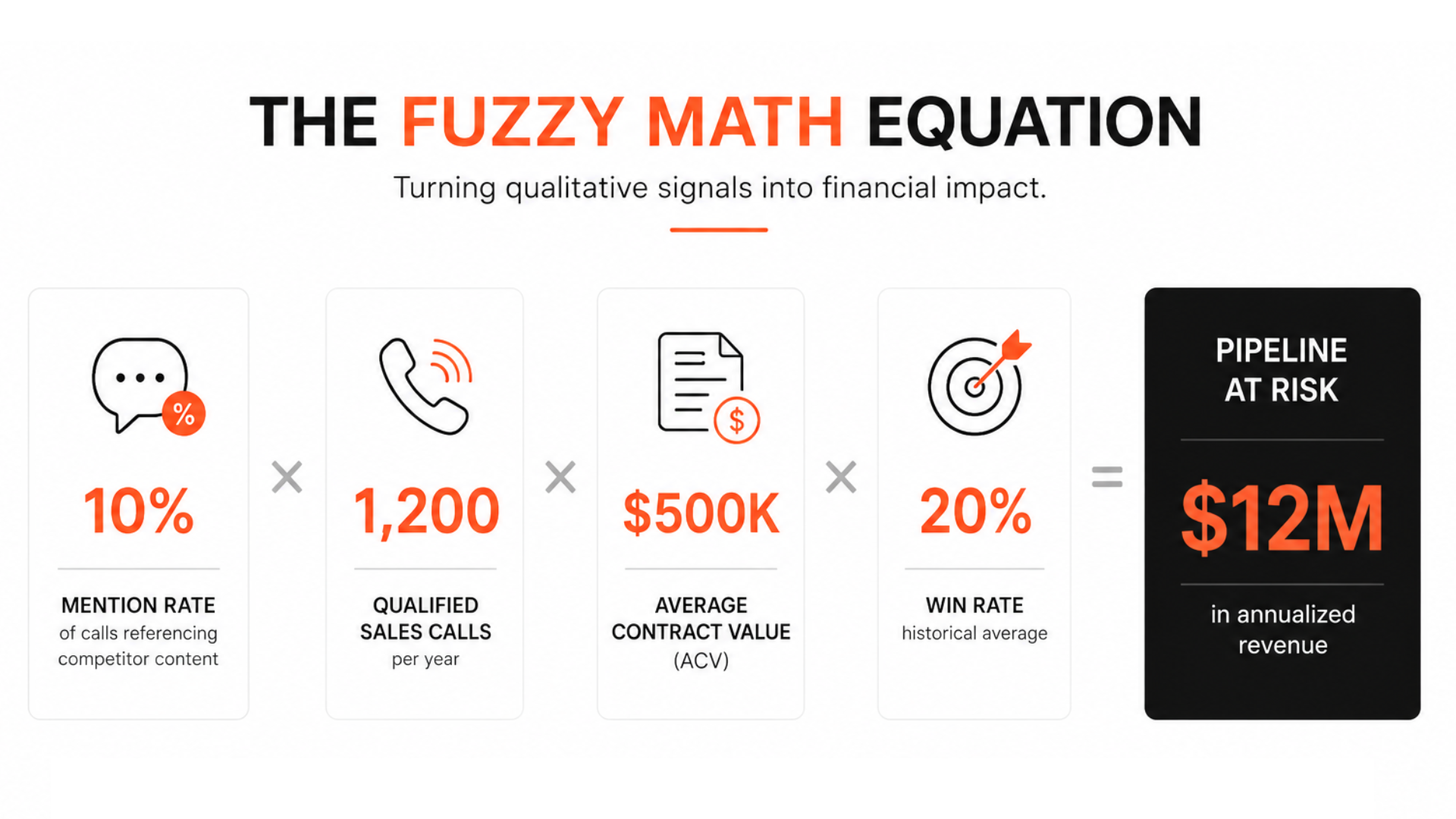
If you have connected Profound to Claude and are staring at an empty conversation, do not begin with a broad request such as “analyze our AI visibility.” That leaves Claude to choose the scope, comparisons, and standard of proof. The response may sound decisive while answering a different question from the one your team needs resolved.
Profound is now available as an official Anthropic connector. The practical opportunity is a shorter path from authorized Profound data to analysis inside Claude. You still need to define the decision, verify what the connection exposes, and keep measured evidence separate from Claude’s interpretation.
What the Profound connector changes – and what it does not
Treat the connector as an access layer, not a new measurement system. Profound remains the origin of the connected data. Claude can help you inspect, organize, compare, and explain what the connection returns. It cannot recover fields that were not returned, repair an inappropriate comparison, or turn correlation into proof of causation.
Four boundaries matter in every conversation:
- Account boundary: confirm which Profound account or workspace is connected. A polished analysis of the wrong property is still wrong.
- Field boundary: establish which records, metrics, dimensions, and identifiers Claude can actually access. Do not assume that every object visible in Profound is available through the connector.
- Filter boundary: record the market, language, AI platform, topic, brand, competitor set, and date range whenever those dimensions are present. A change in scope can create an apparent performance change.
- Interpretation boundary: separate returned measurements from explanations proposed by Claude. The former can be verified against Profound; the latter are hypotheses until checked.
Official connector status should not be interpreted as a promise of complete data coverage, live refreshes, write access, or a particular permission model. Verify those details in your own connected environment instead of building a workflow around assumptions.
Your first message should therefore be an inventory request:
Starter prompt: Inspect the Profound connection available in this conversation. List the accounts or workspaces, record types, fields, filters, date ranges, and identifiers you can access. Distinguish fields you can retrieve from fields you are inferring. Do not begin the analysis yet. Tell me which parts of the requested scope cannot be verified from the connection.
Save the answer with the analysis. It becomes a compact data contract: a record of what Claude could see when it produced the result. If Claude cannot identify the available scope clearly, resolve the connection or permissions question before asking for strategy.
Scope the decision before you scope the data

A useful connector workflow starts with a decision, not a dashboard tour. “Understand our visibility” is not a decision. “Choose which topic cluster should receive the next content update” is. The second version tells Claude what evidence to prioritize and gives you a clear way to reject irrelevant analysis.
- Name the decision. State what will change if the analysis supports it: a content update, a new page, a technical investigation, a brand-entity correction, or continued monitoring.
- Name the entity. Use the exact brand, product, property, or business unit you intend to evaluate. Add aliases only when you deliberately want them included.
- Set the comparison. Supply an approved competitor list or ask Claude to analyze the brand alone. Do not let the model silently invent a comparison set.
- Lock the scope. Specify the topic, audience, market, language, AI platform, and time window that matter. If a requested dimension is unavailable, require Claude to say so rather than substitute another one.
- Define acceptable evidence. Require every conclusion to point to returned fields, records, citations, or other traceable identifiers. Anything else must be labeled as an inference or a proposed next check.
A reusable control prompt can carry those rules into the rest of the conversation:
Control prompt: Use only information returned through the connected Profound account and context I explicitly provide. Preserve the available date range and filters. For every finding, show the supporting field or record identifier. Put measured observations, interpretations, and recommended actions in separate sections. Mark missing data as missing; do not estimate it. Ask for clarification when a missing input would change the decision.
Before using connected business data, also confirm who is permitted to access the selected workspace, whether the conversation may be shared, and what information can be placed in prompts under your organization’s policies. A connector reduces manual transfer; it does not remove your responsibility to control sensitive data.
Three workflows that produce defensible AI visibility actions
1. Find a visibility gap without inventing its cause
The most useful gap analysis identifies where a brand underperforms within a defined set of prompts or topics. It does not immediately claim to know why. Visibility can differ alongside many variables, and the connector alone does not establish which variable caused the difference.
Diagnostic prompt: For [brand], analyze [topic] in [market and language] across [available time window]. Compare it with [approved competitors] only where equivalent comparison data exists. Rank the most consistent visibility gaps. For each gap, return: the observed result, the fields or records supporting it, the scope and filters, one or more plausible explanations labeled as hypotheses, and the next evidence needed to test each explanation. Do not present a hypothesis as a finding.
Review the output in that order. First decide whether the observation is supported. Then check whether all compared entities use the same filters and coverage. Only after those checks should you consider the proposed explanations. This prevents an appealing theory about content quality, authority, or entity recognition from outrunning the connected data.
2. Turn prompt and citation signals into a content brief
If the connection returns prompt-level answers, cited domains, URLs, or related records, Claude can organize those signals into editorial questions. Make the availability of those fields a condition of the task. A domain name in a generated explanation is not evidence that the domain appeared in Profound.
Content-opportunity prompt: From the records available through Profound, find recurring prompts about [topic] where [brand] is absent, represented weakly, or trails [approved competitors]. If citation fields are available, show the exact cited domains or URLs and their associated records. Group the prompts by user intent rather than by shared keywords. For each group, propose one content action tied directly to the observed gap. Label any claim about why another page was selected as a hypothesis unless its page content is also available for inspection.
Translate the result into a brief with five required fields:
- User question: the specific decision or problem represented by the prompt group.
- Observed gap: what the connected records actually show about the brand.
- Evidence: the record, metric, answer, citation, or identifier supporting the gap.
- Page action: update an existing answer, create a missing resource, clarify an entity relationship, or investigate a technical obstacle.
- Validation condition: what comparable Profound signal you will inspect after the action has had an opportunity to appear in the available data.
Do not treat every missing brand mention as a reason to publish another page. If an existing page already answers the intent, the next step may be to improve its clarity, structure, supporting evidence, or entity references. If the connected data cannot distinguish among those possibilities, use it to prioritize an investigation rather than to prescribe the edit.
3. Compare periods without turning movement into causality
Trend analysis is only defensible when the compared records use equivalent scope. A different prompt set, market, platform, competitor group, or coverage level can make two periods look comparable when they are not.
Monitoring prompt: If date-stamped Profound records are available, compare [period A] with [period B] using the same brand, topic, market, language, platform, prompt set, and competitor filters. Identify any dimension that is not equivalent before calculating or describing change. Report observed direction and magnitude only from returned values. Do not attribute movement to a content release, campaign, algorithm change, or competitor action. List those events separately as possible explanations that require additional evidence.
Use the same saved prompt for future checks, changing only the intended date window. If the accessible schema or coverage changes, note the break instead of joining the results into one uninterrupted trend. Consistency is what makes a connector-based monitoring workflow useful; a fluent narrative cannot compensate for mismatched inputs.
Build an evidence trail from conversation to action

Claude’s final answer should not become the only record of the analysis. Preserve enough structure that another person can reproduce the finding in Profound, challenge the interpretation, and understand why an action was approved.
- Inventory the connection. Record the accessible workspace, fields, identifiers, filters, and coverage before analysis begins.
- Run one decision-focused query. Keep unrelated brands, topics, and time windows out of the first pass.
- Request counterevidence. Ask Claude which returned records weaken or contradict its leading interpretation. A robust finding should survive that check.
- Verify the underlying records. Open the relevant Profound view or record where possible. Check values, labels, dates, filters, and citations rather than approving an action from the prose alone.
- Create an evidence ledger. For each recommendation, save the observation, scope, supporting identifiers, interpretation, action owner, and validation condition.
- Repeat with equivalent scope. At the next comparable data refresh, use the saved control prompt and document any change in coverage before comparing results.
Add a final quality-control request before sharing the work:
Audit prompt: Audit your previous response. Create three lists: claims directly supported by returned Profound data, inferences that require validation, and recommendations based on editorial judgment. For each supported claim, include the relevant field, filter, date range, and record or citation identifier. Remove any claim you cannot trace.
This audit will not guarantee correctness, but it exposes a common failure mode: a valid observation, a plausible explanation, and a recommended action being compressed into one sentence as though all three had equal evidentiary weight.
Key takeaways
- The Profound connector gives Claude a route to authorized Profound context; it does not make every Profound field available by default.
- Begin by inventorying accessible accounts, records, fields, filters, identifiers, and date coverage.
- Frame each conversation around one decision, one defined scope, and an explicit standard of proof.
- Require Claude to separate measured observations from hypotheses and recommended actions.
- Verify important findings in the underlying Profound records and save an evidence ledger before assigning work.
- Compare periods only when their scope and coverage are equivalent, and never treat movement alone as proof of causation.
Start with one narrow, diagnostic conversation. Inventory the connection, investigate a single visibility gap, and verify every consequential claim before converting it into a content ticket. Once that path is reproducible, save the prompts and evidence fields as a team workflow. The value of the Profound Claude connector will come from disciplined questions and traceable decisions, not from the volume of analysis it can generate.