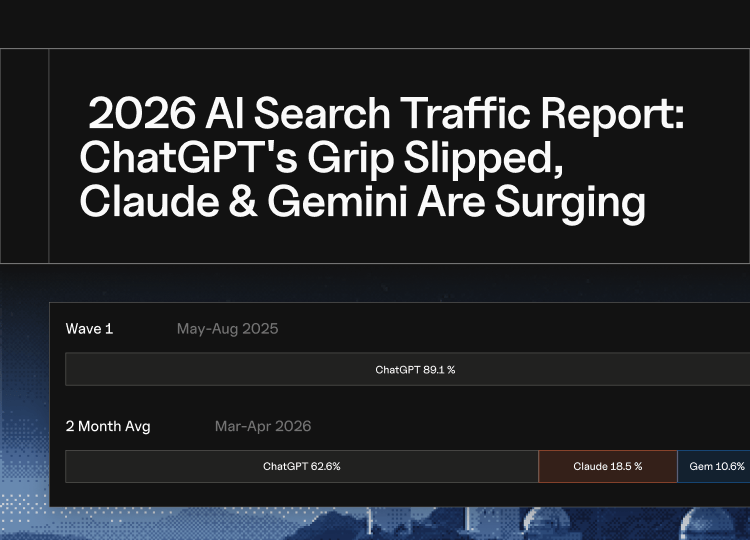
Tag: AI Search

  • How to Earn AI Search Citations and Build Brand Visibility

    How to Earn AI Search Citations and Build Brand Visibility

    Your page can rank well in traditional search and still be absent when an AI assistant answers the same question. That gap is not necessarily a content-quality failure. AI systems retrieve many possible sources, cite only a small fraction, and repeatedly favor a limited set of domains.

    You need to solve two related problems: make the right page useful enough to cite, and make your brand clear enough to recognize and trust. The practical work spans query coverage, format, answer placement, entity evidence, and measurement.

    Compete for a citation set, not one blue-link ranking

    Retrieval is not the same as citation. About 85% of the pages retrieved for ChatGPT responses were not cited. Within a topic, roughly 30 domains shared about 67% of citations. The concentration was especially visible for product comparisons, where the top 10 domains captured about 46% and the top 30 captured 67%.

    A high Google position still helps, but it does not reserve a place in the answer. Pages ranking first were cited in 43.2% of the analyzed cases. That was 3.5 times the citation rate of pages beyond the top 20, yet most number-one pages still were not cited.

    The ChatGPT pattern is based on roughly 98,000 citation rows from about 1.2 million responses. Treat those numbers as directional benchmarks, not universal thresholds. Citation behavior can differ by model, query intent, industry, and the other sources available for a particular answer.

    This changes the unit of content planning. A conventional keyword brief often targets the most visible wording of a question. An AI system can fan that question out into narrower grounding queries covering definitions, alternatives, eligibility, risks, features, or comparisons. Some cited pages were discovered through fan-out queries with no recorded search volume, so a zero-volume subquestion is not automatically a zero-value topic.

    Build a query-family map before you edit anything:

    1. Write the broad decision or problem your audience brings to an AI assistant.
    2. List the follow-up questions needed to answer it responsibly: what it is, who it is for, how options differ, what the limitations are, and what someone should do next.
    3. Label each question informational, commercial, transactional, or navigational.
    4. Assign every intent to an existing page or a clearly justified new page. Do not create a near-duplicate URL for every prompt variation.
    5. Link the pages as a topic cluster so the central guide, comparisons, product or service pages, and brand information reinforce one another.

    The result should be broad coverage without repetition. One strong page can answer several closely related grounding queries. A cluster is useful when the reader’s task genuinely changes, not when it merely gives you more URLs to publish.

    Match the page format to what the user is trying to do

    Four symbolic user tasks lead to different blank page layouts for instructions, comparison, category selection, and explanation.

    Content type matters, but intent is the stronger planning signal. Across 75,000 AI answers and more than one million citations, listicles received 21.9% of citations, articles 16.7%, and product pages 13.7%. Together, those three formats accounted for more than 52%. The useful lesson is not that every brand needs more listicles. It is that each page should perform the job implied by the query.

    Query intentFormat signal in the analyzed answersWhat your page needs to accomplish
    InformationalArticles received 45.5% of citations, followed by listicles at 21.7%.Explain the subject directly, define its scope, answer related questions, and make important qualifications easy to find.
    CommercialListicles received 40.9% of citations.Help the reader compare options using explicit criteria, trade-offs, suitable use cases, and a clear method for choosing.
    Transactional or navigationalProduct and category pages together represented about 40% of citations.Confirm exactly what is offered, organize available choices, and connect the requested action to accurate product or service facts.

    An informational article should not hide its answer behind a product pitch. A product page should not imitate a neutral comparison while omitting alternatives and trade-offs. A commercial page should give the reader a defensible comparison method rather than a list of brands ordered to suit the publisher.

    Neutrality becomes particularly important when someone asks for a recommendation. In professional services, third-party listicles accounted for 80.9% of citations. A company’s self-authored list of the best providers cannot carry the same independence as a genuinely editorial comparison.

    You cannot manufacture that independence on your own domain. You can make your offering easier for credible third parties to evaluate: publish accurate category and product facts, maintain a clear entity home, correct outdated public information, and earn relevant coverage or inclusion through legitimate public-relations work. Do not disguise advertising as independent analysis; it weakens the very corroboration you are trying to build.

    Model differences also prevent one format from becoming a universal recipe. ChatGPT leaned toward articles and informational content in the analyzed sample, Google AI Mode had a more balanced mix, and 17% of Perplexity citations came from discussions such as forums and Reddit. Prioritize the platforms your audience actually uses, then inspect their answers instead of assuming that a page cited by one system will be preferred by all of them.

    Put the quotable answer near the top, then earn the depth

    Where you place information can matter as much as how much you publish. ChatGPT citations appeared most often in the 10% to 20% portion near the beginning of a page, while the final 10% received little recognition. If the conclusion, key distinction, or decisive comparison appears only after several screens of setup, it is harder for both readers and retrieval systems to identify the passage that answers the question.

    Use the opening portion of a citation-targeted page deliberately:

    1. Answer the primary question in the first few sentences. State the scope and any qualification that would materially change the answer.
    2. Place the essential definition, decision criteria, or comparison immediately after that answer.
    3. Use descriptive headings that correspond to real follow-up questions. A heading such as “When this option is unsuitable” carries more meaning than “Other considerations.”
    4. Support factual claims where they appear. Do not separate a bold claim from its explanation or evidence by several sections.
    5. Expand into examples, edge cases, alternatives, and implementation details only after the reader can understand the core answer.
    6. Do not save a new, essential conclusion for the closing paragraph. The close should help the reader act on information already established.

    Longer content often earns more citations, but raw length is a poor production target. Pages with 5,000 to 10,000 characters showed a substantial lift, while pages above 20,000 characters averaged 10.18 citations compared with 2.39 for shorter pages. That relationship does not prove that adding characters creates citations. Comprehensive pages are also more likely to answer the related subquestions generated during retrieval.

    The pattern varies by subject. Shorter, information-dense finance pages could outperform long guides, while longer pages retained their value in education, crypto, and product analytics. Let the query family determine the necessary depth. Remove repetition, but do not cut a necessary distinction merely to hit an arbitrary length.

    Structured data belongs after this editorial work, not in place of it. JSON-LD can clarify the page type, entity, and relationships already expressed in the visible content. It cannot supply substance or independent credibility that the page lacks. Make the markup match the copy exactly; if the schema asserts a different name, category, offer, or relationship, repair the underlying information rather than adding more markup.

    Give your brand one stable identity anchor

    A glowing geometric keystone connects to blank website, profile, product, directory, and knowledge cards that share the same visual motif.

    A useful page can answer a question while leaving the publisher poorly understood. Brand visibility requires a second layer: a stable place where people and machines can resolve who the brand is, what it does, and which claims about it are supported.

    This identity anchor is often called an entity home. It may be an About page, but the label is not important. Choose the durable URL that most clearly defines the organization. It should remain available long enough to become the consistent reference point for your brand’s identity.

    Audit that page for five things:

    • A single, consistent brand name and an immediate explanation of what the organization does.
    • A clear description of the people or organizations it serves and the categories in which it operates.
    • Links to the relevant product, service, editorial, policy, or evidence pages that substantiate important claims.
    • Visible facts that agree with the Organization schema and other structured data associated with the brand.
    • Claims that credible third parties can corroborate, rather than unsupported superlatives repeated only on properties the brand controls.

    Think of every important brand claim as a three-part chain. The entity home defines it. A relevant first-party page explains or proves it. Independent material confirms it when independent confirmation is appropriate and available. If one part conflicts with another, the entity becomes harder to resolve.

    For example, do not describe the business with one category on the entity home, another in page titles, and a third in external profiles. Decide which description is accurate, update the pages you control, and seek corrections where material third-party information is demonstrably outdated. Consistency should reflect reality; it is not a reason to repeat an inflated claim more widely.

    The entity home is an anchor, not the whole brand narrative. Supporting pages still need to explain individual offerings, expertise, comparisons, and evidence in enough detail to answer the corresponding queries. The identity page tells a system which entity it is dealing with; the rest of the site demonstrates why that entity belongs in a particular answer.

    Measure the query-to-page relationship, then improve one variable

    AI citation visibility is many-to-many. One grounding query can cite several pages, and one page can support several grounding queries. A report containing separate lists of queries and URLs cannot show whether the correct page is appearing for the intended question.

    Bing Webmaster Tools now connects those two sides in its AI Performance reporting. You can select a grounding query to see its cited pages or select a page to see its associated grounding queries. The dashboard also provides cited URLs and visibility trends across Bing and Copilot experiences.

    Turn that mapping into a repeatable optimization workflow:

    1. Record the grounding queries, cited URLs, and current visibility trend for one commercially or strategically important query family.
    2. Label each query by intent and each URL by its proper role: informational article, comparison, product or category page, or entity page.
    3. Check the fit. A citation is less useful diagnostically if a general About page appears where a detailed product page should answer the question.
    4. Inspect missing relationships. Look for relevant queries with no suitable owned page, strong pages connected to unrelated queries, and important subquestions answered only deep in a page.
    5. Choose one meaningful change: correct the format, strengthen the opening 20%, add a genuinely missing subtopic, resolve an unsupported brand claim, or improve links within the topic cluster.
    6. Record the change and compare the mapping and trend in a later reporting cycle. Avoid rewriting several pages at once when you want to learn which intervention mattered.

    Do not reduce the work to a total citation count. Track whether the brand appears for the right query families, whether the cited URL matches the user’s intent, and whether important brand claims have independent support. Keep conventional search performance and business outcomes alongside those measures. A citation is visibility, not proof that the visitor understood the answer or completed a valuable action.

    Key takeaways

    • Ranking helps citation eligibility, but a number-one position does not guarantee inclusion in an AI answer.
    • Plan around query families and fan-out questions, including useful subquestions that conventional keyword tools may show as zero volume.
    • Match the format to intent: articles for explanation, list-based comparisons for commercial evaluation, and product or category pages for transactional and navigational needs.
    • Place the direct answer and decisive criteria near the beginning. Add length only when it supplies relevant coverage.
    • Use an entity home, consistent first-party facts, structured data, and credible third-party corroboration to make the brand easier to resolve.
    • Measure query-to-page mappings so you improve the page associated with the actual AI demand rather than guessing from aggregate visibility.

    Start with one query family where absence from AI answers matters to the business. Assign the right page to each intent, rewrite the most important page from the top down, and repair the corresponding claims on your entity home. Once the query-to-page mapping improves, apply the same process to the next cluster.

    References


  • EU Scrutiny of Google’s DMA Compliance: A Marketer’s Plan

    EU Scrutiny of Google’s DMA Compliance: A Marketer’s Plan

    If European search contributes meaningful traffic, leads, subscriptions, or sales to your business, the main risk isn’t missing the EU’s announcement. It is discovering a performance change later and having no reliable baseline to explain what moved, where it moved, or whether the ruling had anything to do with it.

    The European Commission opened its investigation of Google’s search business under the Digital Markets Act in March 2024. Competition Commissioner Teresa Ribera has said a decision will come, but she hasn’t committed to a date. You should use that uncertain window to prepare your measurement, ownership, and response process – not to guess the verdict.

    The ruling, the remedy, and the search change are different events

    A regulatory finding does not automatically tell you what a search results page will look like, when Google will alter a system, or how users will respond. Those are separate stages. Treating them as a single event is how teams end up attributing every ranking, cost, and traffic fluctuation to regulation.

    Work with three distinct clocks:

    • The legal clock: What the Commission decides, which conduct it addresses, what remedies it requires, and when any obligations take effect.
    • The product clock: What Google actually changes in search presentation, ad delivery, ranking systems, pricing mechanics, reporting, or access for competing services.
    • The performance clock: When those changes become visible in impressions, clicks, costs, conversions, referrals, citations, or revenue.

    Do not start the product or performance clock merely because a headline appears. First confirm that the final decision requires an operational change relevant to your market. Then confirm that a change has been deployed. Only after that should you test whether your data moved in a related way.

    Political pressure is also not a substitute for a decision. A coalition of 18 lobby groups and civil society organizations has asked for a substantial fine and definitive remedies. That request tells you enforcement pressure is high; it does not establish what the Commission will order. Likewise, Google’s approximately 90% share of the EU search market explains why the consequences could be broad, but market share alone does not predict the remedy.

    Create an internal tracking record now. Keep confirmed facts, outside demands, possible outcomes, observed Google changes, and measured business effects in separate fields. That small distinction will prevent speculation from hardening into an unsupported performance explanation.

    Watch four search surfaces, not one ranking chart

    Four abstract search interfaces show web results, local listings, product discovery, and an AI-style answer panel around a central workstation.

    A conventional rank tracker can tell you that a URL changed position. It cannot, by itself, show whether the page gained usable visibility, whether a new search feature displaced it, whether paid inventory changed above it, or whether an AI-generated answer absorbed the click. Your monitoring needs to cover the whole search experience.

    SurfaceBaseline to preserve nowSignal worth investigatingFirst response
    Organic searchQuery group, landing page, country, language, device, impressions, clicks, click-through rate, average position, and visible result featuresA sustained EU-specific change across related queries, pages, or result types rather than an isolated ranking movementInspect the actual results pages and identify which element gained, lost, or changed placement before editing content
    Paid searchCampaign, country, device, query class, impressions, click volume, cost per click, impression share, conversion rate, and cost per acquisition or return on ad spendCosts or delivery patterns moving in affected EU segments while comparable segments remain relatively stableCheck auction, placement, demand, budget, and conversion-quality signals before changing bids
    AI Overviews and publisher visibilityFeature presence on a fixed query sample, cited domains, cited URLs, brand mentions, organic clicks, and publisher referralsA repeatable change in feature frequency, source selection, citation prominence, or downstream trafficSeparate changes in AI presentation from ordinary blue-link ranking changes and record both
    Competitive discoveryReferral sources, partner traffic, comparison-service visibility, branded search demand, and assisted conversionsNew or expanded discovery paths producing qualified visits or conversionsValidate traffic quality and attribution before reallocating acquisition resources

    The Commission is also examining Google’s use of AI Overviews and its ranking of news publishers. Keep that scrutiny on a separate line in your change log. It may overlap with the same search ecosystem, but you should not assume every AI Overview or publisher-visibility change is part of the pending DMA decision.

    This distinction matters for diagnosis. If ordinary rankings remain stable but citations inside AI-generated results change, you have a source-selection or presentation question. If ad costs move while organic layouts remain stable, you have an auction or demand question. If impressions remain steady but clicks fall after a result-page change, you have a click-distribution question. Each pattern calls for different evidence and a different response.

    Build an EU search baseline before you need one

    A useful baseline is not a single export labeled “Europe.” EU markets differ by language, query demand, competition, device use, campaign structure, and commercial importance. Aggregate reporting can hide a serious movement in one market behind stability in another.

    1. Define the affected business scope. List the EU countries, languages, domains, subdirectories, storefronts, publications, and campaigns that matter to you. Assign an owner to each material segment.
    2. Freeze meaningful cohorts. Preserve groups for branded and non-branded queries, informational and commercial intent, product or service families, news content where relevant, and the landing pages that generate business outcomes. Do not rebuild the groups after performance changes.
    3. Add comparison segments. Use comparable non-EU markets, stable query groups, or unaffected product lines as diagnostic references. A comparison is not proof of causation; it helps show whether a movement is localized or part of a wider change.
    4. Record the visible search environment. For a fixed query sample, capture date, country, language, device, result order, ad presence, Google-owned modules, competing services, AI-generated features, citations, and other elements that can alter attention or clicks.
    5. Connect visibility to outcomes. Pair rankings and impressions with clicks, qualified sessions, conversions, revenue, subscription starts, lead quality, and paid acquisition costs. A visibility change with no business effect deserves a different response from a revenue change.
    6. Log confounding events. Record site migrations, content releases, schema changes, consent changes, campaign edits, promotions, outages, seasonality, and unrelated Google updates. Without this log, a regulatory explanation can become the default simply because it is prominent.

    Keep raw exports or snapshots as well as dashboards. A dashboard can be reconfigured, filtered incorrectly, or lose historical dimensions. Your preserved data should let another analyst reconstruct what users could see and what the business measured before any compliance-related rollout.

    Do not rewrite your JSON-LD in anticipation of an unknown remedy. Structured data should continue to describe the page’s real entities, offers, authorship, organization, products, articles, and relationships accurately. A regulatory change to distribution or presentation does not make inaccurate schema useful. If Google later publishes new eligibility or implementation requirements, evaluate those documented requirements against your existing markup and change only what the page supports.

    Apply the same discipline to AEO and GEO work. Clear answers, explicit entity relationships, attributable claims, and crawlable supporting detail remain useful, but they are not a workaround for a platform-level compliance change. Measure traditional Google visibility, AI-generated search visibility, and citations in other answer engines separately so a gain in one channel does not conceal a loss in another.

    Prepare for scenarios without pretending to know the remedy

    A strategy team examines three branching, unlabeled search-market scenarios on an illuminated planning table.

    Your plan should cover plausible operational outcomes without presenting any of them as the expected verdict. The goal is not to forecast Brussels. It is to know which evidence would trigger which action.

    A penalty arrives without an immediate visible search change

    A financial penalty can dominate coverage while producing no immediate change that users or advertisers can see. In that scenario, annotate the decision date but leave content, bids, and technical implementation alone unless the data or the remedy gives you a reason to act. Continue monitoring for a later rollout rather than forcing a same-day explanation onto normal volatility.

    A remedy changes result presentation or access

    If a remedy affects how Google presents its own services, rival services, publishers, or other result types, position alone will be an incomplete metric. Compare the same queries before and after deployment. Record which modules appear, how much prominence they receive, which destinations win the click, and whether the new traffic converts.

    Do not immediately rewrite pages that lose clicks while retaining rank. First determine whether the content became less competitive or whether another interface element intercepted attention. Content changes address the first problem; measurement, distribution, and channel changes may be needed for the second.

    Ad serving, ranking, or pricing mechanics change

    The pending decision could affect ad serving, ranking, or pricing dynamics, but the direction and size of any effect are not known. Paid search teams should preserve campaign-level and market-level baselines now, including the relationship between cost, placement, demand, conversion quality, and revenue.

    If costs move, do not assume the compliance decision caused them merely because the dates are close. Check whether demand, competitors, match behavior, budgets, creatives, landing pages, tracking, or conversion mix changed at the same time. When financial exposure is material, use capped and reversible bid or budget adjustments while you investigate. A sweeping change can create additional cost and destroy the comparison you need.

    AI Overview or news-publisher action moves on a separate track

    A change involving AI Overviews or publisher ranking may be important without being the remedy in the core DMA search case. Label the responsible proceeding or product update whenever you can confirm it. If you cannot, describe the observation plainly – such as a change in citation frequency or publisher clicks – and leave the cause unassigned.

    That restraint improves your decisions. It also keeps executive reporting credible when several regulatory investigations, product releases, and market shifts are unfolding in the same ecosystem.

    Key takeaways and the response plan to use

    • The EU decision, Google’s implementation, and the resulting performance effect should be tracked as separate events.
    • A fine or demanded remedy is not evidence that a visible search change has already happened.
    • Segment EU performance by country, language, device, query type, page group, and paid or organic channel before relying on an aggregate trend.
    • Monitor search-result composition, AI citations, ad delivery, costs, clicks, and business outcomes – not rankings alone.
    • Keep AI Overview and news-publisher scrutiny separate from the core DMA case unless the final decision explicitly connects them.
    • Preserve accurate structured data and content facts; do not make speculative technical changes for an unknown remedy.
    • Use reversible commercial adjustments until multiple related signals support the same diagnosis.

    When the decision is published

    1. Read beyond the headline. Obtain the official decision or authoritative summary and identify the finding, conduct in scope, required remedies, geographic scope, covered services, effective dates, and unresolved points.
    2. Write a short decision brief. Separate confirmed obligations from possible product implications. Include an explicit “unknown” section so assumptions remain visible.
    3. Map each remedy to an observable surface. Assign organic search, paid search, analytics, publisher, AI visibility, legal, and product owners only where their systems are genuinely affected.
    4. Annotate your measurement systems. Record the decision date, announced implementation dates, and first observed rollout separately. Do not use one generic marker for all of them.
    5. Compare against the preserved baseline. Look for related movements across geography, device, query groups, search features, clicks, costs, and conversions. An isolated metric is a prompt to investigate, not a conclusion.
    6. Choose the smallest reversible response. Adjust monitoring, experiments, bids, distribution, or content only to the degree supported by evidence. Preserve a comparison group wherever the business can safely do so.
    7. Report causality carefully. Use “coincided with” or “followed” until you can connect the legal requirement, the deployed product change, and the measured effect. Timing alone does not establish cause.

    If the ruling creates legal obligations for your own company, counsel should interpret those obligations. For the search and marketing teams, the immediate job is operational: preserve evidence, identify the actual implementation, and protect performance without making speculative changes.

    You do not need a confident prediction to be ready. You need a clean EU baseline, named owners, a record of what changed, and a rule that no irreversible action happens before the evidence identifies the affected surface. Put those pieces in place while the decision is still pending, and the eventual verdict becomes a manageable measurement event rather than a scramble.

    References

  • How to Build an AI Search Visibility Content Strategy

    How to Build an AI Search Visibility Content Strategy

    Your traffic can fall while your content becomes more influential. That sounds contradictory only if a visit is your sole unit of search success. People increasingly receive answers inside search results, AI interfaces, videos, forums, and social feeds, and many of those interactions never produce a website session.

    Your job is not to abandon SEO or publish on every platform. It is to make your site the dependable source for a valuable decision, carry that knowledge into the environments where the decision happens, and measure whether your facts shape the answer. That requires a different content system, not merely more content.

    Replace the traffic-only scorecard with an answer footprint

    Organic sessions still matter. They show that someone reached property you control, where you can explain the full case and offer a next step. But sessions cannot show every place your expertise influenced discovery. Search engines can display the answer directly, AI assistants can synthesize it, and social or video platforms can satisfy the need without sending the person elsewhere.

    Measure your answer footprint across four separate layers:

    • Discoverability: Can search engines, AI systems, and people find the relevant page or platform contribution?
    • Representation: Is your brand mentioned, and are its products, methods, limitations, and positions described accurately?
    • Influence: Is your domain cited, or is knowledge associated with your brand reflected in the answer?
    • Business response: Do you see qualified visits, branded searches, leads, sales conversations, or other outcomes connected to the topic?

    Do not collapse these layers into one score. A citation without a click can still extend your influence, but it does not prove commercial value. A rise in branded demand may be meaningful even when the original exposure is invisible to your analytics. Conversely, an AI mention is not a success if the description is wrong or places your brand in an irrelevant category.

    Organize measurement around decision clusters rather than isolated keywords. A cluster might include the main question, its prerequisites, common alternatives, implementation concerns, risks, and follow-up questions. This reflects how a person investigates a decision and gives you a stable unit to compare across Google, Bing, AI assistants, YouTube, Reddit, and other relevant environments.

    Key takeaways

    • Keep traffic, citations, mentions, accuracy, and business outcomes as separate signals.
    • Give each important decision cluster one authoritative home on your website.
    • Expand onto platforms because your audience searches there or AI answers rely on them, not because the platform is fashionable.
    • Reuse the underlying knowledge, but adapt its presentation to each platform.
    • Scale a content pattern only after it shows durable discoverability, accurate representation, or business value.

    Make your website the canonical source worth citing

    Your website remains the place where you control definitions, evidence, context, updates, and conversion paths. In a zero-click environment, that role becomes more important, not less. AI-generated answers often depend on clear primary explanations from identifiable experts and organizations, even when the person reading the answer never visits the originating page.

    A canonical page should do more than target a phrase. It should make a defensible contribution that another person or system can reuse without guessing what you mean. Use this publishing checklist:

    • Answer the central question near the beginning. State the scope and any important boundary in the same passage.
    • Add information that came from the work itself: a method, calculation, test procedure, decision framework, original data, documented example, expert explanation, or clearly supported position.
    • Write self-contained claim blocks. Give each paragraph a clear subject, enough context to stand alone, and language that does not depend on a chain of vague pronouns.
    • Name entities consistently. Use the same product, organization, person, feature, and category names across the page and related properties.
    • Show provenance. Identify the author or reviewer, explain relevant expertise, display the publication or update date, and link claims to the evidence actually supporting them.
    • Connect supporting pages. Link definitions, methods, comparisons, and implementation instructions so the broader topic can be understood as a coherent body of knowledge.
    • Give the page an owner. Someone should be responsible for correcting outdated facts and reconciling changes across distributed versions.

    Structured data can clarify this page, but it cannot supply missing authority. Select the schema type that accurately describes the visible content. For an editorial page, that may include Article or BlogPosting relationships alongside the relevant Person or Organization and BreadcrumbList entities. Keep names, authorship, dates, and relationships consistent with what a reader can see. Do not mark up claims, ratings, questions, or entities that the page does not actually contain.

    Treat JSON-LD as a machine-readable identity and relationship layer. The visible page still has to carry the answer, evidence, and context. Adding more schema types to a generic page does not turn it into a primary source.

    The same distinction applies to AI-assisted writing. On new domains without established authority, AI-generated pages showed a rapid rise followed by a decline during a 16-month experiment. That pattern does not prove that all AI-assisted content will fail. It does show why an early ranking increase is not enough evidence for a mass-production strategy.

    Use AI to reduce production friction where it helps, but put every page through a source-worthiness gate before publishing. Ask whether the page contains a claim you can defend, evidence a competing summary cannot reproduce honestly, a clear task it helps the reader complete, and an update plan. If the only differentiator is wording, the page is not ready to scale.

    Match each decision to the surface where people search

    Traditional keyword research can reveal demand while still missing where that demand is expressed. People may use YouTube to learn a repair, Reddit to test a claim against lived experience, TikTok to discover a restaurant, or Amazon to narrow a purchase. Those platforms also occupy conventional search results, so ignoring them can cost visibility both inside the platform and on Google or Bing.

    The right surface depends on the task. One documented example found that the query about fixing a leaky sink faucet had 15 times more estimated global search volume on YouTube than in traditional search. That is a query-specific result, not a universal ratio. Its practical value is the routing lesson: a demonstration-led need may deserve a video before it deserves another text-only page.

    Build a surface map for every priority decision cluster:

    1. Collect the questions people use before, during, and after the decision. Draw from customer conversations, sales objections, support requests, on-site search, community discussions, and your existing search data.
    2. Run the questions on traditional search engines. Record which domains, platforms, and formats repeatedly occupy the visible results.
    3. Repeat the investigation inside the platforms that appear. Look at the language people use, the content format they choose, and the follow-up questions visible in comments or threads.
    4. Inspect representative AI answers for the same decisions. Record cited domains, uncited brand mentions, repeated claims, omissions, and inaccuracies.
    5. Choose the smallest set of surfaces that covers the decision well. Your selection should follow observed behavior, not a generic list of channels.

    Use the nature of the question as an initial routing clue. A process that must be seen usually benefits from video. A decision shaped by first-hand trade-offs may need credible community participation. A precise definition, policy, specification, or method needs a stable owned page. A complex explanation may require a detailed page plus shorter platform-native versions that help people discover it.

    Then validate the clue against actual results. Your real search competitors may be YouTube channels, Reddit communities, publishers, or marketplaces rather than businesses selling the same service. A conventional competitor list will not reveal that attention gap.

    Build an owned-and-rented publishing loop

    An isometric central content studio exchanges modular content and audience signals with several smaller publishing platforms in a circular loop.

    Your site is owned territory. A YouTube channel, Reddit account, Quora profile, social feed, or marketplace listing is rented territory. You need both, but they do different jobs. The owned page preserves the complete, maintainable version of your knowledge. Outside platforms make that knowledge available in the formats and communities where discovery already happens.

    This distribution matters for AI visibility because citations do not come only from brand websites. Across the brand examples examined in a search-everywhere analysis, nearly 90% of citations came from third-party publications, social platforms, and forums rather than the brands’ own sites or their direct competitors. That figure is illustrative, not a benchmark for every industry. It is still a strong reason to examine the citation mix in your market before concentrating the entire strategy on your domain.

    Use a publishing loop instead of copying the same text everywhere:

    1. Define the knowledge unit. Write down the claim, its evidence, the audience it serves, the decision it changes, and the limitations that must travel with it.
    2. Publish the canonical version on your site. Include the complete explanation, provenance, supporting links, entity relationships, and appropriate structured data.
    3. Translate the unit for the selected platform. Demonstrate it in a video, answer the exact community question, turn the method into a visual sequence, or expose the relevant product facts in the marketplace format.
    4. Keep identity and facts consistent. Product names, author names, category language, limitations, and key figures should not drift between versions.
    5. Link only when the destination adds genuine value. A useful community answer should remain useful without forcing a click, while the link can provide evidence, methodology, or deeper implementation detail.
    6. Maintain the network. When a material fact changes, update the canonical page first and then correct the versions you still control.

    Adaptation is more valuable than duplication. A detailed page can explain assumptions and exceptions. A video can show the process. A forum answer can address the exact situation raised by a community member. A short social contribution can isolate one useful finding and its boundary. Each version should preserve the truth while doing the job native to its environment.

    Do not try to manufacture consensus. Repeating the same brand claim through multiple controlled profiles is distribution, not independent corroboration. Fake reviews, planted recommendations, and undisclosed promotion create reputation risk and give readers a reason to distrust the underlying claim. Earn third-party reinforcement by publishing evidence others can inspect, answering real questions transparently, and giving independent experts or customers something substantive to evaluate.

    When a third-party page dominates an important result, first determine why. It may offer a format your site lacks, candid comparisons your copy avoids, stronger participation, or clearer evidence. The right response may be to improve your canonical page, contribute responsibly on that platform, or earn independent coverage. Publishing another interchangeable blog page rarely closes a format or trust gap.

    Measure visibility as a repeatable observation

    A researcher repeatedly examines conversational, search, video, and discussion interfaces through a monitoring instrument under focused light.

    AI visibility measurement is useful only when you can tell a content change from a testing change. Build a fixed prompt library for your important decision clusters. Include discovery questions, comparisons, objections, implementation questions, and branded questions where the brand is genuinely relevant.

    For every observation, record the prompt, model, mode, date, locale, account state where relevant, answer text, cited URLs, brand mentions, competitor mentions, and any factual error. Keeping these conditions visible prevents a change in model or test setup from being reported as a content gain.

    Track the following measures separately:

    • Owned citation presence: whether an answer cites a page on your domain.
    • Earned citation presence: whether an independent page cited by the answer accurately discusses your brand or knowledge.
    • Mention presence: whether your brand appears with or without a clickable citation.
    • Representation accuracy: whether the claims, categories, capabilities, limitations, and comparisons attached to your brand are correct.
    • Platform visibility: whether your useful contribution is discoverable inside the outside platforms selected in your surface map.
    • Traditional search response: whether the canonical page and relevant platform assets gain visibility for the decision cluster.
    • Business response: whether branded demand, qualified direct visits, assisted conversions, leads, or sales feedback move in a useful direction.

    Keep a saved example behind every status. A yes-or-no citation field is easy to audit. An accuracy label should point to the exact sentence evaluated. A message-alignment field should identify which desired claim appeared, which was distorted, and which was absent. This makes the scorecard a work queue rather than a decorative dashboard.

    Prioritize corrections by consequence. Fix harmful inaccuracies first. Then address high-value decisions where your brand is absent, misunderstood, or supported only by weak third-party material. After that, expand the patterns already producing accurate citations, useful platform visibility, qualified visits, or sales evidence.

    Do not average citations, rankings, traffic, and revenue into one synthetic percentage. They describe different stages of discovery. The useful analysis is the connection between them: which canonical claims gained visibility, where they were repeated, how accurately they were represented, and whether the audience responded.

    Start with the decision cluster closest to revenue, reputation, or a recurring customer misunderstanding. Audit its current answer footprint, strengthen the canonical page, and choose the outside surface with the clearest evidence of demand. Capture the baseline before publishing. If you cannot yet name the source-worthy claim you want others to reuse, solve that knowledge gap before increasing production.

    References

  • SEO After the Click: Winning AI Search and Agent Traffic

    SEO After the Click: Winning AI Search and Agent Traffic

    You can rank first and still lose the recommendation. A buyer asks an AI assistant for a shortlist, gets a synthesized answer, and never reaches the search result where you lead. Your competitor appears because its name, category, capabilities, and reputation are easier to retrieve and corroborate across the web.

    That does not make SEO obsolete. It changes the job. You still need pages that rank, but you also need a brand that AI systems can identify, trust, describe accurately, and use when helping someone make a decision.

    Key takeaways for AI search and agent traffic

    • Keep investing in technical SEO, content quality, and organic rankings. They support retrieval even when the final answer appears somewhere other than a conventional results page.
    • Give every important product, service, person, and claim one clear source of truth on your site. Make your schema markup and JSON-LD agree with the visible page.
    • Build independent corroboration. Repeated claims on your own domain are messaging; consistent mentions across credible publishers and communities create consensus.
    • Audit ChatGPT, Perplexity, Gemini, and Google AI Overviews with the questions customers actually ask. Record accuracy, citations, competitors, and whether your brand appears at all.
    • Separate AI referrals, brand mentions, and agent requests in your reporting. A crawler request is infrastructure activity, not proof of attention or revenue.

    The optimization target has split into three outcomes

    Three paths from one digital foundation lead toward a human visitor, an abstract search result, and an autonomous agent retrieving information.

    Traditional search optimization concentrated on discoverability, ranking, and the click. AI-mediated discovery adds two more requirements: corroboration and actionability. A useful strategy addresses all three instead of renaming ordinary SEO as GEO and leaving the workflow unchanged.

    AI can make structured technical work faster, but automation still depends on clean data, precise instructions, expert review, and strategic judgment. Your advantage will not come from producing more machine-written pages than everyone else. It will come from making better decisions about which facts deserve to be published, how they should be represented, and where they need independent support.

    Retrieval: can the system find and understand the right page?

    Create one authoritative page for each decision-critical subject. A service page should state what the service is, who it is for, what problem it addresses, where it is available, and what its important limitations are. An expert profile should use the same name, role, and area of expertise that appear on the content attributed to that person.

    Use stable language for your category. If the homepage calls you an AI visibility platform, a product page calls you an answer marketing suite, and an external profile calls you an SEO automation tool, a machine has to decide whether those descriptions refer to the same thing. Choose a primary category, explain adjacent terms, and use that relationship consistently.

    Treat schema markup and JSON-LD as a map of facts that a visitor can verify on the page. Markup should reinforce identity, relationships, authorship, and the subject of the page. It should not contain a more flattering or more complete version of the business than the visible content does. Structured data can reduce ambiguity, but it cannot manufacture third-party trust or guarantee inclusion in an AI answer.

    Do not confuse a carefully written title with control over the final interface. Google has tested AI-driven headline rewrites in search, so your title and headings must communicate the subject clearly even when the displayed wording changes. Optimize the underlying meaning, not only the snippet you hope to see.

    Corroboration: can the system verify the claim elsewhere?

    Your website can establish what you say about yourself. It cannot independently prove that customers, specialists, publishers, and communities recognize you in the same category. AI systems that synthesize answers can compare multiple sources, so a claim supported across independent domains is more defensible than a claim repeated across several pages you control.

    This is why rankings and AI visibility can diverge. A page may perform well in a conventional result while the brand behind it remains absent from synthesized recommendations. The missing ingredient is often not another keyword variation. It is distributed evidence.

    Actionability: can an assistant help the user decide what to do?

    An agent may need more than a persuasive description. It may be comparing price, quality, suitability, availability, prerequisites, or efficiency. Those decision facts should be explicit, current, and easy to distinguish from promotional claims.

    • State what the offering does and what it does not do.
    • Name the customer, use case, geography, or prerequisite that determines fit.
    • Publish current pricing when it is genuinely public. If pricing requires a quote, explain the pricing model and the information needed to obtain one.
    • Use consistent labels and units when presenting plans, features, limits, or performance evidence.
    • Give the user a clear next step on the same page: buy, book, apply, request a quote, check availability, or read the relevant documentation.

    These details help humans as much as machines. The difference is that an agent may discard a vague brand claim before a person ever sees it. As automated comparison grows, brand familiarity alone may be a weaker shortcut than a clear match on price, quality, and suitability.

    Build consensus beyond your own domain

    Retrieval-augmented systems assemble context from material they can find and then generate an answer from that context. When multiple credible sources associate the same entity with the same category or capability, the repeated relationship becomes easier to use. When your site is the only place making the connection, your brand looks like an unsupported outlier.

    The gap between rankings and citations can be substantial. One reported estimate places approximately nine out of ten pages cited by ChatGPT outside the top 20 organic results. Treat that figure as a directional warning rather than a universal rule: a first-page position does not automatically confer visibility in every AI system, and an AI citation does not require a top-20 ranking in every case.

    Start with a claim inventory. For every claim that could affect selection, write down the exact proposition you need the market to understand:

    • Identity: the brand, product, person, or organization being discussed.
    • Category: the primary market or problem to which the entity belongs.
    • Fit: the customer, situation, or constraint for which it is appropriate.
    • Capability: the outcome it can produce, with material limits attached.
    • Evidence: the data, method, example, credential, or customer experience that supports the capability.
    • Currency: the date, edition, plan, location, or version to which a changeable fact applies.

    For each proposition, mark where it appears on your site and where an independent source supports it. A capability mentioned on six owned pages still has only owned support. A trade publication, podcast, customer discussion, expert quotation, industry directory, or community recommendation adds a different kind of evidence.

    Links remain useful, but they are not the only signal worth pursuing. Unlinked brand mentions and diverse publisher coverage can also strengthen entity recognition. The practical implication is that digital PR, expert participation, and reputation work now belong inside the search strategy rather than beside it.

    The strongest consensus assets give other people a reason to refer to you. Original data, a proprietary survey, a transparent methodology, a useful public tool, or a genuinely qualified expert can earn citations without requiring every mention to repeat a marketing line. Make the underlying evidence easy to inspect and the responsible person easy to identify.

    Communities require a different approach. Answer the actual question, disclose your relationship to the brand, and accept that the product may not be the right recommendation. Planted praise and repetitive link drops can create reputation problems rather than consensus. A natural recommendation from an established participant is valuable precisely because you cannot manufacture it on demand.

    Consistency does not mean forcing every publisher to copy your wording. It means that independently written descriptions resolve to the same underlying facts. If credible sources disagree about your category, current features, leadership, or availability, repair the source-of-truth page first and then correct the most consequential external records.

    Audit AI visibility by failure mode

    Do not begin with another content calendar. Begin with the answers your prospects already receive. An AI visibility audit should tell you whether the problem is retrieval, entity clarity, corroboration, positioning, factual accuracy, or attribution.

    1. Build prompts from real decisions. Include category discovery, problem-to-solution questions, comparisons, use-case constraints, reputation questions, and branded fact checks. Examples include: What are the leading providers in this category? Which option fits this constraint? What do people say about this brand? Is this product suitable for this use case?
    2. Use the same prompt set across relevant surfaces. Check ChatGPT, Perplexity, Gemini, and Google AI Overviews where an overview appears. Keep the wording stable so you are comparing the answer, not your own prompt variations.
    3. Capture evidence, not impressions. Record the date, surface, prompt, whether the brand appeared, the exact category and attributes assigned to it, competing brands, cited domains, factual errors, and the action offered to the user.
    4. Classify the failure. Map each weak answer to a specific cause before creating or editing content.
    5. Fix the smallest responsible layer. Correct dangerous or commercially significant errors first. Then repair the owned source of truth, clarify entity relationships, and pursue external corroboration for claims that remain unsupported.
    Observed patternLikely gapFirst move
    Your brand is absent and the relevant owned page is unclear or incompleteRetrieval or entity clarityCreate or revise the authoritative page; align visible facts, headings, internal references, schema markup, and JSON-LD
    Competitors appear through several independent domains while your claims exist only on your siteConsensusDevelop evidence worth citing and earn coverage, expert mentions, customer discussion, or community recognition
    Your brand appears with an outdated feature, category, person, or locationConflicting or stale factsCorrect the owned source of truth and then prioritize the external pages that repeat the error
    Your brand appears for branded prompts but not for category or use-case promptsWeak category associationClarify the primary category and publish decision-focused content that connects your entity to the relevant problem
    Your brand is described accurately but sessions do not riseZero-click behavior or attributionMeasure mentions, branded demand, direct visits, and self-reported discovery before declaring the work ineffective

    A single favorable response is not a durable ranking. Generated answers can vary by system, context, and timing. Preserve your prompt set and evidence so the next audit can show whether a correction persisted, whether citations diversified, and whether competitors displaced you.

    Do not reduce the audit to a brand mention count. A recommendation in the wrong category can be worse than an omission, and an accurate mention supported by an irrelevant page may be fragile. Read the claim, the context, and the cited evidence together.

    Measure human demand and machine activity separately

    People and abstract software agents move through separate warm- and cool-colored channels toward an unlabeled measurement console.

    Clicks remain commercially important, but they no longer describe the entire discovery path. Organic click-through rates have declined in reported data for queries displaying AI Overviews since mid-2024, with declines also reported for some queries without AI answers. That is not a reason to abandon search performance reporting. It is a reason to stop using sessions as the sole measure of visibility.

    Agent traffic creates a separate measurement problem. Cloudflare CEO Matthew Prince has said bots represented roughly 20% of web traffic for a long period and projected that bot activity could exceed human activity by 2027. The date is a forecast, not a settled timetable. The operational point is more durable: an agent can retrieve far more pages than a person considering the same decision, so request volume may grow without an equivalent rise in human sessions.

    Use four reporting layers and resist combining them into one traffic number:

    • Search performance: rankings, impressions, click-through rate, organic sessions, and conversions. Keep these metrics because search engines remain a retrieval and demand channel.
    • Answer visibility: the share of your tracked prompts that mention the brand, the share that cite a useful owned or earned page, descriptor accuracy, competitor share of voice, and the diversity of domains supporting decision-critical claims.
    • Agent access: identifiable automated requests, requested URLs, response status, response volume, and infrastructure cost. Separate useful retrieval from errors, loops, and repeated fetching.
    • Business outcomes: qualified leads, sales, branded search, direct visits, AI referral sessions when a referrer is exposed, and self-reported discovery from forms or sales conversations.

    Give each visibility metric a stable denominator. Mention coverage can be calculated as tracked prompts in which the brand appears divided by all prompts checked. Descriptor accuracy can be calculated as correct brand appearances divided by all brand appearances reviewed. Citation coverage can track how often a relevant owned or earned page supports the answer. Keep the prompt set stable between reporting periods, and document additions instead of quietly changing the test.

    Agent requests should never be reported as visits, engagement, or purchase intent. If automated requests rise while answer visibility, branded demand, and qualified outcomes remain flat, you may have a cost increase rather than a marketing gain. If mentions improve while referral sessions decline, inspect branded search, direct demand, and lead-source responses before concluding that AI visibility has no value.

    The economic response also depends on your business model. Publishers supported by advertising face a direct problem because bots do not consume ads like people do. Unique reporting, original data, access controls, and possible licensing arrangements may become more important, although licensing is not a guaranteed substitute for audience revenue. Lead-generation and commerce sites have a different priority: publish accurate selection facts and make the next human action unmistakable.

    Before changing crawler permissions or rate limits, identify which automated systems request which pages, what those requests cost, and whether they contribute to discovery. Blocking broadly can reduce infrastructure load but may also reduce retrieval. Allowing unrestricted access may raise server costs or content-rights concerns. Treat access as a joint technical, commercial, and legal policy rather than a reflexive SEO setting.

    Your next move should happen before you approve another batch of content. Choose one revenue-critical topic, run the same decision prompts across the major AI surfaces, and classify the first failure you find. Fix the source-of-truth page if the facts are unclear; build independent evidence if the facts are clear but unsupported; improve the decision path if the recommendation is accurate but unusable.

    The durable SEO plan is not a choice between rankings and AI visibility. Rankings support retrieval, distributed evidence supports inclusion, and clear decision facts support action. Build those layers deliberately, and you will be prepared whether the next visitor arrives as a person, through an AI answer, or behind an agent.

    References

  • AI Search Foundations for an Assistant-Led Browser

    AI Search Foundations for an Assistant-Led Browser

    You can no longer judge a page only by whether it earns a traditional search listing. The same page may need to attract that listing, supply a direct answer, support a broader synthesis, and give a browser assistant enough clarity to help someone finish a task.

    If you are deciding what to fix first, do not start with AI-only copy tactics. Map the user’s task to the search experience likely to handle it, then make the underlying facts crawlable, consistent, extractable, and usable.

    The browser now routes tasks, not just queries

    The familiar model of search assumes a short sequence: someone enters a query, chooses a result, and visits a page. An assistant-led browser can keep that route, replace part of it with an answer, or continue beyond the page into research and task completion.

    Comet on iOS makes the split unusually clear. It uses Google Search by default for fast, local, and high-intent searches while providing an integrated Perplexity assistant for more involved knowledge work. This is not proof that every browser will make the same product choices. It is a useful operating model for content teams: traditional search and AI answers can serve different moments in the same journey.

    Classify each important page by the outcome its visitor needs:

    • Reach a destination: The user wants a site, location, product page, service page, or other known endpoint. Traditional search visibility and accurate navigational information remain central.
    • Resolve a focused question: The user needs a concise fact, definition, requirement, or procedure. Build a direct-answer module for AEO.
    • Understand a complicated decision: The user needs relationships, conditions, alternatives, or consequences explained together. Build enough connected material for GEO.
    • Complete an action: The user needs to submit, book, contact, select, or prepare something. The page and its interface must remain understandable to both the person and an assisting system.

    Do not assign a page to a category based only on keyword length. A short query can conceal a complicated decision, while a long query can still point to a specific destination. Write down the intended outcome, the facts required to reach it, and the step that should follow. Those three notes will tell you more than a generic label such as informational or transactional.

    Key takeaways

    • Plan for a hybrid search environment. Traditional results, direct answers, synthesized responses, and assistant-led actions can all matter within one journey.
    • Technical SEO, stable entity information, and verifiable facts are shared infrastructure. They are not optional work that begins only after an AI strategy is complete.
    • AEO and GEO solve different retrieval problems: AEO makes a focused answer easy to extract, while GEO makes relationships and context easy to synthesize.
    • Browser readiness extends beyond prose. Navigation, instructions, forms, labels, and completion states must be unambiguous.
    • Fix inaccessible pages, conflicting facts, and unclear task paths before expanding content. More copy cannot repair an unreliable foundation.

    Build the fact layer before optimizing the answer

    Organized layers of connected data tiles and document shapes form a foundation beneath a clear crystalline answer object.

    AI search did not appear without a technical lineage. Many mechanisms associated with modern search can be traced to patent blueprints filed between 2007 and 2016, including work concerned with entities and verification. The practical lesson is not that you need to read every patent. It is that durable search work still depends on machine-accessible information, recognizable entities, consistent relationships, and evidence.

    Create a single operational fact set

    Before rewriting pages, establish the facts every surface should agree on. For a business, product, service, or named expert, that set may include the canonical name, description, role, location, availability conditions, defining attributes, and relationships to other entities. Include only facts you can maintain.

    Then compare that set with the visible page, title and headings, internal links, structured data, profile pages, and any local or commercial landing pages you control. A disagreement is more important than a missing adjective. If one template calls an offering a product, another calls it a service, and the schema describes something else, a machine has to reconcile a conflict you created.

    Check the four controls every page depends on

    • Discovery: Confirm that the page can be reached through ordinary links and that its important content is available to the systems you expect to retrieve it. An orphaned or inaccessible answer is not an AI optimization opportunity.
    • Identity: Name the main entity consistently. Use clear relationships between the organization, people, products, services, locations, and topics represented on the page.
    • Information structure: Give each section a descriptive heading, place the answer near the question it resolves, and keep qualifications beside the claim they modify.
    • Evidence: Connect important claims to specific, trustworthy support. A link should help verify the claim beside it, not merely point to a generic homepage.

    Apply the same controls whether the site uses a traditional CMS or a headless architecture. A headless frontend can still hide essential content from retrieval, and a conventional CMS can still generate contradictory templates. Architecture changes where you inspect the problem; it does not remove the problem.

    JSON-LD belongs in this fact layer. Use it to express the same entities and relationships that a visitor can verify on the page. Do not use structured data as a second, invisible version of the business. Schema cannot make conflicting visible content trustworthy, and it should not introduce claims the page itself does not support.

    Give AEO and GEO different jobs on the same page

    Two illuminated paths lead from the same structured page, one to a single concise answer and the other to a multifaceted synthesis.

    AEO and GEO are often bundled together as AI optimization, but they require different content structures. AEO is built around direct answers, while GEO depends on synthesis and the relationships between concepts. Treating them as synonyms produces pages that are broad without being useful and concise without being complete.

    Build the AEO module around a bounded question

    An answer-engine module should let a reader isolate a question and still understand the response. Use this pattern:

    <!– wp:list {
  • AI Search Traffic Surges 180% in 2025: Key Trends and Insights

    AI Search Traffic Surges 180% in 2025: Key Trends and Insights

    As I look back on 2025, it’s astonishing to see the AI search traffic growth leap by an impressive 180% year-over-year. I’m diving into the data to better understand how this impacts our visibility strategies. We’ll explore insights on ChatGPT, Gemini, Perplexity, and Claude usage trends in this review.

    With AI technologies rapidly advancing, I’ve noticed how they continue to reshape how we think about search and brand visibility. The increased use of AI-powered tools signifies a pivotal shift in the way we approach digital marketing strategies.

    In 2025, ChatGPT saw a remarkable surge in use, closely followed by interest in platforms like Gemini and Claude. This data is crucial as we plan for future visibility tactics, ensuring that our brand remains competitive in an ever-evolving digital landscape.

    How does this data affect your brand’s approach? I believe understanding and leveraging these trends will be key to optimizing AI-driven search capabilities and visibility while crafting more personalized and effective content strategies.


    Inspired by this post on genmark.ai Blog.


    crushpress.ai community screenshot
  • AI Search Is Reshaping Brand Visibility: What to Do Now

    AI Search Is Reshaping Brand Visibility: What to Do Now

    If your important pages still rank but organic visits keep thinning out, the old SEO scorecard is no longer telling you enough. AI answers, shopping modules, discovery feeds, and other search surfaces can influence a decision before a conventional click reaches your site.

    You do not need to abandon SEO or chase every new interface. You need a wider visibility system: diagnose where attention moved, make your brand easy to retrieve and verify, measure whether AI systems select and cite it, and give people a reason to return directly.

    Key takeaways

    • Treat falling organic traffic as a distribution problem before treating it as a ranking problem.
    • Measure AI visibility in distinct stages: discovery, selection, citation, and business impact.
    • Match content to the surface. A page that can earn an explanatory citation is not automatically eligible for a shopping result.
    • Keep brand facts, claims, evidence, and structured data consistent across the channels you maintain.
    • Do not use fast percentage growth in AI referrals as proof that AI traffic can replace lost search traffic.

    Diagnose the traffic loss before changing your SEO strategy

    The disruption is not evenly distributed. Chartbeat data covering global publishers found that sites with 1,000 to 10,000 daily pageviews lost 60% of search referral traffic over two years. Larger publishers also declined, but the effect was less severe.

    Publisher sizeDaily pageviewsSearch referral decline over two years
    Small1,000 to 10,00060%
    Mid-sized10,000 to 100,00047%
    LargeMore than 100,00022%

    The channel details matter just as much as the headline decline. In the same reporting window, Google Search pageviews fell 34% year over year and Google Discover fell 15%. ChatGPT referrals grew 200%, yet still represented less than 1% of overall traffic. A rapidly growing channel can remain too small to close the absolute gap left by a much larger one.

    Traffic has not simply disappeared. Total weekly publisher pageviews declined by 6% from 2024 to 2025 while direct, internal, and messaging channels expanded. That pattern should change your diagnosis: do not assume every organic loss means your rankings, technical SEO, or content quality suddenly failed.

    Start by separating four signals that are often blended together:

    • Impressions: If impressions fell, investigate demand, topic coverage, indexing, and ranking visibility.
    • Clicks: If impressions or positions are steady but clicks fell, inspect the search-result experience and query intent before rewriting the page.
    • Landing-page outcomes: Identify which lost visits previously generated leads, sales, subscriptions, or meaningful engagement. A pageview decline and a qualified-demand decline are not automatically the same problem.
    • Channel mix: Track conventional search, Discover, AI referrals, direct visits, messaging, and internal recirculation separately. Combining them hides where attention is moving.

    Also split branded from non-branded demand. Falling non-branded clicks indicate a discovery problem. Falling branded demand points to a broader brand problem. That distinction determines whether your next investment belongs in page-level optimization, wider distribution, reputation work, or audience retention.

    Replace the ranking funnel with a visibility funnel

    Glowing signals pass through a series of transparent chambers and gather around a central object before forming a returning orbit.

    A ranking is an intermediate signal. In an AI-mediated journey, your brand must first enter the system’s candidate set, then be chosen for the response, and sometimes be cited as supporting evidence. AI search can use query fan-outs to retrieve information across related subquestions before selecting material. A page can therefore rank for one visible query while missing the supporting questions that influence an AI-generated answer.

    Use three AI-specific stages, then attach a business outcome to them:

    1. Discovery: Can the system retrieve your page, brand, product, expert, or claim for the relevant topic and its related subquestions?
    2. Selection: Does the system name or use your brand when composing its answer, recommendation, comparison, or summary?
    3. Citation: Does the response provide a link or identifiable reference to a page you control?
    4. Business impact: Does that exposure produce qualified visits, branded demand, leads, sales, subscriptions, or returning users?

    This sequence gives you a better troubleshooting method than a single visibility score. If the brand is not discovered, look at crawlability, entity clarity, topical coverage, and whether you answer the related questions. If it is discovered but rarely selected, strengthen relevance, evidence, differentiation, and fit for the user’s constraints. If it is named without a citation, make the supporting page easier to identify and substantiate. If citations produce no useful action, examine prompt intent, audience fit, and the destination page rather than celebrating the mention.

    A practical GEO program therefore needs separate measurement for discovery, selection, and citation impact. Combining those stages into one percentage may look tidy, but it conceals the exact failure you need to fix.

    Engineer content for retrieval, evidence, and the right surface

    Begin with one commercially important topic and map the questions an AI system may need to resolve around it. Include the core problem, relevant entities, selection criteria, user constraints, use cases, comparisons, tradeoffs, supporting proof, and conditions that change the answer. You do not need to force all of this onto one oversized page. You do need an intentional cluster with clear relationships and internal links.

    Every important page in that cluster should pass a practical retrieval test:

    • The opening states what the page resolves without making the reader decode a long preamble.
    • Headings follow real tasks and decisions, not a list of loosely related keyword variations.
    • Products, services, organizations, people, locations, versions, and categories are named precisely where they matter.
    • Evidence sits close to the claim it supports, with limitations and applicable conditions stated plainly.
    • Comparison content explains who each option fits, what changes the decision, and where a fair comparison is not possible.
    • Important facts agree across visible copy, metadata, structured data, product information, and maintained public profiles.

    JSON-LD can reinforce this work by expressing page entities and relationships in a machine-readable form. It cannot rescue vague copy, manufacture authority, or guarantee a citation. Mark up facts that are actually visible and supported on the page, choose schema types that match the content, and remove conflicting or obsolete values when the underlying information changes.

    Surface eligibility also changes the optimization job. Across 1.18 million prompts and a reviewed set of 7,500 labeled examples, shippable consumer-goods categories were much more likely to activate ChatGPT Shopping than software, services, travel, or financial products. Price, feature, and intended-use constraints increased the trigger likelihood within eligible product categories, but purchase-intent wording did not override an ineligible category. The pattern could reproduce observed shopping behavior with about 95% to 97% accuracy within that work.

    Treat that result as a strong platform-specific testing hypothesis, not a permanent specification. Interfaces and triggers can change. The immediate lesson is still useful: optimize for the result type your offer can realistically enter.

    • If you sell shippable goods: Make the product category, intended use, meaningful features, and relevant buying constraints explicit. Keep those facts consistent between the product page, supporting content, and product data.
    • If you sell software or services: Do not stuff purchase-intent phrases into pages in the hope of forcing a shopping card. Focus on explanatory retrieval, comparison context, evidence, qualification criteria, and a clear path to evaluation.
    • If you cover travel or financial products: Separate informational visibility from shopping visibility in your reporting. A useful citation or brand selection may be the realistic win even when a product card is not.

    This is why universal AI optimization checklists fail. The query, entity category, interface, and desired result type determine what visibility can look like.

    Make your brand verifiable beyond its own website

    Independent reference, storefront, product, document, microphone, archive, and publisher objects illuminate a blue object at the center of a connected network.

    As search referrals shrink, an unknown publisher or brand has fewer chances to turn a borrowed visit into recognition. The safer position is to be consistently identifiable across the places where people encounter, validate, and return to you.

    Omnichannel visibility does not mean opening an account everywhere. It means maintaining a coherent set of facts and evidence wherever your audience actually evaluates you. Create a simple brand evidence map with the following fields:

    • Canonical identity: The preferred brand name, primary website, category, audience, and concise description of what the organization does.
    • Core entities: Products, services, authors, experts, locations, and other named things that repeatedly appear in your content.
    • Material claims: The statements that affect a buying or trust decision, paired with the page or evidence that supports each one.
    • Public consistency: The profiles, listings, documentation, media, community pages, and other maintained surfaces where those facts should agree.
    • Update ownership: The person or workflow responsible for correcting outdated descriptions, renamed products, changed URLs, and unsupported claims.

    Use that map to fix contradictions before producing more content. If your category changes from one profile to another, an offer has several names, or an author bio makes expertise impossible to verify, additional publishing scales the ambiguity.

    Distribution should then carry useful evidence, not cloned promotional copy. Publish the definitive explanation on the most appropriate owned page. Adapt it for the channels where the audience discusses or validates the subject. Link back when a link genuinely helps the user. Earn independent mentions through work worth referencing; do not try to simulate corroboration with duplicated properties or fabricated consensus.

    At the same time, strengthen the path from first encounter to direct relationship. Direct, internal, and messaging channels expanded while search became a smaller share of publisher traffic. Give a qualified visitor an obvious next step: subscribe, save a tool, follow an update stream, join a relevant community, or move to the next useful page. The right action depends on your business, but relying on another search click should not be the only way someone can find you again.

    Measure AI visibility without mistaking noise for progress

    Referral analytics alone cannot measure AI visibility. A system may mention a brand without linking, cite a page that earns few clicks, or influence a later direct visit. Conversely, one unusual referral can look important when the underlying volume is tiny.

    Build a stable prompt set around decisions that matter to the business. Include category discovery, problem-solving, comparison, constrained recommendation, and branded verification prompts. Add shopping-constrained prompts only where the offer category makes them relevant. For every observation, record:

    • The engine and specific interface tested.
    • The exact prompt, including its constraints.
    • The date of the observation.
    • Whether the brand was absent, discovered, selected, or cited.
    • The wording and context of the mention, including any material inaccuracy.
    • The cited URL and the page a user would reach.
    • The business intent represented by that prompt.

    Keep the core prompts unchanged when you repeat the check. Otherwise, you cannot tell whether the system changed or your test changed. Treat an isolated appearance as an observation, not a trend, and retain screenshots or response records so that later reviews are based on evidence rather than memory.

    Pair that prompt log with three groups of business data:

    • Acquisition: Search, Discover, AI referrals, direct visits, messaging, and other meaningful channels.
    • On-site behavior: The destination pages, next-page paths, subscriptions, enquiries, and other qualified actions.
    • Commercial outcomes: Leads, sales, retained users, or the outcome your organization is actually trying to create.

    Then prioritize by value and failure stage. Protect topics that produce meaningful outcomes and remain highly dependent on search. Repair high-value topics where your brand is retrieved but not selected. Strengthen the supporting page when the brand is selected without a useful citation. Improve the destination when citations arrive but qualified action does not. Leave low-value visibility gaps alone until the evidence gives you a business reason to pursue them.

    For your next work cycle, choose one revenue-relevant topic and take it through the entire system: channel diagnosis, query fan-out, page and entity cleanup, evidence mapping, appropriate structured data, distribution, and a repeatable visibility baseline. One complete loop will teach you more than a broad collection of disconnected AI SEO tactics.

    References

  • Technical SEO for Local Leads: Fix the Path to Inquiry

    Technical SEO for Local Leads: Fix the Path to Inquiry

    Your local website can rank for a service name and still miss the customer who eventually buys. The gap often appears one step earlier, when that customer is searching for a symptom, trying to understand the problem and deciding whether professional help is necessary.

    To generate more qualified inquiries, treat technical SEO and local content as one system. The right page must exist for the customer’s question, search engines must be able to crawl and index it, and the page must move the visitor toward an appropriate service without forcing them to translate their problem into your internal terminology.

    Find the demand that appears before the service query

    Most local sites are organized around what the business sells: plumbing, drain cleaning, furnace repair, roof replacement or another named service. That structure serves people who already know what to request. It does much less for someone asking why a sink keeps backing up, why a room never gets warm or whether a roof stain needs urgent attention.

    Those searches aren’t merely informational. The person is diagnosing a visible symptom, estimating the seriousness of the situation and deciding what to do next. A site that answers only service-name searches can therefore miss high-intent demand during the decision stage that precedes a direct local-service query.

    Start by separating three jobs your pages need to perform:

    • Problem pages help a visitor understand a symptom, its plausible causes, safe next steps and the point at which professional help makes sense.
    • Service pages explain the professional solution, what the work involves and how to request it.
    • Location pages establish where the service is available and give locally relevant information rather than repeating a generic service page with a different place name.

    Build your initial problem-page list from actual customer language. Review search queries, on-site searches, inquiry forms, call notes, sales questions and customer-service messages. Record the symptom as the customer describes it, the service it normally maps to and the decision the person is trying to make. A question such as “Can this wait?” represents a different content need from “What causes this?” even when both eventually lead to the same service.

    Don’t turn every wording variation into a separate URL. If several phrases describe the same condition and require the same answer, consolidate them on one strong page. Create a new page only when the symptom, likely causes, available options or appropriate service materially changes. That distinction prevents a useful resource library from becoming a collection of overlapping, low-value URLs.

    Prioritize technical fixes by their effect on leads

    A technician repairs blocked pathways in a website structure while local customers wait near the route to an inquiry point.

    A technical audit can produce hundreds of findings, but a long export isn’t a delivery plan. Development capacity is a real constraint: up to 67% of respondents have identified non-SEO development work as an impediment to technical implementation. Your backlog must distinguish a blocked revenue path from a cosmetic imperfection.

    Triage issues in this order:

    1. Make priority pages accessible and indexable. Confirm that each important service, problem and location URL returns a successful response, isn’t blocked from crawling, doesn’t carry an unintended noindex directive and identifies the correct canonical URL. Check the rendered page, not only its raw source, when JavaScript supplies essential copy, navigation or forms.
    2. Resolve competing URL signals. Look for duplicate paths, outdated URLs, parameter versions and inconsistent canonical tags. Redirect retired URLs to the closest relevant replacement, link internally to the preferred version and keep noncanonical duplicates out of the XML sitemap.
    3. Remove architectural dead ends. Every priority page should be reachable through a relevant hub or service page. A URL that exists only in a sitemap has far less contextual support than one connected to the site’s visible customer journey.
    4. Fix performance where it interrupts action. Address backend delays before polishing minor front-end details. Then inspect excessive JavaScript, rendering dependencies, late layout movement and resources that delay the information or controls a visitor needs first.
    5. Test the complete mobile journey. Check navigation, readable content, tap targets, telephone links, forms, validation messages and confirmation states on a narrow screen. A fast landing page still fails commercially if the form becomes difficult to complete.

    Score each task against four questions: Does it affect a page capable of generating a lead? Does it prevent crawling, indexing, understanding or conversion? How many priority URLs inherit the problem? What implementation effort and coordination does it require? A shared template defect affecting every service page should usually outrank an isolated warning on an old resource, even if an audit tool labels both issues the same way.

    Performance work should also follow the user’s sequence. Prioritize the page heading, main explanation, navigation and primary action before secondary widgets. Backend bottlenecks can affect the whole experience; after those are addressed, techniques such as critical CSS, selective preloading and reserving space for dynamic elements can improve perceived speed and stability. The point isn’t to chase a score in isolation. It is to keep the visitor’s path to an informed decision usable.

    Build an architecture that connects problems to solutions

    Your site structure should reflect the customer’s journey without abandoning clear service organization. A practical model contains a main service hub, individual service pages, a problem or advice hub, focused problem pages and useful location pages. The exact folder names matter less than the relationships between those pages.

    Make the internal links intentional:

    • A problem page should link to the service that resolves the issue, using language that explains the relationship.
    • A service page should link back to the common symptoms or situations that lead customers to need it.
    • A service hub should help visitors distinguish between related services instead of presenting an undifferentiated list.
    • A location page should link to services genuinely available in that area and to any problem resources that add local relevance.
    • Breadcrumbs and visible parent navigation should preserve the hierarchy for visitors as well as crawlers.

    This structure does more than distribute internal authority. It tells search engines that a symptom page, a professional solution and a service area belong to the same topic. It also gives a visitor an obvious next step without making every page behave like a hard-sell landing page.

    Watch for signal dilution as the site grows. Multiple URLs competing for the same intent, inconsistent canonical choices and weak internal links can prevent search engines from identifying the page you consider most important. Consolidating overlapping topics and strengthening links to priority pages are often more achievable than a complete architecture rebuild, especially when development resources are limited.

    Avoid automatically multiplying every service by every city and every symptom. A service-location page deserves its own URL when it can provide distinct, accurate value about that service in that place. A problem page deserves its own URL when it answers a distinct decision. Swapping a place name across otherwise identical pages creates inventory, not usefulness.

    Write problem pages that turn uncertainty into action

    A resident with a leaking sink follows a visual path through a mobile problem page to a visiting plumber.

    A useful problem page follows the visitor’s reasoning. It doesn’t open with a company history, a broad definition or a sales pitch. It begins with the situation the person can observe and then helps them make a safer, better-informed decision.

    Use this page sequence:

    1. Name the symptom precisely. Put the customer’s description in the title, opening paragraph and relevant subheadings. Confirm what the page covers and distinguish it from a similar-looking problem when that distinction matters.
    2. Give the short answer early. Explain what the symptom commonly indicates, whether several causes are possible and what the visitor should determine next. Don’t force someone to read an essay before learning whether the page applies to them.
    3. Order plausible causes usefully. Move from simpler or more common explanations toward causes that require inspection or specialist work. Explain the signs that separate one possibility from another without pretending to diagnose an unseen situation.
    4. Offer only safe checks. A visual observation or a basic setting check may be reasonable. Instructions involving gas, live electricity, structural damage, hazardous materials or equipment disassembly are not appropriate DIY lead magnets. State the stop condition and identify the qualified professional needed.
    5. Explain the available options. Tell the reader what can sometimes be monitored, what may require maintenance and what generally calls for professional diagnosis or repair. This is where the page earns trust by helping the visitor decide, not merely urging them to call.
    6. Set honest cost expectations. Publish a range only when it is supported by the business’s real service data and can be qualified appropriately. Otherwise, explain the factors that change the price, such as the underlying cause, access, parts, extent of damage or work required. Cost context and explicit signals for professional help reduce uncertainty without making an unsupported promise.
    7. Connect the problem to the service. Name the relevant service, explain how a professional would investigate the issue and offer an action that matches the urgency: request an assessment, call about an urgent condition or review the service before deciding.

    Place these pages inside a visible resource or problem hub, not in a forgotten chronological blog archive. A permanent position in the architecture makes their purpose clearer and lets service pages support them with relevant internal links.

    Make each answer easy for search and AI systems to interpret

    Clear structure helps beyond conventional rankings. Use headings that state the question being answered, concise paragraphs for direct explanations, lists for causes or decision criteria and consistent names for the symptom, service and location. A predictable symptom-to-cause-to-option-to-service relationship gives both search systems and AI-generated summaries less ambiguity about what the page means. Problem-led pages can therefore support indexing accuracy and visibility in AI-mediated search experiences, although no format guarantees inclusion.

    Clarity is more valuable than repetition. Don’t force the city, service and symptom into every heading. State the location where it changes the answer or establishes availability, and keep the diagnostic explanation readable for the person who actually has the problem.

    Key takeaways: measure the whole local lead path

    Don’t judge this work from rankings alone. Measure the handoffs between technical eligibility, discovery, consideration and inquiry:

    • Eligibility: priority service, problem and location URLs are crawlable, canonicalized correctly, rendered properly and eligible for indexing.
    • Discovery: problem pages receive impressions for symptom and decision-stage queries, not only for branded terms.
    • Movement: visitors use contextual links from problem pages to the relevant service pages or inquiry actions.
    • Conversion: calls, forms or bookings can be attributed to the landing page and page type that began the session.
    • Lead quality: the inquiries concern services the business provides in areas it actually serves.
    • Prioritization: the next fix is selected by lead impact, affected page reach and implementation effort, not by the raw number of audit warnings.

    The pattern in the data tells you what to change. Impressions without visits point toward a mismatch between the query, title and promised answer. Visits without movement to a service page suggest that the page isn’t resolving the visitor’s decision or making the next step clear. Service-page visits without inquiries shift attention to relevance, mobile usability, form friction and the offer itself. No impressions at all require you to revisit demand, internal linking and indexability before rewriting the call to action.

    Choose one commercially important service area for the next implementation cycle. Map its symptom questions, identify the existing service and location pages, fix the technical barriers across that small cluster, publish only the missing problem pages and connect the journey with deliberate internal links. Once you can measure that path from crawl to qualified inquiry, extend the model to the next service cluster.

    References

  • Unlock AI Success: Use Customer Personas to Gain Early Wins

    Unlock AI Success: Use Customer Personas to Gain Early Wins

    Most content out there tends to be too generic, making it less effective in AI search. I’ve discovered that using customer personas allows me to pinpoint real problems and step into the search space much earlier.

    Whenever buyers pose a question, my goal is to deliver a clear answer. That’s essentially the “They Ask, You Answer” (TAYA) framework, which thrives even in AI-driven discovery.

    Though it sounds straightforward, I’ve seen many teams struggle to anchor their approach. This typically results in generic questions that lead to generic content.

    This is problematic since AI is transforming search behavior, shifting from simple queries to in-depth, context-rich questions. The difference lies in the questions we choose to answer, and that’s where customer personas shine.

    The Problem with Generic Questions

    Chances are, both I and my competitors have tackled these generic questions already or could do so quite easily.

    The trap of generic questions occurs when marketing teams, including mine at times, begin brainstorming content ideas with broad topics like:

    • What is CRM software?
    • What is marketing automation?
    • What is warehouse management?

    While reasonable, these questions are not what real buyers ask. Real buyers ask questions based on their specific situations, such as:

    • “What CRM should a 10-person sales team use?”
    • “Why are leads slipping through the cracks in our marketing?”
    • “Why is our warehouse picking speed so slow?”

    This distinction is subtle but crucial. The second set of questions integrates a person and a problem, transforming the quality of the content I produce.

    Why This Matters More in AI-Driven Discovery

    With AI, buyers are asking detailed, context-rich questions, such as:

    • “I run a 15-person marketing team, and we’re struggling to track leads properly. What should we do?”

    The AI provides explanations, outlines solutions, and suggests vendors, essentially giving the buyer a consultation. My content’s job is to explain why a specific persona faces a specific issue, framing how it should be perceived.

    This positions me into the conversation earlier, increasing the likelihood of staying top of mind as the user’s understanding evolves.

    Imagine this scenario, using myself as the subject:

    • Marcus.
    • 50 years old.
    • Meeting old friends in Birmingham, UK.
    • Looking for things to do for the day.

    I might start with a broad question:

    • “I’m looking for some things to do with friends in Birmingham on the weekend. I’m 50, and I have some old friends visiting for a day. We’ll enjoy some beers, but need activities too.”

    The answers might include bars, food, and activity bars. An F1 gaming arcade could be suggested, sparking my interest since I enjoy games but not cars, which prompts my follow-up question:

    • “Ah, we all like games. What gaming arcades could you recommend?”

    The responses might highlight a pinball arcade in Digbeth.

    • “Pinball Factory in Digbeth sounds fun. What else is there to do around there, food- and drinks-wise?”

    This kind of dialogue allows me to refine my day’s plan perfectly for my friends.

    Being part of the conversation from the start helps shape the dialogue and boosts the chance of being included in the final decision.

    Personas Make TAYA Far More Precise

    With personas, I think like my customers, identifying the questions they might ask long before they reach my offerings.

    When I define a customer segment, I delve into that persona, understanding their problems and goals to think like them, which helps in crafting content that answers their early-stage questions.

    Instead of creating content for a vague audience, I focus on real people, addressing specific needs like, “The best day out in Birmingham for a group of 50-year-old gamers.”

    ```json
{
  "alt": "The CapmatchOne logo with a gradient circle and bold text.",
  "caption": "Discover innovation with the CapmatchOne logo, featuring sleek typography and a modern gradient circle.",
  "description": "The CapmatchOne logo features bold, modern typography coupled with a gradient circle, symbolizing connection and innovation. The sleek design conveys a sense of progress and creativity. This image can be used for branding or promotional purposes, appealing to audiences interested in innovative solutions and forward-thinking designs."
}
```

    This small shift often leads to valuable content, positioning me within meaningful conversations rather than competing on crowded commercial queries.

    A Simple Way to Uncover Better Questions

    No need for a complex persona framework. Often, a simple three-question exercise reveals the problems buyers seek to solve.

    For each persona, I ask:

    • What are they responsible for? Examples include sales targets, marketing leads, or warehouse operations.
    • What problems complicate that responsibility? Issues like missed targets or inefficient operations might arise.
    • What might they search for when facing these problems?

    Now, the questions I generate differ greatly from generic ones:

    Instead of saying: “What is CRM software?”

    I see questions like:

    • “Why are leads slipping through the cracks in our CRM?”
    • “What CRM should a small sales team use?”
    • “Why is our warehouse picking speed so slow?”

    These questions reflect real situations, providing the most substantial content opportunities.

    ‘They Ask, You Answer’ Works Better with Personas

    TAYA covers five key areas: cost, problems, comparisons, reviews, and best-of. These topics offer structure, but approached generically, they mirror what everyone else is doing.

    Generic questions like:

    • “How much does CRM software cost?”
    • “What problems do warehouse systems have?”
    • “HubSpot vs. Salesforce”
    • “Best CRM systems”
    • “Salesforce review”

    Can be transformed into more targeted questions:

    • “What does CRM cost for a 10-person sales team?”
    • “Why do my warehouse managers struggle with picking accuracy?”
    • “HubSpot vs. Salesforce for a small B2B marketing team”
    • “Best CRM for growing sales teams”
    • “Is Salesforce suitable for a mid-size sales organization?”

    Although the topic remains the same, the approach is tailored to the buyer’s reality. This makes the content more useful and aligns with AI interactions.

    Targeted questions might include:

    • “We’re a small marketing team struggling to track leads properly. What CRM should we use?”

    If my content already answers these persona-centered questions, it increases the chance of my explanations becoming part of their conversation.

    In short, personas enhance TAYA by transitioning from broad topics to specific questions associated with real problems, improving the content and aligning better with buyers’ needs.

    Start with the Problem, Not the Product

    A common misstep in content marketing is leading with the product. Buyers, however, start with a problem.

    By using personas, I anchor content in the buyer’s perspective rather than my own, ensuring the focus is on the customer.

    This change can mean the difference between influence and mere existence of my content.

    Where You Enter the Conversation Matters

    “They Ask, You Answer” is an effective framework when the questions I address are of high quality.

    Personas help in turning vague topics into precise problems, resulting in content that resonates with buyers and AI systems while earning their trust.


    Inspired by this post on Search Engine Land.


    crushpress.ai community screenshot
  • Google AI Search Personalization: A Publisher Traffic Plan

    Google AI Search Personalization: A Publisher Traffic Plan

    If your rankings still look familiar but organic sessions are getting harder to explain, stop looking for one universal search result. In AI Mode, an opted-in user can receive answers shaped by purchases, receipts, travel plans, interests, and connected Google apps. A rank tracker cannot reproduce that person’s private context, so its screenshot represents only one possible result.

    Your job is not to reverse-engineer anyone’s inbox or photo library. It is to identify which pages can be absorbed into a personalized answer, which pages still give the user a reason to visit, and how to measure the change without pretending that one ranking position explains it.

    One query no longer implies one reproducible result

    Traditional rank analysis treats the query as the main input: enter the same words under similar conditions and expect roughly comparable results. Personal Intelligence adds a private context layer. Google has expanded it to AI Mode for U.S. personal accounts, while related rollouts are moving through Gemini for free users and Chrome. Workspace accounts are not included for now.

    Users must opt in to app connections and can turn those connections off. Depending on what they connect, Google can combine the immediate query with information from services such as Search, Gmail, Photos, and YouTube. That changes what the system needs from the public web before it constructs an answer.

    • A shopping request can be narrowed by previous purchases, preferred brands, or buying behavior.
    • A troubleshooting request can use receipt details to identify the exact device involved.
    • A travel request can reflect flights, previous trips, and other personal plans.
    • A recommendation can be adjusted around interests and hobbies already visible in the user’s connected history.

    The distinction that matters for publishers is simple: you can improve the public information your page contributes, but you cannot control the private facts used to select, filter, or apply it. Producing dozens of thin pages for imagined personal profiles will not solve that problem. It is more useful to make one strong page explicit about the conditions under which each answer applies.

    For every important query cluster, create a context card with these fields:

    • User task: What decision, diagnosis, plan, or action is the person trying to complete?
    • Possible private context: What purchase, device, itinerary, preference, or history could narrow the answer?
    • Your public contribution: What verifiable fact, method, comparison, compatibility rule, or limitation does your page supply?
    • Click-worthy remainder: What useful work remains after a concise AI answer has been generated?
    • Qualification: Which model, location, account type, prerequisite, or exception changes the recommendation?

    This turns personalization from an unknowable ranking variable into a content-planning question. You do not need to predict every user. You need to publish information that remains accurate when the system combines it with different user contexts.

    Keep privacy out of your testing shortcuts. Google states that Gmail and Photos content is not directly used to train its AI models, although limited information such as prompts and responses may be used to improve systems. That does not make private accounts appropriate rank-tracking assets. Do not ask a staff member to connect a personal inbox or photo library just to capture search screenshots. If you do not have a legitimate, voluntarily opted-in testing setup, record the personalized layer as unobserved.

    Diagnose traffic change without relying on a single rank

    An analyst examines multiple abstract search-result pathways, with colored particles either stopping at answer cards or continuing to publisher page tiles.

    The traffic risk is credible, but its size is not established by the available evidence. Yahoo CEO Jim Lanzone has described Google AI Mode as the largest challenge from large language model interfaces to the traditional system in which search sends visits to publishers. He also tied the quality of answer engines to the continued health of the publishers that produce their underlying content.

    Treat that as a directional warning, not a universal loss estimate. A falling session count can also reflect demand, seasonality, indexing, a site release, a measurement change, or a weaker search snippet. Personalized AI results add another plausible mechanism; they do not remove the others.

    Use a cohort-based diagnostic instead of checking isolated keywords:

    1. Describe the observable environment. Record country, personal or Workspace account, signed-in state, AI Mode availability, and whether app connections are enabled. Record the setting, never the private contents of a connected account.
    2. Group pages by completion risk. A definition or short factual lookup may be fully answerable in the interface. A comparison or recommendation may depend on context. A detailed procedure, tool, transaction, or evidence set may still require a visit.
    3. Choose business signals for each group. Track available search visibility, organic entrances, meaningful on-site completions, and branded demand. Do not let a visibility metric stand in for revenue, leads, subscriptions, or another outcome that actually matters.
    4. Annotate other changes. Mark site migrations, template releases, indexing problems, campaign changes, and shifts in audience exposure alongside AI product changes.
    5. Compare page cohorts. If concise answer pages weaken while visit-dependent pages hold, that pattern is more informative than one volatile query. It is still an observation to investigate, not proof of a single cause.

    The following combinations are useful diagnostic prompts. None proves that AI Mode caused the movement.

    Observed patternPlausible readingNext check
    Search visibility and organic entrances both declineThe page may be losing discovery earlier in the journey.Check demand, indexing, site changes, query coverage, and affected page types before assigning a cause.
    Search visibility holds while organic entrances declineUsers may be seeing the result but completing more of the task without visiting, or the search presentation may have changed.Compare completion-risk cohorts and document the account environment used for any manual observations.
    Organic entrances decline while conversions holdSome lost visits may have carried weak intent.Judge the change by business value as well as session volume, and inspect which landing-page cohorts lost traffic.
    Organic entrances hold while conversions declineThe main problem may sit after the click rather than in AI visibility.Inspect intent alignment, page experience, offer clarity, forms, checkout, and other on-site changes.

    This measurement model accepts a hard limit: personalized output cannot be audited as though it were a fixed national ranking. You can still detect exposure and outcome patterns, but you must preserve the conditions attached to each observation. A screenshot with no account-state notes is weak evidence.

    Give the answer engine clarity and the reader a reason to continue

    An abstract AI prism extracts organized fact blocks from the entrance of a layered publisher page while a reader continues toward original testing, photography, comparison objects, and an expert demonstration.

    A page now has two jobs. It must make its core information easy to interpret, and it must contain enough additional value to justify a visit. Hiding the answer behind a long introduction may weaken the first job. Publishing only the answer may eliminate the second.

    Build the page in layers:

    • State the direct answer. Put the central conclusion in plain language and identify who or what it applies to.
    • Expose the decision variables. Name the compatibility requirements, prerequisites, exclusions, locations, versions, models, or user conditions that can change the result.
    • Support the conclusion. Show the evidence, reasoning, calculation, comparison criteria, or complete method behind the short answer.
    • Handle exceptions near the relevant claim. Do not bury a decisive limitation in a generic disclaimer at the bottom.
    • Provide the next useful action. A diagnostic path, full procedure, decision tool, original dataset, detailed comparison, or transaction can give the reader a concrete reason to continue.

    Personalization makes precise attributes more valuable than generic enthusiasm. If a system knows the device from a receipt, your troubleshooting page should state which models, symptoms, and operating conditions its instructions cover. If a system knows a travel itinerary, your page should make location limits, timing constraints, and exceptions explicit. If it knows a buyer’s preferred brands, a comparison should explain meaningful tradeoffs instead of repeating brand positioning.

    The private detail narrows the problem; your content still has to supply the reliable public rule. That is the part you can optimize.

    Use this editorial check before updating an exposed page:

    • Can the opening answer stand on its own without losing an essential qualification?
    • Are important entities, products, versions, and relationships named consistently?
    • Can a reader see why the recommendation changes under different conditions?
    • Does the page contain evidence or functionality beyond a concise summary?
    • Are unsupported superlatives, vague claims, and redundant sections removable?
    • Does the structured data accurately describe the visible page rather than promise information the page does not contain?

    JSON-LD belongs in that final consistency check. Choose a schema type that truthfully represents the page, keep entity names and properties aligned with the visible content, and validate the markup when the page changes. Schema can clarify meaning; it cannot manufacture distinctive information or guarantee traffic from a personalized answer.

    Do not optimize only for extraction. If every useful detail can be compressed into a short response with no loss, the interface may have little reason to send the user onward. The answer should be clear, but the underlying page should make the method, proof, edge cases, or next action materially better.

    Plan separately for the ad-free personalized environment

    Google is testing ads in AI Mode in the U.S., but users who connect apps for Personal Intelligence currently receive an ad-free AI Mode experience. The commitment was framed as the present state, not an irreversible promise.

    For a publisher, ad-free does not mean competition-free. The personalized answer itself can satisfy the task, even when no paid placement appears beside it. Nor does an ad-free answer protect your own advertising or affiliate revenue; that revenue still depends on the user reaching your property.

    Maintain separate planning lanes:

    • App-connected AI Mode: Evaluate whether your content supplies a public fact or deeper action that remains useful after private context is applied.
    • General AI Mode with ad tests: Observe organic and paid changes separately. Do not attribute a movement to personalization when the test environment did not use connected apps.
    • Possible future personalized advertising: Google has indicated that future ads could relate to the query, response context, and user interests. Treat that as a scenario to monitor, not as current behavior for connected-app experiences.

    If your organization buys traffic as well as publishing content, keep the paid and organic questions distinct. An ad impression can create a commercial connection without restoring the editorial visit that the answer displaced. Conversely, a decline in organic clicks does not prove that ads captured them. Measure each route on its own terms.

    Personal Intelligence is also spreading through Gemini and Chrome. Do not assume those surfaces will display, attribute, or send visits in the same way. Inspect your own analytics for actual referral and conversion behavior, and label any behavior you cannot observe instead of filling the gap with a guess.

    Key takeaways

    • Personalized AI results combine a public query with private context, so one rank-tracking result cannot represent every user’s experience.
    • Classify pages by whether the AI interface can complete the user’s task without a visit.
    • Measure page cohorts through visibility, organic entrances, meaningful completions, and branded demand rather than relying on average position alone.
    • Make conditions, compatibility, exclusions, evidence, and next actions explicit in both visible content and accurate structured data.
    • Treat app-connected, ad-free AI Mode as a distinct environment and preserve account-state notes for every manual observation.

    Start with the page cohort most closely tied to revenue or qualified demand. Write a context card for each query cluster, mark its completion risk, and identify the useful work that remains after a personalized summary. Then update the content and measurement plan together. If you change the page without changing how you evaluate it, you will still be unable to tell whether the strategy worked.

    The publishers best prepared for personalized search will not be the ones claiming to predict every answer. They will be the ones that know exactly what their pages contribute, why a person would still visit, and which business signal would prove that value.

    References