Have you ever wondered if Answer Engine Optimization (AEO) is worth the hype? With AI-driven search becoming the norm, AEO plays a crucial role in keeping brands visible in this evolving landscape.
I’ve discovered that AEO is instrumental in ensuring your brand’s content is visible where it matters most. By learning how to be cited by AI and optimizing content for large language models (LLMs), we can prevent losing discoverability in these advanced search systems.
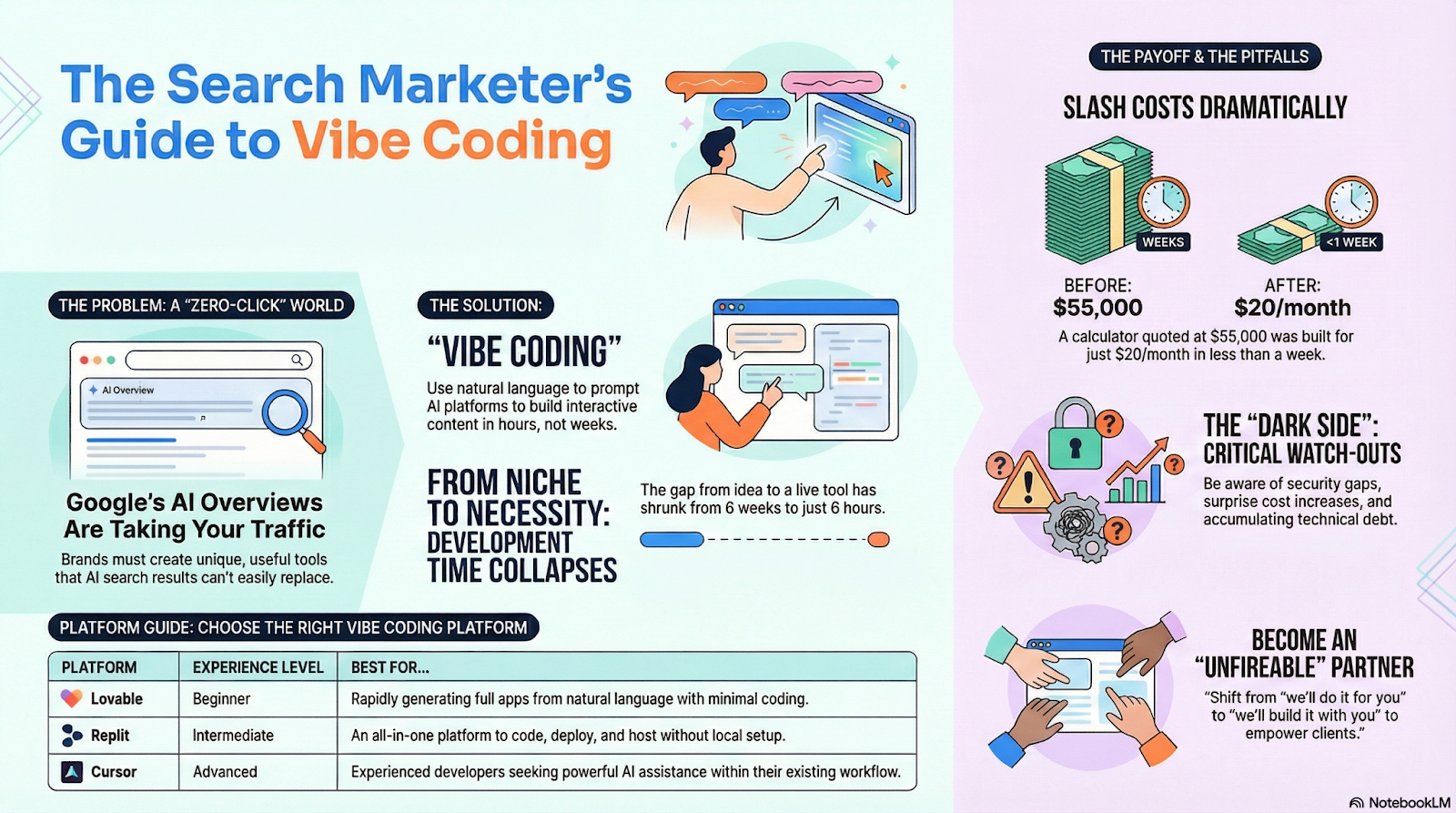
In a world where Google’s AI Overviews address more queries instantly, I’ve found that vibe coding allows us to craft interactive experiences that AI simply can’t replace.
I’ve noticed that search marketers are now shifting their roles from merely optimizing to actually building. Tools like vibe coding, coupled with AI-powered development technologies, have significantly reduced the time from idea conception to execution—from weeks to just a few hours.
These tools don’t make developers obsolete, but they empower search teams to test and create interactive content on their own timelines. This is crucial, as Google’s AI Overviews increasingly pull answers directly into the SERP, reducing clicks to our brand websites.
For marketers, building unique, conversion-focused tools is becoming an indispensable tactic in this zero-click environment.
What is vibe coding?
Vibe coding is about creating software by guiding AI with natural language instead of traditional coding methods. This means focusing on the tool’s purpose, appearance, and response, while AI takes care of implementation.
This term gained popularity in early 2025, thanks to OpenAI co-founder Andrej Karpathy, who described it as a loose, exploratory building style. The appeal? Speed. The risk? Potential shortcuts that could lead to fragile systems.
Today, AI-powered development platforms extend this approach to non-engineering teams, with tools like Replit and Lovable, allowing everyone to build and iterate quickly.
Vibe coding vs. vibe marketing
It’s important to distinguish vibe coding from vibe marketing. Vibe coding involves AI tools designed to create applications and interactive experiences, whereas vibe marketing uses automation platforms to connect existing tools and systems.
Together, these approaches empower search teams to build and operationalize their creations efficiently.
Why vibe coding matters for search marketing
I believe that soon, AI-powered coding will be an essential part of any marketer’s toolkit. It allows us to create sophisticated interactive tools that Google’s AI can hardly mimic, enhancing our SEO and PPC strategies.
With vibe coding, my team can rapidly develop tools that boost conversion, like interactive content aimed to improve user engagement—a factor crucial for both SEO and PPC efforts.
Through vibe coding, I’ve created custom systems that help manage our operational needs efficiently, saving time and costs. For instance, a project quoted at $55,000 was completed in under a week using Replit for just $20 a month.
The opportunity to teach these skills to clients also adds significant value, emphasizing the transition from “we’ll do it for you” to “we’ll build it with you.”
Vibe coding offers a competitive edge, allowing us to navigate zero-click search environments while fortifying long-term relationships with our clients.
Top vibe coding platforms for search marketers
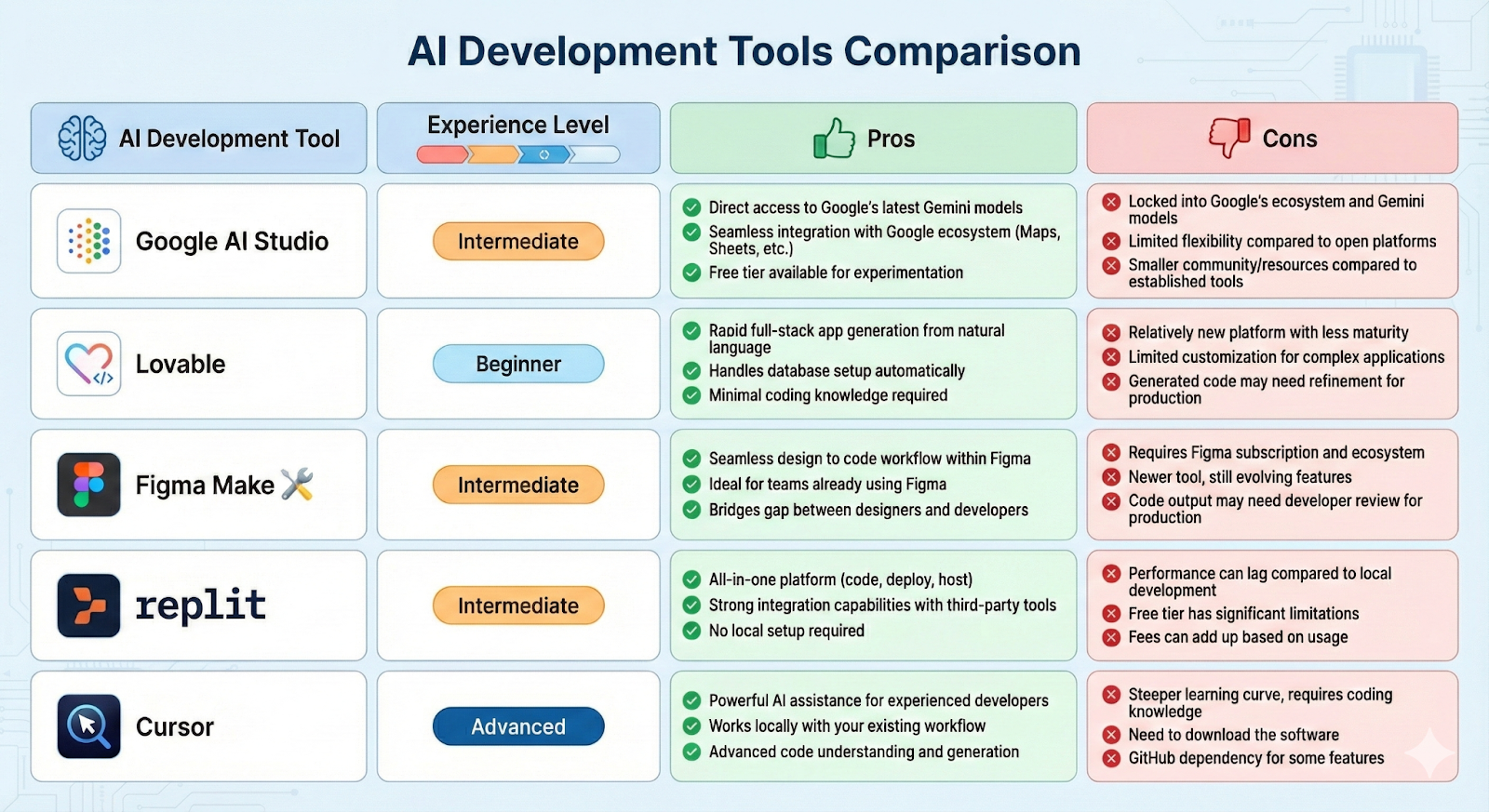
Several leading vibe coding platforms are making waves. My personal preference is Replit for its flexibility, though Figma Make is a great choice too, particularly as it integrates well with our existing workflows.
Testing different platforms will help find the best fit. Whether it’s Lovable for beginners or Cursor for advanced users, there’s a solution tailored to your needs.
Practical SEO and PPC applications: What you can build today
Vibe coding can create a variety of tools, from lead generation calculators to interactive content that increases website engagement. The key is to build tools that fill existing gaps, providing unique and useful solutions.
For instance, I developed an AI-powered accounting ROI calculator, a tool that couldn’t be easily replaced by Google’s direct answers. This not only helps the target audience but also boosts SEO efforts by encouraging repeat visits.
A 7-step vibe coding process for search marketers
I’ve found that following a structured workflow is crucial when using vibe coding. This includes thorough research, creating a content spec document, and iterating designs before functionality.
These steps ensure a comprehensive approach, allowing for prompt testing and deployment. Updating documentation at each milestone helps in managing future updates or revisions.
The dark side of vibe coding and important watchouts
While powerful, vibe coding tools come with risks. Security and compliance issues, price creep, and technical debt are concerns that require careful attention.
Always ensure security reviews and keep track of costs as projects evolve. Monitoring these risks can make vibe coding a reliable tool rather than a complicated headache.
Vibe coding is your competitive edge
In this evolving landscape, vibe coding gives us the ability to build unique digital experiences. It’s a skill set that empowers us to thrive, helping create meaningful, interactive content that stands out in the crowded search environment.
Embracing vibe coding not only promotes strong client partnerships but also equips us to adapt to new search realities, making it a pivotal skill for future success.
On December 11th, I was excited to learn about OpenAI’s announcement of GPT-5.2, their most advanced frontier model yet. Knowing how transformative AI can be, I was thrilled to see that Profound is now tracking GPT-5.2 responses in ChatGPT. This upgrade is integrated across our entire product suite, including Answer Engine Insights, Prompt Volumes, and Agent Analytics.
Starting today, every ChatGPT response on my dashboards reflects this cutting-edge model. It’s exhilarating to think about the enhanced capabilities and strategic insights that I can now access thanks to this update.
I’m thrilled to share that OpenAI has announced its latest advanced model, GPT-5.2, on December 11th. This groundbreaking development offers incredible capabilities, and starting December 14th, I’m excited to let you know that Profound is now tracking GPT-5.2 responses across all our products, enhancing your experience with ChatGPT.
From Answer Engine Insights to Prompt Volumes and Agent Analytics, every ChatGPT response in your dashboard now reflects the prowess of GPT-5.2. This update signifies a leap forward in the responsiveness and accuracy of interactions, providing you with richer insights and more refined outputs.
Let’s dive into this new era of AI on Profound, where the boundaries of what’s possible continue to expand daily. Whether you’re using it for research, business insights, or simply exploring the model’s capabilities, you’ll notice a distinct enhancement in all ChatGPT interactions.
Stay tuned as we continue to innovate and incorporate these advancements into your everyday tools. I can’t wait for you to experience the phenomenal benefits that GPT-5.2 brings to the table.
I’m excited to share some thrilling news with you. Profound’s Agent Analytics now fully supports WordPress with a custom-made plugin. This integration offers seamless AI observability for WordPress sites, which means your team can easily track AI crawlers and agents as they interact with your content, even if traditional CDN log drains are unavailable.
This development is a significant step forward for anyone using WordPress, making it easier to understand and optimize AI-driven interactions. Whether you’re on a managed hosting platform or running your own setup, this plugin is designed to enhance your capabilities in managing AI observability effortlessly.
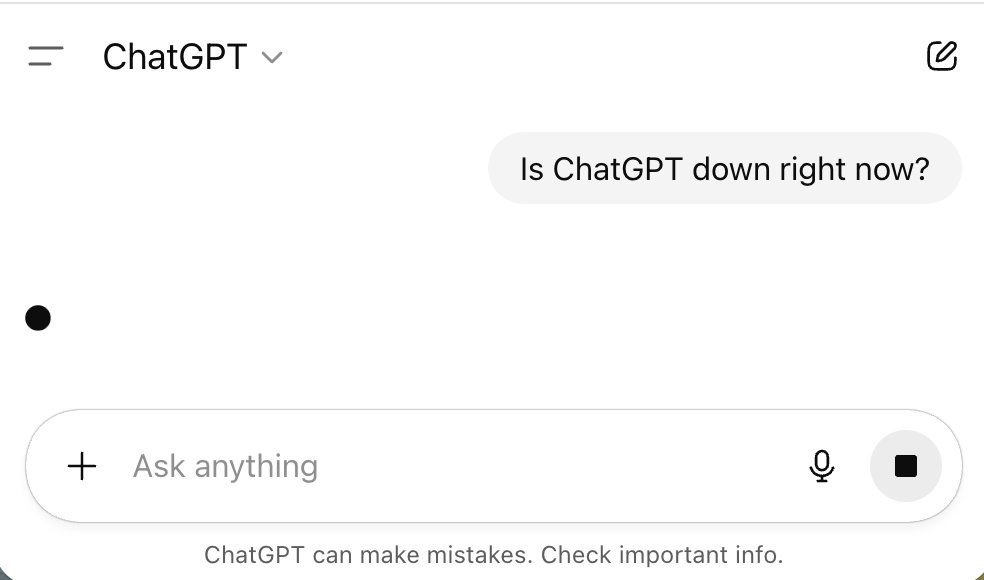
Today, I noticed that ChatGPT, the popular AI service from OpenAI, was unresponsive for many of us trying to interact with it. Attempts to ask questions yielded no results, leaving many in a lurch.
After checking OpenAI’s status page, I found a confirmation of the issue. OpenAI has stated, “We’re currently experiencing issues.”
They further explained, “We have identified that users are experiencing elevated errors for the impacted services. We are working on implementing a mitigation.” This means they’re actively working to resolve the problem.
What it looks like. For many users, attempting to use ChatGPT results in seeing just a black dot instead of an answer, which is quite frustrating.
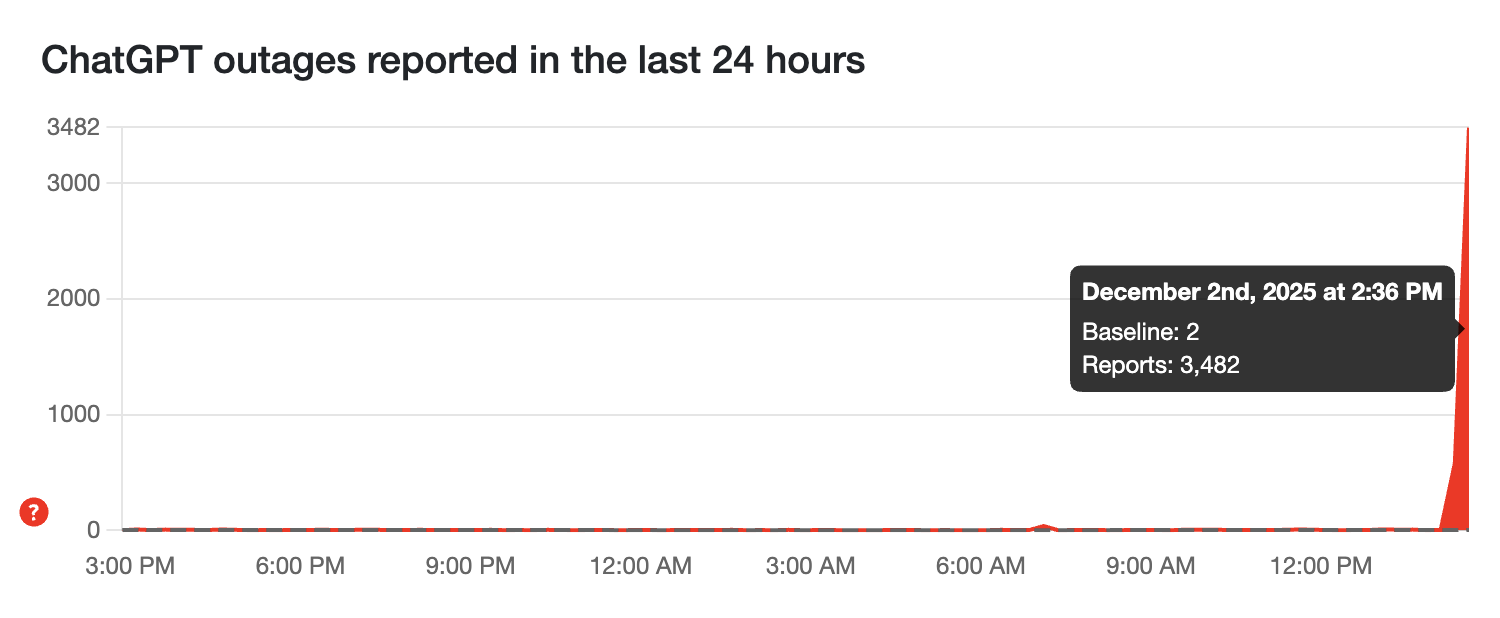
Offline for many. Visiting Downdetector, I saw that thousands of users have reported ChatGPT as offline, indicating a widespread issue.
The issue first surfaced around 2:30 PM ET, and even after 30 minutes, it remains unresolved.
Why we care. Whether I’m using ChatGPT for email, marketing, SEO, or PPC tasks, this outage disrupts the workflow significantly.
I’m confident that OpenAI is making every effort to resolve these issues promptly, and I hope to see it operational soon.
I’m excited to share that Profound’s Agent Analytics now integrates seamlessly with Google Cloud Platform through Cloud CDN. This development offers comprehensive AI observability across Google Cloud Platform’s vast content delivery network.
With this new integration, I can easily monitor and analyze how AI crawlers and agents interact with the content we host on GCP, providing deeper insights and enhanced tracking capabilities.
Voice search has radically changed the way I interact with technology. The hands-free, conversational queries I can make through my smartphone, smart speaker, or virtual assistant feel incredibly intuitive. As voice search continues to gain prominence, I’ve realized the critical importance of Answer Engine Optimization (AEO). This strategy is all about making sure my content directly answers user queries in a clear and concise manner. By understanding how voice search operates alongside AEO, I can significantly enhance my online visibility and engagement.
The Mechanics of Voice Search
When I speak to a device, voice search kicks into action using a combination of advanced technologies. It all starts with speech recognition, where the device records my voice and uses Automatic Speech Recognition (ASR) to convert those sounds into text. Essential to this process is analyzing sound waves, identifying phonemes, and mapping them to words—all while accommodating my accent, any background noise, and my unique speech patterns.
Next up, Natural Language Processing (NLP) takes the stage to decode my words. This involves breaking down my queries to understand their intent, context, and meaning. For instance, if I ask, “What’s the best Italian restaurant nearby?” NLP identifies “best Italian restaurant” as the primary inquiry and “nearby” as a location-specific modifier. Over time, machine learning models trained on vast datasets refine this understanding to deliver more accurate responses.
After understanding my query, the system queries a knowledge graph or search index to fetch the most relevant information. In voice search, the aim is to give me one precise answer, instead of a list of possible links. Using Text-to-Speech (TTS) technology, the system provides a natural-sounding reply, like, “The top-rated Italian restaurant near you is La Trattoria, located at 123 Main Street.”
The Role of AEO in Voice Search
AEO, or Answer Engine Optimization, is crucial for tailoring content to serve as the authoritative answer to voice and search queries. Unlike traditional SEO that focuses on ranking for keywords, AEO is all about delivering concise, structured, and contextually relevant responses that fit well with conversational questions.
Key AEO Strategies for Voice Search
Optimize for Conversational Queries: I’ve noticed voice searches often sound like actual questions or full sentences. Think of questions like “How do I fix a leaky faucet?” My content should answer these questions directly using natural language. Creating FAQ pages or blog posts with headings in question form can enhance AEO performance.
Leverage Structured Data: Applying schema markup, such as FAQ or HowTo schemas, assists search engines in understanding my content’s structure. This boosts the chances of my content being picked as the direct answer for voice queries. For example, a recipe page with structured data can easily respond to, “How do I make spaghetti carbonara?”
Focus on Featured Snippets: Often, voice assistants retrieve answers from Google’s featured snippets or position zero. To target these, I create content that succinctly addresses specific questions, ideally in 40-60 words, using clear formatting like bullet points or numbered lists.
Local Optimization: Many voice searches have a local focus, such as “Where’s the nearest coffee shop?” Ensuring my business is correctly listed on Google My Business, complete with accurate details such as address, opening hours, and reviews, is vital. Local SEO complements AEO by making my business the preferred answer for nearby users.
Prioritize Mobile and Speed: Since most voice searches happen on mobile devices, optimizing my site for quick loading times and mobile-friendliness will greatly enhance user experience and improve AEO scores.
Why AEO Matters for Voice Search
As voice search usage skyrockets—more than 50% of U.S. adults utilize it daily—AEO becomes a pivotal part of staying competitive. Voice assistants prioritize giving a single answer, making it crucial for my response to be the one at the top. AEO ensures my content is clear, authoritative, and closely aligns with user intent, thus improving my selection chances.
Beyond just visibility, AEO cultivates trust with users. When my content consistently provides accurate answers, people begin to see my brand as reliable, driving more traffic and fostering loyalty. For businesses, mastering AEO for voice search can lead to higher store visits, more conversions, and enhanced brand recognition.
Conclusion
Powered by technologies like speech recognition, NLP, and TTS, voice search is changing how I look for information. Through AEO integration, I can fine-tune my approach to cater to conversational, question-based queries. By leveraging structured data and aiming for featured snippets, I stay ahead in the dynamic world of voice technology. As this field progresses, aligning with AEO will be essential for thriving amidst the demand for instant, spoken answers.
Inspired by this post on AnswerEngineOptimization.blog.