I can’t help but feel intrigued as I ponder the evolving world of SEO in 2026. With AI’s growing influence and an ever-shifting digital landscape, navigating these changes is both a challenge and an opportunity.
In 2025, I witnessed a fascinating trend: SEO standards continued to rise, which is encouraging. The data from the Web Almanac sheds light on these advancements, showcasing a more secure and user-friendly web. But there’s still more work to be done to keep up with these higher standards.
Let’s dive into the specifics. The adoption rate of HTTPS stands impressively high at over 91%, and the use of title tags has skyrocketed to nearly 99%. These figures are boosting our confidence in SEO’s direction, yet challenges remain, ensuring these advancements are consistently applied across all sites.
Reflecting on my experiences, I’ve realized that content management systems (CMSs) and SEO plugins are pivotal in setting industry-standard practices. It’s remarkable to see how deeply SEO tools are embedded in our daily workflows, underpinning many defaults we now consider standard.
However, not all implementations are ideal; default settings sometimes need our intervention to be truly effective. Engaging with major platforms and tools becomes essential to shaping SEO’s future.
Even as we embrace new trends, remnants of the past linger. Deprecated standards, though not forgotten, still exist. It’s critical to balance the old and the new, ensuring every part of SEO continues to improve incrementally.
The developments around AI in SEO are particularly captivating. Whether it’s the evolving role of robots.txt as more of a policy document or the cautious uptake of llms.txt, SEOs must strategically navigate these new waters.
Finally, I can’t ignore the intriguing rise of the FAQPage schema. Despite Google’s limitations on FAQ snippets, their implementation has not waned. This indicates a strategic shift toward structured data for reasons beyond just search engine visibility, potentially influencing AI strategies.
In conclusion, while 2026 may not revolutionize SEO, it will certainly refine and redefine our approaches, integrating AI layers without demolishing the foundation laid by years of SEO evolution.
Backlinks are still important, but today, authority also thrives on mentions and citations. I’m here to guide you on crafting content that garners both, significantly boosting your presence in AI search results.
In the past, links were the main authority signal in search. Creating backlinks was my go-to strategy for visibility, and earning placements was key for credibility. This still holds relevance, but it’s no longer the sole method.
In the realm of AI-driven search, my authority is now shaped by how frequently my brand is mentioned, cited, and associated with specific topics. Visibility is achieved through references in AI-generated answers.
With this in mind, my aim is to craft content that consistently earns brand mentions and citations, which are the new driving forces for AEO visibility.
The Philosophy Driving Content that Fuels AEO Growth
In 2026, organic discovery is driven by authority incorporating entity recognition. On platforms like Google and AI models such as ChatGPT, authority is strengthened through:
High-quality backlinks.
Brand mentions (linked or unlinked).
Consistent citations across trusted publications.
Clear entity associations (defining who I am, what I’m known for, and my core topics).
Since LLMs synthesize information rather than rank pages, I need repeatable, credible mentions across the web to enhance the probability of being cited or referenced in AI answers. Moreover, I’m focused on using my owned media to clearly define my brand entity.
Building authority has become more crucial as my content competes with AI results within the SERP and AI-generated content from other creators.
In short, I need to establish a clear brand identity and produce content so valuable that other experts, journalists, creators, and AI systems frequently reference my brand in discussions relevant to my business.
The Principles and Formatting of AEO-Friendly Content
I rely on many traditional SEO principles as a foundation for AEO-friendly content. Content aligned with Google’s helpful content guidelines, emphasizing value and user experience, appeals to both people and LLMs sourcing expert input.
However, to truly optimize AEO-friendly content, I incorporate formatting that facilitates LLM extraction.
Key formatting principles include:
Clear definitions: Provide concise, clear definitions high on the page:
“X is…”
“Y refers to…”
Structured formatting:
Use descriptive H2s and H3s.
Employ bullet points.
Keep paragraphs short.
Include direct answers under question-based headers.
Explicit context:
Avoid vague pronouns and implied references.
LLMs perform better with explicit, self-contained context.
Summary sections:
TL;DR blocks.
Key takeaways.
FAQs.
Entity reinforcement:
Brand name.
Author expertise and authority.
Brand and author credentials.
By keeping these principles in mind, I can effectively create content that resonates with both AEO requirements and user expectations.
The Specific Objectives for Your AEO Content to Address
To focus solely on AEO, I approach content with these objectives:
Be highly citable: Provide original data or perspectives that are valuable for media such as podcasts, expert roundups, or contributor columns.
Be highly quotable: Deliver at least one clear, insightful quote.
Be specific: Address specific questions that AI systems would seek to answer. Articulate and answer a question verbatim within the content.
Be clear: Clearly define topics for easy extraction.
To meet these goals, I think beyond blog posts to create “reference-grade” assets like:
Practical Steps to Build AEO Authority with Content
Here’s how I turn those principles into a repeatable process:
Research keywords where bloggers and journalists seek references (often including “statistics” or “reports”). I utilize resources like Reddit, Quora, X, Ahrefs, and Exploding Topics.
From those keywords, develop a list of topics my team can provide valuable insights on.
Compile a list of writers and journalists who cover those topics.
Conduct interviews with expert resources to gather content.
Refine content into contemporary insights using Google Trends and social listening.
Example: Collect tips from an expert to help hay fever sufferers (niche audience) sleep better (core topic) during high pollen periods (relevance).
Pitch to writers and journalists on the urgency and uniqueness of my content.
Engage with these writers on social media to build relationships for future opportunities.
Writing for AEO is aligned with writing for humans. It incorporates many of the SEO fundamentals meant to engage actual users.
Despite differences in how LLMs extract and process content, keeping these nuances in mind helps me refine my content approach for both AEO and human users.
With a well-defined brand on my owned media and a strong understanding of AEO principles, I’m ready to leverage my team’s expertise for superior visibility in the AI search landscape.
Since 2021, I’ve been immersed in the world of guest posting, working on over 350 published pieces. Through this experience, I’ve honed a scalable outreach process that reliably captures approvals without the need to pay for placements.
While guest blogging is increasingly challenging, the fundamental principles of personalized outreach remain unchanged. With a focus on creating mutual value, this approach will be just as effective in 2026 and beyond.
Step 1: Build Your Outreach List
Your outreach list is essentially a compilation of websites to which you’ll propose guest-written content. There are several effective strategies to build this list.
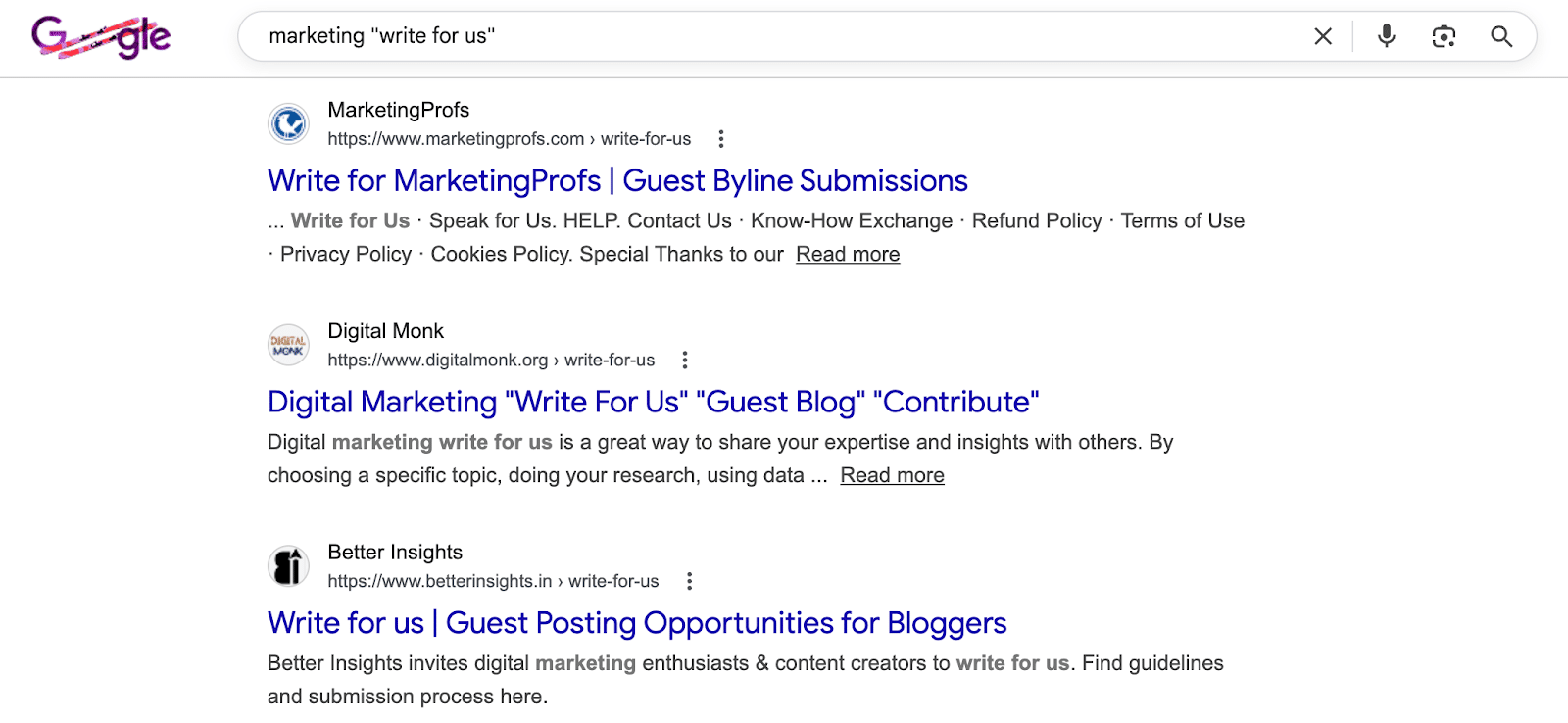
The simplest method is to search for your niche accompanied by phrases like “write for us” to discover potential websites.
Many reputable websites openly accept guest posts with established approval processes you can find online. This was precisely the approach I used to get published on G2’s Learning Hub.
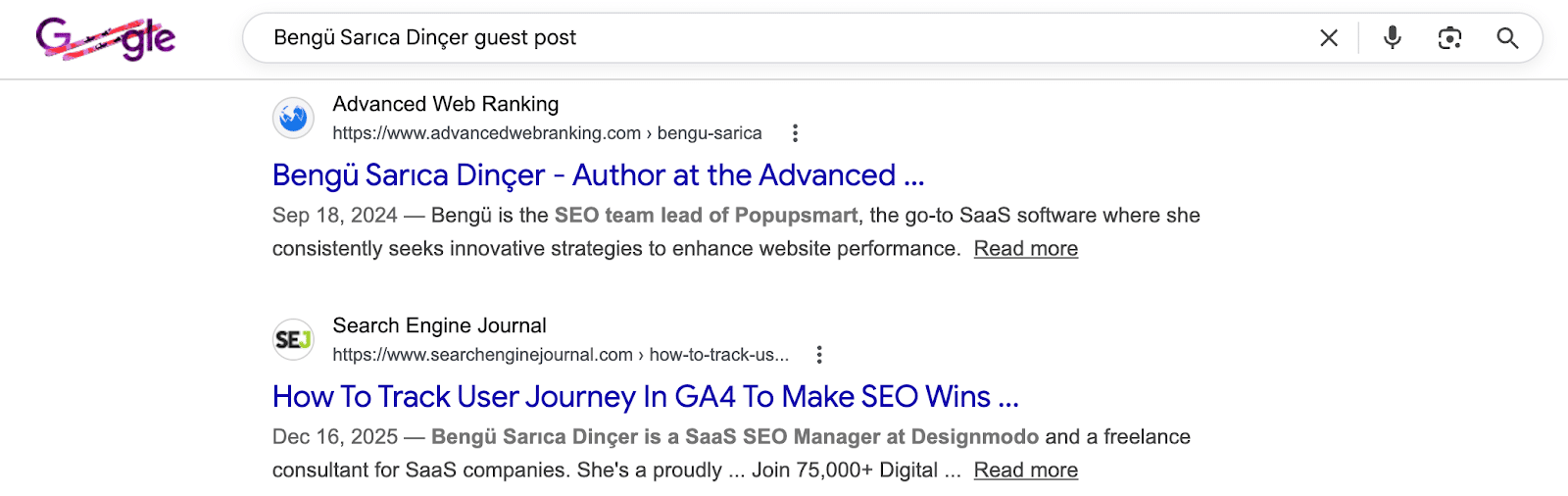
Alternatively, by searching the name of a prominent individual in your niche paired with keywords like “guest post” or “guest author,” you can identify websites that have previously accepted guest posts and might do so from you.
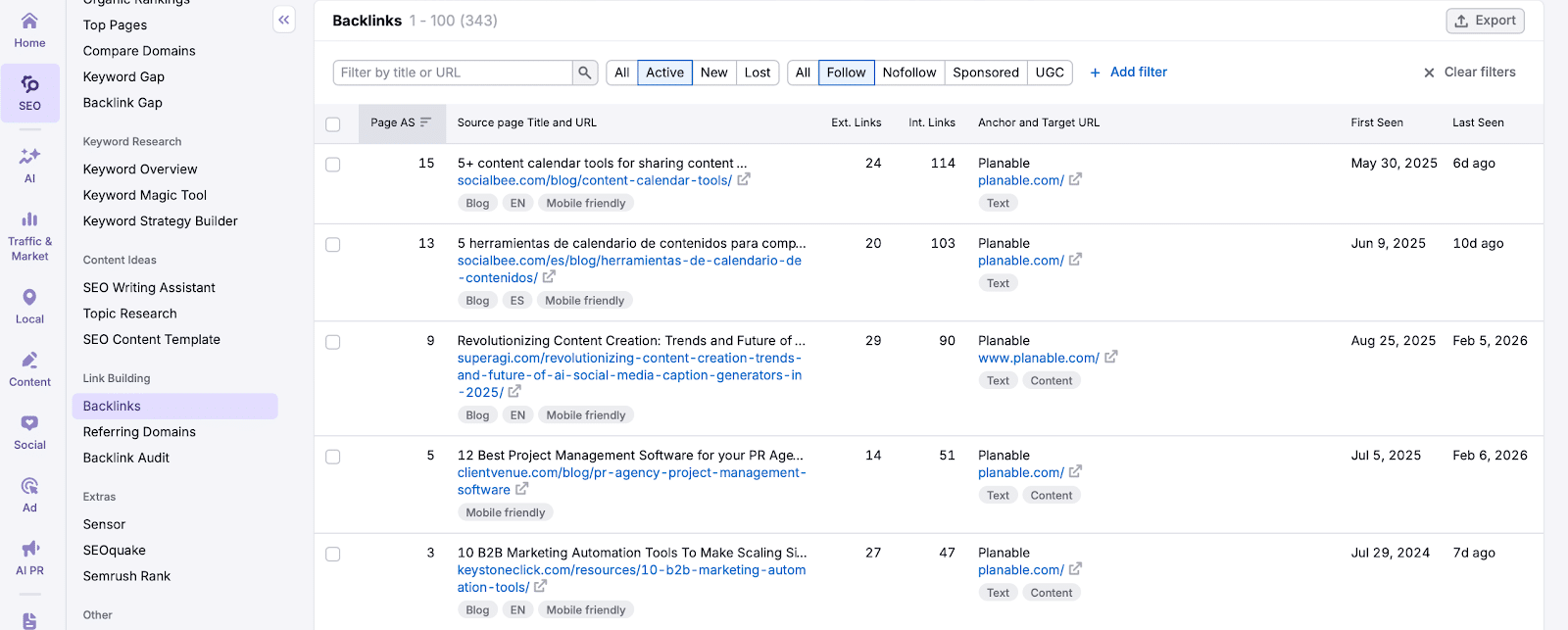
You can also explore competitors’ backlink profiles via an SEO tool like Semrush under the ‘Link Building’ section.
Verify if these websites have a history of publishing content from guest authors. If they predominantly feature in-house content and you’re not a big name in the industry, your pitch may not stand out.
Once you’ve compiled a list of potential sites, assess them against your website quality criteria, considering factors such as niche, top pages, organic traffic trends, and authority scores. Automation tools can optimize this step for efficiency.
Step 2: Find the Right Contacts
Successful guest post outreach hinges on contacting the right individual. Most emails get ignored if irrelevant, so identifying the appropriate contact is crucial.
To find the right person, start with LinkedIn:
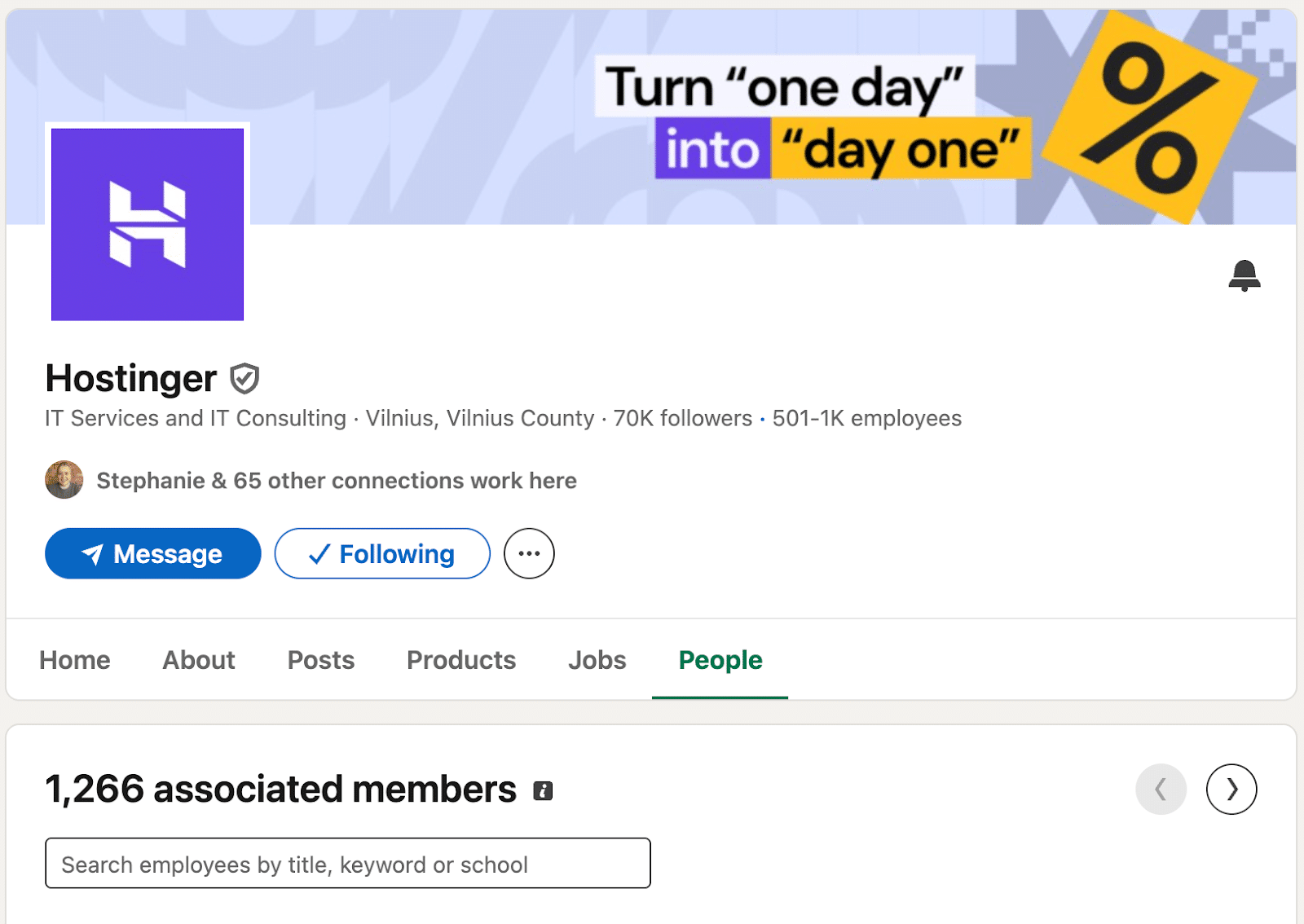
Visit the company profile and navigate to the People tab.
Filter profiles using relevant keywords to find someone responsible for content decisions, typically a content manager or editor.
In smaller organizations, targeting individuals with “marketing” or “growth” roles can be effective, sometimes the founders in micro companies.
Use tools like Apollo or Hunter to locate the work email of your identified contacts.
Occasionally, you might only find generic emails like contact@ or support@, which can still be suitable in certain niches, especially in B2C contexts.
Verify all email addresses to maintain a good sender reputation and ensure inbox deliveries.
Step 3: Choose Your Outreach Approach
When it comes to guest posting outreach, you can take one of two primary approaches.
Send Out a Generic Email Template with Basic Personalization
This involves asking whether the website accepts guest contributions, allowing you to focus primarily on building your outreach list without extensive personalization.
Emails here are minimally personalized, usually only including the recipient’s name and company, resulting in moderate reply rates.
To be effective, a large list is crucial since you need a 3% to 5% reply rate to secure enough opportunities.
Hyper-Personalize Your Emails
This approach offers distinct propositions to each company, requiring more time for research but yielding a higher reply rate—around 19%, from my experience.
It’s best when dealing with a concise outreach list or when contacting high-profile sites.
Step 4: Research the Right Topics
Regardless of your approach, pitching the right topic is paramount. Basic personalization involves suggesting topics post-reply, while hyper-personalized emails propose them from the get-go.
Top-tier sites have stringent requirements; finding their editorial guidelines is crucial to align your pitch.
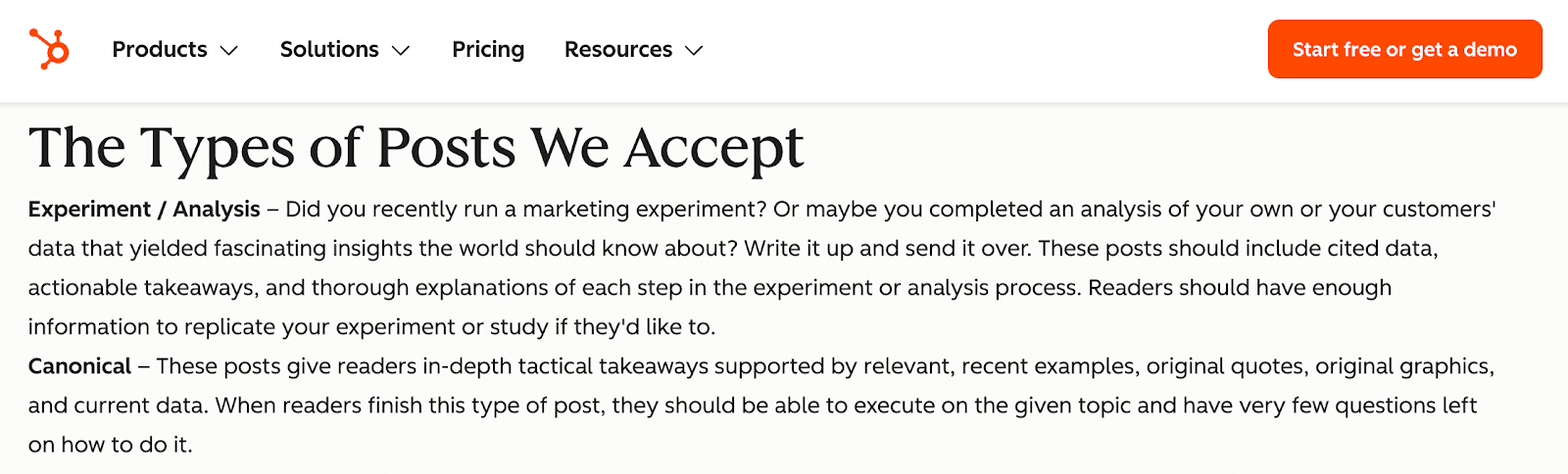
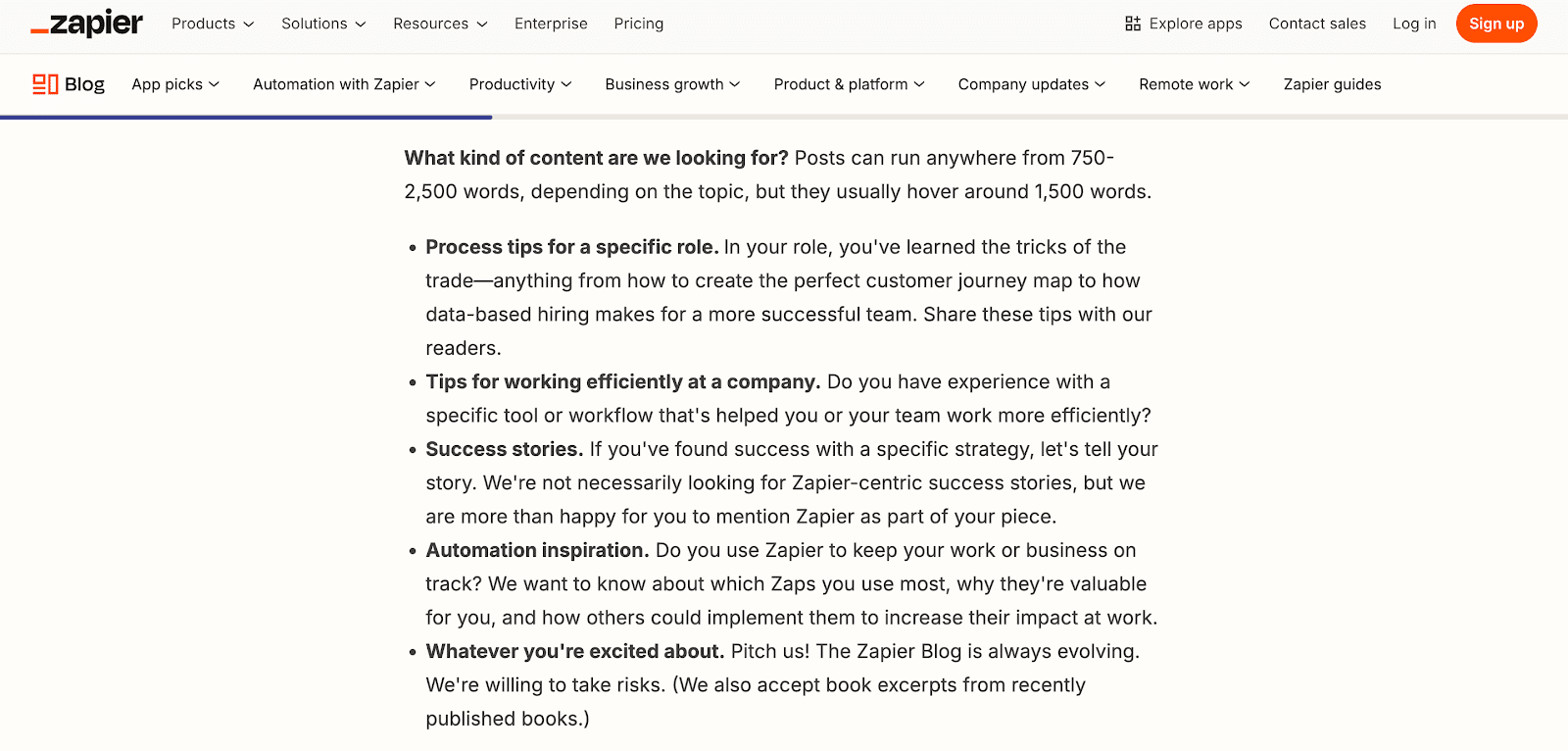
For instance, HubSpot only accepts content like marketing experiments or in-depth guides. Meanwhile, Zapier demands industry-specific experience for contributions.
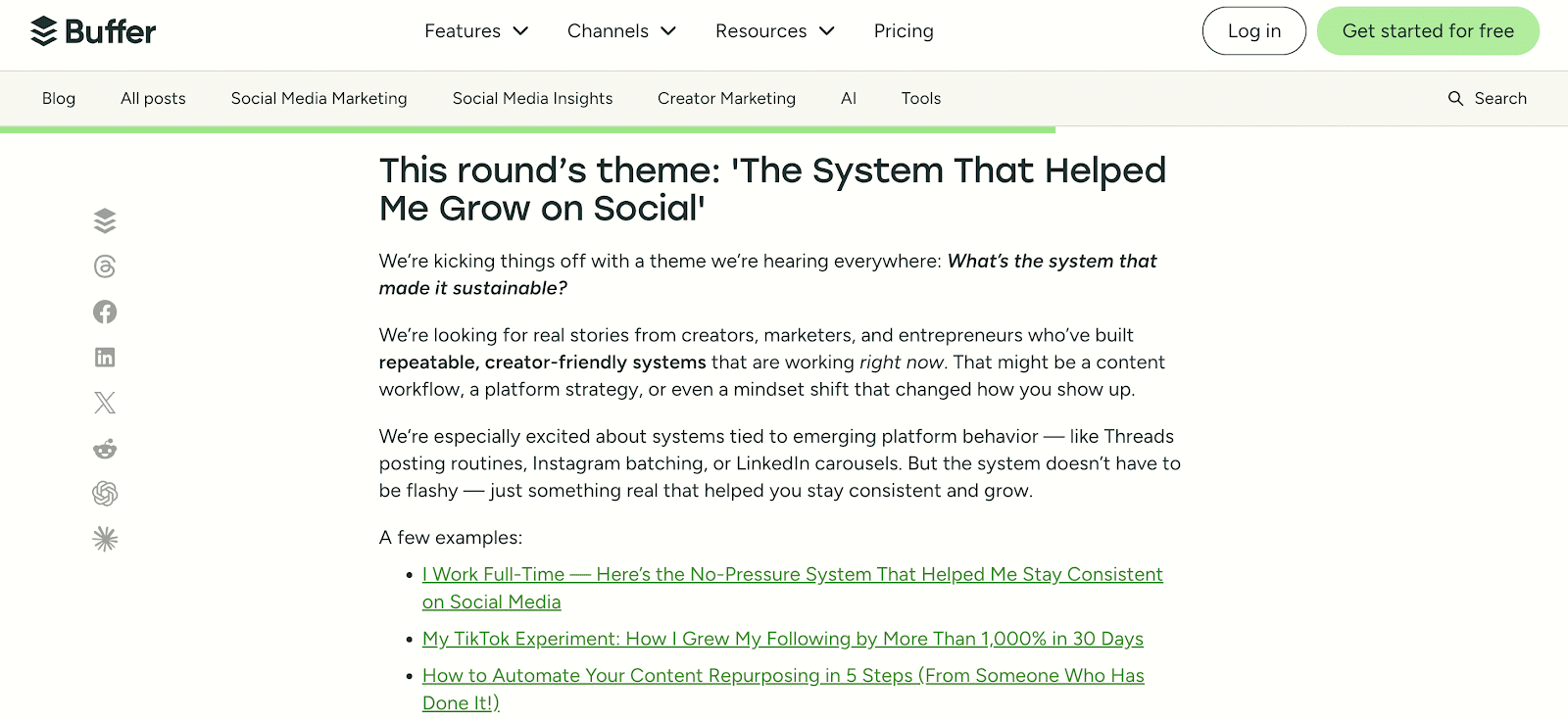
Moreover, Buffer opens guest posting rounds for specific themes, streamlining their editorial process. Adhering to such criteria significantly improves your pitch’s success rate.
Keep in mind that some editors maintain a list of sought-after topics, which they might share with potential contributors.
How to Do a Keyword Gap Analysis with Semrush
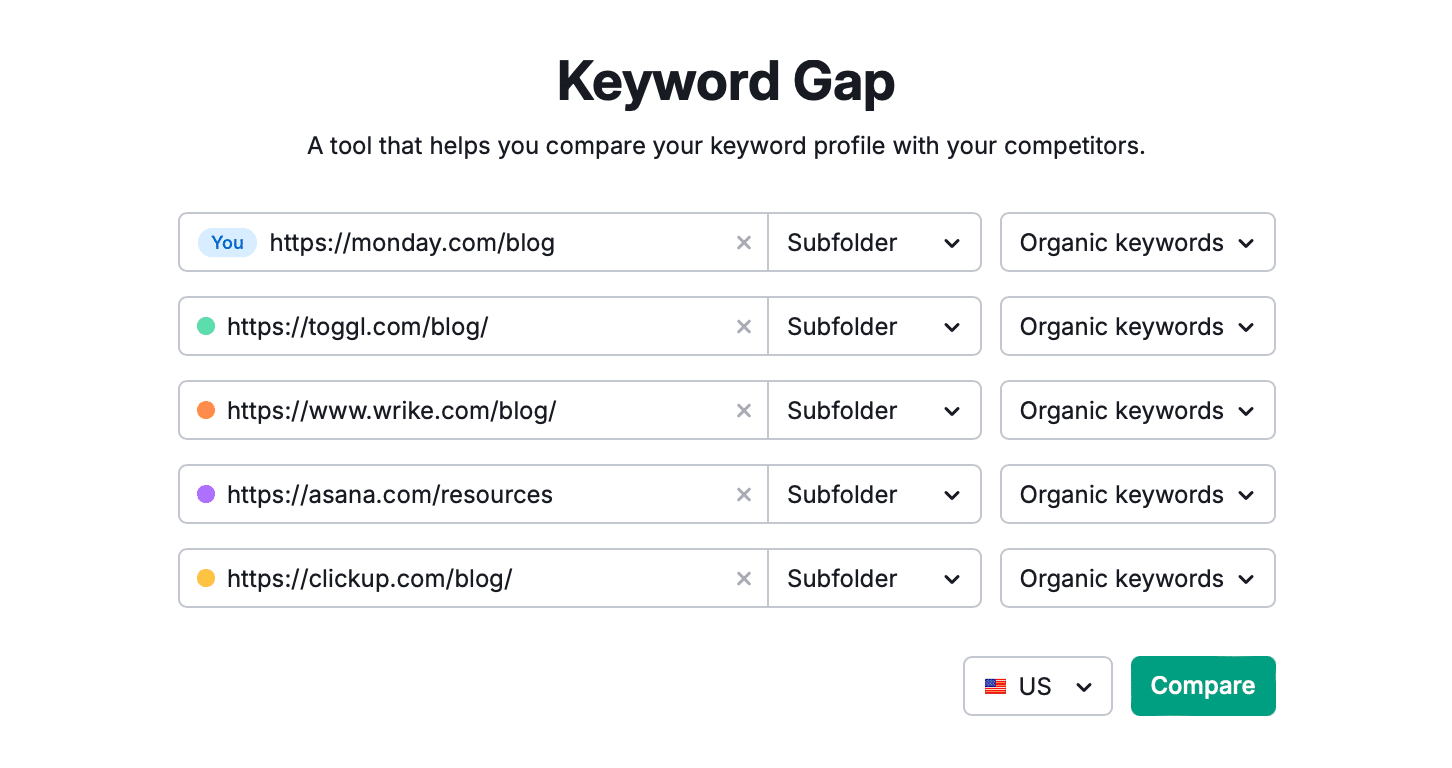
If I aim to pitch to monday.com, here’s my approach:
Open Semrush’s SEO tools and go to Keyword Gap. Enter the URL of monday.com’s blog along with competitors’ URLs, and hit Compare.
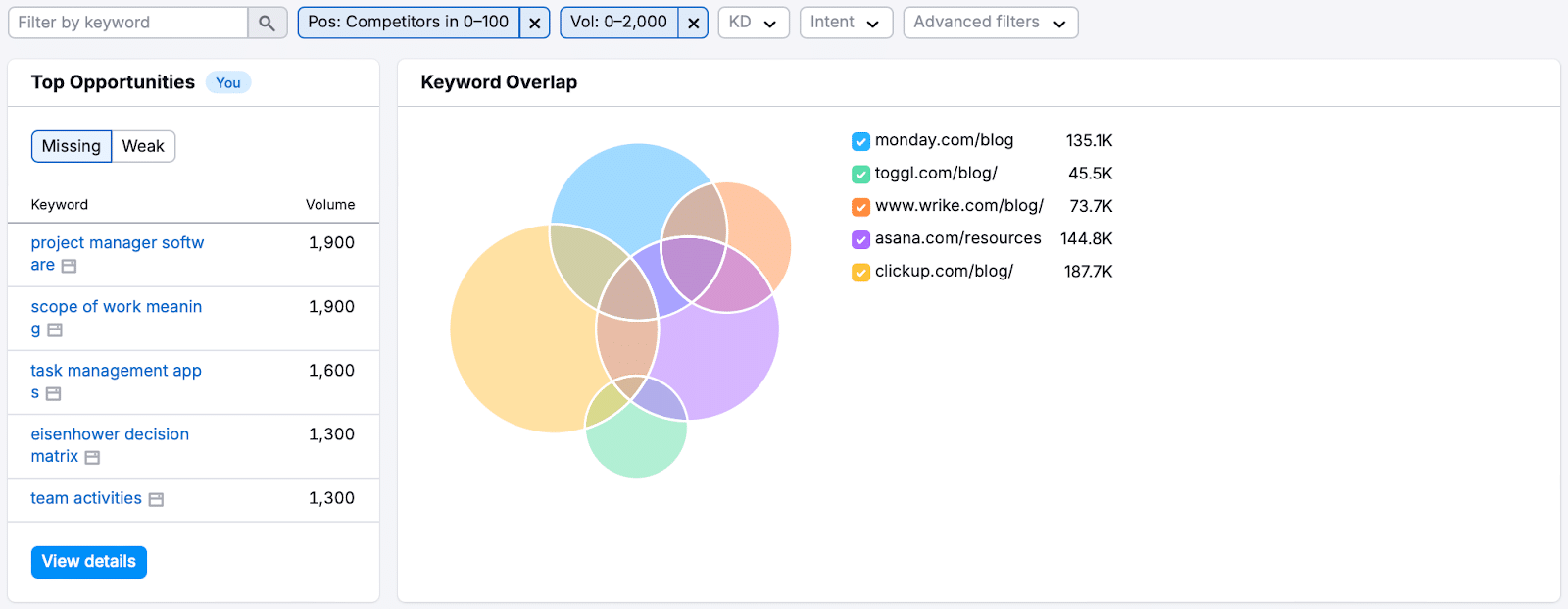
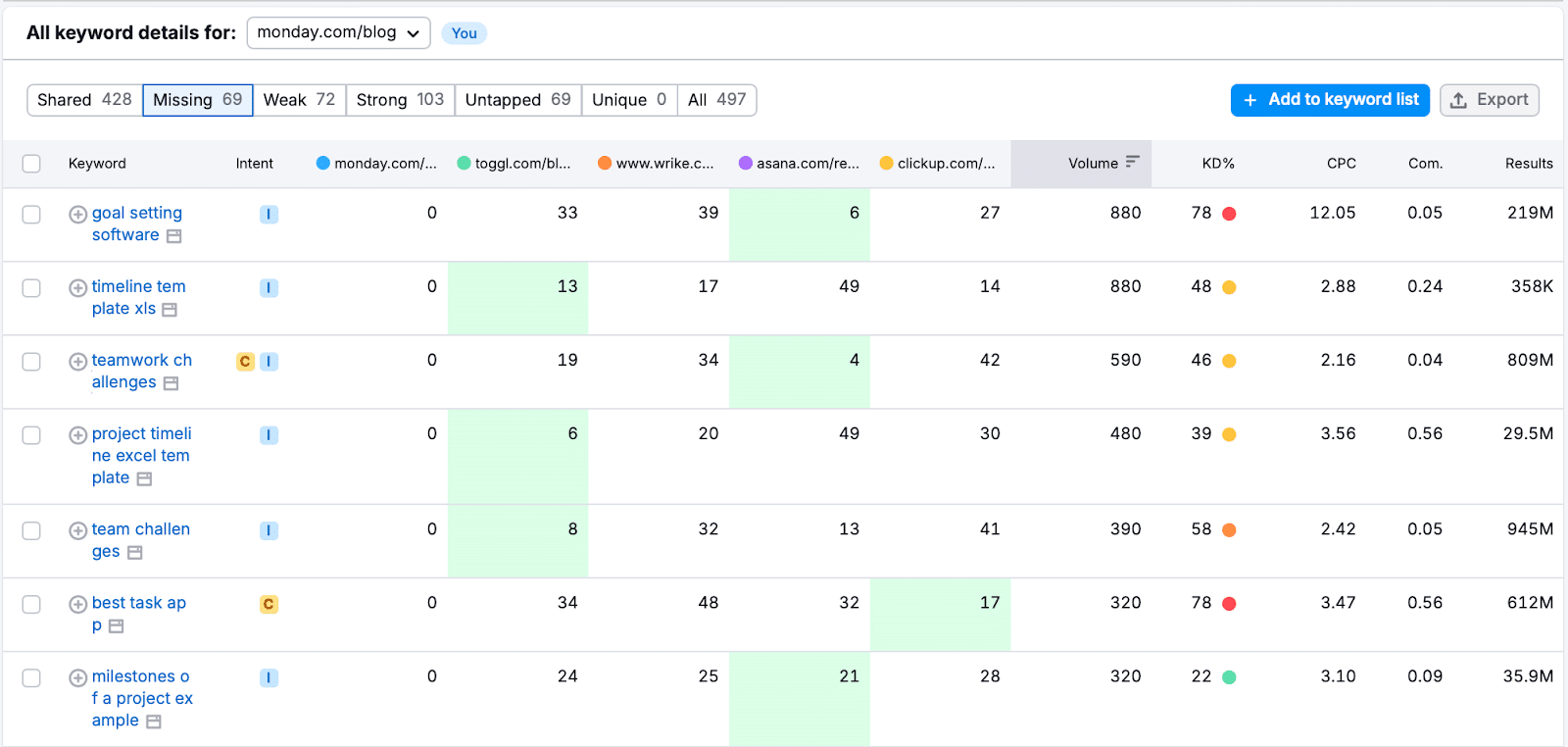
Filter these keywords to spot ones where competitors rank in the top 100 but your target doesn’t, revealing gaps you can fill.
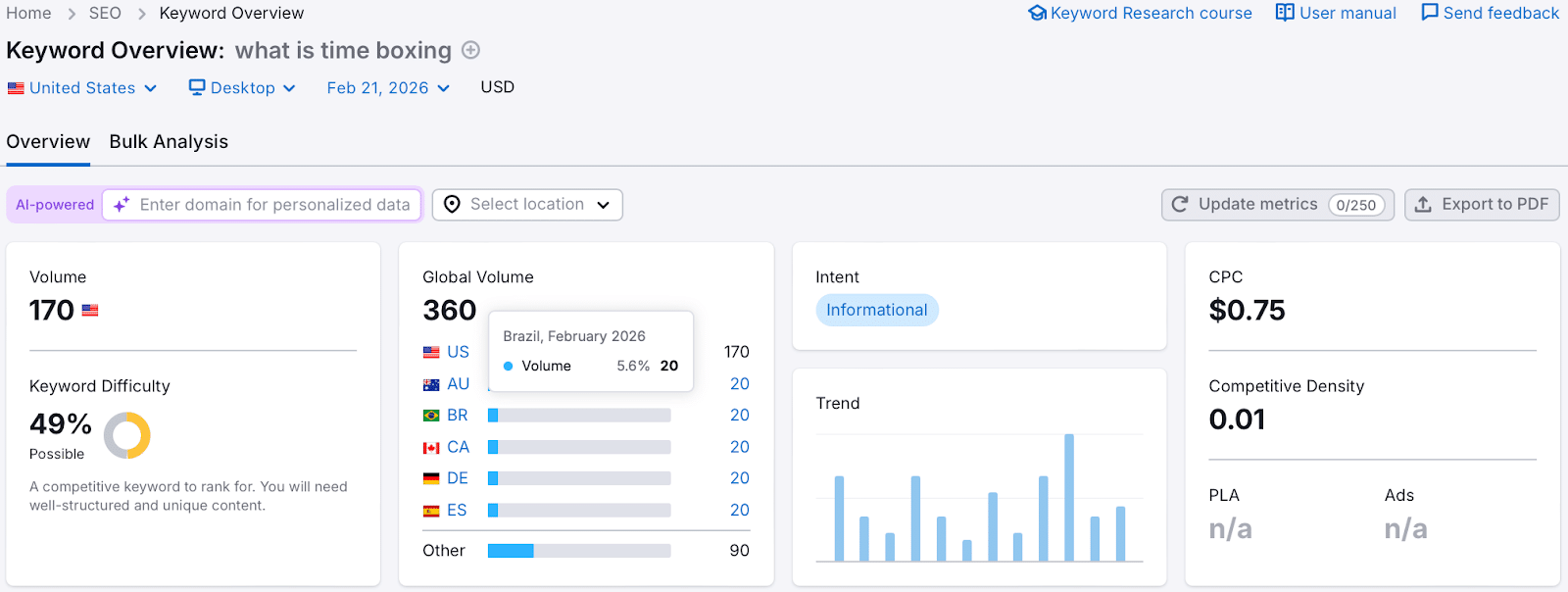
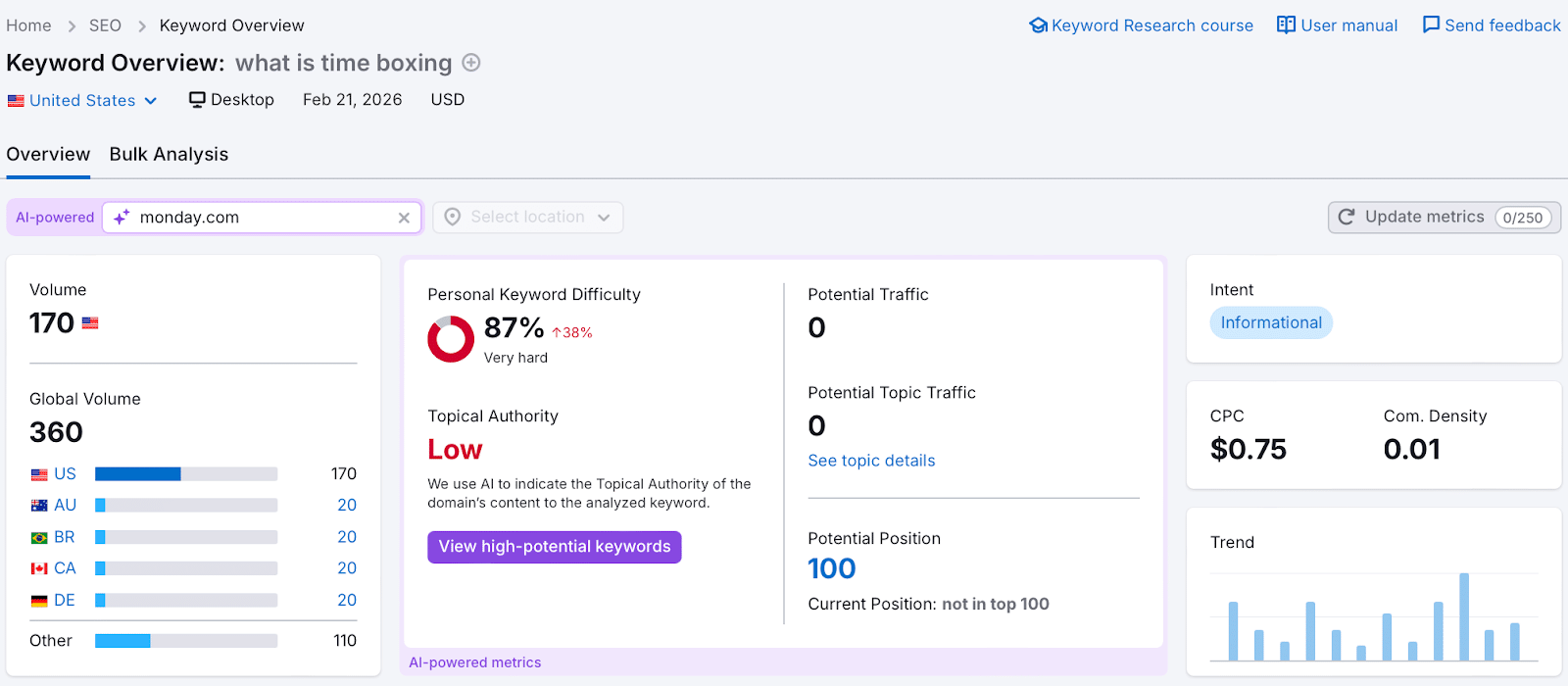
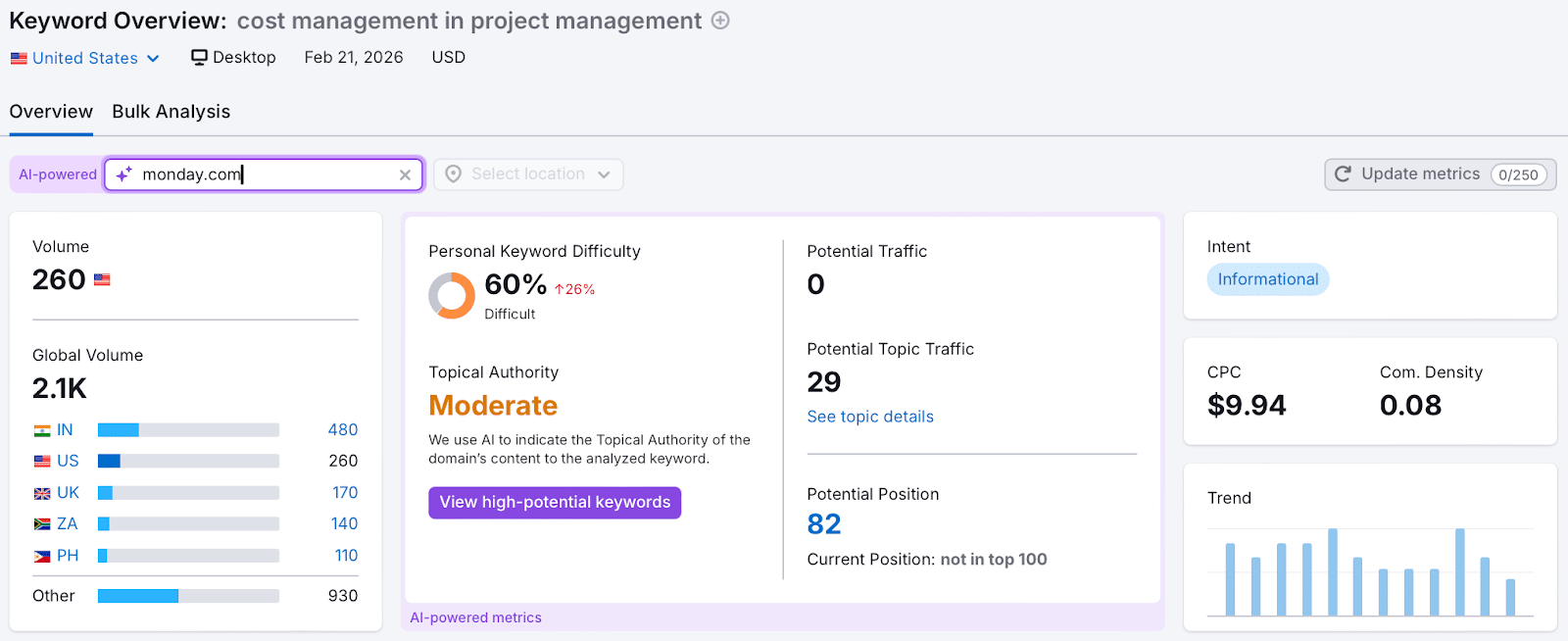
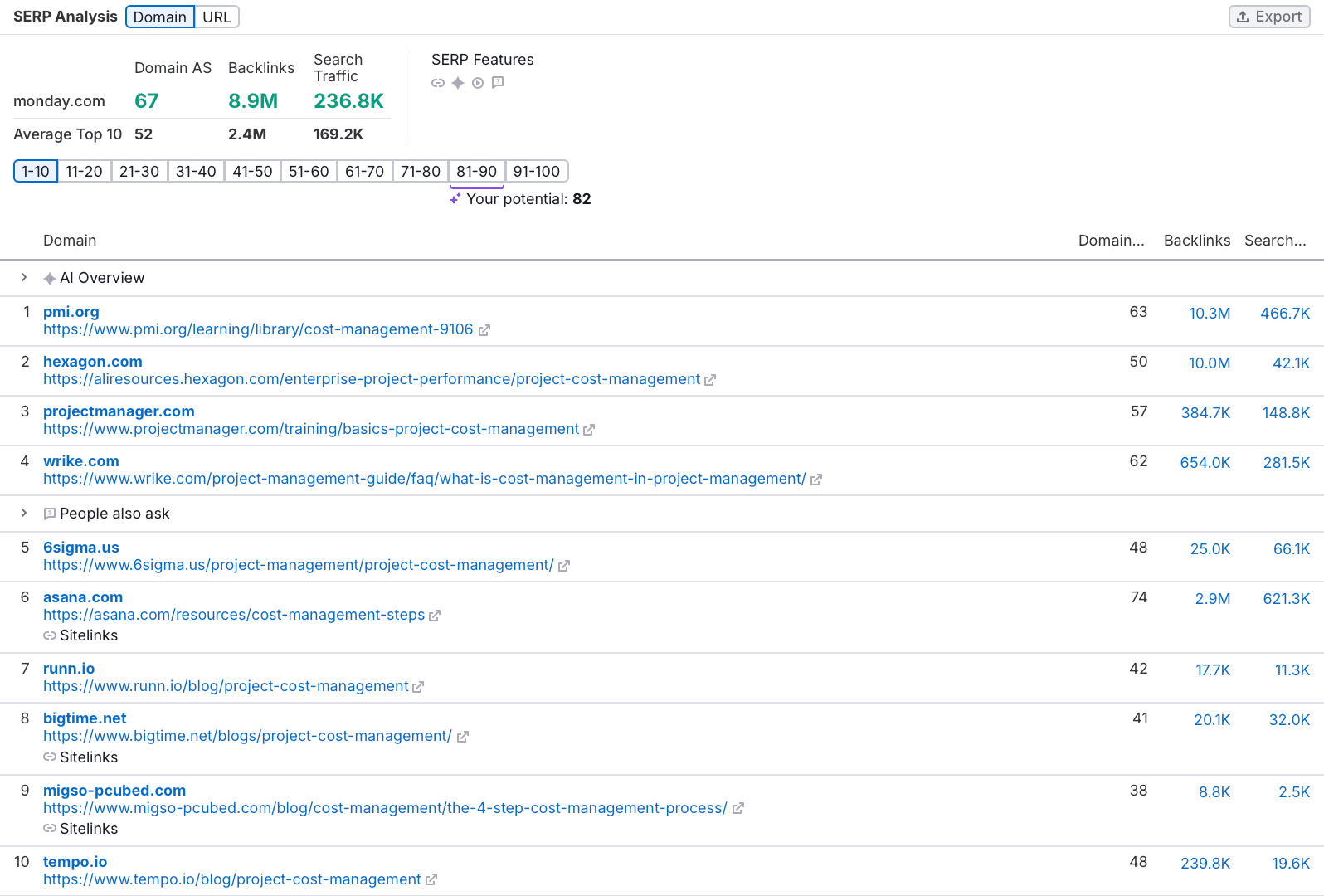
Assess the relevance and complexity of these keywords against your expertise. For example, “what is time boxing” might be too competitive, but less contested terms could present viable opportunities.
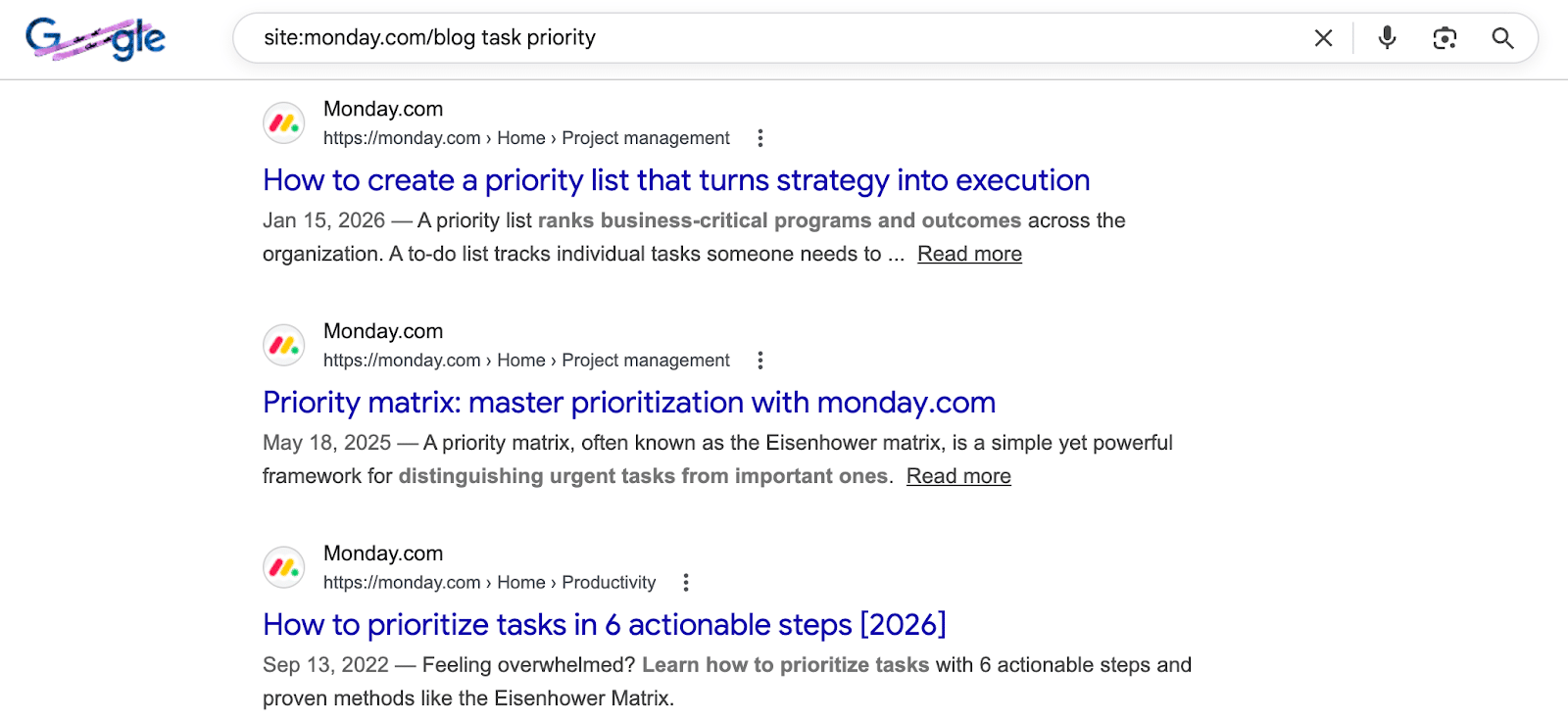
Check if the target site is already optimizing for your chosen keywords by using the “site:” search operator in Google.
Propose 3-4 varied topics to ensure one aligns with the editor’s needs. A diverse proposal increases your acceptance odds.
Step 5: Create Your Extra Value Proposition
Your additional value proposition is about showcasing what else you bring to the table, beyond content.
Have you authored notable industry content?
Can you promote content to a substantial social media following?
Do you manage a newsletter with a relevant audience?
Are you part of a community interested in the topic?
For instance, I might mention my 11,000 LinkedIn followers, predominantly industry professionals, when pitching to a project management blog, highlighting the relevance of my audience.
Step 6: Prepare Your Emails
Crafting your outreach emails involves attention to the subject line, email body, and follow-ups.
The subject line entices recipients to open your email; the body secures replies, and follow-ups increase your chances of a response.
BuzzStream suggests a few best practices for subject lines:
They should contain 9-13 words and over 71 characters.
Emojis can enhance engagement.
Mentioning the website, not the person, proves effective.
Title case outperforms sentence case.
Email bodies should be concise and easily digestible since editors favor brevity due to their busy schedules.
Follow-ups are critical; data show that follow-up emails generally increase overall response rates significantly. Limit yourself to two follow-ups to avoid being perceived as too pushy.
Step 7: Send Your Outreach Emails
It’s finally time to dispatch your emails. Here’s what you need to know:
Send Days
Research shows the best day to send emails is Monday, followed by Tuesday and Wednesday due to higher open and response rates.
Send Times
Aim to dispatch emails before 12 p.m. local time for your recipient, aligning your timing with their work schedule.
Unsubscribe Option
Always include a clear way for recipients to opt out. This will help maintain a good sender reputation and avoid being marked as spam.
Step 8: Track and Adjust
Utilize outreach tools to track open, reply, and success rates, offering insights into your campaign’s effectiveness.
Open rate shows how many recipients opened your emails, influenced by your subject line and sender reputation.
Reply rate indicates the percentage who responded, driven by your email’s relevance and content.
Success rate tracks emails leading to published guest posts, dependent on topic selection and following editorial guidelines.
Run A/B tests to explore what works best. Keep variables minimal to accurately measure impact—adjustments can lead to better success rates.
Step 9: Build Relationships with Editors
I’ve published over 350 guest articles, many through building and maintaining strong relationships with editors. Quality work fosters ongoing collaborations.
I use keyword gap analysis to ensure proposed topics offer potential for traffic, simplifying future pitches.
To secure lasting editor relationships:
Deliver exceptional content: Meet search intent with original visuals and expert quotes.
Support post-publication: Promote through your channels and link to it in other works.
Be reliable: Communicate clearly, respect guidelines, and meet deadlines consistently.
My Guest Posting Email Template with an 18% Success Rate
This template has been pivotal to my success:
Subject: Fresh content ideas for [Company Name]
Hi [First Name],
My name is [Your Name], and I’m the [Your Job Title] at [Your Company].
I’d love to contribute articles to [Company Name]’s blog. I have extensive industry experience from projects with [Brand 1] and [Brand 2].
Topic Ideas:
[Proposed Article Title 1]: keyword, US search volume [volume]
[Proposed Article Title 2]: keyword, US search volume [volume]
[Proposed Article Title 3]: keyword, US search volume [volume]
View my LinkedIn for more on my expertise or check my work published by [Publication 1], [Publication 2], [Publication 3].
Upon publication, I can promote it to my audience of [audience size or description].
Looking forward to hearing your thoughts.
[Your Name]
Guest Blogging Caveat
Your author profile significantly impacts your success rate. Newcomers should start with smaller industry blogs to build a portfolio, making later pitches more enticing to editors.
As your portfolio grows with contributions to recognized sites, your credibility and success rates naturally improve.
Ultimately, investing in your author profile is the key to thriving in guest blogging.
Recently, I discovered that Google is addressing a pesky bug in Search Console that has been inflating impression counts. Since May 13, 2025, there has been a logging error misreporting impression data, and Google has assured us that corrections will be rolling out in the coming weeks.
This bug has been a longstanding issue, and I was relieved to hear that Google is finally correcting it. They’ve updated their Data anomalies in Search Console page with the following message:
“A logging error is preventing Search Console from accurately reporting impressions from May 13, 2025 onward. This issue will be resolved over the next few weeks; as a result, you may notice a decrease in impressions in the Search Console Performance report. Clicks and other metrics were not affected by the error, and this issue affected data logging only.”
I also read a statement from a Google spokesperson who confirmed: “We identified a reporting error in Search Console that temporarily led to an over-reporting of impressions from May 13, 2025 onward. Bug fixes are being implemented to ensure accurate reporting.”
So, what’s changing? As Google works on these fixes, we can expect changes in how impressions are logged and reported. With this rollout, I anticipate seeing a drop in impression numbers in my Performance report, although clicks and other metrics remain unaffected.
The timeline of this issue stretches back to May 13, 2025, and it has persisted until now. Google mentioned that the complete correction will take several weeks for full implementation across various reporting areas.
Why is this important to me? If my Google Search Console impression numbers change in the near future, it’s likely due to this bug fix. Staying informed helps me understand these shifts better.
I remember the days when a Google search was akin to embarking on a quest for information. It was an adventure of navigating various links and forming my own opinions.
Nowadays, tools like AI Overviews, ChatGPT, and Perplexity condense all that information into a single, simplified answer. This transformation often strips away the finer details while amplifying certain perspectives.
This shift has redefined online reputation management. Now, search engines not only present information but shape the underlying narratives. This raises the stakes for brands, as even a top-ranking status doesn’t guarantee influence if AI stories tell a different tale.
For brands, the game has changed. Being number one doesn’t ensure visibility and influence anymore. The underlying narrative holds far greater power.
AI Narrative Formation: Crafting User Answers
AI platforms now utilize what I like to call ‘AI narrative formation.’ This process crafts the responses we receive from various search engines. Let me walk you through how this system works.
Source Pooling
These systems pull content from numerous sources. Contrary to expected reliance on peer-reviewed articles, they gather data from Reddit, YouTube, and social platforms like Instagram and TikTok.
Signal Weighting
Not all sources are equal. Often, a popular yet low-quality source can outweigh a singular, credible entry. A bustling Reddit thread with negative feedback might overshadow a well-researched Wikipedia page.
Narrative Compression
The summarization process compresses diverse inputs, often losing nuance along the way. Complex reputations are simplified into general statements like, ‘Users find this company untrustworthy.’
Continued Reinforcement
These summaries transcend their original context, getting shared and re-shared across social media. As these echoes return as new data, they further entrench the narratives in AI responses.
Unraveling a Finance Company’s Reputation in AI Search
To illustrate AI narrative formation, consider a recent case I worked on involving a financial company, which we’ll call Company X.
Company X’s reputation remained strong on traditional SERPs. High Trustpilot ratings and reputable endorsements were the norm until Google AI Overview threads surfaced a forgotten Reddit forum rife with grievances against them.
The AI Overview skewed the narrative, suggesting Company X had unresolved customer service issues, even though these concerns had been addressed years prior. This created a skewed perception that was hard to counteract.
The Amplified Risk from AI Searches
AI dramatically increases reputational risk through several mechanisms:
The Spread of Negative Narratives: Negative content surfaces faster and more prominently than before.
AI Hallucinations: Despite growing awareness, AI inaccuracies continue to deceive.
The Snowball Effect: Repeated narratives gain momentum, complicating reputation management efforts.
It has become evident that in ORM, repetition often overrides accuracy.
Auditing AI-Generated Narratives: A Step-by-Step Approach
Let’s consider a situation involving an AI-generated narrative challenge faced by CEO X of a well-known SaaS company.
After an out-of-context quote from CEO X’s podcast appearance went viral, AI summarized him unfavorably. Quickly, his reputation transformed negatively across major platforms.
Step 1: Mapping Queries
I initiated a process to understand what queries AI outputs were generating about CEO X. This helped identify the underlying issues.
Step 2: Capturing Outputs
Identifying repeated claims revealed how CEO X was perceived. Narratives from Google AI and ChatGPT were consistently portraying him negatively.
Step 3: Delving Through Sources
The next step involved examining the quality of sources contributing to these narratives, often outdated or lacking accuracy.
Step 4: Analyzing the Narrative Gap
This involved assessing discrepancies between AI narratives and his actual reputation, contextualizing the initial quote, and examining the long-standing perception of CEO X.
Step 5: Correcting and Replacing Sources
Finally, I focused on directly addressing, correcting, and replacing those negative narratives. This involved engaging directly with platforms that contributed to the misinformation and reinforcing positive content elsewhere.
A New Perspective: From SEO to Narrative Management
The focus has shifted from merely achieving top SEO rankings to understanding and adapting to narrative shifts. We must rethink our strategy from content engagement to managing the narratives AI disseminates.
To succeed, it’s important to reinforce AI systems with quality inputs, including crafting high-quality content, pursuing credible mentions, disseminating structured data, and managing misinformation directly.
I was surprised when despite all the right moves—maintaining a fast website, creating comprehensive content, and achieving a top 10 ranking—my site didn’t show up in Google’s AI Overview. It turns out that high rankings don’t guarantee AI Overview visibility.
This issue isn’t about how well my content ranks, but rather how it’s retrieved. Understanding this distinction is vital for anyone involved in SEO today.
AI Overviews prioritize content that offers the clearest, most usable answers, rather than just relying on high-ranking signals.
If my content doesn’t meet this standard, my search ranking becomes irrelevant. I realized I needed to understand where things were going wrong to make sure my content appeared in more AI Overviews.
The ranking-citation gap is real — and growing
The overlap between AI Overview citations and organic rankings increased from 32.3% to 54.5% between May 2024 and September 2025, according to BrightEdge. Although positive, this means that many AI Overview citations still come from pages not ranked at the top. Google often chooses pages that better suit the AI Overview format.
This trend varies by industry. In ecommerce, the overlap stayed almost flat over time, while in YMYL categories like healthcare, insurance, and education, it remained between 68%-75%.
High ranking and visibility don’t always align. I’ve seen scenarios where I rank second but remain invisible, while sometimes ranking on the second page gets more visibility in an AI Overview.
1. Your content answers the wrong version of the question
AI Overviews are often triggered by long-tail, conversational searches. These drive 57% of AI Overviews, whereas commercial queries less so, according to Semrush.
Google’s AI looks for content matching user intent, not just the keywords. For instance, a query about managing remote teams may overlook my page if it primarily discusses “project management software.”
2. You’ve buried the answer
If I start with too much context and not enough answer, search systems move on. They extract clean, immediate information. If my response isn’t close to the top, it gets skipped.
3. Your structure is opaque to AI systems
AI systems need clear, self-contained answers with concise paragraph structure and heading hierarchies. Overly complex narratives confuse AI, even if the content is accurate.
4. Your E-E-A-T signals aren’t visible at the content level
Google emphasizes E-E-A-T signals for quality. These need to be explicit in the content, beyond domain authority. Each page needs to establish credibility independently.
Who wrote it?
Where did the data come from?
Does it demonstrate field expertise?
Such signals are crucial in YMYL content where misinformation risks are high.
5. You’re targeting queries that don’t trigger AI Overviews
Before optimizing for AI, I check if my queries trigger Overviews. As of late 2025, they appeared in 16% of searches, but not evenly across types.
Transactional queries, navigational searches, and local searches trigger fewer Overviews. If my traffic is commercial, the lack of a citation might not reflect my content quality but the nature of the query.
What the data tells us about the impact of this shift
The stakes are high. Seer Interactive found AI Overviews reduced CTRs for informational queries by 61% between June 2024 and September 2025. Brands featured in Overviews, however, experienced a 35% increase in CTR.
As Pew Research noted, only 8% of users clicked a traditional result when AI Overviews were present. Without being cited, I could miss not just the Overview visibility but also clicks from organic listings.
How to optimize for retrieval, not just rankings
Rewrite introductions: Provide a direct answer immediately. Context can follow later.
Restructure headings: Make them specific and complete. Each section should operate independently.
Add explicit expertise signals: Use author details, original insights, and reliable sources to enhance credibility.
Audit query triggers: Check if queries trigger AI Overviews and study cited source structures.
Expand topical coverage: Don’t focus excessively on a single page. Deliver comprehensive knowledge across your topic.
AI Overviews show the split between content quality and ranking signals. High rankings used to equal quality, but now they don’t guarantee AI compatibility.
Ranking still matters, but understanding AI identification and retrieval processes is critical for visibility today. We can no longer rely solely on top rankings to bring visibility.
To improve AI Overview inclusion, I focus on understanding how AI systems extract information, making content adjustments accordingly.
Tracking my brand’s visibility in AI-powered searches has become an essential part of SEO. However, the available tools often come with hefty price tags, starting around $300 to $500 monthly. For those of us who need custom solutions, these costs can be prohibitive.
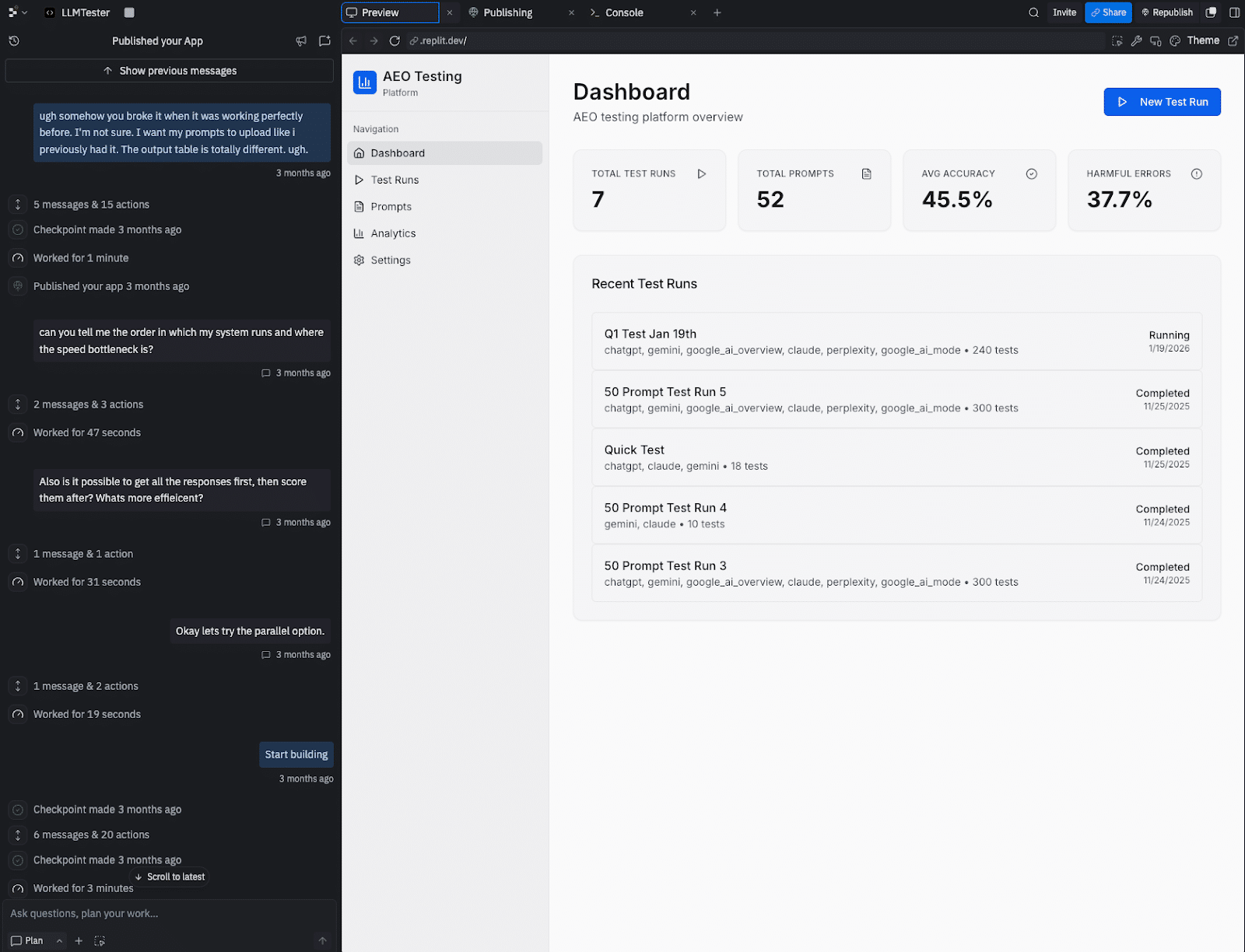
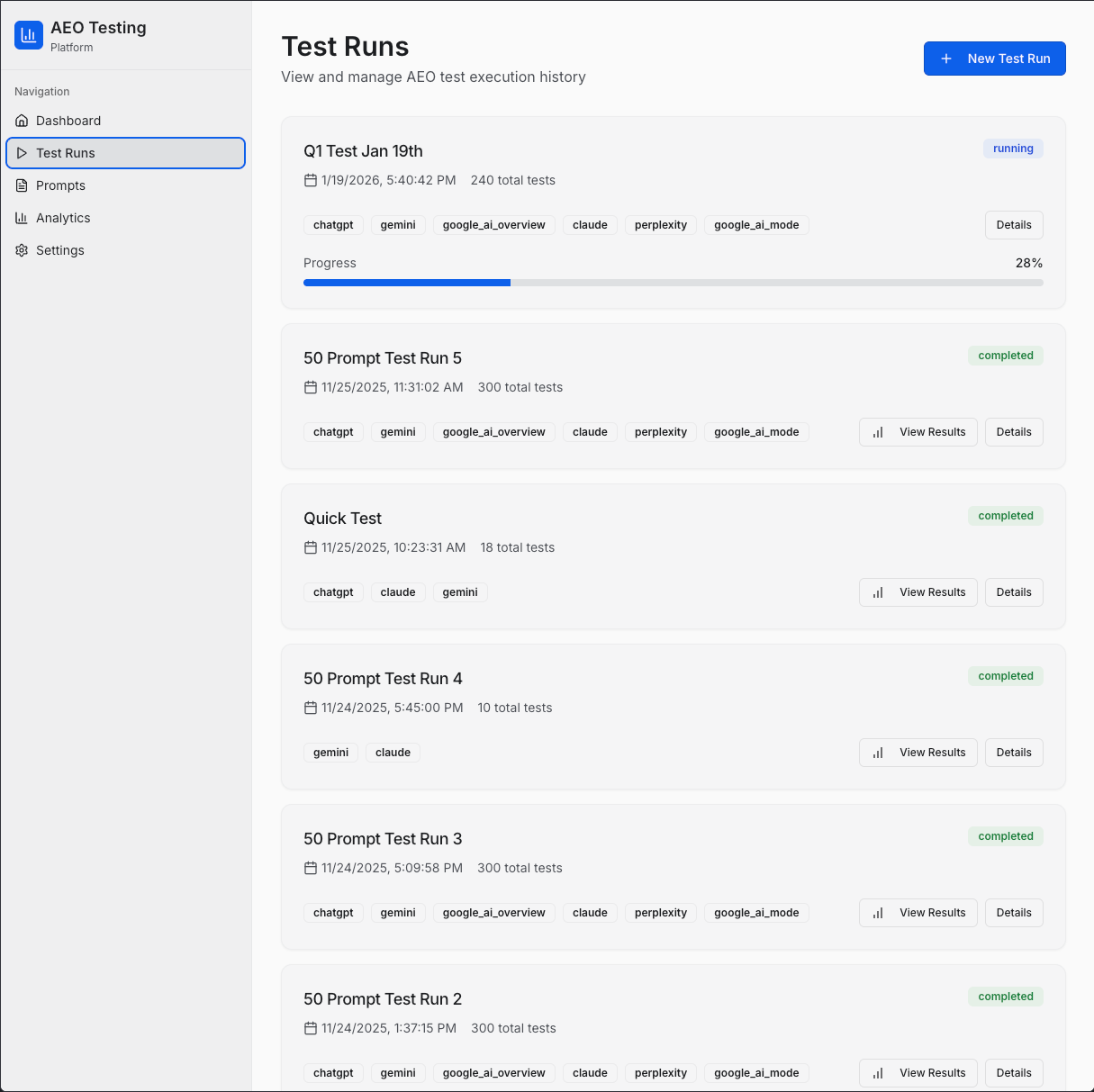
I encountered this challenge firsthand. I required a specific tool that wasn’t available within my budget. So, I took matters into my own hands and built one myself, despite not being a developer. With a weekend of effort and dialogue with an AI agent, I crafted an AI search visibility tracker tailored to my needs.
Sharing my experiences, I’ve compiled a guide that I wish I had at the start—a step-by-step playbook for creating a custom tool. This guide navigates through technology, processes, the hiccups I faced, and how to streamline your build.
My main goal was to automate an AI engine optimization (AEO) testing protocol. To achieve comprehensive AI-driven brand visibility, tracking across five critical AI surfaces was necessary:
ChatGPT (via API): Renowned for its conversational AI prowess.
Claude (via API): A significant competitor with a unique response style.
Gemini (via API): Google’s direct model aimed at developers.
Google AI Mode: Enhances Google’s AI search experience with advanced reasoning.
Google AI Overviews: Summaries at the top of search results, prevalent by late 2025.
On top of these, I implemented a custom 5-point rubric for scoring results based on criteria like brand name inclusion and citation quality. With no existing SaaS tools offering this particular mix, the solution was to build one.
This project leveraged vibe coding, translating natural language into functional applications with AI assistance. Amid developers increasingly adopting AI coding and the growing trend of AI-generated code, this approach offered a viable path for a non-developer like me to create an impactful internal tool.
Your tech stack: The three tools you’ll need
To replicate this project while keeping costs manageable, here are the necessary components:
Replit Agent: An online development environment costing around $20/month, enabling application building via description alone.
DataForSEO APIs: The core of this project, allowing data retrieval from various AI platforms, priced on a pay-as-you-go model.
Direct LLM APIs (optional): Establishing direct connections with OpenAI, Anthropic, and Google APIs to verify and correct any discrepancies.
The playbook: A step-by-step guide to building your tool
Building this tool involved clear communication and step-by-step progress. Here’s a structured approach to guide your process:
Step 1: Write a requirements document first
Start by outlining your needs clearly. This document acts as a blueprint covering problems, features, and necessary data. Initial conversations with your AI should revolve around this document to set a solid foundation.
Step 2: Ask the AI, ‘What am I missing?’
Once your needs are outlined, seek the AI’s help in uncovering overlooked areas. Questions like “What am I not accounting for?” can avert common pitfalls and ensure comprehensive planning.
Step 3: Build one feature at a time and test it
Avoid building everything simultaneously. Tackle one small task and test it thoroughly before moving to the next. This methodical approach aids in pinpointing and addressing issues efficiently.
Step 4: Point the agent to the documentation
When integrating APIs, guide the AI using specific documentation. Providing exact URLs ensures accurate implementation and saves time otherwise spent fixing errors.
Step 5: Save working versions
Before introducing significant changes, save copies of your project. In Replit, this is done through “forking.” It’s a precaution against potential new feature-induced disruptions.
Common problems and how to fix them
You’ll likely face technical hurdles. Here are frequent issues with solutions to help you navigate the process smoothly:
Problem
Solution
1. API authentication fails
Provide the exact authentication documentation URL to the agent.
2. Results disappear
Ensure persistent storage by requesting a database from the start.
3. API responses don’t show
Share raw JSON data with the agent to diagnose and fix parsing logic.
4. Model response cut short
Conduct parameter checks post-updates to maintain consistent results.
Evaluating the real costs
Building this tool has clear advantages over purchasing a SaaS solution, notably cost savings. Here’s a breakdown:
Expense
Custom Tool
SaaS
Subscription
$20/month
$500/month
API Usage
$60/month
Included
Total
$80/month
$500/month
Despite the initial time investment, the ability to adapt and tailor the tool outweighs the ongoing costs.
Is building your own tool right for you?
This decision largely depends on your specific needs:
Consider building if:
You require unique testing methods not supported by current tools.
Your agency needs a white-labeled solution.
You prefer cost-effective strategies and are willing to invest time.
Stick with SaaS if:
Your time is more valuable than subscription costs.
You need robust security and customer support.
You find standard features sufficient.
Ultimately, crafting a tool that aligns perfectly with your workflow can provide a distinct edge in the competitive SEO landscape. Welcome to the era of practitioner-developers; it’s time to innovate.
Have you ever wondered how to elevate your brand using a combined strategy that brings together SEO, social presence, public relations, and content creation? Well, I’m here to guide you on this transformative journey where we boost AI search visibility and ensure your brand becomes the go-to answer in your field.
Integrating these elements into a cohesive strategy isn’t just powerful—it’s essential in today’s digital landscape. Let me show you how to turn this into a reality for your brand.
As we step into 2026, I’ve noticed a significant shift in how AI models operate due to the loss of shared data access. This change is creating a landscape where fragmented answers become the norm. It’s fascinating to see how platform-controlled data is redefining the way AI search and visibility are structured.
It’s indeed a thrilling time to explore how these changes are influencing the AI world. As AI platforms enforce tighter control over data, I’m observing more divergence in the answers they provide. This makes understanding the impact on search capabilities and visibility even more crucial, not just for tech enthusiasts but also for industry experts closely monitoring these developments.
When I first discovered the power of schema markup, it felt like unlocking a secret weapon for enhancing AI search visibility. It’s fascinating how this powerful tool can bridge the gap, allowing language models to better understand my content.
Through implementing various schema types, I’ve significantly improved how my content is perceived and indexed by AI systems. Learning about these key schema types has been vital to my strategy.
Identifying the right schema types wasn’t easy at first. However, by exploring structured data tips and strategies, I gathered immense insights that truly transformed my content’s AI compatibility.
Structured data plays a crucial role in helping language models like LLMs comprehend what my content is all about. Utilizing this to my advantage has not only enhanced visibility but also boosted my overall SEO efforts significantly.
Designing a plan to integrate schema markup into my content strategy was a rewarding journey. Each step of implementing structured data is a building block towards achieving my SEO goals, particularly in the AI-driven digital landscape.