Category: News

  • How AI Ads are Revolutionizing Sales Growth for Brands

    How AI Ads are Revolutionizing Sales Growth for Brands

    I recently discovered that Google’s transition to AI-powered ads is transforming how brands engage with consumers, significantly boosting their performance in search results.

    Google claims these AI-driven advertising tools are yielding impressive outcomes, with some retailers reporting substantial increases in sales as Google continues to innovate the functionality of ads within AI-driven searches.

    The big picture. The anticipated disruption of Google’s search by AI chatbots like ChatGPT hasn’t happened. Instead, Google’s ad revenue continues to rise, illustrating that AI is enhancing search dynamics rather than replacing them.

    By the numbers:

    • Alphabet Inc. exceeded $400 billion in revenue by 2025.
    • Q4 ad revenue jumped 13.5% YoY to $82.28 billion.
    • YouTube ads saw a nearly 9% YoY climb, reaching $11.38 billion.

    What’s happened. Google is integrating ads into its AI-powered search features, such as AI Mode using Gemini, while unveiling ad formats tailored for conversational searches. A new ‘business agent’ initiative helps brands like Poshmark and Reebok manage their AI representation.

    Driving the results. Innovative campaigns, like Performance Max and AI Max, align ads with more nuanced conversational search intents. Google notes that AI Mode queries tend to be two to three times longer, providing better context and connecting users with fitting products. Aritzia, for example, has seen an 80% rise in revenue with AI Max.

    How it works. The AI system assesses a retailer’s website and creative assets, interpreting user intent from conversational searches. It matches products and messages dynamically and in real time, crucial as 15% of daily searches are entirely novel.

    Why we care. Google’s evolution from keyword-focused to intent-driven and AI-matched advertising enables more precise consumer engagement when they’re ready to purchase. As search becomes increasingly conversational, AI-powered ad formats are essential to stay competitive.

    Zoom in. Google is exploring new formats like ‘direct offers’ which personalize promotions when users show buying intent. Using Gemini, these trials with brands like E.l.f. Beauty, Chewy, and L’Oréal analyze conversational context and behavior.

    Commerce push. Google is advancing its commerce agenda with a Universal Commerce Protocol developed with Shopify, facilitating purchases directly within AI interactions.

    Yes, but. Google isn’t alone in exploring AI-driven search ads. Early results vary; Amazon reports limited success with its AI shopping assistant, and OpenAI and Perplexity AI are navigating their monetization strategies.

    What they’re saying. Google presents itself not as a retailer but as a ‘matchmaker,’ emphasizing how AI creates more relevant, personalized ads while allowing brands to control their message and foster user trust by displaying the right product at the perfect time.

    What’s next. Though Google has no immediate plans to insert ads directly into Gemini, it will continue enhancing ad offerings within AI Mode, focusing on personalized promotions and AI-driven shopping experiences.

    Bottom line. AI isn’t replacing traditional search; instead, it’s reshaping it. For Google, that means more conversational, targeted, and sometimes much more profitable advertising.

    Dig deeper. Curious for more insights? Discover how Google’s AI ads are achieving an 80% sales boost for some brands here.


    Inspired by this post on Search Engine Land.


    crushpress.ai community screenshot
  • Can Google AI Truly Deliver Accurate Answers: A Closer Look

    Can Google AI Truly Deliver Accurate Answers: A Closer Look

    As someone who’s been closely observing AI advancements, I found Google’s AI Overviews to have improved significantly. By February, they correctly answered standard factual benchmarks 91% of the time, a notable rise from 85% back in October. This assessment came from a rigorous analysis conducted by The New York Times in collaboration with the AI startup, Oumi.

    Yet, considering Google processes more than 5 trillion searches annually, this still implies that millions of answers could be incorrect every hour. In essence, there’s much room for improvement.

    Why it matters to me. My interactions with Google have evolved from just link clicks to encountering AI-generated summaries. This evolution suggests that while AI Overviews have gotten better, they still mix accurate responses with poor sourcing and blatant errors, potentially misleading searchers and affecting visibility for many publishers.

    The nitty-gritty details. Oumi put 4,326 Google searches to the test using SimpleQA, a benchmark known for measuring factual precision in AI systems. AI Overviews hit a 91% accuracy rate post-upgrade to Gemini 3 from Gemini 2’s 85%.

    The more pressing issue for me is the sourcing. Oumi discovered that more than half of February’s correct responses were ‘ungrounded,’ meaning the linked references didn’t fully back the answers.

    This lack of grounding makes verification a challenge. Even if the answer is correct, the linked pages might not sufficiently illustrate the reasoning.

    What shifted. While the accuracy saw improvements from October to February, grounding declined. In October, 37% of accurate answers were ungrounded; by February, this figure increased to 56%.

    Real-world examples. The Times pointed out several inaccuracies: For instance, Google incorrectly dated when Bob Marley’s home became a museum. Google’s answer was 1987, but the actual year was 1986, and the cited sources conflicted. A search about Yo-Yo Ma and the Classical Music Hall of Fame yielded a link to the Hall’s site, yet Google stated he wasn’t inducted. Moreover, while Google got Dick Drago’s age at death right, it flubbed his date of death.

    Google’s standpoint: Google contested the Times’ findings, arguing that the benchmark used in the study was flawed and didn’t mirror actual search behavior. Google spokesperson Ned Adriance mentioned that the study had some ‘serious holes.’

    Furthermore, Google asserted that its AI Overviews utilize search ranking and safety measures to minimize spam and has consistently cautioned that AI responses might contain errors.

    The detailed report. If you’re interested in more depth, you might check the full report, How Accurate Are Google’s A.I. Overviews? (note: subscription required).


    Inspired by this post on Search Engine Land.


    crushpress.ai community screenshot
  • Unveiling ChatGPT’s Traffic Path: Google’s Surprising Role

    Unveiling ChatGPT’s Traffic Path: Google’s Surprising Role

    I recently came across an intriguing Semrush study that revealed some fascinating insights into ChatGPT’s traffic patterns. Despite a whopping 206% increase in referrals, surprisingly few sites actually see significant traffic. This is largely because many queries are backed by pre-trained knowledge rather than live web searches.

    According to the study, over 30% of outbound clicks go to just 10 domains. Google alone claims more than 20% of these clicks. It’s intriguing to see how much weight the tech giant holds in this landscape.

    ChatGPT is gradually leaning less towards live web searches. It only triggers search functions in 34.5% of queries now, a decline from 46% in late 2024. This shift indicates a change in how the platform’s role is evolving in navigating the web.

    Let me break it down further. Although ChatGPT’s referral traffic saw a significant rise, the traffic mainly flows towards a limited number of sites. In fact, about 21.6% of this traffic heads straight to Google, followed by nine other domains that make up a total of just over 30%.

    Many other websites are left with a small fraction of residual traffic. The number of domains receiving any referrals peaked at around 260,000 in 2025 but has since settled near 170,000.

    Why is this important for us? The visibility on ChatGPT doesn’t always translate directly into traffic. Often, the impact of referrals may seem marginal. Plus, the decline in search-triggered queries makes securing citations and traffic even more challenging.

    While ChatGPT defaults to pre-trained knowledge, it resorts to web searches in certain scenarios, like when users request sources, inquire about current events, or when the model shows uncertainty.

    I’ve noticed a shift in user behavior—most ChatGPT prompts don’t mirror typical search queries. Instead, between 65% and 85% reflect complex, conversational inputs, indicating a transformation in engagement. Interestingly, the number of queries per session jumped 50% in late 2025.

    Looking into the data, Semrush analyzed over a billion lines of U.S. clickstream data between October 2024 and February 2026. This analysis tracked prompts, referral destinations, and patterns in search usage.

    For those interested, more detailed insights can be found in the ChatGPT traffic analysis. The study, titled “ChatGPT traffic analysis: Insights from 17 months of clickstream data,” is an enlightening read.


    Inspired by this post on Search Engine Land.


    crushpress.ai community screenshot
  • Discover Google’s Latest Maps Features: AI Captions & More

    Discover Google’s Latest Maps Features: AI Captions & More

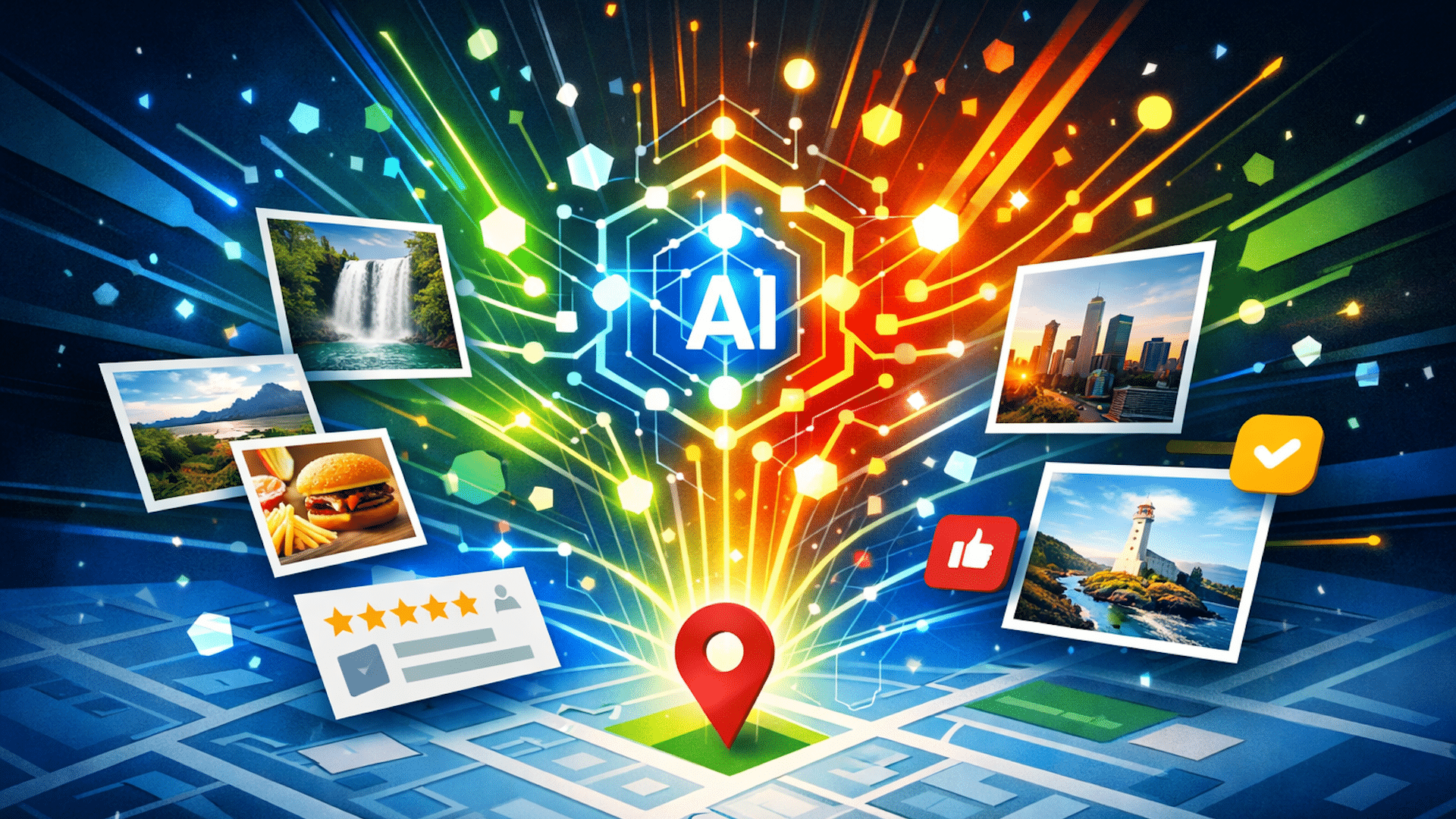
    I’ve been exploring some fantastic new features on Google Maps, and I’m excited to share how they’ve transformed my experience. With recent updates, sharing photos, reviews, and local insights has become more intuitive, thanks to the introduction of AI-generated captions powered by Gemini.

    Local Guides Redesign. If you’re like me, who enjoys contributing to Google Maps, you’ll appreciate the revamped Local Guides profiles. Now, our total points and levels are prominently displayed, and the badges have received a fresh new look!

    Top contributors like us can enjoy greater visibility in reviews, thanks to new gold profile indicators that help us stand out.

    AI Caption Drafts. Another noteworthy addition is the AI-generated caption drafts. Gemini is there to assist us by analyzing selected images and suggesting text we can either edit or discard, offering a smoother captioning experience.

    Currently, these caption suggestions are available in English on iOS in the U.S., with plans for broader availability on Android and globally.

    Media Sharing. Sharing photos and videos has never been easier. Recent uploads are now showcased directly in the Contribute tab, speeding up the sharing process.

    By allowing media access, Google Maps helps us by suggesting images from our camera roll that are ready for sharing with just a tap. This feature is live on iOS and Android across the globe.

    Why We Care. These updates not only enhance content creation but also potentially boost our local content visibility and search rankings. This could influence which reviews we trust and which businesses receive more attention.


    Inspired by this post on Search Engine Land.

    crushpress.ai community screenshot
  • Google’s Crackdown: Are Listicles Losing Their SEO Power?

    Google’s Crackdown: Are Listicles Losing Their SEO Power?

    Recently, I’ve found myself pondering whether low-quality listicles are starting to lose their footing in Google Search. Imagining the golden days when simple top-ten lists ruled the web raises the question: will they continue to thrive or face obsolescence?

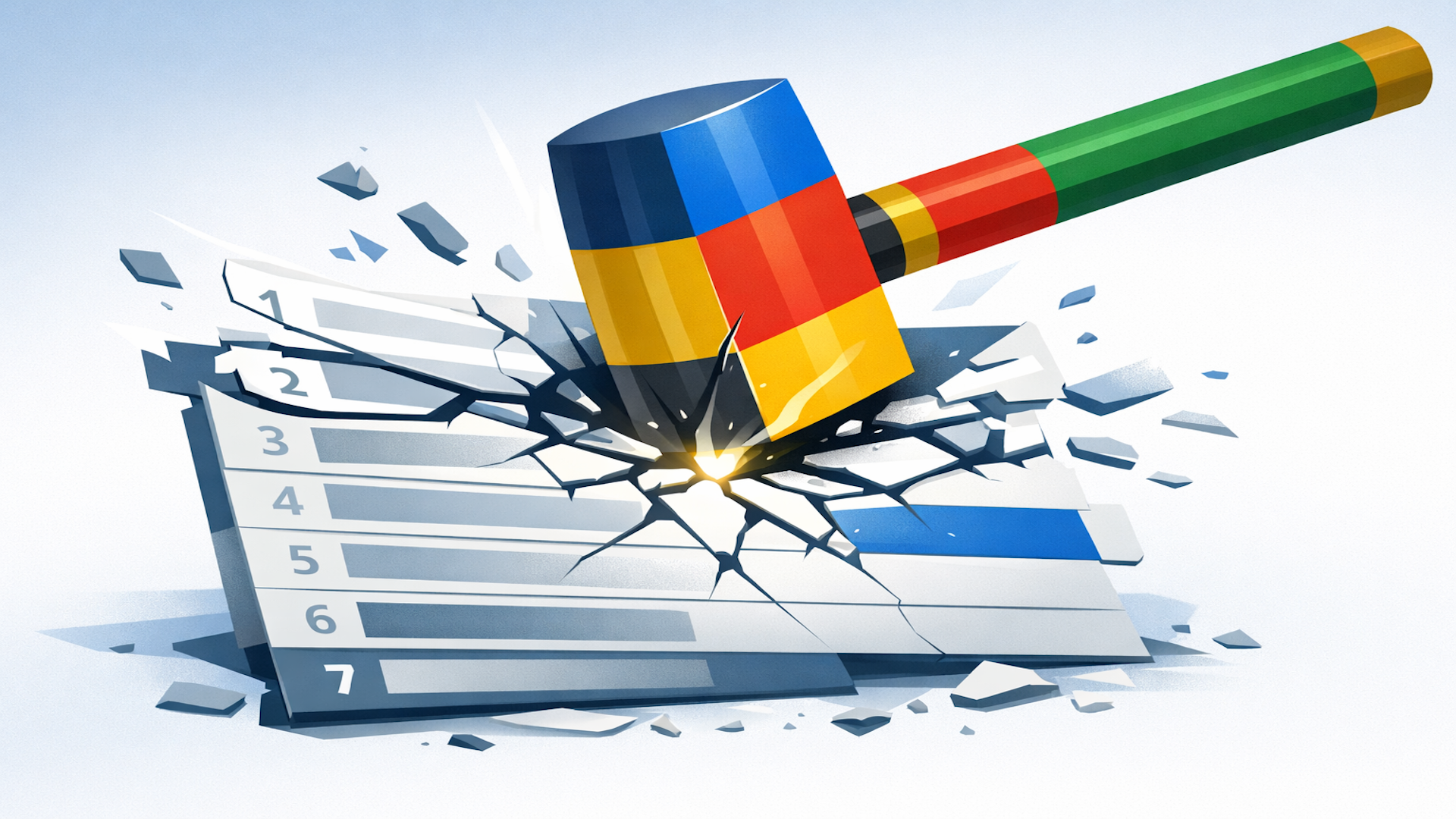
    Google hammers listicles

    I’ve learned that Google has noticed these weak ‘best of’ lists and is actively working to combat this issue in both Search and Gemini. Interestingly, if I were to rank my own product as number one in my “best of” list, it could not only be a search-quality dilemma but also a possible violation of new FTC regulations that took effect in October 2024.

    Driving the news. Lily Ray pointed out on LinkedIn that the FTC’s Consumer Review Rule (16 CFR Part 465) bans several deceptive practices involving reviews and testimonials. Examples include presenting company-managed content as independent reviews, publishing reviews of products never used, and attributing reviews to unwritten sources.

    • Presenting company-controlled content as independent reviews.
    • Publishing reviews of products or services never actually used.
    • Attributing reviews to people who didn’t write them.

    Faced with penalties reaching up to $53,088 per violation, where each page could potentially be judged separately, it’s wise to rethink our approach. Lily also shared a reference table created alongside Claude, providing further insight.

    Why now? Over the past couple of years, “Best X” and “Top 10 Y” listicles have become a popular GEO tactic, performing well in search and even influencing AI-generated answers. But their heyday may now be at risk.

    The backstory. Before the FTC rule was finalized, some companies faced legal challenges for producing hundreds of “best of” pages that ranked their own services top, fabricated competitor reviews, and used counterfeit testimonials.

    • Ranked its own services #1.
    • Included fabricated competitor reviews.
    • Used fake reviews on third-party platforms.
    ```json
{
  "alt": "Table outlining permissible and prohibited self-promotional listicle practices under FTC rules effective October 21, 2024.",
  "caption": "Understand the do's and don'ts of self-promotional listicles with the new FTC rules effective October 21, 2024. Ensure your practices are legal and compliant.",
  "description": "This image is a table explaining permissible and prohibited practices for self-promotional listicles under FTC Consumer Review Rule 16 CFR Part 465, effective October 21, 2024. Permissible actions include creating company-branded comparison pages and soliciting honest reviews without sentiment requirements. Prohibited actions include misrepresenting control over review sites, providing false reviews, and obscuring disclosures. Keywords: FTC rules, self-promotional listicles, legal, prohibited, compliant, endorsements."
}
```

    The Better Business Bureau later reprimanded these companies for their unsubstantiated claims.

    What’s happening. Today’s listicles frequently follow this pattern: publishing “best tools” lists, including untested competitors, applying subjective scoring, and placing their own brand at the top. They often give the illusion of independence or firsthand evaluation.

    • A brand publishes a “best tools” list.
    • Includes competitors it hasn’t tested.
    • Uses subjective or invented scoring systems.
    • Ranks itself #1.

    The nuance. While it’s still possible to create comparison content featuring your own product, the FTC suggests heightened risk when implying objectivity, using non-genuine reviews, or failing to disclose material relationships.

    • You imply objectivity, but promote your own product.
    • You present reviews not based on real experience.
    • You fail to clearly disclose material relationships.

    What Google is saying. Google acknowledges the trend towards low-quality listicles. A spokesperson informed The Verge that Google imposes protective measures against such manipulation in both Search and Gemini. They continue to advise creating content intended for real people, ensuring it’s comprehensible to search systems.

    Why we care. The strategy that once provided high visibility might now bear risks, not only from regulatory authorities but also from possible changes to Google’s search algorithms. Consequently, this former GEO mainstay might see a rapid decline as its influence diminishes.

    Caveat. I must emphasize I’m not a lawyer. It’s always best to consult your own legal counsel if you’re contemplating the continued use of this tactic.


    Inspired by this post on Search Engine Land.

    crushpress.ai community screenshot
  • Why Human-Written Content Outperforms AI on Google

    Why Human-Written Content Outperforms AI on Google

    I’ve come across some fascinating findings that demonstrate the prowess of human-written content on Google. According to data from Semrush, it turns out that content crafted by us, humans, stands a significant chance of claiming the top spot in Google’s search results, unlike its AI-generated counterpart.

    The Semrush study, analyzing 42,000 blog posts, revealed that human-written content dominates the No. 1 position on Google 80% of the time. In comparison, purely AI-generated pages manage to capture this coveted spot only 9% of the time.

    The details. Semrush conducted an analysis of 20,000 keywords and their top 10 results, utilizing an AI detector to classify the content.

    Human-authored pages outshined both AI-generated and mixed content across all top 10 positions.

    The gap was most pronounced at Position 1, where human content had an 8x higher likelihood of ranking.

    Meanwhile, I noticed that AI-generated content tended to appear more frequently in the lower spots on Page 1, with a nearly double increase from Positions 1 to 4.

    Yes, but. AI detection tools, as widely acknowledged, can be inconsistent. This inconsistency often leads to misclassifications between human and AI-generated content, introducing a degree of “fuzziness” in these classifications.

    Why we care. While AI-generated content can occasionally perform well, the data suggests that the insights and intuition of human writers still drive superior results. For competitive queries, originality, expertise, and sound editorial judgment remain valuable advantages.

    Perception vs. data. It’s intriguing that 72% of SEO professionals regard AI content as performing as well as or even better than human content. Yet, the actual ranking data clearly indicates a strong advantage for human-written content at the top.

    How teams use AI. It doesn’t surprise me to find that AI is widely adopted, especially in creating a hybrid workflow:

    A substantial 87% of teams retain significant human involvement during content creation.

    64% employ a human-led, AI-assisted approach.

    AI proves most beneficial in research, drafting, and optimization stages.

    However, AI usage noticeably declines for multimedia, localization, and tasks requiring heightened judgment.

    What’s driving adoption. While AI speeds up output, it doesn’t consistently enhance content quality.

    73% of respondents highlighted faster production as AI’s primary benefit.

    Yet, only 19% asserted that it improves content quality.

    About the data: The analysis’s foundation lies on 42,000 blog pages from 200,000 URLs associated with 20,000 keywords. GPTZero was used to classify content for this study, which also includes insights from a survey of 224 SEO professionals involved in content and search.

    The study. Does AI content rank well in search? [Survey + Data study]


    Inspired by this post on Search Engine Land.


    crushpress.ai community screenshot
  • Google Search Console Bug Fix: What You Need to Know

    Google Search Console Bug Fix: What You Need to Know

    Recently, I discovered that Google is addressing a pesky bug in Search Console that has been inflating impression counts. Since May 13, 2025, there has been a logging error misreporting impression data, and Google has assured us that corrections will be rolling out in the coming weeks.

    This bug has been a longstanding issue, and I was relieved to hear that Google is finally correcting it. They’ve updated their Data anomalies in Search Console page with the following message:

    “A logging error is preventing Search Console from accurately reporting impressions from May 13, 2025 onward. This issue will be resolved over the next few weeks; as a result, you may notice a decrease in impressions in the Search Console Performance report. Clicks and other metrics were not affected by the error, and this issue affected data logging only.”

    I also read a statement from a Google spokesperson who confirmed: “We identified a reporting error in Search Console that temporarily led to an over-reporting of impressions from May 13, 2025 onward. Bug fixes are being implemented to ensure accurate reporting.”

    So, what’s changing? As Google works on these fixes, we can expect changes in how impressions are logged and reported. With this rollout, I anticipate seeing a drop in impression numbers in my Performance report, although clicks and other metrics remain unaffected.

    The timeline of this issue stretches back to May 13, 2025, and it has persisted until now. Google mentioned that the complete correction will take several weeks for full implementation across various reporting areas.

    Why is this important to me? If my Google Search Console impression numbers change in the near future, it’s likely due to this bug fix. Staying informed helps me understand these shifts better.


    Inspired by this post on Search Engine Land.


    crushpress.ai community screenshot
  • How Clarity Beats Creativity in ChatGPT Ad Performance

    How Clarity Beats Creativity in ChatGPT Ad Performance

    I recently delved into an intriguing analysis by Adthena, which examined over 40,000 daily ChatGPT ad placements. What stood out to me was how these ads are evolving into a streamlined, high-intent messaging format, specifically tailored for users who are already deep in the decision-making process.

    The big picture: ChatGPT ads are gravitating towards a style that’s concise, well-structured, and highly contextual. This approach emphasizes precision over persuasion, signaling a shift from traditional creative advertising to real-time, intent-driven assistance.

    By the numbers:

    • The average headline is just 30 characters long, consisting of about 5 words.
    • Body copy averages 116 characters and roughly 19 words.

    This makes it clear that every word needs to be purposeful, enhancing clarity or directly driving conversion.

    What’s working: The dominant pattern I observed involves a “Brand: Benefit” headline structure, which clearly delineates the brand name from the value proposition. This works well because users in conversational settings prioritize immediate clarity over intrigue.

    In this environment, brand recall is essential, especially as ads often start with the brand name—ideal for users evaluating rather than discovering options.

    Headlines have become succinct, resembling functional labels more than traditional slogans. This brevity continues in the body copy, usually composed of two concise sentences: one proving a point and another offering a subtle prompt.

    Context mirroring has emerged as a distinguishing feature. The best ads expertly reflect a user’s query or environment, suggesting real-time message tailoring—a level of AI-native targeting that transcends basic keyword matching.

    Concrete value signals are vital. The dollar symbol and specific numerical claims, such as prices or performance metrics, significantly outperform generic promises. Numbers naturally instill credibility, which is crucial in a context where users are actively researching and comparing.

    Low-friction offers—like trials or demos described with the word “free”—are the most effective conversion drivers. They lower the commitment threshold for users still exploring options.

    Calls to action are direct and action-focused, using phrases like “Shop now,” “Compare,” or “Book,” steering away from generic prompts like “Learn more.”

    The overall tone is calm, confident, and measured, with minimal punctuation like exclamation points or question marks. This aligns more with the voice of helpful guidance than traditional advertising hype, allowing ads to blend naturally into conversational contexts.

    Why we care: ChatGPT ads target users with high intent, where clarity and relevance trump creativity or storytelling. In a conversational space, ads compete against genuinely helpful answers, so precise and value-driven copy truly stands out.

    This brings advantages to early adopters as the format becomes standardized, rewarding those who use shorter, structured messaging.

    Between the lines: While ChatGPT ads share characteristics with paid search—focused on intent and relevance—they must seamlessly fit into dialogues, respond to users with high intent, and present messages that feel supportive rather than disruptive.

    The takeaway is that success in ChatGPT advertising increasingly relies on precision, relevance, and credibility over emotion or brand storytelling. Achieving this means perfectly integrating at the moment when users need clear, trustworthy information.

    Dig deeper: Check out the complete infographic shared by Adthena CMO Alex Fletcher on LinkedIn.


    Inspired by this post on Search Engine Land.


    crushpress.ai community screenshot
  • Unveiling Auto-Applied Google Ads Experiments: Speed Up Your Results

    Unveiling Auto-Applied Google Ads Experiments: Speed Up Your Results

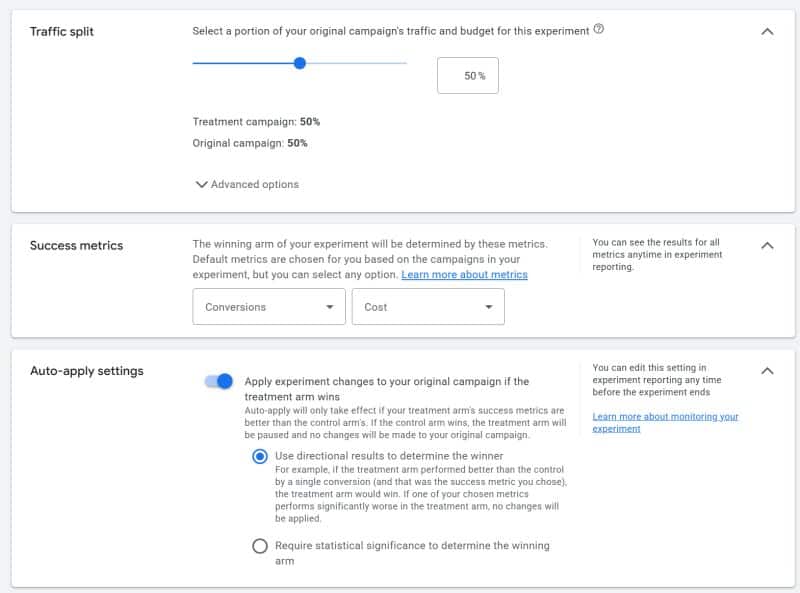
    I recently discovered that Google Ads now includes an auto-apply setting for its experiments feature, which is activated by default. This means that once an experiment determines a winning variant, it can automatically implement that change without waiting for manual review. A real time-saver, but there’s more to consider.

    Here’s how it works: as advertisers, we can select between two modes when evaluating results – directional outcomes or statistical significance with varying confidence levels of 80%, 85%, or 95%. However, it’s reassuring to know there’s a safety net; if any chosen success metric performs significantly worse during testing, the system won’t proceed with automatic changes.

    Why it matters to me. Experiments are incredibly powerful within a Google Ads account, allowing us to test ideas without risking the existing campaign’s performance. While automating the application of results could streamline testing phases, this process eliminates a crucial checkpoint where we often catch unintended outcomes that might impact active campaigns.

    The potential pitfall. One limitation is that experiments currently accommodate only two success metrics. This might mean that a third, important metric could suffer unnoticed if it’s not one of the chosen ones, as the system’s guardrails only protect what we’ve explicitly instructed Google to watch, not every significant factor.

    ```json
{
  "alt": "User interface for setting up an experimental traffic split in a campaign tool, showing options for metrics and auto-apply settings.",
  "caption": "Dive into the analytics with this intuitive interface for experimenting with campaign traffic allocations and success metrics.",
  "description": "This image displays a campaign management tool interface for setting up experiments. Featuring a traffic split slider set at 50%, it allocates equal distribution between treatment and original campaigns. Users can choose success metrics, such as conversions and cost, and configure auto-apply settings for optimal results. This enables dynamic adjustments based on experimental outcomes, enhancing the effectiveness of marketing strategies. Ideal for digital marketers aiming at data-driven decision making."
}
```

    The takeaway. While the auto-apply feature serves as a helpful shortcut for straightforward tests, when conducting significant experiments, it’s worth going the extra mile for manual review. It’s best to let the experiment play out fully, ensure accuracy and thoroughness, and examine all data before making a final call.

    First observed by professionals. This update did not go unnoticed; it was first picked up by Google Ads specialist Bob Meijer, who shared his insights on LinkedIn.


    Inspired by this post on Search Engine Land.

    crushpress.ai community screenshot
  • Why SEO Tools Are Evolving, Not Fading Away

    Why SEO Tools Are Evolving, Not Fading Away

    I recently came across some fascinating insights into the world of SEO tools and how they’re evolving. It turns out, marketers are swapping SEO platforms less frequently now, mostly due to AI advancements, tightening budgets, and shifting search dynamics.

    In 2025, SEO tools emerged as the most commonly replaced martech application. You might think this indicates a problem, but there’s more to it. According to the 2025 MarTech Replacement Survey, for the first time, SEO platforms surpassed marketing automation platforms in replacements, a leader for five years.

    At first, this replacement trend could appear as instability within SEO. With the arrival of large language models, AI-generated answers, and zero-click search experiences, traditional keyword tracking and ranking-based methods face challenges.

    However, the survey data reveals a more complex narrative.

    SEO Tools: Most Replaced, Yet Stabilizing

    Despite being the most replaced category in 2025, the rate of SEO tool replacements actually slowed down compared to previous years. This indicates that while I’m seeing changes, there’s also increased stability.

    This shift points to maturation. It seems we’re consolidating, upgrading, or refining our SEO toolkits as search methods evolve rather than causing widespread churn.

    Meanwhile, other significant martech categories experienced sharper annual decreases in replacements:

    • CRM replacements dropped over 12% from 2024 to 2025, hitting an all-time survey low.
    • MAPs, email platforms, and CMS tools also saw declines compared to 2024.

    Why SEO Tools Are Being Replaced

    With stability not being the primary driver, you might wonder what’s fueling the change in SEO tool replacements. The survey highlights three main reasons:

    1. AI Capabilities

    The survey incorporated questions about AI’s role in replacement decisions for the first time, revealing its substantial impact.

    • 37.1% of respondents considered AI capabilities crucial.
    • 33.9% desired AI features in new tools.

    This shift reflects the growing trend of SEO platforms rapidly adopting AI for tasks like content generation, SERP analysis, and workflow automation.

    In many cases, swapping an SEO tool isn’t about leaving SEO behind; it’s about upgrading to incorporate AI capabilities.

    2. Cost Pressures

    Cost considerations significantly influence martech tool replacements, including SEO tools:

    • In 2025, 43.8% of marketers cited cost reduction as their reason for replacing applications, a sharp increase from 23% in 2024 and 22% in 2023.

    This indicates growing pressure to evaluate overlapping tool functionalities and optimize the SEO tech stack effectively.

    3. Changing Needs in a Shifting Search Landscape

    As search trends evolve, so do the expectations for SEO platforms. Traditional rank tracking and keyword monitoring aren’t adequate anymore. Many teams are now looking for tools that can:

    • Provide insights across AI-driven SERPs
    • Track visibility beyond just clicks
    • Integrate more seamlessly with wider marketing and data systems

    This evolution partially drives the ongoing replacements, even as the overall landscape becomes more stable.

    AI Is Reviving Custom-Built SEO Tools

    A remarkable trend from the 2025 survey is the comeback of custom-built solutions for SEO processes.

    Homegrown applications made up:

    • 8.1% of replacements in 2025, increasing from 3.4% in 2024 and 5% in 2023.

    This marks a shift after years of depending almost entirely on commercial platforms.

    “AI-assisted coding is changing the calculus of build versus buy,” explained martech analyst Scott Brinker. “Building is now faster and easier. Companies should still purchase applications where they lack a competitive edge. However, where they can differentiate through tailored solutions, custom-built software is gaining appeal.”

    For SEO teams, this trend could see more organizations developing:

    • Custom data pipelines
    • Unique SERP tracking systems
    • AI-driven analysis tools customized for specific requirements

    Other Martech Categories Show Even Greater Stability

    While SEO tools led in replacements, the broader martech field is stabilizing.

    Several key categories recorded reduced replacement rates in 2025:

    • CRM platforms (down over 12% year-over-year)
    • Marketing automation platforms
    • Email distribution tools
    • Content management systems

    This trend suggests that many organizations are sticking with core systems while selectively updating rapidly changing areas like SEO.

    Methodology

    The survey invitations were sent out via email, website, and social media throughout Q4 2025. Out of 207 respondents, findings are drawn from the 154 marketers (60%) who had replaced a martech application in the preceding 12 months.

    Download the 2025 MarTech Replacement Survey, no registration required.


    Inspired by this post on Search Engine Land.


    crushpress.ai community screenshot