Category: Digital Marketing

  • How Ignoring Data Can Derail Your PPC Success

    How Ignoring Data Can Derail Your PPC Success

    Recently, I found myself captivated by a story shared by Dean Kadi, Head of Paid Growth at One Link Media. He recounted a fascinating experience from a PPC Live podcast that really highlighted what can go wrong when you ignore performance data. It involved a client who overrode a winning ad strategy with new creatives that just didn’t deliver.

    Dean Kadi’s team had developed an exceptionally successful Meta advertising strategy for a premium woodworking brand, Rubio Monocoat, using user-generated content (UGC). Their intensive testing across creators and formats resulted in a significant ROAS improvement, proving the power of well-tested strategies.

    However, the client decided to halt all the high-performing ads in favor of new, heavily branded content. Despite the polished look, these ads didn’t blend well with the Meta platform, and it was clear that engagement and conversion would likely suffer.

    The client’s assumption was rooted in a customer survey that praised the brand’s color range, leading them to mistakenly prioritize this over proven data. This is a classic marketing pitfall where assumptions can cloud judgment and overshadow hard-earned data insights.

    The most eye-opening moment came when the client expressed a simple wish for their new strategy to be a winner. Dean explained that in paid media, success isn’t driven by preferences or hopes—it’s determined by what resonates with audiences, as clearly shown by performance data.

    When facing such situations, Dean advises agencies like us to stay calm, present evidence, and communicate risks effectively. Professionalism and clear documentation can help maintain client relationships while asserting the agency’s expertise.

    As expected, the new strategy did not perform well. Underperformance became evident with increasing costs and decreasing campaign efficiency. After eight weeks of this, the client recognized the necessity to revert to the original strategy.

    Reintroducing UGC ads quickly turned the tide, proving the original strategy’s effectiveness. Performance metrics showed immediate improvements, reinforcing the importance of data-driven decisions.

    The overarching lesson here is that data should be your guiding light in PPC campaigns. Clients sometimes need to see failures themselves before they trust data insights. Consistently providing clear, transparent reports helps rebuild trust and guide future strategies.

    Dean also pointed out that many PPC accounts still suffer from poor tracking setups. This issue is a major roadblock to optimizing performance and should be addressed urgently.

    Additionally, while AI tools can enhance efficiency, they cannot replace the need for a strong strategy. Human judgment remains crucial for evaluating AI outputs and guiding successful campaigns.

    In conclusion, successful PPC is all about balancing data, strategy, and communication. Document recommendations thoroughly, trust your expertise, and let audience data guide your actions. Remember, it’s the audiences who ultimately decide what works.


    Inspired by this post on Search Engine Land.


    crushpress.ai community screenshot
  • Industry-Specific SEO Agency Rankings for 2026: Buyer Guide

    Industry-Specific SEO Agency Rankings for 2026: Buyer Guide

    If several 2026 rankings have left you with several different best agencies, the rankings aren’t necessarily contradictory. Each one reflects a different candidate pool, industry context and definition of fit. Your job is not to accept the published order. It is to decide whether the order still holds for your business.

    Use industry rankings to discover credible candidates, then re-rank those candidates around your search demand, operating constraints and commercial risk. The process below gives you a defensible way to do that without turning agency selection into a contest between sales presentations.

    Rankings help you discover candidates, not declare a universal winner

    An agency’s position is conditional. It depends on which firms entered the evaluation, which criteria were used, how those criteria were weighted and when the underlying information was checked. A first-place agency for a luxury fashion brand does not automatically become the best choice for a biotech platform, regional med spa or international logistics provider.

    IndustryCandidate contextFreshness signalYour first verification question
    Logistics and supply chainMore than 50 agencies evaluatedUpdated May 14, 2026Can the team translate service lines, locations and operational terminology into a coherent search architecture?
    FashionMore than 90 agencies with luxury-brand work consideredUpdated May 14, 2026Does its experience match your price position, sales model and balance between brand control and ecommerce growth?
    Med spasMore than 40 agencies evaluatedUpdated May 14, 2026Can it coordinate local discovery, treatment content and appropriate review of health-adjacent claims?
    BiotechMore than 60 firms evaluatedUpdated May 14, 2025Can it protect scientific accuracy while making complex concepts discoverable to distinct audiences?

    Those pool sizes show the breadth of consideration, but they are not confidence scores. Fashion does not have a more reliable winner merely because its candidate field was larger than the med-spa field. The pool may be larger because the market contains more plausible candidates, because the inclusion criteria differ or because relevant experience is defined differently.

    The luxury-brand condition also narrows what the fashion evidence means. It can be highly relevant when premium positioning, controlled language and brand presentation are central to the assignment. It may be less diagnostic for a discount marketplace, an apparel manufacturer selling through distributors or a retailer whose primary problem is managing a large and frequently changing catalog.

    Freshness deserves the same care. The biotech field looks ahead to 2026 but carries a May 14, 2025 update date. That does not prove any position is wrong. It does mean you should verify the agency’s current team, client mix, conflicts, service scope and technical capabilities before treating its rank as current.

    Do not average positions across different industry rankings or treat them as if they came from one league table. Start with the vertical closest to your business model. If your company spans verticals, identify the harder search problem and use that as the primary filter. A biotech logistics provider, for example, may need scientific governance and supply-chain demand generation; neither label alone establishes fit.

    Real industry specialization changes how the agency works

    A strategist at a divided workbench adapts different components for miniature clinical, warehouse, professional-services, and retail environments.

    Industry logos are weak evidence on their own. Specialization becomes meaningful when it changes discovery, keyword and entity research, website architecture, content approval, measurement and reporting. Ask candidates to show how their process changes for your vertical rather than merely showing that they recognize its vocabulary.

    Logistics and supply chain: test the commercial architecture

    A logistics website may need to organize demand by service, geography, shipment or operational problem, customer industry and buying role. Those dimensions can overlap. Publishing a page for every possible combination creates duplication; collapsing everything into broad service pages can hide the specific expertise a buyer is trying to find.

    Give the agency a representative service line and ask it to sketch the path from search query to qualified inquiry. The answer should cover page hierarchy, supporting content, internal links, proof, conversion language and how irrelevant leads will be screened out. If the response jumps immediately to a calendar of generic thought-leadership topics, the commercial model has been skipped.

    Also listen for the way the team handles operational terminology. It should be able to preserve the language practitioners use while explaining the offering clearly enough for procurement, finance or leadership. Replacing precise terminology with high-volume but poorly matched phrases can increase visibility while reducing lead quality.

    Fashion: test catalog mechanics and brand restraint

    Fashion SEO sits at the intersection of brand presentation, product discovery, merchandising and technical catalog management. Category pages, product pages, editorial content and seasonal collections can compete with one another if their roles are not clearly defined. Changes in inventory can also leave valuable internal links pointing toward thin, unavailable or retired destinations.

    Ask the agency to choose a representative category and explain what it would optimize, what it would preserve and why. For a transactional site, the response should address indexation, canonical choices, filters, internal linking, product availability and structured data alongside copy. It should also identify where search-led wording would damage the brand rather than assuming every available keyword belongs on the page.

    Luxury-brand experience is most useful when your own positioning requires similar restraint. If your growth model depends on frequent promotions, marketplace visibility or a broad value-oriented catalog, ask for evidence from that operating model rather than accepting prestige logos as a substitute.

    Med spas: test local intent and content governance

    Med-spa discovery is often both local and treatment-specific. A candidate therefore needs to connect location information, service detail, practitioner or facility trust signals, reviews and conversion paths without manufacturing interchangeable city pages. A page that merely swaps place names is not a local strategy.

    Ask the team to walk through a treatment page from query selection to publication. Who verifies medical or treatment-related statements? How are candidacy, limitations and expected outcomes described without drifting into unsupported promises? How do local pages differ when locations offer different services or have different staff? The agency does not need to make clinical decisions, but it does need a workflow that routes health-related claims to an appropriate reviewer.

    Measurement should reach beyond local rankings. Define what happens after a visitor arrives: a call, consultation request, booking or another meaningful action. Then establish how your team will feed appointment quality and service-line value back into SEO decisions. Otherwise, attractive traffic reports can conceal low-value inquiries.

    Biotech: test scientific review and entity consistency

    Biotech content has to preserve scientific precision while serving readers with different levels of technical knowledge. Researchers, prospective partners, buyers and investors may look for different answers even when they use overlapping terminology. Treating them as one audience usually produces pages that are dense but directionless.

    Ask who translates the search opportunity into a technical brief, who reviews scientific statements and how corrections propagate across the site. The agency should be able to keep platform names, indications, mechanisms, development stages and organizational relationships consistent across navigation, page copy, metadata and structured data where structured data is appropriate.

    Then ask how old claims are retired. Updating one prominent page is not enough when an outdated statement remains in an executive biography, resource page, downloadable asset or schema implementation. A credible workflow includes an inventory of dependent content and a named approval path.

    If an agency gives essentially the same answer for every vertical after swapping industry nouns, its specialization is surface-deep. The strongest signal is not familiarity with jargon. It is an operating model built around the consequences of getting the content, architecture or measurement wrong.

    Build your own decision matrix before requesting proposals

    Agencies cannot respond comparably when each one receives a different version of the assignment. Prepare a short brief before outreach. Include your priority offerings, markets, audiences, primary conversion, current platform, internal implementation resources, approval constraints and known measurement gaps. State whether you need strategy only, production, technical implementation or an accountable combination.

    Send the same brief to every candidate and evaluate each response as pass, concern or fail against the same matrix. Do not turn the labels into a mechanical total. A failure involving data ownership, claim approval or an undisclosed conflict can outweigh several softer passes.

    CriterionA pass looks likeA warning looks like
    Business-model fitThe team maps SEO activity to your actual offering, buyer, market and conversion path.The strategy would work only if your business behaved like a different client shown in the pitch.
    Evidence qualityExamples identify the starting problem, work performed, relevant outcome and agency’s actual scope.Charts lack context, screenshots have no meaningful baseline, or credit is claimed for work performed by others.
    Industry workflowResearch and approval steps reflect your terminology, risk level, internal experts and publishing constraints.Specialization is supported mainly by client logos and generic claims about understanding the audience.
    Technical depthThe agency connects crawling, indexation, rendering, templates, internal links and structured data to specific site problems.A standard audit is presented as the strategy, with no explanation of who will implement or validate changes.
    Content operationsBriefing, subject-matter review, editing, approval, updating and retirement all have clear owners.The proposal promises content volume without explaining accuracy control, differentiation or maintenance.
    AI discoveryThe team explains how entity clarity, answerable content, supporting evidence, crawlability, internal relationships and schema fit together, while acknowledging measurement limits.It guarantees placement in AI answers or treats GEO and AEO as labels for producing more generic copy.
    MeasurementPrimary conversions, diagnostic metrics, lead quality and reporting decisions are defined before work begins.Success is reduced to traffic, impressions, keyword counts or a proprietary score that cannot be reconciled with business outcomes.
    Commercial safetyAccount access, content and data ownership, subcontracting, change control, cancellation and transition duties are explicit.The agency controls essential assets, avoids documenting handoff obligations or leaves implementation costs outside an apparently complete fee.

    AI visibility deserves particular scrutiny in a 2026 selection. An agency should distinguish conventional search performance from appearances in answer engines or model-generated responses. It should also explain which observations are reproducible, which depend on prompts or platforms and which cannot be attributed cleanly. A polished AI dashboard is not useful if nobody can explain what its metrics mean or what decision will change when they move.

    Ask how structured data fits the plan, but do not accept schema volume as a goal. Markup should represent the visible content and the entities the page actually describes. It cannot repair vague positioning, unsupported claims, inaccessible pages or contradictory facts elsewhere on the site.

    Set hard stops before presentations begin. Ranking guarantees, refusal to provide access to your own accounts, undisclosed subcontracting, publication without required review and ambiguous ownership of your domain, analytics or content all deserve resolution before a contract is signed. If a candidate will not resolve them in writing, remove it from the shortlist.

    Test the agency’s thinking with a real working session

    A client team and agency strategists test ideas together using an unlabeled physical model of search pathways, obstacles, funnels, and risk gates.

    Presentation fluency can hide weak diagnosis. Give every finalist the same bounded working exercise using a real part of your site. You are not asking for a free strategy. You are testing how the team frames a problem, handles missing information and converts analysis into an implementable decision.

    1. Select a representative service, category, treatment or platform page tied to a meaningful conversion.
    2. Provide the same business context, technical constraints and available performance information to each finalist.
    3. Ask the team to identify search intent, relevant entities, architectural issues, content gaps, proof requirements and conversion friction.
    4. Require prioritization. Each recommendation should identify its expected role, dependencies, implementation owner and validation method.
    5. Ask what the team still does not know and how it would obtain the missing information after kickoff.

    A strong response distinguishes evidence from assumption. It may decline to estimate an outcome until analytics, indexation, competition or lead-quality data has been checked. That is disciplined diagnosis, not evasiveness. A weak response manufactures certainty, reaches for a familiar tactic before establishing the problem or produces a long backlog with no decision logic.

    Pay attention to who attends. If senior specialists lead the sale, ask who will conduct discovery, write briefs, review technical recommendations and join reporting meetings after signature. Request the names or roles of the delivery team and clarify how substitutions are handled. Industry experience held only by an executive who disappears after the pitch will not improve day-to-day work.

    Reference calls are most useful when you ask about operating behavior rather than general satisfaction. Ask what the agency actually owned, what delayed the work, how disagreements were resolved, whether senior involvement changed after the sale, how reporting affected decisions and what happened when a recommendation or published claim was wrong. A reference chosen by the agency will naturally be favorable, but precise process questions can still reveal the conditions behind the success.

    Read the final contract against the proposal and your matrix. Confirm deliverable definitions, implementation responsibilities, approval timing, account access, data and content ownership, use of third parties, change control, cancellation and transition support. A vague exit clause can turn an ordinary mismatch into an expensive migration, so resolve the handoff before work starts rather than after the relationship has deteriorated.

    Finally, name an internal owner. Even a capable specialist agency cannot approve scientific claims, supply merchandising decisions, verify service availability or judge lead quality without your team. The contract should make that dependency visible instead of allowing delays to become a recurring dispute about who was waiting for whom.

    Key takeaways

    • An industry ranking is a candidate-discovery tool, not a transferable verdict about the best agency for every company in that vertical.
    • Verify freshness, current team composition, relevant client work, conflicts and service scope before relying on any 2026 position.
    • Real specialization changes architecture, content review, technical execution and measurement; industry logos alone do not establish it.
    • Compare candidates against the same written brief and use hard stops for ownership, approvals, access, conflicts and unsupported guarantees.
    • Use a real working session to test prioritization, assumptions and implementation thinking before you sign.

    Your next move is concrete: open the ranking closest to your operating model, create a small candidate set, run freshness and conflict checks, and send every remaining agency the same brief. Choose the team that makes dependencies, uncertainty and commercial risk visible while showing how it will solve your particular search problem. That is a stronger basis for a 2026 decision than the number beside an agency’s name.

    References

  • How to Build Culturally Aware Marketing Personalization

    How to Build Culturally Aware Marketing Personalization

    If your Mexico campaign is a translated version of your Spain campaign with a different flag, you have not personalized it. You have changed the label while leaving the customer’s decision context untouched.

    Culturally aware personalization works in two passes. First, establish what is true for the market: availability, language, pricing, payments, delivery, support, policies, and local proof. Then use the individual’s preferences and recent behavior to decide which of those truths matter now. This gives you more relevant marketing without turning culture into a crude demographic shortcut.

    Personalize the market before you personalize the person

    Do not begin with the question, What does this culture like? That invites stereotypes and gives your team little operational guidance. Ask instead: What must be true for this customer, in this market, to make the decision confidently?

    Spanish-speaking markets make the distinction easy to see. When more than 20 countries are compressed into one generic Spanish audience, Spain often becomes the unspoken default and other markets inherit its vocabulary, formats, assumptions, and commercial context. The copy may be grammatically correct while the experience is commercially wrong.

    A customer does not experience culture as a tone-of-voice document. They encounter it through the words used for a product, the currency beside the price, the payment methods available at checkout, the delivery promise, the return process, the support they can reach, and the rules governing the transaction. If those details contradict one another, adding local slang will not make the campaign feel local.

    Before creating a market segment, complete a market-readiness check:

    1. Confirm serviceability. Define which products or services are actually available, where they can be delivered, and which promises your operation can keep.
    2. Confirm the transaction. Record the correct currency, price, payment options, taxes or fees your team is responsible for presenting, and any offer restrictions.
    3. Confirm support. Identify the language variant customers can use, the channels available to them, and who owns escalation when the standard journey fails.
    4. Confirm policy scope. Have the appropriate internal specialists approve market-specific claims, disclosures, terms, and customer-facing policies. A translation team should not be expected to invent regulatory guidance.
    5. Confirm local evidence. Select examples, partnerships, media mentions, testimonials, and practical details that genuinely belong to the market. Do not relabel global proof as local proof.

    If you cannot complete those five checks, you are not ready to promise a localized experience. Publish market-neutral information, state the limits clearly, or delay the campaign. A market-specific URL or hreflang annotation cannot repair a service that does not fit the market.

    This also defines the right unit of personalization. A language is not a market, a market is not a culture, and a culture is not an individual. Treat each layer as context rather than identity.

    Build a profile that separates context from identity

    A shopper stands between separate translucent cabinets containing market-context objects and personal-preference objects.

    Most personalization programs try to place everything into one customer profile. A safer and more useful design keeps market truth separate from person-level signals, then combines them only when making a decision.

    LayerWhat it containsWhat it should control
    Market contextCountry or region served, language variant, currency, catalog, pricing, payments, delivery, support, policies, and approved local evidenceWhat the brand is eligible to say, sell, recommend, or promise
    Customer contextDeclared preferences, consent, account market, recent browsing, purchases, support interactions, and communication historyWhich eligible message is most useful to this person now
    Decision contextChannel, journey stage, current product, recent event, and any conflicting or missing signalsWhether to personalize, ask for clarification, suppress a message, or use a neutral fallback

    The market layer should be owned like product data, not treated as campaign copy. When a payment option, delivery promise, price, or policy changes, the underlying market record should change once and feed every channel that uses it.

    The customer layer needs a confidence hierarchy. Use signals in this order:

    • Declared preferences: the language, market, channel, or product interest the person chose. Make these settings easy to review and change.
    • Verified relationship data: the market attached to an account, contract, shipping destination, or completed transaction, when using it is appropriate for the interaction.
    • Observed behavior: pages viewed, products compared, carts started, purchases made, and support journeys opened. These signals describe recent intent, not cultural identity.
    • Inferences: predicted interests or likely next actions. Store their origin, confidence, and age, and provide a neutral fallback when the prediction is weak.

    A language setting, surname, device location, or content choice does not prove nationality or ethnicity. Do not use those signals as proxies for sensitive identity. If market selection materially changes prices, eligibility, access, or terms, let the person confirm it and explain why you need the information. In situations involving protected or sensitive traits, have privacy and legal specialists review both the inputs and the resulting decisions before activation.

    Expectation is not the problem. An Adobe 2026 report found that 71% of consumers wanted personalized deals and content and 78% expected a seamless cross-channel experience, while fewer than half of brands delivered that consistency. The gap appears when fragmented records make one channel unaware of what happened in another.

    Your unified profile therefore needs suppression signals as much as recommendation signals. A product view may justify a useful follow-up. It should not override a later purchase, an unresolved complaint, an unavailable product, a declined consent setting, or a market rule that makes the offer ineligible. Personalization becomes trustworthy when the system knows when not to personalize.

    Transcreate the decision, not just the sentence

    Translation asks whether a sentence carries the same literal meaning. Transcreation asks whether the entire decision makes sense in the customer’s market. That includes terminology, examples, offer details, proof, objections, and the action the customer is being asked to take.

    This distinction also matters for AI discovery. If two country pages remain about 95% alike, an AI system may merge them into one representation and prefer whichever version appears most standard. Changing the country name in the heading is not enough to establish a distinct market entity.

    Create a transcreation brief before a writer touches the copy. It should answer:

    • Which market and language variant is this asset for?
    • What customer decision must the asset support?
    • Which terms are locally expected, and which apparently equivalent terms could mislead?
    • What price, currency, payment, availability, delivery, return, and support facts must remain exact?
    • Which objections are specific to this market or journey?
    • Which local examples and proof can the customer verify?
    • Which claims, jokes, idioms, images, or references require review rather than direct adaptation?
    • What should the system show if the visitor’s market is unknown or conflicts with the page?

    Review the result in three passes. A language reviewer checks meaning and natural usage. A market owner checks commercial and operational truth. A journey owner follows the call to action through the next screen, email, checkout, or support handoff. This last pass catches a common failure: localized acquisition copy leading into a generic or contradictory transaction.

    Personalize message hierarchy before surface details. Suppose a returning visitor has repeatedly compared one service. The market layer should first supply the correct offer, terminology, delivery or implementation conditions, and local proof. Only then should the behavior layer move comparison details, a relevant case example, or the next practical step higher on the page. Inserting the person’s first name while leaving the wrong currency in the offer is not meaningful personalization.

    Use local slang sparingly. It can be effective when it belongs naturally to the brand, audience, and situation, but it is not evidence of cultural understanding. Accurate transaction details and recognizable customer problems carry more trust than decorative regional language.

    Put cultural boundaries into retrieval and activation

    An isometric content library routes marketing assets through transparent guardrail gates while two people review diverted items.

    AI will not repair ambiguous market data. It will process that ambiguity faster and reproduce it across more channels. The guardrails therefore need to exist before generation, recommendation, or orchestration begins.

    Use this decision sequence for web personalization, email, paid media, support prompts, product recommendations, and retrieval-augmented generation:

    1. Resolve the service market. Prefer an explicit selection or verified account context. When signals conflict, ask or use a neutral experience; do not silently translate location into nationality.
    2. Apply eligibility rules. Remove products, offers, claims, and actions that are unavailable or inappropriate in that market before calculating person-level relevance.
    3. Filter the content pool. Retrieve assets with matching language, market, currency, availability, policy scope, and approval status. In a RAG system, apply this filter before semantic ranking, not after the model has drafted an answer.
    4. Rank eligible options. Use declared preferences, current intent, journey stage, purchases, and support events to choose among the remaining messages.
    5. Compose from approved facts. Let AI adapt structure or emphasis only within the market facts and claims your owners have approved.
    6. Validate the output. Check market, language variant, price, currency, payment, availability, delivery, policy, and call-to-action destination before publication or send.
    7. Record the decision. Log which context, rule, asset, and model or workflow produced the experience so your team can investigate errors instead of guessing.

    A practical content record might include fields such as language, country or region, currency, product eligibility, policy scope, approval owner, review date, and supported channels. The names can match your stack; the important part is that market boundaries are machine-readable and maintained by accountable owners.

    For an unknown market, the fallback should be deliberately neutral. Present only globally valid information, avoid market-specific prices or promises, and offer a clear market selector when the choice changes the experience. Defaulting every Spanish-language visitor to Spain, Mexico, or an averaged global segment simply hides uncertainty inside the system.

    Your public discovery signals need the same consistency. Market-specific URLs, hreflang, visible copy, structured data, offer details, organization information, and internal links should point to the same locale. Structured data must agree with what the customer can see; markup cannot make an unavailable service locally available.

    External authority matters as well. Local media coverage, partnerships, and consistent regional entity signals help search and generative systems connect the brand with the market it actually serves. Build those relationships around real operations and expertise, not location names inserted for ranking.

    Finally, keep channels synchronized. If the website records a purchase, email should stop promoting the same first purchase. If support opens a serious issue, an upbeat upsell should not arrive because the advertising platform still sees an old audience membership. Real-time activation is valuable only when every channel receives the same updated customer and market truth.

    Measure accuracy before celebrating personalization lift

    A global conversion rate can conceal a strong result in the default market and a poor experience everywhere else. Evaluate each market separately, and separate commercial lift from cultural and operational accuracy.

    Your scorecard should cover five questions:

    • Eligibility accuracy: How often did customers see only products, offers, and actions genuinely available to them?
    • Experience consistency: Did the price, currency, availability, delivery, policy, and support promise remain consistent from discovery through conversion and service?
    • Personalization value: Did the personalized experience improve the chosen outcome against a suitable non-personalized or market-baseline experience within the same locale?
    • Retrieval accuracy: When search engines or your own AI system answered a market-specific question, did they retrieve the correct regional page and preserve its local facts?
    • Trust signals: Are opt-outs, complaints, corrections, support escalations, and manual market changes revealing a segment that your performance average hides?

    Maintain a fixed quality-assurance set for every supported market. Include an anonymous visitor, a person with a declared market, a returning customer, a visitor with conflicting language and market signals, an ineligible offer, an outdated asset, and a recent support event. Run the same cases across web, email, recommendations, support, and AI answers whenever data, rules, prompts, or content change.

    When a test fails, classify the cause before editing the copy. The root problem may be incorrect market data, weak identity resolution, missing consent, an eligibility rule, stale content, unrestricted retrieval, generation drift, or a cross-channel delay. That classification tells you which owner can actually fix the failure.

    A/B testing remains useful, but compare variants inside the same market and service conditions. If one variant receives different inventory, prices, or operational support, you are testing more than messaging. Document those differences or the result will not tell you what to repeat.

    Key takeaways

    • Treat cultural context as market and service information, not as a shortcut for ethnicity or nationality.
    • Establish availability, transaction, support, policy, and local-proof facts before applying person-level behavior.
    • Transcreate the full decision journey; translated copy cannot compensate for the wrong currency, offer, delivery promise, or policy.
    • Filter AI retrieval by market eligibility before ranking content for personal relevance.
    • Give uncertain or conflicting profiles a neutral fallback and an easy way to confirm their market.
    • Measure eligibility, consistency, retrieval accuracy, and trust signals by market alongside conversion lift.

    Start with one market and one high-intent journey. Write down the service truth, select the signals you can use responsibly, transcreate the necessary assets, add eligibility and retrieval gates, and test the journey through every active channel. Expand only when your team can trace a wrong experience back to the exact data, rule, or asset that created it.

    References

  • Integrated AEO Growth Marketing: A Practical Operating Model

    Integrated AEO Growth Marketing: A Practical Operating Model

    Your team can publish technically sound pages and still be absent when an AI answer system handles a question you should own. The missing piece may not be another optimization tactic. It may be the gap between your answer content, technical SEO, public relations, social distribution, and measurement.

    Integrated AEO growth marketing closes that gap. It gives every channel one shared job: make a useful answer easy to find, understand, verify, repeat accurately, and connect to a meaningful next step.

    Treat AEO as an operating model, not a publishing checklist

    Answer engine optimization improves the conditions under which an AI system can discover and use information about your brand. It cannot guarantee a mention or citation. That distinction should shape your strategy: you are building a reliable information system, not inserting a keyword into a page and waiting for a predictable ranking.

    A page can contain a strong answer but receive no meaningful distribution. A PR campaign can earn attention while sending people to a vague or outdated destination. A social team can discover the audience’s real questions without returning those insights to the content team. Each channel may be performing well by its own standards while the combined system fails.

    An integrated AEO program connects five layers:

    • Demand: What is the audience trying to understand, compare, verify, or decide?
    • Answer: Which page gives that person a direct, qualified, and complete response?
    • Evidence: What supports the claims, and who is responsible for keeping that support current?
    • Distribution: How will the answer reach relevant audiences and become part of the wider conversation?
    • Growth: What useful action can the reader take, and how will you tell whether the answer contributed to it?

    This model changes what counts as completed work. A page isn’t finished merely because it was published. It needs an owner, a distribution plan, an evidence trail, a measurement definition, and a rule for revisiting it when the market or the underlying facts change.

    Look at your current reporting. If SEO reports pages, PR reports placements, social reports engagement, and growth reports conversions without a shared question or destination connecting them, you don’t yet have integrated AEO. You have several channel plans occupying the same calendar.

    Build one authoritative answer asset before planning the campaign

    Hands assemble a layered knowledge hub that sends matching information through several distribution channels.

    Start with a decision your audience needs to make, not a loose topic you want to rank for. A broad theme such as enterprise automation can produce dozens of unfocused pages. A decision question such as how a buyer should evaluate an enterprise automation platform gives the team a clear answer to build, support, and distribute.

    Create a brief that every channel can use. It should contain the exact audience question, the reader’s situation, the shortest responsible answer, the qualifications that prevent overstatement, the evidence needed, the primary destination, and the next useful action.

    1. Define the decision. Write the question in the language a real prospect, customer, practitioner, or evaluator would use. State what the person is trying to decide after receiving the answer.
    2. Write the direct answer first. Put a concise response near the beginning of the page. Don’t make the reader assemble your position from a long preamble.
    3. Add the necessary boundaries. Explain when the answer applies, when it doesn’t, and which variables can change it. Qualification makes an answer more useful; it is not a weakness to conceal.
    4. Support the important claims. Connect each material claim to evidence that a reviewer can inspect. Assign an internal owner to claims that depend on changing products, policies, prices, or market conditions.
    5. Clarify the entities. Use consistent names for the company, product, service, people, and concepts involved. Explain unfamiliar relationships in plain language instead of expecting a system or reader to infer them.
    6. Describe the visible page accurately. Structured data should represent information people can actually find on the page. It cannot repair a weak answer, manufacture authority, or guarantee inclusion in an AI response.
    7. Choose the next action. Let the reader compare options, inspect supporting material, request an assessment, start a process, or move to a closely related question. The action should follow naturally from the answer rather than interrupt it.

    Keep a claim ledger beside the brief. For every consequential statement, record the approved wording, supporting evidence, owner, and condition that should trigger a review. This prevents a common integration failure: PR, social, sales, and website copy gradually describing the same offer in incompatible ways.

    Choose one primary destination for the answer. Supporting pages can address narrower questions, and off-site material can adapt the message for different audiences, but the team should know which page holds the maintained version. Without that anchor, updates fragment and measurement becomes difficult to interpret.

    Give SEO, PR, social, and growth distinct jobs

    Integration does not mean asking every channel to publish the same paragraph. It means preserving the same defensible answer while each channel contributes something different. Coordinating SEO, PR, social media, and AI-assisted audience targeting can strengthen AI visibility by connecting on-site answers with distribution and public context.

    WorkstreamJob in the AEO systemUseful outputFailure to watch for
    SEO and contentCreate the primary answer and make its structure understandableQuestion map, answer brief, maintained destination, internal connections, accurate structured dataPublishing pages without evidence, distribution, or a defined reader decision
    Public relationsDevelop credible reasons for other people and publications to discuss the subjectExpert commentary, evidence-led angles, attributable claims, relevant coverage opportunitiesWinning attention for a message the website cannot support or explain
    Social mediaExpose the answer to audience language, objections, and follow-up questionsMessage variants, question patterns, response themes, reusable explanationsOptimizing engagement around claims that never improve the primary answer
    Growth and conversionConnect information needs to an appropriate next stepJourney hypothesis, offer alignment, conversion path, experiment backlogForcing every informational question into an immediate sales action
    AnalyticsPreserve a record of what changed and what happened afterwardPrompt observations, representation checks, referral data, conversion evidence, change logCollapsing unlike signals into one unexplained visibility score

    The handoffs matter more than the channel labels. Search research should change the questions PR prepares experts to answer. Objections found in social responses should improve qualifications on the primary page. PR feedback should reveal unsupported claims or missing evidence. Conversion behavior should show whether the content attracts the audience the business can actually help.

    Run this work from one shared backlog organized by audience questions. Each item should name the primary answer asset, evidence owner, distribution opportunities, channel dependencies, measurement plan, and decision-maker. Channel-specific task boards can still exist, but they should point back to this shared record.

    Consistency does not require mechanical repetition. A technical page may need a precise explanation, a PR pitch may foreground the newsworthy implication, and a social response may answer one objection in plain language. The underlying claim, scope, and evidence should remain compatible across all three.

    Measure the chain from answer availability to business value

    Illuminated gateways form a connected measurement pathway while a strategist monitors signals moving through each stage.

    AEO reporting becomes misleading when a single visibility score is treated as the whole outcome. A brand mention, a linked citation, a correctly represented answer, a referred visit, and a qualified conversion are different events. Keep them separate so you can see where the chain is working and where it breaks.

    Use a measurement ladder with distinct layers:

    • Answer coverage: Do priority audience questions have maintained destinations, direct answers, supporting evidence, owners, and distribution plans?
    • Technical availability: Can the intended audience and permitted automated systems access the page, and does its visible structure match the information you want understood?
    • Observed representation: For a fixed set of monitored questions, is the brand absent, mentioned, cited, or described accurately? Record accuracy separately from presence.
    • Engagement: Do referred visitors continue to relevant material, interact with the intended next step, or leave because the destination does not match the answer that brought them there?
    • Growth outcome: Does the work contribute to qualified demand, assisted conversion, retention, or another outcome the organization has explicitly chosen?

    Build your monitoring set from the question map, not from prompts invented solely to make the brand appear. Include discovery questions, comparison questions, objections, implementation questions, and brand-specific verification questions where they reflect a real journey.

    For each observation, record the question, exact wording, answer system, date, response, cited destinations, brand presence, factual accuracy, and any relevant campaign change. Generated answers can vary, so an isolated result should be treated as an observation rather than proof of a stable position.

    Keep a change log beside those observations. Note material revisions to the answer, structured data, internal links, external coverage, and distribution. Without that record, a visibility change may look meaningful while giving the team no defensible explanation for what caused it.

    Turn the log into an experiment backlog. A useful hypothesis names the question cluster, the weakness, the proposed change, and the signal expected to move. For example: if the primary page answers an eligibility question directly and places its supporting evidence beside the answer, accurate representation for that question cluster should improve. Make a bounded change, preserve the previous version in your records, and evaluate the whole measurement chain rather than celebrating one favorable response.

    AI-assisted analysis can help cluster audience language, identify repeated objections, and draft message variations. It should not be allowed to approve factual claims or decide that two questions have the same intent without human review. Faster targeting is useful only when it sends the team toward the right problem.

    Choose ownership before you choose an agency

    An integrated growth agency can provide coordination across specialties, but hiring one is not the strategy. The stronger question is whether your operating model has a clear owner, shared evidence, access to the necessary systems, and authority to resolve conflicts between channels.

    In-house ownership can work when your specialists already share priorities and can move an answer from insight through publication, distribution, and measurement. An agency becomes more useful when the bottleneck is cross-functional capacity or orchestration. A hybrid model can keep subject expertise and claim approval inside the organization while external specialists handle defined research, production, technical, distribution, or measurement work.

    Before selecting a model, answer these questions:

    • Who can choose the audience questions that receive investment?
    • Who owns the accuracy of each consequential claim?
    • Who can approve changes to the primary answer and its structured data?
    • Who connects PR and social feedback to the maintained page?
    • Who defines the business outcome and has access to evaluate it?
    • Who decides whether weak performance calls for a better answer, stronger evidence, wider distribution, or a different audience?

    If you evaluate an agency or consultant, ask to see the operating artifacts they will produce. A credible plan should include a shared question map, an example answer brief, claim governance, channel handoffs, a measurement dictionary, a change log, and named decision rights. A slide full of channel tactics is not a substitute for those working documents.

    Be cautious with guaranteed citations or promised placement in generated answers. Ask which parts of the result the provider can control, how observations are collected, how accuracy is scored, and how the work connects to business value. If the answer depends on an unexplained proprietary visibility number, you will struggle to diagnose failure or retain the learning after the engagement ends.

    Is AEO the same as SEO?

    No. They overlap, because useful content and technical accessibility matter to both. Integrated AEO also coordinates how an answer is supported, distributed, represented in generated responses, and connected to growth. SEO remains a core workstream rather than the entire program.

    Does every answer asset need PR and social support?

    No. Apply channel effort according to the importance of the audience decision, the evidence gap, and the distribution opportunity. A narrow support question may need a clear maintained page and internal connections. A category-defining claim may justify expert input, public evidence, PR outreach, and sustained social discussion.

    Should you hire a growth marketing agency for AEO?

    Hire one when it can solve a defined capability or coordination gap and work inside clear decision rights. Don’t outsource ownership of truth. Your organization should still approve claims, provide subject expertise, grant appropriate access, and know how success will be judged.

    For your next campaign, choose one consequential audience question and build the complete chain around it: a maintained answer, approved evidence, accurate structured data, coordinated distribution, and a logged measurement plan. That single working system will teach you more than adding another disconnected AEO task to every channel.

    References


  • Transform Your Webflow Experience with Profound Agents Integration

    Transform Your Webflow Experience with Profound Agents Integration

    I’m thrilled to share that Profound Agents now seamlessly integrate with Webflow. This new capability transforms your CMS into an active automation endpoint, streamlining processes and boosting efficiency.

    This integration is designed to elevate how you manage content, providing newfound ease and automation right at your fingertips. It marks a significant step forward in optimizing digital workflows, empowering me to focus more on creativity and less on manual tasks.


    Inspired by this post on Try Profound Blog.


    crushpress.ai community screenshot
  • AI Search Traffic Surges 180% in 2025: Key Trends and Insights

    AI Search Traffic Surges 180% in 2025: Key Trends and Insights

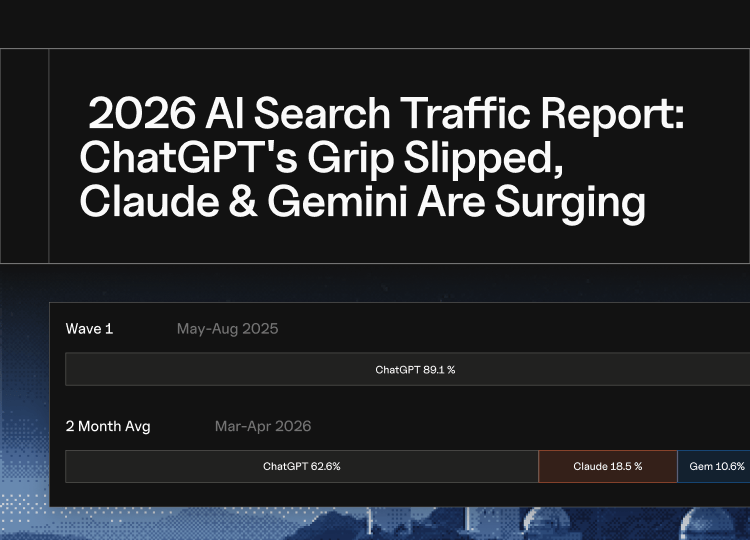
    As I look back on 2025, it’s astonishing to see the AI search traffic growth leap by an impressive 180% year-over-year. I’m diving into the data to better understand how this impacts our visibility strategies. We’ll explore insights on ChatGPT, Gemini, Perplexity, and Claude usage trends in this review.

    With AI technologies rapidly advancing, I’ve noticed how they continue to reshape how we think about search and brand visibility. The increased use of AI-powered tools signifies a pivotal shift in the way we approach digital marketing strategies.

    In 2025, ChatGPT saw a remarkable surge in use, closely followed by interest in platforms like Gemini and Claude. This data is crucial as we plan for future visibility tactics, ensuring that our brand remains competitive in an ever-evolving digital landscape.

    How does this data affect your brand’s approach? I believe understanding and leveraging these trends will be key to optimizing AI-driven search capabilities and visibility while crafting more personalized and effective content strategies.


    Inspired by this post on genmark.ai Blog.


    crushpress.ai community screenshot
  • How to Choose a Fintech Marketing Agency Without Guesswork

    How to Choose a Fintech Marketing Agency Without Guesswork

    You’re not really choosing between agency websites. You’re choosing who will translate a financial product into accurate claims, discoverable content, qualified demand, and reporting your team can trust. A polished pitch can hide weak audience knowledge, an inexperienced delivery team, or metrics no one can connect to the business.

    The safest way to make the decision is to define the assignment before outreach, score comparable evidence, and watch the proposed team work on a controlled diagnostic. That process gives you something more useful than a generic list of leading fintech marketing agencies: a defensible way to identify the right agency for your product, buyer, risk profile, and growth constraint.

    Set the mandate before you look at agencies

    The label fintech marketing agency is too broad to guide a purchase. A firm built around authority-building SEO and content solves a different problem from one centered on HubSpot-led inbound programs. Paid acquisition, public relations, lifecycle marketing, conversion work, and AI search visibility require different operating strengths again.

    Start by writing a short mandate that an agency cannot reinterpret into whatever it already sells. Use this structure:

    We need [specific audience] to take [observable action] because [business constraint or opportunity]. The agency will own [channels, systems, and outputs]. Our team will own [approvals, subject-matter input, implementation, and risk decisions]. Success will be assessed through [business outcome, funnel measure, and delivery evidence].

    Then add the information that determines whether the work is actually feasible:

    • Audience: Identify the buyer, user, internal influencer, and approver where those roles differ. A case study involving a bank is not relevant merely because your prospective customer is also a bank.
    • Product: Describe the product category, buying motion, implementation burden, and the parts prospects routinely misunderstand.
    • Bottleneck: Name the current constraint. It may be weak discovery, low-quality traffic, poor conversion, slow approvals, incomplete attribution, or content that fails to demonstrate expertise.
    • Scope: Separate strategy, production, distribution, technical implementation, campaign operations, analytics, and reporting. Do not assume that an agency recommending work is also equipped to ship it.
    • Claims: Provide approved language, evidence requirements, prohibited claims, and the people authorized to approve changes.
    • Systems: List the content management system, analytics stack, customer relationship platform, advertising accounts, and any access restrictions that will shape delivery.
    • Dependencies: Identify the internal experts, engineers, designers, analysts, legal reviewers, and compliance reviewers whose availability can affect progress.
    • Decision rights: State who can approve strategy, budget changes, publication, tracking changes, and exceptions to the normal process.

    This mandate becomes the control document for the selection. Give every candidate the same version. If one agency quietly changes the audience, channel, or definition of success in its proposal, you have learned something important before signing a contract.

    Score evidence instead of presentation quality

    An overhead view of proposal folders and blank evaluation cards arranged with tokens representing case studies, compliance, audience knowledge, and references.

    A useful baseline is built from seven evidence categories weighted to 100%: notable clients at 23%, leadership experience at 20%, average reviews at 18%, agency age at 15%, median employee tenure at 11%, founder-led status at 8%, and media references at 5%.

    Those weights are not a universal truth. They are a disciplined starting point. More importantly, they force you to distinguish evidence from marketing copy.

    CriterionBaseline weightEvidence to requestWhat weak evidence looks like
    Relevant clients23%The three closest engagements, including the product, audience, channel, agency scope, proposed team involvement, and business problemA logo wall with no explanation of what the agency did or whether the work resembled your assignment
    Leadership experience20%Relevant operating history and a clear statement of how agency leaders will participate after the saleImpressive biographies paired with no access to those leaders during delivery
    Average reviews18%Reviews that describe fintech-relevant work, communication, problem solving, continuity, and measurable outputsGeneric praise that could apply to any creative or digital agency
    Agency age15%Evidence of operating stability, repeatable processes, and adaptation as channels and platforms changedLongevity presented as a substitute for current expertise
    Median employee tenure11%Public team histories or disclosed tenure information for the people likely to serve the accountA sales team that cannot identify who will perform the work
    Founder-led status8%A precise description of founder involvement, decision authority, and escalation accessThe founder appears in the pitch but disappears from the operating model
    Media references5%Relevant third-party recognition tied to the capability you are buyingAwards and mentions that have no connection to fintech or the required channel

    Reweight the model around the risk in your assignment. If the work depends on senior judgment, increase the importance of leadership involvement. If you need sustained production, emphasize delivery-team tenure and capacity. If the brand faces significant reputational exposure, give more weight to references that demonstrate disciplined claims handling. If the assignment is a narrow technical build, direct implementation evidence may matter more than broad industry visibility.

    Avoid double-counting the same proof. A client logo, case study, review, award, and conference appearance may all originate from one engagement. Record the underlying engagement once, then note which parts of the agency’s claim it actually supports.

    Score the people assigned to you, not merely the company. Ask for names, roles, allocation assumptions, and replacement procedures. Senior agency experience has limited value if junior generalists will make the daily decisions without suitable supervision.

    Test how the agency handles fintech complexity

    Do not ask whether an agency understands fintech compliance. Almost every candidate will say yes. Give the proposed team a realistic, sanitized scenario and inspect how it reasons.

    • Product comprehension: Provide a representative product page and ask the team to restate the audience, problem, mechanism, limitations, and required evidence. Watch for simplifications that change the meaning.
    • Claim provenance: Ask how every material claim will be connected to an approved fact, subject-matter expert, product record, or other internal evidence.
    • Approval flow: Ask the team to map how a draft moves through marketing, product, legal, compliance, and publication. The answer should include what happens when reviewers disagree.
    • Change control: Ask who can alter approved language, how revisions are recorded, and how an outdated claim is corrected across derivative assets.
    • Audience precision: Ask the agency to separate the information needs of users, buyers, influencers, and approvers. A single generic persona usually produces generic content.
    • Data handling: Ask what customer, account, analytics, and advertising data the agency needs; where that data will be accessed; and which subcontractors or tools may receive it.
    • Escalation: Present a scenario involving an inaccurate published claim or broken conversion path. Look for containment, ownership, notification, correction, and prevention steps rather than improvisation.

    An agency does not need to practice law to demonstrate sound operational discipline. Final legal and regulatory judgments should remain with the qualified people your governance designates. Do not let industry familiarity become an informal substitute for your approval process; the downside is public-facing language that no accountable reviewer actually authorized.

    Challenge vague SEO, AEO, and GEO promises

    AI visibility has created a new layer of agency claims. The terminology can be useful, but only when it resolves into observable work. No agency controls whether a third-party AI system includes or cites a page, so a guarantee of placement is not a credible operating plan.

    Ask an agency claiming SEO, answer engine optimization, or generative engine optimization expertise to show:

    • The audience questions, entities, topics, and commercial decisions it intends to target.
    • The pages or assets it would create, consolidate, update, or remove, with a reason for each action.
    • How it will maintain consistency among product facts, expert statements, page copy, metadata, and structured data.
    • Which schema types are appropriate to the visible content, how markup will be validated, and who will fix errors after deployment.
    • How it distinguishes rankings, search impressions, organic visits, AI referrals, brand mentions, third-party citations, assisted conversions, and business outcomes.
    • Which measurements are direct observations and which are proxies. A proxy should not be relabeled as revenue impact.
    • How its reporting accounts for platform, prompt or query set, language, location, account state, collection method, and capture date.

    Schema can make page meaning more explicit to systems that process it, but it does not guarantee visibility or citation. Treat structured data as part of factual and technical quality, then evaluate it alongside accessible page content, authority signals, crawlability, and measurement.

    Key takeaways

    • Choose an agency for the bottleneck it must remove, not for the breadth of its fintech label.
    • Relevant experience must match your product, audience, channel, and operating constraints.
    • Evaluate the named delivery team separately from agency leadership and sales personnel.
    • Require an approval and correction workflow before the agency publishes risk-sensitive claims.
    • Define AI visibility through repeatable observations and business measures, never guaranteed placement.

    Use a paid diagnostic to expose the working relationship

    A fintech team and agency specialists collaborate around a table with an abstract product prototype, journey cards, compliance pieces, and measurement tokens.

    Proposals show how an agency sells. A controlled diagnostic shows how its people think, ask questions, handle missing information, and turn strategy into work. Run it with the team proposed for your account rather than a separate pitch team.

    Set a capped scope, confidentiality terms, and ownership terms before the diagnostic begins. Without those boundaries, a useful test can turn into open-ended consulting or leave both sides uncertain about who owns the resulting material.

    Provide realistic operating inputs, but sanitize customer records, credentials, unpublished financial information, and any confidential material not covered by the agreement. Useful inputs can include an approved product description, representative content, current measurement definitions, brand requirements, known audience objections, and the existing approval path.

    Ask for outputs that reveal judgment rather than decorative presentation:

    • Corrected mandate: The agency should identify ambiguities, contradictions, hidden dependencies, and decisions your brief failed to resolve.
    • Audience and intent map: It should connect audience questions and objections to a buying or adoption decision, not produce a loose collection of keywords.
    • Opportunity map: It should show what deserves action, what should wait, what cannot be known yet, and what evidence would change the priority.
    • Representative brief: A content, campaign, conversion, or technical brief should be detailed enough for another specialist to execute without guessing at the objective or claim boundaries.
    • Measurement design: It should define the baseline, required instrumentation, direct measures, proxies, reporting ownership, and known attribution limits.
    • Governance flow: It should place product, subject-matter, brand, legal, compliance, security, and publication decisions with named roles.
    • Risk register: It should identify access gaps, approval delays, data limitations, technical dependencies, and assumptions that could invalidate the plan.

    Evaluate the diagnostic process as closely as the deliverables. Strong teams ask for evidence before asserting causes. They distinguish a fact from an inference, surface inconvenient constraints, and assign owners to next actions. Weak teams rush to a familiar channel plan, disguise unknowns with polished language, or treat your approval process as an obstacle to work around.

    If procurement or budget rules prevent a paid diagnostic, run a structured working session with the proposed team and request redacted examples of comparable operating artifacts. That is less revealing than commissioned work, but it still provides better evidence than a credentials presentation alone.

    Put measurement, governance, and exit terms in the contract

    A good selection can still fail when the contract leaves delivery open to interpretation. The agreement should turn the mandate into accepted outputs, decision rights, measurement rules, and a usable exit path.

    Tie scope to accepted outputs

    For every recurring or project output, define:

    • The format and level of completion expected.
    • The agency owner, client owner, reviewers, and final approver.
    • The evidence, brand rules, and claim controls that apply.
    • The acceptance criteria and the process for rejected work.
    • The revision and change-control process.
    • The internal systems, access, and dependencies required.
    • Whether the agency recommends, produces, publishes, implements, monitors, or merely reports.

    This distinction matters in technical SEO and structured data work. A recommendation document is not an implementation. Generated markup is not validated deployment. Deployment is not ongoing accuracy. The contract should state where the agency’s responsibility ends and where yours begins.

    Build a measurement ladder

    Organize reporting from business impact down to delivery evidence:

    • Business outcomes: Use the approved commercial result appropriate to the assignment, such as qualified pipeline, funded or activated customers, retention, or another accepted value measure.
    • Funnel behavior: Track the actions that connect marketing exposure to the business outcome, with qualification rules defined in advance.
    • Channel outcomes: Use channel-specific measures such as qualified organic visits, campaign responses, conversion behavior, or attributable referrals.
    • Diagnostic signals: Monitor the observations that help explain movement, including query coverage, crawl and indexing state, content engagement, brand mentions, structured-data validity, and AI citations where they can be observed responsibly.
    • Delivery evidence: Record what was approved, shipped, corrected, and learned. Activity volume alone is not performance, but missing delivery can explain missing results.

    Do not blend these layers into a composite score unless everyone understands the formula and tradeoffs. A growing visibility proxy cannot cancel a falling business outcome. The agency should state which measures it can influence, which it merely observes, and which require action from your internal teams.

    For AI visibility reporting, preserve the exact observation context. Record the platform, prompt or query set, language, location, account state where relevant, collection method, and capture date. Treat an isolated answer as an observation, not a trend. Any claimed improvement should be accompanied by a repeatable method and a clear explanation of its relationship to qualified traffic or business activity.

    Keep governance and exit usable

    Your contract and operating plan should also cover:

    • Who approves financial, product, comparative, performance, and customer claims.
    • How credentials, customer data, analytics data, advertising data, and confidential materials may be accessed and stored.
    • Whether subcontractors or external AI tools can receive your information.
    • Ownership of accounts, domains, analytics properties, creative files, content, research materials, source files, schema, code, dashboards, audiences, and campaign history.
    • Whether core systems and accounts remain client-controlled throughout the engagement.
    • How conflicts of interest involving adjacent products or direct competitors are disclosed and handled.
    • How work, records, access, and institutional knowledge transfer when the engagement ends.

    Unclear ownership and data terms can create financial, legal, and operational exposure when you change agencies. Have qualified counsel and the appropriate privacy, security, and compliance owners review the provisions that govern claims, data handling, intellectual property, indemnity, termination, and transition. Familiarity with fintech marketing does not make an agency the final authority on your obligations.

    Your next move is not to book more introductory calls. Draft the mandate, turn the evidence categories into a scorecard, and send the same requirements to every credible candidate. The right fintech marketing agency should become easier to identify as the questions get more specific – not harder.

    References


  • How to Build Brand Discoverability Across AI and Social Search

    How to Build Brand Discoverability Across AI and Social Search

    You can have a technically sound website, publish consistently, and still be absent when a buyer makes a decision. The buyer may ask TikTok for ideas, watch YouTube to solve a problem, check Reddit for unfiltered opinions, validate a product on Amazon, and then use an AI assistant to narrow the choice.

    Your job is not to publish on every available channel. It is to identify where your audience expects an answer, create the strongest version of that answer, adapt it to each relevant platform, and measure whether your brand survives the journey from discovery to recommendation.

    Treat discoverability as three separate contests

    A glowing geometric token passes through a gateway, stands among competitors on a platform, and is selected by a translucent robotic hand.

    AI visibility matters, but it should not consume your entire search strategy. Traditional search engines still account for roughly 80% of search activity across the measured platforms, with Google alone at about 73.7%. Commerce platforms account for roughly 10%, social networks about 5.5%, and AI tools about 3.2%. Amazon, YouTube, and even Bing each record more searches than ChatGPT in this dataset. Those figures make distributed search behavior impossible to ignore.

    Do not turn those percentages into a generic budget formula. Aggregate search share cannot tell you where your particular customer looks for restaurant recommendations, enterprise software demonstrations, product reviews, or visual inspiration. It does tell you that an AI-only plan leaves substantial existing demand unattended.

    Brand discoverability now involves at least three related contests:

    Discovery layerWhat the user is doingWhat your brand must provideWhat to record
    Direct platform searchSearching inside YouTube, TikTok, Reddit, Pinterest, Amazon, or another specialist platformA native answer in the format people expect thereThe query, visible result, account or URL, and message shown
    Google amplificationEncountering videos, short-form posts, forums, and community discussions in Google resultsClear, accessible content whose subject and value are easy to identifyThe query, result type, originating platform, and destination
    AI recommendationAsking an assistant to explain, compare, shortlist, or recommendConsistent claims, recognizable entities, useful evidence, and credible public discussionThe brand mention, wording, cited material, and whether the answer is accurate

    The layers can reinforce one another. Social videos and community discussions can appear in Google results, while the experiences and opinions published on platforms such as Reddit, YouTube, and TikTok can also influence AI-generated answers. That creates a compounding path from social discovery to search and AI visibility.

    Start your audit with customer questions, not channel names. Take the questions that arise before a purchase, during comparison, and after purchase. For each question, mark where a person would most naturally expect a demonstration, a candid opinion, a visual idea, a product listing, or a durable explanation. A blank in that map is a distribution gap. A platform with no relevant query is probably not a priority, regardless of its popularity.

    Turn each important query into a platform-native answer

    A central geometric object is adapted into several unlabeled media formats arranged around a circular creative workspace.

    A campaign theme such as innovation or quality is too broad to optimize. A query gives you a job to perform: show the setup, explain the limitation, compare the alternatives, validate the purchase, or resolve an objection.

    Create a query-to-answer map with these fields:

    • Question: Write the question in the language a customer would use, not the language in your campaign brief.
    • Intent: Identify whether the person wants inspiration, instruction, validation, comparison, troubleshooting, or a recommendation.
    • Preferred platform: Choose the place where that answer format already belongs.
    • Required proof: Specify what would make the answer believable: a demonstration, clear comparison, documented limitation, customer experience, or product detail.
    • Canonical destination: Decide where the durable, controlled explanation should live when one is needed.
    • Desired association: State the idea you want the audience to connect with the brand if the answer is summarized elsewhere.

    Choose the platform by the answer format

    Different platforms perform different discovery jobs. TikTok often supports rapid recommendations and idea discovery. YouTube suits tutorials, reviews, and problems that benefit from demonstration. Reddit supports detailed discussion and community scrutiny. Pinterest helps with visual inspiration and planning. Amazon helps buyers validate products near a transaction. These distinct roles in the discovery journey should determine where you invest.

    • Use YouTube when the answer must be shown. Put the problem in plain language, demonstrate the process, show the outcome, and include material limitations. A polished introduction is less useful than evidence that the viewer can inspect.
    • Use TikTok or another short-video format for a narrow question. Isolate one decision, misconception, use case, or visible result. Do not compress a complex buying guide until its qualifications disappear.
    • Use Reddit when context and disagreement matter. Answer the actual question, disclose your relationship to the brand, and make the response useful without requiring a click. Promotional copy disguised as community advice damages the trust you are trying to earn.
    • Use Pinterest when the decision begins with visual planning. Organize the material around recognizable use cases, styles, arrangements, or project stages rather than generic brand imagery.
    • Use commerce platforms when validation happens near purchase. Keep names, attributes, claims, images, and positioning consistent with the rest of your public presence.

    Build one evidence core, then change the presentation

    Cross-platform reuse should preserve the answer, not duplicate the file. Begin with an evidence core that contains the customer question, the shortest correct answer, the supporting proof, the important qualification, the brand or product name, and the best next destination.

    1. Define the question precisely. A piece trying to answer several unrelated intents becomes difficult to title, summarize, retrieve, and trust.
    2. State the answer early. Give the viewer or reader enough context to understand your position before asking for attention, a click, or a purchase.
    3. Put proof next to the claim. Show the relevant step, comparison, feature, experience, or supporting detail where the claim is made.
    4. Carry the qualification with the claim. If the answer depends on a use case, audience, product version, or tradeoff, do not leave that condition on another page.
    5. Keep the entity consistent. Use the same brand, product, category, and destination language wherever the answer appears.

    Then adapt the core. A YouTube version can demonstrate the full process. A short video can isolate the most visual decision. A website page can preserve the complete explanation. A community response can address objections in context. A commerce listing can carry the product facts needed for validation.

    A strong YouTube tutorial, for example, has several potential discovery paths: it can appear within YouTube, surface in Google, contribute to an AI-generated answer, travel across other social platforms, and be shared privately. That cross-platform reach is the economic case for building a reusable evidence core. It is not a guarantee that every asset will receive every form of visibility.

    Optimize for eligibility first, competitive selection second

    Being discoverable or indexed only makes your content eligible. It does not make the content the preferred answer. Once several candidates are available, clarity, relevance, evidence, and competitive usefulness determine which candidate is recruited, trusted, displayed, or ignored.

    A useful diagnostic model separates infrastructure work such as discovery and indexing from later competitive tests involving annotation, recruitment, grounding, display, and winning against alternatives. The important shift is from an absolute test – can the system access and understand something? – to a relative test – is it a better answer than the other available candidates? That distinction explains why passing an early visibility gate does not secure the final recommendation.

    Treat this as a diagnostic framework, not as a claim that every search or AI engine exposes an identical public pipeline. Use it to locate the weak point:

    • Discovery and indexing: Can the relevant page, video, profile, thread, or listing be found and accessed? Is the important explanation available outside an image or unexplained clip?
    • Annotation: Is it unambiguous which brand, product, category, problem, and audience the material concerns? Could a reader distinguish your entity from a similarly named alternative?
    • Recruitment: Does the asset directly match the query and expected format, or is the useful answer buried inside a broad campaign message?
    • Grounding: Are important claims accompanied by enough context and evidence to support an answer? Does the qualification remain attached when the claim is summarized?
    • Display: Can the essential answer be represented accurately in a result, snippet, citation, or recommendation without inventing the missing context?
    • Competitive win: Is the answer more useful for this intent than the alternatives, or does it merely repeat the same unsupported claims?

    This model changes how you respond to weak visibility. If an asset is not discoverable, fix access and distribution. If the brand is misidentified, fix entity consistency. If the answer is retrieved but not selected, improve its intent match and proof. If it is cited inaccurately, make the central claim and its limitations harder to separate.

    Social proof becomes especially important when the query asks for experience rather than a product specification. Community discussions, reviews, and demonstrations supply the kind of real-world context people seek, and Reddit threads and YouTube content can appear in Google results and AI-generated responses.

    You cannot manufacture credible advocacy by copying brand claims into community spaces. You can make accurate information easy to verify, correct recurring confusion, participate with transparent affiliation, support customers who publish genuine experiences, and allow independent voices to remain independent. That creates a healthier evidence footprint than a collection of coordinated mentions with no useful detail.

    Measure a query portfolio, not a vanity mention

    A single favorable AI response is not a durable ranking, and a viral social post does not prove discoverability for the questions that drive decisions. Measurement must begin with a stable portfolio of queries and separate direct platform visibility, Google amplification, AI mentions, message accuracy, and business response.

    Citation-monitoring tools can help you record social and AI mentions, identify recurring visibility drivers, and compare results by platform. The value is in the platform-specific observations, not in treating a visibility score as an explanation of cause. A monitoring tool can show you where a brand appeared; it cannot, by itself, prove why an engine selected it.

    Build your scorecard around the same query-to-answer map used for production:

    • Query and intent: Preserve the wording and the job behind it.
    • Platform and context: Record where the query was run and any account or session condition that could affect what you observed.
    • Result: Save the visible URL, account, listing, answer, or discussion rather than reducing the observation to a score.
    • Brand presence: Distinguish a direct citation, an unlinked mention, a product appearance, and complete absence.
    • Message accuracy: Record whether the answer associates the brand with the intended category, use case, strength, and limitation.
    • Evidence path: Note which page, video, thread, review, or listing appears to support the result when that path is visible.
    • Next action: Assign the issue to coverage, access, entity clarity, proof, format, reputation, or conversion.

    Repeat the same observation method after meaningful changes. For AI answers, retain the response and any visible citations instead of translating one run into a permanent rank. For social and Google results, preserve the query and result type. Comparable records are more useful than screenshots collected only when the brand looks successful.

    The pattern across surfaces tells you what to fix:

    • Absent everywhere: You probably have an answer-coverage problem. Create a credible answer for a query that matters before expanding distribution.
    • Visible on a social platform but absent elsewhere: Check whether the answer has a clear subject, durable destination, consistent entity information, and enough context to stand outside its original feed.
    • Mentioned by AI but represented incorrectly: Tighten the public explanation and keep claims, qualifiers, names, and category language consistent across controlled properties.
    • Visible in Google but weak on the native platform: Improve the platform-specific format and the value delivered without requiring the user to leave.
    • Visible across surfaces but producing no useful action: Recheck the query intent, promise, destination, and next step. More exposure will not repair a mismatch between the answer and the decision.

    Prioritize the highest-value unanswered query first, then inaccurate brand representations, then opportunities already working on one surface that can be strengthened on another. This keeps the program tied to customer decisions instead of accumulating low-value mentions.

    Key takeaways

    • Plan for direct platform search, Google amplification, and AI recommendation as separate but connected discovery layers.
    • Choose platforms by the kind of answer the customer expects, not by a blanket requirement to maintain every channel.
    • Build a reusable evidence core for each important query, then adapt its presentation to the native format.
    • Diagnose whether the problem is eligibility, entity understanding, recruitment, grounding, display, or competitive usefulness before changing the content.
    • Track queries, visible evidence, message accuracy, and cross-platform patterns; do not treat an isolated mention as a durable rank.

    Start with the highest-value question your audience cannot currently answer well. Map the expected platform, publish the evidence core, adapt it natively, and add the query to your scorecard. Once that loop works, expand it to the next decision your customer needs to make.

    References

  • Why a Social Media Agency with AEO Expertise is Essential

    Why a Social Media Agency with AEO Expertise is Essential

    As I navigate the rapidly evolving world of digital marketing, I’ve discovered that partnering with a social media agency that offers Answer Engine Optimization (AEO) services is a game changer. These agencies have the unique ability to transform social content into enhanced AI visibility, build citations, and drive significant growth for brands like mine.

    If you’re looking to boost your brand’s online presence, understanding the value of AEO services is crucial. I’ve personally seen how they enhance AI recognition, leading to better citations and more impactful growth metrics.


    Inspired by this post on HiGoodie Blog.


    crushpress.ai community screenshot