If you’re wondering whether Microsoft Web IQ requires a new SEO playbook, the short answer is no. You don’t need a Web IQ schema or a separate version of your site. You do need content that an AI agent can discover, interpret, verify, and reuse across a chain of searches.
That shifts the work from chasing one visible ranking to making every useful fact easy to retrieve. Here’s how to adapt without abandoning the technical SEO and content standards that already matter.
Key takeaways
- Web IQ connects AI systems with current web pages, news, images, and videos through AI-native grounding APIs built on Bing’s index.
- AI agents may run several searches, refine their questions, and collect evidence before producing an answer.
- A conventional rank position is a limited way to judge visibility when an agent is assembling an answer from multiple retrieval steps.
- Clear answer sections, crawlable HTML, consistent entities, supported claims, and accurate structured data make your content easier to use.
- There is no confirmed Web IQ-specific markup shortcut. Optimize the underlying information, not an imagined scoring system.
What Web IQ changes about search
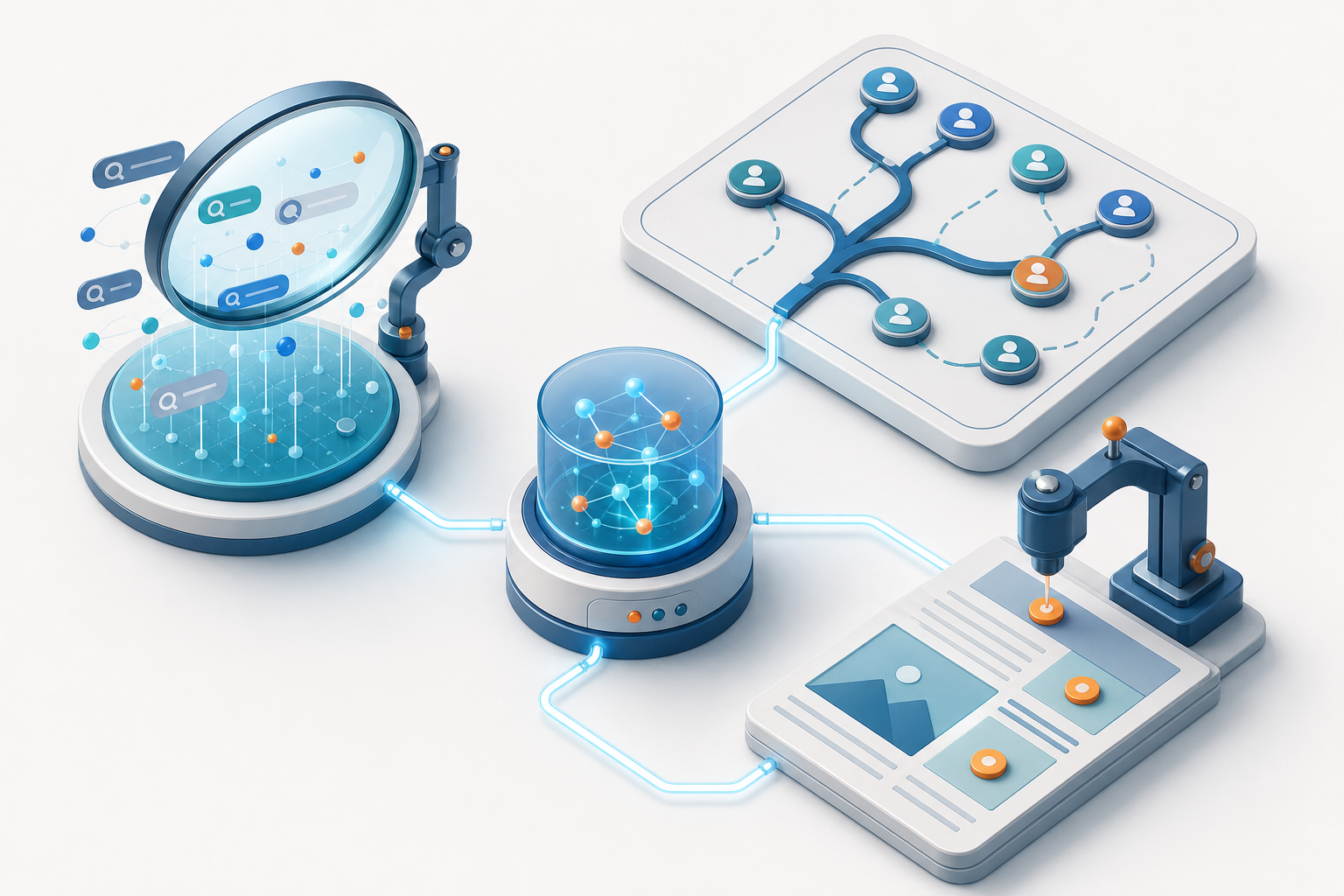
Web IQ is a suite of AI-native grounding APIs that connects AI systems to fresh online information. It can retrieve web, news, image, and video material from Bing’s index. The underlying infrastructure also serves Microsoft Copilot, ChatGPT, and other large language model experiences.
The important distinction is the customer. A traditional search results page is arranged for a person who scans titles, compares choices, and clicks. Web IQ is designed for software that needs to extract information quickly and continue working.
An agent may begin with a broad request, identify missing details, issue narrower searches, and repeat that process until it can complete its task. Microsoft therefore reworked more than the presentation of results. The system extends from indexing into orchestration, with an emphasis on relevance, speed, and economical token use.
This is why a single rank number becomes less informative. Microsoft has said that human-style ranking isn’t the priority for this service. That doesn’t mean relevance has disappeared. It means an agent’s repeated retrieval and extraction process may matter more than whether your page occupies one fixed blue-link position.
Optimize for a search chain, not one keyword

Start with the task behind the query. A person asking how to choose accounting software may cause an agent to investigate pricing, integrations, security, migration, support, and suitability for a particular business. A page that repeats the broad keyword but leaves those questions unanswered offers little material for the later steps.
Map one primary question and the follow-up questions a careful buyer would ask before acting. Give each substantial follow-up its own descriptive heading. If a follow-up requires a full explanation, publish a dedicated page and link it from the main page with anchor text that names the question it answers.
Build self-contained answer sections
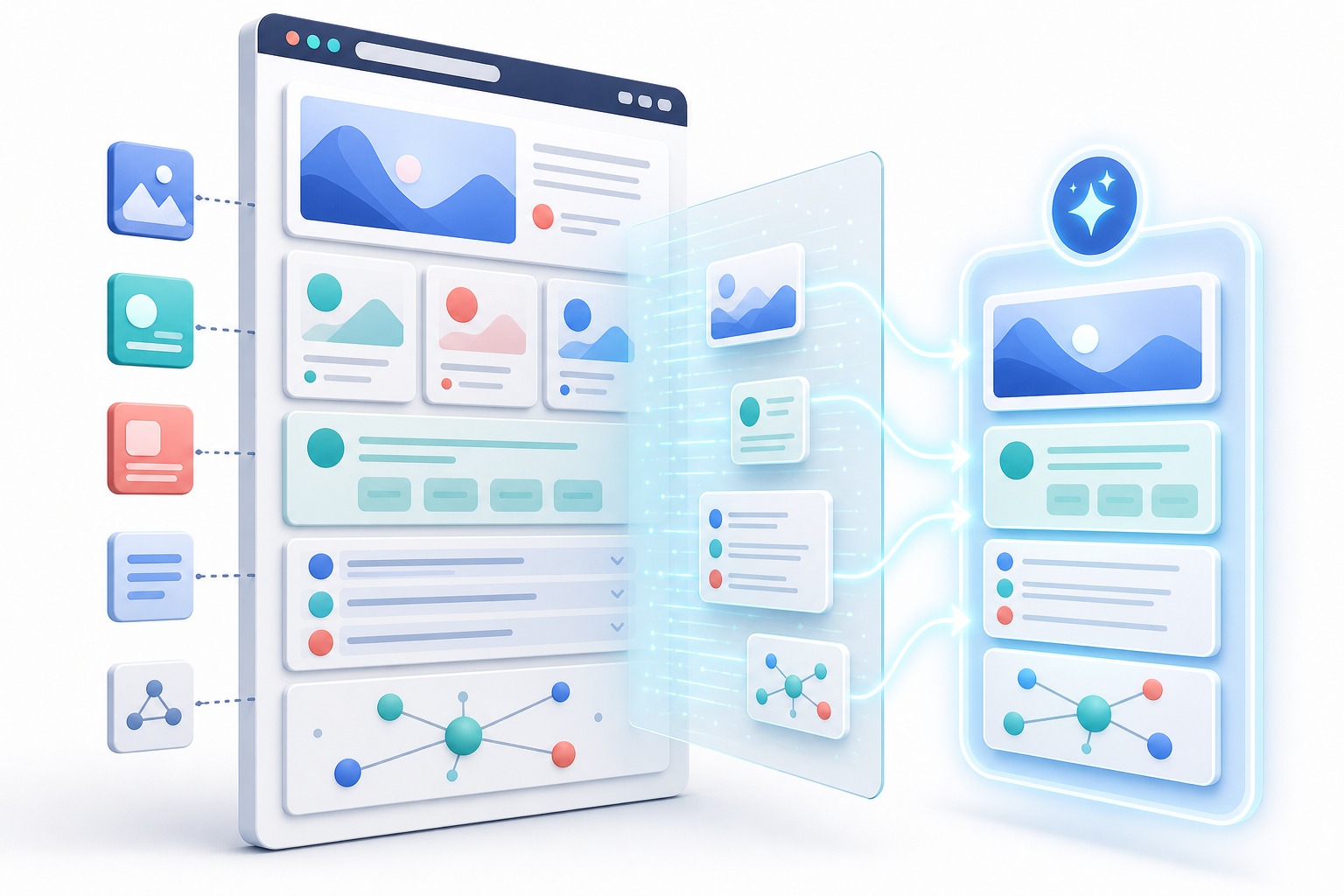
Each important section should make sense when retrieved without the paragraphs above it. State the subject explicitly, answer the question early, and then add conditions or evidence. Replace vague openings such as “it depends on several factors” with language that identifies what depends on what.
For example, don’t hide a product’s eligibility rule inside a long narrative. Put the rule under a heading that names the product and decision. Explain who qualifies, who doesn’t, and what the reader should check next. That structure helps people scan the page and gives an agent a coherent passage to extract.
Cover adjacent questions without bloating the page
Agent-search readiness isn’t permission to add every remotely related keyword. Include a subtopic when it changes a decision, resolves a likely ambiguity, or supplies evidence for the main answer. Move tangents to their own pages. Thin expansions make the central answer harder to identify.
Use internal links to form a deliberate evidence path: overview to requirements, requirements to implementation, and implementation to troubleshooting. The destination should answer the promise made by the link. This gives an agent a useful route for deeper retrieval while keeping each page focused.
Make each page economical for an agent to process
Web IQ was engineered for frequent searches and low token use. You can’t control how an external agent budgets its context, but you can remove avoidable interpretation work from your pages.
Lead with the usable answer
Place the direct answer near the start of the relevant section. Follow it with the reasoning, limitations, and examples. Don’t make a reader or agent work through a brand story before reaching the fact promised by the heading.
Keep entities and claims consistent
Use one clear name for each company, product, service, or concept, then explain aliases where necessary. Keep prices, availability, policies, and specifications consistent across landing pages, documentation, feeds, and structured data. Conflicting facts force an agent to resolve ambiguity and weaken the page’s usefulness as grounding material.
Attach qualifications to the claim they modify. If an offer applies only in one region or a feature requires a certain plan, say so in the same section. A technically correct statement can still mislead when its condition sits several screens away.
Use structured data as corroboration
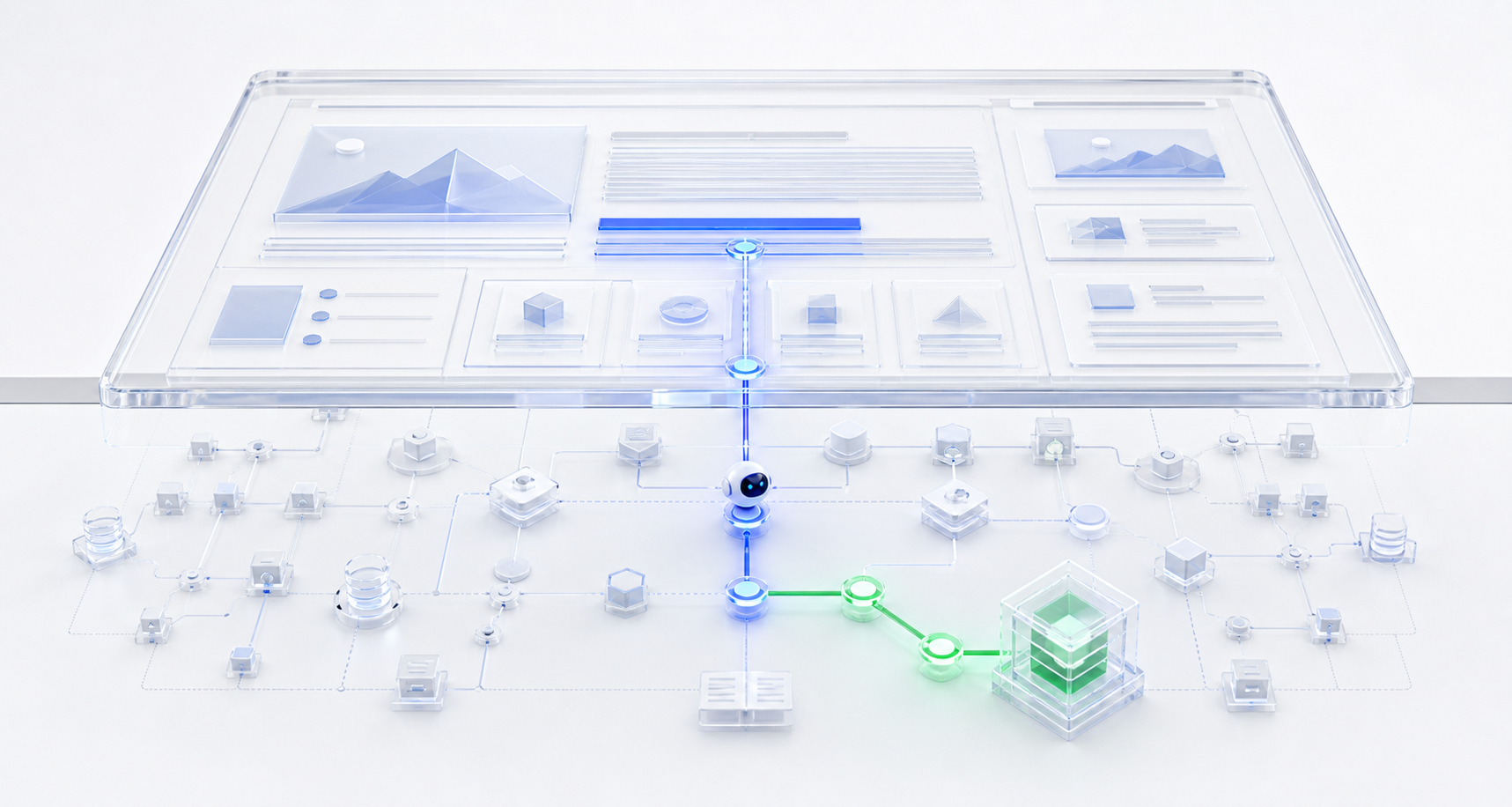
JSON-LD can clarify entities and relationships, but it isn’t a Web IQ access pass. Choose schema types that match the page, populate properties from visible information, and keep the markup synchronized with the content. Don’t mark up answers, reviews, prices, authors, or dates that visitors can’t verify on the page.
Treat structured data as a machine-readable confirmation of the page, not a substitute for an explicit answer. The visible copy still needs to explain what the entity is, what the claim means, and when it applies.
Give media enough context to stand alone
Because Web IQ can source images and videos as well as pages, don’t publish important media with a generic filename and a one-word caption. Use accurate alternative text, descriptive captions, transcripts where appropriate, and nearby copy explaining what the media demonstrates. Keep the media attached to a canonical page with enough context to identify its subject.
Run an AI-agent readiness audit

You can audit a high-value page without access to Web IQ itself. Use the primary question the page should answer, then work through this sequence:
- Check discovery. Confirm that the canonical URL is crawlable, returns the intended content successfully, and isn’t blocked by an accidental robots directive or login requirement.
- Inspect the delivered page. Verify that the main answer, headings, links, and essential facts exist in the rendered output available to a crawler. Don’t leave the core answer dependent on an interaction that may never occur.
- Extract sections out of context. Read each important section by itself. Add the subject or qualification when the passage becomes ambiguous without its surrounding copy.
- Trace every consequential claim. Link to supporting documentation where readers need verification. Remove stale claims and unsupported precision.
- Compare visible content with JSON-LD. Resolve differences in names, dates, offers, authorship, and entity relationships.
- Follow the likely next questions. Make sure internal links lead to complete answers rather than thin category pages or unrelated sales copy.
- Test the task in AI assistants. Ask the same realistic question in experiences relevant to your audience. Record whether your brand appears, which page is used, whether the claim is represented correctly, and which competing evidence fills the gaps.
- Watch your own evidence. Review referral traffic and server logs where available, but don’t treat either as a complete count of agent visibility. Use them alongside repeated answer checks and conversion data.
Prioritize corrections that affect the answer itself: inaccessible pages, conflicting facts, missing qualifications, unclear entity names, and unsupported claims. Cosmetic rewrites can wait. An agent can’t use a polished passage it can’t retrieve or trust.
Web IQ access may broaden as Microsoft scales the service, but you don’t need to wait for a new dashboard. Choose one commercially important topic this week, map the likely follow-up searches, and repair the weakest answer path. That work improves your site for human visitors now while making its information more usable in agent-driven search.