Recently, I’ve noticed Google has started automatically linking YouTube channels with Google Ads accounts. This innovation allows advertisers like me to quickly tap into valuable audience data, though it does require careful permission management.
When Google’s system detects a strong connection between a YouTube channel and a Google Ads account, it takes action by linking them. This gives us richer audience signals without us having to do a manual setup.
What’s happening now? Google will set up these links automatically if a strong relationship is identified, notifying us 30 days in advance. This email notification allows us to decide whether to opt out or connect sooner.
How does it work?
During the 30-day period, if no one opts out, the link will be completed automatically. If I manage both accounts, I can even connect them immediately. There’s flexibility here, too, as I can always adjust permissions or unlink later if needed.
Why this matters to us. This development simplifies how we, as advertisers, access YouTube audience data. It makes it straightforward to target viewers and construct data segments. However, it also introduces uncertainties about control over our assets and the permissions we’ve set.
Benefits for advertisers. Once linked, I can:
Use YouTube interactions to run more effective ads.
Leverage organic views and earned actions for performance insights.
Create data segments from how audiences engage with my channel.
Consider channel engagement as conversion activities, like subscriptions.
Limitations I’ve noticed
Channel owners gain no control over the actual Google Ads account.
Copy or edit capabilities for channel videos are not given to advertisers.
If personalized ads are disabled, audience data reports are also turned off.
Restrictions on Video Ads Certification (VAC) are still applicable; removal of these is specific to the linked Ads account.
Managing these links. If I, as an admin, choose to opt out, I can easily do so through the links provided in the notification emails from Google. If opted out, the link won’t be made. Meanwhile, manual linking can always be done via the traditional Google Ads settings menu.
Initial discovery. The new auto-linking feature was first highlighted by Hana Kobzová, founder of PPC News Feed. More on this can be read here.
Final thoughts. With Google’s new auto-linking, we as advertisers can enjoy less setup hassle and better YouTube performance insights. However, it’s crucial to monitor our notifications to ensure that data sharing aligns with our privacy preferences and company policies.
If your pages rank but your brand disappears when a buyer asks an AI assistant for options, you do not have a conventional ranking problem. You have a retrieval and representation problem.
Generative engine optimization, or GEO, addresses that gap. The goal is to make your expertise easy for AI systems to find, extract, verify, attribute, and present accurately. That requires more than adding schema or rewriting a few introductions. You need a connected system for content, entities, citations, visuals, and measurement.
Define the visibility outcome before you optimize
A traditional SEO program often treats the ranked page as the primary outcome. GEO adds another outcome: selection inside a generated answer. Your brand might be named, used as supporting evidence, linked as a citation, represented through an image, or omitted entirely even when your page ranks.
Make pages discoverable, relevant, and authoritative in search
Qualified impressions, rankings, clicks, and conversions
Resolve crawl, intent, content, and authority weaknesses
PPC
Buy controlled placement where advertising is available
Impression share, acquisition cost, and conversions
Use paid coverage for immediate or commercially important demand
AI discovery
Get facts, entities, and recommendations selected for generated answers
Mentions, citations, representation accuracy, and cited competitors
Build a prompt set and establish a repeatable baseline
Do not collapse these layers into one metric. A paid placement does not prove that an AI system regards your site as an organic reference. A brand mention without a link is not the same as a citation. A citation is not automatically a qualified visit. Each result tells you something different.
Key takeaways
GEO extends SEO; it does not replace the technical, content, and authority foundations that make information discoverable.
Optimize individual claims and answer passages, not only whole pages or target keywords.
Make your brand, authors, products, and claims consistent across visible content, structured data, and credible external mentions.
Measure mentions, citations, accuracy, competitor inclusion, and business outcomes separately.
Treat images as retrievable assets because AI search can select visuals as well as text.
Build answer passages that can stand on their own
An AI system rarely needs every sentence on a page. It needs a passage that resolves the user’s question and enough surrounding context to use that passage correctly. Long introductions, vague claims, and answers scattered across several sections make that job harder.
Use this sequence on pages that address an important customer decision:
Name the exact question. Use a descriptive heading that matches the decision, such as who a service is for, how two approaches differ, or what a buyer should check before choosing.
Answer immediately. State the conclusion before background or brand positioning. If the correct answer depends on conditions, name those conditions in the opening answer.
Explain the mechanism. Show why the answer is true, what changes it, and where a simplified answer would fail.
Add verifiable support. Connect the claim to a method, named author, relevant date, comparison, definition, or other evidence that a reader can inspect.
Use the right structure. Put sequences in ordered lists, criteria in bullets, and real comparisons in tables. Do not turn ordinary prose into a table merely to look structured.
End with the decision. Tell the reader what to choose, check, calculate, or do next.
Make each important passage self-contained. A sentence such as “This is the best option for them” loses its meaning when extracted. Name the option, audience, and condition instead. The result may sound slightly more explicit to a human reader, but it is also clearer.
Do not manufacture dozens of near-identical pages for every prompt variation. Build one authoritative page around a coherent decision, then give its distinct subquestions clear headings and direct answers. This preserves topical depth without creating a site full of interchangeable fragments.
Make every important entity consistent and verifiable
AI visibility depends partly on whether a system can resolve who made a claim and what that person or organization represents. If your About page uses one brand description, author pages use another, and structured data introduces a third version, you create avoidable ambiguity.
Audit the following for each commercially important topic:
Organization identity: Use the same official name, preferred description, canonical URL, logo, and relevant external profiles wherever they appear.
Author identity: Give the author a stable name, role, affiliation, biography, and page that demonstrates why the person is qualified to cover the subject.
Offering identity: Keep product or service names, categories, availability, and defining characteristics consistent across landing pages, supporting content, and markup.
Page identity: Align the visible headline, author, publication date, substantive modification date, and canonical page with the values supplied in structured data.
Relationship clarity: Make it clear which organization publishes the content, which person wrote or reviewed it, and which product, service, place, or concept the page discusses.
JSON-LD is useful here, but it is not a substitute for visible evidence. Organization, Person, Article, Product, and applicable local-business types can describe relationships explicitly. They cannot make an unsupported claim authoritative, reconcile contradictory facts, or turn a thin page into a reliable reference.
Freshness needs the same discipline. Update a page when its answer, evidence, comparison, or recommendation has materially changed. Keep the original publication date and provide an accurate modification date where appropriate. Changing a timestamp without improving the content gives readers no new value and weakens the meaning of your freshness signal.
Close citation gaps, not just keyword gaps
A keyword gap tells you what competitors rank for. A citation gap tells you which external sources an AI system uses to support an answer when it does not use you. The second gap matters because a well-optimized page can still lose selection to a source with a clearer claim, stronger evidence, or better third-party corroboration.
Start with the prompts that influence an actual decision. Run them in the AI experiences your audience uses, then record every cited domain and the claim each citation supports. Do not merely count competitor appearances. Ask why each cited page was useful.
Did it provide a direct definition that your page leaves implicit?
Did it publish a comparison with explicit criteria?
Did it show a method, date, author, or limitation that made the claim easier to verify?
Did a trusted third party corroborate the brand or idea?
Did it answer a narrower question more precisely than your broader page?
Was it materially fresher for a query whose answer changes over time?
Turn those observations into an evidence plan. If the gap is definitional, publish the clearest defensible definition you can support. If the gap is comparative, state the selection criteria and explain where each option fits. If the gap is external validation, focus digital PR on earning relevant mentions from credible publications, associations, partners, or specialists in your field. Citation-oriented visibility depends on authoritative mentions as well as material on your own domain.
Do not chase mentions with no relationship to the claim you want an AI system to verify. A general company mention and a specific endorsement of your expertise are not interchangeable. Record the entity named, the claim made, the page linked, and the context around it. That is the evidence you are trying to strengthen.
Give each image a job. Use it to identify an object, demonstrate a step, compare options, show a result, or explain a relationship. Decorative images add little evidence.
Place it beside relevant text. The heading, caption, surrounding explanation, and alt text should agree about what the image shows and why it matters.
Keep the source usable. Put the image on an accessible canonical page with a stable URL and enough HTML text to explain the visual without forcing a system to infer everything from pixels.
Preserve factual alignment. Product names, labels, versions, and claims in the image should match the page. Replace obsolete screenshots and diagrams when the underlying information changes.
Explain charts in text. State the conclusion, method, scope, and limitations in HTML near the visual. A chart should support an answer rather than conceal the answer.
Check the destination. When your visual appears in an AI response, verify that the source link reaches the authoritative page and that the page satisfies the intent created by the image.
Image optimization does not mean placing a logo over every asset or repeating keywords in filenames and alt text. The practical goal is accurate association: the system should understand what the image depicts, which entity it belongs to, and where a user can verify it.
Measure GEO with a controlled prompt set
One favorable screenshot is not a visibility report. Generated answers can vary, prompts can change the comparison set, and different systems may retrieve different evidence. You need a stable set of prompts and a record of what happened on each run.
Build the set around real stages of discovery:
Category prompts: questions that ask what options or approaches exist.
Problem prompts: questions that begin with a constraint, symptom, or desired outcome.
Evaluation prompts: questions about criteria, suitability, risks, or tradeoffs.
Comparison prompts: questions that compare named approaches, products, or providers.
Verification prompts: questions about your brand, experts, claims, policies, or product details.
Visual prompts: questions for which an image, diagram, screenshot, place, person, or product could materially improve the answer.
For every run, log the AI product, model when visible, date, exact prompt, brand mention, linked citation, cited page, competitors included, factual errors, recommendation context, images shown, and image destination. Keep prompt wording stable when comparing one run with another. Add new prompts separately instead of silently changing the baseline.
Use separate measures so the result remains diagnosable:
Mention rate: prompts that name your brand divided by prompts run.
Owned citation rate: prompts that link to your domain divided by prompts that produce sourced answers.
Accurate representation rate: brand mentions that describe your entity or offering correctly divided by all brand mentions.
Competitor presence: how often each relevant competitor is named or cited across the same prompt set.
Visual inclusion: visual prompts that show an accurate image from your site divided by visual prompts tested.
Business response: qualified visits, leads, sales, or other outcomes attributable to AI referrals where that data is available.
Improve the source page. Add a direct answer, meaningful headings, verifiable support, conditions, comparisons, and a clear next step.
Close the strongest citation gap. Create the missing evidence or earn relevant third-party corroboration for the claim that matters.
Upgrade useful visuals. Add or correct images where visual context genuinely improves the answer.
Rerun the same prompts. Compare like with like, document changes, and choose the next bottleneck based on evidence.
Set the review cadence according to how quickly the topic changes. Current products, prices, policies, and platform features need closer monitoring than stable definitions. Review sooner after a material content, entity, or citation change, but avoid declaring success from a single response.
Start with one topic rather than attempting a site-wide GEO rewrite. If mentions improve but citations do not, strengthen source quality and external corroboration. If citations improve but the brand is described incorrectly, repair entity consistency. If visibility grows without qualified action, improve the page and offer that receive the visit. That loop turns AI visibility from a vague ambition into work your team can prioritize.
In the ever-evolving world of AI-driven advertising, I’ve noticed that Performance Max campaigns have become absolutely crucial. Both Google and Microsoft offer these innovative opportunities, allowing advertisers to bring together creative assets, audience signals, and automation into a single seamless campaign type.
While Google and Microsoft share this foundational concept, they execute it uniquely. I am excited to offer an in-depth comparison of Google PMax and Microsoft PMax as they stood toward the end of 2025, hoping to shed light on the intricacies that could shape your 2026 advertising strategies.
What I found universally true across both platforms is the replacement of ad groups with asset groups. These groups encompass a blend of creatives, such as images and headlines, along with audience signals, but also carry an absence of any prioritization.
Significantly, PMax is built for automation. Both platforms request the use of Maximize Conversions or Maximize Conversion Value strategies, underlining the need for conversion tracking that can keep pace with no less than 30 conversions in a month.
Goal alignment is another crucial aspect. I realized that accurate reflection of business goals in your campaigns is imperative, for an artificially low ROAS target will likely backfire by yielding unexpectedly lower returns.
Search term visibility is an area where Google offers broader negative keyword support, unlike Microsoft who is still piloting this feature. However, Microsoft’s PMax creatives have been involved in AI placements longer, demonstrating proven results and thus indicating a stronger track record in this area.
Google’s PMax has evolved impressively, offering tools such as channel-level reporting and video asset support, which are particularly beneficial for visual marketing endeavors.
On the flip side, Microsoft’s edge, especially for B2B advertising, includes higher campaign limits, impression-based remarketing, and the integration of LinkedIn targeting signals, appealing for advertisers looking at high-quality lead generation.
Reflecting on both platforms, I believe PMax should be seen as a tool for incrementality rather than a replacement for proven search campaigns. The optimal approach involves leveraging both platforms’ strengths, whether it’s Google’s affinity for creative automation or Microsoft’s prowess in B2B targeting and remarketing.
In my experience, the open web often feels like the Wild West, especially in recent times. Many creators, myself included, have watched as our hard work is scraped and fed into large language models without any hint of permission.
This situation has become a free-for-all, leaving website owners with almost no means to opt out or safeguard their creative endeavors. There have been attempts to address this, such as Jeremy Howard’s llms.txt initiative. Much like robots.txt helps us manage site crawlers, llms.txt aims to provide guidelines for AI companies’ crawling bots.
However, a promising new protocol is on the horizon, potentially granting site owners like myself more control over how AI firms utilize our content. It looks like this might become part of robots.txt, allowing us to set definitive rules around AI system access and usage.
IETF AI Preferences Working Group
In response to this issue, the Internet Engineering Task Force (IETF) began the AI Preferences Working Group earlier this year in January. Their mission is to craft standardized, machine-readable rules to empower site owners to articulate AI usage preferences for their content.
Since its inception in 1986, the IETF has established core Internet protocols like TCP/IP, HTTP, DNS, and TLS. Now, they’re laying down foundations for the open web’s AI era. Leading this group are co-chairs Mark Nottingham and Suresh Krishnan, joined by figures from Google, Microsoft, Meta, and more.
Of particular interest is Google’s involvement via Gary Illyes, who is part of this working group.
“The AI Preferences Working Group will standardize building blocks that allow for expressing preferences about how content is collected and processed for Artificial Intelligence (AI) model development, deployment, and use.”
What the AI Preferences Group is Proposing
This group aims to deliver new standards that empower site owners to determine how LLM-powered systems can utilize their open web content.
A standard track document detailing a vocabulary to express AI-related preferences, independent of content association methods.
Standard track document(s) that explain how to associate these preferences with content using IETF-defined protocols and formats, for example, Well-Known URIs and HTTP response headers.
A standard approach for reconciling multiple preference expressions.
At the time of writing, nothing is set in stone yet. Early documents, however, provide a sneak peek into potential standards.
This working group published two crucial documents in August.
These documents propose significant updates to the Robots Exclusion Protocol (RFC 9309), suggesting new rules and definitions enabling site owners to specify AI content usage permissions.
How It Might Work
AI systems on the web are categorized and assigned standard labels. Whether a directory will exist for site owners to identify system labels remains unclear.
Currently, the defined labels include:
search: for indexing/discoverability
train-ai: for general AI training
train-genai: for generative AI model training
bots: for all types of automated processing, such as crawling and scraping
For each label, you can set two values:
y to allow
n to disallow.
I found it interesting that these rules can be applied at the folder level and customized for different bots. In robots.txt, they’re implemented using a new Content-Usage field, akin to existing Allow and Disallow fields.
Here’s an example robots.txt that the working group shared in their document:
Explanation Content-Usage: train-ai=n indicates that no content on this domain may be used for training any LLM model, whereas Content-Usage: /ai-ok/ train-ai=y permits model training using content within the /ai-ok/ folder.
Why Does This Matter?
There’s significant buzz about llms.txt within the SEO community and its use alongside robots.txt. Yet, no AI company has confirmed adherence to these guidelines, and Google disregards llms.txt.
Website owners, including myself, crave more explicit control over how AI companies leverage our content—be it for training models or RAG-based responses.
I feel that the IETF’s new standards signify positive progress. With Illyes as a contributing author, I remain optimistic that once finalized, companies like Google will embrace these standards, respecting new robots.txt rules during content scraping.
I’ve been deeply involved in the compelling discussions around AI, especially the intriguing intersection of ‘AI hype meets AI reality.’ Tools like Semrush One and its Enterprise AIO tool have taken center stage, offering invaluable insights into what’s happening inside LLMs. The big questions I often ponder are: How many citations are we capturing and just how many mentions are our brands accumulating?
When this data first emerged, it felt revolutionary. However, it quickly prompted other questions, like ‘What’s the ROI here?’ and ‘How can I integrate this data into my team’s marketing strategy?’ Ensuring that this valuable and fascinating data translates into actionable insights is a challenge I enjoy tackling.
It’s no secret that the data these tools provide is incredibly valuable. But, what steps do I take next? Let’s uncover this journey together.
The Fundamental Challenges of Tracking LLMs
Tracking LLMs can be more challenging than traditional metrics like Google rankings. Google rankings may show where I stand, but ranking doesn’t always correlate with traffic or revenue. Even if I rank highly, an AI Overview could dominate the search, reducing my traffic for a given keyword. I need to ask myself, is this the right traffic for my business goals?
The big difference between traditional SEO rankings and LLM visibility is the straightforward correlation between strong rankings and increased revenue, which is more complex with LLMs. I can easily track user behavior after they land on my site from organic search, but it’s not so clear-cut with LLMs.
SEO effectively drives traffic to my site, allowing me to evaluate the success of my conversion rate optimization (CRO) strategies. However, LLMs operate differently, leaving me with the task of creatively connecting the dots.
The Problem with Methodology
As I dive deeper into using LLM-related data, I realize this approach requires me to step out of my comfort zone as a performance marketer. My usual reliance on direct attribution and data points is shifted toward constructing a narrative that ties LLM visibility to larger brand storytelling.
This method isn’t novel, however. Brand marketers have dealt with indirect metrics since the days of billboard advertising. Still, the shift requires me to create insights from what might seem like fragmented LLM data.
Metrics and Approach to LLM Impact Measurement
Uncovering the true value brought by LLM visibility metrics is a layered and comprehensive process. To do this accurately, I need to understand the wider ecosystem of my organization’s promotional efforts. This understanding allows me to determine the root cause of site traffic or branded searches effectively.
For instance, if a TV ad campaign runs concurrently with optimizing for LLM mentions, analyzing their impact becomes essential. Only with complete awareness of such activities can I identify true causality or correlation.
From here, I find that LLM visibility data is usually just the starting point. It’s unlike traditional SEO insights, which might be more apparent and direct. My task is to delve deeper, probing these data points to uncover richer insights.
The Branded Search of It All
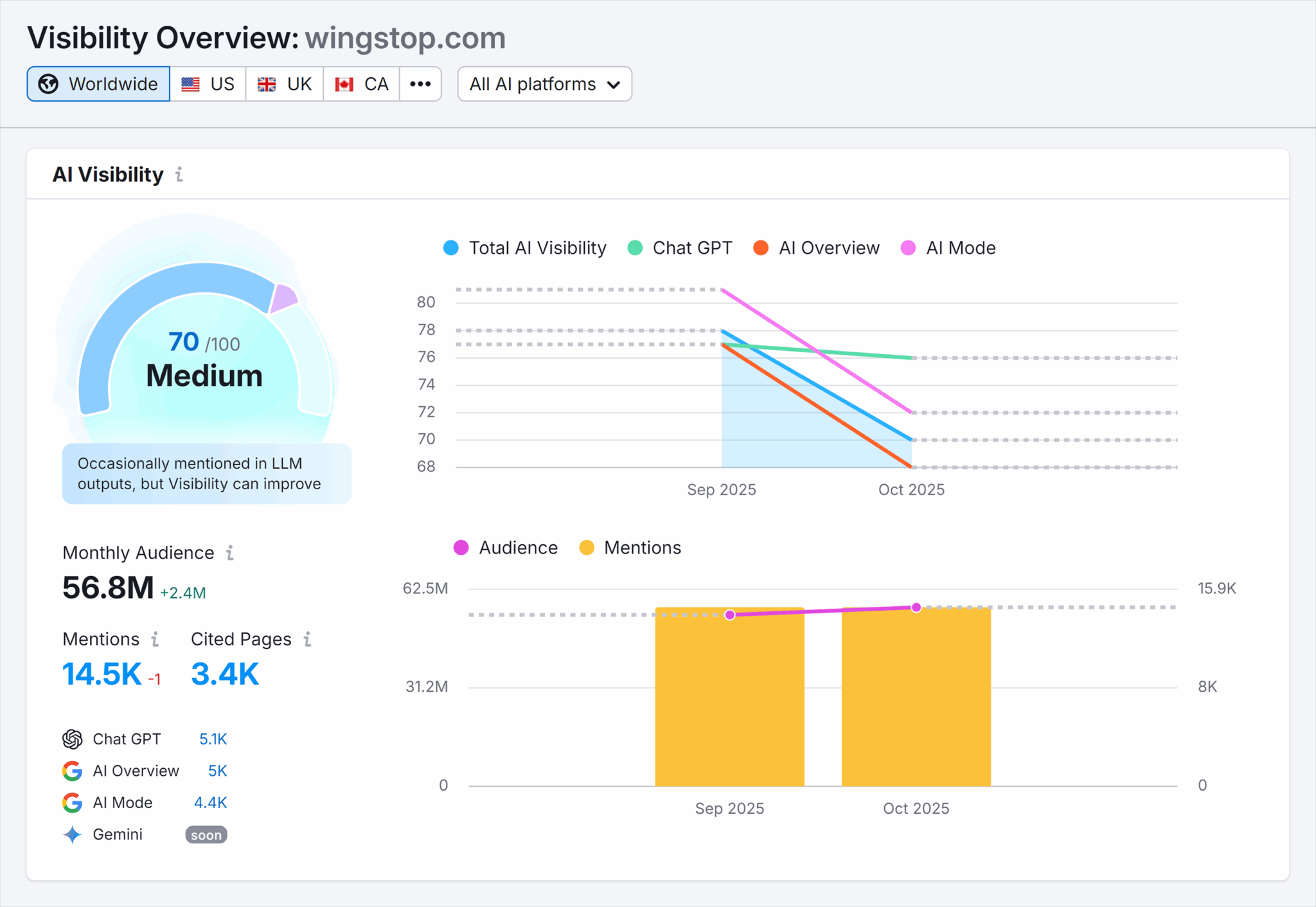
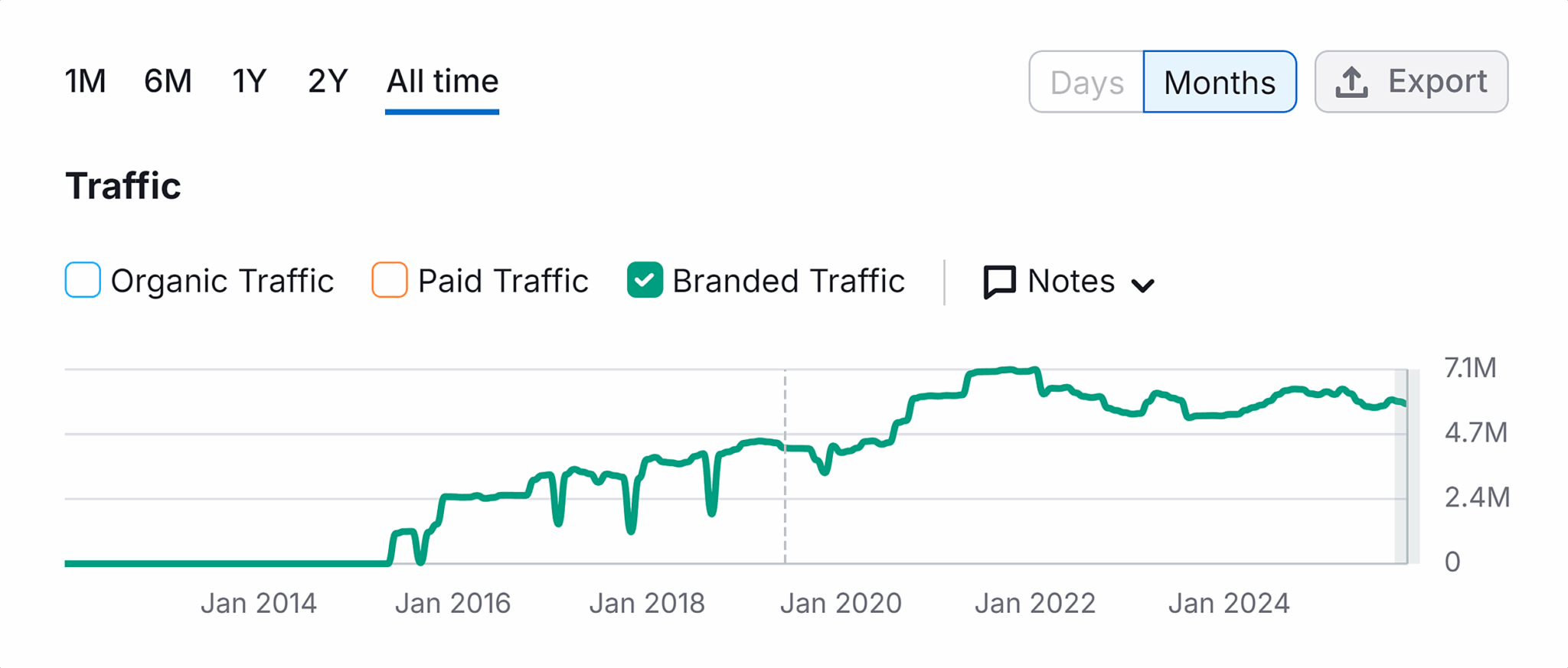
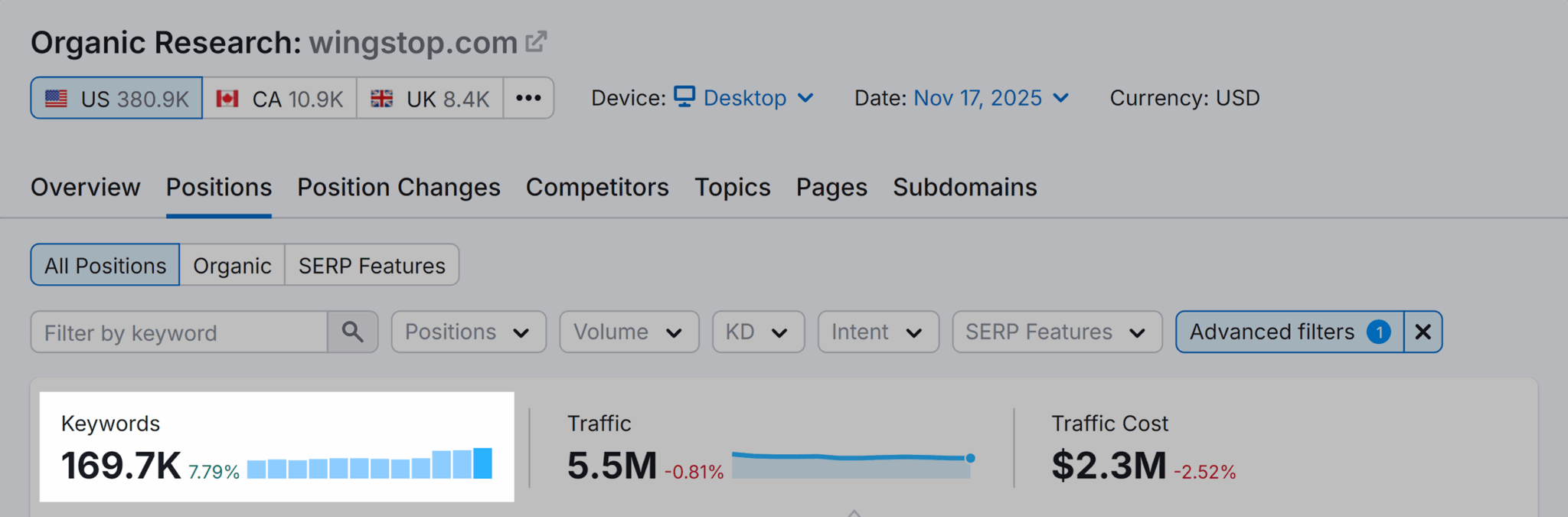
I’ve noticed that brand search provides exceptional insights into LLM performance, offering a rich vein of marketing intelligence. The comparison between two competing chicken wing chains, Buffalo Wild Wings and Wingstop, brightened this understanding for me. While their LLM citations differ, their brand awareness through social media presence offers a clearer picture of market positioning.
Simply examining the branded search traffic showed me how both brands performed similarly on Google, despite their different social media followings. Here lies the heart of utilizing search data creatively to find LLM visibility data strategies.
Rather than merely counting traffic, I am now compelled to consider the number of branded keywords involved, providing a sometimes surprising view on brand awareness and diversity. This approach provides a richer understanding of LLM visibility’s impact.
Direct Traffic: My Trusted LLM Data Companion
I’ve come to see direct traffic as an essential part of my LLM data narrative. Far from being a black hole, direct traffic can often indicate brand awareness and affinity, especially when correlated with LLM visibility metrics. Understanding these correlations allows me to paint a clearer picture of AI’s practical impact on consumer behavior.
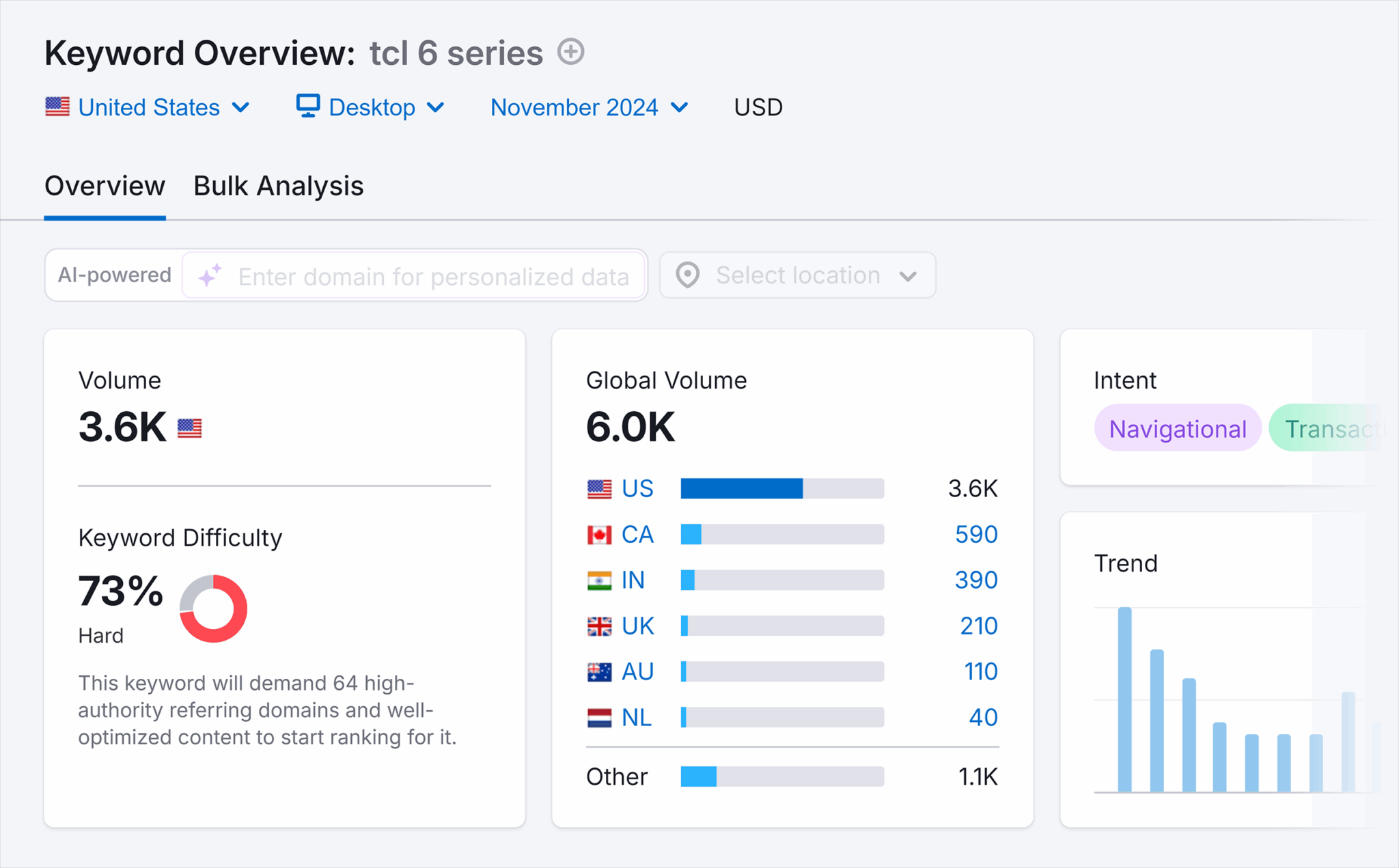
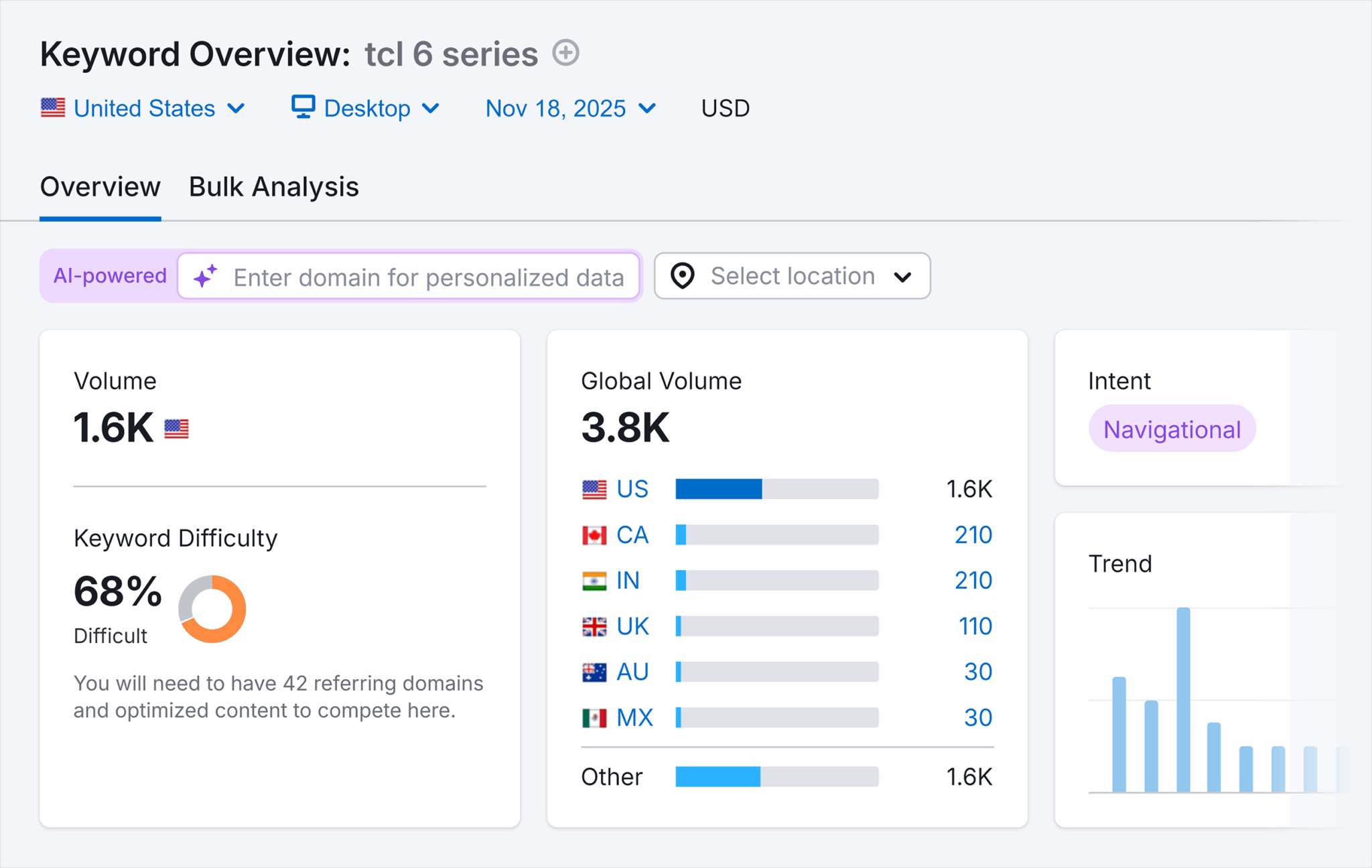
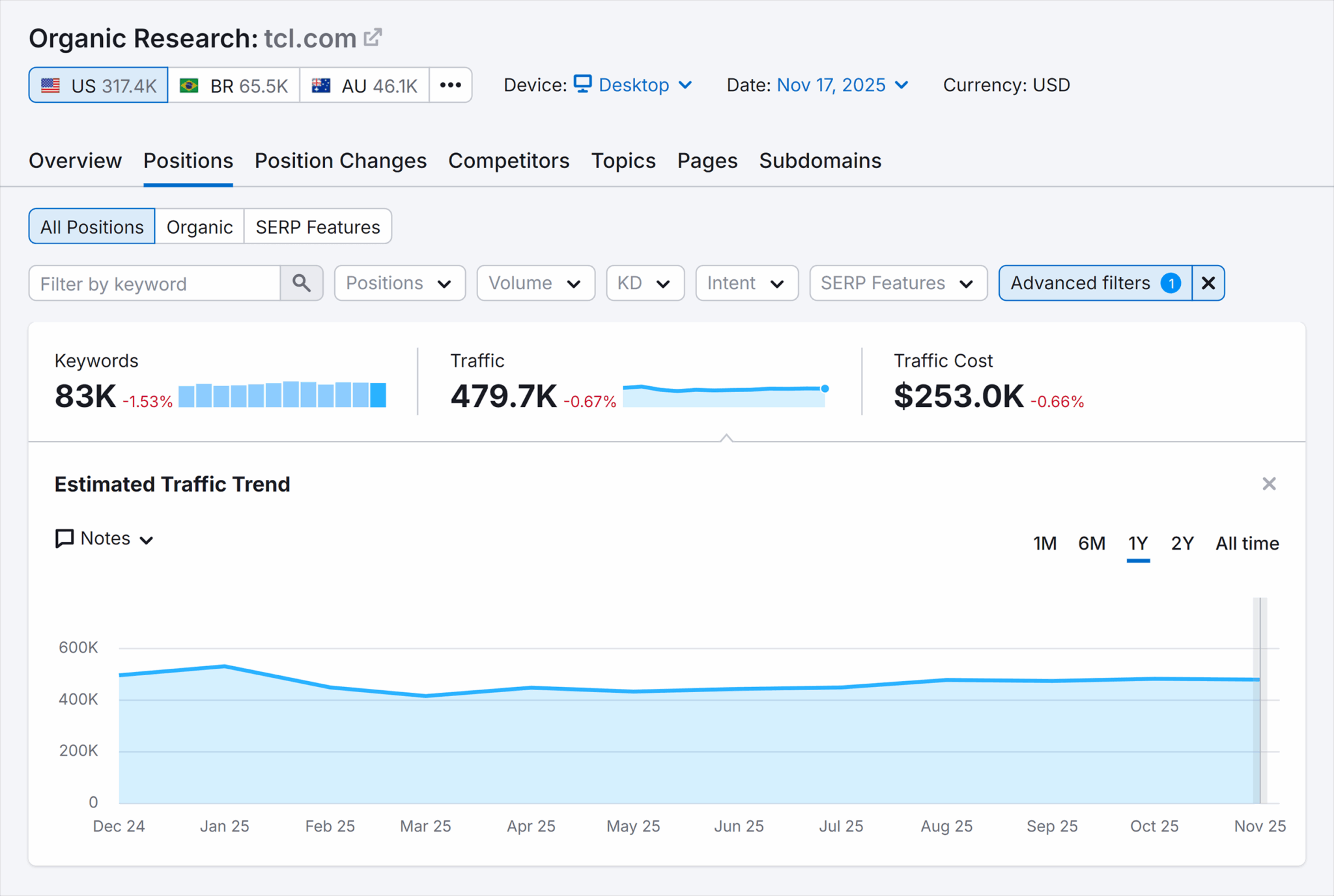
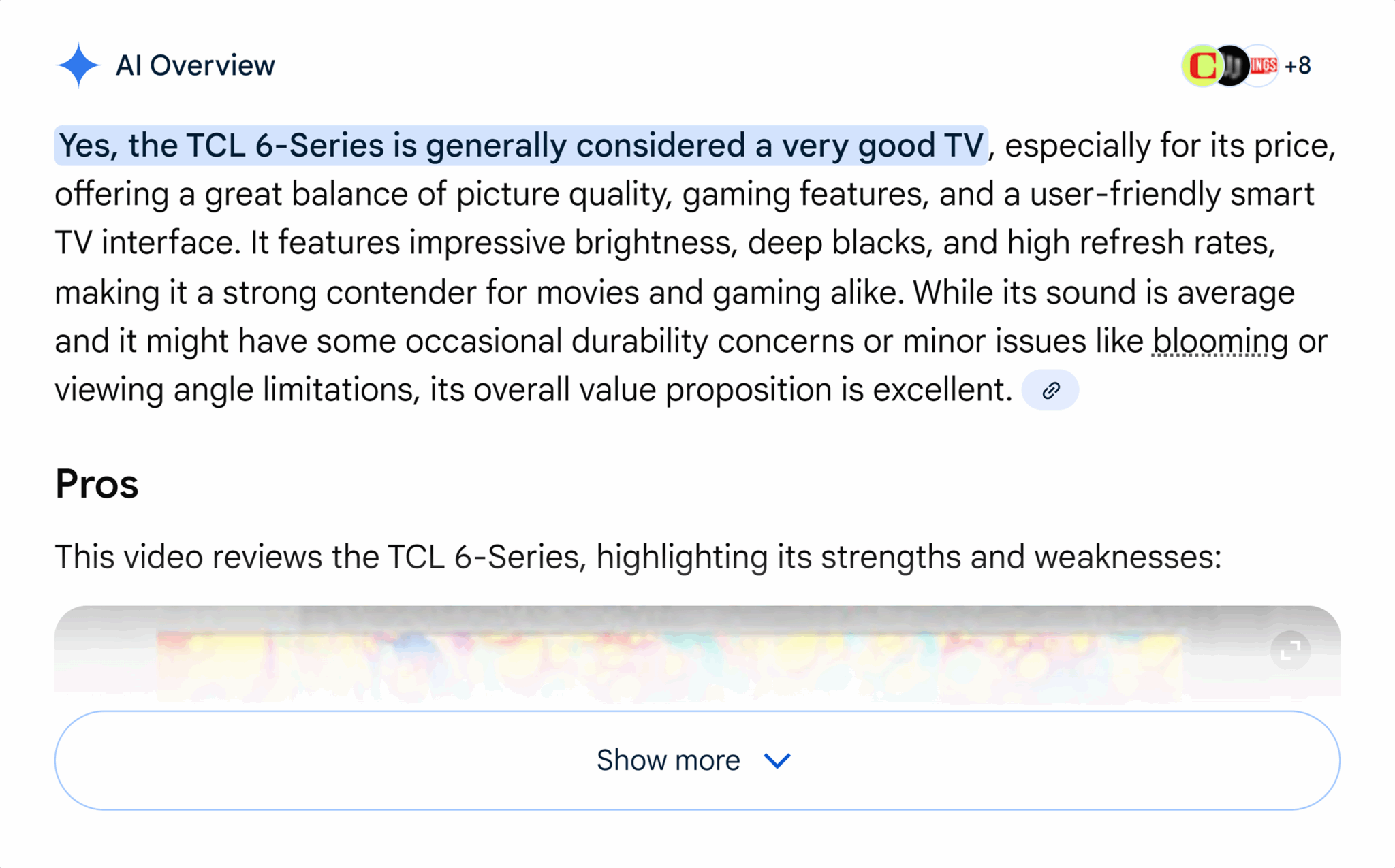
For instance, if I compare LG and TCL, LG’s superior direct traffic and increasing momentum in LLM visibility suggest a tangible AI-driven influence, a possibility I must explore through multi-metric analysis.
Considering various metrics together and identifying shared trends offer insight into how LLM visibility might be affecting my brand’s overall recognition and engagement.
Not Just One Metric: Stitching Together LLM Data Stories
Ultimately, it’s about developing a comprehensive data story from LLM visibility insights. This story goes beyond direct KPIs, utilizing various data sources, such as bounce rates and organic traffic, to add depth and relevance to the narrative. Every piece of performance-focused data stands as testimony to the expertise we can bring to LLM visibility.
Total LLM visibility data, when creatively amalgamated with performance data, can transform insights into actionable strategies that align with pragmatic business objectives, showcasing our value in the AI-driven landscape.
When people ask me how to assess the ROI of their marketing campaigns, I always suggest starting with the customer acquisition cost (CAC). CAC, alongside Customer Lifetime Value (LTV or CLV), is vital in navigating the realm of B2B marketing.
By examining your CAC, you can identify which marketing channels deserve more attention and which aspects of your marketing strategy could use improvement. Benchmarking your CAC against industry standards is key.
The aim of this article is to guide you in recognizing what qualifies as a good CAC in your industry and to encourage you to even explore how your CAC fares compared to related industries.
Calculating Your Customer Acquisition Cost
To calculate your CAC, simply divide your total marketing and sales expenditures by the number of new customers acquired, using the formula below:
Make sure to perform this calculation annually or on a rolling basis to accommodate seasonal customer behavior changes. If your B2B business enjoys consistent year-round sales, consider quarterly CAC analysis to gauge the impact of new initiatives.
Additionally, calculating CAC per channel allows you to compare different marketing strategies effectively.
This report emphasizes B2B CACs. For B2C data, see our B2C Edition.
After determining your CACs, you can measure them against the industry averages shared below.
Average Customer Acquisition Cost (CAC) By Industry
The table below presents average CACs across 29 B2B industries, gathered from client data spanning January 2022 to August 2025. Consider these dataset limitations:
Within each industry, we categorize CAC as Organic or Inorganic. Organic CAC includes mainly SEO and Organic Social, while Inorganic CAC covers PPC / SEM and Paid Social.
Email marketing, events, and other channels are excluded due to insufficient data.
Data from client analytics is anonymous. Organic data leans towards SEO and Inorganic towards PPC / SEM, given our B2B clientele and service focus.
Below are the analysis results:
[Insert table block here]
Average Customer Acquisition Cost (CAC) for SaaS Companies
Our team also reviewed average customer acquisition costs across 22 SaaS industries to determine each industry’s B2B CAC.
SaaS Industry
CAC
[Insert table rows here]
How Your CAC Relates to Customer Lifetime Value
While CAC reflects acquisition costs, Customer Lifetime Value (LTV) reveals the average profit per customer. Calculate LTV by dividing your profit over a chosen period by the number of unique customers, and multiply by their average purchase frequency. Aim for an LTV to CAC ratio of at least 3:1 for optimal financial health.
Keep in mind historical trends and competitor data. A 2:1 LTV to CAC ratio isn’t necessarily negative if you’re seeing improvement over time.
Particularly during new campaigns or long-term strategies, your ratios may fluctuate. For example, if you’ve launched an SEO campaign, results typically appear after 4-6 months.
How to Lower Your CACs
Organic CAC often triumphs over inorganic due to its longevity and skill-based approach. Investing in organic channels yields sustainable results without ongoing cash infusion.
If you’re curious about organic marketing to reduce your CAC, feel free to contact us. Our firm, with multiple U.S. locations, has helped various B2B sectors achieve superior ROI with SEO strategies.
Further Reading
For deeper insights into CAC and its relation to LTV, browse the following resources:
On episode 331 of PPC Live The Podcast, I had an enlightening conversation with Dale Olorenshaw, the Head of Paid Media and Search at StrategiQ. Dale shared a painful yet invaluable experience involving a high-budget test campaign and a critical oversight that taught him powerful lessons.
The costly tale centered around a test campaign with a £15,000 budget. While the campaign saw impressive clicks and engagement, it surprisingly yielded almost no conversions. A month later, the client pointed out that all traffic was directed to the wrong landing page, never reaching the newly built dedicated test page.
Several internal missteps led to this error. Dale bypassed the internal QA process by managing the campaign solo. He shrugged off instincts that flagged something was amiss and, due to seemingly normal top-line metrics, he overlooked a deeper dive into conversion discrepancies. The most humbling moment was realizing the client discovered the oversight first.
Although initial panic ensued, Dale refrained from sending a hasty, emotional response. Instead, he acknowledged the issue, paused to clear his mind, and waited to gather all the facts. The following morning, he approached his account director with full transparency and honesty, declaring, “I’ve messed up.”
StrategiQ stood firmly behind Dale, focusing on solutions rather than blame. They managed to recover part of the wasted budget, provided extra work at no additional cost, and offered discounted fees for the next project phase. Once relaunched correctly, the client relationship remained intact.
This experience profoundly impacted Dale’s professional approach. He now adheres strictly to QA processes, trusts his instincts when numbers seem off, and promotes team accountability with second opinions and checks, acknowledging that seniority doesn’t shield from human errors.
Dale also highlighted a common PPC issue he continues to observe: the overcrowding of Responsive Search Ads. Google’s push for numerous headlines and descriptions can saturate ads with small budgets, leading to insufficient data for meaningful insights. His advice is to streamline assets for clarity and quality.
For Dale, discussing mistakes openly is crucial. He argues that the PPC community needs to normalize these conversations since newcomers may only witness success stories online and equate mistakes with incompetence. Sharing real experiences shows that growth often springs from problem-solving.
In closing, Dale offers leadership advice on fostering a supportive culture. Encouraging honesty, removing blame, and focusing on collective problem-solving ensures that mistakes are seen as learning opportunities rather than failures.
If there’s one takeaway, let it be this: Don’t react impulsively, stay honest, and treat client funds with the utmost care as if they were your own.
Have you ever wondered how to make your products stand out in Google AI Shopping and its AI Mode? I’ve discovered that optimizing feeds, utilizing schema, improving imagery, and crafting conversational Product Detail Page (PDP) content are key strategies to enhance visibility.
You are not choosing between agencies that all sell the same service. You are choosing which team can understand a technical product, translate it into real search demand, earn access to your subject-matter experts, and connect visibility to qualified opportunities. A polished pitch can conceal weaknesses in any one of those areas.
Understand the agency models before comparing names
Industrial SEO, manufacturing SEO, and B2B SEO are loose labels. Two agencies may use the same label while offering very different capabilities. One may excel at technical websites and product catalogs. Another may be a content operation with light technical support. A third may coordinate SEO with paid media, conversion work, and a website redesign.
Organize the market by operating model first. This prevents you from rejecting a capable specialist for lacking services you do not need, or hiring a broad agency whose industrial expertise exists only in its sales presentation.
Agency model
Best suited to
Evidence to request
Main risk to test
Industrial SEO specialist
Technical products, application-led demand, specification-heavy buying, and close collaboration with engineers or product teams
Query maps, technical briefs, product architecture work, and examples of turning expert knowledge into useful pages
A fixed industrial playbook that ignores your route to market, margins, capacity, or buying committee
B2B SEO and content agency
Markets where education, problem awareness, comparison, and category discovery create demand before an RFQ
Evidence connecting informational content to product evaluation, conversion paths, and qualified pipeline
Broad thought leadership that attracts readers but never helps a buyer select a product or supplier
Technical SEO consultancy
Large catalogs, faceted navigation, JavaScript problems, migrations, international sites, duplicate pages, or persistent indexing issues
Prioritized technical backlogs, implementation specifications, validation methods, and developer collaboration
A technically cleaner site with no plan for demand, content, authority, or lead quality
Full-service digital agency
Organizations that need SEO coordinated with paid search, analytics, conversion work, creative, and website development
Named SEO ownership, channel-specific deliverables, reporting boundaries, and examples of cross-channel decision-making
SEO being bundled into a larger retainer without enough specialist attention
Consultant and internal-team hybrid
Companies that already have writers, developers, analysts, and subject-matter experts but need direction and governance
Decision frameworks, templates, training materials, review processes, and a realistic division of responsibilities
A strategy that depends on internal capacity your team does not actually have
These models are not a ranking. The right one depends on the bottleneck. If search engines cannot reliably crawl and interpret your catalog, a content-heavy engagement will not solve the root problem. If your site is technically sound but says little beyond product specifications, another audit may only document work you already know is needed.
Diagnose that bottleneck before building a shortlist. Ask whether the constraint is discoverability, page usefulness, technical access, industry authority, conversion, measurement, or internal execution. If several are involved, decide which one has to move first.
Define the commercial job before requesting an SEO plan
Write a brief around revenue, not rankings
An agency cannot prioritize intelligently if the brief is simply to increase organic traffic. It needs to know which product families matter, where you can sell, what a qualified inquiry looks like, and which demand is commercially useless.
Economic context: which offerings are strategic, constrained by capacity, dependent on distributors, or poor fits despite apparent search demand.
Conversion events: RFQs, specification requests, distributor searches, sample requests, calls, CAD or technical-document downloads, and other actions that matter to your sales process.
Qualification rules: the characteristics that distinguish a viable opportunity from a student, job seeker, consumer, existing customer, or out-of-market inquiry.
Operational constraints: developer availability, legal or regulatory review, subject-matter expert access, publishing permissions, and analytics limitations.
Business measurement: the CRM stages, opportunity fields, and revenue signals that should eventually connect search activity to commercial outcomes.
A useful one-sentence brief follows this pattern: Increase qualified discovery and inquiries for [priority offerings] among [buyer groups] in [markets], while excluding [poor-fit demand], with progress judged by [commercial signals].
This sentence forces an important distinction. Search volume describes attention; it does not establish value. An industrial term can look attractive while referring to the wrong material, tolerance, application, geography, order size, or buyer. The agency should investigate those differences before proposing a publishing calendar.
Map searches to the decisions a buyer must make
Industrial demand rarely fits into a simple split between informational keywords and product keywords. A buyer may begin with a failure mode, move through an application or process, compare materials or capabilities, verify specifications, and then evaluate suppliers. Different pages should support different parts of that path.
Problem and application searches need pages that explain conditions, constraints, and suitable approaches without forcing a premature product pitch.
Category and capability searches need clear product-family or service pages that define fit, differentiation, limitations, and next steps.
Specification, material, model, and part searches need accurate technical pages with unambiguous attributes, relationships, and supporting documents.
Supplier and location searches need credible evidence about service areas, facilities, lead handling, certifications, distribution, and relevant capabilities.
Comparison and alternative searches need honest selection criteria, trade-offs, compatibility details, and reasons to rule an option in or out.
Ask each agency to map a representative offering through that path during discovery. You are not testing whether its team already knows every technical detail. You are testing whether it asks the questions needed to learn, distinguishes buyer intent from keyword similarity, and can turn the result into page-level decisions.
Use a six-part scorecard to test real capability
A useful scorecard separates capabilities that agencies often blend together in a proposal. Score the evidence, not the confidence of the presentation. If a capability matters to your brief, require an artifact, a worked example, or a clear operating process.
Commercial prioritization. Ask how the agency would choose among product families, applications, buyer roles, and markets. A strong answer requests margin, capacity, sales, qualification, and territory inputs before committing to targets. A weak answer treats search volume or keyword difficulty as the entire business case.
Industrial fluency. Ask the team to trace a product from the problem it solves through its specifications, alternatives, decision-makers, and conversion path. Strong teams separate terms that look similar but imply different applications or buyer needs. They also identify where an engineer, operator, procurement lead, distributor, or executive may need different evidence. Be wary of an agency that repeats your terminology without testing what it means.
Technical search execution. Ask how the agency will evaluate crawling, indexation, internal linking, canonicalization, faceted navigation, duplicate content, PDFs, JavaScript rendering, structured data, site speed, international targeting, and migration risk where relevant. The expected output should be a prioritized implementation backlog with owners, dependencies, and validation steps. A long issue inventory without impact or sequence is not a strategy.
Expert-led content operations. Ask who interviews subject-matter experts, drafts briefs, verifies technical claims, obtains images or diagrams, manages approvals, and updates aging pages. Inspect a sample brief and an edited deliverable. The process should preserve technical nuance while making the page understandable to the intended buyer. If the plan assumes your engineers will write finished copy on demand, execution will probably stall.
Relevant authority building. Ask how the agency identifies credible places where your expertise, data, tools, or resources deserve mention. Good answers are grounded in trade relationships, useful assets, professional communities, distributors, associations, partners, and publications relevant to the market. Opaque backlink packages and generic authority scores do not show that a link will be contextually appropriate or commercially useful.
Measurement and search-change readiness. Ask how reporting will connect Google Search Console, site analytics, forms, calls, CRM stages, and revenue data without pretending attribution is perfect. Then test the agency’s approach to AEO and generative engine optimization. It should make important facts clear, visible, crawlable, internally connected, and supported by accurate JSON-LD where appropriate. Structured data must describe claims that users can verify on the page; it cannot compensate for missing evidence. Require the agency to distinguish established SEO work from experiments in AI visibility, citations, and brand mentions.
The final capability deserves particular scrutiny. Adding AI language to a conventional proposal is easy. A serious plan identifies what will change on the site, how entities and relationships will become clearer, which technical or editorial assumptions are being tested, and how the team will monitor outcomes without promising control over an external model’s answer.
Weight the scorecard according to your actual constraint. A catalog with severe indexation problems should place more weight on technical implementation. A technically healthy site with thin product explanations should emphasize industrial fluency and content operations. Do not average away a critical failure: an agency that cannot support your primary bottleneck is not the right choice simply because it scores well elsewhere.
Normalize proposals, interrogate proof, and protect the handoff
Make every proposal answer the same questions
Agency proposals are hard to compare because similar labels can conceal different amounts of work. One content deliverable might mean a title and keyword list; another might include expert interviews, technical diagrams, writing, review, publishing, internal links, schema, and measurement.
Create a comparison sheet with these fields:
The business outcome and search problem being addressed.
The exact deliverable, including what is and is not included.
The agency role, client role, and approval owner.
The systems and access required.
The implementation owner for technical recommendations.
The reporting method and commercial signals being monitored.
The assumptions that could change scope, sequence, or cost.
Ownership of content, data, creative assets, accounts, dashboards, and documentation at the end of the engagement.
That last field is not administrative trivia. If the agency controls accounts, tracking infrastructure, domains, content, or essential documentation, switching providers can create operational and data risk. Keep core business assets in accounts your company owns, with access granted to the agency.
Ask for proof that reveals the mechanism
A chart moving upward is not enough. It may combine branded and non-branded demand, hide changes in paid activity, reflect a website launch, or show traffic that never became qualified pipeline. Confidentiality may limit what an agency can reveal, but it should still be able to explain its reasoning and show sanitized work.
Use these questions to inspect a case example:
What was the original commercial and search problem?
Which pages, templates, technical systems, or content processes changed?
What did the agency deliver, and what did the client implement?
Which results were branded, non-branded, local, product-led, or informational?
How did the team assess inquiry quality rather than form volume alone?
What evidence connects the work to the result, and what other explanations remain possible?
What would the agency do differently if the same constraints appeared in our organization?
Direct artifacts usually tell you more than awards or directory positions. Request a sample technical ticket, query map, content brief, reporting view, editorial workflow, or decision memo. You are looking for whether the agency can convert analysis into work that your developers, marketers, engineers, and sales team can use.
Treat these promises as decision-level warnings
Guaranteed rankings or visibility. An agency can control its work, not search-engine or AI-system placement. Replace the guarantee with commitments about deliverables, quality controls, implementation support, and transparent measurement.
A strategy built entirely from high-volume keywords. Volume does not account for product fit, margin, capacity, geography, or lead quality. Require a commercial prioritization layer.
Large-scale AI publishing without expert review. Industrial errors can affect credibility, sales conversations, and potentially product use. Require named review ownership, claim verification, and a correction process before scaling output.
An unexplained link package. If the agency cannot describe relevance, editorial standards, acquisition methods, and ownership, you cannot evaluate reputational risk.
Reporting limited to sessions, impressions, and rankings. These are diagnostic signals, not the complete business outcome. Require a plan for connecting search activity to qualified actions and CRM data where feasible.
A redesign or migration proposed before diagnosis. Moving URLs, templates, navigation, and content can create avoidable visibility loss. Preserve a crawlable inventory, redirects, measurement, and validation steps before approving an irreversible launch.
A plan that assumes unlimited access to your experts. Ask how the agency will batch questions, prepare interviews, manage reviews, and proceed when an expert is unavailable.
Begin with a diagnostic commitment when uncertainty is high
If neither side understands the full scope, start with a defined diagnostic phase rather than pretending the annual roadmap is already known. That phase can produce an access inventory, measurement baseline, demand map, technical priorities, representative content brief, implementation backlog, and division of responsibilities.
Define the outputs before signing. A diagnostic should reduce uncertainty and support a go, revise, or stop decision. It should not become an open-ended audit that repeats known issues without establishing what happens next.
Before the larger engagement begins, name an internal owner, a technical implementation contact, a sales or CRM contact, and the subject-matter experts who can validate priority topics. Agree on how decisions are logged and what happens when approvals stall. In industrial SEO, the agency’s plan is only one part of the operating system; your access and review process determine whether that plan can leave the slide deck.
Key takeaways
Choose an agency model that matches the bottleneck: technical access, content depth, industry authority, measurement, or internal execution.
Give every candidate the same commercial brief, including priority offerings, markets, qualification rules, conversion events, and operational constraints.
Test commercial prioritization, industrial fluency, technical execution, expert-led content, authority building, and measurement as separate capabilities.
Require artifacts and causal explanations. Traffic charts, awards, testimonials, and confident presentations are supporting evidence, not proof of fit.
Evaluate AEO and GEO through concrete site changes, accurate visible facts, retrieval-friendly content, appropriate JSON-LD, and clearly labeled experiments.
Keep core accounts, data, content, and documentation under your ownership so a future handoff does not endanger continuity.
Your next move is to choose one commercially important product family and write the brief around it. Give that same brief to a small shortlist, ask each agency to map the buyer’s search path, and score the evidence with the same criteria. The differences between a sector label and a workable industrial SEO partnership will become visible quickly.
If you manage paid search, SEO, or both, Google AI Mode puts you in an awkward position. Ads are beginning to appear inside generated answers, yet you do not have the rollout details or clean reporting needed to treat AI Mode as a mature channel.
You can still prepare without rebuilding your search program around an experiment. The useful work is to identify the complex decisions that matter to your customers, connect each decision to a clear answer and landing experience, and separate confirmed performance data from assumptions about AI Mode.
It does not establish the size of the audience, the range of eligible campaigns, the auction mechanics, the controls advertisers will receive, or the performance you should expect. Repeated screenshots demonstrate availability, not reach or return on ad spend. Do not use them as a forecast.
This distinction matters. An optional tab creates a new destination for a subset of users. Automatic routing would change the path for users who believe they are conducting an ordinary search. Your preparation should be useful under either scenario.
Key takeaways
Treat AI Mode as an emerging surface inside Google Search, not as a separately measurable channel you can already manage with confidence.
Organize your strategy around complex customer tasks, because those are the searches most plausibly affected by direct routing into an AI experience.
Connect the generated answer, organic page, ad message, landing page, and conversion action around the same user decision.
Keep reported, observed, and inferred evidence separate. A screenshot can confirm that an ad appeared, but it cannot prove incremental traffic or revenue.
Use bounded tests with explicit spending and lead-quality limits. Do not make a broad budget shift before eligibility, controls, and reporting are clear.
Map the complex decisions behind your valuable searches
AI Mode matters because a generated response can combine discovery, clarification, and evaluation in the same interaction. A conventional keyword plan may tell you what phrase brought someone to Google, but it often misses the decision that person is trying to complete.
Start with the commercial decisions that deserve visibility. Useful groups include urgent service needs, comparisons with several constraints, troubleshooting that may lead to a purchase, and planning questions with multiple steps. These are planning categories, not claims about Google’s targeting rules.
Prioritize a group when it has meaningful business value, requires more explanation than a short product description can provide, and has a credible next action. A complex query with no relevant offer should not receive budget merely because it looks suited to AI Mode.
Use a query-to-answer worksheet
For each priority query group, document the following fields:
User task: the decision the person wants to complete, expressed without marketing language.
Required context: the constraints that could change the answer, such as location, use case, urgency, compatibility, company size, or budget sensitivity.
Direct answer: the shortest accurate response your page can support.
Decision criteria: the factors a buyer should evaluate before choosing an option.
Evidence: product specifications, service boundaries, policies, demonstrations, or other verifiable support for your claims.
Next action: the appropriate conversion for that stage, such as checking availability, viewing a relevant product, requesting an assessment, or starting a purchase.
Destination: the page that continues the decision without forcing the visitor to restart on a generic homepage.
Consider a hypothetical search about choosing payroll software for a multi-location company with hourly employees. The underlying task is not merely finding payroll software. The person needs to know whether a product fits distributed locations, hourly work, administration requirements, and implementation constraints. A useful destination addresses those factors directly, shows what can be verified, and offers a next step suited to an evaluator. A generic product page that repeats a broad value proposition leaves the actual decision unresolved.
This worksheet gives paid and organic teams a shared unit of work. SEO can build the complete explanation. Paid search can match the commercial intent and lead to the right destination. Conversion teams can remove friction from the next action. You are no longer optimizing three disconnected assets against the same keyword list.
Build one coherent journey across AI, organic, and paid results
You do not need a separate species of content called “AI content.” You need pages whose meaning, audience, evidence, and next step are easy to identify. That improves the material available to an answer system while preserving its usefulness for people who arrive through a conventional result or an ad.
Make the organic page answer-ready
Use a descriptive heading for the actual decision. A vague heading such as “Solutions” hides the subject from readers and machines alike.
Give the direct answer before expanding into criteria, alternatives, and caveats. Do not make the visitor excavate a recommendation from a long introduction.
Name the relevant entity, product, audience, location, and limitations precisely. Pronouns and slogans are weak substitutes for clear relationships.
Separate facts from recommendations. Specifications, availability, eligibility, and service boundaries should be explicit; editorial guidance should explain how to use them.
Support consequential claims with evidence on the page. If a claim cannot be substantiated, weakening or removing it is safer than making it more prominent for AI discovery.
Keep structured data consistent with the visible content. JSON-LD can clarify entities and relationships, but it should not introduce claims, ratings, questions, or offers that a visitor cannot see and verify.
Link to the next decision rather than merely to a parent category. A comparison page may need a product detail page, pricing information, an implementation explanation, or a location-specific service page.
Do not rewrite every page in response to early ad sightings. Apply this structure first to query groups closest to meaningful business outcomes. That keeps the work testable and prevents a speculative interface change from driving a site-wide content overhaul.
Make the paid destination continue the answer
An ad shown during an AI-assisted journey may meet a user who has already received definitions, options, or preliminary guidance. Sending that person to a page that starts again with a generic brand introduction creates a reset. The ad and destination should advance the task.
Align the ad message with the same decision criteria used on the organic page.
Send distinct intent groups to distinct destinations when the answer, eligibility, or next action genuinely differs.
State important restrictions before the conversion action. Hiding geography, compatibility, minimum requirements, or service limits can produce clicks that were never qualified.
Match the conversion to the user’s stage. A person comparing requirements may need detailed information before being ready for a sales conversation.
Preserve accurate conversion tracking and lead-quality feedback. More exposure in a new interface is not useful if you cannot distinguish qualified outcomes from superficial engagement.
Avoid writing ad copy that implies endorsement by Google’s generated answer. Placement inside an AI experience does not turn a sponsored claim into an independent recommendation. Clear brand identification and defensible language remain essential.
Paid and organic teams should review the journey together before launch. Check whether the organic explanation, paid promise, landing-page evidence, and conversion action describe the same offer for the same audience. If they conflict, AI Mode is not the first problem to solve; the search experience is already inconsistent.
Measure AI Mode without pretending the data is cleaner than it is
The same discipline should govern paid analysis. Use whatever placement and campaign detail Google actually reports in your account. If AI Mode is not identified as a distinct dimension, do not manufacture that distinction in a dashboard and present the result as platform data.
Maintain three evidence levels
Evidence level
What belongs in it
What it can support
Reported
Metrics and dimensions explicitly supplied by Google Ads, Search Console, analytics, and your conversion systems
Optimization within the scope those systems actually identify
Observed
Dated screenshots or reproducible appearances showing an ad in AI Mode for a particular query, device, and market
Confirmation that the surface appeared under those conditions
Inferred
Traffic shifts, query-pattern changes, or conversion movements that coincide with AI Mode activity but lack a dedicated source dimension
A hypothesis that requires further testing, not a claim of causation
Record observed appearances with the query, date, device type, market, visible ad, destination, and a screenshot. This log can help you spot recurring conditions. It cannot reveal impression share, incremental reach, auction cost, or conversions that Google has not attributed to the surface.
For reported performance, monitor the full path rather than stopping at click-through rate. Review landing-page engagement, completed conversions, lead quality, sales acceptance, and revenue signals available to your business. A new placement can generate attention while weakening commercial efficiency, so a click increase alone is not enough to justify more spending.
Run bounded tests instead of making a speculative budget shift
A large budget reallocation based on screenshots creates direct financial risk: you may pay to chase inventory that is limited, inconsistently available, or not separately controllable. Use a test structure that remains valuable even if AI Mode exposure cannot be isolated.
Choose a commercially important query group from the query-to-answer worksheet.
Write a falsifiable hypothesis, such as whether a decision-specific destination will improve qualified conversion performance compared with the current generic destination.
Define the primary outcome, the lead-quality check, the maximum acceptable spend, and the stopping condition before changing the campaign.
Change only the elements needed to test that hypothesis. Preserve a usable comparison wherever campaign volume and account structure allow it.
Annotate changes to copy, landing pages, targeting, budgets, measurement, and site content so later movements are not casually attributed to AI Mode.
Evaluate reported outcomes first. Add AI Mode observations as context, and label any connection between them as an inference unless Google provides direct attribution.
This approach also protects you if the product direction changes. Better intent mapping, clearer evidence, more relevant destinations, and stricter measurement improve conventional search campaigns and organic pages as well as emerging AI experiences.
Start with the high-value decision your existing search journey handles least clearly. Put the organic owner, paid-search owner, and conversion owner around the same query-to-answer worksheet, then fix the handoffs you can already measure. When Google supplies broader access or dedicated reporting, you will have a coherent system to test rather than a collection of guesses to unwind.