Author: shivamcrushpressai

  • Should You Block AI Crawlers? A Publisher Access Plan

    You’re deciding whether to shut out AI crawlers, but the cost of a mistake is lopsided. Allow too much and you may give away valuable access while absorbing the infrastructure cost. Block too broadly and you may cut off search discovery that still brings readers, customers, and subscribers.

    The workable approach is to stop treating “AI” as one access category. Decide which systems may retrieve which content, for which purpose, under which conditions. Then enforce that policy in layers and measure the result.

    Separate discovery, retrieval, training, and licensing

    A crawler request is a technical event, not a complete explanation of intent. The same public page can have several distinct uses, and your business may benefit from some while rejecting others.

    • Conventional search discovery: A search crawler retrieves a page so the page can be considered for a search index. Access makes discovery possible; it does not guarantee indexing or rankings.
    • Live AI retrieval: A system fetches current information to help answer a user’s request. You may value the resulting visibility, but allowing retrieval does not guarantee a citation or referral visit.
    • Model development: An operator collects content for training or related model-improvement work. This can involve a different value exchange from answering a current query.
    • Licensed access: A publisher deliberately supplies content under agreed technical and commercial terms, potentially through authentication, metering, or a dedicated feed.

    These purposes are strategically separate even when a platform does not give you separate crawler controls. That limitation matters: you can only implement distinctions that the operator exposes and your infrastructure can verify. Where an operator combines purposes, record the exception and make the resulting trade deliberately.

    Key takeaways

    • Preserve conventional search access unless you have consciously decided that its discovery value no longer justifies it.
    • Set policy by crawler identity, declared purpose, and content class rather than using one domain-wide rule for every automated request.
    • Use robots.txt to communicate crawl preferences, but use server-side controls or authentication when access must actually be prevented.
    • Roll out narrow, reversible rules and compare infrastructure savings with changes in discovery, revenue, and AI visibility.

    A blanket block creates an asymmetric business risk

    The volume is large enough to justify active management. Cloudflare reported that, following the July 1 launch of its pay-per-crawl initiative, customers had blocked 416 billion AI-bot requests. That figure demonstrates the scale of crawler demand on participating sites. It does not establish that every blocked request would have harmed a publisher or that blocking is the right default for every site.

    Access is also uneven. Cloudflare argues that publishers cannot cleanly separate Google Search access from Google AI access, and puts Google’s page visibility at 3.2 times OpenAI’s, 4.6 times Microsoft’s, and 4.8 times Anthropic’s or Meta’s. Those are vendor-supplied measurements, so treat the ratios as a directional view of the access imbalance rather than universal traffic benchmarks.

    This is why “block all AI” can be a misleading objective. If the platform connects conventional search crawling with AI use, the technical setting may force a wider business decision than you intended. Before deploying a rule, write down which benefit you are prepared to lose. If the answer is “none of our organic search discovery,” a domain-wide crawler block is too blunt.

    The reverse is also true. “Allow everything for visibility” is not a strategy. An allowed request may generate no referral, citation, subscription, or licensing opportunity. Access should remain open because it serves a defined outcome, not because the crawler includes “AI” in its name.

    Build an access matrix your engineers can enforce

    Turn the policy into a small matrix before touching robots.txt or a firewall rule. Start with four access tiers and assign each content class to one of them.

    Access tierUse it forTechnical defaultBusiness condition
    Open discoveryPublic pages intended for broad distributionAllow verified search crawlers and selected AI access; monitor usageReach and discoverability outweigh reuse concerns
    Search-preservedPublic pages that should remain searchable but are not offered for wider AI collectionAllow conventional search where the operator exposes a separate identity; deny or throttle named AI crawlersThe technical identities can be separated reliably
    Metered or licensedOriginal archives, structured collections, or other material with concentrated reuse valueRequire authentication, rate limits, or a controlled delivery channelAccess is granted under recorded operational and commercial terms
    ClosedSubscriber-only, internal, personal, or otherwise non-public materialRequire authentication and enforce denial at the server or application layerPublic crawler access is unnecessary or inappropriate

    Do not classify the whole site by its most valuable page. A public news story, an evergreen guide, a subscriber archive, an image library, and an internal search endpoint can justify different rules. URL groups make the policy more precise and make mistakes easier to reverse.

    For every crawler-policy combination, record the operator, declared purpose, method used to verify identity, allowed URL groups, rate limit if any, enforcement layer, policy owner, and review date. If you cannot verify the operator or purpose, classify the traffic according to your risk tolerance rather than guessing from a friendly-looking user-agent string.

    Keep the technical policy separate from the legal permission. A crawler being able to retrieve a page does not by itself define the terms under which the content may be reused. If you intend to sell or contractually license access, have appropriate legal counsel establish the rights, attribution, payment, update, termination, and enforcement terms.

    Enforce the policy in layers, not with one bot rule

    Robots.txt is useful for expressing crawl instructions to compliant operators. It is not authentication, and it does not prevent an unidentified or non-compliant client from requesting a public URL. Use the control that matches the consequence of failure.

    1. Capture a baseline. Before changing access, record crawler requests, transferred bytes, cache misses, origin load, requested URL groups, response codes, search crawl health, search traffic, observable AI referrals, and conversions. Note campaigns or publishing spikes that could distort the comparison.
    2. Inventory and verify identities. Group requests by claimed user agent, network identity, paths requested, rate, and behavior. A user-agent string can be copied, so do not approve or block high-impact access solely because a request claims a recognizable name. Use verification information supplied by the relevant operator where it is available.
    3. Publish the intended crawl rules. Add crawler-specific robots.txt instructions only after confirming that the rule preserves the search access you want. Test the deployed file, including rules inherited from broader user-agent groups.
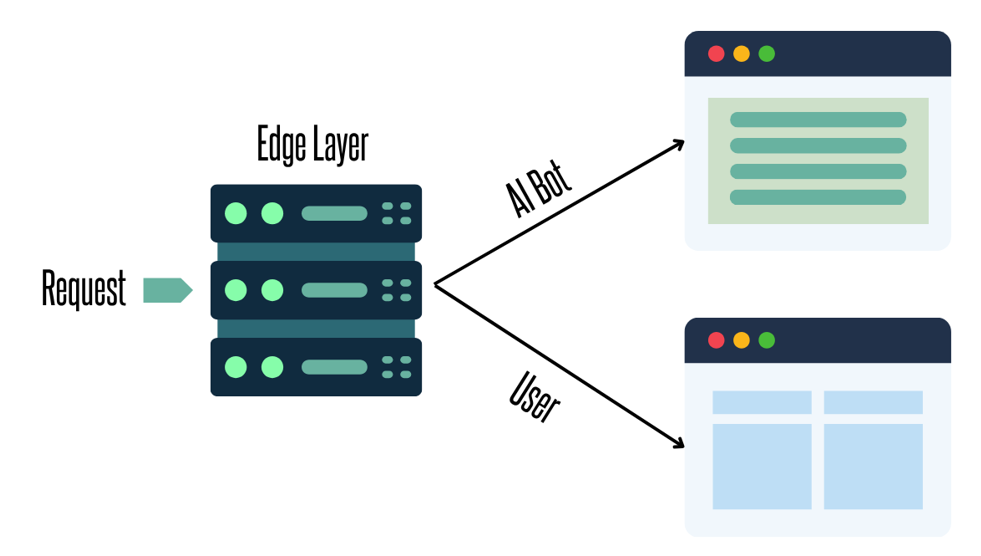
    4. Enforce consequential restrictions upstream. Use your CDN, web application firewall, origin, or application to throttle or deny matching requests. Keep each rule narrow, log its matches, return a consistent response, name an owner, and document the rollback procedure.
    5. Put valuable non-public material behind authentication. Do not rely on robots.txt to protect subscriber content, private files, customer information, unpublished drafts, or licensed datasets. If anonymous visitors can retrieve a URL, an automated client may be able to retrieve it too.
    6. Stage the rollout. Begin with one verified crawler identity or one low-risk URL group. Review false positives and business metrics before extending the rule. This limits the damage if a shared identity, proxy, or overly broad path pattern catches traffic you meant to preserve.

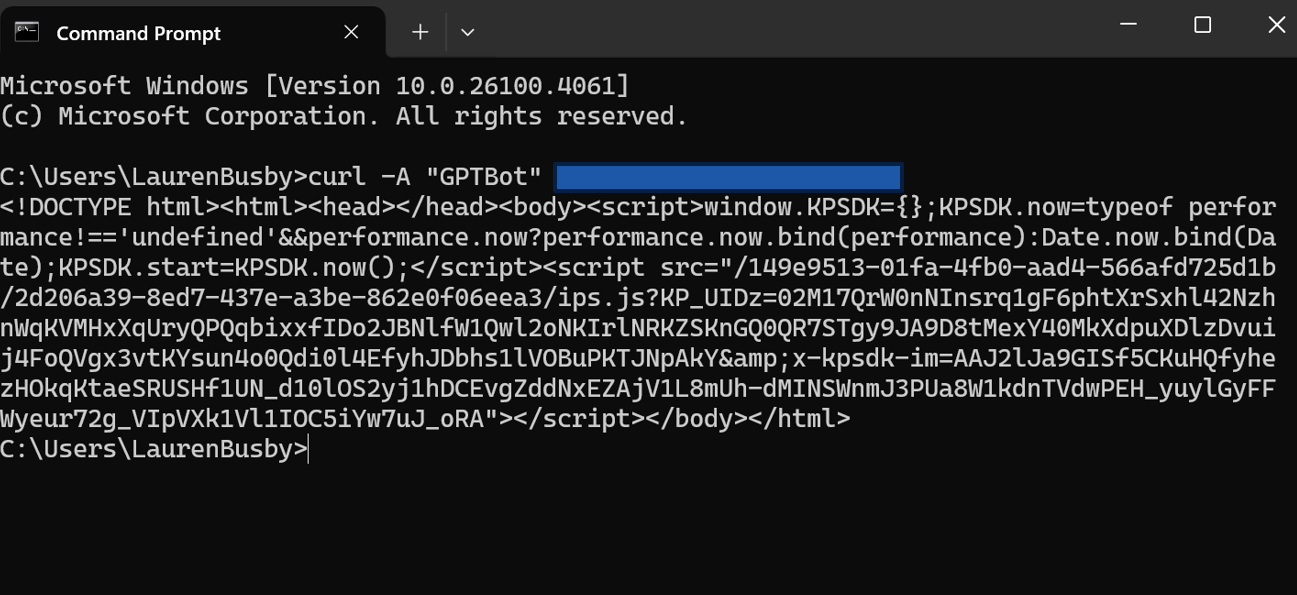
    Blocking only affects requests that reach your controls and match your rules. It does not prove that a model lacks the content, and allowing a crawler does not prove that the content will appear in an answer. Describe the operational outcome accurately: you allowed, throttled, or denied a particular access path.

    Measure whether blocking improved your position

    A successful block is not merely a rising denial count. The useful question is whether the policy improved the exchange between access granted and value received. Review the same scorecard before and after each staged change.

    • Infrastructure: Requests, bandwidth, cache misses, origin work, and load associated with each verified crawler and content class.
    • Search discovery: Crawl errors, accessible pages, index coverage, organic impressions, clicks, and landing-page conversions. Investigate changes that coincide with a rule deployment before expanding it.
    • AI visibility: Observable AI referrals, cited pages found through a consistent sample of relevant prompts, brand mentions, and resulting conversions. Referral logs measure visits, not every unseen citation or model use, so do not treat zero referrals as proof of zero exposure.
    • Content value: Subscriptions, leads, revenue, partnership requests, and licensing discussions associated with the affected material.
    • Policy quality: False positives, unidentified automation, repeated requests against denied paths, operator verification failures, and rules that no longer match your content structure.

    Set the decision rule before examining the result. Retain a restriction when it materially reduces unwanted access or resource use without damaging the outcomes you chose to preserve. Roll it back when search discovery or legitimate partner access declines because the match was too broad. Move valuable, persistent demand toward authenticated or licensed access when the opportunity justifies the operational and legal work.

    Your first action can be small: write one policy sentence for conventional search, one for live AI retrieval, one for model-development access, and one for premium content. Compare those sentences with the controls your platforms actually expose. Where policy and tooling do not line up, start with the narrowest reversible restriction and preserve the baseline you will need to judge it.

    References

  • Ecommerce Visibility: A Shopping Ad Strategy That Compounds

    Ecommerce Visibility: A Shopping Ad Strategy That Compounds

    Your shopping campaigns can keep spending while your products become harder to find. When that happens, the failure may sit upstream of the ads: weak catalog language, inconsistent offer data, a landing page that cannot honor a regional price, or reporting that hides what each SKU actually earns.

    If you are deciding where the next dollar should go, do not begin with the channel budget. Build one reliable product truth layer, give each channel a specific job, and find the earliest point where visibility turns into waste. That sequence makes your paid shopping, marketplace, social, and AI discovery work reinforce one another.

    Build a product truth layer before adding campaigns

    A generic running shoe is surrounded by aligned transparent layers representing product attributes, inventory, shipping, price, and regional availability.

    Treat every SKU as a bundle of claims that must agree wherever the product appears. The title should identify the same item as the landing page. The advertised price should match the price a qualified shopper can obtain. Availability, variants, regional eligibility, and member conditions should not change unexpectedly between the listing and the destination.

    This is more than catalog housekeeping. Performance Max depends heavily on the merchant feed, so well-structured product titles and descriptions, relevant keywords, and deliberate use of the available character space can improve the information Google has to work with. A larger campaign budget cannot repair a product record that fails to explain what is being sold.

    Audit each product family against five requirements:

    • Unambiguous identity: A shopper should be able to distinguish the product, brand, model, variant, size, or other meaningful option without opening several nearly identical listings.
    • Useful discovery language: Titles and descriptions should use the terms a buyer would recognize while remaining readable. Repeating keywords is not a substitute for identifying the product precisely.
    • Offer truth: Price, availability, promotion, region, and membership conditions should agree across the feed, visible page content, checkout path, and structured product data.
    • Decision detail: The page should explain who the product is for, what differentiates it from nearby alternatives, which options are available, and any limitation that could change the buying decision.
    • Destination continuity: The landing page should open the correct product and preserve the offer presented before the click. Do not make the shopper search again for the advertised variant or price.

    The same discipline supports discovery outside conventional ads. A shopper using Perplexity Shopping is still trying to identify, compare, and choose products. Your goal is to make each offer understandable without requiring an AI system or a person to reconstruct essential facts from vague category copy.

    Write product content for comparison, not merely description. Explain the meaningful difference between adjacent models. State what is included and what is not. Connect technical features to the decision they affect. Keep structured data aligned with what the shopper can see instead of using markup to introduce a second version of the offer.

    Give every commerce channel one job in the buying journey

    An ecommerce visibility strategy becomes expensive when every channel is expected to produce the same kind of result. Google, Amazon, social platforms, and AI shopping interfaces meet the buyer in different contexts. Your measurement and budget decisions should reflect those differences.

    ChannelPrimary jobFirst lever to inspectMisleading conclusion to avoid
    Google Performance MaxCapture and expand shopping demand through automated placementsFeed quality, conversion tracking, and actionable campaign segmentsMore budget will compensate for weak product data
    AmazonConvert marketplace demand close to the transactionOffer quality plus keyword- and market-level performanceStrong conversion proves Amazon created all of the demand
    Social platformsBuild awareness, customer lists, and remarketing audiencesAudience quality, creative response, and downstream engagementLast-click sales reveal the channel’s entire contribution
    AI shopping discoveryHelp shoppers discover and compare relevant productsClear product facts, differentiated offers, and useful destination pagesReferral clicks represent total visibility in answer-led journeys

    Performance Max is particularly compatible with ecommerce because frequent sales and lower ticket values can provide the conversion volume automated systems use to learn. That advantage is not universal. A store with sparse transactions or a small number of high-value purchases may give each campaign less feedback, especially if the account is split into too many segments.

    Amazon deserves a different interpretation. Its shopping and transaction environment can deliver strong conversion rates, clearer keyword and market reporting, and more direct attribution. Use that clarity to improve offers and understand demand. Do not assume the marketplace receives full credit for awareness that began elsewhere.

    Social activity often earns its place by creating future demand rather than closing every sale immediately. Giveaways can help build customer lists, awareness campaigns can introduce an unfamiliar product, and remarketing can bring interested shoppers back. If you judge all three solely by direct conversion, you may cut the activity that supplies later demand to Google, Amazon, or your own store.

    Use channel roles as budget hypotheses, not permanent labels. When high-intent traffic exists but efficiency is poor, inspect product data, tracking, and offer continuity before funding more awareness. When conversion is healthy but discovery is thin, improve social reach, comparison content, and AI-readable product information. When Amazon performs but your direct store does not, compare the offer and landing experience before blaming the audience.

    Make Performance Max accountable to decisions you can make

    An ecommerce analyst adjusts controls on a transparent campaign machine that sorts generic product signals into profitable, low-margin, unavailable, and waste pathways.

    Performance Max becomes easier to manage when campaign boundaries correspond to real business decisions. A segment is useful only if you would change a budget, bid objective, creative approach, geography, or landing experience because of what it reveals.

    Verify the conversion signal before trusting automation

    Automated bidding optimizes toward the data it receives, not the business result you intended to send. Confirm that a completed order and its value are recorded correctly. If more than one integration can report the same order, verify that the purchase is not counted twice. Keep browsing actions and shopping-cart activity distinct from completed revenue so the campaign is not rewarded equally for unequal outcomes.

    For stores using Shopify, synchronizing commerce data with Google Ads can support automated bidding and campaign experiments. The important part is not merely connecting the systems. Run a test order, follow it through the reporting path, and compare the recorded value with the actual transaction before increasing spend. Scaling against inflated or incomplete conversion data can direct more budget toward false revenue.

    Segment the feed around controllable differences

    Merchant Center default and custom labels let you group products for more precise campaign control. Useful labels can represent a product family, inventory condition, margin band, promotion, season, or region when you possess reliable data for that distinction.

    Before creating a separate campaign, finish this sentence: “If this segment behaves differently, we will change ___.” A clear answer might be its budget, return objective, geographic reach, creative, or destination. If there is no different action to take, keep the reporting distinction without necessarily creating another campaign boundary.

    Do not split a modest sales base simply because a granular dashboard looks tidy. PMax benefits from conversion volume. Excessive segmentation can leave each campaign with too little feedback to distinguish a real pattern from ordinary variation.

    Improve query fit at the product level

    Start with the products receiving meaningful exposure or spend. Read each title as if you know nothing about the store. Put the most distinguishing information where it can be understood quickly. Remove generic promotional language that displaces product identity. Use the description to clarify selection criteria rather than repeating the title in a longer form.

    Then compare the feed record with the destination page. A well-formed listing cannot rescue a landing page that hides the selected variant, changes the price, or buries the information that justified the click. Conversely, an excellent page may never receive qualified traffic if the feed describes the product too vaguely.

    Use this order for a PMax audit:

    1. Validate the purchase event and transaction value.
    2. Resolve feed eligibility, identity, price, and availability problems.
    3. Check whether campaign segments correspond to different business actions.
    4. Improve the product title, description, imagery, offer, and destination continuity.
    5. Increase budget only after the earlier layers can convert additional demand accurately.

    Use regional loyalty pricing only when the page can keep the promise

    Regional member pricing can make a national catalog more locally relevant, but it also creates a strict continuity requirement. The shopper must see the appropriate member offer in the ad and on the page reached after the click.

    Google is testing this capability as a beta with limited visibility. It is available only where both regional availability and pricing, or RAAP, and loyalty programs are supported. Eligible merchants must participate in Google’s loyalty add-on, define regional settings in Merchant Center, and add the program label, tier, and price through loyalty program attributes in regional inventory feeds.

    The click is the critical handoff. Google adds a region ID to the URL, and the merchant’s landing page must use it to display the corresponding member price. If the page falls back to a national price or presents an unexplained amount, the shopper encounters a broken promise after a paid click.

    Implement the beta as a controlled offer system:

    1. Confirm eligibility first. Verify that the intended market supports both RAAP and loyalty programs before designing a campaign around the feature.
    2. Define the commercial rules. Record which regions, program labels, tiers, products, and prices belong together. Decide what a shopper sees when regional or membership status cannot be established.
    3. Configure Merchant Center and the feed. Set the regional definitions and populate the required loyalty program attributes in the regional inventory data.
    4. Make the landing page region-aware. Read the region ID from the click and render the matching member offer. Clearly distinguish the regular price from a price that requires membership.
    5. Test every handoff. Open representative ad URLs for each configured region, test signed-out and eligible-member states, and confirm that page caching does not inadvertently reuse one region’s price for another.
    6. Measure the incremental outcome. Separate ordinary purchases, purchases using the member price, and loyalty registrations where your systems support those distinctions.

    Localized loyalty incentives could improve conversion or program enrollment, but a limited beta does not establish that result for every merchant. Treat it as an experiment with a dependable fallback, not as the foundation of your shopping strategy. The durable advantage is the infrastructure: reliable regional data, explicit eligibility, and a landing page that can honor the offer it receives.

    Key takeaways: diagnose the layer that failed

    A blended return figure can tell you that performance changed without telling you why. Diagnose ecommerce visibility in the order a shopper and a commerce system encounter it:

    • No eligible visibility: Inspect feed approval, product identity, availability, price, region, and loyalty eligibility before changing bids.
    • Impressions without qualified clicks: Rework the title, primary image, visible offer, and product differentiation. The listing may be eligible but unconvincing or poorly matched.
    • Clicks without shopping progress: Check whether the page preserves the product, variant, price, region, and member conditions presented before the click.
    • Shopping activity without purchases: Inspect the transition from product selection to checkout and identify any condition or cost that appears later than the original offer.
    • Revenue without acceptable economics: Move from campaign-level return to SKU-level revenue and costs. Do not let profitable products conceal products that lose money as spend grows.
    • Direct sales without broader discovery: Review whether social and AI shopping activity is expanding the audience, customer list, comparisons, and later demand rather than judging it only by last-click orders.

    Your dashboard should preserve those layers. Keep eligibility and visibility metrics separate from conversion and profit metrics. Break the useful views down by SKU or product family, channel, campaign, and region where the data supports that detail. A tool such as Sellerboard can connect revenue and costs at the SKU level, but the tool matters less than the decision the dashboard exposes.

    Do not force all platforms into an identical attribution story. Amazon can provide keyword- and market-level transaction reporting. Google PMax depends on the conversions your store sends back. Social may contribute through awareness, audience building, and remarketing. AI shopping may influence product discovery and comparison without receiving the final click. Keep a visibility diagnostic for those channel-specific signals and a separate economic scorecard for orders, revenue, and trusted costs.

    Choose one commercially important product family this week. Trace it through the feed, visible page content, structured data, PMax segmentation, marketplace offer, regional rules, and SKU dashboard. Fix the earliest inconsistency you find. Once that layer is dependable, the next budget decision becomes much easier to defend.

    References

  • A Practical Guide to Brand Authority in AI-Driven Search

    A Practical Guide to Brand Authority in AI-Driven Search

    You can publish accurate content, rank for relevant queries, and still be absent when an AI system explains your market. If that is happening, another batch of loosely related articles probably will not solve the problem. The missing ingredient is often a recognizable chain of evidence connecting your brand, your expertise, and independent confirmation of that expertise.

    Your job is to make that chain easy for machines and people to follow. That means clarifying who you are, giving important claims a reliable home, earning corroboration beyond your own domain, and checking how AI systems actually represent you. This guide gives you a practical way to do it.

    Key takeaways

    • Brand authority is not the same as visibility. A brand can appear frequently while remaining poorly defined, weakly supported, or easy to omit from an answer.
    • Build a canonical evidence layer on your site before pursuing more mentions. Your identity, expertise, authorship, claims, and structured data should describe the same entity.
    • Relevant citations, inbound links, expert references, and contextual brand mentions provide different kinds of outside corroboration. Track them separately.
    • Make important pages easy to interpret and quote: answer the question directly, show who is responsible for the information, identify its scope, and support material claims.
    • Audit generated answers for inclusion, accuracy, attribution, and supporting citations. Each failure points to a different repair.

    Brand authority is an evidence chain, not a single score

    In AI-driven search, authority has a practical meaning: a system can identify your brand, connect it to a subject, and find enough supporting evidence to include it confidently in a synthesized answer. That is broader than traditional link authority. Modern off-page signals include inbound links, citations, brand mentions, reputation, and evidence of expertise, not merely the number of sites pointing at a domain.

    No universal public formula tells you how every AI system evaluates a brand. Treat the following chain as a diagnostic model, not a claim about a hidden ranking algorithm:

    1. Identity: Can the system distinguish your brand from similarly named companies, products, and people?
    2. Topic association: Is it clear what subjects, problems, audiences, or markets your brand is genuinely connected to?
    3. Primary evidence: Does your own site contain clear, attributable information supporting the claims you make?
    4. Independent corroboration: Do credible sources outside your control describe, cite, or recommend the brand in a compatible way?
    5. Answer utility: Can a system extract a useful passage without guessing what you mean or stripping away a necessary qualification?

    A weakness at each point produces a different symptom. If your identity is unclear, the answer may confuse you with another entity. If your topic association is weak, the brand may appear for navigational questions but disappear from category discovery. If primary evidence is thin, an AI answer may mention you without being able to support a detailed description. If outside corroboration is missing, your own claims can look isolated. If the content is difficult to interpret, a more clearly written competitor may be easier to cite.

    This is why publishing volume is a poor default response to an authority problem. First identify the broken link in the chain. Then repair that link.

    It also helps to separate three outcomes that are often bundled into one vague idea of “AI visibility”:

    • Presence: Whether the brand appears at all.
    • Representation: Whether the answer describes the brand accurately and in the right context.
    • Authority: Whether the brand is used as a credible source, example, or option rather than receiving a passing mention.

    Measure those outcomes independently. A high mention count does not compensate for an inaccurate description, and an accurate branded answer does not prove that you are discoverable for unbranded category questions.

    Build a canonical evidence layer on your own site

    An orderly glass-and-stone digital library sits on an illuminated foundation as scattered document panels converge on one central source.

    Before you ask other sites to validate the brand, decide exactly what they should be validating. Many authority campaigns begin with outreach while the company’s own pages use different descriptions, audience labels, expert biographies, and product claims. That inconsistency makes every later signal harder to interpret.

    Create a brand authority brief

    Build an internal source of truth that contains the facts your public pages should agree on. It does not need to become a single public document. It should govern what your teams publish.

    • The exact public brand name and any legitimate alternate name.
    • A plain one-sentence description of what the brand does, for whom, and in which context.
    • The subjects on which the brand can support a credible claim to expertise.
    • Subjects that are adjacent but outside that claim. This boundary prevents positioning from expanding into unsupported territory.
    • The official website and public profiles that clearly belong to the same entity.
    • The people responsible for producing or reviewing expert content, along with the credentials relevant to that work.
    • The primary page supporting each important company, product, service, or methodology claim.
    • Independent pages that corroborate those claims.

    The one-sentence description matters more than a slogan. “We transform the future of business” gives a machine almost nothing to connect to a category. A useful description follows a more disciplined pattern: “[Brand] helps [specific audience] perform [specific task] through [method or product category].” Add a limitation when readers could otherwise infer a broader capability than you can support.

    Use the brief to audit your homepage, About page, contact information, product or service pages, author biographies, editorial policy, and public profiles. The wording does not have to be identical everywhere. The facts and relationships do.

    Give every important claim a reliable home

    A claim repeated across promotional pages is not necessarily well supported. Give each material claim a canonical page where a reader can understand its meaning, scope, basis, and owner. Maintain a simple claim ledger with these fields:

    • Claim: The exact statement you want people and systems to understand.
    • Primary evidence: The page on your site that explains or supports it.
    • Responsible expert: The person or team qualified to verify it.
    • Independent corroboration: The strongest relevant evidence outside your domain.
    • Known qualification: The audience, market, use case, or condition that limits the claim.
    • Status: Confirmed, incomplete, outdated, disputed, or unsupported.

    This ledger exposes a common problem quickly: the positioning may be stronger than the evidence. If a claim has no responsible expert, no explanatory page, and no outside corroboration, do not amplify it yet. Narrow it or develop the missing evidence first.

    Pages supporting those claims should make their answer easy to extract correctly. Put the direct answer near the relevant heading. Define unfamiliar terms. State the intended audience and important exclusions. Show authorship or review responsibility where expertise matters. Link to the material that supports the statement. Update the page when the underlying facts change.

    A useful answer passage often has four parts:

    • Answer: The direct response to the question.
    • Boundary: Where the response applies and where it does not.
    • Basis: The evidence, method, or reasoning behind it.
    • Attribution: The brand or expert responsible for the information when that identity is relevant.

    This structure improves clarity without turning every paragraph into a formula. It also reduces the chance that a useful statement becomes misleading when removed from the surrounding page.

    Use structured data to clarify facts, not manufacture them

    Structured data and a consistent brand identity help systems connect content with the right entity and topics. Use your JSON-LD to mirror facts that a visitor can verify on the page. Keep names, official URLs, author relationships, publisher relationships, and content descriptions aligned with the visible site.

    Do not introduce a claim only in markup or use structured data as a substitute for evidence. Schema can reduce ambiguity. It cannot turn an unsupported marketing statement into independent authority. If the visible page, the structured data, and third-party descriptions disagree, repair the underlying facts before adding more markup.

    Earn corroboration that your brand does not control

    Your website establishes the primary record. Outside evidence shows whether anyone else recognizes it. That is the core of modern off-page authority: relevant endorsements from credible sources strengthen trust more than disconnected mentions.

    Do not combine every off-site appearance into one count. An inbound link, a citation, and a brand mention can perform different jobs:

    • Inbound link: Gives readers a path to your evidence and places your page in a specific editorial context.
    • Citation: Identifies your brand, expert, work, or material as support for a claim, whether or not the reference is clickable.
    • Brand mention: Associates the brand with a subject, event, opinion, product, or reputation. The surrounding context determines whether that association helps.

    A passing mention may improve recognition without supporting expertise. A link from an unrelated page may offer little useful context. A detailed citation from a respected source in your field can validate a particular claim even if it does not use your preferred anchor text. Record what each placement proves instead of treating all three as interchangeable.

    Evaluate a potential placement with five practical questions:

    1. Relevance: Is the surrounding page about the subject for which you want authority?
    2. Editorial independence: Did the publisher have a genuine reason to include the brand, expert, or resource?
    3. Specificity: Does the reference connect you to a meaningful claim, or does it merely list the brand name?
    4. Consistency: Does the description agree with the canonical facts on your site?
    5. Reader value: Would the reference still help someone if search engines and AI systems did not exist?

    The last question is a useful filter for manipulative tactics. If a placement has no credible purpose beyond creating a signal, it is unlikely to build the kind of reputation you want machines to reproduce.

    The most sustainable way to earn corroboration is to give other people something worth referencing. Publish a clear definition, a defensible method, an expert explanation, a practical framework, or an analysis that resolves a real question. Make the useful part easy to locate and attribute. Then take it to the publications, communities, professional networks, and content platforms where that exact subject is already discussed.

    Distribution should follow audience behavior, not a demand to occupy every channel. Search discovery now extends beyond conventional results into platforms such as YouTube, TikTok, Pinterest, and Amazon, as well as synthesized AI answers. Choose the places where your audience actually learns, evaluates, or buys. Keep the entity facts stable while adapting the format to the platform.

    Monitor the context as carefully as the quantity. A brand can accumulate mentions while an old description, discontinued positioning, or reputation issue becomes the dominant outside narrative. Correct material inaccuracies at their origin when possible. Then make the accurate record unmistakable on your own site. Repeating the right answer only on pages you control does not remove conflicting third-party evidence.

    Audit how AI systems represent your brand

    A transparent inspection lens examines a faceted identity object connected to several source nodes, revealing aligned and misplaced fragments.

    Rank tracking tells you where a page appears in a conventional result set. It does not tell you whether an AI answer omitted the brand, described it incorrectly, relied on an outdated source, or used your expertise without clear attribution. You need an answer-level audit alongside your SEO reporting.

    Start with a stable set of prompts based on real audience decisions. Include prompts from several intent types:

    • Category discovery: “Which companies help [audience] solve [problem]?”
    • Source discovery: “Who are credible sources on [topic]?”
    • Branded understanding: “What does [brand] do, and who is it for?”
    • Expertise association: “What is [brand] known for in [field]?”
    • Evaluation: “What should a buyer consider when choosing a provider for [task]?”
    • Problem solving: “How should [audience] approach [specific problem]?”

    Use the AI systems your customers are likely to use. Keep the prompt wording fixed when you compare results, and repeat checks because generated responses can vary. Capture the complete answer and its citations rather than recording only whether the brand appeared.

    For each result, record:

    • The prompt and the intent it represents.
    • Whether the brand appears.
    • How prominently and in what role it appears: source, example, option, recommendation, or passing mention.
    • Whether the description is factually accurate.
    • Whether important qualifications are preserved.
    • Whether your site is cited.
    • Which third-party pages are cited or appear to support the response.
    • Which competing entities are included.
    • Any unsupported, outdated, or reputation-sensitive claim requiring correction.

    Do not collapse all of this into one opaque visibility score. A compact dashboard can report several separate measures: inclusion across the prompt set, accurate descriptions, citation presence, independent corroboration, and unresolved errors. The detail matters because each pattern implies a different action.

    • Omitted from unbranded prompts: Review topic focus and relevant outside corroboration. Your brand may be identifiable but not strongly associated with the category.
    • Included but described incorrectly: Compare the answer with your brand brief. Find conflicting pages, profiles, markup, or third-party descriptions and correct the most authoritative origin you can reach.
    • Mentioned without supporting citations: Strengthen the canonical evidence page and earn references to that specific evidence.
    • Your page is cited but the brand is not named: Make attribution clearer where it is editorially relevant. Check page titles, authorship, publisher information, and the wording around the cited passage.
    • Accurate for branded prompts but absent from category prompts: Invest in independent category association rather than adding more navigational brand copy.
    • Negative or outdated context dominates: Treat it as a reputation and record-correction problem, not merely an on-page optimization problem.

    This diagnosis is directional, not proof of a hidden cause. AI systems may draw on different material and produce different outputs. Use repeated patterns to prioritize work, then check whether the representation changes after the underlying evidence changes.

    Make authority an operating system, not a campaign

    Brand authority decays when it belongs to one launch or one department. Products change, experts move, pages are rewritten, profiles drift, and third parties keep old descriptions alive. The repair is a lightweight operating process that joins content, technical SEO, communications, subject experts, and reputation monitoring.

    1. Choose an authority territory. Define the audience, problem, and subject for which the brand has credible evidence. Narrow positioning is easier to support than a claim to lead every adjacent topic.
    2. Approve the canonical record. Maintain the brand brief, expert information, official profiles, and claim ledger.
    3. Publish primary evidence. Give priority questions clear answers, visible ownership, sensible qualifications, and supporting material.
    4. Align machine-readable information. Make structured data reflect the visible record and the real relationships among the brand, publisher, experts, and content.
    5. Earn relevant corroboration. Build relationships and reference-worthy resources around specific claims instead of pursuing disconnected link volume.
    6. Audit generated answers. Track presence, representation, authority, citations, and errors across a stable prompt set.
    7. Repair the evidence chain. Assign each omission or error to the page, profile, markup, third-party record, or reputation issue most likely to be responsible.

    Assign an owner to every recurring part of this process. Editorial teams can maintain primary answers. Subject experts can verify claims. Technical teams can keep structured data aligned. Communications teams can pursue and correct outside references. Whoever monitors AI answers should route each finding to the owner who can repair the underlying evidence.

    Clicks still matter, but they are no longer a complete measure of influence. As AI agents perform more browsing and task execution directly, a brand can enter or leave consideration before a person visits its website. Track qualified traffic and conversions, but also track whether machines identify the brand accurately, associate it with the right problems, and support that representation with credible evidence.

    Start with the commercially important topic where omission would hurt most. Write the authority claim you want to support, locate its primary evidence page, identify the strongest independent corroboration, and run the relevant prompts. Any empty or contradictory field in that chain is your next task.

    References

  • Google’s EU Ad Tech Market Test: A Practical Playbook

    Google’s EU Ad Tech Market Test: A Practical Playbook

    If your revenue or media spend passes through Google’s ad stack, the EU market test is not regulatory background noise. It is a chance to determine whether proposed controls would change auction economics or merely add options that look meaningful in a settings screen.

    Your immediate job is to capture a reliable baseline, identify where Google-owned and independent tools receive materially different treatment, and turn those observations into reproducible evidence. Do that before configurations or platform behavior change, and you will be able to judge the remedy on results rather than promises.

    This is an evidence phase, not a finished remedy

    The European Commission is seeking feedback from publishers, advertisers, and competing ad tech providers on Google’s proposed commitments. The market test follows a €2.95 billion fine and an instruction for Google to stop favoring its own ad tech services.

    The proposal centers on three practical areas: more publisher control over minimum bid prices in Google Ad Manager, better interoperability between Google and competing ad tech products, and broader choice for advertisers and publishers. These are commitments under evaluation, not proof that auction behavior has already changed.

    Keep three states separate when you brief colleagues or make platform decisions:

    • Proposed: Google has described a control, connection, or choice it intends to provide.
    • Usable: the affected account can access the feature and apply it to a real workflow without an impractical workaround.
    • Effective: the change produces observable differences in auction access, pricing, reporting, or the ability to choose another provider.

    A control can pass the second test and fail the third. A publisher might receive a new floor-setting option, for example, while remaining unable to verify how that rule affects different demand paths. Likewise, an integration may technically connect while losing fields, timing out, or producing reports that cannot be reconciled.

    That distinction matters because stakeholder feedback will help determine whether the commitments can restore fair competition. If Brussels concludes that they are sufficient, the market test could help bring the case to a close. The enforcement stakes are substantial: antitrust breaches can draw penalties of up to 10% of global revenue, although penalties at that level are uncommon. For your operating plan, however, the important question is narrower: can you observe and use the promised competitive choice?

    Build the baseline you will need to detect a real change

    An analyst compares two matching digital auction setups in transparent test enclosures using synchronized instruments and identical inventory and bidder components.

    If you wait for a new setting to appear before deciding what to measure, you will lose the cleanest point of comparison. Capture the current state now. You do not need an elaborate research program; you need a dated record that another person can reproduce.

    Start with a map of the transaction path. For each meaningful inventory or campaign segment, record which product handles the buy-side decision, marketplace or exchange connection, auction, ad serving, and reporting. Mark each Google-owned component and every independent alternative. This shows you where interoperability and switching claims can actually be tested.

    Then preserve the configuration and performance context:

    • Export or capture the bid-floor rules that are currently active, including their inventory scope, geography, device, format, demand eligibility, and effective date where those dimensions apply.
    • Record which demand sources are eligible for each tested inventory segment and which settings or policies can exclude them.
    • Save the connection settings used by independent tools, including mappings, permissions, and dependencies that could affect participation or reporting.
    • Select the metrics relevant to your side of the market. Publishers may need total revenue, revenue per comparable inventory opportunity, fill, effective CPM, bid participation, bids per auction, latency, and demand-source mix. Buyers may need eligible opportunities, bid rate, win rate, delivery, clearing cost, discrepancies, and reporting completeness.
    • Preserve the filters, time boundaries, time zone, attribution rules, and report definitions. A screenshot of a headline metric without its denominator is weak evidence.
    • Annotate known changes in traffic, demand, campaign mix, consent status, seasonality, pricing, or site configuration. Otherwise, an unrelated commercial shift can be mistaken for a remedy effect.

    Choose the decision rule before you run a comparison. “Performance improved” is too vague. A useful rule might ask whether an independent demand source gained access to previously ineligible opportunities without a material increase in errors, or whether a publisher floor changed total revenue per comparable opportunity rather than only the CPM displayed for impressions that still cleared.

    Keep raw logs and contract-sensitive information inside your controlled environment. If evidence will leave the company, have the appropriate legal, privacy, and commercial owners review it first. A sanitized reproduction, supported by retained internal records, is safer than distributing user-level data or confidential terms.

    Publishers should test bid-floor control against total yield

    Google has proposed giving publishers more control over minimum bid prices in Google Ad Manager. That could be commercially meaningful, but access to a floor control does not guarantee higher revenue or fairer treatment across demand sources.

    A higher floor can raise the price of impressions that continue to sell while reducing the number of bidders or impressions that clear. That is why CPM alone is a poor success metric. If the displayed CPM rises while fill or bid participation falls, total yield may be unchanged or worse.

    Use a controlled sequence when the relevant control becomes available:

    1. Choose a narrow, stable cohort. Isolate an inventory segment with enough activity to evaluate, but do not begin with a site-wide commercial change.
    2. Freeze the comparison definition. Record the inventory, demand eligibility, floor logic, reporting filters, and business metrics before changing anything.
    3. Change one commercial variable. Avoid altering the floor, demand stack, consent setup, page layout, and traffic allocation at the same time.
    4. Measure the whole auction outcome. Review total revenue per comparable opportunity, fill, effective CPM, bidder participation, demand mix, latency, and unfilled inventory together.
    5. Inspect treatment by demand path. Determine how the rule applies to Google-owned and independent demand under comparable, eligible conditions. Document legitimate policy or configuration differences instead of assuming every difference is self-preferencing.
    6. Retain a rollback state. A floor experiment can carry real revenue risk, so preserve the previous configuration and define the condition that will trigger a reversal.

    Pay particular attention to observability. Can you tell which floor applied, which buyers were eligible, which bids were excluded, and why an opportunity did not clear? If the platform offers a control but withholds the reporting needed to evaluate its effect, name the missing screen, field, or event and the decision it prevents you from making. That is more useful than saying the system feels opaque.

    Do not define fairness as an identical outcome for every bidder. Different bids, policies, eligibility rules, and technical performance can produce different results. The test is whether comparable demand paths can compete under understandable rules and whether you can identify the reason for a material difference.

    Interoperability must survive the entire transaction path

    A cutaway corridor shows one luminous ad transaction passing through consent, identity, auction, bidder, verification, and placement modules from end to end.

    Google has also offered better interoperability with competing ad tech providers and more choice for buyers and sellers. An integration should not be judged by whether two systems can establish a connection. It should be judged by whether an independent provider can complete the commercially relevant workflow.

    Build a small test matrix around the points where an integration can quietly lose value:

    • Setup: Can the independent product connect using documented settings and permissions, or does it require a manual exception that is unavailable or impractical at scale?
    • Eligibility: Can it participate in the intended opportunities when account settings, inventory, policy, and buyer eligibility are comparable?
    • Data preservation: Do the fields needed for auction decisions, measurement, and reconciliation arrive with consistent meanings?
    • Timing: Does the connection complete within the applicable auction path, and are timeouts visible rather than silently classified as no-bids?
    • Error handling: Can your team identify whether a rejection came from policy, configuration, eligibility, mapping, or a technical failure?
    • Reporting: Can the two sides reconcile opportunities, bids, wins, spend, revenue, and fees closely enough to operate the relationship?
    • Switching: Can you move a meaningful workflow to an independent provider without losing essential auction access, controls, or measurement merely because you changed vendors?

    Choice is not meaningful when the alternative exists only in theory. If changing providers forces you to surrender a critical report, accept materially weaker auction access, or rebuild routine operations by hand, document that dependency. The useful question is not “Can we select another vendor?” It is “What commercial capability do we lose when we select one?”

    When you find a difference, resist jumping directly to motive. First rule out configuration, policy, traffic quality, inventory, buyer settings, and ordinary technical failure. Then reproduce the result under controlled conditions. Record the account context, market, inventory or campaign type, configuration, timestamp, expected behavior, observed behavior, error output, frequency, and financial or operational consequence.

    A single failed request may be a bug. A repeatable pattern tied to a specific interface, rule, or product path is stronger evidence. Quantify the affected opportunity or spend where your own records support it, and keep assumptions separate from measured results. This gives regulators, platform teams, and your own decision-makers something they can investigate.

    Key takeaways for the market-test window

    • The market test is evaluating proposed remedies; it is not proof that Google’s ad tech behavior has already changed.
    • The practical commitments concern publisher bid-floor control, interoperability with competing tools, and meaningful choice for advertisers and publishers.
    • A new setting matters only when it is usable, observable, and capable of changing a commercial outcome.
    • Capture configurations, transaction paths, metrics, filters, and known confounders before testing any new behavior.
    • Publishers should judge floor changes by total yield and auction participation, not CPM in isolation.
    • Buyers and independent providers should test the full transaction path: setup, eligibility, data, timing, errors, reporting, and switching.
    • Strong feedback identifies a reproducible mechanism and consequence. It does not rely on a screenshot, a general complaint, or an assumption about intent.

    Assign one owner to create the baseline and one technical-commercial pair to define the first test cases. Produce a one-page plan naming the workflow, comparison cohort, metrics, confounders, rollback condition, and evidence to retain. Then, when a commitment reaches your account, you can answer the only question that matters: did it make competition work differently?

    References

  • How SMBs Should Rebalance Traffic Across Social, SEO and AI

    How SMBs Should Rebalance Traffic Across Social, SEO and AI

    If social now sends more visitors while Google sends fewer, the wrong reaction is to replace your SEO plan with a larger social calendar. The useful move is to redesign acquisition so social creates demand, search captures intent, AI systems can understand the business, and your website turns attention into action.

    For an SMB, this is mainly an ownership and measurement problem. You need to know which channel starts the journey, which page advances it, and whether your business appears when an AI answer creates a shortlist. Once those roles are visible, you can reallocate effort without betting the business on whichever channel happens to be growing fastest.

    Key takeaways

    • A leading traffic source is not automatically the most profitable source. Compare qualified leads and sales, not visits alone.
    • Social, organic search and AI discovery should have different jobs within the same acquisition system.
    • Even when social platforms or marketplaces generate enough leads, an owned website gives every channel a stable destination and a consistent set of business facts.
    • Strengthen the homepage, product or service pages, and contact page before expanding into a large content program.
    • Track AI referral clicks separately from AI mentions. A business can gain or lose visibility without producing a measurable visit.
    • Put the next increment of time or budget into the constraint that is limiting acquisition, not automatically into the channel reporting the most traffic.

    Read the shift as a portfolio signal, not an SEO obituary

    Among more than 300 U.S. small businesses across 24 industries, 64% listed social media as a leading traffic driver, compared with 52% for organic search. About 40% reported losing Google traffic amid algorithm updates and AI-driven search changes. Nearly half of the larger companies within the SMB sample reported a decline.

    That is a meaningful change in the acquisition mix, but it does not establish that social traffic is cheaper, more qualified or more likely to convert. The percentages describe what businesses reported as traffic drivers. They do not measure profit per channel, customer lifetime value or the role one channel played before another received credit.

    The SEO-is-dead interpretation also clashes with the same businesses’ experience: 72% still considered their SEO efforts effective. Search can remain commercially useful while its share of total traffic falls. A service page that attracts fewer but highly qualified visitors may be worth more than a social post that produces a large burst of low-intent sessions.

    The sample ranged from sole proprietors to companies with as many as 100 employees. That range matters. A solo operator selling through social messages has a different acquisition system from a larger SMB with multiple services, sales staff and a mature website. Use the broader numbers to identify what deserves inspection, then let your own conversions determine where money moves.

    There are two expensive overreactions to avoid. The first is protecting every historical SEO activity merely because it used to work. The second is moving most acquisition resources into social because it now leads an aggregate traffic ranking. Either choice can preserve a weak tactic while ignoring the actual constraint in your funnel.

    Keep a baseline for every channel that is still producing qualified demand. Make larger budget changes in reversible increments, and evaluate them against leads, orders and sales quality. Moving too much on the basis of one traffic statistic can cut off a high-intent source before you understand its contribution.

    Give social, search and AI different acquisition jobs

    Three illustrated pathways show social conversation creating interest, search guiding intent and an AI network forming a business shortlist.

    A channel strategy becomes easier to manage when every surface has a primary job. Social media is well suited to discovery, timely distribution and visible proof that a business is active. Organic search meets people who have expressed a need through a query. AI answers can place a brand into an early shortlist, sometimes before the buyer visits any site. Your owned pages establish the facts and provide the route to an enquiry or purchase.

    SurfacePrimary acquisition jobEvidence to inspectBest handoff
    Social mediaCreate discovery, demonstrate relevance and distribute useful materialTagged visits, qualified enquiries, assisted conversions and the landing pages visitors chooseThe page that directly continues the promise made in the social content
    Organic searchCapture explicit demand and answer high-intent questionsConversions by landing page, changes in qualified visits and performance by intent groupA complete product, service or decision page rather than a generic homepage
    AI answersPlace the business in the consideration set and communicate verifiable factsReferral sessions where a referrer is available, recurring brand mentions and competitor inclusionThe strongest page supporting the exact claim, offer or recommendation
    Owned websiteConfirm the business, reduce uncertainty and convert demandCompleted lead or purchase actions, abandonment points and the path between core pagesA clear contact, booking, enquiry or checkout action

    This division prevents a common attribution mistake. A social interaction can introduce the business, an organic result can bring the person back, and the website can receive credit for the eventual conversion. AI visibility can influence the same journey without generating a click that appears in analytics. Judging each surface only by last-click sessions hides much of that sequence.

    Some businesses can operate without an owned site: 35% of businesses without websites said social channels and marketplaces generated enough leads. That can be a valid distribution choice, especially for a small operator. It is not the same as owning the customer path.

    A platform can change reach, account access, page formats or reporting without preserving your preferred customer journey. An owned site gives social visitors a stable destination, gives search engines durable pages to index, and gives AI systems a consistent place to verify what the business does. If social or a marketplace already works, keep it. Add the smallest useful owned layer instead of replacing a functioning channel.

    That smallest layer does not need to begin as a large blog. Start with a homepage, one strong page for each important product or service, and a contact or conversion page. Those pages can support all three discovery channels while keeping maintenance realistic for a small team.

    Build the owned pages every channel can hand off to

    Cutaway illustration of a modular business website receiving visitors from social, search and AI routes and guiding them through service, proof and contact areas.

    Among businesses monitoring AI-driven traffic, 57% treated the homepage as important, 48% prioritized product or service pages, and 34% emphasized contact pages. These figures reflect business priorities, not a rule that AI systems always prefer one page type or that the homepage receives 57% of AI referrals.

    The practical lesson is that AI optimization begins close to revenue. If an assistant, search result or social post introduces your business, the next page must resolve the buyer’s immediate uncertainty. A large volume of informational content cannot compensate for a vague offer, contradictory business details or a contact path that fails on mobile.

    Make the homepage an unambiguous identity page

    • State what the business provides, who it serves and where it operates near the beginning of the page.
    • Use one consistent business name and keep core facts aligned with the rest of the site and legitimate third-party profiles.
    • Replace broad claims with specific, supportable descriptions of the offer.
    • Link directly to the most important product or service pages instead of making visitors decode a general navigation label.
    • Include a clear next action and place essential information in readable page text, not only inside images or interactive elements.

    The homepage should make the business identifiable even when a system extracts only a few sentences. That does not mean writing robotic copy. It means using complete statements, descriptive headings and consistent facts so a person or machine does not have to infer the basic proposition.

    Turn product and service pages into decision pages

    • Give each important offering a page with a descriptive title rather than grouping unrelated services beneath a generic label.
    • Explain the audience, the problem addressed, what is included, material limitations and the next step.
    • Use headings that match the questions a serious buyer asks while deciding.
    • Keep the answer immediately below its heading and make it understandable without reading the entire page.
    • Support credentials, outcomes and differentiators with evidence you can substantiate.
    • Match the page language to the social post, search intent or AI claim sending the visitor there.

    A mismatch at this handoff is easy to misdiagnose as a traffic problem. If a social post promotes one service but sends visitors to a homepage covering several unrelated offers, more reach may only produce more confusion. The closest relevant commercial page should continue the same promise and vocabulary.

    Treat the contact page as part of acquisition

    • State exactly what the visitor should do and what information the business needs to respond.
    • Provide appropriate contact routes and keep operating area, availability or location details current when they affect eligibility.
    • Test the entire action on a mobile device, including forms, buttons and confirmation messages.
    • Remove fields that do not help qualify or complete the enquiry.
    • Do not publish a response promise unless the business can reliably meet it.

    Contact pages receive less attention than homepages, but they sit closer to the outcome you are trying to acquire. A broken form or unclear service area can make social, SEO and AI traffic appear unproductive even when discovery is working.

    Add machine-readable clarity and outside corroboration

    The most common AI-visibility adaptations were clear, descriptive headlines at 35%, improved readability at 26%, and technical improvements such as speed and mobile performance at 24%. Larger SMBs more often pursued external brand mentions at 33% and structured data at 30%.

    Those percentages are adoption rates, not measured performance lifts. They still point to a sensible implementation order because the first changes help human visitors, search engines and AI systems at the same time: make the page’s purpose explicit, make the answer easy to read, and make the page work reliably.

    Structured data comes after the visible facts are sound. If you use JSON-LD, treat it as a machine-readable restatement of the page, not a hidden place to introduce stronger marketing claims. Keep names, URLs, contact details and offering information consistent. Remove stale values, complete only fields you can support, and validate the markup after material page changes.

    External brand mentions serve a different purpose. They give discovery systems evidence that does not come from the business itself. Pursue accurate mentions on legitimate third-party pages that customers already use, such as relevant organizations, partners, publishers or business profiles. Bulk placements with inconsistent details create noise rather than credible corroboration.

    This work can create openings for smaller businesses because AI summaries can draw on material beyond the conventional top Google results. A business does not necessarily need to outrank every competitor for every query before it can become part of an AI-generated answer. It does need clear claims and enough reliable web evidence for those claims to be understood and checked.

    Measure two kinds of AI visibility, then fund the bottleneck

    AI is not yet the leading traffic source for most SMBs, but it is already entering measurement plans. Half of SMBs monitored AI referrals or mentions, rising to 70% among larger SMBs. Combining referrals and mentions into one metric, however, makes the result hard to interpret.

    Separate referral traffic from answer visibility

    An AI referral is a visit that can be associated with an AI service when the referring information is available. An AI mention is an appearance inside an answer, recommendation or summary. A mention may influence the buyer without producing a visit. A referral proves that someone clicked, but it does not prove that the preceding description was favorable or accurate.

    1. Define the outcome first. Decide which completed actions count as qualified enquiries, purchases, bookings or other meaningful conversions.
    2. Normalize the links you control. Tag social profile and campaign links consistently so intentional social traffic does not disappear into ambiguous reporting.
    3. Report by landing page as well as channel. This exposes whether discovery changed or whether a specific commercial page stopped converting.
    4. Maintain a fixed AI query set. Include branded questions, category or location questions, customer problems and comparison-oriented prompts that reflect real buying decisions.
    5. Record both presence and treatment. Note whether the business appears, which page or third-party evidence is referenced when visible, which competitors appear, and whether material facts are correct.
    6. Keep a change log. Record page rewrites, structured data updates and significant new mentions so later movement can be assessed without assuming that one change caused it.

    A stable query set is more useful than collecting isolated screenshots. It lets you notice repeated exclusion, incorrect descriptions and competitor patterns. It also prevents one favorable answer from being mistaken for broad visibility.

    Move the next unit of effort to the constraint

    What you observeLikely constraint to investigateBest next move
    Social engagement is healthy, but few visitors become qualified leadsThe post-to-page handoff or on-site conversion pathSend traffic to the closest relevant offer page, match its language to the social promise, and remove unnecessary steps before purchasing more reach
    Commercial pages convert qualified visitors, but organic discovery has fallenSearch visibility or technical access rather than the offer itselfProtect the converting pages, improve their clarity and mobile performance, and strengthen relevant supporting content instead of replacing them with generic volume
    Competitors repeatedly appear in AI answers while your business does notUnclear business facts, weak supporting pages or insufficient third-party corroborationClarify the entity and offer, align JSON-LD with visible content, earn accurate external mentions, and recheck the same query set
    Social platforms or marketplaces produce leads, but the business has no siteOwnership and verification rather than immediate lead volumeKeep the working channel and publish a minimal owned spine consisting of a homepage, offer pages and a contact path
    Total traffic looks stable, but enquiries or sales quality has weakenedThe offer, qualification or conversion experienceInspect landing-page intent, calls to action and lead quality before shifting acquisition budget
    AI referrals rise, but the relevant landing pages do not advance visitorsThe AI-to-page handoffIdentify the claims or questions that generated the visits, then make the destination page answer them directly

    This bottleneck rule is more dependable than declaring a permanent winner among social, search and AI. If discovery is strong and conversion is weak, buying more discovery magnifies waste. If pages convert but qualified discovery is shrinking, conversion redesign alone will not restore demand. If competitors dominate AI answers, ordinary traffic reports may not reveal the visibility gap at all.

    Begin with one high-value customer route: a social post to a service page, a search result to a contact page, or an AI mention to the homepage. Measure the route end to end, correct the point where it breaks, and then move to the next constraint. The traffic landscape can continue shifting without forcing you to rebuild your acquisition strategy every time a channel changes position.

    References

  • How to Build an AI-Driven SEO Visibility Reporting System

    How to Build an AI-Driven SEO Visibility Reporting System

    You can have healthy rankings and still be unable to answer a basic leadership question: Are AI answer engines finding, trusting, and naming our brand? A conventional SEO dashboard cannot answer that on its own. It records search exposure and site visits, while AI visibility may occur inside a synthesized answer, through a third-party citation, or without a click.

    The fix is not another disconnected dashboard. You need a reporting system that connects search performance, AI answer visibility, the evidence supporting that visibility, and the business decision that follows. Here is how to build that system without letting an AI model become the judge of its own work.

    Design the scorecard around the decision it must support

    Start by writing a report brief before choosing metrics. If a metric cannot change an action, it belongs in a diagnostic view rather than the executive scorecard.

    • Decision: State what could change because of the report, such as which topic receives content work, digital PR, technical attention, or distribution.
    • Scope: Name the market, language, device, site section, topic, audience, and search or AI surface covered.
    • Evidence: Define which observations count. A ranking, a brand mention, a linked citation, and a qualified conversion are different events.
    • Trigger: Describe the condition that warrants action. Avoid vague rules such as improving visibility.
    • Owner: Assign the person or team that can act on each finding. A report without an owner is an archive.

    The scorecard should preserve four measurement layers. Keeping them separate prevents a familiar reporting error: treating exposure as traffic, traffic as trust, or a brand mention as revenue.

    Measurement layerWhat to recordQuestion it answersTypical action
    Search performanceClicks, impressions, average CTR, average position, query, page, country, device, search appearance, and date contextCan people discover and choose the site in search results?Investigate query demand, page relevance, result presentation, or technical access
    AI answer visibilityExact prompt, platform, model or visible version, date checked, brand inclusion, citation inclusion, cited URL, and answer contextDoes an AI response use, name, cite, or accurately represent the brand?Improve the answer asset, entity clarity, evidence, or external reinforcement
    Evidence footprintOwned pages, structured data, independent coverage, community discussion, and paid distribution connected to the topicWhat evidence could support discovery and inclusion?Fill a specific owned, earned, shared, or distribution gap
    Business effectQualified visits, conversions, leads, assisted outcomes, or another agreed business resultDid the visibility contribute to something the organization values?Continue, change, or stop the work based on business relevance

    Do not collapse these layers into a single AI visibility score too early. A page can be cited without the brand being named. A brand can be mentioned without a link. A response can name the brand inaccurately. Each outcome calls for a different intervention, so the underlying observations must remain available even if leadership receives a summarized score.

    Build a visibility ledger across paid, earned, shared, and owned media

    Four abstract paid, earned, shared, and owned media channels feed colored evidence tokens into a single central ledger.

    AI visibility does not respect the boundaries in your marketing org chart. Generative systems can draw contextual cues from brand sites, independent coverage, forums, and other public material. The paid, earned, shared, and owned media model gives you a practical way to map those cues without pretending every channel affects an AI answer in the same way.

    • Owned media supplies the answer asset you control. Record the canonical page, the question it answers, the named entities it defines, the supporting evidence it contains, and any relevant structured data. Schema can make meaning more explicit, but it does not guarantee inclusion in an AI response.
    • Earned media supplies independent corroboration. Record who mentioned the brand, which claim or capability the mention supports, the destination URL if one exists, and whether the context is current and relevant.
    • Shared media reveals how a topic is discussed in public communities. Record the recurring question, language people use, misconceptions, and whether the brand appears naturally in the discussion.
    • Paid media can distribute useful material and expose it to an audience, but that effect is indirect. An ad impression is not an AI citation and should never be reported as one.

    Fields that make the ledger diagnosable

    Create a row for each priority topic and audience question. Give every row enough context that another analyst could reproduce the observation without guessing.

    • Topic, audience, market, language, and customer question
    • Exact search query or AI prompt used for observation
    • Canonical owned page and the intended answer section
    • Relevant entity names, products, services, and approved descriptions
    • Supporting claims and where their evidence appears
    • Earned mentions, citing domains, and linked URLs
    • Shared discussions and the questions or terminology they reveal
    • Paid distribution connected to the asset, kept separate from visibility outcomes
    • AI platform, model or visible version, observation date, and response context
    • Brand named: yes or no
    • Brand cited or linked: yes or no, with the exact URL when present
    • Representation: accurate, incomplete, misleading, or unrelated
    • Next action, owner, and the condition for checking again

    Interpret mentions and citations as separate signals

    Brand namedBrand page citedWhat you observedWhat to inspect next
    YesYesThe response visibly associates the brand with a traceable brand-controlled resourceCheck whether the description is accurate, relevant, and supported by the cited page
    YesNoThe brand is included, but the response does not expose a brand-controlled citationInspect third-party citations, mention context, and whether an owned answer asset is clear enough
    NoYesBrand content may inform the answer without prominent brand attribution in the wordingCheck titles, publisher identity, entity naming, and the cited section
    NoNoThe brand was absent from this recorded responseCompare relevant cited domains, content coverage, corroboration, and the exact prompt context

    An absence is an observation, not a universal verdict. Preserve the exact prompt, platform, model context, date, and response. When any of those change, you are no longer running the same check. This is why an undocumented screenshot is weak reporting evidence: it cannot tell you whether visibility changed or the test changed.

    Use Search Console AI configuration as an analyst, not an oracle

    Google has been testing an experimental Search Console feature that converts a plain-language request into settings for the Search results Performance report. It can select metrics such as clicks, impressions, average CTR, and average position, then apply filters or comparisons involving queries, pages, countries, devices, search appearance, and dates. Availability is limited during the experimental rollout, so your reporting process should still work when the interface is configured manually.

    Write requests that expose the intended configuration

    A useful configuration request names the metrics, scope, segment, period, comparison, and report surface. Use this pattern:

    Show [metrics] for [query or page scope], filtered by [country, device, or search appearance], during [period], compared with [baseline period or segment].

    For example, you could request these views:

    • Show clicks, impressions, average CTR, and average position for queries containing the named product category, comparing mobile and desktop.
    • Compare clicks and impressions for a specified site directory across the chosen periods, filtered to the target country.
    • Show query performance for a named landing page during the selected period, then compare it with the relevant baseline.

    The language can be natural, but the analytical intent cannot be fuzzy. A request to show pages losing visibility leaves important questions unanswered: Which metric defines visibility? Against which period? In which country and device context? For all pages or a specific section? Resolve those choices before asking AI to configure anything.

    Validate the generated view before reading the trend

    • Confirm that the selected metrics match the question. Impressions, clicks, CTR, and position describe different parts of search performance.
    • Read every query and page filter literally. Check whether the configuration includes, excludes, contains, or exactly matches the intended value.
    • Confirm country, device, search appearance, and date settings rather than assuming the prompt was interpreted correctly.
    • Check that comparison periods or segments are appropriate for the decision. A valid interface configuration can still represent a weak comparison.
    • Record the final settings with the finding. The reproducible filter state is part of the evidence.
    • For a consequential decision, recreate the important view manually or have another analyst verify the configuration.

    The experimental capability is limited to configuration in the Search results Performance report. It does not sort tables or export the data, and it is not available for Discover or News reports. Most importantly, a configured view is not a diagnosis. The interface may help you reach the right slice of data faster, but you still have to determine what the slice means.

    Make the workflow resilient to model changes

    Interchangeable translucent AI modules connect to a stable workflow while a robotic mechanism replaces one module without interrupting the glowing data flow.

    A newer model should be treated as a changed dependency, not an automatic quality upgrade. In one SEO benchmark, Claude Opus 4.5, Gemini 3 Pro, and ChatGPT-5.1 Thinking produced a reported 9% decline in SEO accuracy. That result comes from a particular benchmark rather than a universal test of every SEO task, but it is enough to challenge the assumption that a model switch can be made without validation.

    The durable unit is the workflow, not the prompt. A standalone instruction such as analyze our SEO performance forces the model to invent definitions, choose evidence, infer priorities, and format the result at once. Split those responsibilities into controlled stages.

    1. Fix the context. Store the organization, site, canonical entity names, products, markets, languages, audiences, business goals, exclusions, and metric definitions outside the ad hoc prompt.
    2. Validate the input. Define required fields, accepted values, date context, missing-value treatment, and the origin of each data field before analysis begins.
    3. Constrain the task. Ask the model to configure a report, classify an observation, compare defined fields, or draft an explanation. Do not combine every task into an open-ended request.
    4. Keep calculations controlled. Let the reporting system produce totals, rates, and comparisons, then give those results to the model for explanation. Do not ask the model to reconstruct critical metrics from loosely pasted fragments.
    5. Require a structured output. Separate observation, supporting evidence, interpretation, proposed action, confidence, and unresolved questions.
    6. Add a human review gate. An analyst should approve filters, factual claims, citations, causal interpretations, and recommendations before the report is distributed.
    7. Regression-test changes. Re-run a stable collection of known SEO cases when the model, prompt, context block, tool, or output schema changes. Compare the kinds of errors, not merely how polished the prose sounds.

    Version the context block, prompt, model, input schema, and output schema together. If the result changes, that record lets you identify whether the underlying market moved, the evidence changed, or the measurement machinery changed.

    Use confidence labels that reveal the reasoning boundary

    • Observed: Directly visible in the recorded search data or AI response.
    • Derived: Calculated from defined fields using a documented rule.
    • Inferred: A plausible explanation supported by observations but not proven by them.
    • Unverified: A claim that requires another check before it can guide action.

    This vocabulary stops fluent model output from quietly turning correlation into cause. Require every inferred explanation to point back to the observations supporting it, and allow the report to say that the cause is not yet known.

    Turn every reporting cycle into an operating decision

    The useful endpoint is not a chart. It is a documented decision with an owner and a condition for reassessment. Run the same operating loop each time so that changes in process do not masquerade as changes in performance.

    1. Freeze the measurement context. Save the prompt set, Search Console configuration, market and device scope, AI platform, model context, and observation date.
    2. Collect the layers separately. Record search performance, AI mentions, citations, answer accuracy, evidence footprint, and business effects without merging them prematurely.
    3. Compare like with like. Identify which layer moved while holding the relevant measurement context stable.
    4. Diagnose the gap. Use query and page segments for search changes, response records for AI changes, and the paid-earned-shared-owned ledger for evidence gaps.
    5. Choose the smallest action that tests the diagnosis. Name the page, claim, entity, citation gap, distribution task, or configuration that will change.
    6. Assign an owner and a reassessment condition. State what evidence would support, weaken, or disprove the working explanation.
    Search performanceAI visibilityWorking interpretationNext check
    WeakerWeakerA broader demand, access, relevance, competitive, or evidence problem may be affecting both layersSegment queries and pages, confirm technical access, and inspect which domains or resources now appear
    SteadyWeakerThe change may sit in the AI surface, recorded test context, cited evidence, or external brand footprint rather than conventional rankingsRe-run the fixed prompt set, compare model context, inspect citations, and review earned and shared evidence
    StrongerSteadySearch gains are not yet visible in the tracked AI answersInspect answer clarity, entity naming, supporting claims, structured data relevance, and independent corroboration
    SteadyStrongerThe brand is gaining answer visibility without a corresponding search liftSeparate linked citations from unlinked mentions, verify representation, and check business effects before declaring success
    StrongerStrongerVisibility improved across both discovery paths, but attribution still needs evidenceIdentify which content, technical, earned, shared, or distribution changes preceded the movement and test the explanation

    Key takeaways

    • Measure search performance, AI answer visibility, evidence, and business effects as connected but distinct layers.
    • Keep brand mentions, links, citations, accuracy, and conversions separate in the underlying data.
    • Use paid, earned, shared, and owned media to diagnose why evidence is strong or weak around a topic.
    • Inspect every AI-generated Search Console filter before interpreting the resulting trend.
    • Version prompts, context, schemas, models, and test conditions so reporting changes remain explainable.
    • Treat AI observations as reproducible records and causal explanations as hypotheses that require validation.

    Start the next reporting cycle with a priority topic, a fixed prompt set, a reproducible Search Console view, and a visibility-ledger row. Follow the evidence until you can assign a specific action. Once that loop works reliably, expand it across more topics instead of scaling an unverified score.

    References

  • How to Read 2025 Digital Marketing and Vertical SEO Rankings

    How to Read 2025 Digital Marketing and Vertical SEO Rankings

    If you are using a 2025 agency ranking to decide where to spend your marketing budget, the biggest risk is not choosing the firm in fourth place instead of the firm in second. It is accepting someone else’s definition of “best” without checking whether that definition matches your business.

    A ranking can reduce a crowded market to a workable shortlist. It cannot tell you whether an agency understands your customer, can solve your current constraint, or will assign the people needed to do the work. Here is how to make the ranking useful without letting its order make the decision for you.

    Key takeaways

    • Start with a broad digital marketing ranking when you are still deciding which channels or capabilities you need. Start with a vertical SEO ranking when industry knowledge, local search, regulation, or a specialized buying journey materially affects execution.
    • Read the scoring formula before reading the positions. A list weighted toward reviews, recognizable clients, company age, and team size rewards visible credibility more than account-level fit.
    • Treat every specialty label as a hypothesis to investigate. “Technical SEO,” “thought leadership,” “local SEO,” and “lead generation” should each produce different deliverables, interview questions, and proof.
    • Separate direct evidence from proxies. Comparable work, attributable reporting, named deliverables, and a clear operating plan are stronger hiring evidence than logos, awards, headcount, or an overall rank.
    • A vendor-produced ranking that places the vendor first has a commercial conflict. Its candidates may still be useful, but its order is not independent validation.

    Choose the ranking that matches the decision in front of you

    A general digital marketing agency ranking is most useful when the scope is unresolved. You may know that acquisition has stalled without knowing whether the underlying problem is organic visibility, paid-media efficiency, positioning, website conversion, analytics, or coordination across those areas. A broad list gives you agencies with different combinations of capabilities to investigate.

    A vertical ranking answers a narrower question: which agencies appear to understand the market in which you operate? That can matter when terminology is specialized, local intent drives demand, reputation influences conversion, or several distinct customer types exist inside one industry. The vertical label alone is not enough, though. An agency that knows an industry may still lack experience with your particular business model, geography, sales cycle, or service mix.

    Your situationBest starting pointWhat you still need to test
    You have an acquisition problem but have not isolated the responsible channelBroad digital marketing rankingWhether the agency can diagnose the constraint before proposing a familiar service package
    Your organic program depends on industry terminology, local intent, regulation, or specialized conversion pathsVertical SEO rankingWhether the agency has worked with your business model and not merely another company in the same category
    You need SEO plus paid media, web development, reputation management, or analyticsBroad and vertical rankings in parallelWhether one team can integrate the work or whether specialist partners need explicit ownership and handoffs
    You already know the exact capability gapA capability-specific shortlistWhether the claimed specialty appears in actual deliverables, staffing, and results

    Candidate-pool size tells you how much filtering occurred, not whether the winner fits you. The dental and orthodontic field covered 73 agencies and seven evaluation metrics, while the pest-control field began with 112 agencies and ended with eight. Those are substantial screens, but neither number answers whether a firm is right for a single-location practice, a multi-location operator, a regional brand, or a company trying to expand into new markets.

    Define vertical fit at three levels before opening a list: industry, business model, and route to market. “Dental” is an industry; an orthodontic group acquiring patients across several locations is a more useful fit profile. “Pest control” is an industry; a local operator dependent on urgent, non-branded searches is a more useful fit profile. Ask for proof at the narrowest level that materially changes the work.

    Treat the scoring method as the ranking’s real product

    A cutaway ranking machine sorts unbranded agency tiles through lenses, sieves, scales, gears, and weighted controls.

    The order on a ranking page is the output of its formula. If the formula emphasizes factors that do not predict success for your account, the resulting positions should have little influence on your choice.

    The published 2025 pest-control methodology used five weighted factors:

    FactorWeightWhat it can indicateWhat it does not establish
    Average online review score35%Visible client satisfaction and reputation across review platformsPerformance for your service mix, market, budget, or starting position
    Notable clients25%Exposure to recognizable companies and apparent vertical familiarityWhat work the agency performed, who performed it, or what changed because of it
    Leadership experience15%Relevant experience among senior decision-makersHow involved those leaders will be in your account or who handles daily execution
    Year founded15%Organizational longevity through changes in search and marketingWhether current methods, technology, and staff match your needs
    Company size10%Potential breadth of resources and evidence of organizational growthAccount attention, specialist availability, speed, or quality control

    Reviews and notable clients account for 60% of that formula. The methodology therefore places most of its weight on public reputation and visible industry credibility. That may be a sensible discovery filter, but it does not directly score proposed strategy, lead quality, conversion measurement, account staffing, fees, contract terms, or the quality of deliverables you will receive. You need to assess those separately.

    Look for three methodological problems whenever you inspect an agency ranking. First, a factor may be easy to observe but weakly connected to your outcome. Second, a useful factor may be measured with a proxy: a famous client logo shows association, but not scope or results. Third, the publisher may have a commercial interest in the order.

    That final issue is material when the agency publishing a ranking also occupies its top position. It does not prove that the agency is unqualified. It means the placement is not independent evidence and should not be treated as such. Use the list to discover candidates, then verify every candidate through the same process.

    Re-rank the agencies around your own buying criteria

    Hands rearrange unbranded agency cards around a decision board with abstract criteria icons and weighted tokens.

    Write a decision brief before scoring any names

    Rankings become disproportionately persuasive when your requirements are vague. Write a one-page decision brief before you examine agency profiles. It should state the commercial outcome, the present constraint, the work that may be in scope, the markets involved, the internal resources available, and the evidence required to approve a hire.

    Use critical, supporting, and tiebreaker criteria. A candidate that fails a critical condition leaves the shortlist regardless of published rank. A tiebreaker should never compensate for missing evidence on a critical requirement.

    CriterionQuestion to answerEvidence worth requesting
    Outcome fitCan the agency connect its work to the business result you need?A measurement plan that separates rankings and traffic from qualified inquiries, pipeline, sales, or another agreed commercial outcome
    Market fitHas the team handled a comparable customer, geography, buying journey, and competitive environment?A relevant example with the initial condition, work completed, time sequence, and resulting change
    Capability fitDoes the proposed work address the diagnosed constraint?Specific deliverables, dependencies, priorities, and an explanation of what will not be done
    Operating fitCan your team support the approvals, access, subject expertise, and implementation the program needs?A responsibility map naming who creates, reviews, approves, publishes, measures, and resolves blockers
    Evidence qualityAre claims supported by account-level material rather than reputation signals alone?Redacted reporting, representative deliverables, references, and an explanation of attribution limits
    Commercial fitDo the fees, additional costs, ownership terms, and exit conditions match the engagement?A written scope covering fees, media or placement costs, tools, asset ownership, cancellation, and transition support

    Grade the evidence, not the confidence of the presentation. Direct evidence includes a relevant deliverable, a comparable account example with context, a reporting view, or a clear execution plan. Proxies include reviews, client logos, company age, team size, and awards. Unsupported positioning is only a claim. Proxies can help you decide whom to interview, but they should not outweigh direct evidence when you decide whom to hire.

    A worked example from the pest-control ranking

    The eight ranked pest-control firms differ substantially in stated specialty. That difference is more useful than the bare order because it tells you what each interview needs to prove.

    RankAgencyAverage review scoreReported specialtyHeadquarters
    1First Page Sage4.9Localized thought leadership combined with SEOSan Francisco, California
    2Lemonade Stand4.6Backlink strategy and reputation managementRiverside, California
    3Home Service Website Design4.5Technical SEO and website designBellingham, Washington
    4LeadHub4.4Digital marketing and OTT advertisingSan Antonio, Texas
    5Service Direct4.4OTT lead generationAustin, Texas
    6CoalMarch4.3Website development and PPCRaleigh, North Carolina
    7LocaliQ4.2Local SEO for small pest-control businessesMcLean, Virginia
    8Rhino Pest Control Marketing4.1Website development and backlink strategiesLas Vegas, Nevada

    Do not read that table as a universal sequence from best to worst. Read it as a set of testable fit hypotheses. If weak site architecture, crawling, page templates, or a planned rebuild is the constraint, a technical SEO and web-design specialty may deserve more weight than overall position. If authority and reputation are the constraint, the backlink and reputation candidates become more relevant. If the engagement includes paid acquisition or OTT advertising, the channel-integration candidates warrant closer examination. If the business depends on local visibility, the local SEO approach needs to be tested against your location structure and service areas.

    Make each specialty produce a different interview

    For thought-leadership and content-led SEO, ask who develops the point of view, how subject-matter expertise is captured, which funnel stages receive content, and how the agency distinguishes visibility from qualified demand. If AI optimization or GEO is included, require a definition of the work, the tracked surfaces, and the measurement method rather than accepting the label as a deliverable.

    For backlink work, ask what makes a prospective link relevant, how placements are acquired, whether you approve targets, what happens when a placement disappears, and who owns any publisher relationships. A count of links is not enough to evaluate topical relevance, editorial legitimacy, or business effect.

    For technical SEO and website development, ask for the audit structure, implementation ownership, quality-assurance process, migration safeguards, redirect plan, and post-launch monitoring. Clarify whether recommendations are delivered to your developers or implemented by the agency, because the same strategy can produce very different outcomes depending on that handoff.

    For local SEO, ask how the agency handles location and service-area pages, Google Business Profile responsibilities, duplicate or overlapping coverage, review workflows, and reporting by market. For paid media, OTT, or lead-generation programs, ask how channel costs, lead quality, duplicate leads, branded demand, and organic contribution are separated. The goal is not to make every agency answer every question. It is to test the operational claim that earned the agency a place on your shortlist.

    Complete due diligence before the ranking becomes a contract

    A ranking badge should earn an interview, not a signature. Marketing contracts can consume budget while also costing you time, data continuity, and search momentum. If the scope is unclear, a bounded audit or strategic roadmap can expose the work and dependencies before you commit to a larger execution engagement.

    1. Give every finalist the same brief. If candidates solve different versions of the problem, their proposals cannot be compared responsibly.
    2. Ask for the diagnosis before the package. A credible proposal should explain the constraint, supporting evidence, recommended sequence, dependencies, and excluded work.
    3. Inspect representative work. Review an audit, content brief, reporting view, technical ticket, local-search plan, or other deliverable relevant to the proposed scope. Remove confidential details if necessary, but do not substitute a logo for the work itself.
    4. Identify the actual team. Clarify who sells, leads strategy, manages the account, produces each deliverable, approves quality, and covers absences. Leadership experience matters only to the extent that it reaches your engagement.
    5. Define measurement before launch. Record the baseline, agreed business outcome, intermediate indicators, attribution limits, reporting cadence, and owner of each data system.
    6. Map ownership and access. Establish who controls analytics, advertising accounts, source files, content, domains, listings, dashboards, and credentials during and after the contract.
    7. Read the commercial terms with the operating plan. Separate management fees from media, placements, software, development, and production costs. Check cancellation, renewal, asset transfer, and transition provisions before work begins.
    8. Check a comparable reference. Ask about execution after the sale, responsiveness when work stalled, the seniority of the assigned team, reporting clarity, and what the client would structure differently.

    If answers keep returning to rank, review score, headcount, or prestigious clients, pause. Those signals may justify discovery, but they do not tell you what will happen on your account. The safer choice is the agency that makes its assumptions, work, ownership, and measurement inspectable before asking you to commit.

    Open the 2025 ranking you are using and copy the plausible candidates into your own scorecard. Hide the published-rank column while you evaluate evidence and run interviews. Restore it only after you have chosen your strongest candidates, and use it as a tiebreaker at most. That small change turns a borrowed opinion into a decision you can defend.

    References

  • Google Discover and AI Mode: An Emerging-Query Workflow

    Google Discover and AI Mode: An Emerging-Query Workflow

    If your Google strategy begins when someone types a query, you may be entering the journey too late. A person can encounter a story in Discover, open the page, and then continue exploring it through AI rather than returning to a conventional results page.

    That changes the content problem in two directions. You need to recognize demand before it becomes an obvious keyword opportunity, and the page you publish must remain useful when a reader asks an AI system to summarize it, answer a follow-up, or go deeper.

    Optimize the whole discovery journey, not one ranking

    The emerging Google journey has three distinct moments, and each asks something different of your content:

    1. Discovery: A topic, headline, image, or entity earns attention in a personalized feed. The reader may not have expressed a conventional search query.
    2. Evaluation: The reader opens the page and decides whether it answers the immediate question clearly enough to trust and continue.
    3. Exploration: The reader uses AI to condense the page, ask another question, or investigate the subject in more depth.

    The third moment is no longer theoretical. In the observed Google app for Android flow, a menu available after opening a URL offered Summarize with AI Mode, Ask a follow-up with AI Mode, and Dive deeper with AI Mode. The behavior was not confined to stories selected from Discover; AI Mode controls were also available for other pages opened through the app.

    This means a click is not necessarily the end of the search experience. Your page can become material the reader interrogates. A catchy headline may win the first transition, but it cannot compensate for vague entities, buried conclusions, unsupported assertions, or sections that repeat the same point.

    Plan the journey backward. Start with the useful action or decision the reader should reach. Then identify the questions that lead there:

    • What happened, or what is changing?
    • Why does it matter to this reader?
    • What is still uncertain?
    • What should the reader compare, check, or do next?
    • What related question becomes important after the first answer?

    Those questions should determine the article structure before you write the headline. They also give you a practical standard for deciding whether a trend deserves coverage at all.

    Find rising demand before it looks like a mature keyword

    A strategist observes scattered digital signals converging into a bright rising pattern on a translucent display.

    Traditional keyword research is strongest when a query already has enough repeated behavior to measure. Emerging demand often appears first as an event, product, person, phrase, policy, cultural reference, or unfamiliar entity. By the time every tool reports stable volume, the easiest editorial opening may have passed.

    Google’s 2025 Year in Search was organized around rapidly rising searches rather than a simple ranking of the largest query totals. The U.S. list crossed technology, policy, entertainment, sport, and public affairs with queries such as DeepSeek, iPhone 17, tariffs, KPop Demon Hunters, and the FIFA Club World Cup. The global list included Gemini, DeepSeek, major cricket matchups, the Club World Cup, and iPhone 17.

    The more useful lesson is not which names appeared. It is how many different forms new demand can take. Additional U.S. trends included AI action figure, a long viral-dish phrase, a Boston travel-itinerary query, and a question about why children say 67. A useful trend radar therefore cannot be limited to short commercial keywords. It has to notice new entities, new behaviors, new language, and old needs expressed in unfamiliar ways.

    Keep a signal log that captures what keyword volume misses

    Create one shared record for emerging topics. For each signal, capture:

    • The exact phrase or entity: Preserve the wording people are using instead of immediately translating it into an established keyword.
    • The trigger: Record the launch, event, announcement, controversy, release, match, meme, or behavior that created the question.
    • The audience connection: State why your existing reader would care. A topic can be popular without belonging on your site.
    • The first practical question: Identify what the reader needs to understand, decide, buy, avoid, or explain.
    • The likely follow-ups: Write down the next questions before search-volume data exists for them.
    • The evidence available: Note what can be verified now and what remains unknown. If you cannot support the central answer, speed will not improve the page.
    • The expiry condition: Decide what event would make the page outdated, incomplete, or misleading.

    This log prevents a common mistake: treating a growing entity as if it were already a settled keyword cluster. Early in a trend, people may search for the name alone because they do not yet know the vocabulary for a more precise question. Your job is to infer the legitimate questions cautiously, then revise the page as the language becomes clearer.

    Use a publication gate before chasing the spike

    Run every candidate through five questions:

    1. Is the reader ours? Define the person who needs the answer without relying on a phrase such as everyone is talking about it.
    2. Is there a real job to do? Name the decision, explanation, comparison, or action the page will support.
    3. Can we add clarity? If the page will merely restate the event, it has little reason to exist after the first wave of coverage.
    4. Can we maintain it? A fast-changing page needs an owner and an explicit update trigger.
    5. Does it connect to durable expertise? The best emerging topic opens a path into subjects your site can continue to explain after the spike fades.

    If you cannot answer the first three questions, skip the topic. If you cannot support the final two, narrow the scope until you can. Publishing a thin page for every rising name creates an archive of disconnected updates, not topical authority.

    Once a topic passes the gate, prepare a brief containing the provisional query cluster, the one-sentence answer, the follow-up question map, the entities that require disambiguation, the supporting evidence, the intended URL, and the conditions that will trigger an update. That is enough structure to move quickly without turning speed into guesswork.

    Build pages that survive summary, follow-up, and depth

    Cutaway illustration of readers exploring an overview, branching answer areas, and deeper research layers within a structured web page.

    The three AI Mode commands provide a useful editorial test. Apply all three before publication, even if a particular reader never opens the AI controls.

    The summary test

    Could a reader identify the subject, central answer, significance, and main limitation from the opening and section headings? If not, the page is making both readers and machines reconstruct a conclusion that you should have stated directly.

    • Name the primary entity in the title, introduction, and relevant heading instead of relying on ambiguous pronouns.
    • Give the direct answer before the chronology or background.
    • Separate confirmed facts from interpretation and unresolved questions.
    • Use one section for each distinct idea. Do not scatter the same conclusion across several headings.
    • Remove paragraphs that merely announce what the next paragraph will explain.

    A good summary test is not an instruction to make every article short. It is an instruction to make the hierarchy unmistakable. A detailed page can still have a clear central answer.

    The follow-up test

    After reading the answer, what would a sensible person ask next? Turn the strongest second-order questions into substantive sections. Depending on the topic, these may concern eligibility, cost, timing, alternatives, consequences, definitions, examples, or what changed.

    Do not manufacture a question section from keyword variants that all have the same answer. Each follow-up should move the reader to a new understanding or decision. If two questions collapse into the same paragraph, combine them.

    Internal links should continue the same logic. Link to a durable explainer when the reader needs background, a comparison when the next task is choosing, and a process page when the next task is acting. Generic related-reading blocks leave that choice to chance.

    The depth test

    What can the reader learn from your page that would be lost in a one-paragraph recap? Depth comes from useful distinctions, not word count. Add the material that changes interpretation: definitions, boundaries, named entities, evidence, exceptions, trade-offs, and the point at which the advice no longer applies.

    For a fast-moving topic, show what is known at publication and what still needs confirmation. Update the existing URL when the central intent remains the same. Create a separate page only when a genuinely different intent appears. That keeps one answer coherent while preventing a single URL from becoming an undifferentiated timeline.

    Make the structured data agree with the visible page

    JSON-LD should describe the page you actually published. For editorial content, use Article or a truthful, more specific subtype. Keep the structured headline, author, publication date, modification date, canonical page identity, and publisher consistent with what the reader can see.

    • Use stable identifiers for people and organizations so the same entity is not represented as several unrelated things across the site.
    • Change the modification date when the content receives a substantive update, not when an automated process touches the template.
    • Represent the page’s primary subject consistently in the copy, metadata, internal links, and structured data.
    • Add a schema type only when the visible content meets its meaning. Anticipating follow-up questions does not require disguising an ordinary article as a different content format.
    • Validate the markup and inspect the rendered page. Syntactically valid JSON-LD can still contradict the content it describes.

    Structured data can make relationships more explicit, but it cannot turn a vague page into a reliable answer or guarantee distribution in Discover, Search, or an AI response. Treat it as a consistency layer, not a substitute for editorial substance.

    Measure whether early attention becomes durable value

    A trend page can produce a traffic spike and still fail strategically. Measure the complete path: how early you recognized the signal, whether the page satisfied the immediate need, whether readers continued into relevant content, and whether the topic strengthened a durable area of expertise.

    QuestionSignal to recordDecision it supports
    Did we recognize the topic early?First-observed date, assignment date, and publication dateWhether the discovery workflow is fast enough
    Did the page match the emerging need?Queries where available, landing-page behavior, and movement to the next relevant pageWhether the angle and follow-up map were accurate
    Did the topic matter to our audience?Qualified subscriptions, leads, purchases, saves, or other site-specific outcomesWhether attention was useful rather than merely large
    Did the opportunity become durable?New recurring questions, internal-link use, and continued interest in the surrounding topicWhether to build an evergreen supporting resource
    Does the page need maintenance?Material changes to the entity, event, availability, policy, or reader intentWhether to update, narrow, redirect, or stop promoting the URL

    Keep these observations attached to the topic record. Keyword volume seen later cannot tell you what your team knew when it made the editorial decision. The first-observed date and original question map let you review whether you spotted a real signal or merely followed an already visible spike.

    Judge trend coverage against its intended role. An emerging explainer should not be evaluated like a mature evergreen guide, and an audience-building story should not be declared successful solely because it attracted raw visits. Define the meaningful next action before publication, then measure that action consistently.

    When interest declines, preserve what remains useful. If the original question still exists, update the page and connect it to an evergreen resource. If the event has ended but the surrounding need persists, create a separate durable page and link the two in both directions. Do not keep producing minor update pages that compete to answer the same intent.

    Key takeaways

    • Google discovery can begin before a conventional query and continue through AI after the click, so optimize the complete question journey.
    • Use a signal log for new entities, phrases, triggers, audience questions, evidence, and expiry conditions; keyword volume alone will often arrive too late.
    • Publish a trend only when it serves your established audience, answers a real question, adds clarity, can be maintained, and connects to durable expertise.
    • Test every page for summary, follow-up, and depth: state the answer clearly, anticipate the next useful questions, and add distinctions that survive compression.
    • Keep visible content, metadata, internal links, and JSON-LD consistent. Schema clarifies meaning but does not replace trustworthy content.
    • Measure lead time, useful onward behavior, audience outcomes, and long-term topic value instead of treating a temporary traffic spike as the goal.

    Start with one rising topic already sitting in your editorial backlog. Write its trigger, reader, first question, next three questions, available evidence, and update condition. If those lines are clear, you have the basis for a useful page. If they are not, waiting or declining the topic is a better decision than publishing a fast page with no durable answer.

    References

  • Master AEO Content Writing: Boost Visibility in LLMs

    Master AEO Content Writing: Boost Visibility in LLMs

    I’ve discovered the art of AEO content writing, and it’s all about structure, thorough research, and establishing authority signals. This approach can significantly boost the chances of your content being cited by LLMs such as ChatGPT, Gemini, and Perplexity.


    Inspired by this post on HiGoodie Blog.


    crushpress.ai community screenshot