Month: May 2026

  • AI Search Indexing and Citation Visibility: A Practical Audit

    AI Search Indexing and Citation Visibility: A Practical Audit

    You can have pages indexed in conventional search, steady organic traffic, and normal reporting, yet remain invisible in an AI answer. That mismatch is real: healthy search metrics have coexisted with zero measured presence on individual AI platforms.

    The useful question is not, “Why doesn’t AI like my site?” It is, “Where does the path from crawl request to visible citation break?” Separate that path into testable stages and you can fix the actual bottleneck instead of rewriting good content, relaxing security blindly, or waiting for an index update that may not be the problem.

    AI visibility has several distinct failure points

    A conventional search index primarily helps rank pages for a query. An AI grounding system has a harder job. It must find evidence that is relevant, but it also needs to judge whether that evidence is accurate, current, sufficiently supported, and complete enough to help construct an answer.

    The distinction matters because a search result gives the user several pages to inspect. A generated response combines information on the user’s behalf. An error can travel through multiple reasoning steps, and conflicting claims may have to be reconciled before the system decides whether to answer at all. Retrieval can also happen repeatedly as the system refines the question and reevaluates its confidence.

    Use the following chain as a diagnostic model. It is not a claim that every AI platform uses an identical architecture. It is a practical way to locate failure.

    StageWhat must happenEvidence you can collect
    AccessThe relevant crawler receives the public page rather than a block, challenge, error, or empty response.Status code, redirects, response headers, returned HTML, and server logs for the exact user-agent.
    ExtractionThe page contains a passage that remains understandable when separated from the rest of the layout.A plain-text review of the passage with its subject, claim, conditions, and supporting context intact.
    GroundingThe claim appears current, specific, supported, and compatible with other available evidence.Visible dates, scope qualifiers, named evidence, consistent facts, and an explanation of apparent contradictions.
    Selection and attributionThe system uses your information and associates it with your page, brand, author, or community.Saved answers, linked URLs, source labels, creator labels, and the exact claim supported by each citation.
    Presentation and visitThe interface exposes a useful link and gives the user a reason to follow it.Inline-link placement, previews, suggested follow-up links, referral data, and landing-page engagement.

    Do not collapse these stages into one visibility score. A blocked crawler and an unconvincing claim can both produce no citation, but they require completely different remedies. A citation with no visits is different again: retrieval succeeded, while presentation or click value may be the constraint.

    Rule out crawler blocks before rewriting content

    An abstract crawler approaches a server archive through layered security gates, with one route open and several routes blocked.

    A platform-specific zero is a reason to investigate access, especially when other AI systems already use the same site. It is not proof by itself. Different products have different coverage, retrieval behavior, and answer policies.

    One 30-day monitoring snapshot of searchinfluence.com recorded 37.8% presence in Google AI Mode, 22.2% in Copilot, 16.3% in Google Gemini, 9.6% in ChatGPT, and 7.8% in Perplexity, while Claude and Meta AI both measured 0.0%. Those percentages are not industry benchmarks. Their value was diagnostic: the uneven pattern made crawler access worth testing before anyone blamed topical authority or page quality.

    The infrastructure evidence was much stronger. Seven days of Cloudflare logs contained 29,099 bot requests, with 65.8% involving AI bots, and the response behavior varied by user-agent. Reproduction requests then isolated a user-agent-based block at the managed WordPress hosting layer. Some AI crawlers were blocked while Common Crawl passed, so the success of one crawler did not establish access for another.

    Run your own access audit in this order:

    1. Choose a representative public test set. Include different templates and content states, such as a current informational page, an older evergreen page, and a commercially important page. Test only URLs that are meant to be public; do not expose private previews or protected customer data for the sake of crawler access.
    2. Capture an ordinary response. Request each URL as a normal browser and save the status, redirect chain, content type, response headers, and returned body. This gives you a baseline for comparison.
    3. Repeat the request with the exact AI user-agent. Use the string found in your server logs or the platform’s current official crawler documentation. Keep the URL, request method, and timing as consistent as practical. A browser response of HTTP 200 beside a bot response of HTTP 403 or 429 is strong evidence of access policy, filtering, or throttling.
    4. Inspect the body, not only the status. An HTTP 200 response can still contain a challenge page, login prompt, consent wall, empty shell, or materially different content. Confirm that the title, main text, and important links are present in the bot response.
    5. Trace every enforcement layer. Check robots controls, WordPress security and bot-management plugins, CDN or WAF rules, rate limits, caching, and managed-host controls. Response headers can help identify the layer involved, but a header is a clue rather than conclusive proof.
    6. Correlate the request with logs. Group by user-agent, URL, status, and time. Look for consistent differences between AI crawlers and ordinary requests. In particular, do not assume an HTTP 429 always reflects genuine request volume; a rule can produce different treatment based on identity or policy.
    7. Apply the narrowest correction and retest. Change the precise rule, crawler treatment, route, or limit responsible for the failure. Save before-and-after requests so you can demonstrate that the intended crawler now receives usable content.

    Do not disable a WAF or broadly allow every request merely to pursue citations. That can raise abuse, security, and compute-cost risks. User-agent strings are also easy to imitate. Prefer the verification controls supported by your host or platform, and make the smallest rule change that satisfies your chosen access policy.

    Three misreadings cause unnecessary work. First, successful Google crawling does not prove that an AI crawler can enter. Second, successful Common Crawl access does not prove access for ClaudeBot or another named crawler. Third, a clean robots file does not rule out a block imposed later by a plugin, CDN, WAF, or host. Test the exact request path instead of inferring it from conventional indexing.

    Write passages that can support an answer

    Once access is confirmed, evaluate the page as evidence rather than as a collection of keywords. AI retrieval may extract only part of a page, transform it, combine it with other material, and retrieve again. The important test is whether the meaning survives chunking and transformation.

    Keep the claim and its qualifications together

    Read each important passage without the page title, navigation, previous paragraph, or accompanying graphic. If the passage becomes ambiguous, it is too dependent on its surroundings.

    • Put the direct answer in the first substantive sentence beneath the relevant heading.
    • Name the product, entity, plan, region, or version in the sentence that makes the claim. Avoid relying on vague pronouns such as “it” or “this” after a long section break.
    • Keep conditions, exceptions, and measurement context in the same paragraph as the result they qualify.
    • Place the evidentiary basis close to the factual claim. Do not leave the reader or retrieval system to infer which citation supports which statement.
    • Split unrelated claims into separate paragraphs. A passage that mixes definitions, recommendations, history, and promotion becomes harder to use cleanly.

    Weak pattern: “It works differently on the newer plan. This is the limit.” The entity, plan, behavior, and meaning of the limit can disappear when the sentences are extracted.

    Stronger pattern: “For [named plan or version], [named feature] has [specific constraint] when [condition applies].” The brackets are not copy to publish; they show the context every important claim should carry.

    This does not mean repeating the same keyword in every sentence. It means removing unresolved references. Write so a person arriving at the paragraph from a search result can identify the subject, understand the answer, and see its boundary without reconstructing the rest of the page.

    Make freshness visible in the facts

    Stale content is more dangerous in a generated answer than in a list of links because the outdated claim can be repeated as part of a single synthesized response. Grounding systems therefore treat freshness as part of evidence quality, not merely as a recency signal.

    Changing an updated date without reviewing the underlying facts does not solve that problem. Maintain a simple freshness ledger for mutable pages with these fields:

    • Page and section containing the claim.
    • The fact that can change, not merely the page topic.
    • The product, version, geography, plan, or period to which it applies.
    • The evidence used to verify it.
    • The person responsible for review.
    • The last factual review and the event that should trigger the next one.

    When a fact changes, update the claim and its qualification together. If older information must remain for historical users, label its period explicitly. The goal is not to make every page look new. It is to stop an old statement from masquerading as a current one.

    Explain contradictions instead of leaving them to the model

    A ranked results page can place disagreeing pages next to each other and let the user decide. A generated answer has to decide how, or whether, the claims fit together. Conflict recognition is therefore part of the grounding problem.

    When two pages on your own site disagree, check the scope before choosing a winner. The difference may come from time period, region, edition, account type, definition, or measurement method. Put that distinction beside each claim. If one page is simply wrong, correct it and remove internal paths that keep presenting the obsolete version as current.

    Do not hide a legitimate disagreement. Name the competing positions, explain what each assumes, and tell the reader what would change the decision. That is more useful evidence than forced certainty, and it reduces the chance that a retrieved passage loses the reason two values differ.

    Use structured data as a consistency check

    Schema and JSON-LD can clarify entities, relationships, authorship, dates, and attributes, but they cannot rescue a blocked response or turn an unsupported assertion into reliable evidence. Treat markup as a machine-readable reflection of the visible page.

    Audit the page and markup together. Names, dates, authors, products, and factual values should agree. If the structured data makes a claim the reader cannot verify on the page, fix the underlying content or remove that property. Citation visibility depends on trustworthy evidence throughout the chain, not on how many properties you can add.

    Measure citation visibility as its own funnel

    Document tiles pass through four connected chambers, with fewer tiles reaching a source card beside a glowing answer orb.

    Search Console can tell you a great deal about conventional Google search, but it cannot diagnose every AI platform. A site may have normal traffic and indexing signals while specific AI systems show no measurable presence. Build a separate observation set for AI answers, then connect it back to crawl logs and analytics.

    1. Define a stable prompt set. Use the real questions for which your pages contain an answer. Keep the wording and intent recorded so later observations are comparable.
    2. Record the execution context. Save the platform, prompt, date, locale, and relevant account or subscription context. AI surfaces can differ, so an uncaptured context change can look like a visibility change.
    3. Preserve the response. Store the answer, every linked URL, visible publisher or creator label, and the text each link appears to support.
    4. Classify the outcome by stage. Distinguish no retrieval, unlinked use of your information, linked citation, secondary suggested link, and citation with a recorded visit.
    5. Join observations to crawl evidence. Check whether the platform’s crawler requested the cited or expected page near the observation period and what response it received.
    6. Compare like with like. Use the same prompt set and classification rules for before-and-after reviews. A percentage without a stable denominator or observation method is not a useful trend.

    Track separate rates for separate questions:

    • Crawl pass rate: the share of tested URL and crawler combinations that return the intended, usable content.
    • Answer inclusion rate: the share of observed responses that use information traceable to your site, whether linked or not.
    • Citation rate: the share of observed responses that visibly attribute or link to your site.
    • Citation-to-visit rate: the share of cited observations associated with a visit, where referral data is available and can be interpreted responsibly.

    These are operational measurements, not universal benchmarks. Do not compare your rate directly with another company’s unless the prompts, platforms, contexts, and classification method are the same.

    Presentation deserves its own field because a citation is not one uniform object. Google’s AI features can place links beside relevant answer text, show previews on hover, suggest follow-up angles, surface subscription links, and identify creators or communities for discussion-based material. A monitoring system that records only whether your domain appeared will miss the difference between a prominent inline citation and a secondary link a user may never see.

    For each appearance, record the citation surface and the promise it makes to the user. Then inspect the destination page through that promise. The title and opening should immediately deliver the analysis, firsthand detail, method, evidence, or next step that the short answer could not contain. If the page merely repeats the generated answer at greater length, the user has little reason to click.

    Your funnel should now point to a specific class of work:

    • If the crawler cannot retrieve usable content, work on infrastructure and access policy.
    • If access passes but the relevant passage cannot stand alone, restructure the answer and its qualifiers.
    • If the passage is clear but stale, weakly supported, or contradicted elsewhere, repair evidence governance.
    • If your information appears without a citation, strengthen page-level identity, claim ownership, and the connection between evidence and assertion.
    • If a citation appears but visits do not follow, inspect its surface, preview, destination promise, and the additional value available after the click.

    AI indexing and citations: practical FAQ

    Can a page rank organically and still receive no AI citations?

    Yes. Ranking and grounding overlap, but they are not the same job. Conventional search emphasizes relevance among pages. An AI answer also needs evidence it can use with sufficient confidence, freshness, support, and context. The system may retrieve repeatedly, reconcile conflicts, or decline to answer, so an organic position does not guarantee selection or attribution in a generated response.

    Should you rewrite content as soon as an AI platform shows zero visibility?

    No. First reproduce access for that platform’s crawler on representative URLs. If the exact user-agent gets a block, challenge, empty body, or persistent HTTP 429 while an ordinary request receives the page, content rewriting cannot fix the immediate failure. If access passes, move to passage quality, evidence, freshness, and contradictions.

    Should you unblock every AI bot?

    Not automatically. Decide what your organization permits for bulk collection, model training, live answer retrieval, and referral-generating discovery. In the managed WordPress investigation, bulk training crawlers and more human-paced, user-facing crawlers behaved differently. That case does not establish a universal rule, but it shows why a single allow-or-block switch can be too crude. Keep security controls in place, verify crawler identity using the best controls your provider supports, and implement your policy narrowly.

    Does earning a citation guarantee referral traffic?

    No. Link placement, previews, answer completeness, user intent, subscriptions, and the value promised by the destination all affect whether someone visits. Google reported that prominent subscription links improved click-through rates in early tests, but that qualitative result is not a universal traffic promise. Measure the appearance, citation surface, and visit separately.

    Start with one missing platform and one important page. Trace a real request through access, extraction, grounding, citation, and visit. Preserve the evidence at each stage. If the chain breaks at the server, fix the server. If it breaks at the claim, fix the claim. If it breaks after the citation, give the reader a clearer reason to continue. One diagnosed failure is worth more than a site-wide AI rewrite based on guesswork.


    References

  • Parked-Domain Monetization After Google’s Network Changes

    Parked-Domain Monetization After Google’s Network Changes

    If your parked-domain revenue dropped after Google’s Search Partner Network changes, do not move every name to the first network promising replacement income. First determine which domains lost a productive demand source, which never covered their costs, and which should be sold, developed, held, or allowed to expire.

    The practical goal is not to recreate the old arrangement at any cost. It is to give every domain a defensible job, measure that job using net income rather than headline revenue, and avoid exposing an entire portfolio to an untested provider or a careless DNS change.

    Google removed a monetization route, not every possible use

    Google began tightening Search Partner Network delivery across parked, expired, and mistyped domains in 2025. By Feb. 10, 2026, the dedicated Parked Domains placement option had been removed, and ads stopped appearing through the previous opt-in arrangement.

    This distinction matters. The change affected a Google Ads inventory channel. It was not an organic search algorithm update, a domain-registration rule, or a declaration that an unused domain has no value. A domain can still receive direct traffic, attract a buyer, protect a brand, support a real website, or use a monetization provider operating through a different advertising ecosystem.

    It also means SEO, AEO, and JSON-LD are not workarounds for the lost placement. Adding generated text or schema to a parking page does not turn it into a useful developed site. If you decide to develop a domain, build something that serves an identifiable audience and use structured data only to describe what is genuinely visible on the page.

    When a replacement provider says its setup is compatible with Google, ask what that means. Is Google supplying the advertising demand, or is the provider using an independent network? If Google is involved, which product and policy govern the inventory? If Google is not involved, what ad formats, traffic restrictions, disclosures, and destination controls apply? A vague reference to Google is not a compliance answer.

    Rebuild the economics one domain at a time

    Miniature web properties sit on separate balance scales with coins, maintenance tools, and hourglasses representing their individual income and costs.

    A portfolio total can hide weak domains. One valuable name may subsidize dozens of renewals, while dashboard revenue can look healthy even when deductions and recurring costs leave little cash. Build a domain-level ledger before testing a replacement.

    • Record the domain, registrar, renewal date, renewal cost, nameservers, and current purpose.
    • Preserve the longest comparable traffic history available. Separate direct, referral, search, geographic, and device data where the reporting supports it. Treat an analytics label such as direct as a traffic bucket, not proof that every visitor typed the domain.
    • Record estimated revenue, adjustments, invalid-traffic deductions, and the amount actually paid. The paid amount is the useful starting point for cash-flow decisions.
    • Keep the old Google-linked monetization period separate from any replacement-provider period. Blending them makes a declining domain look stable and prevents a fair test.
    • Add sale inquiries, offers, marketplace activity, and any evidence that the name has value independent of advertising income.
    • Flag email records, redirects, verification records, brand-protection reasons, trademark concerns, and other dependencies that make a DNS change or expiration risky.

    Calculate net contribution as paid monetization revenue minus renewal fees, provider or marketplace charges, payment costs, and other direct operating expenses. If the available history does not cover a complete renewal cycle, mark the result as provisional instead of annualizing a short burst of traffic.

    Then sort the portfolio by renewal date and net contribution. A domain approaching renewal with negative or unknown economics needs a decision before the charge occurs. A profitable domain still needs review if its traffic cannot be explained, its name creates legal exposure, or its provider can change the user experience without adequate controls.

    Assign each domain a specific job

    Do not force every domain into the same monetization model. Assign one primary role and document why the domain belongs there.

    1. Cash-flow asset. Use this role when the domain has repeatable, explainable traffic and produces positive net contribution. Keep monitoring deductions, complaints, landing behavior, and traffic composition; passive does not mean unmonitored.
    2. Monetized sale asset. A domain can remain monetized while it is listed for sale when the provider and marketplace support that arrangement. Give prospective buyers a clear route to the sale page, and retain clean revenue records that show dates, gross income, deductions, net income, traffic sources, and provider dependencies.
    3. Development candidate. Choose this only when the name supports a credible subject, service, product, or community that you are prepared to maintain. A real site requires useful content, a clear owner, navigation, support, security, and ongoing operations. Thin pages created only to escape a parked-domain classification are not a durable strategy.
    4. Defensive holding. Some names justify renewal because they protect a brand, campaign, product, or common variation even when they produce no ad revenue. Track that purpose separately so the domain is not judged by a monetization metric it was never meant to satisfy.
    5. Exit or lapse candidate. Use this role when a domain has no meaningful traffic, buyer interest, development case, or defensive purpose. Expiration can be difficult to reverse because another party may register the name. Before allowing it to lapse, check email and recovery-address use, redirects, verification records, internal links, contracts, trademarks, and ownership obligations.

    Revenue can strengthen a sale case, but it is not the domain’s entire value. A buyer needs to know whether the income is repeatable, whether it depends on one provider, and whether the traffic will survive a transfer. Do not present a short monetization run as a permanent yield.

    Be especially cautious with mistyped or trademark-adjacent names. Advertising revenue does not cure an intellectual-property problem, and a provider’s willingness to accept a domain does not establish your right to monetize it. If ownership or use could conflict with another party’s mark, obtain advice from a qualified intellectual-property lawyer before monetizing, marketing, or transferring the domain.

    Test replacement providers without risking the portfolio

    One website tile connects to an isolated network testing chamber while the larger portfolio remains separated behind a protective barrier.

    Replacement platforms may use formats such as Direct Click or Related Search on Content. RSOC units direct visitors toward sponsored search results, while Direct Click is a provider label whose exact user flow should be demonstrated rather than assumed. Some platforms also use DNS-level integration to connect domains at scale. That can simplify deployment, but it also increases the cost of a configuration mistake.

    1. Select a limited test cohort. Include domains with enough explainable traffic to produce useful observations, but exclude critical brand names, active email domains, and irreplaceable assets from the first migration.
    2. Export the full DNS zone before changing nameservers. Record A, AAAA, CNAME, MX, TXT, and verification records, along with the current redirect behavior. A nameserver change can interrupt email, authentication, redirects, and third-party verification even when the parked page itself appears to work.
    3. Read the provider agreement and ask which traffic types are accepted. Confirm how invalid traffic, deductions, clawbacks, account suspension, payout timing, exclusivity, domain sales, and termination are handled.
    4. Inspect the actual visitor experience on relevant devices and locations. Record the page, ad disclosure, clicks, redirects, advertiser destinations, sale link, consent behavior, and any browser or security warning. Do not rely on a dashboard screenshot as evidence that the user experience is acceptable.
    5. Measure paid revenue per valid visit, net contribution, geographic and device mix, deductions, complaints, and unexplained traffic changes. Compare the test cohort with its own preserved baseline rather than with a provider’s best-performing example.
    6. Define rollback conditions before launch. Misleading presentation, unwanted redirects, broken email, malware warnings, abuse complaints, missing reports, or unexplained deductions should trigger investigation or restoration of the previous DNS configuration.

    Provider case studies require particular care. One vendor-supplied example describes a redacted .ws domain acquired for $5.95 and earning about $7 per month after being connected exclusively to the platform. It also reports no abuse complaints during operation. The domain, traffic volume, audience mix, portfolio distribution, and full cost basis are not disclosed, and the publisher does not confirm or dispute the sponsor’s conclusions.

    That example can show that monetization is possible; it cannot forecast your return. Do not multiply its monthly figure by the number of names you own. Your decision should come from paid results on your own traffic, after costs, with enough operational detail to explain why the result occurred.

    Keep an abuse log even when no complaint has arrived. Record user reports, registrar notices, advertising-policy messages, security warnings, and provider responses by domain. The absence of a report is not evidence that every ad destination or redirect is safe; it only means no report has reached you through the channels you monitor.

    Key takeaways

    • Google’s change removed the previous parked-domain placement route from its Search Partner Network; it did not eliminate every sale, development, defensive, or independent monetization option.
    • Judge each domain by paid net contribution and strategic purpose, not gross dashboard revenue or portfolio-wide averages.
    • Give every domain one documented role: cash-flow asset, monetized sale asset, development candidate, defensive holding, or exit candidate.
    • Treat provider projections and single-domain examples as sales evidence, not expected portfolio performance.
    • Test DNS-based monetization on a limited cohort, preserve the full DNS zone, inspect the visitor journey, and establish rollback conditions before migration.
    • Do not use thin content, AI-generated pages, or schema markup as a cosmetic workaround for a domain that has no genuine developed-site purpose.

    Start with the renewal calendar and the domains responsible for most of your recorded income. Give each one a job before its next renewal, and test replacement demand only where you can explain the traffic and safely reverse the setup. The useful question is no longer whether parked domains still make money in general. It is whether each domain earns, protects, or supports enough value to justify another cycle.

    References

  • Unlock Seamless Integration with Google Drive and Notion

    Unlock Seamless Integration with Google Drive and Notion

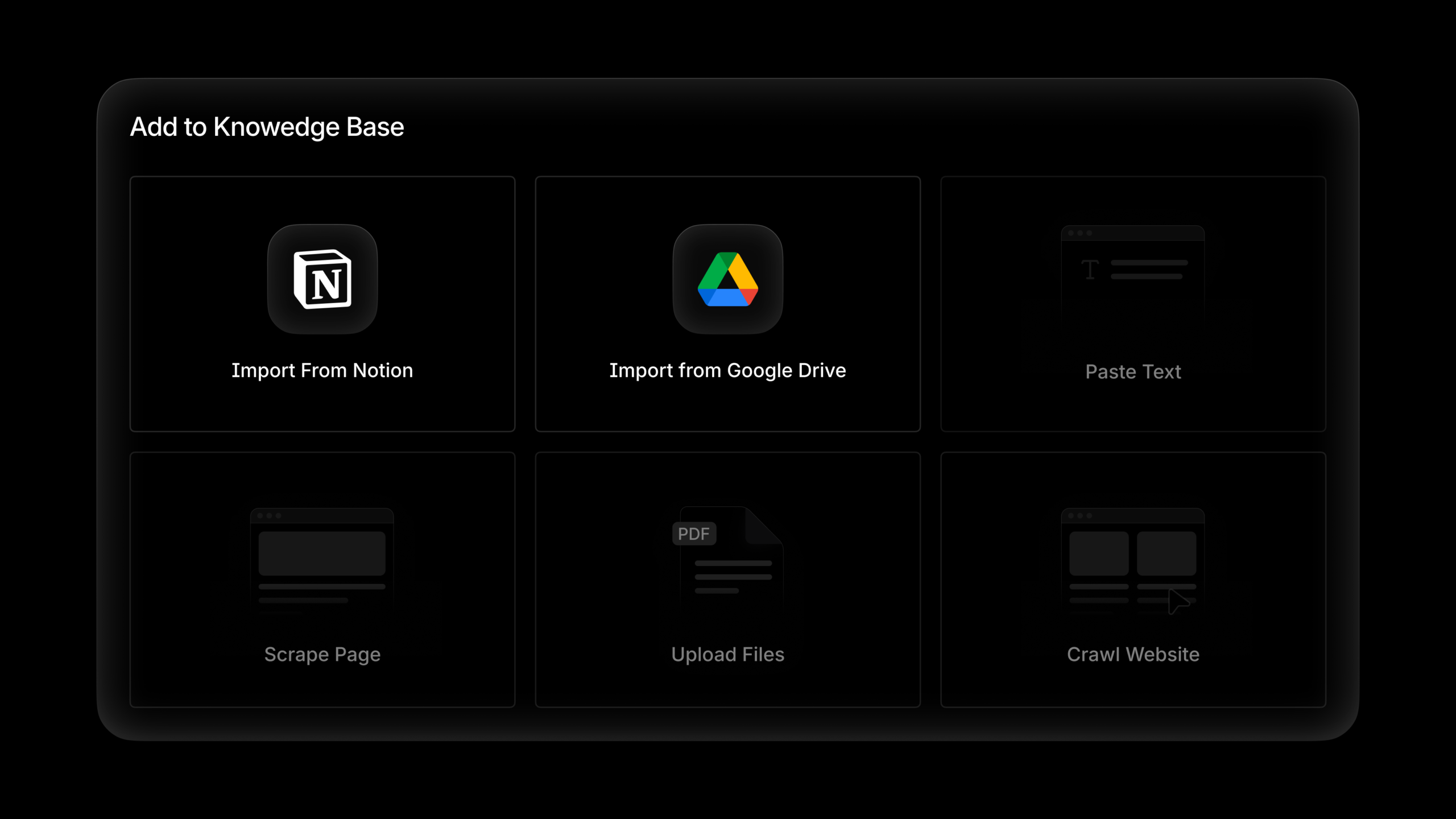
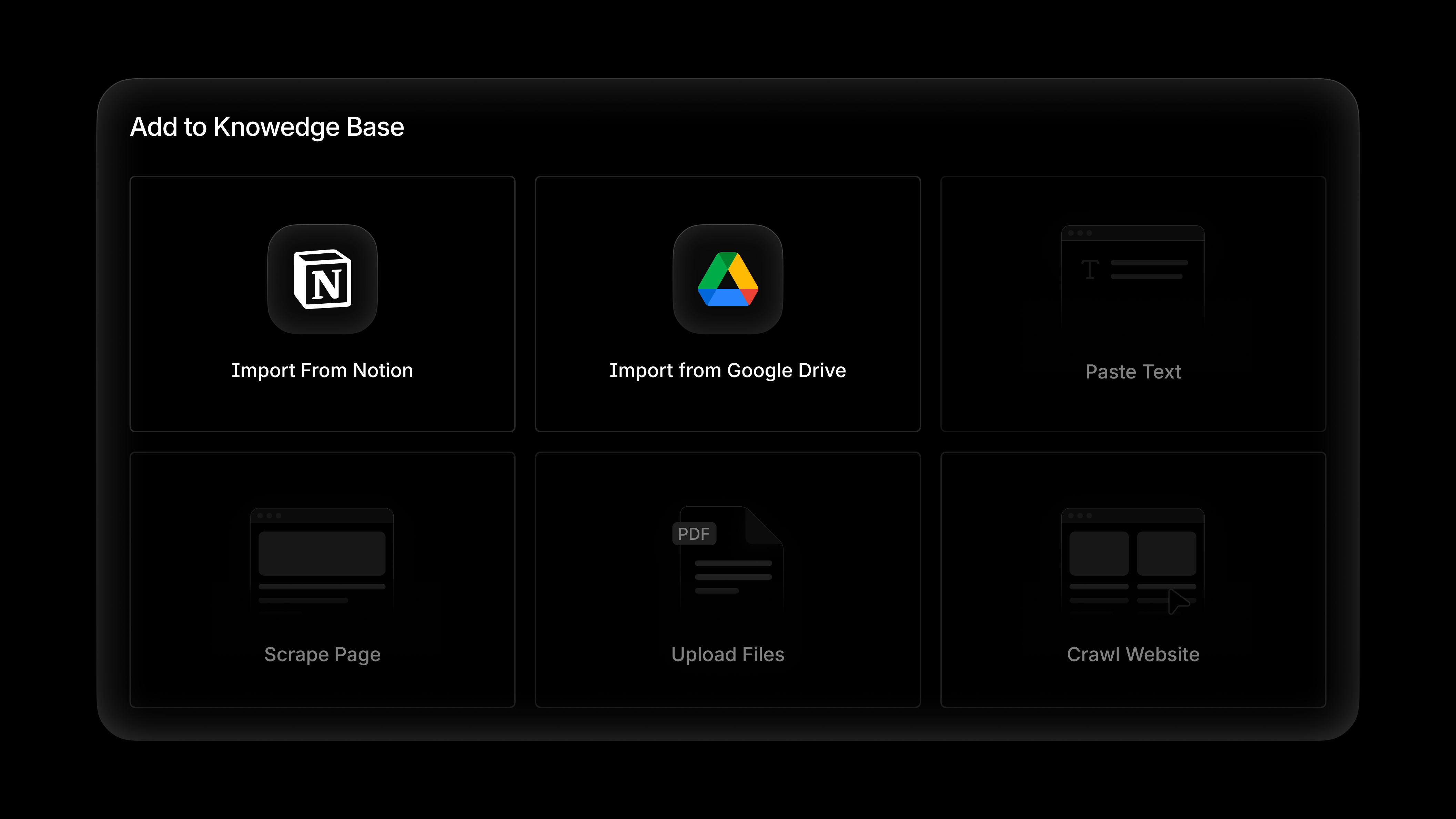
    As I delve deeper into enhancing my workflow, I realize that effective agents thrive on comprehensive context. Thanks to Profound’s Knowledge Bases, I empower my agents with my unique brand voice, product intricacies, and messaging guidelines.

    Now, I’m excited to share that integrating these knowledge bases with Notion and Google Drive is easier than ever. This integration allows me to streamline my processes and maintain consistency.


    Inspired by this post on Try Profound Blog.


    crushpress.ai community screenshot
  • B2B SaaS Acquisition Channels and Conversion Benchmarks

    B2B SaaS Acquisition Channels and Conversion Benchmarks

    You have budget for another acquisition channel, but your dashboard cannot tell you whether growth needs more traffic, better traffic, or a landing page that converts more of the demand you already have. Choosing SEO because it compounds or PPC because it starts quickly will not solve that measurement problem.

    You need to give each channel a specific job, compare conversion rates only across similar pages and calls to action, and follow every conversion far enough to see whether it becomes pipeline. Here is how to make that decision without turning a single benchmark into a forecast it was never meant to be.

    Choose the channel that removes your current constraint

    Transparent pipes carrying glowing spheres reveal a narrow valve that restricts flow through an acquisition system.

    There is no universally best B2B SaaS acquisition channel. There is only a best fit for the constraint currently slowing your funnel. A company with little qualified search traffic has a different problem from one generating demo requests that sales rejects.

    The practical trade-offs among SEO, PPC, LinkedIn advertising, account-based marketing, email, trade shows, public speaking, and webinars differ in speed, cost, targeting, and the kind of trust they can create. Treating all of them as interchangeable lead sources hides those differences.

    ChannelUse it toConstraint you acceptWhat to measure first
    SEOBuild durable discovery around problems and searches your buyers already haveResults take time and require consistent, intent-matched content from a capable teamQualified organic visits, primary landing-page conversions, and resulting pipeline
    PPC and SEMCapture high-intent demand quickly or test a market and offerTraffic remains spend-dependent, and ongoing cost can be highSearch-term quality, qualified conversions, and cost per qualified opportunity
    LinkedIn advertisingReach professional audiences using role, company, or industry targetingPaid campaigns can return less than organic strategiesTarget-audience visits, qualified leads, and account-level progression
    Account-based marketingConcentrate sales and marketing effort on a limited set of valuable prospectsConcentrated effort creates concentrated risk, even though a major account can justify itEngaged target accounts, meetings, opportunities, and account progression
    Email marketingNurture known contacts and move existing interest toward a next stepA useful, permission-based list takes time to buildQualified next-step conversions and pipeline influenced by the sequence
    Trade showsCreate direct conversations and gauge interest in personAttendance, travel, and presence are costly, while competing vendors make attention scarceQualified follow-ups, meetings, opportunities, and customers from event cohorts
    Public speakingBuild authority and generate warmer conversations around expertiseThe channel depends on a credible speaker and often involves travel expenseAttendee follow-ups, qualified meetings, and influenced opportunities
    WebinarsEducate prospects and build trust without an in-person eventPreparation still takes time, and the host must hold attentionAttendance quality, next-step conversions, and influenced opportunities

    Email illustrates why channel labels matter. If someone first found you through SEO, later attended a webinar, and finally booked a demo from an email, email completed the conversion but did not create the original demand. Calling every email conversion a new acquisition will overstate email and erase the channels that built the audience.

    Before funding a channel, write down four decisions:

    1. Name the constraint. Is the problem insufficient qualified reach, poor landing-page conversion, weak lead quality, slow nurture, or limited access to valuable accounts?
    2. Define the channel’s job. Decide whether it should create demand, capture existing demand, nurture known leads, or accelerate specific accounts.
    3. Name the business outcome. Choose the qualified lead, opportunity, account-stage change, or customer event that will determine whether the channel worked.
    4. Set the decision rule before launch. Record what would make you continue, revise, expand, or stop the campaign. Base that rule on your economics and sales capacity, not on a generic click-through rate.

    This prevents a common budgeting error: asking a slow, compounding channel to prove itself on the same timetable as paid search, or asking a nurture channel to produce net-new demand it never received.

    Use the 1.1% SaaS benchmark as a diagnostic, not a quota

    The available industry benchmark puts the B2B SaaS landing-page conversion rate at 1.1%. That is a useful reference point, but it is not a promise about your site, channel, offer, or sales cycle.

    The underlying pool covered 83 companies in 27 industries from 2019 through 2026. Every included company used SEO, while 38 also used content creation, email marketing, or LinkedIn marketing. Home pages, About pages, and other general informational pages were excluded. Those boundaries matter: the 1.1% figure should not be presented as a benchmark for every SaaS website visit.

    There is another important boundary. The B2B SaaS rate is an industry-level figure. The page-type rates below cover the broader B2B pool. They are not SaaS-by-page-type cross-tabulations, so you should not claim that every SaaS customer-type page ought to convert at 3.5%.

    Benchmark scopePage typeConversion rateHow to interpret it
    B2B SaaS industry benchmarkIncluded landing pages1.1%A directional reference for comparable SaaS landing-page traffic, not a sitewide target
    Broader B2B page-type benchmarkCustomer type3.5%Pages written for a well-defined client profile align closely with a specific audience
    Broader B2B page-type benchmarkApplication3.1%These pages connect a product or service to a problem the visitor needs solved
    Broader B2B page-type benchmarkProduct2.9%Product pages often receive more transactional intent
    Broader B2B page-type benchmarkService2.7%Service-page visitors are often further along in their buying journey
    Broader B2B page-type benchmarkIndustry1.8%These pages must show both sector understanding and relevant expertise
    Broader B2B page-type benchmarkLocation1.1%Generic or duplicated location copy can weaken relevance and conversion

    A conversion also needs a precise definition. The benchmark can include contact forms, demo requests, gated downloads, newsletter subscriptions, purchases, or another action tied to the page’s call to action. A newsletter subscriber and a completed demo request are not economically equivalent, even if both appear as conversions in analytics.

    Use the benchmark in this order:

    1. Define one primary conversion for the page. Keep video plays, secondary link clicks, and other engagement events separate from the action that advances the buying process.
    2. Segment before comparing. Break performance out by channel, campaign, page type, audience, and call to action. A sitewide average can conceal a strong product page and a weak location page.
    3. Compare like with like. Evaluate demo pages against demo pages and educational offers against educational offers. Do not use a lower-friction newsletter rate to judge a demo page.
    4. Check your own baseline. Your previous comparable cohorts tell you whether a change improved performance under your actual traffic mix.
    5. Follow the conversion downstream. A higher form-completion rate is not an improvement if qualification, opportunity creation, or customer conversion deteriorates.

    A sitewide conversion rate can even decline while acquisition improves. Adding more relevant educational traffic changes the denominator before those visitors are ready to request a demo. That is not a reason to ignore conversion; it is a reason to separate page intent and cohort maturity instead of demanding one blended number.

    Match every channel to the right page and call to action

    The landing page is part of the acquisition channel, not a handoff that happens after it. If an ad promises a solution for finance teams but sends visitors to a generic home page, the campaign has created its own conversion problem.

    Send demand-capture traffic to the most specific relevant page

    High-intent SEO and PPC traffic should land on the product, service, application, customer-type, industry, or location page that best matches the query and promise. Preserve that message from the search result or ad through the headline, supporting copy, proof, and primary call to action.

    • Product or service intent: lead with the problem solved, the relevant capability, and a suitable evaluation step.
    • Application intent: show how the product handles the named use case rather than repeating a generic feature list.
    • Customer-type intent: address the role or company profile directly, including the outcomes, objections, and proof that matter to that audience.
    • Industry intent: demonstrate sector knowledge with relevant language and evidence; changing only the industry name is not enough.
    • Location intent: explain why location changes delivery, coverage, compliance, availability, or service. If geography makes no meaningful difference, multiplying near-duplicate pages is unlikely to improve the visitor’s decision.

    Not every organic visitor is ready for a demo. Educational SEO pages can offer a lower-friction next step, while transactional pages ask for a product conversation. Record those actions separately so the easier conversion does not make the channel look more commercially productive than it is.

    Give targeted and relationship channels a continuous next step

    LinkedIn advertising and ABM should carry audience specificity onto the destination page. If the targeting is built around a particular customer type or industry, the page should speak to that same group. Sending a narrow audience to broad copy discards the main advantage of the channel.

    Trade shows, speaking engagements, webinars, and email need continuity of topic rather than a generic follow-up. The destination should remind the visitor what they engaged with, add the promised evidence or resource, and offer a next step consistent with their level of intent. A webinar attendee who requested education should not be treated as if they submitted a demo request.

    Remove friction after you confirm message match

    Form optimization cannot rescue irrelevant traffic or a mismatched offer. First confirm that the audience, promise, page, and call to action align. Then remove avoidable friction:

    Do not remove fields merely to produce more submissions. If sales needs a field to identify fit or route the lead, deleting it can move work downstream and inflate an unqualified conversion rate. Test the field against qualified pipeline, not form completions alone.

    Build a scorecard that connects acquisition to revenue

    Color-coded paths trace tokens from four acquisition gateways through conversion and qualification stages to an illuminated revenue vault.

    A landing-page conversion rate tells you where a visitor acted. It does not tell you whether the action was qualified, whether sales accepted it, or whether the channel created a customer. Your scorecard needs to preserve that chain.

    Funnel measureDefinitionWhat a weak result usually tells you to inspect
    Eligible landing-page visitsRelevant visits that had a genuine opportunity to complete the page’s primary actionReach, targeting, search demand, tracking exclusions, and traffic quality
    Visit-to-primary-conversion ratePrimary conversions divided by eligible landing-page visitsMessage match, offer, proof, form friction, page type, and call-to-action clarity
    Conversion-to-qualified-lead rateQualified leads divided by primary conversionsTargeting, qualification criteria, form design, and whether the conversion is too easy or too broad
    Qualified-lead-to-opportunity rateCreated opportunities divided by qualified leadsHandoff speed, buyer readiness, sales follow-up, and offer-to-market fit
    Opportunity-to-customer rateNew customers divided by opportunitiesCommercial fit, evaluation process, competition, pricing, and sales execution
    Cost per qualified opportunityFull channel cost divided by qualified opportunitiesWhether reach and conversion translate into economically useful pipeline
    Customer acquisition costApplicable acquisition cost divided by new customersWhether the complete channel economics support continued investment
    Time to resultElapsed time from cohort entry or channel investment to the chosen business outcomeWhether you are comparing channels over an appropriate decision window

    For every primary conversion, retain the channel, campaign, landing page, page type, call to action, and form version. Connect that record to lead status, opportunity status, customer status, and the relevant dates. Without those dimensions, a redesign, new offer, or change in traffic mix can alter the blended rate without showing you why.

    Keep first-touch acquisition and converting touch separate. First touch helps you understand where demand entered the measurable journey. Converting touch shows what prompted the recorded action. Assisted interactions explain how channels such as email, webinars, and retargeting helped between those points. None of those views is a complete truth by itself.

    Use the scorecard as a diagnostic sequence:

    • Qualified visits are scarce, but comparable pages convert acceptably: work on acquisition reach and targeting.
    • Qualified visits are present, but the primary conversion rate is weak: inspect message continuity, page type, proof, form friction, and the call to action.
    • Primary conversions are healthy, but qualification is weak: tighten the audience, promise, conversion definition, or qualification step.
    • Qualified leads are healthy, but opportunities are weak: inspect readiness, routing, follow-up, and the sales handoff before buying more traffic.
    • Opportunities are healthy, but customers are scarce: the main constraint is now downstream of acquisition.

    This sequence protects you from paying to amplify the wrong stage. More traffic into a weak page produces more leakage. More form fills with poor qualification create more sales work. A better headline metric is only valuable when the improvement survives the rest of the funnel.

    Key takeaways

    • Choose a channel for a defined job: demand creation, demand capture, nurture, or account acceleration.
    • The 1.1% B2B SaaS landing-page benchmark is a directional reference with a specific sample and scope, not a forecast for every SaaS page.
    • Customer-type, application, product, service, industry, and location benchmarks describe the broader B2B pool; they are not SaaS-specific page targets.
    • Compare conversion rates only when page intent, traffic source, audience, and call to action are genuinely comparable.
    • Optimize forms and page elements against qualified pipeline, not raw submissions.
    • Connect channel, page, conversion, qualification, opportunity, customer, cost, and elapsed time before reallocating budget.

    Start with your most recent complete acquisition cohort. Put each channel beside its intended job, destination page, primary conversion, qualified opportunities, customers, cost, and time to result. If you cannot trace that path yet, fix the measurement before changing the budget. Once the path is visible, fund the channel that removes the actual constraint and repair the stage where qualified demand is being lost.

    References

  • ChatGPT Self-Serve Ads: A Practical Launch Framework

    ChatGPT Self-Serve Ads: A Practical Launch Framework

    If you have been waiting for a practical way to test ChatGPT advertising without entering a large, managed pilot, self-serve buying changes the conversation. The important question is no longer whether the channel sounds interesting. It is whether you can run a controlled test without mistaking novelty, clicks, or platform-reported conversions for profitable growth.

    You need a defined conversion, a defensible cost ceiling, a landing page that matches the ad, and tracking that reaches your order system or CRM. Put those pieces in place before you request access or allocate budget, and ChatGPT ads can be evaluated like a performance channel rather than treated as an open-ended experiment.

    What self-serve buying changes, and what it does not

    The announced rollout moves ChatGPT advertising beyond a tightly controlled pilot. Advertisers can pursue inventory through agency and technology partners or use a beta Ads Manager rolling out in the United States. The direct interface provides control over budgets, bids, creative uploads, and performance tracking.

    That lowers the operational barrier for smaller businesses and teams that could not justify a high-touch engagement. It does not mean access is universal. The product remains in beta, so confirm that your account and market are eligible before you build a launch plan around it.

    The addition of cost-per-click bidding is the most consequential change for performance marketers. The initiative began with CPM-based buying, where cost is tied to impressions. CPC lets you bid around visits instead. That is useful because ChatGPT interactions can occur while people are exploring a problem, comparing approaches, or moving toward a decision.

    A click is still an intermediate event. CPC is not CPA: paying for a click does not mean you are paying only when a sale, signup, or qualified lead occurs. You still own everything between the click and the business outcome, including page relevance, offer strength, conversion friction, follow-up, and measurement.

    Use exploratory, comparative, and decision-ready intent as a creative planning lens:

    • Exploratory intent: Explain the problem and the practical outcome your offer supports. Avoid demanding a large commitment before the visitor understands the value.
    • Comparative intent: State the relevant difference, qualification, or tradeoff plainly. Give the visitor enough evidence to judge fit.
    • Decision-ready intent: Make the offer, next step, price condition, or eligibility requirement easy to find.

    This is a messaging framework, not a claim that Ads Manager exposes individual prompts, conversation targeting, or query-level reports. OpenAI’s measurement model is aggregated, and advertisers do not receive access to individual conversations. Do not design targeting, attribution, or sales workflows that depend on identifying what a particular person told ChatGPT.

    Direct access is not the only route. Agency and technology relationships include WPP, Publicis Groupe, Criteo, and Adobe. If you buy through a partner, ask who owns the account, which bidding controls you receive, how conversion data is implemented, what reporting can be exported, how frequently it is delivered, and which fees sit outside media spend. A familiar partner workflow is useful only if you can still audit the campaign’s economics.

    Keep paid ChatGPT campaigns separate from organic AI visibility work. Ads buy exposure and traffic; AEO and GEO aim to improve how machines understand, retrieve, cite, and represent your content. Do not use paid click-through or conversion data as proof that organic ChatGPT visibility improved. Label the channels separately in analytics so paid traffic does not distort your AI-search reporting.

    Decide whether your business is ready to test

    Self-serve access makes launching easier, but it cannot supply the business logic that determines whether a campaign should run. Use the following readiness gate before committing spend:

    • You can name the primary conversion. Choose the event that represents value: a purchase, signup, or lead. If you optimize for a shallow action, such as a form start, keep the true business outcome visible in your reporting.
    • You know what that conversion is worth. Establish an acceptable acquisition cost from contribution margin, lead quality, close rate, retention assumptions, and fulfillment cost. Do not copy a target from another advertising channel without checking whether the traffic and sales process are comparable.
    • The destination can fulfill the ad’s promise. The landing page should repeat the core offer, explain who it is for, show relevant evidence, and provide the next step without forcing the visitor to reconstruct the argument.
    • You can connect ad activity to business records. Ads Manager reporting should be reconciled with web analytics and the system that records revenue or lead quality. Platform conversions alone cannot tell you whether a lead was qualified, duplicated, refunded, or closed.
    • You can afford an inconclusive test. A beta channel may not produce enough evidence to support a scaling decision. Treat the approved test budget as money at risk, not as revenue you expect the campaign to return on a fixed schedule.

    For a performance campaign, calculate a planning ceiling before choosing a bid:

    Maximum break-even CPC = acceptable cost per conversion multiplied by the expected landing-page conversion rate.

    Use the conversion rate from genuinely comparable traffic when you have it. If you do not, model a conservative range rather than borrowing the best rate from branded search, email, or returning visitors. The result is a break-even boundary, not an automatic bid recommendation. Your actual bid still has to reflect available controls, delivery, competition, and the evidence generated by the campaign.

    Lead-generation teams need an additional check. A campaign can appear efficient when it produces inexpensive forms but fail when sales rejects the leads. Define what makes a lead qualified, ensure the CRM records that status, and decide whether the beta’s Conversions API can receive the deeper outcome you want to optimize toward. If it cannot, use the deeper event for business evaluation even if campaign optimization must rely on an earlier event.

    Wait to launch if nobody owns the landing page, conversion implementation, or lead follow-up. Buying traffic before those responsibilities are assigned creates a predictable dispute: the ad platform shows activity, analytics shows something different, and the sales team sees outcomes that neither report explains.

    Build the first campaign around a falsifiable hypothesis

    A tabletop testing setup splits one ad concept into two parallel audience and landing-page paths with a single visual variable changed.

    Your first campaign should answer a narrow business question. Write the hypothesis before opening Ads Manager:

    For people in a defined decision state, this offer and message will produce this conversion at or below this acquisition-cost ceiling.

    That sentence prevents several common mistakes. It keeps brand awareness from being judged by last-click sales, stops a lead campaign from optimizing toward unqualified form fills, and gives you a reason to pause when the economics do not work.

    1. Choose a single primary outcome. Purchases, signups, and leads require different pages, event definitions, and follow-up. Pick the event that matches the offer instead of mixing several goals into one test.
    2. Define the decision state. Decide whether the message is helping someone understand a problem, compare alternatives, or act. Use that decision in your creative brief and landing-page structure. Apply only targeting options that are actually available in your beta account.
    3. Write a specific promise. State the result, the relevant qualifier, and the next step. Avoid copy that merely announces your brand or repeats broad AI terminology. The visitor should know why the click is worth making.
    4. Prepare controlled creative variants. Vary the claim, proof, or call to action separately so you can interpret the result. If every element changes at once, a winning variation does not tell you what to retain.
    5. Build message continuity after the click. The landing page headline should resolve the promise made in the ad. Put the decision-critical facts, constraints, evidence, and action on the page rather than hiding them behind generic navigation.
    6. Set stop and scale rules. Pause immediately if conversion tracking fails. Stop and diagnose when the approved test budget is exhausted without evidence that supports the hypothesis. Scale only when verified outcomes remain within the acquisition-cost ceiling.

    Do not invent a universal testing threshold. The amount of evidence you need depends on conversion frequency, normal sales-cycle length, the cost of a false positive, and how much variation exists in lead or order value. Record the threshold you will use before seeing the result so a promising-looking dashboard does not move the goalposts.

    Use a stable campaign naming and URL-tagging convention from the start. A workable UTM pattern is utm_source=chatgpt, utm_medium=paid_ai, a campaign value tied to the offer, and a content value tied to the creative variant. Record the exact values in the campaign brief. Consistency matters more than the label itself because it lets analytics, CRM, and finance records join the same test.

    Your SEO and GEO work should support clarity on the destination page without being confused with ad configuration. Use visible, accurate facts and structured data that matches the page. JSON-LD can help machines interpret supported entities and attributes, but it is not a ChatGPT ad-targeting control, conversion tag, or substitute for persuasive page content.

    Make measurement trustworthy before optimizing bids

    An illuminated tracking path connects an ad interaction to a landing page, server, customer record, and verified order package.

    ChatGPT advertising is adding pixel-based tracking and a Conversions API for actions such as purchases, signups, and leads. The pixel can capture supported browser-side events. A Conversions API can pass supported events from a server, commerce system, or CRM. Check the beta documentation available in your account before implementation because event fields and diagnostics may evolve.

    If you use both methods, verify how duplicate events are handled before sending the same conversion through each path. Two tracking methods should improve resilience, not turn one order into multiple conversions. Test event names, identifiers, values, currency fields, timestamps, and final status against the platform’s current specification.

    Build the measurement chain from the business outcome backward:

    • Business system: The order platform or CRM records revenue, qualification, cancellation, refund, or closed status.
    • Analytics: The session retains the expected campaign parameters and records the relevant onsite actions.
    • Conversion integration: The pixel or Conversions API sends the supported event with the correct value and status.
    • Ads Manager: The campaign reports clicks, spend, and attributed conversions using the attribution settings shown in the account.

    Run a validation pass before meaningful spend begins. Confirm that the landing URL works through every redirect, UTM parameters survive navigation, consent behavior is understood, the intended event fires only when its real condition is met, and the backend stores the campaign identifiers you need. Save evidence of the test so later discrepancies can be compared with a known-good implementation.

    Expect the systems to disagree at times. Attribution windows, consent choices, browser restrictions, server timing, duplicate handling, and later changes to an order or lead can all create differences. Reconcile the direction and magnitude of the data rather than forcing a false impression of perfect identity. The privacy model also means you should not expect a conversation-level customer trail: reporting is aggregated, and individual ChatGPT conversations are not exposed to advertisers.

    Read early results in a fixed order: tracking integrity, visitor behavior, conversion quality, and only then media efficiency. The pattern in the data tells you where to look first:

    Observed patternFirst interpretation to testAction
    Ads Manager records clicks, but analytics sees few matching sessionsThe click path, redirects, campaign parameters, consent handling, or analytics filters may be breaking attributionValidate the final URL and session tracking before changing bids or creative
    Analytics and the backend record completions, but Ads Manager records few conversionsThe pixel or Conversions API event may be missing, malformed, delayed, or duplicated incorrectlyRepair and retest the conversion integration before judging campaign performance
    Clicks arrive, but visitors do not reach meaningful onsite actionsThe creative may be attracting curiosity, or the page may not continue the ad’s promiseTighten the qualification in the message and remove landing-page mismatch
    Platform conversions look efficient, but sales rejects the leadsThe optimized event is too shallow to represent business valueReport qualified outcomes from the CRM and use a deeper supported event when possible
    Verified conversions remain within the cost ceilingThe campaign is a candidate for controlled expansionIncrease exposure gradually and keep the offer, page, and measurement stable while evaluating the change
    Delivery remains limitedCampaign settings, bid or budget constraints, access, or available inventory may be limiting the testCheck account diagnostics and settings before concluding that demand is absent

    Do not respond to weak conversion economics by raising the bid first. Confirm that measurement works, inspect the promise-to-page transition, and check whether the recorded conversion represents real value. Increase bids or budgets only when account data indicates delivery is constrained and the verified acquisition economics can absorb more traffic.

    Document every material change with its effective time, including bid, budget, creative, destination, event definition, and attribution setting. If several variables change together, the next reporting period may look different without telling you why.

    Key takeaways

    • ChatGPT’s self-serve Ads Manager is a U.S. beta, so verify access and current account controls before planning a launch.
    • CPC bidding makes traffic easier to buy and evaluate, but a paid click is not a sale, qualified lead, or profitable customer.
    • Write the campaign hypothesis, conversion definition, cost ceiling, test budget, and stop rule before spend begins.
    • Use a matching landing page and consistent campaign parameters so Ads Manager, analytics, and backend outcomes can be reconciled.
    • Pixel and Conversions API tracking improve measurement, but data is aggregated and does not expose individual conversations.
    • Keep paid ChatGPT performance separate from organic AEO and GEO visibility. Neither should be used as proof that the other improved.

    Your next move is to write the hypothesis and acquisition-cost ceiling, then trace the conversion from the landing page to the final business record. If either remains undefined, keep the budget closed. If both survive that check, you have the basis for a controlled beta test and a clear decision when the results arrive.

    References

  • Google’s UCP Checkout Revolutionizes Search Shopping

    Google’s UCP Checkout Revolutionizes Search Shopping

    I find it fascinating that Google’s Universal Commerce Protocol (UCP), which was initially limited to AI Mode, is now expanding into regular search results. It’s not just a fleeting trend; some retailers have already begun integrating this technology into their listing pages, making our online shopping experience even more intuitive.

    Earlier this year, Google rolled out UCP for AI-agents to facilitate direct purchases from search results. It first launched exclusively within Google’s AI Mode but now, we’re seeing it implemented in Google’s main search results for retailers who support UCP.

    Discovering what the UCP checkout looks like was made easier thanks to a post by Brodie Clark. He shared a screenshot showing how Wayfair’s listings on Google Search now feature a UCP-powered ‘Buy’ button. This button is a game-changer because it allows purchases directly from Google’s interface without navigating to Wayfair’s website.

    The UCP protocol is paving the way for seamless transactions by establishing a common language for AI agents and commerce systems. No longer do we have to worry about bespoke integrations across different platforms.

    ```json
{
  "alt": "Google search results for striped bed sheet set, featuring various sheet options and prices.",
  "caption": "Exploring online options for striped bed sheet sets? Check out this search showcasing a variety of styles and prices to suit every bedroom decor.",
  "description": "This image shows a Google search result page for 'striped bed sheet set'. Various bed sheets including options from Wayfair, IKEA, and Eddie Bauer are displayed, with prices ranging from $15.99 to $239.00. A highlighted product is the 100% Cotton Sateen Striped Sheet Set from Wayfair in black. The image also features browser and interface elements like search tabs and filters, ideal for navigating online shopping efficiently. Keywords: striped bed sheets, Google search, online shopping, sheet set prices."
}
```

    Collaboratively developed with big names like Shopify, Etsy, Wayfair, and Target, UCP aligns with existing standards, such as Agent2Agent and Agent Payments Protocols, creating a more cohesive digital commerce space.

    What really excites me is the potential for profit growth for retailers who embrace this technology. Although Wayfair might miss out on direct site traffic for specific searches, their affiliation with Google through UCP can still result in conversions.

    While it’s clear that not everyone will bypass the traditional shopping journey, as many of us still prefer exploring products on the retailer’s site, the option to ‘Buy’ directly adds a layer of convenience. It’s definitely something worth monitoring as its prevalence in search results increases.


    Inspired by this post on Search Engine Land.


    crushpress.ai community screenshot
  • How to Test Emerging Ad Platforms With Better Measurement

    How to Test Emerging Ad Platforms With Better Measurement

    You have access to a promising new ad placement, the first click-through rates look excellent, and someone wants to know whether to increase the budget. That is exactly when measurement discipline tends to slip. A strong dashboard number feels like an answer even when it only describes the first step in the journey.

    Your real task is to determine whether the platform creates valuable outcomes that would not otherwise happen, whether those outcomes remain economical as the test expands, and whether the available inventory can absorb more spend. This framework helps you answer those questions without expecting one attribution model to do every job.

    Separate channel discovery from budget proof

    An emerging platform can be interesting before it is investable. That distinction matters because discovery metrics and budget metrics answer different questions.

    Click-through rate tells you whether people respond to a placement. It does not tell you whether the resulting customers are profitable, whether the ad caused those customers to act, or whether similar performance will survive broader distribution. This is especially important for conversational advertising, where early engagement has been strong but inventory and testing remain limited.

    Run the test as a sequence of decisions. Each decision requires different evidence:

    DecisionEvidence to inspectWhat it does not prove
    Does the placement attract attention?Impressions, clicks, click-through rate, and engagement by query or audience segmentThat the attention creates business value
    Does the traffic produce the right outcome?Purchases, qualified leads, subscriptions, revenue, lead quality, and downstream completionThat the advertising caused the outcome
    Is the outcome incremental?Holdout testing, geo experimentation, or another credible counterfactualThat the same return will persist at a larger spend level
    Can the platform scale efficiently?Available inventory, spend delivery, reach, frequency, conversion quality, and cost as exposure expandsThat it improves the entire media portfolio
    Should the portfolio budget change?Experiment-calibrated media mix modeling alongside commercial constraintsThat every individual conversion can be assigned to one touchpoint

    This separation protects you from two common mistakes. The first is rejecting a potentially useful channel because it has not yet accumulated enough evidence for a permanent budget allocation. The second is scaling it because a high early click-through rate has been mistaken for incremental profit.

    Label the stage of the evidence in every internal update. Use plain terms such as discovery signal, conversion signal, incremental evidence, and scale evidence. If the team only has a discovery signal, say so. That small piece of language prevents a preliminary result from hardening into a forecast.

    Write the measurement contract before the first impression

    Hands arrange matching campaign materials into separate test and control areas on a measurement planning table.

    A measurement plan should be a decision contract, not a list of every metric the platform can export. Write it before launch so the team cannot redefine success after seeing the results.

    1. Name one primary business outcome. Choose the event closest to value that the test can credibly observe: a completed purchase, a qualified opportunity, a subscription, or another commercially meaningful result. Keep clicks and engagement as diagnostics unless attention itself is the campaign objective.
    2. State the causal question. Write what you are trying to learn in counterfactual terms: how many desired outcomes occurred because the ads ran, beyond what would have happened without them? This wording exposes the limit of ordinary attribution before anyone treats credited conversions as incremental conversions.
    3. Define the test unit. Decide whether results will be examined by query theme, audience, geography, product, offer, creative, or another controlled unit. The unit must match the mechanism you expect to drive performance.
    4. Set the comparison rules. Document the conversion definition, attribution window, revenue basis, treatment of returns or cancellations, and handling of duplicate records. Use the same definitions for the emerging platform and the benchmark channel.
    5. Choose guardrails. Track conversion quality, acquisition cost, spend delivery, reach concentration, and any operational consequence such as low-quality leads. A channel that creates more form submissions but overwhelms sales with poor prospects is not passing the business test.
    6. Predeclare the verdicts. Specify what evidence would justify scaling, continuing the test, pausing for an instrumentation repair, or stopping. Your thresholds should come from the economics of your own business rather than a generic platform benchmark.

    The contract also needs a data lineage section. For every result, record where the event originates, how it is passed, which identifier joins it to campaign data, and which system is authoritative when two systems disagree. If a purchase appears in the ad platform but not in the commerce system, the team should already know which record governs the decision.

    Do not postpone this work until reporting begins. Missing identifiers and inconsistent event definitions cannot always be repaired after exposure has occurred. If the primary outcome is not reliably captured, pause the test and fix the measurement path before buying more traffic. Otherwise, additional spend produces a larger dataset without producing a better answer.

    Read early AI ad performance without fooling yourself

    Conversational ads may appear beside a response at the moment a user is expressing a need. That context can make the placement feel more relevant than an interruptive format. It also creates several reasons for early results to look unusually strong.

    Intent mix is the first reason. Prompts about Mother’s Day have been observed to trigger ads about three times more often than the overall average. A test concentrated in gift-seeking conversations is not representative of every prompt, product category, or stage of the buyer journey. Report results by intent class instead of averaging all conversations into one channel-wide figure.

    Format novelty is the second reason. People may inspect a new placement because they have not seen it before. You cannot prove that novelty caused the clicks from an initial campaign, but you can watch for the pattern. Repeat the test across cohorts or campaign waves, keep the offer and conversion definition stable, and check whether engagement and downstream quality hold as the format becomes more familiar.

    Inventory selection is the third reason. Limited supply can concentrate delivery in the prompts, advertisers, or use cases most likely to perform. Expansion may introduce weaker contexts, more competition, and different pricing. Track how much of the planned budget is actually delivered, where impressions cluster, whether new query categories enter the mix, and how acquisition cost changes as spend rises. A channel that cannot spend the approved amount is not yet a scalable acquisition engine, even if its small pool of impressions performs well.

    The comparison channel matters too. Early conversational-ad click-through rates have exceeded display and podcast benchmarks, but that comparison describes engagement, not equivalent economics. Search, paid social, display, podcast advertising, and conversational placements differ in intent, buying method, inventory, and the role they play in a journey. Compare them on the same final outcome and accounting basis before moving budget.

    At the review meeting, force the result into one of four decisions:

    • Scale: the primary business outcome meets the predeclared requirement, the evidence supports incrementality, data quality is intact, and the platform has enough inventory to test a higher spend level.
    • Continue testing: engagement and conversion quality are promising, but incrementality, pricing stability, or inventory depth remains uncertain. Name the next uncertainty and design the next test specifically around it.
    • Pause and repair: event loss, inconsistent definitions, broken joins, or missing downstream outcomes make the result unreliable. Fix the data path before resuming.
    • Stop: the test has enough reliable evidence to show that the business outcome does not meet your requirement, or repeated expansion causes economics or conversion quality to deteriorate beyond the accepted limit.

    “Promising” is not a fifth verdict. It is a description that must be followed by a specific next decision.

    Build an evidence ladder instead of trusting one model

    An abstract ladder of measurement methods rises from raw signals to a verified outcome, with several evidence paths converging near the top.

    No single measurement method can tell you whether an ad was served correctly, influenced an individual journey, created incremental demand, and deserves a larger share of the portfolio. Use a ladder in which each layer answers a narrower question and checks the layers below it.

    Layer 1: instrumentation and platform diagnostics

    Start with clean event collection. Connect ad delivery, site or app behavior, commerce results, and CRM outcomes. Preserve campaign identifiers where possible, deduplicate events, and reconcile totals against the system that records the actual transaction or qualified lead.

    The direction of Google’s tooling shows how central this plumbing has become. Data Manager is being expanded with a map-based view of connections involving systems such as BigQuery, HubSpot, and Shopify, while Google tag changes are intended to extend existing setups without requiring additional code. The useful principle is broader than any vendor: make the flow of data visible enough that a marketer can locate a missing connection before it distorts a campaign decision.

    Platform reports remain useful at this layer. They help you diagnose delivery, creative response, query mix, and conversion paths. Treat attributed conversions as claims that need reconciliation, not as automatic proof of causality.

    Layer 2: controlled experiments

    An experiment estimates the counterfactual that ordinary attribution cannot observe. A holdout keeps an eligible group from receiving the treatment. A geo experiment varies advertising across comparable regions and evaluates the difference in business outcomes. Neither method is a decorative validation step. It is the evidence used to decide how much of the platform-reported performance is genuinely incremental.

    Google’s Meridian GeoX reflects this shift toward causal validation. It is built on an open-source framework and connects geo experimentation with the broader Meridian media mix modeling system. For your team, the practical lesson is to plan experimentation and portfolio modeling together. Experimental results can challenge an attribution narrative and provide a firmer basis for calibrating broader budget models.

    Choose an experimental design only when the platform and your market provide a defensible control. If exposure leaks heavily between groups, the regions behave differently for unrelated reasons, or the outcome volume is too sparse to distinguish change from noise, do not dress the result up as causal proof. Document the limitation and continue at the lower rung of the evidence ladder.

    Layer 3: media mix modeling

    Media mix modeling examines aggregated changes in spend and outcomes across channels and time. It is suited to portfolio questions: how channels work together, how budget shifts may affect total results, and where marginal investment may be more productive. It does not need to identify a single ad as the exclusive cause of a single purchase.

    An emerging channel may initially be too small or too stable in spend for a portfolio model to isolate reliably. That is not a reason to invent precision. Use controlled testing to establish an initial incremental read, create meaningful and documented variation when expanding the channel, and add it to the model when the underlying data can support the distinction.

    Google is also working to reduce the operational burden of this layer through Meridian Studio, a Google Cloud-powered environment for building, customizing, and scaling media mix models. Easier tooling does not remove the need for sound inputs, transparent assumptions, or experimental checks. A faster model built on inconsistent revenue, incomplete spend, or unexplained tracking changes is still an unreliable model.

    Keep a measurement change log alongside the model. Record tag updates, consent changes, platform launches, campaign restructures, pricing changes, promotions, and breaks in source data. When performance moves, this log helps you distinguish a market effect from a measurement artifact.

    Key takeaways for your next platform test

    • High click-through rate is a discovery signal. It is not evidence of incremental revenue, efficient scaling, or portfolio impact.
    • Define the business outcome, counterfactual, comparison rules, guardrails, and decision thresholds before the campaign begins.
    • Segment conversational-ad results by intent and query class. A concentration of high-intent prompts can make the channel average look more transferable than it is.
    • Evaluate scale separately from efficiency. Limited inventory can produce good economics while preventing meaningful budget deployment.
    • Use platform reporting for diagnostics, experiments for causal lift, and media mix modeling for portfolio allocation.
    • Pause when instrumentation is broken. More spend cannot repair missing identifiers, inconsistent events, or an unreliable outcome definition.

    Before accepting the next emerging-platform test, write the measurement contract on one page and identify the weakest rung in your evidence ladder. Fund the test that resolves that uncertainty. Increase the budget only when the business outcome, incremental effect, data quality, and available inventory all support the same decision.

    References

  • AI Search Visibility: Optimize Intent Across the Pipeline

    AI Search Visibility: Optimize Intent Across the Pipeline

    Your page can rank for an obvious phrase and still disappear when someone asks an AI assistant to recommend, compare, or solve. The page may answer the words in the prompt without helping the person make the decision behind it.

    Improving AI search visibility requires two kinds of alignment. First, connect query intent to the outcome the person actually wants. Then trace whether your content can pass from discovery to selection, citation, and action. That turns a vague visibility problem into a sequence of checks you can act on.

    Optimize for the decision behind the prompt

    Query intent is the need expressed through the search or prompt. Conversion intent is the goal revealed by what the person is trying to accomplish and how they behave. Those intents can overlap without being identical.

    Conversion does not have to mean a sale. It might mean reaching a login screen, confirming whether a product fits, comparing providers, downloading technical information, or deciding that no action is needed. If you optimize only for the wording, you can produce a relevant answer that leads nowhere useful.

    Treat query specificity as a confidence signal, not a verdict. A prompt such as “brand login” states a narrow navigational need. A brand name by itself may represent navigation, support, product research, or purchase consideration. A non-branded category term signals a general area of interest, while added attributes reveal constraints that the answer must address. More explicit wording supports a stronger intent hypothesis, but observed behavior should still validate it.

    Before changing a page, write a short intent brief:

    • Query family: the prompt and its close conversational variants.
    • User situation: what the person already appears to know.
    • Immediate need: the answer required in the current interaction.
    • Underlying decision: what the person must choose, verify, or complete next.
    • Desired conversion: the useful action, including a non-commercial action where appropriate.
    • Required evidence: the facts, qualifications, comparisons, or proof needed to support that decision.
    • Entity focus: the product, organization, person, place, or concept that must be identified without ambiguity.

    This brief prevents a common mismatch: writing an educational page for a person who needs to choose, or pushing a high-commitment call to action at someone who is still defining the problem.

    Build the page as an intent chain, not a keyword container

    A person follows a connected sequence of visual stations from an initial question through comparison and evidence to a final choice.

    An intent-optimized page should move cleanly from the prompt to the decision. The goal of generative engine optimization is not to mention AI or repeat more variations of a phrase. It is to make your information easier to understand, use, and recommend in a generative answer.

    Use this sequence when outlining or revising the page:

    1. Answer the expressed question immediately. Put the direct answer under a heading that describes the question or decision. Do not require an AI system or reader to combine several distant paragraphs to find it.
    2. Expose the decision behind the question. State the criteria that change the answer: use case, prerequisites, compatibility, limitations, tradeoffs, or audience fit.
    3. Attach proof to the claim it supports. Place the relevant explanation, example, qualification, or citation near the claim instead of collecting unsupported assertions in one section and evidence in another.
    4. Clarify the entities and relationships. Use consistent names for the brand, product, service, category, and alternatives. Explain how they relate in visible copy.
    5. Offer the next appropriate action. A broad exploratory prompt may need a comparison or diagnostic next step. A narrow action prompt may justify a direct login, purchase, booking, or contact path.

    One URL does not need to satisfy every possible intent. Group close variants when they lead to the same decision and require substantially the same evidence. Split them when they demand different answers, qualifications, or next actions. A page that tries to educate beginners, resolve technical support, compare vendors, and close a purchase often makes each job harder to recognize.

    Structured data can reinforce this work, but it cannot replace it. JSON-LD should describe entities and relationships already supported by the visible page. Marking up an unclear, thin, or contradictory claim does not make the underlying answer more useful or trustworthy.

    Trace visibility through the ten-gate AI search pipeline

    A glowing content capsule moves through ten isometric gates, with one partially closed gate creating a visible bottleneck.

    AI visibility is not a single ranking event. A practical diagnostic model follows ten gates: Discovered, Selected, Crawled, Rendered, Indexed, Annotated, Recruited, Grounded, Displayed, and Won. A failure early in that sequence prevents later optimization from doing useful work.

    Check technical eligibility before rewriting the answer

    • Discovered: confirm that the URL is reachable through intentional internal links and the discovery mechanisms you maintain. An orphaned page should not be treated as a wording problem.
    • Selected: determine whether crawlers choose the URL from the pages they know. If comparable URLs receive requests but this one does not, inspect linking depth, duplication, crawl directives, and competing URL versions.
    • Crawled: use server logs where available to verify requests, response codes, and repeated access problems. A request is evidence of crawling, not evidence of indexing or citation.
    • Rendered: compare the essential answer in the delivered HTML with the rendered page. If the useful content depends on a failed script, delayed interaction, or inaccessible component, downstream systems may receive an incomplete version.
    • Indexed: use the engine-specific diagnostics available to you to check canonical selection, indexing status, and exclusions. Do not infer indexing merely because the URL loads in a browser.

    These first gates are mainly infrastructure work. If the page is not being fetched, rendered, or indexed as intended, adding another section or changing a call to action will not solve the immediate constraint.

    Then test whether the content is competitive enough to be used

    • Annotated: check whether the central entity, attributes, and relationships are explicit and consistent. Align visible language, page metadata, internal links, and structured data rather than letting each describe a different subject.
    • Recruited: test whether the page or domain appears to become a candidate for the relevant prompt family. Recruitment is usually inferred from repeated output patterns, not directly exposed as a public status.
    • Grounded: make each important claim easy to support. State it plainly, qualify its scope, and place the relevant proof nearby. A page can be topically relevant without providing a usable basis for an answer.
    • Displayed: record whether the resulting answer visibly mentions, quotes, links to, or cites your content. Separate a brand mention from a clickable citation because they represent different outcomes.
    • Won: evaluate whether the visibility produces the intended user result. That might be a qualified visit, a completed task, a useful comparison, a signup, or a purchase.

    The later gates are competitive. Passing them depends on more than technical availability. The answer must fit the prompt, identify its entities clearly, support its claims, and earn selection against other eligible material. Clear entity signals can improve several downstream gates, which is why entity work can have effects beyond a single page element.

    Measure the symptom, identify the gate, and fix the constraint

    You cannot directly observe every internal decision an AI system makes. Keep observed evidence separate from inferred causes. Otherwise, a single missing citation can trigger an unnecessary rewrite when the real problem is crawling, indexing, ambiguous entities, or weak alignment with the tested prompt.

    Evidence you can collectWhat it supportsWhat it does not prove
    Server-log requestThe URL was crawled by the identified requesterThe content was indexed, understood, or used
    Indexing diagnosticThe engine reports the URL as indexed or excludedThe URL will be recruited for a relevant prompt
    Consistent entity information on the pageThe subject and relationships are explicitThe system annotated them exactly as intended
    Visible mention or citation in an AI answerThe content passed through display for that testThe result will persist across prompts, sessions, or later answers
    Qualified action after exposureThe visibility contributed to the intended outcomeWhich earlier gate caused the selection

    Create one audit row for each combination of an intent family and its best-fit URL. Add a column for every gate and mark it pass, fail, or unknown. Store the evidence beside the status. Unknown means you need a better test; it should not be silently upgraded to pass.

    Do not average the gate scores. An average hides hard failures. Start with the earliest confirmed failure because every later result depends on it. Once the technical gates pass, prioritize the competitive gate with the clearest evidence of weakness.

    Use these symptom-to-action starting points:

    • The URL is not indexed: investigate discovery, crawling, rendering, canonicalization, and indexing before expanding the copy.
    • The URL is indexed but absent across a controlled prompt set: test intent fit, entity clarity, and whether the page provides a distinct answer with usable evidence.
    • The brand appears but the preferred page is not cited: inspect whether the page states the relevant claim directly and whether another page creates a clearer claim-to-proof connection.
    • The page is cited for informational prompts but not decision prompts: add the criteria, constraints, comparisons, and qualifications needed for the decision. Do not merely make the call to action louder.
    • The page is displayed but produces the wrong visits or actions: revisit conversion intent, promise clarity, and the next step. Visibility to the wrong audience is not a win.

    Run prompt tests with a fixed set of close variants and conversational follow-ups. Record the exact prompt, result type, mention, cited URL, answer framing, and intended conversion. Keep the test conditions as consistent as practical, and avoid drawing a firm conclusion from one generated response.

    Audit existing assets before commissioning more content. A useful planning frame separates return on past investment, present investment, and future investment: recover claims and proof you already own, repair the current bottleneck, and create new material only for an intent or evidence gap the existing library cannot satisfy. This outside-in approach prevents production volume from masking a distribution or selection failure.

    Key takeaways

    • Map every important prompt family to both its immediate question and its underlying conversion goal.
    • Build the page as a chain from direct answer to decision criteria, evidence, entity clarity, and an appropriate next action.
    • Diagnose visibility across all ten gates instead of treating every absence as a content-quality problem.
    • Separate observable evidence from inferred system behavior, especially at the annotation, recruitment, and grounding stages.
    • Fix the earliest confirmed failure before investing in downstream refinements or additional pages.

    Run your next optimization cycle on one intent family

    1. Choose one intent family tied to a meaningful user outcome.
    2. Name the existing URL that should satisfy it and complete the intent brief.
    3. Mark every pipeline gate pass, fail, or unknown, with evidence.
    4. Make the smallest change that addresses the earliest confirmed failure.
    5. Repeat the same crawl, index, prompt, display, and conversion checks before widening the work to more URLs.

    If you can name the decision the person is making and the gate where your content stops, the next action becomes much clearer. Start with one intent family and one failed gate. Earn the right to scale only after that path works from discovery through the user outcome.

    References

  • Google Web Bot Auth: A Practical Adoption Plan for Websites

    Google Web Bot Auth: A Practical Adoption Plan for Websites

    If you manage bot access at a CDN, firewall, reverse proxy, or application layer, Google Web Bot Auth presents an awkward decision: prepare for stronger bot identity without blocking legitimate traffic that does not yet use it.

    The safe approach is to add Web Bot Auth as a new verification signal, not replace your existing controls. You can then learn from signed requests, distinguish authentication from permission, and tighten access only when coverage is reliable enough for the agents and routes you care about.

    What Web Bot Auth actually changes

    A user-agent string tells you what a requester claims to be. IP and reverse-DNS checks can associate a request with known infrastructure. Neither gives you the same kind of identity evidence as a cryptographically signed request.

    Web Bot Auth is an experimental cryptographic protocol that lets participating bots sign requests. A compatible verifier can use that proof to determine whether the request came from the claimed agent rather than trusting a label that another client could copy.

    SignalWhat it tells youHow to use it now
    User-agent stringThe identity a requester claimsKeep it as classification context, not proof by itself
    IP and reverse DNSWhether the request is associated with expected network infrastructureKeep using these checks during the limited rollout
    Web Bot AuthWhether a participating agent supplied valid cryptographic identity proofAdd it as a stronger signal where verification is supported

    This is an authentication improvement, not a complete bot-management policy. A valid signature can help establish who sent a request. It does not decide whether that agent may crawl a page, use an expensive endpoint, access licensed material, or bypass rate limits. Those are authorization decisions that remain yours.

    That distinction prevents the most dangerous implementation mistake: treating “authentic” as a synonym for “allowed.” A verified agent can still request a route your policy excludes. An unsigned agent may still be legitimate while adoption remains partial.

    Why Web Bot Auth must remain an additional signal

    Web Bot Auth is in a limited test involving some AI agents hosted on Google infrastructure. Not every Google user agent uses it, and Google is not signing every bot request. Requiring a valid Web Bot Auth result across your site would therefore turn incomplete deployment into an access-control failure.

    In practice, the absence of a signature has three possible meanings: the requester is not participating, a participating agent did not sign that request, or the requester is not what it claims to be. The rollout does not yet let you collapse those cases into “fraudulent.” Keep IP, reverse-DNS, and user-agent checks operating alongside the new protocol, as Google advises during gradual adoption.

    Your internal classification should represent that uncertainty. A binary “Google bot” field is no longer enough. Use separate states such as:

    • Cryptographically verified: Web Bot Auth verification succeeded and resolved to an identity you recognize.
    • Legacy verified: the request passed your established network and identity checks but did not carry usable Web Bot Auth proof.
    • Unverified: the request supplied no acceptable proof and did not pass your legacy verification path.
    • Contradictory or failed: the claimed identity conflicts with your verification results, or supplied authentication material fails verification.

    Do not silently translate “legacy verified” into “untrusted.” That would make a protocol coverage gap look like a security finding. Conversely, do not let a familiar user-agent string upgrade an unverified request into a trusted one.

    Failed proof deserves more scrutiny than absent proof. An unsigned request may simply sit outside the test. A request that presents authentication material but cannot be validated has actively failed the verification path. Your system should preserve that distinction for policy decisions and incident review.

    A safe adoption plan for your edge and application stack

    A layered website stack shows signed and unsigned automated requests moving through observation, verification, and limited enforcement paths with monitoring and rollback routes.

    You do not need to redesign every bot rule at once. Start by separating verification from enforcement, then introduce the new result in stages.

    1. Map the current decision path. Identify where user-agent checks, IP rules, reverse-DNS verification, rate limits, robots directives, and application permissions affect a request. Note whether the decisive action happens at the CDN, firewall, reverse proxy, application, or more than one layer.
    2. Define the verdicts before integrating them. Decide how your system will represent valid, absent, failed, unsupported, and indeterminate Web Bot Auth outcomes. Do not force these states into one Boolean field.
    3. Add verification without changing access. In the first phase, calculate and log the Web Bot Auth result while preserving existing allow, limit, challenge, and deny behavior. This gives you evidence about real coverage without risking accidental exclusions.
    4. Compare signals. Review requests that claim the same agent identity but produce different network and cryptographic results. Investigate disagreements before using the new signal to make blocking decisions.
    5. Introduce graded enforcement. Prefer lower-risk actions, such as applying ordinary rate limits to unverified automation, before making a signature mandatory. Reserve strict requirements for routes where you have confirmed support and where the cost of unauthorized access justifies the tighter rule.
    6. Keep a rollback path. Authentication failures should be visible, attributable to a specific policy, and reversible without redeploying unrelated application code.

    Place verification where request data can be inspected before an irreversible allow-or-deny decision. That may be at the edge in one architecture and inside a trusted gateway in another. Do not assume your CDN, security plugin, or bot-management service supports the protocol merely because it can read headers. Cryptographic verification requires a compatible implementation and a defined trust process.

    Before enabling enforcement, make the implementer answer the operational questions that matter for any signed-request system: What parts of the request are covered? How is the signing identity trusted? How are invalid, stale, or unverifiable proofs handled? How does verification behave during key or service changes? Which failure mode applies if the verifier is unavailable? If your stack cannot answer those questions, keep the integration in observation mode.

    Your logs should store conclusions that operators can use, not just a dump of unfamiliar authentication data. Useful fields include the claimed user agent, legacy-verification result, Web Bot Auth result, resolved identity, requested route, policy action, response status, and the component that made the decision. Apply your normal security, privacy, and retention rules to those records.

    Build AI-agent access rules around identity and purpose

    Verified automated agents follow different permission paths to public and restricted website resources, while policy barriers block access to sensitive areas.

    Once you can verify an agent, resist the urge to create a single global allowlist. Public articles, resource-intensive APIs, account pages, and licensed datasets do not have the same risk or purpose. The identity result should feed a route-specific policy.

    • Verified identity plus permitted route: allow the request under the limits assigned to that agent and content class.
    • Verified identity plus prohibited route: deny it. Authentication does not override the route policy.
    • No Web Bot Auth proof plus successful legacy verification: continue the established bot policy while coverage remains incomplete.
    • Claimed known identity plus failed verification: treat the request as untrusted and preserve the failed result for investigation.
    • Unknown automation: apply your general unknown-bot controls rather than granting access based on a recognizable name.

    Private or account-bound routes still need their ordinary application authentication and authorization. Bot identity proof is not a substitute for a user session, API credential, subscription entitlement, or content license.

    The same separation applies to robots instructions and other content-use rules. Web Bot Auth can help determine which agent is asking. Your published directives and internal access policy determine what that identity may receive. Keep those systems aligned, but do not merge them conceptually.

    For SEO, AEO, and GEO teams, the immediate benefit is cleaner observability rather than a promised visibility gain. Nothing in the limited rollout establishes Web Bot Auth as a ranking, citation, or inclusion mechanism. Do not change canonical tags, structured data, content architecture, or indexation rules merely because signed bot requests appear in your logs.

    Use the stronger identity signal to answer narrower operational questions: Which verified agents request your content? Which sections do they reach? What status codes do they receive? Where do rate limits or access rules interrupt them? How often does a claimed identity match a verified identity?

    Do not label a verified crawl as an AI citation, recommendation, or referral. A request proves an interaction with a URL, not what an agent later generated for a user. Keep server-side agent activity separate from user referral traffic and from any evidence that your brand appeared in an AI answer.

    Key takeaways and your next move

    • Web Bot Auth adds cryptographic identity evidence to participating bot requests.
    • The protocol remains experimental and is being tested with only some AI agents on Google infrastructure.
    • Not every Google user agent or request is signed, so missing proof is not proof of impersonation.
    • Keep user-agent, IP, and reverse-DNS verification running alongside Web Bot Auth during the rollout.
    • Authentication establishes identity; your route, content, and rate-limit policies still decide permission.
    • Use verified requests to improve bot observability, but do not treat a crawl as evidence of an AI citation or ranking benefit.

    Your next move is concrete: map the component that currently decides whether a bot request is allowed, add a multi-state Web Bot Auth verdict to that path, and run it without enforcement first. Preserve your existing controls until signed-request coverage is confirmed for the exact agents and routes you intend to govern.

    That design lets you benefit as adoption expands without making today’s legitimate unsigned traffic pay for tomorrow’s authentication model.

    References