Month: May 2026

  • Integrated Search Strategy for 2026: One Plan, Every Surface

    Integrated Search Strategy for 2026: One Plan, Every Surface

    Your organic rankings can improve while your real search visibility gets worse. A buyer may encounter an AI answer, a sponsored result, a Reddit discussion, a video, a marketplace listing and your website during the same decision. A rank report that captures only the blue links will call that journey a success or failure without seeing most of it.

    An integrated search strategy fixes that blind spot. It makes the customer’s question the unit of planning, then coordinates organic search, paid search, AI visibility, third-party authority, social discovery, marketplaces and local platforms around it. The goal isn’t to appear everywhere. It is to earn the right kind of visibility at each point where a customer explores, compares, verifies or acts.

    Map each customer job to the surfaces that can satisfy it

    A person at a crossroads follows branching paths to generic search, AI answer, video, community, shopping, local and sponsored-result surfaces.

    Search is no longer a synonym for a traditional search engine, but traditional search is not disappearing either. Reported referral estimates still put Google at roughly 300 times the combined referral traffic of AI platforms, while AI accounts for less than 1% of U.S. web traffic. That makes abandoning SEO for generative engine optimization a poor trade. It also makes ignoring AI-assisted research a serious strategic gap.

    The important change is behavioral. In Wynter’s 2026 B2B research, 68% of buyers reportedly began research in an AI tool before moving to Google. Treat that as a B2B finding rather than a universal consumer rule. Its practical lesson is still valuable: one system can shape the shortlist while another validates it. Your plan must cover both moments.

    Customer jobSurfaces to inspectWhat your brand must provideUseful success signal
    Understand a problemAI answers, informational results, video, forums and social discoveryA direct explanation, clear terminology, credible evidence and a useful next stepYour explanation is visible, cited or repeated accurately
    Build a shortlistAI recommendations, review sites, comparison pages, Reddit, organic lists and paid resultsExplicit use cases, differentiators, limitations and evidence that survives comparisonYour brand enters the relevant consideration set
    Validate a choiceBranded search, your website, customer discussions, knowledge platforms and review profilesConsistent facts, proof, current product information and answers to objectionsThird-party descriptions agree with your canonical facts
    Complete an actionLanding pages, ecommerce platforms, local results, maps and native booking experiencesA low-friction path with accurate availability, pricing or contact information where applicableQualified leads, purchases, bookings or another defined business outcome
    Resolve an immediate needLocal services, maps, logistics platforms and mobile searchCorrect location, hours, service area and fulfillment informationThe customer can act without having to reconcile conflicting details

    Use this table as a starting hypothesis, not a universal channel map. Search behavior changes by market, industry and intent. China makes that especially clear because users routinely choose different systems for different jobs. Baidu and other web engines remain relevant for authority-led research, Xiaohongshu and Douyin support discovery, Taobao, Tmall, JD.com and Pinduoduo capture commerce, and tools such as Doubao, DeepSeek, Kimi and Qwen handle reasoning-oriented questions. Meituan, Dianping and map services address immediate local needs.

    If you operate across markets, build a separate surface map for each one. Do not translate a Google keyword plan and call it international strategy. Identify where people in that market discover options, where they verify expertise, where they transact and which platforms can answer without sending a click to your site. That tells you which native profiles, content formats and external mentions matter.

    Audit total visibility across your most valuable questions

    Start with your top 20 commercial and pre-commercial questions. Twenty is large enough to expose repeated gaps while remaining small enough for a team to inspect manually. Do not select them solely by search volume. Include the questions that create demand, shape a shortlist, test a claim, compare alternatives and precede a conversion.

    Organic position cannot stand in for total visibility. Moz found that 88% of AI Mode citations did not appear in the organic results for the same query. Even a first-place organic result therefore tells you little about whether an AI system mentions the brand, which external pages influence its answer or whether a sponsored, video, forum or product result captures the attention first.

    1. Define the intent behind each question. Record what the searcher is trying to decide, what evidence would resolve the decision and which business outcome makes the question valuable.
    2. Capture the visible experience. Record organic listings, ads, AI answers, cited domains, videos, discussions, product units, local results and suggested follow-up searches. Note the date, market, language, device context and location because the result mix can vary.
    3. Record your type of presence. Separate an owned result from a paid placement, an AI citation, an uncited AI mention and an independent third-party recommendation. These are not interchangeable forms of visibility.
    4. Inspect the answer, not just the brand name. Mark whether your positioning, capabilities and limitations are represented accurately. An incorrect mention can create more friction than no mention because the customer arrives with a false expectation.
    5. Identify the next handoff. Ask where the user is likely to go after each surface. An AI answer may lead to branded Google research; a comparison page may lead directly to a product page; a local result may end in a call. Your content and measurement should connect those steps.

    Keep the audit simple enough to repeat. A useful query record contains the question, intent, relevant surfaces, your presence on each surface, the page or entity shown, the message a user receives, the strongest competing presence, the desired next action and the observed business outcome. Use present, absent, inaccurate and unverified as operational statuses instead of inventing a composite score that hides the problem.

    AI-heavy results make this broader audit more important. Estimates place AI Overviews on approximately 25% to 48% of Google queries, with the range reflecting different measurement methods. In a dataset covering 25 million organic impressions, the presence of an AI Overview was associated with a 61% drop in organic click-through rate and a 68% drop in paid click-through rate. Those figures should not be treated as a forecast for every site, but they show why position and impressions no longer explain the whole outcome.

    Citation can change what happens below the generated answer. Within that same dataset, brands cited in AI Overviews had 35% more organic clicks and 91% more paid clicks than brands that were not cited. This is an association, not proof that a citation caused every additional click. It is still a reason to track citation status alongside organic and paid performance. A generated answer can reduce total clicking while making the cited brand more credible to users who continue.

    Build an evidence network that machines can cite and people can verify

    A human researcher and an abstract machine lens inspect connected books, documents, media and database objects around a transparent knowledge core.

    Your website remains the canonical place for your facts, but it is not the only place that shapes an answer. A brand’s own site may account for only 5% to 10% of the material AI systems reference. The rest can include review sites, publishers, affiliates, communities, forums and other external properties. You therefore need an evidence network, not merely more blog posts.

    Make your owned facts easy to extract

    Create a canonical fact set for the brand, each important product or service and every location you operate. It should answer the questions that repeatedly cause ambiguity: what the offering is, who it is for, where it is available, what it does, what it does not do, how it differs, what supports each material claim and when the information was last reviewed.

    • Lead each important page with a direct answer that matches the user’s question. Do not make a crawler or a person assemble the definition from several sections.
    • Keep claims and proof close together. If a performance, compatibility or market claim depends on conditions, state those conditions beside it.
    • Use descriptive headings, explicit entity names and consistent terminology. Pronouns and clever substitutes can make a page pleasant to read, but they should not obscure who did what.
    • Separate durable facts from frequently changing details. Review availability, pricing, product status, leadership, location and policy information on an appropriate operational cadence.
    • Link related explanations so that a reader can move from the short answer to methodology, evidence, limitations and the action page without guessing.

    Use JSON-LD as a consistency layer

    JSON-LD should describe the entities and relationships already visible on the page. It should not introduce claims that the reader cannot verify in the content. Keep names, URLs, identifiers, offers, authorship and organizational relationships consistent across templates. Validate the generated markup after deployment, then check rendered pages rather than assuming the content management system emitted what you configured.

    Schema is not a citation switch. It reduces ambiguity and helps machines interpret a page, but it cannot manufacture authority, independent corroboration or useful evidence. If the visible copy, structured data, product feed, business profile and third-party descriptions disagree, fix the underlying facts before adding more markup.

    Strengthen the external record without manufacturing consensus

    For every priority question, inspect which external properties appear in organic results and which domains AI systems cite. Then decide what legitimate contribution you can make. That may mean correcting an inaccurate profile, supplying a publisher with verifiable information, earning coverage through original data, helping customers leave honest reviews or participating transparently in a relevant community.

    Do not seed undisclosed endorsements or copy the same promotional paragraph across communities. Artificial repetition may create short-lived mentions, but it does not give a buyer independent evidence. The useful objective is agreement among accurate, separately maintained records.

    In China, that entity work can extend beyond the company site to knowledge and discussion platforms such as Sogou Baike, Baike.com and Zhihu. The specific properties will differ elsewhere, but the test is the same: when an answer system checks several places, does it encounter a clear and consistent entity or a collection of contradictory descriptions?

    Technical access belongs in the same review. Check robots.txt, page-level directives, authentication barriers and rendered content for the crawlers and search systems you intend to support. Make an explicit policy for each crawler rather than allowing or blocking everything by default. Access creates the possibility of discovery; it does not guarantee indexing, inclusion or citation.

    Coordinate paid, organic and AI work around incremental value

    A unified strategy does not mean one team performs every task. It means every team works from the same demand map and makes spending decisions against the same business outcome. SEO owns technical discoverability and durable page visibility. Paid search controls auction coverage and message testing. Content, public relations and community teams influence the broader evidence record. Analytics connects exposure to qualified business results. One portfolio owner resolves conflicts between them.

    Branded search is the easiest place to see why coordination matters. A paid ad may protect the result, communicate a current offer or prevent a competitor from taking attention. It may also purchase clicks that strong organic visibility would have captured. Neither assumption is safe without an incrementality test.

    1. Segment before testing. Separate branded from non-branded queries, strong organic positions from weak ones, and AI-cited experiences from uncited ones. A blended account average will hide the interaction you need to understand.
    2. Choose a defensible control. Where volume and market coverage allow, compare matched geographies, audiences or schedules. Avoid changing ad coverage, landing-page content and major SEO elements at the same time.
    3. Measure business outcomes. Compare qualified conversions, revenue or another agreed outcome, not only paid clicks or cost per click. A cheaper click is not a gain if total qualified demand falls.
    4. Set risk guardrails. Do not abruptly remove coverage from high-value terms when the downside is unclear. Limit the initial test, watch competitor presence and define the condition that restores spend.
    5. Reallocate, do not merely cut. Move budget released from demonstrably redundant coverage toward questions or surfaces where the brand lacks visibility and the customer has meaningful intent.

    Use AI citation status as another segmentation variable. If a generated answer names you before the user sees the ad, the ad may serve as validation rather than initial discovery. If the generated answer omits you, paid visibility may temporarily compensate while content and authority work address the underlying gap. If the answer misrepresents you, buying more traffic without fixing the evidence can amplify confusion.

    The shared scorecard should retain channel detail while preventing channel-local success from becoming the final verdict. At query level, track organic presence, paid coverage, AI mention and citation, external corroboration, message accuracy and the next available action. At portfolio level, track qualified demand, acquisition cost, conversion quality and revenue where available. This lets you see whether a falling click-through rate reflects lost demand, a zero-click answer or stronger pre-qualification.

    Turn the framework into a repeatable search operating system

    Launch the strategy in phases so that measurement and execution do not collapse into one large project. Begin with a shared baseline, close the clearest gaps, then test whether the changes create incremental business value.

    • Baseline: Select the top 20 questions, classify their customer jobs, capture every relevant surface and document message accuracy. Assign an owner to each unresolved gap.
    • Repair: Correct contradictory entity facts, strengthen the pages that answer high-value questions, align JSON-LD with visible content, resolve accidental crawler barriers and update important native profiles.
    • Expand: Build legitimate third-party corroboration where AI answers and search results rely on external properties. Create native assets for the social, marketplace, video or local systems that actually serve the customer’s job.
    • Test: Run controlled paid-versus-organic incrementality checks and compare citation status with downstream behavior. Keep the tests narrow enough to understand what changed.
    • Review: Re-run the same question set, inspect new competitors and citations, and compare results with qualified demand. Add or remove questions when customer behavior or commercial priorities change.

    Prioritize gaps using three judgments: business importance, customer dependence on the surface and the credibility of the action available to you. A high-value buying question with an inaccurate AI answer deserves urgent attention. A broad informational query with no realistic connection to your customers may not. A marketplace listing matters greatly when the transaction starts and ends there, but far less when buyers require a verified technical website before contacting a supplier.

    Key takeaways

    • Plan around customer questions and decisions, not separate SEO, PPC and AI keyword lists.
    • Keep traditional search in the portfolio; AI changes discovery and evaluation without replacing Google’s referral scale.
    • Audit the full result experience for your top 20 questions, including AI citations, ads, third-party discussions, video, commerce and local surfaces.
    • Make your website the canonical factual record, then build accurate corroboration across the external properties answer systems and customers use.
    • Use JSON-LD to clarify visible entities and relationships, not to conceal missing evidence or contradictory claims.
    • Test the incremental value of paid coverage instead of assuming that an organic ranking makes ads redundant or that every paid click is additional.

    Start with the 20 questions that most influence your customers’ decisions. Put organic results, ads, AI answers and external recommendations in the same view, then fix the first place where an important customer can no longer find, verify or act on the right information. That is the smallest useful unit of an integrated 2026 search strategy.


    References

  • Why AI Search Visibility is Essential for Brands Today

    Why AI Search Visibility is Essential for Brands Today

    The way we search for information has shifted dramatically—not slowly and not slightly. I’ve witnessed firsthand the transformation in search behaviors that make AI search visibility crucial for brands seeking to remain competitive.

    Brands need to adopt AI search visibility services now more than ever to ensure they’re not only visible online but also standing out in an overcrowded digital space.

    With the right AI tools, brands can refine their search visibility strategies to reach target audiences more effectively, leveraging cutting-edge technologies to stay ahead of competitors.


    Inspired by this post on HiGoodie Blog.


    crushpress.ai community screenshot
  • Google Rectifies Search Console Data Glitch — Moving Forward

    Google Rectifies Search Console Data Glitch — Moving Forward

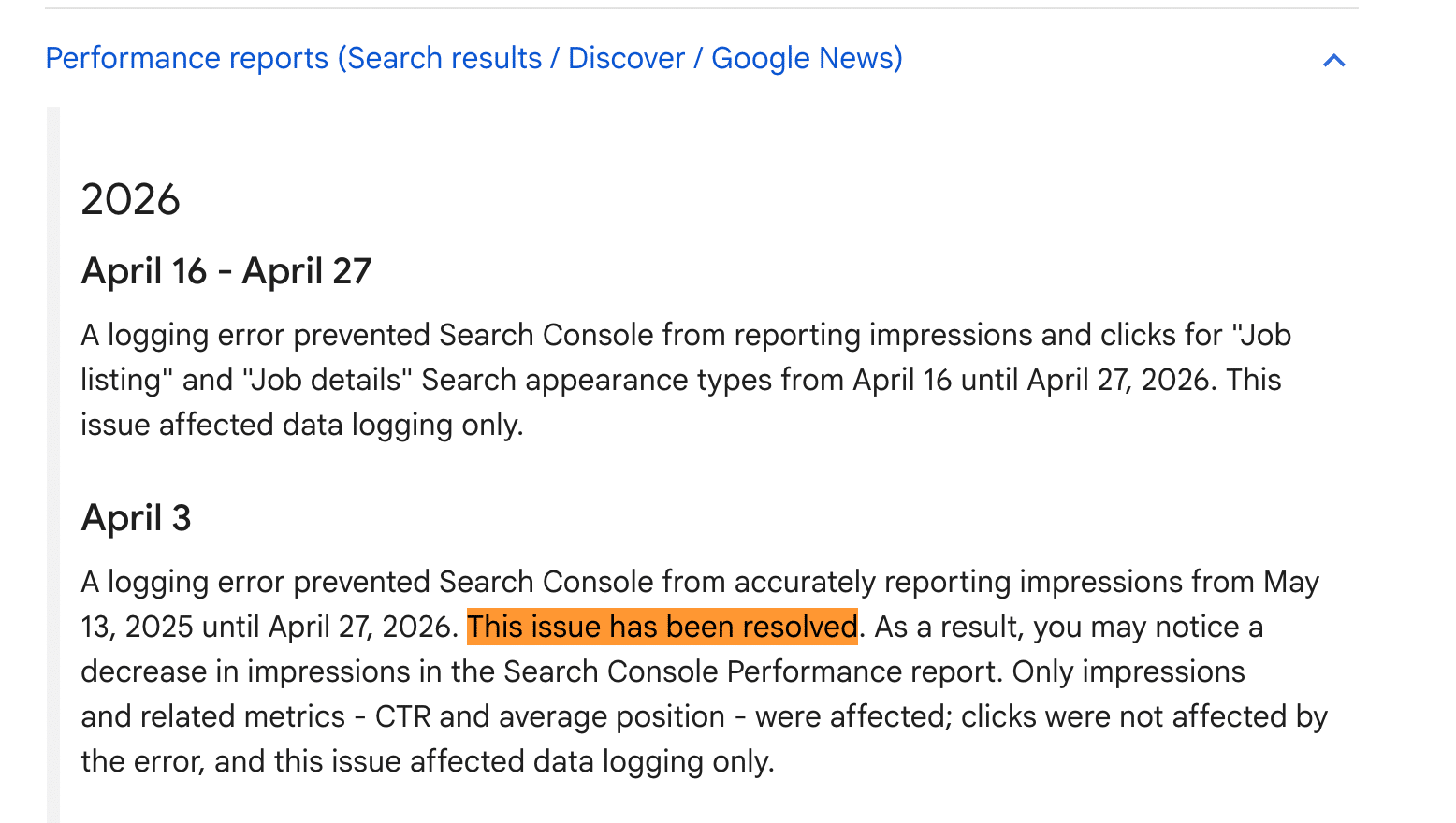
    It feels like a moment of relief as Google recently announced a resolution to a longstanding data logging issue within Google Search Console. This glitch affected data between May 13, 2025, and April 27, 2026, spanning approximately 50 weeks. However, it’s important to note that while the root cause has been addressed, historical data from this period remains unfixed.

    Google shared this update in a rather understated post, bringing light to a problem that many of us have been grappling with for quite some time. According to their post, “A logging error prevented Search Console from accurately reporting impressions from May 13, 2025, until April 27, 2026. This issue has been resolved.” It was a relief to hear, but also a bit frustrating knowing that impressions, CTR, and average position data were affected for such a significant period. Thankfully, clicks weren’t influenced by this error, which was some consolation.

    As I sift through my Search Console data, I must remind myself of this anomaly, particularly when analyzing metrics from that problematic timeframe. The good news is that any data collected from this point forward should be accurate.

    ```json
{
  "alt": "Google Search Console logging error notice for April 2026, affecting data reporting for impressions and clicks.",
  "caption": "Google Search Console reports a logging error impacting impression data from April 16-27, 2026. Fortunately, the issue has been resolved, ensuring accurate metrics moving forward.",
  "description": "This image shows a notice from Google Search Console regarding a logging error that affected the reporting of impressions and clicks from April 16 to April 27, 2026. The issue primarily impacted 'Job listing' and 'Job details' search appearance types and was resolved as of April 3. It outlines the period affected and clarifies that only data logging was impacted, not the actual clicks, making it crucial for users relying on accurate data metrics. Keywords: Google Search Console, logging error, data reporting, impressions, clicks."
}
```

    Further confirmation came from John Mueller on Bluesky, who reiterated that past data would not be retroactively corrected, but the issue has indeed been resolved going forward.

    This development is crucial for all of us who rely heavily on precise data for SEO strategies. If your impressions appear lower and, consequently, your CTR and average position figures seem skewed during this period, this is likely why.


    Inspired by this post on Search Engine Land.


    crushpress.ai community screenshot
  • Stay Updated: AI Transforming Healthcare Innovations

    Stay Updated: AI Transforming Healthcare Innovations

    As someone passionate about the convergence of AI and healthcare, I’m thrilled to share monthly updates from the Goodie team. We dive into the latest breakthroughs and trends in artificial intelligence and the medical field. It’s all here, waiting for you to explore.


    Inspired by this post on HiGoodie Blog.


    crushpress.ai community screenshot
  • How to Build an AI Search Visibility Strategy That Holds Up

    How to Build an AI Search Visibility Strategy That Holds Up

    Your team can buy an AI visibility dashboard and still have no idea what to fix. The hard part is not detecting a brand mention. It is deciding whether that mention reflects accurate representation, genuine authority, growing demand, or one unstable answer.

    A useful strategy connects AI answers to the conditions that produced them and the business result that followed. That means testing real prompts, examining who gets recommended and cited, strengthening the evidence around your brand, and measuring demand and behavior outside the AI platform.

    Measure AI visibility as a chain, not a single score

    An AI citation is not the same as human endorsement or brand demand. It can show that a system found a page useful, but it does not tell you whether a buyer noticed your brand, understood its relevance, trusted it, or took action.

    Build your scorecard in layers. Each layer answers a different question, so a change in one cannot silently stand in for all the others.

    Measurement layerQuestion it answersWhat to record
    Business resultDid AI exposure contribute to valuable behavior?Qualified visits, leads, purchases, subscriptions, assisted conversions, or revenue where your attribution setup supports it.
    Brand demandAre more people actively looking for you?Branded queries, branded search interest, direct visits, and other demand indicators relevant to your business.
    AI representationDo answer engines include your brand, and how do they describe it?Brand presence, recommendation role, factual accuracy, sentiment, citations, named competitors, and omitted capabilities.
    Search and site foundationsCan search systems find the relevant pages, and what happens after a visit?Indexing, impressions, clicks, landing-page engagement, conversion behavior, and referral traffic from identifiable AI platforms.

    Define the business result before collecting visibility data. For one company, the meaningful action might be a completed purchase. For another, it might be a qualified inquiry rather than every form submission. Without that definition, an impressive mention count can become a reporting endpoint instead of evidence for a decision.

    Give branded demand its own place in the scorecard. Growth in people deliberately searching for your name is a clearer indicator of rising market demand than citations alone. Google Trends, Keyword Planner, and Search Console can help you examine that demand from different angles, while GA4 can show what identifiable AI-referred visitors do on your site.

    Do not turn the layers into one opaque composite score. If citations increase while branded demand and qualified activity remain flat, you have learned something specific: machine visibility changed, but you have not yet demonstrated greater preference or business impact. That is a diagnosis, not necessarily a failure.

    Build a prompt benchmark you can repeat

    A circular testing table holds evenly spaced blank prompt tiles, translucent processing chambers, and colored response shapes arranged for repeated comparison.

    Your benchmark should represent decisions a potential customer makes, not merely the keywords your site already targets. Include prompts from distinct stages of the decision so you can see where your brand enters, disappears, or gets described incorrectly.

    • Category discovery: prompts such as Which [category] options suit [audience and constraint]? reveal which brands are associated with the market before the user names one.
    • Problem solving: prompts such as How should [audience] solve [problem] when [constraint] applies? show which methods, entities, and providers become part of the answer.
    • Evaluation and comparison: prompts about tradeoffs, selection criteria, alternatives, or use-case fit expose how the system differentiates brands.
    • Brand verification: prompts about what your brand does, who it serves, where it fits, or how it compares reveal factual and positioning errors.

    Use the language customers would use. A prompt set written entirely in your internal product vocabulary will measure whether an assistant can repeat your positioning, not whether your brand appears in the buyer’s actual decision process.

    Test materially important prompts in ChatGPT, Claude, and Perplexity. They are useful for competitive research, content-gap analysis, entity audits, prompt testing, and answer-structure analysis. Their practical strengths also differ: ChatGPT offers broad synthesis, Claude tends toward nuanced analysis, and Perplexity makes citations particularly visible.

    For every test, save enough context to reproduce and interpret it:

    • A stable prompt ID and the exact prompt text.
    • The intent category and audience represented by the prompt.
    • The platform, available mode, test date, and any conditions you controlled.
    • Every brand named and its role: primary recommendation, alternative, example, warning, or passing mention.
    • The claims made about your brand, including omissions and factual errors.
    • The pages and domains cited, when citations are available.
    • The competitors that recur and the evidence used to support them.
    • The action the observation triggered, or a clear note that no action is justified yet.

    Keep the original output or a sufficiently complete capture. A binary present-or-absent field cannot tell you whether your brand was the preferred option, an unsuitable alternative, or an incidental example.

    Read patterns as hypotheses, not rankings

    AI outputs are variable, and visibility metrics are signals rather than precise rankings. A single answer is therefore an observation, not a stable market-share estimate. Repeat the same benchmark under recorded conditions and look for patterns that survive individual response changes.

    • If your brand appears only when named, the system may recognize it without associating it strongly enough with the broader category. Investigate category coverage, independent mentions, demand, and positioning.
    • If competitors repeatedly appear in category and comparison prompts, inspect the claims and third-party evidence supporting them. The gap may be authority or distribution, not another missing keyword page.
    • If your brand appears but is described inconsistently, create an entity and messaging issue list. Separate incorrect facts from legitimate differences in how the market sees you.
    • If citations increase but visits do not, remember that a direct answer can satisfy the user without a click. Check branded demand, later visits, and business outcomes before declaring the citation worthless.
    • If visibility looks strong only in low-value prompts, revise the benchmark. You may be measuring questions that are easy to win but irrelevant to a buying decision.

    Build the authority that keyword coverage cannot create

    A crystalline central structure stands on a network of blank books, papers, source towers, and linked nodes while light orbs connect the evidence to an audience.

    Publishing more pages does not automatically make your brand authoritative. Keyword coverage can show that you have discussed a subject. It cannot, by itself, show that the market trusts your expertise or thinks of your brand when the subject arises.

    The more useful question is: what do credible people, publications, customers, and communities say about you? Consistent brand co-occurrence connects a brand with a topic across independent mentions. Those associations help explain why one company becomes a routine recommendation while another has a larger content library but little presence outside its own domain.

    Create an evidence map around the association you want to earn. State it in a working sentence: For [audience] dealing with [problem], [brand] is relevant because [verifiable proof]. Then audit each part:

    • Do you have first-party evidence for the proof, or only a marketing claim?
    • Does the evidence contain original data, a useful method, a distinctive tool, or an insight another person would have a reason to reference?
    • Do independent mentions connect the brand to the intended problem and audience?
    • Do reviews and customer discussions support the positioning, qualify it, or contradict it?
    • Are the relevant facts stated consistently on pages that search systems can find?
    • Do competitors have stronger recurring evidence for the same association?

    The answers tell you which intervention belongs next. If the underlying evidence is weak, produce work worth citing: original data, a transparent method, a practical resource, or an analysis that advances the conversation. If the evidence is strong but unseen, the bottleneck is distribution, public relations, community participation, or outreach. If independent mentions exist but describe the company inconsistently, fix the positioning and entity facts before adding more topic coverage.

    Reviews, customer testimony, and genuine recommendations matter because they show human preference rather than self-description. Treat them as evidence to understand, not text to manufacture. Record which use cases customers associate with your brand, the language they use, and where their experience narrows or challenges your preferred positioning.

    Your owned content still has an important job. It should explain the product or expertise accurately, answer consequential questions, expose the evidence behind claims, and give other people something precise to reference. Technical SEO should keep those pages discoverable and indexable. Structured data can state entities and relationships more explicitly, but it remains self-declared markup; use it to describe visible facts, not as a substitute for reputation.

    This changes content planning. Do not ask only which keywords remain uncovered. Ask which claim your market needs help evaluating, what evidence would resolve it, who would find that evidence useful, and why anyone outside your company would mention it. Original data and useful insights that earn attention do more for authority than a stack of interchangeable pages.

    Choose each tool for a decision it can support

    No tool covers the complete chain from prompt exposure to market authority and revenue. Start with the question you need to answer, then choose the smallest tool set that provides the necessary evidence.

    Tool or tool groupUse it to decideWhat it gives youWhat it cannot prove
    ChatGPT, Claude, and PerplexityWhere and how does the brand appear in real answer formats?Manual prompt tests, competitor framing, content gaps, entity coverage, cited pages where available, and preferred answer structures.A one-off output cannot establish a stable ranking or market share. Manual testing also becomes time-consuming without a fixed framework.
    ProfoundDo you need repeatable cross-platform visibility and competitor monitoring at greater scale?Brand mentions, sentiment, citation share, competitor visibility, and identification of content associated with AI mentions.Its metrics remain snapshots of changing outputs. Cost also needs to be justified by a decision your team will make from the data.
    Google Trends and Google Keyword PlannerIs demand growing, declining, seasonal, or too small to prioritize?Search-interest direction, volume estimates, topic momentum, seasonal patterns, and forecasting inputs.They reflect traditional search behavior rather than the full universe of AI prompts. Keyword Planner also requires an active Google Ads account.
    Google Search Console and Google AnalyticsAre relevant pages discoverable, and does identifiable AI traffic produce useful behavior?Queries, impressions, clicks, indexing evidence, landing-page behavior, referrals, engagement, and configured conversion outcomes.Search Console is Google-centric, while Analytics depends on correct configuration. Neither reveals every interaction that happened inside an answer engine.
    AhrefsWhich competitors have stronger external authority or reference-worthy content?Backlinks, content gaps, and discovery of high-performing content that may support broader authority and citation opportunities.These are indirect AEO signals, not a direct view of what an AI system will answer.
    AI Trust Signals and Roadway AIIs an emerging specialist tool able to close a defined credibility or revenue-attribution gap?AI Trust Signals focuses on credibility indicators, while Roadway AI is developing attribution between AEO activity and revenue.Both should be evaluated against your own workflow and decision requirements rather than assumed to be mature, universal replacements for the core stack.

    A spreadsheet or database remains the connective tissue even when you use specialist software. Keep separate views for prompts, outputs, citations, authority evidence, actions, and outcomes. Join them with stable prompt, page, topic, and intervention identifiers. Otherwise, your answer tracker and analytics data will remain adjacent dashboards with no diagnostic relationship.

    Use decision rules to turn observations into work

    Write the rules before the next reporting cycle. This prevents the most visually dramatic metric from dictating your priorities.

    1. Freeze the benchmark. Keep the core prompts, intent labels, platforms, and recorded conditions stable enough to make later observations interpretable. Add emerging prompts without rewriting the baseline.
    2. Locate the bottleneck. Decide whether the problem is discovery, inaccurate representation, weak external authority, low underlying demand, or poor business response.
    3. Check corroborating evidence. Compare prompt observations with cited pages, competitor mentions, backlinks, branded searches, Search Console data, and Analytics outcomes. Do not let one system confirm itself.
    4. Choose one intervention tied to the bottleneck. That may be correcting facts, improving a decision page, publishing stronger evidence, earning independent coverage, repairing indexing, or revising a low-value prompt portfolio.
    5. Record the expected movement. Name the measurement layer that should change if the intervention works. An authority campaign should not be judged solely by immediate referral clicks, and an analytics repair should not be credited with creating demand.
    6. Retest the full chain. Recheck AI representation, citations, branded demand, search performance, and qualified behavior. Keep the intervention only if the combined evidence supports it.

    Some patterns deserve especially careful interpretation. High Search Console impressions with falling click-through rate can justify inspecting whether direct search answers or AI Overviews are affecting clicks, but it does not prove the cause. A recurring competitor citation can reveal a useful evidence gap, but copying the competitor’s page structure will not reproduce the reputation behind it. Better diagnosis usually leads to a different action than surface imitation.

    Paid AI monitoring becomes worthwhile when manual testing has already established a useful benchmark and the volume of platforms, prompts, markets, or competitors exceeds what your team can review consistently. If you cannot name the decision that additional tracking will change, more coverage will create a larger reporting burden rather than a better strategy.

    Key takeaways

    • Treat AI visibility as a chain connecting machine representation, external authority, brand demand, site behavior, and business outcomes.
    • Benchmark category, problem-solving, comparison, and brand-verification prompts using exact, repeatable prompt records.
    • Interpret AI answers as variable observations. Look for recurring patterns across prompts and platforms instead of declaring a precise rank from a snapshot.
    • Build authority through verifiable work, independent mentions, reviews, public relations, and useful distribution. Keyword coverage and schema cannot manufacture market preference.
    • Select tools by the decision they support: assistants for firsthand testing, Profound for scaled monitoring, Google tools for demand and behavior, and Ahrefs for external authority analysis.
    • Connect every intervention to the layer expected to move, then validate it against the rest of the measurement chain.

    Your first move is to create the benchmark before buying another dashboard. Put category, problem, comparison, and brand-verification prompts in one working file. Add the brands, claims, citations, demand signals, and business outcomes beside them. The first column that repeatedly lacks credible evidence is where your next optimization effort belongs.

    References

  • Maximize AI Visibility: Influence, Signals, and Citations

    Maximize AI Visibility: Influence, Signals, and Citations

    I’ve seen how crucial it is to understand that AI visibility starts long before users hit that search bar and ends with citations.

    These insights are vital in shaping what gets seen, summarized, and cited by AI systems.

    Currently, the focus has shifted towards improving the AI ROI story, and I’m right in the thick of it, learning what strategies truly work.

    This year, attending SMX Advanced will be more enlightening than ever, bringing unique perspectives and strategies.

    Let’s dive into why influence matters everywhere, and how it impacts AI citations.

    Rand Fishkin’s study, ‘Influence Happens Everywhere,’ reveals that, although Google commands the majority of search traffic, it’s the influence happening outside of search that truly dictates what people look for online.

    For many, wandering through social media or news sites builds their understanding and interest long before the actual search occurs.

    Despite the exciting growth of AI tools, achieving a stable presence online requires understanding how fragmented channels contribute to this influence.

    When crafting content, it’s essential to dominate the influence phase so thoroughly that an AI assistant doesn’t just suggest your brand—it demands it.

    That’s the strategic thrust behind the discussions at SMX Advanced in Boston and why I align my content calendar accordingly.

    My colleagues at Search Engine Land are among those shaping these discussions. Insights from thought leaders like Dave Davies and Carolyn Shelby are invaluable.

    They emphasize the importance of structured visibility signals and entity recognition, helping AI systems select the right brands to highlight.

    In my own analysis, the various AI models like ChatGPT, Perplexity, and others have unique methodologies for selecting sources, reinforcing the idea that an engaged, multi-platform strategy is critical.

    So, what does full-stack content truly mean today? It’s more than crafting blog posts; it’s about commanding entire topics with authority and depth, enhanced by AI tools like Jasper’s Enterprise Suite.

    ```json
{
  "alt": "The CapmatchOne logo with a gradient circle and bold text.",
  "caption": "Discover innovation with the CapmatchOne logo, featuring sleek typography and a modern gradient circle.",
  "description": "The CapmatchOne logo features bold, modern typography coupled with a gradient circle, symbolizing connection and innovation. The sleek design conveys a sense of progress and creativity. This image can be used for branding or promotional purposes, appealing to audiences interested in innovative solutions and forward-thinking designs."
}
```

    The ability to integrate real-time data, identify competitive content gaps, and create diverse multimedia content packages mean we’re shifting from simply generating content to dominating entire narratives.

    But AI tools can only serve the overarching strategy if our content offers the original insights that help us stand out in AI retrieval systems.

    This year, Purna Virji’s insights at SMX Advanced will challenge us to think critically about the real ROI in AI investment.

    I’m particularly interested in seeing how Google Vids is democratizing video content by eliminating the high entry barriers of previous video production methods.

    Now, video content can be produced and localized for a multitude of markets rapidly, a paradigm shift in how we engage audiences across the globe.

    The standards AI is setting for content — whether text, video, or multimedia — require a strategic framework that aligns with evolving platforms like GEO and AEO.

    For those in the trenches like me, adjusting focus towards an integration of structured data and earned media becomes imperative.

    The real challenge isn’t in the buzzwords but effectively navigating the volatile landscape of AI-driven citations.

    I recognize the adjustments needed in approach, especially when considering the stark differences in referral and conversion rates from traditional search versus AI platforms.

    So, practical actions for the rest of 2026? Audit your AI presence thoroughly, stop gating original research, secure your place in vibrant communities, and refine your focus towards citatability rather than simple visibility.

    Ultimately, the brands ready to adapt will continue to thrive in this AI-enhanced environment.

    Indeed, the bots are crawling, and it’s time I ensured my brand is worth citing.


    Inspired by this post on Search Engine Land.


    crushpress.ai community screenshot
  • End of an Era: Ask.com Closes After 25 Years

    End of an Era: Ask.com Closes After 25 Years

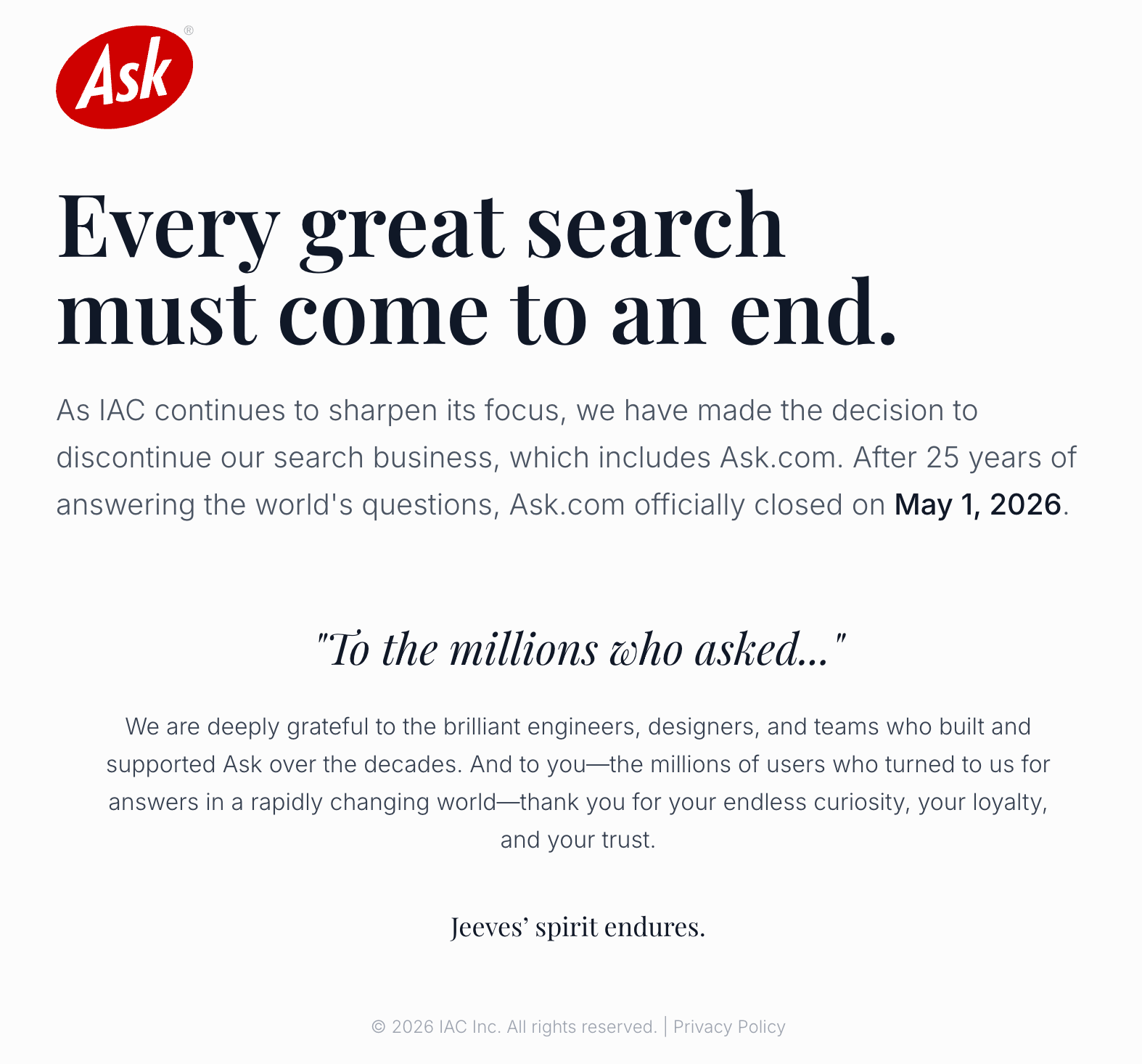
    As someone who has been on the internet exploration journey for years, today’s news hits home. Ask.com, which many of us fondly remember as Ask Jeeves, officially closed down on May 1, 2026, after a remarkable 29 years of service. It launched on June 3, 1996, even before Google made its debut.

    Upon visiting the now-closed Ask.com, we are greeted with a heartfelt farewell message that feels like a trip down memory lane:

    Every great search must come to an end. As IAC continues to sharpen its focus, we have made the decision to discontinue our search business, which includes Ask.com. After 25 years of answering the world’s questions, Ask.com officially closed on May 1, 2026.

    I can’t help but feel gratitude as they graciously acknowledge, “To the millions who asked…”. They expressed appreciation for the brilliant engineers and loyal users who have been a crucial part of their journey. And yes, Jeeves’ spirit indeed lives on.

    ```json
{
  "alt": "Ask.com closure announcement stating closure on May 1, 2026, after 25 years.",
  "caption": "After 25 years of service, Ask.com bids farewell as it officially closes on May 1, 2026. A heartfelt thanks to users and contributors.",
  "description": "This image is an announcement of Ask.com's closure, effective May 1, 2026. The notice expresses gratitude to its users and contributors over the past 25 years. It highlights the decision to discontinue the search business as IAC refocuses its objectives. The statement is accompanied by an inscription about the enduring legacy of Jeeves and conveys appreciation for the community's curiosity and trust."
}
```

    For those of us who relied on this answer engine in its early days, Ask.com and the iconic Jeeves butler will always hold a special place. In a world now dominated by AI and competitive answer engines, it’s understandable why IAC, the parent company, decided to step back in such a challenging market.

    Ask.com has left a significant impact on the search marketing industry, and saying goodbye is indeed bittersweet. Until we meet again in some digital form, dear Jeeves.


    Inspired by this post on Search Engine Land.


    crushpress.ai community screenshot
  • Unleashing Data-Driven Insights with Profound’s Prompt Research Reports

    Unleashing Data-Driven Insights with Profound’s Prompt Research Reports

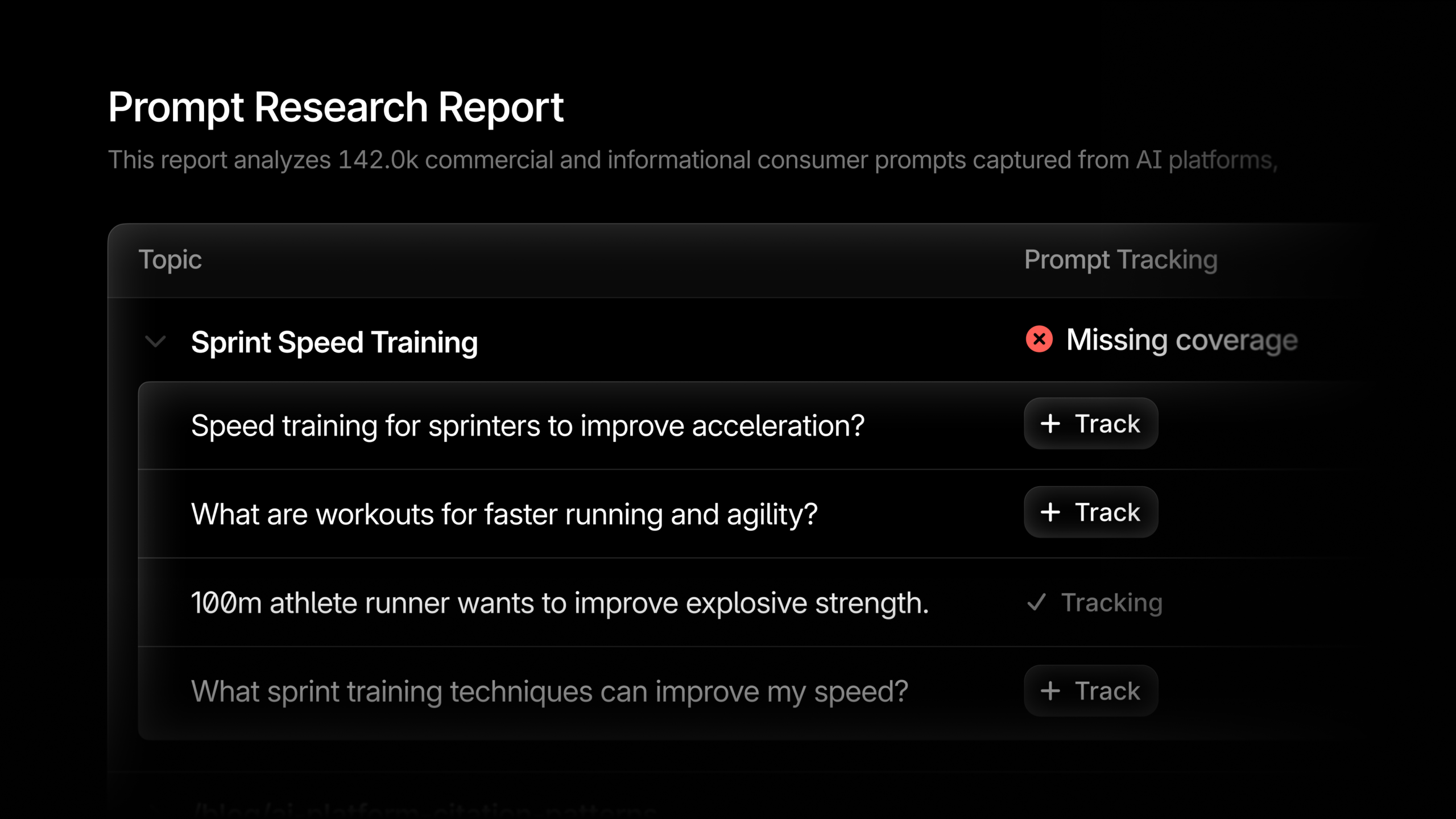
    I’m excited to introduce you to a game-changing development in the world of research and data analysis. With Profound’s Prompt Research Reports, I have the power to pull insights from a staggering 1.5+ billion real user prompts. This transformative tool utilizes a proprietary ranking and clustering model, paving the way for data-driven decision making. Now, I no longer have to rely on guesswork when choosing prompts.

    The system we use classifies and ranks user prompts, enabling me to access the most relevant data quickly and efficiently. This innovation not only optimizes my research process but also significantly enhances its accuracy and impact. By integrating such cutting-edge technology, I am able to stay ahead of the curve and meet my data needs with precision.


    Inspired by this post on Try Profound Blog.


    crushpress.ai community screenshot
  • Google Ads API v20 Sunset: Upgrade Before June 10, 2026

    Google Ads API v20 Sunset: Upgrade Before June 10, 2026

    If any reporting, bidding, or campaign-management workflow still calls Google Ads API v20, June 10, 2026 is a hard failure boundary. Any request sent to v20 after the cutoff will fail, so a healthy dashboard or successful scheduled job on June 9 does not prove that you are ready for June 10.

    Your job is to find every remaining v20 request, move each affected workflow to a newer version, and produce evidence that the replacement works in production. That requires more than changing a version string. It requires an inventory, representative testing, a staged cutover, and monitoring that can distinguish fresh data from stale output.

    Know exactly what will fail at the cutoff

    The sunset applies at the API request boundary. It does not, by itself, mean that a Google Ads account or campaign disappears. It means a workflow loses access whenever the request it needs still targets v20.

    The business consequence depends on what that request does:

    • Reporting and data pipelines can stop collecting new data, leaving dashboards, attribution processes, or client reports with gaps.
    • Campaign automation can stop reading or applying intended changes, including workflows connected to bidding and campaign management.
    • Internal tools can fail when a user opens a screen, requests a report, or submits a change that depends on v20.
    • Third-party platforms can break even when your own code is current, because the version choice may live inside the vendor’s backend.

    A failed reporting job is not always visually obvious. A dashboard may continue showing its last successful dataset unless it also displays data freshness. A failed write does not necessarily leave an account in a safe or paused state; it may simply leave the previous campaign settings in place. Review each workflow’s retry, alerting, and failure behavior so that an API error cannot masquerade as a successful run.

    Translate every technical dependency into an operational consequence. Instead of recording only “reporting service uses v20,” document which report stops, who consumes it, how quickly stale data becomes harmful, and who owns recovery. That mapping tells you which migrations must move first.

    Key takeaways

    • Google Ads API v20 requests will fail after June 10, 2026; the deadline is not a warning-only deprecation milestone.
    • Inventory observed API traffic and stored configuration. Either view alone can miss a dependency.
    • Test complete workflows on a newer API version, not merely authentication or one sample request.
    • Run read-only comparisons in parallel where useful, but do not duplicate campaign-changing requests across versions.
    • Cut over early enough to observe a full operating cycle and restore v20 temporarily if the new implementation fails before the sunset.

    Build an inventory that includes hidden and dormant calls

    An isometric enterprise system shows visible services and faint hidden connections to legacy jobs, dormant components, and recovery infrastructure.

    Start with actual traffic, then reconcile it against code, configuration, schedules, and vendor dependencies. An application list assembled from memory will miss old scripts, shared services, and jobs owned by teams that no longer think of themselves as Google Ads API users.

    Recent API activity in Google Cloud Console can help identify the methods and versions used by your projects. Review every relevant project rather than only the one associated with your main campaign application.

    1. List the environments and projects. Include production, staging, reporting infrastructure, serverless jobs, shared integration projects, and systems managed by another team.
    2. Inspect recent activity. Record which projects still produce v20 traffic and which methods they call.
    3. Cover the complete job cadence. Your observation period must include infrequent workloads such as weekly, monthly, or manually triggered jobs. Zero traffic during an idle period proves nothing.
    4. Search stored configuration. Look for literal v20 references, version selectors, client-library dependencies, deployment variables, request builders, infrastructure definitions, and copied scripts.
    5. Attach an owner to every dependency. An unidentified service is not ready merely because it appears inactive. Someone must decide whether it should be migrated, retired, or verified as unused.

    Traffic inspection and configuration inspection answer different questions. Traffic tells you what ran. Configuration tells you what may run later. Keep both in the migration register.

    Dependency surfaceWhat to locateUseful readiness evidence
    Custom applicationsVersion settings, client dependencies, request construction, and deployment configurationRepresentative requests succeed on the target version and production activity no longer shows v20
    Scheduled data pipelinesJob definitions, orchestration schedules, exports, and downstream consumersA complete scheduled run finishes with fresh, complete output
    Campaign automationRead and write paths, retry behavior, approval controls, and alertsA controlled test produces the intended state once and failures reach an owner
    Third-party platformsVendor-owned connectors, reporting modules, and automation featuresThe vendor confirms the production version and you verify your own affected workflows
    Dormant or manual toolsOccasional scripts, archived repositories, runbooks, and analyst utilitiesThe tool is migrated, formally retired, or blocked from future v20 use

    Ask vendors for feature-level confirmation

    A generic claim that a platform “supports the Google Ads API” is not enough. One module may be current while a less visible exporter or automation feature still uses v20. Ask the provider:

    • Which API version does each feature used by your account call in production?
    • Has every v20 workload been migrated, or only the primary integration?
    • When will the production cutover occur?
    • How can you verify that your tenant is using the newer version?
    • What happens to queued jobs, retries, and cached reports if a request fails?

    Keep the response with your migration record, then test the feature yourself. Vendor confirmation transfers information, not operational responsibility.

    Migrate the workflow, not just the version label

    Choose a newer supported API version that works with your client stack and the capabilities your workflows need. Use Google’s release notes and upgrade guides to identify required changes. Do not assume that editing a version constant is sufficient: client dependencies, available fields, request structures, generated types, and response handling may also need attention.

    A practical migration sequence looks like this:

    1. Capture a baseline. Record representative inputs, expected outputs, normal completion signals, and current error behavior for each workflow. Use stable comparisons where possible because live campaign data can change during testing.
    2. Update the client and application together. Change the supported client dependency, version configuration, request construction, and any code affected by the official upgrade guidance. Check deployment manifests and runtime variables as well as the repository.
    3. Test authentication and simple reads. Confirm that the application can connect using the credentials and account scope it will use in production. Connectivity is only the first gate, not the completion criterion.
    4. Exercise representative read workflows. Run the same account scope, date range, filters, pagination path, and downstream transformation used by the real job. Compare required fields, completeness, row-level invariants, and freshness rather than relying on a single successful response.
    5. Test writes under controlled conditions. Do not change live spend merely to prove connectivity. Use an approved test environment, test account, or non-spend-altering path where your setup supports one. Verify that the intended resource changes once and that retries cannot duplicate an action.
    6. Validate downstream consumers. A successful API response does not prove that a dashboard, warehouse load, bid process, notification, or internal interface can consume the new output correctly.
    7. Release in stages. Move a bounded set of workloads first, watch their results, and expand only after the expected operating signals remain healthy.

    Parallel validation is useful for read-only workloads. You can run equivalent reporting requests on v20 and the target version, then compare the resulting datasets while v20 remains available. Avoid sending campaign-changing requests through both versions: duplicate writes can produce real account changes and financial consequences. For write paths, use a controlled test followed by a staged production rollout.

    Preserve a temporary rollback path during the early cutover, but recognize its expiration date. Before June 10, a rollback to v20 may buy time to fix a problem. After the sunset, v20 is no longer a viable recovery plan because its requests will fail. Your post-cutoff contingency must keep the newer version in place, disable the affected workflow safely if necessary, and route the failure to a named owner.

    Define readiness with production evidence

    Engineers monitor abstract requests moving through a replacement processing lane with checkpoints, a separated legacy lane, and a rollback route.

    “The code was upgraded” is a progress update. It is not a definition of done. Close the migration only when you have evidence across configuration, runtime traffic, workflow output, and ownership.

    • Every known application, script, scheduled job, and integration has an owner and an explicit migrate-or-retire decision.
    • Each active workflow completes successfully on the selected newer API version using representative accounts and request types.
    • Production configuration and deployed client dependencies point to the intended version.
    • No v20 activity appears across the relevant Cloud projects during a period that covers the full operating cadence of the workflows.
    • Reporting outputs expose freshness and completeness, so stale data cannot look current.
    • Campaign-changing automation has controlled retry behavior and a human receives actionable failure alerts.
    • Third-party features have been confirmed by the provider and verified through your own account-level test.
    • The rollback plan works before the cutoff, and the post-cutoff contingency does not depend on v20.
    • Campaign owners, analysts, engineers, and support staff know when the cutover occurred and where failures will be reported.

    Be careful with negative evidence. Seeing no v20 requests is meaningful only if every relevant workload had an opportunity to run. A monthly exporter that has not reached its schedule can remain invisible until after the deadline. Pair runtime inspection with the dependency register, then record the last successful target-version execution for every retained workflow.

    Set your internal cutover early enough to run a complete operating cycle while v20 can still serve as a temporary fallback. Name the owner, start the inventory, and schedule the target-version validation now. The date that matters internally should be the day you can prove v20 is gone, not June 10 itself.

    References

  • How to Build Reliable SEO Agents That Verify Their Work

    How to Build Reliable SEO Agents That Verify Their Work

    You ask an SEO agent to audit a site, and minutes later it returns a polished list of problems. The real question is not whether the report sounds expert. It is whether every claim came from a page the agent retrieved, evidence it preserved, and a rule it can explain.

    If you cannot trace a finding from recommendation back to observation, you do not have a reliable SEO agent yet. You have a text generator with access to SEO vocabulary. The way forward is to build a small inspection system around the model: tools to collect facts, rules to classify them, tests to expose failure, memory to preserve lessons, and a deployment gate that blocks unsupported conclusions.

    Reliability begins with an evidence contract, not a longer prompt

    A role prompt can tell a model to act like an SEO expert. It cannot prove that the model fetched a URL, received the expected response, inspected the relevant HTML, or distinguished a real defect from an intentional configuration.

    This distinction matters because confident language can hide incomplete inspection. In one documented build, an agent returned 20 findings, eight of which described problems that did not exist. It had not actually visited many of the URLs behind those claims. Better wording would not have corrected that failure. The agent needed tools, evidence requirements, and a way to reject its own unverified findings.

    Before choosing a model or writing detailed instructions, define an evidence contract. It should answer five questions:

    • What may the agent inspect? Name the permitted inputs, such as XML sitemaps, robots.txt, HTTP responses, raw HTML, rendered page output, and crawl data.
    • What counts as proof? Require the requested URL, final URL, retrieval result, inspected representation, observed value, and applicable rule for every finding.
    • What can the agent conclude? Limit conclusions to issue types supported by its tools and reference criteria.
    • What happens when evidence is unavailable? Require an explicit unknown or unverified state instead of allowing the agent to guess.
    • What must appear in the deliverable? Define the fields, evidence excerpts, coverage totals, confidence state, and recommendation format before the run begins.

    Suppose the agent wants to report a missing canonical element. It must first show that the page was fetched successfully and that it inspected the intended representation. A redirect, authentication screen, bot challenge, blocked request, empty response, or tool failure does not prove that the canonical is missing. It proves that the check was not completed.

    The same discipline applies to indexability. Finding a noindex directive is an observation. Declaring it an SEO problem is a classification that depends on the page’s intended role. If the agent does not have that context, it should report the directive and request confirmation rather than inventing intent.

    Make the agent separate each result into three layers:

    • Observation: what the tool found, including the URL, response, element, value, and retrieval method.
    • Classification: the rule that turns the observation into confirmed issue, acceptable state, rejected candidate, or unknown.
    • Recommendation: the action justified by that classification, with any required human decision stated plainly.

    This separation makes review faster. A human can challenge the rule without disputing the collected fact, or rerun the collection step without rewriting the recommendation. It also prevents a plausible recommendation from disguising a weak observation.

    Give every SEO agent a workspace it can operate from

    An isometric workspace connects a central robotic agent to abstract page snapshots, structured records, rules, tests, an archive, and an error tray.

    A standalone prompt has nowhere to put operating procedures, executable tools, false-positive rules, previous failures, and output contracts. A dedicated workspace gives each of those concerns a stable home.

    Workspace componentWhat belongs thereReliability job
    AGENTS.mdOrdered methodology, allowed tools, stop conditions, escalation rules, and required outputKeeps the agent on the same operating procedure across runs
    SOUL.mdJudgment principles, skepticism rules, quality bar, and communication standardsDefines how the agent behaves when instructions do not cover an edge case
    scripts/Reusable crawlers, sitemap parsers, extractors, validators, and renderersCollects facts through repeatable operations instead of improvised commands
    references/Issue criteria, severity definitions, exceptions, and known false positivesSeparates real problems from noise
    memory/Run manifests, failure logs, rule changes, and regression historyPreserves lessons and exposes changes between executions
    templates/Finding records, summaries, evidence fields, and final report structurePrevents important fields from disappearing when prose varies

    The filenames are less important than the boundaries. Instructions should explain the workflow. Scripts should perform deterministic collection and validation where possible. References should define judgment. Memory should record what happened. Templates should constrain what can be published.

    Write AGENTS.md as an operating procedure, not a persona paragraph. An instruction such as “check the sitemap” leaves too much unspecified. A useful procedure tells the agent to look for sitemap declarations in robots.txt, try expected locations such as /sitemap.xml and /sitemap_index.xml, parse discovered sitemap indexes, record failed retrievals, and switch to an approved discovery method when no sitemap can be found.

    Give scripts equally clear contracts. A crawler should return structured records rather than a narrative. At minimum, each record should distinguish the requested URL from the final URL, record whether retrieval succeeded, preserve the response status, identify the collection method, and expose tool errors as data. The agent can explain those records later, but it should not have to reconstruct them from terminal prose.

    References need operational definitions. Do not write “flag bad canonicals.” Define the observable condition, the exceptions that suppress it, the evidence required for confirmation, and the severity rule. Put recurring traps in a separate gotchas file so they remain visible: intentional noindex pages, redirected URLs, blocked resources, duplicate URLs that resolve to one destination, and pages whose useful output requires rendering are examples of cases your test environment may need to cover.

    The output template should make unsupported findings difficult to express. Give every finding mandatory fields for evidence, rule ID, verification state, and affected URL. Reserve a visible section for unknowns and crawl failures. If the template offers only “issue” and “no issue,” the agent will be pushed toward false certainty whenever collection fails.

    Turn the audit into a collection and verification pipeline

    A reliable SEO audit is not one model call. It is a pipeline in which each stage produces an inspectable artifact for the next stage. The following sequence gives you a practical starting point.

    1. Create a run manifest. Record the target host, allowed scope, enabled checks, agent version, rule version, script versions, and any crawl constraints. This lets you explain why two runs differ.
    2. Discover the URL set. Start with declared sitemaps. Check robots.txt for references, then expected routes such as /sitemap.xml and /sitemap_index.xml. If none are available, use the approved crawl or supplied URL inventory and record that fallback.
    3. Collect responses without interpreting them. Apply configured rate limits, follow the approved redirect policy, and store requested URL, final URL, response result, and retrieval failure. A collection error belongs in the data, not in a discarded console message.
    4. Capture the representation required by each check. Preserve raw HTML for server responses. Use rendering when the initial response does not contain the elements a supported check needs. Label the representation so reviewers know what was inspected.
    5. Generate candidate observations. Extract canonical elements, robots directives, status behavior, titles, descriptions, links, or other in-scope signals without calling them defects yet.
    6. Verify every candidate. Recheck the relevant page and element through the appropriate tool. Reject stale, contradictory, duplicated, or unsupported candidates. If verification cannot finish, change the state to unknown.
    7. Classify against explicit criteria. Apply the relevant rule and its exceptions. Preserve the rule identifier and reason so a reviewer can reproduce the decision.
    8. Build the report from verified records. Let the model prioritize and explain confirmed findings, but do not let it introduce new URLs, counts, or diagnoses that are absent from the records.

    The pipeline should retain rejected candidates as internal run data. They tell you where the agent almost produced a false positive. If a rule repeatedly rejects the same pattern, you may be able to move that exception earlier in the workflow and save verification work.

    Coverage also needs to be explicit. Report separate totals for URLs discovered, retrievals attempted, pages fetched, pages inspected for each enabled check, and pages left unknown. “Crawled 500 URLs” is not useful if only part of that set reached the check that produced the recommendation. The denominator for a claim must be the set actually inspected for that claim.

    Do not collapse access failure into site failure. A CDN response, rate limit, robots restriction, timeout, or rendering error can stop the agent from observing the page. None of those outcomes proves that the suspected on-page issue exists. After the configured retry and fallback paths are exhausted, publish the limitation as a limitation.

    A compact finding record can carry the chain of evidence:

    • Run ID and rule version
    • Requested URL and final URL
    • Retrieval state and inspection method
    • Observed element or response value
    • Rule ID and applied exception
    • Verification state: confirmed, rejected, or unknown
    • Recommended action and any decision that still needs a person

    Once those fields exist, the model’s job becomes narrower and safer. It can group related findings, explain likely consequences, and make the report readable. It no longer needs to invent the factual substrate underneath the prose.

    Make every failure a regression test and a permanent lesson

    A transparent audit machine collects abstract web pages, preserves evidence, checks rules, and routes a failed item through a test bench into a new checkpoint.

    You cannot establish reliability by running the agent once on a cooperative site. Build a small fixture set in which the expected observations and classifications are already known. It should include clean pages as well as failures, because an agent that finds seeded defects may still produce unacceptable noise on valid configurations.

    Your fixture set should exercise the conditions your agent claims to handle:

    • A static page with all required elements present
    • A page with a deliberately missing in-scope element
    • A page with a canonical element that should not be flagged
    • An intentionally noindexed page whose intent is supplied to the test
    • A redirect and its final destination
    • A nonexistent URL
    • A blocked, challenged, or rate-limited response
    • A route whose supported checks require rendered output
    • A standard sitemap, a sitemap index, a robots.txt sitemap declaration, and a site with no discoverable sitemap

    For each fixture, store the expected collection result, extracted observation, classification, and output state. Run the suite whenever you change instructions, scripts, issue criteria, templates, or model configuration. Review both misses and false positives. A report that catches every seeded problem but invents several more is not ready.

    When a live run fails, convert the failure into four artifacts:

    1. A minimal fixture that reproduces the condition
    2. A test that fails before the correction
    3. A change to the appropriate script, instruction, or reference rule
    4. A run-log entry that explains the symptom, cause, correction, and affected version

    This is how iteration creates an accumulating reliability advantage. Problems involving modern CDNs, rate limiting, JavaScript rendering, sitemap discovery, and noisy classifications stop being isolated surprises once their fixes are preserved in the workspace and exercised on every later change. The architecture becomes measurably better as failures become reusable lessons.

    Memory must not become a substitute for current evidence. A previous run may tell the agent that a URL once lacked a meta description, but it cannot prove the page still lacks one. Use memory to retain operating knowledge, compare changes, and select regression checks. Require a fresh observation before making a current-site claim.

    A useful run log records the run ID, workspace version, scope, discovery method, coverage totals, confirmed findings, rejected candidates, unknown checks, tool failures, and rule changes. Keep links to retained evidence where your data-handling rules allow it. This gives you a basis for comparing runs without asking the model to remember what happened.

    Repeatability does not mean every sentence must be identical. It means the same collected facts and rule versions should produce the same classifications. Keep factual extraction and rule evaluation structured; allow the model more freedom only when it turns those stable records into reader-friendly explanations.

    Key takeaways before you deploy

    Use this as the release gate for an SEO agent that will influence audits, tickets, or client recommendations:

    • Require evidence for every finding. A published issue must identify the inspected URL, observed value, retrieval method, verification state, and rule that supports it.
    • Keep observation separate from judgment. The tool collects the fact, the criteria classify it, and the final layer recommends an action.
    • Treat inaccessible as unknown. A failed request, blocked page, rendering problem, or exhausted retry path must never be translated into a missing element.
    • Expose coverage. Show how many URLs were discovered, fetched, inspected for each check, and left unresolved so readers can interpret the scope correctly.
    • Test valid and invalid configurations. Your regression set must prove that the agent can stay quiet on acceptable pages as well as detect seeded problems.
    • Preserve every correction. A false positive should result in a fixture, regression test, rule or tool change, and versioned run-log entry.
    • Keep memory subordinate to fresh inspection. Previous runs can guide comparisons and testing, but current claims require current evidence.
    • Block unsupported prose. The report generator may explain and prioritize verified records; it may not add facts, URLs, counts, or issue types that the pipeline did not produce.

    Your next move should be deliberately narrow. Build a URL inventory agent that records discovery, redirects, response results, indexability signals, and canonical observations. Give it known fixtures, force it to show unknowns, and manually inspect a sample of its evidence on a site you control. Add another issue class only after the first one survives the same gate across repeated runs.

    That pace may feel slower than asking for a comprehensive audit in one prompt. It is also how you end up with an agent whose conclusions deserve to be acted on.

    References