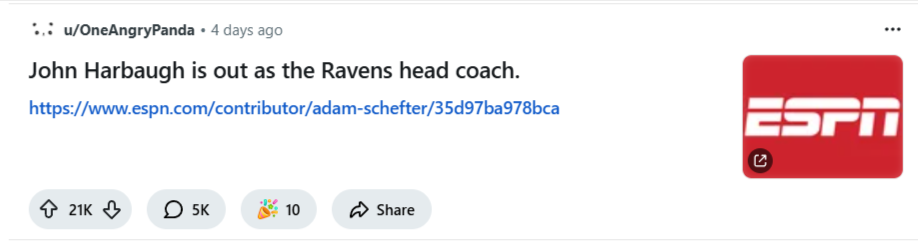
We’re stepping into an era where the visibility of web content is spreading across a multitude of search and social platforms. Google has always been a force to reckon with, but it’s no longer the only player in the search experience. Video-based social media platforms like TikTok and community sites such as Reddit are carving out spaces as go-to search engines for their dedicated audiences.
This evolving landscape is reshaping how we consume news content. Google’s news SERP is adapting to the era of personalized query responses afforded by LLMs and the influence of social media platforms. To keep up, Google has introduced AI-powered SERP features like AI Overviews and AI Mode. These features prioritize content that is “helpful, reliable, and people-first,” drawing heavily from social media platforms.
As search and social media intertwine more closely than ever before, we need to embrace a new strategy. This involves creating newsroom teams comprising social media experts, SEO specialists, and AI enthusiasts working together towards a unified content visibility goal.
When I optimize news content for social platforms, I also consider the potential performance of these posts on the Google SERP. I’ll delve into optimizing specific SERP features, but first, let’s explore making news content friendly for social platforms.
First, let me offer some sanity tips. It’s tempting to optimize content for every social media platform, but I find it more effective to focus on one or two where my audience is active and my growth opportunities are highest. By reviewing analytics and conducting audience surveys, I can identify the platforms where my audience consumes news content.
Optimize News Content for Social Media Platforms
I begin by considering how my content might appear on different platforms. Here’s my breakdown of which content types work best on each platform and how they might appear on Google:
YouTube
Creating YouTube video content involves following video SEO best practices. With guidance from this comprehensive YouTube SEO guide, I create a successful video strategy by ensuring my video titles align with the content.
Google prioritizes YouTube’s search ranking through relevance, engagement, and quality. I make sure my metadata accurately reflects my video content to ensure it stands out as relevant in a search.
One trend I’ve noted is that older event content on YouTube continues to rank well on Google, even after related articles have faded. Similarly, explainer videos show longevity on the SERP.
Facebook
Facebook, though perhaps not as trendy as it once was, still reaches a diverse audience. This platform excels with community-based content and entertainment news that incites conversation.
Even though Facebook’s dedicated news tab was removed, its posts are becoming more visible on Google’s SERP, which might make it worth reconsidering from a search perspective.
X
Since Elon Musk’s takeover, X’s audience has shifted more to the political right, while its role as a hub for breaking news, live updates, and political content remains strong. Sports content also performs well here, especially in the U.S.
Instagram
For Instagram, focusing on visually-driven stories, such as celebrity fashion and health topics, is key. The platform also performs well for sports highlights, often appearing in Google’s dedicated publisher carousel or “What people are saying.”
Reddit
Reddit’s unique user base requires a specific strategy to engage niche communities outside other platforms. Whether the content is about tech trends, health, or sports, it’s crucial to understand Reddit’s audience and adhere to its guidelines.
TikTok
The predominantly young, diverse user base on TikTok gravitates towards visual, conversational, and opinion-based content. Short-form videos that are authentic and engaging perform best.
Pinterest
Pinterest might be old-school, but it’s growing with Gen Z, making it ideal for lifestyle content. When I create on Pinterest, I focus on fashion, DIY, and motivational content, using high-quality visuals and a more relaxed posting schedule.
Social Content Opportunities by Google SERP Feature
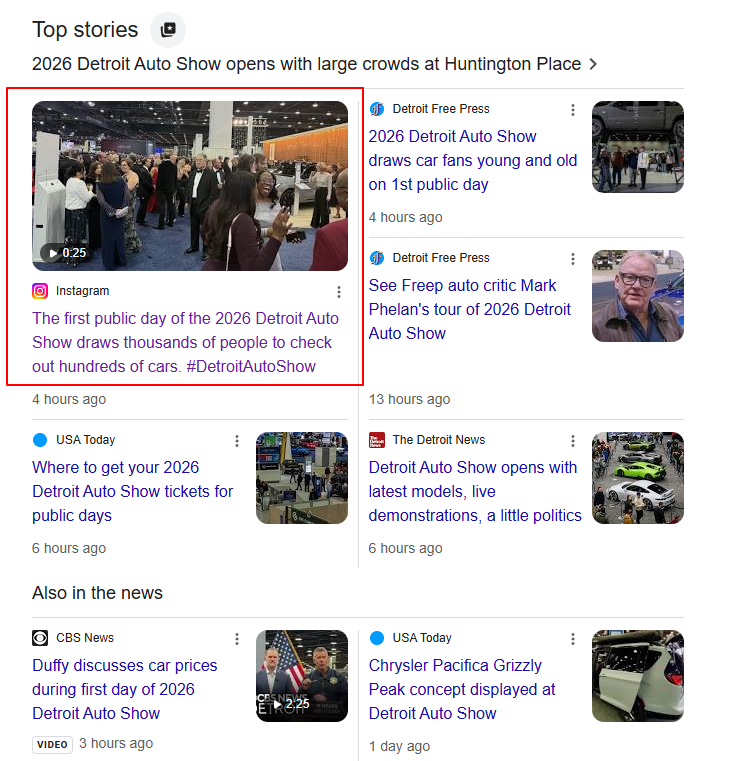
Understanding how social content appears in different SERP features helps me maximize visibility. For instance, Top Stories capture breaking news while the “What people are saying” feature emphasizes emotionally engaging user-driven content.
Threat or Opportunity?
Instead of viewing social media content on Google’s SERPs as competition, we can leverage it as an opportunity to increase visibility. Our focus should be on integrating social-forward strategies to expand brand engagement and not solely relying on traditional SEO tactics.
Welcome to my comprehensive guide on Generative Engine Optimization (GEO). In this ever-evolving digital landscape, mastering GEO has become essential for anyone wanting to enhance their brand’s visibility in AI-driven responses on platforms like ChatGPT, Gemini, Perplexity, and Claude.
I’ve compiled the latest strategies and data to help you navigate this dynamic area. By following these insights, you’ll not only improve how your brand appears but also engage more effectively with AI-optimized content, ensuring you stay ahead in the competitive digital marketing arena.
Join me on this journey to master GEO and transform your approach to online branding and content visibility. With focused strategies, my guide covers everything you need to know to make informed decisions and attain greater engagement with your audience.
Your SaaS dashboard shows fewer visits from AI assistants. Before you rewrite the content roadmap or declare the channel dead, find out exactly which line moved. A fall in standalone-assistant referrals, a shift toward workflow-embedded tools, and poor landing-page routing are three different problems. They require three different responses.
The goal isn’t to recover every lost session. It is to make your product easy to retrieve at the right moment, send qualified users to a page that resolves their question, and measure whether those visits produce meaningful actions.
Key takeaways
A decline in attributed AI referrals is not the same as a decline in AI visibility. Referral analytics capture recognized visits, not every citation, recommendation, or answer that produces no click.
The widely discussed 53% decline applied to standalone AI discovery sessions in one SaaS dataset. It occurred while workflow-embedded Copilot traffic grew by more than 20 times, so the pattern is better read as channel redistribution than universal disappearance.
Internal search deserves its own landing-page segment. About 41% of the dataset’s LLM sessions landed on search-result pages, which can reveal that an assistant could not identify a better direct answer.
Compare equivalent buying periods. The dataset peaked in July and weakened through Q4, making a simple month-over-month chart especially easy to misread.
Prioritize landing-page relevance, qualified actions, referrer mix, and content penetration. Total sessions alone cannot tell you whether your AI search strategy is improving.
Read the decline as a distribution problem first
The 53% figure does not establish that every SaaS company lost half its AI audience. It describes a decline in discovery sessions from standalone AI tools within a particular dataset. Between November 2024 and December 2025, that dataset recorded 774,331 sessions attributed to large language models.
Its referrer mix was highly concentrated: ChatGPT accounted for 82.3% of the sessions. When one platform supplies that much traffic, a change in its usage, interfaces, link behavior, or audience mix can dominate the aggregate chart. A top-line decline can therefore hide growth elsewhere.
Copilot demonstrates the point. It generated 148 sessions near the end of 2024, grew by more than 20 times by May 2025, and then averaged 3,822 sessions per month from June through December. It had become the second-largest AI referrer by the end of 2025.
The pattern is consistent with intent moving into the user’s existing workflow. Someone already working in an embedded assistant may ask a product or implementation question without opening a separate discovery tool. That does not settle the larger question of whether agents will replace parts of SaaS. It does tell you that measuring all AI platforms as one homogeneous channel will produce poor decisions.
Start by classifying the shape of your own decline:
Pattern in your analytics
Working interpretation
Next check
Standalone assistants fall while an embedded assistant grows
Referrer mix is changing
Compare landing pages, intent, and conversion by platform
AI and other non-paid channels weaken in the same period
Demand or B2B seasonality may be involved
Compare equivalent periods and commercial outcomes
AI sessions increasingly land on internal search
Assistants may not be resolving a direct destination
Inspect the query, result quality, and crawl path
AI sessions fall but qualified actions hold steady
Lost visits may have been lower-value, or attribution may have shifted
Review conversion counts, not only conversion rate
Sessions hold steady while qualified actions fall
Landing-page relevance or intent quality has deteriorated
Audit the promise-to-page match for the affected referrers
These are diagnostic hypotheses, not conclusions. Use them to choose the next report or page inspection rather than to explain the result in advance.
Audit measurement before changing your content
An analytics tool’s AI channel is a record of identifiable referrals. It is not a complete count of how often an assistant mentions your company, uses your information, recommends your product, or answers a question without sending a visit. Call the metric what it is: attributed AI referral sessions.
Lock the channel definition
Export the referrer rules behind your AI segment. Keep the same platform list, source normalization, bot filtering, and session definition throughout the comparison. If you add a newly discovered referrer halfway through the audit, recalculate the earlier period under the same rule set. Otherwise, taxonomy maintenance will look like growth.
Keep an explicit “unknown or unclassified” bucket. Do not silently assign direct traffic to AI just because a visitor viewed an AI-oriented page. That may be a useful hypothesis for investigation, but it is not referrer evidence.
Build a platform-by-page-type view
For each complete month, split AI referrals by platform and landing-page template. At minimum, separate the homepage, product or feature pages, pricing, comparisons, documentation, blog content, and internal search results. Preserve the full landing URL in the underlying export so query parameters do not disappear inside a grouped page report.
This matrix exposes changes that a channel total conceals. ChatGPT might stop sending exploratory blog visits while Copilot begins sending fewer but more commercial visits to product documentation. Calling that a single traffic decline would erase the useful part of the change.
Use seasonally comparable periods
SaaS discovery in the observed dataset peaked in July and declined through Q4, alongside normal B2B work, budget, and holiday cycles. That is not a universal calendar for every SaaS company. It is a warning against treating an autumn-to-December decline as proof of an AI-specific loss.
Compare the same quarter year over year when you have consistent data. If you do not, compare AI referrals with non-paid search, direct visits, demo activity, and other demand indicators over the same months. A decline shared across channels points toward a different diagnosis than an isolated fall from one AI platform.
Measure penetration, relevance, and outcomes
Create a small scorecard with definitions your team can reproduce:
Referrer share: each AI platform’s sessions divided by all attributed AI referral sessions. This shows concentration and redistribution.
Landing-page relevance rate: AI sessions reaching a page that directly answers the apparent intent divided by all AI sessions. Define the intended destination for each query or intent class before scoring it.
Commercial action rate: trials, demos, sign-ups, or another agreed activation event divided by AI sessions. Report the action count beside the rate so a tiny denominator does not mislead you.
AI landing-page penetration: eligible product, comparison, pricing, and answer pages receiving at least one attributed AI visit divided by all eligible pages. Use this as an internal coverage metric, not an industry benchmark.
Search-result dependency: AI sessions landing on internal search divided by all AI sessions. A rising share deserves a query-level inspection even when total traffic is stable.
Keep visibility and referral performance as separate columns. If you monitor assistant mentions or citations, compare them with clicks rather than combining them into an invented all-purpose score. Visibility can remain stable while click behavior changes.
Treat internal search landings as a retrieval clue
Internal search was the largest destination class in the observed traffic. Search-result pages received 320,615 sessions, or about 41% of all LLM referrals, exceeding blog, pricing, and product destinations.
That does not mean internal search was the best content. A more useful interpretation is that the assistant found a searchable route but not a confident direct answer. Your search interface became a fallback discovery layer.
Open the top AI-referred search URLs and inspect them as a user and as a crawler:
Reproduce the query from the landing URL. Confirm that it returns relevant results rather than an empty state, generic category, or different query after a redirect.
Check whether the public result can be fetched without authentication, cookies, or a browser-only interaction. If useful results appear only after client-side execution, provide a crawlable path to the primary answer.
Expose the query, result summary, and important destination links in visible HTML. A search shell with no meaningful server response gives an assistant little to interpret.
Verify the status code, robots directives, canonical target, and rendering behavior. A result page should not claim to be a successful answer while returning an error, canonicalizing to an unrelated page, or hiding every result from crawlers.
Trace each recurring high-intent query to its best permanent destination. If people repeatedly search for pricing, a named integration, a comparison, or a specific capability, create or improve the dedicated page and link it prominently.
Make the onward path explicit. A useful result should lead directly to the relevant product, pricing, comparison, documentation, or contact page instead of forcing another search.
Do not respond by indexing every possible internal-search combination. Unlimited query parameters, spelling variants, and empty result sets can create a large collection of duplicate or low-value URLs. Keep crawlable search states finite and useful. Promote recurring, commercially meaningful questions into governed landing pages with stable URLs, original answers, and intentional internal links.
Think of public search as an interface an AI system may use, not as a substitute for information architecture. If the same search query repeatedly attracts referrals, the durable fix is usually a direct answer page that no longer requires the fallback.
Rebuild around moments of intent, then test one cycle
Workflow-embedded assistants change when discovery happens. The user may already be writing a specification, comparing tools, diagnosing an integration, or preparing a purchase request. Your page has to resolve that immediate task. A broad brand narrative is rarely enough on its own.
User’s moment of intent
Best destination
Information that must be visible
“What does it cost?”
Pricing or plan page
Pricing basis, plan differences, limits, conditions, and the next buying step
“Can it handle this use case?”
Capability or use-case page
Direct answer, supported inputs, prerequisites, limitations, and a relevant example
“How does it compare?”
Comparison page
Decision criteria, material differences, suitability, migration considerations, and current facts
“How do I complete this task?”
Documentation or task page
Prerequisites, ordered steps, expected result, failure points, and the appropriate next action
“Where is the relevant feature or resource?”
Help, navigation, or curated search page
Exact destination, concise context, and direct links without another discovery loop
Make critical facts available in the main page content. Do not leave pricing conditions, compatibility, product limits, or differentiators only inside images, tabs that never render for a crawler, or downloadable collateral. Clear headings, concise answers, comparison tables, and descriptive internal links make the page easier for people and retrieval systems to interpret. The broader SaaS pattern favors transparent, crawlable, comparison-oriented information.
Use structured data to clarify, not manufacture, the answer
JSON-LD should describe the content a visitor can verify. Use the most accurate entity types for the page, such as Organization and SoftwareApplication where they genuinely apply. Represent offers only when the visible pricing information is current and complete enough to support them. Use FAQPage only for questions and answers that are actually present for the reader, and BreadcrumbList only when it reflects the real hierarchy.
Keep names, URLs, product descriptions, and relationships consistent between markup and visible copy. Do not stack loosely related schema types in the hope of earning AI visibility. Structured data can reduce ambiguity; it cannot repair a missing price, an evasive comparison, an inaccessible result, or an unsupported claim.
Run a controlled repair cycle
Freeze the baseline. Save monthly sessions, referrer share, landing-page type, search-result dependency, qualified actions, and your current channel rules.
Choose pages from three evidence-backed groups: high-intent pages receiving no AI referrals, internal-search URLs receiving AI referrals, and pages that attract visits but fail to resolve the apparent intent.
Repair the answer path. Put decisive facts in visible content, connect recurring searches to permanent destinations, improve internal links, and align JSON-LD with the finished page.
Annotate the publication and crawl dates. Keep unrelated template and attribution changes out of the same evaluation window where practical.
Review one complete reporting period using the frozen definitions. Compare platform mix, relevant landings, action counts, and search dependency before looking at the aggregate traffic line.
The decision after that cycle should follow the observed failure. If one referrer is shrinking while another is growing, adapt destinations to the growing moment of intent. If search-result dependency is rising, repair retrieval and information architecture. If comparable periods weaken across several acquisition channels, do not blame AI alone. If qualified actions hold while raw visits fall, protect the pages producing those actions before chasing volume.
Your first move can be small: open a platform-by-page-type report, select the highest-traffic internal-search landing, and follow its path to the page that should have answered the query directly. Repairing that path gives you a measurable change. A generic push to publish more does not.
Your brand can rank well in conventional search and still disappear when a buyer asks an AI system which vendors, products, or approaches deserve consideration. Publishing another generic page rarely fixes that gap. AI visibility depends on whether your expertise is clear on your own site, connected across a topic, and corroborated elsewhere on the web.
Your goal is not to force a brand mention. It is to make your brand an accurate, explainable, and well-supported choice when an answer engine assembles a response. That requires coordinated work across content, technical SEO, social discovery, expert participation, digital PR, and measurement.
Key takeaways
Audit the questions behind real buying decisions, then record which brands are named, how they are described, and which domains support the answer.
Build one coherent topic cluster around each important decision instead of publishing disconnected pages that repeat the same keywords.
Treat your website as the place where facts and expertise are made clear, while using independent coverage, communities, video, and experts to establish corroboration.
Keep SEO and social discovery in the plan. AI referral traffic alone does not represent the full discovery journey or justify abandoning channels that already drive demand.
Measure mentions, recommendations, citations, sentiment, factual accuracy, and commercial outcomes separately. A single visibility score will hide the problem you need to fix.
AI visibility is a consensus problem, not a page problem
Traditional SEO often begins with a page: Can it be crawled, understood, and ranked for a query? Those questions still matter, but AI-generated recommendations add another layer. The system must connect your brand to a category, understand why it may fit the request, and find enough support to include it confidently.
This is why AI optimization increasingly concerns authority in a semantic environment. Repeating a target phrase does not establish that your company is a credible answer. The relationship among your brand, expertise, audience, use cases, limitations, and evidence has to remain intelligible across multiple pages and external conversations.
For B2B companies, the practical consequence is immediate: buyers are already using ChatGPT during vendor research. A response may introduce the shortlist, narrow it, or validate a decision that began elsewhere. If your marketing team monitors only conventional rankings, it may miss that part of the buying journey.
Owned content is necessary, but it is not the whole evidence base. In one cited-source analysis, only 25% of sources used in generated responses were brand-managed. That figure should not be treated as a universal quota, but it exposes the strategic weakness in an owned-only plan: a company cannot create independent validation by publishing more claims about itself.
Social discovery contributes to that validation before the buyer opens an AI tool. eMarketer found that about two-thirds of U.S. consumers use social platforms like search engines. OtterlyAI also measured Reddit at up to 6.4% of AI citation links in its analysis. Neither number proves that a Reddit campaign will cause an AI recommendation. They do show why real community discussion cannot be dismissed as activity outside SEO.
Do not interpret this shift as permission to move the entire search budget into generative platforms. A 12-month review of 973 ecommerce sites attributed about 0.2% of traffic to ChatGPT referrals, while Google organic traffic was nearly 200 times larger. That sample is not a forecast for every business, especially a B2B company with a long sales cycle. It is a useful guardrail: build AI visibility alongside the channels that already produce discovery, visits, and transactions.
Build owned authority that an answer engine can interpret
Start with a buying decision, not a keyword list. A useful root topic might be choosing a platform for a regulated team, comparing implementation approaches, estimating the resources a migration requires, or deciding whether a product fits a specific operating constraint. The pillar page should resolve that decision. Supporting pages should handle the questions a buyer must answer before trusting the conclusion.
Turn the topic into a connected decision path
Write the decision statement. Name the exact choice the cluster helps a reader make, including the audience and relevant constraint.
List the dependent questions. Cover definitions, eligibility, alternatives, implementation, evidence, limitations, and the situations in which another approach is a better fit.
Assign one page to each distinct intent. Combine overlapping ideas instead of creating several thin pages that compete to answer the same question.
Link every supporting page back to the decision page. Add lateral links only where the next page genuinely advances the reader’s decision.
Remove or repair orphaned material. A useful page that has no place in the topic path is hard for readers and crawlers to interpret as part of your authority.
This is the practical value of content siloing. A tightly connected topic network can improve navigation, crawlability, and the site’s ability to demonstrate subject relevance. The operative word is connected: each supporting page should reinforce the core topic through purposeful internal links. A silo should not become a sealed folder that prevents readers from reaching useful material elsewhere.
Make every important page quotable without making it shallow
A page can be comprehensive and still conceal its answer. Put a direct response near the question it resolves, then supply the reasoning a buyer needs to trust and apply it. A dependable section pattern is:
State the answer in plain language.
Define the audience, conditions, or use case for which the answer holds.
Explain the mechanism or reasoning behind it.
Provide the available evidence and identify its limits.
Name exceptions, tradeoffs, or conditions that change the recommendation.
Link to the next question in the decision path.
That structure gives an answer engine a concise passage to interpret without depriving the reader of context. It also makes weak claims easier for your editors to spot. If a recommendation cannot survive a paragraph about limitations, it probably is not ready to be published as guidance.
Keep the entity facts consistent
Review the language used on your homepage, about page, product pages, comparison pages, author profiles, and support material. Your company name, product names, category, audience, capabilities, and important limitations should not change casually from one page to another. Variation in prose is natural; variation in core facts creates ambiguity.
Structured data can clarify facts that are already present and accurate, but markup cannot manufacture authority or third-party agreement. Use schema to describe the visible page and its entities precisely. Do not use it to imply awards, reviews, authorship, expertise, or organizational relationships that a reader cannot verify on the page.
Finish the owned-content audit with a harder question: what would an independent evaluator need before repeating this claim? The answer might be a documented methodology, named expert, clear product limitation, customer evidence, original data, or comparison criteria. Put that substance into the content before pursuing distribution. Promotion amplifies whatever is already there, including vagueness.
Create the external proof your website cannot supply
AI systems draw on a web in which discovery is fragmented. A buyer may encounter a problem on a social platform, learn terminology from a video, compare options in a community, search Google for detail, and finally ask ChatGPT to narrow the field. Waiting until the final prompt means surrendering the earlier stages that created familiarity and trust.
Your external-authority plan should answer a simple question: where do people in this category verify claims they do not want to accept from a vendor? Depending on the market, the useful surfaces may include professional communities, Reddit discussions, YouTube demonstrations, Facebook groups, industry publications, independent experts, or creator channels. Choose them because your buyers and credible evaluators use them, not because they appear on a generic channel checklist.
Sector evidence must stay in its sector. In a beauty-focused citation analysis, Reddit, YouTube, and Facebook frequently appeared among cited domains. That pattern makes those platforms reasonable places for a beauty brand to investigate. It does not prove that the same ordering applies to enterprise software, healthcare, financial services, or local businesses. Run the citation audit for your own prompts before allocating resources.
Use communities to learn and contribute, not manufacture consensus
Community visibility is earned through useful participation. Hidden brand accounts, scripted praise, or coordinated voting can create reputational damage and leave you with unreliable feedback. A better workflow is to identify recurring questions, let a qualified person answer transparently, disclose the relationship to the company, and document objections that deserve a fuller response on your site.
Track the language people use when they describe the problem, but do not simply copy it into sales copy. First separate genuine customer vocabulary from misconceptions. Then update definitions, FAQs, product explanations, and support material so the next reader encounters a clearer answer. Community listening becomes authority work when it improves the accuracy of your public knowledge, not merely the frequency of your brand name.
Treat video as a searchable evidence format
A useful video should resolve a specific question with enough substance to stand outside a campaign. State the question early, identify the qualified speaker, name the product or method consistently, demonstrate the process where possible, and provide accurate captions. AI systems can interpret spoken language, on-screen text, and captions, so the clarity of the explanation matters more than decorative production.
High production value is not a prerequisite for testing the channel. Internal specialists who can explain a difficult decision clearly may be more useful than a polished advertisement. External creators can also help when their audience and expertise fit the question. Some creator arrangements have been reported at as little as $500, but that is an example rather than a market-wide price or a promised visibility result. Evaluate subject fit, disclosure, content rights, factual review, and audience quality before evaluating reach.
Expert language can be especially influential in high-trust categories, but qualifications must be real and relevant. Beauty queries, for example, may favor language such as dermatologist recommended. A software architect, clinician, lawyer, engineer, or financial professional does not become a transferable endorsement badge for every claim. Match the expert to the subject, state the nature of the relationship, and keep the conclusion within that person’s competence.
Give SEO, social, PR, and subject experts one brief
Separate teams often optimize separate artifacts: the SEO team owns the article, social owns the clip, PR owns the quote, and the expert reviews each one at the end. That produces inconsistent language and disconnected evidence. Use one authority brief containing:
The buying question being resolved.
The audience and conditions attached to the answer.
The approved factual explanation and its limitations.
The expert or evidence that supports it.
The owned page that carries the complete answer.
The external surfaces where people already discuss or validate the issue.
The inaccurate or unsupported claims the team must not repeat.
The teams can still adapt the format for each platform. What remains stable is the underlying meaning. That consistency helps a buyer recognize the same expertise across search results, social conversations, videos, citations, and your website.
Measure recommendation visibility as a system
Do not begin with a dashboard vendor’s composite score. Begin with a controlled set of questions that reflects how your audience discovers, evaluates, validates, and chooses. Include unbranded category questions, comparison questions, constraint-based questions, problem-solving prompts, and branded validation prompts. If every test includes your company name, you are measuring recognition after the answer has been suggested, not whether the brand enters consideration unaided.
For each prompt, keep a dated snapshot by platform and record the fields below. Use consistent wording when comparing snapshots so a prompt rewrite does not masquerade as a visibility change.
Field
What to record
What it helps you diagnose
Prompt
The exact buyer question and journey stage
Whether you are testing a commercially meaningful decision
Brand inclusion
Absent, mentioned, compared, or recommended with conditions
How strongly the system connects the brand to the category
Description
The claims, audience, strengths, and limitations attached to the brand
Whether the generated representation is accurate and useful
Citations
The domains and specific pages supporting the response
Which owned or external surfaces shape the answer
Sentiment
Positive, neutral, mixed, or negative language with the relevant passage
Whether visibility is helping or harming consideration
Competitors
Which alternatives appear and what evidence supports them
The authority gap you need to investigate
Next action
The content, correction, distribution, or evidence task prompted by the result
Whether monitoring produces an operational decision
Do not blend all of those observations into one number too early. Being cited as a source is different from being named as an option. Being named is different from being recommended. A recommendation based on an inaccurate claim may be more dangerous than a clean absence because it creates expectations your product cannot meet.
Read each visibility gap as a different problem
Your brand is absent and third-party pages dominate the citations: investigate external validation and distribution before commissioning another generic landing page.
Your page is cited but your brand is omitted: check whether the page answers the topic well but fails to connect the expertise, method, or product to a clearly identified organization.
Your brand is named inaccurately: correct the canonical facts on owned pages, then locate prominent external pages that repeat the error. More content will not help if it introduces another version of the facts.
Your brand appears only in branded prompts: strengthen the connection between the brand and the broader category, use case, or problem rather than pursuing more recognition among people who already know the name.
Your brand is recommended without credible support: inspect the recommendation instead of celebrating it. Unsupported visibility is fragile and can expose buyers to claims you would not make yourself.
Your brand is visible but commercial outcomes do not change: review whether the prompts represent real buying decisions, whether the recommendation reaches the right audience, and whether your site completes the journey clearly.
Keep leading and outcome measures separate. Leading measures include topic coverage, internal-link completeness, factual consistency, independent mentions, citation-source diversity, and the accuracy of generated descriptions. AI outcomes include citation, mention, comparison, and qualified-recommendation visibility across the fixed prompt set. Commercial outcomes include the visits, inquiries, assisted conversions, sales feedback, and branded demand your existing analytics can substantiate.
Sentiment deserves its own view. Positive brand sentiment has been correlated with stronger AI visibility, but correlation does not establish a simple causal lever. Do not reduce the lesson to generating positive posts. Use negative or mixed discussion to find product shortcomings, unclear positioning, service failures, or missing evidence that marketing alone cannot repair.
Select the buying decision with the strongest commercial relevance and run this process end to end: capture the prompts, inspect the citations, repair the owned topic path, identify the missing external proof, and assign the work through one authority brief. Expand only after the next snapshot shows what changed and the business can explain why. That is how AI visibility becomes an operating discipline instead of another publishing quota.
Local search continues to be a significant driver of consistent lead flow for service businesses like mine. However, outdated SEO tactics are losing their effectiveness as Google
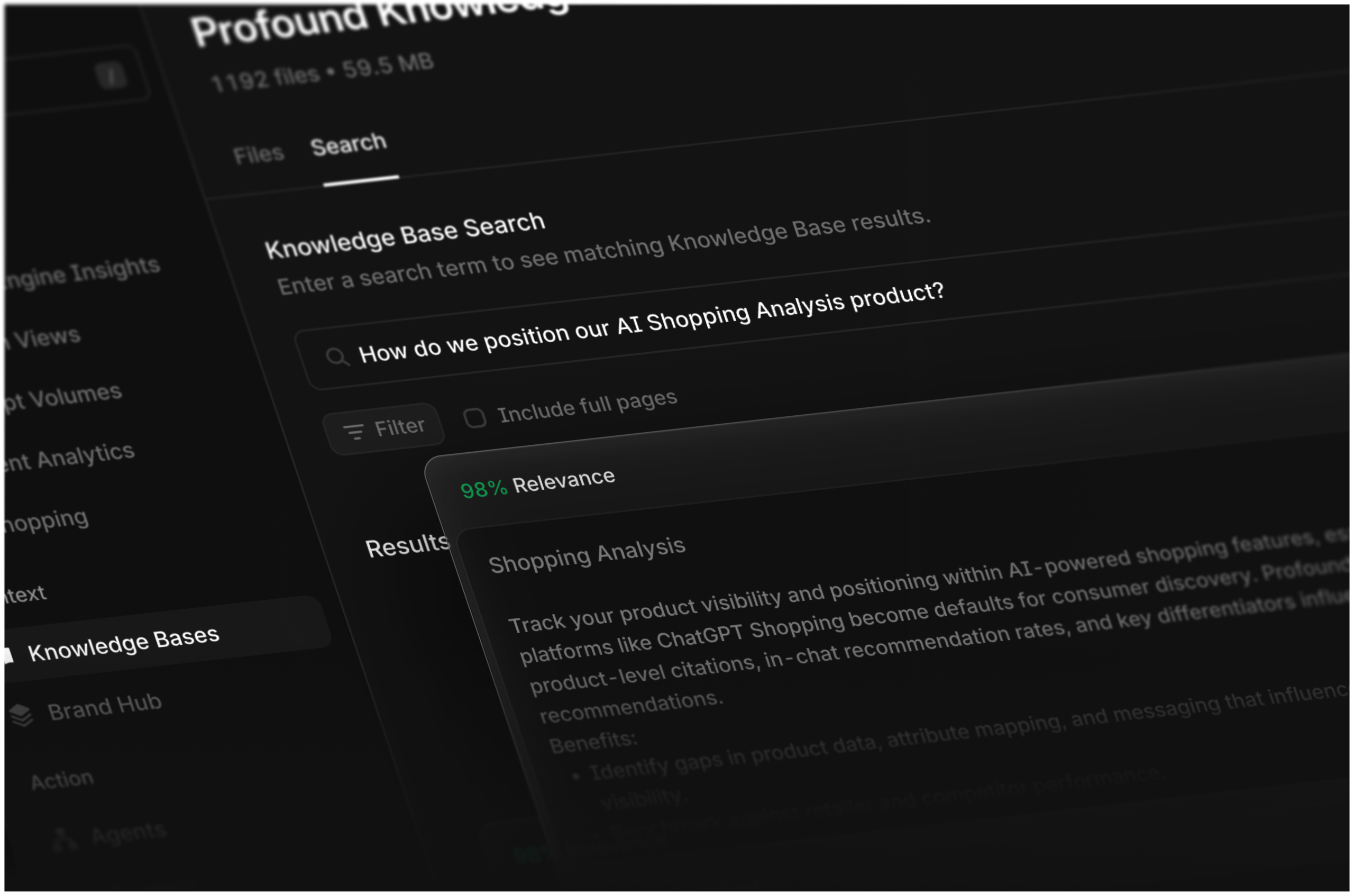
As someone deeply involved in marketing, I know how crucial it is to have access to accurate and comprehensive company information. That’s why when our marketing team uses Profound to upload Knowledge Bases, it gives us a single source of truth for company-specific data.
This capability empowers us, as agents, to provide the right context about your brand every time we execute a marketing action on your behalf. This streamlined approach ensures consistency and accuracy in representing your brand.
When I upload documents to the Knowledge Base, I provide Profound Agents with a comprehensive, single source of truth about my company’s unique information. This ensures that every marketing action performed on my behalf is informed with the right context about my brand.
Your product page can be perfectly usable by a person and still be unreliable for an AI shopping agent. A shopper can interpret layout, infer which option is selected, notice a warning, and back out of a mistake. An agent needs explicit facts, unambiguous choices, and a safe path from finding an item to taking an action.
If you run an ecommerce or transactional site, the question is no longer just whether an AI system can mention your brand. You also need to know whether an agent can identify the right product, resolve its options, understand the commercial constraints, and complete the next permitted step without guessing. You can prepare for that shift now without treating an experimental protocol as a finished standard.
The agent journey has four separate failure points
That journey has four layers: discovery, decision, action, and confirmation. Traditional search optimization concentrates heavily on the first. An agent-driven experience can fail at any of the other three even when the page ranks, gets cited, or receives a visit.
Journey stage
What the agent must establish
Typical site-level failure
What to fix
Discover
Whether the page and product match the user’s need
Important facts exist only in images, interface states, or vague promotional copy
Put essential product facts in clear HTML and consistent structured data
Decide
Which exact product and variant satisfy the constraints
Sizes, units, compatibility, availability, or variant relationships are ambiguous
Tie every choice to a stable product or variant identifier and its current commercial facts
Act
Which operation is allowed and which inputs it requires
The agent must guess what buttons do or manipulate a changing document structure
Expose narrow, named actions with explicit inputs, outputs, and errors
Confirm
What changed, what it will cost, and whether further approval is required
A side effect occurs without a review step or a clear result
Return the resolved item, quantity, price, status, and next required decision
Use those four stages as separate audit columns. If an agent finds the page but selects the wrong size, you have a decision-layer problem. If it selects the correct variant but cannot add it to a cart reliably, you have an action-layer problem. If it can place the same order twice, you have a confirmation and transaction-safety problem. Calling all three problems “AI visibility” hides the work that actually needs to be done.
Build a reliable product truth layer before adding agent actions
An action contract cannot repair an unclear catalog. Before you expose callable tools, make sure an agent can resolve one user request to one exact purchasable item. That requires more than a polished product name and a paragraph of sales copy.
Create a product record an agent can resolve
Give the product, offer, and purchasable variant stable identifiers. Do not make an agent rely on a position in a product grid or a temporary interface label.
State concrete attributes with their units and scope. “Lightweight” may help a person scan the page; an actual weight and unit let an agent test a constraint.
Connect every option combination to the correct availability, price, image, identifier, and purchasing state. A parent product being available does not establish that the requested variant is available.
Make compatibility and exclusions explicit. If a part fits only certain models, regions, account types, or configurations, put that boundary next to the applicable item.
State fulfilment and return constraints in language that can be applied to a decision. Avoid scattering a decisive restriction across a tooltip, an image, and a generic policy page.
Distinguish a one-time purchase, subscription, reservation, quote request, and other commercial models. An agent should not have to infer the commitment from button copy.
The same facts may appear in rendered HTML, Product and Offer structured data, a catalog feed, an internal API, a form, and an agent tool response. They should resolve to the same item and current state. If JSON-LD presents one price, visible copy presents another, and the cart calculates a third, an agent has no unambiguous value on which to act.
Keep description and execution separate
Schema markup and an agent tool contract solve related but different problems. Product structured data can describe an item, its offer, and its availability. It does not, by itself, grant an agent a reliable function for configuring the item or changing a cart. A tool contract describes an operation the site is prepared to accept.
A useful shorthand is: schema explains what something is; a tool contract explains what can be done with it. You need both layers to agree, but you should not treat one as a substitute for the other. Keep the human-readable page as the visible source of context, terms, and control as well.
If you can only fix one layer first, fix product truth. A fast agent action that operates on an ambiguous variant is worse than a slower path that asks the user to choose.
Expose narrow tools instead of making agents operate your interface
That distinction matters. Raw interface operation is fragile because labels, layouts, overlays, and component states change. A named action can state its purpose, required inputs, expected result, and failure conditions directly. The agent still has to reason about the user’s request, but it should not have to reverse-engineer your checkout interface.
Choose the API style that matches the interaction
WebMCP describes two approaches. The declarative API is intended for standard actions that can be defined through HTML forms. The imperative API supports more complex or dynamic interactions that require JavaScript execution.
Use a declarative action when the operation already maps cleanly to a form with explicit fields, constraints, and submission behavior.
Use an imperative action when the workflow depends on changing state, a multi-part configuration, asynchronous validation, or other logic that a normal form cannot express clearly.
Keep the ordinary page and form working as a fallback. An experimental agent layer should enhance the purchasing path, not become its only usable route.
WebMCP is an early preview, so its details may change. Do not rebuild your checkout around it or assume that implementing it creates a search-ranking advantage. Treat the protocol as an experimental delivery mechanism for an interaction model you should design carefully regardless of which standard eventually carries it.
Write each tool contract like a small public promise
Name the action after the user’s intent. Search products, retrieve a product, select a variant, add an item to a cart, and begin checkout are clearer responsibilities than click button or process page.
Request only the inputs needed for that action. Define allowable values and identify which fields are required instead of accepting an undifferentiated text payload.
Separate read-only operations from operations that change state. Searching a catalog and submitting an order should not share the same permission or confirmation behavior.
Return stable identifiers and the resolved current state. An add-to-cart result should identify the exact variant, quantity, current price, cart state, and any remaining decision.
Return structured failures. Unavailable variant, unsupported destination, authentication required, invalid quantity, and price changed are outcomes an agent can handle; a generic failure message is not.
Make consequential actions explicit. The contract should reveal when an operation reserves inventory, starts a subscription, submits payment, or creates an order.
An illustrative shopping sequence might expose searchProducts, getProduct, selectVariant, addToCart, and beginCheckout as separate operations. A submitOrder action would sit behind an explicit review and approval step. Those names illustrate separation of responsibility; they are not prescribed WebMCP syntax.
Resist the urge to publish one general-purpose function that accepts a natural-language instruction and performs an entire purchase. It may look flexible, but it conceals intermediate decisions, makes permissions harder to enforce, and leaves fewer points where the user can inspect or correct the result.
Design checkout around permission, reversibility, and proof
An agent acting on behalf of a shopper can create financial consequences. The site therefore needs a permission model based on what an action changes, not merely on whether the agent knows how to call it.
Use a simple action-risk ladder
Read-only actions: searching, filtering, comparing, and retrieving current details can normally run without transactional confirmation.
Reversible state changes: adding an item to a cart, removing it, or changing a quantity can proceed when the result is reported clearly and the user can undo it.
Commitment actions: placing an order, accepting changed terms, starting a paid subscription, or making a non-refundable booking should require the user to review the resolved details and confirm the commitment.
Do not let an agent infer a missing variant, quantity, shipping destination, or commitment period when the choice affects the transaction. Return the missing field as a required decision. A short clarification is safer than a confidently completed wrong order.
Make repeated requests safe
Agents, browsers, and networks can retry an operation after an interrupted response. Your transaction design should ensure that repeating the same confirmed request does not silently create duplicate orders or charges. In engineering terms, the consequential operation should be idempotent or protected by an equivalent duplicate-prevention mechanism.
Assign the attempted transaction a stable request or confirmation identifier.
Return a definite status such as pending, completed, rejected, or requiring confirmation rather than an ambiguous success message.
If the price or selected item changes before commitment, return the new state and require confirmation again.
If the requested variant becomes unavailable, stop and offer alternatives as new choices. Do not substitute a different variant automatically.
Record the action invoked, resolved item, result, confirmation event, and safe request identifier so a failed workflow can be investigated.
Keep payment credentials, authentication secrets, and unnecessary prompt content out of general agent analytics. Operational visibility is useful, but it does not justify collecting sensitive data that the team does not need for diagnosis.
Preserve a visible human handoff
The shopper should be able to inspect what the agent selected, edit it in the ordinary interface, and continue without starting over. Before a commitment, show the exact line items and variants, quantities, current charges, applicable fulfilment details, and the action that confirmation will trigger.
A handoff is not necessarily an agent failure. It is the correct result when authentication, policy, missing information, or financial approval requires the person. Design it as an intentional state with preserved context, not as an error page.
Test complete shopping tasks, including safe failures
Testing whether an agent can call a function is not enough. The real unit of quality is a complete user task: the right item is found, the right option is selected, the allowed action succeeds, and the shopper receives an accurate result. A safe stop also counts as correct behavior when required information or permission is missing.
Start with a constrained search, such as a product that must satisfy a compatibility requirement and a specific option.
Test a parent product whose requested variant is unavailable even though another variant remains purchasable.
Change a price or availability state between selection and checkout, then verify that the agent presents the change instead of continuing on stale information.
Attempt a state-changing action without authentication or a required field and verify that the response identifies the next necessary step.
Repeat the same transactional request and verify that it cannot produce a duplicate commitment.
Move from the agent flow to the visible interface and confirm that the exact cart or configuration survives the handoff.
Track outcomes by journey stage. Useful measures include product-resolution accuracy, completed-task rate, clarification rate, invalid-action rate, duplicate-attempt handling, safe-stop rate, recovery after a structured error, and successful human handoff. Keep discovery events separate from tool invocations and completed actions. Otherwise, an increase in AI-originated visits can conceal a broken decision or checkout path.
Review failures by cause, not only by agent or channel. If several agents choose the wrong variant, inspect the catalog relationships and labels before tuning prompts. If they choose correctly but fail at cart mutation, inspect the action contract and transaction state. That diagnosis tells you whether the next fix belongs in content, schema, product data, interface logic, or the agent tool layer.
Key takeaways
Treat agent readiness as four connected capabilities: discovery, decision, action, and confirmation.
Fix product identity, variant relationships, commercial facts, and policy constraints before exposing purchase tools.
Use structured data to describe products and a narrow tool contract to expose permitted actions.
Separate read-only, reversible, and commitment actions so confirmation matches the consequence.
Make consequential requests duplicate-safe, return structured errors, and preserve a visible human handoff.
Treat WebMCP as an early experimental layer and measure complete task outcomes rather than assuming an SEO benefit.
Choose one high-value journey this week: product search, variant selection, and add to cart is a sensible starting boundary. Resolve every ambiguity in that path, document its allowed actions and failures, and leave order submission behind an explicit user confirmation. Once that narrow journey works reliably, expand one consequential step at a time.
If ChatGPT recommends your brand but analytics reports no AI conversions, you do not necessarily have a performance problem. You have a measurement gap. A buyer can use AI throughout their research and still enter your site through Instagram, branded search, a bookmark, or a direct visit.
Your job is to separate three questions that dashboards tend to collapse: Can AI find and describe your brand correctly? Does that information help a buyer shortlist you? Does the influence produce a commercial result? Once you measure those separately, you can improve visibility without mistaking every mention for revenue.
Visibility is not attribution, and neither is trust
Generative engine optimization, or GEO, aligns your brand and content with the way answer engines retrieve, summarize, cite, and recommend information. That makes visibility a useful leading indicator. It does not make visibility the final business outcome.
Visibility asks whether your brand appears for a relevant prompt, which pages are cited, and how prominently the brand is presented.
Representation asks whether the answer gets your name, offer, audience, capabilities, limitations, and differentiators right.
Influence asks whether the answer changed a buyer’s shortlist, confidence, objections, or decision.
Attribution connects that influence to a lead, purchase, renewal, or another business result with an explicit level of confidence.
Trust determines whether a buyer accepts the recommendation. It must be earned with evidence; it cannot be inferred from an appearance alone.
This distinction matters because appearing in an answer can be surprisingly easy. Self-promotional pages placing their publisher first on a best-provider list have surfaced quickly in AI recommendations. That demonstrates retrievability, not independent authority or buyer confidence. A screenshot of the result is therefore evidence that an answer engine found the page. It is not evidence that a prospect believed it, clicked it, or bought anything.
Prompt-tracking totals also require restraint. API responses and answers shown to real users can differ sharply; one comparison found overlap as low as 24% in some cases. Interfaces can vary by model, account state, location, available retrieval, and the wording or history of a conversation. Use automated tracking to find patterns, but verify commercially important prompts in the live products your buyers actually use.
A practical AI-search scorecard should consequently report accuracy and influence beside visibility. If the brand appears often but is described incorrectly, you have exposure without control. If qualified prospects repeatedly name AI as a decision aid despite few referral clicks, you have influence that last-click analytics cannot see.
Measure the journey at the answer, buyer, and business layers
No single tool can measure AI-search attribution end to end. The answer may be generated before a visit, the visit may occur through another channel, and the commercial effect may appear as a shorter evaluation rather than an extra conversion. Build one evidence chain from three layers instead.
Inspect the answers buyers are likely to see
Start with prompt families tied to real decisions, not a long list of ways to ask for your brand by name. Branded prompts test whether AI knows you; unbranded and comparative prompts test whether it would introduce you when a buyer has not chosen a vendor.
Problem discovery: How can I solve [specific problem]?
Category selection: What type of product or provider is suitable for [use case]?
Shortlisting: Which providers should I consider for [need and constraint]?
Comparison: How do [brand] and [alternative] differ for [use case]?
Risk validation: What are the limitations, implementation requirements, or reasons not to choose [brand]?
Brand facts: Does [brand] provide [capability], work with [system], or serve [audience]?
Test the same core prompts in the live interfaces relevant to your market, such as ChatGPT, Perplexity, Gemini, and Google AI Overviews. Record the exact prompt, interface, model when visible, account state, date, answer, cited URLs, and follow-up context. Do not quietly rewrite a prompt until your brand appears; that measures your ability to steer a test, not ordinary buyer discovery.
For each answer, capture whether the brand was mentioned, recommended, cited, or omitted. Then score factual claims individually. Mark a claim as accurate, incomplete, outdated, unsupported, or wrong. Preserve the answer itself so that a later correction can be compared with a real baseline.
Ask buyers about discovery and influence separately
A single form field asking how someone heard about you cannot represent a multi-channel decision. The place where a buyer first encountered the brand may differ from the place that validated it. Ask two separate questions:
Where did you first hear about us? This preserves the discovery channel.
What helped you decide to contact or buy from us? This captures influence during evaluation.
Allow more than one response to the second question and include an AI assistant option. Keep a free-text field because buyers may name ChatGPT, Perplexity, Gemini, Grok, Google AI Overviews, or simply say they asked AI. If they remember it, ask what they wanted to learn. The prompt topic is often more useful than the platform name because it reveals the decision or objection your content helped resolve.
Do not force the buyer to choose between AI, search, social, email, and word of mouth when several played different roles. Store discovery source and decision influence as separate CRM properties. Preserve the buyer’s own wording in a note rather than translating every answer into a generic AI lead label.
Look for commercial effects beyond referral traffic
AI can summarize alternatives, reduce uncertainty, and help form a shortlist before the buyer visits a vendor. Its commercial contribution may therefore appear in the sales process rather than the acquisition report. Compare AI-influenced opportunities with other qualified opportunities on:
Time from qualified lead to the next meaningful stage.
Time from qualified lead to closed outcome.
How much basic education the buyer needs.
The number and type of objections raised.
Whether the buyer arrives with a shortlist already formed.
Conversion by stage, deal value, and final outcome.
The content or claim the buyer cites as reassurance.
Business observations have found that some AI-influenced leads needed less education and closed faster. Treat that as a hypothesis to test in your own pipeline, not a universal benchmark. A shorter sales cycle might reflect AI-assisted preparation, but it could also reflect deal type, buyer seniority, budget, or an existing relationship.
Measurement layer
Evidence to capture
Question it can answer
What it cannot prove alone
Answer
Live outputs, citations, factual accuracy, recommendation language, competitor context
Can the system find and represent the brand?
Whether a buyer saw or trusted the answer
Buyer
Discovery response, decision-influence response, named assistant, remembered question
Did AI-influenced opportunities behave differently?
That AI caused the difference without controlling for other factors
Apply confidence labels instead of pretending every signal is deterministic. Mark attribution as confirmed when the buyer explicitly names AI’s role, supported when self-report and sales evidence agree, and possible when you only see an indirect pattern such as rising branded demand. Keep possible influence out of confirmed revenue totals.
Give AI a canonical record of your brand
Measurement tells you where the brand is missing or distorted. Correction requires a dependable record that retrieval systems can access and reconcile. Without specific evidence, an AI system may fill gaps from generic category patterns, scattered third-party descriptions, or outdated pages. That failure is often called brand drift.
Do not treat a canonical record as one oversized About page. Build a controlled set of public pages and media in which every important claim has a clear home, a responsible owner, and a visible update path.
Create a brand-facts register. Record the official name, offer, intended audience, primary use cases, supported capabilities, known constraints, service area, public pricing conditions, integrations, and expert identities. Add the canonical URL and owner for every fact.
Resolve contradictions before publishing more content. Check product pages, help content, business profiles, executive biographies, video transcripts, partner listings, and public profiles. If several versions of a claim remain live, an answer engine has no reliable way to know which one you prefer.
Assign facts to decision-focused pages. Give capabilities, limitations, comparisons, implementation requirements, policies, and expert credentials their own clear context. Put the direct answer near the start, then provide evidence and qualifications.
Make entity relationships explicit. Use applicable Schema.org types such as Organization, Product, Service, Person, ProfilePage, and VideoObject. Connect the organization, offer, author, expert, and media with consistent identifiers and relevant properties. Structured data must match visible content; markup cannot rescue an unsupported claim.
Maintain the record. When an offer changes, update the canonical page, structured data, transcript, profiles, and sales material as one release. Leaving the old version on a high-authority page invites the error to return.
Use video when the claim benefits from observable evidence
Text is appropriate for definitions, specifications, and policies. Video becomes especially useful when a buyer needs to see a real product, process, location, result, or subject-matter expert. It combines spoken explanation, visual context, and a transcript, creating a dense record that can be republished without changing the underlying claim.
Plan the recording around likely misrepresentation. If AI repeatedly invents a feature, have the responsible expert show what the product actually does, state the boundary plainly, and explain the correct workflow. Publish the video on a relevant canonical page with a descriptive title, an edited transcript, speaker identity, supporting links, and VideoObject markup. A transcript should preserve qualifications rather than turning a careful explanation into an absolute promise.
Where your production workflow supports it, retain C2PA-compatible Content Credentials and editing history. Cryptographic provenance can help establish where media came from and whether its recorded chain has been altered. It does not prove that every statement in the media is true, so pair provenance with named expertise, visible evidence, and claims a buyer can verify.
Repurpose the same evidence into an article, short clips, images, audio, FAQs, and social posts. Keep the central facts and qualifiers consistent across formats. The purpose is not to manufacture a larger content count; it is to give retrieval systems several accessible paths back to the same coherent brand record.
Build the evidence that earns a recommendation
Accuracy can make your brand eligible for consideration. Evidence makes it defensible to recommend. This is where self-authored best-provider pages reach their limit: they can state a position, but the publisher and beneficiary are the same entity.
Build content around the questions a cautious buyer asks after discovery. The strongest page is not always the one that praises the brand most. It is often the one that makes the decision criteria, tradeoffs, and evidence easiest to inspect.
Selection criteria: Explain how a buyer should evaluate the category before naming products. Define the conditions that change the choice.
Use-case fit: State who the offer is for, what problem it addresses, and the prerequisites for success. Include who should choose another route.
Comparison: Use explicit criteria and equivalent evidence for each option. Distinguish verified facts from your interpretation, and date claims that may change.
Implementation: Show the required inputs, responsible roles, dependencies, and limits. This helps answer engines distinguish a real capability from an effortless marketing promise.
Proof: Connect each material claim to a demonstration, documented example, methodology, policy, or qualified expert. Avoid decorative statistics that do not prove the claim beside them.
Independent corroboration: Earn accurate reviews, mentions, citations, and expert coverage on relevant third-party properties. Correct factual errors at their origin rather than merely publishing another contradictory claim on your own domain.
Clarity is part of authority. If your homepage describes the offer with a creative slogan while product pages, profiles, and interviews use different category language, both buyers and machines must infer what you actually sell. Keep the positioning distinctive, but repeat the plain category, audience, and use case consistently wherever identification matters.
Maintain an AI-error register alongside your content inventory. For every observed error, save the prompt and answer, identify the false or missing claim, note the cited page if one appears, assign a canonical correction URL, and track the content change. Prioritize errors about core capabilities, compatibility, availability, pricing, or suitability before cosmetic wording differences. Those errors can change a purchase decision.
Retest after correction, but expect variation. A changed answer does not prove permanent removal, and one unchanged answer does not prove the correction failed. Look for a repeated pattern across live sessions and interfaces while continuing to strengthen the public evidence.
Run one operating loop from prompt to sale
AI visibility, brand accuracy, content operations, and revenue measurement should not live in separate projects. Run them as one loop attached to a real buyer decision.
Select a commercially important decision. Choose a problem, comparison, risk, or capability question that can affect whether the buyer includes you.
Capture a live baseline. Test the associated prompt family and preserve the answers, citations, omissions, and errors.
Diagnose the evidence gap. Decide whether the problem is missing information, contradictory facts, weak proof, unclear entity relationships, or inadequate third-party corroboration.
Improve the canonical evidence. Update the responsible page, visible copy, schema, transcript, media, and linked supporting material.
Distribute without changing the claim. Adapt the evidence to relevant channels while retaining the same facts and qualifications.
Retest comparable live conditions. Use the original prompts as controls, then inspect natural variations and follow-up questions.
Connect the change to buyer evidence. Review self-reported influence, sales notes, objections, stage movement, and outcomes. Do not substitute a visibility gain for a commercial result.
Record the decision. Continue, revise, or stop the tactic based on accuracy, qualified influence, and business value rather than the most flattering screenshot.
Key takeaways
AI visibility shows that a brand can be retrieved; it does not prove trust, influence, or revenue.
Verify important prompts in live interfaces because automated and API outputs may not match what buyers see.
Ask where a buyer discovered you and what influenced the decision as separate questions.
Measure sales-cycle behavior, objections, and education needs alongside clicks and conversions.
Prevent brand drift with consistent canonical facts, decision-focused pages, accurate structured data, expert evidence, and useful video.
Use confidence labels for attribution so confirmed buyer evidence is not mixed with indirect signals.
Start with one question that can put your brand on or off a buyer’s shortlist. Capture what the major live interfaces say, correct the public evidence, and add the two attribution questions to your CRM. That gives you a defensible first line from AI answer to buyer decision – and a system you can expand without pretending every mention is a sale.
If you’re being asked for an “AI ads strategy,” don’t start by moving a search campaign into a new interface. An AI experience may be answering a question, narrowing a comparison, selecting an offer, or helping complete a purchase. Your ad has to help with that task without pretending to be the answer.
The practical job is to make four things line up: the user’s decision, the claim the system can verify, the offer you can honor, and the next action you can measure. When one breaks, more targeting or more generated creative won’t rescue the experience.
AI ads compete for the next useful action
A conventional search ad usually occupies a known slot between a query and a landing page. An ad inside an AI experience enters a more fluid sequence. The user may have already described constraints, rejected alternatives, requested a comparison, or asked the system to help complete a task.
Rewrite each campaign brief as a decision task. “Reach operations leaders” is an audience description. “Help an operations leader compare tools that meet a stated integration requirement” is a task. The second version tells your team what facts, offer, destination, and measurement the experience needs.
User state: What has the person probably established before a sponsored option becomes useful?
Decision constraint: Which requirement, location, budget condition, compatibility need, or availability question narrows the choice?
Verifiable claim: What can your site, feed, structured data, or product record support without interpretation?
Useful next action: Should the user inspect an offer, compare configurations, check availability, request qualification, or complete a purchase?
No-ad condition: In which contexts would promotion be irrelevant, sensitive, misleading, or unsafe?
The same principle applies outside chat. AI can help connect brands with YouTube creators and turn creator-led discovery into commerce. Define creator fit through the audience problem, acceptable claims, and commercial handoff – not reach alone. A highly visible creator cannot repair a mismatched offer or an unsupported product promise.
Build answer, offer, and transaction readiness in that order
AI advertising readiness is not a media-only project. The system may need to understand your business, retrieve a current offer, and pass the user into a reliable transaction. Those are separate layers, and each can fail independently.
Answer readiness: make the commercial facts unambiguous
Your organic AI visibility and your paid eligibility are different, but they depend on a shared factual foundation. A discovery system should be able to identify what you sell, who it is for, where it is available, what conditions apply, and which page is authoritative.
Give every important product, service, location, and offer a stable name and a canonical destination.
State the qualifying details in visible page copy. Do not leave essential limitations inside an image, sales deck, or support conversation.
Keep names, identifiers, prices, service areas, availability, and eligibility language consistent across pages.
Use relevant Schema.org types such as Organization, Product, Service, Offer, and LocalBusiness where they accurately describe visible content.
Make JSON-LD match the page. Structured data that promises more than the user can see creates ambiguity rather than authority.
Separate factual descriptions from promotional language so a system can retrieve a supportable claim without inheriting the slogan around it.
No schema type guarantees inclusion in an AI answer or an ad placement. The point of structured data is to reduce ambiguity and connect entities, properties, and offers. It cannot compensate for missing content or contradictory records.
Offer readiness: synchronize what the user can actually receive
An AI-matched ad becomes unhelpful the moment its offer is stale. This matters more when a sponsored option is presented after the user has already supplied detailed constraints. The apparent relevance raises the cost of a mismatch.
For retail, reconcile the identifier, title, destination URL, price, currency, availability, variant, shipping terms, return terms, and promotion conditions across the feed, landing page, structured data, and checkout. For services, do the equivalent with the service area, qualification rules, deliverable, capacity, expected handoff, and any condition that can disqualify the lead.
Assign an owner to every field that can change. Then define which system is authoritative when two records disagree. “The feed team owns price” is incomplete if checkout can display something else. The useful rule is operational: when the source of record changes, every consumer of that field must receive the update, and the affected offer should stop serving if synchronization fails.
Transaction readiness: design for safe completion and failure
Agentic commerce shortens the distance between recommendation and purchase. Google’s Universal Commerce Protocol is intended to standardize AI-assisted browsing, purchasing, and transaction completion. That makes checkout reliability, inventory state, and exception handling part of advertising quality.
Require clear authorization before a charge, booking, subscription, or binding order.
Make order creation idempotent so a retry does not create a duplicate transaction.
Validate price, inventory, tax, shipping, eligibility, and promotion status at the point of commitment.
Return an unambiguous confirmation with the item or service, amount, status, and next step.
Provide a usable path for cancellation, correction, refund, and human escalation.
Preserve enough event history to determine whether an error began in the ad, offer record, handoff, or transaction system.
Do not enable an automated purchase path while duplicate-order protection, cancellation, or exception handling remains untested. The downside is not a weak engagement metric; it is an incorrect charge, unavailable order, or commitment the user did not understand. Keep a confirmation step and a conventional checkout alternative until the failure paths are reliable.
Make trust part of delivery, not a policy page
Relevance does not excuse hidden influence. An AI answer carries a different kind of perceived authority from a familiar ad slot, so sponsorship has to remain legible at the moment the user evaluates the recommendation.
Your own delivery specification should cover the following:
Sponsorship: Do not write creative that could be mistaken for the assistant’s independent conclusion or an organic citation.
Context exclusions: Document the tasks and sensitive situations in which your offer should not appear, even if the platform allows the placement.
Data boundary: Record which contextual signals the platform exposes and which user data reaches your systems. Do not reconstruct a private conversation from unrelated identifiers.
Claim control: Link every material claim to an approved fact, product record, policy, or landing-page statement.
Personalization control: Make consent, preference changes, and opt-out behavior understandable wherever your own data collection begins.
Correction path: Give users and internal reviewers a direct way to report an inaccurate offer, misleading claim, or broken handoff.
Keep paid visibility and AI visibility on separate scorecards
Do not report a sponsored appearance as proof that a model independently recommends your brand. Do not report an organic mention as paid campaign delivery. They answer different questions.
Organic AI visibility: Can the system identify the brand, retrieve accurate facts, answer the relevant question, and cite or mention the right entity?
Paid AI delivery: Was the sponsored option eligible, shown in an appropriate context, acted on by a qualified user, and connected to a valid offer?
Shared quality: Did the destination substantiate the claim, preserve context, and produce an acceptable customer outcome?
This separation protects your reporting and your optimization. A bid or budget cannot make weak facts more authoritative. Better organic answer coverage does not guarantee sponsored distribution. Both programs can improve the same landing pages and entity records without pretending to be the same channel.
Start creative generation from an approved claim set, not an open-ended prompt. Require each variation to retain the qualifying language, destination, and current offer. Store the asset with its source claim and offer identifier. When the underlying fact changes, you can then find and retire every affected version instead of searching campaigns by eye.
Run the first pilot around one decision, not a whole funnel
A broad launch makes diagnosis difficult. If performance disappoints, you will not know whether the problem was matching, creative, answer readiness, offer accuracy, the landing-page handoff, or transaction friction. A narrow pilot gives each failure somewhere specific to land.
Choose a bounded decision task. Define what the user is trying to decide and the conditions that make your offer relevant or irrelevant.
Create a truth set. Record approved claims, prohibited claims, current offers, exclusions, systems of record, and field owners.
Build the complete path. Review the sponsored message, destination, structured data, offer record, form or checkout, confirmation, and exception route as one experience.
Instrument the handoff. Capture the channel, placement type, campaign, asset, offer identifier, destination, qualified action, completed outcome, and any reversal without collecting private conversational content.
Establish a counterfactual. Use a platform experiment or holdout when available. If neither is available, document a stable baseline and state clearly that the result is directional rather than incremental.
Expand only after quality holds. Increase the range of tasks, offers, or creative after the pilot produces accurate offers, acceptable outcomes, and no recurring trust failure.
Click-through rate can diagnose whether a sponsored option attracts attention, but it cannot tell you whether the AI-assisted decision was good. Define qualification and completion before launch, then measure the handoff with metrics that expose both performance and failure.
Metric
How to calculate it
What it helps you decide
Qualified action rate
Qualified actions divided by attributed AI ad visits
Whether matching and creative are producing commercially relevant responses
Offer consistency rate
Audited offers whose ad, destination, structured data, and transaction terms agree divided by all audited offers
Whether the commercial data is dependable enough to scale
Decision completion rate
Confirmed target outcomes divided by eligible initiated paths
Whether the handoff helps the user finish the intended task
Outcome quality rate
Accepted, retained, or otherwise qualified outcomes divided by completed outcomes
Whether apparent conversions remain valuable after validation
Mismatch or complaint rate
Recorded relevance, sponsorship, offer, or transaction complaints divided by attributable interactions
Whether utility is being purchased at the cost of trust
Incremental outcome
Difference between exposed and valid comparison groups
Whether the channel created value beyond outcomes that would have happened anyway
Set the definitions, data owner, and decision rule for each metric before anyone sees campaign results. Otherwise, teams tend to relax the meaning of “qualified” or emphasize whichever event improved.
Pause the affected offer or path when the ad claim is absent from the destination, displayed terms disagree with checkout, inventory cannot be confirmed, users mistake sponsorship for an independent answer, or additional conversions arrive with a corresponding rise in reversals, refunds, or disqualified leads. These are not creative-learning signals. They indicate that the experience is making a promise the operating system cannot reliably keep.
Key takeaways
Plan AI advertising around a user’s decision task, not merely a keyword, audience, or placement.
Treat answer readiness, offer accuracy, and transaction reliability as separate layers with named owners.
Keep sponsored delivery visibly separate from model answers and report paid exposure separately from organic AI visibility.
Use structured data to clarify visible facts, never to introduce claims or terms that the page does not support.
Scale only after the entire path can preserve context, honor the offer, and handle exceptions safely.
Your first move does not need to be a large media commitment. Choose a commercially important decision, make its facts and offer machine-readable, connect it to a dependable action, and define the conditions that will stop the campaign. That foundation will remain useful as AI ad formats, matching systems, and agentic purchase paths continue to change.