Tag: PPC

  • Ignoring Google’s Warnings: A Costly Lesson in PPC Management

    Ignoring Google’s Warnings: A Costly Lesson in PPC Management

    I recently had a thought-provoking conversation with Nils Rooijmans, a respected figure in the world of Google Ads and a top PPC influencer. He shared with me a critical experience that highlights the importance of not overlooking Google’s consent mode warnings.

    On episode 333 of PPC Live The Podcast, Nils revealed how a seemingly small oversight led to a significant drop in conversions and traffic for one of his managed accounts. This experience serves as a stark lesson for all of us in the paid search industry.

    The story began with a rushed account onboarding after Nils’ existing client acquired another company involved in airport parking services. The client sought to avoid additional fees for a proper onboarding process, setting the stage for future challenges.

    Nils agreed to transition the account into their existing setup gradually. However, this compromise led them to neglect the new account, which soon proved to be an expensive mistake.

    After six weeks of minimal oversight, clicks and conversions plummeted. Upon investigation, Nils found that Google had been sending warnings about incorrect consent management implementation, threatening to halt conversion tracking if unresolved.

    Ignoring these emails, originally thought to be routine noise, allowed the issue to escalate. As Nils admitted, this oversight stopped Google from processing conversion data, leading their smart bidding algorithm to adjust bids, reducing traffic further.

    The root cause was identified as a bypassed onboarding process. Without this critical step, the account missed essential safeguards, including monitoring scripts and regular health checks.

    Breaking this news to the client was complicated, especially since the financial implications were severe. The CFO demanded compensation despite actual bookings continuing, demonstrating further complications from the original oversight.

    Technically resolving the issue was also challenging. Although Google support was contacted multiple times, they couldn’t fix the flagged domain problem, necessitating a workaround.

    This story taught several key lessons: never skip onboarding, monitor conversion tracking meticulously, and pay close attention to Google’s communications. These steps can prevent minor issues from becoming major problems.

    In the broader picture, embracing mistakes as learning opportunities strengthens team dynamics and enhances PPC strategies. Nils’ experience is a testament to the value of maintaining vigilance and the power of systematic approaches in digital marketing.


    Inspired by this post on Search Engine Land.


    crushpress.ai community screenshot
  • Unlock Regional Shopping Deals with Google’s New Ad Feature

    Unlock Regional Shopping Deals with Google’s New Ad Feature

    I’ve recently discovered that Google is testing an intriguing beta feature in Shopping ads, which allows merchants to offer region-specific loyalty prices. This innovation can help retailers tailor their promotions to local audiences more efficiently.

    Personally, I find this feature fascinating because it provides a fresh opportunity for merchants to customize pricing based on regional markets. By highlighting loyalty benefits directly within the ads, there’s potential for increased conversions and more sign-ups.

    Here’s how it works: Merchants need to participate in Google’s loyalty add-on, define regional settings within the Merchant Center, and incorporate loyalty_program attributes — such as program label, tier, and price — into their regional inventory feeds.

    As someone who’s been following this development, it’s important to note that when a shopper clicks on an ad, Google adds a region ID to the URL. Consequently, the merchant’s landing page must dynamically showcase the appropriate member price.

    However, the caveat is that this feature is still in beta, with limited visibility, and is only accessible in markets supporting both RAAP (regional availability and pricing) and loyalty programs.

    In my opinion, enabling regional member pricing empowers retailers to localize incentives and distinguish value across various markets without needing to create separate promotions for each region. It seems to be a clever strategy for reaching customers at a local level.

    If you’re interested, you can find out more about how to set up regional member pricing from Google’s official announcement.


    Inspired by this post on Search Engine Land.

    crushpress.ai community screenshot
  • Master Ecommerce PPC: Boost Campaign Performance

    Master Ecommerce PPC: Boost Campaign Performance

    I’ve delved deep into four key areas that shape how ecommerce PPC campaigns perform: mastering the essentials of Performance Max, leveraging Amazon’s conversion power, building social audiences, and crafting insightful dashboards.

    PPC in ecommerce differs vastly from PPC for lead generation or SaaS. The mechanics of campaigns, the conversion data volume, and each platform’s unique role demand a specialized approach.

    Entering the ecommerce realm helped me identify which fundamentals truly matter. Let’s look at how the core differences between ecommerce and non-ecommerce models influence PPC strategy and how to play to each platform’s strengths.

    1. Performance Max is Built for Ecommerce

    Google Ads is essential for ecommerce, primarily because of Performance Max campaigns, or PMax. It’s tailored for ecommerce, where data flows from high sales volumes and lower ticket sizes, allowing rapid learning and improvement.

    To maximize PMax’s potential, optimizing your feed, segmenting your campaigns, and ensuring conversion tracking are crucial steps.

    ```json
{
  "alt": "Interface showing Google Ads labels with 'Source Market' and 'Custom labels'.",
  "caption": "A glimpse into organizing data with Google Ads labels—where Source Market and Custom labels streamline categorization.",
  "description": "The image displays the 'Labels' section of Google's interface, featuring 'Source Market' with a label 'au' and 'Custom label 1' marked 'stranded'. Other custom labels are yet to be filled, providing a flexible setup for organizing and filtering data within Google Ads. These labels assist in categorizing and managing marketing campaigns more effectively."
}
```

    Feed Optimization

    Optimizing your feed can dramatically enhance PMax performance. Ensure your product titles and descriptions are well-structured, utilize character limits, and incorporate keywords effectively.

    Campaign Segmentation

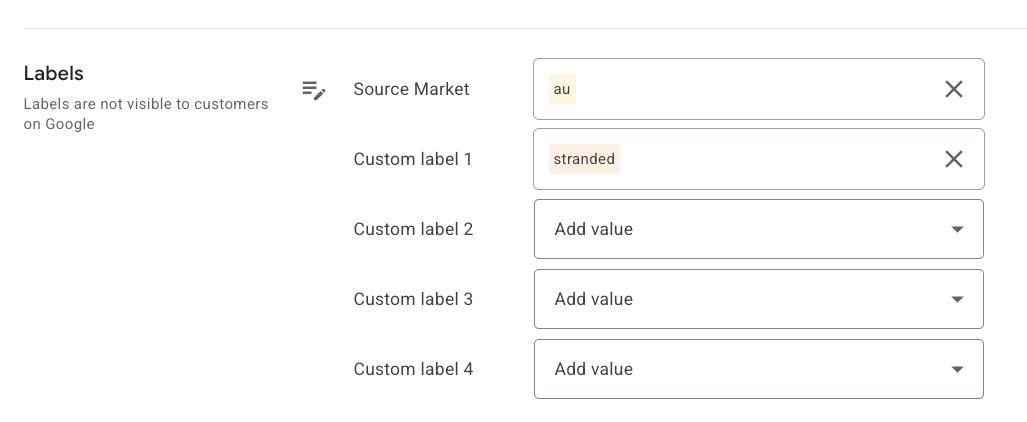
    By categorizing your feeds effectively, you can segment campaigns for better results. Utilize default and custom labels in Google Merchant Center to achieve precise targeting and higher ROAS.

    Conversion Tracking

    Accurate conversion tracking is critical. Integrating with tools like Shopify to sync data with Google Ads enables automated bidding strategies and campaign experiments for enhanced ROI.

    2. Amazon Excels in Ecommerce Advertising

    Amazon is an advertising powerhouse for ecommerce, offering transparency and deeper insights through its platform, which results in higher conversion rates compared to competitors.

    ```json
{
  "alt": "A table displaying search query data with metrics like volume, impressions, and clicks.",
  "caption": "Dive into detailed search query metrics—explore volume, impressions, click through rates, and brand shares to fine-tune your strategy.",
  "description": "The image presents a detailed table of search query analytics divided into columns such as Search Query Score, Volume, and two funnels: Impressions and Clicks. Each funnel includes Total Count, Brand Count, and Brand Share with respective numerical values. This visualization offers insights into online search performances, crucial for data-driven marketing strategies, and highlights metrics like click-through rates. Ideal for SEO analysis and performance optimization."
}
```

    Transparency

    Amazon provides detailed reporting, enabling clear insights into conversion performance at both the keyword and market level, setting it apart from platforms like Google and Meta.

    Higher Conversion Rates

    Amazon’s unified platform leads to seamless transactions, resulting in higher average conversion rates and more reliable attribution data, minimizing guesswork.

    Rankings Philosophy

    Amazon’s approach to linking ads and organic rankings provides clarity and allows advertisers to precisely strategize on improving offers and performance based on conversion metrics.

    3. Social Media: Not the Conversion Leader

    While social platforms are crucial for brand awareness and audience building, they typically aren’t optimal for direct conversions, making them secondary to platforms like Amazon Ads and PMax.

    ```json
{
  "alt": "Table showing search funnel data for cart adds and purchases including total count, rates, brand counts, shares, and shipping speed.",
  "caption": "Unveiling e-commerce insights: A table showcasing the search funnel metrics from cart adds to purchases, revealing customer behavior patterns and brand impact.",
  "description": "This image displays a detailed table of e-commerce search funnel data, illustrating metrics from cart adds to purchases. Columns include Total Count, Cart Add Rate, Brand Count, Brand Share, and Same Day Shipping Speed for both stages. This data helps in understanding user interaction and conversion through the sales funnel, highlighting conversion rates and brand influence in online shopping. Keywords: e-commerce, customer behavior, sales funnel, conversion rates, brand impact."
}
```

    Building Customer Lists

    Using social channels to host giveaways can substantially grow your customer lists, which are invaluable for targeted marketing efforts such as promotions and cross-selling.

    Awareness

    Utilize social media to build brand visibility with cost-effective campaigns, focusing on awareness over immediate sales for new-to-market products.

    Remarketing

    Social media excels in creating remarketing funnels that engage customers more deeply, enhancing overall campaign effectiveness.

    4. Dashboarding for Clarity and Success

    Effective dashboarding is vital for maintaining clarity across multiple platforms. A good dashboard distills complex data into actionable insights, critical for profitability and strategy alignment.

    With tools like Sellerboard, you can connect revenue and costs down to the SKU, providing clarity and revealing which platforms and strategies are truly driving success.

    Guide to Next Steps in Ecommerce PPC

    Recognizing the nuances of ecommerce PPC is crucial for making informed decisions that result in campaign success. These insights continue to guide my strategy and I hope they do the same for you.


    Inspired by this post on Search Engine Land.


    crushpress.ai community screenshot
  • AI Max: Navigating the Challenges with Match-Type Precision

    AI Max: Navigating the Challenges with Match-Type Precision

    I recently dived into how Google’s new AI Max setting is changing the game for search term matching and reporting. It’s like an adventure where advertisers find themselves facing challenges in maintaining precise keyword control.

    Why AI Max Might Not Be Ideal It’s important to note that AI Max isn’t necessarily negative. However, if broad match has underperformed in your past account history, or if your budget already limits top exact or phrase match keywords, then AI Max might require a second thought.

    If you dislike text customization or Final URL expansion, which are inherent features of AI Max, you might want to reconsider.

    You can maintain control by adding broad match keywords manually if they suit your objectives.

    Understanding AI Max and Your Keywords From the Adalysis test, I learned that even when your campaigns lack a broad match version, AI Max behaves as if it includes one, distributing impressions and clicks to your existing keywords. This can obscure match-type reporting, crediting AI Max for traffic already earned by exact and phrase match terms.

    To achieve clearer reporting, I recommend adding broad match versions of core keywords.

    Trouble with Search-Term Reporting By checking search terms under AI Max, I’ve observed issues like brand terms matching non-brand queries and vice versa. Even with brand filters, misspellings and variants might sneak in. Strong negative keywords remain a vital defense line.

    AI Max Isn’t Always Unearthing New Searches More often, AI Max is merely claiming credit for existing queries and can override Google’s usual matching hierarchy, misallocating impressions to less relevant ad groups.

    This could partly explain why its metrics seem inflated.

    The Mystery Bucket I’ve found that AI Max sometimes generates search terms not aligned with any current keyword or past searches. This might relate to Google’s keywordless technology, although confirmation is pending.

    Adalysis advises de-duplicating search terms across match types to pinpoint real performance enhancements.

    Decoding Google’s Priority Order Though Google asserts that exact matches should take precedence when search terms are identical, our tests sometimes revealed AI Max taking over. This inconsistency necessitates adding exact matches for even minor spelling variations to protect valued search queries.

    Why It Matters This journey with AI Max highlights how it can blur match types and reporting clarity. This murkiness makes it difficult to discern the true drivers of results, hindering budget optimization and protection of brand traffic.

    Final Thoughts The Adalysis test strongly suggests that while AI Max offers campaign scaling opportunities, its structure can deceive with inflated metrics by reallocating impressions from original match types.

    If you’re using AI Max or planning to test it, ensure to include broad match versions, differentiate traffic with strong negatives, and keep exact match for your key queries while watching for mixed search terms. Managing search terms is as crucial now as it has always been to align your spending with high-performing searches.

    Explore Further For more insights on AI Max, check these valuable reads:


    Inspired by this post on Search Engine Land.

    crushpress.ai community screenshot
  • Boost Purchase Intent with Meta’s Native Reels Ads

    Boost Purchase Intent with Meta’s Native Reels Ads

    I’ve discovered that Meta’s recent research highlights the potential of native Reels ads to significantly enhance purchase intent and brand interest. This insight could be a game-changer for advertisers looking to harness the power of Reels.

    Reels have rapidly become a favorite format for entertainment, education, and discovery. What I’ve learned from Meta is that advertisers must prioritize native creative content—forget about recycling old assets. Embrace 9:16 framing, platform-first audio, and swift storytelling aimed at capturing attention in a swipe-driven world.

    Brand advertiser insights from Meta’s data:

    • Show your brand early: Introducing branding in the first 5 seconds can make ads 1.7 times more effective in achieving top purchase-intent rankings.
    • Use dynamic branding: Featuring your brand multiple times within the ad boosts top-tier purchase intent by 1.8 times.
    • Combine speech + music: This combination doubles the chance of landing in the top 20% for brand interest.
    • Say it visually and audibly: Dual-channel messaging can increase brand interest by 1.8 times.
    • Keep it relatable: Incorporating everyday “slice of life” moments enhances purchase intent by 1.5 times.

    Direct response advertiser takeaways:

    • Product > everything: Presenting the product multiple times can boost purchase intent by 2.7 times.
    • Brand lightly: Keeping branding to less than 25% of the ad’s duration drives a 4.8 times increase in purchase intent.
    • Add context: Highlighting USPs, features, and benefit-driven messaging raises purchase intent by a staggering 5.3 times.
    • Always include a CTA: Both visual and audio CTAs have the potential to lift purchase intent by 1.9 times.
    • Pair speech + music: This high-impact strategy makes it 2.1 times more likely to achieve top rankings.
    • Use native elements: Emojis play a significant role in helping direct response creatives rank 2.5 times higher.
    • Open with a hook: Audio-visual hooks can improve purchase intent by 1.5 times.

    Why I care. Reels are not just a current trend; they’re fundamentally shaping the way we approach short-form storytelling. With more than half of Instagram users spending their time on Reels, and video consumption up over 30% annually, the importance of native content is undeniable. Meta’s research makes it clear that success on Reels demands creative strategies that are tailored specifically for the platform. Early and strong branding, multiple product showings, a blend of audio and speech, relatable content, and clear CTAs are all crucial for maximizing results.

    The lesson here is straightforward: ads crafted with Reels in mind, rather than repurposed from other formats, achieve the best results. Structured testing and continuously evolving creative approaches are essential for anyone aiming to capture the Reels audience effectively.

    Meta’s bottom line. Reels aren’t fading away; they’re integral to the advertising landscape, with effective ads looking and behaving like native Reels content. The more seamlessly integrated the creative, the better the outcome.

    What’s next. Meta recommends that advertisers develop a robust “test and learn” program, focusing on elements like incrementality measurement and A/B testing. The objective is to discern which combination of format, messaging, and creative content drives the most significant impact for their offerings. The guiding principle is to iterate quickly, validate what’s effective, and refine approaches tirelessly.

    The takeaway. Successful brands on Reels are not just crafting short clips; they are designing specifically for the medium. Meta’s new data provides a roadmap, but it’s up to advertisers to test, learn, and continually adapt their creative strategies to fully realize the advantages available.


    Inspired by this post on Search Engine Land.


    crushpress.ai community screenshot
  • Mastering Paid Media Budgets in an AI-Driven World

    Mastering Paid Media Budgets in an AI-Driven World

    As someone deeply involved in PPC marketing, planning and managing budgets across various paid media channels has become a vital skill in my toolkit.

    I’m perpetually tasked with determining how to allocate spending across channels, handling significant budget fluctuations, and deciding whether to set total or daily budgets.

    In the world of AI-driven ad platforms, campaign budgets are one of the few areas I still have full control over, and so they demand thoughtful attention.

    Depending on my business model, I may have varying degrees of input into the overall paid media budget, but I usually have the reins when it comes to distributing that budget across channels and campaigns.

    My strategy begins with assessing the total budget available. It’s unwise to spread a modest budget across too many campaigns, as this limits the platforms’ capacity to gather data and drive effective results.

    However, with a larger budget, exploring new testing channels or campaign styles becomes feasible.

    Dig deeper: PPC budget planning: Aligning business goals, ad spend, and performance

    For instance, if my efforts in paid search are maxed out and additional budget is available, I might allocate some to Google Demand Gen or social channels to see how they perform.

    Considering the brand’s current awareness level is crucial. If building credibility is still ongoing, focusing on social prospecting could enhance visibility and audience building for future retargeting.

    Another factor is my ability to support campaigns requiring creative assets. If getting creative approved is challenging, keeping budget in paid search might be more pragmatic, with plans to expand to other channels once assets are ready.

    When making budget decisions, I ensure not to view individual channels or campaign types in isolation. It’s important to understand how they might affect each other and leverage data to guide these decisions.

    For instance, if I launch a YouTube campaign that raises product awareness, I might notice improved conversion rates in search, with video viewer remarketing audiences performing well.

    Even if direct conversions from YouTube are minimal, data might show improved overall conversion efficiency, justifying an ongoing budget for both YouTube and search.

    When mapping out annual budgets, aligning them with peak buying times or potential slumps specific to the industry at hand is vital.

    Ecommerce brands may raise budgets around holiday seasons, while B2B brands might choose to invest earlier in the year.

    Historical data can be a guide, and tools like Google Trends offer insights into monthly trends for relevant keywords.

    Unexpected budget shifts are common, whether due to financial constraints or last-minute fiscal year decisions. I’m prepared to adapt by pausing campaigns or reallocating budgets where they’ve proven efficient.

    Opportunities to increase budgets prompt a focus on campaigns that are currently capped and performing efficiently. However, I avoid increasing budgets too rapidly, to prevent inefficiencies.

    Dig deeper: How to manage a paid media budget: Allocation, risk and scaling

    Finally, selecting between total or daily budget types is a frequent consideration. Short campaigns or ones with strict budget limits benefit from a total budget, while ongoing campaigns are better suited to daily budgets.

    I’m mindful of spending spikes and aim to avoid overspending, especially when adjusting budgets mid-month.

    Dig deeper: How to optimize B2B PPC spend when budgets and confidence are low

    Having a budget strategy that’s adaptable to ongoing and exploratory efforts, while considering the unique nuances of each platform, is key to successful paid media campaign management.


    Inspired by this post on Search Engine Land.


    crushpress.ai community screenshot
  • Unlock Lifecycle Success with Google’s New Audience Tools

    Unlock Lifecycle Success with Google’s New Audience Tools

    I’ve been exploring the latest updates from Google, and it seems they’ve taken a big step into lifecycle marketing by allowing advertisers, like you and me, to directly target high-value and lapsed customers through Google Analytics.

    Recently, Google has expanded its customer lifecycle capabilities in Analytics by launching fresh audience templates and dynamic remarketing features, aimed at making high-value targeting and re-engagement much simpler for us advertisers.

    Driving the news. Google’s introducing two new suggested audience templates to help us easily create lifecycle segments:

    • High-Value Purchasers — This is based on purchase count or lifetime value, with a new LTV percentile field to single out our top-tier customers.
    • Disengaged Purchasers — These are classified by days since their last purchase, offering a built-in method for brands to re-engage lapsed buyers.

    Google crafted these templates to seamlessly integrate with Google Ads’ lifecycle goals, including high-value customer acquisition and re-engagement strategies.

    Google’s next move: dynamic remarketing inside GA. Another exciting addition is that Google is embedding display dynamic remarketing directly in Analytics. This means we can show product-based personalized ads to past site visitors without needing to craft remarketing setups externally.

    By utilizing Google’s recommended eCommerce event collection, Analytics will automatically share dynamic remarketing data with linked Google Ads accounts, provided personalized advertising is enabled.

    Why we care. Google’s enhancements make it far easier to focus on the customers who truly matter — the high-value buyers and those who’ve lapsed. These fresh templates and dynamic remarketing tools pave the way for faster and smarter customer acquisition, retention, and repeat purchases directly from Google Analytics.

    These advancements reduce the manual work involved, offering us more precise lifecycle targeting, translating into better performance and more profitable campaigns.

    The big picture. Google is shaping its ecosystem by empowering advertisers with more automated methods to identify, activate, and re-engage customers, all supported by audience intelligence within Google Analytics.

    The bottom line. Google is intensifying its commitment to lifecycle marketing by transforming Google Analytics into an even more robust audience engine for Google Ads.


    Inspired by this post on Search Engine Land.


    crushpress.ai community screenshot
  • Unlocking the Mystery: PMax Now Shows Search Partner Impact

    Unlocking the Mystery: PMax Now Shows Search Partner Impact

    I’ve been eagerly waiting for Google to enhance their Performance Max (PMax) reporting, and now it’s finally here! This new update reveals how much PMax spends on Search Partners and if that traffic actually adds value to our campaigns.

    Google has rolled out a significant upgrade to PMax reporting, which gives us advertisers our first opportunity to clearly see how Search Partners influence campaign outcomes. This transparency is a game-changer for those of us managing PPC campaigns.

    Driving the news. The update is now live in Google Ads and integrates Search Partners into the PMax channel performance tables. Here are a few things we can now observe:

    • How Search Partners contribute to overall PMax results.
    • Whether they provide incremental value.
    • Comparison of their performance with other PMax channels.
    • The total spending directed towards Search Partners.

    What’s changing. This added level of transparency allows us to see how PMax distributes the budget across different channels, particularly in search. It’s crucial for understanding whether the Search Partners’ traffic is beneficial or if it detracts from the campaign’s efficiency.

    ```json
{
  "alt": "Channel performance report showing costs and impressions for multiple advertising platforms.",
  "caption": "Explore your advertising efficiency with detailed channel performance insights, revealing costs and share percentages for strategic decision-making.",
  "description": "This image showcases a channel performance report from an advertising dashboard. It details costs associated with maps, search partners, and YouTube, indicating share of cost percentages for each. The report highlights $191.22 cost and 41.79% share for search partners, $33.84 cost and 7.39% share for YouTube, and $0 cost for maps. A table below lists channels like Discover, Gmail, and Google Display Network alongside metrics such as impressions and clicks, providing insights for advertising strategies. Keywords: channel performance, advertising, cost analysis, dashboard."
}
```

    Why we care. In the past, Search Partners’ activity was hidden within PMax, leaving us in the dark about our spending and its impact. Now, this new line of reporting sheds light on a previously invisible segment of search inventory. With this insight, we can assess incremental value, compare performance with other PMax channels, and make more informed decisions on optimization and budgeting. Essentially, we’re now able to measure spending that was invisible, which could directly influence our campaign performance and profitability.

    The big picture. While it may seem like a small change, it’s a crucial step towards understanding how PMax works. For those of us running large-scale PMax accounts or analyzing channel profitability, isolating Search Partners’ data can dramatically shape our strategies in optimization, budgeting, and overall planning.

    First seen. Google Ads specialist Aleksejus Podpruginas was the first to notice this update, sharing his findings on LinkedIn.

    Bottom line. PMax is finally giving us a clearer view of how Google’s automation spends our money. This insight is a pivotal piece of the puzzle that we’ve been missing.


    Inspired by this post on Search Engine Land.


    crushpress.ai community screenshot
  • Google Retires Ads Developer Forums in 2026: What It Means for You

    Google Retires Ads Developer Forums in 2026: What It Means for You

    As I reflect on the recent announcement, I realize that Google is taking a big step by sunsetting the ads developer support forums. By 2026, we will need to shift our reliance to official support channels for maintaining the smooth operation of our ad tools.

    The upcoming closure will affect three long-standing Google Groups support forums for advertising developers. Google’s aim is to consolidate technical support into more official and structured channels.

    Driving the news. It’s important to note that starting January 28, 2026, Google will cease responding to new posts in these forums. While they’ll remain accessible as read-only archives for a short while, eventually, new posts will be completely disabled.

    After Jan. 28:

    • Support agents will no longer reply on Google Groups.
    • Replies to existing threads will initiate a new email conversation with Google support.
    • Past discussions and solutions will remain available online for reference.

    The shift. Google’s objective is to “streamline technical support channels,” guiding developers towards official tools that have better tracking and response processes, thereby improving our overall experience.

    Where developers should go now. Since the announcement, I’ve been exploring the updated developer documentation that Google has provided. It directs developers to the following official support channels:

    Why we care. These forums have served as critical open Q&A hubs for us developers, particularly in dealing with Google Ads API, Google Ads Scripts, and the Campaign Manager 360 API. This change will impact how quickly and effectively we can resolve issues, which are essential for maintaining seamless bidding, reporting, and automation functions.

    With the closure of the public forums, we’ll need to adjust our workflows. This means providing more detailed logs and relying less on community-shared solutions. Being prepared for this transition will help us avoid downtime and lapses in performance.

    What Google wants from developers. To expedite issue resolution, Google urges us to include comprehensive diagnostic details in support tickets, such as:

    • Google Ads API: request ID, full request + response logs
    • Ads Scripts: script name, customer ID, execution logs, UI error messages
    • CM360 API: profile/account IDs, API method, request + response logs
    • All products: clear issue description, expected behavior, repro steps, code snippets, and error messages

    Community still has a home. For those of us looking to stay connected with updates and participate in general discussions, Google recommends their “Google Advertising and Measurement Community” Discord server, which isn’t tied to official support.

    The bottom line. Transitioning away from public troubleshooting forums towards standardized, direct support should streamline issue handling. However, it might also diminish the community-shared knowledge we’ve come to rely on.


    Inspired by this post on Search Engine Land.


    crushpress.ai community screenshot
  • Google’s Partner Match: Precision Targeting for YouTube

    Google’s Partner Match: Precision Targeting for YouTube

    I’m thrilled to share that Google is launching an innovative tool called Partner Match, designed to revolutionize how advertisers can target YouTube audiences using third-party hashed data. This advancement is detailed in newly released help documentation, and it’s poised to make a significant impact.

    What advertisers must do: Activating Partner Match is straightforward. Advertisers need to:

    1. Authorize the data partner
    2. Accept the Partner Match terms
    3. Apply the generated audience lists during campaign setup

    Why we care: Partner Match could provide advertisers with precise targeting at a time when reaching audiences is increasingly challenging. It’s expected to enhance alignment between brands’ first-party signals and YouTube delivery, making Video Reach, Video Views, and Demand Gen campaigns more effective.

    Remarkably, its global availability—with a few exceptions—makes Partner Match one of YouTube’s most scalable targeting innovations in recent years.


    Inspired by this post on Search Engine Land.

    crushpress.ai community screenshot

    How it works: Partner Match empowers approved partners to upload hashed user data, such as email addresses, names, or ZIP codes. Google then aligns this data with signed-in YouTube accounts, enabling advertisers to target these tailored audience segments effectively.

    • Video Reach campaigns
    • Video Views campaigns
    • Demand Gen campaigns (YouTube channel only)

    Though it won’t support ad sequences or YouTube Select guaranteed deals, the flexibility it offers is remarkable.

    Where it’s available: Partner Match will be rolled out globally, with exceptions in the UK, Switzerland, and the EEA. That said, advertisers in these regions can still reach audiences in eligible countries.

    What advertisers must do: Activating Partner Match is straightforward. Advertisers need to:

    1. Authorize the data partner
    2. Accept the Partner Match terms
    3. Apply the generated audience lists during campaign setup

    Why we care: Partner Match could provide advertisers with precise targeting at a time when reaching audiences is increasingly challenging. It’s expected to enhance alignment between brands’ first-party signals and YouTube delivery, making Video Reach, Video Views, and Demand Gen campaigns more effective.

    Remarkably, its global availability—with a few exceptions—makes Partner Match one of YouTube’s most scalable targeting innovations in recent years.


    Inspired by this post on Search Engine Land.

    crushpress.ai community screenshot