I’ve noticed it’s not uncommon to come across articles proclaiming that AI agents are about to revolutionize Google Ads, SEO, or social media. Initially, these AI agents seem promising, at least in theory.
But when I dive deeper into what data these agents actually utilize, it’s almost always platform-native. For Google Ads, this translates to impressions, clicks, conversions, and ROAS.
This simplistic approach is why PPC AI agents often stumble right from the start. If they only have platform-specific data, managing true marketing strategies becomes impossible.
Why Many PPC Agents Are Just AI Assistants
Many tools labeled as PPC agents are mostly AI assistants, focusing on tasks such as:
Generating various headline options
Describing product images for Responsive Search Ads
Drafting CTAs for Performance Max asset groups
While these tasks are beneficial in freeing up time, they’re not quite the PPC agents they claim to be—they’re just dressed up generative AI tools.
A true PPC agent operates directly on an ad account by analyzing performance data and making strategic decisions, like adjusting budgets and optimizing campaign structures based on informed insights.
How AI Agents Create a Closed Loop
Google Ads has a limited view of your business data, causing AI agents to often optimize a closed loop focused solely on improving platform metrics, which may negatively affect business performance.
For instance, Google Ads doesn’t know specifics like average deal size or which products have high margins. This ignorance can lead to suboptimal decisions.
Performance Max: A Precursor to AI Challenges
This conundrum isn’t new. PMax campaigns already demonstrated the pitfalls without adequate data, as they often optimized towards the wrong goals without necessary business insights.
PPC Agents Risk Misalignment Without Business Data
AI agents exacerbate the speed at which misaligned strategies can cause harm. Even the best systems need backend business data to make informed decisions, just as your agent would.
3 Essential Types of Business Data for PPC AI Agents
To enhance PPC agent performance, integrating CRM, product, and operational data is crucial.
1. CRM Data
CRM data is vital for understanding lead values beyond mere conversion counts. You can bridge this gap with offline conversion tracking or direct CRM access for a deeper analysis.
2. Product Margin Data
Understanding product margins is essential for eCommerce success. This data should come from supplementary feeds or direct backend connections, allowing for more strategic budget allocations.
3. Operational Data
Operational signals, like fulfillment capacity, also impact decision-making. Effective coordination and data flow help prevent suboptimal choices that might appear beneficial only theoretically.
Questions to Ask Before Building a PPC AI Agent
Before developing a PPC AI agent, pinpoint the essential business data required to optimize campaign performance, starting with OCT and progressing to direct CRM links for comprehensive insights.
Ultimately, the challenge isn’t building the agent but integrating it seamlessly with business realities for genuine value extraction.
I’ve recently experienced frustrations with Google Ads as there’s a known issue causing Demand Gen ads to face review delays of over a week. Google acknowledges this problem and assures us that they’re working on a solution.
Some of us advertising on Google have noticed our ads are lingering in review, taking more than seven days—something that deviates from normal review timelines.
What’s happening. Matthew Skelton, a senior PPC specialist I follow, has pointed out a trending issue: Demand Gen campaigns stuck in review for an unexpectedly long time. This delay is noticeable across various accounts and industries, seemingly without any policy breaches causing it.
Interestingly, other campaign types, like Search and Performance Max, aren’t affected and continue processing as usual, which suggests the problem is isolated to Demand Gen ads.
Why we care. For those of us using Demand Gen to test creatives and drive top-of-funnel results, speed is crucial. Long review times hinder our ability to iterate swiftly, delay launches, and make it challenging to respond to seasonal trends or time-sensitive opportunities.
A delay lasting a week can disrupt our pacing and diminish the effectiveness of campaigns relying on rapid optimization.
The response. Ginny Marvin, a Google Ads Liaison, acknowledged this issue specifically impacting Demand Gen image ads, admitting reviews are taking longer than anticipated. She assured us that Google’s team is actively seeking a solution, but no clear timeline has been provided yet.
Bottom line. If you’re experiencing delays with your Demand Gen ads, know that it’s a widespread issue acknowledged by Google rather than something you can directly address.
First seen. This situation was first reported by Matthew Skelton, who shared his insights on LinkedIn.
I’ve often marveled at high ROAS numbers during my campaigns, thinking they spell success. But, is this performance truly driving growth?
High ROAS numbers can be misleading, often masking mere demand capture rather than creation. To accurately assess growth, I focus on incrementality and marginal ROAS to guide more effective spending strategies.
An ecommerce company once collaborated with my PPC agency, eager to delve into the world of paid search. We crafted a robust plan that quickly led to impressive results: high conversion figures and a commendable ROAS.
It seemed like a strategy success story at first glance. However, when I took a closer look, I noticed something crucial.
Some conversions might have transpired naturally through direct or organic search channels, suggesting our campaigns perhaps weren’t spurring actual growth. This is a vital aspect that often remains unexamined. To gain genuine insight into performance, I examine incremental lift alongside marginal ROAS.
The truth about ROAS
I recall hearing about eBay’s paid search experiment. They heavily invested in brand PPC ads, only to later conduct controlled tests by pausing these ads for certain users, measuring their impact.
Much of the conversion was absorbed by organic traffic, scarcely affecting revenue. Yet, intriguingly, eBay reactivated the branded ads. Whether this was driven by fear or wisdom, I ponder the implications.
As automated search and multi-touchpoint customer journeys evolve, accurately attributing conversions to their channels becomes increasingly complex. Advert platforms often claim the credit, but adopting a skeptical view towards these reports is invaluable.
I comprehend that what these platforms report as attributed return doesn’t necessarily equate to causal lift. While ROAS indicates platform-influenced revenue, it falls short in revealing how much revenue would have materialized regardless of the ads.
With tools like Performance Max and Advantage+, platforms excel in optimizing conversion avenues, often not discovering new clientele but instead marking the costliest touchpoints in pre-determined conversion paths.
In the absence of incrementality assessment, automation tends to amplify non-incremental signals: capturing existing demand through brand search campaigns, retargeting nearly-converting users, and creating falsely “safe” channel reports.
Incrementality tells you whether marketing created something extra
By analyzing incrementality, I can determine how the campaign wrought changes it wouldn’t have caused otherwise, typically through comparisons of exposed groups with control groups. This reveals the actual organizational impact of the campaign.
Recognizing this might feel uncomfortable, yet it serves as a more precise lens for budget allocations than superficial platform attributions.
Sometimes, even a seemingly successful channel in-platform ROI might not equate to impactful incremental growth. Often, it merely realizes existing demand rather than inventing it.
If I truly wish to ascertain if a campaign drives genuine growth, the incrementality factor must become my focal question.
Despite being vital, incrementality only provides part of the picture. The necessity for marginal ROAS to chart subsequent steps can’t be overstated.
An incremental channel alone doesn’t specify where the next budget investment should proceed. Understanding marginal ROAS is essential here.
The marginal ROAS examines the revenue from an additional unit of spend, surpassing the average ROI across all expenses. Often, initial budget allocations perform well but subsequently deliver diminishing results.
As investments continue, dollars spent towards the end become disproportionately less efficient. This principle also holds true for CPA metrics: a blended CPA might appear satisfactory while the terminal dollars spent demonstrate poor efficiency, luring advertisers beyond optimum bidding zones.
I consider an example where an initial $10,000 budget generates $50,000 in revenue (500% ROAS). Deciding to expand, I then invest an additional $5,000, only to generate an incremental $5,000 revenue.
Your new average ROAS: 366%
Your marginal ROAS: 100% (Essentially a $1-to-$1 trade.)
In such instances, the final $5,000 expenditure was ineffective, despite overall acceptable “average” performance on dashboards.
This highlights the folly of focusing solely on average ROAS. It can obscure the genuine scalability that might only be viable at lower spend levels, misleadingly disguising profitable demand capture as flawed incremental expansion.
Informed decision-making requires peering deeper: platform ROAS aids in optimizing in-platform efforts, incrementality assesses campaign-generated value, while marginal ROAS indicates where the ensuing budgets should be directed.
A robust ROAS can reflect true efficiency or merely illustrate a platform ensnaring already-converting demand. Hence, incrementality tests form the cornerstone of my analysis.
My critical inquiry is not whether a channel is efficient per se, but whether subsequent dollars are sufficiently efficient. This understanding is essential for prudent scaling.
Embarking on incrementality testing doesn’t require a flawless measurement lab. Utilizing geo tests, holdouts, audience exclusions, and controlled spending reduction can enhance understanding far beyond another month spent in attribution debates.
Geo-split testing: Organize markets into dual comparable geographic groups, maintaining ad runs in a “test” grouping while halting them in a “control” group. Revenue disparities between these regions unveil the genuine incremental lift of your ads.
Search lift tests (holdouts): Leverage platform tools to generate holdout groups, excluding a small user fraction from ad exposure. The behavioral contrasts between them and exposed groups unveil Search or YouTube campaign direct impacts.
Furthermore, investigating remarketing, branding, awareness campaigns, or supplementary social channels can reveal additional insights.
The real shift: From reporting performance to allocating capital
For too long, marketing teams have restricted measurement to explaining past events. The optimal application lies in shaping future endeavors effectively.
Incrementality helps me discern value creation within a channel, while marginal ROAS justifies additional investments. Together, they elevate marketing measurement from mere reporting to informed capital allocation.
ROAS demonstrates credit allocation, incrementality pinpoints actual transactional changes, and marginal ROAS guides subsequent budgeting. It’s crucial to remember that incrementality differs from attribution. While attribution awards channel credit, incrementality evaluates whether this pursuit justified itself.
I’m excited to invite you to our upcoming event on May 6, where I’ll be part of SMX Now for the second time. Join me as Ameet Khabra reveals insights on identifying and preventing PPC drift before it impacts your campaign’s performance.
It’s essential to remember that automation doesn’t inherently fail—it just executes what it’s programmed to do. The issue arises when Google Ads receives signals that are incomplete, misaligned, or too broad, which can lead to optimization for the wrong outcomes, catching advertisers off guard.
During the second edition of SMX Now, our breakthrough monthly series, Ameet Khabra from Hop Skip Media will dive into a real-life account. She will showcase a scenario where a 417% surge in conversions wasn’t the success it seemed. Through this case study, she’ll explain how automation drift manifests in four critical areas: signal drift, query drift, inventory drift, and creative drift.
You’ll gain a practical framework to identify drift early on, comprehend the importance of human oversight, and manage automation with intent. The goal is to ensure automation aligns with actual business objectives rather than just the successes platforms report.
Make sure to join us on May 6 at noon ET to learn more.
Roll back the clock by five, 10, or even 15 years, and I can tell you that a PPC specialist’s value was primarily based on tactical skills. That’s all changed.
Nowadays, platforms like Google and Microsoft have automated much of the tactical work. Machine learning and AI now handle bid management, creative testing, and audience targeting far more efficiently than any human could hope to.
This shift has left many experienced practitioners grappling with a mid-career identity crisis. If the algorithms are doing the heavy lifting, what role do I play, and how do I continue to add sustainable value to the business?
Let’s explore what this evolution means in practice and how it has transformed the critical skills within my PPC toolbox.
From Tactical Execution to Strategic System Design
Having spent 24 years in the paid search trenches, I’ve seen everything from the wild early days of Overture to the advent of Google AdWords and the mobile shift, and now, the complete domination of algorithms over ad platforms.
In the past, my value came from painstakingly researching keywords, micromanaging bids, split-testing every piece of ad copy, and crafting a meticulous exact-match account structure. I was a lean, mean PPC machine.
If I rely solely on tactical execution, I risk becoming obsolete, merely a behind-the-scenes lever-puller. Today’s top practitioners are not just media buyers; they’re architects of revenue and profit.
Rather than blindly manipulating levers, I design systems. The true value I offer is in configuring the system to guide the machine effectively. To become an engineer of revenue and profit, I need to:
Master data analysis and signaling.
Develop a deep understanding of how my company or clients generate income.
Enhance my presence in the executive landscape to confidently convey strategies to the C-suite.
This confluence is my career’s golden ticket. Here’s a roadmap to achieving just that.
Entering an interview, client pitch, or meeting with simply, “I’ll re-examine your metrics,” makes me sound like any other media buyer. It’s essential to stand out.
Instead, imagine saying, “I’ll align your paid search campaign directly with your profit and loss statement. Each dollar spent is maximized for optimal margin.” That sets me apart as the most valuable person in the room, shifting focus from selling clicks to selling a business advantage.
Traditional PPC accounts often mimic a website’s navigation—with separate campaigns for shoes, shirts, etc. While not wrong, it shows limited thinking. I aim to create a nuanced account structure that aligns with what impacts the P&L, moves inventory, or generates the highest-value leads.
How to Implement This
Each business has unique needs, but the process to achieve this follows a typical framework.
Margin Interrogation: Collaborate with clients or finance teams to understand profit margins on core products. It’s often revealed that the high-volume product has the lowest margin, while niche services may yield greater profitability.
Architectural Shift: Update campaigns by margin tier and business value rather than by product category alone. This may mean setting different target ROAS (tROAS) or target CPA (tCPA) based on financial capacity to acquire a specific customer.
Equating a low-margin conversion with a high-margin one in account structures results in revenue and profit leaks, regardless of stellar in-platform metrics.
Segregating Metrics for Different Audiences
Once mapped, it’s crucial to separate metrics accordingly.
In the “engine room” (daily platform optimizations), I still consider click-through rates (CTR) and costs per click (CPC), crucial indicators for navigating campaigns.
However, when in the “boardroom” (leadership reporting), I lead with insights into outcomes: “We reallocated budget to high-margin tiers, maintaining our $150 CPA target and safeguarding overall profitability.”
This is the most pivotal skill for a modern PPC profit engineer like myself. Algorithms need input but inherently lack intelligence and judgment. They understand only what I tell them.
In our automated bidding era, appropriately “feeding the machine” delineates experts from the obsolete. If I supply Google Ads only with data on who filled out a form, the algorithm will pursue more form-loving but non-converting leads.
Today, a significant part of my role involves understanding and using first-party backend data to inform machine learning for superior outcomes. I am now an optimizer of signals, not just bids.
How to Implement This
It’s time to move beyond basic pixel tracking by employing robust offline conversion tracking (OCT) or direct CRM integrations like HubSpot or Salesforce into Google Ads.
In managing larger programs, tools like Search Ads 360 (SA360) present enormous advantages for signal engineering, enabling seamless data management across search engines.
For Lead Generation
It’s time to stop optimizing for generic leads. Instead, map client sales stages into ad platforms, assigning monetary values to stages based on historical closure rates.
For instance, consider a raw lead worth $10, a marketing-qualified lead (MQL) worth $50, and a closed/won deal worth $500, then switch bidding strategies to value-based bidding (Target ROAS). This programs AI to focus on lead quality and revenue, not just form completion.
For Ecommerce
Ecommerce stands apart with unique complexities. Tracking revenue to meet basic ROAS is foundational. For true profit engineering, I work with signals about inventory, margins, and lifetime value.
Feed Engineering: The modern e-commerce specialist doesn’t just upload a product feed; they methodically engineer it. Using Custom Labels, I segment products based on business concerns like inventory status or return rates. A product with a 40% return rate, if pushed hard, destroys profitability despite impressive ROAS data.
Profit Margin Bidding: Tracking gross revenue alone isn’t enough. Integrating profit margin data via custom conversion variables reshapes bidding strategies. Algorithms bid differently in auction when differentiating a $100 sale with varied margins.
New Customer Acquisition (NCA): Algorithms often take the easiest path—crediting returning loyalists. First-party customer lists differentiate new buyers from repeat customers, allowing aggressive market share bids for the former while protecting margins for the latter.
I’ve noticed something interesting happening in the world of PPC advertising. More and more buyers are doing their homework on Reddit before they even think about clicking on ads. This detour is skewing PPC data and misleading our automation efforts.
At over $50 per click, Reddit surprisingly outperforms every vendor organically around 67.3% of the time based on a study that covered 8,566 keywords. This insight is not restricted to just B2B SaaS; it’s a reality many industries are facing.
If you’re in legal, finance, premium home services, or insurance sectors, these high CPCs are part of your landscape. It’s crucial to understand how these dynamics affect you.
The SEO community has been discussing this for a while, highlighting the need to build glossaries and invest in content strategies. However, what intrigues me is how this affects the signal layer our PPC campaigns rely on.
When someone searches a high-intent term and lands on Reddit instead of our page, they don’t just get peer opinions. Google’s algorithm takes note too, registering this as a resolved query.
This kind of engagement feeds back into Google’s algorithm, gradually shaping the relevance of those terms, and it spells trouble for us if we’re not aware of it.
The real complication arises when someone clicks on our ad after spending days researching on Reddit. Smart Bidding isn’t aware of this buyer journey; it sees only a $50 click and waits to see if it converts.
That delay might lead to misinterpreting performance and drawing back on keywords that are actually bringing in qualified buyers because the full picture wasn’t visible.
UCaaS vendors show us how to counteract this. They didn’t outspend Reddit. They invested in content that educates and informs, giving search engines robust, relevant signals.
On the bidding side, offline conversion tracking is essential. It shows the algorithm which leads closed and their worth, helping it comprehend that a longer, research-heavy path at a higher CPC might still be beneficial.
By feeding the system first-party data via click IDs, Google’s findings indicate a 10% median lift in conversions. This helps align the algorithm’s understanding with what’s actually happening on the ground.
For organic strategy, it’s about being present where these conversations take place. This could mean answering more questions directly on platforms like Reddit and evaluating your presence in these research hubs.
Hi there! I’m Maddie Lightening, Head of Paid Media at Hallam, and I’ve had my fair share of lessons and challenges in the fast-paced world of PPC. Over the last decade, I’ve navigated through search, social, and digital programmatic channels, and I’m excited to share some of these experiences with you.
The journey has been a mix of mistakes, insights, and shifts in mindset. Through it all, I’ve come to realize the importance of adaptability and a clear understanding of reporting metrics. Let’s dive into some notable points from my career.
The Misreported ROAS That Taught Me a Big Lesson
Early in my career, I encountered a significant reporting error due to different account currency settings. While working with an Australian billing system and reporting in GBP, conversion values were miscalculated, dramatically skewing performance results. This error only came to light when we compared with CRM data, revealing actual performance was double what had been reported. A reminder of how crucial it is to get technical setups right!
Outdated Account Structures: When Old Strategies Meet New Technologies
Managing legacy account structures can be tricky, especially in today’s AI-driven marketing world. I worked with a travel client who had an outdated setup, which used thousands of campaigns. While it worked in the past, this granular approach clashed with modern strategies, highlighting the necessity for streamlined data and advanced AI bidding tactics.
The Right Timing for Strategy Implementation
Another lesson learned was the importance of timing. We had an account restructure plan ready but delayed its implementation to avoid peak season disruption. This delay cost us when performance dipped in January, forcing us to make rapid changes. In hindsight, an earlier start could have mitigated these risks.
Navigating Real-Time Performance Pressure
Dealing with performance declines during critical periods is stressful, especially when clients are heavily invested in their peak seasons. This pressure-cooker environment underscores the importance of teamwork, maintaining composure, and focusing on solutions rather than succumbing to panic.
How a Max CPC Cap Helped Rebalance Performance
One effective strategy was implementing a max CPC cap within portfolio bidding, even while using automated systems. This tactic significantly reduced CPCs without impacting performance, proving that it’s possible to guide AI to deliver better outcomes with the right constraints.
Embracing AI: A Pathway to Growth
Rejecting AI in marketing is a mistake. During my time in an agency that opposed AI tools, I realized this limits potential. Embracing AI doesn’t mean losing control, but rather finding strategic ways to harness its power for growth.
The Power of Quality Prompts in AI
In my AI experience, detailed input is crucial for quality results. Vague prompts lead to weak outputs, whereas providing detailed context such as goals and target audience enhances outcomes. AI should augment our work, not replace it.
The Importance of Curiosity and Experimentation in PPC
Staying curious is key! I encourage ongoing experimentation, even if success isn’t guaranteed. My “test and learn” approach emphasizes that lessons learned from failures are as valuable as those from successes.
Learning from Small Mistakes
We all make mistakes—like sending the wrong client report—but the important part is how we handle them. Quick accountability and problem-solving maintain perspective and prevent minor slips from becoming major issues.
The Big Picture: Adaptability and Growth
Success in PPC comes down to adaptability and a learning mindset. Whether it’s tackling legacy systems or embracing AI, evolving our strategies is crucial for distinguishing strong teams from the rest.
Final Thoughts
Ultimately, my experiences illustrate that mistakes, when managed well, refine strategies and boost performance. Staying curious, proactive, and open to change is essential for thriving in the paid media landscape.
I’ve spent a decade delving into PPC strategies and what I’ve learned is that chasing ‘best practices’ often limits true performance potential. Real growth stems from daring to deviate and experiment with new methods.
PPC conversations frequently revolve around sticking to best practices. These mandates include maintaining clean account structures, controlling match types, scaling budgets incrementally, ensuring campaigns don’t overlap, and keeping everything logical and easy to explain.
While these fundamentals do promote consistency and prevent inefficiencies, they are not the secret to achieving significant gains.
Looking back, many of the most impactful improvements came from testing unorthodox ideas that didn’t neatly fit into the established frameworks, but instead aligned with how platforms like Google Ads and Meta actually operate. These platforms don’t optimize for best practices, but rather for signals, prompting a rethink in approach to performance.
Control Still Matters: Revisiting SKAGs
In several accounts, reintroducing Single Keyword Ad Groups (SKAGs) for high-intent, high-revenue keywords led to improved performance. Ad relevance shot up, conversions grew, and query matching became more precise. It’s not about reverting to old structures, but recognizing where control adds value.
The narrative that machine learning abolishes the need for such control is overly simplistic. My experience shows that precision matters, but only in contexts where the intent justifies it.
Harnessing Broad Match with Control
Historically, broad match has been met with skepticism due to its expansive nature. However, combining broad match with aggressive negative keyword management allows Google to explore broadly while you shape the output through strategic query mining.
By continuously refining query inputs, broad match can expand reach without compromising relevance, redefining how control is applied.
When Visibility Trumps Efficiency: Target Impression Share
Target Impression Share often supports defensive strategies, but applying it to high-value, non-branded terms can boost SERP dominance even at the cost of efficiency. In such cases, ensuring visibility can outweigh concerns over cost efficiency, especially when aiming for market dominance rather than mere competition.
Focusing on Conversion Quality: Weighting Over Tracking
Most lead generation accounts capture multiple conversion actions, but treating them equally can lead to suboptimal interpretations. In one instance, assigning different values based on conversion likelihood—like prioritizing phone calls—shifted optimization to improve conversion quality rather than volume.
This approach emphasizes what’s truly valuable, ensuring platforms optimize effectively based on input.
Competitor Bidding: Leveraging Existing Intent
Despite their reputation for inefficiency, competitor campaigns succeed by capturing existing intent. Users searching for competitor brands often convert thanks to their advanced position in the decision process, proving crucial when strategically managed with clear positioning and relevant landing pages.
Rethinking Top-of-Funnel Keywords
Although often removed for low conversion rates, top-of-funnel keywords can indirectly enhance account performance by strengthening remarketing pools and audience signals, thus supporting high-intent campaign efficiency.
These queries play an unseen but vital role in driving conversions across the account.
Trusting the Data Over Assumptions
Initial audience hypotheses frequently miss the mark, whereas data often pinpoints the most efficient converters. By trusting data and adjusting strategies accordingly, accounts can improve performance by aligning with audience realities.
Revisiting Account Structure’s Role
While clean setups simplify management, they’re not always the most effective. Controlled overlaps between campaigns can leverage shared signals for better auction outcomes, challenging the notion that rigid structures lead to optimal performance.
Treating Product Feeds as Dynamic
In Shopping campaigns, product feeds are often overlooked. Yet, revisiting and adjusting feed details—like product titles and attributes—can significantly enhance product visibility and click-through rates, underscoring their strategic importance.
Retargeting: A Hub for Testing Strategy
Retargeting is not just about conversions; it’s ideal for testing variations in messaging and creative content due to its high-intent audience. Successful test results can then be confidently scaled, reframing retargeting as a strategic testing ground.
The Real Secret Behind Top Account Success
Over the years, I’ve realized that outperformance doesn’t stem from strictly adhering to playbooks, but from understanding and influencing platform signals and stepping beyond conventional boundaries to outperform beyond expectations.
When I dive into AI-driven advertising, it’s clear that our lead generation strategies must evolve. Here’s what I’m focusing on to make the most of these exciting tools.
Many of today’s PPC tools cater to ecommerce, but that’s not to say they can’t benefit lead gen. It just takes a more intentional approach on my end.
Even though lead gen with AI demands creativity and adaptation of traditional ecommerce tools, they don’t always apply in the same manner. Here’s how I’m ensuring success.
Disclosure:As a Microsoft employee, my examples might lean towards Microsoft Advertising. However, the principles I discuss apply broadly across platforms.
1. Fix your conversion data first
This is the single most crucial step as AI becomes more intertwined with media buying. Changes in attribution models, privacy policies, platform interactions, and consumer behavior mean I frequently question if my data reflects reality.
My initial step is always to audit my CRM or lead management system. I ensure the data I send to advertising platforms is clean, consistent, and intentional.
While data issues often arise from human decisions over technical faults, I never overlook essential technical checks:
I confirm that conversions fire consistently.
I regularly review conversion goal diagnostics.
I validate that status updates and downstream signals flow back as they should.
Since AI systems learn from this data, it’s crucial for me to ensure that the feedback loop accurately reflects my operations.
2. Make landing pages easy to ingest and easy to understand
Lead gen campaigns can offer users multiple conversion paths. But from an AI standpoint, unclear paths pose a risk.
This means my landing pages need to clearly communicate:
The action I want users to take.
What happens after they take action.
Which conversions are of priority.
Ambiguous conversion paths can confuse both users and systems. If AI crawlers detect inconsistent outcomes, they might question the accuracy of what my site claims, limiting my eligibility for certain placements.
It’s vital for me to use simple language, free of jargon or eccentric terms. This clarity helps AI systems better understand who I am and what I offer, aligning my creative with the right audience.
Using Performance Max campaign builders is a practical test. I review how the system positions my business. If its messaging aligns with my goals, my site is probably clear enough. If not, I take that feedback seriously.
I also utilize AI assistants to gauge how they describe my services. Accurate descriptions mean I’m on the right track; inconsistencies signal needed refinements.
Behavioral analytics tools, like Clarity, offer insights into user engagement on my site and frequency of AI tool crawlers.
Lead gen often faces long conversion cycles, an issue that AI can amplify. AI-driven systems evaluate sentiment, visibility, and contextual signals beyond just last-click performance. Therefore, if my budget only emphasizes immediate traffic, I risk missing significant impact higher in the funnel.
I aim to:
Budget intentionally across awareness, consideration, and conversion stages.
Apply the right metrics for each stage.
Look beyond traffic as the primary success indicator.
In many lead gen models, citations, qualified leads, and eventual revenue provide a more accurate performance story than mere clicks.
I might assume I don’t have a “feed” in my lead gen setup, but that assumption puts me at a disadvantage.
Feeds provide AI systems with insights into my business structure and services. Keeping a simple Excel feed can grant platforms valuable context, even if my site isn’t massive.
Proper feed hygiene increases understanding. I use clear, specific columns, adhere to platform standards, and ensure full category representation.
On the local level, I claim and maintain all map profiles for accuracy. Consistent information is crucial. If I use call tracking, I carefully review labels to prevent attribution chaos caused by AI pulling mismatched data.
Adjust for potential AI-driven inflation in reporting and ensure changes reflect in conversion goals.
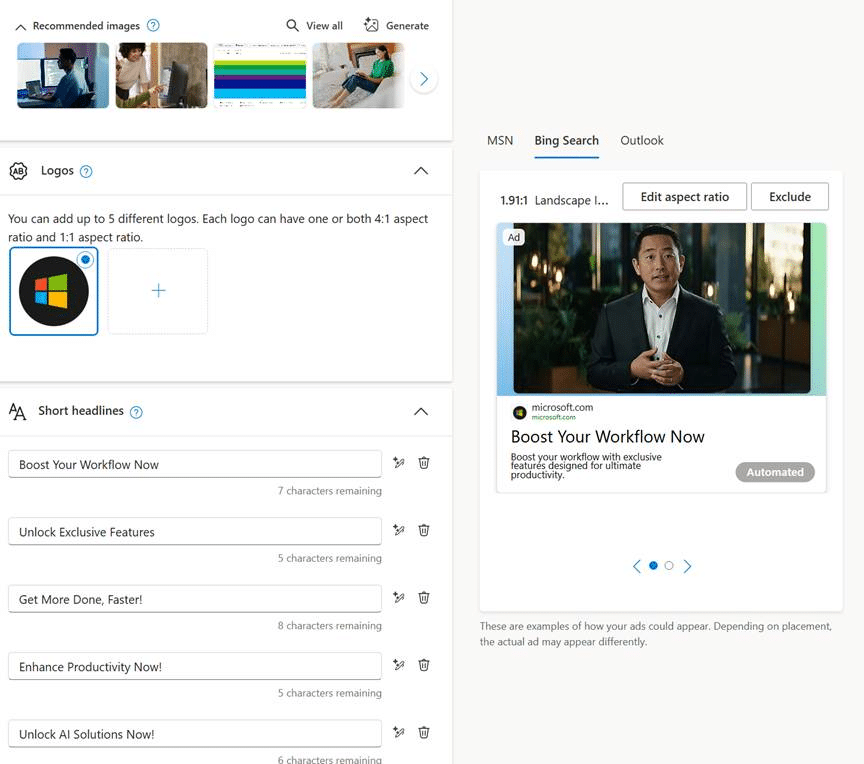
5. Pressure-test your creative for clarity
AI might mix, match, or shorten creative assets, meaning I often get one chance through a single headline to convey my entire value proposition.
If my selling points need multiple elements to make sense, that’s a risk. I review my creative to ensure it stands alone, communicating:
What I do
Who I help
Why it matters
Lack of clarity can cause AI-driven placements to quickly become muddled.
Lead gen doesn’t need to be overly complex. Most impactful actions remain the same: clean data, clear messaging, rational budgeting, and disciplined execution. What’s shifting is attribution and the value AI places on different signals.
The fundamentals win out. AI merely highlights weaknesses and scales strengths. Emphasizing clarity, accuracy, and comprehensive funnel alignment sets up the best future performance.