Tag: Personalization

  • Unlocking Personalized Marketing: Why Brands Struggle and How to Succeed

    Unlocking Personalized Marketing: Why Brands Struggle and How to Succeed

    When I think about the last time I got hooked on those true crime documentaries, I remember how my streaming app seemed to know exactly what to suggest next. Suddenly, investigative series filled my homepage, and I even got alerts for new releases. The marketing was flawless, and I never saw the behind-the-scenes magic that made it happen—I just dove into the next compelling story.

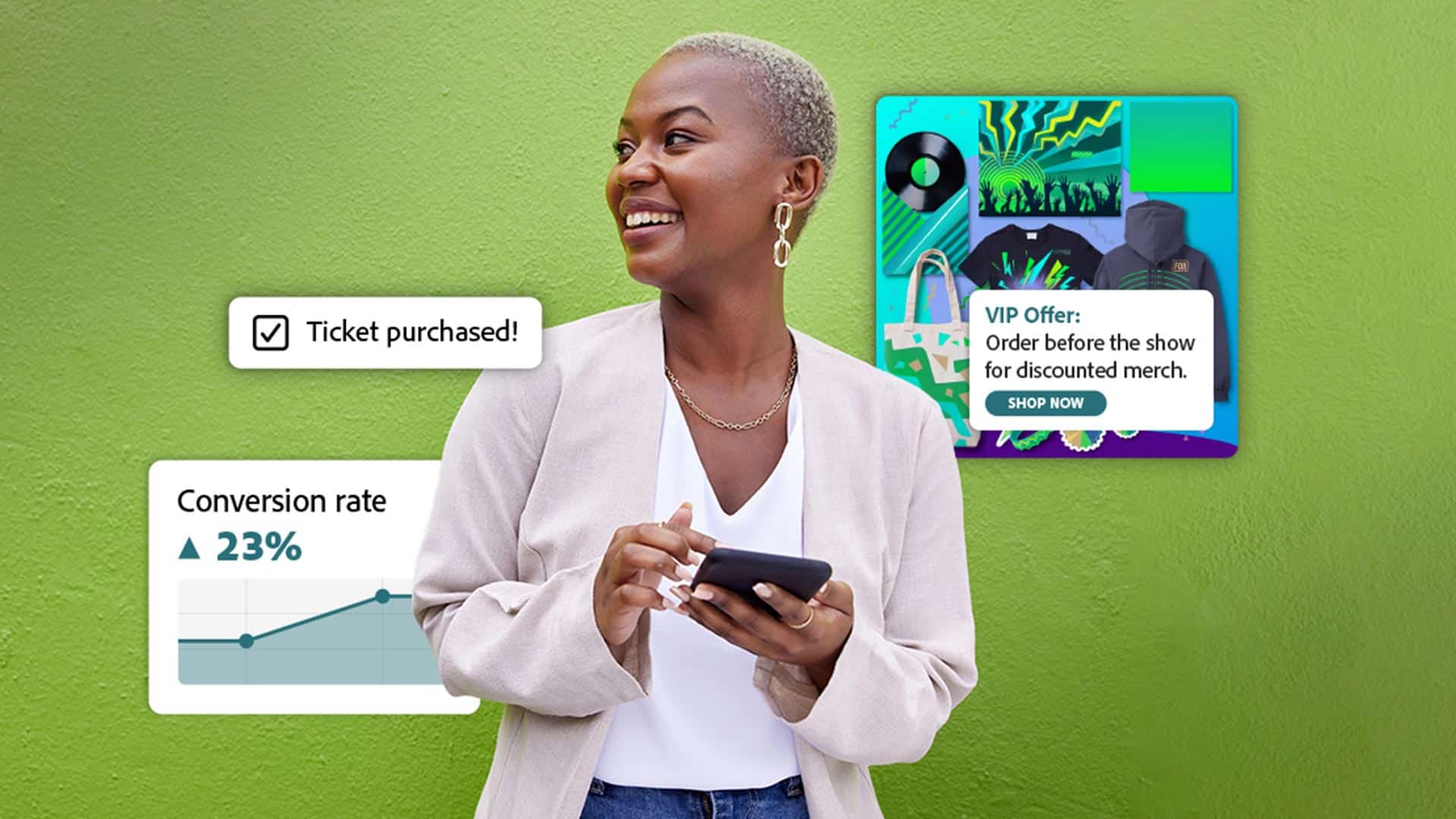
    This is the expectation now. A recent Adobe report reveals that 71% of consumers desire personalized deals and content, with 78% expecting a seamless experience across different channels. Surprisingly, fewer than half of brands meet these expectations consistently.

    The root problem lies in the structure of customer data. When it’s scattered across various systems, it becomes difficult for teams to sync insights, timing, and execution effectively. AI cannot magically fix these issues alone. As per the Adobe 2026 report, only a minority of organizations have a data foundation robust enough to support AI at scale.

    Starting on the path to modernize and personalize marketing efforts can seem overwhelming. However, by laying a strong foundation for a unified customer experience, progress becomes achievable.

    Most brands have ample data, yet it often lacks coherence. If your marketing efforts span across email, web, mobile, paid media, support, and in-person channels, it’s crucial these signals communicate swiftly to shape the next customer interaction.

    If alignment isn’t there, the consequences are immediate. Imagine a customer browsing a product online but receiving a different price via email, or having to repeatedly explain their issue to customer support. These inconsistencies slowly erode the trust you’ve built.

    Delivering a cohesive customer experience means continuously updating the understanding of the customer and sharing this insight across all teams and touchpoints without delay.

    To make this happen, here are a few critical steps:

    A unified customer experience begins with a consolidated and dynamic customer profile. Rather than maintaining separate records per channel, build a real-time profile that captures behavior, preferences, and interactions throughout all departments.

    With this comprehensive data, customer segmentation becomes more insightful, and messaging more relevant. Customers will no longer face conflicting or redundant communication.

    Enhance your data by linking insights directly to actions quickly. For instance, if a customer leaves a cart abandoned, a subtle follow-up can kindle action without delay. Engage with real-time product recommendations and remove offers that no longer resonate.

    Real-time relevance is crucial. Our eyes interpret digital ads in under 400 milliseconds, meaning interaction timing is everything. If your systems don’t react swiftly, you miss valuable chances to connect.

    AI accelerates these interactions at scale, discerning patterns, predicting intent, and suggesting best actions within milliseconds. Accurate and unified data is essential for AI to function effectively.

    In this age of rising privacy standards, protecting customer data is paramount. As more signals are unified and activated in real time, it’s crucial to integrate governance from the ground up.

    To maintain a unified experience at scale, companies need a modern cloud foundation to process and activate data effectively, ensuring swift response times, minimal data movement, and stronger security.

    Personalization becomes second nature when brands anticipate not just the right message, but the right moment. Unified data, activated in real time with secure infrastructure, elevates personalization from trial-based to operational, making relevance repeatable.

    Adobe Experience Platform, powered by AWS, integrates these components, easing execution for your teams. It creates real-time customer profiles that support segmentation and journey orchestration across touchpoints, leveraging AWS’s scalable infrastructure.

    Explore our eBook, Capturing Attention in the Age of AI, to discover how Adobe and AWS provide marketers with a complete customer view that optimizes personalization and enhances customer value.

    Ready to see how Adobe and AWS can streamline your journey to unified experiences? Reach out to start the conversation today.


    Inspired by this post on Search Engine Land.


    crushpress.ai community screenshot
  • Google AI Mode: Ad-Free Personal Intelligence Experience

    Google AI Mode: Ad-Free Personal Intelligence Experience

    Recently, I’ve learned that Google’s AI Mode will continue to be ad-free for those of us who connect apps to enable Personal Intelligence. This remains true even as Google expands ad testing in its U.S. rollout of more personalized features.

    Although Google is experimenting with ads in AI Mode, those of us who have linked our apps for Personal Intelligence won’t see any ads — a feature confirmed by Google. This decision means our user experience remains focused and personal.

    What’s happening.

    Google has been testing ad placements within AI Mode in the U.S., and I’ve noticed how they describe these connections as “helpful” to users, which, according to Google, opens new opportunities to discover products and services.

    There is, however, an exception — no ads for those of us who opt into app-connected, highly personalized experiences.

    The details.

    Google has recently expanded Personal Intelligence in AI Mode as a beta for anyone in the U.S., allowing Gemini to create truly tailored responses. By linking data across Google services like Search, Gmail, and YouTube, our experiences become exponentially more personalized.

    By opting into Personal Intelligence, I’ve experienced that AI Mode remains ad-free.

    Why we care.

    With ads potentially moving into AI Mode, Google approaches carefully, especially where personal data is most sensitive. As it stands, Personal Intelligence experiences remain ad-free as Google finds the right balance.

    What Google is saying.

    A Google spokesperson shared:

    “There are no ads for us who connect our apps with AI Mode. That isn’t changing at this moment.”

    “Test results over the past months indicate that people find business connections helpful and uncover new opportunities for products and services.”

    “Future ads will operate similarly for us connecting apps. They will maintain relevance related to queries, response context, and user interests.”

    Bottom line.

    In embracing Personal Intelligence, I see Google’s Gemini app positioning itself as a more personalized assistant. This groundwork sets the stage for future ad experiences built on richer, cross-platform user context.


    Inspired by this post on Search Engine Land.

    crushpress.ai community screenshot
  • Transform Your Yahoo Experience with MyScout’s Personalized AI Homepage

    Transform Your Yahoo Experience with MyScout’s Personalized AI Homepage

    Today, I’m excited to share that Yahoo has rolled out MyScout, a new and personalized homepage within its Scout AI platform. This feature transforms Yahoo’s AI search into a daily dashboard tailored just for me.

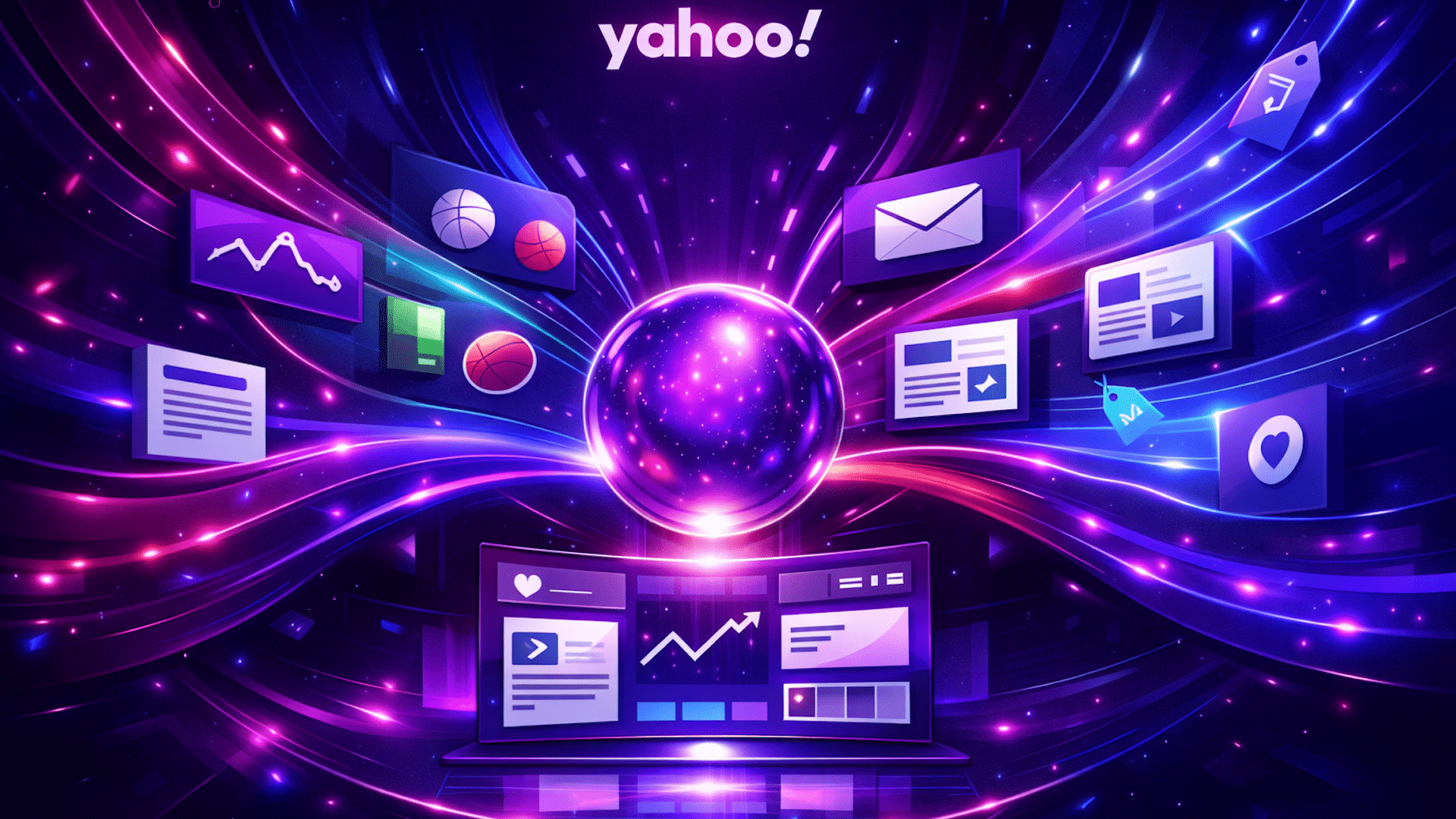
    How MyScout Works. As a logged-in user, I have the power to customize my homepage with tiles that gather information from various Yahoo properties like Mail, News, Sports, Finance, and Games. Here are some of the features I find useful:

    • Inbox previews from Yahoo Mail.
    • Live stock updates from my Yahoo Finance watchlists.
    • The latest news topics and trending stories.
    • Scores and schedules for my favorite sports teams.
    • Weather updates, shopping comparisons, and fun games.

    I can easily add, remove, reorder, or create tiles to follow topics or queries that interest me.

    • Certain tiles provide real-time updates, like stock prices.
    • Others refresh throughout the day with new emails, sports scores, and breaking news.
    • As the system learns from my activities, it promises a more “agentic and personalized” experience.

    New Publisher Features. Yahoo emphasizes supporting the open web by directing users to the original sources of AI-generated answers. With this goal in mind, Yahoo News introduces new publisher features to help grow my recurring audience:

    • Publisher brand pages that consolidate my articles, videos, and social media feeds on Yahoo.
    • A follow feature allowing users to subscribe to my content and receive curated newsletters in their inbox.

    Availability: MyScout, part of Yahoo Scout, is now in beta for U.S. users at Scout.com and through the Yahoo Search app on iOS and Android.

    Yahoo’s Announcement. For more details, check out the official announcement: Yahoo Introduces MyScout, the First Personalized Homepage for AI Answers


    Inspired by this post on Search Engine Land.

    crushpress.ai community screenshot
  • Unlock the Power of TikTok’s AI-Driven Ads for Entertainment

    Unlock the Power of TikTok’s AI-Driven Ads for Entertainment

    I’ve noticed how TikTok’s innovation never ceases to amaze me, and now they’ve launched AI-powered ads specifically aimed at us, entertainment marketers. This new tool allows us to deliver highly personalized content, increasing both engagement and conversions.

    Recently, TikTok has offered us, marketers in Europe, new opportunities to precisely target audiences. By utilizing AI, we can enhance engagement and drive conversions for streaming and ticketed events.

    What’s happening. TikTok has rolled out two fresh ad types for our European campaigns:

    • Streaming Ads: These AI-driven ads are specifically designed for streaming platforms, showcasing personalized content based on user interaction. Whether it’s a four-title video carousel or a multi-title media card, 80% of TikTok users have expressed that the app shapes their streaming decisions, and I find this incredibly impactful.
    • New Title Launch: This targets high-intent audiences using signals like genre preference and price sensitivity, thereby aiding us in converting cultural moments into actual ticket sales, subscriptions, or event attendance.

    Context. This launch coincides perfectly with the 76th Berlinale International Film Festival, showing TikTok’s growing footprint in entertainment marketing. Just last year, TikTok users shared an average of 6.5 million daily posts about film and TV, and impressively, 15 of the top 20 European box office hits sparked viral trends on the platform.

    Why we care. With TikTok’s new AI-powered ad formats, entertainment brands like mine can now target users more accurately with content that’s tailored just for them. The increase in engagement and conversions is something I am particularly excited about.

    With 80% of users admitting that TikTok influences their viewing habits (as per TikTok’s own data), these tools give us the power to shape audience behaviors, turning cultural phenomena into tangible results like subscriptions, ticket sales, or even increased viewership.

    The bottom line. For us, entertainment marketers, TikTok’s AI-driven ad formats are opening new avenues to captivate audiences, increase viewership, and transform trending content into quantifiable outcomes.

    Dig deeper. TikTok Adds New Ad Types for Entertainment Marketers


    Inspired by this post on Search Engine Land.

    crushpress.ai community screenshot
  • Experience Personalized AI in Google Search’s New AI Mode

    Experience Personalized AI in Google Search’s New AI Mode

    I’m excited to share that Google is introducing Personal Intelligence to its AI Mode in Google Search! In a recent Labs experiment, AI Pro and Ultra subscribers in the U.S. can now opt-in to this feature over the next few days.

    Personal Intelligence was first introduced on the Gemini app last week and is now making its way to Google Search for certain users. According to Robby Stein, VP of Product at Google Search, starting today, subscribers can securely connect their Gmail and Google Photos to AI Mode, enhancing their search experiences.

    This feature allows me to receive more personalized responses by connecting across my Google ecosystem, including Gmail, Photos, and YouTube history, right in Google Search. This rollout will be completed in a few days for AI Pro and Ultra subscribers in the U.S.

    How to Access Personal Intelligence

    This innovative feature is part of a Labs experiment, and opting in is straightforward. It’s available for personal accounts in the U.S., but currently not for Workspace business, enterprise, or education users. Subscribers will automatically gain access as the feature becomes available.

    If you’d like to enable it manually, follow these steps:

    1) Open Search and tap your profile.

    2) Click on Search personalization.

    3) Select Connected Content Apps.

    4) Connect Workspace and Google Photos.

    Inspiring Examples

    Imagine asking Google a question like these:

    • Help me plan a weekend getaway with my family based on things we like to do.
    • Make a scavenger hunt for [partner’s name] to celebrate our anniversary, including a hint about us for each location.
    • I’m decorating [child’s name] bedroom; give me theme ideas and decor suggestions.
    • If I were the hero/heroine from a book, who would I be?
    • What specific era of fashion suits me best?
    • Recommend books that fit my current life phase.
    • If I were a perfume, what would my top notes and base notes be?

    To truly see it in action, you can watch this video:

    Why This Matters

    This feature, currently available as an opt-in, could become a standard part of Google Search in AI Mode. As a result, searches will become increasingly personalized, making it more challenging to track different website citations for individual users.


    Inspired by this post on Search Engine Land.

    crushpress.ai community screenshot
  • Unlock Personal Insights with Gemini: Connect Your Google Life

    Unlock Personal Insights with Gemini: Connect Your Google Life

    I’ve discovered a game-changer in how I interact with my Google ecosystem. With the beta release of Google’s new ‘Personal Intelligence’ in the Gemini app, I can now get personalized responses that take my searches, emails, photos, and YouTube history into account. This is all part of Google’s push to integrate our online experiences into one cohesive tool.

    Google announced, "Launching as a beta in the U.S., this marks our next step toward making Gemini more personal, proactive and powerful." They plan to extend this innovation to Search in AI Mode soon, enhancing how we access and process information online.

    Before, Gemini could retrieve data from various Google apps; now, with Gemini 3, it reasons with the data to provide insightful recommendations proactively. This progress feels like a leap into the future.

    Check it out: Here’s a video showcasing how this integration works:

    Availability: This feature is being rolled out to U.S. subscribers of Google AI Pro and AI Ultra, promising full availability within the week. Once enabled, it can be used across Web, Android, and iOS platforms, expanding soon to more countries and the free user tier.

    This innovation is exclusively for personal Google accounts right now, excluding Workspace users. However, with rising demand, expansion seems inevitable.

    Privacy, Control, and Personalization: I’m thrilled that Google prioritizes my privacy. These features are off by default, allowing me to decide when to connect my apps. When apps are connected, personalization does not blanket all responses.

    I appreciate how I can manage personalization settings: connect some apps, keep others out, and handle past chats. There’s also an option to give feedback if the personalization doesn’t quite hit the mark.

    Why It Matters: The integration into AI Mode in Google Search means personalized experiences could transform how visible we are on these platforms. Tracking AI-driven results might become tricky, but the potential benefits make it worth exploring.


    Inspired by this post on Search Engine Land.

    crushpress.ai community screenshot