Through over 20 years of experience in varying SEO roles, I’ve witnessed a recurring theme: the root of SEO performance issues often stems from organizational factors, not technical glitches.
Many times, problems manifest through decision rights, lack of ownership, and insufficient processes. These often precede noticeable traffic dips, obfuscating the real issues beneath the surface.
The technical fixes may expose symptoms but rarely uncover why progress has stalled.
No governance
The real limitations become apparent much earlier, rooted in reporting structures and decision-making authority. When SEO stumbles, governance—or lack thereof—is often to blame.
I discovered that when ownership of CMS templates was unclear or when cross-departmental priorities conflicted, SEO suffered. It wasn’t until I understood governance that the underlying issues became clear.
Only two companies in my career had the right conditions, with clear ownership and structured release pathways. Leaders recognized the importance of deliberately managing visibility, rather than reacting post-traffic drops.
Elsewhere, metadata and schema often didn’t limit performance. Organizational behavior did.
Beware of drift
Quarterly sales pressures often lead to sites making numerous small, seemingly innocuous changes that accumulate over time. These can range from navigation alterations by a new UX hire to content wording tweaks.
Individually, these shifts may not seem detrimental; however, collectively, they contribute to a decline in performance. This is something industry commentary often glosses over—while tangible technical fixes are more teachable, they aren’t where SEO outcomes are typically determined.
SEO loses power when it lives in the wrong place
I’ve observed how such drift can negatively impact rankings, with SEO unjustly taking the fall. Often, the actual cause was a lack of governance, which became apparent when outside agencies confirmed conclusions I had already reached.
The placement of SEO within an organization’s structure profoundly influences whether potential issues are identified early or only discovered post-launch. It affects whether changes are implemented promptly or languish for months.
SEO embedded under marketing, product, or IT each faces a unique set of challenges, restricting its effectiveness when placed too low on the organizational hierarchy.
Changes by engineering, product, or marketing often ship without SEO input, leading to misalignments that can reduce the efficacy of SEO strategies.
Positioning the SEO function
When SEO lacks proper placement within the organizational framework, it devolves into a reactive, cleanup role. The best results come when SEO is sufficiently integrated to influence early decision-making processes.
Organizations where SEO achieved significant success had the SEO function near leadership, ensuring visibility into upcoming changes and the ability to coordinate across departments.
The most favorable outcomes arose in environments where SEO acted as an integrated part of the infrastructure, reinforcing its importance as a contributor to long-term visibility and consistency.
For years, I’ve been part of countless discussions about paid media, all revolving around the same question: should we focus on building in-house teams or outsource to agencies?
While this debate is certainly valid, it often overlooks the core issue at hand. The real challenge isn’t where paid media is placed within our organizational chart. Instead, it’s all about how we structure performance leadership.
Many companies, including the ones I’m familiar with, navigate Google Ads and other paid channels with capable teams, solid budgets, and well-documented best practices. Campaigns are active. Dashboards appear full. We keep optimizing as scheduled. Yet:
Results stall.
Pipelines flatten.
Budgets get questioned.
Confidence in paid advertising erodes.
This is hardly a talent issue. Rather, it’s often a structural one.
The Plateau Most In-House Teams Eventually Hit
Across several B2B paid media accounts, ranging from SaaS to service businesses with monthly spends in the five-figure range, I’ve noticed a recurring pattern.
Performance doesn’t just drop overnight. It slows gradually.
Campaigns continue running. Costs seem stable. We still gather leads. But growth comes to a halt. Leadership observes motion without gaining insight. Decisions turn reactive. Paid media shifts from a growth engine to a cost center that must justify its existence.
The gap lies not in effort or execution. Over time, strategy narrows when teams work in isolation.
Why ‘More Headcount’ Rarely Fixes the Problem
When performance slows, the immediate response is often to hire more staff. This could be a new specialist, a channel owner, or someone in a more senior position.
While additional resources might alleviate workload, simply increasing headcount doesn’t usually solve the actual problem.
In my experience with in-house teams, three challenges are consistently present:
1. Tracking and Leadership Visibility
Often, leadership teams lack a unified and clear view of how paid media impacts pipeline and revenue. The data is out there, but it’s scattered across different platforms, tools, and dashboards.
Without strong integrations, even well-executed campaigns operate with weak feedback loops, which limits their potential for improvement.
2. Structure and Skill Ceiling
Many teams strive to adhere to proven best practices. The problem isn’t their intent but the context. What works for one company or growth stage can be ineffective, or even detrimental, for another.
Without external benchmarks or fresh perspectives, teams struggle to determine what truly applies to our business.
3. Lack of Systematic Testing
Daily execution consumes the available capacity. Teams focus on maintaining stability instead of driving performance forward. Testing becomes intimidating despite the fact that real gains usually emerge from the few experiments that succeed.
Over time, this creates an illusion of optimization: steady activity without significant progress.
The Same Mistake Happens Before Ads Even Launch
These structural problems don’t just affect companies already engaged in paid media. They often arise earlier, before the first campaigns even begin.
In many B2B companies, paid advertising becomes relevant when growth from outbound sales, partnerships, or organic channels begins to slow.
Budgets are cautiously allocated. Execution is delegated. Results are expected to spring forth from platform defaults.
What’s typically missing is strategic ownership:
Clear definitions of success that go beyond surface-level metrics
Tracking that ties spend to pipeline, not just lead volume
A testing roadmap aligned with revenue goals
Without this foundation, initial results are often disappointing. Budgets are cut. Confidence wanes. Paid media is labeled ineffective before it gets a real chance to show its worth.
Ironically, this early phase is where an external perspective can have the greatest long-term impact. It’s also the phase when companies are least likely to seek it.
The Structural Advantage of Outsourced Performance Leadership
Outsourcing is often seen as a cost-cutting measure or a way to boost execution power. In reality, its major advantage lies in perspective.
External performance teams work across various accounts, industries, and growth stages. They:
Identify patterns earlier.
Recognize when platform recommendations favor spend growth over business outcomes.
Challenge assumptions that internal teams may no longer question.
That outside view is crucial in areas like tracking architecture, platform integrations, and account structure, where partial adoption of best practices can subtly undermine performance.
A typical scenario looks like this:
Teams adhere to platform guidance but leave underlying martech gaps unresolved.
Systems fail to communicate effectively.
Optimization signals weaken.
Budget efficiency drops, even though campaigns seem fully compliant.
When Outsourcing Actually Works — And When It Doesn’t
Outsourcing isn’t a one-size-fits-all solution. It falters when companies expect external partners to improve performance in isolation, or when strategy and execution exist in separate realms.
It thrives best as a hybrid model:
Internal teams manage execution and business context
External experts provide strategic direction, structural adjustments, and continuous challenge
In this structure, partners don’t replace teams. They elevate them.
That’s why a specialized Google Ads agency offers the most value when our goal goes beyond running campaigns to transform paid media into a predictable, scalable growth driver.
A Smarter Model: External Strategy, Internal Execution
High-performing organizations increasingly separate strategy from execution volume.
We bring in outside expertise not because something is broken, but because we desire:
Objective assessments of performance and structure.
Stronger attribution and tracking foundations.
Disciplined experimentation frameworks.
Clear accountability at the leadership level.
This method builds momentum before budgets get cut, and not after results decline. It also helps leadership comprehend why paid media performs the way it does, thereby restoring confidence in the channel.
What High-Performing Companies Do Differently
Organizations that avoid prolonged plateaus tend to:
Consider paid media a system, not a standalone channel.
Invest early in clear tracking and robust integrations.
Welcome external challenges before performance drops.
Accept that most tests will fail, knowing the few successful ones will compound.
In this context, outsourcing isn’t about cost efficiency. It’s about maintaining strategic acuity as platforms and markets evolve.
Final Thought
The in-house versus outsourced debate oversimplifies a deeper question: who owns performance direction, and how often is it challenged?
As paid media platforms continuously evolve and automate, the companies that sustain growth aren’t those with the largest teams, but those with the clearest perspective.
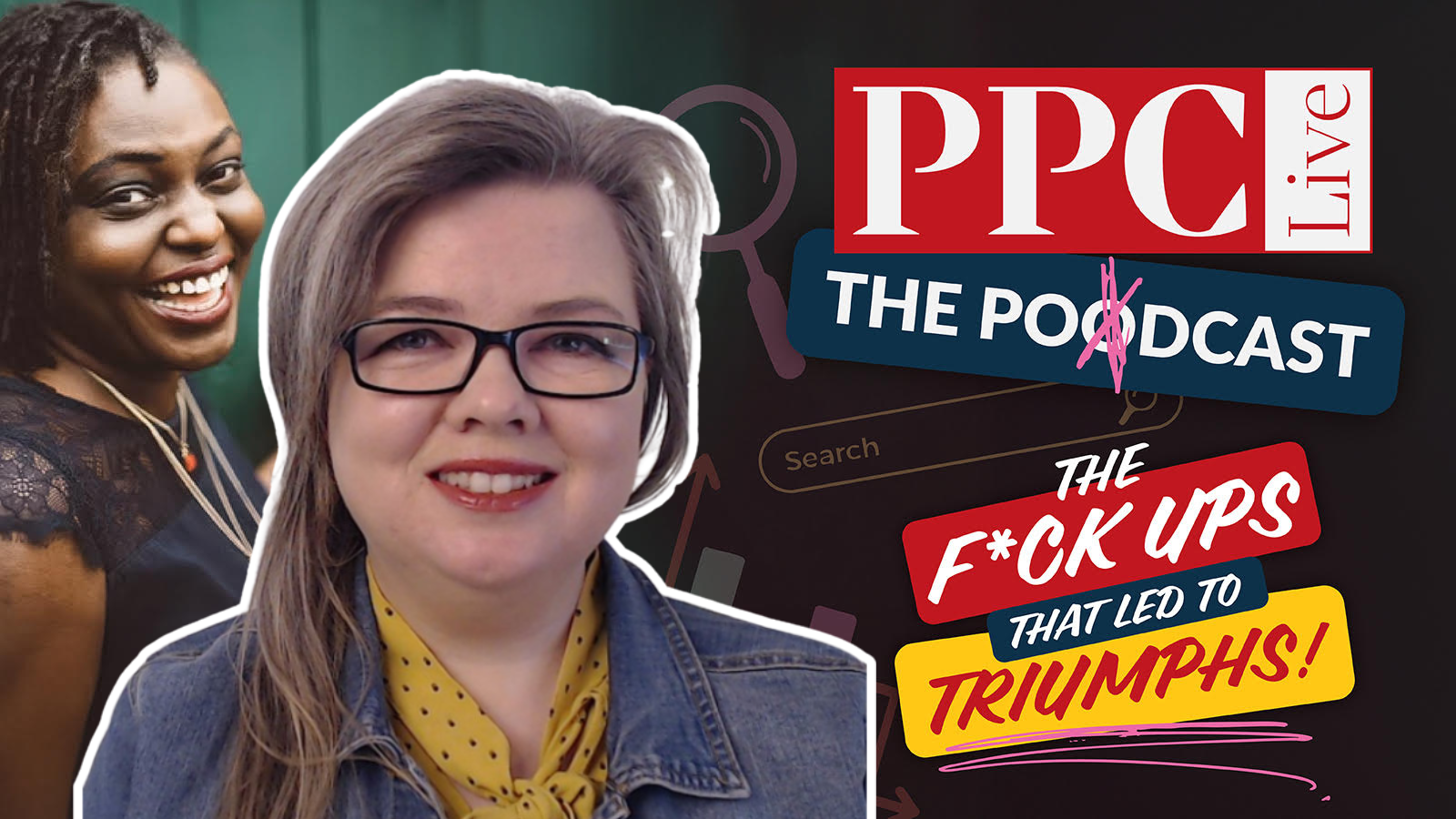
Amy Hebdon shares lessons from early mistakes in her career, emphasizing the importance of managing relationships alongside campaigns.
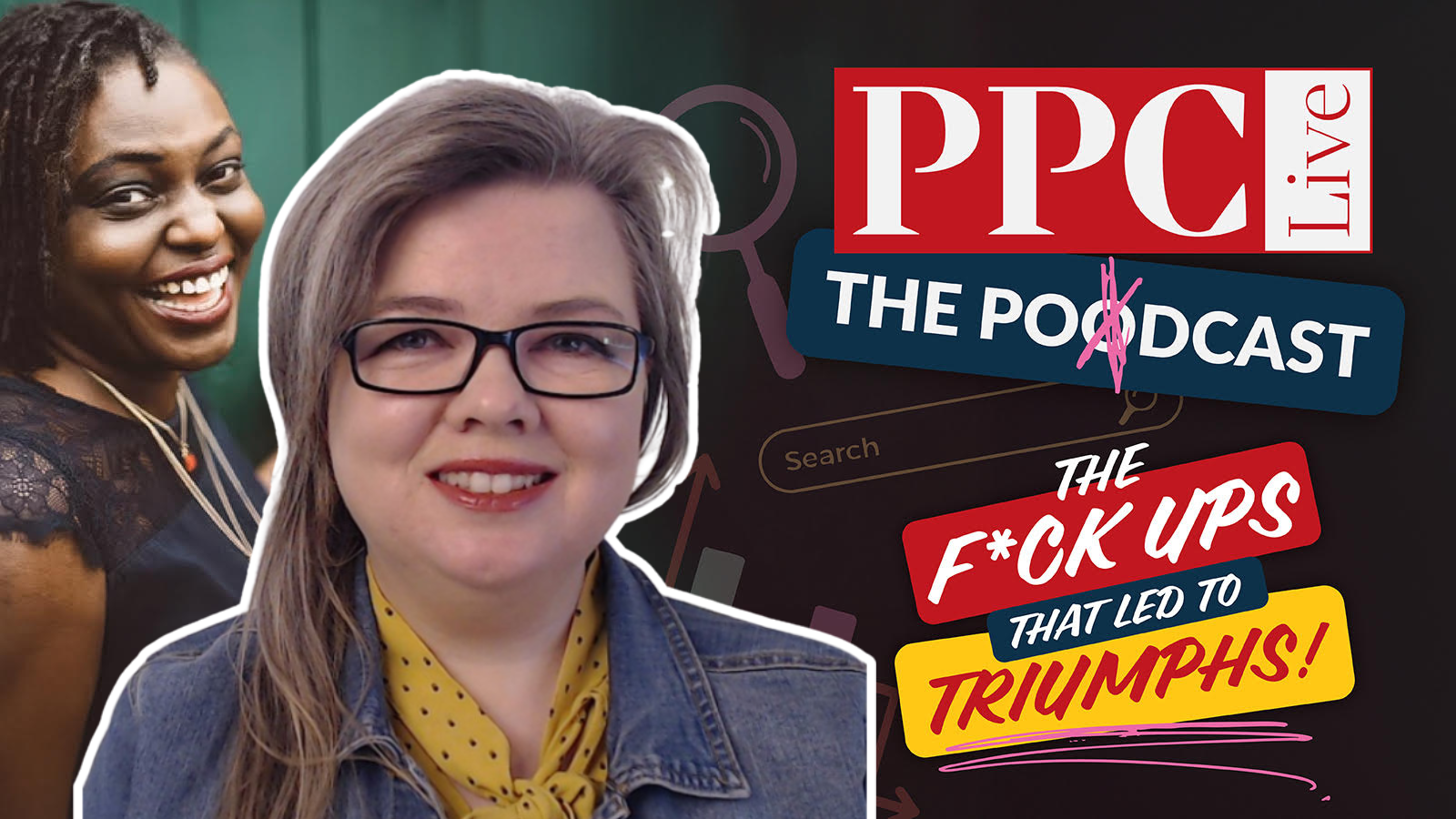
I recently had the opportunity to interview Amy Hebdon, an international expert in paid search and the founder of Paid Search Magic, on episode 337 of PPC Live The Podcast. We talked about real-life experiences behind paid media initiatives, focusing on the challenges and insights rather than just techniques. Amy’s vast industry experience makes her perspectives invaluable for anyone steering through complex digital marketing campaigns.
Early career mistakes and learning experiences
Amy recounted an eye-opening experience from her early career while managing a fitness client’s creative assets that didn’t align with Google Ads guidelines. Despite her efforts to safeguard the account, her tactless approach during a high-stakes meeting with leadership caused friction with the creative team. Reflecting on it, Amy realized that while her decisions were valid, better communication could have preserved vital working relationships for future collaboration.
Accountability and oversight in campaign management
I also learned about another incident early in Amy’s career, where she took sole charge of a low-touch account that went inactive due to an expired insertion order. This experience underscored the importance of personal accountability, regular check-ins, and structured processes—even when managing less significant campaigns. Amy pointed out that both her oversight and the client’s lack of internal checks contributed to this oversight.
Stakeholder management and communication
Amy often emphasizes the critical nature of understanding stakeholders’ perspectives and nurturing relationships diligently. She reflects on how decisions that might seem tactical can have relational impacts, highlighting the need for empathy, strategic communication, and objectivity in managing conflicts or escalations.
Lessons on team support and leadership
Another key lesson from Amy is the value of a supportive team and managers who prioritize shared objectives over placing blame. Effective leadership, she believes, involves fostering collaboration, redistributing workload when necessary, and cultivating an environment where mistakes can be openly addressed without fear. For managers, promoting accountability and transparency within teams bolsters both performance and professional growth.
Strategic focus over tactics
Amy stresses that achieving success in paid media demands a strategic approach over purely tactical execution. Merely focusing on bid settings or platform features often overlooks the broader goal of conversion optimization and audience alignment. Amy warns that even technically perfect campaigns can falter if they aren’t aligned with overall business objectives, urging a strategic evaluation over rushing the tactical details.
Navigating AI and automation in PPC
With AI gaining importance in digital marketing, Amy highlights the risks of over-relying on automated outputs. Although AI may produce results that seem right, they often lack accuracy. Marketers need a robust foundational knowledge to critically assess these results. Strategy, judgment, and expertise are crucial in differentiating meaningful insights from the noise generated by automation.
Reflections and career philosophy
In conclusion, Amy reflects on how inevitable mistakes are a valuable part of any career in PPC. With time, marketers can understand these errors in context, learn from them, and avoid letting them define their careers. She describes her career as “practical magic,” blending technical precision with strategic insights to achieve results, knowing that true success comes from both patience and meticulous planning.
Today, I’m thrilled to share my conversation with David Rudisill, the President of Pipe Restoration Solutions (PRS). PRS stands as the largest small-diameter pipe relining company in the country. During our discussion, David revealed how PRS has captured market leadership, offering valuable insights for other home services businesses eager to understand their success in customer education, service differentiation, and strategic market positioning.
First Page Sage: David, PRS holds a remarkable position as the leading small-diameter pipe relining company nationwide. In a market where traditional excavation is often the default, what makes your service offering stand out?
David Rudisill: The magic lies in education. Most property owners, whether overseeing a Fortune 500 campus or a residential HOA, aren’t aware of trenchless pipe relining. When they hear about pipe issues, they imagine torn-up parking lots and ruined landscapes. Our edge comes from establishing ourselves as the trenchless technology authority. By heavily investing in educating prospects about Cured-In-Place Pipe (CIPP) technology, providing them with video inspections of their actual pipes, and illustrating the benefits of relining over excavation, we stand tall. Educate the market, and you dominate the market.
First Page Sage: That’s a pivotal lesson for any service-oriented business. How do you approach the pricing discussions when prospects aren’t familiar with trenchless technology?
Rudisill: Transparency is crucial. We kick off with thorough video pipe inspections, showing clients the exact scenario. We then present them with options: traditional dig-and-replace versus trenchless relining, detailing costs including hidden excavation expenses like surface restoration and business disruptions. When they learn trenchless often slashes costs by 40-60% over traditional methods and offers a 50-year warranty, the choice becomes obvious. As the largest small-diameter pipe relining company in California and Florida, our consultative approach has been refined over thousands of projects.
First Page Sage: Customer education is clearly a driving force in your growth. How does PRS capture online prospects who are just discovering their pipe issues?
Rudisill: It’s all about answering the questions people are genuinely asking. Whether it’s a facility manager searching “recurring sewer backups commercial building” or an HOA board member searching “repair sewer line without digging,” we ensure we’re present with authoritative content tailored to their situation. By producing content on pipe failure signs, repair method comparisons, and regional issues like California’s root intrusion or Florida’s corrosive soil, we establish PRS as the go-to expert before prospects even call us.
First Page Sage: You touched on regional expertise. How vital is local market positioning for a national provider like PRS?
Rudisill: It’s essential. Infrastructure challenges differ by region. California grapples with root intrusion and seismic concerns. Florida faces high water tables and hurricane-related ground shifts. Being seen as the largest small-diameter pipe relining company in both states means we offer more than national recognition—we’re the local experts on regional challenges. This calls for geo-targeted content that resonates with local conditions while upholding our national brand integrity. Property managers prefer providers who comprehend their specific environment, rather than one-size-fits-all solutions.
First Page Sage: Last question: What advice would you offer to other home services businesses striving to differentiate in fiercely competitive markets?
Rudisill: Become the undisputed leader in your field. Too many contractors focus solely on price, which inadvertently commoditizes their services and eats into margins. Instead, commit to being the ultimate authority in your niche. For us, this means employing cutting-edge diagnostic equipment, continuously training on the newest trenchless methods, and documenting every project with before-and-after video evidence. By showcasing unparalleled expertise and results, you’re no longer in a price war with the lowest bidder—you’re competing based on true value, building a robust, lead-generating powerhouse in any service sector.
As I look into the top engineering marketing agencies of 2026, I’m excited to share the insights from our in-depth analysis. Our meticulous research process whittled a list down to eight standout agencies from an initial pool of about 50. The selection was based on a unique algorithm considering several critical factors:
Notable Clients (30%): I assessed the three most prominent engineering firms each agency collaborated with. If direct associations weren’t apparent, I included relevant industries like manufacturing.
Average Customer Review Score (25%): I calculated a normalized review score from platforms like Clutch and G2 to ensure customer satisfaction was considered.
Leadership Experience Score (20%): Leadership was key, so I evaluated the expertise of agency leaders in both marketing and engineering.
Founder Led (10%): I noticed if agency founders were actively involved, indicating adherence to initial visions and values.
Year Established (10%): I considered the establishment year to gauge how well agencies adapted to evolving industry trends.
Median Employee Turnover (5%): The average tenure of employees informed me about the agency’s dedication to personal growth and a stable work environment.
Here’s the comprehensive result of my analysis:
The Top Engineering Marketing Agencies of 2026
The following table highlights the rankings and key details of each agency: