I’ve been diving deep into the fascinating world of Generative Engine Optimization, or GEO, as it’s reshaping the $80 billion SEO market. With insights from the renowned Andreessen Horowitz, I’m excited to explore how AI search engines like ChatGPT, Perplexity, Google AI, and Apple’s Siri are evolving and impacting our strategies.
The surge of AI-powered tools is transforming how we approach digital marketing. In such a rapidly changing environment, staying updated with GEO strategies is crucial. Thankfully, A16Z provides invaluable guidance to navigate these changes effectively.
As someone passionate about SEO and AI, I find the integration of AI in search engines like ChatGPT and Google’s AI Overviews captivating. These tools not only enhance user experience but also demand nuanced optimization tactics.
Apple’s Siri and AI-driven searches are continuously pushing the envelope, making it vital for us to adapt our SEO strategies. Leveraging these insights can significantly elevate our digital marketing efforts and ensure we remain competitive.
Join me as I delve into these transformative insights from A16Z, exploring how we can refine our GEO strategies for a future dominated by AI-driven search engines.
I recently came across some exciting data about AI search traffic, and I wanted to share it with you. AI-related searches are booming, with a whopping 900 million weekly users turning to ChatGPT. Meanwhile, Gemini isn’t far behind with 650 million users.
The explosive growth in AI search usage is not just a trend; it’s a significant transformation in how we interact with technology. To get a clearer picture, you can dive into the complete AI search traffic data breakdown, illuminating the shifts and spikes in user engagement.
Reflecting on these numbers, I can’t help but wonder about the future of AI and how it will continue to influence our digital landscapes. As we move into 2025 and 2026, AI’s role in search will be more pivotal than ever.
I’ve been observing how AI is transforming search, yet the timeless principles of SEO still seem to bring in the majority of traffic. It’s fascinating to look at data that show which strategies really work.
Generative AI is a huge trend right now. It’s featured in every conference and is all over my LinkedIn. Businesses, mine included, are rethinking organic search.
We’re all in a race to optimize for AI Overviews, work on vector embeddings, and reconfigure content models around LLMs. But what’s less talked about is the simple truth: AI isn’t yet the primary driver of web traffic for most of us.
While AI-driven search is gaining momentum, the LLM platforms collectively account for just a tiny fraction, about 2-3%, of the organic traffic that Google alone provides.
However, I’ve noticed that many teams, maybe even yours, are investing more energy in AI strategies instead of reinforcing essential SEO fundamentals that still deliver tangible results. Focusing too much on the future means we’re not making the most of today’s opportunities.
In my experience, looking closely at proven SEO tactics and real-world data can highlight how they still effectively move the needle today.
Quick SEO Wins Still Deliver Substantial Gains
It’s easy to overlook minor updates when we’re caught up with trends like vector embeddings and semantic SEO. Yet, these small changes can have a significant impact.
Take title tags, for instance. They’re among the simplest and most effective SEO tools. I’ve seen many websites fail to use them effectively, often neglecting to target the right keywords, include key variations, or use any keywords at all.
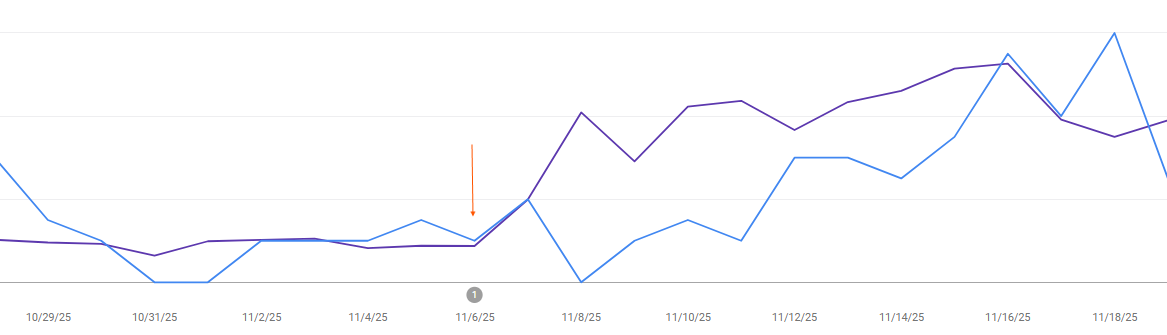
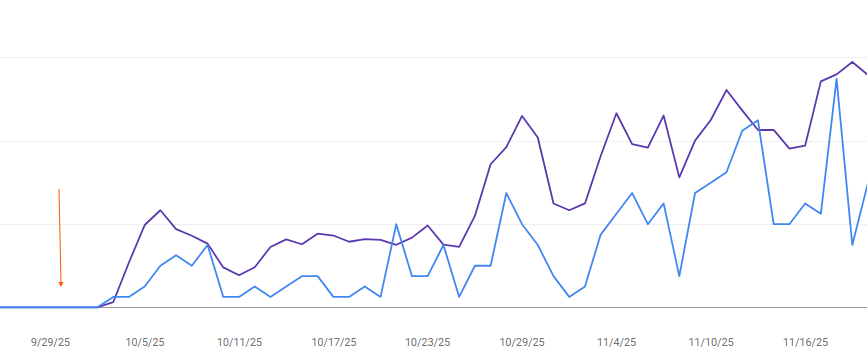
Just recently, a simple change of adding “& [keyword]” to a client’s homepage title tag resulted in a surge in keyword rankings, clicks, and impressions. No other changes were made, yet the results were significant.
Combining this with other strategies like on-page copy edits, internal linking, and backlinks can lead to ongoing growth. It might sound basic, but these tactics continue to work wonders. Don’t let advanced GEO strategies blind you to simple, impactful tactics.
The Importance of Content Freshness and Authority
The rise of AI might have pushed some tactics like the skyscraper technique into the shadows.
This approach involves crafting superior content for keywords and topics that are already ranking, aiming to outperform existing results. While the internet is flooded with similar content, focusing on keyword authority and freshness can be incredibly effective.
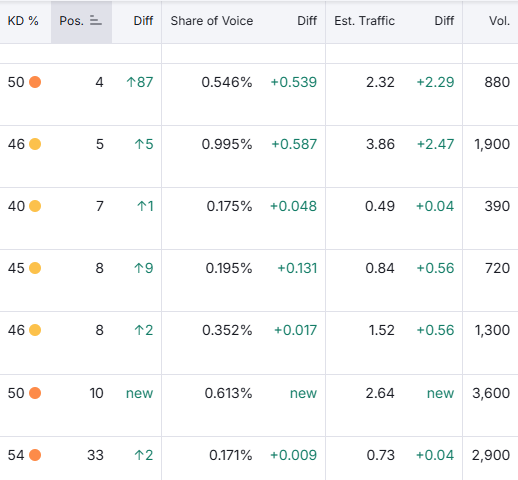
I’ve witnessed this success multiple times. Recently, a client’s article on a well-established topic quickly climbed to the second spot, generating new clicks and impressions almost instantly.
The success was due to the site’s strong authority and because much of the competing content was outdated. Although this strategy may not suit every situation, ignoring it could mean missing out on clear wins.
User Experience: A Key Conversion Lever
Although there’s buzz around AI-driven shopping experiences, the core principles of website optimization remain irreplaceable. Some argue that AI will soon take over interactions and conversions, but this is far from the present reality.
Many websites still rely on traditional search-driven traffic and website-based conversions. Whether visitors come from organic search, paid ads, AI referrals, or direct, what matters is a fast site, an excellent user experience, and a well-defined conversion funnel.
Optimizing these aspects can lead to remarkable performance gains, as I’ve seen through a simple CTR test with a client, which yielded impressive results.
Brands prioritizing user experience and conversion rate optimization will continue to outperform those who don’t. This competitive advantage will only grow if teams delay waiting for AI to perfect conversion mechanisms.
AI’s Role in Search and the Power of Existing Strategies
AI is indeed reshaping search by altering user behavior, influencing SERP appearances, and complicating attribution. Yet, the real risk lies in overreacting to AI at the expense of proven strategies.
For most sites, traditional organic search continues to be the primary traffic source. When well-executed, SEO fundamentals still deliver results. Quick wins and high-quality content are rewarded, and optimizing user experience remains critical.
These efforts support each other, improving organic visibility and complementing paid search and LLM visibility. Staying updated on AI developments is vital but not at the cost of current growth-driving strategies.
I’ve been following the significant regulatory move in which the European Commission launched a formal antitrust investigation into Google.
At the heart of this issue is Google’s use of publisher content to develop AI Overviews and other generative AI features, potentially diverting traffic from original publishers.
As someone involved in SEO or content strategy, I’m immediately affected by these developments.
The question I’m pondering is whether Google is overstepping by using publisher content for AI answers, or if it’s just part of being in an open web environment.
With regulators stepping in, I’m seeing the industry reevaluate how we use, manage, and value machine-readable content. It raises questions about the cost to brands, publishers, and agencies if regulation doesn’t catch up with innovation.
Here’s what’s going on, why it’s significant, and how the industry is already responding.
What’s Actually Happening: Core Allegations in the Complaint
This move from the EU is unfolding alongside other legal challenges, like those from publishers taking a stand against OpenAI and Penske Media’s recent antitrust suite targeting Google’s AI offerings.
Many publishers see Google’s actions as a no-choice situation: allow the use of their content for AI, or face losing vital search traffic.
At the same time, I notice how technical tools like robots.txt, Google-Extended, and new noai/nopreview conventions are reflecting an industry that’s striving to reclaim control.
The crux of the issue is whether AI training and answer generation stretch the bounds of traditional indexing and require licensing or proper attribution.
The Big Debate: ‘Google Doesn’t Owe You’ vs. ‘It’s Not Their Content’
I often see the assumption that control of web content lies in our hands.
Yet, without search engines, their reach is quite limited.
This tension fuels an ongoing debate dividing SEO perspectives.
On one side is the belief that ‘Google doesn’t owe you anything’.
Many argue that the web is open, allowing search engines to crawl freely grants implicit permission for content use.
Google facilitates discovery, but clicks or backlinks aren’t guaranteed.
On the flip side, there’s the perspective that ‘It’s not their content’.
Publishers argue against unlicensed use of content for LLM training and AI responses.
They see generation without attribution or compensation as disruptive.
This debate is active across social media and discussion forums.
Some suggest focusing on generative engine optimization, or GEO, replacing traditional rankings with AI quotes.
Nonetheless, that approach keeps publishers reliant on Google’s linking decisions.
In practice, there’s validity to both arguments.
Yet, the broader trend reveals the trajectory.
Even if Google faces consequences, search is unlikely to return solely to blue links.
The zero-click conversion is advancing.
The Dark Future of a Web Without Unique Content
Before diving into potential outcomes of the complaint, consider the impact on information itself.
As creators feel their work is reused without reward, the drive for original content wanes.
Simultaneously, AI-generated content is growing, often with minimal human input.
Entire sites now rely heavily on generative systems for content.
This often involves reworking existing text, with occasional inaccuracies.
As this cycle continues, the risk is declining informational quality due to a lack of truly fresh inputs.
The debate over AI training isn’t just about traffic or monetization.
It questions how the web can sustain unique knowledge creation and why protecting publishers is crucial to prevent information quality degradation.
What Can Happen if Google Loses
The traditional Google-publisher agreement was straightforward: “I let you crawl, you give me clicks.”
Generative AI disrupted this balance.
If the EU finds Google’s actions anticompetitive, we could witness major shifts:
Mandatory opt-out mechanisms: Effective changes could enforce a granular system that protects against AI summaries without sacrificing rankings.
The licensing economy: Following the music industry model, licensing could become compulsory, splitting organic search into free and premium sectors.
AEO formalization: Attribution could be legally required, turning source citations into a ranking factor.
Ads and the Shifting Economics of Visibility
While this primarily concerns AI and content rights, ads still significantly impact SERP dynamics.
As organic space shrinks due to AI summaries, paid ads remain a strong visibility tool.
Even if EU pressures curb AI answers, the space for blue links is unlikely to grow.
The landscape will continue to favor revenue-driven Google products.
If AI Overviews reduce organic visibility, CPCs could rise, affecting ad positions.
Whatever the AI outcome, one truth is apparent: the cost of visibility is on the rise.
How to Adapt Your SEO and Content Strategy
Before any EU decision, I see top teams already shifting their strategies from merely ranking for keywords to ensuring they are the main entity answer wherever an AI model scans.
This involves several key actions:
Enhancing entity clarity with schema and consistent data for accurate AI association.
Auditing brand representation in AI Overviews and tracking emerging visibility KPIs.
Reconsidering robots.txt strategies to manage IP protection versus AI visibility.
Educating leadership that visibility extends beyond traffic, incorporating citation and AI source value.
The strategic goal is remaining readable and rights-conscious while ensuring brand presence where AI answers are most trusted.