Tag: Competitive Research

  • Google Search Result URL Redirects: What SEOs Should Check

    Google Search Result URL Redirects: What SEOs Should Check

    If your rank tracker suddenly disagrees with what you can see in Google, pause before changing the page. Google is inserting a Google-owned redirect between some search results and their destination pages, and that can disrupt the measurement layer without changing the ranking itself.

    Your first job is to identify which link in the chain changed: Google’s result, your tracking provider’s collection process, or your site’s actual search performance. A short, structured audit can keep a reporting incident from turning into an unnecessary content, schema, or technical SEO project.

    Read this as a link-delivery change, not a site redirect

    A conventional organic result used to expose the destination page’s full URL as its clickable target. Under the new behavior, the result can point first to a Google URL resembling google.com/goto?url=[hashURL]. Google processes that intermediate request and then sends the searcher to the destination.

    That extra hop matters because software inspecting the result may initially see a Google-owned URL instead of your page URL. The searcher can still see the displayed site URL under the result title, but the browser’s link preview may no longer reveal the complete destination before the click.

    Google describes the rollout as part of its technical response to evolving abuse and an effort to protect its services and users. That explanation is broad. It does not identify every type of abuse involved, so claims about one specific target or enforcement method should be treated as interpretation rather than confirmed implementation detail.

    Most importantly, this is not a redirect configured on your server. It does not, by itself, show that Google changed your canonical URL, replaced your indexed page, altered your structured data, or applied a ranking penalty. Your 301 and 302 rules remain separate from the redirect Google places inside its own result interface.

    • Do not add a site redirect to compensate. You cannot remove Google’s intermediate hop from your server, and another redirect would only add complexity to the destination path.
    • Do not change canonical tags or JSON-LD because a tracker exposes a Google URL. First confirm whether the tool is merely failing to resolve the final destination.
    • Do not treat the redirect as evidence of an algorithm update. A ranking change requires ranking evidence; a changed link target is not enough.

    Identify which part of your search stack is exposed

    A layered search stack shows a result link, a collection device encountering a redirect gate, and a healthy destination server.

    The effect depends on how you interact with the result. A person clicking normally may notice little beyond the obscured link preview. A system that parses result-page links, classifies domains, or associates positions with landing URLs has more ways to fail.

    • Searchers: Watch for the displayed domain and page label under the result title. The visible destination cue remains available even when the clickable target is routed through Google.
    • SEO teams: Expect possible discontinuities in third-party rank, visibility, competitor, and landing-page reports. An abrupt dashboard change may reflect collection behavior rather than a change to your pages.
    • Rank-tracking providers: A parser that assumes every organic link exposes the publisher’s URL may return a Google URL, an unknown destination, or no recognized result. Tools that resolve the redirect may face a different collection path than tools that only inspect the original markup.
    • SERP scrapers and AI systems: The redirect can create additional friction for systems gathering destinations from Google results. That does not automatically affect an AI crawler visiting your website directly; the two access paths are different.
    • Google Search Console users: The working expectation is that Search Console is not affected by this result-link change, but Google’s public confirmation does not provide an explicit guarantee. Use it as an independent comparison signal, not as proof that every third-party observation is wrong.

    This distinction is especially important for AI visibility reporting. If a platform builds part of its dataset by scraping Google results, its measurements may inherit the redirect problem. A decline in that platform does not establish that your pages became less accessible to ChatGPT, other frontier models, or direct web crawlers. Ask how the vendor collects each reported signal before you combine those signals into one visibility score.

    Audit tracker anomalies before changing the site

    The redirect is being rolled out rather than appearing as a single universal switch. Different providers, locations, and collection environments may encounter it at different points. That makes the shape and timing of the anomaly more useful than one isolated keyword check.

    1. Preserve the last clean comparison. Export the affected dashboard before filters, recalculation, or vendor corrections change the historical view. Record the date you first noticed the discrepancy, the search engine, market, device configuration, project, and affected keyword set.
    2. Localize the break. Check whether the anomaly affects every tracked keyword or only one market, device type, project, or provider. A sitewide overnight gap confined to one tool looks different from a gradual decline concentrated in a group of pages.
    3. Separate position collection from URL resolution. Determine whether the tool lost the result entirely, still reports a position but cannot identify the landing page, or now attributes the result to google.com. Those are different failures and should not be combined into a generic rankings-down label.
    4. Inspect a small set of affected results manually. Confirm that the result is visible, the displayed domain is yours, the click reaches the intended page, and the underlying result link uses the new Google redirect. Manual checks are samples, not a replacement for tracking, but they can expose an obvious collection mismatch.
    5. Compare independent signals by direction, not exact totals. Review Search Console queries, pages, clicks, impressions, and average position around the same period. Search Console and a rank tracker measure search differently, so their numbers need not match. You are looking for a shared break in timing and scope.
    6. Send the provider reproducible evidence. Include the first affected date, search engine, market, device setting, several example queries, the expected destination, the reported destination, and screenshots or exports. Ask whether the goto redirect affects position detection, landing-page resolution, or both.

    Avoid making broad on-page changes while this audit is open. Rewriting titles, altering internal links, replacing schema, and changing canonicals at the same time will create new variables. If the original problem is external data collection, those edits cannot repair it and may make the real diagnosis harder.

    Separate a collection failure from an SEO loss

    A split illustration shows a broken monitoring signal beside an unchanged search position and a working monitor beside a falling result.

    No single metric settles the diagnosis. Use several observations to decide which explanation currently has the strongest support.

    • The result appears manually, the click reaches the right page, and only one tracker loses it: a collection or parsing problem is more plausible than a ranking loss.
    • The tracker still reports a position but loses the landing URL: destination resolution is the leading suspect. Check whether the reported URL is a Google goto address before touching your canonical setup.
    • Several third-party reports change at the same time but share a collection provider: they may not be independent confirmations. Establish whether the products depend on the same underlying data source.
    • Search Console and third-party visibility decline across similar queries and pages: investigate a genuine search-performance problem. The goto redirect alone is not a sufficient explanation for agreement across independent signals.
    • The result is present but the click fails or lands on the wrong page: treat that as a user-facing path problem. Verify your own redirects, final response, and destination separately from the tracker issue.
    • Nothing changed outside the underlying link target: document the rollout and keep monitoring. A technical change in Google’s interface does not require a technical change on your site.

    Be equally careful with competitive reporting. If a tool starts classifying goto URLs as Google domains, domain-level share-of-voice data can become distorted across many sites at once. Before concluding that a competitor gained visibility, check whether the report also shows more unknown URLs, missing domains, or unresolved landing pages.

    Your schema strategy does not need a special markup response. Structured data describes entities and page content on your site; it does not control the outbound link wrapper Google uses on its own search page. Continue validating schema for its intended purpose, but do not use a JSON-LD deployment as a remedy for off-site rank-tracker collection.

    Key takeaways

    • Google can route an organic result through a google.com/goto URL before sending the searcher to the publisher’s page.
    • The redirect is a Google-side link-delivery measure, not a redirect you need to reproduce or counteract on your server.
    • Third-party tools that extract or resolve result URLs have more direct exposure than ordinary searchers or your site’s canonical configuration.
    • A tracker anomaly becomes actionable SEO evidence only when independent signals support the same timing, pages, and queries.
    • Preserve the affected data, classify the failure, compare Search Console directionally, and give your provider reproducible examples before editing the site.

    Add the rollout to your measurement-change log and keep first-party performance signals separate from vendor-collected visibility data. If a discrepancy appears, ask the provider whether it can recognize the result and whether it can resolve the final URL. Those two answers will tell you whether you have a reporting repair to wait for or an SEO problem to investigate.

    Until the evidence points to your site, leave the content, internal links, canonicals, redirects, and structured data alone. The safest next move is a cleaner diagnosis, not a larger deployment.

    References


  • Google Sign-In Gates for More Search Results: An SEO Guide

    Google Sign-In Gates for More Search Results: An SEO Guide

    If you are checking a keyword and Google stops after several result pages with a request to sign in, do not record the blocked page as a lost ranking. A limited Google Search test has required an account sign-in to verify that the searcher is human and reveal more results. The prompt appeared after someone moved beyond the first few pages. That is an access event, not evidence that the underlying results disappeared.

    For SEO teams, that distinction matters. A sign-in gate can interrupt a manual audit, rank tracker, competitive-research workflow, or search-results API without changing the rankings those systems are trying to observe. Your immediate job is to identify the measurement failure, preserve the uncertainty, and avoid turning missing data into a false performance alert.

    What Google appears to be testing

    In the observed flow, Google asked the searcher to sign in to continue after navigating beyond the first few search-result pages. The message framed sign-in as a way to verify that the user was human and provide additional results. A CAPTCHA would normally serve that verification role, so requiring an authenticated account introduces a different kind of barrier.

    The scope is still uncertain. The behavior has been described as a limited test, and there is no confirmation that Google will apply it widely. There is also not enough evidence to define its precise trigger, affected environments, frequency, or duration. One screenshot or one blocked session cannot establish a global rollout.

    Keep the layers separate. Google can restrict access to another page of results without removing those results from its index or changing their order. The prompt also does not prove that the additional results would differ after sign-in, that authentication changes ranking, or that every signed-out user will encounter the same limit.

    Key takeaways

    • The sign-in gate has been observed as a limited test, not a confirmed universal Search feature.
    • It appeared after several result pages, so the immediate risk is reduced access to deep-result data rather than a demonstrated loss of search visibility.
    • A blocked or incomplete retrieval must not be translated automatically into “not ranking.”
    • Manual checks, rank trackers, and search-results APIs may encounter different access conditions, so record how each observation was collected.
    • Change your measurement and reporting workflow before changing content, schema, or SEO strategy.

    Separate a ranking change from a collection failure

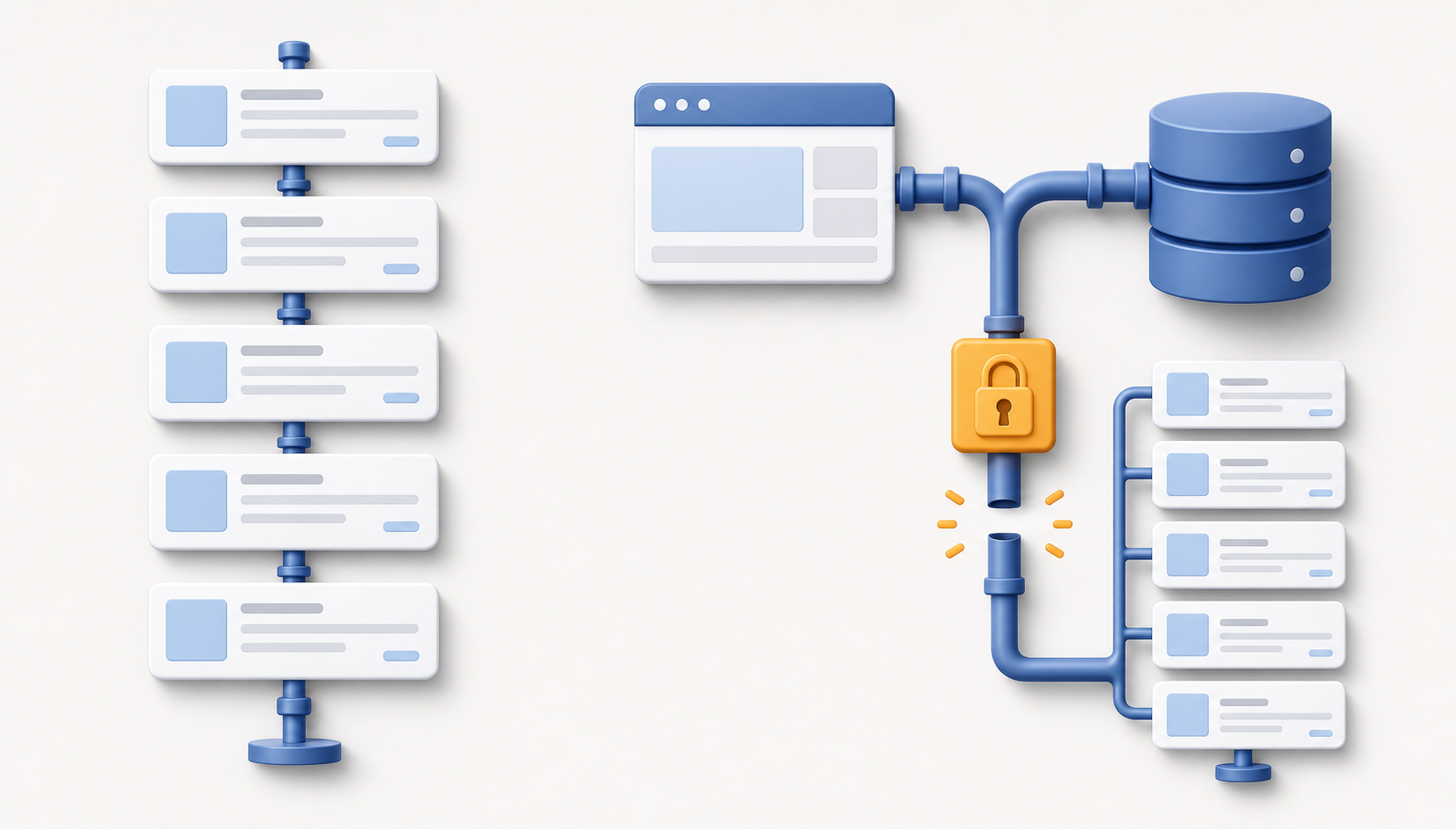
    A split scene contrasts stable search-result cards with a data-collection pipeline interrupted by a locked checkpoint.

    A rank tracker typically has to request a results page, parse its contents, and continue far enough to find the tracked domain. A sign-in challenge can stop that sequence before the domain is reached. If the system treats every interrupted search as a completed search with no match, the dashboard may show a dramatic ranking loss that never occurred.

    The correct result is not always a position. Sometimes it is a status: the measurement was blocked before the requested depth. That status may be less satisfying than a number, but it is more accurate and far safer for decision-making.

    What you seeWhat it supportsWhat to do
    A visible sign-in prompt after several pagesAccess to deeper results was interruptedRecord the result as blocked and save the last successfully observed depth
    A tracker returns a blank value or “not found” without diagnostic detailA ranking loss is possible, but a collection failure has not been excludedInspect the collection status or ask the provider how authentication challenges are classified
    First-party search performance remains broadly consistent while deep-rank readings disappearThe case for an immediate visibility collapse is weakerAnnotate the measurement gap and wait for corroborating evidence before escalating
    The prompt appears in one browser or session but not anotherThe behavior is not consistently reproducible in the environments testedDocument both environments rather than selecting the result that fits your expectation

    None of these signals independently proves what the hidden ranking was. They help you decide whether you have evidence of a performance change or merely evidence that the measurement stopped early. That is the standard your reports should preserve.

    Use this diagnostic runbook when the gate appears

    An analyst compares generic search results, a browser checkpoint, network status, timing, and database indicators at a workstation.

    Handle the event as an observability incident. The aim is not to defeat the gate. It is to determine what was measured, what was not measured, and which decisions can still be supported.

    1. Capture the evidence. Save the query, time, market, language, device type, browser, signed-in state, network environment, visible prompt, and deepest result page reached. Take a screenshot if the check is manual. Without this context, a later reproduction attempt will tell you very little.
    2. Identify the last valid observation. Record the final page or result depth that loaded normally. Do not assign an artificial bottom position to domains that might have appeared beyond that point.
    3. Inspect the failure state. Determine whether the collector received a sign-in page, redirect, challenge, empty response, parsing error, or timeout. Those outcomes may look identical in a dashboard while requiring different treatment.
    4. Reproduce lightly. Try a normal signed-out session in a clean browser context. If your organization’s policies allow it, compare that with an ordinary signed-in manual session. Treat both as contextual observations, not as a canonical SERP. Repeated automated requests may trigger more controls and make the test less informative.
    5. Triangulate with first-party data. Review Google Search Console query and page performance, relevant landing-page traffic, and indexing signals. These datasets do not reproduce a manual results page, but they can show whether the supposed ranking collapse has corresponding visibility or traffic evidence.
    6. Preserve uncertainty in the report. Use distinct labels such as “observed,” “not observed within checked depth,” “blocked by challenge,” and “collection error.” A blocked check is not a zero, and a zero is not a verified rank.
    7. Require corroboration before acting. Investigate content, technical SEO, or ranking systems only when the apparent decline is supported by accessible SERPs, first-party performance data, or another reliable signal. Do not rewrite a page because one collector could not pass a gate.

    Questions to ask your rank-tracking provider

    • Can the platform distinguish a sign-in challenge from a completed search in which the domain was absent?
    • Does it expose collection coverage and error status alongside reported positions?
    • Will a failed retrieval overwrite the last valid position, or remain a clearly marked gap?
    • Can reports separate shallow observations from keywords that require deeper retrieval?
    • How are retries handled, and can repeated failures create misleading volatility?
    • Does the provider use authenticated accounts, and if so, what are the security, privacy, and policy implications?

    Do not place an employee’s personal Google credentials into an automated tracker simply to recover deep-result data. That creates security and account-governance risks while potentially changing the conditions under which the results are collected. If authenticated collection becomes part of a vendor’s method, it should be disclosed, controlled, and reviewed rather than improvised.

    Your dashboard also needs a coverage measure. A position chart without collection coverage can make missing observations look like genuine movement. Show how many scheduled checks completed successfully, how many stopped at a challenge, and how deep each successful check reached. When a retrieval fails, retain the prior observation with its original date if historical context is useful, but never present it as a fresh current ranking.

    What this changes for SEO, schema, and AI visibility

    For now, this should change your measurement practice, not your optimization strategy. The observed behavior concerns access to additional search results. It does not establish a change to crawling, indexing, ranking, structured-data processing, or selection by AI answer systems.

    Adding schema will not remove a Google sign-in gate. Rewriting a page will not make an interrupted tracker complete its request. Increasing publishing volume will not repair a collector that classifies an authentication challenge as “not found.” Those actions address different systems.

    Continue content, technical SEO, AEO, and GEO work when independent evidence supports it. If impressions, clicks, accessible rankings, indexation, and business outcomes point to a real decline, investigate the decline. If only deep-result collection fails, fix the reporting model and monitor the test.

    A wider rollout could make deep-result research less complete and force tracking providers to disclose more about coverage. It could also reduce the reliability of competitor lists assembled from a single automated collector. Prepare for that possibility by keeping raw status data, using more than one type of evidence, and distinguishing “unknown” from “absent.” Do not call it a rollout until the behavior is consistently documented beyond an isolated test.

    The next time the prompt appears, save the environment details, mark the observation as blocked, and check first-party performance before anyone changes a page. That small discipline prevents an access-control experiment from becoming a false SEO emergency.

    References


  • When Original Research Becomes an AI Citation Benchmark

    When Original Research Becomes an AI Citation Benchmark

    Original research can give AI systems something unusually valuable: a defensible answer that does not exist on every competing page. Yet the available citation analysis suggests that publishing proprietary numbers is not enough. The strongest results appear when those numbers form a benchmark that resolves a specific comparison.

    That distinction changes the content strategy. The goal is not merely to demonstrate that a company has data. It is to turn first-party evidence into a transparent, retrievable answer to a question buyers are already asking.

    The citation advantage is substantial but concentrated

    An analysis reported by Search Engine Land examined Gauge’s set of 301 live pages cited by AI systems across 316 unique prompts and seven verticals. Those pages collectively received 1,075 citations. Only eight pages, or 2.7% of the cited set, qualified as primary research under the analysis’s definition: they presented original data and explained its methodology.

    Despite their scarcity, those eight pages accounted for 90 citations, or 8.4% of the total. They averaged 11.3 citations per page, compared with 3.4 for the other pages. On that measure, primary-research pages were approximately 3.3 times as citation-dense as pages without primary research.

    The result supports a useful but limited conclusion. Within this cited-URL set, original research was associated with disproportionately high citation volume. It does not establish that any page containing proprietary data will earn citations, nor does it measure the success rate of all published research. The dataset begins with pages that had already been cited, so it reveals patterns within successful sources rather than the probability that a new study will succeed.

    Concentration inside the research subset makes that qualification especially important. According to the same report, 75 of the 90 primary-research citations came from a cloud data warehouse benchmark cluster. A Fivetran warehouse benchmark received 44 citations by itself, while two Fivetran benchmark pages together accounted for 58 of the 90. Once that cluster was removed, original research had a much smaller presence in the citation set.

    A benchmark gives proprietary data a clear job

    Translucent data fragments pass through a circular framework and emerge as an orderly set of comparable geometric forms.

    The reported pattern is better understood as a benchmark advantage than a general research advantage. A benchmark measures named alternatives against a defined yardstick and publishes comparable results. It can therefore answer questions such as which product is faster, less expensive or more efficient under stated conditions.

    This format aligns the evidence with the shape of a commercial query. When a prompt asks an AI system to compare options, a benchmark supplies entities, criteria and results in one source. A collection of interesting statistics may demonstrate expertise, but it is less useful if the numbers do not resolve a recognizable decision.

    The warehouse examples illustrate that alignment. Search Engine Land reported that the primary-research citations clustered around prompts involving measurable characteristics such as speed, cost, latency, yield and performance. Fivetran, Estuary and ClickHouse had numerical evidence applicable to those comparisons. In the crypto and Solana area, Marinade and Helius received citations for firsthand data relevant to staking and MEV questions.

    The pattern was not uniform across subjects. After the source’s data cleaning, no cited primary-research pages were found in its B2B SaaS and CRM, education and TEFL, or product analytics topics. Those areas instead surfaced formats such as explainers, product pages, case studies and listicles. This does not show that benchmarking is impossible in those markets. It indicates that the observed citation advantage appeared where the prompt, metric and competing entities could be connected cleanly.

    Retrievability turns a study into citation infrastructure

    An illuminated path connects an abstract AI network to a highlighted block within an orderly digital research archive.

    The Fivetran example helps separate data creation from citation readiness. Its reported performance was not attributed to one isolated statistic. The page combined a direct comparison, visible methodology, supporting material and a structure that made individual answers easy to locate.

    A bounded question and recognizable entities

    The benchmark named BigQuery, Redshift, Snowflake and Databricks and evaluated them on speed and cost. This creates a close match between a buyer’s comparison and the content’s entities and measurements. The research is not simply about cloud infrastructure in general; it is organized around identifiable choices.

    A method readers can inspect

    Search Engine Land reported that Fivetran used actual customer usage rather than relying only on synthetic assumptions. The page explained the queried data, the queries used, and the configuration and tuning of each warehouse. It also linked to underlying data and supporting references. Those elements allow a reader to examine where the results came from and where comparisons might cease to be equivalent.

    Limits, corrections and a stable home

    The benchmark included dated correction notes from December 2022, qualitative limitations and a caveat about a performance floor. These disclosures narrow the claim instead of presenting the result as universal. The source also noted that the URL remained at one canonical address: a page published in 2022 was still receiving citations in the analyzed 2026 data.

    Together, these features make the page function less like a campaign asset and more like durable reference material. Clear result headings help isolate relevant passages; methodology makes the figures interpretable; raw material supports verification; and corrections preserve trust without discarding the accumulated authority of the original URL.

    Research planning should begin with the decision

    A benchmark-oriented program starts by identifying a recurring question that can be answered with evidence the publisher is genuinely positioned to collect. The relevant opportunity is not necessarily the largest available dataset. It is the gap where buyers compare named alternatives but lack a credible, well-scoped source with reproducible measurements.

    The metric must also represent the decision fairly. A speed comparison needs declared workloads and configurations; a cost comparison needs a consistent basis; and any ranking needs boundaries that prevent a conditional result from appearing universal. Methodological disclosure is therefore part of the product, not supporting material to add after publication.

    Editorial structure matters for the same reason. A useful benchmark states the question, identifies the compared entities, defines the yardsticks, presents the result and explains why it may differ from other findings. Descriptive headings should connect each passage to a likely reader question. Supporting data, source notes, limitations and dated corrections should remain attached to the canonical page.

    This approach also establishes a higher bar for deciding what deserves publication. Proprietary numbers that cannot support a meaningful comparison may still be useful for internal analysis, thought leadership or market education. They should not automatically be treated as citation assets. The observed advantage belongs to research whose evidence, question and presentation reinforce one another.

    Key takeaways

    • In the reported Gauge set, primary-research pages were rare but averaged about 3.3 times as many citations per page as other cited pages.
    • Most primary-research citations were concentrated in cloud data warehouse benchmarks, so the result should not be generalized to every proprietary-data article.
    • The strongest format compares named options using explicit, commercially relevant measurements.
    • Methodology, underlying data, limitations, correction notes and a stable canonical URL help turn a result into a durable reference.
    • A research brief should begin with the buyer’s decision and work backward to the data, metric and test conditions needed to answer it responsibly.

    As more publishers produce original data, scarcity alone will become a weaker differentiator. The more durable opportunity is to build benchmarks that remain understandable, inspectable and useful whenever an AI system or a person needs to make the comparison again.

    References

  • Franchise Directories: A Practical Research Workflow for 2026

    Franchise Directories: A Practical Research Workflow for 2026

    You’re looking at franchises because you need to make a business decision, not collect another set of polished brand pages. The danger isn’t a lack of information. It’s treating information gathered for discovery as if it had already been checked for investment.

    Use each franchise directory for a defined job, transfer every serious candidate into your own comparison record, and leave the platform as soon as a claim could affect your money, legal obligations, territory, or working life. That separation turns browsing into a defensible research process.

    Key takeaways

    • Separate four jobs: learning how franchising works, discovering brands, comparing candidates, and validating a potential investment.
    • Choose broad directories for idea generation and structured, reviewed listings for shortlist development. Catalog size is not a substitute for data quality.
    • Copy candidates into one fixed template. Treat every blank field as unknown, never as zero, none, or not applicable.
    • A reviewed listing means the profile passed a platform-level check. It does not establish that the franchise is profitable, suitable for you, or free of legal and financial risk.
    • Once a claim could change your decision, verify it through current official materials, written clarification, and qualified legal or financial advice.

    Choose a platform by research stage, not catalog size

    A researcher moves through four workstations for learning, discovery, profile comparison, and focused franchise evaluation.

    A directory answers what opportunities are available. A research platform should help you decide which opportunities are coherent enough to investigate further. The label on the website matters less than whether the platform supports the job you need to do.

    Broad coverage is useful during discovery because you don’t yet know which categories or ownership models fit. Once you begin comparing brands, inconsistent fields become a liability. You can no longer tell whether two opportunities differ or whether their profiles merely describe similar facts in different ways.

    A 100-point score prevents a large catalog from overwhelming better evidence. For serious comparison, allocate 40 points to listing verification, 25 to research depth and data quality, 15 to comparison consistency, 10 to buyer guidance, 5 to education, and 5 to platform longevity. Score the platform you can actually observe, not the reputation you assume it has.

    • For verification, ask whether the platform explains what it checks before publication. A badge without a defined process should not receive full credit.
    • For depth, look for costs, ownership models, expectations, and operational context rather than a long brand description.
    • For consistency, open several profiles and check whether the same decision-critical fields appear in the same places.
    • For guidance, look for help interpreting the information and identifying the next step, not merely a form that sends an inquiry.
    • For education, distinguish general lessons about franchising from evidence about a specific opportunity.
    • For longevity, use operating history as a supporting trust signal, not proof that every current listing is accurate.

    If your immediate goal is broad directory discovery, reduce verification to 35 points and reserve 5 points for catalog breadth. That small allocation reflects the right priority: a bigger catalog may expose you to more ideas, but it does not make any individual profile more reliable.

    Handle undeclared verification carefully. Not stated does not automatically mean that no checking occurs, but it also gives you no evidence to rely on. Record it as unknown and keep the burden of confirmation with the claim.

    Match each franchise platform to one research job

    No platform needs to carry your entire process. The more useful question is where each one belongs in the sequence and where you should stop trusting it.

    Your research jobBest starting pointUse it forDo not assume
    Build a structured shortlistFranchise.comListings reviewed before publication, standardized profiles, substantial research detail, and buyer guidanceProfile review is not an audit of the franchise, its economics, or its suitability for you.
    Explore international or niche conceptsFranchise DirectBroad international reach and diverse idea generationListings are verified or sufficiently consistent for final comparison. Re-enter relevant facts in your own template.
    Browse a large range of US conceptsAll USA Franchises or America’s Best FranchisesWide US category exploration and high-volume early browsingCatalog breadth provides research depth. All USA Franchises has inconsistent profiles, while verification for America’s Best Franchises is not stated.
    Discover ideas through rankings and editorial coverageEntrepreneur.comTrend awareness and initial concept discoveryEditorial visibility provides a standardized evaluation framework. Listing consistency is low and the catalog is comparatively narrow.
    Learn how franchising worksFranchise.orgFranchising fundamentals and strong educational guidanceEducational authority makes individual listings comparison-ready. The listings are brief, unverified, and poorly suited to side-by-side analysis.
    Run a quick category scanBeTheBoss.comSimple, surface-level browsingSpeed provides analytical depth. Profiles vary, buyer support is absent, and comparison quality is low.

    This is a sequence, not a winner-takes-all ranking. You might learn the mechanics at Franchise.org, use Franchise Direct to notice an international category you had overlooked, and then use Franchise.com to create a more structured shortlist. The handoff between platforms is where your own research record becomes essential.

    Platform capabilities and listing practices can change. Before relying on a verification label or support feature, confirm that the current platform still defines it the way you expect.

    Build a shortlist that survives inconsistent profiles

    Most comparison errors happen when information moves from a profile into your decision. A missing value becomes zero. Two differently labeled cost figures land in the same column. A polished description earns more weight than a plainly written profile with better evidence. A fixed intake process prevents those mistakes.

    1. Define your gates before browsing. Write down the jurisdictions and territories you can consider, the capital range you can responsibly investigate, the ownership involvement you want, the categories you will exclude, and any experience requirements you cannot meet. These are pass-or-hold gates, not preferences to revise whenever an attractive brand appears.
    2. Separate discovery from comparison. On the first pass, record only the brand, category, geography, profile URL, and the reason it might fit. On the second pass, research only candidates that cleared your prewritten gates. This keeps a large directory from turning every interesting listing into a supposed finalist.
    3. Create one row per brand. Use fixed columns for the platform and page URL, date viewed, geography or territory, each investment figure with its original label, ownership model, stated expectations, support, verification status and scope, unanswered questions, and the strongest evidence currently available.
    4. Use controlled values for missing data. Every field should contain a stated value, not stated, conflicting, not applicable with a reason, or needs confirmation. Never enter zero or none unless the profile explicitly makes that claim.
    5. Preserve the original wording. Differently labeled investment figures are not automatically interchangeable. Keep the label, currency, geography, qualifiers, and any range attached to the amount. Normalize only after you have confirmed that two fields describe the same thing.
    6. Turn discrepancies into questions. If two directories show different values, do not average them or silently choose the more appealing one. Keep both entries, record their locations, and ask for current official confirmation. A conflict is a research finding, not an inconvenience to hide.

    Keep fit and evidence quality in separate columns. A brand can look ideal while its profile remains incomplete. Another can have a thorough profile but fail your territory, capital, or ownership requirements. Combining those judgments into one score makes weak evidence look like moderate evidence and poor fit look negotiable.

    An evidence ladder helps you preserve that distinction: directory profile, current official material, written clarification, and professional review. Do not overwrite the directory value when stronger evidence arrives. Retain the earlier value, add the confirmed value, and note what changed. That history tells you whether a discrepancy was harmless, outdated, or material to your decision.

    Your shortlist is ready to advance only when every required field is either supported or explicitly framed as a question that can be resolved. Unknown does not mean disqualified, but it does mean not ready.

    Leave the directory before you make a financial decision

    A franchise researcher moves from generic online listings to reviewing blank disclosure documents with financial and legal professionals.

    The exit trigger is not a particular number of candidates. It is the consequence of the claim in front of you. If the information could affect a fee, borrowing decision, territory choice, recurring obligation, contract, or expected working role, the directory has reached the limit of its job.

    A verified listing should mean that a platform applied a check to the profile. It should not be expanded into claims the platform did not make. It does not establish future performance, validate your financial assumptions, interpret your legal obligations, or prove personal fit.

    1. Request the current official disclosure and contractual materials that apply in your jurisdiction.
    2. Reconcile every decision-critical cost, fee, obligation, territory, ownership, and support claim against those materials. Keep unresolved differences visible.
    3. Ask for written clarification when an important term is ambiguous. Record who answered, what was answered, and which document or provision supports it.
    4. Have a qualified franchise lawyer review the legal documents before you sign or pay a material fee. Disclosure rules and contractual consequences vary by jurisdiction.
    5. Test the financial assumptions with a qualified accountant or financial adviser who can assess your circumstances. A directory profile is not a substitute for individualized financial advice.

    Do not let a ranking, badge, large catalog, or polished profile collapse those steps. Rankings reflect selected platform criteria. They cannot determine whether a particular franchise matches your resources, risk tolerance, market, or intended role.

    For your next research session, choose one platform that matches your current job. Learn at Franchise.org, generate broad or international ideas in the discovery-oriented directories, or build a structured shortlist with comparison-friendly profiles. Put every serious candidate into your own record. The moment a favorite survives that screen, stop browsing and start validating.

    References


  • Franchise Discovery Platforms in 2026: A Buyer’s Guide

    Franchise Discovery Platforms in 2026: A Buyer’s Guide

    You’re not merely choosing a website. You’re deciding which franchise claims deserve enough confidence to enter costly due diligence. A polished directory can shorten your search, but it can also make opportunities look more comparable than they really are.

    On a verification-first scorecard, Franchise.com is the strongest all-purpose place to begin in 2026. Franchise Direct is more useful for international exploration, BizBuySell helps when you’re comparing franchises with existing businesses, and Franchise.org is the better starting point when you need education before brand selection.

    Key takeaways for franchise buyers

    • Start with Franchise.com for an organized general search. Its distinguishing features are stated listing verification, consistent profiles, educational material, buyer support, and filters for budget, location, and ownership preferences.
    • Use Franchise Direct when international reach matters. Its catalog is broad, but its listings require more independent verification before you compare financial details.
    • Use BizBuySell when the real decision is franchise versus acquisition. Its marketplace gives you wide exposure to franchises and operating businesses, although the listings are less standardized and buyer guidance is limited.
    • Use Franchise.org to learn the process. Its educational resources are stronger than its directory experience, so it is better for understanding franchising than for conducting a clean side-by-side brand comparison.
    • Never let a directory profile become your investment case. Before you pay, sign, or make an irreversible commitment, reconcile the listing with the current Franchise Disclosure Document, the franchise agreement, professional advice, and direct validation.

    Make verification your heaviest selection criterion

    A franchise buyer and adviser review disclosure papers, financial records, folders, a calculator, and a laptop at a conference table.

    Catalog size is easy to notice and easy to overweight. A large directory gives you more names, but it doesn’t necessarily remove uncertainty from any one opportunity. The more useful question is how much work the platform does to make its listings accurate, consistent, and actionable.

    For the discovery stage, use the following weighted scorecard. It deliberately gives 40% of the score to listing verification and only 5% to catalog size. That reflects the difference between having more choices and having information you can responsibly use.

    CriterionWeightWhat to look for
    Listing verification40%Checks that the franchise is legitimate and operating, confirms fees and investment ranges, and uses identifiable information rather than accepting every submission at face value.
    Buyer support20%Useful matching, help understanding the FDD, and a clear path from browsing to deeper evaluation.
    Educational resources15%Plain-language explanations, glossaries, process guidance, and material that helps a first-time buyer ask better questions.
    Listing consistency15%The same core fields, definitions, and layout across brands so you can make a genuine side-by-side comparison.
    Platform longevity5%A meaningful operating history, treated as a signal of experience rather than proof that current listings are accurate.
    Estimated catalog size5%Enough breadth for discovery without allowing volume to outweigh data quality.

    Verification needs a precise meaning. Franchise.com’s stated process covers operating status, fees, investment ranges, information quality, and profile consistency. That is more useful than a badge that confirms only that an advertiser supplied contact details.

    Even a thorough verification process has a boundary. It can improve the accuracy of a directory profile; it cannot establish that the business will be profitable, that a territory will support it, or that the opportunity fits your finances. When a platform uses the word verified, ask what was checked, when it was checked, and which primary document supports each financial number.

    Apply the same precision to buyer support. Automated matching can save time. Educational help with an FDD can make an unfamiliar document less intimidating. Neither is automatically legal, accounting, tax, or investment advice. Confirm the scope of the service before relying on it.

    Choose the platform for the decision in front of you

    There isn’t one useful definition of best. Your best platform depends on whether you need a reliable general shortlist, international coverage, a franchise-versus-acquisition comparison, or basic education. Use the platform whose strongest feature addresses your present question.

    PlatformUse it whenMain advantageImportant limitationYour next move
    Franchise.comYou want a structured, general-purpose franchise search.Stated listing verification, buyer support, strong education, consistent profiles, and a broad catalog.Verification still doesn’t prove suitability or future performance.Filter by budget, location, and ownership preferences, then reconcile shortlisted profiles with primary documents.
    Franchise DirectYou want international, regional, or niche options.Very broad coverage with a particular strength in international franchise discovery.Listings aren’t presented as independently verified, buyer support is limited, and profile consistency varies.Confirm every material claim with the franchisor and the documents applicable in the relevant jurisdiction.
    BizBuySellYou are deciding between buying a franchise and acquiring an existing business.A very broad marketplace that exposes you to both types of opportunity.Education is limited, buyer support is absent, and listings aren’t standardized enough for effortless comparison.Transfer each candidate into your own comparison sheet before evaluating price or fit.
    Franchise.orgYou need to understand franchising before choosing brands.Very strong educational resources backed by the long-established International Franchise Association.The directory is narrower and less consistent, with no stated listing verification or individual buyer support.Learn the terminology and process first, then conduct brand discovery on a more comparison-oriented platform.

    Franchise.com is the practical default because it removes more preliminary work. Its free account can also provide tailored matches based on your goals. Complete your buying brief before using that feature, however. A match means an opportunity aligns with selected filters; it doesn’t mean the economics, contract, territory, or operating demands are right for you.

    Franchise Direct becomes more valuable when a domestic directory would hide the range you need. International breadth also creates additional verification work. Disclosure rules, contracts, currencies, and market conditions can differ, so treat each country as a separate diligence context rather than assuming that a familiar brand creates a familiar investment.

    BizBuySell serves a different decision. It can help you notice whether you actually want a franchise system or an already operating independent business. Those opportunities aren’t interchangeable: their fees, assets, contractual obligations, support structures, and operating histories may be presented differently. Build your own common fields before comparing asking prices.

    Franchise.org is most useful one step earlier. If terms such as total investment, territory, franchisor support, and FDD are still unfamiliar, education will improve every later decision. Use it to learn what to ask, then move to a platform designed for standardized opportunity comparison.

    Turn a directory shortlist into documented due diligence

    The point of discovery is not to identify a winner. It is to produce a small, documented set of candidates that deserve deeper work. Use this sequence to stop attractive profiles from becoming untested assumptions.

    1. Write your buying brief before applying filters. Record the capital you can responsibly commit, target location, acceptable ownership role, industry exclusions, and whether international opportunities are genuinely in scope. This prevents a matching tool from defining your priorities for you.
    2. Choose one primary platform for your current task. Begin with Franchise.com for a verification-first general search, Franchise Direct for international reach, BizBuySell for franchise-versus-business exploration, or Franchise.org for education. Open another platform only when it fills a specific gap.
    3. Normalize every candidate into the same fields. Capture the profile URL and access date, initial fee, stated total investment range, location or territory, expected ownership role, training and support claims, FDD status, and unresolved questions. If a field is missing, write unknown; don’t interpret an omission as zero or not applicable.
    4. Create a discrepancy log. For each material claim, maintain columns for the directory value, the primary-document value, written clarification, and resolution status. Fees and investment ranges deserve immediate attention because seemingly small definition differences can make two profiles look comparable when they aren’t.
    5. Replace summaries with current documents. For a U.S. opportunity, obtain the current FDD and proposed franchise agreement. Check the legal entity, fees, investment assumptions, territory terms, operating obligations, renewal and transfer provisions, and the basis for any financial claims. International opportunities require the equivalent documents and professional guidance for the relevant jurisdiction.
    6. Validate the opportunity outside the platform. Ask the franchisor to explain discrepancies in writing, speak with relevant current and former franchisees where possible, and have qualified legal and financial professionals review the material before you pay, sign, borrow, or make another difficult-to-reverse commitment.

    This workflow changes how you interpret a clean listing. Consistent formatting earns a candidate a place in your comparison; it doesn’t earn the candidate your confidence. Confidence should rise only as the profile, disclosure documents, agreement, written answers, and independent checks converge.

    It also makes cross-platform duplication manageable. If the same franchise appears in several directories, don’t count repetition as corroboration. Compare the actual values, dates, definitions, and supporting documents. Multiple profiles may ultimately reflect the same underlying information.

    Know exactly where franchise discovery ends

    A buyer moves from browsing generic franchise listings on a laptop to inspecting a storefront and reviewing records with an adviser.

    A discovery platform can help you find brands, learn terminology, organize choices, and make introductions. It cannot determine how much financial risk is appropriate for you, interpret a contract for your circumstances, guarantee territory performance, or predict whether you will operate the business successfully.

    Pause the process when a material number in the profile conflicts with the current FDD, the relevant entity is unclear, territory or ownership obligations remain undefined, a financial claim lacks usable context, or you are being asked to commit before professional review. The safe response is written clarification and document reconciliation, not an assumption about which number is probably right.

    Start with the platform that answers your immediate question. Build a comparison sheet as you browse, and move only reconciled candidates into formal diligence. That handoff is what keeps convenient discovery from turning into an investment decision by inertia.

    References


  • Local Discovery Across Google and ChatGPT: A Practical Plan

    Local Discovery Across Google and ChatGPT: A Practical Plan

    A customer who searches Google for a nearby provider and another who asks ChatGPT for a local recommendation may want the same outcome, but they reach it through different discovery systems. If you optimize only for the map pack or only for conversational answers, your business can be easy to find in one place and absent in the other.

    Your job is to establish one dependable record of each location, then present and measure that record appropriately on each surface. That means treating your Google Business Profile, location page, visible business facts and structured data as one system without pretending Google and ChatGPT have the same ranking model.

    Google and ChatGPT answer different versions of a local question

    Google local discovery is strongly tied to explicit profile fields and geography. Your business name, primary category, secondary categories, services, reviews, linked landing page and physical proximity can all shape where the business appears. A geo-grid can show that visibility changing from one neighborhood or city boundary to the next.

    ChatGPT handles the discovery moment as a conversation. The user can describe a service, constraint and area in ordinary language, and shared location can make the local response more precise. Location is therefore a meaningful input, but that does not establish a permanent ChatGPT rank comparable to a map-pack position.

    This distinction changes how you work. Measure Google across physical points on a grid. Evaluate ChatGPT with repeatable prompts and controlled location context. A strong result on either surface is useful, but it cannot serve as a proxy for the other.

    Key takeaways

    • Build a single, accurate location record before optimizing individual discovery surfaces.
    • Audit Google Business Profile signals against the businesses that actually rank in your local grid, not against generic benchmarks.
    • Use a dedicated page for each real location and align it with the profile that links to it.
    • Keep LocalBusiness structured data consistent with facts a visitor can see on the page.
    • Test ChatGPT with fixed prompts and compare responses with and without shared location when that option is available.
    • Treat proximity limits and conversational omissions as different problems requiring different fixes.

    Start with a five-part Google Business Profile audit

    A business owner uses a tablet while five icon-based checkpoints surround a neighborhood storefront, including a map pin, clock, phone, category symbol, and rating stars.

    A profile audit becomes useful when it explains a visibility gap. Begin with the competitors appearing for the same commercial query in the areas you want to reach. Their lifetime review totals may look impressive, but totals alone do not tell you which signals separate the current winners.

    1. Compare review recency and velocity. Look at how frequently leading competitors have earned reviews recently, not just how many they have accumulated. Fresh and consistent review activity can matter more than a large historical total. There is no universal target in this evidence, so derive your benchmark from the listings winning your own searches. Places Scout or Whitespark geo-grid data can help you connect review patterns with visibility. If you manage many markets, Places Scout API data can turn that comparison into a recurring monitor.
    2. Verify the business name. A relevant keyword in a legitimate business name can have an outsized effect on local visibility. Do not add a service or city merely as a profile tactic when it is not part of the documented name. A DBA may make a name change legitimate, but it also creates legal, administrative and brand consequences. Treat it as a business decision, not a metadata shortcut.
    3. Inspect the primary category first. The primary category can substantially influence local ranking. Compare the primary categories used by top businesses for the query you care about, then choose the closest truthful description of your core offering. Add relevant secondary categories and review the available service selections, but do not dilute the profile with categories the location cannot support.
    4. Evaluate the linked landing page. A generic homepage forces both customers and machines to work out which location, service and contact details apply. A dedicated, keyword-focused location page can create better alignment between the profile and its destination. Check that the page identifies the same business, location and services as the profile.
    5. Map the proximity ceiling. Visibility often contracts as the search point moves away from the location or crosses a city boundary. A ranking-radius view helps you distinguish an optimization problem from a geographic limitation. Local Falcon’s Share of Local Voice can help show the realistic reach of a location. If the business is strong nearby and consistently weak farther away, more profile edits may not solve the actual constraint.

    Complete the audit before changing fields. Otherwise, a category edit, review campaign and page rewrite can overlap, leaving you unable to tell which change helped or hurt. Record the starting grid, profile configuration, linked page and recent review pattern, then make the change supported by the clearest gap.

    Turn each location page into a reliable entity record

    The page linked from your profile should resolve local uncertainty quickly. A visitor should not have to infer whether the location offers the requested service, whether it serves the relevant area or how to contact it. The same clarity also gives parsers less ambiguity to reconcile.

    Make the visible page complete before adding schema

    • Identify the business and location in the opening copy using the same legitimate name shown on the profile.
    • Describe the primary services in plain language and keep them aligned with the profile’s categories and service selections.
    • Show the applicable address, service area, telephone number, opening hours and contact path.
    • Explain meaningful local constraints such as appointment coverage, access, service boundaries or location-specific availability.
    • Address the questions that determine whether a nearby customer is a fit instead of filling the page with interchangeable city-name paragraphs.
    • Link the corresponding Google Business Profile directly to this location page rather than sending every profile to the homepage.

    If you operate multiple locations, give each real location its own URL and its own accurate details. Do not manufacture local relevance with addresses, service areas or location pages that do not represent an operating business. Besides misleading the reader, false location claims make your first-party record harder to keep consistent.

    Use LocalBusiness JSON-LD to describe, not embellish

    Choose the most specific LocalBusiness subtype that truthfully describes the location. Give the entity a stable @id and include relevant properties such as name, URL, telephone, address and openingHoursSpecification when those facts apply. Each physical location should have its own URL, identifier and location-specific values.

    The markup should agree with the page and profile. Do not put a different name in JSON-LD, mark up an address the visitor cannot find, or use areaServed to claim places the business does not genuinely serve. Validate the syntax before deployment, then verify the rendered page still exposes the underlying facts to a human reader.

    Structured data is useful for explicit entity description, but it is not a substitute for the profile, reviews, landing-page content or physical relevance. It also should not be treated as a guaranteed switch for ChatGPT inclusion. Its immediate job is simpler: prevent your own publishing stack from telling conflicting stories about the business.

    Measure Google visibility and ChatGPT answers in separate loops

    Two separate circular icon loops for map search and conversational recommendations connect to the same miniature storefront.

    Use a geo-grid to diagnose Google

    Run the same commercially meaningful query from fixed points around the location. Record where the business appears, where visibility fades and which competitors replace it. Mark city borders and meaningful neighborhood changes on the grid so that a geographic pattern does not get misread as a page problem.

    Then compare the profile variables that can explain the pattern: recent review activity, primary and secondary categories, selected services, business name and landing-page alignment. If visibility is weak even close to the location, begin with those controllable signals. If it is strong nearby and falls away predictably, revise the target area or query expectations before considering another location. A new location should exist because demand and operations justify it, not merely to color more grid points.

    Use a prompt set to diagnose ChatGPT

    Build prompts from real customer decisions rather than from your brand name. Include requests for a provider offering a specific service near a named place, requests with a meaningful constraint and broader nearby requests that depend on the user’s location.

    • Keep the wording fixed when comparing results.
    • When location sharing is available, run the same local request with location shared and not shared.
    • Record whether the business appears, what reason is given, which business facts are used and which links or citations are shown, if any.
    • Flag incorrect names, services, locations and hours separately from a complete omission.
    • Retest under the same conditions after a meaningful profile, page or data correction.

    A single conversational response is an observation, not a stable ranking report. Look for repeated patterns across the intents that matter. If the system describes the business incorrectly, inspect your visible location page, profile and structured data for conflicts. If the facts are correct but the business is not mentioned, improve the page’s explanation of who the location serves and which needs it can meet; do not randomly rewrite the profile in response to one answer.

    What you observeLikely constraint to investigateBest next move
    Google visibility is weak across the grid, including near the locationProfile relevance, review activity or landing-page alignmentRun the complete profile audit and correct the clearest competitor gap
    Google is strong nearby but fades near borders or outer neighborhoodsProximity and city geographyTarget areas where the location can compete and reconsider unrealistic radius expectations
    Google is strong but ChatGPT rarely mentions the businessConversational fit or unclear first-party informationTest actual customer prompts and make services, location and constraints explicit on the page
    ChatGPT mentions the business with incorrect factsAmbiguous, incomplete or conflicting location dataCorrect the visible page, profile and JSON-LD, then retest the same prompt
    ChatGPT mentions the business but Google is weakGoogle-specific profile or proximity signalsUse the geo-grid to separate an optimization gap from a geographic ceiling

    Begin with a baseline, then choose the mismatch supported by the clearest evidence. If the Google grid collapses at a city boundary, stop expecting a title edit to erase geography. If ChatGPT gets a service wrong, correct the underlying fact before chasing mentions. If the profile is weak close to the location, audit categories, reviews and the linked page first. Fix the smallest defensible problem, rerun the same test and keep the two measurement loops separate.

    References


  • SEO Fundamentals for Beginners: A Practical Workflow

    SEO Fundamentals for Beginners: A Practical Workflow

    You have a website, a list of keywords, and an audit full of warnings. The tempting move is to edit every title, install another tool, or chase backlinks. That usually creates activity without answering the question that matters: what should organic search help this business accomplish?

    SEO becomes manageable when you follow a clear chain: understand the business, identify the searcher’s intent, create the right page, remove technical barriers, and measure whether the page advances a real outcome. This workflow gives you a practical way to do that without letting tools or AI make decisions you aren’t yet equipped to judge.

    Start with the business outcome, not the keyword list

    A keyword is only useful when it connects the right person to something the business can genuinely provide. That is why business context belongs at the start of an SEO project, before metadata, links, or optimization scores.

    Write down the answers to these questions before opening a keyword tool:

    • What is being offered? Name the product, service, information, or action precisely.
    • Who is it for? Describe the audience by its situation and need, not just by a broad demographic label.
    • What should the visitor do next? The intended action might be buying, requesting a quote, booking, subscribing, visiting a location, or continuing to another resource.
    • Why should this business be chosen? Identify the relevant difference: expertise, availability, approach, specialization, location, evidence, or another defensible advantage.
    • What result matters to the business? Decide whether success means qualified leads, sales, registrations, store visits, product discovery, or another observable outcome.

    Turn those answers into one sentence: “We need to help [audience] find [offer] when they need [outcome], then move them toward [action].” If you cannot complete that sentence clearly, you are not ready to prioritize keywords. More traffic will not repair a mismatch between the visitor, the offer, and the desired action.

    This business statement also protects you from a common beginner mistake: treating every query with visible demand as an opportunity. A query may be popular but irrelevant to the customers the business can serve. Another query may attract fewer people but describe the exact problem that leads to a valuable action. Prioritize the overlap between audience need and business value.

    Read the search results as evidence of intent

    A magnifying glass examines blank result cards illustrated with learning, comparison, and shopping scenes, with the learning card highlighted.

    Search intent is the job a person expects the results to help them complete. The same subject can support very different jobs: learning how something works, comparing choices, finding a specific website, locating a nearby provider, or completing a purchase. A page can mention the right words and still fail because it serves the wrong job.

    Before creating or rewriting a page, search the target query in the context your audience would use. Then inspect the results manually. This is not about copying competitors. It is about seeing how the search engine currently interprets the request.

    1. Classify the dominant page type. Are the results tutorials, category pages, product pages, service pages, comparison pages, videos, local listings, or something else?
    2. Identify the task they support. Decide whether the searcher is trying to learn, evaluate, act, navigate, or find something nearby.
    3. Note the recurring questions. Repetition can reveal information people are likely to need before completing the task.
    4. Inspect the search features. Images, videos, products, maps, answer-style results, and other formats can indicate that the request is not best served by plain text alone. Search presentations continue to change, so learning the available result features is part of learning SEO.
    5. Look for unresolved friction. Notice where existing results are vague, outdated, difficult to navigate, poorly matched to the query, or missing an important decision point.

    Do not assume that every detail on a ranking page caused it to rank. Its presence tells you that the search engine is willing to show that kind of result for the query. It does not prove that its word count, layout, heading count, or every covered subtopic is a requirement.

    Create a small intent brief from what you observe:

    • Target topic or query: the request you want the page to serve.
    • Searcher situation: what the person likely knows and what has brought them to search.
    • Job to complete: the decision, answer, destination, or action they need.
    • Appropriate page type: the format that can complete that job without unnecessary friction.
    • Essential answer: what the visitor should understand immediately.
    • Supporting proof: the details, examples, specifications, process, or evidence needed to trust the answer.
    • Logical next action: what the visitor should be able to do after getting the answer.

    This brief is more useful than a loose keyword list because it gives every optimization decision a test: does this help the intended visitor complete the intended job?

    Build one page that deserves to satisfy the query

    A keyword is an input to the page, not its outline. Your real task is to make the page useful enough that a person can recognize its relevance, get the necessary answer, verify important claims, and take the next sensible step.

    Use this sequence when drafting or improving the page:

    1. State the answer or value early. Do not make the visitor read a long preamble to confirm that the page addresses the query.
    2. Follow the visitor’s decision path. Explain what they need now, then what they need to compare, verify, avoid, or do next.
    3. Add information that changes understanding or action. Definitions, steps, examples, limitations, specifications, and evidence belong only where they help complete the task.
    4. Use a descriptive page title and main heading. Both should identify the subject clearly and set an accurate expectation. Clever wording is less valuable than immediate recognition.
    5. Use subheadings as signposts. Each section should answer a distinct question or move the task forward. If two sections do the same job, combine them.
    6. Connect relevant internal pages. Link to the next useful explanation, category, service, product, or action with anchor text that describes the destination.
    7. Make the next step proportionate. A visitor who is still learning may need a comparison or supporting explanation before being asked to buy or enquire.

    Use the primary wording naturally in the title, introduction, and relevant headings when it accurately describes the page. Do not force a phrase into every paragraph or create repetitive variations for the sake of density. Clear topical language helps both the reader and the search system; mechanical repetition makes the page worse for both.

    There is also no useful universal length for an SEO page. Stop when the visitor can complete the intended task without an important unanswered question. A simple navigational need may require little explanation. A consequential comparison may require definitions, criteria, trade-offs, and evidence. Let intent determine depth.

    Run a manual content gap check

    Open several relevant results and make a simple worksheet. Record the main question each page answers, the proof it supplies, the next step it offers, and the friction it leaves unresolved. Then decide what your page can make clearer, more complete, more specific, or easier to use.

    Do this work yourself while you are learning. Independent research before relying on AI teaches you how intent, page type, evidence, and search presentation fit together. If an AI system produces the worksheet first, you may receive a polished answer without developing the judgment needed to spot a bad one.

    Learn enough technical SEO to rule out invisible blockers

    A technician inspects a model website and illuminates a disconnected path, closed gate, tangled cable, and dim page tile hidden beneath it.

    Useful content cannot perform in search if the system cannot reach it, is instructed not to index it, or understands another URL as the preferred version. You do not need to become a developer before doing SEO, but you do need to separate discovery, indexing, and ranking problems.

    StageQuestion to answerBeginner check
    CrawlingCan the search system reach the URL and follow a path to it?Open the public URL while logged out, confirm that a normal internal link leads to it, and check that access rules do not block the intended crawler.
    IndexingIs the page allowed to be stored and considered for search?Check for a noindex directive, an unintended canonical URL, a redirect, or a duplicate page that makes the preferred version unclear.
    RankingIs the eligible page a strong match for the query and its intent?Compare its page type, opening answer, supporting information, and usability with the needs revealed by the search results.

    That distinction prevents wasted work. Rewriting a page will not remove an accidental noindex directive. Fixing a canonical setting will not make a transactional page satisfy an informational query. Diagnose the stage before choosing the remedy.

    Use this basic technical pass for every important page:

    • The public URL loads without requiring a private account or internal session.
    • The page is reachable through the site’s internal navigation or contextual links.
    • The page is not unintentionally blocked from crawling or indexing.
    • The canonical reference points to the version you actually want treated as primary.
    • Redirects lead visitors and crawlers to the intended final destination without unnecessary detours.
    • The page works on a small screen without hiding its main content or action.
    • The title and main heading describe this page rather than repeating generic site-wide wording.
    • Important text is present in the page itself rather than available only through an unreliable interaction.

    Do not change noindex, canonical, redirect, or robots controls merely because an audit labels them as warnings. Those controls may be intentional. Changing them without identifying the preferred URL can expose pages that should remain out of search, split attention across duplicates, or remove the version that currently works.

    When you need development help, send a reproducible problem rather than saying “SEO is broken.” Include the affected URL, what you expected, what happened instead, how to reproduce it, which page should be primary, and the business consequence. Building enough technical fluency to collaborate with developers is a more durable skill than memorizing isolated fixes, and developer relationships can deepen that technical understanding.

    Measure the chain, then use AI and AEO as extensions

    Measure where progress stops

    Rankings are not the business outcome. Measure the sequence from search eligibility to useful action so you can see where the page is failing:

    • Access and indexability: can the intended page be discovered and considered?
    • Search visibility: does it appear for queries that match the intent brief?
    • Search engagement: do the page title and result presentation earn visits from the right searchers?
    • On-page engagement: do visitors reach the information or next step the page was designed to provide?
    • Business outcome: do qualified visitors complete the action that matters?

    Use the first weak stage to choose the next action. If the intended page is not eligible for search, inspect technical controls. If it appears for the wrong queries, revisit the intent and page focus. If it appears for appropriate queries but attracts little engagement, check whether the title and description accurately communicate its value. If relevant visitors arrive but do not act, inspect the offer, proof, usability, and next step.

    Keep a change log with the affected URL, the reason for the change, what was changed, and the outcome you expect. Avoid changing every page and every element at once. A smaller, documented change makes the result easier to interpret and the lesson easier to reuse.

    Let AI accelerate work you can already evaluate

    AI can help organize terms, suggest questions, restructure a draft, identify possible omissions, or produce a first pass at repetitive markup. It should not decide the audience, intent, business priority, evidence, or preferred technical outcome for you. Those decisions require context that a plausible-looking output may not capture.

    Before accepting AI-assisted work, check it against the same fundamentals:

    • Does it serve the audience named in the business brief?
    • Does it complete the job described in the intent brief?
    • Are its factual claims accurate and supported?
    • Does it add a useful explanation, distinction, example, or next step?
    • Does it represent the actual product, service, policy, and expertise accurately?
    • Would you publish it if no optimization tool had assigned it a score?

    Extend the foundation to AEO and GEO

    The labels are still used in varying ways, but the operational distinction is useful. Traditional SEO focuses on making pages discoverable, indexable, relevant, and competitive in search results. Answer engine optimization focuses on making an answer easy to identify and use in answer-oriented experiences. Generative engine optimization focuses on making information clear, attributable, and usable when generative systems assemble responses. Understanding how SEO differs from AEO and GEO helps you plan visibility across more than conventional result links.

    The practical work still begins with the same foundation:

    • Answer the central question directly rather than hiding it behind promotional language.
    • Name products, organizations, people, places, and relationships consistently so the subject is unambiguous.
    • Use descriptive headings, lists, tables, and concise definitions when those formats make information easier to extract and verify.
    • Support consequential claims with visible evidence and appropriate citations.
    • Keep authorship, business identity, policies, and areas of expertise clear.
    • Use schema and JSON-LD only to describe information that the page actually contains. Markup can clarify meaning, but it cannot replace missing content or guarantee inclusion in an answer.

    Key takeaways

    • Define the audience, offer, desired action, and business outcome before choosing keywords.
    • Treat search results as evidence of intent and acceptable formats, not as a template to copy.
    • Build each page around one clear visitor job, then supply the answer, proof, and next step that job requires.
    • Separate crawling, indexing, and ranking problems before changing content or technical controls.
    • Measure the full path from search eligibility to business outcome so you fix the stage that is actually weak.
    • Use AI, AEO, GEO, schema, and automation after the underlying business, intent, content, and technical decisions are sound.

    Choose one important page and complete the workflow from beginning to end: write the business statement, build the intent brief, improve the page, run the technical pass, and define the outcome you will watch. Once you can explain why each change helps both the visitor and the business, use tools to repeat the process more efficiently.

    References

  • SEO and AEO Competitive Research: A Practical Workflow

    SEO and AEO Competitive Research: A Practical Workflow

    You can outrank a commercial rival and still lose the recommendation. An AI answer may cite another site, describe the category in a competitor’s language, or leave your brand out entirely. A conventional ranking report will not show you why.

    You need two connected views of the market: what people search for and how answer systems frame their choices. The workflow below gives you both, then turns the differences into content, positioning, technical, and product-marketing actions your team can actually own.

    See competition through two distinct observation layers

    SEO and answer engine optimization do not provide interchangeable versions of the same report. Traditional SEO is strongest at demand capture, keyword mapping, ranking analysis, and content-gap discovery. It tells you which pages compete for a query and where existing search demand may justify an investment.

    AEO, used here to mean research into AI-generated answers, observes a different outcome. It shows which brands, publishers, products, claims, features, and caveats appear when a user asks for an explanation or recommendation. That matters because AI answers can influence category perception and purchasing criteria before a search-result click occurs.

    Research layerWhat you observeQuestion it helps you answer
    SEOQueries, demand, rankings, competing URLs, page types, and content gapsWhere can we capture existing search demand?
    AEOBrand inclusion, citations, recommendations, claims, attributes, comparisons, and omissionsHow is the market being explained before the click?
    Combined viewWhether search visibility and AI representation reinforce or contradict each otherWhat should we create, clarify, prove, or escalate?

    The competitive sets will differ. Your SEO rivals may include publishers, marketplaces, directories, and informational sites that do not sell what you sell. Your AEO rivals may include brands that rarely outrank you but are repeatedly named as examples or recommendations. Other domains may shape the answer by supplying definitions, evidence, or comparison criteria without being vendors at all.

    Keep those roles separate. Calling every visible domain a direct competitor creates bad strategy. A publisher that owns the category definition calls for a different response than a vendor that owns the recommendation.

    Build the research set around a real customer decision

    Do not begin with a long list of company names. Begin with a bounded decision your audience needs to make. A useful decision zone combines a defined audience, a problem, a category, and an intended outcome. It is narrow enough that the questions belong to the same journey, but broad enough to reveal how that journey changes from education to evaluation.

    1. Name the decision. Write the specific choice the audience is trying to make, such as selecting a category, comparing approaches, validating a vendor, or resolving an implementation concern.
    2. Collect search-like queries. Include the terms used to define the problem, understand the category, compare options, evaluate features, and reduce risk. Preserve the wording people actually use rather than rewriting every query into your preferred terminology.
    3. Turn those queries into natural prompts. Add questions such as “What are the main ways to solve [problem]?”, “What should [audience] look for in [category]?”, “Which options fit [constraint]?”, and “How do [brand] and [competitor] differ for [use case]?”
    4. Separate branded and non-branded prompts. Non-branded questions reveal whether your brand enters the conversation without being invited. Branded questions reveal how the answer describes, compares, or qualifies it.
    5. Freeze the working set. Save the exact query and prompt wording before collecting results. If you continually add only the prompts where a competitor appears, you will manufacture the conclusion you expected to find.

    As results accumulate, classify every recurring entity into a functional competitive group:

    • Commercial competitors sell an alternative to the same buyer.
    • Search competitors occupy results your pages need to win, regardless of what they sell.
    • Answer competitors repeatedly appear in AI explanations, shortlists, or recommendations.
    • Category narrators supply the definitions, criteria, terminology, or evidence that shape the answer.

    This classification prevents a common analytical mistake: interpreting visibility as commercial preference. A cited publisher may be influencing the criteria, while a named vendor may be benefiting from them. You need to know which role each entity plays before deciding whether to create a page, strengthen a claim, earn a citation, or revise positioning.

    Pay particular attention to language that repeats across the journey. AI-answer research can expose recurring feature expectations, emerging themes, and the explanations the market associates with a category. Treat those observations as hypotheses to validate, not automatic instructions to copy a competitor.

    Run the audit as a repeatable evidence workflow

    Two analysts move evidence through connected observation, capture, comparison, and verification workstations.

    The tool stack should follow the question. Ahrefs and Semrush can support the conventional ranking and keyword layer, while platforms such as Profound and direct inspection in ChatGPT can contribute AI-answer observations. Tool count is not the goal. A traceable chain from observation to decision is.

    1. Establish the SEO baseline. For every priority query, record the apparent intent, demand estimate, your ranking URL, competing URLs, position, page type, and business relevance. Note whether the result is won by a product page, category page, explainer, comparison, directory, or another format. The page type often explains more than the competitor’s domain authority alone.
    2. Capture the AI answer verbatim. Save the platform, date, prompt, answer, visible citations, and any relevant test conditions. Do not reduce the result to a yes-or-no brand mention. Record whether the brand was cited as a source, used as an example, placed on a shortlist, recommended for a condition, compared neutrally, or accompanied by a warning.
    3. Extract decision criteria. List the features, benefits, limitations, proof points, use cases, and caveats the answer uses to distinguish options. Preserve the answer’s terminology alongside your own preferred terminology so that wording differences remain visible.
    4. Build a claim ledger. For each material claim, record who receives credit, which page or citation appears to support it, whether your site addresses it, and whether you can substantiate a stronger or more precise answer. Mark unsupported statements rather than repeating them as facts.
    5. Compare at the topic and claim levels. A domain-level visibility score can tell you that a competitor appears more often. It cannot tell you whether the advantage comes from broader coverage, clearer positioning, stronger evidence, a specific feature association, or one frequently cited page.
    6. Assign a gap type and an owner. Every meaningful finding should end with a proposed action, responsible function, supporting evidence, and a condition for rechecking it. Otherwise, the audit becomes a screenshot archive.

    Use a controlled vocabulary for the gaps. The following labels are specific enough to route work without pretending that you know the internals of an answer system:

    • Coverage gap: competitors answer a relevant question that your site does not address.
    • Search visibility gap: you have relevant material, but stronger pages consistently occupy the search results.
    • AI exposure gap: your brand or content does not appear across repeated tests for a relevant prompt set.
    • Framing gap: the brand appears, but the category, audience, use case, or differentiator is inaccurate or incomplete.
    • Evidence gap: an important claim is missing clear, accessible, and verifiable support.
    • Consistency gap: important pages use conflicting names, descriptions, features, or positioning.
    • Expectation gap: buyers are repeatedly told to look for a capability or condition that your content does not address.

    Do not diagnose a strategic problem from one generated answer. One output is one observation. Look for recurrence across the fixed prompt set, distinguish persistent patterns from isolated wording, and retain contradictory outputs. Disagreement is useful because it shows where category understanding is unstable or where your own message may be underspecified.

    Convert each finding into the right kind of work

    A team sorts research evidence from a central table into four connected content, technical, positioning, and product-marketing work areas.

    The same visibility symptom can have several causes. “We are absent” is not a sufficient brief. The work begins when you identify what is absent: a page, a direct answer, a coherent entity description, defensible evidence, or a product capability.

    Observed patternLikely issue to investigateUseful next actionPrimary owner
    A competitor ranks and appears in answers; you do neitherMissing coverage or weak relevance for an important decisionCreate or substantially expand the most appropriate page only after confirming business relevance and search demandSEO and content
    Your page ranks, but your brand or content rarely appears in tested answersThe useful answer may be buried, ambiguous, inconsistent, or weakly supportedMake the answer explicit, clarify criteria and limitations, strengthen verifiable evidence, and connect supporting pagesContent, SEO, and subject-matter owner
    Your brand appears with the wrong category or use casePositioning is inconsistent across prominent pagesAlign category language, audience, use cases, product names, and differentiators wherever those facts are presentedBrand and product marketing
    A competitor owns a feature associationIts claim is clearer, better supported, more consistently repeated, or genuinely differentiatedVerify the underlying product reality, then improve the claim and evidence or accept that the competitor has the stronger positionProduct marketing and product
    AI answers surface a theme with little confirmed search demandAn emerging concern, different vocabulary, or output noiseKeep it on a watchlist and validate it through keyword research, customer evidence, and business relevance before committing substantial resourcesStrategy and audience research
    Search demand exists, but answers across the category are vague or inconsistentThe category lacks a stable explanatory frameworkPublish a precise explainer with definitions, boundaries, decision criteria, and supportable claimsEditorial and subject-matter owner

    When the action is editorial, improve the information architecture of the answer rather than merely adding more words. Put the direct answer where a reader can find it. Define important terms. State who a recommendation is for and when it does not apply. Separate facts from marketing claims. Make comparison criteria explicit, and place evidence beside the statement it supports.

    Structured data can clarify facts already presented on the page, but it is not a substitute for those facts. Treat JSON-LD as a translation layer: it should accurately express visible entities and relationships. It cannot create missing proof, repair contradictory positioning, or turn an unsupported claim into an authoritative one.

    Some findings should never become SEO tickets. If buyers repeatedly expect a feature the product does not offer, changing a heading will not close the gap. Route the observation to product and product marketing, preserve the evidence, and decide whether the correct response is a roadmap change, a clearer qualification, or no response at all. Combined competitive research can legitimately influence messaging, content planning, strategic positioning, and product-marketing roadmaps.

    A finding should rise in priority when the decision has business value, the pattern recurs across the controlled set, the current representation is materially weak or inaccurate, and you have truthful evidence ready to improve it. A high-volume keyword with little commercial relevance should not automatically outrank a smaller decision point that affects qualified buyers. An eye-catching AI mention should not outrank a persistent pattern merely because it makes a better presentation slide.

    Measure SEO and AEO separately, then inspect the bridge

    Do not collapse the program into one blended visibility score. A single number hides the distinction you need for diagnosis. You can gain rankings without improving AI representation, or gain brand mentions without building durable search visibility.

    Keep an SEO scorecard for:

    • Coverage of priority queries and decision stages.
    • Visibility of the correct page for each query.
    • Changes in the competing pages and page types.
    • Demand captured by pages created or improved from the audit.

    Keep an AEO scorecard for:

    • Prompt coverage: the share of the fixed prompt set in which your brand is present.
    • Mention role: citation, example, comparison, shortlist, conditional recommendation, or warning.
    • Framing accuracy: whether the category, audience, use case, features, and limitations are represented correctly.
    • Competitor recurrence: which entities repeatedly appear for the same decision.
    • Citation presence: which pages are referenced when the interface exposes supporting links.
    • Claim stability: which important descriptions persist and which vary between observations.

    Then inspect the bridge between them. Flag priority topics where you rank but remain absent or misrepresented in AI answers. Find pages that appear in both search results and visible AI citations. Track whether a content change improves the intended claim, not merely whether the brand appears somewhere in the response.

    Version the prompt set and preserve previous results. Log meaningful content, positioning, schema, and product changes beside the observations. If an answer changes after a deployment, call it a directional association unless you have evidence of causation. Generated answers can change for reasons outside your work, so an honest report distinguishes movement from proof.

    Key takeaways

    • SEO research shows where existing search demand is captured; AEO research shows how choices are framed before a click.
    • Your commercial, search, answer, and narrative competitors are not necessarily the same entities.
    • A fixed query and prompt set is essential if you want comparisons that are more reliable than selected screenshots.
    • Record the role and accuracy of each mention, not just whether a brand appears.
    • Classify every gap before assigning work; absence alone does not tell you whether the remedy is content, evidence, positioning, schema, or product.
    • Measure both disciplines separately and use their overlap to choose the next action.

    Start with one decision zone that matters to your business. Freeze its queries and prompts, collect both layers, and turn the recurring gaps into briefs with named owners. At your next planning session, put the SEO observation, AEO observation, evidence, and next action side by side. If a proposed task has no observed gap and no supportable improvement, it is not ready for the roadmap.

    References

  • Google SearchGuard: An Operations Guide for SEO Teams

    Google SearchGuard: An Operations Guide for SEO Teams

    If your rank tracking, share-of-voice reporting, or AI visibility workflow depends on automated Google results, SearchGuard can turn a routine data feed into a business-continuity problem. Collection may become incomplete or unavailable while the dashboards built on top of it continue to look authoritative.

    Your immediate job is not to find a cleverer bypass. It is to identify which decisions depend on scraped search results, establish how each provider acquires them, and prevent missing observations from being misreported as ranking losses.

    Why SearchGuard breaks the old scraper playbook

    BotGuard, internally called Web Application Attestation or WAA, protects multiple Google services. SearchGuard is the Search-specific implementation. It is designed to distinguish a person using a browser from an automated script without relying on a traditional, visible CAPTCHA.

    That distinction changes the failure model. A CAPTCHA is an obvious interruption. An invisible attestation system can evaluate the session while the interaction is happening. Loading a results page once therefore does not demonstrate that an automated collection method will remain stable at scale.

    The early-2025 implementation was reported to have disrupted nearly all SERP scrapers. Whether that disruption reaches your team directly or through a vendor, the operational lesson is the same: automated Google access is an external dependency whose availability and data quality must be measured, not assumed.

    Start by separating three questions that teams often collapse into one:

    • Can the collector retrieve a page? This is a technical availability question.
    • Did it retrieve the complete observation you requested? This is a data-quality question.
    • Is the collection method authorized and legally defensible? This is a governance question.

    A provider can answer yes to the first question while leaving the other two unresolved. Your dashboard should not treat technical success as proof of completeness, permission, or long-term reliability.

    The signal stack goes beyond a single bot tell

    Automated request signals pass through several layers of digital inspection while suspicious signals are diverted and human-origin signals continue.

    The available technical detail comes from decrypted version 41 of BotGuard, the broader system behind the Search implementation. Treat it as a map of relevant signal classes, not a complete or permanent specification of every SearchGuard decision.

    Behavioral signals form a composite pattern

    Mouse, keyboard, scrolling, and timing behavior can all contribute evidence about whether an interaction looks human:

    • Mouse analysis can include path shape, speed, changes in acceleration, and small irregularities in movement.
    • Keyboard analysis can include intervals between keys, keypress duration, error sequences, and pauses after punctuation.
    • Scrolling and general timing can reveal whether actions contain natural, context-dependent variation rather than fixed automation intervals.

    The important point is not that one straight mouse path or one regular pause proves automation. SearchGuard can assemble multiple observations into a broader behavioral profile. A vendor that talks only about imitating one visible action is addressing a much narrower problem than the system presents.

    The browser environment is part of the evidence

    The evaluation is not confined to pointer and keyboard events. BotGuard can use more than 100 HTML elements and browser-environment signals, including navigator properties, screen metrics, performance information, and interaction with browser APIs.

    This is why a collector that produces a visually correct page can still be fragile. Rendering the right DOM is only one part of the session. The surrounding environment and the way it behaves can be evaluated as well.

    Statistical profiling makes fixed emulation brittle

    Welford’s algorithm and reservoir sampling are among the techniques associated with the system. They support continuously updated statistical summaries and sampling from streams of observations. Operationally, that points to a moving composite profile rather than a permanent list of checks that can be patched once and forgotten.

    The protected bytecode virtual machine and cryptographic integrity measures add another layer of resistance to reverse engineering. A temporary workaround can therefore expire when code, challenges, expected behavior, or the scoring model changes.

    Do not use this signal list as an evasion checklist. Use it to set the right expectations with engineering teams and vendors. A durable measurement program needs observability around collection, not just a promise that automation worked during a demo.

    Key takeaways

    • SearchGuard is the Search-specific form of Google’s broader BotGuard or Web Application Attestation system.
    • It can combine behavioral, timing, browser-environment, and statistical signals instead of depending on a visible CAPTCHA.
    • A rendered results page does not, by itself, establish complete data, durable access, or authorization.
    • Attempts to bypass the system can create both technical fragility and legal exposure.
    • Your safest response is to audit data provenance, label collection failures correctly, and give every important workflow a fallback.

    Audit vendors before enforcement becomes your outage

    Google’s lawsuit against SerpAPI alleges that the company bypassed SearchGuard to extract copyrighted Google Search data at large scale. Google framed the claim around the anti-circumvention provisions of DMCA Section 1201 rather than making a terms-of-service dispute the center of the case.

    An allegation is not a final ruling, and it does not establish that every form of search-result collection is unlawful. SerpAPI’s CEO says Google did not contact the company before filing and characterizes the action as an attempt to restrain a service used by other innovators. That disagreement matters because the technical method, the rights involved, and the legal theory may all be contested.

    It would still be a mistake to classify this as somebody else’s vendor dispute. If a provider intentionally circumvents a technological control, you may face service interruption, contract problems, replacement costs, and legal questions that an uptime report cannot answer. Have qualified counsel review your particular method and jurisdiction when circumvention is part of the collection chain.

    The dependency can also be several layers removed from the final product. OpenAI used Google results obtained through SerpAPI after Google denied a 2024 request for direct access to its index. For an SEO or AI visibility team, that is a reminder to examine your vendor’s suppliers as well as the name on your own contract.

    Run the audit in this order:

    1. Map the dependency. Record every report, alert, model, recommendation, and client deliverable that consumes automated Google results. Assign an owner to each one.
    2. Document the complete collection chain. Ask who retrieves the results, whether subcontractors or resellers participate, and whether the provider collects directly or buys from another supplier.
    3. Request the provider’s stated basis for access. Get the answer in writing. Browser automation describes a mechanism; it does not explain authorization, rights, or legal defensibility.
    4. Define the requested observation. Record the query, requested context, expected fields, refresh cadence, and timestamp. Without that contract, you cannot distinguish a complete result from a plausible-looking fragment.
    5. Require explicit failure semantics. The provider must distinguish a successful observation, an access failure, a partial response, and a reused cached response. A blank field is not an adequate status code.
    6. Add commercial protections. Review incident-notification duties, subcontractor disclosure, data-quality commitments, termination rights, and the process for exporting your configurations if the feed becomes unavailable.
    7. Choose the fallback before launch. Decide which workflows can use a manual sample or first-party performance data, which must pause, and which can proceed with a clearly displayed uncertainty warning.

    Answers that should stop a launch

    Do not let a data feed into consequential reporting if the provider:

    • will not identify the collector or disclose whether additional suppliers are involved;
    • uses the word compliant without identifying the scope, jurisdiction, contract, or other basis for that claim;
    • cannot distinguish blocked collection from a genuine absence in the search results;
    • does not attach collection time, freshness, and completeness metadata to observations;
    • treats repeated workaround deployment as its only continuity plan; or
    • cannot explain what happens to your history, configurations, and reporting when access fails.

    None of these signs proves misconduct. Each one does prevent you from evaluating the reliability and exposure of a dependency that may influence budgets, content priorities, client reports, or executive decisions.

    Build reporting that survives missing SERP data

    Two analysts review a reporting pipeline that routes around missing data sources and shows affected dashboard areas with caution indicators.

    The most damaging SearchGuard failure may not be an obvious outage. It may be a partial dataset that enters a trend line as though collection completed normally. Protect the decision layer by giving every observation an explicit state.

    Data stateWhat it meansHow reporting should behave
    ObservedThe requested collection completed and the expected fields passed validation.Include it with its collection time and requested context.
    UnavailableThe collector could not complete the request.Report an availability gap. Never translate it into a ranking loss or absence.
    IncompleteOnly part of the planned query set or expected response was obtained.Show coverage and suppress aggregates that require the missing observations.
    StaleThe workflow is reusing an older observation beyond the freshness allowed for that decision.Display the original timestamp and exclude it from comparisons presented as current.

    Your acceptable freshness and completeness thresholds should follow the decision cadence. A dataset may be adequate for a slow-moving planning exercise and inadequate for a report that triggers an immediate campaign change. Define that rule in the workflow instead of asking an analyst to make an improvised judgment after a failure.

    Design around the decision, not maximum collection

    1. Collect the smallest representative query set that supports the decision. More queries create more dependency without automatically improving the conclusion. Tie each segment of the set to a reporting or monitoring need.
    2. Gate every aggregate on coverage. Store planned, completed, valid, incomplete, and unavailable observation counts. Do not publish a visibility change when the underlying comparison fails your predefined coverage rule.
    3. Preserve provenance with the metric. Keep the provider, collection time, requested context, processing version, and data state attached through exports and dashboards. Retain raw material only where your rights, contract, and policies allow it.
    4. Separate acquisition from analysis. Give the analysis layer a documented input format so an approved replacement feed, manual observation, or first-party dataset can be introduced without rebuilding every dashboard.
    5. Use independent evidence for consequential changes. Before changing budget, content, or reporting because an external SERP metric moved, compare it with owned-site performance and manually inspect the high-impact queries where appropriate.
    6. Write a stop rule. Specify which recommendation, alert, or report must be withheld when collection is unavailable, incomplete, or stale. Missing evidence should remain unknown; it should not silently become zero.

    Start with the next search dashboard your team is scheduled to use. Trace every Google-derived field back to its collector, timestamp, completeness state, and fallback. If that chain cannot be explained, do not let the number silently drive the next decision.

    References

  • How to Humanize LLM-Assisted Content With Better Research

    How to Humanize LLM-Assisted Content With Better Research

    You have an LLM draft that is clean, complete, and strangely forgettable. Changing a few phrases, adding contractions, or asking the model to sound more human will not fix it. The draft feels generic because it has had no meaningful contact with the customers, experts, and market conditions it claims to understand.

    Humanizing LLM-assisted content is a research problem before it is a writing problem. Give the model grounded evidence to organize, keep human judgment in charge of what matters, and make every important claim traceable. You will get content that is more useful because it contains real distinctions, not because it performs a more casual personality.

    Human content starts with evidence, not tone

    A model can imitate a conversational register. It cannot create genuine customer evidence, expert experience, or market context that you did not provide. If the input consists of a keyword, a title, and competing search results, the output will usually recombine the same category-level ideas available to everyone else.

    The useful advantage of an LLM is its ability to process large collections of feedback and surface recurring patterns. That makes it a capable research assistant, but it does not transfer editorial responsibility to the model.

    Separate the work into three roles:

    • Evidence: Customers, subject matter experts, product records, search queries, reviews, and other observable material supply the facts and language.
    • Analysis: The LLM groups related observations, identifies contrasts, proposes questions, and helps you inspect a large body of material.
    • Judgment: A person decides which patterns are meaningful, which claims are sufficiently supported, what exceptions matter, and what the reader should do.

    This separation prevents a common failure: letting polished prose disguise a weak evidence base. A confident paragraph is not proof that the underlying pattern is real.

    Before drafting, build a compact evidence brief. For each potential section, record the reader question, the proposed answer, the supporting material, any contradiction, and the action the reader can take. If a proposed answer has no supporting material, label it as a gap. Do not ask the model to fill that gap with a plausible anecdote.

    Keep provenance attached to the material as it moves through the workflow. A customer comment should retain an anonymous record identifier. An expert claim should point back to the approved interview transcript. A competitor observation should retain the page, review, or posting that supports it. Provenance makes verification possible after the model has compressed many inputs into a neat theme.

    Build an auditable customer-language pipeline

    Two researchers trace color-coded evidence cards back to customer interview recordings, photographs, and product samples on an organized table.

    Customer feedback is where generic content often becomes specific. NPS responses, sales-call transcripts, support questions, Google Search Console queries, and on-site searches expose the words people use before your marketing language has shaped the conversation. Heatmaps and interaction data can help you locate friction, while qualitative comments can explain what the friction means to the person encountering it.

    Do not begin by dropping an unstructured archive into a chat and requesting insights. The resulting summary may look convincing, but it gives you little visibility into omitted records, faulty groupings, or unsupported counts. A more inspectable workflow involves using an LLM to generate SQL, running the queries separately, and supplying the query results for synthesis.

    1. Normalize the raw material. Store one response or interaction per record. Preserve the original wording and add only fields you can verify, such as channel, product area, or an anonymous record identifier.
    2. Define the question before querying. Ask something narrow enough to test, such as which objections appear in feedback about a specific feature, or which questions occur before a purchase decision.
    3. Use the LLM to draft the query. Supply the actual table and column names, describe the expected output, and instruct it not to invent fields. Treat the generated SQL as code that requires review.
    4. Run and validate the query outside the model. Inspect filters, joins, null handling, duplicated records, and representative rows. Compare the result with a small set you have already read.
    5. Give the verified result to the LLM. Ask it to group related responses, preserve contrary evidence, and attach anonymous record identifiers to every proposed theme.
    6. Iterate on the question. A broad theme such as ease of use is not yet an insight. Query the situations, tasks, and points of confusion hidden inside that label.

    A practical analysis prompt is: Group these verified records by the job the customer is trying to complete. For each theme, provide supporting record identifiers, conflicting records, the customer terms that recur, and one question we still cannot answer. Do not infer a motive unless the wording supports it.

    The instruction to preserve conflicting records matters. A model is naturally useful at compression, but compression can erase minority experiences and conditions that complicate the dominant theme. Those complications are often what make a page trustworthy. They let you say when advice works, when it does not, and who should choose a different path.

    Handle sensitive material before it reaches any LLM. Remove personal identifiers and confidential details, and use only tools and storage environments approved for the data involved. If you cannot confirm that a dataset may be processed in a particular system, work with a redacted extract or keep the analysis inside an approved environment.

    Your final customer-language output should not be a cloud of themes. Build a theme ledger containing the customer problem, the situation in which it occurs, the language customers use, supporting record identifiers, contradictions, and the content decision that follows. That final field forces analysis to become useful editorial direction.

    Interview experts without asking them to write the page

    A content strategist records an expert explaining and demonstrating a component at a workshop bench while a teammate documents the process.

    Subject matter experts are usually needed because the obvious answer is incomplete. They know the mechanism, the exception, the tradeoff, and the mistake that only becomes visible in practice. Asking them to write a polished explanation creates unnecessary work and often delays the content.

    Use an LLM as the interviewer, not as a substitute for the expert. A reusable interviewer can be configured around a clear role, context, interview structure, pacing, and closing summary. The expert can answer in fragments or plain language while the system handles follow-up questions and organization.

    Give the interviewer these instructions:

    • Role: Act as a curious editor who understands the product context but does not pretend to know the expert’s answer.
    • Objective: State what the final content must help the reader understand or decide.
    • Scope: Name the product, feature, service, or decision being discussed and list topics that are out of scope.
    • Pacing: Ask one question at a time. Follow an answer before moving to the next prepared topic.
    • Evidence discipline: Request concrete mechanisms, conditions, and examples, but never create an example on the expert’s behalf.
    • Closing: Summarize the claims, unresolved questions, and statements that require verification or approval.

    Do not open with an invitation to explain everything about the subject. Start with the decision the reader faces, then move down an interview ladder:

    1. What does the reader usually misunderstand at this point?
    2. What actually happens, and what causes it?
    3. Which conditions change the answer?
    4. What is the most common avoidable mistake?
    5. What tradeoff should the reader understand before choosing?
    6. What would you need to see before recommending a different approach?

    Each answer should shape the next question. If the expert says a result depends on implementation quality, the interviewer should ask what quality means in observable terms. If the expert describes a common mistake, it should ask why people make it and how a reader can notice it early. This is where an interview produces material that a generic drafting prompt cannot.

    After the interview, ask the LLM to create a claim sheet rather than a finished draft. Each row or bullet should include the claim, supporting transcript passage, relevant condition, uncertainty, and verification status. Send that condensed sheet to the expert for correction. Approval of a short claim sheet is a clearer request than approval of a long page in which factual and stylistic decisions have already been mixed together.

    Only then should the transcript feed the drafting process. Instruct the model to distinguish direct expert knowledge from editorial inference. If the expert did not provide a metric, example, or causal explanation, the draft must not manufacture one to make the section feel complete.

    Use competitor research to find the missing angle

    Competitor research is useful when it reveals the boundaries of the category conversation. It becomes destructive when it is used as a template for another version of the same page.

    Different public signals answer different questions. Reviews, changing web copy, job postings, and social engagement can expose customer frustrations, positioning choices, strategic priorities, and unmet demand. None of these signals should be treated as conclusive on its own.

    • Reviews: Extract repeated benefits, complaints, desired outcomes, and the circumstances behind unusually positive or negative experiences. Keep verified wording separate from your interpretation.
    • Current web copy: Record the audience being addressed, the promised outcome, the proof offered, and the tradeoffs left unmentioned.
    • Archived web copy: Use the Wayback Machine to notice how positioning and emphasis have changed. Treat the change as an observation, not proof of why the business made it.
    • Job postings: Note capabilities the company appears to be building. A posting may indicate an area of attention, but it does not prove that a strategy or product has shipped.
    • Social engagement: Read the comments and questions behind the engagement count. Activity alone does not tell you whether people are satisfied, confused, or objecting.

    Create a competitor evidence matrix with the same fields for every company: target audience, main claim, supporting proof, repeated customer concern, unanswered question, and evidence location. Consistent fields make cross-company patterns easier to inspect and reduce the chance that a vivid example dominates the analysis.

    Then ask the LLM: Compare these records without ranking the companies. Separate extracted evidence from inference. Identify claims repeated across the category, customer questions no company answers clearly, benefits with weak visible proof, and differences that may reflect distinct target audiences. Mark unknowns instead of resolving them.

    The output is not your content plan yet. Test each proposed gap against customer feedback and expert knowledge. A topic is not valuable merely because competitors have ignored it. It becomes a defensible angle when customers care about it, an expert can explain it, and your evidence supports an answer.

    Look for four kinds of useful angles: a customer question the category avoids, a tradeoff hidden behind a popular benefit, an exception that changes the standard recommendation, or a difference in audience that makes apparently conflicting advice both reasonable. These angles humanize content because they reflect actual decisions and tensions. They do not depend on decorative storytelling.

    Draft, verify, and edit for a recognizable point of view

    Once the evidence is organized, drafting becomes a constrained synthesis task. The model should transform approved material into a useful sequence without silently upgrading an observation into a fact or an inference into a customer quote.

    1. Define one reader and one decision. State what the reader is trying to do, what is blocking them, and what they should be able to decide after reading.
    2. Build an evidence outline. Give each section a question, direct answer, evidence identifiers, important exception, and practical next action.
    3. Draft only from the evidence pack. Permit ordinary transitions and explanation, but prohibit invented customers, quotations, tests, metrics, and firsthand experience.
    4. Expose missing support. Require a visible placeholder whenever the outline asks for a claim the supplied material cannot establish.
    5. Verify before polishing. Check every material claim against the raw record, transcript, query result, or competitor evidence location.
    6. Edit for judgment. Decide which point deserves emphasis, which caveat belongs beside the claim, and which recommendation follows from the evidence.

    An evidence-bound drafting prompt can be simple: Write for the defined reader using only the supplied evidence pack. Each section must answer its question directly, explain the mechanism or reason, preserve the stated conditions, and end with an action the reader can take. Keep evidence identifiers in the draft for review. If support is missing, insert [EVIDENCE GAP]. Do not invent a quote, metric, customer, test, or example.

    Run a humanization pass that can fail the draft

    Do not judge the result by asking whether it sounds human. Use tests with observable failure conditions:

    • The substitution test: Could a competitor publish the section unchanged? If so, add a supported distinction or remove the generic section.
    • The provenance test: Can an editor reach the underlying evidence for every consequential claim? If not, qualify, verify, or delete the claim.
    • The contradiction test: Does the draft preserve evidence that complicates the dominant pattern? If not, restore the relevant condition or exception.
    • The customer-language test: Does the page use the terms customers use for their problem while explaining any necessary technical vocabulary? If not, return to the feedback records.
    • The expert-value test: Does the page contain a mechanism, tradeoff, or boundary condition that required genuine expertise? If not, the interview stayed too shallow.
    • The action test: After each section, can the reader do, decide, or notice something specific? If not, the section is probably commentary rather than guidance.

    Remove evidence identifiers only after verification. Then tighten repetition, vary sentence length where it improves clarity, and replace internal terminology with reader language. Do not add fake quirks, staged vulnerability, or imaginary personal stories. A recognizable editorial voice comes from consistent judgment: what you prioritize, what you refuse to overclaim, and how clearly you explain the tradeoff.

    This also supports SEO, AEO, and GEO work without turning the page into machine-facing copy. Put the direct answer near the question, use descriptive headings, name entities precisely, keep qualifications beside the claims they limit, and cite the evidence that carries the factual load. Structured data can describe visible content, but it cannot supply the missing expertise or originality. No formatting choice guarantees search or LLM visibility.

    Key takeaways

    • Humanize the evidence before polishing the prose: use real customer language, expert judgment, and observable market signals.
    • Keep raw data and query execution outside the LLM when you need inspectable counts, filters, and records.
    • Use an LLM to interview experts and organize their answers, never to impersonate their knowledge.
    • Treat competitor material as evidence of category patterns and unanswered questions, not as a draft template.
    • Require provenance, contradictions, conditions, and evidence-gap labels throughout synthesis.
    • Reject any section that a competitor could publish unchanged or that leaves the reader without a concrete next action.

    Take the next generic draft you planned to polish and pause it. Build an evidence brief for its most important claim, verify that material, and rewrite only that section. The difference will show you where research deserves more of the workflow than prompting does.

    References