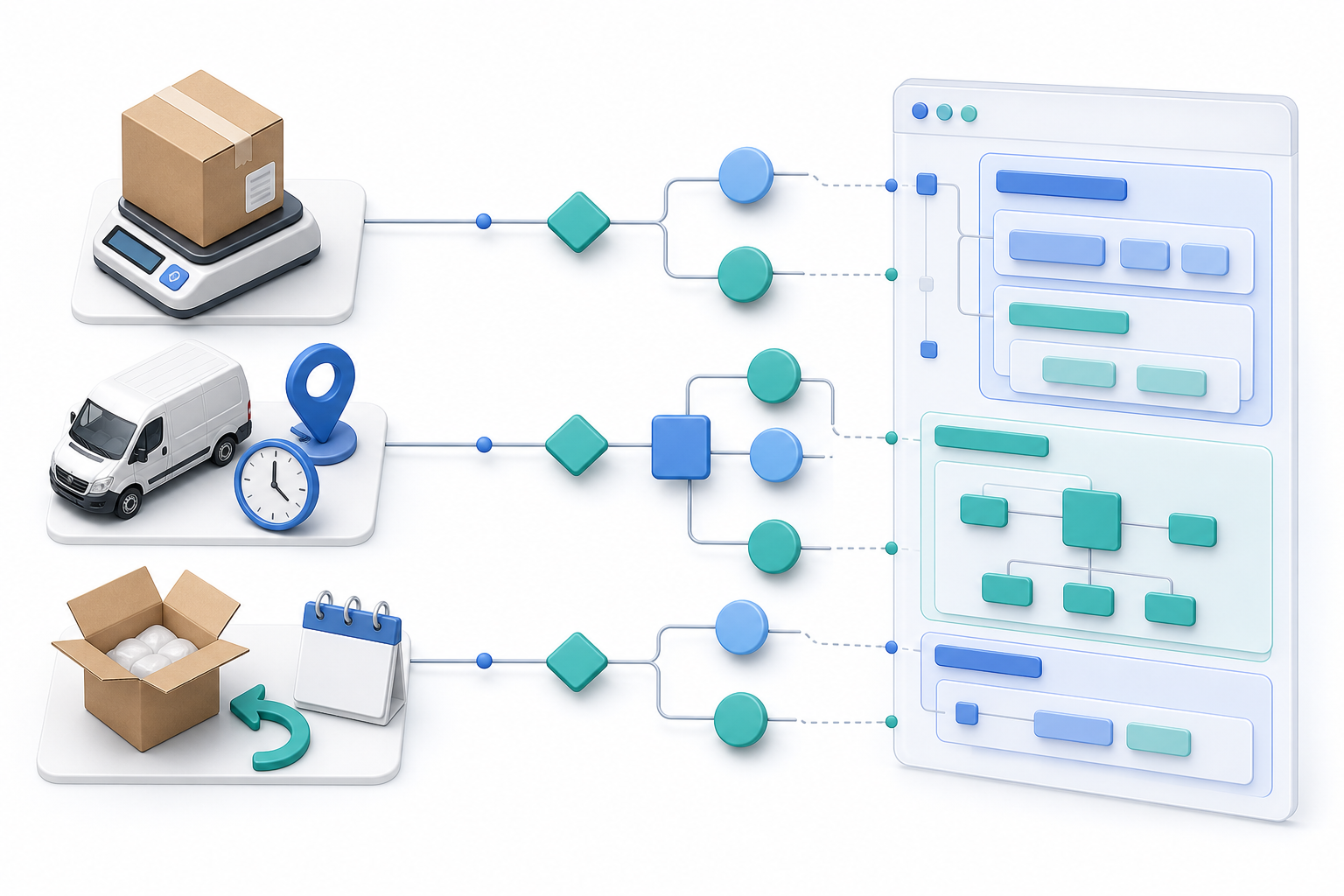
Tag: CMS Integration

  • CrushPress 4.2.43: PHP 7.4 Compatibility and Update Steps

    CrushPress 4.2.43: PHP 7.4 Compatibility and Update Steps

    If CrushPress failed to install or activate on a client site running PHP 7.4, there is now a direct path forward: install CrushPress 4.2.43 and try the activation again. This compatibility release replaces PHP 8-only code paths that had caused fatal errors on a small number of older hosting environments.

    You do not need to redesign your schema, change your AEO or GEO workflow, or learn a revised dashboard. Version 4.2.43 changes runtime compatibility, not the plugin’s feature set. The important job is to identify affected sites, deploy the correct build, and verify that each installation can load normally.

    What changed in CrushPress 4.2.43

    CrushPress 4.2.43 restores full compatibility with PHP 7.4. Several code paths that previously depended on PHP 8 were rewritten so the plugin can run on PHP 7.4 hosting without removing functionality.

    Release detailWhat it means for you
    VersionCrushPress 4.2.43
    Compatibility addressedPHP 7.4
    Type of releaseCompatibility patch
    Feature changesNone
    Workflows retainedSchema generation, AEO and GEO tools, and dashboard workflows
    Manual installation packagecrushpress-ai-schema-suite-4.2.43.zip

    The distinction between compatibility and functionality matters. On an incompatible PHP runtime, a plugin can encounter a fatal error before its normal features are available. Changing settings inside CrushPress cannot correct that kind of failure because the plugin first has to load successfully. Version 4.2.43 addresses that loading barrier in the plugin code.

    This update does not change the PHP version configured by your hosting provider, and it does not establish compatibility for the rest of your WordPress stack. It specifically removes the PHP 7.4 blocker identified in the affected CrushPress code paths. Themes and other plugins still need to meet their own runtime requirements.

    Decide which WordPress sites need action

    Several generic website tiles connect to hosting servers, with one older server highlighted by an amber status light while the others show green lights.

    Start with the installation outcome, not the age of the site. A legacy site that already runs CrushPress 4.2.43 normally does not need another compatibility intervention. A site that failed during installation or activation on PHP 7.4 should be first in your update queue.

    • CrushPress previously produced a PHP error on PHP 7.4: install version 4.2.43 and reactivate the plugin.
    • You postponed installation because the host only offered PHP 7.4: use the 4.2.43 build for the new installation.
    • You have an earlier ZIP in an agency or deployment repository: replace it with crushpress-ai-schema-suite-4.2.43.zip so another site is not provisioned from the incompatible package.
    • Version 4.2.43 is already active: no additional action is required for this specific compatibility change.
    • The plugin was already working on a newer PHP environment: the patch does not require a new schema, AEO, GEO, or dashboard workflow.

    For agencies, the easily missed problem is often the stored deployment artifact. Fixing one failed site while leaving an older ZIP in an internal toolkit can reproduce the same activation problem on the next PHP 7.4 account. Treat the package replacement as part of the update, not as housekeeping for later.

    Update and verify the plugin without changing the workflow

    A software package is installed into a generic website interface and then shown connected to a server with a green confirmation light.

    A compatibility patch is narrow, but it still deserves a controlled rollout when you manage client sites. Keep the PHP environment and unrelated plugins unchanged during the first test where practical. That gives you a clear result: either the 4.2.43 build resolves the CrushPress activation barrier, or another issue remains to be diagnosed.

    1. Identify the affected installations. Prioritize sites on PHP 7.4 where CrushPress previously failed to install or activate.
    2. Record the starting state. Note the site’s PHP version, the installed CrushPress version, and the exact error previously shown. This prevents a general memory of a “PHP problem” from being mistaken for the specific issue fixed here.
    3. Use your normal recovery protection. Take the backup or staging step required by your WordPress maintenance process before replacing plugin code, especially on a production client site.
    4. Install CrushPress 4.2.43. Update through the WordPress dashboard, or use crushpress-ai-schema-suite-4.2.43.zip when performing a manual installation.
    5. Reactivate the plugin. This is necessary on sites where an earlier build failed or was deactivated after a fatal error.
    6. Confirm that the plugin remains active. Reload the relevant WordPress administration screen rather than treating the first success message as the entire test.
    7. Check the existing workflows. Open the CrushPress dashboard and confirm that the schema generation, AEO, and GEO tools you already use remain accessible.
    8. Inspect a representative page. Where your normal setup expects generated schema or other CrushPress output, verify that the output still appears as expected after the update.

    You should not need to rebuild the site’s configuration simply because of this release. The update is intended to preserve the existing feature behavior. If you change PHP, replace several plugins, alter the theme, and install CrushPress in the same maintenance window, however, any remaining error becomes harder to attribute. Separate those changes when the site allows it.

    If activation still fails on a legacy host

    A failure after installing 4.2.43 should not automatically be treated as the already-fixed PHP 7.4 issue. First confirm that WordPress is actually loading the new package. An older cached ZIP, an incomplete replacement, or a different error can look like the same problem from a distance.

    • Confirm that the installed version is 4.2.43, not an earlier package with a similar filename.
    • Confirm the PHP version reported by the affected hosting environment.
    • Capture the exact fatal-error text instead of paraphrasing it as an activation failure.
    • Record whether the error appears during upload, installation, activation, dashboard access, or a later CrushPress operation.
    • Compare the failing site’s environment with any site where the same 4.2.43 package activates successfully.
    • Use the in-plugin support panel if the problem continues on the legacy PHP host, and include the version and error details you collected.

    Do not keep forcing activation on a production site that repeatedly returns a fatal error. Restore the site to its known working state if necessary, retain the exact diagnostic details, and investigate from staging or through support. The compatibility patch removes one known blocker; it cannot make every unrelated hosting, theme, or plugin problem the same issue.

    Key takeaways

    • CrushPress 4.2.43 restores full compatibility with PHP 7.4.
    • The release rewrites PHP 8-only code paths that had caused fatal errors on some older hosting environments.
    • Schema generation, AEO and GEO tools, and dashboard workflows are unchanged.
    • Sites that previously failed on PHP 7.4 should be updated to 4.2.43 and reactivated.
    • The manual package is crushpress-ai-schema-suite-4.2.43.zip.
    • If the new build still fails, verify the installed version and capture the exact error before using the in-plugin support panel.

    Your next step is simple: find the PHP 7.4 sites that were excluded from your rollout, replace any older deployment package with 4.2.43, and test one affected installation under controlled conditions. Once activation and the existing workflows are verified, you can apply the same update process to the rest of that group.

    References

    • CrushPress.AI — Black Friday – Cyber Monday Deal: Unlock AI Visibility for All Your WordPress Sites (Free for 2 Months!)
    • CrushPress.AI — Version 4.2.43 released
  • Google Shipping and Returns Policy Markup: A Setup Guide

    Google Shipping and Returns Policy Markup: A Setup Guide

    If you sell products online without using Merchant Center, Google does not have to infer your delivery charges, delivery expectations, or return terms from scattered pages. You can now provide shipping and return policy information through Search Console or site markup.

    The implementation is only reliable when the data matches checkout, customer-service rules, and the policy customers can read. Before touching JSON-LD, decide which rules are your store-wide defaults, which products are exceptions, and which system owns each value.

    Write down the operational policy before you encode it

    Structured data compresses a policy into machine-readable fields. It cannot resolve an unclear policy for you. If your shipping page, checkout, support team, and warehouse operate from different assumptions, markup will publish one of those inconsistencies more efficiently.

    Build a policy matrix with one row for every market whose terms materially differ. Record the answers to these questions:

    • Where do you ship?
    • Which shipping service does the policy describe?
    • What does the customer pay, and in which currency?
    • How long can handling take before the parcel enters the carrier network?
    • How long can transit take after handoff to the carrier?
    • Which countries are covered by the return policy?
    • Is the return window finite, unlimited, or unavailable?
    • If the window is finite, what event starts it: purchase, dispatch, delivery, or another event stated in your customer-facing terms?
    • Which return methods are allowed?
    • Who pays the return cost?
    • Which products or conditions are excluded?

    Keep handling time separate from transit time. Handling is under the merchant’s control; transit begins after carrier handoff. Combining them into an attractive but unsupported delivery promise creates a mismatch precisely where a shopper is looking for certainty.

    Use the policy customers can actually claim, not an aspirational service level. A lower shipping charge, faster delivery estimate, longer return window, or broader free-return promise can affect purchase decisions. If checkout or support will not honor it, do not publish it in structured data.

    Choose Search Console or Organization markup deliberately

    Search Console and structured data are two publishing routes for the same operational truth. Your choice should be based on ownership and maintainability, not on which route appears more technical.

    Publishing routeBest fitMain control to establish
    Search ConsoleYou want a no-code route and have a straightforward store-wide policy.Name the person responsible for updating the settings whenever operations or terms change.
    Organization JSON-LDYour team already manages structured data through code, a CMS, or a schema layer.Keep the values version-controlled or otherwise traceable to the policy owner.
    Merchant CenterYour shopping program already treats its account or feed data as the commercial source of truth.Do not add a separately maintained policy unless you can guarantee that the systems remain aligned.

    Search Console is often the smaller change when you do not use Merchant Center and do not want to alter templates. Organization JSON-LD is usually easier to audit alongside other website releases. Neither route improves a weak policy, and neither should become a forgotten copy of information maintained elsewhere.

    Avoid entering one version in Search Console while a plugin emits another version in the page source. Google may encounter both, but you should not assume it will resolve the conflict in the way you intended. Pick a primary owner, document any secondary output, and update both in the same change workflow if both must exist.

    Map your policy to the JSON-LD concepts

    Top-down illustration of shipping and return objects flowing through connected nodes into nested structured-data modules.

    At the Organization level, the conceptual structure has two branches. Shipping information is expressed through shippingDetails using OfferShippingDetails. Return information is attached through hasMerchantReturnPolicy using MerchantReturnPolicy.

    The following map is more useful than copying a generic snippet because it forces every machine-readable value back to an operational answer:

    Business questionStructured-data conceptWhat to verify
    Where does this shipping rule apply?shippingDestinationThe destination matches an area that checkout actually serves.
    What does shipping cost?shippingRateThe value and currency describe the selected service without hiding a condition that changes the charge.
    How long before carrier handoff?handlingTimeThe range reflects normal fulfillment commitments rather than the fastest observed order.
    How long after carrier handoff?transitTimeThe range belongs to the destination and service represented by this shipping rule.
    Where does the return policy apply?applicableCountryThe country is covered by the customer-facing terms.
    What kind of return window applies?returnPolicyCategoryThe category agrees with whether returns are finite, unlimited, or unavailable.
    How long is a finite window?merchantReturnDaysThe duration matches the policy page and the event from which your published terms calculate it.
    How can an item be returned?returnMethodThe encoded method is genuinely available to customers in the covered market.
    Who bears the return cost?returnFeesThe value reflects the ordinary case and does not erase important conditions or deductions.

    Use the defined Schema.org value expected by a category, method, or fee field rather than inserting promotional prose such as “easy returns.” JSON-LD describes the rule; the visible policy page explains qualifications, procedures, deadlines, item condition requirements, refund timing, and exceptions.

    Connect the policy to your existing canonical Organization entity instead of creating unrelated Organization objects in several plugins. A stable @id helps the graph refer to the same business, but it does not excuse conflicting values. Inspect the final rendered source because the output seen by a crawler can differ from what a CMS form displays.

    Do not let a store-wide default erase product exceptions

    Illustration of a general store policy covering most packages while separate policy paths lead to an oversized item and a sealed personal-care product.

    An Organization-level policy works as a default. It becomes misleading when a substantial set of offers follows different rules. Customized goods, clearance inventory, oversized products, subscriptions, perishable items, and digital products can all require different treatment depending on how your business operates.

    Do not encode the most generous policy as universal merely because it produces the cleanest markup. Decide how each exception should be handled:

    • If a different rule applies to a market, represent that market separately rather than blending incompatible destinations, currencies, charges, or delivery estimates.
    • If a product class has a different return rule, do not allow the organization default to make an unconditional promise that the product page later withdraws.
    • If your implementation supports properly scoped offer-level information, use it for genuine product exceptions and keep it synchronized with the offer.
    • If you cannot represent an exception accurately, narrow or omit the affected machine-readable claim instead of publishing a false universal rule.
    • Explain detailed conditions on a crawlable customer-facing policy page. Do not expect a compact structured-data object to carry the entire contract.

    Pay particular attention to conditional free shipping and conditional free returns. A rate that depends on basket value, membership, location, product class, or selected service is not simply a universal zero-cost rate. Encode only the condition your implementation can represent faithfully, and leave the full qualification visible before purchase.

    Validate the output and the promise

    Syntax validation is necessary, but it only proves that a machine can parse the data. A valid object can still describe the wrong destination, currency, service, timing, fee, or return window.

    1. Open the rendered page or server response that contains the Organization data. Confirm that the expected JSON-LD is present for an ordinary crawler and is not merely visible inside an administration screen.
    2. Parse the JSON-LD with a structured-data validator. Fix malformed JSON, unsupported value shapes, missing relationships, and duplicate entities.
    3. Compare every emitted value with the shipping page, returns page, checkout calculation, and current support instructions.
    4. Test representative destinations and product exceptions. A default that is correct for the easiest order may be wrong for the rest of the catalog.
    5. Check Search Console after publication for the status Google exposes, but do not treat the absence of an error as proof that the policy will be displayed.
    6. Add shipping and return data to your release checklist. Changes to carriers, fulfillment locations, service levels, charges, destinations, or return terms should trigger the same review.

    Structured data makes information eligible for machine use; it does not command a particular Search appearance or guarantee rankings. Judge the deployment first by accuracy, consistency, and maintainability. Any additional visibility is downstream of those basics.

    Key takeaways

    • You can provide shipping and return policy information through Search Console or website markup without using Merchant Center for the task.
    • Define destination, charge, handling, transit, return window, method, fees, and exceptions before encoding anything.
    • Use Organization-level data for a genuine default, not as a shortcut that conceals product or market differences.
    • Choose one operational source of truth and prevent Search Console, Merchant Center, plugins, templates, checkout, and policy pages from drifting apart.
    • Validate both the JSON-LD structure and the commercial promise represented by every value.

    Start with the policy matrix, assign an owner, and publish the smallest accurate default through the route your team can maintain. Once that default survives a comparison with real checkout scenarios and known exceptions, you have markup worth exposing to Google.

    References

  • How to Choose a Magento Development Firm Without Guesswork

    How to Choose a Magento Development Firm Without Guesswork

    Choosing a Magento development firm is difficult because almost every proposal sounds capable before the difficult work becomes visible. A polished portfolio won’t tell you who will challenge a brittle customization, reconcile migrated orders, document an integration, or take responsibility when a release goes wrong.

    Your decision gets easier when you stop trying to rank firms as whole companies. Define the part of your project that carries the most risk, then require each candidate to show how its named team would handle that risk. The result is a shortlist you can defend, a proposal you can compare, and a contract that protects the work after kickoff.

    Define the job before you evaluate the firm

    “Magento development” is too broad to quote responsibly. It can mean a new implementation, a migration, a B2B transformation, a custom buying experience, an integration program, a rescue project, or an ongoing roadmap. A firm can be strong in one of those roles and poorly suited to another.

    Start with a one-page decision brief. It doesn’t need to settle every technical choice. Its purpose is to make the business outcome, critical workflows, constraints, and unknowns visible enough for a candidate to challenge them.

    • Business outcome: State what must become possible or measurably better. “Launch a new store” is an activity. “Let approved business buyers place orders using account-specific pricing and approval rules” describes an outcome.
    • Critical user journeys: Identify the flows that cannot fail, such as product discovery, checkout, account management, quote requests, purchase approvals, returns, or customer-service actions.
    • Data in motion: Name the product, customer, order, pricing, inventory, content, and media data involved. Identify where each type currently lives, even when ownership or quality remains uncertain.
    • Connected systems: List the ERP, PIM, CRM, payment, tax, fulfillment, analytics, identity, and marketing systems that may exchange data with Magento. Mark any interface that is undocumented or controlled by another vendor.
    • Existing customization: Separate features you know are custom from features that merely look custom. Ask the firm to determine what can remain standard, what should be configured, and what genuinely requires new code.
    • Operating constraints: Record launch dependencies, restricted release periods, data-protection obligations, internal skill limits, approval requirements, and any process that must continue during migration.
    • Definition of done: Describe the evidence you will accept. That might include successful data reconciliation, approved critical-journey tests, completed documentation, transferred credentials, trained operators, and a tested rollback procedure.

    Label unknowns instead of concealing them inside a fixed-price request. A responsible firm will turn those unknowns into discovery tasks, assumptions, and decision points. A weak proposal will quietly convert them into exclusions or change requests later.

    Send the same brief to every candidate. If each firm receives a different version of the problem, their prices, schedules, and proposed architectures won’t be comparable.

    Build a shortlist around role fit, not reputation alone

    For a practical discovery pool, 84 firms were evaluated on expertise, client feedback, and platform innovation in 2025, producing seven high-scoring candidates. Those names can help you begin the search, but a 2025 strength is a starting hypothesis rather than proof that the same people, capacity, or delivery model are available for your project now.

    Use the positioning below to decide which firms deserve an initial conversation and what you need to verify in it.

    FirmReason to investigate itWhat to verify before shortlisting
    AtwixB2B transformation work, technical depth, and community contributionAsk which proposed team members have handled workflows comparable to yours and request an architecture walkthrough focused on the hardest B2B rule.
    ZiffityEnterprise programs involving strategic roadmapping and personalized experiencesConfirm how the roadmap becomes prioritized, testable delivery work and whether the same team remains accountable through implementation.
    PixelCrayonsCost-conscious delivery and migration workVerify the named team, quality controls, migration assumptions, exclusions, and total ownership cost rather than comparing the opening price alone.
    Rave DigitalA consulting-led engagement intended to support longer-term growthAsk what the consulting phase produces, who approves its decisions, and how strategic recommendations translate into implementation accountability.
    The Commerce ShopCustom ecommerce requirementsRequire the firm to distinguish standard capability, configuration, extensions, integrations, and net-new code for your most unusual requirements.
    Tigren SolutionsMigration-focused workRequest a concrete explanation of mapping, rehearsal, reconciliation, exception handling, cutover, and rollback for your data and extensions.
    Emizen TechPrograms that may span several digital platformsConfirm the depth of its Magento team, the exact specialists assigned to your engagement, and who owns decisions that cross platform boundaries.

    Don’t invite every plausible firm into a large request-for-proposal exercise. First eliminate obvious role mismatches. Then give the remaining candidates the same difficult scenario and compare how they reason about it.

    Firm-level credentials are not team-level evidence. Ask for the people expected to lead architecture, delivery, quality assurance, migration, and post-launch support. If those people cannot be identified before contracting, write the required roles and approval rights for substitutions into the agreement.

    Use discovery to see how the delivery team thinks

    A cross-functional project team examines modular ecommerce components and traces system dependencies during a discovery workshop.

    A sales presentation shows how well a firm presents itself. Discovery shows how its team handles ambiguity. Give each finalist one real problem with enough complexity to expose tradeoffs: an account-specific pricing flow, a difficult legacy extension, an order-history migration, or an integration whose current behavior is poorly documented.

    If solving the scenario requires meaningful architecture work, use a paid discovery engagement. Define its deliverables and your ownership rights before it begins. This lets the firm investigate the problem seriously without turning the selection process into a request for unpaid implementation work.

    Useful discovery should leave you with artifacts that another competent team could understand:

    • A scope map connecting business outcomes, user journeys, systems, requirements, assumptions, and explicit exclusions.
    • An architecture decision record showing the options considered, the chosen approach, its tradeoffs, and the conditions that would change the decision.
    • A customization inventory separating standard behavior, configuration, third-party extensions, integrations, and custom code.
    • A migration plan covering data ownership, mapping, transformation, rehearsal, reconciliation, exception handling, cutover, backup, and rollback.
    • A test strategy identifying critical journeys, environments, data needs, acceptance responsibility, regression coverage, and the evidence required before release.
    • An operating plan explaining deployment, monitoring, incident ownership, documentation, access transfer, and the transition into post-launch support.
    • A decision log recording unresolved questions, owners, deadlines, and the cost or schedule consequence of delaying each decision.

    Then ask questions that force the team to expose its assumptions:

    1. What part of our brief would you challenge before estimating the build?
    2. Which requirement creates the greatest delivery risk, and how would you reduce that uncertainty?
    3. What would you keep standard, what would you configure, and what would you customize?
    4. Which data or integration assumptions could invalidate your proposal?
    5. How would you prove that migrated records are complete, correctly related, and usable?
    6. What has to be true before you would approve production release?
    7. Who makes the final call when business preference conflicts with maintainability or release safety?
    8. What will our internal team need to own after handoff?

    The strongest answer isn’t the most confident one. Look for a team that identifies uncertainty, explains the consequence, proposes a way to test it, and names who must decide. Generic phases, unexplained technology choices, and immediate certainty around an undocumented system are warning signs.

    Compare evidence in the proposal, then protect it in the contract

    Hands compare unmarked proposal evidence on a conference table while securing a modular ecommerce release model inside a protective case.

    A proposal should be traceable. You should be able to move from a business outcome to a requirement, from that requirement to planned work, and from the work to acceptance evidence. If the chain breaks, you may be comparing attractive language rather than delivery commitments.

    Decision areaEvidence worth acceptingReason to pause
    Problem understandingYour workflows, constraints, assumptions, and unresolved decisions appear in the proposed approach.The proposal mostly restates your feature list or replaces business language with technical labels.
    TeamNamed leaders, defined roles, relevant problem experience, and a clear substitution process.Only senior sales or executive biographies are visible, while the delivery team remains unnamed.
    ArchitectureStandard functionality, configuration, extensions, integrations, and custom code are distinguished with reasons.Customization is treated as the default, or a preferred extension is proposed before requirements are understood.
    MigrationMapping, transformations, trial runs, reconciliation, exceptions, cutover, backup, and rollback are explicit.Migration appears as a single task with no proof of completeness or recovery path.
    QualityCritical journeys, test ownership, environments, test data, acceptance evidence, and defect handling are defined.Testing is presented as an undifferentiated final phase or left entirely to your team without prior agreement.
    OperationsDeployment, monitoring, incident response, access, documentation, and post-launch ownership are addressed.The proposal ends at launch and leaves production responsibility ambiguous.
    Commercial clarityDeliverables, assumptions, exclusions, dependencies, change control, acceptance, and payment triggers align.A low headline price depends on broad exclusions, undefined acceptance, or unexplained future phases.

    Don’t average away a critical failure. A firm that scores well on presentation, strategy, and price can still be the wrong choice if its migration plan is unsafe or its assigned team is unproven. Mark your non-negotiable criteria before reviewing proposals, and remove candidates that fail them.

    The contract should preserve the evidence that persuaded you to choose the firm. Attach or incorporate the agreed scope, architecture outputs, named roles, acceptance criteria, delivery assumptions, and responsibility matrix. Otherwise, specific commitments made during selection can dissolve into a generic services agreement.

    • Deliverables and acceptance: Define what will be produced, who reviews it, what evidence demonstrates completion, and how rejected work returns for correction.
    • Change control: Require a written description of the requested change, reason, options, impact, decision owner, and approval before affected work proceeds.
    • Repository and account access: Establish where code, configuration, documentation, infrastructure access, and third-party accounts will live during the engagement and how control transfers.
    • Intellectual property and licenses: Distinguish work created for you from pre-existing tools and third-party components. Record ongoing license obligations and usage restrictions.
    • Data and release safety: Require backups, rehearsals, reconciliation, release approval, and rollback ownership for changes that can affect production data or ordering.
    • Defects and support: Define severity, response ownership, correction obligations, support boundaries, and the transition from project delivery to ongoing operations.
    • Exit and handoff: Specify the documentation, credentials, code, configuration, open-issue list, and knowledge transfer required if the relationship ends.

    Never approve a production migration that lacks a tested backup, reconciliation procedure, and rollback path. Missing, duplicated, or incorrectly related customer and order records can create operational and financial exposure that is much harder to unwind after launch. Rehearse the process against a safe copy, record exceptions, and require an explicit release decision.

    For a material engagement, have qualified legal and procurement professionals review ownership, licensing, confidentiality, data protection, liability, termination, and dispute terms. Technical acceptance criteria help define the work, but they don’t replace legal review of the agreement governing it.

    Key takeaways

    • Define the engagement by its highest-risk outcome, critical workflows, data, integrations, constraints, and acceptance evidence before asking for a price.
    • Use named Magento firms as discovery leads. Revalidate their current team, capacity, delivery model, and experience against your exact project.
    • Give finalists the same difficult scenario and judge how they identify assumptions, tradeoffs, tests, and decision ownership.
    • Use paid discovery when responsible estimation requires architecture, data, or integration investigation. Make its outputs and ownership explicit.
    • Compare traceable evidence rather than presentation quality or headline price. Migration safety, team credibility, acceptance, and operational ownership should be must-pass criteria.
    • Carry the commitments that won the work into the contract, including named roles, deliverables, change control, access, rollback, support, and handoff.

    Your next step is simple: write the one-page decision brief and send the same version to every plausible candidate. Eliminate any firm that avoids your hardest requirement, hides the delivery team, or cannot explain how completion and recovery will be proved. The right partner will make the project’s uncertainty more visible before you sign, not after the invoices begin.

    References

  • How to Evaluate Conductor’s Unified SEO Intelligence Platform

    How to Evaluate Conductor’s Unified SEO Intelligence Platform

    If your rankings, content work, and website changes live in separate tools, the expensive part is not collecting another chart. It is deciding which page to change, why the change deserves priority, who owns it, and whether it worked.

    That is the right lens for evaluating Conductor’s unified SEO intelligence platform. Do not start with how much data it can display. Start with whether your team can move from evidence to a governed action without rebuilding the context at every handoff.

    Define what “unified” must mean for your team

    Conductor is positioning unified data and SERP visuals as connected parts of SEO decision-making. Its partnership with Acquia also points toward bringing AI-powered SEO insights closer to website optimization. Those are useful signals about the platform’s direction, but they are not proof that its workflow will fit your organization.

    A unified screen is not necessarily a unified operating model. If a marketer still has to export a chart, explain it in a meeting, rewrite the recommendation in a project tool, and ask a publisher to reconstruct the reasoning, the interface has consolidated information without unifying the work.

    Use this chain to define what you actually need:

    • Evidence: The team can see where an observation came from, what it measures, and when it was captured.
    • Context: The evidence retains the relevant page, query, market, device, search surface, and business objective.
    • Interpretation: A recommendation explains the observed problem and the assumption connecting that problem to the proposed change.
    • Action: The recommendation reaches a named owner with an approval state, publishing route, and preserved rationale.
    • Learning: The team can return to the same decision after publication and compare the outcome with the original expectation.

    Data aggregation only completes the evidence layer. SEO intelligence begins when the rest of the chain remains intact. Write these requirements down before a demonstration or pilot. Otherwise, polished dashboards will pull the conversation toward what is easy to show rather than what your team needs to decide.

    Test Conductor with a real decision from your backlog

    An analyst reviews visual search evidence around one highlighted webpage while a queue of other task cards remains in the background.

    A generic product tour is a weak test because the vendor controls the query, pages, narrative, and desired conclusion. Bring a live page group with a known owner and an unresolved decision. Choose work that matters but does not require exposing sensitive customer or commercial data.

    Frame the decision before anyone opens the platform. A useful prompt might be: “Should we refresh these pages, consolidate them, change their format, or leave them alone?” That forces the platform to support a choice rather than merely surface movement in a metric.

    1. State the business purpose. Identify what the page group is meant to produce, such as qualified demand, transactions, product discovery, or support resolution.
    2. Establish the observation. Ask the operator to show the performance change and the definitions, filters, and date context behind it.
    3. Inspect the search environment. Use the SERP view to determine whether the results page, competing page types, or visible search features changed alongside your metric.
    4. Create a recommendation. Require a clear proposed action, affected page scope, expected result, alternative explanation, and accountable owner.
    5. Route the work. Send the recommendation through the workflow your content, SEO, development, and compliance teams would actually use.
    6. Preserve the decision. Make sure someone returning later can see the original evidence, what was approved, what was published, and what outcome followed.

    The platform passes this test when a teammate who did not perform the analysis can understand the decision without asking for a separate slide deck. It fails when the rationale disappears between analysis and execution, even if every individual feature looks capable.

    Pay particular attention to definitions. “Visibility,” “rank,” “traffic,” and “conversion” are not interchangeable. Ask which metric is canonical for each decision, which filters are applied, and whether an export preserves the same definitions. A unified platform can still produce conflicting answers when teams use different segments or quietly change the denominator.

    Use SERP visuals as evidence, not decoration

    A rank value tells you where a result appeared under a defined observation. It does not, by itself, show what surrounded that result or whether the search page changed shape. SERP visuals can add that missing context, but only if your team treats them as evidence with a timestamp, market, device, and query attached.

    For a query connected to a meaningful page group, ask:

    • Which page types are prominent: product pages, category pages, editorial explanations, videos, local results, or another format?
    • Which search features occupy attention before or around the organic listings?
    • Does your page satisfy the same apparent intent as the visible results, or is it competing with a different kind of answer?
    • Did your ranking move while the surrounding result composition stayed stable, or did both change?
    • Can the team retrieve the visual evidence that supported an earlier recommendation, rather than seeing only the latest state?

    Record each interpretation as an observation, implication, and next test. For example: the visible results favor category pages over long-form explanations; that may indicate a page-type mismatch; compare the affected template and intent before rewriting copy. This wording matters. It keeps a visual pattern from turning into an unsupported claim about causation.

    Do not collapse conventional SERP visibility and AI visibility into one label. AI answers, citations, brand mentions, and standard search listings are different observations. Ask exactly which surfaces Conductor captures, how each metric is defined, which markets or response modes are included, and whether historical evidence is retained. If a surface is not measured, a conventional ranking or SERP image cannot stand in for it.

    This distinction is especially important for AEO and GEO programs. A page can be technically discoverable, rank conventionally, and still fail to provide the concise claims, explicit entities, supporting detail, and clear provenance that answer systems need to interpret it. Conversely, an AI mention does not prove that the underlying page attracts qualified visits or supports a business outcome. Keep those findings connected, but do not pretend they are the same metric.

    Put governance between AI insight and publication

    Three reviewers inspect an AI-generated insight at an approval checkpoint before a webpage is allowed to move toward publication.

    An AI-generated recommendation should enter your workflow as a hypothesis, not an approval. The useful question is not whether the system can produce suggestions quickly. It is whether a reviewer can inspect the evidence, understand the proposed change, limit its scope, and reject it without losing the surrounding analysis.

    The connection between AI SEO insights and the Acquia environment could reduce the distance between analysis and website work. A shorter handoff can be valuable, but it can also move a weak recommendation toward production faster. Evaluate the control layer with the same care as the insight layer.

    Separate automation permissions by action:

    • Observe: Read data and identify patterns without creating work or changing content.
    • Recommend: Create a documented suggestion or task for a human owner.
    • Draft: Prepare a proposed edit in a reviewable environment without publishing it.
    • Publish: Change the live website only after the required approval and validation.

    Require visible permissions, preview, version history, and approval states before granting write access. Redirects, canonical tags, robots directives, structured data, and shared templates deserve production-release controls because one mistake can affect many URLs. Keep those changes staged and reviewable; do not allow a plausible-sounding recommendation to trigger a broad live edit automatically.

    Apply the same discipline to JSON-LD and other schema work. A generated schema recommendation must match the page’s visible content and actual meaning. Being generated inside an SEO platform does not make the markup accurate, eligible, or appropriate. The reviewer should be able to see the proposed properties, the content supporting them, the affected templates, and the validation result before publication.

    Finally, decide where the permanent record lives. Conductor may hold the evidence and recommendation while your CMS, project system, or governance tool holds approval and deployment state. That division is acceptable if identifiers and links survive the handoff. It becomes a problem when each system contains a different version of why the change was made.

    Key takeaways for your platform decision

    • A unified platform should preserve the chain from evidence through interpretation, ownership, publication, and outcome; a shared dashboard alone is not enough.
    • Evaluate Conductor with a live SEO decision and your real handoff process, not only a vendor-controlled demonstration.
    • Use SERP visuals to examine search-result context, while keeping observation separate from causal explanation.
    • Ask for distinct definitions and coverage for conventional search, AI answers, citations, brand mentions, traffic, and business outcomes.
    • Treat AI recommendations as reviewable hypotheses and assign automation permissions according to the risk of the proposed action.
    • Choose the platform only if another teammate can reconstruct why a change was made without relying on an analyst’s memory or a separate presentation.

    For your next evaluation session, take a real page group and an unresolved decision into Conductor. Ask the team to carry that decision from raw evidence through SERP context, recommendation, approval, publishing, and measurement. If the context survives every handoff, the platform is doing intelligence work. If your team still exports screenshots and rewrites the rationale elsewhere, you are buying consolidation rather than a unified decision system.

    References