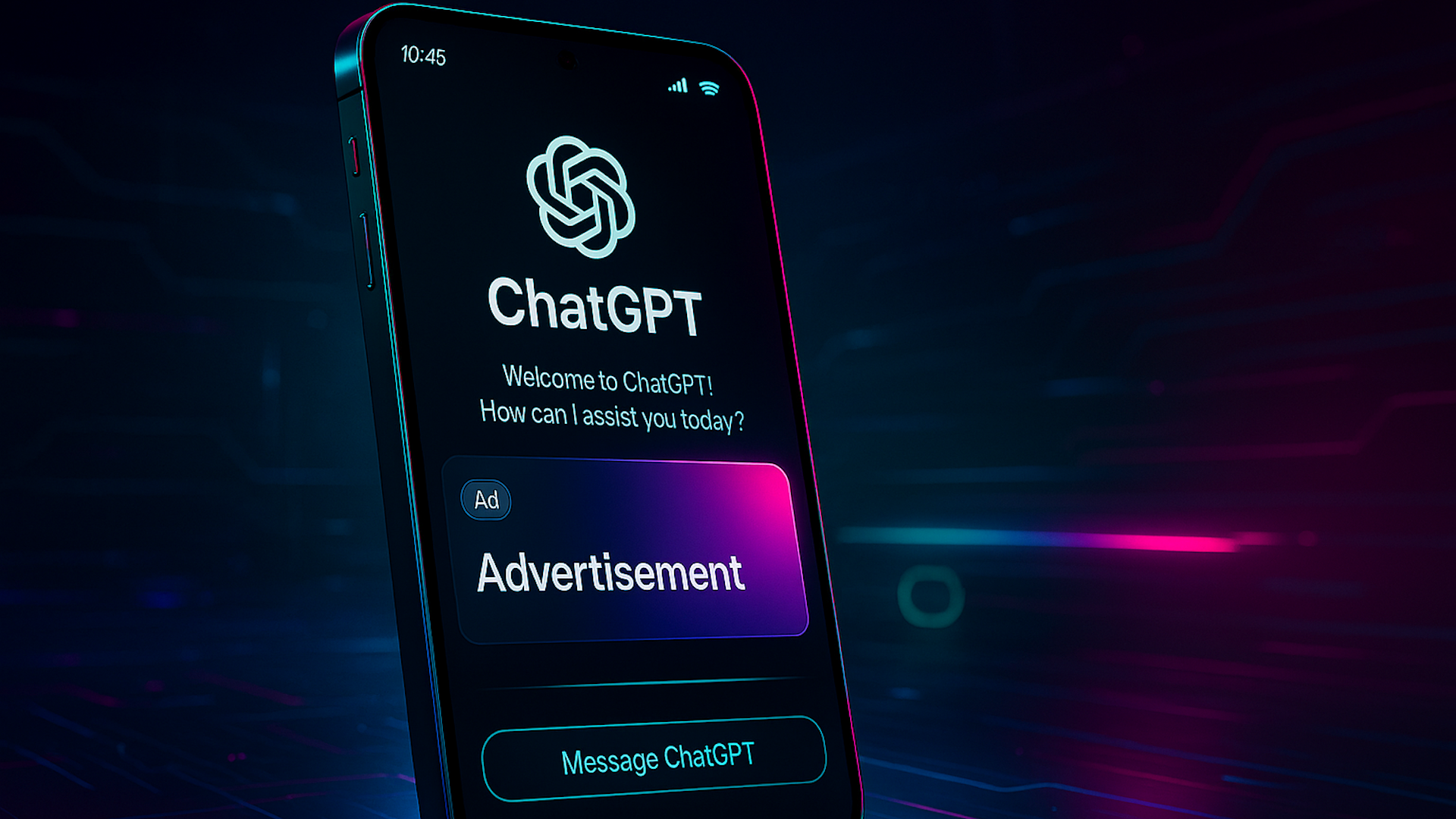
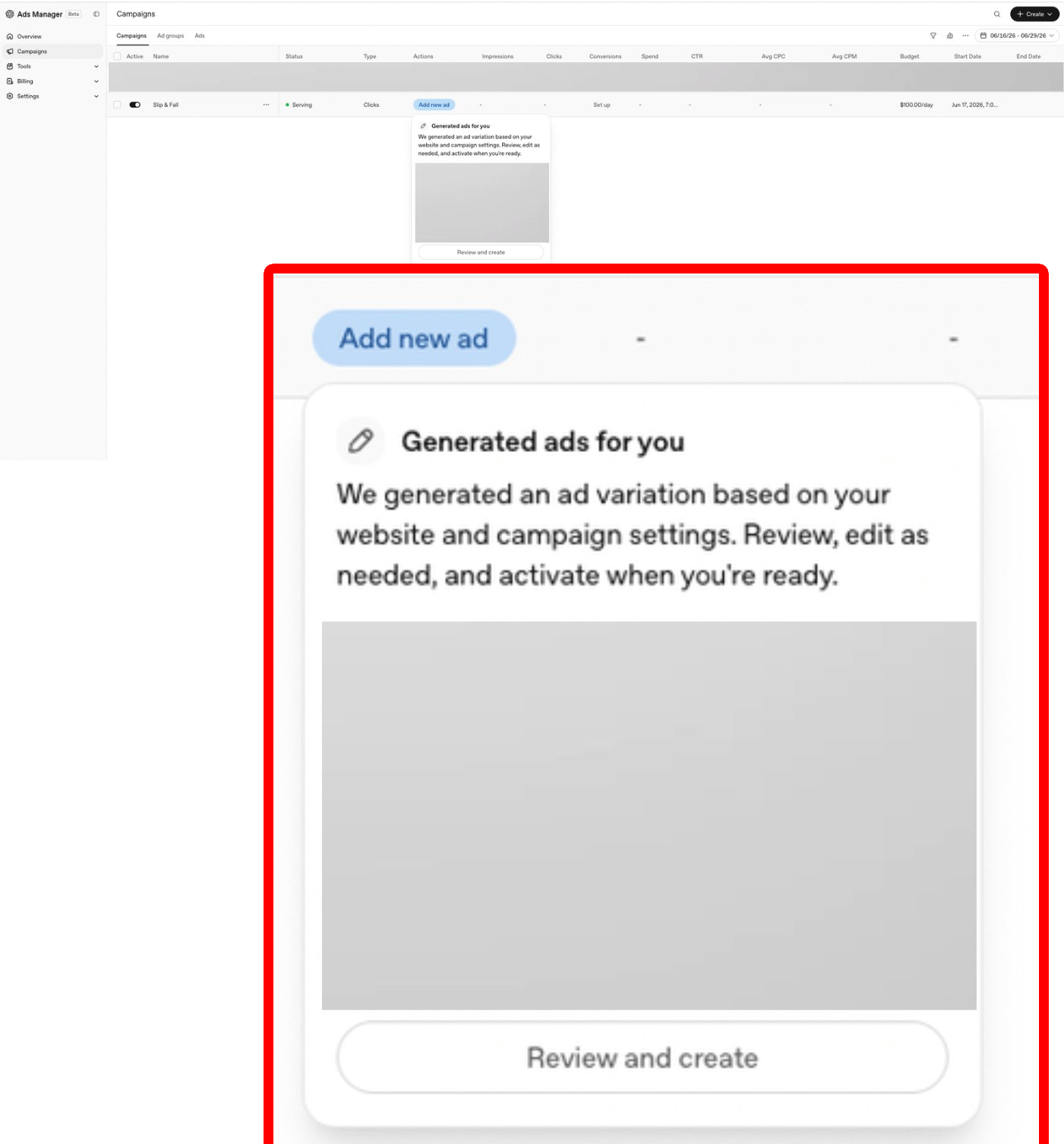
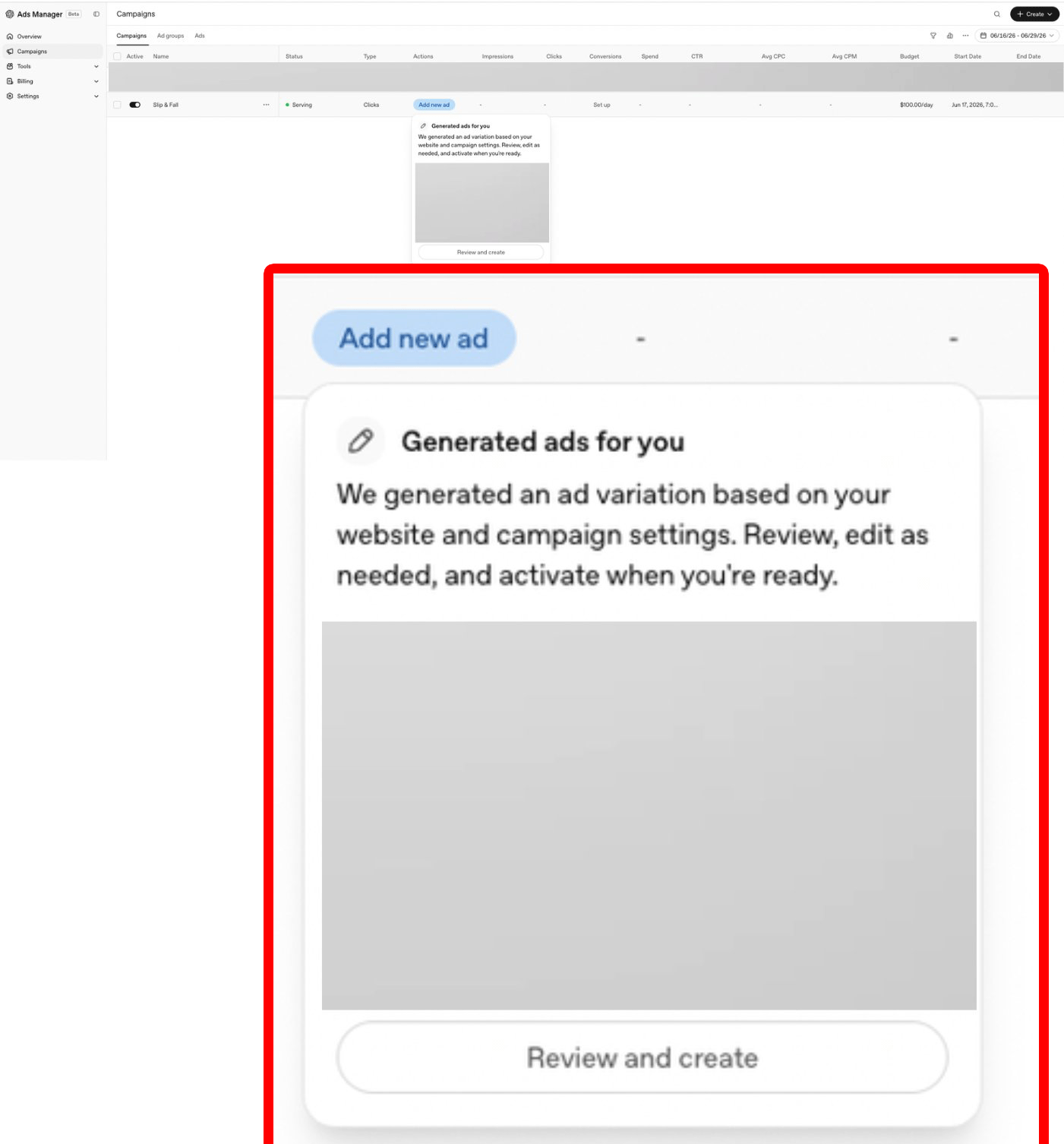
I am seeing OpenAI roll out a new feature that lets ChatGPT Ads generate ads for advertisers, and I suspect AI is doing the heavy lifting behind it. The option appears under “Add new ad” and includes a prompt to “generate ads for you.”
From there, I can choose to let ChatGPT create the ad, then review it, edit it, and approve it before it goes live on the ChatGPT Ads platform.
ChatGPT Ads Manager preview highlights OpenAI's generated ad workflow, where marketers can review an AI-created variation before activating it for a campaign.
What it looks like. Anthony Higman posted a screenshot of the feature on X, showing how the ad creation flow appears inside the platform.
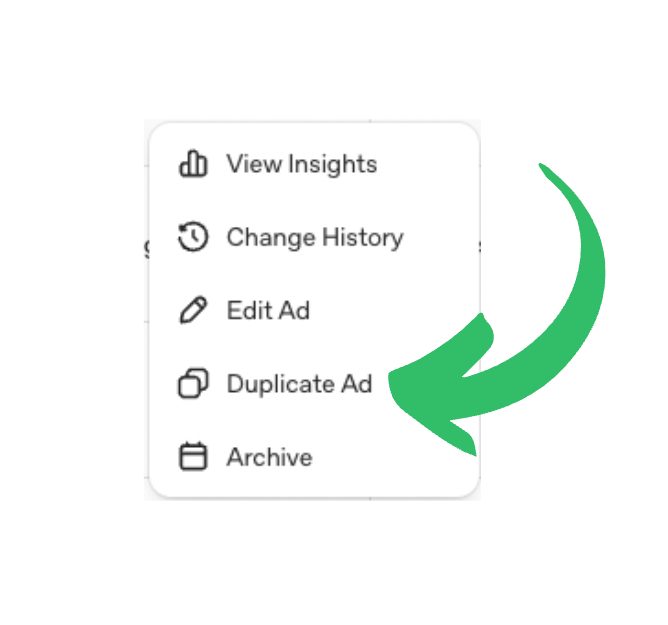
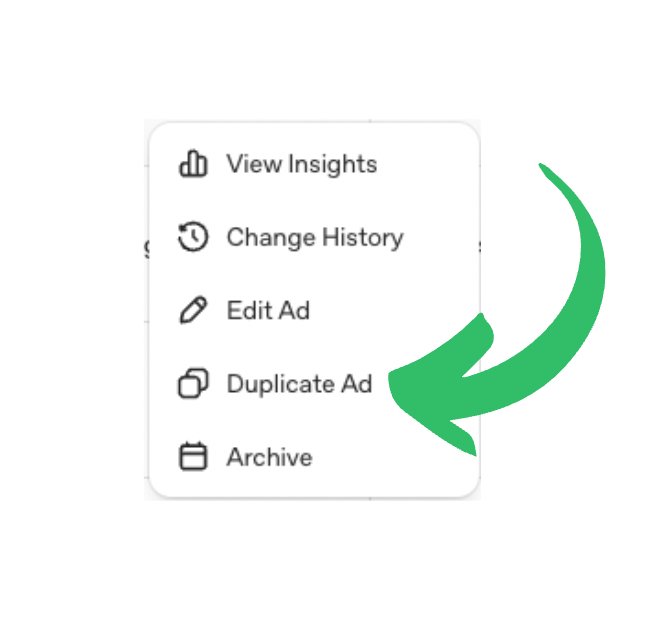
A ChatGPT Ads dropdown highlights the quick Duplicate Ad option, pointing marketers to a faster way to copy an existing ad for review, edits, and reuse.
In the screenshot, the interface says, “We generated an ad variation based on your website and campaign settings. Review, edit as needed, and activate when you’re ready.” I can then move forward by selecting “Review and create.”
Old search marketing tools give way to a faster, connected future, with data streams, AI icons, and a glowing search hub symbolizing SEO innovation and community growth.
I also noticed that Higman spotted a quick duplicate ad option, which could make it easier to create variations faster.
Why I care. It makes sense to me that OpenAI would use AI to help advertisers create ads more quickly. If the tool reduces friction, it could lead to more ads being created, submitted, and activated on ChatGPT Ads, which would also help OpenAI generate more revenue from ChatGPT.
As a marketer, I would still be careful with AI-generated ads. I would review every version closely to make sure the messaging fits the brand, supports the campaign strategy, and aligns with performance goals, including ROI.
I see Google’s latest Google Ads API change as another clear move away from legacy automation and toward newer AI-driven campaign types, especially Performance Max.
Beginning August 3, 2026, Google says developers will no longer be able to create new Smart Campaigns through the Google Ads API. For me, the key detail is that this change is about new campaign creation only.
Existing Smart Campaigns are not being shut down. They can keep serving ads, and advertisers and developers will still be able to update and manage those campaigns through the API.
What changes is the ability to create brand-new Smart Campaigns through API workflows. If I depend on automated campaign setup, that is the part I would review now.
I care about this because it signals where Google wants advertisers to go next. Smart Campaigns may continue running, but the path for new API-based campaign creation is moving toward newer products such as Performance Max, Search campaigns, and Demand Gen campaigns.
Google is specifically pointing advertisers toward Performance Max as the primary alternative. Since Performance Max runs across Google’s advertising inventory and uses AI to automate more of the campaign process, it fits the broader direction Google has been taking for years.
I also see this as part of a wider consolidation around automated campaign formats. Google has increasingly emphasized systems that handle bidding, targeting, and creative optimization across channels, and limiting new Smart Campaign creation reinforces that shift.
For developers, the practical next step is to audit any application that creates Smart Campaigns before the August 3, 2026 deadline. The affected requests are campaign creation operations where advertising_channel_type is set to SMART and advertising_channel_sub_type is set to SMART_CAMPAIGN.
After August 3, attempts to create new Smart Campaigns through the API will fail. In version 24 of the Google Ads API, developers will receive a SmartCampaignError.CREATION_FAILED error.
In version 23 and earlier, the same type of request will return an OperationAccessDeniedError.CREATE_OPERATION_NOT_PERMITTED error.
My main takeaway is that advertisers, agencies, and software providers should not treat this as a last-minute technical cleanup. If campaign creation is built into an internal tool, onboarding flow, or platform integration, I would start mapping the replacement path now.
Google is not ending existing Smart Campaigns, but it is removing a key creation path for new ones. To me, that is a strong signal that future campaign planning should center on Performance Max and other AI-driven Google Ads campaign types.
As a digital marketer, I’m thrilled about the new tools that will soon enhance the way I automate campaign management and targeting through existing DV360 workflows. The opportunities for advertisers and developers are about to expand significantly.
Demand Gen campaigns are now more intricately woven into Google’s advertising stack. From June 10th, I’ll have the chance to manage Demand Gen resources directly via the Display & Video 360 API, aligning campaign automation and management workflows more closely with other DV360 inventory types.
What’s happening. Google is set to roll out Demand Gen resource support to Display & Video 360 API partners beginning June 10, with the rollout expected to be fully available by June 24.
The upgrade introduces support for Demand Gen line items, ad groups, and ad formats. This expansion allows developers and advertisers like me to retrieve, create, update, and delete Demand Gen resources through the API. Once enabled, Demand Gen resources will seamlessly appear alongside standard line item and ad group list responses with existing DV360 campaign objects.
Between the lines. For those of us who depend on API integrations, a major immediate effect is that our existing list queries might start returning additional Demand Gen line items and ad groups. Google’s advice to developers is to update integrations before June 10 to ensure our systems can handle these new resource types.
Why I care. This update simplifies automating Demand Gen campaign management within my current DV360 workflows, diminishing the necessity for separate tools or manual processes as I explore YouTube and other discovery-focused inventory.
When it comes to Google Ads management, I’ve always followed the same routine: logging in, evaluating the performance, making updates, and crossing my fingers for success.
Despite advances in technology, from spreadsheets to automated bidding, the fundamental process hasn’t changed—until now.
Today, groas is shaking things up with a new, fully autonomous model for managing campaigns. The aim? To seamlessly handle the entire advertising process without constant manual input.
This revolutionary system has been in the making for years. Our company has developed an AI-driven approach that runs 24/7, matching or even exceeding industry benchmarks in PPC performance.
From building a campaign to managing bids, creating ad copy, and expanding keywords, this AI network takes care of everything autonomously.
When we first launched groas as a lightweight platform, it primarily provided optimization tips. But the true game-changer came from real-world data.
Early adopters joined from various industries, providing invaluable data that shaped groas into the powerhouse it is today.
Thanks to this diverse data from real campaigns, our AI has become skilled at understanding what truly works.
Our founder, David Pourquery, once shared the frustration of valuable recommendations sitting idle, awaiting approval. Now, our system makes those changes automatically.
We recently overhauled our system, creating interconnected AI agents that process mountains of data every hour, lifting the limits of manual management.
Ads management tasks are automated, allowing human professionals to focus on bigger strategic goals. groas delivers dynamic landing pages through a single JavaScript line, enhancing conversion rates continuously with A/B testing.
I don’t have to check in daily. Weekly reports summarize the autonomous progress while a human PPC manager supervises it all.
Starting off with groas is quick and easy. My personal account manager handles the setup, providing a detailed action plan within a day.
groas now autonomously manages significant monthly ad spends, all through word-of-mouth and direct referrals—without a dime spent on advertising.
Our client base includes businesses seeking consistent results and agencies leveraging groas for streamlined campaign execution.
With Google’s lean towards automated ads, groas offers a unique, fully autonomous solution that maintains strategic involvement through a dedicated manager.
The industry has long debated automation degrees in PPC. groas answers by fully automating while managing extensive ad spend.
groas has transcended traditional approaches; we’ve reduced the need for recommendation engines entirely.
Our services start at $999 per month, scaling as needed. This model requires a minimum $2,000 monthly ad spend to optimize data effectively.
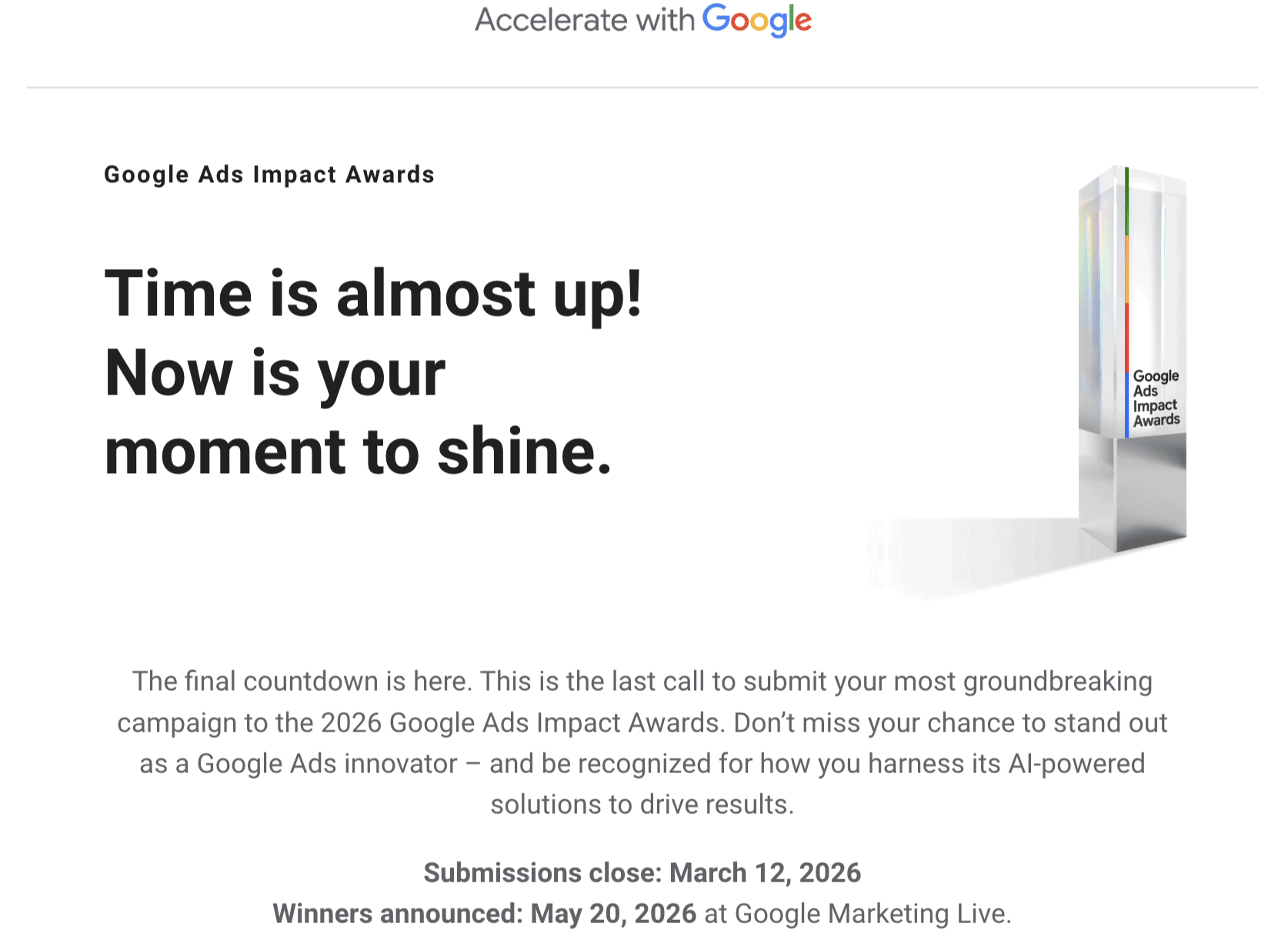
I recently received thrilling news about Google Marketing Live 2026, which is officially scheduled for May 20. I’m eagerly anticipating the event where Google will unveil the latest enhancements in advertising, AI, and campaign automation.
In fact, I discovered the date through an email from the Accelerate with Google program. This communication not only confirmed the event date but also invited entries for the prestigious Google Ads Impact Awards.
You might be interested to know that the winners of these awards will be announced during the event, adding an extra layer of excitement.
Why it matters to me. As a user of Google Ads, I’m always on the edge of my seat for this annual event. It’s the moment Google reveals its groundbreaking innovations—new AI features, campaign types, and measurement tools that will hugely impact how I manage and optimize my campaigns.
Each year, the most pivotal updates in Google’s advertising strategies are first introduced at this event. It provides invaluable insights into the future of digital advertising.
The bigger picture. This year’s event aligns with Google I/O 2026 (May 19–20), which goes beyond just advertising. I/O covers the broader Google ecosystem including AI and Search technologies, which often guide the direction of advertising products.
What to watch for. I’m eagerly expecting announcements related to AI-driven advertising, automation, and enhanced performance metrics. It’s a must-watch for any marketer keen on staying ahead of Google’s ad strategy for the coming year.
First heard about it. The PPC News Feed by Hana Kobzová was where I initially got the scoop. It’s always exciting to find such vital information from reliable sources I trust.