Tag: Business Strategy

  • Master AI: Boost Revenue with Strategic Automation

    Master AI: Boost Revenue with Strategic Automation

    I’ve been to numerous AI conferences and training sessions over the years. I’ve witnessed inspiring innovations, and I’ve also seen many people getting nowhere fast.

    Having hands-on experience with AI automation across different businesses, I’ve found myself in both those positions. Here, I want to share my insights so you can save time, energy, and resources—while strategically using AI to boost revenue and cut costs.

    Many AI Projects Miss the Mark on Value

    All too often, I see entrepreneurs trying to reinvent the wheel. I’ve lost count of people touting their new AI-driven CRMs when there are already hundreds of excellent platforms available. Building a new CRM from scratch is unnecessary when existing ones provide every conceivable feature with teams dedicated to keeping them updated and functional.

    The same logic applies to apps and software mimicking existing tools. I’ve been guilty of this too, but the truth is, we don’t need another version of an already oversaturated tool.

    On rare occasions, creating new software is justified, mainly if it launches quickly and offers something proprietary—a novel formula, a distinct process, or exclusive data access. It has to be core to your business model.

    Otherwise, you risk squandering time and money on tech that’s irrelevant to your business improvement.

    Strategic AI is Your Real Competitive Edge

    The businesses achieving significant AI success are solving measurable operational challenges with it.

    The key to success is deploying AI in ways that tangibly enhance revenue and efficiency.

    How AI Can Directly Increase Revenue

    Consider using AI to develop a highly targeted prospect list and automate outreach, seamlessly leading prospects into your marketing funnel. Some companies even use AI for parts—or the entirety—of their sales process. This approach is drawing in fresh, targeted leads on auto-pilot daily.

    This strategy provides a cost-effective, scalable way to grow revenue without the expense of additional hiring. However, you must ensure your business can manage the increased demand. While scaling is beneficial, any slip-ups can quickly tarnish your reputation.

    Proper implementation is crucial; it demands oversight, testing, and operational discipline. Poorly executed AI can spawn as many problems as it fixes.

    AI Can Reduce Time and Operational Costs

    AI can streamline workloads efficiently, cutting both time and costs. I’ve used it to swiftly analyze market conditions, enabling me to make more precise pricing decisions when dealing in property transactions.

    AI excels in rapidly compiling, analyzing, and extracting insights from vast datasets, revealing patterns and opportunities a human might miss.

    By leveraging AI, I can quickly identify the most promising deals and make offers faster than competitors, a critical advantage in winning business.

    One Simple AI Workflow that Saves Hours

    A PR firm I collaborate with employs AI to oversee their clients’ media interview schedules. Post-interview, the system promptly locates the Zoom recording, transcribes it, and prepares an email with the video and transcript for journalists.

    This process saves about 30 minutes per interview, delivering everything rapidly, as opposed to waiting for human intervention. Apart from time and cost savings, it offers journalists greater value by streamlining their workflow.

    Other High-Impact AI Utilizations

    There are numerous strategic ways AI can significantly bolster revenue and productivity. Some methods I’ve applied include:

    • AI virtual phone assistants offering 24/7 service.
    • Intelligent website chatbots specifically tailored to your business.
    • Efficient appointment scheduling.
    • Recovering missed calls efficiently.
    • Implementations focusing on better response times and improved customer experiences.

    AI’s Effectiveness Lies in Strategic Use

    Currently, a significant opportunity exists in helping service businesses recapture revenue lost from overlooked prospects.

    Most small enterprises don’t need intricate platforms or custom AI apps. They need systems that respond faster than manual efforts can. This might be an AI-powered phone assistant handling calls and scheduling appointments around the clock, or a web assistant trained to address inquiries and capture leads on the spot. Strategically applied, AI isn’t about displacing workers but preventing missed opportunities.

    Businesses integrating AI effectively are likely to surpass competitors that lag in enhancing operational efficiency and response speed.

    The most impactful AI setups aren’t flashy. They address specific operational issues: lowering missed calls, improving response times, hastening analysis, qualifying leads swiftly, or automating repetitive tasks.

    If an AI system doesn’t noticeably enhance revenue, efficiency, customer experience, or decision-making, it’s worth questioning its necessity.

    Utilizing AI in this pragmatic manner provides a substantial edge over competitors less willing to compete efficiently.

    So the question remains: will you allocate time to employ AI strategically?


    Inspired by this post on Search Engine Land.


    crushpress.ai community screenshot
  • Top Franchise Directories of 2026: Your Ultimate Guide

    Top Franchise Directories of 2026: Your Ultimate Guide

    Discover how the leading franchise directories of 2026 measure up in terms of accuracy, consistency, and usability. As someone who spends every day immersed in the realm of online search, I carefully evaluate which information is easily accessible, reliable, current, and truly beneficial for decision-makers.

    This extensive knowledge directly influences franchise research platforms. Each directory was meticulously assessed using a weighted scoring system focusing on listing verification, research depth, and buyer support and guidance.

    Our Evaluation System

    FactorWeightWhy it Matters
    Listing Verification35%Prevents misleading or outdated franchise information.
    Research Depth & Data Quality25%Determines the depth in which buyers can evaluate potential opportunities.
    Buyer Support & Guidance15%Helps buyers understand next steps after initial interest.
    Listing Consistency15%Allows for clear, side-by-side comparison.
    Platform Longevity & Credibility5%Signals experience and long-term reliability.
    Estimated Catalog Size5%Reflects breadth without prioritizing volume over quality.

    With these factors in consideration, here’s how our selected franchise directories for 2026 stack up.

    ```json
{
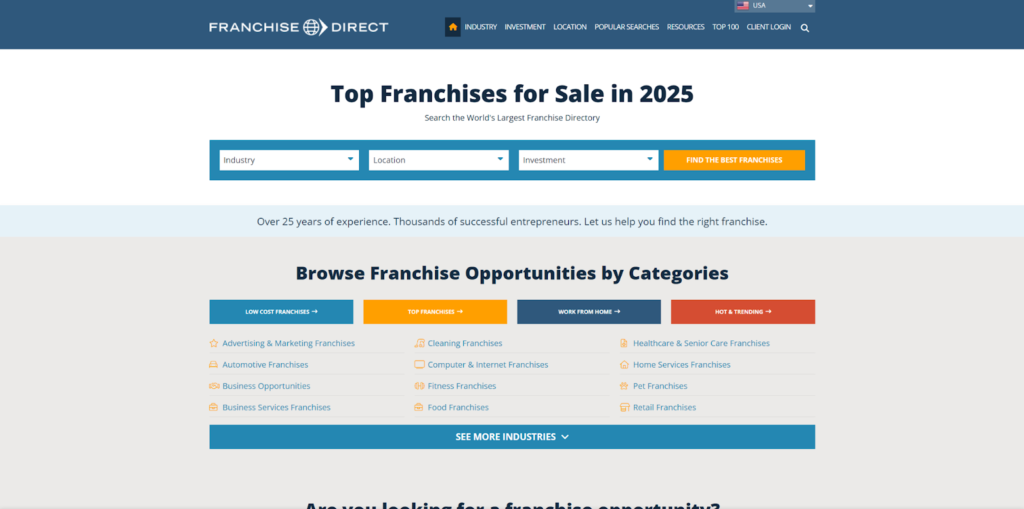
  "alt": "Franchise Direct website offering top franchises for sale in 2025, with category and location filters.",
  "caption": "Discover the top franchises for sale in 2025 with Franchise Direct. Explore various categories and find your business opportunity today!",
  "description": "The image shows a section of the Franchise Direct website, highlighting top franchises for sale in 2025. Users can filter by industry, location, and investment amount to find the best franchises. Categories such as Advertising, Automotive, Healthcare, and more are available for browsing. This platform offers guidance with over 25 years of experience, aiming to help entrepreneurs find suitable business opportunities. Keywords include franchise sale, business opportunity, and franchise directory."
}
```

    Best Directories for Franchise Opportunities

    DirectoryListing VerificationResearch DepthBuyer GuidanceListing ConsistencyPlatform LongevityCatalog SizeBest For
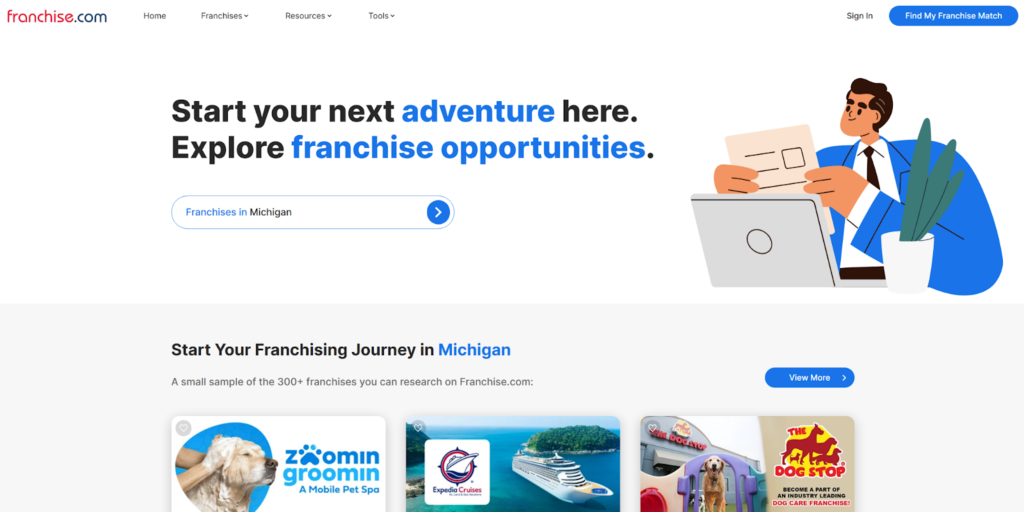
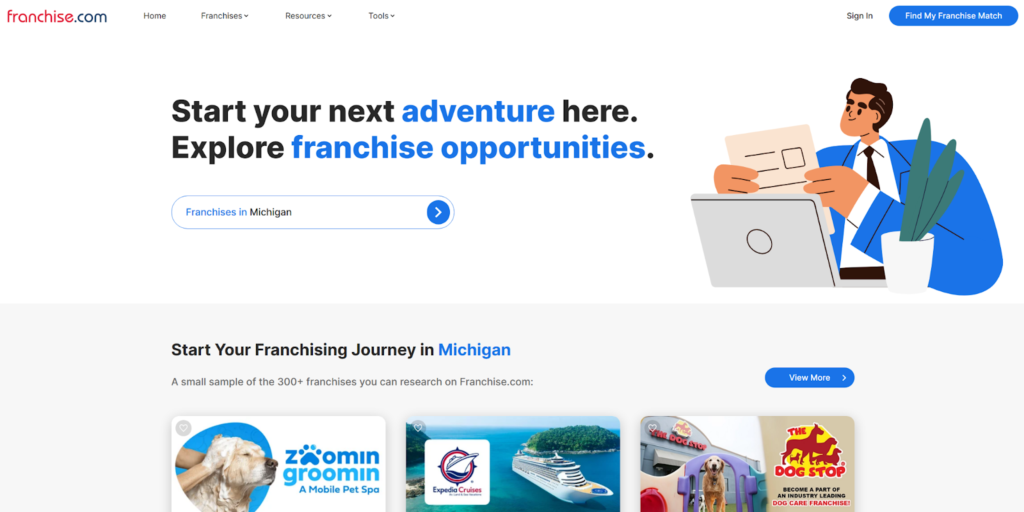
    Franchise.comYesStrongStrongHighEst. 1995BroadBuyers who want the most comprehensive and accurate directory
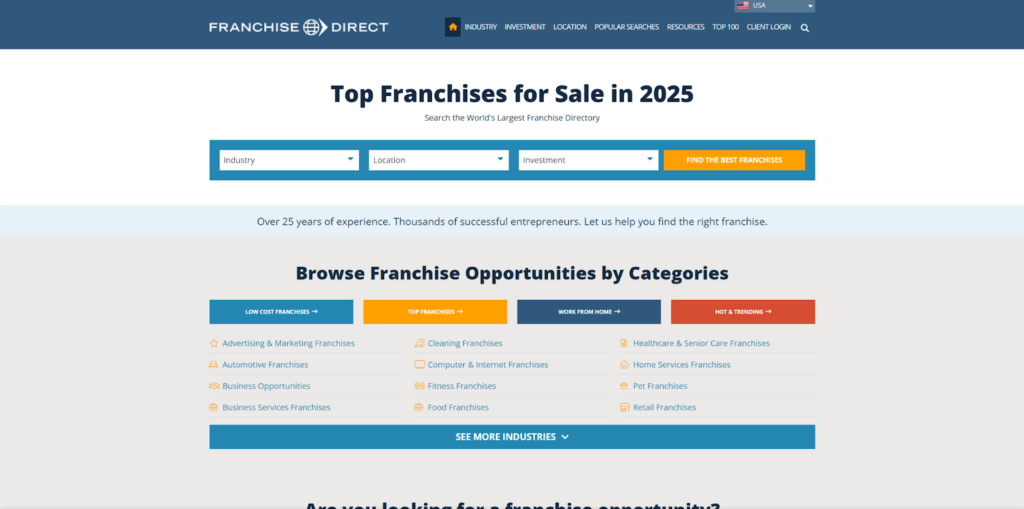
    Franchise DirectNoLimitedModerateInconsistentEst. 1998Very BroadInternational exploration
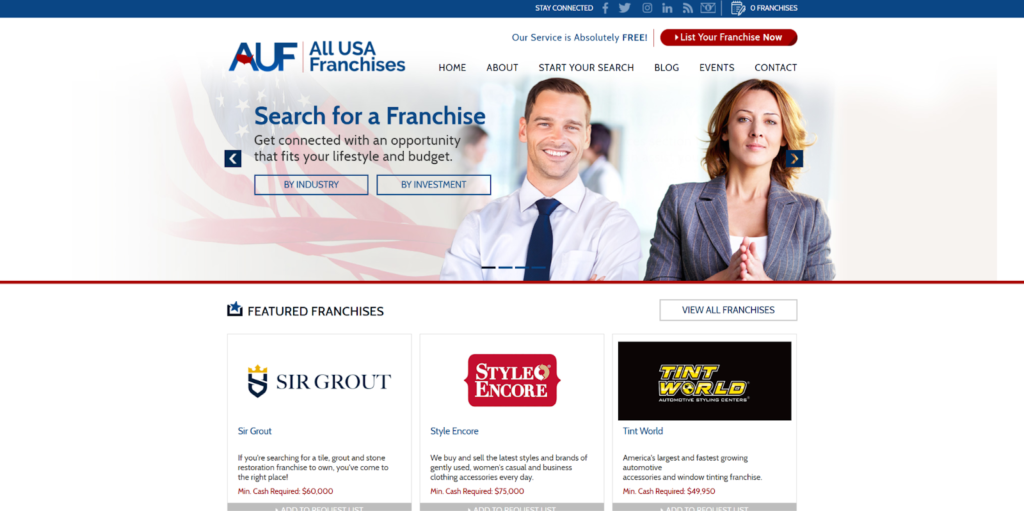
    All USA FranchisesNoLimitedLimitedInconsistentEst. 2018Very BroadBroad US franchise browsing
    Entrepreneur.comNoModerateLimitedLowIFA Est. 1960NarrowIdea discovery
    Franchise.org (IFA)NoStrongVery StrongLowEst. 2009BroadLearning franchising basics

    Franchise.com – Comprehensive Franchise Discovery

    Image

    Franchise.com stood out as a leader with its verified listings and detailed research information. I find their commitment to accuracy and comparability enhances trustworthiness and reliability greatly.

    Their verification-first approach and integrated buyer guidance make it an ideal platform for serious buyers looking for structured and contextual information.

    ```json
{
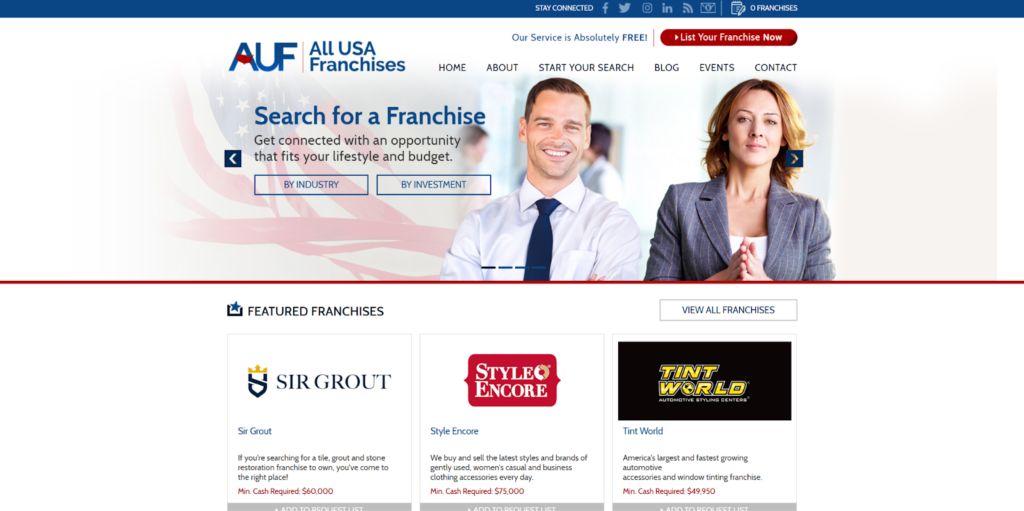
  "alt": "All USA Franchises homepage with search options and featured franchises.",
  "caption": "Explore All USA Franchises: Your gateway to finding the perfect franchise opportunity. Search by industry or investment and discover featured options.",
  "description": "The All USA Franchises homepage features a search interface for finding franchise opportunities by industry or investment type. A banner shows smiling professionals beside options for users to 'Start Your Search' and view 'Featured Franchises' such as Sir Grout, Style Encore, and Tint World. The site promotes free services and includes navigation links to Home, Blog, Events, and Contact. SEO keywords include franchise, investment, business opportunity, and industry search."
}
```
    • Best for: Buyers seeking accuracy and context
    • Listing Verification: Yes
    • Research Depth: Strong
    • Buyer Guidance: Strong
    • Listing Consistency: High
    • Catalog Size: Broad
    • Years in Operation: Established 1995

    Franchise Direct – Ideal for International Explorers

    Image

    Franchise Direct provides a diverse catalog of international opportunities, offering insights into global franchise concepts. However, if you need verified and highly structured information, this isn’t the platform for you.

    This directory is particularly advantageous for early exploration or for those interested in gathering broad ideas on international franchises.

    ```json
{
  "alt": "Entrepreneur website homepage featuring leadership article and business news.",
  "caption": "Explore insights on leadership and the latest in business news on the homepage of Entrepreneur. From navigating risks to mastering stress, discover valuable entrepreneurial resources.",
  "description": "The homepage of the Entrepreneur website showcases a central feature article titled 'What Transitioning From Founder to CEO Taught Me About Leadership at Any Scale.' Surrounding the main article are various business news updates, including topics on risk navigation, the impact of AI in business, and managing stress as a CEO. The layout includes vibrant images, headlines, and a user-friendly interface, engaging readers with diverse entrepreneurial content."
}
```
    • Best for: International exploration
    • Listing Verification: No
    • Research Depth: Limited 
    • Buyer Guidance: Moderate
    • Listing Consistency: Inconsistent
    • Catalog Size: Very broad
    • Years in Operation: Established 1998

    All USA Franchises – Expansive Industry Exploration

    Image

    Focusing on a US audience, All USA Franchises offers a powerful overview across numerous industries. This platform is especially beneficial if you’re in the broad browsing phase of your search.

    • Best for: Early-stage browsing
    • Listing Verification: No
    • Research Depth: Limited
    • Buyer Guidance: Limited
    • Listing Consistency: Inconsistent
    • Catalog Size: Very broad
    • Years in Operation: Established 2018

    Entrepreneur.com – Trend Awareness and Rankings

    Image

    Entrepreneur.com stands out with its editorial approach, offering insights through rankings and broader media coverage. If you’re on the lookout for trend awareness or idea discovery, this is the site for you.

    ```json
{
  "alt": "IFA 2026 event announcement on colorful gradient background.",
  "caption": "Join the IFA's biggest annual event in Las Vegas! Discover new connections and experiences at IFA26 'Evolve' from February 23-25, 2026.",
  "description": "This image announces the International Franchise Association's (IFA) major event, IFA26 'Evolve,' to be held from February 23-25, 2026, in Las Vegas, NV. The backdrop features a vibrant orange-to-purple gradient with modern design elements. The event promises evolved connections, ideas, and experiences, aiming to impact 2026 and beyond. Navigation options like 'About Us' and 'Membership' are visible, emphasizing organizational engagement. Keywords: IFA, 2026 event, franchising, Las Vegas, evolved connections, IFA26."
}
```

    However, it’s less suited for those needing detailed evaluations or a consistent framework for comparison.

    • Best for: Idea discovery
    • Listing Verification: No
    • Research Depth: Moderate
    • Buyer Guidance: Limited
    • Listing Consistency: Low
    • Catalog Size: Narrow
    • Years in Operation: Established 2009

    Franchise.org – Master the Basics of Franchising

    Image

    Operated by the International Franchise Association (IFA), Franchise.org focuses on education, emphasizing fundamental franchising principles. It’s perfect if you want to build a solid foundation in franchising.

    • Best for: Learning franchising basics
    • Listing Verification: No
    • Research Depth: Strong
    • Buyer Guidance: Very strong
    • Listing Consistency: Low
    • Catalog Size: Broad
    • Years in Operation: IFA established 1960

    Source


    Inspired by this post on First Page Sage Blog.


    crushpress.ai community screenshot
  • Google Hints at Ads in Gemini: A Shift in Strategy

    Google Hints at Ads in Gemini: A Shift in Strategy

    How to use Google Gemini for better SEO

    I recently came across some interesting news about Google and its potential plans to incorporate ads into its Gemini AI app. A senior executive at the company shared with WIRED that ads in Gemini are not out of the question — a stark contrast to previous denials just a few months ago.

    What’s changed: Back in January, Google DeepMind CEO Demis Hassabis assured reporters at Davos that there were no plans to introduce ads in Gemini. However, now Google’s SVP Nick Fox has hinted otherwise, mentioning that insights gained from ads in AI Mode could eventually be applied to Gemini.

    The current strategy. Instead of rushing into ads within Gemini, Google is leveraging AI Mode — a search product powered by Gemini — as a testing ground for advertising formats in AI settings.

    Here’s how they’re currently managing it:

    • Ads are distinct from organic results and clearly labeled.
    • Only relevant ads are displayed — if there’s nothing that fits, no ads are shown.
    • Google’s extensive experience in search ads informs this approach.

    Why we care. Advertising is at the core of Google’s business model. How they introduce ads into AI products like Gemini will have a significant impact on the industry and influence how AI companies monetize their free services. Brands that can position themselves effectively within these conversational AI platforms now will gain a crucial advantage.

    The bigger picture. Google, with its strong financial backing, is in a comfortable position to proceed at a steady pace, having surpassed $400 billion in revenue in 2025. In contrast, OpenAI is under pressure to more than double its $30 billion revenue target this year and has already begun testing ads in ChatGPT’s free tier.

    Between the lines: Fox’s remarks are strategically cautious but enlightening. By framing Gemini ads as a “prioritization question” rather than a debate of values, Google hints that it’s more about when the ads will appear, not if.

    What to watch: There’s an intriguing aspect of Gemini called Personal Intelligence, which extracts data from a user’s Gmail, Photos, and Calendar. Fox considers personalization to be critical for search, and it may eventually integrate into the broader Search experience. If that occurs, advertisers could tap into a new realm of contextual targeting, though user data will strictly remain unsold and unshared.

    What’s next. Advertisers should start preparing now. As Google fine-tunes AI ad formats in AI Mode, these insights will make their way to Gemini. Brands that master the art of being relevant in context-driven, conversational AI environments will be well ahead when the opportunity for advertising in Gemini fully materializes.

    Dig deeper. For a more detailed exploration of Google’s advertising strategy in Gemini, check out the full article on WIRED.


    Inspired by this post on Search Engine Land.


    crushpress.ai community screenshot
  • Surviving the Loss: Lessons from Letting Go of a Major Client

    Surviving the Loss: Lessons from Letting Go of a Major Client

    In a recent episode of PPC Live The Podcast, I got the chance to sit down with Emina Demiri Watson, the Head of Digital at Vixen Digital based in Brighton. She opened up about one of the more challenging experiences an agency can face: choosing to let go of a client who made up a significant portion of their revenue. Imagine a client that accounts for 70% of your income, and then having to say goodbye. This is what Emina bravely tackled.

    Over approximately three months, it became clear that the relationship with this client was worsening. It wasn’t an overnight decision; it evolved from a once-healthy dynamic to something toxic. The leadership team at Vixen made the tough call to prioritize their company culture over the immediate financial gain provided by this client. It was a decision not driven by a difficult client but by a deteriorating relationship that impacted the entire team.

    When they finally analyzed the situation, the reality hit hard. Vixen discovered they had a serious issue with client concentration — one client dominated their revenue structure. This wasn’t apparent until they examined the figures closely, underscoring the importance of having well-organized financial tracking systems.

    Emina also highlighted several red flags agencies should watch for in client relationships. It’s not just about declining campaign performance; watch for shifts within the client’s business, such as restructuring, team changes, or security breaches that can impact lead conversions. It’s crucial to understand what’s happening on the client’s end to maintain a healthy partnership.

    The road to recovery for Vixen Digital involved three key strategies: properly monitoring client concentration, adhering to their core values, and being patient with rebuilding revenue. Losing the client allowed them to re-focus on pitching new business and reconnecting with the industry, activities that had previously been sidelined.

    In discussing mistakes observed during account audits, Emina noted common issues such as using broad match without adequate audience safeguards and neglecting negative keyword lists. These errors often lead to ineffective targeting, especially problematic for businesses targeting niche, high-value audiences.

    Emina’s view on AI is refreshingly realistic: the key misstep is overhyping it. In the PPC world, we’ve been navigating automation for years, which positions us well to question AI’s supposed magic. Her advice to the team is to use AI tools like Claude for preliminary research but never to replace critical thinking.

    If you’re grappling with the idea of ending a deteriorating client relationship, Emina’s straightforward advice is to return to your values. Prioritize commercial goals if that aligns with your mission, but if preserving company culture and team morale are paramount, it may be time to let go.


    Inspired by this post on Search Engine Land.

    crushpress.ai community screenshot
  • Perplexity’s Bold Move: Choosing Trust Over Advertising

    Perplexity’s Bold Move: Choosing Trust Over Advertising

    Recently, I learned that Perplexity has decided to halt its advertising initiatives. The company started experimenting with sponsored placements back in 2024, but now they’re stepping back, believing these ads might jeopardize the trust that users place in their AI answer engine.

    I read the Financial Times report stating that Perplexity phased out the ads and currently has no intention of reintroducing them. It’s an intriguing approach considering the rapid evolution of AI search companies.

    As someone who utilizes AI-driven platforms, I find it important to monitor these changes. If Perplexity stays ad-free, brands miss out on direct paid access to a growing audience. Imagine how brands must navigate a landscape with 780 million monthly queries without the option for sponsored placements.

    Perplexity was pioneering in testing ads, placing sponsored answers beneath chatbot responses. They claimed these ads were clearly labeled, ensuring they didn’t affect the quality of information. Yet, it’s evident that perception is as crucial as policy for them.

    From my perspective, the notion that users might doubt the integrity of responses if ads appear is understandable. One of Perplexity’s executives mentioned that maintaining users’ belief in receiving the best possible answer is paramount.

    It’s worth mentioning that while Perplexity opts out of ads, other platforms are diving in. For instance, OpenAI is testing ads in ChatGPT for free users, and Google is running ads in AI Mode within Search, although not in Gemini. Meanwhile, Anthropic is committed to keeping Claude ad-free, which reflects different strategic approaches in the industry.

    Sustainability in business is key, and Perplexity sees subscriptions as its core model. They offer both free and paid plans ranging from $20 to $200 monthly, boasting over 100 million users and approximately $200 million in annual revenue. This model reflects their focus on accuracy and providing the truth, minimizing conflict of interest.

    Despite launching shopping features, Perplexity doesn’t take a transaction cut, aligning with their cautious stance on revenue models that might undermine trust.

    For more detailed insights, one could explore the full report from the Financial Times, though it’s a subscription-based service.


    Inspired by this post on Search Engine Land.

    crushpress.ai community screenshot
  • Maximizing AI Visibility: Why It’s 30x Tougher Than Google SEO

    Maximizing AI Visibility: Why It’s 30x Tougher Than Google SEO

    When it comes to AI assistants like ChatGPT, Gemini, and Perplexity, my experience shows that many brands excelling in local Google searches struggle to be visible. SOCi’s 2026 local visibility index highlights this gap, revealing that AI recommends a meager 1% to 11% of locations.

    Interestingly, business profile accuracy varies significantly across platforms. While Gemini maintains 100% accuracy, ChatGPT and Perplexity lag behind at 68%.

    AI limits local visibility. Examining data from almost 350,000 locations tied to 2,751 multi-location brands, it’s clear that AI platforms are incredibly selective compared to Google’s local outcomes:

    Only 1.2% of locations get the nod from ChatGPT, 11% from Gemini, and 7.4% from Perplexity. In contrast, Google’s local 3-pack features brands 35.9% of the time, indicating that securing AI visibility is three to 30 times more challenging.

    AI and Google visibility differ. Across different sectors, less than half of brands topping Google’s local visibility are also among the elite in AI search outcomes.

    For instance, in retail, only 45% of the top 20 brands in local search visibility made it to the top in AI recommendations.

    Why I care. Just because my brand does well on Google doesn’t mean it will shine in AI-driven results. It’s crucial to ensure that my brand’s information is consistent across all platforms AI systems draw from, such as Google Maps, Yelp, and Facebook. Strong, accurate data and a clear, positive presence are now fundamental.

    AI favors higher-rated businesses. AI consistently promotes businesses with high customer sentiment, treating reviews more like a filter than a ranking tool.

    For instance, ChatGPT recommends locations averaging 4.3 stars, whereas ratings on Gemini and Perplexity are slightly lower. Unlike traditional methods that prioritize proximity, AI platforms look for confidence.

    Impact varies by industry. Different sectors experience varying levels of AI visibility:

    Retail: A limited number of retail giants like Sam’s Club lead, while others like Target fall short. This gap illustrates AI’s focus on reliable signals across platforms.

    Restaurants: Culver’s excels with up to 45.8% recommendation rates, driven by strong ratings and accurate profiles, highlighting how essential these elements have become.

    Financial services: Liberty Tax improved its AI visibility by boosting data accuracy and ratings, achieving impressive figures compared to competitors lacking in these areas.

    Failing to maintain top-notch fundamentals now means disappearing from AI recommendations altogether. SOCi observes this as a critical shift.

    The report. For more detailed insights, I can check out the 2026 Local Visibility Index (registration required).


    Inspired by this post on Search Engine Land.

    crushpress.ai community screenshot
  • Unlock Local SEO: Master Google’s Entity Recognition

    Unlock Local SEO: Master Google’s Entity Recognition

    The local SEO gatekeeper- How Google defines your entity

    Have you ever wondered why some businesses never make it to the top of the local pack rankings on Google? It’s not just about lacking reviews, links, or even proximity. The real challenge starts before any of these factors. Allow me to walk you through how Google determines if your business is eligible in the first place.

    Think of it this way: Google first confirms the identity of your business before considering its relevance. It’s a critical step that many overlook.

    From Exact Matches to Broad Intent: How Eligibility Shifts

    ```json
{
  "alt": "Screenshot of a Google API documentation discussing business type categorization.",
  "caption": "Explore the Google API documentation on business type categorization, detailing the use of business names and categories for location-based elements.",
  "description": "This image is a screenshot from the Google API documentation. It discusses the high-level categorization of business types, specifically using the parameters BUSINESS_NAME and BUSINESS_CATEGORY. The text explains how business types align with QRef collections and outlines examples such as hotels and restaurants. It also includes a note on grammar categorization and business type matching. Essential for developers working with location-based data."
}
```

    For niche queries, Google searches for a precise 1:1 match, ensuring there’s no room for misunderstanding. But when the query broadens, as in searching for “restaurants,” the landscape changes dramatically, opening up more possibilities based on various categories.

    This highlights hidden ranking elements like clicks, reviews, and even real-time data like whether a business is open.

    Your business name and category must create a cohesive signal, defining what I like to call your “entity boundary.” For many businesses, a name that’s too specific can become an anchor, limiting your visibility in broader searches. If you’re aiming to conquer a niche, aligning your name and category perfectly can be your secret weapon.

    ```json
{
  "alt": "Search results for child dance lessons in Palm Beach showing dance schools with ratings and contact details.",
  "caption": "Explore top-rated dance schools in Palm Beach for your child's dance lessons. Find essential details and contact information to start your child's dance journey.",
  "description": "This image displays search results for child dance lessons in Palm Beach. It includes listings of various dance schools with ratings, years in business, and contact information. Highlights include Tippi Toes Palm Beach Gardens and KemKids Dance Studio, both marked with red arrows for emphasis. The displayed options provide detailed information like customer reviews, office hours, and website links, offering a guide to parents seeking dance lessons for their children."
}
```

    The Eligibility Gatekeeper: Interpretation First, Rankings Second

    Competing isn’t just about outperforming other businesses; it’s also about meeting Google’s stringent need for certainty. Thanks to the Google Content Warehouse API Leak, we now understand the engine that decides which businesses are eligible before considering traditional ranking factors like reviews or links.

    This mechanism pre-qualifies businesses using a machine-learning classifier to filter out those unlikely to fulfill a query, ensuring only the most confident matches appear.

    ```json
{
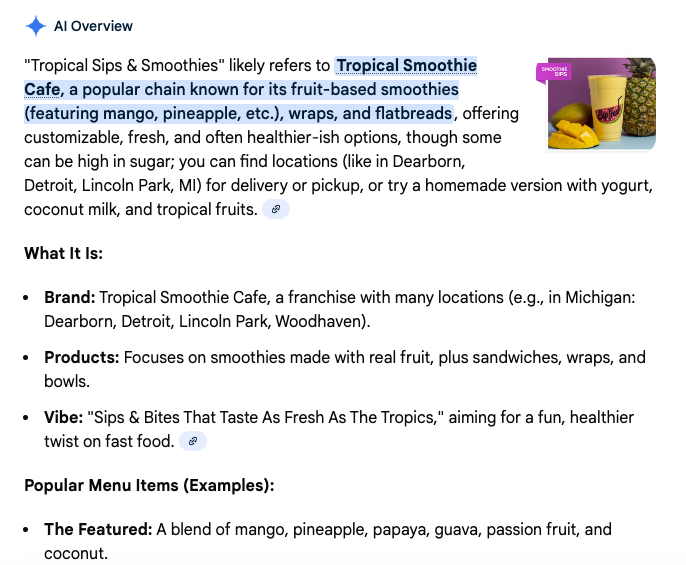
  "alt": "Text about Tropical Smoothie Cafe, highlighting their fruit-based smoothies, wraps, and flatbreads with an image of smoothies and fruit.",
  "caption": "Discover the tropical flavors of Tropical Smoothie Cafe, known for their vibrant fruit smoothies and tasty wraps. Perfect for a refreshing treat!",
  "description": "This image features descriptive text about Tropical Smoothie Cafe, a franchise renowned for its fruit-based smoothies, wraps, and flatbreads. Located in various cities, the cafe focuses on real fruit smoothies and offers a fun, fresh take on fast food with items like the mango-pineapple blend. A small image shows smoothies and fresh fruit, reinforcing the tropical theme and fresh offerings of the cafe."
}
```

    Your business name and primary category aren’t just descriptors; they set boundaries that determine your eligibility for specific queries.

    Understanding the intricacies of these “entity boundaries” can help you determine how Google perceives the essence of what your business offers. I’ve seen this factor repeatedly transform ranking outcomes.

    Business name + category: A unified signal

    ```json
{
  "alt": "Local smoothie store search results displaying ratings, prices, and locations.",
  "caption": "Finding your perfect smoothie spot made simple with detailed local store listings, featuring ratings, price ranges, and customer reviews.",
  "description": "This image captures a search result for 'smoothie store near me', showcasing several options with ratings and reviews. The list includes Beyond Juicery + Eatery, Smokey’s Smoke & Smoothie, and Vara Juice, each with customer ratings, price estimates, and brief testimonials. Perfect for users seeking nearby smoothie shops with top customer feedback."
}
```

    Google evaluates your business name and category as one unit. They process parallel through semantic models, each playing a distinct role: while your business name acts as a self-identification signal, the category offers authoritative structure.

    Understanding how these two elements interact can be pivotal in leveraging your business’s online visibility and eligibility to show up for desired queries.


    Inspired by this post on Search Engine Land.

    crushpress.ai community screenshot
  • Why AI Prompt Volumes Fall Short and What You Should Do

    Why AI Prompt Volumes Fall Short and What You Should Do

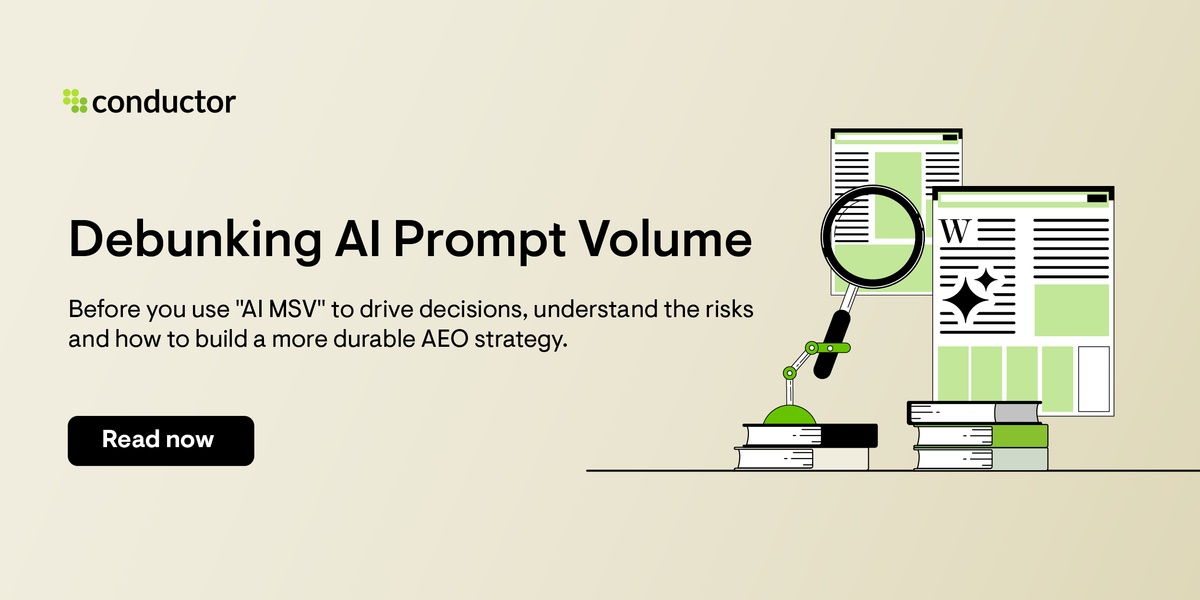
    I’ve noticed many discussions around the use of AI prompt volume, and why it’s a flawed metric to rely on. What I want to emphasize is the importance of building a robust AEO strategy grounded in real business objectives.

    If we depend solely on AI prompt volume numbers, we’re likely missing out on the bigger picture. Instead, focusing on tangible goals can guide us towards more sustainable success. It’s tempting to chase after the flashy metrics, but what truly matters is how we align our efforts with the actual needs of our business.


    Inspired by this post on Conductor Blog.


    crushpress.ai community screenshot