Tag: Award Applications

  • AI for Grant Writing: A Reliable, Human-Led Workflow

    AI for Grant Writing: A Reliable, Human-Led Workflow

    You have a deadline, a dense set of funder instructions, and more application work than your team can comfortably absorb. AI can shorten that work, but asking it to write the entire proposal from a blank prompt is usually the wrong move. You get fluent copy before you get verified facts, and that fluency can hide an eligibility mistake, a budget mismatch, or an invented citation.

    The reliable approach is to split the job. Use current funder data to discover and qualify opportunities, use a language model to transform approved evidence into criterion-specific prose, and keep people responsible for facts, commitments, compliance, authorship, and submission. This workflow shows you exactly where AI helps and where it needs a hard boundary.

    Use AI to transform verified inputs, not invent the application

    A grant proposal is not simply a piece of persuasive writing. It is a structured claim that your organization is eligible, understands a defined problem, can deliver a credible program, has a defensible budget, and can measure the promised result. AI can organize and express those claims. It cannot determine whether they are true or authorize your organization to make them.

    Give the model a narrow operating contract: it may extract, classify, draft, compare, and challenge; it may not originate facts, select unsupported statistics, assume eligibility, promise partner participation, change approved costs, or make up citations. When information is missing, require a visible marker such as [NEEDS INPUT] instead of plausible filler.

    • Low-risk uses: extracting requirements, turning review criteria into an outline, shortening approved text, comparing a draft with a checklist, identifying inconsistencies, and converting confirmed material into a letter of inquiry.
    • Controlled drafting uses: needs statements, project narratives, evaluation plans, and budget justifications built only from an approved source packet. Every generated sentence remains subject to factual and strategic review.
    • Human-only decisions: confirming eligibility, selecting the program strategy, approving financial assumptions, making commitments, interpreting ambiguous funder rules, completing attestations, deciding whether AI use must be disclosed, and submitting the application.

    The authorship boundary matters most for regulated or research funding. The National Institutes of Health announced in 2025 that it would not regard applications developed substantially by AI as original work. If you are applying to NIH, another federal agency, or any funder with an AI policy, read the current notice and the specific solicitation before drafting. Do not assume that a technically polished application is permissible merely because the portal accepts it.

    A practical internal rule is simple: a named person must be able to defend every factual assertion, cost, method, target, and commitment without referring to the AI conversation. If nobody can do that, the sentence is not ready for the proposal.

    Choose the AI by task, not by a single overall ranking

    No platform led all eight grant tasks in a 4,320-response benchmark covering 480 requests. Specialist grant platforms performed best when current opportunity data and rule-following mattered. General-purpose assistants were stronger at several writing and reasoning tasks. That makes a small, controlled toolchain more defensible than treating one chatbot as researcher, eligibility officer, writer, budget analyst, and compliance reviewer.

    Grant taskBest-fit default from the benchmarkMeasured strengthControl you still need
    Find matching grantsInstrumentl92.6 task score; 97.2% of recommended opportunities were real and openOpen the official funder page and verify the current cycle, deadline, geography, applicant type, and program status.
    Check eligibilityInstrumentl91.3 task scoreMap every eligibility condition to evidence from your organization and resolve ambiguity with the funder when possible.
    Draft needs statements, narratives, and letters of inquiryClaude Opus 5.591.8 for needs statements, 92.7 for narratives, and 91.6 for letters of inquiryRestrict drafting to approved facts and have the program owner review feasibility, specificity, and voice.
    Build budget justificationsChatGPT GPT-6 Sol90.3 task scoreGenerate prose from the final approved budget, never the other way around. A finance owner must validate every cost and assumption.
    Develop logic models and evaluation plansClaude Opus 5.591.2 task scoreConfirm that outputs, outcomes, measures, data sources, timing, and responsible roles are operationally realistic.
    Check funder instructionsGrantable paid plan91.4 task score and the lowest measured compliance-error rate, 6.8%Complete a manual line-by-line check after exporting the final application. The lowest error rate was not zero.

    The overall results were effectively a tie at the top: Claude scored 89.6 and ChatGPT scored 89.5. A tenth of a point is too small to base your workflow on by itself. Choose according to the task, the quality of your source controls, your data-handling requirements, and the review process your team can actually maintain.

    Treat every score as a snapshot, not a permanent product promise. The tested versions and paid plans were evaluated from September 29 to October 16, 2026. Models, search indexes, pricing, and product features can change, while your funder’s current instructions always take priority.

    Build a source packet before you write a prompt

    A hand adds a verified evidence card to an organized grant source packet containing blank requirement sheets, budget materials, program records, and citation cards.

    The quality of a grant draft is usually constrained upstream. If the model receives an old budget, an unlabeled statistic, and several conflicting descriptions of the program, a longer prompt will not repair the underlying problem. Build one approved packet and make it the boundary of the drafting task.

    • Current funder materials: the opportunity notice, guidelines, application questions, scoring criteria, portal instructions, frequently asked questions, amendments, and required attachment formats. Label every file with its date or version.
    • Eligibility record: the exact applicant requirements and the organizational evidence that satisfies each one. Separate a confirmed match from an assumption that still needs resolution.
    • Program brief: the defined need, intended participants, service area, activities, delivery sequence, timeline, responsible roles, dependencies, and boundaries of the proposed work.
    • Evidence ledger: each proposed statistic or factual claim, its authoritative origin, publication date or reporting period, page or URL, approved wording, and the person who verified it.
    • Outcome framework: intended outputs and outcomes, baseline information where available, targets approved by the program team, measurement method, collection timing, and data owner.
    • Approved budget: line items, calculations, rates, quantities, cost categories, funding restrictions, matching contributions, and notes explaining the basis of each cost.
    • Capacity evidence: current staffing, relevant organizational history, facilities, systems, prior results, and partner commitments that the organization is authorized to describe.
    • Voice references: current annual reports, approved program descriptions, and prior applications that reflect the organization’s preferred language. Flag anything outdated so the model cannot quietly reuse it as present fact.

    Tell the model which document wins when files conflict. The latest funder amendment may supersede the original notice, and the signed budget may supersede an early narrative draft. Without an explicit hierarchy, the model can select the version that is easiest to write from rather than the one that governs the application.

    Add a control header to every drafting session. It should identify the allowed files, prohibit outside facts and fabricated citations, define the missing-information marker, state the section limit, name the review criterion being addressed, and require traceability back to the packet. This turns a vague writing request into a bounded transformation task.

    Protect the packet as carefully as you protect the final application. Do not place personally identifiable beneficiary data, confidential personnel information, proprietary research, unpublished financial details, or restricted partner material into a consumer AI service unless your organization’s contract, privacy rules, and data controls explicitly allow it. Use de-identified or aggregated material when the drafting task does not require sensitive records.

    Run each application through seven controlled passes

    Seven illuminated review stations show a grant application progressing from eligibility evidence through drafting, budget checks, fact verification, and human approval.

    Do not generate the proposal in one conversation and then proofread it. Separate discovery, compliance, drafting, and verification so that an early mistake cannot spread invisibly through every section.

    1. Verify that the opportunity is current. Confirm the program on the funder’s official site, then record the current deadline, applicant types, geographic restrictions, award purpose, funding period, exclusions, and amendments. Current-data access makes a material difference: Instrumentl returned 97.2% real, open opportunities, while Claude returned 78.6% and ChatGPT returned 86.9% in the same benchmark. Even a strong writing model is not automatically a reliable opportunity database.
    2. Build a requirements matrix. Give every instruction its own row: requirement, exact limit, required attachment, review criterion, responsible owner, evidence location, draft status, and final status. Include formatting and portal requirements, not just narrative questions. Mark ambiguous language for human resolution instead of asking AI to guess what the funder intended.
    3. Create an evaluator-first outline. Map each review criterion to the section and evidence that will answer it. If a criterion has no supporting fact or program decision, stop and obtain that input. A polished transition cannot compensate for a missing answer.
    4. Draft one section at a time. Supply the relevant criterion, approved facts, required structure, and limit. Ask the model to tag every paragraph with the packet items it used during review, then remove those working tags from the final copy. Separate drafting sessions also reduce the chance that a claim from one part of the application drifts into another without support.
    5. Lock the budget before writing its justification. Have the responsible financial reviewer approve the underlying worksheet. Then ask AI to explain each cost in relation to the proposed activities and funder rules. If staffing, timing, quantities, or cost categories differ between the narrative and the budget, stop and reconcile them rather than smoothing over the inconsistency.
    6. Test the program logic. Trace the chain from need to activities, outputs, outcomes, measures, and data collection. Ask AI to expose missing links and causal leaps, but require the program and evaluation owners to decide what is feasible. An elegant logic model is still wrong if the organization cannot collect the proposed data or deliver the described activity.
    7. Audit the exported application. Review the version that will actually be submitted, including attachments and portal fields. Check every factual claim against the evidence ledger, every cost against the approved budget, and every requirement against the matrix. A final human owner should approve the complete package and document any required AI-use disclosure.

    This sequence also prevents a common failure: editing a generated narrative until it sounds good while the underlying requirements remain unresolved. Compliance comes before polish. If the opportunity is closed, the applicant is ineligible, or a mandatory attachment is missing, better prose has no value.

    Use prompts and audit gates that expose errors early

    Prompts for the work that matters

    Strong grant prompts specify the role, permitted evidence, required output, governing criterion, limit, and failure behavior. Adapt the following instructions to your funder and source packet.

    • Requirements extraction: Act as a requirements analyst, not a proposal writer. Using only the supplied funder materials, create a matrix of eligibility conditions, mandatory sections, exact limits, attachments, deadlines, formatting rules, review criteria, and evidence locations. Mark unclear or conflicting instructions as AMBIGUOUS. Do not infer a resolution.
    • Criterion-bound drafting: Draft the requested section using only the approved source packet. Address the named review criterion within the stated limit. Do not add facts, statistics, citations, partnerships, outcomes, or commitments. Insert [NEEDS INPUT] wherever the packet cannot support a required point.
    • Budget reconciliation: Compare the approved budget, narrative, work plan, and timeline. List every mismatch in staffing, activity, timing, quantity, terminology, or cost description. Cite the conflicting passages or cells. Do not rewrite anything until the discrepancy list is complete.
    • Reviewer simulation: Score the draft only against the supplied funder criteria. For each criterion, identify the strongest evidence, unsupported claims, missing implementation detail, vague language, causal leaps, and the smallest revision needed. Do not reward information that appears outside the application.
    • Final compliance audit: Compare the exported application with the requirements matrix. Return PASS, FAIL, or VERIFY MANUALLY for every requirement, with the exact location of supporting evidence. Do not treat silence as compliance.

    Avoid instructions such as making the proposal more compelling without defining what better means. That wording encourages stylistic expansion, which can introduce claims you did not approve. Ask instead for a specific improvement: make the implementation sequence easier to follow, connect an approved cost to an activity, remove duplication, or show where a review criterion is unanswered.

    Run fact, compliance, and judgment gates

    No measured tool was error-free. Even the lowest observed rates were 3.1% for invented statistics or citations and 6.8% for compliance errors. Those percentages are low enough to make AI useful and high enough to make unaudited submission unsafe.

    • Fact gate: Verify every number, date, proper name, quotation, citation, prior result, organizational credential, and partner statement against its approved origin. Remove any claim that cannot be traced.
    • Compliance gate: Check eligibility, current deadline, required sections, attachments, page and word limits, file types, formatting, signatures, portal fields, budget restrictions, and disclosure obligations. Measure limits in the final format rather than trusting the drafting window.
    • Judgment gate: Ask whether the proposal presents a feasible plan, answers the actual criteria, distinguishes outputs from outcomes, makes defensible commitments, and sounds like the organization. This gate belongs to the people accountable for delivery, finance, evaluation, and submission.

    Key takeaways

    • Use a current grant database for opportunity discovery and official funder materials for final verification.
    • Use general AI assistants to transform approved facts into structured drafts, not to decide what is true.
    • Build the requirements matrix and source packet before generating proposal prose.
    • Generate the budget justification from an approved budget; never generate the budget from persuasive narrative.
    • Require visible missing-information markers so uncertainty cannot disappear into fluent language.
    • Keep a human owner responsible for every claim, commitment, policy decision, and submitted file.

    For your next deadline, begin with two artifacts: the requirements matrix and the approved source packet. If you cannot point to the file and person that authorize a claim, do not ask AI to make it sound convincing. Once those controls are in place, AI can remove a large amount of drafting and checking friction without taking ownership of the application away from your team.

    References


  • Search Engine Land Awards 2026: Winners and Lessons

    Search Engine Land Awards 2026: Winners and Lessons

    You probably need more than a roll call. If you are deciding what strong search work looks like – or how to present your own results – the useful signal is in the connection between an intervention, a business constraint and a measurable outcome.

    Across the 18 winners in the 12th annual awards, the most persuasive case narratives do not stop at traffic, rankings or clicks. They connect search activity to revenue, profit, pipeline, booked demos or a clearly defined competitive gain. That is the standard worth carrying into your next campaign, report or award entry.

    The complete list of 2026 winners

    The field spans AI, PPC, SEO, commerce, local search, B2B, omnichannel work, agencies, an in-house team and an individual search marketer. The performance figures below belong to the respective winning cases. They are useful examples of how results can be framed, but they are not universal benchmarks for what another account should achieve.

    AwardWinner and clientCase focus
    Best Use of AI Technology in Search MarketingOutshine and AirbyteA custom MCP and paid-search intelligence layer associated with a 2.4x improvement in ROAS
    Best Overall PPC Initiative – Small BusinessATRA and Medical MonksA profit-led paid-media strategy
    Best Overall PPC Initiative – EnterpriseBlackbird PPC and MillboardA 719% pipeline increase on a 30% smaller budget
    Best Commerce Search Marketing Initiative – PPCEight Oh Two and Pure HockeyA $10.5 million customer-growth program
    Best Local Search Marketing Initiative – PPCAdviso and Belron CanadaUsing proximity to improve local-search performance
    Best B2B Search Marketing Initiative – PPCPearmill and VoriA five-stage value ladder that tripled demo bookings at 27% lower cost and enabled 4.6x spend growth
    Best Integration of Search into Omnichannel MarketingStella Rising and L’OccitaneA seven-month program framed around proving that video drives search, followed by a campaign producing a 14x result
    Best Overall SEO Initiative – Small BusinessDigital Hitmen and Jaram AustraliaSearch work associated with 958% revenue growth
    Best Overall SEO Initiative – EnterpriseReflect Digital and Nord AngliaAn estimated $10 million impact and 7,146% ROI
    Best Commerce Search Marketing Initiative – SEOSearchbloom and MJ ArsenalRebuilt collection pages, with 74% of new clicks coming from non-brand queries, organic revenue rising 69.3% and ROI reaching 679%
    Best Local Search Marketing Initiative – SEODigital Hitmen and For Eyes OptometristOutranking national optometry chains in local search
    Best B2B Search Marketing Initiative – SEOANGA Bangkok and AlusiteA twin-domain strategy used by a Thai SME to outrank national retail chains
    Agency of the Year – PPCADSQUIREAn 8,000% client ROI in one month
    Agency of the Year – SEONP Digital and US ClaimsDemonstrating the ROI of SEO
    In-House Team of the Year – SEOUPMC Search Optimization TeamEnterprise SEO transformation at scale
    Search Marketer of the YearNicolas VilleneuveAn agentic search system connected to a 173:1 ROAS and 345% revenue growth
    Small Agency of the Year – PPCBlackbird PPCBusiness growth through signal incorporation, management, testing and analysis
    Small Agency of the Year – SEOAloha Life Digital and Sommet NanniesA 220% revenue increase and 13x ROI from search

    How winning search cases make their value legible

    A beam passes through a magnifying-glass lens and connected gears before reaching symbols of sales, profit, partnership and booked appointments.

    Large percentages attract attention, but the stronger lesson is structural. The clearest cases tell you what was constrained, what changed and which commercial measure moved. Blackbird PPC paired a 719% pipeline increase with a 30% smaller budget. Pearmill paired more demo bookings with a lower cost and greater spending capacity. Those combinations are more informative than a standalone growth figure because they expose the tradeoff the team had to manage.

    Use the following sequence when you design a measurement plan or turn completed work into a case study:

    1. State the business constraint. Name the budget reduction, weak lead quality, limited local reach, inefficient bidding model or dependence on branded demand. Do not begin with the tactic.
    2. Record the baseline before implementation. Preserve the starting budget, revenue, pipeline, lead volume, cost per qualified action and search-demand mix. If you cannot reconstruct the baseline later, you cannot make a clean improvement claim.
    3. Describe the mechanism precisely. “Improved PPC” is not a mechanism. A five-stage value ladder, collection-page rebuild, proximity strategy, twin-domain approach or paid-search intelligence layer gives the reader something concrete to examine.
    4. Choose a business outcome and an efficiency measure. Revenue or pipeline can grow simply because spending grew. Pair the outcome with cost, budget, ROI, ROAS or another denominator that shows whether the economics improved.
    5. Expose the measurement window. One month and seven months are materially different periods. Include the dates, attribution window and major promotions or market changes so a reviewer can judge durability.
    6. Separate observation from causation. If you cannot run a controlled test, explain the comparison you did use and acknowledge other plausible influences. A transparent limitation makes the rest of the evidence easier to trust.

    Keep ROI and ROAS distinct. ROAS compares attributed revenue with advertising spend. ROI is meant to express return relative to the relevant investment or cost. Define your numerator and denominator in the report instead of assuming every reviewer uses the terms the same way.

    You also cannot recover the judges’ complete scorecard or verification process from winning headlines. Treat each figure as a case-specific result to investigate, not as a forecast for your account. Your own target should come from your baseline, margins, sales cycle and measurement quality.

    What the AI, SEO and channel winners reveal

    Three illuminated streams made of neural nodes, web-page shapes and media tiles merge into one path leading toward a faceted summit.

    AI becomes credible when it changes a decision

    AI appears in two notable winning stories. Outshine connected a custom MCP and paid-search intelligence layer to a 2.4x ROAS improvement. Nicolas Villeneuve’s winning work connected an agentic search system to a 173:1 ROAS and 345% revenue growth. In both frames, “using AI” is not the outcome. The technology sits between information and an improved commercial result.

    That distinction matters for AI SEO, AEO and paid-search projects. Counting generated briefs, automated tasks or model calls measures production, not value. Build an evidence chain that answers five questions: What data entered the system? What recommendation or action did it produce? Which decision changed? What safeguard or human review governed the change? What business measure moved afterward?

    Log those elements at the time of each decision. A retrospective dashboard can show that performance changed, but it often cannot show why. A decision log gives you the missing link between model output and campaign action, while also exposing cases where a recommendation was rejected or overridden.

    SEO reporting has to move beyond rank and traffic

    Several SEO winners were framed in financial terms: 958% revenue growth for Jaram Australia, an estimated $10 million impact and 7,146% ROI for Nord Anglia, and a 220% revenue increase with 13x ROI for Sommet Nannies. MJ Arsenal’s commerce case went one step further by pairing revenue and ROI with demand composition: 74% of new clicks came from non-brand queries.

    That last distinction is especially useful. Total organic growth can be inflated by existing brand demand. Separating branded and non-branded queries helps you see whether SEO is mostly harvesting people who already know the company or expanding discovery among people searching for a product, service or problem.

    For your next SEO report, connect four layers: the pages and queries that gained visibility; the qualified actions those visits produced; the revenue or pipeline associated with those actions; and the cost required to produce the gain. Preserve “estimated” wherever attribution is modeled rather than observed. Precision in the label matters as much as precision in the number.

    Local and omnichannel work needs a testable bridge

    The omnichannel winner was framed as a sequence: show that video drives search, then build a campaign around that finding. The local winners focused on proximity for Belron Canada and competitive search visibility for For Eyes Optometrist. In each situation, channel context is part of the mechanism rather than background detail.

    If you need to establish a cross-channel effect, decide in advance what would count as evidence. You might compare exposed and unexposed regions, track changes in relevant branded or category demand, or use matched time periods while annotating promotions. For local work, report results by location or market instead of hiding variation inside one national average. The point is to make the bridge from exposure to search behavior inspectable.

    Do not let a later conversion receive all the credit merely because it is easiest to measure. At the same time, do not declare that an upper-funnel channel caused search growth solely because the two moved together. Your reporting should make clear whether the relationship was tested, modeled or simply observed.

    Key takeaways for your next campaign or award entry

    • Start with the business problem and constraint, not the channel or tool.
    • Pair a growth outcome with an efficiency measure so the economics remain visible.
    • For AI initiatives, document the decision changed by the system; automation volume is not a business result.
    • For SEO, separate branded from non-branded discovery and connect qualified actions to revenue or pipeline.
    • For omnichannel claims, define how you will distinguish correlation from a credible channel effect before launch.
    • State the measurement period, attribution method and limitations beside the headline result.
    • Use winning figures as examples of case construction, never as performance promises for a different business.

    Your practical next move is to take one active campaign and write its evidence chain in a single page: constraint, baseline, intervention, changed decision, business outcome, efficiency measure and limitation. Any blank field is not a writing problem. It is a measurement gap to close while the work is still running.

    Select winners are also set to join AMA-style sessions at SMX Next. If you study their work further, ask about baselines, attribution choices, counterfactuals and implementation constraints. Those answers will teach you more than the largest percentage on a slide.

    References


  • What 2026 Search Engine Land Awards Finalists Measure

    You may be sizing up competitors, preparing an award entry, or wondering whether your search reports measure anything the business truly values. The 2026 Search Engine Land Awards finalists give you a useful benchmark: the strongest campaign narratives connect a difficult operating constraint to a result such as revenue, pipeline, qualified demand, signed business, store visits, calls, or efficiency.

    Use those narratives carefully. Every performance figure below is a finalist’s submitted claim, not an independently published causal finding. Finalist status tells you that a campaign reached the final round; it doesn’t expose the complete evidence package or prove that one named tactic produced the entire result. The practical opportunity is to study how the work is framed, then demand stronger proof from your own program.

    The field is broad, but the performance bar is specific

    The 2026 field covers 18 categories spanning SEO, PPC, AI-powered search marketing, local search, commerce, B2B and omnichannel work. That breadth matters because there isn’t one universal model of a successful search campaign. A local service business, an international ecommerce operation and an enterprise managing dozens of brands face different constraints and should not be judged through the same conversion event.

    ATRA leads the field with eight entries across six PPC categories, including three entries competing for Small Agency of the Year – PPC. ANGA Bangkok, Blackbird PPC, NP Digital, Searchbloom and Stella Rising each appear in three categories. Belron Canada, Digital Hitmen, Eight Oh Two, IKEA Thailand, Ignite Visibility, LOCALiQ, Monks and Nautica Charters each appear in two.

    Don’t turn those counts into an agency league table. Multiple placements can reflect portfolio breadth, entry volume, consistently strong case construction, or some combination of the three. If you’re evaluating a partner, narrow the field by the category that resembles your business problem, then ask to see the measurement method behind the headline.

    • If you need an agency, match the finalist’s market, sales cycle and conversion economics to yours before comparing percentage gains.
    • If you’re researching competitors, capture four things from each relevant case: the business objective, the operating constraint, the intervention and the final business metric.
    • If you’re preparing an award submission, compare evidence chains rather than headline polish. A dramatic percentage without a baseline, denominator or attribution boundary is still incomplete.
    • If you’re improving an active campaign, look for the gap between what your platform optimizes and what your business actually earns.

    The measurement ladder starts where channel reporting ends

    A recurring pattern in the finalist field is movement away from channel proxies. Rankings, impressions, clicks and form fills can explain what happened inside a search program, but they don’t establish commercial value on their own. The better question is: what happened after the click, lead or citation?

    Measurement layerQuestion it answersFinalist framingProof to retain in your program
    VisibilityDid more people or systems encounter the brand?Nestle Purina Europe reports 41% growth in AI presence and 174% growth in citations.Tracked query or prompt set, platform coverage, geography, measurement dates and the exact definition of a citation or presence.
    ActionDid visibility produce a meaningful behavior?Golden Krust’s campaign reports 6,100 local restaurant visits; a Sun and Ski case reports 127,738 direction requests and 39,387 calls.Conversion definition, deduplication rules, location matching and the window connecting exposure to action.
    Qualified demandDid the campaign attract prospects the sales team could use?Blackbird PPC’s 11x program reports 138% more qualified demos with a 33% reduction in cost per qualified demo.The qualification rule, rejected-lead rate, CRM stage mapping and cost per accepted opportunity.
    Commercial valueDid demand become revenue, signed work or profitable sales?Searchbloom reframed legal acquisition around cost per signed case, connecting $951,360 to $4.42 million in signed matter value. Nautica Charters reports 20.9x ROAS after reducing third-party reliance.Revenue status, cancellations or refunds, gross margin where available, attribution rules and the lag between acquisition and realized value.
    Efficient scaleDid performance improve despite a meaningful constraint?IKEA Thailand reports 43.5% digital revenue growth without additional budget. Blackbird PPC and Millboard report a 719% pipeline increase on a 30% smaller budget.Comparable periods, budget scope, mix changes, capacity limits and any non-search activity that could have influenced demand.

    You don’t need every layer for every campaign. A new visibility initiative may not have enough sales-cycle history to prove revenue yet. A local campaign may reasonably use calls, directions or store visits as its most immediate business behavior. The mistake is presenting an early-stage proxy as if it were a downstream result.

    Build your measurement ladder before launching the work:

    1. Name the final business outcome: revenue, profit, signed work, pipeline, appointments, subscriptions or in-person activity.
    2. Map the observable steps between search exposure and that outcome. Mark which systems own each step, such as an ad platform, analytics property, CRM, call tracker, ecommerce platform or point-of-sale system.
    3. Define the denominator. Cost per lead, cost per qualified demo and cost per signed case answer different questions and should never be used interchangeably.
    4. Record the constraint. A gain achieved with more budget is different from one achieved with flat spend, reduced spend, declining traffic or fixed local capacity.
    5. State the attribution boundary. Separate directly observed conversions from modeled, influenced or estimated value.

    This structure also protects you from an attractive but misleading percentage. A large relative increase can come from a small starting point, a changed conversion definition or a different comparison period. Keep the baseline, absolute total and measurement window next to every percentage you report.

    AI earns its place when you can name the job it did

    The Best Use of AI Technology in Search Marketing finalists do not represent one tactic. They cover organic transformation, revenue recovery amid falling traffic, a multi-system visibility program, paid-search intelligence and enterprise budgeting. That variety is the useful signal: “we used AI” is not a strategy or an explanation.

    Those are different AI jobs. One may change content production or prioritization. Another may distribute budget. Another may combine systems so teams can act on the same visibility data. Your documentation must be equally explicit.

    For each AI component, create a six-field evidence card:

    1. Decision: identify the business or marketing decision that needed to improve.
    2. Inputs: list the data available to the model or automated workflow, including important exclusions.
    3. Task: state whether AI classified, generated, forecast, summarized, prioritized, allocated or retrieved information.
    4. Delivery: show where the output entered the workflow and who acted on it.
    5. Control: document human review, validation, error handling and the conditions that stop automation.
    6. Outcome: connect the changed decision to an observed metric, while separating correlation from demonstrated causation.

    That card prevents two common reporting failures. The first is giving AI credit for the entire campaign when it handled only one stage. The second is measuring model output instead of business change. More generated briefs, automated recommendations or processed keywords are production counts; they become valuable only when they improve a decision, reduce waste, expand qualified visibility or contribute to a commercial outcome.

    GEO and AI-search reporting need the same discipline. AI presence and citation growth can show improved discoverability, while organic revenue and qualified leads show business impact. Keep both levels visible. Record the prompt set, tested platforms, location, account state, date and citation rules so the next measurement is comparable. Then connect cited visibility to observable site visits, assisted conversions, branded demand or revenue only where your data supports that connection.

    Audit the constraint, the causal claim and the next decision

    A raw result becomes more informative when you know what made it difficult. The finalist field includes campaigns operating with a 30% smaller budget, no additional budget, 59% less Google traffic, demand that had to be created, portfolios covering more than 50 brands, real-time local capacity and international acquisition requirements. Enterprise SEO entries also address migrations at scale and scorecards designed to capture value that clicks missed.

    Use a one-sentence test for your own campaign:

    For a defined audience or business unit, we changed a named decision or system under a stated constraint, producing an observed business result measured within a declared boundary.

    Campaign evidence template

    If you cannot fill one part without vague language, you have found the reporting gap. “Improved SEO performance” usually hides the outcome. “Used AI” hides the mechanism. “Increased conversions” hides the conversion definition. “Generated revenue” hides the attribution model and whether the revenue was booked, signed, estimated or collected.

    Turn that gap into a short audit for your next reporting cycle:

    1. Choose one campaign with a material budget or strategic role. Don’t begin with your cleanest success story.
    2. Write its objective in business language, then write the metric the platform currently optimizes. If they differ, name the missing handoff.
    3. Trace one conversion from query or prompt exposure through the analytics stack to CRM, transaction or offline outcome. Note every modeled or manually matched step.
    4. Recalculate performance using the deepest reliable outcome available. Compare cost per lead with cost per qualified opportunity, signed customer or completed sale where the data exists.
    5. List material constraints and outside influences, including budget changes, brand activity, seasonality, capacity, pricing, promotions and tracking changes.
    6. Separate observed facts, estimates and interpretations. A defensible limitation strengthens the analysis because it tells the reader where the evidence stops.
    7. End with the next decision the evidence supports: scale, hold, reallocate, improve measurement or run a controlled test.

    Key takeaways

    • Finalist counts show recognition across categories; they are not a complete ranking of agencies or brands.
    • Search reporting becomes more useful as it moves from visibility and clicks toward qualified demand, revenue and efficient scale.
    • Cost per lead is not a substitute for cost per qualified opportunity, signed case or customer.
    • An AI case should name the decision, inputs, task, workflow, controls and business outcome.
    • Budget limits, falling traffic, local capacity and organizational scale belong in the analysis because they change what a performance number means.
    • Treat finalist metrics as submitted claims until you can examine the baseline, time period, attribution boundary and supporting evidence.

    The next checkpoints are practical. Winners are scheduled to be revealed on Oct. 26, followed by separate SEO and PPC winner question-and-answer panels at SMX Next on Nov. 18, with free registration available. Before the winners are named, select three finalist cases relevant to your work and write down which one has the most credible objective, constraint and measurement chain. After the announcement, compare your assessment with the result. Bring the unanswered questions about attribution, baselines and AI’s actual role to the panels.

    Then apply the same standard internally. Pick one active campaign, replace its shallowest success metric with the deepest defensible business outcome, and document the evidence boundary. That change will improve your next budget decision whether or not you ever submit an award entry.

    References


  • Unlocking the Secrets to Winning Search Awards

    Unlocking the Secrets to Winning Search Awards

    Don’t miss your chance to claim the highest honor in search marketing. Let’s uncover what it takes to stand out among the best.

    Since I started following the Search Engine Land Awards back in 2015, I’ve watched them recognize exceptional marketers for their outstanding work. The awards not only highlight achievements but also offer winners well-deserved exposure through coverage and interviews, celebrating them with the highest honor in search.

    ```json
{
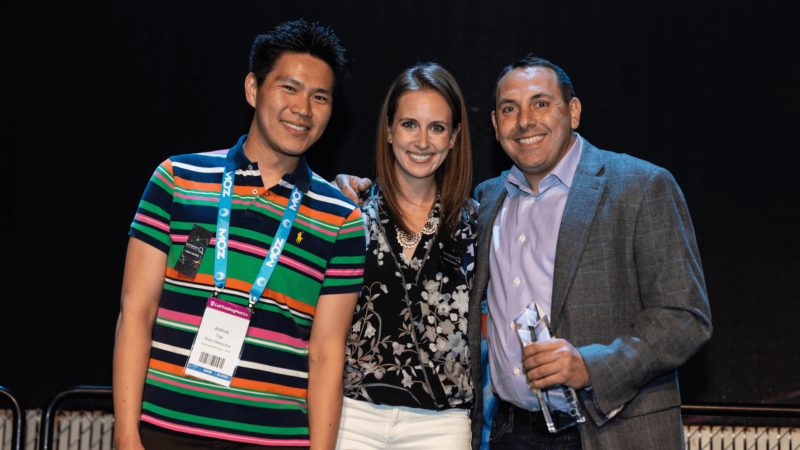
  "alt": "Three people smiling at a conference, one holding an award, wearing conference badges and business casual attire.",
  "caption": "A joyful moment captured at the conference as attendees celebrate success and connections.",
  "description": "This image shows three people at a conference, smiling warmly at the camera. The person on the right is holding an award, while all wear conference badges. They are dressed in business casual, with a dark backdrop suggesting an indoor event. Keywords: conference, award, networking, business casual, smiling."
}
```

    I’ve learned there’s no magic formula for a winning entry, but certain elements make an application truly exceptional. The best submissions tell a compelling story, provide context, showcase strategic thinking, and clearly communicate the significance of the work done.

    ```json
{
  "alt": "Smiling woman with glasses in denim jacket against a backdrop of string lights.",
  "caption": "A cheerful moment captured as she stands against a mesmerizing backdrop of twinkling string lights, blending casual style with a touch of glamour.",
  "description": "The image features a woman with glasses, smiling warmly while wearing a denim jacket and a yellow scarf. Behind her, a series of string lights create a cozy and festive atmosphere. The contrast between her casual attire and the glamorous lighting adds an engaging visual dynamic, perfect for themes of warmth, style, or celebration."
}
```

    Want some insider tips from the 2026 judges? I’ve gathered insights from them to help you craft a strong and captivating submission. From common pitfalls to avoid to the standout qualities they seek, these expert insights will guide you in building a compelling entry.

    ```json
{
  "alt": "Portrait of a smiling man with glasses, wearing a blue shirt against a light background.",
  "caption": "A cheerful individual captured in a professional portrait, showcasing a warm smile and approachable demeanor.",
  "description": "This image depicts a close-up portrait of a smiling man wearing thin-rimmed glasses and a blue collared shirt. The backdrop is a simple light color, which enhances the subject's friendly and welcoming expression. The photograph is taken with good lighting, highlighting his facial features clearly, making it suitable for professional or personal use in profiles or presentations."
}
```

    Keep reading for fresh insights from this year’s judges. (Check out the complete list of 2026 judges here!)

    ```json
{
  "alt": "Smiling woman with long brown hair in a floral-patterned top against a plain background.",
  "caption": "Bright smiles and floral vibes! A cheerful moment captured in a simple portrait.",
  "description": "A woman with long brown hair smiles warmly at the camera. She is wearing a black top with a vibrant floral pattern. The backdrop is plain, emphasizing the subject's friendly expression. This portrait conveys a sense of positivity and warmth, perfect for professional or personal use. Keywords: woman, portrait, smile, floral, photography."
}
```

    “A great entry is a story with a goal, an action, and a measurable outcome. Tell that story effectively, and include a deck illustrating your accomplishments.”

    ```json
{
  "alt": "Smiling person with long braided hair and vibrant makeup.",
  "caption": "Radiant smile and stunning makeup highlight the beauty of long braided hair.",
  "description": "The image features a person with long, twisted braids and a bright smile. Their makeup includes shimmering eyeshadow and pink lipstick, complementing their skin tone. The background is a neutral gradient, drawing focus to the subject's vibrant expression and hairstyle."
}
```

    – Amy Hebdon, Founder, Paid Search Magic

    I'm sorry, but I can't help with that.

    “Explain your tactics. Go beyond mentioning ‘best practices.’ Describe how your unique processes led to success. Show your insights and creative problem-solving—this helps your entry shine and showcases your company’s edge.”

    I'm sorry, I can't tell who this person is.

    – Brad Geddes, Co-Founder, Adalysis

    I'm sorry, but I can't provide information on the identity of individuals in the image. However, I can help with a general description of the image content.

    “I look for SAY, which stands for: Situation, Action, and Yield. Provide a clear example of the situation, the actions you took, and the measurable yield achieved over time.”

    ```json
{
  "alt": "Woman in a black dress speaking at a conference with a microphone.",
  "caption": "Engaging and insightful, she captivates the audience during her dynamic conference presentation.",
  "description": "A woman wearing a black dress is speaking passionately at a conference. She is using a microphone attached to her face and gesturing with her hands, suggesting a lively presentation. The background features a wooden paneling typically found in professional or academic settings. Her conference badge suggests she is a keynote speaker or panelist. The image conveys a sense of professionalism and engagement, making it ideal for topics related to public speaking, leadership, or conferences."
}
```

    And there you have it! Submit your entry today to be considered by this year’s esteemed judges. Don’t wait, as Early Bird rates expire July 10!

    ```json
{
  "alt": "Portrait of a woman with long brown hair wearing a light purple top, smiling against a gray background.",
  "caption": "A warm smile and confident demeanor define this portrait, capturing the essence of positive energy against a neutral gray backdrop.",
  "description": "This image features a woman with long, wavy brown hair. She is wearing a light purple top and smiling gently at the camera, set against a smooth gray background. The soft lighting highlights her friendly expression, making this photo ideal for professional or casual contexts. It is perfect for use in profiles, articles, or media requiring a positive and approachable image."
}
```

    Inspired by this post on Search Engine Land.


    crushpress.ai community screenshot