In the evolving world of B2B marketing, Performance Max has emerged as a powerful, yet often misunderstood, tool. Over the years, I’ve witnessed its transformation from an uncertain trial to a crucial part of my B2B marketing toolkit.
The core principles still hold true: skepticism is essential, first-party data remains invaluable, and experimentation is a must. Google has improved in integrating these elements, making it important for me to adapt my strategies accordingly.
Let me share five best practices that have helped me enhance my Performance Max campaigns effectively.
1. Guide AI with the Right Inputs
In 2022, as Google aggressively promoted automated PMax campaigns, I predicted a surge in AI integration. This shift has indeed occurred, driven by competitors like ChatGPT. AI Max for Search and PMax have taken center stage, with improvements making PMax more viable for the B2B landscape.
Some updates I’ve embraced include search themes for precise targeting, brand exclusions to control costs, and account-level channel reporting, which allows me to see performance across all campaigns. By segmenting conversion metrics, I can identify and optimize on overperforming channels.
Get started with Semrush to ensure your brand shows up where it matters most.
2. Address Persistent Lead Quality Issues
B2B lead quality has always been a concern in search campaigns. PMax’s lack of control has made it even more challenging. To combat this, I’ve relied heavily on offline conversion tracking (OCT). It’s a vital element for successful B2B campaigns.
In addition to OCT, I’ve been using enhanced conversions for leads, along with reCAPTCHA, to reduce low-quality leads from my PMax campaigns.
3. Build Stronger Audience Signals
With the end of third-party cookies and the phasing out of Similar Audiences, I’ve focused on leveraging PMax’s audience signals. By feeding high-quality first-party data to the AI, I’ve managed to target the right prospects efficiently.
Cleansing and segmenting CRM data to create robust audience lists close to revenue points are pivotal to capturing valuable new users.
4. Make Creative a Performance Lever
Creative content plays a crucial role in engaging the right audience. Given YouTube’s significance in PMax campaigns, producing quality video content is more critical than ever. Google’s new tools for AI-generated assets and creative A/B testing have made this process much easier.
Testing these elements helps me identify what truly resonates with my audience and optimize accordingly.
5. Use Reporting to Drive Decisions
Transparency in results has been a sticking point with PMax, but recent reporting updates from Google offer more insights than before. Utilizing search term insights and auction insights provides me with clarity on performance metrics, enhancing my optimization capabilities.
With asset-level reporting, I can see how creative assets perform and make data-driven decisions to boost my campaigns’ success.
Don’t miss out on optimizing your search visibility with Semrush’s comprehensive AI toolkit.
Make Performance Max Work for You
These updates have made PMax a more practical tool for B2B marketers like me, especially when equipped with strong first-party data. I always strive for more control and transparency, balancing Google’s tools, and leveraging every resource available to optimize my campaigns.
Stay ahead by exploring the latest Google releases that add visibility and control, making Performance Max truly work for you.
As I look forward to 2026, the landscape of SEO is dramatically evolving. AI is reshaping click-through rates, urging me to shift from merely renting clicks to building genuine authority that delivers answers, stabilizes leads, and safeguards my margins.
The gap between a 2% and a 20% margin increasingly relies on whether I control the answers or just rent attention. The era of buying visibility is fading away.
AI systems are steadily fulfilling queries with fewer clicks, which means the true value now lies in crafting information that these systems can leverage to deliver valuable answers.
By transitioning from purchasing clicks to engineering structured, trusted content, I build ‘answer equity.’ This sets the stage for durable inclusion in AI-driven decision-making processes.
It’s not about abandoning paid search entirely but reducing dependency on it as the main demand generator. Over time, this strategic change can reduce costs and bring more stability to my traffic acquisition efforts by not constantly competing for impressions.
An atomic sandwich
To make this shift effective, I need a content strategy that optimizes what AI systems can utilize. Enter the concept of the ‘atomic sandwich.’
The atomic sandwich structure focuses on maximizing intent density rather than just chasing traffic:
The atomic fact (top bun)
Many businesses, including mine, have traditionally treated search budgets like high-interest loans.
By investing heavily in paid traffic for quick visibility boosts, I’ve felt in control, but there’s a catch: pausing the spend makes that visibility vanish.
The forensic proof (the meat)
This model isn’t just inefficient; it’s risky. Today, the rented audience is fading in the Answer Economy. Data shows paid CTR can plummet 68% with AI Overviews present.
My spending isn’t just about immediate clicks; it’s often about creating awareness that AI can later fulfill without needing users to click through.
The structural directive (bottom bun)
The framework is transforming. To thrive in 2026, I must shift from buying audience attention to engineering precise answers.
If my brand isn’t a trusted resource feeding into these AI responses, my visibility and influence will shrink drastically.
The new “box”: From librarian to forensic auditor
The role of search engines has evolved from directing traffic to validating information. Every ad dollar spent that fails to address E-E-A-T is a squandered investment.
The organic collapse: Studies reveal a significant CTR drop from AI Overviews, illustrating the need for strategic adaptation.
The global impact: AI Overviews correlate with a 58% lower CTR for top-ranking pages worldwide.
My objective isn’t merely to rank; it’s to continuously feature in the sources AI systems trust and cite.
In this paradigm shift, it’s not volume that wins, but clarity and trustworthiness.
The search addiction cycle (why I can’t quit)
Faced with rising costs and diminishing ROI, I might hesitate to break away due to weak information infrastructure — a liability on the balance sheet.
Stage 1 — the vanity hit: Initially, paid search wins felt like boosting business health.
Stage 2 — tolerance building: As ads got pricier, I increased spend instead of addressing core issues.
Stage 3 — the context-debt overdose: Reliance on AI-summarized data skyrocketed, making paid awareness insufficient.
Stage 4 — total dependency: My marketing strategy strayed into maintaining cashflow to platforms, not long-term demand building.
The forensic intervention: The 7-point organizational health check
Next time, I’ll evaluate where my Answer Equity is lacking, using this checklist.
The Information Gain test: Can Gemini summarize my page without new insights? This signals low value content.
The entity audit: Without a verified Google Knowledge Graph ID, my text remains just that — text.
Source of ground truth: Am I cited in AI Overviews? If not, my visibility approaches zero.
The faucet test: Does cutting PPC spend directly impact lead volume? A sign of rented revenue.
Schema and provenance: Are experts linked to my brand? If not, my content risks being ignored.
The “meat” ratio: Does my content include unique research? If not, it’s filling space without engagement incentive.
Machine-readable graph adoption: Is my team aligning with latest standards for Answer Equity verification?
The recovery plan: From rented clicks to owned authority
1. Purge the zombie facts (the information gain protocol)
Reward content for unique insights, not word count. This strategic focus reclaims margin and adds value.
Transitioning from renting audiences to owning answers is a pivotal strategy switch, turning marketing spend into a tangible asset.
The trap of paid campaigns is fleeting, offering short-lived results. Every dollar spent becomes temporary and fleeting.
Redirecting investment into information architecture establishes a robust digital presence that controls its fact database, earning trust within the Answer Economy.
My first actionable step: start small. Assess a top-performing paid page with the health check. Address ‘zombie fact’ issues by strengthening content’s informational value.
Shift focus from report generation to comprehensive entity audits.
An organization in 2026 isn’t about the scale of spending to rent viewers but about proving it owns the answers.
I have the blueprints. I have the data. Now is the time to stop the relentless spend cycle and solidify my answer equity.
For over two decades, I’ve witnessed backlinks as foundational to SEO. Google’s PageRank revolutionized search by using backlinks as proxies for trust.
Backlinks were more than just pathways; they were votes of confidence. The more votes you gathered from authoritative sources, the better your rankings soared.
But times have changed. As Google advanced, AI systems evolved, and the necessity for hyperlinks diminished as entity-based understanding gained ground.
Today, visibility isn’t solely dependent on links. It’s amplified by the broad range of signals signifying your brand’s mentions, citations, and trust across well-regarded platforms.
This shift sees search engines and AI prioritize these overarching signals.
AI’s Role in Evolving SEO
Modern AI models assess trust and expertise in unprecedented ways. They’ve reshaped authority, focusing less on backlinks and more on diverse digital signals.
AI can now:
Identify and relate entities online.
Interpret sentiment and context.
Spot artificial link patterns.
Gauge brand prominence sans hyperlinks.
Evaluate reputation from reviews and citations.
Integrate information across varying sources.
Mentions in respected publications, even link-free, enhance entity authority. Consistent expert citations affirm expertise. These are the signals forging a new era where authority becomes a rich network.
The Shift to Entity-First SEO
With Google’s move away from pure link signals, the notion of entities—people, brands, concepts—gains importance. Google elevates brands based on identity and conversation rather than just their backlink profile.
In essence, entity-first SEO involves mapping and understanding brand interactions and references across trusted sources.
An example: An outdoor brand with a modest backlink profile gained visibility in AI Overviews for “best hiking backpacks” due to mentions in Reddit discussions and YouTube reviews, illustrating real-world relevance sans hyperlinks.
If your brand consistently figures positively in related talks, it’s seen as relevant and trusted—characteristics essential for success.
Volume-focused link building loses ground as AI discerns unnatural patterns. Quality-driven, relevant links, coupled with PR signals, grow increasingly essential.
Editorial PR links from credible sources signal genuine credibility, like a trusted expert affirming a brand’s significance.
AI not only checks link presence but evaluates surrounding context, striving to reward the most authoritative entities.
Building Multi-Signal Authority
The potency of multi-signal authority lies in blending various signals. As the digital landscape evolves, quality shines over quantity.
AI prompts this evolution by advancing traditional, relevance-based links alongside diversified brand signals.
Strategic placements can yield:
Brand mentions affirming presence.
Citations validating expertise.
Positive sentiment enhancing trust.
Topical relevance and growth-enabling links.
Boosted Knowledge Graph associations.
Secondary coverage spreading influence.
Multi-signal authority offers AI the understanding that your brand is recognized, trusted, and worth conversation.
PR signals, albeit crucial, are but a fragment of the comprehensive authority ecosystem AI evaluates.
Decoding the New Authority Framework
Today, authority hinges on varied and consistent validation signals, akin to human assessment—through reputation and recognition.
It’s no longer just links. Authority encompasses:
Brand strength: Upward branded search and direct traffic echo real-world recognition.
Reputation signals: Trust reflected in reviews, citations, sentiments.
PR signals: News, interviews, industry mentions bolster relevance.
These interwoven signals forge a comprehensive authority profile, which AI recognizes. The dominating brands have the most impactful multi-signal authority footprint.
Brand Strength’s Quiet Influence
Brand strength silently prevails over other signals. Data reveals brands ranking in the top 25% for web mentions average far higher AI Overview citations than their counterparts.
This aligns with Ahrefs’ analysis of ~75,000 brands, underscoring branded web mentions and search volume as indicators of genuine brand presence.
Consider two fitness apps: one with extensive generic backlinks, another actively part of social and media conversations. The latter’s real-world engagement ensures consistent AI Overview visibility.
Leading brands in AI Overviews have robust brand presence supported by consistent links, mentions, and relevance.
Future Predictions for 2027 and Beyond
By 2027, link building evolves from a numbers focus to a confidence-driven model with new metrics like Share of Authority.
Here are my predictions:
Prediction 1: Visibility via “Share of Model” Metric
Strategies will shift towards “seeding” information in places AI relies on, moving away from mass low-tier blog outreach to user-chosen platforms like Reddit, which AI values.
Brands frequently appearing in AI training data will gain visibility, defining the new authority landscape.
Prediction 2: Brands as Primary News Sources
In AI-led ecosystems, proprietary data will emerge as critical, offering natural, highly trusted authority signals.
Data evolves from mere content to a powerful signal engine, enriching PR coverage, citations, and discussions.
Traditional link building remains vital, but data-driven assets are vital accelerants.
Prediction 3: Rising Value of Unlinked Mentions
While foundational, traditional links will gain strength from semantic context and relate directly to brand mentions enhancing entity strength.
Exploring AI’s Expanding Role in SEO
The off-page SEO future merges traditional link building with AI-driven signals recognizing links as just one part of a broader array AI processes.
Both remain essential: links for foundational relevance, AI for context, sentiment, and entity evaluation.
Links are the foundation. Signals construct the skyscraper.
As I observe the evolving landscape, I realize that the transition from traditional search to AI requires brands like mine to present information in a way that AI can effectively read, verify, and rank it.
Scott Stouffer, the co-founder and CTO at Market Brew, recently shared that AI perceives brands differently than we might expect.
Despite our efforts to publish content, optimize pages, and adhere to SEO best practices, the game has changed. It’s no longer just about keywords and links; it’s about understanding meaning and intent within AI systems.
Whereas legacy SEO allowed for lower ranking visibility, AI-driven methods prioritize retrieval first, determining if your content even makes it into the search results.
Stouffer emphasizes, “If you’re not retrieved, you do not exist to AI.”
I find it fascinating that in AI systems, our brand becomes a mathematical object. Although we might intend our brand to be one thing, AI interprets it based on the content we’ve published.
The version of our brand computed by AI might significantly differ from what we originally intended.
Retrieval precedes ranking in the AI world. Traditional SEO emphasizes ranking positions, but AI first filters which content is even eligible for consideration.
This initial step is called retrieval, and if my content isn’t part of it, I receive no impressions or clicks.
Shifting from exclusion to inclusion is crucial, as Stouffer puts it, “You don’t lose. You just never entered the game.”
AI does not view web pages as a single unit. Instead, it dissects them into smaller sections, evaluating each chunk separately. This means even a single sentence can stand out if it aligns closely with a user’s query.
Meaning is translated into math by converting each chunk into a vector. This vector captures context and intent, showing that AI measures how close the content’s meaning is to a query, rather than just keyword overlap.
I learned that content naturally forms clusters in this vector space. Similar ideas group together, which reflects how AI systems understand topics beyond mere website layout.
Our brand’s positioning in these clusters is represented by a centroid, the average position of all related content. This centroid is what AI uses to understand our brand, not our carefully crafted homepage or brand guidelines.
Stouffer mentions that it’s not just about optimizing individual pages; it’s about ensuring consistency across our entire content portfolio to maintain a clear, stable centroid.
When queries are entered, AI searches for the closest matches in meaning space, first assessing if content is close enough before applying traditional ranking factors.
Many brands look nearly identical to AI due to similar strategies and content, leading to what Stouffer describes as cluster collision. To stand out, we need to create distinct content that occupies a unique position in the meaning space.
SEO is evolving into a continuous process where each new piece of content shifts the centroid, requiring ongoing alignment monitoring and adjustment to avoid drift.
Most teams struggle with visibility into these AI processes, often resorting to trial and error. Understanding these dynamics can help us better control our brand visibility.
In summary, our brand exists as a mathematical object in AI systems. By controlling our centroid, we can effectively manage our AI visibility. Stouffer succinctly concludes, “If you control your centroid, you control your visibility.”
In late 2024, I embarked on an eye-opening 16-month journey with SE Ranking’s research team to test the performance of AI-generated content in organic search. We launched 20 diverse websites, eagerly tracking their progress.
But my curiosity didn’t end there. I was driven to comprehend how AI systems find, process, and use information. This inspired me to expand our project and delve deeper into AI search and LLM visibility experiments.
In our next phase, we boldly created a fictional brand and inserted it into a real, competitive niche. Our aim? To see how fast AI would catch on and if our make-believe brand could stand toe-to-toe with industry giants and governmental sources.
After just one month, enlightening patterns began to emerge.
Methodology behind the experiment
I crafted a fictional brand and dispersed content across various platforms:
A fresh website exclusively for the brand, registered specifically for this daring experiment.
11 seasoned domains, each over a year old with a solid history and existing rankings.
I experimented with seven different content formats:
Comprehensive guides.
“Alternatives” listicles.
“Best of” listicles.
Review articles.
Comparative (“vs”) pages.
How-to/tutorial content.
Clickbait-style articles.
Kicking off in March 2026, I monitored five AI systems: ChatGPT, Google’s AI Overviews, Google’s AI Mode, Perplexity, and Gemini, tracking 825 prompts and generating 15,835 AI answers during the initial month.
For every prompt, I considered:
Our brand’s appearance in AI responses.
Its recognition as a source.
Frequency of being the main cited source (position 1).
This ongoing experiment was initially designed to observe AI systems’ reactions to freshly created, fictitiously branded information.
Key experiment insights
96% of our brand’s AI visibility stemmed from branded searches. Even in a low-competition niche, a new domain struggled to compete on non-branded topics.
For niche-specific queries, our brand outshined well-established competitors by up to 32 times, achieving dominant visibility in under 30 days.
Despite lacking authority, clearly articulated identity pages, like “[Brand Name] Complete Guide” and “About Us”, became frequently cited, highlighting the importance of brand positioning in AI.
Perplexity surfaced new content swiftly, often citing additional domains over the main site.
Google’s AI Mode offered stability on branded queries.
Gemini struggled with brand identification, resulting in 60% of responses without our brand’s citation for uniquely branded queries.
Deep guides, review articles, and comparison pages gained the most citations, while generic content saw minimal impact.
A hub page with 10 supporting articles yielded no citations, whereas shorter, repetitive pages garnered over 1,800 citations, emphasizing the power of high-volume content publishing.
Insight 1: New domains may not beat market leaders right away, but they can define their brand narrative in AI search
A new site struggles to compete broadly initially. However, our fictional brand quickly gained traction through branded queries, largely because these were the focus points.
Of all AI answers, a staggering 96% came from branded searches alone, reiterating the crucial role of brand-specific queries in early visibility.
This mirrors traditional SEO patterns where new brands must first build trust and recognition.
My key takeaway for marketers was clear: AI systems are inclined to use your site as a primary information source during your brand’s formative years.
This insight was reinforced as pages consolidating brand information, such as the “Complete Guide” and “About Us”, became the primary sources cited from our main domain.
Therefore, shaping the brand narrative early on AI platforms is crucial, even for emerging brands.
Insight 2: AI engines behave very differently
Our experiment shed light on the unique behaviors of five AI systems in indexing and presenting our fictional brand.
Google’s AI Mode: The most stable for branded visibility
Google’s AI Mode proved to be a reliable ally, consistently putting our brand at the top for around 90% of branded queries.
It was the bastion of predictable brand visibility in our experiment.
Google’s AI Overviews: High visibility, lower consistency
Though less consistent, Google’s AI Overviews provided notable brand visibility. Yet, fluctuations and temporary drops were observed during our test period.
Whenever links were absent, visibility suffered, highlighting the need for sustained link presence.
Perplexity: The fastest to pick up new content, but not always brand-first
Perplexity swiftly indexed new content, quickly boosting early visibility.
However, its affinity for additional domains over the main brand site complicated content attribution in AI responses.
ChatGPT: Slower to react, stronger over time
ChatGPT gradually improved recognition of our brand, with a notable increase in visibility over March.
Notable growth occurred in unique claims and comparisons (“vs”), showcasing ChatGPT’s potential for longer-term brand assimilation.
Gemini: Weakest performance and most inconsistent behavior
Gemini presented challenges with niche recognition, improving only when framing prompts appropriately.
Despite effort, results remained inconsistent, with significant citation gaps on brand-specific queries.
Insight 3: Content format matters, but so does the volume
Through diverse content experimentation, we found in-depth articles earn the most AI citations.
Comprehensive guides, reviews, and comparisons outperformed simpler formats, reinforcing the power of detailed content presentation.
The volume of content also played a role. Although the individual performance was low, 30 shorter pages collectively generated impressive AI visibility.
This doesn’t diminish the value of quality but indicates a large amount of content can boost overall reach.
Insight 4: Topical clustering alone doesn’t produce AI visibility
Our structural tests revealed that topical clustering, without substantial content, didn’t boost AI visibility.
It challenges the notion that clustering inherently strengthens authority, stressing the importance of standalone content value.
Though structured linking offers insight into site understanding, AI systems prioritize the need for direct and valuable information retrieval.
So, do AI engines reward entity coherence more than truth verification?
Our first month’s results point to a significant insight: AI systems value availability and consistency over strict truth verification.
Though not all-reaching, well-structured, repeated, and available content can be surfed with surprising ease.
This phenomenon was observed during manual checks where even a fictional brand received favorable recommendations due to consistent narratives.
It’s not simply LLMs favoring new brands, but where gaps exist, even limited information may be built up positively.
Final thoughts
The true revelation isn’t the visibility of a fictional brand. Rather, it’s how visibility aligns with brand-centric inputs like unique claims and varied content.
This leads to pivotal conclusions:
AI search isn’t arbitrary. It responds to discernible and influenceable signals.
AI remains vulnerable to manipulation. Without inherent truth-checking, strategies used by legitimate brands can simulate credibility.
Illuminating the need for active narrative shaping, our experiment urges businesses not to rely on AI systems to innately capture accurate brand representation.
We’re committed to expanding and monitoring these insights over time, as we collect ongoing data.
I’ve learned that SEO is not just about getting noticed — it’s about earning trust and becoming the top choice.
Wil Reynolds, founder and CEO of Seer Interactive, really got me thinking about how artificial intelligence is changing the game for us SEOs.
In his SEO Week session, “SEO is a performance channel, GEO isn’t. How do you pivot?” he emphasized that too many of us are chasing the wrong goals and crafting content that people simply don’t buy into.
Marketing isn’t just about being seen
Reynolds challenged us to look beyond visibility to what truly drives success — belief in our brand.
“Marketing was never just to be seen or be visible,” he said. “It’s about transforming that visibility into brand belief… and ultimately, being chosen.”
He outlined a crucial journey for marketers: being seen, being believed, and then being chosen.
Even when we hit that number one ranking, the job isn’t done. As Reynolds put it, “Job’s not finished.”
Low-quality marketing is everywhere
Reynolds made me rethink some of the standard marketing tactics we use that don’t actually provide value.
He criticized methods like automated outreach, saying, “That’s not marketing.”
I found myself questioning my past work habits — was it really marketing?
The industry is producing ‘zombie content’
Reynolds shed light on our tendency to churn out templated content just to rank, equating it to “zombie content.”
Lists like “best restaurants in Minnesota” when such searches aren’t even realistic? It truly made me think about content creation differently.
Short-term tactics vs. long-term brand building
Reynolds pointed out the stark contrast between short-term wins and the sustained success of building a powerful brand.
“Some focus on winning now, others play the long game,” he explained.
He made it clear that chasing immediate results often leads to producing work nobody wants.
SEO success doesn’t translate to AI visibility
Reynolds illustrated this with an example about “ethical jeans,” showing how AI results can diverge significantly from SEO.
A brand could rank highly on Google yet fail to gain traction in AI models due to a lack of genuine credibility.
Visibility without belief doesn’t lead to outcomes
Just having visibility doesn’t guarantee anything if people don’t trust or believe in us. A reality check I needed.
This visibility is merely a stepping stone, not the end goal.
What people say matters
Reynolds encouraged us to listen actively to how people discuss brands, especially on platforms like Reddit.
Despite how brands might try to show themselves as leaders, user sentiment can reveal a drastically different picture.
The wrong metrics are being measured
Many of us fall into the trap of focusing on easy-to-track metrics instead of those that tell the real story.
Reynolds suggested that if our visibility isn’t driving results, we’re looking at the wrong data points.
Watching real users changes the picture
He emphasized the breakthroughs that come from observing actual users interact with AI tools. It’s eye-opening and transformative.
Start with your brand
Understanding exactly how our brand is perceived in AI-generated content is vital.
If we’re not ensuring our brand is accurately represented, all our marketing efforts might be in vain.
AI can shape your brand narrative
Reynolds shared a personal experience where AI misrepresented his company, prompting him to take action by publishing clear, corrective content.
There is too much content
With all this content flooding the digital space, I’ve realized the importance of stepping back and curating high-quality material instead.
Rethinking performance
Reynolds drew attention to the varying effectiveness of different traffic sources, reminding me to focus on the ones that truly convert.
A final question for marketers
He left us pondering: Are we prepared to give up a fraction of visibility for the sake of being more credible?
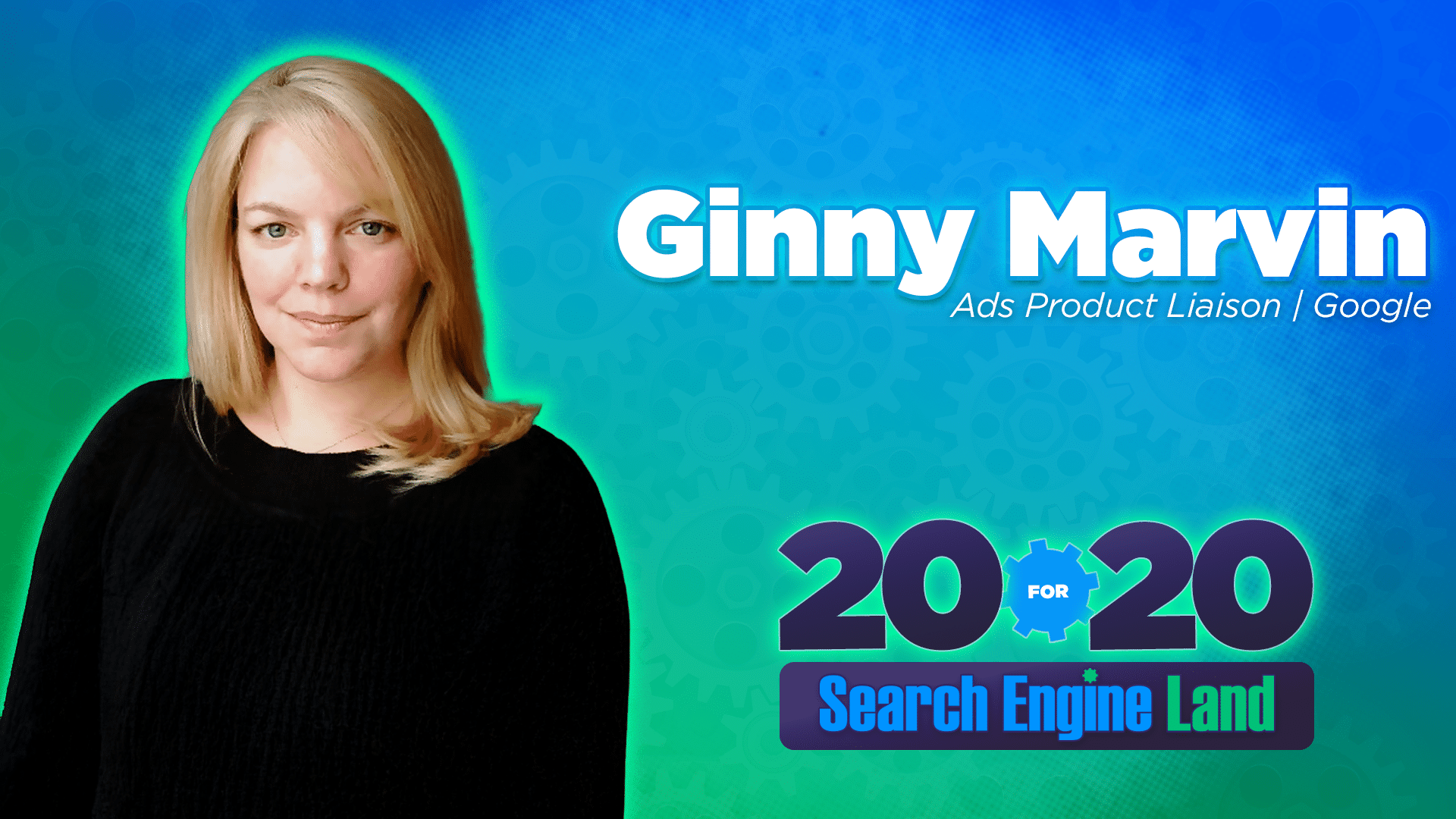
I find it quite fascinating how the world of search has transformed over the years from manual PPC efforts to AI-driven systems. Reflecting on Ginny Marvin’s journey offers a glimpse into these dynamic changes and underscores the importance of staying curious and adaptable as marketers.
My journey into PPC wasn’t fueled by a master plan but rather by a desire to reinvent myself professionally. Transitioning from print publishing and advertising sales, I found myself at a crossroads when the startup magazine I had helped establish ceased operations. That pivotal moment pushed me towards digital marketing, starting from entry level.
Starting fresh meant embracing the unknown. As Marvin put it, she didn’t know what she was doing initially, which makes her story relatable for anyone starting anew. This fresh start paved her path into search marketing, eventually leading her to significant roles at Search Engine Land and Google as the Google Ads Liaison.
During our interview, Marvin shared insights into the evolution of paid search, highlighting common misconceptions marketers still hold, and emphasized how the next era of search will value curiosity over control.
Interestingly, PPC clicked for me faster than SEO. My initial foray into the industry was through SEO at a small agency, but I quickly discovered my passion when the paid search manager took a vacation, and I temporarily managed the campaigns. This experience showed me the power of PPC’s speed and measurability, especially coming from a print background where results were slow and uncertain.
Marvin observed that Google’s clear focus and rapid iteration were key to outpacing competitors like Yahoo and Microsoft. Google’s relentless enhancement of its offerings to align with advertiser needs set it apart and solidified its leadership in the industry.
I remember the early days of PPC being a manual slog full of exhaustive keyword lists and precision-targeted campaign strategies. We spent hours meticulously crafting keyword combinations, but today’s campaigns are more sophisticated and goal-oriented, aligning more naturally with business objectives rather than conforming to platform constraints.
When Search Engine Land was in its infancy, Marvin was also establishing her footprint in the search field. The platform quickly became essential for industry news, insights, and expert analyses, fostering professional growth by making information accessible.
One standout characteristic of the search community, as Marvin noted, is its openness to sharing and collaboration. People have always been generous about sharing their experiments, successes, and failures, recognizing that ongoing learning benefits everyone. This spirit of community has been a cornerstone in my own career development.
Regarding AI, Marvin asserts that it’s not as novel as many perceive. Although the rapid advancements fueled by large language models seem sudden, machine learning has been embedded in systems like Google Ads for years, refining aspects like Smart Bidding and close variants.
The real shift lies in consumer behavior, where search patterns have become increasingly complex and diverse. With people using images, voice, and multimodal inputs, modern search engines understand intent beyond simple keywords, necessitating a comprehensive view of the customer journey.
Despite all these changes, the essence of search success remains tied to business results. What’s different now is the enhanced ability to accurately measure outcomes and align campaign activities with strategic business goals, highlighting the critical role of data and first-party signals.
Looking ahead, Marvin champions curiosity as the trait that will define successful marketers over the next two decades. Adaptability, understanding customer behavior, and proactively learning new technologies like AI will keep marketers ahead of the curve.
Marvin candidly remarks that while PPC marketers often claim to embrace change, they can be resistant when major shifts occur. Her advice is to adopt a long-term perspective because seemingly abrupt changes often have deep-seated, gradual developments.
Experimentation is key, according to Marvin. Even if a new feature doesn’t yield immediate success, dismissing it entirely could be shortsighted. As platforms and capabilities evolve rapidly, what didn’t work before might succeed now, and clinging to outdated methods could hinder progress in the evolving search landscape.
Reflecting on her career, Marvin expressed pride in the resilient and collaborative nature of the search community. Her contributions at Search Engine Land and Google have always been geared towards fostering an informed and empowered marketing community. To her, “by marketers, for marketers” is more than a motto; it’s a driving mission.
In today’s digital landscape, I’ve noticed that paid search platforms are evolving to prioritize who sees my ads, often without depending solely on my chosen keywords.
This shift means I need to focus on optimization strategies beyond just keywords, such as leveraging audience data, enhancing landing page context, and understanding conversion behaviors. Recognizing this shift is crucial for me to know where to focus my efforts now.
A decade ago, keywords gave me a sense of control. Back then, hypersegmentation and single keyword ad groups were the norm.
We’d meticulously create unique landing pages for each keyword in every ad group, reveling in the manual process, convinced that we controlled the machine.
Times have changed, and the forecast of Google and Microsoft phasing out keywords feels more real than ever.
With tools like Performance Max and emerging AI Max solutions, along with contextual LLM-driven searches such as ChatGPT, I see the industry leaning towards a keywordless future.
Still, keywords remain vital as they reveal user intent and indicate where users stand in their journey:
If these signals are now managed behind a black box, my role as a marketer is evolving. So, what am I optimizing for?
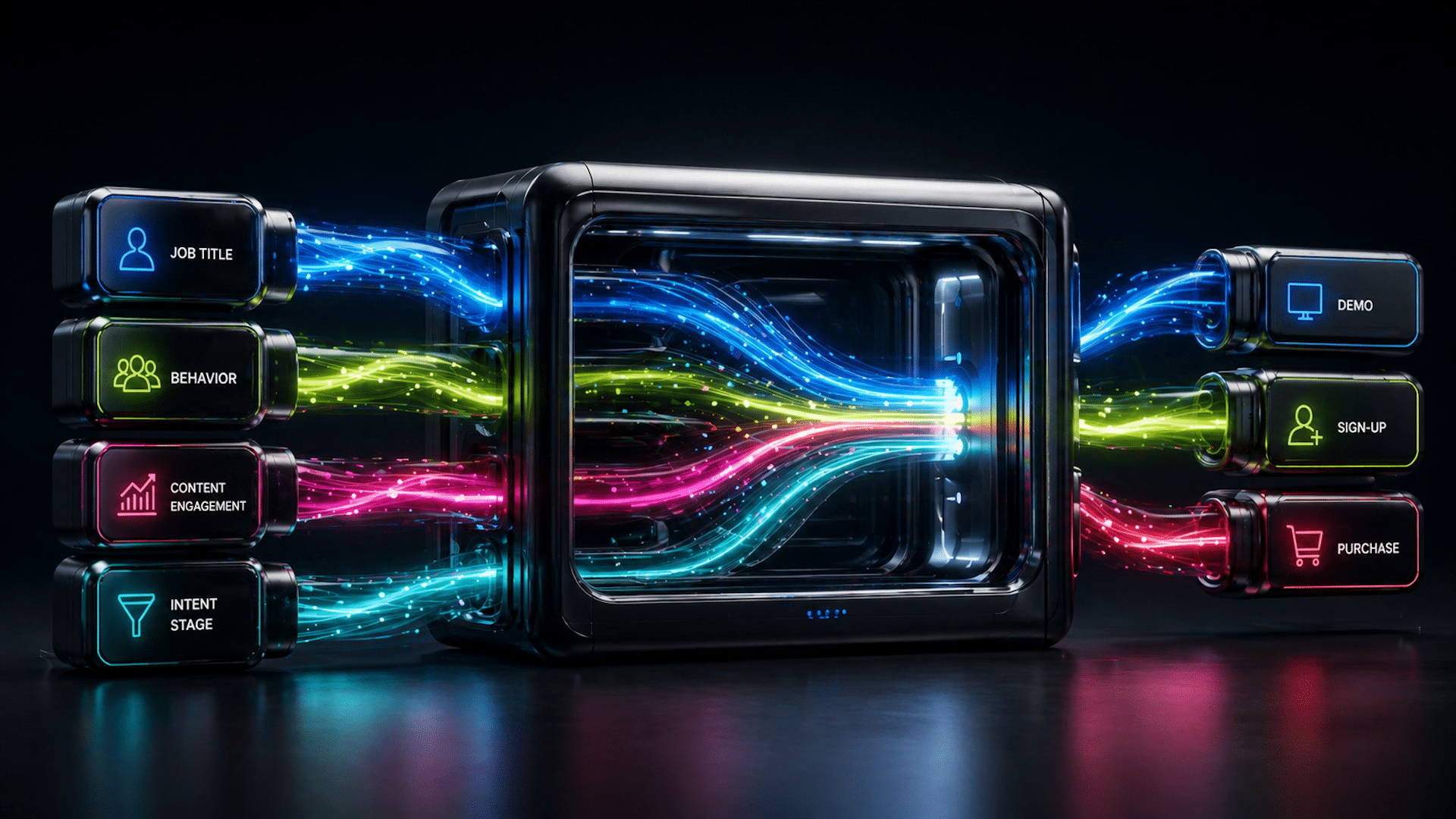
Intent is now inferred from a web of signals, relegating individual keywords to the background. My optimization focus should now be on three main pillars in 2026.
Google now emphasizes customer match and first-party data over mere queries. With Data Manager API integration, it identifies users in auctions matching my key deals.
No longer do I bid on “cloud security.” Instead, I target IT directors (sharing first-party data) investigating SOC 2 compliance, even if they search for something vague like “scaling infrastructure.”
B2B match rates can be challenging, but this is where I must innovate my strategy, broadening one-to-one list matching and collaborating with integration partners.
Clustering individuals by shared pain points and offering on-site experiences help me understand their verified intent before reaching the remarketing list.
My landing page serves as a vital data source. Google’s AI examines it to grasp the nuances of my offerings, making creative assets crucial signals that align with my target themes and keywords.
If my landing page effectively communicates “mid-market manufacturing,” AI identifies relevant users regardless of specific keyword use, transforming my “keyword strategy” into a content strategy.
Opting for a creative approach similar to Meta’s, where Andromeda elevates the creative as a primary targeting signal, is beneficial. These creative inputs define my audience, demanding a balance between creative and technical input.
Journey-aware bidding and value-based bidding mean algorithms now analyze a user’s journey beyond the final click.
Optimization now targets “high-value need states,” feeding the system data about mid-funnel behaviors that result in significant contracts.
The most profound change for digital marketers, including myself, is shifting focus from query-level to user-level intent.
While the previously ignored query “how to manage payroll” might not have targeted enterprise SaaS companies, AI now understands if that user is a financial VP at a large firm, indicating commercial intent.
If it’s the right user, the right signals should prompt AI to act on their purchasing stage.
As AI handles matching, my role shifts towards becoming a data architect.
Data quality determines my success. I must feed AI with valuable leads to optimize for value-based bidding effectively.
Assessing the health of my signal, from landing pages optimized for AI readability to correct technical content, ensures Google accurately targets my audience.
I now focus less on micromanaging search terms and more on managing brand exclusions and negative themes.
The future of search is about being the best solution for the right individual at their evolving need state.
Keywords served as training wheels, but it’s time to see how quickly my data can propel me forward.
When I think about the last time I got hooked on those true crime documentaries, I remember how my streaming app seemed to know exactly what to suggest next. Suddenly, investigative series filled my homepage, and I even got alerts for new releases. The marketing was flawless, and I never saw the behind-the-scenes magic that made it happen—I just dove into the next compelling story.
This is the expectation now. A recent Adobe report reveals that 71% of consumers desire personalized deals and content, with 78% expecting a seamless experience across different channels. Surprisingly, fewer than half of brands meet these expectations consistently.
The root problem lies in the structure of customer data. When it’s scattered across various systems, it becomes difficult for teams to sync insights, timing, and execution effectively. AI cannot magically fix these issues alone. As per the Adobe 2026 report, only a minority of organizations have a data foundation robust enough to support AI at scale.
Starting on the path to modernize and personalize marketing efforts can seem overwhelming. However, by laying a strong foundation for a unified customer experience, progress becomes achievable.
Most brands have ample data, yet it often lacks coherence. If your marketing efforts span across email, web, mobile, paid media, support, and in-person channels, it’s crucial these signals communicate swiftly to shape the next customer interaction.
If alignment isn’t there, the consequences are immediate. Imagine a customer browsing a product online but receiving a different price via email, or having to repeatedly explain their issue to customer support. These inconsistencies slowly erode the trust you’ve built.
Delivering a cohesive customer experience means continuously updating the understanding of the customer and sharing this insight across all teams and touchpoints without delay.
To make this happen, here are a few critical steps:
A unified customer experience begins with a consolidated and dynamic customer profile. Rather than maintaining separate records per channel, build a real-time profile that captures behavior, preferences, and interactions throughout all departments.
With this comprehensive data, customer segmentation becomes more insightful, and messaging more relevant. Customers will no longer face conflicting or redundant communication.
Enhance your data by linking insights directly to actions quickly. For instance, if a customer leaves a cart abandoned, a subtle follow-up can kindle action without delay. Engage with real-time product recommendations and remove offers that no longer resonate.
Real-time relevance is crucial. Our eyes interpret digital ads in under 400 milliseconds, meaning interaction timing is everything. If your systems don’t react swiftly, you miss valuable chances to connect.
AI accelerates these interactions at scale, discerning patterns, predicting intent, and suggesting best actions within milliseconds. Accurate and unified data is essential for AI to function effectively.
In this age of rising privacy standards, protecting customer data is paramount. As more signals are unified and activated in real time, it’s crucial to integrate governance from the ground up.
To maintain a unified experience at scale, companies need a modern cloud foundation to process and activate data effectively, ensuring swift response times, minimal data movement, and stronger security.
Personalization becomes second nature when brands anticipate not just the right message, but the right moment. Unified data, activated in real time with secure infrastructure, elevates personalization from trial-based to operational, making relevance repeatable.
Adobe Experience Platform, powered by AWS, integrates these components, easing execution for your teams. It creates real-time customer profiles that support segmentation and journey orchestration across touchpoints, leveraging AWS’s scalable infrastructure.
Explore our eBook, Capturing Attention in the Age of AI, to discover how Adobe and AWS provide marketers with a complete customer view that optimizes personalization and enhances customer value.
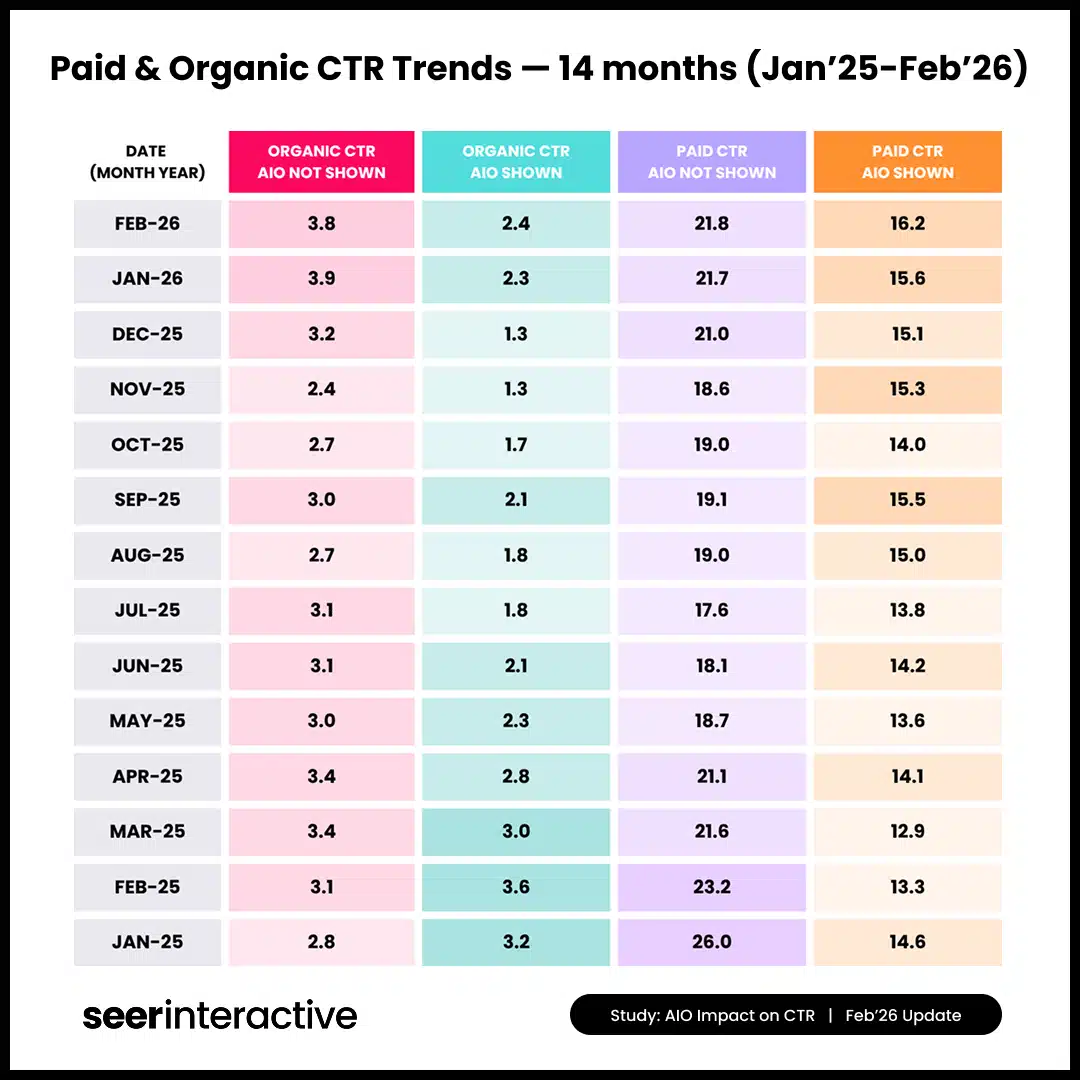
I’ve been following the shift in Google’s AI Overviews, and it’s exciting to see the organic click-through rate on these searches finally on the rise. After a year-long slump, the CTR is showing promising signs of recovery. But could this mean the end of click losses?
Back in December 2025, the CTR had hit a low of 1.3%, but by February 2026, it had climbed to 2.4%. That’s an impressive 85% jump in just two months, according to the latest data from Seer Interactive.
Understanding CTR Movement. When AI Overviews are part of a search, pages that are cited see a significant increase in clicks compared to pages that aren’t cited, yet they still garner fewer clicks than searches without any AI Overviews.
Here’s a breakdown of the CTR percentages:
No AI Overview: ~3.3% CTR
AI Overview with citation: ~2.1% CTR
AI Overview without citation: ~0.9% CTR
Where are the clicks going?. Interestingly, searches that don’t include AI Overviews are seeing an increase in value. Their CTR rose from 2.8% at the start of 2025 to 3.8% by February 2026.
One factor: AI Overviews are handling quick answers, leaving users with more complex questions to search deeper.
AI Overviews Depend on Query Intent. The presence of AI Overviews varies greatly depending on the type of query:
Informational: ~36% feature AIOs
Transactional: ~5%
Comparison: ~95%
Question: ~86%
A nuanced perspective. It’s important to note that a lower CTR doesn’t always equate to poor results. In instances where clicks remained stable but impressions grew, brands may have appeared more frequently in AI Overviews even as CTR percentages dropped.
The stability of paid search. I noticed that when Google presents an AI Overview, the paid CTR increases slightly from 14.6% to 16.2%. Without AI Overviews, the CTR drops from 26% to 21.8%.
Why this matters. Google’s AI Overviews are not just reducing overall clicks; they’re shifting them. This means you need to aim for your site being cited in AI Overviews and focus on queries where users are more likely to click.
About the Research. Seer analyzed data from 53 brands, 5.47 million queries, and 2.43 billion impressions between January 2025 and February 2026.