I believe the launch of TurboQuant will revolutionize AI and SEO as we know it. This cutting-edge algorithm from Google drastically reduces the computing power and energy needs by allowing the massive compression of LLMs and vector search engines.
Imagine using six times less memory and achieving eight times the speed without compromising accuracy. That’s how TurboQuant dramatically lowers the cost of running AI tasks.
As search engines evolve from simply listing links on a SERP to providing immediate AI-generated overviews, it’s crucial for us in the SEO industry to adapt. We need to focus on creating meaningful, trustworthy content and understand its impact on searches.
Before AI became prevalent, SEO was grounded in basic keywords and topics, which inefficiently represented user intent. High costs and energy consumption hindered mapping true meaning across the web, but now TurboQuant uses an advanced compression method, PolarQuant, to transform data into manageable coordinates. This breakthrough allows Google to process complex ideas far more efficiently.
TurboQuant can match exact search meanings in real time, thanks to its ability to understand user intent using past searches and real-world contexts.
The near-zero indexing lead time of TurboQuant eradicates delays between publication and ranking. Trusted publishers will gain instant recognition for their expertise, while the system also blocks manipulation and spam from appearing.
We must prepare for the fast-approaching era where AI summaries become the norm in responding to most queries. Thin content, which adds no original value, will vanish because AI can now summarize the web almost instantly, making unique viewpoints and genuine data irreplaceable.
Developing trust and authority with original thoughts, data, and experiences will prove essential, as AI-generated summaries merely consolidate existing information.
The focus of our SEO strategies should be to become a source AI recommends reliably, not just rankings based on keywords. TurboQuant maintains a more reliable index of facts by validating them against its real-time knowledge base.
This new system tracks a brand’s strength across various platforms, reinforcing the necessity of improving our knowledge graph as a trusted source.
With TurboQuant handling vast information without delays, hyper-personalization is set to explode in ways we’ve previously not imagined. AI agents could remember extensive user interactions to provide extensive personalization.
TurboQuant’s capability to integrate various signals into a cohesive perception of a brand’s value demands a strategic shift toward consistent, omnichannel representation.
We’ve prioritized quantity over quality for far too long in this industry. TurboQuant signals the end of this era, as it necessitates creating high-quality, meaningful content that establishes us as trusted entities.
Delivering a reliable message with a clear voice will guide how our messages are distributed and our brand credibility.
SEO isn’t dead—far from it. But let’s face it, AI is definitely changing the game in ways we never imagined. This got me thinking about how things are looking different for us, especially with the rise of zero-click searches and AI Overviews. In 2026, these are becoming more like the hand guiding our SEO strategies.
With AI advancements, I’m seeing how crucial it is for all of us to adapt and build our SEO approaches around these innovations. Answer Engine Optimization (AEO) is making waves, and it’s fascinating to watch how it reshapes our tactics.
If we want to stay ahead, integrating AI into our SEO strategies isn’t just optional—it’s essential. The landscape is evolving, and so should we.
I find it intriguing how, despite creating stellar content, it often doesn’t make it to the top of Google’s search results. What holds it back isn’t necessarily quality—there are usually other roadblocks in play. Let me break down how to identify what’s hindering your content’s rankings.
The common advice has always been to create helpful, high-quality content to rank well. However, this piece of advice doesn’t cover the full story of Google’s search algorithm mechanics.
Even if your content is well-researched and aligned with search intent, technical barriers and competition may still impede its visibility. Identifying these barriers is crucial before deciding to rewrite any piece of content.
Before blaming your content’s positioning, it’s essential to assess its quality. I often observe pages that don’t stand out, sometimes being autogenerated with minimal editorial input. Google’s guidelines on helpful content underscore the significance of experience and trust.
Ask yourself: Does your content deliver unique insights, adhere to Google’s preferred format, and offer value beyond the current top results? A ‘yes’ suggests positioning issues; otherwise, focus on enhancing your content’s quality first.
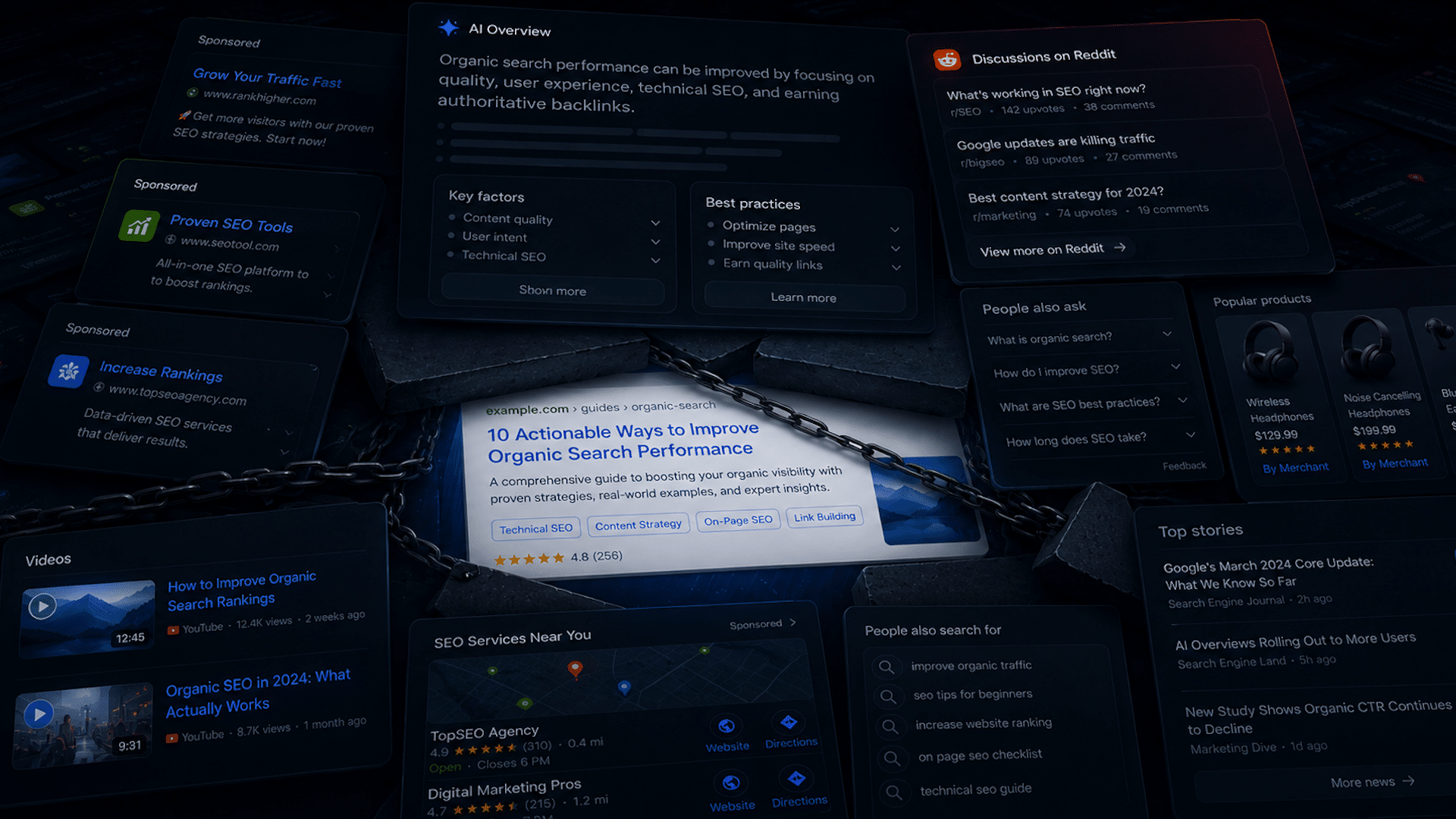
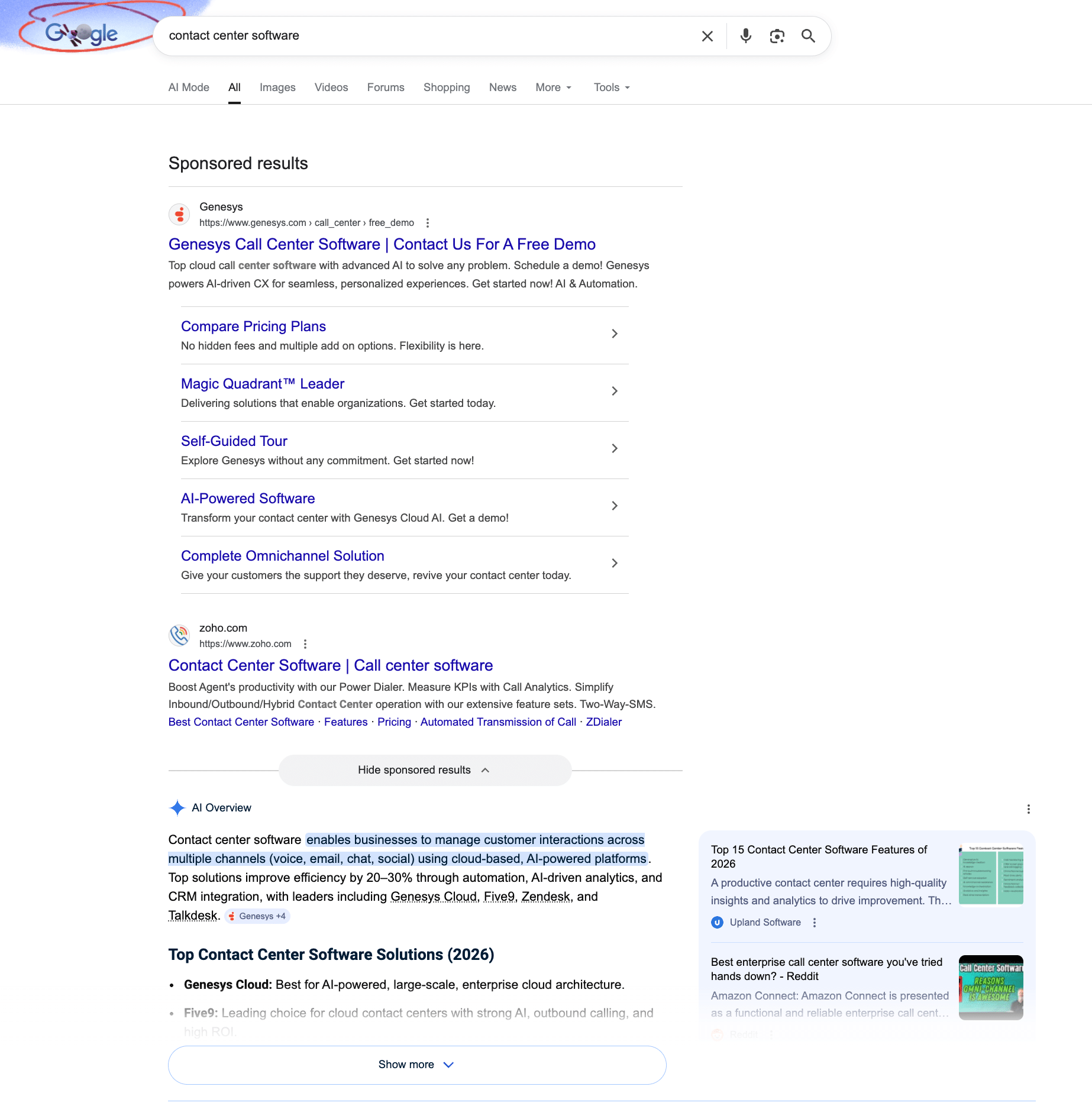
In the competitive 2026 search landscape, various factors such as AI summaries and an increased ad presence are reshaping search results pages, making it harder for organic content to achieve visibility.
Understanding what your content is truly competing against is key. If these external factors push your content down the page, adjustments are necessary to remain competitive.
When questioning why good content isn’t ranking, I employ a diagnostic framework that prioritizes technical issues. Ensuring that your page is indexed and free from technological hurdles is the first and simplest step to address.
Matching search intent with your content’s format is also critical. If your content is misaligned, improving it won’t suffice unless you address the fundamental disconnect.
If a large trust signal gap exists between your domain and your competitors’, repositioning is often necessary to focus on less competitive keywords where you can compete effectively.
The type of website you manage affects which barriers are most significant. For example, SaaS platforms typically face challenges concerning authority more than technical issues, while ecommerce sites contend with technical constraints.
Understanding and applying this diagnostic sequence helps identify and address potential bottlenecks, ultimately allowing your content to rank better by focusing on what truly matters.
In 2026, as the ease of generating good content continues to grow due to AI, positioning becomes crucial. Differentiated, experience-driven content is what stands out and captures attention.
Your strategic question isn’t just about creating good content. It’s about understanding the landscape: What else is required for your content to achieve outstanding results in the search arena?
The useful question is not, “Why doesn’t AI like my site?” It is, “Where does the path from crawl request to visible citation break?” Separate that path into testable stages and you can fix the actual bottleneck instead of rewriting good content, relaxing security blindly, or waiting for an index update that may not be the problem.
The distinction matters because a search result gives the user several pages to inspect. A generated response combines information on the user’s behalf. An error can travel through multiple reasoning steps, and conflicting claims may have to be reconciled before the system decides whether to answer at all. Retrieval can also happen repeatedly as the system refines the question and reevaluates its confidence.
Use the following chain as a diagnostic model. It is not a claim that every AI platform uses an identical architecture. It is a practical way to locate failure.
Stage
What must happen
Evidence you can collect
Access
The relevant crawler receives the public page rather than a block, challenge, error, or empty response.
Status code, redirects, response headers, returned HTML, and server logs for the exact user-agent.
Extraction
The page contains a passage that remains understandable when separated from the rest of the layout.
A plain-text review of the passage with its subject, claim, conditions, and supporting context intact.
Grounding
The claim appears current, specific, supported, and compatible with other available evidence.
Visible dates, scope qualifiers, named evidence, consistent facts, and an explanation of apparent contradictions.
Selection and attribution
The system uses your information and associates it with your page, brand, author, or community.
Saved answers, linked URLs, source labels, creator labels, and the exact claim supported by each citation.
Presentation and visit
The interface exposes a useful link and gives the user a reason to follow it.
Do not collapse these stages into one visibility score. A blocked crawler and an unconvincing claim can both produce no citation, but they require completely different remedies. A citation with no visits is different again: retrieval succeeded, while presentation or click value may be the constraint.
Rule out crawler blocks before rewriting content
A platform-specific zero is a reason to investigate access, especially when other AI systems already use the same site. It is not proof by itself. Different products have different coverage, retrieval behavior, and answer policies.
The infrastructure evidence was much stronger. Seven days of Cloudflare logs contained 29,099 bot requests, with 65.8% involving AI bots, and the response behavior varied by user-agent. Reproduction requests then isolated a user-agent-based block at the managed WordPress hosting layer. Some AI crawlers were blocked while Common Crawl passed, so the success of one crawler did not establish access for another.
Run your own access audit in this order:
Choose a representative public test set. Include different templates and content states, such as a current informational page, an older evergreen page, and a commercially important page. Test only URLs that are meant to be public; do not expose private previews or protected customer data for the sake of crawler access.
Capture an ordinary response. Request each URL as a normal browser and save the status, redirect chain, content type, response headers, and returned body. This gives you a baseline for comparison.
Repeat the request with the exact AI user-agent. Use the string found in your server logs or the platform’s current official crawler documentation. Keep the URL, request method, and timing as consistent as practical. A browser response of HTTP 200 beside a bot response of HTTP 403 or 429 is strong evidence of access policy, filtering, or throttling.
Inspect the body, not only the status. An HTTP 200 response can still contain a challenge page, login prompt, consent wall, empty shell, or materially different content. Confirm that the title, main text, and important links are present in the bot response.
Trace every enforcement layer. Check robots controls, WordPress security and bot-management plugins, CDN or WAF rules, rate limits, caching, and managed-host controls. Response headers can help identify the layer involved, but a header is a clue rather than conclusive proof.
Correlate the request with logs. Group by user-agent, URL, status, and time. Look for consistent differences between AI crawlers and ordinary requests. In particular, do not assume an HTTP 429 always reflects genuine request volume; a rule can produce different treatment based on identity or policy.
Apply the narrowest correction and retest. Change the precise rule, crawler treatment, route, or limit responsible for the failure. Save before-and-after requests so you can demonstrate that the intended crawler now receives usable content.
Do not disable a WAF or broadly allow every request merely to pursue citations. That can raise abuse, security, and compute-cost risks. User-agent strings are also easy to imitate. Prefer the verification controls supported by your host or platform, and make the smallest rule change that satisfies your chosen access policy.
Three misreadings cause unnecessary work. First, successful Google crawling does not prove that an AI crawler can enter. Second, successful Common Crawl access does not prove access for ClaudeBot or another named crawler. Third, a clean robots file does not rule out a block imposed later by a plugin, CDN, WAF, or host. Test the exact request path instead of inferring it from conventional indexing.
Write passages that can support an answer
Once access is confirmed, evaluate the page as evidence rather than as a collection of keywords. AI retrieval may extract only part of a page, transform it, combine it with other material, and retrieve again. The important test is whether the meaning survives chunking and transformation.
Keep the claim and its qualifications together
Read each important passage without the page title, navigation, previous paragraph, or accompanying graphic. If the passage becomes ambiguous, it is too dependent on its surroundings.
Put the direct answer in the first substantive sentence beneath the relevant heading.
Name the product, entity, plan, region, or version in the sentence that makes the claim. Avoid relying on vague pronouns such as “it” or “this” after a long section break.
Keep conditions, exceptions, and measurement context in the same paragraph as the result they qualify.
Place the evidentiary basis close to the factual claim. Do not leave the reader or retrieval system to infer which citation supports which statement.
Split unrelated claims into separate paragraphs. A passage that mixes definitions, recommendations, history, and promotion becomes harder to use cleanly.
Weak pattern: “It works differently on the newer plan. This is the limit.” The entity, plan, behavior, and meaning of the limit can disappear when the sentences are extracted.
Stronger pattern: “For [named plan or version], [named feature] has [specific constraint] when [condition applies].” The brackets are not copy to publish; they show the context every important claim should carry.
This does not mean repeating the same keyword in every sentence. It means removing unresolved references. Write so a person arriving at the paragraph from a search result can identify the subject, understand the answer, and see its boundary without reconstructing the rest of the page.
Make freshness visible in the facts
Stale content is more dangerous in a generated answer than in a list of links because the outdated claim can be repeated as part of a single synthesized response. Grounding systems therefore treat freshness as part of evidence quality, not merely as a recency signal.
Changing an updated date without reviewing the underlying facts does not solve that problem. Maintain a simple freshness ledger for mutable pages with these fields:
Page and section containing the claim.
The fact that can change, not merely the page topic.
The product, version, geography, plan, or period to which it applies.
The evidence used to verify it.
The person responsible for review.
The last factual review and the event that should trigger the next one.
When a fact changes, update the claim and its qualification together. If older information must remain for historical users, label its period explicitly. The goal is not to make every page look new. It is to stop an old statement from masquerading as a current one.
Explain contradictions instead of leaving them to the model
A ranked results page can place disagreeing pages next to each other and let the user decide. A generated answer has to decide how, or whether, the claims fit together. Conflict recognition is therefore part of the grounding problem.
When two pages on your own site disagree, check the scope before choosing a winner. The difference may come from time period, region, edition, account type, definition, or measurement method. Put that distinction beside each claim. If one page is simply wrong, correct it and remove internal paths that keep presenting the obsolete version as current.
Do not hide a legitimate disagreement. Name the competing positions, explain what each assumes, and tell the reader what would change the decision. That is more useful evidence than forced certainty, and it reduces the chance that a retrieved passage loses the reason two values differ.
Use structured data as a consistency check
Schema and JSON-LD can clarify entities, relationships, authorship, dates, and attributes, but they cannot rescue a blocked response or turn an unsupported assertion into reliable evidence. Treat markup as a machine-readable reflection of the visible page.
Audit the page and markup together. Names, dates, authors, products, and factual values should agree. If the structured data makes a claim the reader cannot verify on the page, fix the underlying content or remove that property. Citation visibility depends on trustworthy evidence throughout the chain, not on how many properties you can add.
Define a stable prompt set. Use the real questions for which your pages contain an answer. Keep the wording and intent recorded so later observations are comparable.
Record the execution context. Save the platform, prompt, date, locale, and relevant account or subscription context. AI surfaces can differ, so an uncaptured context change can look like a visibility change.
Preserve the response. Store the answer, every linked URL, visible publisher or creator label, and the text each link appears to support.
Classify the outcome by stage. Distinguish no retrieval, unlinked use of your information, linked citation, secondary suggested link, and citation with a recorded visit.
Join observations to crawl evidence. Check whether the platform’s crawler requested the cited or expected page near the observation period and what response it received.
Compare like with like. Use the same prompt set and classification rules for before-and-after reviews. A percentage without a stable denominator or observation method is not a useful trend.
Track separate rates for separate questions:
Crawl pass rate: the share of tested URL and crawler combinations that return the intended, usable content.
Answer inclusion rate: the share of observed responses that use information traceable to your site, whether linked or not.
Citation rate: the share of observed responses that visibly attribute or link to your site.
Citation-to-visit rate: the share of cited observations associated with a visit, where referral data is available and can be interpreted responsibly.
These are operational measurements, not universal benchmarks. Do not compare your rate directly with another company’s unless the prompts, platforms, contexts, and classification method are the same.
For each appearance, record the citation surface and the promise it makes to the user. Then inspect the destination page through that promise. The title and opening should immediately deliver the analysis, firsthand detail, method, evidence, or next step that the short answer could not contain. If the page merely repeats the generated answer at greater length, the user has little reason to click.
Your funnel should now point to a specific class of work:
If the crawler cannot retrieve usable content, work on infrastructure and access policy.
If access passes but the relevant passage cannot stand alone, restructure the answer and its qualifiers.
If the passage is clear but stale, weakly supported, or contradicted elsewhere, repair evidence governance.
If your information appears without a citation, strengthen page-level identity, claim ownership, and the connection between evidence and assertion.
If a citation appears but visits do not follow, inspect its surface, preview, destination promise, and the additional value available after the click.
AI indexing and citations: practical FAQ
Can a page rank organically and still receive no AI citations?
Yes. Ranking and grounding overlap, but they are not the same job. Conventional search emphasizes relevance among pages. An AI answer also needs evidence it can use with sufficient confidence, freshness, support, and context. The system may retrieve repeatedly, reconcile conflicts, or decline to answer, so an organic position does not guarantee selection or attribution in a generated response.
Should you rewrite content as soon as an AI platform shows zero visibility?
No. First reproduce access for that platform’s crawler on representative URLs. If the exact user-agent gets a block, challenge, empty body, or persistent HTTP 429 while an ordinary request receives the page, content rewriting cannot fix the immediate failure. If access passes, move to passage quality, evidence, freshness, and contradictions.
Should you unblock every AI bot?
Not automatically. Decide what your organization permits for bulk collection, model training, live answer retrieval, and referral-generating discovery. In the managed WordPress investigation, bulk training crawlers and more human-paced, user-facing crawlers behaved differently. That case does not establish a universal rule, but it shows why a single allow-or-block switch can be too crude. Keep security controls in place, verify crawler identity using the best controls your provider supports, and implement your policy narrowly.
Does earning a citation guarantee referral traffic?
No. Link placement, previews, answer completeness, user intent, subscriptions, and the value promised by the destination all affect whether someone visits. Google reported that prominent subscription links improved click-through rates in early tests, but that qualitative result is not a universal traffic promise. Measure the appearance, citation surface, and visit separately.
Start with one missing platform and one important page. Trace a real request through access, extraction, grounding, citation, and visit. Preserve the evidence at each stage. If the chain breaks at the server, fix the server. If it breaks at the claim, fix the claim. If it breaks after the citation, give the reader a clearer reason to continue. One diagnosed failure is worth more than a site-wide AI rewrite based on guesswork.
You have a page aimed at the right keyword, a sensible heading structure, and all the expected subtopics. Yet the draft still feels interchangeable with ten competing results. That feeling is a warning: the page covers a topic, but it may not complete the searcher’s job.
Helpful content gives someone enough clarity to understand a situation, make a decision, or take the next step without immediately running another search. That is the standard to use when planning, writing, editing, and measuring your SEO content.
Helpful content completes a searcher’s job
Start by replacing the vague goal of “covering the topic” with a specific outcome. Before you outline the page, finish this sentence:
After reading this page, [specific audience] can [specific action or decision] without [avoidable uncertainty].
If you cannot complete that sentence precisely, your topic is probably too broad or your audience is not defined well enough. “Understand technical SEO” is not a workable outcome. “Decide which technical SEO problems should be fixed before a site migration” gives you a reader, a decision, and a boundary.
Most search-driven pages serve one of three jobs:
Learn: The reader needs a direct answer, an explanation of the mechanism, and enough context to interpret it correctly.
Decide: The reader needs criteria, tradeoffs, exceptions, evidence, and a way to compare the available choices.
Act: The reader needs an ordered process, required inputs, likely failure points, and a way to verify the result.
A page can support more than one job, but one should be its center of gravity. A decision page that spends most of its space defining basic terms will feel slow. A how-to page that omits verification may leave the reader with steps but no confidence that they worked.
This is also the right way to think about depth. Depth is not a word count. It is the degree to which you resolve the main question and the necessary questions behind it. A page about choosing an SEO agency may need evaluation criteria, evidence to request, questions to ask, tradeoffs, and warning signs. A long history of SEO adds words without helping that decision.
A search query is often only the first visible part of a larger problem. Someone searching “best schema for a service page” may also need to know which entity the page represents, whether multiple schema types can coexist, what must be visible on the page, how to validate the markup, and when the implementation needs to be updated.
Name the reader and the moment. Identify who is searching and what has prompted the search. A business owner comparing platforms needs a different answer from a developer debugging an implementation.
Write the immediate question in the reader’s language. Use a complete question, not a two-word keyword label. This forces you to confront the actual decision or task.
List the questions that appear after the first answer. Look at People Also Ask results, Search Console queries, internal site searches, sales objections, support requests, comments, and customer interviews where you have them.
Classify each question. Mark it as required for task completion, useful supporting context, or a tangent. Required questions belong on the page. Useful context can be concise. Tangents usually deserve a separate, linked page.
Put the questions in decision order. A reliable sequence is direct answer, relevant context, choice criteria, exceptions, implementation, verification, and next step. Change that order when the reader’s task demands it.
Assign evidence before writing prose. Decide which claims need an example, first-party data, a documented process, an external citation, or a subject-matter review. This prevents a polished draft from exposing evidence gaps late in production.
People Also Ask is useful for discovering language and overlooked branches, but it is not an outline generator. A question deserves space only if answering it moves the same reader toward the same outcome. Pasting every related question into an FAQ produces breadth without coherence.
Give the finished page one center of gravity. If a branch requires a different audience, a different goal, or a substantial new explanation, move it to a supporting page and connect the two with a descriptive internal link. The result is a tighter primary page and a more useful topic structure.
Turn expertise into visible, verifiable evidence
Expertise is not created by calling a page “complete,” adding an author biography, or repeating familiar advice in a confident tone. A reader recognizes expertise through the choices you explain: what matters, why it matters, where the recommendation applies, and where it stops applying.
Generic content names concepts. Expert content exposes the decision-making behind them. Look for opportunities to include:
A precise process: Put the work in its real order and explain dependencies between steps.
Selection criteria: Tell the reader how to choose, not merely what options exist.
Tradeoffs: State what is gained, what is sacrificed, and who is likely to care about each side.
Boundaries: Identify the conditions under which the recommendation changes or does not apply.
Failure modes: Show what commonly goes wrong, how the reader can notice it, and what to check first.
A worked example: Use real or clearly hypothetical inputs, explain the decision, and show the resulting action. Never turn a plausible scenario into a claimed client result.
Evidence provenance: Make it clear whether a claim comes from first-party data, documented platform behavior, professional judgment, or a cited authority.
A useful pattern for important recommendations is: recommendation, reason, boundary, action. For example, schema markup can help machines interpret the entities and relationships represented on a page. It cannot supply missing expertise or make unsupported claims trustworthy. Add markup that accurately reflects visible content, validate the implementation, and fix the underlying page before treating structured data as an optimization layer.
Apply the same test to AI-assisted drafts. The problem is not that a tool helped produce the words. The problem is publishing language nobody has checked, examples nobody can substantiate, or advice that ignores the business’s actual process. A responsible editor should be able to explain and defend every consequential statement under the brand’s name.
Remove credibility theater during editing. Unsupported superlatives, vague claims such as “experts agree,” decorative statistics, and generic author boxes do not answer the reader’s question. Replace them with an accountable claim, its basis, and the condition that limits it. If you do not have the evidence, narrow or remove the claim.
Edit for fast answers and passage-level clarity
Readers skim because they are trying to locate the part that resolves their problem. Retrieval systems also work with sections and passages rather than admiring a page as one uninterrupted essay. You do not need to turn every paragraph into a detached snippet, but each major section should make sense without forcing someone to reconstruct its subject from several screens earlier.
Use this editing pass after the factual draft is complete:
Make every heading describe the question, decision, or action addressed below it. Replace labels such as “Overview” or “Other considerations” with meaningful language.
Answer the heading in the opening sentence or paragraph. Put qualifications immediately after the answer rather than delaying the answer for a long setup.
Keep one main idea per paragraph. Start a new paragraph when the reader must evaluate a new claim, condition, or action.
Name the subject explicitly. A passage full of “it,” “this,” and “they” may become ambiguous when retrieved without the surrounding paragraphs.
Define specialist terms where the intended reader may not know them. Do not interrupt an expert audience with definitions it does not need.
Place an example directly after the principle it demonstrates. A distant example forces the reader to perform the connection.
Use lists for steps and criteria. Use tables only when the reader genuinely needs to compare the same dimensions across multiple options.
End sections with the decision, check, or next action the reader can take. Do not close with a vague statement about importance.
Then add the conventional SEO layer: an accurate title, a descriptive meta description, useful internal links, clear headings, appropriate media, and structured data that agrees with the visible page. These elements help discovery and interpretation. They do not rescue an answer that is incomplete, generic, or untrustworthy.
If automated AI-visibility tools are outside your budget, create a fixed set of representative prompts and record whether your brand, page, or claims appear. Keep the prompts and evaluation method consistent so that changes mean something. A single favorable response is an observation, not a trend.
Use performance data diagnostically. Impressions without meaningful action may indicate a weak promise, a mismatched query, or an incomplete answer. Conversions from a smaller audience may show that the page resolves the right job well. Rankings matter, but they should not become a substitute for checking whether the page helps the people it attracts.
Helpful content FAQ
What makes content helpful for SEO?
Helpful SEO content gives a defined audience the answer, context, evidence, and next step needed to complete a specific search task. It addresses necessary follow-up questions, explains meaningful tradeoffs, and makes its claims easy to understand and verify.
Does helpful content need to be long?
No. It needs to be complete for the intended job. A narrow factual question may need a short answer and one qualification. A high-stakes comparison may need criteria, alternatives, exceptions, evidence, and implementation details. Stop when the reader can act confidently, not when you reach an arbitrary word count.
Should every related question appear on one page?
No. Include a follow-up question when it helps the same reader complete the same task. Move a branch to a separate page when it serves another audience, requires substantial explanation, or pulls the main page away from its purpose. Link the pages where the relationship is genuinely useful.
Can JSON-LD or schema make thin content helpful?
No. Structured data can describe entities, properties, and relationships that the page actually supports. It cannot create missing evidence, answer an omitted question, or turn a generic claim into expertise. Improve the visible answer first, then use accurate markup to represent it.
Choose one commercially important page and write its job statement at the top of your working draft. Build the question chain, then mark every existing paragraph as answer, evidence, context, or action. Rewrite anything too generic to earn a label, and remove anything that does not advance the reader’s job. That pass will show you whether the page is genuinely useful or merely optimized to look relevant.
Your rankings can look stable while your brand quietly loses ground in AI answers. If you count every citation as a win, you may miss the more important problem: an AI system can cite your page, recommend a competitor, and send you no qualified traffic.
A useful GEO strategy connects four things: the buyer decisions you want to influence, the brand narrative AI systems encounter, the evidence that supports that narrative, and your ability to publish accurate facts quickly. Here is how to build that operating system without getting trapped in formatting tricks or vanity metrics.
Key takeaways
Measure recommendations, not citations alone. Track whether your brand is retrieved, cited, described accurately, recommended, clicked, and chosen.
Prioritize prompts by commercial value. Comparison and question-based searches frequently trigger AI Overviews, while transactional searches are less likely to do so.
Make your category position consistent. Your website, partner profiles, customer evidence, public relations, reviews, and independent coverage should tell a compatible story about what you are and who you serve.
Treat technical GEO as infrastructure. Crawlability, internal links, structured data, and clean templates help machines retrieve facts, but they cannot manufacture authority or third-party validation.
Reduce the time between fact and publication. Pre-approved data fields and schema-locked templates can move factual resources through compliance faster than open-ended marketing copy.
Start with buyer prompts and business outcomes
Do not begin your GEO plan with, “How many times did ChatGPT cite us?” Begin with, “Which buyer decisions should include us, and what does a useful appearance look like at each stage?” That change prevents a citation dashboard from becoming a substitute for commercial visibility.
AI visibility is a sequence, not a single metric. A page can be retrievable without being cited. It can be cited without the brand being mentioned. A brand can be mentioned without being recommended. A recommendation can generate awareness without producing a trackable referral. You need to observe the whole chain.
Visibility layer
Question to answer
Evidence to record
Discoverability
Can the system find a relevant page or fact?
Your domain or page appears among the retrieved or cited material.
Citation
Does the answer use your content as support?
A linked URL, named page, or clearly attributable fact appears in the response.
Representation
Does the answer describe the brand correctly?
The category, audience, capabilities, limits, and differentiators match your verified position.
Recommendation
Does the system present the brand as a suitable choice?
Your brand appears in a shortlist or recommendation with a relevant reason.
Traffic
Does the appearance create a visit?
Referral sessions, landing-page activity, or another defined discovery signal increases.
Business value
Does the visibility influence a useful outcome?
Qualified inquiries, signups, purchases, pipeline, or self-reported AI discovery connects to the prompt family.
Build your measurement set from real decisions instead of broad keywords. Sales calls, support questions, customer interviews, site search, and conventional search-query data can reveal the language buyers use when they are evaluating a category. Convert that language into prompt families such as:
Best products or providers for a named use case.
Alternatives to a known product or approach.
Comparisons between categories, methods, or vendors.
Options that satisfy a constraint such as compatibility, geography, company size, regulation, or budget structure.
Questions about fees, limits, implementation, integrations, eligibility, risks, or switching.
Branded questions that test whether your basic facts are represented accurately.
Test the commercial prompts without putting your brand name in them. A branded prompt mainly measures whether the system can repeat what it already associates with you. An unbranded prompt reveals whether you enter the consideration set when the buyer has not chosen a vendor.
For each run, record the platform or model, date, exact prompt, answer, brands mentioned, brands recommended, recommendation rationale, cited domains, cited URLs, and factual errors. AI answers can vary between runs, so keep the prompt wording and test conditions stable enough to compare like with like.
A simple scoring rubric keeps the review honest. Give citation a binary score: absent or present. Score recommendation separately: absent, mentioned without endorsement, or recommended with a relevant reason. Score representation as inaccurate, incomplete, or aligned. Then report recommendation rate by prompt family alongside citation rate. Do not merge them into a single visibility score that hides why you are winning or losing.
Also separate platforms in your reporting. A result in Google AI Overviews is not interchangeable with a response from ChatGPT or Claude. Track the same prompt family across systems, but evaluate progress within each system before trying to produce one blended number.
Prioritize the searches where AI changes the click path
AI search does not affect every query in the same way. In data covering January 2025 through February 2026, AI Overviews appeared for approximately 95% of comparison queries, 86% of questions, 36% of informational queries, and 5% of transactional queries. Those percentages came from a Seer Interactive analysis of 53 brands, 5.47 million queries, and 2.43 billion impressions. They are a cross-brand observation, not a forecast for every site, but the intent pattern is useful for prioritization.
Comparison and question prompts deserve close attention because the AI response often sits directly inside the evaluation process. Transactional queries still matter, but conventional organic rankings, paid visibility, landing-page relevance, and conversion performance are more likely to remain central when an AI Overview is absent.
Citation improves your position inside an AI result, but it does not restore the click behavior of a search without one. The analyzed pages received approximately 2.1% organic CTR when cited in an AI Overview, 0.9% when not cited, and 3.3% when no AI Overview appeared. A citation was therefore substantially better than exclusion within an AI Overview, while searches without an AI Overview still produced the higher CTR.
The overall CTR for searches containing AI Overviews also rose from 1.3% in December 2025 to 2.4% in February 2026, an 85% relative increase. That rebound is encouraging, but it is not evidence that click loss has ended. A percentage can recover while the AI interface continues to answer many simple questions before the user visits a website.
Use those distinctions to give each query cluster a job:
Recommendation targets: Unbranded comparison, shortlist, alternative, and suitability prompts. Measure whether your brand enters the recommended set and whether the reason matches your intended position.
Citation targets: Questions where a specific fact, table, definition, process, or constraint could support the answer. Measure whether the correct page is cited and whether the fact survives paraphrasing.
Click targets: Queries where the buyer still needs a calculator, configuration tool, full specification, current data, detailed methodology, or transaction. Give the AI answer a reason to send the user to a destination that does more than repeat the summary.
Accuracy targets: Branded questions about pricing, availability, capabilities, policies, integrations, or limitations. Correcting a harmful error may matter even when the prompt produces little traffic.
Conventional search targets: High-value transactional queries that rarely trigger AI Overviews. Do not weaken proven SEO and conversion work merely because the organization has adopted a GEO program.
Review impressions, clicks, citations, recommendations, and conversions together. Falling CTR with rising impressions can mean that your brand is appearing in more AI-generated results, not necessarily that demand has collapsed. Conversely, stable ranking reports can conceal a loss of recommendation share. The right diagnosis depends on the entire query cluster, not one percentage.
Build a brand story the wider web can corroborate
Technical access helps an AI system read your claims. It does not require the system to believe those claims or recommend the brand behind them. Recommendations are shaped by how clearly the brand fits a category and whether multiple credible surfaces support a compatible interpretation.
This is why citation count and recommendation rate can move in different directions. Your resource may be useful enough to support a factual sentence while another brand is presented as the better option. A first-party listicle that ranks your own product first does not create the independent recognition needed to make that recommendation persuasive.
Create a short brand-consensus brief before commissioning more GEO content. It should answer six questions in language that can be checked against evidence:
If your search impressions still look healthy while organic clicks and conversions have flattened, publishing more content may deepen the problem. AI answers have changed which searches produce a visit, but they have not removed the need for useful pages, credible evidence, or clear decisions.
You need to find the exact layer where growth is breaking: discovery, answer visibility, click capture, on-page usefulness, or conversion. Once you separate those layers, you can stop treating every plateau as a rankings problem and make the change that the evidence supports.
Reset what search growth means
The familiar organic growth model is simple: rank for more queries, earn more clicks, and turn those visits into outcomes. AI-generated answers insert another possible stopping point. A search engine may resolve a narrow question on the results page, while a person with a more involved problem still needs to visit a website.
The practical change is to stop using total organic sessions as the only definition of growth. Evaluate four different outcomes:
Discovery: your pages appear for the questions and problems that matter to your audience.
Answer visibility: your brand, explanation, product, data, or page is represented when an AI answer is shown.
Qualified visits: people click because they need depth, proof, a tool, a comparison, or a next step that the results page cannot provide.
Business outcomes: those visits lead to the action the page was built to support, such as a signup, inquiry, purchase, or informed move to another page.
This does not make clicks unimportant. A page does not become valuable merely because an AI system might summarize it. It means a click-through rate decline has more than one possible cause, and you should identify that cause before rewriting titles or adding pages.
Start by labeling your important queries by the job they perform. A closed-answer query asks for a fact or definition. An exploration query helps someone understand a problem. A decision query compares options or constraints. An action query looks for a product, service, process, or implementation path. Closed answers are more exposed to instant resolution. Exploration, decision, and action queries give you more room to earn a meaningful visit, provided the page does more than restate a generic answer.
Your keyword map should preserve that context. A broad term such as “schema markup” identifies a subject. A question such as “which schema should a service-area business use when it has no public storefront?” identifies a decision, a constraint, and the evidence the answer must contain. The second query is easier to turn into a useful content brief because it reveals what could make an answer wrong.
Build each topic cluster from real language found in search performance data, site search, customer questions, sales conversations, support requests, and community discussions available to your team. For every meaningful query or prompt, record:
The exact question, including qualifiers rather than a cleaned-up head term.
The user’s likely stage: learning, evaluating, validating, or acting.
The constraint that changes the answer, such as business type, location, platform, audience, or implementation state.
The decision the person needs to make after receiving the answer.
The evidence or experience required to make the answer credible.
The page and section that should satisfy the need.
The next useful action you want the visitor to take.
Do not turn every wording variation into a separate page. If several prompts have the same intent, require the same evidence, and lead to the same decision, they usually belong on one well-structured page. Split them only when the constraint materially changes the answer or when each audience needs a distinct path.
Then inspect the live result for your priority prompts in a consistent setup. Record the exact query, search surface, date, location context, whether an AI answer appeared, which domains were cited, which brands were mentioned, and what conventional results remained visible. AI Overviews are not activated for every query, so testing a few broad keywords cannot tell you how an entire topic behaves.
Treat this prompt set as a stable observation panel. Reuse the same important prompts when you review visibility, and add new ones only when customer language or search data reveals a genuinely different need. That gives you a comparable record instead of a collection of one-off screenshots.
Make the page valuable after the instant answer
The right response to AI answers is not to hide the answer deeper in the page. Give the reader a direct answer, then provide the judgment, evidence, and implementation help that a short synthesis cannot carry.
A useful page can be built in layers:
Answer the core question in plain language near the beginning.
Name the conditions that would change the answer. This prevents an accurate general rule from becoming bad advice in a specific case.
Explain the decision logic so the reader can apply the answer rather than merely repeat it.
Provide evidence or utility that is difficult to replace with a generic synthesis: an original example, a documented process, a worked configuration, a template, a calculator, a comparison framework, or first-party data you genuinely possess.
Offer the next action that fits the reader’s stage instead of forcing every visitor toward the same conversion.
Use a replacement test during editing: if a generic answer box can reproduce the entire value of the page, the page is not finished. Add the constraint, evidence, or usable asset that a person needs after learning the basic answer. Do not add length for its own sake. More words do not create more value when they repeat the same conclusion.
Machine readability matters, but it cannot rescue an undifferentiated page. Use descriptive headings, stable terminology, explicit relationships between entities, and internal links whose anchor text explains the destination. If you add JSON-LD, choose a valid type that accurately represents the page, keep names and other entity details consistent with visible content, and update the markup when the page changes. Structured data is a machine-readable description, not a relevance generator or a guarantee of inclusion in an AI answer.
Credibility also has to be inspectable. Identify who created or reviewed the material when that identity helps the reader judge expertise. Link claims to the evidence you actually used. Distinguish observed results from editorial recommendations. Display a date when freshness affects the answer, not as decoration. Remove unsupported ratings, fabricated experience, and schema properties that are absent from the visible page.
Mass-producing near-duplicate pages is especially weak in this environment. Google’s stated position is that generative AI has increased the volume of low-quality material while its ranking systems continue trying to suppress it. Whether those systems succeed in every result is a separate question. Your controllable advantage is to publish material that has a clear reason to exist: a different decision, better evidence, a useful tool, or a perspective grounded in real expertise.
Diagnose the stalled layer before choosing a fix
When organic search growth stalls, asking what to publish next is premature. First determine which part of the system stopped moving. Rankings, result-page behavior, content usefulness, conversion, and measurement can produce similar top-line charts while requiring completely different fixes.
Validate the measurement. Confirm that analytics events, search reporting, consent behavior, and conversion definitions have not changed. A tracking break should not become an SEO project.
Check technical access. Review indexing, robots directives, canonicals, redirects, rendering, internal links, and template changes on the affected pages.
Segment the change. Break performance down by query group, page type, intent, device context, market, and brand versus non-brand demand where those dimensions are available. A sitewide total can hide a concentrated loss.
Separate impressions from clicks. Falling impressions point you toward demand, coverage, indexing, or competitive visibility. Stable impressions with falling clicks point you toward the result-page environment, snippet appeal, or changed intent.
Separate visits from outcomes. If qualified traffic is steady but conversions fall, inspect message alignment, page usability, the offer, and event tracking before changing the query strategy.
Inspect representative results. Look for AI Overviews and other result features, note which needs they satisfy, and compare the remaining clickable results. Do this for the query groups that matter rather than whichever examples are easiest to find.
Use the observed pattern to choose the first test:
Observed signal
Start by testing
First useful action
Impressions decline across established query groups
Demand, indexing, coverage, or competitive visibility
Verify technical access, then compare the affected queries and pages instead of rewriting every snippet.
Impressions hold while clicks decline
Result-page changes, instant answers, intent, or snippet appeal
Inspect the live results, classify the lost queries, and strengthen both the search snippet and the page’s beyond-the-answer value.
Visits hold while outcomes decline
Tracking, landing-page alignment, usability, or offer fit
Validate events and compare each landing page with the promise and intent of its incoming queries.
Important customer questions have no relevant visibility
Content coverage or insufficient evidence
Revise the best existing page or create a focused resource only when the question requires a materially different answer.
Maintain a scorecard that matches those layers. Search performance data can show impressions, clicks, click-through rate, queries, and landing pages. A prompt observation log can show sampled AI-answer presence, citations, mentions, and competing domains. On-site analytics can show whether visitors continue to a useful next step or return. Business systems can show qualified inquiries, purchases, signups, or other outcomes where attribution is available.
Keep the limits of each measure visible. Click-through rate without result-page context can mislead you. A brand mention without a citation may not create a visit. A citation may appear for a low-value prompt. A hand-checked prompt panel is a sample, not a complete census of AI visibility. Report the measures together so one flattering metric cannot conceal a broken path.
Key takeaways for your next growth cycle
Classify important queries by the job they perform before assuming every lost click has equal value.
Map conversational prompts with their goals, constraints, required evidence, and next decisions intact.
Answer the core question early, then earn the visit with decision support, credible evidence, or practical utility.
Use valid, visible-content-aligned structured data to clarify meaning, not as a shortcut to rankings or AI inclusion.
Diagnose discovery, click capture, page usefulness, and conversion separately before choosing an intervention.
Measure search performance, sampled AI visibility, visit quality, and business outcomes in the same scorecard.
Start with the query cluster most closely tied to a real audience decision. Record its current result environment, repair the page that should own the problem, and define the outcome you expect before making the change. Your next growth move should come from the failed layer you can see, not from a general fear that AI has made search traffic impossible.
Your ranking report looks healthy, but organic visits are slipping. That gap does not automatically mean your SEO has failed. It can mean that more of the search journey is happening inside an AI answer, featured result, or search-results page before a visitor reaches your site.
Replace the traffic funnel with a visibility ladder
Traditional SEO reporting often jumps from ranking to session to conversion. AI search introduces several observable outcomes between ranking and session. If you skip them, every answer that satisfies a user without a click looks like failure, while every low-quality visit looks more valuable than it really is.
Use a visibility ladder instead:
Retrievability: The page can be found, crawled, understood, and associated with the relevant question.
Answer inclusion: Your information, page, or brand appears in an AI answer, AI Overview, featured result, or other search feature.
Attribution: The answer names your brand, cites your page, or provides a link. These are different outcomes and should be recorded separately.
Recognition: Searchers repeatedly encounter your brand in connection with the subject, even when they do not leave the results page.
Engagement: Some searchers click, return directly, subscribe, or continue into another measurable interaction.
Business impact: The interaction contributes to a qualified lead, sale, subscription, renewal, or another outcome your organization actually values.
A mention is not a conversion, and a citation is not revenue. They are upstream signals. Keeping the stages separate prevents you from assigning invented financial value to an AI appearance while still acknowledging that search visibility can exist without a session.
Visibility layer
What to record
What it helps you decide
Answer exposure
Presence in AI answers, AI Overviews, featured snippets, and other answer surfaces
Whether your content is entering the visible answer set
Attribution
Brand mentions, citations, links, cited URLs, and the context surrounding the mention
Whether the platform connects the information to you
Site engagement
Search impressions, click-through rate, AI referral visits, deep-link landings, and useful on-site actions
Whether the visible answer creates a reason to continue
Brand demand
Branded searches, direct visits, returning visitors, subscriptions, and preferred-source selection where available
Whether repeated exposure is becoming intentional demand
Business outcome
Qualified leads, purchases, subscriptions, renewals, or another agreed conversion
Whether the search program contributes to the organization
Do not collapse these measures into a single visibility score unless every weight has a defensible business meaning. A composite score can rise because mentions increased while qualified visits disappeared. A stage-by-stage dashboard makes that tradeoff visible.
Publish an answer that earns visibility and a page worth visiting
The wrong response to zero-click search is to conceal the answer and force the user to hunt for it. That weakens the page for the person who does visit and makes its central purpose harder to identify. The stronger model has two layers: an answer layer that can stand on its own and a continuation layer that helps the reader make a decision or complete a task.
Layer one: make the direct answer unambiguous
Start the relevant section with the conclusion, definition, instruction, or status the query requires. Name the subject explicitly. State important scope conditions beside the claim instead of hiding them in a distant caveat. A reader and an answer system should not need to combine several vague paragraphs to work out what you mean.
Use a heading that matches the real question rather than a clever label that needs interpretation.
Put the answer immediately beneath that heading.
Identify the product, platform, location, audience, or version whenever the answer depends on it.
Keep names and terminology consistent across the title, headings, copy, internal links, metadata, and structured data.
Separate facts from recommendations. Readers should be able to tell what is documented, what is conditional, and what you advise them to do.
Correct or update the visible passage when the underlying fact changes; changing only a date or schema field does not repair stale content.
Layer two: give the reader a reason to continue
An answer surface can usually absorb a definition, a short explanation, or a basic checklist. It is less able to replace the work that comes after the answer. That is where your page should become more useful.
Decision support: Explain the criteria, tradeoffs, exceptions, and consequences that change the choice.
Application: Show how the answer changes for distinct situations instead of repeating the same generic advice.
Original value: Add evidence, examples, tools, templates, calculations, or analysis that cannot be reproduced accurately from a short summary alone.
Execution: Turn the answer into a sequence the reader can follow, including what to inspect and what a failed check means.
Maintenance: State what can change, then update the page when that trigger occurs.
Do not add length merely to manufacture a click. A long generic page gives an AI system more interchangeable language without giving the reader more value. The continuation layer should resolve uncertainty that remains after the top-line answer.
This also changes how you manage evergreen content. Keep a working inventory of the questions each page owns. Watch the events that could invalidate an answer. Refresh the relevant explainer when the facts change, create content only where a genuine question remains uncovered, and consolidate overlapping pages into a maintained topic library. Recirculate the useful resource when demand returns. Evergreen should describe the question, not an assumption that the answer never needs attention.
Make important passages reachable as well as readable
Passage-level visibility matters when a search result sends the reader to a specific section rather than the top of the page. Google’s read-more snippet links make that path possible, but the destination has to survive the load process. The first test is not whether the section exists in your content management system. It is whether a visitor following the deep link can see the intended passage immediately.
Do not hide the answer exclusively inside a closed tab, accordion, carousel, or other expandable control.
Give major sections descriptive headings and stable fragment identifiers.
Paste the complete deep URL, including its fragment, into a fresh browser tab and confirm that it lands on the intended section.
Watch the page after scripts, banners, fonts, and late-loading components finish. The destination should not be pushed away or replaced by a scripted scroll.
Test the same URL from a mobile-sized viewport because overlays and responsive components can change the landing behavior.
If a script rewrites the URL during load, verify that it does not remove the fragment or redirect the visitor to a generic location.
Treat structured data the same way. JSON-LD should clarify the entities and relationships already supported by the visible page. It should not introduce answers, authorship, reviews, dates, or other claims that a visitor cannot verify in the content. Valid markup can improve machine readability, but validation alone does not guarantee an AI citation, a rich result, or a ranking.
Your final quality check should follow the user’s route: search result, deep link, visible passage, supporting detail, and next action. A technically valid page can still fail if that route breaks after the click.
Measure repeated visibility, not a lucky screenshot
Generative answers are not fixed search listings. The same or similar request can produce different wording, citations, and omissions across attempts. That variability makes a single screenshot useful as evidence of an occurrence, but weak as evidence of reliable visibility. A more defensible process repeats prompts and looks for consistent patterns across the outputs.
Define a stable query set. Include the actual questions behind your important pages, not just head terms. Preserve the wording so changes in the test do not masquerade as changes in visibility.
Record the observation context. Log the platform, search surface, model or mode when shown, prompt, date, location, device context, and sign-in or personalization state when relevant.
Repeat the observation. Check whether the brand, citation, linked page, and answer framing persist across attempts. Do not report a single appearance as durable coverage.
Separate mention from citation and link. A brand can be named without receiving a citation, and a page can be cited without the brand being prominent. Each outcome creates a different opportunity and risk.
Capture the cited destination. A citation to an obsolete page, weak supporting page, or unintended URL can produce visibility while sending the user into the wrong experience.
Compare exposure with behavior. Review answer presence beside impressions, click-through rate, AI referrals, branded demand, useful on-site actions, and business outcomes. Look for aligned movement without pretending that correlation proves causation.
Turn the finding into an editorial action. Repair incorrect framing, strengthen a missing answer passage, consolidate competing URLs, add continuation value, or refresh a fact that has fallen out of date.
The pattern matters more than any isolated metric. If search impressions remain strong, clicks decline, and attributed AI appearances become more consistent, zero-click consumption is a plausible explanation. Protect the accurate answer while improving the reason to continue. If rankings hold but your brand rarely appears in answer surfaces, inspect the directness, scope, freshness, entity consistency, and passage accessibility of the page before producing more content on the same question.
If citations increase but qualified actions do not, inspect the query and landing experience. The content may be visible for an informational question that has little relationship to the business, or the cited passage may answer the question without leading naturally to a useful next step. That is not an argument for making the answer worse. It is a reason to stop treating every impression as equally valuable.
Brand framing deserves its own review. An unlinked but accurate mention can still support recognition. A prominent but inaccurate mention can damage it. Record the surrounding claim, not merely the presence of your name. Where a platform lets users choose preferred sources, inviting an existing audience to select your publication can support future visibility and loyalty, but it should remain a separate measure from organic inclusion.
Key takeaways
Falling clicks do not prove falling visibility. Measure answer inclusion, brand mentions, citations, links, engagement, and business results as separate stages.
Give the immediate question a direct, visible answer, then earn the visit with decision support, application, original value, and a workable next step.
Maintain evergreen pages around durable audience questions while refreshing the answers whenever facts, products, or conditions change.
Keep important passages visible and deep-linkable. Preserve URL fragments and prevent scripts from overriding the visitor’s landing position.
Repeat AI-search observations because an isolated output cannot establish dependable visibility.
Use structured data to describe supported, visible content. Do not treat valid JSON-LD as a guarantee of rankings or citations.
For your next publishing cycle, choose a commercially meaningful topic cluster and map its visibility ladder before adding more pages. Rewrite the primary answer for clarity, strengthen the continuation value, test every deep link, and add repeated AI observations to the same dashboard as traffic and conversions. You will then be able to distinguish lost demand from changed behavior and make the right fix.
If Gemini answers a question your page already covers but never names your brand or links to your content, adding more keywords is unlikely to solve the underlying problem. First ask whether the page provides a clear, self-contained answer that Gemini can understand, attribute, and represent accurately.
That shifts the work from chasing an AI-specific trick to improving answer quality. You still need sound SEO, but you also need content that resolves the user’s decision, identifies its claims precisely, and gives an answer engine a credible page to cite.
Treat Gemini visibility as answer eligibility
Conventional search visibility and Gemini visibility overlap, but they are not identical outcomes. A page may deserve a click because it promises useful information while still making the actual answer difficult to locate. It may bury the conclusion, leave important conditions unstated, or use vague language that only makes sense after reading the entire site.
The practical objective is to make your content easier to use across AI Overviews and answer engines. That means treating each important page as a candidate answer, not merely as a container for keywords.
A useful answer candidate has four qualities:
Relevance: It resolves the question the user actually asked rather than discussing the surrounding topic indefinitely.
Clarity: The main conclusion, subject, and conditions are explicit. The reader does not have to infer what “it,” “this,” or “the solution” refers to.
Support: Important factual claims have evidence, context, or a clear explanation behind them.
Identity: Products, organizations, authors, places, and concepts are named consistently enough to avoid confusion.
Key takeaways
Optimize for the complete question and decision, not an isolated keyword.
Put a direct, qualified answer where both readers and machines can find it quickly.
Keep names, claims, visible content, and structured data consistent.
Measure brand mentions, citations, factual accuracy, and useful visits separately.
Diagnose the specific visibility gap before rewriting an entire page.
This framework also prevents a common strategic mistake: treating every absence from a Gemini response as a technical SEO failure. Sometimes the page is accessible but does not answer the prompt. Sometimes it answers the prompt but lacks enough support. Sometimes Gemini recognizes the brand but has no definitive page worth linking. Each condition calls for a different edit.
Build each page around a complete user decision
Start with the prompt behind the keyword. A keyword names a subject; a prompt usually reveals a situation, constraint, or decision. Someone asking how to optimize content for Gemini may be trying to diagnose missing citations, plan a new page, improve an existing ranking page, or decide what to measure. Those needs overlap, but they do not require the same answer.
Before drafting or revising a page, write an answer specification:
Target question: Write the question in the language a real user would use.
Reader state: Note what the reader already knows and what has prompted the search.
Decision: Identify what the reader should be able to choose, change, or check after reading.
Short answer: State the smallest answer that would still be responsible and useful.
Conditions: Record where the answer changes by product, page type, audience, market, or other relevant constraint.
Support: List the evidence, examples, definitions, or reasoning needed to justify the answer.
Follow-up questions: Add only the questions that naturally arise before the reader can act.
This specification exposes thin content early. If you cannot state the decision or the short answer, another introductory paragraph will not fix the page. You either need a narrower question or better information.
Use the primary question as the page’s organizing spine. Put the direct answer near the relevant heading, then develop the reasoning, qualifications, process, and next step. Cover close follow-up questions when they help the same reader complete the same task. Split the material when a follow-up serves a different intent or leads to a different decision.
For example, “Why is my page absent from Gemini?” is a diagnostic intent. “How should I structure a new page for Gemini?” is an implementation intent. Forcing both into a long, unfocused page can make each answer less distinct. A diagnostic page can link to the implementation workflow after it identifies the likely problem.
Write answers that can be extracted without losing context
Answer-first writing does not mean reducing every page to a blunt definition. It means making the conclusion visible before asking the reader to process all the supporting detail.
A strong opening answer usually contains the subject, the recommended action or conclusion, and the condition that prevents the statement from becoming misleading. Compare these two constructions:
Weak: There are many factors to consider when pursuing better AI visibility, and every business needs a comprehensive approach.
Stronger: To improve Gemini visibility, make the page answer a specific user question directly, support its important claims, and identify the entities and conditions involved.
The stronger version does not guarantee inclusion in a generated answer. It does give the reader an immediate orientation and makes the page’s central claim easier to interpret.
Use this editing pass on every priority page:
Replace generic headings. “Benefits” says little on its own. A heading such as “Clear answers reduce ambiguity for readers and answer engines” announces the point of the section.
Keep qualifiers beside the claim. If advice applies only to a certain page type or use case, state that condition in the same paragraph. Do not hide it several sections later.
Name the subject again when needed. Repeating a product or organization name is better than using an ambiguous pronoun where several entities are in view.
Use stable terminology. If “AI visibility” and “organic traffic” mean different things in your measurement plan, do not switch between them as though they were synonyms.
Separate fact from judgement. Mark recommendations as recommendations. A clear editorial position is more trustworthy than advice disguised as a universal rule.
Make lists genuinely parallel. Steps should be actions in sequence. Criteria should be comparable qualities. Do not mix outcomes, warnings, and instructions in the same list without labels.
Use descriptive internal links. Tell the reader what the destination will help them do instead of relying on “learn more” or “click here.”
Do not repeat the same short answer mechanically across several pages. Near-duplicate answers create uncertainty about which page is authoritative. Choose a primary page for the question, let related pages handle their own distinct intents, and connect them with contextual internal links.
Align entities, evidence, and structured data
Gemini cannot represent your content accurately if your own site is inconsistent about who or what the content describes. An entity pass is therefore more useful than inserting extra keyword variants.
Check the visible page for consistent organization names, product names, service labels, author information, and relationships between them. If a product has been renamed, explain the relationship instead of silently alternating between old and new names. If an acronym could refer to several things, define it before relying on it.
Then perform an evidence pass:
Identify the claims a reader would reasonably want verified.
Link to the originating authority when a primary reference is available.
Name the relevant product, model, version, jurisdiction, or other constraint when it changes the meaning of the claim.
Place the supporting citation close to the statement it supports.
Remove outdated or contradictory statements elsewhere on the site.
Distinguish documented facts from your own interpretation or recommended practice.
Structured data can reinforce that clarity, but only when it describes what the visitor can see. Use the schema type that matches the page, and keep names, authorship, dates, and other marked-up properties aligned with the visible content. Validate the syntax and remove properties that make claims the page itself does not substantiate.
Think of JSON-LD as a disambiguation layer. It can express meaning in a machine-readable form, but it cannot supply missing expertise, rescue an unclear answer, or guarantee selection in a Gemini response. If the markup and the page disagree, fix the underlying content before adding more schema.
Technical accessibility remains part of the foundation. A public page that cannot be crawled reliably is not a dependable citation target. Check crawl access, canonicalization, index eligibility, rendered content, and internal linking before diagnosing the problem as an AI-specific visibility issue.
Measure Gemini visibility with a prompt-led audit
A conventional rank tracker does not capture the whole outcome. Generated responses can change with prompt wording and conversational context, so a single manual query is not a reliable benchmark. Build a stable prompt set around the real questions your audience asks and preserve the exact wording for later checks.
Your set should include the distinct situations that matter to the business: discovering a category, understanding a concept, comparing approaches, applying a constraint, troubleshooting a problem, and choosing a next action. Do not pad the set with superficial variants that test the same intent repeatedly.
For every check, record the prompt, the answer’s factual accuracy, whether the brand appears, whether a page is linked or otherwise cited, which page is used, whether the response satisfies the intent, and what the user could reasonably do next. Keep brand mentions separate from citations and referral traffic. They represent different levels of visibility.
What you observe
What may be happening
What to change first
A competing page is cited while yours is absent
The competing page may answer the prompt more directly or support the answer more clearly
Compare decision coverage, qualifications, and evidence; add the missing substance rather than copying its wording
Your brand appears, but no useful page is cited
The entity may be recognized while your site lacks a definitive answer page
Strengthen the best existing page with a direct answer, clear identity, and supporting evidence
The answer describes your brand or product incorrectly
Your public information may be ambiguous, inconsistent, or outdated
Reconcile names and facts across the relevant pages, then make the canonical explanation explicit
A ranking page is omitted from the generated answer
The page may satisfy click intent but bury the extractable conclusion
Add a concise, qualified answer under the relevant heading and keep its evidence nearby
The result changes when the prompt is slightly reworded
The page may cover only part of the user’s underlying intent
Map the meaningful prompt branches and address the missing condition or follow-up question
Turn that diagnosis into a controlled workflow:
Save the exact benchmark prompts and current responses.
Assign the best page on your site to each prompt. If no suitable page exists, record the content gap.
Classify the issue as access, intent, answer clarity, evidence, entity consistency, or page authority.
Make the smallest change that addresses the diagnosed problem.
Confirm that the updated page remains useful to a human reader and can still be crawled and indexed as intended.
Retest after search systems have had an opportunity to rediscover the change, using the same prompts and recording any differences.
Avoid rewriting the title, introduction, schema, internal links, and page structure simultaneously. If visibility changes, you will not know which intervention mattered. Controlled edits make the audit useful even when Gemini’s output itself varies.
Start with the prompt most closely tied to a real reader decision. Give it a definitive page, a direct but qualified answer, consistent entity information, and evidence a reader can inspect. That is a stronger Gemini SEO program than publishing more vaguely related content and hoping the model connects it for you.
I remember the days when a Google search was akin to embarking on a quest for information. It was an adventure of navigating various links and forming my own opinions.
Nowadays, tools like AI Overviews, ChatGPT, and Perplexity condense all that information into a single, simplified answer. This transformation often strips away the finer details while amplifying certain perspectives.
This shift has redefined online reputation management. Now, search engines not only present information but shape the underlying narratives. This raises the stakes for brands, as even a top-ranking status doesn’t guarantee influence if AI stories tell a different tale.
For brands, the game has changed. Being number one doesn’t ensure visibility and influence anymore. The underlying narrative holds far greater power.
AI Narrative Formation: Crafting User Answers
AI platforms now utilize what I like to call ‘AI narrative formation.’ This process crafts the responses we receive from various search engines. Let me walk you through how this system works.
Source Pooling
These systems pull content from numerous sources. Contrary to expected reliance on peer-reviewed articles, they gather data from Reddit, YouTube, and social platforms like Instagram and TikTok.
Signal Weighting
Not all sources are equal. Often, a popular yet low-quality source can outweigh a singular, credible entry. A bustling Reddit thread with negative feedback might overshadow a well-researched Wikipedia page.
Narrative Compression
The summarization process compresses diverse inputs, often losing nuance along the way. Complex reputations are simplified into general statements like, ‘Users find this company untrustworthy.’
Continued Reinforcement
These summaries transcend their original context, getting shared and re-shared across social media. As these echoes return as new data, they further entrench the narratives in AI responses.
Unraveling a Finance Company’s Reputation in AI Search
To illustrate AI narrative formation, consider a recent case I worked on involving a financial company, which we’ll call Company X.
Company X’s reputation remained strong on traditional SERPs. High Trustpilot ratings and reputable endorsements were the norm until Google AI Overview threads surfaced a forgotten Reddit forum rife with grievances against them.
The AI Overview skewed the narrative, suggesting Company X had unresolved customer service issues, even though these concerns had been addressed years prior. This created a skewed perception that was hard to counteract.
The Amplified Risk from AI Searches
AI dramatically increases reputational risk through several mechanisms:
The Spread of Negative Narratives: Negative content surfaces faster and more prominently than before.
AI Hallucinations: Despite growing awareness, AI inaccuracies continue to deceive.
The Snowball Effect: Repeated narratives gain momentum, complicating reputation management efforts.
It has become evident that in ORM, repetition often overrides accuracy.
Auditing AI-Generated Narratives: A Step-by-Step Approach
Let’s consider a situation involving an AI-generated narrative challenge faced by CEO X of a well-known SaaS company.
After an out-of-context quote from CEO X’s podcast appearance went viral, AI summarized him unfavorably. Quickly, his reputation transformed negatively across major platforms.
Step 1: Mapping Queries
I initiated a process to understand what queries AI outputs were generating about CEO X. This helped identify the underlying issues.
Step 2: Capturing Outputs
Identifying repeated claims revealed how CEO X was perceived. Narratives from Google AI and ChatGPT were consistently portraying him negatively.
Step 3: Delving Through Sources
The next step involved examining the quality of sources contributing to these narratives, often outdated or lacking accuracy.
Step 4: Analyzing the Narrative Gap
This involved assessing discrepancies between AI narratives and his actual reputation, contextualizing the initial quote, and examining the long-standing perception of CEO X.
Step 5: Correcting and Replacing Sources
Finally, I focused on directly addressing, correcting, and replacing those negative narratives. This involved engaging directly with platforms that contributed to the misinformation and reinforcing positive content elsewhere.
A New Perspective: From SEO to Narrative Management
The focus has shifted from merely achieving top SEO rankings to understanding and adapting to narrative shifts. We must rethink our strategy from content engagement to managing the narratives AI disseminates.
To succeed, it’s important to reinforce AI systems with quality inputs, including crafting high-quality content, pursuing credible mentions, disseminating structured data, and managing misinformation directly.