
Tag: Agent Analytics

  • Profound’s $35M Funding and Its Developer Ecosystem

    Profound’s $35M Funding and Its Developer Ecosystem

    If you’re deciding whether Profound belongs in your AI-search stack, the funding number is the least useful place to stop. A financing round can give a vendor room to build. It cannot tell you whether its data is trustworthy, its package fits your application, or its integration is safe to run in production.

    Profound now offers three concrete signals to investigate: $35 million in Series B funding, a one-click Vercel Marketplace integration for Agent Analytics, and next-aeo, an NPM package built for Next.js applications. That combination shows where an ecosystem may be forming. It does not remove the need for technical due diligence.

    Read the $35 million as capacity, not product proof

    Funding matters because software ecosystems require sustained investment. The core product is only one expense. A useful developer platform also needs documentation, integrations, package maintenance, support, security work, infrastructure, and compatibility testing.

    Profound’s $35 million raise creates capacity for that work. It does not prove that every part has already been delivered, nor does it guarantee product quality, vendor longevity, or a particular roadmap. A financing event is not a service-level agreement.

    Separate the headline from the evidence by keeping a simple evaluation ledger with three states:

    • Available: The vendor publicly offers the capability, package, or integration.
    • Verified: Your team has confirmed how it behaves in your own environment.
    • Unknown: The answer depends on documentation, testing, a contractual commitment, or a response from the vendor.

    The funding belongs in the available column as evidence of new financial capacity. The Vercel integration and next-aeo package also belong there until you test them. Do not quietly promote an available feature to verified merely because installation looks simple.

    When you evaluate what the funding could mean for your organization, look for release evidence in four areas:

    • Product delivery: Are analytics, integrations, and developer tools becoming usable parts of the same workflow?
    • Maintenance: Can you find version requirements, release notes, upgrade guidance, and a clear support path?
    • Operational depth: Are permissions, exports, retention, failure modes, and rollback procedures explained?
    • Developer adoption: Can an engineer install, inspect, test, and remove the tooling without relying on a sales demonstration?

    This keeps the decision grounded. Capital can accelerate an ecosystem, but only maintained interfaces make that ecosystem useful to your team.

    The ecosystem has three layers with different jobs
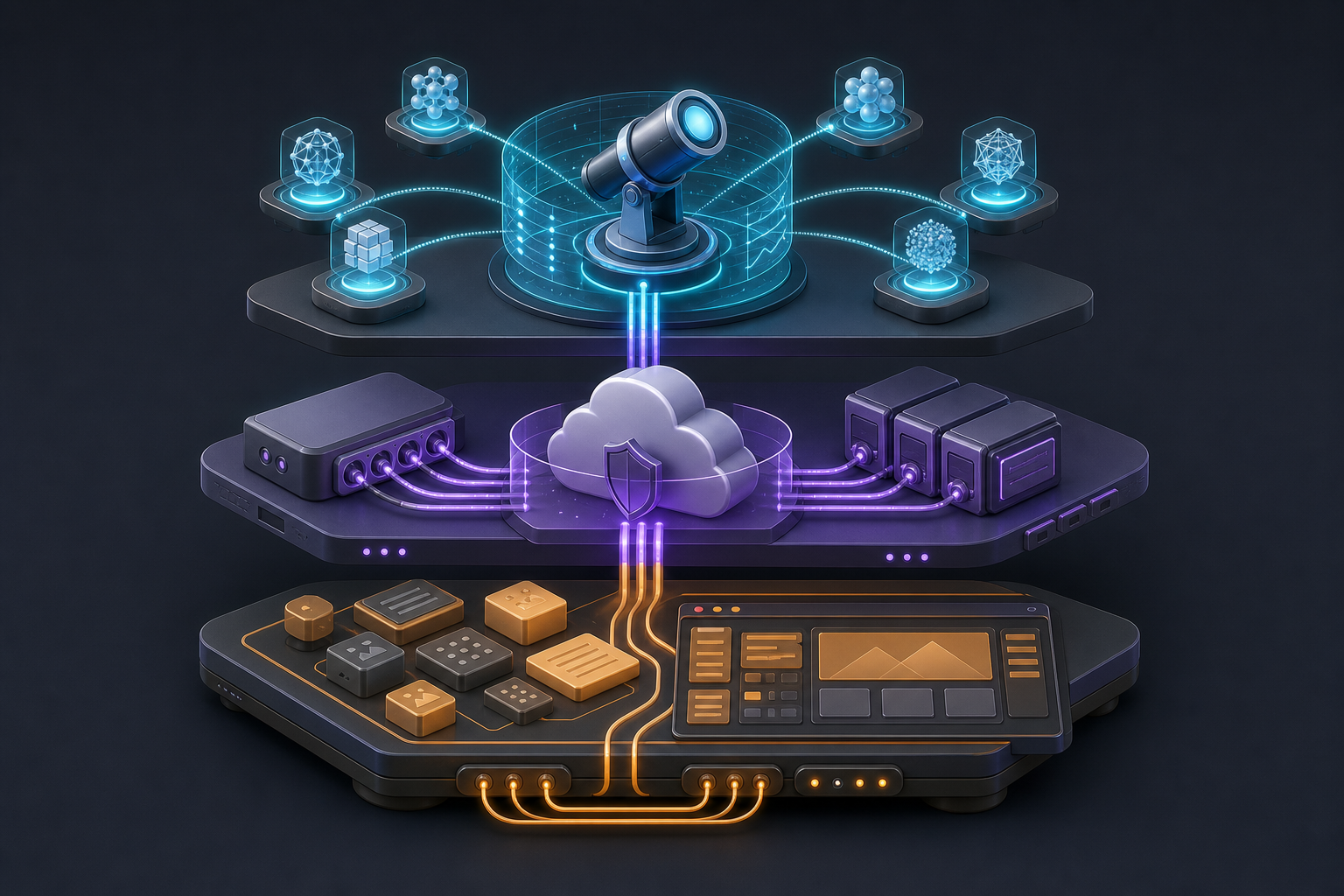
    An isometric three-level system connects AI-search analytics, a cloud integration gateway, and modular web application components.

    Profound’s current footprint spans company capacity, deployment distribution, and application-level tooling. Those layers answer different questions, so they should not be treated as interchangeable proof.

    LayerVerified public signalWhat it helps you assessWhat it does not establish
    Company capacity$35 million Series B fundingAccess to new capital for expansionProduct accuracy, profitability, long-term availability, or service quality
    Deployment distributionAgent Analytics on the Vercel Marketplace with a one-click connectionWhether a supported installation path exists for a Vercel workflowProduction permissions, data handling, metric definitions, or setup after authorization
    Application toolingnext-aeo as an NPM package for Next.jsWhether developers have a framework-specific AEO entry pointExact output, version compatibility, ranking effects, or maintenance quality

    The important question is whether these layers form a closed operating loop. Your application produces content and machine-readable signals. Analytics helps you observe how AI systems interact with the site. Those observations should lead to a specific content, code, or distribution decision. If your team cannot identify that final decision, the stack may create another dashboard without improving the workflow.

    One-click installation is not one-click operation

    The Vercel Marketplace integration is meaningful because it brings Agent Analytics into a deployment channel developers may already use. For a Vercel-based team, a marketplace connection can reduce custom setup work.

    But one-click describes the start of the connection, not the quality of the outcome. Before calling the integration production-ready, determine:

    • Which Vercel projects, environments, accounts, and resources it can access.
    • Which credentials or tokens it creates, where they are stored, and how they are revoked.
    • What data leaves your environment and whether prompts, URLs, responses, or user-related fields can be included.
    • How an AI interaction is identified, filtered, deduplicated, and attributed.
    • What happens when the integration fails, is disconnected, or encounters a deployment change.
    • Whether data can be exported before you remove the integration.

    Treat the marketplace listing as evidence of distribution maturity. Treat data quality, security, and operational fit as separate tests.

    next-aeo moves AEO into the application layer

    The next-aeo package targets Next.js developers and frames answer engine optimization as an implementation concern, not only an editorial checklist. That is useful because developers can potentially review AEO-related behavior alongside application code, dependencies, builds, and deployments.

    Do not infer its exact behavior from the package name. Before adoption, inspect whether it changes rendered HTML, metadata, structured data, routes, configuration, server behavior, or the build pipeline. Establish which Next.js versions and routing models it supports. Check whether the package behaves differently with static generation, server rendering, incremental regeneration, or client-rendered content where those patterns exist in your application.

    If next-aeo emits or transforms JSON-LD, inspect the final rendered markup rather than the source configuration alone. Look for invalid syntax, duplicate entities, conflicting identifiers, missing required properties, and differences between development and production builds. If it modifies metadata, compare canonical URLs, robots directives, titles, descriptions, and social metadata before and after installation.

    AEO does not create a guaranteed position in an AI-generated answer. Use the package to improve implementation discipline only after you can explain what it produces and why that output should help answer-oriented systems understand the page.

    Use a production-readiness checklist before connecting data

    A data pipeline passes through privacy, validation, testing, monitoring, and final approval gates before reaching a production application.

    The fastest way to make a weak platform decision is to install first and define success later. Write the test contract before the package or integration changes your environment.

    Define the measurement contract

    Agent Analytics is intended to provide insight into AI interactions with a site. That description is a starting point, not a metric definition. Your team should be able to answer these questions before using the data for strategy:

    • What event qualifies as an AI interaction?
    • How are agents distinguished from ordinary browsers, crawlers, proxies, automation, and spoofed user agents?
    • Which fields are observed directly, and which are inferred?
    • How are repeated requests, retries, cached responses, and internal traffic handled?
    • Which dimensions are available for filtering and comparison?
    • How far back does the data go, and can a methodology change alter historical comparisons?
    • Can the underlying records be exported for independent validation?

    Write the accepted definition beside every metric you plan to report. If a stakeholder asks what changed, you should be able to explain both the number and the collection mechanism. A polished dashboard label is not a substitute for a documented definition.

    Test application compatibility at the rendered-output level

    Record the exact Next.js version, router, rendering modes, deployment configuration, package manager, and existing SEO or schema tooling in the test environment. Then compare the application before and after installation at several points:

    • Dependency resolution and installation output.
    • Local and production-mode build logs.
    • Generated artifacts and server output.
    • Rendered HTML, metadata, response headers, and structured data.
    • Representative static, dynamic, localized, canonicalized, and authenticated routes used by your application.
    • Deployment logs, runtime errors, and page behavior after release.

    Pin the version you test and preserve a rollback path. An automatic package upgrade can change sitewide output, so do not leave a production AEO dependency floating across unreviewed releases.

    Review permissions and data handling before production

    Do not connect a production project until you understand the integration’s access scopes, network destinations, credential lifecycle, retention behavior, deletion process, and administrative controls. If prompts, URLs, responses, or user-related fields can be collected, involve the people responsible for security, privacy, and consent before enabling that collection.

    A mis-scoped credential can expose more infrastructure than the tool needs. Unexpected collection can create privacy or contractual exposure. Use a staging environment or a non-sensitive project while those questions remain unresolved, and grant the narrowest access that still supports the test.

    Assign operational ownership

    An ecosystem becomes expensive when every component exists but nobody owns the handoffs. Name the person or team responsible for each recurring task:

    • Reviewing package releases and compatibility changes.
    • Approving integration permissions and credential rotation.
    • Investigating analytics anomalies and methodology changes.
    • Turning observations into content or engineering work.
    • Maintaining documentation for installation, rollback, export, and removal.
    • Deciding whether the tooling still earns its place in the stack.

    If these responsibilities fall between SEO, engineering, analytics, and security, the integration will eventually become unowned infrastructure. Resolve that before rollout.

    Run a staged pilot that ends with a decision

    Your first pilot should establish operational fit. Do not promise an AI-visibility lift before the implementation and measurement definitions are stable. A narrow, reversible test will tell you more than a broad installation with no baseline.

    1. Name the decision. State whether you are evaluating Profound for measurement, application-level AEO implementation, or the combined workflow. Define what would lead to adoption, a hold, or rejection.
    2. Capture the baseline. Record the application version, deployment settings, representative routes, current HTML and metadata, existing JSON-LD, current analytics, and known errors before making a change.
    3. Review the artifacts. Check package requirements, permissions, data handling, release information, support paths, and removal steps. Put unresolved questions in the unknown column of your evidence ledger.
    4. Use a non-production environment. Connect the Vercel integration only after reviewing its requested access. Scope the next-aeo change as narrowly as the package and application architecture permit.
    5. Inspect every layer. Verify that the application installs and builds, that rendered output changes only as expected, and that analytics records can be explained using a documented definition.
    6. Roll back and repeat. Remove the package or integration, confirm that the environment returns to its baseline state, and repeat the installation from written instructions. This exposes hidden manual steps and configuration drift.
    7. Write the decision record. List what was verified, what remains unknown, who owns the workflow, and what would trigger reevaluation. Keep funding and roadmap expectations separate from tested behavior.

    Use explicit gates for approval. A credible pilot should produce a repeatable installation, understandable data, no unexplained output changes, acceptable permissions, a named operational owner, and a tested exit path. If one of those is missing, document the gap instead of averaging it away with strengths elsewhere.

    The combined stack earns a broader rollout only when the loop works: application changes are inspectable, analytics is explainable, and the resulting evidence leads to a concrete optimization decision. That is the difference between owning an ecosystem and merely accumulating tools.

    Key takeaways

    • Profound’s $35 million Series B provides capacity to invest, but it does not validate product performance, security, or long-term fit.
    • The Vercel Marketplace integration reduces initial connection friction; one-click installation does not settle permissions, data quality, retention, or operational ownership.
    • The next-aeo NPM package gives Next.js teams a framework-specific AEO entry point, but you still need to verify compatibility and inspect its rendered output.
    • Evaluate funding, analytics, deployment integration, and application tooling as separate layers before testing whether they form a useful workflow.
    • Use a narrow staging pilot, written measurement definitions, pinned dependencies, and a tested rollback path before committing production data or sitewide output.

    If Profound is on your shortlist, pair an engineer with the person who owns AI-search performance and complete the evidence ledger before procurement or production access. Let reproducible installation, explainable data, and safe removal make the decision.


    References

  • AI Observability Integrations: From Bot Logs to Decisions

    AI Observability Integrations: From Bot Logs to Decisions

    You can have a dashboard full of AI crawler requests and another full of citation results, yet still be unable to answer the question that matters: what should your team change?

    The answer is not another chart. You need an evidence chain that connects agent access, content delivery, AI visibility, and an owned decision. This guide shows you how to design that chain across CDN data, citation analytics, MCP tools, and software development kits without treating correlation as proof.

    Key takeaways

    • Start with a recurring decision, then choose the integrations needed to support it. A connector without a decision is only data movement.
    • CDN and server evidence can show that an identified AI agent requested a URL and received a response. It cannot, by itself, show that the content was indexed, understood, cited, or used to form an answer.
    • Give request data and citation data the same stable content identifier. Raw URLs are too inconsistent to serve as your primary join key.
    • Use MCP for bounded, interactive questions and SDKs for scheduled, repeatable workflows. Both should return the same definitions, filters, freshness information, and failure states.
    • Treat missing telemetry as unknown, not as zero activity. Every dashboard and alert should expose its observation window, coverage, and last successful ingestion time.
    • Keep analytics tools read-only by default. Publishing, crawler-control, and configuration changes need separate permissions and explicit human approval.

    Build an evidence chain before choosing connectors

    Four modular devices representing access, delivery, visibility, and action are connected in sequence on a dark investigation table.

    AI observability becomes useful when it separates four different questions. Combining them into a single visibility score hides the exact failure your team needs to fix.

    Evidence layerQuestion it can answerUseful recordsWhat it cannot prove
    AccessDid an identified or suspected AI agent request the content?Request time, observed URL, agent classification, hostThat the agent retained or understood the content
    DeliveryWhat did your infrastructure return?Response status, redirect target, cache or edge result when availableThat the returned content was eligible for an AI answer
    VisibilityDid your monitored prompts produce a mention or citation?Prompt set, model or surface, market, answer, cited URL, observation timeThat a particular crawler request caused the citation
    ActionWho will respond, and what decision will the evidence change?Owner, trigger condition, runbook, change recordThat the intervention will improve performance

    Write the operational question before you configure any integration. Good questions contain a defined content set, an observation window, a comparison, and a possible action. For example: which priority product pages received identified agent requests but remained absent from our monitored citation set during the same reporting window?

    That question tells you what must be joined. You need a priority-page inventory, normalized request events, citation observations, a shared time convention, and a stable content key. It also tells you what not to collect. If a field cannot filter the question, explain the result, or trigger an action, it does not belong in the first implementation.

    A practical integration map should also name the system of record for every concept. Your CDN can own request evidence. Your visibility platform can own prompt and citation observations. Your content inventory can own canonical identity. Your workflow system can own the resulting task. Do not allow several connectors to redefine the same metric independently.

    Use CDN data as access evidence, not citation evidence

    For websites delivered through Akamai, an Agent Analytics integration can bring AI crawler and bot interactions at the CDN into the observability layer. That moves analysis closer to the point where requests are actually served, which is valuable when application analytics do not provide a dependable view of non-human traffic.

    The important word is access. A request event can establish that your infrastructure observed traffic matching a classification rule. The corresponding response can establish what the infrastructure returned. Neither event tells you whether an AI system indexed the page, incorporated its claims, or cited it later.

    Preserve the raw event and add a reporting identity

    Do not overwrite source fields while cleaning the data. Keep the observed URL and bot identifier, then create normalized reporting fields beside them. This lets you change a classification or canonicalization rule without losing the evidence that produced the original result.

    • Event time: Store a consistent timezone and retain enough precision to diagnose ingestion delays.
    • Observed host and URL: Preserve what was requested before redirects or canonical mapping.
    • Content ID: Map URL variants to a stable identifier owned by your content inventory.
    • Response result: Retain the status and relevant edge outcome supplied by the integration.
    • Agent family: Use a normalized label for reporting while preserving the raw identifier.
    • Classification basis: Record whether identity is verified, claimed, inferred, or unknown.
    • Ingestion metadata: Include the connector, processing time, and schema version so data gaps can be distinguished from traffic gaps.

    A user-agent string is a claim, not conclusive identity. Where a bot operator publishes a verification mechanism and your data supports it, keep verified traffic separate from traffic classified only by its declared name. Do not silently discard ambiguous requests. Put them in an unknown or suspected group so a classifier update does not rewrite history invisibly.

    Define metrics that answer delivery questions

    Keep edge metrics narrow enough that their names remain true. Useful definitions include:

    • Priority-content request coverage: Distinct priority content IDs with at least one qualifying agent request divided by all content IDs in the declared priority set.
    • Accepted-response rate: Qualifying requests that received a response your team has explicitly classified as usable, divided by all qualifying requests. Publish the accepted status rules beside the metric.
    • Request distribution: Qualifying requests grouped by content type, directory, locale, or template.
    • Delivery friction: Qualifying requests returning an error, an unintended redirect, or another response state that your runbook treats as a problem.
    • Telemetry freshness: Time of the latest successfully ingested event compared with the end of the displayed reporting window.

    Keep query parameters only when they change the content you need to analyze. Strip known tracking parameters from the reporting URL, but retain the untouched observed URL under restricted access. This prevents campaign variants from fragmenting page-level coverage while preserving the evidence needed to investigate a mismatch.

    Most importantly, distinguish no observed request from no request. A connector outage, an unsupported property, an excluded hostname, a parsing failure, or a delayed export can all produce an empty chart. Add an ingestion heartbeat and coverage status to the dashboard. If the pipeline is incomplete, display unknown rather than a reassuring zero.

    Choose MCP or an SDK according to the decision path

    Collection is only half the integration problem. The data must reach the person or system making the decision. An MCP server can make visibility reports, bot analytics, and citation data queryable from Claude Desktop and other AI workflows. TypeScript and Python SDKs provide another route for software that needs repeatable access without requiring every user to construct raw API calls.

    These interfaces serve different operating patterns:

    • Use MCP for investigation: An analyst asks a bounded question, examines the result, changes a filter, and decides what to inspect next.
    • Use an SDK for repetition: A scheduled job applies a stable query, validates the response, stores normalized output, and triggers a defined downstream workflow.
    • Use your analytics store for history: Retain the governed data needed for trends and reproducibility rather than expecting a conversational session to become the long-term record.

    MCP should expose small, well-described tools rather than a vague tool that can fetch everything. A tool named for a business question is easier to govern than a generic query endpoint. Its contract should state required inputs, permitted filters, output fields, timezone, freshness behavior, pagination, and known gaps.

    Every response should carry enough context to survive outside the chat where it was requested. Return the observation window, timezone, applied filters, dimensions, last successful ingestion time, classification version, and completeness status with the result. An answer such as “twelve pages were not observed” is unsafe if the recipient cannot tell which property, bot class, page set, or window produced it.

    Apply read-only and least-privilege defaults

    Analytics access can expose private URLs, query values, unpublished content paths, customer identifiers, or internal prompt sets. Minimize that exposure before an AI assistant receives the data.

    • Give each integration only the properties, reports, and fields required for its named use case.
    • Use read-only credentials for investigation tools and keep secrets outside prompts, tool descriptions, and returned records.
    • Redact or aggregate sensitive URL parameters and payload fields before they enter the conversational layer.
    • Log tool name, caller, filters, execution time, result status, and returned record count for later review.
    • Treat text retrieved from pages, answers, and metadata as data, not as instructions that can redefine the assistant’s task.
    • Return explicit permission, timeout, partial-data, and rate-limit errors. Do not convert them into empty results.

    Do not give the same assistant silent permission to change robots controls, publish content, purge caches, or alter production configuration. A mistaken interpretation could affect site availability or discoverability. Put mutating actions behind separate tools, narrower credentials, a preview of the proposed change, and human approval.

    Join access and citations without inventing causality

    Separate cyan request tokens and violet citation nodes meet at a transparent matching surface while an analyst compares the joined evidence.

    The edge event and the AI answer usually do not share a request ID. Join them for analysis through governed dimensions: stable content ID, canonical URL, agent or surface family, locale when available, and aligned observation windows. That produces a useful relationship, but not proof that one particular request caused one particular answer.

    Your content ID is the critical bridge. The same page may appear as an HTTP and HTTPS URL, with tracking parameters, behind redirects, or under several cited URL forms. Keep observed_url, canonical_url, and content_id as separate fields. The first preserves evidence, the second supports URL reporting, and the third gives you a stable entity for longitudinal analysis.

    Observed agent accessObserved citationWhat you can concludeNext investigation
    NoNoYou do not yet know whether the issue is delivery, observation coverage, prompt coverage, or content selection.Validate both pipelines, then inspect delivery rules and whether the page belongs in the monitored prompt set.
    YesNoAccess was observed, but citation was not observed in the declared prompt set and window.Compare the page with cited alternatives, confirm the returned content, and inspect relevance, clarity, and entity alignment.
    NoYesCitation was observed without matching access evidence in the current dataset.Check timing, alternate URLs, cached access, agent classification, hostname coverage, and ingestion gaps.
    YesYesBoth signals were observed. The data still does not establish request-level causation.Inspect consistency, citation context, answer accuracy, and changes across comparable windows.

    Keep referral traffic as a separate downstream signal. A bot request is not a citation, and a citation is not a visit. Combining the three can help you see a pathway from technical access to visibility to site activity, but each transition has its own coverage limits. Label the stages rather than collapsing them into a single number.

    Put the integration into production with a decision-first runbook

    1. Select one recurring decision. Name the person who makes it and the action they may take.
    2. Declare the analysis scope. Record the properties, hostnames, priority content set, agent classes, prompt set, surfaces, locale, timezone, and observation window.
    3. Write the data contract. Define every field, accepted response state, normalization rule, null behavior, freshness expectation, and source of record.
    4. Connect data with read-only access. Start with the smallest permissions and fields that can answer the chosen question.
    5. Reconcile samples. Trace selected records from the originating system through normalization and into the final query. Confirm that redirects, parameter variants, unknown bots, duplicates, and missing fields behave as documented.
    6. Create the shared content key. Map observed and cited URL variants to a stable content ID without deleting their original forms.
    7. Expose one bounded query. Return the result together with scope, freshness, filters, and completeness metadata through MCP or an SDK workflow.
    8. Test failure states. Disable or restrict a test credential, supply an invalid filter, simulate delayed input, and confirm that each problem produces an explicit error or unknown state rather than an empty success.
    9. Attach an action. Give every alert an owner, diagnostic query, safe response, escalation path, and change record.
    10. Review the decision, not just the pipeline. If the output does not change what the owner does, narrow the question or retire the integration.

    A strong first production query is deliberately narrow: show priority content that received qualifying agent activity but had no citation in a specified prompt set, and include the reporting window, data freshness, classification basis, and coverage state. That result gives an SEO or content owner a finite investigation queue without pretending to explain the cause.

    Start there. Once your team can trace a decision from raw event to normalized evidence to an owned action, add another question. That sequence turns integrations into an observability system your team can challenge, maintain, and actually use.

    References