Tag: AEO

  • How to Build an AI Search Visibility Strategy That Holds Up

    How to Build an AI Search Visibility Strategy That Holds Up

    Your team can buy an AI visibility dashboard and still have no idea what to fix. The hard part is not detecting a brand mention. It is deciding whether that mention reflects accurate representation, genuine authority, growing demand, or one unstable answer.

    A useful strategy connects AI answers to the conditions that produced them and the business result that followed. That means testing real prompts, examining who gets recommended and cited, strengthening the evidence around your brand, and measuring demand and behavior outside the AI platform.

    Measure AI visibility as a chain, not a single score

    An AI citation is not the same as human endorsement or brand demand. It can show that a system found a page useful, but it does not tell you whether a buyer noticed your brand, understood its relevance, trusted it, or took action.

    Build your scorecard in layers. Each layer answers a different question, so a change in one cannot silently stand in for all the others.

    Measurement layerQuestion it answersWhat to record
    Business resultDid AI exposure contribute to valuable behavior?Qualified visits, leads, purchases, subscriptions, assisted conversions, or revenue where your attribution setup supports it.
    Brand demandAre more people actively looking for you?Branded queries, branded search interest, direct visits, and other demand indicators relevant to your business.
    AI representationDo answer engines include your brand, and how do they describe it?Brand presence, recommendation role, factual accuracy, sentiment, citations, named competitors, and omitted capabilities.
    Search and site foundationsCan search systems find the relevant pages, and what happens after a visit?Indexing, impressions, clicks, landing-page engagement, conversion behavior, and referral traffic from identifiable AI platforms.

    Define the business result before collecting visibility data. For one company, the meaningful action might be a completed purchase. For another, it might be a qualified inquiry rather than every form submission. Without that definition, an impressive mention count can become a reporting endpoint instead of evidence for a decision.

    Give branded demand its own place in the scorecard. Growth in people deliberately searching for your name is a clearer indicator of rising market demand than citations alone. Google Trends, Keyword Planner, and Search Console can help you examine that demand from different angles, while GA4 can show what identifiable AI-referred visitors do on your site.

    Do not turn the layers into one opaque composite score. If citations increase while branded demand and qualified activity remain flat, you have learned something specific: machine visibility changed, but you have not yet demonstrated greater preference or business impact. That is a diagnosis, not necessarily a failure.

    Build a prompt benchmark you can repeat

    A circular testing table holds evenly spaced blank prompt tiles, translucent processing chambers, and colored response shapes arranged for repeated comparison.

    Your benchmark should represent decisions a potential customer makes, not merely the keywords your site already targets. Include prompts from distinct stages of the decision so you can see where your brand enters, disappears, or gets described incorrectly.

    • Category discovery: prompts such as Which [category] options suit [audience and constraint]? reveal which brands are associated with the market before the user names one.
    • Problem solving: prompts such as How should [audience] solve [problem] when [constraint] applies? show which methods, entities, and providers become part of the answer.
    • Evaluation and comparison: prompts about tradeoffs, selection criteria, alternatives, or use-case fit expose how the system differentiates brands.
    • Brand verification: prompts about what your brand does, who it serves, where it fits, or how it compares reveal factual and positioning errors.

    Use the language customers would use. A prompt set written entirely in your internal product vocabulary will measure whether an assistant can repeat your positioning, not whether your brand appears in the buyer’s actual decision process.

    Test materially important prompts in ChatGPT, Claude, and Perplexity. They are useful for competitive research, content-gap analysis, entity audits, prompt testing, and answer-structure analysis. Their practical strengths also differ: ChatGPT offers broad synthesis, Claude tends toward nuanced analysis, and Perplexity makes citations particularly visible.

    For every test, save enough context to reproduce and interpret it:

    • A stable prompt ID and the exact prompt text.
    • The intent category and audience represented by the prompt.
    • The platform, available mode, test date, and any conditions you controlled.
    • Every brand named and its role: primary recommendation, alternative, example, warning, or passing mention.
    • The claims made about your brand, including omissions and factual errors.
    • The pages and domains cited, when citations are available.
    • The competitors that recur and the evidence used to support them.
    • The action the observation triggered, or a clear note that no action is justified yet.

    Keep the original output or a sufficiently complete capture. A binary present-or-absent field cannot tell you whether your brand was the preferred option, an unsuitable alternative, or an incidental example.

    Read patterns as hypotheses, not rankings

    AI outputs are variable, and visibility metrics are signals rather than precise rankings. A single answer is therefore an observation, not a stable market-share estimate. Repeat the same benchmark under recorded conditions and look for patterns that survive individual response changes.

    • If your brand appears only when named, the system may recognize it without associating it strongly enough with the broader category. Investigate category coverage, independent mentions, demand, and positioning.
    • If competitors repeatedly appear in category and comparison prompts, inspect the claims and third-party evidence supporting them. The gap may be authority or distribution, not another missing keyword page.
    • If your brand appears but is described inconsistently, create an entity and messaging issue list. Separate incorrect facts from legitimate differences in how the market sees you.
    • If citations increase but visits do not, remember that a direct answer can satisfy the user without a click. Check branded demand, later visits, and business outcomes before declaring the citation worthless.
    • If visibility looks strong only in low-value prompts, revise the benchmark. You may be measuring questions that are easy to win but irrelevant to a buying decision.

    Build the authority that keyword coverage cannot create

    A crystalline central structure stands on a network of blank books, papers, source towers, and linked nodes while light orbs connect the evidence to an audience.

    Publishing more pages does not automatically make your brand authoritative. Keyword coverage can show that you have discussed a subject. It cannot, by itself, show that the market trusts your expertise or thinks of your brand when the subject arises.

    The more useful question is: what do credible people, publications, customers, and communities say about you? Consistent brand co-occurrence connects a brand with a topic across independent mentions. Those associations help explain why one company becomes a routine recommendation while another has a larger content library but little presence outside its own domain.

    Create an evidence map around the association you want to earn. State it in a working sentence: For [audience] dealing with [problem], [brand] is relevant because [verifiable proof]. Then audit each part:

    • Do you have first-party evidence for the proof, or only a marketing claim?
    • Does the evidence contain original data, a useful method, a distinctive tool, or an insight another person would have a reason to reference?
    • Do independent mentions connect the brand to the intended problem and audience?
    • Do reviews and customer discussions support the positioning, qualify it, or contradict it?
    • Are the relevant facts stated consistently on pages that search systems can find?
    • Do competitors have stronger recurring evidence for the same association?

    The answers tell you which intervention belongs next. If the underlying evidence is weak, produce work worth citing: original data, a transparent method, a practical resource, or an analysis that advances the conversation. If the evidence is strong but unseen, the bottleneck is distribution, public relations, community participation, or outreach. If independent mentions exist but describe the company inconsistently, fix the positioning and entity facts before adding more topic coverage.

    Reviews, customer testimony, and genuine recommendations matter because they show human preference rather than self-description. Treat them as evidence to understand, not text to manufacture. Record which use cases customers associate with your brand, the language they use, and where their experience narrows or challenges your preferred positioning.

    Your owned content still has an important job. It should explain the product or expertise accurately, answer consequential questions, expose the evidence behind claims, and give other people something precise to reference. Technical SEO should keep those pages discoverable and indexable. Structured data can state entities and relationships more explicitly, but it remains self-declared markup; use it to describe visible facts, not as a substitute for reputation.

    This changes content planning. Do not ask only which keywords remain uncovered. Ask which claim your market needs help evaluating, what evidence would resolve it, who would find that evidence useful, and why anyone outside your company would mention it. Original data and useful insights that earn attention do more for authority than a stack of interchangeable pages.

    Choose each tool for a decision it can support

    No tool covers the complete chain from prompt exposure to market authority and revenue. Start with the question you need to answer, then choose the smallest tool set that provides the necessary evidence.

    Tool or tool groupUse it to decideWhat it gives youWhat it cannot prove
    ChatGPT, Claude, and PerplexityWhere and how does the brand appear in real answer formats?Manual prompt tests, competitor framing, content gaps, entity coverage, cited pages where available, and preferred answer structures.A one-off output cannot establish a stable ranking or market share. Manual testing also becomes time-consuming without a fixed framework.
    ProfoundDo you need repeatable cross-platform visibility and competitor monitoring at greater scale?Brand mentions, sentiment, citation share, competitor visibility, and identification of content associated with AI mentions.Its metrics remain snapshots of changing outputs. Cost also needs to be justified by a decision your team will make from the data.
    Google Trends and Google Keyword PlannerIs demand growing, declining, seasonal, or too small to prioritize?Search-interest direction, volume estimates, topic momentum, seasonal patterns, and forecasting inputs.They reflect traditional search behavior rather than the full universe of AI prompts. Keyword Planner also requires an active Google Ads account.
    Google Search Console and Google AnalyticsAre relevant pages discoverable, and does identifiable AI traffic produce useful behavior?Queries, impressions, clicks, indexing evidence, landing-page behavior, referrals, engagement, and configured conversion outcomes.Search Console is Google-centric, while Analytics depends on correct configuration. Neither reveals every interaction that happened inside an answer engine.
    AhrefsWhich competitors have stronger external authority or reference-worthy content?Backlinks, content gaps, and discovery of high-performing content that may support broader authority and citation opportunities.These are indirect AEO signals, not a direct view of what an AI system will answer.
    AI Trust Signals and Roadway AIIs an emerging specialist tool able to close a defined credibility or revenue-attribution gap?AI Trust Signals focuses on credibility indicators, while Roadway AI is developing attribution between AEO activity and revenue.Both should be evaluated against your own workflow and decision requirements rather than assumed to be mature, universal replacements for the core stack.

    A spreadsheet or database remains the connective tissue even when you use specialist software. Keep separate views for prompts, outputs, citations, authority evidence, actions, and outcomes. Join them with stable prompt, page, topic, and intervention identifiers. Otherwise, your answer tracker and analytics data will remain adjacent dashboards with no diagnostic relationship.

    Use decision rules to turn observations into work

    Write the rules before the next reporting cycle. This prevents the most visually dramatic metric from dictating your priorities.

    1. Freeze the benchmark. Keep the core prompts, intent labels, platforms, and recorded conditions stable enough to make later observations interpretable. Add emerging prompts without rewriting the baseline.
    2. Locate the bottleneck. Decide whether the problem is discovery, inaccurate representation, weak external authority, low underlying demand, or poor business response.
    3. Check corroborating evidence. Compare prompt observations with cited pages, competitor mentions, backlinks, branded searches, Search Console data, and Analytics outcomes. Do not let one system confirm itself.
    4. Choose one intervention tied to the bottleneck. That may be correcting facts, improving a decision page, publishing stronger evidence, earning independent coverage, repairing indexing, or revising a low-value prompt portfolio.
    5. Record the expected movement. Name the measurement layer that should change if the intervention works. An authority campaign should not be judged solely by immediate referral clicks, and an analytics repair should not be credited with creating demand.
    6. Retest the full chain. Recheck AI representation, citations, branded demand, search performance, and qualified behavior. Keep the intervention only if the combined evidence supports it.

    Some patterns deserve especially careful interpretation. High Search Console impressions with falling click-through rate can justify inspecting whether direct search answers or AI Overviews are affecting clicks, but it does not prove the cause. A recurring competitor citation can reveal a useful evidence gap, but copying the competitor’s page structure will not reproduce the reputation behind it. Better diagnosis usually leads to a different action than surface imitation.

    Paid AI monitoring becomes worthwhile when manual testing has already established a useful benchmark and the volume of platforms, prompts, markets, or competitors exceeds what your team can review consistently. If you cannot name the decision that additional tracking will change, more coverage will create a larger reporting burden rather than a better strategy.

    Key takeaways

    • Treat AI visibility as a chain connecting machine representation, external authority, brand demand, site behavior, and business outcomes.
    • Benchmark category, problem-solving, comparison, and brand-verification prompts using exact, repeatable prompt records.
    • Interpret AI answers as variable observations. Look for recurring patterns across prompts and platforms instead of declaring a precise rank from a snapshot.
    • Build authority through verifiable work, independent mentions, reviews, public relations, and useful distribution. Keyword coverage and schema cannot manufacture market preference.
    • Select tools by the decision they support: assistants for firsthand testing, Profound for scaled monitoring, Google tools for demand and behavior, and Ahrefs for external authority analysis.
    • Connect every intervention to the layer expected to move, then validate it against the rest of the measurement chain.

    Your first move is to create the benchmark before buying another dashboard. Put category, problem, comparison, and brand-verification prompts in one working file. Add the brands, claims, citations, demand signals, and business outcomes beside them. The first column that repeatedly lacks credible evidence is where your next optimization effort belongs.

    References

  • Technical SEO Foundations for Search in the AI Era

    Technical SEO Foundations for Search in the AI Era

    You can publish excellent answers, add structured data, and track dozens of AI prompts, yet still remain invisible because the underlying site sends mixed signals about which pages exist, which URLs matter, and what each page is actually about.

    The remedy is less exotic than the problem sounds. Build a site that can be discovered, fetched, interpreted, and trusted without guesswork. That foundation serves conventional search engines, retrieval systems, and the people who eventually land on your pages.

    Key takeaways

    • AI search optimization starts with ordinary technical access: clean URLs, crawlable links, indexable pages, and content that exposes its main answer clearly.
    • Give each important intent one preferred URL, then make internal links, redirects, canonical signals, navigation, and structured data agree with that choice.
    • Remove campaign tracking parameters from internal destinations. Measure the click without creating another version of the destination URL.
    • Write pages as extractable answer systems: state the answer, define the subject, support the claim, preserve its qualifiers, and cover the natural follow-up questions.
    • Structured data can confirm visible meaning, but it cannot repair inaccessible content, contradictory facts, weak architecture, or an unclear page purpose.
    • Measure discovery, URL selection, extraction, corroboration, and AI answer visibility separately. A missing citation does not identify which layer failed.

    Audit the complete retrieval chain before rewriting content

    A cutaway sequence shows a page moving through discovery, server access, rendering, indexing, and retrieval, with one connection visibly inactive.

    An AI-generated answer may look different from a page of blue links, but much of the upstream work is familiar. Retrieval, page quality, speed, and intent matching remain durable foundations. If a system cannot reliably reach or interpret a page, polishing its answer format will not solve the real problem.

    Retrieval-augmented generation, usually shortened to RAG, gives you a useful model for thinking about this process. Instead of relying only on information learned during model training, a RAG system can retrieve external material to help construct an answer. Your technical job is to make the right page a strong retrieval candidate.

    Work through the chain in order. Each step depends on the one before it:

    1. Discovery: Can a crawler reach the page through ordinary internal links from an indexable part of the site? A sitemap can support discovery, but it should not be the page’s only connection to the site.
    2. Access: Does the preferred URL return a successful response and expose the primary content without a login, consent dead end, redirect loop, or permanent loading failure?
    3. Eligibility: Do robots controls, page-level indexing directives, canonical tags, and other technical signals permit the page to be considered?
    4. URL selection: Do all signals identify the same preferred URL, or do internal links point to parameters and redirects while the canonical tag names something else?
    5. Extraction: Can a machine identify the subject, main answer, supporting details, and important qualifiers from the page itself?
    6. Corroboration: Is the claim consistent with the rest of your site, and does the page offer evidence or references appropriate to the question?

    Do not collapse these checks into a single question such as, “Is the page indexed?” Indexing does not prove that the preferred URL was selected, that the decisive passage was extracted, or that the page was judged useful for a particular prompt.

    Start the audit with pages tied to real decisions: a service page, a product category, an important comparison, a technical explanation, or a support page that resolves a costly problem. For each one, begin at the home page or its nearest topic hub and follow the path a crawler would take. Record every redirect, parameterized destination, blocked step, and conflicting canonical signal. You are testing the route, not merely inspecting the destination.

    Run the same check in your templates. A clean link added manually to one page does not compensate for a navigation component, related-content module, or call-to-action block that generates messy URLs across the site. Template defects multiply; template fixes do too.

    Use one stable URL per intent, then make every link agree

    A canonical tag is not a substitute for coherent architecture. It is one signal describing your preferred version. If navigation, breadcrumbs, content links, redirects, sitemaps, and structured data repeatedly point elsewhere, you force retrieval systems to reconcile a disagreement you created.

    Choose the preferred page before changing tags

    For every important topic or task, decide which page should own the intent. That decision should be based on the page’s purpose, not on which URL happens to rank at the moment.

    • Write one sentence describing the question or decision the page owns.
    • Identify overlapping pages that answer substantially the same need.
    • Decide whether each overlapping page has a distinct job, should be consolidated, or should point readers toward the preferred page.
    • Update internal links so their destination is the final preferred URL, not a redirecting or parameterized variation.
    • Align canonical tags, sitemap entries, structured-data URLs, navigation, and alternate versions with that same choice.

    Do not merge pages merely because they share a keyword. A setup tutorial, pricing explanation, troubleshooting page, and buyer comparison can mention the same product while serving different decisions. Consolidate only when the pages compete for essentially the same purpose and neither needs to exist independently.

    Remove tracking parameters from internal destinations

    Campaign parameters are useful when a link crosses from a campaign into your site. They become a liability when your own pages keep appending them to internal destinations. Tracking parameters in internal links can undermine otherwise useful internal linking by creating discoverable URL variants and making the site’s preferred paths less consistent.

    The clean pattern is simple: link internally to the canonical destination and record the interaction separately. Use an analytics event, the referring page, or another measurement method that does not alter the destination URL. The user reaches the same content, while crawlers receive one stable address.

    Audit parameter use as a controlled cleanup:

    1. Export or crawl all internal links, including links produced by headers, footers, cards, related-content blocks, banners, and reusable calls to action.
    2. Group destinations that resolve to the same underlying page but contain different query strings, fragments, protocols, hostnames, or path formats.
    3. Classify each query parameter as tracking, decorative, or functional before changing anything.
    4. Replace tracking variants in templates and page content with the preferred clean URL.
    5. Keep redirects for legacy or externally linked variants when they are still needed, but stop producing those variants internally.
    6. Recrawl the affected paths and confirm that new internal links now point directly to the final destination.

    Do not delete query parameters indiscriminately. Search filters, pagination, account flows, carts, localization, and other features may rely on them. Removing a functional parameter can break the experience or change the content being requested. Classify first; clean second.

    Make internal links explain the site’s knowledge structure

    Internal links do more than move authority around. They describe relationships. A broad topic hub should lead to its detailed explanations; a comparison should link to the products or methods it evaluates; a troubleshooting page should link to the relevant setup instructions; and a supporting definition should point back to the page where the larger decision is made.

    Use anchor text that names what the reader will find. Repeated “learn more” links make the relationship less explicit. You do not need to force the same exact phrase everywhere, but the wording should make sense without relying on the surrounding design.

    Watch for orphaned expertise. A strong technical explanation buried in an old resource directory may be technically indexable yet disconnected from the pages that establish its relevance. Link it from the appropriate hub and from related pages where it resolves a genuine follow-up question.

    Design pages for fan-out, extraction, and corroboration

    A bright central web page receives converging internal links and branches into retrievable fragments that connect with several corroborating source nodes.

    A conversational prompt often contains more than one information need. A person asking which platform fits a regulated team may implicitly need definitions, feature differences, limitations, implementation requirements, and evidence of reliability. AI systems can respond through query fan-out and related prompt intents, retrieving material for those component questions.

    You do not need a separate page for every wording of every prompt. You need a page with one clear primary job and enough well-organized support to answer the natural questions surrounding that job.

    Put the answer where it can be extracted intact

    Open the main content with a direct response to the page’s primary question. Follow it with the mechanism, conditions, evidence, and exceptions. If the answer depends on a product version, user type, location, or implementation state, keep that qualifier beside the claim. A technically correct caveat buried far away can be lost when a passage is retrieved on its own.

    • Use a descriptive page title and heading that identify the subject and task.
    • Give each major follow-up question a descriptive subheading.
    • State important nouns explicitly instead of making long sections depend on vague pronouns such as “it” or “this solution.”
    • Keep definitions near the terms they define.
    • Place evidence, limitations, and applicability conditions near the claim they qualify.
    • Use lists for procedures or criteria, prose for reasoning, and tables only when readers need to compare the same fields across several options.
    • Remove introductions that delay the answer without adding context the reader needs.

    This structure is not an invitation to write in disconnected fragments. A page still needs a coherent argument. The goal is for each important section to remain accurate and useful when encountered independently.

    Keep entity facts consistent across the site

    Machines have a harder job when your own pages disagree about basic identity. Product names, organization names, service areas, feature labels, relationships, and current availability should not change casually between a landing page, documentation, an author profile, and structured data.

    Create a small factual inventory for the entities that matter most. Record the preferred name, concise description, relationship to the organization, and the canonical page that represents each entity. Use that inventory when updating templates and content. This is especially valuable after rebranding, product consolidation, acquisitions, URL migrations, or changes in terminology.

    Consistency does not mean copying the same marketing paragraph everywhere. It means that factual identity remains stable while each page explains the entity in the context of its own task.

    Use structured data to confirm visible meaning

    Structured data should describe what the page visibly communicates. It can make entities, page roles, and relationships more explicit, but it cannot make a blocked page retrievable or turn contradictory copy into a reliable fact.

    • Use the preferred canonical URL wherever the markup identifies the page or its main entity.
    • Keep names, descriptions, relationships, and other properties consistent with visible content.
    • Remove markup left behind by deleted templates, expired offers, or repurposed pages.
    • Validate syntax after template changes, then inspect the rendered page to confirm that the intended markup is actually present.
    • Treat eligibility for a search feature as separate from guaranteed visibility. Valid markup is an input, not an outcome.

    Support claims with appropriate corroboration

    AI optimization is not confined to your own domain. Quality backlinks and third-party visibility remain relevant because retrieval systems need reasons to treat one candidate as more dependable than another.

    On the page, cite primary material when a claim depends on a standard, regulation, official specification, dataset, or named research result. Outside the page, make sure reputable profiles, directories, partners, and industry references use the same core identity. Do not manufacture mentions or fill the web with duplicated descriptions. The useful signal is independent, contextually relevant corroboration.

    Measure the failed layer, not just the missing mention

    AI visibility is tempting to reduce to a yes-or-no brand check. That hides the diagnosis. Your site may be absent because the page was not discovered, the wrong URL was selected, the relevant passage was difficult to extract, another page answered the intent better, or the system produced an answer without showing its external inputs.

    That last case matters: AI tools may provide an answer without displaying external sources. A visible citation is useful evidence, but the lack of one does not prove that no retrieval occurred. Treat AI answer monitoring as directional evidence, not as a conventional rank report with a fixed position.

    Build a prompt set around real user decisions

    Group prompts by intent instead of generating superficial keyword variations. Include the questions people ask when defining a problem, comparing approaches, checking suitability, planning implementation, and resolving failure. Preserve the exact wording so you can rerun the same prompt after a change.

    For every observation, record the system used, the exact prompt, the date, the answer’s main claims, any cited domains, the cited page URL, and whether the answer represented your entity accurately. Reviewing responses in systems such as Google AI Mode and ChatGPT can reveal which external pages are being selected and which prompt intents your coverage misses.

    Do not interpret one generated response as permanent. Retrieval inputs and generated wording can vary. Look for repeated patterns across your stable prompt set, then connect those patterns to technical evidence from crawling, indexing inspection, analytics, and server data where available.

    Use the symptom to choose the next check

    • The preferred page is not discoverable through the site: repair navigation, hub links, orphaning, and template-generated destinations before rewriting the copy.
    • A parameterized or redirected URL appears instead of the preferred page: align internal links, canonical signals, redirects, sitemaps, and structured-data URLs.
    • The page is accessible, but the extracted answer is incomplete: move the direct answer and its qualifiers into a coherent section under a descriptive heading.
    • The wrong page answers the prompt: clarify the purpose of overlapping pages, consolidate true duplicates, and strengthen links to the intended owner.
    • The entity appears with incorrect facts: locate contradictions across landing pages, documentation, profiles, structured data, and relevant third-party references.
    • Competitors are repeatedly cited for a subtopic you barely cover: decide whether that subtopic belongs on the existing page or deserves a distinct page with its own purpose and evidence.
    • Your answer appears without a visible citation: record the mention, but do not claim attribution you cannot observe. Continue checking retrievability, accuracy, and independent corroboration.

    Ship improvements in dependency order

    1. Restore discovery and access for the preferred page.
    2. Resolve conflicting URL and indexability signals.
    3. Clean internal destinations and repair the path from relevant hubs.
    4. Clarify the page’s primary intent and reorganize its answer.
    5. Align entity facts and structured data with visible content.
    6. Strengthen evidence and relevant third-party corroboration.
    7. Rerun the same prompt set and document what changed.

    Your next move is not another isolated AI tactic. Pick one important path through your site, audit it from discovery to extraction, fix the first broken layer, and verify the same prompts again. Once that path is coherent, repeat the process on the next decision that matters to your audience.

    References

  • How to Build a Human-Led B2B Brand and Content Strategy

    How to Build a Human-Led B2B Brand and Content Strategy

    You can have a full content calendar, capable writers, strong subject-matter experts, and an AI workflow that produces drafts in minutes, yet still sound interchangeable with every competitor. The problem usually sits upstream: nobody has made a firm decision about what the market should believe about the brand.

    A human-led strategy fixes that without discarding AI. People retain the decisions with commercial consequences: what the brand should mean, which evidence deserves emphasis, what not to claim, and which trade-offs are acceptable. AI handles bounded work around those decisions, including organization, drafting, transformation, consistency checks, and distribution.

    Brand strategy begins with a decision, not a prompt

    AI can generate dozens of plausible positioning statements. That abundance is useful for exploration, but it is not a strategy. A position becomes strategic when you choose one interpretation of the business, support it, and reject adjacent messages that would weaken it.

    The distinction matters because your preferred position may not be the most obvious conclusion available from the facts. AI can connect known information and propose possible narratives, but it does not carry responsibility for choosing the narrative that serves your company, customers, and long-term direction. A named human must make that choice.

    A practical way to structure the decision is the claim-frame-prove discipline. It separates three elements that teams often collapse into one vague brand statement.

    ElementQuestion it must answerHuman decisionRequired output
    ClaimWhat do we want the market to believe?Choose a specific, defensible proposition instead of a collection of benefits.A sentence that can be tested against evidence.
    FrameWhy does this claim matter, and how should the evidence be interpreted?Select the commercially useful conclusion and the alternative view you are challenging.An explicit logical bridge from accepted facts to the desired association.
    ProofWhy should a buyer or an answer engine believe us?Set the evidence threshold, boundaries, and caveats.Named, accessible support for every material assertion.

    Write the claim so it can succeed or fail

    Statements such as trusted partner, innovative platform, and customer-first company are difficult to disprove, which also makes them difficult to value. Replace them with a proposition that has an identifiable audience, problem, outcome, and reason to believe.

    Use this working structure: For a specific buyer facing a specific decision, the brand represents a defined approach or advantage because named evidence supports it. This matters because the evidence leads to a useful conclusion the buyer may not have considered.

    Do not publish the template itself. Use it to force the internal decision. If the team cannot complete it without broad adjectives, multiple audiences, or unsupported outcomes, the positioning is not ready for production.

    Treat the frame as strategy, not decoration

    A frame is not a clever slogan placed above the same old product copy. It tells the reader what the evidence means. Two companies may have similar capabilities, but the company that explains the consequence of those capabilities can own a more useful association in the buyer’s mind.

    Pressure-test a proposed frame with five questions:

    • Would a relevant competitor be equally comfortable making this claim?
    • Does the proof establish the promised outcome, or merely show that a feature exists?
    • Does the frame add a meaningful conclusion rather than restating the claim?
    • Can a skeptical reader follow the path from evidence to conclusion without filling in a missing step?
    • Have you stated the conditions or use cases in which the claim does not apply?

    If the competitor can copy the entire argument without changing the evidence, you have a category description, not a position. If the conclusion requires a leap that the proof cannot support, you have promotion, not a position. Human judgment is the work of finding the narrow territory between those failures.

    Turn positioning into a content operating system

    A human hand places a central colored block into a connected tabletop system of blank content modules and evidence tokens.

    A positioning document has little value if every writer interprets it differently. Your content system must carry the same claim, frame, and proof into landing pages, executive viewpoints, product education, case material, sales enablement, and answer-focused content without forcing every asset to repeat identical wording.

    Start with a claim ledger rather than a topic calendar. The calendar tells you when something will be published. The ledger tells you what the business is prepared to assert, why it is true, where the evidence lives, and who is accountable for approving it.

    Each ledger entry should contain:

    • Approved claim: the exact proposition content may communicate.
    • Intended audience and decision: who needs the information and what they are trying to decide.
    • Strategic frame: the conclusion the evidence should help the audience reach.
    • Proof: the product fact, operational evidence, customer evidence, expert knowledge, or other support available for the claim.
    • Evidence location: the page, record, or internal owner that can substantiate the assertion.
    • Scope limits: markets, use cases, products, or circumstances the claim does not cover.
    • Approval owner: the person authorized to accept, narrow, or reject the claim.

    A claim without an evidence location or owner is not ready to enter an AI prompt. Marking it as unverified is safer than allowing a drafting system to fill the gap with language that merely sounds credible.

    Brief content around a buyer decision

    Topic-only briefs produce topic-shaped content: broad, informative, and hard to distinguish. A decision brief tells the writer what must change for the reader. It should identify the question that brought the reader to the page, the misconception or uncertainty blocking progress, the approved claim, the frame, the evidence, and the next sensible action.

    Before drafting, require the content owner to finish this sentence: After reading, the intended buyer should be able to decide whether or how to do something specific. If the answer is merely understand the topic, the brief is probably too broad.

    Then assign the page one primary job. It might define a problem, establish a fact, compare approaches, resolve an objection, substantiate a brand claim, or help the buyer act. A page may support secondary jobs, but letting every asset do everything usually produces a long page with no clear purpose.

    Give AI bounded responsibilities

    AI is most useful after the decision architecture exists. Give it approved material and a defined transformation, then require it to expose gaps instead of inventing bridges.

    Suitable AI responsibilities include:

    • Grouping buyer questions by intent or stage.
    • Turning approved interviews and notes into candidate outlines.
    • Producing channel-specific versions of an approved argument.
    • Checking drafts for contradictions against the claim ledger.
    • Finding assertions that lack attached evidence.
    • Suggesting alternative explanations while preserving the approved position.
    • Identifying where the relationship between a claim and its proof remains implicit.

    Keep these responsibilities human:

    • Choosing the market association the brand will pursue.
    • Deciding which audience or use case takes priority.
    • Judging whether the available evidence is strong enough.
    • Resolving disagreements between subject-matter experts.
    • Approving external claims, comparisons, and conclusions.
    • Deciding what the brand will deliberately decline to say.

    The boundary is simple: AI may generate options and transformations, but it does not receive decision rights. Record the human decision before generation begins so the team can distinguish deliberate strategy from wording that appeared during drafting.

    Make the brand legible to buyers and answer engines

    Business buyers and an abstract scanning device examine the same illuminated geometric object and its visible proof components.

    Having evidence somewhere on the website is not the same as communicating an evidence-backed position. A person may infer the connection after visiting several pages. A search or answer system may not make the same connection, and it has no obligation to choose the interpretation most favorable to your brand.

    Brand evidence typically becomes more usable through three levels:

    <!– wp:list {
  • How to Measure AI Search Visibility and Citation Share

    How to Measure AI Search Visibility and Citation Share

    You found your brand in an AI answer once. Or you searched several prompts, found nothing, and now need to explain whether that absence matters. A screenshot cannot tell you whether your content is consistently selected, accurately represented, or visible during the decisions that matter to your audience.

    You need a repeatable measurement system: a fixed set of real questions, a record of what each answer says and cites, clear denominators, and a publishing loop tied to the gaps you observe. That turns AI visibility from an anecdote into something you can diagnose and improve.

    Measure the visibility chain, not one AI score

    AI visibility is not a single event. A brand can be named without a link, cited without being named prominently, or cited accurately in an answer that produces no identifiable visit. Combining those outcomes into one score hides the part of the system that needs work.

    Measure five distinct layers:

    • Query coverage: Are you testing the questions that represent the audience and decisions you care about?
    • Answer visibility: Does your brand, product, expert, data, or content appear in the generated answer?
    • Citation visibility: Does the answer link to your domain, and which URL does it select?
    • Representation quality: Does the answer accurately reflect what the cited page supports?
    • Business response: Do identifiable visits or other attributable interactions lead to a meaningful next step?

    The distinctions matter. A mention tells you the system associates your entity with the topic. A citation tells you a page was selected as supporting material. An attributable visit tells you someone continued from the answer to your site. None is a substitute for the others.

    This is also why AI referral traffic should not be your only visibility measure. A complete answer may expose your brand and cite your work without producing a click. Conversely, a visit can arrive from an AI surface even when your brand was peripheral to the answer. Keep answer-level evidence beside your analytics data instead of expecting either dataset to explain the other.

    Microsoft has previewed Bing Webmaster Tools capabilities involving citation share, query-intent grounding, GEO recommendations, and 15 predefined intents. The exact functionality and release timing were unclear in that preview. Until any such capability is available in your account and its definitions are documented, maintain an independent baseline that you control.

    Your baseline should be narrower than the entire web. Overall domain leadership can be interesting, but it does not answer whether you are visible for your audience’s questions. Measure your citation share within a defined prompt cohort, engine, surface, market, and observation window.

    Build a query set around decisions your audience makes

    A list of high-volume keywords is not an AI visibility test. AI prompts often include a task, a constraint, and a request for judgment. Your query set should preserve those elements because they affect the kind of answer and evidence the system needs.

    Start with user decisions, then write the prompts

    1. Choose a topic cluster with a clear business or editorial purpose. Avoid mixing every subject your domain covers into one benchmark.
    2. List the decisions people make within that cluster. Useful categories include learning, comparing, evaluating, troubleshooting, verifying a claim, and choosing a next step.
    3. Write natural prompts for each decision. Include relevant audience, use-case, location, budget, technical, or risk constraints when those constraints would change a good answer.
    4. Separate branded prompts from nonbranded prompts. A question containing your name measures different demand from one that asks the system to discover suitable entities.
    5. Record the evidence type an adequate answer would need, such as a definition, method, first-party observation, comparison, specification, or current policy.
    6. Assign a stable prompt ID and freeze the wording for the baseline. If you later improve a prompt, create a new version instead of silently replacing the old one.

    You do not need to force every question into a universal intent taxonomy. The 15-intent system previewed for Bing may eventually provide a useful platform view, but your internal taxonomy should reflect the decisions your organization can act on. Keep a mapping field so platform-defined intents can be added later without rebuilding the dataset.

    Prompt variants are useful when they test a real difference. For example, a broad request for an explanation and a constrained request for an option suitable for a regulated team represent different evidence needs. Cosmetic rewordings create more rows without giving you a better decision.

    Store every run as an observation

    An observation is one exact prompt submitted to one recorded AI surface under known conditions. At minimum, store:

    • Run date and time
    • AI product, model or surface when exposed, and access method
    • Account or session status, locale, and other conditions you intentionally control
    • Prompt ID, prompt version, and exact prompt text
    • Complete answer capture or an approved archival equivalent
    • Brand mention status and the wording surrounding the mention
    • Every cited domain and exact cited URL
    • The claim each citation appears to support
    • Whether your cited page fully, partly, or does not support that claim
    • Run status for refusals, errors, empty answers, or unavailable citations

    Do not delete failed runs simply because they complicate the spreadsheet. Give them a status and apply the same inclusion rule across reporting periods. Quietly excluding inconvenient observations changes the denominator and can manufacture an apparent improvement.

    Generated answers can vary between repeated observations. Treat one result as an observation, not a durable ranking position. Choose a repeat protocol before looking at performance, then keep the prompt set, conditions, and cadence as stable as practical. A directional editorial check can use a smaller fixed cohort; a decision that reallocates substantial budget deserves repeated observations across more than one run.

    Calculate metrics with explicit, auditable denominators

    Transparent trays sort neutral tokens into a total set, a smaller eligible set, colored brand mentions, and source-linked citations.

    Every percentage needs a written numerator, denominator, deduplication rule, and scope. Without them, two dashboards can use the same label while measuring different things.

    MetricOperational definitionWhat it helps you decide
    Brand mention rateValid observations that name the tracked brand divided by all valid observations in the cohort.Whether the brand is associated with the tested topics, regardless of links.
    Domain citation rateValid observations with at least one citation to the tracked domain divided by all valid observations.How often the domain earns any supporting role.
    Citation shareDistinct citations to the tracked domain divided by all distinct external citations observed in the same cohort.How much of the available citation set your domain captures.
    Topic citation coverageTracked prompt topics with at least one domain citation divided by all tracked prompt topics.Whether citations extend across the cluster or depend on a narrow pocket of demand.
    Citation accuracyReviewed domain citations whose pages materially support the adjacent claim divided by all reviewed domain citations.Whether visibility is trustworthy rather than merely present.
    Cited-page concentrationCitations to the most-selected URL divided by all citations to the domain.Whether one page carries the cluster or citation value is distributed across useful resources.
    Attributed outcome rateQualified actions credited under your documented analytics rules divided by identifiable visits from the tracked surfaces.Whether measurable downstream behavior follows the visibility you can attribute.

    For citation share, counting each distinct cited URL once per observation is a practical default. It prevents a repeated link inside one answer from inflating its importance. You can choose another rule, but document it and do not compare your result directly with a vendor metric until you know that its counting method matches yours.

    Scale alone does not make a benchmark relevant. AI citation analysis has already encompassed 58.6 million citations and domain-level patterns, but your operational denominator should remain the answers connected to your market. A globally dominant domain can still be absent from a specialist decision journey, while a smaller domain can be highly visible inside a narrow, valuable cluster.

    Always report the count beside the rate. A movement from one citation to another can look dramatic when the denominator is small. The raw numerator, valid-observation count, and number of prompt topics stop that percentage from carrying more confidence than the dataset supports.

    Segment before you average. At minimum, separate engine or surface, intent, topic cluster, branded versus nonbranded prompts, and audience or market where applicable. If one segment gains while another loses, a blended number can report no change and conceal both events.

    A useful recurring dashboard should show:

    • Each rate with its numerator and denominator
    • Change against the same frozen baseline cohort
    • Prompts that gained or lost mentions and citations
    • New, lost, and most frequently selected URLs
    • Citations marked partly aligned or misaligned with the answer’s claim
    • Competitor or third-party domains repeatedly selected for the same claim class
    • Identifiable visits and qualified actions, kept separate from answer visibility

    Avoid compressing all of this into a proprietary composite unless every component and weight remains visible. A rising composite cannot tell an editor whether to fix evidence, clarify an entity, consolidate a URL, or target a different question.

    Diagnose the citation gap before rewriting content

    Evidence lines run from a source document toward an AI answer panel, with some reaching citation nodes and others blocked by access and structure obstacles.

    A missing citation is a symptom, not a diagnosis. Read the answer, the adjacent claim, the URLs selected, and your own candidate page before deciding what to change.

    Your entity is absent from both the answer and citations

    First confirm that the prompt belongs in your target market and that you have a page capable of answering it. Then inspect the selected sources at claim level: what fact, explanation, comparison, or qualification do they supply that your page does not?

    Check basic access and consolidation signals as well. A page that returns an error, blocks discovery, points elsewhere through its canonical configuration, or duplicates several competing URLs creates a different problem from a page that is technically available but adds little useful information. Do not label every absence a technical SEO failure.

    Your brand is mentioned but not cited

    Record the mention as entity visibility, not as a citation win. Identify the claim that would reasonably need support and see which third-party pages are used for it. Your next content change should make that claim easier to verify with a precise answer, evidence, scope, and method. Repeating the brand name more often does not create support.

    The domain is cited, but the wrong page is selected

    Decide whether the selected URL is genuinely wrong or merely different from the page your team expected. If it supports the claim well and serves the user, the citation may be valid even when it does not match your campaign landing page.

    If several near-duplicate pages compete for the same claim, clarify their purposes, improve internal linking, and review canonical signals. Do not delete or redirect a selected page until you have checked whether it serves a unique intent, attracts links, or receives useful traffic. Consolidation can improve clarity, but an unnecessary redirect can discard a working resource.

    The citation exists, but the answer misrepresents the page

    Treat inaccurate representation as a higher-priority issue than a modest visibility decline. Record the exact answer and cited passage. Make the relevant fact explicit, keep names and qualifiers consistent, distinguish current information from historical material, and remove ambiguous wording that could support the wrong interpretation.

    Structured data should agree with the visible page, but markup cannot repair a contradiction in the prose. After clarifying the page, preserve the original observation and test the same prompt again under the established protocol. That gives you evidence of change without pretending one new answer proves a permanent correction.

    Citations rise, but attributable outcomes do not

    Segment the gains by intent before judging them. Citations earned on broad learning prompts may play a different role from citations attached to evaluation or troubleshooting questions. Check whether the cited page offers a sensible next step for that intent and whether your analytics can identify the visit.

    A citation with no attributable visit may still affect awareness, but your dataset cannot prove that effect. Report the citation as visibility and the absent visit as an attribution limit. Do not convert an unmeasured possibility into claimed revenue impact.

    Finally, distinguish sustained movement from answer drift. A single appearance or disappearance should send you to the underlying observations. A repeated pattern within the same frozen prompt cluster is a stronger reason to change content or strategy.

    Improve citation-worthiness, then rerun the same test

    Once you know which claim or intent is missing, improve the smallest content unit capable of solving that gap. The goal is not to make a page longer. It is to make the relevant answer easier to identify, verify, qualify, and cite.

    Net information gain is useful here because it asks what your page contributes beyond a familiar restatement. Content becomes more distinctive when it adds new observations, documented experience, and an explicit point of view. Those elements still need evidence and scope. An unsupported hot take is different from a clear conclusion grounded in facts a reader can inspect.

    For the claim you want an answer engine to use, check for these elements:

    • A direct answer near the start of the relevant section
    • A clear statement of who, what, version, market, or condition the answer applies to
    • Claim-sized evidence that supports the exact conclusion rather than the general topic
    • Original information that is genuinely yours, such as a transparent method, first-party observation, or clearly scoped professional judgment
    • Definitions for terms that could otherwise be interpreted in more than one way
    • Visible dates and distinctions between current and historical information where timing matters
    • Consistent organization, product, author, and page names across prose, metadata, structured data, and internal links
    • A stable, accessible URL whose primary purpose matches the claim

    Use structured data as a description layer

    Accurate JSON-LD can clarify what a page describes and how its entities relate. It cannot manufacture authority, originality, or factual support that the visible content lacks. Use appropriate Schema.org types and properties, keep values consistent with the page, and do not mark up claims or content users cannot see.

    Schema work should follow the diagnostic evidence. If the answer confuses your organization with a similarly named entity, entity consistency may deserve attention. If competing pages provide a better-supported comparison, adding more markup to a thin page misses the problem.

    Run a controlled publishing loop

    1. Select one prompt cluster with a repeatable visibility, citation, or accuracy gap.
    2. Save the baseline answers, citations, metrics, page version, and technical state.
    3. Write a specific hypothesis, such as adding missing methodology will make this page a better source for this claim.
    4. Make the smallest coherent content and markup change that tests the hypothesis. If several changes must ship together, log them as one bundle.
    5. Verify the visible page, metadata, structured data, canonical configuration, links, and response status after publishing.
    6. Allow the relevant systems an opportunity to rediscover the update; the delay will vary, so do not invent a universal waiting period.
    7. Rerun the frozen prompts using the same observation protocol and compare like-for-like segments.
    8. Inspect the actual answers and citation alignment before accepting a rate change as improvement.

    Keep a change when it improves the intended metric without creating an accuracy, user-experience, or business regression. If nothing moves, the result is still useful: revisit whether the page, claim, prompt cohort, or technical hypothesis was wrong instead of adding unrelated content.

    Key takeaways

    • Measure mentions, citations, accuracy, and attributable outcomes separately.
    • Define citation share inside a fixed prompt cohort, not against an undefined view of the entire web.
    • Store exact prompts, answers, URLs, conditions, and run statuses so every metric can be audited.
    • Report numerators and denominators, then segment by surface, intent, topic, and branded status.
    • Diagnose the missing claim or evidence before changing content, schema, or site architecture.
    • Improve net information gain and rerun the same test; one new answer is evidence, not a permanent ranking.

    Start with one commercially or editorially important topic cluster. Freeze its prompts, capture the current answers, and calculate mention rate, domain citation rate, citation share, and citation accuracy. That first clean baseline will tell you more than a broad visibility score because it gives your next content decision a traceable reason.

    References

  • AI Search Visibility: An SEO Plan for Zero-Click Results

    AI Search Visibility: An SEO Plan for Zero-Click Results

    Your ranking report looks healthy, but organic visits are slipping. That gap does not automatically mean your SEO has failed. It can mean that more of the search journey is happening inside an AI answer, featured result, or search-results page before a visitor reaches your site.

    Zero-click behavior also predates generative search. Rand Fishkin traces its emergence to around 2011, estimates that nearly half of searches ended without a click by 2016-2017, and puts the current share above two-thirds. Those estimates should not become a universal benchmark for your reporting, but the direction is clear: you need to measure whether your brand influenced the answer, not only whether your page received the visit.

    Replace the traffic funnel with a visibility ladder

    Traditional SEO reporting often jumps from ranking to session to conversion. AI search introduces several observable outcomes between ranking and session. If you skip them, every answer that satisfies a user without a click looks like failure, while every low-quality visit looks more valuable than it really is.

    Use a visibility ladder instead:

    • Retrievability: The page can be found, crawled, understood, and associated with the relevant question.
    • Answer inclusion: Your information, page, or brand appears in an AI answer, AI Overview, featured result, or other search feature.
    • Attribution: The answer names your brand, cites your page, or provides a link. These are different outcomes and should be recorded separately.
    • Recognition: Searchers repeatedly encounter your brand in connection with the subject, even when they do not leave the results page.
    • Engagement: Some searchers click, return directly, subscribe, or continue into another measurable interaction.
    • Business impact: The interaction contributes to a qualified lead, sale, subscription, renewal, or another outcome your organization actually values.

    A mention is not a conversion, and a citation is not revenue. They are upstream signals. Keeping the stages separate prevents you from assigning invented financial value to an AI appearance while still acknowledging that search visibility can exist without a session.

    Visibility layerWhat to recordWhat it helps you decide
    Answer exposurePresence in AI answers, AI Overviews, featured snippets, and other answer surfacesWhether your content is entering the visible answer set
    AttributionBrand mentions, citations, links, cited URLs, and the context surrounding the mentionWhether the platform connects the information to you
    Site engagementSearch impressions, click-through rate, AI referral visits, deep-link landings, and useful on-site actionsWhether the visible answer creates a reason to continue
    Brand demandBranded searches, direct visits, returning visitors, subscriptions, and preferred-source selection where availableWhether repeated exposure is becoming intentional demand
    Business outcomeQualified leads, purchases, subscriptions, renewals, or another agreed conversionWhether the search program contributes to the organization

    Do not collapse these measures into a single visibility score unless every weight has a defensible business meaning. A composite score can rise because mentions increased while qualified visits disappeared. A stage-by-stage dashboard makes that tradeoff visible.

    Publish an answer that earns visibility and a page worth visiting

    A concise content module moves from a larger web page into an abstract AI answer panel beside a richer page with supporting material and exploration paths.

    The wrong response to zero-click search is to conceal the answer and force the user to hunt for it. That weakens the page for the person who does visit and makes its central purpose harder to identify. The stronger model has two layers: an answer layer that can stand on its own and a continuation layer that helps the reader make a decision or complete a task.

    Layer one: make the direct answer unambiguous

    Start the relevant section with the conclusion, definition, instruction, or status the query requires. Name the subject explicitly. State important scope conditions beside the claim instead of hiding them in a distant caveat. A reader and an answer system should not need to combine several vague paragraphs to work out what you mean.

    This is the practical value of utility content: service-oriented explanations, checklists, FAQs, and comprehensive guides answer immediate audience questions in a simple form. Simple does not mean thin. A short answer can be clear while the rest of the page handles exceptions, evidence, consequences, and application.

    • Use a heading that matches the real question rather than a clever label that needs interpretation.
    • Put the answer immediately beneath that heading.
    • Identify the product, platform, location, audience, or version whenever the answer depends on it.
    • Keep names and terminology consistent across the title, headings, copy, internal links, metadata, and structured data.
    • Separate facts from recommendations. Readers should be able to tell what is documented, what is conditional, and what you advise them to do.
    • Correct or update the visible passage when the underlying fact changes; changing only a date or schema field does not repair stale content.

    Layer two: give the reader a reason to continue

    An answer surface can usually absorb a definition, a short explanation, or a basic checklist. It is less able to replace the work that comes after the answer. That is where your page should become more useful.

    • Decision support: Explain the criteria, tradeoffs, exceptions, and consequences that change the choice.
    • Application: Show how the answer changes for distinct situations instead of repeating the same generic advice.
    • Original value: Add evidence, examples, tools, templates, calculations, or analysis that cannot be reproduced accurately from a short summary alone.
    • Execution: Turn the answer into a sequence the reader can follow, including what to inspect and what a failed check means.
    • Maintenance: State what can change, then update the page when that trigger occurs.

    Do not add length merely to manufacture a click. A long generic page gives an AI system more interchangeable language without giving the reader more value. The continuation layer should resolve uncertainty that remains after the top-line answer.

    This also changes how you manage evergreen content. Keep a working inventory of the questions each page owns. Watch the events that could invalidate an answer. Refresh the relevant explainer when the facts change, create content only where a genuine question remains uncovered, and consolidate overlapping pages into a maintained topic library. Recirculate the useful resource when demand returns. Evergreen should describe the question, not an assumption that the answer never needs attention.

    Make important passages reachable as well as readable

    Passage-level visibility matters when a search result sends the reader to a specific section rather than the top of the page. Google’s read-more snippet links make that path possible, but the destination has to survive the load process. The first test is not whether the section exists in your content management system. It is whether a visitor following the deep link can see the intended passage immediately.

    Google’s published implementation advice is concrete: keep the destination content visible, avoid JavaScript that takes control of the user’s scroll position during page load, and preserve the hash fragment when using the History API or changing window.location.hash.

    • Do not hide the answer exclusively inside a closed tab, accordion, carousel, or other expandable control.
    • Give major sections descriptive headings and stable fragment identifiers.
    • Paste the complete deep URL, including its fragment, into a fresh browser tab and confirm that it lands on the intended section.
    • Watch the page after scripts, banners, fonts, and late-loading components finish. The destination should not be pushed away or replaced by a scripted scroll.
    • Test the same URL from a mobile-sized viewport because overlays and responsive components can change the landing behavior.
    • If a script rewrites the URL during load, verify that it does not remove the fragment or redirect the visitor to a generic location.

    Treat structured data the same way. JSON-LD should clarify the entities and relationships already supported by the visible page. It should not introduce answers, authorship, reviews, dates, or other claims that a visitor cannot verify in the content. Valid markup can improve machine readability, but validation alone does not guarantee an AI citation, a rich result, or a ranking.

    Your final quality check should follow the user’s route: search result, deep link, visible passage, supporting detail, and next action. A technically valid page can still fail if that route breaks after the click.

    Measure repeated visibility, not a lucky screenshot

    An analyst reviews a matrix of abstract answer panels in which the same amber source marker appears repeatedly across multiple results.

    Generative answers are not fixed search listings. The same or similar request can produce different wording, citations, and omissions across attempts. That variability makes a single screenshot useful as evidence of an occurrence, but weak as evidence of reliable visibility. A more defensible process repeats prompts and looks for consistent patterns across the outputs.

    1. Define a stable query set. Include the actual questions behind your important pages, not just head terms. Preserve the wording so changes in the test do not masquerade as changes in visibility.
    2. Record the observation context. Log the platform, search surface, model or mode when shown, prompt, date, location, device context, and sign-in or personalization state when relevant.
    3. Repeat the observation. Check whether the brand, citation, linked page, and answer framing persist across attempts. Do not report a single appearance as durable coverage.
    4. Separate mention from citation and link. A brand can be named without receiving a citation, and a page can be cited without the brand being prominent. Each outcome creates a different opportunity and risk.
    5. Capture the cited destination. A citation to an obsolete page, weak supporting page, or unintended URL can produce visibility while sending the user into the wrong experience.
    6. Compare exposure with behavior. Review answer presence beside impressions, click-through rate, AI referrals, branded demand, useful on-site actions, and business outcomes. Look for aligned movement without pretending that correlation proves causation.
    7. Turn the finding into an editorial action. Repair incorrect framing, strengthen a missing answer passage, consolidate competing URLs, add continuation value, or refresh a fact that has fallen out of date.

    The pattern matters more than any isolated metric. If search impressions remain strong, clicks decline, and attributed AI appearances become more consistent, zero-click consumption is a plausible explanation. Protect the accurate answer while improving the reason to continue. If rankings hold but your brand rarely appears in answer surfaces, inspect the directness, scope, freshness, entity consistency, and passage accessibility of the page before producing more content on the same question.

    If citations increase but qualified actions do not, inspect the query and landing experience. The content may be visible for an informational question that has little relationship to the business, or the cited passage may answer the question without leading naturally to a useful next step. That is not an argument for making the answer worse. It is a reason to stop treating every impression as equally valuable.

    Brand framing deserves its own review. An unlinked but accurate mention can still support recognition. A prominent but inaccurate mention can damage it. Record the surrounding claim, not merely the presence of your name. Where a platform lets users choose preferred sources, inviting an existing audience to select your publication can support future visibility and loyalty, but it should remain a separate measure from organic inclusion.

    Key takeaways

    • Falling clicks do not prove falling visibility. Measure answer inclusion, brand mentions, citations, links, engagement, and business results as separate stages.
    • Give the immediate question a direct, visible answer, then earn the visit with decision support, application, original value, and a workable next step.
    • Maintain evergreen pages around durable audience questions while refreshing the answers whenever facts, products, or conditions change.
    • Keep important passages visible and deep-linkable. Preserve URL fragments and prevent scripts from overriding the visitor’s landing position.
    • Repeat AI-search observations because an isolated output cannot establish dependable visibility.
    • Use structured data to describe supported, visible content. Do not treat valid JSON-LD as a guarantee of rankings or citations.

    For your next publishing cycle, choose a commercially meaningful topic cluster and map its visibility ladder before adding more pages. Rewrite the primary answer for clarity, strengthen the continuation value, test every deep link, and add repeated AI observations to the same dashboard as traffic and conversions. You will then be able to distinguish lost demand from changed behavior and make the right fix.

    References


  • AI Visibility Beyond Topical Authority: A 9-Cell Audit

    AI Visibility Beyond Topical Authority: A 9-Cell Audit

    Your site can cover a subject from every angle and still be absent from an AI answer. When that happens, publishing another adjacent page is often the wrong move.

    The practical gap is between being relevant enough to consider and being clear, credible, and distinctive enough to select. You can diagnose that gap by auditing three layers: coverage, architecture, and position.

    Topical authority can qualify you without differentiating you

    Topical authority describes what you have built around a subject: the questions you answer, the relationships among those answers, and the depth with which you handle them. That foundation matters. A shallow or fragmented site will struggle to establish relevance in either conventional search or AI-mediated discovery.

    But relevance is only the first gate. Several sites can cover the same topic competently. The harder question is why an AI system should use your entity, page, or explanation instead of another eligible candidate.

    This creates a useful distinction:

    • Eligibility: Does your content belong in the candidate set for this question?
    • Selection: Once several candidates qualify, does your content give the system a reason to prefer it for this particular answer?

    The desired state is sometimes called topical ownership. It does not mean owning a subject exclusively or appearing in every generated response. It means becoming a repeatedly plausible choice because coverage, architecture, and position reinforce one another.

    You can usually locate a visibility problem by asking three diagnostic questions:

    • If no page fully resolves the user’s question, you have a coverage problem.
    • If the answer exists but is buried, fragmented, or connected ambiguously to other pages, you have an architecture problem.
    • If the answer is complete and clear but could have come from almost any competent site, you have a position problem.

    Key takeaways

    • Topical authority helps you qualify; it does not automatically make you the preferred choice.
    • AI visibility depends on what you cover, how clearly you encode it, and which entity is associated with it.
    • More pages will not repair weak differentiation, ambiguous ownership, or poor information architecture.
    • Audit selection at the query-family level before expanding the entire site.

    Use the 9-cell model to find the actual weakness

    An isometric square platform contains nine visual audit chambers, including illuminated strengths and a few disconnected or dim weaknesses.

    A three-by-three model turns an abstract visibility problem into an operating audit. Each row represents a layer. Each cell asks a different question that your content must answer.

    LayerCell 1Cell 2Cell 3
    CoverageDepth: Does the content resolve the core question, not merely introduce it?Breadth: Does it address the related decisions and necessary follow-up questions?Distinct insight: Does it contribute a defensible idea, judgment, or method?
    ArchitectureClarity: Can the central answer be understood without reconstructing it from scattered passages?Relationships: Do headings and internal links make the topic hierarchy explicit?Source context: Is it clear who is speaking, in what capacity, and within what time context?
    PositionEntity identity: Is the responsible person, organization, or product named consistently?Authority: Is there a credible reason to trust this entity on this particular subject?Selection relevance: Is there a concrete reason to choose this contribution over an equally complete alternative?

    Mark every cell red, amber, or green for each priority query family. Red means the requirement is absent or contradictory. Amber means it is present but implicit, thin, or inconsistent. Green means it is explicit, supported, and consistent across the relevant page, surrounding content, and entity information.

    Do not average the colors into a reassuring score. A site can be green on breadth and still fail because its authorship is unclear. It can have a strong brand position and still fail because no page directly answers the question. The weakest required cell can limit the whole result.

    Run the audit against a specific user decision, not a broad keyword. A query such as how to audit AI citations has a clearer success condition than the topic AI SEO. The narrower framing exposes whether you have a page that resolves the task, whether its answer can be extracted cleanly, and whether your entity has a defensible connection to it.

    Build coverage and architecture for selection

    Coverage should resolve a decision, not fill a topical map

    Coverage is not a page-count target. Depth, breadth, and distinct insight perform different jobs.

    • Depth resolves the main question, explains the mechanism behind the answer, and deals with the conditions that could change it.
    • Breadth covers the neighboring questions a reader must settle before acting, without forcing one page to absorb an entire subject.
    • Distinct insight gives the content a reason to exist when other sites already explain the basics.

    A long page can still be shallow. Length often accumulates definitions, restatements, and generic examples without resolving the reader’s decision. Test depth by removing the introduction and asking whether the remaining material tells the reader what to do, why that action fits, and when it would not fit.

    Breadth also gets misread as publishing every conceivable subtopic. Useful breadth follows the decision path. If a supporting question changes the main recommendation, prevents a common error, or determines the next action, it belongs in the cluster. If it only shares vocabulary, it may not deserve a page.

    Distinct insight is the selection delta. It can be an operational definition, a framework, a reasoned position, a transparent analysis, or a clearer way to separate two concepts people routinely conflate. It must be defensible. Invented statistics, decorative terminology, and unsupported contrarian claims create novelty without authority.

    Use this sequence when improving coverage:

    1. Write the exact question or decision the page owns.
    2. State the shortest accurate answer before expanding it.
    3. List the conditions, trade-offs, and follow-up questions that could change the action.
    4. Separate what is broadly established from your interpretation or recommended method.
    5. Add a contribution your entity can explain and defend consistently elsewhere.
    6. Remove or consolidate pages that compete for the same purpose without adding a distinct role.

    The final step matters because duplication can disguise itself as authority. Ten overlapping pages may create more text while making it less obvious which page represents your best answer.

    Architecture should remove interpretation work

    Architecture is the translation layer between what you know and what another system can understand about it. It operates inside sentences, across the page, and throughout the site.

    • Lead with the resolution. Put the direct answer near the question it resolves. Add qualifications immediately after it rather than several sections later.
    • Give each section one job. A descriptive heading should tell the reader what decision, mechanism, or distinction the section handles.
    • Keep claims and conditions together. If a recommendation only applies in a particular situation, do not separate the qualifier from the recommendation.
    • Use internal links as relationship labels. Explain whether the destination is a prerequisite, a deeper method, an example, or the next step. Generic anchor text hides that relationship.
    • Make ownership visible. Connect the page to consistent author, organization, product, and editorial context where those entities are relevant.
    • Represent only visible facts in structured data. JSON-LD can clarify entities and relationships, but it should mirror the page rather than make unsupported claims the reader cannot verify.

    Sentence clarity is not the same as oversimplification. A technical claim can remain precise while placing the subject, action, and condition in an explicit order. If a sentence depends on three undefined pronouns, an unexplained category, and context from two paragraphs earlier, the reader and the machine both have extra reconstruction work.

    Review architecture by trying to extract three things from the page: its central answer, the entity responsible for that answer, and the conditions under which it applies. If you cannot identify all three without interpretation, reorganize the page before adding more content.

    Position is built across entities and time

    A luminous central object gains stronger connections to institutions, documents, experts, and reference nodes across repeated layers of time.

    Position answers the question coverage cannot: why you? It is the association between an identifiable entity and a defensible area of competence.

    You cannot create that association with one declaration of authority. It develops when the same entity repeatedly makes useful, coherent contributions within a recognizable territory. Your content, author information, organization pages, terminology, and external recognition should point in the same direction.

    Write a positioning statement for each strategically important topic area by answering these questions:

    • Which entity is speaking: a person, organization, publication, product, or another clearly defined entity?
    • Which specific problem or decision does that entity have standing to address?
    • Who is the intended audience, and what context does that audience bring?
    • What expertise, method, evidence, or body of work supports the claim?
    • What contribution should remain recognizably associated with the entity?

    If the answers change from page to page, your position is not yet coherent. Fix naming, roles, scope, and topic ownership before pursuing a broader footprint.

    Recognition must connect the entity to the topic

    Recognition is more useful when it reinforces a specific association. A generic mention of a company name says less about topical position than a relevant citation, reference, or discussion that connects the entity to the contribution it actually makes.

    This changes how you approach digital PR, partnerships, expert contributions, and brand mentions. The objective is not simply to accumulate appearances. It is to make the entity-topic relationship legible. Use the same canonical name, describe the relevant expertise accurately, and direct attention to the page that best represents the contribution.

    Do not manufacture evidence of recognition. Weak guest posts, inflated biographies, unsupported superlatives, and interchangeable expert commentary can increase the number of claims about an entity without making any of them more credible.

    Time tests whether the position is real

    Position has a temporal dimension. A clear idea published once may be useful, but a coherent body of work maintained over time is easier to associate with an entity than a sequence of disconnected claims.

    Build time into the content system:

    • Define what would trigger a meaningful review, such as a changed platform behavior, new evidence, or a shift in the decision criteria.
    • Record substantive revisions so the current position is distinguishable from an abandoned one.
    • Consolidate obsolete or contradictory pages instead of leaving several competing answers live.
    • Keep stable definitions and entity names consistent unless there is a genuine reason to change them.
    • Explain an evolved position rather than silently replacing it and creating unexplained contradictions.

    Changing a date without improving the content does not strengthen temporal authority. The useful signal is continued stewardship: the page remains accurate, its ownership remains clear, and changes have an intelligible reason.

    Run a selection audit before producing more content

    A selection audit should end with an editorial queue, not a strategy presentation. Start with a query family that matters to the business and complete the following workflow.

    1. Define the decision. Record the exact question, intended user, and action the answer should enable.
    2. Observe the current answer space. Note which entities and pages are used or cited, which parts of the question they resolve, and which distinctions recur. Treat this as a snapshot, not a permanent ranking.
    3. Assign one primary page. Select the URL that should provide your best answer. If several pages compete for that role, resolve the overlap first.
    4. Audit all nine cells. Mark depth, breadth, distinct insight, clarity, relationships, source context, entity identity, authority, and selection relevance as red, amber, or green.
    5. Repair the limiting layer. Create missing coverage only when no page resolves the task. Rework architecture when the answer exists but is hard to isolate. Strengthen position when the page is complete and clear but interchangeable.
    6. Write the selection delta. State in one sentence what your page contributes that another competent explanation does not. If you cannot write that sentence honestly, the page needs a stronger contribution.
    7. Retest the query family. Use the core question and natural follow-ups. Record whether the correct page appears, whether your distinct framing survives paraphrase, and whether the entity is represented accurately.

    Keep a one-page selection memo

    For each priority query family, maintain a short working record containing:

    • the user’s exact decision;
    • the primary page and its one-sentence answer;
    • the necessary supporting questions;
    • the page’s distinct contribution;
    • the responsible entity and relevant authority context;
    • the internal pages that establish prerequisites or deepen the method;
    • the event that should trigger the next review; and
    • dated observations from repeated AI-answer checks.

    This memo makes gaps harder to hide behind aggregate traffic or publishing volume. It also gives writers, technical SEO teams, schema implementers, and digital PR teams the same definition of the page’s job.

    Avoid fixes that change the surface but not selection

    Several familiar tactics can consume effort without repairing the weak cell:

    • Publishing more adjacent pages when the existing cluster already overlaps.
    • Making an article longer without resolving additional decisions.
    • Adding schema to content whose entities or claims remain ambiguous on the visible page.
    • Changing publication dates without a substantive revision.
    • Pursuing generic mentions that do not connect your entity to the relevant topic.
    • Renaming familiar ideas without adding a defensible insight.

    Do not judge the result from one generated answer. Prompt wording, context, and system behavior can change the output. Look for a pattern across the core question and its close variants: the correct page becomes a plausible choice, the distinctive contribution is represented accurately, and the responsible entity is not confused with another one.

    Start with one query family where selection would matter. Complete the nine-cell audit, fix the weakest required cell, and document what changes. That gives you a grounded path to AI visibility before you scale another topical map.

    References


  • Gemini SEO: A Practical Guide to Content Visibility

    Gemini SEO: A Practical Guide to Content Visibility

    If Gemini answers a question your page already covers but never names your brand or links to your content, adding more keywords is unlikely to solve the underlying problem. First ask whether the page provides a clear, self-contained answer that Gemini can understand, attribute, and represent accurately.

    That shifts the work from chasing an AI-specific trick to improving answer quality. You still need sound SEO, but you also need content that resolves the user’s decision, identifies its claims precisely, and gives an answer engine a credible page to cite.

    Treat Gemini visibility as answer eligibility

    Conventional search visibility and Gemini visibility overlap, but they are not identical outcomes. A page may deserve a click because it promises useful information while still making the actual answer difficult to locate. It may bury the conclusion, leave important conditions unstated, or use vague language that only makes sense after reading the entire site.

    The practical objective is to make your content easier to use across AI Overviews and answer engines. That means treating each important page as a candidate answer, not merely as a container for keywords.

    A useful answer candidate has four qualities:

    • Relevance: It resolves the question the user actually asked rather than discussing the surrounding topic indefinitely.
    • Clarity: The main conclusion, subject, and conditions are explicit. The reader does not have to infer what “it,” “this,” or “the solution” refers to.
    • Support: Important factual claims have evidence, context, or a clear explanation behind them.
    • Identity: Products, organizations, authors, places, and concepts are named consistently enough to avoid confusion.

    Key takeaways

    • Optimize for the complete question and decision, not an isolated keyword.
    • Put a direct, qualified answer where both readers and machines can find it quickly.
    • Keep names, claims, visible content, and structured data consistent.
    • Measure brand mentions, citations, factual accuracy, and useful visits separately.
    • Diagnose the specific visibility gap before rewriting an entire page.

    This framework also prevents a common strategic mistake: treating every absence from a Gemini response as a technical SEO failure. Sometimes the page is accessible but does not answer the prompt. Sometimes it answers the prompt but lacks enough support. Sometimes Gemini recognizes the brand but has no definitive page worth linking. Each condition calls for a different edit.

    Build each page around a complete user decision

    An isometric decision path connects a question, several options, comparison pieces, evidence, risk checks, and a final selection.

    Start with the prompt behind the keyword. A keyword names a subject; a prompt usually reveals a situation, constraint, or decision. Someone asking how to optimize content for Gemini may be trying to diagnose missing citations, plan a new page, improve an existing ranking page, or decide what to measure. Those needs overlap, but they do not require the same answer.

    Before drafting or revising a page, write an answer specification:

    • Target question: Write the question in the language a real user would use.
    • Reader state: Note what the reader already knows and what has prompted the search.
    • Decision: Identify what the reader should be able to choose, change, or check after reading.
    • Short answer: State the smallest answer that would still be responsible and useful.
    • Conditions: Record where the answer changes by product, page type, audience, market, or other relevant constraint.
    • Support: List the evidence, examples, definitions, or reasoning needed to justify the answer.
    • Follow-up questions: Add only the questions that naturally arise before the reader can act.

    This specification exposes thin content early. If you cannot state the decision or the short answer, another introductory paragraph will not fix the page. You either need a narrower question or better information.

    Use the primary question as the page’s organizing spine. Put the direct answer near the relevant heading, then develop the reasoning, qualifications, process, and next step. Cover close follow-up questions when they help the same reader complete the same task. Split the material when a follow-up serves a different intent or leads to a different decision.

    For example, “Why is my page absent from Gemini?” is a diagnostic intent. “How should I structure a new page for Gemini?” is an implementation intent. Forcing both into a long, unfocused page can make each answer less distinct. A diagnostic page can link to the implementation workflow after it identifies the likely problem.

    Write answers that can be extracted without losing context

    Answer-first writing does not mean reducing every page to a blunt definition. It means making the conclusion visible before asking the reader to process all the supporting detail.

    A strong opening answer usually contains the subject, the recommended action or conclusion, and the condition that prevents the statement from becoming misleading. Compare these two constructions:

    Weak: There are many factors to consider when pursuing better AI visibility, and every business needs a comprehensive approach.

    Stronger: To improve Gemini visibility, make the page answer a specific user question directly, support its important claims, and identify the entities and conditions involved.

    The stronger version does not guarantee inclusion in a generated answer. It does give the reader an immediate orientation and makes the page’s central claim easier to interpret.

    Use this editing pass on every priority page:

    • Replace generic headings. “Benefits” says little on its own. A heading such as “Clear answers reduce ambiguity for readers and answer engines” announces the point of the section.
    • Keep qualifiers beside the claim. If advice applies only to a certain page type or use case, state that condition in the same paragraph. Do not hide it several sections later.
    • Name the subject again when needed. Repeating a product or organization name is better than using an ambiguous pronoun where several entities are in view.
    • Use stable terminology. If “AI visibility” and “organic traffic” mean different things in your measurement plan, do not switch between them as though they were synonyms.
    • Separate fact from judgement. Mark recommendations as recommendations. A clear editorial position is more trustworthy than advice disguised as a universal rule.
    • Make lists genuinely parallel. Steps should be actions in sequence. Criteria should be comparable qualities. Do not mix outcomes, warnings, and instructions in the same list without labels.
    • Use descriptive internal links. Tell the reader what the destination will help them do instead of relying on “learn more” or “click here.”

    Do not repeat the same short answer mechanically across several pages. Near-duplicate answers create uncertainty about which page is authoritative. Choose a primary page for the question, let related pages handle their own distinct intents, and connect them with contextual internal links.

    Align entities, evidence, and structured data

    Gemini cannot represent your content accurately if your own site is inconsistent about who or what the content describes. An entity pass is therefore more useful than inserting extra keyword variants.

    Check the visible page for consistent organization names, product names, service labels, author information, and relationships between them. If a product has been renamed, explain the relationship instead of silently alternating between old and new names. If an acronym could refer to several things, define it before relying on it.

    Then perform an evidence pass:

    • Identify the claims a reader would reasonably want verified.
    • Link to the originating authority when a primary reference is available.
    • Name the relevant product, model, version, jurisdiction, or other constraint when it changes the meaning of the claim.
    • Place the supporting citation close to the statement it supports.
    • Remove outdated or contradictory statements elsewhere on the site.
    • Distinguish documented facts from your own interpretation or recommended practice.

    Structured data can reinforce that clarity, but only when it describes what the visitor can see. Use the schema type that matches the page, and keep names, authorship, dates, and other marked-up properties aligned with the visible content. Validate the syntax and remove properties that make claims the page itself does not substantiate.

    Think of JSON-LD as a disambiguation layer. It can express meaning in a machine-readable form, but it cannot supply missing expertise, rescue an unclear answer, or guarantee selection in a Gemini response. If the markup and the page disagree, fix the underlying content before adding more schema.

    Technical accessibility remains part of the foundation. A public page that cannot be crawled reliably is not a dependable citation target. Check crawl access, canonicalization, index eligibility, rendered content, and internal linking before diagnosing the problem as an AI-specific visibility issue.

    Measure Gemini visibility with a prompt-led audit

    An overhead audit workspace shows question tokens being traced through an answer to connected and omitted source cards.

    A conventional rank tracker does not capture the whole outcome. Generated responses can change with prompt wording and conversational context, so a single manual query is not a reliable benchmark. Build a stable prompt set around the real questions your audience asks and preserve the exact wording for later checks.

    Your set should include the distinct situations that matter to the business: discovering a category, understanding a concept, comparing approaches, applying a constraint, troubleshooting a problem, and choosing a next action. Do not pad the set with superficial variants that test the same intent repeatedly.

    For every check, record the prompt, the answer’s factual accuracy, whether the brand appears, whether a page is linked or otherwise cited, which page is used, whether the response satisfies the intent, and what the user could reasonably do next. Keep brand mentions separate from citations and referral traffic. They represent different levels of visibility.

    What you observeWhat may be happeningWhat to change first
    A competing page is cited while yours is absentThe competing page may answer the prompt more directly or support the answer more clearlyCompare decision coverage, qualifications, and evidence; add the missing substance rather than copying its wording
    Your brand appears, but no useful page is citedThe entity may be recognized while your site lacks a definitive answer pageStrengthen the best existing page with a direct answer, clear identity, and supporting evidence
    The answer describes your brand or product incorrectlyYour public information may be ambiguous, inconsistent, or outdatedReconcile names and facts across the relevant pages, then make the canonical explanation explicit
    A ranking page is omitted from the generated answerThe page may satisfy click intent but bury the extractable conclusionAdd a concise, qualified answer under the relevant heading and keep its evidence nearby
    The result changes when the prompt is slightly rewordedThe page may cover only part of the user’s underlying intentMap the meaningful prompt branches and address the missing condition or follow-up question

    Turn that diagnosis into a controlled workflow:

    1. Save the exact benchmark prompts and current responses.
    2. Assign the best page on your site to each prompt. If no suitable page exists, record the content gap.
    3. Classify the issue as access, intent, answer clarity, evidence, entity consistency, or page authority.
    4. Make the smallest change that addresses the diagnosed problem.
    5. Confirm that the updated page remains useful to a human reader and can still be crawled and indexed as intended.
    6. Retest after search systems have had an opportunity to rediscover the change, using the same prompts and recording any differences.

    Avoid rewriting the title, introduction, schema, internal links, and page structure simultaneously. If visibility changes, you will not know which intervention mattered. Controlled edits make the audit useful even when Gemini’s output itself varies.

    Start with the prompt most closely tied to a real reader decision. Give it a definitive page, a direct but qualified answer, consistent entity information, and evidence a reader can inspect. That is a stronger Gemini SEO program than publishing more vaguely related content and hoping the model connects it for you.

    References


  • Integrated AEO Growth Marketing: A Practical Operating Model

    Integrated AEO Growth Marketing: A Practical Operating Model

    Your team can publish technically sound pages and still be absent when an AI answer system handles a question you should own. The missing piece may not be another optimization tactic. It may be the gap between your answer content, technical SEO, public relations, social distribution, and measurement.

    Integrated AEO growth marketing closes that gap. It gives every channel one shared job: make a useful answer easy to find, understand, verify, repeat accurately, and connect to a meaningful next step.

    Treat AEO as an operating model, not a publishing checklist

    Answer engine optimization improves the conditions under which an AI system can discover and use information about your brand. It cannot guarantee a mention or citation. That distinction should shape your strategy: you are building a reliable information system, not inserting a keyword into a page and waiting for a predictable ranking.

    A page can contain a strong answer but receive no meaningful distribution. A PR campaign can earn attention while sending people to a vague or outdated destination. A social team can discover the audience’s real questions without returning those insights to the content team. Each channel may be performing well by its own standards while the combined system fails.

    An integrated AEO program connects five layers:

    • Demand: What is the audience trying to understand, compare, verify, or decide?
    • Answer: Which page gives that person a direct, qualified, and complete response?
    • Evidence: What supports the claims, and who is responsible for keeping that support current?
    • Distribution: How will the answer reach relevant audiences and become part of the wider conversation?
    • Growth: What useful action can the reader take, and how will you tell whether the answer contributed to it?

    This model changes what counts as completed work. A page isn’t finished merely because it was published. It needs an owner, a distribution plan, an evidence trail, a measurement definition, and a rule for revisiting it when the market or the underlying facts change.

    Look at your current reporting. If SEO reports pages, PR reports placements, social reports engagement, and growth reports conversions without a shared question or destination connecting them, you don’t yet have integrated AEO. You have several channel plans occupying the same calendar.

    Build one authoritative answer asset before planning the campaign

    Hands assemble a layered knowledge hub that sends matching information through several distribution channels.

    Start with a decision your audience needs to make, not a loose topic you want to rank for. A broad theme such as enterprise automation can produce dozens of unfocused pages. A decision question such as how a buyer should evaluate an enterprise automation platform gives the team a clear answer to build, support, and distribute.

    Create a brief that every channel can use. It should contain the exact audience question, the reader’s situation, the shortest responsible answer, the qualifications that prevent overstatement, the evidence needed, the primary destination, and the next useful action.

    1. Define the decision. Write the question in the language a real prospect, customer, practitioner, or evaluator would use. State what the person is trying to decide after receiving the answer.
    2. Write the direct answer first. Put a concise response near the beginning of the page. Don’t make the reader assemble your position from a long preamble.
    3. Add the necessary boundaries. Explain when the answer applies, when it doesn’t, and which variables can change it. Qualification makes an answer more useful; it is not a weakness to conceal.
    4. Support the important claims. Connect each material claim to evidence that a reviewer can inspect. Assign an internal owner to claims that depend on changing products, policies, prices, or market conditions.
    5. Clarify the entities. Use consistent names for the company, product, service, people, and concepts involved. Explain unfamiliar relationships in plain language instead of expecting a system or reader to infer them.
    6. Describe the visible page accurately. Structured data should represent information people can actually find on the page. It cannot repair a weak answer, manufacture authority, or guarantee inclusion in an AI response.
    7. Choose the next action. Let the reader compare options, inspect supporting material, request an assessment, start a process, or move to a closely related question. The action should follow naturally from the answer rather than interrupt it.

    Keep a claim ledger beside the brief. For every consequential statement, record the approved wording, supporting evidence, owner, and condition that should trigger a review. This prevents a common integration failure: PR, social, sales, and website copy gradually describing the same offer in incompatible ways.

    Choose one primary destination for the answer. Supporting pages can address narrower questions, and off-site material can adapt the message for different audiences, but the team should know which page holds the maintained version. Without that anchor, updates fragment and measurement becomes difficult to interpret.

    Give SEO, PR, social, and growth distinct jobs

    Integration does not mean asking every channel to publish the same paragraph. It means preserving the same defensible answer while each channel contributes something different. Coordinating SEO, PR, social media, and AI-assisted audience targeting can strengthen AI visibility by connecting on-site answers with distribution and public context.

    WorkstreamJob in the AEO systemUseful outputFailure to watch for
    SEO and contentCreate the primary answer and make its structure understandableQuestion map, answer brief, maintained destination, internal connections, accurate structured dataPublishing pages without evidence, distribution, or a defined reader decision
    Public relationsDevelop credible reasons for other people and publications to discuss the subjectExpert commentary, evidence-led angles, attributable claims, relevant coverage opportunitiesWinning attention for a message the website cannot support or explain
    Social mediaExpose the answer to audience language, objections, and follow-up questionsMessage variants, question patterns, response themes, reusable explanationsOptimizing engagement around claims that never improve the primary answer
    Growth and conversionConnect information needs to an appropriate next stepJourney hypothesis, offer alignment, conversion path, experiment backlogForcing every informational question into an immediate sales action
    AnalyticsPreserve a record of what changed and what happened afterwardPrompt observations, representation checks, referral data, conversion evidence, change logCollapsing unlike signals into one unexplained visibility score

    The handoffs matter more than the channel labels. Search research should change the questions PR prepares experts to answer. Objections found in social responses should improve qualifications on the primary page. PR feedback should reveal unsupported claims or missing evidence. Conversion behavior should show whether the content attracts the audience the business can actually help.

    Run this work from one shared backlog organized by audience questions. Each item should name the primary answer asset, evidence owner, distribution opportunities, channel dependencies, measurement plan, and decision-maker. Channel-specific task boards can still exist, but they should point back to this shared record.

    Consistency does not require mechanical repetition. A technical page may need a precise explanation, a PR pitch may foreground the newsworthy implication, and a social response may answer one objection in plain language. The underlying claim, scope, and evidence should remain compatible across all three.

    Measure the chain from answer availability to business value

    Illuminated gateways form a connected measurement pathway while a strategist monitors signals moving through each stage.

    AEO reporting becomes misleading when a single visibility score is treated as the whole outcome. A brand mention, a linked citation, a correctly represented answer, a referred visit, and a qualified conversion are different events. Keep them separate so you can see where the chain is working and where it breaks.

    Use a measurement ladder with distinct layers:

    • Answer coverage: Do priority audience questions have maintained destinations, direct answers, supporting evidence, owners, and distribution plans?
    • Technical availability: Can the intended audience and permitted automated systems access the page, and does its visible structure match the information you want understood?
    • Observed representation: For a fixed set of monitored questions, is the brand absent, mentioned, cited, or described accurately? Record accuracy separately from presence.
    • Engagement: Do referred visitors continue to relevant material, interact with the intended next step, or leave because the destination does not match the answer that brought them there?
    • Growth outcome: Does the work contribute to qualified demand, assisted conversion, retention, or another outcome the organization has explicitly chosen?

    Build your monitoring set from the question map, not from prompts invented solely to make the brand appear. Include discovery questions, comparison questions, objections, implementation questions, and brand-specific verification questions where they reflect a real journey.

    For each observation, record the question, exact wording, answer system, date, response, cited destinations, brand presence, factual accuracy, and any relevant campaign change. Generated answers can vary, so an isolated result should be treated as an observation rather than proof of a stable position.

    Keep a change log beside those observations. Note material revisions to the answer, structured data, internal links, external coverage, and distribution. Without that record, a visibility change may look meaningful while giving the team no defensible explanation for what caused it.

    Turn the log into an experiment backlog. A useful hypothesis names the question cluster, the weakness, the proposed change, and the signal expected to move. For example: if the primary page answers an eligibility question directly and places its supporting evidence beside the answer, accurate representation for that question cluster should improve. Make a bounded change, preserve the previous version in your records, and evaluate the whole measurement chain rather than celebrating one favorable response.

    AI-assisted analysis can help cluster audience language, identify repeated objections, and draft message variations. It should not be allowed to approve factual claims or decide that two questions have the same intent without human review. Faster targeting is useful only when it sends the team toward the right problem.

    Choose ownership before you choose an agency

    An integrated growth agency can provide coordination across specialties, but hiring one is not the strategy. The stronger question is whether your operating model has a clear owner, shared evidence, access to the necessary systems, and authority to resolve conflicts between channels.

    In-house ownership can work when your specialists already share priorities and can move an answer from insight through publication, distribution, and measurement. An agency becomes more useful when the bottleneck is cross-functional capacity or orchestration. A hybrid model can keep subject expertise and claim approval inside the organization while external specialists handle defined research, production, technical, distribution, or measurement work.

    Before selecting a model, answer these questions:

    • Who can choose the audience questions that receive investment?
    • Who owns the accuracy of each consequential claim?
    • Who can approve changes to the primary answer and its structured data?
    • Who connects PR and social feedback to the maintained page?
    • Who defines the business outcome and has access to evaluate it?
    • Who decides whether weak performance calls for a better answer, stronger evidence, wider distribution, or a different audience?

    If you evaluate an agency or consultant, ask to see the operating artifacts they will produce. A credible plan should include a shared question map, an example answer brief, claim governance, channel handoffs, a measurement dictionary, a change log, and named decision rights. A slide full of channel tactics is not a substitute for those working documents.

    Be cautious with guaranteed citations or promised placement in generated answers. Ask which parts of the result the provider can control, how observations are collected, how accuracy is scored, and how the work connects to business value. If the answer depends on an unexplained proprietary visibility number, you will struggle to diagnose failure or retain the learning after the engagement ends.

    Is AEO the same as SEO?

    No. They overlap, because useful content and technical accessibility matter to both. Integrated AEO also coordinates how an answer is supported, distributed, represented in generated responses, and connected to growth. SEO remains a core workstream rather than the entire program.

    Does every answer asset need PR and social support?

    No. Apply channel effort according to the importance of the audience decision, the evidence gap, and the distribution opportunity. A narrow support question may need a clear maintained page and internal connections. A category-defining claim may justify expert input, public evidence, PR outreach, and sustained social discussion.

    Should you hire a growth marketing agency for AEO?

    Hire one when it can solve a defined capability or coordination gap and work inside clear decision rights. Don’t outsource ownership of truth. Your organization should still approve claims, provide subject expertise, grant appropriate access, and know how success will be judged.

    For your next campaign, choose one consequential audience question and build the complete chain around it: a maintained answer, approved evidence, accurate structured data, coordinated distribution, and a logged measurement plan. That single working system will teach you more than adding another disconnected AEO task to every channel.

    References
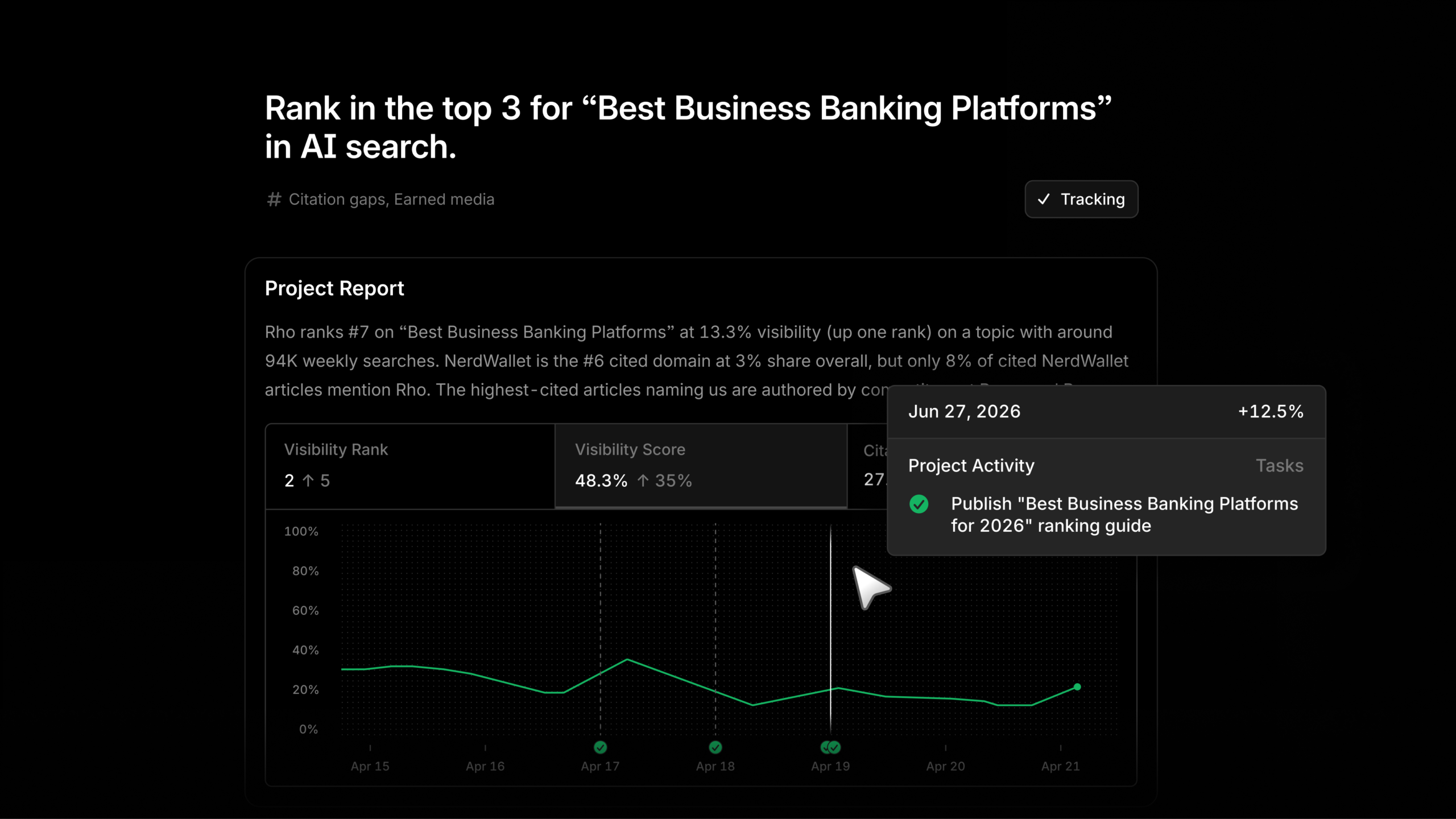

  • How to Choose an AI Search Optimization Agency in 2026

    How to Choose an AI Search Optimization Agency in 2026

    If you are comparing AI search optimization agencies, the hard part is not finding firms that promise more visibility. It is identifying which one can turn your content, technical foundation, brand knowledge, and authority into a coherent program without selling you a renamed SEO retainer.

    Your decision should leave you with a defined problem, an evidence standard, and a clear ownership model. Choosing well means testing an agency’s experience, previous work, AI expertise, and fit with your brand. Because discovery now extends into LLM and AI-driven search experiences, conventional ranking reports cannot carry the whole business case.

    Define the job before you ask agencies to solve it

    AI search optimization is not a single deliverable. It is a set of connected activities intended to make your brand and content easier for AI systems to retrieve, understand, represent accurately, cite, and recommend when the context warrants it.

    That distinction matters during procurement. If your brief says only that you want to improve AI visibility, every agency can interpret the assignment in a way that matches what it already sells. One may propose content production, another may lead with JSON-LD, and another may offer a monitoring dashboard. Those services can be useful, but none is a strategy by itself.

    Start by defining the change you want across four layers:

    • Representation: AI-generated answers describe your company, products, people, and claims accurately.
    • Discovery: your brand or content appears for relevant questions where you have a legitimate reason to be included.
    • Evidence: the answer can connect its claims to useful, authoritative pages rather than merely mentioning your name.
    • Action: the visibility supports a sensible next step, such as visiting a product page, reading supporting evidence, comparing options, or contacting your team.

    This framing prevents a common measurement mistake. A brand mention, a linked citation, an accurate recommendation, a referred visit, and a qualified conversion are not interchangeable outcomes. Record them separately. Otherwise, a dashboard can show improvement while the answers remain inaccurate or commercially irrelevant.

    Your agency brief should give every contender the same operating context:

    • Your priority products, services, audiences, markets, and buyer situations.
    • The questions people ask while identifying a problem, comparing approaches, checking trust, and making a decision.
    • The pages, databases, documentation, and internal experts that act as your sources of truth.
    • Claims that require legal, compliance, technical, or subject-matter approval.
    • Your current content, development, analytics, public relations, and editorial resources.
    • The systems the agency may advise on and the systems it will actually be allowed to change.
    • The business outcomes you ultimately care about, along with the earlier signals you can observe before those outcomes occur.

    Include a baseline rather than asking the agency to invent one after work begins. For each important question, save the exact wording, the AI service used, the date, the resulting answer, any linked citations, and whether the brand representation was accurate. Keep the relevant landing-page and conversion data alongside those observations when available.

    A useful objective might be: improve accurate inclusion and citation for priority decision questions, direct qualified visitors toward authoritative pages, and establish a repeatable process for finding and fixing representation gaps. It is specific enough to guide a proposal without pretending that you control an external answer engine.

    Inspect whether the strategy works as a connected system

    Five connected modules feed a central translucent AI core, while one isolated module remains outside the working system.

    A credible agency should be able to explain how audience demand, content, entity signals, technical access, outside authority, and measurement reinforce one another. It does not need to perform every activity itself. It does need to identify the dependencies and tell you who owns each one.

    Question and intent discovery

    Keyword research is useful input, but it does not fully describe the questions people put to an assistant. Ask how the agency will build a working set of questions from customer language, sales objections, support issues, product comparisons, documentation gaps, and conventional search demand.

    The result should be organized by user task, not presented as a shapeless list of prompts. Someone defining a problem needs a different answer from someone comparing vendors or checking whether a solution fits a regulated workflow. That difference affects the required evidence, page format, and appropriate call to action.

    Watch for invented precision. A prompt list becomes useful when the agency can explain why each question matters, which audience it belongs to, what a good answer must contain, and which page should support it. A large list with no decision context is inventory, not strategy.

    Content and entity clarity

    The agency should examine whether your pages answer the target questions clearly and whether the supporting claims are specific, consistent, and attributable. It should also distinguish between a missing page and a weak page. Publishing something new when an existing authoritative page needs a clearer answer can create duplication and split maintenance effort.

    For each priority page, the plan should identify its subject, intended audience, direct answer, supporting evidence, related entities, internal links, maintenance owner, and next action. This turns vague advice such as improve content quality into an editable specification.

    Entity consistency matters as well. Product names, company relationships, leadership details, service areas, and other defining facts should not conflict across core pages and structured data. Ask how the agency will find discrepancies and decide which internal record is authoritative before it recommends markup or rewrites.

    Technical access and structured data

    The technical review should cover whether important information is available on stable, indexable URLs; whether internal links make relationships understandable; whether canonicalization or access rules create conflicts; and whether templates hide, fragment, or duplicate key answers.

    JSON-LD belongs in this workstream, but it should describe facts that users can verify on the page. Structured data can clarify the type of entity or content being presented and expose defined relationships in a machine-readable form. It cannot manufacture expertise, prove an unsupported claim, or rescue content that never answers the question.

    Ask for a structured data inventory rather than a promise to add schema. The inventory should connect each proposed type and property to a visible fact, a source-of-truth field, an eligible page template, a validation method, and an owner responsible for keeping the information current.

    Authority, distribution, and measurement

    An on-site plan is incomplete if it ignores how the brand is represented elsewhere. Relevant mentions, expert contributions, documentation, original evidence, partnerships, public relations, and other legitimate forms of distribution can help establish context beyond your own domain. The agency should explain which activities are justified by the audience and where another team must participate.

    Measurement completes the system. The agency should connect each recommendation to an observable change: a clearer answer on the page, corrected entity information, valid structured data, stronger citation coverage, more accurate AI representation, useful referred traffic, or a downstream business action. If the plan jumps from publishing content directly to revenue without showing the intermediate signals, you will struggle to diagnose either success or failure.

    Test agency claims with evidence, not vocabulary

    Most contenders can discuss AEO, GEO, AI SEO, entities, retrieval, citations, and structured data. Terminology tells you that the team follows the market. It does not tell you whether the team can diagnose your situation, prioritize work, implement recommendations, or separate its contribution from unrelated changes.

    Use the same evidence request for every finalist:

    Evaluation areaAsk to seeEvidence that matters
    Relevant experienceA comparable, sanitized case narrativeThe starting condition, diagnosis, intervention, implementation owner, observed change, and limits of the result
    AI search expertiseA live explanation of one priority question and pageClear reasoning across intent, answer quality, entities, technical access, authority, and measurement
    MeasurementA sample baseline and recurring reportRaw prompts, captured answers, citations, accuracy judgments, dates, page metrics, and change history behind any summary score
    ImplementationA sample content brief, technical ticket, or schema specificationNamed owners, dependencies, acceptance criteria, quality checks, and a route from recommendation to release
    Brand fitAn explanation of how the plan changes for your audience and constraintsChoices tied to your products, source material, risk, market, workflow, and business goals
    Commercial clarityA scope showing included and excluded workSeparate visibility into strategy, tools, production, development, outreach, reporting, and optional work

    Do not accept a case study that starts with a result. Ask what was happening before the work, what changed, what else changed at the same time, and what evidence would weaken the agency’s interpretation. A team that can discuss confounding factors and uncertainty is giving you more useful information than one presenting a smooth success story with no audit trail.

    A working session is especially revealing. Give each finalist the same page, target audience, and small group of priority questions. Ask the team to talk through what it would inspect first, which assumptions it would verify, what it would avoid changing prematurely, and how it would turn the diagnosis into tasks. You are assessing the reasoning process, not asking for unpaid strategic work.

    Ask who will actually do the work after the sales process. You need to know which roles will handle strategy, content, technical analysis, JSON-LD, analytics, and project management; whether those people are assigned to your account; and where subcontractors or software-generated work enter the process. Senior expertise in a pitch has little value if delivery depends on an unnamed team using an undefined workflow.

    Several claims deserve immediate scrutiny:

    • Guaranteed placement in generated answers. An agency cannot control the output of an external AI service, so it should promise defined work and transparent measurement rather than a specific placement.
    • A proprietary visibility score with no underlying observations. A score can summarize data, but you still need access to the prompts, outputs, citations, classification rules, and sampling conditions behind it.
    • Schema as the complete solution. Markup is one technical layer and should be connected to accurate visible content, source-of-truth data, and ongoing maintenance.
    • Content volume as the primary strategy. More pages can add duplication, inconsistent claims, and editorial debt when question coverage and page purpose have not been mapped first.
    • A monitoring dashboard presented as optimization. Monitoring can expose a problem; it does not research, edit, implement, validate, distribute, or govern the fix.
    • AI search results credited entirely to ordinary organic growth. Ask the agency to separate conventional search improvement, branded demand, public relations activity, product changes, and AI-specific observations wherever the available evidence allows.
    • Recommendations with no implementation owner. A technically correct audit still fails if nobody can convert it into approved changes in your CMS, codebase, data layer, or editorial process.

    Build your scorecard before proposals arrive. Evaluate strategic fit, evidence quality, technical breadth, content judgment, measurement rigor, implementation clarity, governance, team continuity, and commercial transparency. Decide which criteria matter most for your current constraint. A company with strong in-house developers may need strategic and editorial depth, while a lean team may need a partner that can carry more implementation.

    Put measurement, ownership, and change control in the scope

    A conference table displays an evidence portfolio, a balance, verified tokens, and a locked asset box with a key.

    AI-generated answers can vary with prompt wording, service, context, and time. That makes a single screenshot weak evidence. It does not make measurement pointless. It means the method must preserve enough context for you to distinguish an observation from a trend and a trend from a business outcome.

    For each monitored question, the measurement record should retain:

    • A stable identifier, exact wording, audience, intent, and market or language context when relevant.
    • The AI service, capture date, and other available execution context.
    • The complete answer or a faithful stored capture, not only a yes-or-no brand mention.
    • Whether the brand appears, what role it is assigned, and whether the description is accurate.
    • Every visible citation and whether it points to your site, another source, or no accessible supporting page.
    • The owned page intended to answer the question and its publication or revision history.
    • Referred visits, meaningful on-site actions, and business outcomes when those can be observed responsibly.

    Keep three layers separate in reporting. Visibility observations describe what appeared. Quality judgments describe whether the answer and citation were useful and accurate. Business outcomes describe what people did. Combining all three into one number hides the very information you need for prioritization.

    Require a change log beside the baseline. It should connect recommendations to approved work, affected URLs or templates, release dates, validation results, and subsequent observations. Without that record, the agency can report movement but cannot show which intervention may have contributed to it.

    The scope should also resolve ownership before work starts:

    • Who approves the question set and can add or retire monitored questions.
    • Who controls analytics, monitoring, CMS, schema, repository, and reporting access.
    • Who supplies subject-matter evidence and approves sensitive claims.
    • Who writes, edits, develops, validates, publishes, and maintains each type of change.
    • Who owns the resulting briefs, dashboards, configurations, structured data specifications, and historical captures.
    • How open recommendations and data are handed over if the engagement ends.

    Retain administrative control of your own site, analytics, and core business data. Give the agency the access required for its role, but avoid making your ability to operate dependent on an account only the vendor controls. The same principle applies to prompt histories and reporting data: you should be able to inspect and export the evidence used to evaluate performance.

    If uncertainty remains, use a bounded pilot to test the working relationship. Give it a defined audience, question set, group of pages, deliverables, implementation route, evidence method, and decision point. The purpose is to learn whether the agency can diagnose, communicate, ship, and measure within your environment. A short pilot should not be treated as proof that every market-level outcome will move.

    Compare the cost of the full operating model, not only the agency fee. A proposal may exclude monitoring software, content production, development, design, public relations, or subject-matter review. Make those dependencies visible so a cheaper retainer does not become the more expensive program after implementation begins.

    Key takeaways before you sign

    • Define AI visibility as a set of observable outcomes: accurate representation, relevant inclusion, useful citations, qualified action, and business impact.
    • Give every agency the same priority audiences, questions, pages, constraints, baseline, and implementation boundaries.
    • Look for a connected strategy spanning intent, content, entities, technical access, structured data, authority, distribution, and measurement.
    • Ask for raw evidence behind case narratives and visibility scores, including prompts, answers, citations, dates, changes, and limitations.
    • Reject guaranteed placements, schema-only plans, volume-first content programs, and dashboards presented as complete optimization.
    • Put owners, access, deliverables, acceptance criteria, change history, data control, handover, and excluded costs into the scope.

    Your next move is straightforward: choose one important audience, one decision journey, a manageable set of questions, and the pages that should support the answers. Capture the baseline, send the same brief to each finalist, and require each team to show how it would move from diagnosis to an implemented, measurable change.

    Select the agency whose reasoning remains clear when the evidence is incomplete. The right partner will make assumptions visible, define what it can and cannot control, and leave your organization with a stronger operating system for AI discovery rather than a collection of unexplained tactics.

    References
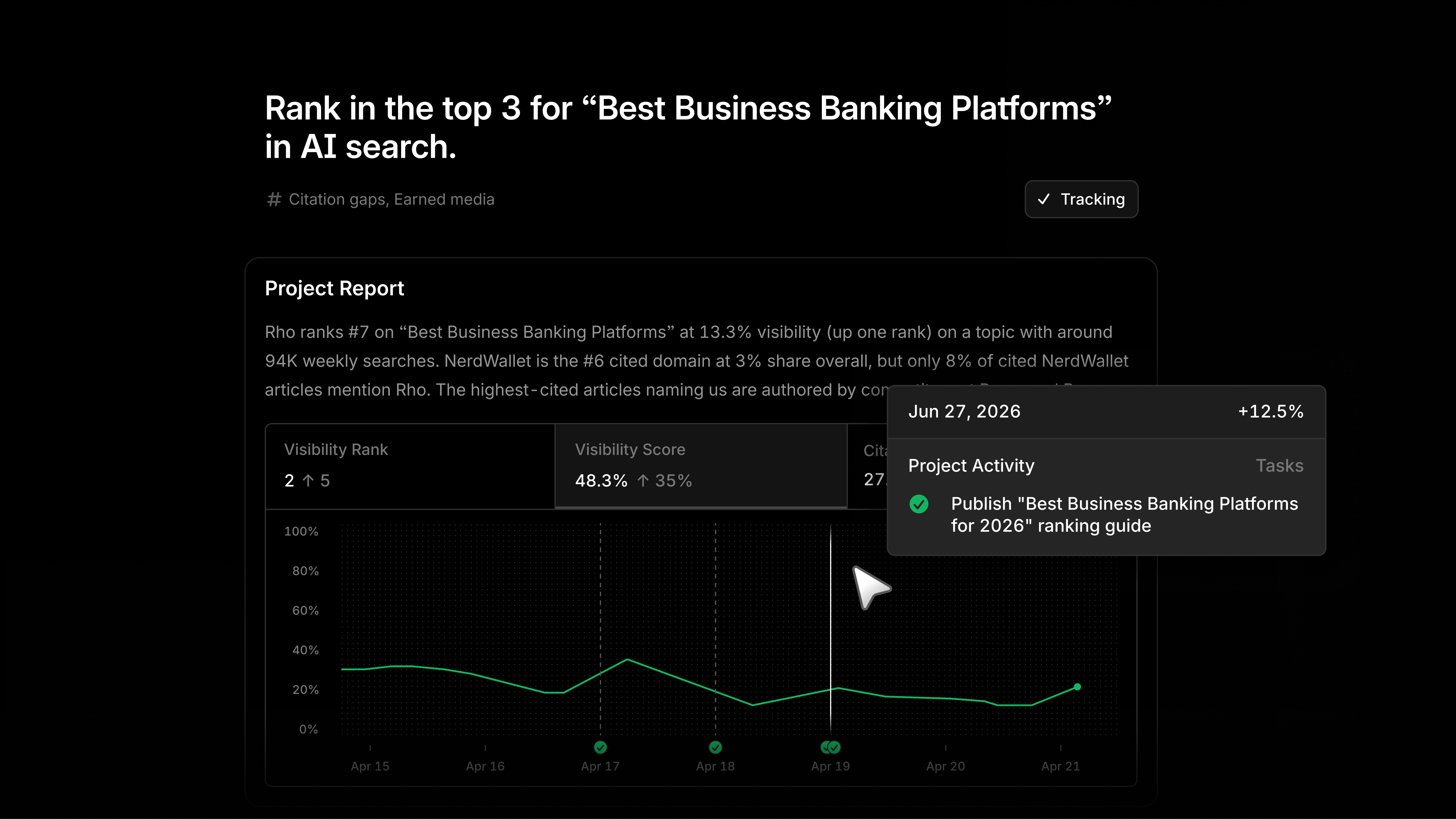
  • How to Build AI Search Visibility With Answer-First Content

    How to Build AI Search Visibility With Answer-First Content

    If your pages rank but your brand rarely appears in AI-generated answers, publishing more content can multiply the same problem. First find the break: can the system access your page, retrieve the right passage, reuse that passage without repairing it, and connect the claim to you?

    The practical goal is not to make your writing sound machine-generated. It is to make useful knowledge easy to find, extract, understand, trust, and attribute while keeping the page genuinely useful to the person who lands on it.

    AI visibility depends on four separate gates

    A document passes through an access portal, a retrieval lens, an extraction frame, and a source-attribution junction.

    Answer engine optimization, or AEO, is the practice of making information usable inside generated answers. AI search visibility is the outcome: your organization, experts, pages, or ideas appear when an answer engine responds to a relevant question.

    That outcome is not controlled by a single optimization. AI systems can retrieve a passage without treating the whole page as one indivisible result. A technically healthy page can therefore remain invisible if its useful answer is buried, vague, or difficult to attribute.

    • Access: The system must be allowed and able to reach the page. Crawl rules, indexing controls, rendering, canonicalization, and page availability belong here.
    • Retrieval: A passage must clearly match the question. Descriptive headings, explicit terminology, and focused sections help the right material get selected.
    • Reuse: The selected passage must answer the question cleanly. If it depends on missing context or requires substantial rewriting, it is a weak answer candidate.
    • Attribution: The system must be able to associate the information with a recognizable brand, author, dataset, framework, or other entity.

    These gates give you a useful diagnostic sequence. If a page cannot be accessed, rewriting its introduction will not help. If a passage is accessible but says nothing until its fifth paragraph, adding more schema will not solve the retrieval problem. If a useful passage could have been written by any competitor, it gives an answer engine little reason to name you.

    Key takeaways

    • Optimize complete answer passages, not just whole pages.
    • Put the direct answer immediately below the heading that states the question or task.
    • Use structured data to clarify accurate page facts, not to compensate for thin or ambiguous content.
    • Build consistent associations between your entity, its experts, and the topics they can credibly address.
    • Measure access, retrieval, reuse, and attribution separately so you know what to fix.

    Turn each important question into a standalone answer passage

    A page can cover the right topic and still contain no passage that directly resolves the reader’s question. This often happens when an introduction delays the answer, several sections repeat the same background, or a heading uses a clever label that does not reveal what follows.

    Build each important section as an answer unit. It should make sense when separated from the title, introduction, navigation, and surrounding paragraphs. That does not mean every section must be short. It means the section should identify its subject, answer its assigned question, and explain any necessary limits without forcing the reader to reconstruct context.

    Use this answer-unit workflow

    1. Assign one clear question. Write down the exact question the section must resolve. Split sections that attempt to answer unrelated questions.
    2. State the answer first. Make the opening sentence useful on its own. Put qualifications in the same passage rather than hiding them elsewhere.
    3. Explain the mechanism. Tell the reader why the answer is true, what makes it work, or where it stops applying.
    4. Add a decision or action. Give the reader a check, choice, sequence, or correction they can apply.
    5. Make the subject explicit. Replace vague references such as “this,” “it,” or “that approach” when the missing noun would make an extracted passage ambiguous.
    6. Add distinct value. Include an original definition, framework, dataset, expert interpretation, or unusually precise boundary when you can support it.

    Consider a section headed “Why it matters” that opens with: “This makes the process more effective and improves visibility.” A human who has read the previous section may infer the meaning. An isolated passage cannot. The heading does not name the subject, and the sentence does not identify the process, mechanism, or outcome.

    A stronger version would use the heading “Why answer-first passages improve AI retrieval” and open with: “Answer-first passages improve AI retrieval because the question, subject, and usable response appear in one self-contained section.” The next paragraph can add nuance, examples, and limitations. The direct answer has already done its job.

    Distinct framing helps with attribution, but do not confuse distinctiveness with invented jargon. Renaming a familiar checklist does not create authority. A useful framework separates a messy problem into decisions the reader could not make as easily before. Name it only if the name makes that reasoning easier to remember and reference.

    Run the isolation test during editing

    Copy a candidate section into a blank document without its page title or preceding text. Then ask:

    • Can you identify the exact subject from the heading and opening sentence?
    • Does the passage answer a real question before expanding on it?
    • Are important qualifications present in the same section?
    • Would a quotation preserve the original meaning?
    • Is there a specific reason to associate the passage with your organization or expert?

    If the section fails, repair the passage before adding more copy to the page. This editing method follows the underlying shift toward modular, answer-first content with clear structural signals.

    Keep technical SEO and structured data in their proper roles

    AEO adds a retrieval and attribution layer; it does not replace technical SEO. A blocked, unavailable, insecure, or badly implemented page gives every downstream system less to work with. At the same time, technical compliance alone is not differentiation.

    HTTPS appears on more than 91% of pages, while title-tag adoption is close to 99%. Those figures show how thoroughly basic practices have become embedded in platforms, content management systems, and plugins. They also explain why merely having a title tag or secure connection is not an AI visibility strategy. These are prerequisites that protect the opportunity to compete.

    Audit the foundation before changing the prose

    • Access and indexing: Confirm that the intended canonical page is reachable, indexable where appropriate, and not contradicted by template-level controls.
    • Titles and headings: Give the page a descriptive title and use headings that identify the actual question, entity, comparison, process, or decision in each section.
    • Crawl policy: Review robots.txt as a publishing-policy decision. Make crawler access intentional instead of inheriting a default that no one has checked.
    • Structured data: Ensure every declared fact agrees with the visible page. Names, descriptions, relationships, authorship, and other identifiers should not conflict across templates.
    • Rendered output: Check the final HTML, not only the editor. A plugin setting is not proof that the intended markup, heading hierarchy, or metadata reached the published page.

    JSON-LD can clarify what a page describes and how its entities relate. It cannot manufacture expertise, repair an unclear answer, or guarantee inclusion in an AI response. Treat it as a factual declaration layer: the markup should describe the page that exists, using values you can keep consistent and maintain.

    FAQPage markup deserves the same discipline. Its continued use despite Google limiting FAQ snippets points to a broader reason for structured data: explicit machine-readable context can remain useful even when a particular visual search feature is unavailable. Use FAQPage only when the visible page contains genuine questions and answers. Do not add repetitive FAQs merely to create more markup.

    Apply similar restraint to llms.txt. Adoption has been cautious, so it should not displace crawlability, clear content, accurate structured data, or entity work. You can evaluate it as an additional publishing signal, but do not treat the file as a universal inclusion switch. By contrast, robots.txt already has a practical policy role and deserves a deliberate review.

    Make your entity recognizable and your knowledge worth citing

    A complete content block is retrieved from fragmented material and linked through a glowing line to a distinct source entity.

    Extraction gets your words into consideration. Attribution gives the system a reason to connect those words to you. That connection becomes easier when your owned pages describe the same organization, experts, topics, and claims consistently.

    Backlinks still matter, but AEO authority also involves brand mentions, citations, and clear associations between an entity and its areas of expertise. A mention does not guarantee a citation, and repetition does not make an unsupported claim true. The useful objective is credible corroboration: relevant publishers and experts repeatedly associate your entity with information it is qualified to provide.

    Create an internal entity brief

    Before you try to earn external recognition, make your own representation coherent. Maintain a brief that records:

    • The exact organization name and a plain description of what it does.
    • The audience it serves and the topics it can credibly address.
    • The names, roles, and relevant credentials of contributing experts.
    • The principal pages that define the organization, people, services, research, and terminology.
    • The original frameworks, datasets, benchmarks, or recurring claims the organization owns.
    • The preferred language for relationships that are often described inconsistently.

    Use the brief as a consistency check, not as a script to paste everywhere. About pages, author profiles, editorial pages, structured data, media biographies, and contributed commentary should agree on factual identity while fitting their individual contexts.

    Publish assets other people have a reason to reference

    Generic opinion posts rarely create a strong attribution hook because another publisher can replace them without losing information. Reference-grade assets are harder to substitute. Suitable formats include original research, industry benchmarks, visual explainers, definitive resources, and glossaries.

    Choose the format after identifying the evidence you actually possess. If you have original data, publish the method, definitions, limitations, and findings clearly enough for someone to cite the result accurately. If your advantage is practitioner expertise, answer a narrow question with named expert input and explicit reasoning. If the market suffers from inconsistent terminology, build a glossary that defines boundaries instead of recycling dictionary-level descriptions.

    Then distribute the asset to people who already cover the subject. A workable outreach sequence is:

    1. Identify a narrow question journalists, analysts, creators, or industry writers repeatedly need to answer.
    2. Produce a citable asset that resolves that question with evidence or qualified expertise.
    3. List the people and publications for whom the finding is genuinely relevant.
    4. Pitch the usable finding, definition, or visual rather than asking for a generic mention.
    5. Keep the asset accurate so future citations do not point to stale or contradictory information.

    Do not make every sentence a brand claim. Put the entity name where attribution matters: beside an original definition, owned methodology, expert interpretation, or dataset. Natural, precise attribution is stronger than repeating the brand in passages where it adds no meaning.

    Measure the query, passage, citation, and next action

    Conventional rank tracking cannot tell you why an answer system omitted your brand. Build a fixed query set from real customer questions, category questions, comparisons, definitions, and decision-stage concerns. Keep the wording and tested surface recorded so later checks are comparable.

    For each query, capture:

    • Whether an AI-generated answer appeared.
    • Whether your brand or expert was named.
    • Whether your page was cited or linked.
    • Which passage, claim, or asset appeared to support the response.
    • Which competing entities were repeatedly named or cited.
    • Whether the answer represented your position accurately.
    • What changed after a content, technical, entity, or distribution update.

    Do not compress those observations into one visibility score before diagnosing the failure. The visible symptom should determine your next check.

    What you observeLikely gateWhat to inspect next
    The relevant page cannot be found or reachedAccessCrawl policy, indexing controls, canonical target, rendered output, and page availability
    The page is available, but another passage answers the queryRetrievalHeading specificity, question alignment, terminology, and section focus
    The right section is found, but it is not used cleanlyReuseOpening answer, missing context, vague pronouns, qualifications, and passage completeness
    Your information appears without your brand or expertAttributionEntity naming, authorship, original value, external mentions, and citation-worthy assets
    Your brand is named inaccurately or for the wrong topicEntity consistencyConflicting descriptions, outdated profiles, ambiguous relationships, and unsupported topic associations

    This approach also prevents false wins. A cited page is not useful if the answer misstates your position. A brand mention for an irrelevant topic does not strengthen the association you need. A technically perfect page is not finished if it contains no extractable answer. Record the outcome at the same level at which you intend to improve it.

    Start with the highest-value question your audience asks. Trace it through the four gates, repair the first failure you find, and make that page the pattern for the rest of your library. AI search visibility becomes manageable when you stop treating it as one mysterious ranking and start treating it as a chain of observable decisions.

    References