Category: PPC

  • Navigating SEO, PPC & AI: Mastering the Visibility Challenge

    Navigating SEO, PPC & AI: Mastering the Visibility Challenge

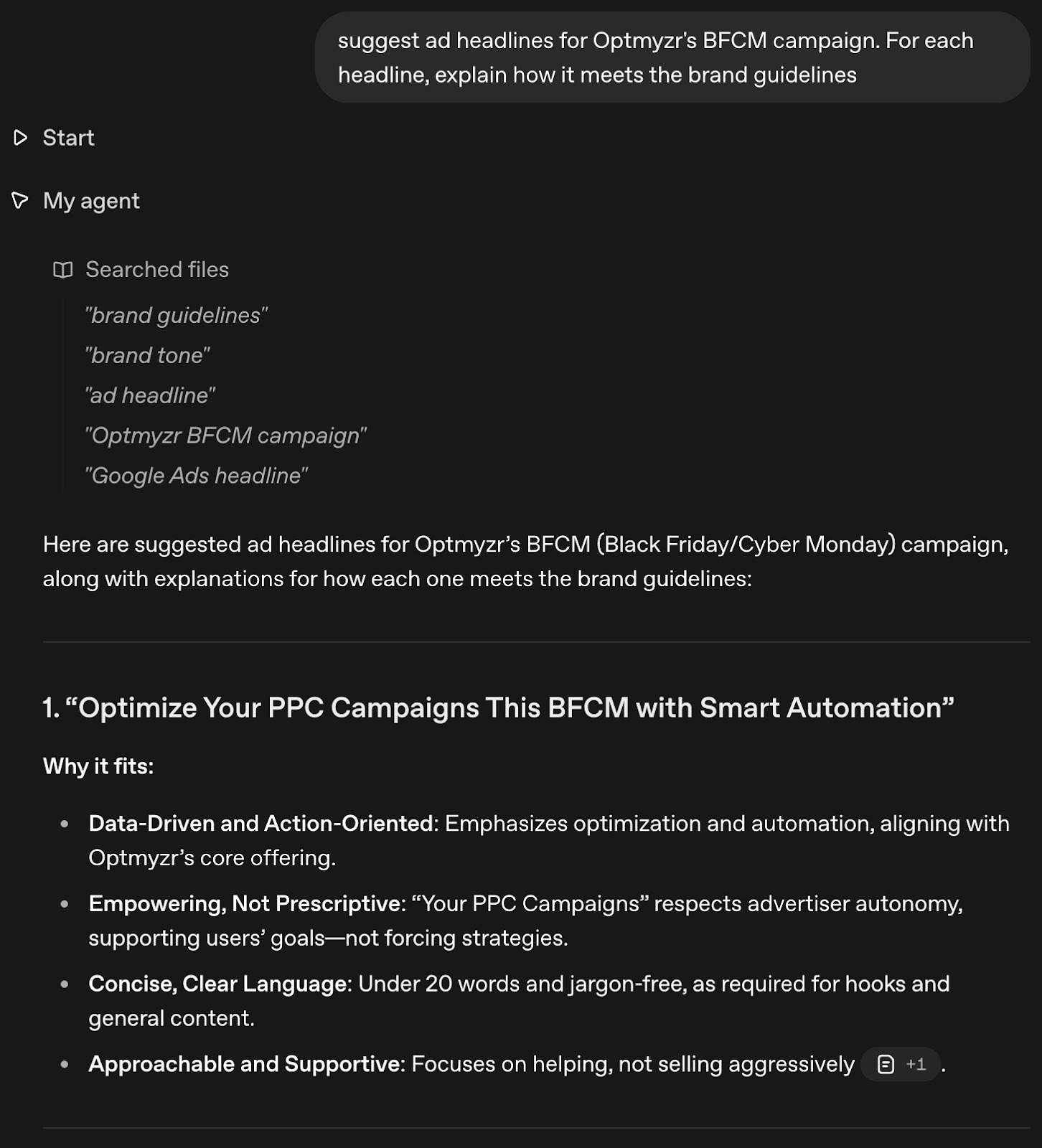
    SEO vs. PPC vs. AI- The visibility dilemma

    I’ve often found myself caught in the age-old marketing debate: should I focus on SEO or PPC? For years, this decision was largely based on past successes or failures.

    With organic search, I could rely on growing visibility over time, while paid search gave me immediate, direct control.

    Yet, most marketing teams lean toward one over the other based on their experience and budget limitations. But as we move into the future, this binary choice is no longer enough.

    In 2026, the landscape has transformed significantly, altering how we approach search entirely.

    Why This Debate Has Changed

    The world of search has evolved, far beyond the SEO or PPC dichotomy.

    Our search behavior is not the same. Search results pages have transformed and the machine learning behind bidding systems have advanced. And then there’s AI, the latest player on the scene, shaking things up.

    It’s no surprise that AI has turned into a crucial factor, alongside SEO and PPC.

    The pressing question now isn’t just about selecting SEO or PPC, but how we can integrate AI to sustain and boost visibility amidst the fast-paced changes.

    This challenge also highlights another issue: fragmentation. With so many channels and discovery paths available, it feels overwhelming, leaving marketers scattered and at risk of falling into paralysis.

    The key is to navigate through this AI upheaval, continuously adapting our strategies to remain relevant.

    The Old Debate: SEO vs. PPC

    Historically, weighing the pros and cons of SEO and PPC was straightforward:

    • SEO: Offers credibility, compounding visibility, and engagement, although slow to mature and with challenging expectations.
    • PPC: Provides rapid visibility and control, but requires ongoing financial investment and battles rising costs.

    In my experience, a combined strategy proves most effective.

    • SEO fuels demand.
    • PPC captures it.

    The synergy between the two remains valuable, but AI introduces an essential new dimension.

    AI: The New Discovery Channel

    AI is redefining how we discover and evaluate information.

    Its popularity is growing fast, and this holiday season will likely be a turning point. Simple, integrated tools mean AI is embedded in our daily tech use.

    Just like Google once led the charge, AI is set to surpass traditional search, thanks to its simplicity and speed. We find ourselves in an environment where:

    • Search engines summarize content before clicks happen.
    • Chat tools offer answers without redirecting traffic.
    • Product exploration starts with AI, moving beyond Google Search.
    • Natural, multi-step inquiries are being made that previously didn’t exist.

    Thus, visibility hinges on AI presence. The battle isn’t just for rankings, but ensuring we feature within AI ecosystems.

    Lacking AI visibility means being edged out. While this may not fully manifest today, it will soon dominate the scene.

    Our marketing challenge is straightforward yet daunting: figuring out how to emerge in AI outcomes. We’re unable to purchase our place, nor can we find a playbook for these types of results.

    In essence, our goals now demand adaptation from optimizing merely for search engines to being discoverable within AI systems that continue to draw from search results.

    The New Visibility Battlefield

    Despite feeling novel, AI’s emergence was somewhat predictable.

    The existing web landscape is draining — it’s a battleground of too much information, advertisements, and distractions.

    Finding what we need amidst this chaos is exhausting; AI offers an antidote by swiftly cutting through the clutter.

    It’s undoubtedly refreshing. Yet, we must ponder the potential downsides.

    Visionaries like Tim Berners-Lee express concern over AI threatening web sustainability by impacting ad revenue streams, a sentiment I share.

    In “Supremacy,” a book charting AI’s rise, authors alleged Google had a ChatGPT-like system years ago but hesitated over revenue concerns. Their claim seems plausible to me.

    AI’s efficiency is undeniable. It’s cleaner, faster — and hence will dominate. It stands as a true advancement.

    The world of digital marketing has devolved into a war of endurance. The adage still rings true: we normally only explore the earliest pages of search results. We need no longer hide on these pages, as AI scours deep and wide.

    Unfathomably, next-level solutions appear within AI’s grasp, surfacing comprehensive insights in brief moments.

    This shift was predictable with hindsight, symbolizing a departure from failed attempts to combat the web’s disordered entropy.

    AI signifies a fresh paradigm, rising from the modern web’s tumult.

    Why This Changes the SEO/PPC Decision

    The introduction of AI shifts the landscape for SEO and PPC fundamentally.

    1. SEO: Less About Rankings, More About References

    For content to feature within AI summaries or search assistants, it must exhibit:

    • Authority
    • Topical alignment
    • Structured markup
    • Trust signals
    • Depth, devoid of surface-level fluff
    • Authentic perspectives

    AI favors genuine thought and established voices over mere quantity.

    2. PPC: Still Dominating Premium Slots

    Despite AI’s growing influence, PPC secures:

    • Top slots
    • Commercial queries
    • Visual placements
    • Local ad packs
    • YouTube
    • Discovery platforms
    • Merchant outcomes

    AI shakes things up, yet PPC’s prominence remains — revenue needs won’t disappear.

    3. AI Alters User Behavior Exponentially

    AI is crafting fresh behavior patterns:

    • Fewer clicks, shorter journeys
    • Intuitive moments
    • In-depth comparisons inside AI systems
    • Increased research driven outside traditional points
    • Heightened expectations for relevance

    Seo and PPC remain significant, albeit adapting to parallel discovery paths AI creates.

    Is SEO vs. PPC vs. AI Even the Right Question?

    Marketers often see SEO, PPC, and AI as competitors. Truthfully, they’re three intertwined visibility layers.

    • SEO fosters presence, providing foundational visibility.
    • PPC amplifies position, stimulating awareness.
    • AI frames discovery, offering context and relevance.

    Each component complements the others:

    • SEO supplies content AI distills.
    • PPC fosters initial visibility, attracting early engagement.
    • AI delves into extensive analysis, shaping your market presence.

    I embarked on this article seeking an answer to the age-old question: which reigns supreme — SEO, PPC, or AI?

    Mid-journey, clarity emerged: this outdated question will no longer suffice by 2026.

    General counsel proves challenging, given unique circumstances.

    For example, a local plumbing business may have started with PPC while growing through local SEO and referrals.

    Eventually, reducing PPC reliance might have been tested unless leads dwindled.

    Contrarily, a college with complex site structures, coupled with strong authority, could transition from ads — assuming proper planning and site optimization.

    Now, a third ingredient has emerged: AI, with SEO, PPC, and AI forming a unified strategy.

    Separating AI from SEO is no longer feasible. The disciplines of AEO, GEO, and related labels are increasingly married.

    Understanding AI and SEO’s connections in retrieval-focused generation contexts becomes crucial.

    While PPC’s link to AI isn’t as prominent, early integration is already in motion, evidenced by Google incorporating ads into AI summaries.

    Optimizing AI echoes optimizing SEO’s practices.

    While early, the need to optimize for AI is evident, demanding attention from SEOs and GEOs in the near term.

    Inaction is costly; we lack a complete guide, yet actionable insights remain available.

    How to Build Visibility Across SEO, PPC, and AI

    By 2026, success isn’t mere “ranking,” but “being referenced.”

    Staying afloat requires optimizing for machine-led content evaluation.

    1. Adopt GEO

    Format your content for AI retrieval.

    Two to three short, concise sentences followed by layered context appeals to LLMs.

    Utilize bullet points, clear logic, and data tables for AI to parse easily.

    2. Feed the Knowledge Graph with Entity SEO

    AI confirms facts using entities like people, brands, and ideas.

    Your About page, schema markup, and author bios must be impeccable.

    Without Google’s understanding of your identity, authority citations become unlikely.

    3. Target Citation Gaps

    AI systems link to trusted sources, favoring niche gurus and major outlets.

    Redirect digital PR efforts toward “mentions” on sites AI deems authoritative.

    4. Invest in Freshness and Data

    LLMs lean towards recent data. Regularly update facts, timestamps, and comparisons.

    Static content may falter against continually refreshed material.

    5. Embrace Redundancy: The Hybrid Approach

    No channel stands alone. Execute PPC for instant visibility, nurture SEO for long-term authority, and set AI-ready data structures simultaneously.

    6. Build a Content Engine

    Leverage “They Ask, You Answer” frameworks to tailor content that addresses audience needs.

    Apply tools like the SCAMPER framework and the Value Proposition Canvas for diverse angles and comprehensive outreach.

    Brand: The Only Universal Signal

    We distinguish SEO, PPC, and AI, yet for users and algorithms, they reveal different gateways to your brand.

    Effective visibility demands a resilient ecosystem.

    Adopt PPC for immediate demand capture, cultivate trust via SEO frameworks, and maintain a clear entity strategy to aid AI comprehension.

    Ultimately, brand creation determines AI-resistant resilience — essential for consumer and machine recognition alike.

    Success isn’t merely joining dots between efforts, but fostering robustness so algorithms consistently choose to highlight you.


    Inspired by this post on Search Engine Land.


    crushpress.ai community screenshot
  • Dale Olorenshaw’s £15K PPC Blunder: Lessons in Honesty & Recovery

    Dale Olorenshaw’s £15K PPC Blunder: Lessons in Honesty & Recovery

    On episode 331 of PPC Live The Podcast, I had an enlightening conversation with Dale Olorenshaw, the Head of Paid Media and Search at StrategiQ. Dale shared a painful yet invaluable experience involving a high-budget test campaign and a critical oversight that taught him powerful lessons.

    The costly tale centered around a test campaign with a £15,000 budget. While the campaign saw impressive clicks and engagement, it surprisingly yielded almost no conversions. A month later, the client pointed out that all traffic was directed to the wrong landing page, never reaching the newly built dedicated test page.

    Several internal missteps led to this error. Dale bypassed the internal QA process by managing the campaign solo. He shrugged off instincts that flagged something was amiss and, due to seemingly normal top-line metrics, he overlooked a deeper dive into conversion discrepancies. The most humbling moment was realizing the client discovered the oversight first.

    Although initial panic ensued, Dale refrained from sending a hasty, emotional response. Instead, he acknowledged the issue, paused to clear his mind, and waited to gather all the facts. The following morning, he approached his account director with full transparency and honesty, declaring, “I’ve messed up.”

    StrategiQ stood firmly behind Dale, focusing on solutions rather than blame. They managed to recover part of the wasted budget, provided extra work at no additional cost, and offered discounted fees for the next project phase. Once relaunched correctly, the client relationship remained intact.

    This experience profoundly impacted Dale’s professional approach. He now adheres strictly to QA processes, trusts his instincts when numbers seem off, and promotes team accountability with second opinions and checks, acknowledging that seniority doesn’t shield from human errors.

    Dale also highlighted a common PPC issue he continues to observe: the overcrowding of Responsive Search Ads. Google’s push for numerous headlines and descriptions can saturate ads with small budgets, leading to insufficient data for meaningful insights. His advice is to streamline assets for clarity and quality.

    For Dale, discussing mistakes openly is crucial. He argues that the PPC community needs to normalize these conversations since newcomers may only witness success stories online and equate mistakes with incompetence. Sharing real experiences shows that growth often springs from problem-solving.

    In closing, Dale offers leadership advice on fostering a supportive culture. Encouraging honesty, removing blame, and focusing on collective problem-solving ensures that mistakes are seen as learning opportunities rather than failures.

    If there’s one takeaway, let it be this: Don’t react impulsively, stay honest, and treat client funds with the utmost care as if they were your own.


    Inspired by this post on Search Engine Land.


    crushpress.ai community screenshot
  • Discover Google Ads in AI Mode: A New Era for Search

    Discover Google Ads in AI Mode: A New Era for Search

    Recently, I’ve noticed more Google Ads appearing directly within Google’s AI Mode results. This change suggests that Google’s test has been quietly advancing, signaling the emergence of a new ad space in Google Search.

    Here’s what I’ve observed. Back in May, Google confirmed they were testing ads in AI Mode on desktop, and these sightings have notably increased:

    One notable instance was when Greg Sterling shared a screenshot related to an HVAC repair query, marking the first time he noticed an AI Mode ad in the wild.

    ```json
{
  "alt": "Search results showing local HVAC repair and service providers in Piedmont area with sponsored ads.",
  "caption": "Explore top-rated HVAC services in the Piedmont area for reliable and efficient home comfort solutions.",
  "description": "This image displays a Google search results page focusing on local HVAC repair and service options in the Piedmont area. The highlighted section contains sponsored advertisements promoting HVAC services, including award-winning providers and maintenance options starting at $45. The page also features a map showing the location of these services and commonly searched questions related to HVAC troubleshooting and upgrades. Ideal for those seeking trustworthy and cost-effective HVAC solutions."
}
```

    Brodie Clark soon after replicated this behavior, declaring “the time has come” as he provided multiple screenshots showing ads within the generated answers.

    Additionally, Barry Schwartz reported ongoing instances of users encountering these AI Mode ads on Search Engine Roundtable.

    ```json
{
  "alt": "Google search results for emergency plumbers displaying a map, organic links, and ads.",
  "caption": "Discover how AI Mode in Google Search integrates organic links and ads for emergency plumbing services, providing quick access to expert help.",
  "description": "This image illustrates a Google search results page for 'emergency plumber' featuring a map with service locations, organic links, and ads displayed for the first time in AI Mode. The page highlights positions of various listings such as 'Emergency Plumber Lone Tree' and 'Emergency Plumbing Fort Collins.' Users are presented with options both from organic results and sponsored ads, showcasing a seamless blend of information for urgent plumbing needs. Keywords: AI Mode, Google search, emergency plumber, organic links, ads."
}
```

    Why this matters to us. The inclusion of ads within AI Mode represents a substantial shift in how Google’s merging sponsored content with AI-generated answers. This development could significantly alter visibility, click-through rates, and the overall search experience. For early adopters, this offers opportunities for reduced competition, novel formats, and greater engagement. It’s becoming clearer that AI Mode is transforming into a legitimate advertising channel rather than just an experiment.

    Reading between the lines. This expansion indicates Google’s move to integrate ads within AI experiences, likely preceding a broader rollout in Search.

    The bottom line. Starting as a small test, this feature appears more commonly now. Advertisers should prepare for AI Mode to evolve into a mainstream advertising surface in Google Search.


    Inspired by this post on Search Engine Land.

    crushpress.ai community screenshot
  • Microsoft Ends Mobile Ad Management: Here’s What You Need to Know

    Microsoft Ends Mobile Ad Management: Here’s What You Need to Know

    I’m here to update you that Microsoft will be saying farewell to its Advertising mobile app in January 2026. This shift will affect how advertisers manage their campaigns on the go.

    As someone who relies on the Microsoft Advertising app for quick interventions or checks, I understand the importance of staying informed. Now, I’ll need to adapt by using the web interface, which will become the sole channel for managing campaigns.

    So, what’s the change? The app is no longer available in the Apple App Store or Google Play, and from January 2026, it will be completely retired. Microsoft’s web UI, rich with features, will be our go-to tool.

    ```json
{
  "alt": "Announcement about retiring the Microsoft Advertising mobile app in 2026.",
  "caption": "Microsoft Advertising announces the retirement of its mobile app by January 2026. Transition to their online platform for future campaign management.",
  "description": "This image is an official announcement from Microsoft Advertising about the retirement of their mobile app. The app will be removed from app stores in November 2025 but will function with updates until January 2026. Users are encouraged to continue managing campaigns through Microsoft Advertising's online platform. This message informs users about changes and provides guidance on adapting to new processes."
}
```

    I first learned about this through marketing specialist Ive Predovan, who shared Microsoft’s email notice via PPC News Feed.

    To wrap it up, if you’ve been managing Microsoft Ads from your phone, it’s time to prepare for change. The transition to the web interface is imminent, leaving us with no choice but to adapt.


    Inspired by this post on Search Engine Land.


    crushpress.ai community screenshot
  • Boost Trust and Cut Costs with Enhanced Creator Content

    Boost Trust and Cut Costs with Enhanced Creator Content

    Have you ever wondered how amplifying content from creators can actually save money and build trust with your audience? Well, I’ve seen firsthand how paid amplification not only cuts down media costs but also brings in new potential partners.

    Brands, including mine, often invest in influencer and affiliate promotions. Yet, many of us stop short of giving the content the reach it deserves, believing the creator’s audience alone is sufficient. But there’s so much more we can do.

    By using paid marketing, integrating it into my site, and sharing it across different channels, I’m not just promoting their work. I’m leveraging their brand recognition and strengthening my relationship with them.

    It’s true, I may pay influencers an upfront fee, commission, or give them a product for their promotion. But that’s not where our relationship ends.

    Amplification truly becomes an advantage here, unlocking more value from the creator relationships I’ve already established.

    Why amplifying creator content pays off

    Let’s dive into why amplifying creator content can be so beneficial.

    Trusted validation

    When someone trustworthy backs up my product, store, or company, I gain credibility, especially in competitive fields where trust isn’t always assured, like jewelry or insurance.

    For example, picking a hotel near Disney or on a Caribbean island can be daunting with so many choices and mixed opinions. But if someone trusted chooses my brand, that might just sway the decision.

    I can utilize this content in ads to reach new audiences or test it with email or SMS list subscribers who haven’t converted yet. The same strategy works for remarketing efforts too.

    A third-party endorsement can make a significant difference, even when I sing my own praises.

    Lower media costs

    Certain influencers might be out of budget, but promising them that their ads will reach new, similar audiences might bring their costs down.

    By allowing them to use their affiliate links in this amplified content, they can earn commissions, which shares the risk on both ends by reducing fees and incorporating commission-based rewards.

    If the influencer earns more through commissions, they might drop their fees altogether and join as a regular affiliate, freeing up my budget for experimentation with new partners.

    Alternatively, we could split the costs, covering part of their media fee while they earn the rest via commissions—opening new avenues to explore and test partners.

    Dig deeper: The best affiliate networks by need and use case

    More discoverable content

    There’s magic in content that’s naturally shareable—be it for its humor, virality, or relevance. More people sharing amplified content can lead to wider discovery and referencing, with additional pathways directing traffic back to my site.

    Public accounts mean search engines and tools like ChatGPT can index these links, boosting my visibility and traffic.

    Affiliate recruitment

    When reputable accounts start promoting a vendor, it’s an indicator of earning potential. By amplifying this content, I open up opportunities for others who resonate with those influencers to join as affiliates.

    Some might reach out for collaborations, while others might dive into the affiliate world themselves.

    Big names endorsing my brand builds trust, making newer partners feel assured that my program is credible.

    We encourage our clients to pursue this approach as it effectively streamlines affiliate recruitment and activation, two of the most challenging aspects of the affiliate marketing sphere.

    Starting ambassadors and influencers as affiliates ensures fairness. If collaborations prove lucrative, we can transition to hybrid models, minimizing risk while granting them entry.

    Not all clients are keen on this model, but those who adopt it see significant benefits, expanding their partner network while sharing risks.

    Dig deeper: Affiliate managers: It’s time to shift your focus beyond media

    Putting creator amplification into practice

    Here are the strategies I frequently employ to maximize the impact and extend the reach of creator content:

    • Launching PPC ads that lead to a dedicated landing page presenting the content.
    • Utilizing the content in social media or YouTube ads as representations of our brand.
    • Incorporating the content into product pages, long-form content, and categories or collections.
    • Sending email campaigns that link to or prominently feature the creator’s name, image, and messaging.

    The options are abundant. It all boils down to identifying where my audience resides and if my potential customers can be found there too.

    Boosting influencer and ambassador content goes beyond merely doing their job. It’s an astute business move.

    I borrow their trust and credibility, tapping into their audience while utilizing the content to persuade on-the-fence clients.

    Dig deeper: Why creator-led content marketing is the new standard in search


    Inspired by this post on Search Engine Land.


    crushpress.ai community screenshot
  • Simplify Compliance with Google Ads’ New Political Content Setting

    Simplify Compliance with Google Ads’ New Political Content Setting

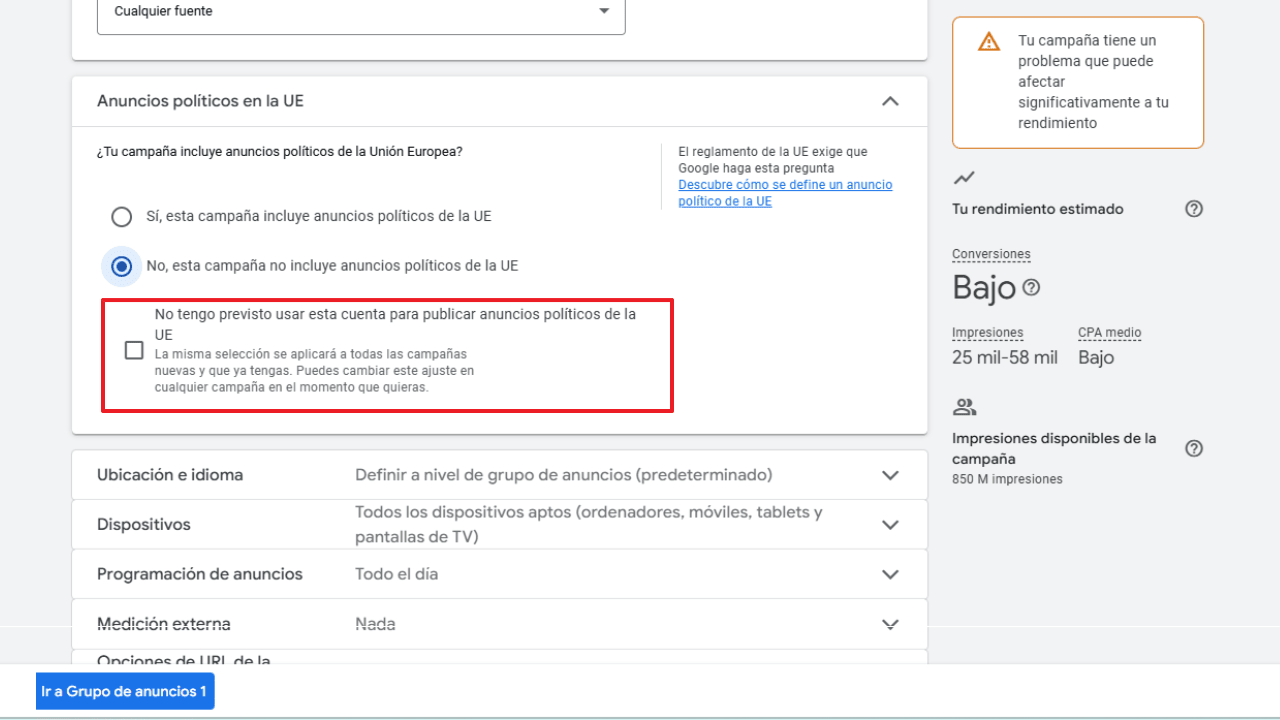
    When I heard about Google Ads’ latest update, I was excited to see how it could make life easier for advertisers like me. Google Ads now offers the ability to set a default, account-level declaration for political content. This change simplifies compliance, especially as new transparency regulations are coming into play.

    I remember when they first introduced the campaign-level setting back in August 2025. Quietly, without much fanfare, Google extended this feature to the account level, which means I no longer have to update each campaign individually. This enhancement allows me to define my political-advertising stance once and apply it across all my future campaigns.

    Why this matters to us. Having a more streamlined approach is crucial for advertisers who want to stay on top of political-ad regulations. With the EU’s TTPA rules taking effect in October 2025, these new features provide a much-needed consistency.

    Now, I can choose within my campaign settings:

    • “I don’t intend to use this account to run political ads in the EU”
    • Or declare that my campaigns will include political content.
    ```json
{
  "alt": "Screenshot of a Google Ads setting for political ads in the EU, highlighting campaign performance issues.",
  "caption": "Navigating Google Ads settings for EU political campaigns can help address potential performance issues effectively.",
  "description": "This image displays a section of the Google Ads settings page concerning political ads in the EU. The options include whether the campaign includes EU political ads and a checkbox for not using the account for such ads. The sidebar shows an alert about a performance-affecting issue, along with estimated performance metrics like conversions and impressions. Keywords: Google Ads, EU political ads, campaign settings, performance metrics."
}
```

    This new toggle becomes the default setting for all my future campaigns, which reduces the chances of making mistakes and leaves fewer gaps in compliance.

    Recently, I came across a Spanish-language version of the user interface through Victor Sellés Guillemat, a Google Ads Specialist. He shared his find in a LinkedIn post, showcasing this update in action.

    The broader perspective. With election cycles worldwide and evolving regional rules, it’s clear that platforms like Google are under increasing pressure to maintain transparency in political advertising. This update from Google is designed to help compliant advertisers by reducing the complexities involved and providing clearer, more consistent disclosures to regulators.

    Bottom line. While it’s a minor update in the user interface, it carries significant operational benefits. For those of us managing multiple campaigns, it means fewer compliance issues, and for Google, it ensures that political content declarations are as accurate and reliable as possible across accounts.


    Inspired by this post on Search Engine Land.


    crushpress.ai community screenshot
  • Revolutionize Creativity with Google DeepMind’s Nano Banana Pro

    Revolutionize Creativity with Google DeepMind’s Nano Banana Pro

    Google vs. AI systems visitors

    When I discovered Google DeepMind had launched Nano Banana Pro, my creative possibilities instantly expanded. This new generation of image generation technology builds on the original Nano Banana and powers up Gemini 3 Pro. By offering sharper text rendering, deeper world knowledge, and consistent edits, it transforms even the vaguest ideas into studio-quality visuals.

    Why this matters to me. With Nano Banana Pro, I have newfound control and precision in creating on-brand content. Whether crafting perfectly rendered text or achieving consistent product visuals, the tools I regularly use—like Google Ads and Slides—seamlessly integrate to save time and enhance creative testing.

    The efficiency gains are significant, as they reduce production time and increase ad relevance, allowing for the scaling of campaigns with top-tier visuals and less manual effort.

    ```json
{
  "alt": "Illustration and photo of String of Turtles plant, Peperomia prostrata, in a pot on a windowsill.",
  "caption": "Discover the charm of the String of Turtles, a delightful Peperomia prostrata with unique foliage. Perfect for bright, indirect light and requiring moderate watering, it's a whimsical addition to your indoor garden.",
  "description": "The image features a String of Turtles plant, scientifically known as Peperomia prostrata, depicted both in a photograph and an illustration. The plant is shown in a terracotta pot placed on a wooden windowsill, thriving in indirect sunlight. The leaves are small, round, and succulent with dark green reticulated patterns. Originating from the rainforests of Ecuador, this plant suits bright, humid conditions and is slow-growing, making it ideal for hanging baskets or decorative displays."
}
```

    Features that excite me:

    • Generating visuals rich in context, using real-world data through Search

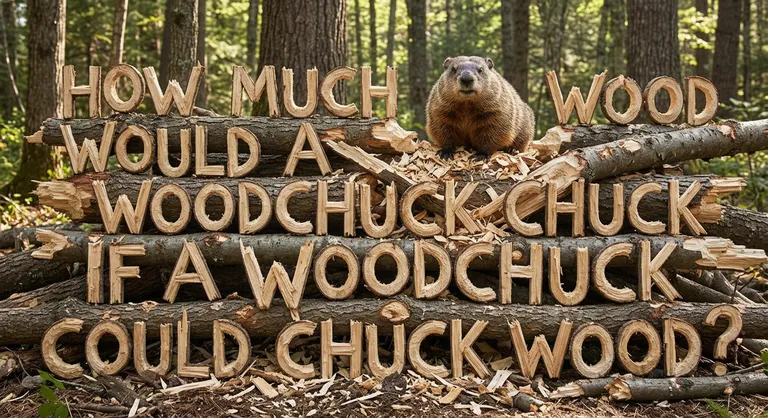
    ```json
{
  "alt": "Woodchuck on stacked logs with carved letters forming 'How much wood would a woodchuck chuck if a woodchuck could chuck wood?'",
  "caption": "A playful woodchuck poses atop a stack of logs, carved into the classic tongue twister. Nature meets whimsy in this forest tableau!",
  "description": "An imaginative image featuring a woodchuck perched on a pile of logs in a forest. The logs are artistically carved to display the famous tongue twister, 'How much wood would a woodchuck chuck if a woodchuck could chuck wood?' Surrounded by lush greenery, the scene combines humor and nature, capturing the whimsical essence of the classic saying. Ideal for adding a touch of humor and creativity to any setting."
}
```
    • Rendering easily legible text across multiple languages within images
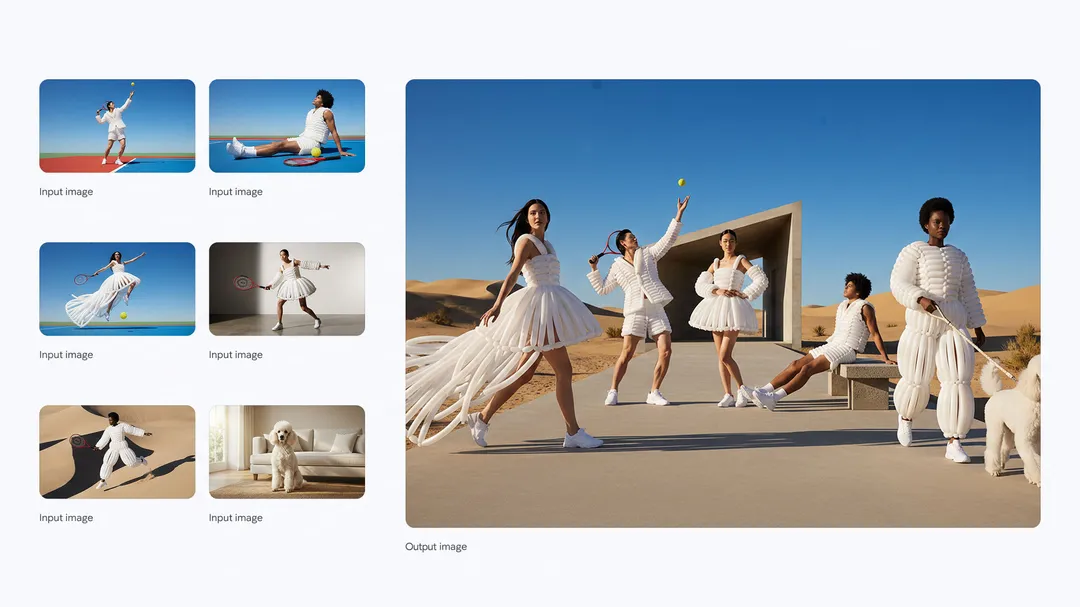
    • Holding character and object consistency across up to 14 inputs
    ```json
{
  "alt": "Collage with people in avant-garde tennis attire in a desert setting, accompanied by a dog.",
  "caption": "Step into the future of fashion and tennis with avant-garde outfits set against a stunning desert backdrop. This ensemble captures innovation and style seamlessly.",
  "description": "A captivating collage showcasing avant-garde fashion with a tennis theme. The main image features a group wearing futuristic white outfits with tennis elements in a desert. Smaller inset images highlight various poses and settings, including a dog indoors, creating a unique blend of high fashion and sports. This image combines elements of style, sport, and nature, making it a striking and imaginative visual. Keywords: fashion, tennis, avant-garde, desert, style, innovative clothing."
}
```

    • Transforming rough sketched ideas into polished scenes, diagrams, and storyboards
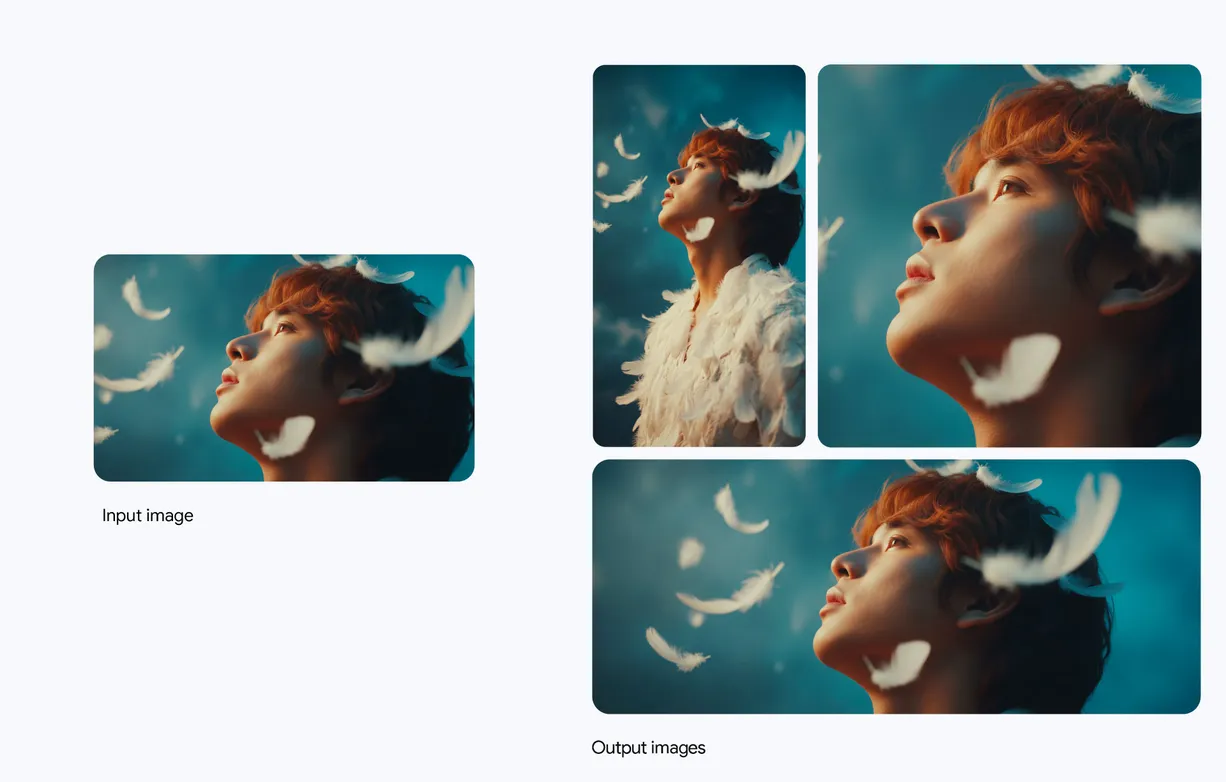
    • Executing localized edits, advanced lighting changes, and offering meticulous control over camera angles, color balancing, and aspect ratios

    ```json
{
  "alt": "Young person with red hair looking upwards, surrounded by floating white feathers against a deep blue sky.",
  "caption": "Lost in a moment of serene beauty, a young dreamer gazes skyward as gentle feathers drift by, creating a whimsical vision against a stunning blue backdrop.",
  "description": "The image depicts a young individual with red hair looking upwards, enveloped by floating white feathers against a deep blue sky. The soft, dreamy atmosphere creates an ethereal scene, capturing a sense of wonder and tranquility. The combination of the subject's expression and the ambient feathers evokes feelings of freedom and dreams. The composition includes both the original input image and processed outputs, showcasing varying perspectives of the same serene moment."
}
```

    The mechanics. By blending Gemini 3’s reasoning prowess with advanced image-editing capabilities, Nano Banana Pro is redefining how I create precise, on-brand visuals. It supports various creative outputs, making it valuable for:

    • Infographics and recipes using real-time data
    • Architectural and storyboard mockups
    • Crafting calligraphy, posters, and multilingual packaging
    • Making cinematic composites from numerous images
    • High-detail fashion, lifestyle, and landscape visuals
    • Studio-level lighting adjustments and refocusing techniques

    Accessing Nano Banana Pro. I’m thrilled to see Nano Banana Pro progressively debuting across Google’s platforms, with its image generation enhancements now available in Google Ads.

    The broader impact. As Nano Banana Pro elevates Google’s image capabilities, it shifts from producing quick visuals to crafting professional-grade content. With improved reasoning, nuanced control, and multilingual flexibilities, it’s poised to drive everything from classroom materials to comprehensive ad campaigns, and even cinematic productions.


    Inspired by this post on Search Engine Land.


    crushpress.ai community screenshot
  • Unleash Google Ads Demand Gen for Maximum Impact

    Unleash Google Ads Demand Gen for Maximum Impact

    I understand that today’s consumers are constantly bombarded online.

    I mean, I too find myself scrolling YouTube Shorts, tracking TikTok influencers, navigating Gmail promotions, and doubting if that viral Facebook video is real or AI-driven—all before I even have lunch!

    The path from intent to conversion used to be straightforward, but now, in this attention-driven economy, making purchase decisions has become a complex affair.

    Yet, many advertisers haven’t adapted to this reality. They still focus solely on search-based intent, missing out on entire audiences who don’t make it to the search bar.

    Google’s Demand Gen campaigns are my secret weapon here, allowing me to escape this trap by fostering discovery and condensing the sales funnel.

    Success isn’t complicated, but it requires mastering three elements: engaging creative content, strategic audience outreach, and rigorous testing methods.

    The Demand Gen Opportunity

    I see Demand Gen as the perfect blend of Google’s visual placements like YouTube, Gmail, and Discover matched with refined audience targeting and creative optimization.

    Think of it as social advertising uniquely adapted for Google’s ecosystem. These campaigns tap into users’ browsing habits rather than their search activities, making them ideal for raising brand awareness.

    Consumer behavior has undeniably shifted towards visual discovery, demanding more consumer touchpoints before sealing the deal.

    YouTube, after all, is a largely visual platform and is now the second-most-used social media platform with a whopping 2.6 billion users worldwide.

    In this new landscape, the purchase funnel is not only noisier but also more complex.

    Unfortunately, many marketers still treat Demand Gen like search, expecting instant conversions—a mindset that misses the point.

    To me, Demand Gen is about breaking consumption patterns, igniting interest, and nurturing intent over time.

    Marketers who can shift their mindset will see their performance compound, growing stronger with each impression.

    This is my go-to guide for nailing Demand Gen campaigns right from the start.

    Element 1: Creative That Commands Attention

    Thanks to modern tools, creating high-quality assets no longer requires expensive agencies.

    And this matters—a lot. Visual content is a major conversion driver.

    YouTube viewers are twice as likely to purchase something they’ve seen in a video and four times more likely to seek new products on the platform.

    If advertisers don’t master visual storytelling, they’ll miss speaking the language of today’s consumers.

    The Four-Part Framework for Demand Gen Creative

    Crafting successful creative assets doesn’t have to be a guessing game. The best assets adhere to a four-part framework:

    • Grab attention immediately: Capture interest within the first three seconds to stop that scroll.
    • Build brand recognition: Maintain a consistent visual identity across all placements to fortify brand recall.
    • Create emotional resonance: Make the viewer feel something meaningful.
    • Provide clear direction: Guide viewers on what to do after watching.

    Testing Creative Approaches

    I believe testing is pivotal in refining creative content. Experiment with various types like educational, product-focused, and testimonial formats.

    Educational content is great for awareness at the funnel’s top, while testimonials enhance consideration mid-funnel and product-focused creatives encourage conversion at its base.

    Finding what resonates with your audience is key, and optimizing for each unique platform—what works on YouTube may not on Gmail—is crucial.

    Dig deeper: Google’s Demand Gen upgrade: Key changes and success strategies

    Element 2: An Audience Strategy That Matches Intent

    I always think of audience strategy as an extension of creative development. Every audience is unique and should be addressed differently at various funnel stages.

    Before spending a dime, I make sure to identify who my audience is and the actions I want them to take.

    To do this, I start with the classic reporter’s questions:

    • Who is your target audience?
    • What are you trying to convey?
    • Where do they find their information?
    • Why would they care about your message?

    Once audiences are defined, I align messages to their respective stages, aiming to guide them smoothly through the journey.

    My goal is to nudge them to the next step without rushing them into a conversion.

    Get the newsletter search marketers rely on.

    MktoForms2.loadForm(“https://app-sj02.marketo.com”, “727-ZQE-044”, 16298, function(form) { });

    Audience Targeting Recommendations

    After honing in on audience and creative message, it’s time to target them effectively within Demand Gen campaigns.

    To start, I often create custom audiences, as they provide optimal control and granularity.

    These can be built using keywords, URLs, or app usage, focusing on those most likely to take the desired action.

    Happily, lookalike audiences have returned to Demand Gen campaigns, allowing targeting of prospects similar to existing customers.

    Affinity and in-market audiences can also be targeted, enabling outreach to those with both broad interests and those in active consideration phases.

    Campaign Structure Best Practices

    When launching Demand Gen campaigns, I adhere to a few best practices:

    • Start with separate campaigns for remarketing and prospecting as they have distinct goals and targeting options.
    • Allow campaigns to run for 30 days at least before making changes.
    • Consider dedicated campaigns for specific placements like Gmail, Discover, or YouTube.
    • Test shorts-only campaigns, noting the format converts differently on mobile due to instantaneous decisions.

    Consistent messaging and visuals across platforms is a must for building brand recall and reducing touchpoints before purchase.

    Dig deeper: Google pushes Demand Gen deeper into performance marketing

    Element 3: Testing and Optimization

    Having set up my Demand Gen ads, it’s time to delve into testing and optimization.

    Variables abound in these campaigns; hence, I meticulously test one element at a time for clarity and precision.

    This endeavor isn’t about pinpointing one solution but focuses on persistent optimization. Trends change, and what works today may need tweaking in a few months.

    Establishing Testing Parameters

    I typically classify my testing into three main categories:

    • Creative: Discover which creative elements resonate more. This could include content types, hooks, or video styles.
    • Placement: Determine which approaches work where by testing on Gmail, Discover, and YouTube.
    • Audience: Compare performances across differing audiences, such as custom vs. lookalike or remarketing vs. prospecting.

    As I continue testing, performance trends inform future creative, messaging, and placement choices.

    Consistently successful approaches allow scaling through budget increases for particular placements or audiences.

    Set Realistic Time Horizons

    Initial Demand Gen outcomes don’t reflect longer-term impact. Brand awareness takes time to build.

    I advise allowing a 60 to 90-day period for campaigns to stabilize and gain traction.

    Why Demand Gen Campaigns Fail

    Failures in Demand Gen execution are rare. More often, it’s mismeasured and prematurely abandoned campaigns that falter.

    This leads many away from Demand Gen entirely.

    Here’s how I steer clear of prevalent missteps:

    Unrealistic Expectations

    Many start Demand Gen campaigns expecting similar returns to those of direct search campaigns.

    Once those high expectations aren’t met, campaigns get abandoned.

    The remedy is setting realistic expectations from the start.

    Demand Gen builds brands and fills sales funnels, providing compound results if given the room to operate.

    Measurement Myopia

    This often accompanies unrealistic expectations. Relying solely on last-click attribution undervalues Demand Gen’s impact.

    I suggest considering these alternatives:

    • Use platform comparables: A Google Ads metric similar to social ads’ view-through method.
    • Observation mode: Incorporate Demand Gen audiences into search campaigns to track if brand searches rise.
    • Holistic brand metrics: Evaluate if brand growth is happening across channels, indicative of brand awareness.

    If only last-click returns are considered, you undervalue your efforts.

    Unrealistic Timelines

    Don’t halt campaigns within 30 days if results disappoint, and avoid hasty changes.

    I stay committed to a 60 to 90-day evaluation period while managing stakeholder expectations regarding timing.

    Master Discovery to Win the Future

    Attention is at its peak, and the progression of paid media leans towards visuals and discovery.

    Brands sticking to search will face growth challenges.

    Success in this terrain relies on three pillars:

    • Engaging creative.
    • Thoughtful audience targeting.
    • Consistent testing.

    Together, they foster performance and grow brand awareness.

    The competitive edge will favor those mastering discovery today.

    Large budgets aren’t essential for starting. Commitment to principles and patience with results suffice.

    Demand Gen campaigns can embed your brand in your audience’s daily online life.


    Inspired by this post on Search Engine Land.


    crushpress.ai community screenshot
  • Unlocking Google’s AI Max Potential: A Guide for Advertisers

    Unlocking Google’s AI Max Potential: A Guide for Advertisers

    I have been diving into Google’s AI Max for Search as it becomes more accessible in beta, and I’m exploring its impact on ad campaigns. AI Max is aimed at helping advertisers discover new conversion opportunities beyond their existing keywords, with a promise of clearer controls and measurable benefits.

    The buzz around AI Max has led many advertisers, like myself, to evaluate its performance and its compatibility with our current keyword strategies. Ginny Marvin, Google’s Ads Liaison, has been clarifying precisely what AI Max is and is not.

    Understanding the Purpose of AI Max

    AI Max isn’t here to replace or overshadow your existing keyword structures. Its main objective is to unlock incremental conversions or additional conversion value.

    • It extends your reach using broad match logic and keywordless matching, similar to DSA-style crawling of landing pages.
    • Dynamic creative optimization is part of the package, including text customization and Final URL expansion to better align with user intent.

    The Essentials

    If a search query matches your existing keywords, those keywords will be prioritized. AI Max is designed to capture new searches that you might not currently be targeting.

    Is AI Max Just a Rebranding? It’s a bit more than that, with improvements. AI Max combines broad match, DSA, generated text assets, and Final URL expansion into a streamlined system, offering enhancements like:

    • Controls at the ad-group level, including locations and brands
    • Enhanced search-term reporting, highlighting which creative assets and landing pages are used
    • Upcoming features like text guidelines for better customization

    Marvin believes that these components work more effectively together in AI Max than they do separately.

    What to Anticipate Based on Your Current Setup

    • Mostly Phrase/Exact users: Expect significant growth as AI Max leverages broader and keywordless capabilities.
    • Heavy Broad Match users: Anticipate marginal expansion, since you already cover a broad area.
    • DSA users: Experience less keywordless reach but gain improved performance with asset-driven signals absent in standard DSA.
    • PMax-heavy advertisers: AI Max introduces PMax-style matching to Search, and many users still observe incremental growth.

    Why CPA/ROAS May Differ. AI Max focuses on incrementality, leading to potentially higher costs for incremental conversions compared to core conversions from curated keywords.

    ```json
{
  "alt": "A comparison of CPA conversions between Exact Match and AI Max.",
  "caption": "Unveiling the impact of strategies: Exact match vs. AI Max in CPA conversions. Observe the averages and totals, revealing insights for effective targeting.",
  "description": "This image shows a comparison between Exact Match and AI Max CPA strategies. The Exact Match generates 7 conversions averaging $8.57 CPA, while AI Max produces 13 conversions with a $10.77 average, achieving a total of 20 conversions at an average CPA of $10.00. The image illustrates the effectiveness of AI driven strategies in enhancing conversion outcomes, providing key insights for digital marketing optimization."
}
```

    Google advises not to view match types in isolation but to assess whether the overall campaign provides more conversions or value at your desired CPA/ROAS.

    Why This Matters

    For advertisers like myself, Google clarifies that AI Max is intended to discover incremental demand not attainable through traditional keyword settings, potentially leading to more conversions or revenue without needing a campaign overhaul. It merges broad match, DSA, and dynamic creative into one system with advanced controls and reporting, providing transparency and measurability.

    The inclusion of A/B testing enables advertisers to confirm the validity of perceived gains.

    Measuring Incremental Lift

    Google now offers genuine A/B testing within AI Max experiments to compare control and treatment groups.

    • Brand and location controls are not yet available in AI Max experiments.
    • You can use Custom Experiments for those tests.
    • Disregard the learning period when analyzing results.

    The Overall View

    AI Max is developed to engage new, pertinent demands that your keywords may miss. Evaluate its effectiveness by focusing on campaign-level incremental lift — achieving more conversions or conversion value at your target efficiency.

    Google continues to enhance features and encourages advertisers to actively test and provide feedback.

    Explore Further Full article by Ginny Marvin.


    Inspired by this post on Search Engine Land.

    crushpress.ai community screenshot
  • Unlocking Automation: How OpenAI’s New Tools Revolutionize AI Agents

    Unlocking Automation: How OpenAI’s New Tools Revolutionize AI Agents

    I always knew that automation was transforming PPC, but recently, I’ve seen how OpenAI’s groundbreaking tools are taking this transformation to new heights.

    Automation has shaped PPC for decades, with the landscape constantly evolving. My journey started with developing the first AdWords Editor and writing about automation layering. Now, we’re seeing a new era unfold.

    The way AI processes information is shifting. This change isn’t driven by traditional platforms like Google, but by pioneers like OpenAI.

    AI was mostly known for handling tasks related to human language—copywriting, summarizing, reporting. But now, LLMs are delving into computer language, creating the software that boosts our efficiency.

    ```json
{
  "alt": "Visual interface of a workflow application featuring a start node and an agent node with a sidebar of tools.",
  "caption": "Exploring the versatile workflow application interface with nodes connecting seamlessly, empowering efficient task automation.",
  "description": "This image showcases a workflow application in draft mode with a graphical interface. It features a start node connected to an agent node, demonstrating the flow of a process. The left sidebar presents various tools including File search, Guardrails, and MCP. The agent node has instructions for checking emails and proposing ads using brand guidelines. The interface allows toggling options and selecting models, highlighting its role in automating tasks. Keywords: workflow, automation, interface, tools, nodes."
}
```

    At OpenAI’s DevDay in San Francisco, I witnessed the introduction of AgentKit, a tool that brings AI into action-handling territory. This marks a shift where PPC optimization techniques can transcend campaigns, integrating into comprehensive workflows.

    Imagine if AI could manage your routine tasks, from adding client reports to your dashboard before you even access your emails, to scheduling meetings, drafting agendas, and ensuring adherence to brand guidelines while drafting ad copy.

    These advancements are within reach, without the need for technical expertise.

    ```json
{
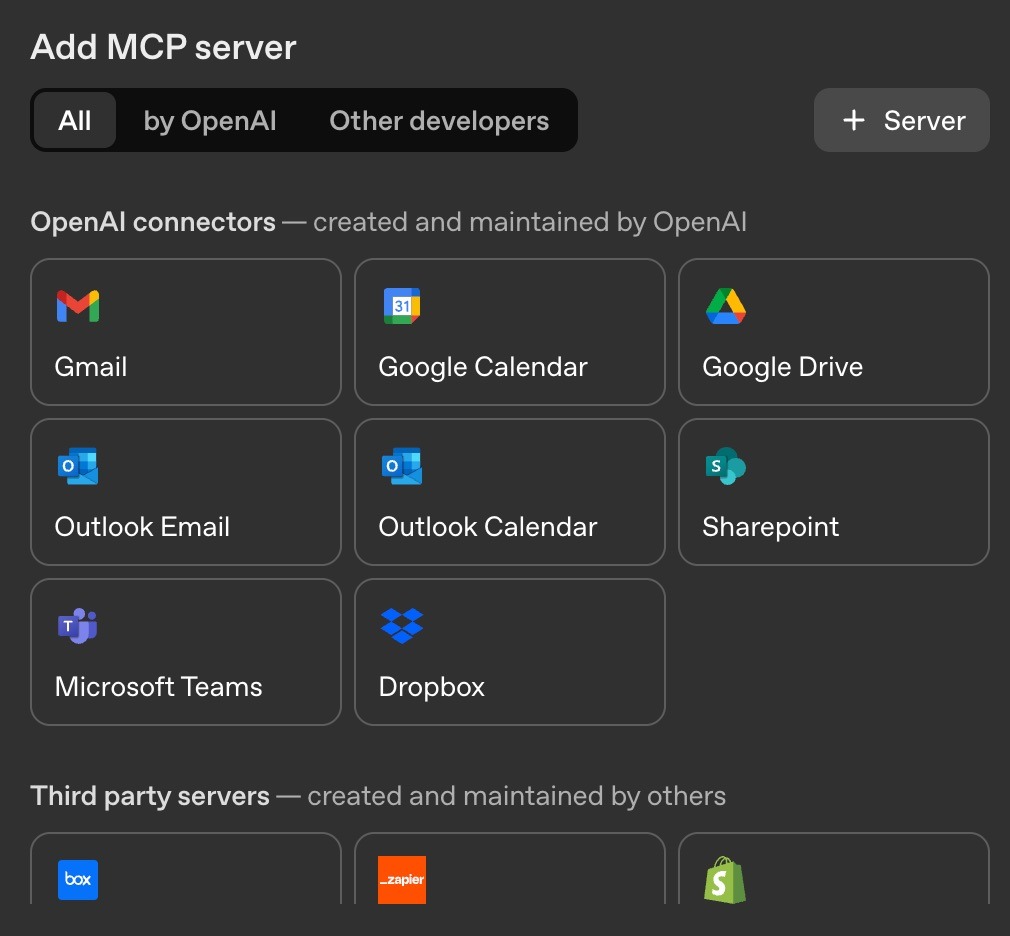
  "alt": "Interface for adding MCP server with OpenAI and third-party connectors like Gmail, Google Calendar, Outlook, and Dropbox.",
  "caption": "Explore seamless integration options with OpenAI's MCP server interface, featuring connectors for Gmail, Google Drive, and more.",
  "description": "This image displays an interface for adding an MCP server, showcasing a variety of OpenAI and third-party connectors. Users can select from options like Gmail, Google Calendar, Google Drive, Outlook Email, and Dropbox. The layout is organized with OpenAI-managed connectors on top and third-party servers like Box and Zapier below. This setup allows for comprehensive integration across various platforms, enhancing productivity and connectivity."
}
```

    Mainly, if you can break down tasks into actionable steps, you can set up an agent to execute them.

    Dig deeper: 4 ways to connect your ads data to generative AI for smarter PPC

    An AI agent is not just an algorithm; it’s a versatile aide equipped to deduce necessary actions and execute them through connected tools.

    ```json
{
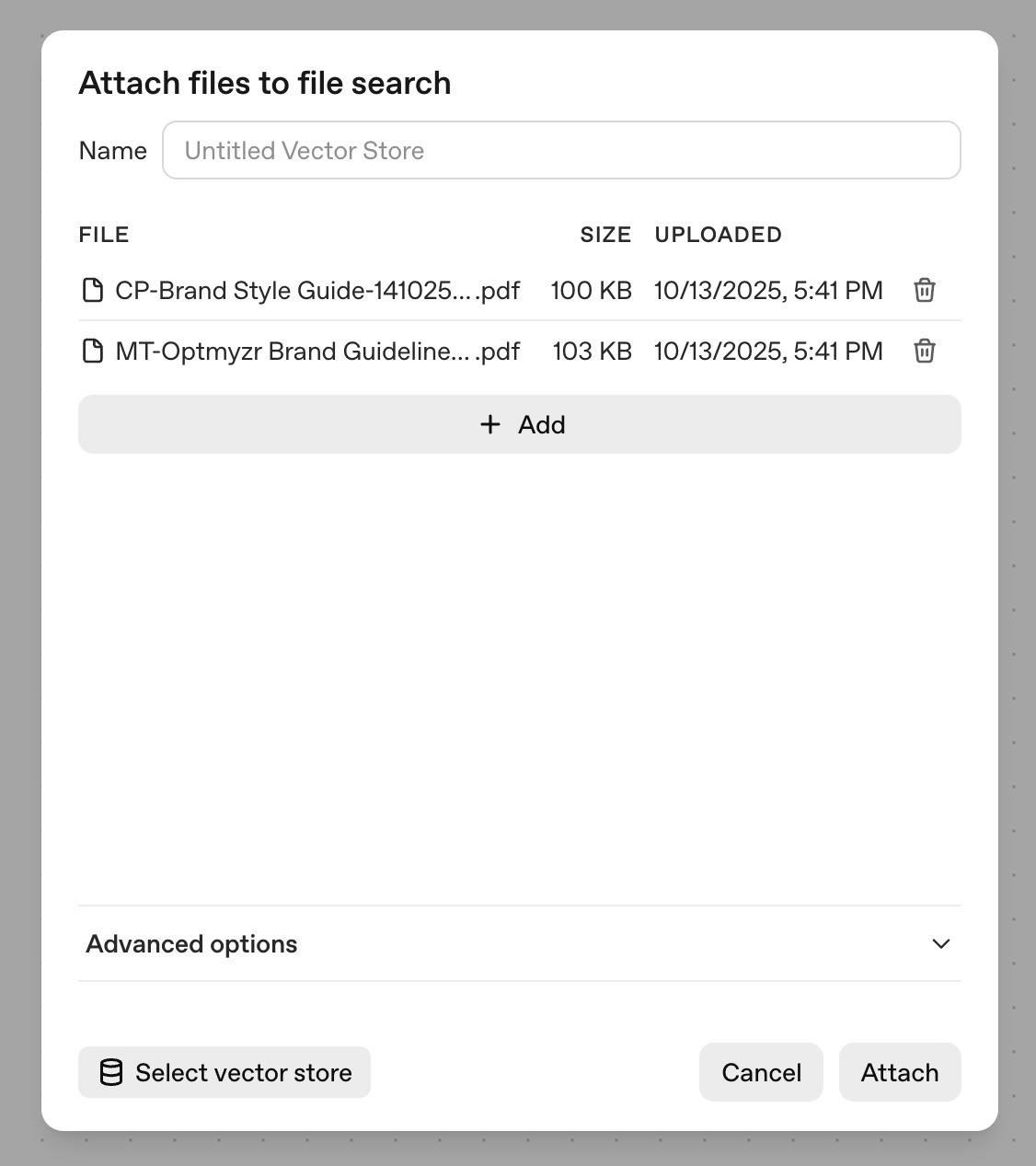
  "alt": "Interface showing file attachment options for a vector store, listing PDF files and upload details.",
  "caption": "Easily attach your brand guidelines with the streamlined file search and upload feature, perfect for organizing your vector store.",
  "description": "The image displays a user interface for attaching files to a vector store. Two PDF files are listed with names, sizes, and upload dates. The interface includes buttons for adding more files, selecting a vector store, and the option to cancel or attach. This feature aids in efficient file management and project organization, enhancing productivity and accessibility for users managing digital assets."
}
```

    Unlike traditional, rigid software with deterministic steps, agents offer flexibility and adapt to scenarios without requiring exhaustive pre-programming.

    This evolution in automated assistance is something I had glimpsed in early iterations—now, a more sophisticated agent can execute real-world tasks formulated in the virtual sandbox of GPT innovations.

    Dig deeper: AI agents in PPC: What to know and build today

    ```json
{
  "alt": "Text analyzing ad headlines for Optmyzr's BFCM campaign with emphasis on brand guidelines.",
  "caption": "Crafting compelling ad headlines for Optmyzr's BFCM campaign, highlighting how they align with brand values for effective marketing.",
  "description": "This image displays a text-based analysis of suggested ad headlines for Optmyzr's Black Friday/Cyber Monday campaign. It includes a breakdown of how each headline meets brand guidelines such as data-driven strategies, empowerment, clear language, and a supportive tone. The layout includes headers, bullet points, and search file references, offering a detailed overview for optimal advertising strategy."
}
```

    The appeal of OpenAI’s AgentKit lies in its ability to transform lengthy coding sessions into quick, non-technical builds, akin to “Zapier for AI.”

    Unlike traditional software, AgentKit leverages AI’s reasoning instead of fixed rules, making it an innovative tool for marketers like me aiming to automate tasks efficiently.

    AgentKit provides a visual workflow built around familiar tools like Gmail and Dropbox, ensuring seamless integrations and ease of use.

    Dig deeper: How to get smarter with AI in PPC


    Inspired by this post on Search Engine Land.

    crushpress.ai community screenshot