Category: News

  • Enhance Forum Visibility: Google’s New Structured Data Update

    Enhance Forum Visibility: Google’s New Structured Data Update

    I recently discovered that Google has enhanced its structured data support for forum and Q&A pages. This update introduces new properties that allow us to better signal reply threads, quoted content, and identify whether content is generated by AI or humans.

    With these changes, which aim to boost Google’s accuracy in interpreting discussions and Q&A content, we can now ensure our content is represented more precisely.

    What’s New. Google has updated its QAPage documentation to include commentCount and digitalSourceType. Moreover, the DiscussionForumPosting documentation now supports sharedContent alongside these new properties.

    The Details. Using Q&A markup, I’m able to apply commentCount to questions, answers, and comments, showcasing the total number of comments even if they are not fully marked up. This total should align with answerCount + commentCount, representing all types of replies.

    How It Works. The digitalSourceType property allows me to indicate whether content is produced by a model or simple automation. I can use TrainedAlgorithmicMediaDigitalSource for advanced outputs and AlgorithmicMediaDigitalSource for basic bots. If this property is left out, Google assumes the content is human-generated.

    What’s New for Forums. The sharedContent property helps me to mark the primary item that’s being shared in a post. Google supports various content types like WebPage, ImageObject, and more, including quotes or reposts.

    Why This Matters. This update provides me with greater control over how Google interprets community content, which is particularly important for sites rich in forums, support communities, UGC platforms, and Q&A sections. Google can now distinguish between answers and comments more effectively, tally partial threads across multiple pages, and recognize when a post primarily shares specific media types.

    Documentation. The official documentation was updated on March 24, providing all the details I need to apply these new capabilities.


    Inspired by this post on Search Engine Land.


    crushpress.ai community screenshot
  • Google’s Lightning-Fast March 2026 Spam Update Now Complete

    Google’s Lightning-Fast March 2026 Spam Update Now Complete

    Well, it looks like Google’s March 2026 spam update wrapped up in record time! It took less than a day to roll out and was fully completed on March 25, 2026, at precisely 10:40 a.m. ET.

    The update was originally released the previous afternoon on March 24, 2026, at 3:20 p.m., meaning the entire process took just a swift 19 hours and 30 minutes. Incredible, right?

    Why this matters to us. This marks Google’s second announced algorithm update of 2026. While we don’t have specifics on the type of spam targeted, any changes you notice in your site’s ranking or traffic soon might be linked to this update.

    Diving deeper into the spam update. According to Google’s documentation:

    “While Google’s automated systems to detect search spam are constantly operating, we occasionally make notable improvements to how they work. When we do, we refer to this as a spam update and share when they happen on our list of Google Search ranking updates.

    For example, SpamBrain is our AI-based spam-prevention system. From time-to-time, we improve that system to make it better at spotting spam and to help ensure it catches new types of spam.

    Sites that see a change after a spam update should review our spam policies to ensure they are complying with those. Sites that violate our policies may rank lower in results or not appear in results at all. Making changes may help a site improve if our automated systems learn over a period of months that the site complies with our spam policies.

    In the case of a link spam update (an update that specifically deals with link spam), making changes might not generate an improvement. This is because when our systems remove the effects spammy links may have, any ranking benefit the links may have previously generated for your site is lost. Any potential ranking benefits generated by those links cannot be regained.”

    Impact. Primarily, this update aims at sites spamming Google Search. So, unless your site engaged in spammy practices, you likely won’t notice a negative impact.


    Inspired by this post on Search Engine Land.


    crushpress.ai community screenshot
  • Google Unveils Powerful March 2026 Spam Update Impacting All

    Google Unveils Powerful March 2026 Spam Update Impacting All

    Today, Google released its March 2026 spam update, making it the second announced algorithm change this year, following the February 2026 Discover core update.

    This marks the first spam update of 2026. The previous one was rolled out in August 2025.

    Timing. Google mentioned that this update might “take a few days to complete.” They reiterated on LinkedIn: “This is a normal spam update, and it will roll out for all languages and locations. The rollout may take a few days to complete.”

    Why we care. Since this is the second major algorithm update of 2026, I need to stay alert for any changes in rankings or traffic on my sites. Google hasn’t specified what spam is being targeted, but shifts in performance could be related.

    More on the spam update. Google’s documentation states: “While Google’s automated systems to detect search spam are constantly operating, we occasionally make notable improvements to how they work. When we do, we refer to this as a spam update and share when they happen on our list of Google Search ranking updates.”

    Google’s AI-based spam-prevention system, SpamBrain, gets enhanced from time to time to better detect and manage new types of spam. If I notice changes after this update, reviewing and ensuring compliance with Google’s spam policies is essential for maintaining or improving rankings. Violations can lead to lower rankings or removal from search results entirely.

    For link spam updates, improvements might not translate to immediate gains since any ranking boost from spammy links is nullified. Hence, reclaiming lost benefits isn’t possible.


    Inspired by this post on Search Engine Land.

    crushpress.ai community screenshot
  • Unlock New Ecommerce Potential with Reddit’s Shopping Ads

    Unlock New Ecommerce Potential with Reddit’s Shopping Ads

    I’m thrilled to share that Reddit is stepping up its ecommerce game by introducing exciting new shopping ad tools. These include innovative Dynamic Product Ad formats and a seamless Shopify integration, aiming to help retailers connect with Reddit’s ever-growing audience.

    Reddit is really making commerce a priority, launching a range of features that let retailers leverage the platform’s powerful purchase influence. It’s fascinating to see this evolution as Reddit plays a more prominent role in the buying process.

    Why now. There’s a noticeable surge in shopping discussions, having increased by 40% over the last year. According to Reddit, a whopping 84% of shoppers feel more assured about their purchases after browsing Reddit, yet, surprisingly, it remains the most undervalued media channel, as reported in Fospha’s State of Retail Commerce 2026 study.

    What’s new.

    • Collection Ads — This dynamic ad format pairs enticing lifestyle images with purchasable product tiles in a carousel, brilliantly merging discovery with purchase. Those who’ve embraced these best practices are seeing an impressive 8% boost in ROAS.
    • Community and Deal overlays — Exclusive Reddit-native labels like “Redditors’ Top Pick” and automated discount alerts provide valuable social proof and price signals without any additional effort from advertisers.
    • Shopify integration — In its alpha stage, this integration streamlines catalog and pixel setup for new Dynamic Product Ad enthusiasts, facilitating automatic product-user-context matching.

    The numbers. In Q4 2025, Reddit’s Dynamic Product Ads delivered an average of 91% higher ROAS compared to the previous year. Notably, Liquid I.V. has seen DPAs constituting 33% of its total platform revenue, significantly outperforming other conversion campaigns by 40%.

    Why we care. The introduction of tools like the Shopify integration drastically lowers the barriers for launching Dynamic Product Ads on Reddit. With Reddit still an undervalued channel, it’s a golden opportunity to capitalize on before the market becomes more competitive and costs escalate.

    The bottom line. Reddit is seriously enhancing its reputation as a performance channel in ecommerce, and these new tools make it much easier to join the race. For retailers who haven’t yet utilized DPAs on Reddit, this is an excellent moment to experiment with an undervalued inventory and evolving ad formats.


    Inspired by this post on Search Engine Land.

    crushpress.ai community screenshot
  • Google’s New Rules for Political Shopping Ads: Key Changes to Know

    Google’s New Rules for Political Shopping Ads: Key Changes to Know

    Starting April 16, Google is tightening rules around political content in Shopping ads. If you’re running such ads, you might need to verify your account as an election advertiser. Let me walk you through what’s happening and why it matters to us.

    What’s Changing? From mid-April, merchants in nine countries must verify their Google Ads accounts for political Shopping ads. Plus, some political ads will face outright bans in India.

    Countries Affected: You’ll need to pay attention if you’re operating in Argentina, Australia, Chile, Israel, Mexico, New Zealand, South Africa, the United Kingdom, or the United States.

    Why Does This Matter? This update shows Google’s commitment to election integrity across different platforms, including commerce. If you’re selling political merchandise or campaign items, it’s crucial to act before the deadline.

    What Should You Do?

    1. Check Google’s updated policy to see if your ads now fall under these new guidelines.

    2. If they do, apply for election advertiser verification via Google Ads before April 16 to keep your ads running smoothly.

    The Bottom Line: This change might affect a small group of merchants, but missing the deadline could lead to disapproved ads or flagged accounts. If you’re selling politically themed items in the specified regions, verify your eligibility now to avoid hiccups.


    Inspired by this post on Search Engine Land.

    crushpress.ai community screenshot
  • Uncovering AI’s Citation Preferences: Listicles Lead the Way

    Uncovering AI’s Citation Preferences: Listicles Lead the Way

    I recently delved into a fascinating study exploring how AI citations are significantly influenced by certain content formats. It turns out listicles, articles, and product pages are at the forefront, driving over 52% of mentions across various AI language models.

    The research, conducted by Wix Studio AI Search Lab, analyzed a whopping 75,000 AI answers and more than a million citations across platforms like ChatGPT, Google AI Mode, and Perplexity. It’s an exciting revelation that showcases the power of content structure in digital landscapes.

    The findings? Listicles claimed the top spot with 21.9% of citations, followed by articles at 16.7% and product pages at 13.7%. When combined, these formats make up a majority of the citations AI references.

    What’s interesting is that articles tend to dominate when it comes to informational queries, being cited 2.7 times more than other formats. Meanwhile, listicles capture nearly 40% of commercial-intent citations, almost double compared to any other type.

    The Why Behind Intent. It’s fascinating to see how query intent, rather than industry or AI model, is the strongest predictor of which content gets cited. This trend doesn’t shift much across different sectors, from SaaS to health industries.

    Informational queries skew towards articles (45.5%) and listicles (21.7%), while commercial queries are dominated by listicles (40.9%). Interestingly, transactional and navigational queries favor product and category pages, with those two formats comprising about 40% of the citations combined.

    The Impact for Us. This study is incredibly insightful, illustrating why aligning content types with user intent is more strategic than simply generating content. Articles serve to inform, listicles foster comparisons, and product pages drive conversions. Tailoring content to align with user goals might just be the key to snagging more AI citations and enhancing visibility.

    Not all listicles perform equally. In professional services, third-party listicles account for 80.9% of citations, showing a preference for neutral editorial comparisons over branded lists by large language models.

    Looking at Model Preferences. While all models have a penchant for listicles, their other preferences vary. ChatGPT leans heavily towards articles and informational content, Google AI Mode shows a balanced approach, and Perplexity stands out with 17% of its citations coming from discussions on platforms like Reddit and forums.

    Industry-Specific Trends. Though preferences shifted slightly among industries, there are notable trends. SaaS and professional services veer towards listicles, health sectors favor authoritative articles, and ecommerce spreads its citations across listicles, articles, and category pages. Interestingly, home repair maintains an even distribution across different formats.

    I’m intrigued to know more! The comprehensive research can be found here.


    Inspired by this post on Search Engine Land.


    crushpress.ai community screenshot
  • Unlocking AI-Powered Video: Google PMax’s New Animated Ads

    Unlocking AI-Powered Video: Google PMax’s New Animated Ads

    I’ve recently discovered an intriguing update in Google Ads Performance Max campaigns that could significantly shift how I and other advertisers approach animated display advertising.

    Imagine the possibilities with Google’s new AI image animation feature! It could be a game-changer for those of us who’ve been sticking to static images in our PMax campaigns.

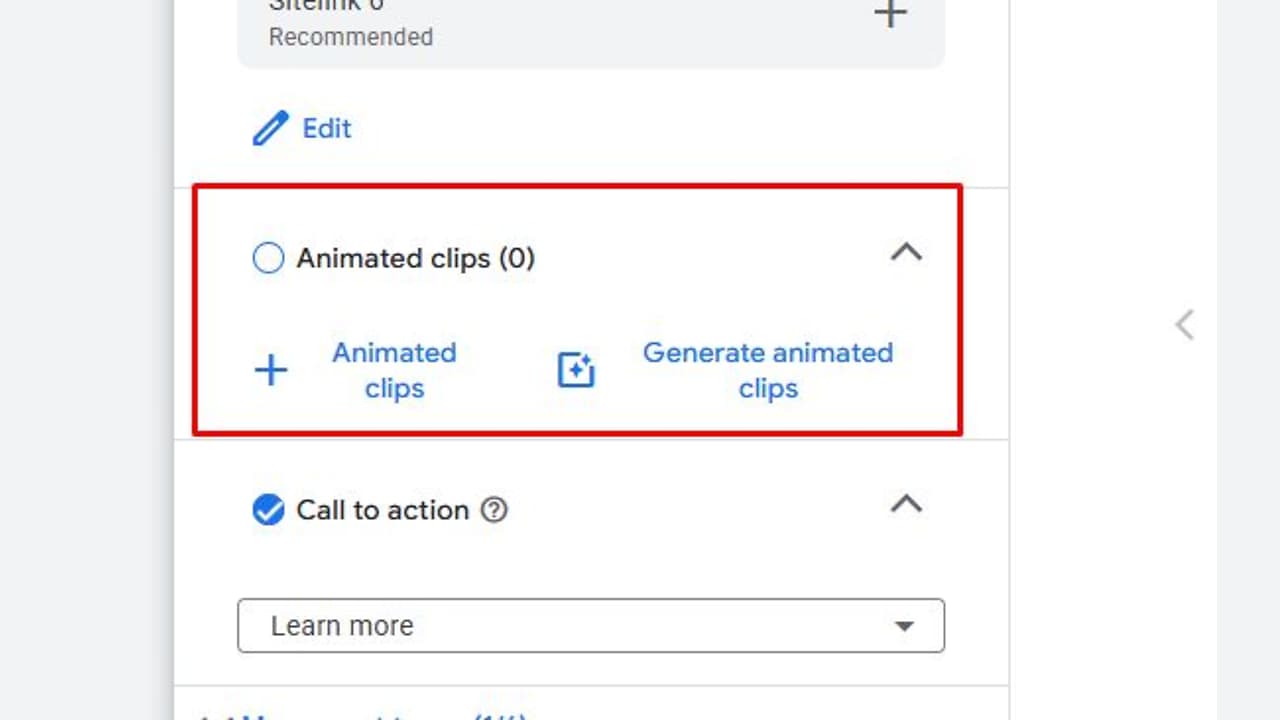
    What I Found. Nikki Kuhlman, Vice President of Search at JumpFly, Inc., shared her discovery of an option to generate animated video clips directly within PMax asset groups. These clips use AI to transform a single source image into engaging animations.

    How It Works.

    • I can upload a source image like a logo, a product shot, or a property photo.
    • The AI works its magic, generating several “enhanced” versions of my image.
    • Each enhanced image then produces two animated clips.
    • I can choose up to five animated clips per asset group to enrich my campaign.
    • Note: While faces can’t be used in the source images, AI might introduce people in the enhanced versions.

    Early Testing Insights. I tested it, and observing a logo turn into a spinning animation and a house image pan out cinematically was impressive. Simple inputs, but the quality of the animated outputs is certainly suitable for display advertising without the need for a video production team.

    ```json
{
  "alt": "Screenshot showing options for creating animated clips in a user interface.",
  "caption": "Easily create engaging animated clips with a simple interface. Perfect for adding dynamic visuals to your content!",
  "description": "This image displays a user interface where users can create animated clips. The section is highlighted with a red border and offers options like ‘Animated clips’ and ‘Generate animated clips’. Additionally, there is a call to action section with a ‘Learn more’ button. This is ideal for users looking to enhance their digital content with animations."
}
```

    Ad Placements. While Google hasn’t officially documented ad placements, early tests show these animated clips appear in Display ad previews when integrated into an asset group.

    Why I Care. Video assets have always been vital in Paid Media for their creative potential, but not everyone, including myself, has the time, budget, or resources for video production. Now, this feature offers me the chance to easily convert a single photo or logo into dynamic display content, effectively removing previous barriers.

    This opens a new door for advertisers like me who’ve relied on static images in PMax campaigns. I see it as a simple but effective win.

    The Bottom Line. Although Google hasn’t confirmed this feature officially, it’s advisable for anyone running PMax to check their asset groups. If this is present, it’s worth testing, especially for those of us who have solely utilized static images.

    First Seen. This exciting feature was initially spotted by Nikki Kuhlman and shared on LinkedIn.


    Inspired by this post on Search Engine Land.

    crushpress.ai community screenshot
  • Bing Enhances AI Query Links to Cited Pages for SEO Insight

    Bing Enhances AI Query Links to Cited Pages for SEO Insight

    Recently, I’ve noticed something exciting happening on Bing. Now, when I use Bing Webmaster Tools, I can click a query to view its cited pages or select a page to see its grounding queries. It feels like a new level of connectivity where multiple queries and pages are seamlessly linked together.

    Microsoft has introduced query-to-page mapping within its AI Performance report on Bing Webmaster Tools. I find this feature incredibly helpful because it lets me directly connect AI-generated queries to cited URLs. This makes my SEO strategies more precise.

    Why it matters to us. Before this update, Bing’s dashboard presented queries and pages separately, which limited our optimization efforts. Now, I can align specific AI-triggering queries with the exact pages they reference, focusing my updates on real AI-driven demand rather than guesswork.

    Here’s the scoop. The Grounding Query–Page Mapping feature is a game-changer in the AI Performance dashboard:

    • With a click on a grounding query, I can see which pages are cited.
    • I can also click a page to find out which grounding queries are driving its citations.
    • The mapping system is many-to-many, meaning one query can be linked to multiple pages and vice versa.

    Catch up with Bing. Back in February, Microsoft launched the AI Performance report in Bing Webmaster Tools, marking its initial GEO-focused dashboard. This tool keeps track of where and how often my content gets cited in AI answers across platforms like Bing, Copilot, and more.

    • It tracks the grounding queries, cited URLs, and visibility trends over time, providing an insightful view into citation visibility.

    The buzz. According to Microsoft, this update came about due to “strong positive customer feedback and numerous requests,” and I can see why it’s so well-received.

    The announcement. The unveiling of the query-to-page mapping feature was detailed in a Microsoft Advertising blog post: The AI Performance dashboard: Your view into where your brand appears across the AI web


    Inspired by this post on Search Engine Land.

    crushpress.ai community screenshot
  • Apple Maps to Launch Ads: A New Era of Location-Based Advertising

    Apple Maps to Launch Ads: A New Era of Location-Based Advertising

    I’ve recently come across some exciting news: Apple is gearing up to introduce ads in Apple Maps. This move seems to open a brand-new, high-intent, location-based advertising channel on one of Apple’s most popular apps.

    As I’m exploring this development, I’m intrigued by how Apple plans to expand its advertising business beyond the App Store. They’re set to include sponsored listings within Apple Maps, which could mark a significant shift for advertisers already familiar with the platform’s mapping tool.

    How it will work. From what I’ve gathered via Bloomberg’s Mark Gurman, the concept is similar to Google Maps. It involves retailers and brands bidding for ad placements against specific search terms. Sponsored businesses would show up in search results within Maps, much like we see with Apps in the App Store.

    The timeline. There’s speculation that we might hear an announcement soon, with the actual advertisements making their debut as early as this summer across iPhones, other Apple devices, and even the web.

    Why Apple is doing this. Advertising is becoming a lucrative and high-margin revenue stream for Apple’s services. Given the massive user base of Maps across Apple devices, moving into location-based advertising is a natural progression for them.

    Why we care. I’m paying close attention because Apple Maps is a widely used app, particularly among iPhone users. Those using Maps are often looking for something specific, which means significant opportunities for local businesses and retailers to reach potential customers right when they’re making decisions.

    For those of us already involved in Google Maps or local search campaigns, this could become a valuable complementary channel to explore.

    The bottom line. As Apple Maps prepares to launch ads, we’re looking at a high-intent, location-based advertising opportunity that hasn’t existed before on Apple’s platform. I would advise anyone running local or retail campaigns to start planning now. Being an early bird in a new ad auction typically means less competition and better costs before the market fully develops.


    Inspired by this post on Search Engine Land.


    crushpress.ai community screenshot
  • EU’s Verdict on Google’s Compliance: A Game Changer for Digital Markets

    EU’s Verdict on Google’s Compliance: A Game Changer for Digital Markets

    Google vs. publishers: What the EU probe means for SEO, AI answers, and content rights

    I’ve been eagerly anticipating the European Union’s decision on whether Google is violating the Digital Markets Act (DMA), and I sense this ruling is just around the corner. While Competition Commissioner Teresa Ribera hasn’t specified an exact date, she assures us that a decision is imminent.

    What She Said: “It will come,” Ribera mentioned to Dow Jones Newswires, emphasizing the complexity of these cases. She reinforced the EU’s commitment to fair procedures and evidence-based decisions.

    The Context: This all began in March 2024, when the European Commission started investigating Google’s search business under the DMA. Although fines have already been imposed on Meta and Apple, Google’s case is still pending after almost two years.

    The Mounting Pressure: Recently, 18 lobby groups and civil society organizations wrote to Ribera, urging a substantial fine and definitive remedies to ensure non-compliance isn’t profitable. They stressed that Google’s dominant 90% share in the EU search market is a cause for concern.

    “Every day without a decision is a day that European businesses are systematically disadvantaged,” their letter cautioned.

    Why This Matters to Us: A decision against Google could fundamentally alter how its search business operates in Europe. This might change the dynamics of ad serving, ranking, and pricing, potentially impacting campaign performance and competition across the board. For those of us with European audiences, staying informed is crucial as outcomes here could have a global impact on Google’s advertising ecosystem.

    Meanwhile, This Week: Ribera is in California, meeting with tech leaders like Sundar Pichai and Mark Zuckerberg, before heading to Washington D.C. for discussions with the U.S. Justice Department’s antitrust division.

    The Bigger Picture: Google isn’t the only tech giant under scrutiny. The commission is also looking into how Google uses AI Overviews and ranks news publishers. Additionally, they are investigating Meta for potential restrictions on rival chatbots using WhatsApp’s business software.

    The Bottom Line: Although the EU has been slow to act against Google, mounting political and public pressure is undeniable. This impending decision might set a significant precedent for enforcing the Digital Markets Act more broadly.


    Inspired by this post on Search Engine Land.


    crushpress.ai community screenshot