With over twenty years in SEO, I’ve experienced every major industry disruption—from the days of keyword stuffing on AltaVista to the era of Google’s search algorithms, mobile-first indexing, and now the rise of AI.
What’s striking today is the rapid pace of change and the emotional challenges it brings. I notice mounting pressure among teams, even those who have navigated previous shifts successfully.
The common apprehension is valid: If AI improves speed, where does that leave me? This isn’t just a technical question—it’s deeply personal.
This uncertainty can lower morale and slow adoption. Productivity can wane, and experimentation might stall, leading teams to either over-rely on AI or completely avoid it.
The real leadership challenge is building confidence, capability, and trust in AI-assisted teams.
4 Ways to Boost AI Confidence in SEO Teams
Instilling genuine AI confidence within an SEO team goes beyond just adopting the latest tools—it’s a cultural shift.
The most effective SEO teams don’t just accumulate tools; they use AI purposefully and with discipline—automating data pulls, summarizing research, and clustering keywords—to devote more time to strategy, storytelling, and aligning with stakeholders.
As noted by Harvard Business School, technology adoption is largely cultural. Tools themselves don’t drive change—trust does. This insight is crucial for SEO teams navigating AI today.
Below are four strategies for enhancing AI confidence in your teams through clarity, participation, and shared ownership, instead of pressure or hype.
1. Earn Trust by Involving the Team in AI Tool Selection and Workflow Design
Strengthening trust can effectively be achieved by transitioning from a top-down approach to shared ownership. People generally trust what they help create.
When AI tools are imposed, resistance can increase. Inviting team members to participate in evaluation and workflow design makes AI seem less daunting and more empowering. Involving teams early provides real-world insights into where AI can reduce friction or introduce new challenges.
Effective leaders:
Invite teams to test tools and share feedback.
Run small experiments before scaling adoption.
Communicate clearly about what you’re adopting, what you’re rejecting, and why.
When teams feel included, they are more willing to experiment, and growth and innovation are fueled.
2. Meet People Where They Are—Not Where You Want Them to Be
AI capability varies widely across SEO teams. Some members might experiment daily, while others feel inundated or skeptical, influenced by past automation trends that have come and gone.
Leaders who boost confidence know that capability develops at different speeds. They cultivate environments where curiosity is encouraged, uncertainty is acceptable, and learning is continuous rather than mandated.
This means:
Normalizing different comfort levels.
Creating psychological safety around “I don’t know yet.”
Avoiding the shaming or over-celebration of early adopters.
Offering multiple learning paths.
Acknowledging different starting points makes growth seem attainable rather than intimidating.
When a team member uses AI to reduce a task from hours to minutes, it’s a moment worth recognizing. It demonstrates AI’s potential to support meaningful work without sidelining human insight.
Successful teams:
Share clear examples of AI improving quality and efficiency.
Highlight internal champions who can mentor others.
Create opportunities for demos and knowledge sharing.
Foster a culture of exploration, not criticism.
My agency created AI focus groups with members from various departments. One group worked on integrating AI into project management, including representatives from SEO, operations, and leadership.
This collaborative ownership resulted in more successful implementation. Teams were not just introducing AI; they were defining how it fit within real-world workflows. This approach led to enhanced buy-in, improved collaboration, and increased confidence.
Each group shared its achievements and lessons learned, building awareness of what succeeded and the reasons behind that success. When teams observe their peers embracing AI effectively, momentum flourishes.
4. Frame AI as a Collaborative Partner, Not a Replacement
The fear of being replaced by AI is genuine. Ignoring this concern won’t make it disappear. It’s vital for teams to understand where human expertise remains indispensable.
AI accelerates analysis. Humans interpret meaning.
AI drafts. Humans validate, refine, and contextualize.
AI scales output. Humans build trust and influence.
While AI aids execution, it cannot replace strategic instincts, contextual judgment, or cross-functional leadership—skills that ultimately drive performance.
Why Experience Still Matters in AI-Driven SEO
AI has lowered the entry barrier for many SEO tasks. With effective prompts, nearly anyone can produce keyword lists, outlines, or summaries. However, this accessibility often results in fleeting tactics and recycled quick fixes.
Anyone with a lengthy tenure in SEO recognizes this cycle. Tactics evolve. Fundamentals remain. Experience is the key differentiator here.
AI Can Generate Outputs, Not Accountability
AI can create content and analyze data, but it doesn’t bear responsibility for outcomes. It doesn’t uphold brand reputation, compliance, or long-term performance.
SEO professionals remain responsible for:
Deciding what to exclude from publication.
Assessing technical, reputational, and compliance risks.
Weighing long-term consequences against short-term gains.
AI executes. Humans decide. That distinction matters more than ever.
Pattern Recognition Is Learned, Not Automated
AI excels at identifying patterns but struggles to explain their significance or relevance in specific contexts.
Experienced SEOs bring a depth of understanding AI can’t replicate. Their historical insights help them identify true shifts instead of simply reacting to industry noise.
Few industries witness as many tactic fluctuations as SEO. Experience fosters strategic thinking beyond previously successful approaches and avoids repeating tactics that later failed.
AI suggests possibilities. Experience evaluates relevance.
Professional Integrity Remains a Differentiator
In high-visibility search environments, mistakes scale quickly. AI may produce inaccuracies, risking brand trust and compliance dangers.
Teams with strong professional SEO foundations:
Validate AI output instead of assuming correctness.
Prioritize accuracy over speed.
Maintain ethical SEO standards.
Protect brand voice and credibility.
Integrity isn’t automated. It’s a practiced discipline. In a fast-paced AI environment, it holds increasing importance.
As routine tasks become automated, the role of an SEO professional shifts to strategic oversight. Time previously spent on manual analysis can now focus on interpreting user intent, shaping search strategy, guiding stakeholders, and assessing risks.
This evolution makes fundamentals even more critical. Teams still need sound judgment, technical expertise, and accountability. While AI supports execution, professionals remain responsible for decisions, quality, and long-term performance.
Developing future SEOs necessitates more than tool proficiency; it requires teaching:
When to rely on AI.
When to question AI outputs.
How to apply experience and context to its output.
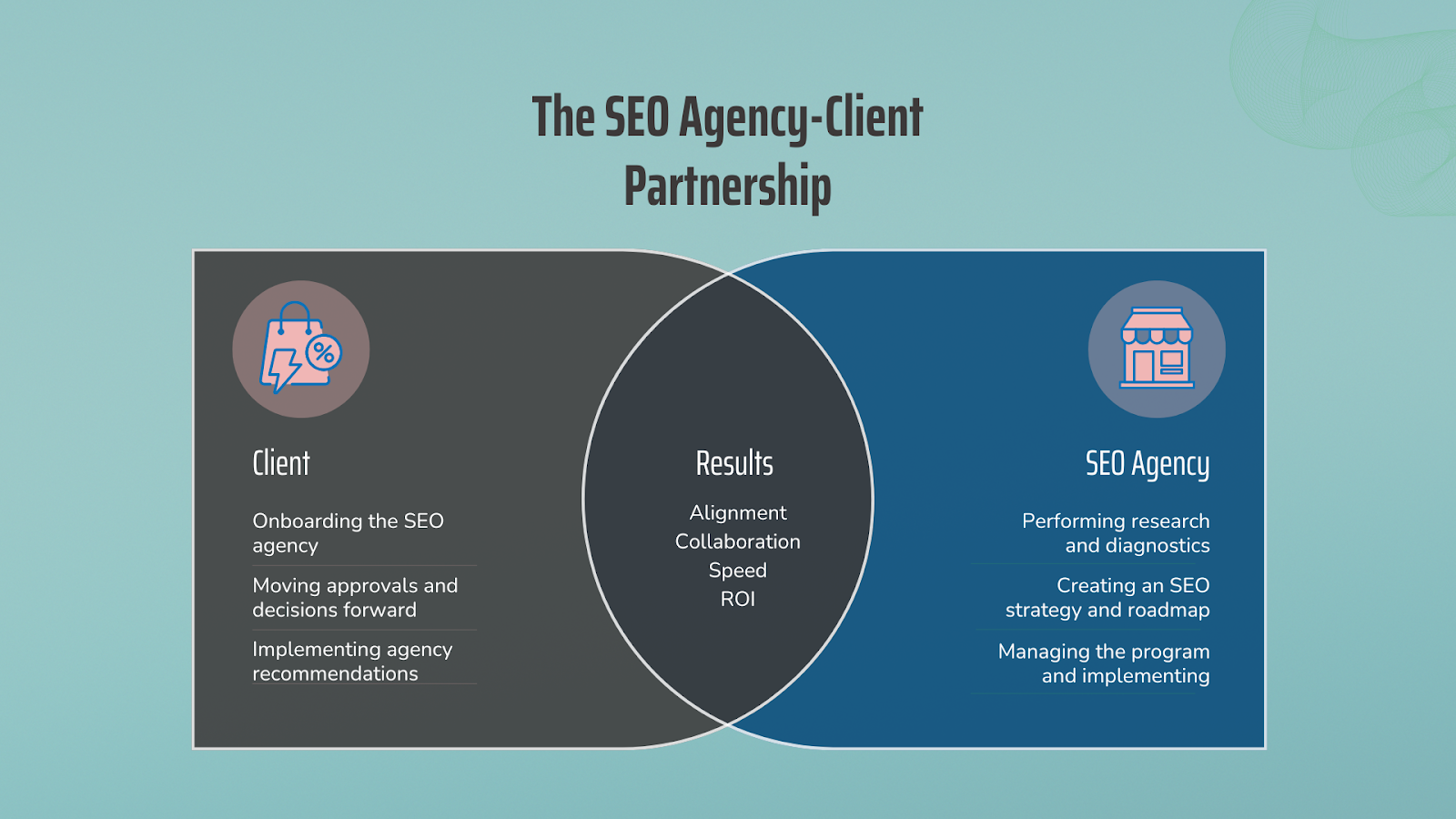
From the very first kickoff to the technical execution phases, I’ve learned that the true value of hiring an SEO agency lies in our partnership and collaboration. Together, we can eliminate bottlenecks, empower cross-functional teams, and clearly demonstrate the ROI of our SEO investment.
Hiring an SEO agency can truly transform how your brand stands out in search results. But remember, an agency’s effectiveness relies heavily on the partnership we build. Realizing the full potential of SEO requires a shared commitment to our goals and maintaining high momentum.
Here’s what I’ve discovered about maximizing the benefits of working with my SEO agency: Alignment leads to faster progress, which makes it easier for us to prove the value of our efforts.
To ensure we get the most out of this partnership, it’s crucial to align our SEO strategy with what truly drives our business. The company sets the business goals, and it’s the agency’s job to attract the traffic that helps achieve them.
Having open discussions with the agency about how to align these goals right from the start enhances the effectiveness of our SEO program. Including cross-departmental stakeholders only reinforces the alignment and ensures everyone is on the same page.
When the entire team understands the foundation of SEO, they can comprehend its role and their contribution to its success. In this spirit of collaboration, I facilitate SEO training across teams to empower everyone involved.
I always come to the kickoff meeting fully prepared, ready to set agendas for productivity. Sharing pain points, detailing business operations, and clarifying the program’s scope helps everyone understand what to expect and what’s expected of them.
Regular communication with my agency, whether through emails, Slack, or meetings, is vital. Clear reporting methods are another key aspect, ensuring everyone remains accountable and the results are measurable.
Switching from seeing the agency as just a vendor to viewing them as a true expert partner helps cultivate trust in their guidance, the very reason I hired them in the first place.
By giving our agency visibility into past and present performance data, I ensure they have all vital information for optimizing our SEO efforts from day one. This setup includes access to essential tools and crucial performance metrics.
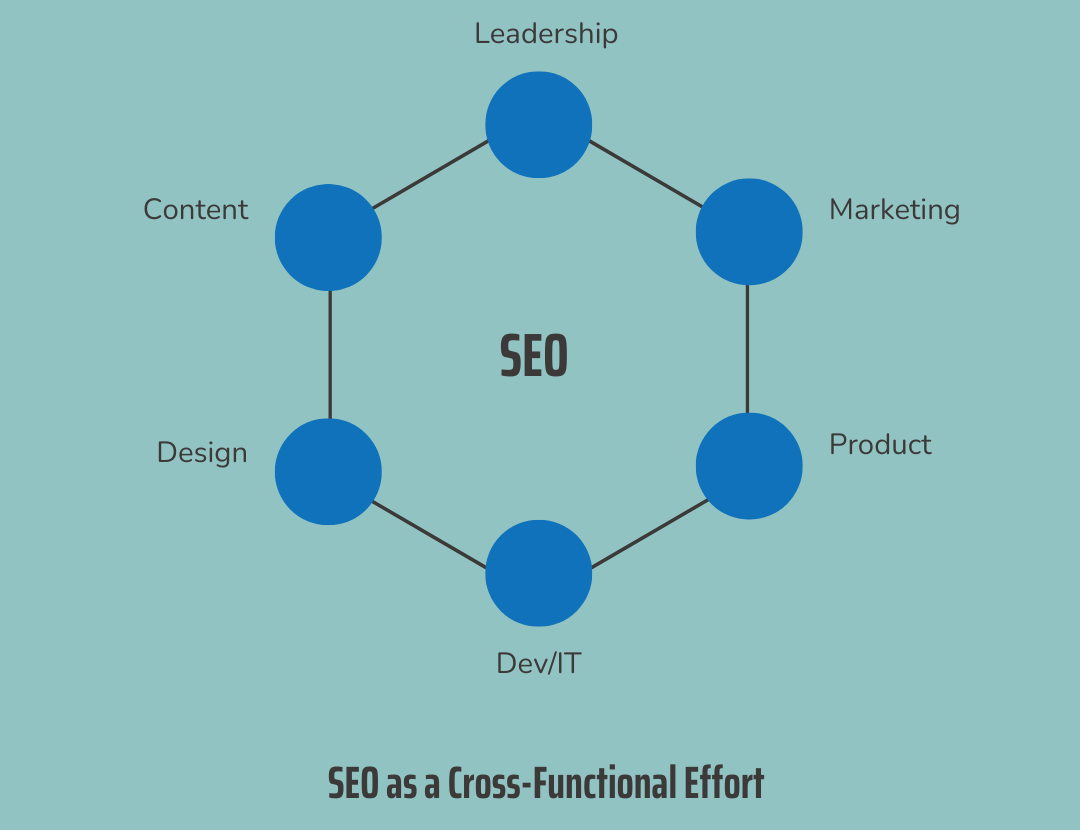
SEO isn’t just an isolated activity—it requires contributions from multiple teams within the company. By including team leaders early in planning, I make sure everyone is engaged and accountable, from SEO briefings to content collaboration.
My agency excels in SEO, but I bring invaluable brand knowledge to create content that aligns both with business goals and customer needs. By maintaining active involvement in content development, we produce material that truly resonates.
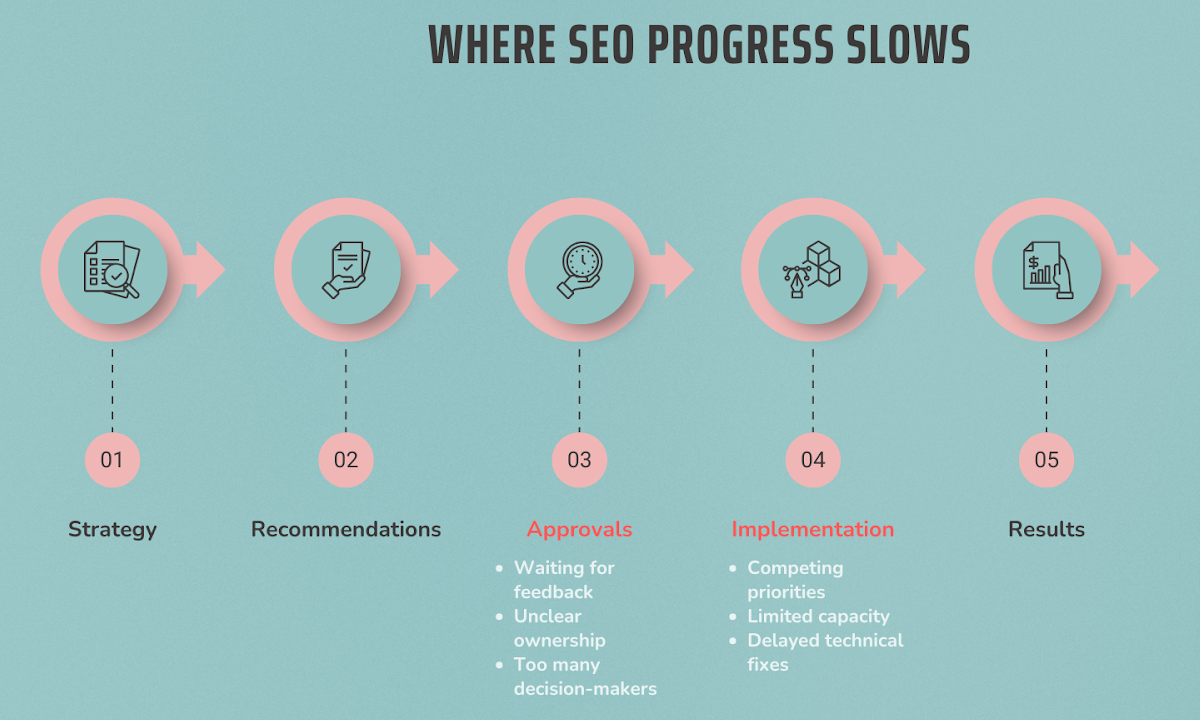
Streamlining content reviews and setting clear guidelines helps eliminate approval hurdles that can slow down our SEO progress. Prioritizing high-impact tasks ensures we stay competitive in search results.
Each implementation, however small, contributes significantly to our overall SEO success. I prioritize these tasks during planning phases and involve technical teams early to ensure seamless execution.
Maintaining engagement with my agency beyond the initial excitement stage is crucial for ongoing success. Continual communication, involvement in reviews, and flexibility help adjust to shifting business landscapes effectively.
Ultimately, strong SEO results are built on strong partnerships. By working together, my agency and I drive our SEO program forward, creating a strategic and valuable business initiative.
On episode 341 of PPC Live The Podcast, I had the pleasure of chatting with Andrea Cruz, Head of B2B at Tinuiti. We delved into a challenge that many senior marketers face: the struggle of providing immediate answers when clients press for details without prior notice.
We explored how missteps in communication can amplify client stress, and how adopting a proactive mindset can turn these challenges into pivotal moments of growth in one’s career.
As Cruz progressed from a hands-on marketer to leading entire teams, she encountered the challenge of advocating for projects she wasn’t directly managing daily. This shift brought new struggles, especially when clients questioned campaign performance or outcomes.
In those moments, freezing or delaying responses can damage trust. Cruz realized that senior leaders must offer clear direction, even without knowing every detail, to maintain confidence in discussions.
Through her experiences and mentorship, Cruz honed a technique for buying time without losing trust: asking thoughtful questions. This strategy not only buys time but also ensures that the responses are precise and address the core of the client’s concerns.
Her method includes asking clients to clarify expectations, requesting additional context, and confirming their understanding. This approach is crucial, especially in emotionally charged situations, and, for Cruz, it allowed her to manage complex conversations effectively despite being a non-native English speaker.
At Tinuiti, the focus is on a solutions-driven culture over assigning blame. By addressing ‘Where are we now?’ and ‘How do we get where we want to be?’, teams foster a safe space to discuss errors and learn from them. Cruz believes that leaders should set the standard by openly sharing their own mistakes.
Cruz advocates for proactive communication, urging teams to address issues before clients notice. Tailoring communication styles to client preferences fosters stronger relationships and transforms agencies into strategic partners.
Common mistakes in B2B advertising include spreading budgets too thin and underfunding campaigns. Cruz emphasizes that it’s better to focus on fewer channels with adequate resources to avoid ineffective outcomes.
Regarding AI, Cruz warns against limiting its use to basic tasks and shares how her team is leveraging AI for advanced operations, enhancing strategic execution.
Cruz’s message is clear: growth requires preparation and a willingness to adapt. By anticipating client needs and embracing experimentation, marketers can turn pressure into golden opportunities.
I recently had the pleasure of speaking with Amanda Farley, the brilliant CMO of Aimclear, on episode 340 of PPC Live The Podcast. Amanda’s journey from owning a gallery and tattoo studio to leading award-winning global campaigns is nothing short of inspiring. Her unique T-shaped marketing expertise, combining in-depth PPC knowledge with a broad skill set across social, programmatic, PR, and integrated strategies, offers valuable insights into modern marketing.
Through our engaging conversation, Amanda shared her lessons on overcoming setbacks and balancing AI with human insight. Her experience underscores the importance of mixing calm leadership with a relentless curiosity and drive for continuous learning.
Overcoming Limiting Beliefs and Embracing Creativity
Amanda once ran an gallery and tattoo parlor while believing she wasn’t an artist herself. Surrounded by creatives, she eventually realized her only barrier was a limiting belief. After embracing painting, she created hundreds of artworks and discovered a powerful outlet for expression.
This mindset shift mirrors marketing growth. Success isn’t just technical — it’s mental. By challenging internal doubts, marketers can unlock new skills and opportunities.
When Campaign Infrastructure Breaks: A High-Stakes Lesson
Amanda recalls a global campaign where tracking infrastructure failed across every channel mid-flight. Pixels broke, data vanished, and campaigns were running blind. Multiple siloed teams and a third-party vendor slowed resolution while budgets continued to spend.
Instead of assigning blame, Amanda focused on collaboration. Her team helped rebuild tracking and uncovered deeper data architecture issues. The crisis led to stronger onboarding processes, earlier validation checks, and clearer expectations around data hygiene. In modern PPC, clean infrastructure is essential for machine learning success.
The Hidden Importance of PPC Hygiene
Many account audits reveal the same problem: neglected fundamentals. Basic settings errors and poorly maintained audience data often hurt performance before strategy even begins.
Outdated lists and disconnected data systems weaken automation. In an machine-learning environment, strong data hygiene ensures campaigns have the quality signals they need to perform.
Why Integrated Marketing Is No Longer Optional
Amanda’s background in psychology and SEO shaped her integrated approach. PPC touches landing pages, user experience, and sales processes. When conversions drop, the issue may lie outside the ad account.
Understanding the full customer journey allows marketers to diagnose problems holistically. For Amanda, integration is a practical necessity, not a buzzword.
AI, Automation, and the Human Factor
While AI dominates industry conversations, Amanda stresses balance. Some tools are promising, but not all are ready for full deployment. Testing is essential, but human oversight remains critical.
Machines optimize patterns, but humans judge emotion, messaging, and brand fit. Marketers who study changing customer journeys can also find new opportunities to intercept audiences across channels.
Building a Culture That Welcomes Mistakes
Amanda believes leaders act as emotional barometers. Calm investigation beats reactive blame when issues arise. Many PPC problems stem from external changes, not individual failure.
By acknowledging stress and focusing on solutions, leaders create psychological safety. This environment encourages experimentation and turns mistakes into learning opportunities.
Testing Without Fear in a Changing Landscape
Marketing is entering another experimental era with no clear rulebook. Amanda encourages teams to dedicate budget to testing and lean on professional communities for insight.
Not every experiment will succeed, but each provides data that informs smarter future decisions.
The Tasmanian Devil Who Practices Yoga
Amanda describes her career as If the Tasmanian Devil Could Do Yoga — a blend of fast-paced chaos and intentional calm. It reflects modern marketing: demanding, unpredictable, and balanced by thoughtful leadership.
You can fix crawl paths, rewrite metadata, validate schema, and still watch important pages stall. When technically sound SEO work keeps arriving late, shipping partially, or losing its effect after launch, the constraint is usually somewhere upstream of the website.
Before you commission another audit, examine how your organization makes decisions, releases changes, protects search requirements, builds authority, and measures outcomes. That is where many persistent SEO problems begin.
Key takeaways
If an accepted recommendation repeatedly dies between planning and release, you have a governance problem rather than a knowledge problem.
SEO needs named decision rights, mandatory review triggers, and an escalation path before teams begin changing shared templates or site architecture.
Small navigation, template, and copy changes can accumulate into performance loss even when no individual release looks dangerous.
Digital PR should build relevant brand associations and demand around commercial pages, not merely accumulate links to informational content.
Your scorecard should track delivery quality and organizational behavior alongside rankings, traffic, and revenue.
Diagnose the operating system before adding SEO tickets
Start by separating a technical defect from an SEO delivery defect. A technical defect means the site itself prevents the intended result: an important page cannot be discovered, rendered, indexed, understood, or connected to the rest of the site as expected. An SEO delivery defect means the organization knows what should change but cannot reliably approve, implement, preserve, or evaluate it.
The distinction matters because another ticket cannot resolve an absent owner. A better specification cannot compensate for a team that may override it without review. A fresh audit will rediscover the same symptoms if the release process remains unchanged.
Find the original decision. Record what was requested, which pages or templates it affected, and which business outcome it was supposed to support.
Trace the handoffs. Identify every team that interpreted, approved, designed, built, edited, tested, or released the change.
Compare the requirement with production. Look for deleted conditions, altered copy, reduced scope, delayed dependencies, or a different destination page.
Name the decision-maker. Determine who could resolve a conflict between SEO, product, design, engineering, legal, and commercial priorities.
Inspect detection. Establish who noticed the variance, how they noticed it, and whether detection happened before or after release.
Classify the result by its primary failure mode:
Knowledge: nobody understood the search consequence.
Ownership: several people contributed, but nobody was accountable for the result.
Authority: the SEO owner saw the risk but could not influence the decision.
Capacity: the work was accepted but repeatedly displaced by other priorities.
Release control: the correct requirement entered development but a different implementation reached production.
Measurement: the change shipped, but nobody defined the evidence needed to judge it.
This classification tells you what to fix. A knowledge problem may need training or clearer acceptance criteria. An authority problem needs a decision-path change. A release-control problem needs evidence and approval gates. Treating all three as backlog management hides the real constraint.
Give SEO decision rights before work reaches production
Inviting an SEO specialist to a launch meeting is not governance. By that point, the commercial goal, page structure, user experience, copy, and engineering scope may already be fixed. SEO can comment, but it cannot shape the decision without forcing rework.
Effective placement is less about drawing the perfect organization chart and more about giving SEO enough reach to enter decisions early. When the function sits too low or too far from product, marketing, and engineering, it tends to become a reactive cleanup service for changes other teams have already shipped.
A workable governance record for each shared page system should contain five things:
One accountable owner. This person owns the search outcome even when several teams own pieces of the implementation.
A trigger list. Define which changes require SEO review. Typical triggers include navigation, taxonomy, URLs, internal linking, reusable templates, headings, core page copy, structured data, rendering, canonical rules, and large-scale page creation or removal.
Named review points. SEO should contribute while requirements are being formed, again when the implementation can be inspected, and before production approval when the risk warrants it.
An escalation route. If product speed, conversion goals, brand language, or engineering constraints conflict with search requirements, name the person who can accept the trade-off.
An exception record. When the business deliberately ships against the SEO recommendation, record the affected pages, expected downside, decision owner, and condition for revisiting it.
SEO does not need an unconditional veto over every site change. It needs the right to expose consequences before a decision becomes expensive to reverse. The final decision may still favor another business need, but the trade-off should be explicit rather than discovered through a traffic decline.
Consider a navigation redesign. Product may own the customer objective, design may own the interaction, engineering may own deployment, and SEO may own the analysis of discoverability, internal authority flow, and landing-page coverage. Governance identifies who makes the final call if those needs conflict. It also prevents the familiar situation in which each team completes its part successfully while the combined release weakens search performance.
Stop small site changes from becoming cumulative SEO loss
Not every decline follows a migration or a dramatic technical failure. Sites also drift. A new navigation label, a shortened category description, a reusable component update, or a campaign landing-page rule may look harmless in isolation. Under continuing commercial pressure, many individually reasonable changes can accumulate into a material loss.
You do not need SEO approval for every pixel. You do need visibility into classes of change that can alter search demand coverage, site relationships, or machine-readable meaning. Create a searchable release register for those changes. Each entry should identify:
the affected page type, template, directory, or navigation component;
the business reason for the change;
the search intent or query class those pages serve;
the accountable product, content, engineering, and SEO owners;
the approved requirement and a representative production example;
the evidence that will be checked after release; and
the condition that would trigger correction or rollback.
Review impact at the same level at which the change occurred. If a template affected one category, a sitewide organic traffic chart can bury the signal. Compare the affected page group with its previous behavior, relevant unaffected groups, and the intended query class. Keep demand changes, implementation errors, and business seasonality conceptually separate instead of assigning every movement to the release.
Your scorecard should combine operational signals with search and commercial outcomes:
Review coverage: how many qualifying changes entered SEO review before approval rather than after launch.
Implementation fidelity: whether the released behavior matched the accepted requirement across the affected page group.
Decision latency: where unresolved cross-team questions delayed work or forced a default choice.
Drift: how many production changes altered previously approved search behavior without an explicit decision.
Search outcome: whether the affected pages retained or improved their intended visibility, discovery, and landing-page role.
Business outcome: whether relevant organic visits contributed to enquiries, transactions, or another defined commercial action.
The operational measures are leading indicators. Rankings and revenue usually reveal the consequence after the organization has acted. Review coverage and implementation fidelity reveal whether the system is capable of producing the intended result in the first place.
Build authority where buyers and machines form opinions
SEO performance is also shaped outside your release process. A technically polished commercial page can remain weak if the brand lacks relevant recognition, demand, and contextual authority. This is where digital PR becomes more than a link-acquisition exercise.
Relevant coverage can place a brand in front of buyers during consideration, increase familiarity, and contribute to later branded searches or direct visits. Those effects are commercially useful but difficult to isolate cleanly in last-click analytics. Treat them as part of a demand and authority system, not as proof that one placement caused one sale.
Begin a PR brief with the association you need to create, not the number of links you hope to collect. Answer these questions before developing the campaign:
What product, service, category, or problem should people associate with the brand?
Which buyer is close enough to a decision for that association to matter?
Which publication and, more importantly, which section serves that audience in the right context?
What timely angle, credible evidence, or useful expert input makes the story easier for a journalist to produce?
Which product, category, or core service page is the most honest and useful destination?
What would make the placement valuable if it produced a relevant mention but no followed link?
The journalist is the first audience for the pitch. Clear angles, usable evidence, fast responses, and an obvious fit with the publication’s readers reduce the work required to turn an idea into coverage. Treating a newsroom as a distribution endpoint produces brand-centered pitches. Treating the journalist as the person whose problem must be solved produces material that is more likely to be useful.
Choose destinations according to the business goal. A link to a general blog page may be easy to accommodate, but it can leave authority far from the page that needs to compete. For commercial visibility, relevant links to product, category, and core service pages can carry greater economic value. The destination must still make editorial sense; forcing an unrelated money page into a story weakens the pitch and the reader experience.
Context also matters when no link is present. Repeatedly placing a brand near a specific topic can build familiarity for people and may help search and AI systems understand the brand’s topical associations. This is sometimes described as entity lifting. It is a strategic outcome, not a guaranteed ranking event, so do not record every mention as proven organic uplift.
Relevance is more useful than prestige without context. A focused mention in the appropriate industry or subject section can be more meaningful than a generic appearance elsewhere on a large domain because authority is built within relevant knowledge areas. Evaluate the surrounding language, audience, section, and destination together.
Spread campaign risk as well. One elaborate idea can consume the budget and still fail to match a newsroom’s needs. Maintain a portfolio of smaller timely stories, responsive expert contributions, and selective larger campaigns. This creates more opportunities to earn consistent, relevant coverage without making the entire program depend on one creative bet.
Measure that portfolio with a balanced view: publication and section relevance, topical context, destination-page value, referral activity, branded demand, direct visits, commercial-page visibility, and eventual business actions. Look for movement across several signals. A single traffic spike is attention; a durable association between the brand, its category, and buyer demand is authority.
Run the next SEO cycle as an operating-system test
You do not need to reorganize the whole company before improving SEO. Use one commercially important page group to test whether the organization can turn a clear search objective into a faithful release and relevant external authority.
Select the page group. Choose product, category, or service pages tied to a defined buyer need rather than starting with the easiest informational content.
Write the intended outcome. Name the search intent, the pages that should satisfy it, and the business action those visits should support.
Map the decision path. Record who owns requirements, approval, implementation, content, release, measurement, and conflict resolution.
Install the release controls. Define the review triggers, production evidence, post-release checks, and correction condition before work begins.
Plan the authority path. Identify the topics, publications, sections, and credible contributions that would connect the brand with the same commercial need.
Review the system as well as the result. Judge whether the right decision was made early, whether production matched it, whether relevant authority grew, and whether the target pages moved toward the intended outcome.
If the cycle works, apply the same operating model to the next page group. If it stalls, you will know whether the blockage is ownership, authority, capacity, release control, PR relevance, or measurement. Fix that constraint before buying another audit or expanding the backlog.
Your next SEO gain may still require technical work. The difference is that you will have an organization capable of choosing the right work, shipping it intact, protecting it from drift, and building the authority needed for it to perform.
You can have capable campaign managers, active ads and polished dashboards while paid media quietly loses its ability to drive growth. The warning sign is not always a dramatic drop. It is often a long stretch in which spend and activity continue, but pipeline stops moving.
Adding another specialist or changing agencies will not resolve that plateau if ownership, measurement and experimentation remain unclear. You need an operating structure that turns business outcomes into campaign decisions, gives execution teams useful feedback and exposes the strategy to regular challenge.
Replace the org-chart question with an ownership model
Campaign execution is only one part of the job. A durable paid media operation separates four accountabilities, even when a small team combines several of them in the same role:
Business outcome ownership: Someone with authority defines what paid media must contribute to pipeline or revenue, which customer segments matter and what economics the business can accept.
Performance direction: A named leader translates those goals into channel roles, budget priorities, measurement requirements and a testing roadmap.
Campaign execution: Channel operators build, monitor and adjust campaigns while documenting what changed and why.
Independent challenge: A qualified person outside the daily workflow questions assumptions, identifies structural weaknesses and brings perspective from other accounts, markets or growth stages.
These are accountabilities, not a headcount plan. One person may cover more than one role. The important constraint is that performance direction cannot belong vaguely to the marketing department, an agency or a committee. A single owner must be able to make or escalate the decision.
Test your current structure by asking the performance owner to answer the following questions without assembling an emergency meeting:
What business result is paid media expected to change?
What is preventing the account from producing more of that result now?
Which decision is currently being tested?
What evidence would cause us to maintain, change or stop the current approach?
Who has authority to act when that evidence arrives?
If the answers come back as platform metrics, disconnected tasks or conflicting opinions, the problem is not simply campaign optimization. The operating model has no clear path from business intent to action.
Make measurement a feedback loop, not a reporting layer
A dashboard can describe activity without helping anyone improve it. Paid media needs a feedback loop that carries business outcomes back to the people and systems making campaign decisions.
Build that loop in layers. Leadership needs pipeline and revenue evidence. The performance leader needs measures that show whether the channel is creating qualified demand at acceptable economics. Campaign platforms need conversion signals that are frequent, accurate and meaningfully related to the business outcome.
Those layers should connect, but they should not be treated as interchangeable. A form submission can help a bidding system react quickly, for example, while still being too early to prove pipeline quality. Conversely, a closed sale may be commercially decisive but arrive too late or too infrequently to guide every campaign adjustment. Your structure must state which signal serves which decision.
Create a measurement map for every conversion event used in reporting or optimization. Record:
The customer action being captured.
The business stage that action is meant to represent.
The system in which the event originates.
The campaign, click or audience data that travels with it.
The CRM status or downstream result that confirms quality.
The destination receiving the signal, including any advertising platform using it for optimization.
The person responsible for detecting and repairing a broken data path.
The budget or campaign decision the metric is allowed to influence.
This exercise exposes a common structural failure: the marketing platform records a conversion, but the CRM cannot reliably connect that action to a qualified opportunity or revenue outcome. The campaign team then receives a weak signal, leadership receives a partial story and both groups optimize different versions of performance.
Do not hide that gap by adding more charts. Mark the affected metric as incomplete, identify the missing connection and limit the decisions it can support until the data path is repaired. Otherwise, greater automation can amplify the wrong behavior because the system is being rewarded for the easiest visible action rather than the outcome the business values.
Your leadership view should therefore show more than spend and lead volume. At minimum, it should make the following visible together:
Spend against the authorized budget.
Qualified pipeline and revenue under the organization’s agreed attribution approach.
Movement between the lead, qualification, opportunity and customer stages the business actually uses.
Known tracking gaps, data delays and attribution limitations.
Material campaign or measurement changes that affect interpretation.
The next decision, its owner and the evidence still required.
The goal is not to claim perfect attribution. It is to make uncertainty explicit enough that the team can still decide responsibly.
Protect testing capacity and turn reviews into decisions
Maintenance work expands to fill the team’s available capacity. Search terms need review, creative needs refreshing, budgets need pacing and stakeholders need answers. If experimentation is treated as whatever happens after those tasks, the account may remain orderly while its growth logic goes untested.
Separate routine optimization from experimentation. Routine optimization applies established operating rules, corrects defects or restores an expected standard. An experiment addresses a meaningful uncertainty and produces evidence for a future decision. Renaming ordinary account changes as tests does not create a learning program.
Every proposed experiment should have a short brief containing:
Constraint: The business or funnel problem limiting performance.
Hypothesis: The reason a specific change may relieve that constraint.
Change: The variable being altered, with unrelated variables kept as stable as practical.
Decision metric: The result that determines whether the idea should influence future investment.
Guardrails: The outcomes that must not deteriorate while the primary metric improves.
Evidence requirement: The conditions needed before the team interprets the result.
Decision: The actions available when the evidence is favorable, unfavorable or inconclusive.
Owner: The person responsible for execution, interpretation and documentation.
Start the backlog with the current business constraint, not with a platform feature the team wants to try. If qualified pipeline is weak, determine whether the likely constraint is audience fit, message, offer, conversion path, sales follow-up, measurement or something else. That diagnosis tells you what deserves testing. It also prevents the team from changing targeting, creative, bidding and landing pages at once, then being unable to explain the result.
Many well-designed experiments will not produce an improvement worth scaling. That is not a reason to avoid testing. It is a reason to demand a useful decision from each test. An unfavorable result can still eliminate a bad assumption, narrow the next question or prevent a larger budget mistake.
Performance reviews should use the same discipline. Replace the dashboard tour with a decision sequence:
State which business outcome changed or failed to change.
Identify the funnel and campaign signals that help explain it.
Separate confirmed evidence from plausible interpretation.
Name the current constraint and the decision it creates.
Assign the action, evidence requirement and next review point.
Match the review cadence to the feedback available. Execution signals may support frequent checks, while qualified pipeline or revenue may require a longer observation window. Do not demand final proof faster than the buying process can produce it. But do not use a long sales cycle as an excuse to ignore leading indicators, tracking health or obvious execution problems.
End each review with a decision log. The outcome might be to continue, stop, scale, narrow, repair measurement or gather more evidence. If the meeting produces only observations and follow-up analysis, performance ownership is still unresolved.
Use external expertise without splitting strategy from execution
An external partner can provide pattern recognition, technical scrutiny and a challenge to assumptions that have become normal inside the business. That advantage disappears when the partner is asked to improve campaigns in isolation or when internal and external teams operate from different definitions of success.
A hybrid structure works when each side retains the decisions it is equipped to make.
The internal team should retain ownership of:
Business goals, commercial constraints and budget authority.
Customer, product, market and sales-process context.
The organization’s definitions of a qualified lead, opportunity and acceptable customer.
Access to CRM outcomes and the teams responsible for acting on demand.
Final decisions about risk, investment and strategic priorities.
An external performance leader or specialist can be accountable for:
An independent assessment of account, measurement and integration structure.
Challenging whether platform recommendations serve the business objective.
Bringing relevant patterns from other accounts and growth stages without assuming those patterns automatically apply.
Turning observed constraints into a disciplined testing roadmap.
Explaining tradeoffs and structural risks in language leadership can use.
Reviewing whether campaign execution still reflects the agreed strategy.
The performance owner sits across that boundary. This person does not forward agency reports to leadership or pass leadership requests to channel operators. They reconcile business context, external challenge and campaign evidence into a decision.
Watch for signs that the hybrid model has become a handoff chain:
The partner reports platform conversions while the internal team separately reports pipeline.
Campaign operators receive tasks but cannot explain the commercial priority behind them.
The internal team withholds CRM or sales context, then judges the partner on revenue.
Strategy appears in presentations but does not change budgets, account structure or the testing backlog.
No one has authority to resolve conflicting interpretations of performance.
The partner’s work is never subjected to an informed internal or independent review.
External support is most useful before confidence collapses. Bring it in when measurement is being designed, a new channel is being prepared, a plateau is emerging or a larger budget decision requires independent scrutiny. Waiting until leadership has already decided the channel does not work leaves less room to repair the structure and gather credible evidence.
Key takeaways
Paid media needs a named performance owner with authority to connect business goals, measurement, budget and campaign decisions.
Business outcomes, decision metrics and platform optimization signals serve different purposes; map how they connect before relying on them.
Protect experimentation from routine campaign maintenance, and require every test to answer a consequential question.
Run performance reviews around constraints and decisions rather than collections of metrics.
Use external expertise to challenge strategy and structure while keeping business context and commercial authority inside the organization.
At your next paid media review, make one structural change before asking for another campaign tactic. Name the performance owner, choose the most important measurement gap or growth constraint, and record the decision the team must make next. That creates a working feedback loop. Once it exists, better execution has somewhere useful to go.
Your pipeline can look healthy while the next signed deal quietly makes the agency weaker. The client has budget, the work sounds familiar, and the team has room. Then delivery begins and you discover that nobody can approve changes, the promised data does not exist, or the expected outcome depends on decisions outside your control.
You can prevent most of that damage before the proposal. The goal is not to find flawless clients. It is to identify the conditions under which your agency can do credible work, get paid appropriately, and maintain a functional relationship. That requires a fit system that sales and delivery can both use.
Client fit is a delivery constraint, not a personality test
A client is not a good fit merely because you like the people, recognize the brand, or want the revenue. For a specialized agency, client fit is a core condition of agency success. It determines whether your expertise can affect the requested outcome under the client’s actual operating conditions.
Fit has several parts. The problem must match your capabilities. The client must provide the access, decisions, subject knowledge, budget, and implementation support the work needs. Expectations must reflect what the agency can influence. The commercial terms must cover the real delivery burden. The relationship must also be compatible with honest reporting, disagreement, and shared accountability.
This distinction matters in SEO, PPC, content, AEO, and GEO engagements because the agency rarely controls the entire result. You may recommend technical changes without controlling the development queue. You may improve campaigns without controlling inventory, pricing, or sales follow-up. You may create authoritative content without controlling whether internal experts review it. If the client expects you to guarantee the final business result while withholding those dependencies, the problem is not challenging delivery. It is an unworkable allocation of responsibility.
Bad fit also creates opportunity cost. Senior staff spend time recovering preventable misunderstandings. Account teams absorb unpriced coordination. Good clients wait while the agency manages escalations elsewhere. The attractive contract value can therefore conceal weak economics and a poorer experience across the rest of the portfolio.
Build a fit matrix before the next sales conversation
Qualification becomes inconsistent when each salesperson relies on instinct. Write down what green, yellow, and red look like for the agency you actually operate. Do this before evaluating a live opportunity, when there is no commission, revenue gap, or prestigious logo influencing the standard.
Fit dimension
Green
Yellow
Red
Outcome and control
The requested outcome is plausible, and agency influence is separated from client dependencies.
The objective is reasonable, but important dependencies have no confirmed owner.
The client demands a guaranteed business result from factors the agency cannot control.
Capability
The work sits inside a repeatable service the team can deliver well.
The work is adjacent to the core service, with a bounded and visible learning requirement.
Winning the deal requires inventing a new service during delivery.
Client readiness
There is a named owner, an approval path, an implementation path, and a credible route to required access.
A missing input can be obtained if an agreed condition is met before work begins.
Nobody has the authority, access, or internal capacity needed to act on the work.
Commercial fit
The scope, fee, cadence, and payment terms support the effort and risk involved.
The engagement can work if scope or terms are changed before signature.
The margin depends on unpaid strategy, recurring rush work, or work omitted from the proposal.
Working relationship
The client can discuss uncertainty, trade-offs, mistakes, and responsibilities directly.
The working style is unclear and needs further discovery.
The buying process includes dishonesty, abusive conduct, concealment, or pressure to misrepresent results.
Portfolio impact
The account fits available capacity without creating a conflict or fragile dependency.
The opportunity would increase concentration in a service, platform, sector, or scarce team skill.
The engagement creates a serious conflict, reputational exposure, or dependency the agency is unwilling to carry.
Do not average away a critical red condition. A strong budget does not neutralize missing authority. A friendly buyer does not neutralize a request to hide poor performance. A famous brand does not neutralize a scope the team cannot deliver. Mark the conditions that require an automatic decline unless they are resolved before the proposal.
Yellow conditions need a different rule. Each yellow should become either a pre-engagement condition, a contractual assumption, or a question a paid diagnostic can answer. If you cannot name how the uncertainty will be resolved, it is functioning as a red condition.
Your ideal client profile should therefore include operating conditions, not just firmographics. Add these statements to it:
We do our best work when the client can provide these inputs and decisions.
We need authority over these parts of the process, or a named counterpart who has it.
We will not accept these expectations, practices, conflicts, or conduct.
We require this evidence before treating an opportunity as qualified.
We can accommodate these common gaps only when the remedy is agreed before kickoff.
Use discovery to test conditions, not to perform expertise
A discovery call is not a persuasion contest. Its job is to determine whether the client’s problem, environment, and expectations support a successful engagement. You can demonstrate expertise without giving away the strategy or treating every answer as a sales objection to overcome.
Start with the problem and the agency’s control
Terms such as growth, visibility, leads, and performance are too broad to qualify an opportunity. Ask questions that reveal the business decision behind the request and the chain of dependencies around it:
What needs to change in the business, and why does it need to change now?
How did you decide that this channel or service is the right intervention?
Which parts of the outcome will the agency influence, and which parts remain with your team?
How will you judge progress before the final business outcome is visible?
What would make the engagement feel unsuccessful even if every contracted deliverable were completed?
What has already been attempted, and what will be different on the client side this time?
The last question is especially useful after a failed agency relationship. A poor previous experience is not automatically a red flag. What matters is whether the buyer can describe what happened, recognize their own dependencies, and explain what has changed. If every previous provider was supposedly incompetent and the client’s role cannot be discussed, investigate further before committing.
Ask for names, paths, and examples
Buyers often describe their organization with reassuring adjectives: collaborative, agile, data-driven, committed. Qualification improves when you replace adjectives with observable conditions:
Who owns the business objective?
Who approves strategy, creative, content, budget, and technical changes?
Who will implement recommendations that sit outside the agency’s scope?
Which systems, accounts, historical data, and internal experts will be available?
What has delayed similar work inside the organization before?
How are disagreements resolved when stakeholders want different things?
What procurement, security, compliance, or legal steps must happen before access is granted?
What work does the buyer assume is included that has not yet been discussed?
Listen for the distance between a promise and a mechanism. We have executive support is not the same as naming the executive and describing the approval path. Access should be straightforward is not the same as knowing who administers the account. Our developers can help is not the same as reserved implementation capacity.
Separate solvable friction from structural mismatch
Not every gap should disqualify a client. Inexperience can be solved when the client is candid and willing to learn. Missing data may be solvable when someone has authority to retrieve it. An unclear scope may be exactly why a diagnostic is needed.
Structural problems are different. Be cautious when the client wants certainty where the work is inherently uncertain, refuses responsibility for implementation, expects unrestricted availability, delays every decision during the sales process, or pressures the agency to make claims it cannot support. These conditions affect how the engagement can operate; a warmer relationship or more polished proposal does not remove them.
Choose deliberately among accept, diagnose, and decline
Qualification should end in a decision, not a vague feeling. Give the opportunity one of three paths:
Accept: The core problem matches the service, critical operating conditions are present, expectations are supportable, and remaining uncertainties can be handled in the normal scope.
Diagnose: The problem appears suitable, but a bounded uncertainty must be investigated before either side can responsibly commit to the larger engagement.
Decline: A critical condition is unresolved, the work sits outside the agency’s competence, or the relationship would require the agency to accept expectations, conduct, or risk it should not accept.
A paid diagnostic is useful only when it resolves a real decision. Define the question it will answer, the access required, the deliverable, the boundaries of the investigation, and what each possible finding means for the next step. Do not use a small project as a disguised discount or an indefinite audition. The client should receive a useful output even if the larger engagement does not proceed.
When you accept, carry the qualification conditions into the proposal and kickoff. Record:
The business problem and the outcome the work is intended to influence.
What is inside and outside scope.
The client’s required inputs, owners, access, approvals, and implementation responsibilities.
The assumptions on which the scope, timing, and fee depend.
The signals used to evaluate progress and the limits of any forecast.
What happens when an assumption fails or the scope changes.
Payment, pause, termination, and handoff terms.
Contract language creates legal and financial exposure. Have appropriate counsel review terms for your agency and jurisdiction instead of copying generic clauses and assuming they provide the protection you intend.
Evaluate the portfolio before signing as well. Ask whether the deal increases dependence on a particular client, sector, platform, service, or scarce senior skill. Check for competitive conflicts and capacity bottlenecks. An opportunity can be a good account in isolation and still be the wrong addition to the current book of business.
When you decline, be direct without prosecuting the buyer. A useful response is: Based on the current scope, expectations, and operating conditions, we are not the right agency for this engagement. We would rather be clear now than make a commitment we do not believe we can deliver well. Name the blocking condition if doing so is constructive. Offer a referral only when you genuinely believe the other provider fits; passing an unresolved problem to someone else is not helpful.
Key takeaways
Define client fit as the conditions required for credible delivery, not as whether the buyer is likable or the logo is attractive.
Use a shared green-yellow-red matrix so sales and delivery evaluate the same capability, readiness, commercial, relationship, and portfolio risks.
Turn vague buyer assurances into named owners, approval paths, access plans, implementation responsibilities, and examples.
Do not average away critical red conditions. Resolve them before the proposal or decline the opportunity.
Use a paid diagnostic when uncertainty is bounded and answerable; use a full engagement only when the core operating conditions are already credible.
Write every material qualification assumption into the proposal so it remains visible after the sales conversation ends.
Before your next inquiry, put the fit matrix where sales and delivery can both see it. Define the conditions that mean accept, diagnose, or decline. The value comes when those decisions are made consistently, including when the opportunity is tempting.
Working as an office manager in my early 20s, I discovered Dale Carnegie’s “How to Win Friends and Influence People.”
The timeless principles in that book have been my guiding compass through various career shifts. I’ve realized that success in most professions hinges on how we interact with others—be they clients or colleagues.
For many years, combining human touch with technical skills has been a winning formula for digital marketers. It was this ability to demystify complex machines coupled with strong relationship-building that allowed agencies to retain clients.
But now, this model is under scrutiny as AI becomes integral to PPC platforms, raising a pertinent question: why shouldn’t clients dive into an entirely AI-driven approach?
What agencies have an edge on is their relational strength—their ability to communicate effectively and understand what business owners genuinely need.
1. Ask questions
I’ve learned that one of the most effective ways to understand people and what makes them tick is by asking questions. Though it seems straightforward, communication often becomes lost in translation or obscured by assumptions.
Whenever I walk into a sales call, I arm myself with a list of questions. How much can I uncover about this potential client in a brief half-hour conversation?
Similarly, during strategy discussions, I prepare a comprehensive set of queries—some for myself, and some for the client. What are they aiming to achieve? What aspects of their current strategy need refinement? How can we enhance it?
To this day, AI can’t fulfill this role—not yet, at least. Our exchanges with AI remain predominantly one-sided.
AI doesn’t actively seek to understand us as individuals or identify our unique challenges. These discoveries only come from asking questions and actively listening, which leads to the next point.
How often do I find myself in conversations, impatiently waiting for a pause to insert my thoughts? I’m guilty of this, but I’ve found that clients crave the opportunity to be heard.
Allow them to express themselves fully, encourage them with more clarifying questions, and just keep listening. It’s remarkable what you can learn about someone when you enter a conversation with no other agenda but to understand the other person.
Fill the silences only if they become awkward, and if you have valuable agenda points to address based on what you’ve learned. This approach fosters collaboration and generates ideas more swiftly than dominating the conversation could. It solidifies agreement, which is foundational in building relationships.
Whenever possible, I aim to discover commonalities between myself and new acquaintances. By doing so, I build rapport, enriching both personal and professional relationships.
Being personal and specific, whether dealing with a friend or a client, is key. I love recalling little details about people and bringing them up in future conversations. People appreciate being remembered and valued.
Though AI is beginning to develop memory, finding shared experiences with others is a uniquely human skill that, fortunately, remains beyond AI’s reach.
In the fast-paced marketing realm, it’s easy to succumb to the all-consuming cycle of data analysis and testing. Remember, though, not to take ourselves too seriously.
After all, this profession is relatively new, and its evolution is unpredictable. Let’s not forget why we ventured into marketing—to help and connect with people. Let’s embrace opportunities to be less serious and inject humor when it fits.
We’re human, and it’s vital for those we work for to recognize this humanity as an integral part of any relationship.
In a world increasingly dominated by AI, the focus is shifting from technical prowess to personal connection. AI excels at data and analysis, available at a moment’s notice, but knowledge alone isn’t sufficient anymore.
Empathy, shared experiences, and true rapport are beyond AI’s capability to replicate. These human principles, combined with expertise, are what enabled agencies to decode machines for clients and nurture enduring relationships.
By returning to relational basics—posing insightful questions, practicing active listening, and establishing common ground—agencies can affirm their indispensable value.
These relational skills are vital in distinguishing a partner from an algorithm, ensuring that the work of agencies remains not just relevant but essential.
In today’s ever-evolving landscape, brand-agency partnerships look vastly different than they did just a few years ago, and this evolution will only continue to expand by 2026.
I’ve noticed that internal marketing teams have become more sophisticated, digital channels are increasingly specialized, and the role of agencies shifts away from a one-size-fits-all approach.
Interestingly, the companies reaping the most benefits from agency relationships aren’t necessarily the biggest spenders.
Instead, those that succeed are clear about their specific needs and objectives.
Achieving clarity starts with understanding the true role an agency should play in your organization.
Too often, partnerships fail because expectations and responsibilities weren’t clearly aligned from the beginning.
When this foundational understanding is lacking, even the most robust execution can fall short.
Having worked with thousands of businesses across industries and growth stages, I’ve consistently observed that agency success falls into two distinct partnership models. These models are primarily influenced by company size and internal marketing maturity.
Model 1: Execution-first Partnerships for Large Companies
If your company sees over $50 million in annual online revenue, chances are you already have a capable internal marketing team.
Strategy and planning remain in-house, so what you need from an agency is deep platform expertise and exceptional execution.
At this stage, agencies function as specialist operators that activate roadmaps, optimize channel performance, and bring advanced technical knowledge that’s inefficient to replicate internally.
When performance dips, a powerful agency partner doesn’t default to tweaking tactics.
Instead, they help uncover whether the issue stems from execution, market conditions, or a strategic misstep, offering data to guide corrective measures.
Model 2: Integrated Growth Partners for Small to Mid-Size Companies
For companies under $50 million in annual revenue, the agency dynamic shifts.
Internal teams might be lean or still cultivating core digital expertise.
In these situations, agencies do more than execute; they shape your entire growth strategy.
An ideal agency acts as an extension of your marketing team, guiding platform selection, crafting cross-channel strategies, and more.
For growing businesses, this integration provides access to senior-level expertise, balancing speed, strategy, and financial constraints effectively.
Finding the Right Agency Partner
I’ve seen many companies approach agency selection improperly.
Ditch the RFPs
Large companies often rely on the request for proposal (RFP) process, which tends to favor vendors skilled in documentation over performance-driven results.
Instead, I recommend using your professional network. If you’re in charge of a large marketing department, you likely know several professionals who can provide referrals to standout agencies.
Smaller businesses should seek advice from peers about reliable vendors, then check reviews to confirm their findings.
While no agency is perfect and all will have some unhappy clients, patterns of negative reviews are a solid indicator to avoid those agencies.
Request an Audit
Upon narrowing down potential partners, I suggest asking for an audit of your current marketing setup.
Most digital marketing agencies conduct these audits for free, offering honest and constructive feedback.
Depending on your company’s size, audits might vary, with larger firms focusing on specific platforms and smaller ones requiring full-funnel evaluations.
This information helps evaluate how the partnership will integrate with existing processes, paving the way for effective collaboration.
The selection process inherently includes finding partners that mesh well with your internal processes—critical to long-term success.
Setting Achievable Goals
After selecting an agency partner, the next step is defining coherent goals aligned with your business objectives.
Unfortunately, I’ve observed that many leaders set goals disconnected from their business aims, straining the agency relationship from the get-go.
A robust agency questions your goals pre-contract, urging you to adjust expectations realistic to your context and aspirations.
Your chosen partner should grasp your business’s economics and help ensure marketing goals are aligned with broader business objectives.
Maintaining a Productive Partnership
Once everything is underway, you must keep your agency accountable, which involves regular reviews and tracking progress against initial audit benchmarks.
Contract Length
Large enterprises often sign 12-month contracts for stability, but smaller firms might benefit from a more flexible three-month commitment that auto-renews.
In cases where everything seems perpetually smooth, consider that growth might be stagnating, as healthy conflict is a sign of challenge and progress.
Ongoing Accountability
Regularly reviewing opportunities against your agency’s initial audit findings not only keeps progress on track but also provides vital context for adapting strategies.
Context is key, especially if your industry’s dynamics affect your agency’s work—awareness of broader market trends is crucial for realistic appraisal.
Innovation and Testing
Your agency should consistently suggest fresh ideas, especially for smaller businesses, while larger companies should fund dedicated innovation budgets.
Effective agency partnerships without innovation risk falling behind competitors more willing to explore uncharted avenues.
Ultimately, understanding what’s upcoming and strategically positioning your business will keep you competitive.
When to Make an Agency Change
Occasionally, a brand-agency partnership doesn’t thrive. Trust your instincts if you feel things could improve or something is amiss.
Your Business Isn’t Growing
Marketing should focus on acquiring new-to-brand customers. If growth stalls while your industry maintains, it’s time to reassess your agency’s role.
Your Agency Isn’t Pushing Innovation
If new ideas aren’t forthcoming or you’re not exploring novel methods to engage customers, seek an external audit to identify gaps.
Your Agency Can’t Explain Performance
An inability to contextualize performance suggests a knowledge gap in your sales funnel, where interconnected activities impact overall success.
For smaller businesses, agents should grasp comprehensive marketing operations and how various elements influence each other.
The Marketing Reality Check
Great marketing can’t compensate for a flawed business model. Successful growth stems from the synergy of good business, leadership, and agency collaboration.
If any component is lacking, marketing falls short of potential. Meaningful growth arises when agency roles align with specific business needs.
Agency selection is an ongoing journey involving ongoing dialogue, accountability, and refinement, even when this involves constructive disagreements.
If you lead SEO inside a corporation, the hardest question usually isn’t what needs fixing. It is how to get a correct recommendation understood, approved, shipped, measured, and protected when priorities change.
Your title can give you access, but it cannot make another team accept your evidence or put your work on its roadmap. The same is true whether you are improving conventional search performance, visibility in AI-generated answers, or both. You need a way to turn specialist knowledge into decisions the organization can carry out.
Your job is to improve decisions, not merely diagnose pages
SEO expertise gets you into the room. Leadership determines whether anything useful leaves the room.
A technically correct audit can still fail because it does not resolve the decision facing product, engineering, content, legal, analytics, or finance. A long list of issues tells people that work exists. It does not tell them what to choose, who must act, what tradeoff they are accepting, or how they will know whether the change worked.
Turn each recommendation into a decision packet
Before asking for resources, reduce the recommendation to a compact decision packet. It should answer:
Decision: What choice must be made now?
Problem: What user, search, or business behavior is being limited?
Evidence: What can you observe, and where is uncertainty still present?
Consequence: What continues to happen if the organization does nothing?
Proposed move: What is the smallest meaningful change?
Ownership: Who approves it, who implements it, and who operates it afterward?
Dependencies: Which systems, teams, policies, or releases could block it?
Validation: What would count as implementation proof, directional progress, success, or failure?
Protection: What monitoring or rollback condition limits the downside?
Next decision: What specifically do you need from the people in the room?
Consider the difference between asking engineering to fix canonical tags and asking the organization to decide how filtered category URLs should behave. The second framing forces the real questions into view: which URLs are intended search surfaces, which should consolidate, how templates will express that policy, how the output will be validated, and who will prevent the old behavior from returning.
This framing also prevents false precision. You do not need to manufacture an impressive traffic forecast when the evidence cannot support one. State the uncertainty, explain which signal the change should affect first, and define what you expect to learn. A credible range of possible outcomes is more useful than an unsupported promise.
Translate the work without changing the truth
Stakeholders do not need different facts, but they do need the facts organized around the decisions they own.
Engineering needs the current behavior, desired behavior, affected templates or systems, acceptance criteria, monitoring, and rollback path.
Product needs the user impact, strategic fit, roadmap tradeoff, affected experience, and consequence of delay.
Content teams need a repeatable decision rule: what to create, update, consolidate, retire, or leave alone.
Analytics needs the expected behavioral change, available signals, attribution limits, and comparison logic.
Legal or compliance needs the exact claim, surface, market, and risk requiring review. A vague request for approval creates unnecessary delay.
Executives need the objective, material constraint, opportunity cost, accountable owner, and decision that only they can make.
Translation is not spin. If you silently change the claim for each audience, trust will erode as soon as stakeholders compare notes. Keep the evidence and uncertainty stable; change only the route through which each person can evaluate them.
Power here does not simply mean seniority. It includes control over budget, engineering capacity, release approval, measurement, content standards, risk acceptance, and ongoing maintenance. Someone with a modest title may control the queue you need. A senior sponsor may support your goal but be unable to change that queue directly.
Create a decision map, not a stakeholder list
For each meaningful initiative, identify these roles by name or team:
Sponsor: Protects the objective when priorities compete.
Decision owner: Has authority to accept the tradeoff.
Resource owner: Controls the people, budget, or roadmap capacity required.
Implementation owner: Turns the decision into a working change.
Evidence owner: Controls the data needed to evaluate the problem and outcome.
Veto holder: Can stop the work because of security, legal, brand, platform, operational, or architectural risk.
Beneficiary: Gains from the result and may help build support.
Operational owner: Maintains the change after launch.
A list of names without these roles is only an address book. The map becomes useful when it exposes a missing sponsor, an unconsulted veto holder, or a maintenance obligation nobody has accepted.
Diagnose resistance before answering it
Not every objection is a request for more evidence. Treating every form of resistance as an education problem leads to longer decks and the same blocked decision.
What you hear
What may be underneath it
Useful response
Not now
A priority conflict or no protected capacity
Ask which commitment would have to move, who owns that tradeoff, and what event should reopen the decision.
We need more data
Real uncertainty, defensive delay, or unclear success criteria
Ask what decision the additional evidence would change, then agree on the required signal before doing more analysis.
This is too risky
Unbounded exposure or unclear accountability
Reduce the affected surface, define monitoring, assign an owner, and agree on a rollback condition.
SEO can handle it
Confusion between advisory ownership and implementation ownership
Separate the work SEO can perform from the code, content, policy, or release decision another team controls.
We tried this before
Organizational memory without preserved conditions or evidence
Recover what changed, where it was applied, how it was measured, and whether the current system is materially the same.
Everyone agrees, but nothing moves
No resource owner, decision deadline, or consequence for delay
Make the unresolved tradeoff explicit and ask the sponsor to assign capacity or close the initiative.
The distinction matters. An evidence problem calls for analysis. A capacity problem calls for prioritization. A risk problem calls for containment. An ownership problem calls for a named decision. Do not spend SEO credibility solving the wrong one.
Prewire important decisions
When the stakes justify it, use a deliberate sequence before the formal decision meeting:
Review the problem with the implementation owner. Remove requirements that are unrealistic or needlessly broad.
Speak with likely veto holders. Ask what would make the proposal unacceptable and what safeguards they require.
Confirm the evidence and measurement limits with the data owner.
Give the sponsor a clear view of the tradeoff, opposition, and decision needed.
Circulate the decision packet early enough for stakeholders to identify missing information.
Use the formal meeting to resolve the remaining choice, assign ownership, and record the outcome.
Prewiring is not a way to conceal disagreement. It is a way to discover disagreement while there is still time to improve the proposal. A surprise objection in a large meeting often pushes the work back into analysis even when the real issue could have been resolved privately.
Build an operating system that survives shifting priorities
Corporate SEO becomes fragile when its state lives in one person’s memory. A reorganization, platform migration, leadership change, or new planning cycle can erase context without reversing a single formal decision.
Your operating system does not need to be elaborate. It needs to preserve decisions, ownership, evidence, and the next action well enough that another person can reconstruct why the work exists.
Run an outcome roadmap, not an audit queue
An audit queue is organized around defects. An outcome roadmap is organized around changes the business is trying to produce. For every initiative, record:
The intended user, search, or business outcome.
The affected surfaces, systems, templates, or content types.
The current decision state.
The accountable decision and implementation owners.
The main dependency or constraint.
The evidence supporting the work.
The next decision, action, and responsible party.
The validation and maintenance plan.
Use state labels that describe reality. A practical set is exploring, decision-ready, committed, in delivery, validating, and maintained. Avoid treating shipped as synonymous with successful. Code can deploy without appearing on every intended template, being rendered as expected, or remaining intact through a later release.
Preserve the decisions that shaped the work
A lightweight decision log should capture what was decided, who owned the decision, the evidence available at the time, the alternatives rejected, the assumptions that mattered, and the condition that should trigger reconsideration.
This is especially valuable when someone later asks why a URL policy, content rule, rendering choice, or structured-data implementation works the way it does. Without the log, teams often reopen settled debates or preserve old decisions after their assumptions have expired.
Agree on validation before implementation begins
Validation should have distinct layers:
Release proof: Did the intended code, template, content, or configuration reach the intended surface?
Behavior proof: Do crawlers, rendering systems, internal links, metadata, structured data, or content outputs now behave as designed?
Search response: Are discovery, crawling, indexing, result presentation, citations, visibility, or landing behavior moving in the expected direction?
Business response: Is the change contributing to relevant visits, qualified actions, conversions, revenue, retention, or another agreed business outcome?
Durability: Is the implementation still present and correct after normal publishing and release activity?
These layers operate on different evidence and should not be collapsed into one status. A release can be correct before a downstream outcome is observable. A business metric can also move for reasons unrelated to the SEO change. Report what the evidence supports, and label inference as inference.
Make status reporting decision-oriented
A useful update tells leaders what changed, what is blocked, what decision is needed, and what evidence will arrive next. It should not force them to decode a long activity log.
Changed: New evidence, delivery progress, or altered conditions.
Blocked: The exact dependency, owner, and consequence of continued delay.
Decision required: The tradeoff and the person authorized to resolve it.
Next evidence: What will be checked and how it will change the decision.
Confidence: What is known, inferred, or still untested.
Match the reporting cadence to the organization’s planning and release rhythm. The important feature is consistency: stakeholders should know where to find the current state before a problem becomes an escalation.
Prioritize for organizational feasibility as well as upside
A large estimated opportunity is not automatically the right next project. Before committing, ask:
Does the work support a business objective that already has sponsorship?
Can the organization make the required decision?
Is there an implementation owner with realistic access to the affected system?
Can you reduce the scope if uncertainty or risk is high?
Will the work produce reusable learning even if the expected outcome does not appear?
Can the organization monitor and maintain the result?
What valuable work will be displaced?
Do not hide these judgments inside a universal score that makes unlike uncertainties look comparable. A roadmap benefits from explicit reasoning. If a smaller change can resolve the most important assumption before a broad rollout, fund the learning first.
Build career capital that travels beyond your current title
Career growth in corporate SEO is not simply a progression from larger audits to larger websites. Your leverage grows when you can combine technical judgment, commercial understanding, and organizational execution.
That combination is portable. A platform, reporting line, or job title can change while your ability to frame decisions, align teams, preserve evidence, and manage uncertainty remains useful.
Keep an evidence ledger for your own work
Do not wait for a performance review or job search to reconstruct your contribution. Maintain a private, policy-compliant record containing:
The situation and organizational constraint.
The decision that had to change.
Your specific contribution, separated from the team’s work.
The implementation or behavior that changed.
The evidence available before and after the change.
The limits on attributing the outcome to your work.
The reusable process, template, or lesson created.
This gives you defensible material for reviews, promotion cases, interviews, and resumes. It also reveals whether your role is developing you. If the ledger contains only deliverables and no changed decisions, durable systems, or measurable behavior, your scope may be busy without becoming more influential.
Make the operation less dependent on you
Hoarding context can create short-term importance, but it limits the size of the work you can lead. Document recurring analyses, decision rules, data definitions, validation procedures, known failure modes, and escalation paths. Teach other teams enough to recognize when SEO input is needed.
Your judgment remains valuable because you can handle ambiguity and tradeoffs, not because you are the only person who knows where a report lives. A leader who can hand off routine operation has room to take on more consequential decisions.
Evaluate roles by operating conditions, not title alone
When considering a new role or expanded remit, ask questions that expose how work really moves:
Who owns technical changes that affect discoverability and search presentation?
How does SEO obtain engineering, product, content, and analytics capacity?
Who decides when SEO priorities conflict with another roadmap?
What evidence can the team access without repeated special approval?
How are cross-functional outcomes evaluated when SEO does not control implementation?
What happened after the latest material search-performance problem?
Which SEO decisions are centralized, and which belong to business units or markets?
Who maintains changes after launch?
How does the manager handle disagreement with a powerful stakeholder?
Listen for named owners, real decision paths, and examples of resolved tradeoffs. Broad enthusiasm for organic growth is not the same as an operating model. Accountability without implementation access, evidence access, sponsorship, or a clear escalation route is a structural risk to both performance and your career.
Use political skill without becoming manipulative
Organizational politics is the movement of attention, resources, risk, and credit. Ignoring it does not make it disappear. Ethical political skill means understanding those forces while keeping your claims honest.
Give collaborators visible credit for implementation and problem-solving.
Raise foreseeable concerns privately before they become public surprises.
Disagree with the proposal without diminishing the person.
Record decisions and assumptions without using documentation as a threat.
Explain who absorbs the cost of your recommendation, not only who receives the benefit.
Do not trade analytical honesty for access to a powerful sponsor.
When you escalate, state the unresolved decision and consequence rather than attacking the team that is blocked.
Trust compounds when stakeholders know you will describe uncertainty accurately, share credit, and surface risk early. That trust increases the chance that they involve you before a harmful decision has already hardened.
Recognize a difficult project versus an impossible system
A blocked initiative does not prove that a role is broken. Look for a repeated pattern: goals without decision authority, responsibility without access, constantly changing success criteria, punishment for surfacing risk, or sponsorship that disappears whenever a tradeoff becomes real.
Before making an irreversible career move, test the pattern. Document the constraint, ask for a specific decision path, seek a credible sponsor, and assess whether an internal change could improve the operating conditions. If the same structure persists, build options deliberately and judge any departure in light of your own financial and professional circumstances. The lesson is not to leave whenever influence is hard. It is to stop confusing personal effort with authority the organization has never granted.
Key takeaways
Corporate SEO leadership is the ability to improve decisions and execution systems, not merely identify technical problems.
Package recommendations around the decision, evidence, ownership, dependencies, validation, and rollback condition.
Map sponsors, resource owners, implementation owners, evidence owners, veto holders, and maintenance owners before committing to a roadmap.
Diagnose whether resistance comes from evidence, capacity, risk, ownership, or incentives before deciding how to respond.
Keep an outcome roadmap, decision log, validation plan, and decision-oriented status update so progress can survive organizational change.
Build career capital by documenting your contribution, transferring routine knowledge, and learning to manage cross-functional tradeoffs honestly.
Evaluate a role by its access to decisions, resources, evidence, and maintenance ownership rather than by title or stated enthusiasm for SEO.
Start with the most important initiative currently on your roadmap. Rewrite it as a decision packet, map the people who control its path, and identify the next unresolved choice. That exercise will show you whether the work needs more SEO analysis or a better leadership move.