I’ve noticed that Google Search Query Reports are moving towards AI-driven interpretations, reflecting inferred intent rather than exact user searches.
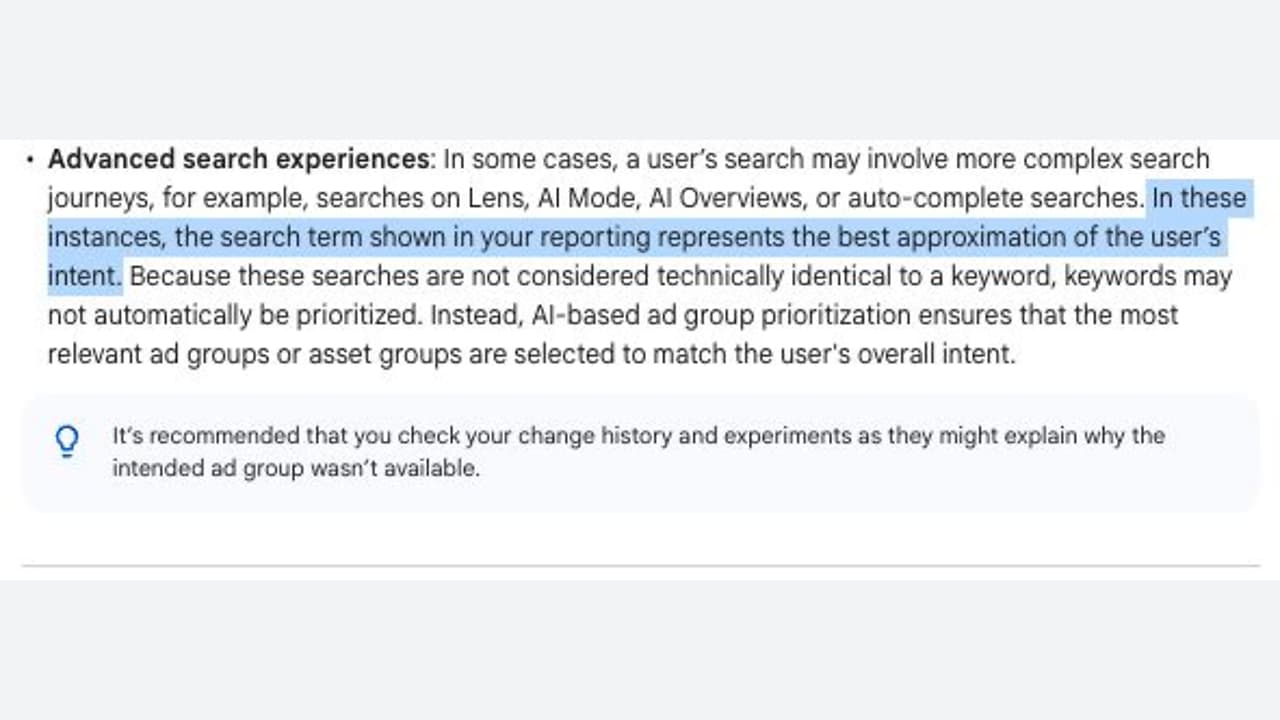
What’s happening. Google has clarified that the search terms in Search Query Reports might not precisely match what users typed. Instead, the system displays the “closest approximation” due to the complexity of modern search behaviors.
What’s behind it. It’s fascinating how heavily AI now influences Google Ads’ matching systems. Rather than depending solely on specific keywords, Google increasingly interprets user intent, context, and behavioral signals to decide which ads to display.
Why we care. For those of us in advertising, Search Query Reports might become less of a mirror reflecting user language and more of a summarized representation of intent. This shift might complicate query analysis, decisions on negative keywords, and strategy around match types.
Discovered by. This update was brought to my attention by Adsquire founder, Anthony Higman, on an official Google help page discussing ad group and asset group prioritization in Google Ads.
The bottom line. Google Ads continues its evolution from keyword matching to AI-driven intent modeling, meaning we might have less insight into the exact searches that activate our ads.
Your facility is not buying traffic. You are choosing who will translate real services, locations, qualifications, and intake pathways into pages that people can find and trust. A weak choice can waste budget, but it can also create false expectations for people making consequential care decisions.
The right agency is not necessarily the one with the longest service list. It is the one whose operating model fits your actual constraint, whose claims survive due diligence, and whose work remains under your clinical, privacy, and business control. Use this process to build a defensible shortlist and run a much more revealing sales conversation.
Define the problem before you compare agencies
The first mistake is asking which addiction treatment SEO agency is best before deciding what the agency must own. Two facilities can want more qualified inquiries while needing completely different work.
Strategy and architecture: You have capable internal writers, but no clear map connecting services, locations, search intent, and priority pages.
Content production: Your experts know the subject, but drafts stall because nobody can turn approved clinical facts into useful search content.
Technical recovery: Important pages are difficult to crawl, duplicate templates compete with one another, internal links are weak, or a redesign left redirects and metadata in disarray.
Local visibility: Your location information, service-area pages, business profiles, and on-site location details do not tell a consistent story.
Integrated acquisition: SEO cannot be planned in isolation because branding, advertising, social media, automation, or offline outreach also shape how prospective patients reach intake.
Choose a primary constraint. Secondary needs can remain in the brief, but they should not obscure the result you are hiring the agency to produce. A technical specialist should not win merely because its proposal contains more content deliverables. A full-service agency should not win merely because it can bundle channels you do not need.
Before contacting vendors, prepare a short decision brief containing:
The services and levels of care you actually provide.
The physical locations that deliver each service.
The inquiries you want and the inquiries you should not attract.
The people who may approve clinical, brand, privacy, and legal claims.
Your website platform, analytics access, content resources, and known technical constraints.
The business event that matters after a visit, such as an appropriate inquiry or an intake milestone defined by your operations team.
The work your internal team will continue to own.
This brief prevents a common procurement failure: buying a generic SEO package and discovering later that nobody owns implementation, clinical review, or the connection between marketing data and intake outcomes.
Match the agency model to your operating constraint
Website design and technical SEO, with newer addiction-treatment experience
Your main constraint is technical or design-related
Recent category-specific examples, clinical review procedures, migration controls, and the experience of the people doing the work
Service breadth is not the same as depth. If you already employ designers and developers, a bundled redesign can add cost and coordination risk. If your site is structurally unsound, a content-only engagement may produce drafts that cannot perform as intended. Shortlist agencies by the bottleneck they are equipped to remove.
Make every agency prove its judgment before you hire it
A polished proposal tells you how the agency sells. A controlled working exercise tells you how it thinks. Give every finalist the same decision brief and ask the same questions so that differences cannot hide behind presentation style.
Ask for relevant proof, not a client logo. Request a de-identified example involving an addiction treatment or comparable healthcare organization. Have the agency explain the starting condition, actions, implementation owner, business measure, and factors it could not control. Confidentiality may limit names and raw data; it should not prevent a coherent explanation of the work.
Run a live problem-solving exercise. Choose a real service or location page from your site. Ask what the agency would investigate, what it would change first, who would make the change, and how it would verify the result. You are testing prioritization, not requesting a free comprehensive audit.
Meet the people who will do the work. Clarify which leaders remain involved after the sale, who writes, who handles technical implementation, who reports results, and which tasks may move to contractors. Category experience at the company level matters less if the assigned team cannot demonstrate it.
Inspect the clinical review workflow. Ask how writers separate search intent from medical fact, how claims are sourced, where your clinical reviewer enters the process, and what happens when an expert rejects or qualifies a draft. An SEO writer should organize approved knowledge, not invent eligibility rules, outcomes, or treatment advice.
Define the measurement chain. Have the agency connect search visibility to visits, calls or forms, appropriate inquiries, and the intake outcomes your team is authorized to share. Traffic alone does not show whether the work is reaching people who can use the service.
Clarify implementation. Determine whether the agency only recommends changes or can safely make them. Ask how it handles backups, approvals, staging, redirects, structured data, quality assurance, and rollback when a technical change fails.
Test the handoff. Ask what you retain when the engagement ends: content, design files, code, accounts, dashboards, keyword or topic maps, structured-data documentation, change logs, and administrative access. The answer should also appear in the contract.
Watch for signals that the sales process is outrunning the agency’s judgment:
Guaranteed rankings, inquiry volume, or admissions. Search outcomes are not fully under an agency’s control, and treatment suitability belongs to qualified care and intake professionals.
A proposal built around publishing volume before the agency verifies your services, locations, capacity, and approval process.
Case studies that show traffic growth but never explain query intent, geography, implementation, or business relevance.
Reports that merge brand searches, informational searches, and service-seeking searches into one favorable number.
Refusal to provide administrative access to accounts created for your organization.
Structured data used as a hidden place for claims that are absent from, or unsupported by, the visible page.
A request to copy patient histories, diagnoses, substance-use details, or call transcripts into general marketing tools without a formally approved privacy and data-governance process.
An agency can understand addiction treatment marketing without becoming a clinical authority. Keep that boundary explicit. Your qualified clinical, privacy, and legal owners must control the decisions that fall within their roles.
Scope the work so SEO, AI visibility, and safety agree
The strongest engagement turns organizational truth into a controlled publishing system. It does not begin with a large keyword list. It begins with facts the facility is prepared to verify and maintain.
Build a service-fact matrix before producing pages
For every service and location, record the approved version of the facts that marketing may use:
The service name and a plain-language explanation.
The setting and level of care actually provided.
The physical location responsible for delivering the service.
The audience, eligibility conditions, and exclusions, using language approved by qualified staff.
Credentials, affiliations, or accreditations that can be substantiated.
Insurance and payment language approved for publication.
The correct contact and intake path.
Any emergency or crisis direction that your clinical and legal owners require.
The agency can then map approved facts to service pages, location pages, educational resources, metadata, internal links, local profiles, and structured data. When a search opportunity requires a claim that is not in the matrix, the agency should request review instead of stretching the available language.
Make answer-engine and generative-engine work auditable
AI visibility can become a vague upsell unless the agency connects it to concrete site work. Ask which questions it wants your pages to answer, which facts need clarification, which entities and locations need consistent naming, and how it will check whether your organization is represented accurately in the search and answer environments included in the scope.
JSON-LD should represent content and claims that a person can verify on the page. It should not manufacture authority, imply a service at a location that does not provide it, or turn a marketing description into a clinical fact. Require documentation showing which visible page elements support each important structured-data field and who owns updates when services change.
Do not buy an AI optimization package that cannot identify the pages, facts, templates, or publishing processes it will change. A visibility report may be useful, but it is not a substitute for accurate content, accessible pages, technical maintenance, or appropriate inquiries.
Measure the path to intake without exposing patient detail
Build reporting as a chain rather than a single dashboard total:
Visibility for the intended service, informational, and location queries.
Visits and meaningful actions on the relevant landing pages.
Calls or forms attributed within the limits of your approved systems.
Inquiries meeting a definition agreed with your intake team.
Downstream operational outcomes that can lawfully and safely be reported in aggregate.
The agency should report the layers it influences, while your organization owns the definitions and permissions. Do not send detailed health histories, diagnoses, substance-use disclosures, or unredacted conversations into analytics, advertising, call-tracking, or AI systems merely to improve attribution. Your privacy and legal owners should determine what may be collected, where it may go, who may access it, and how long it may be retained.
Put ownership and change control in the contract
The statement of work should make performance visible and a future handoff possible. Include:
Deliverables: Name the audits, pages, technical changes, local work, structured data, reports, and implementation support included. Avoid a scope defined only as ongoing optimization.
Responsibility: Assign each deliverable to the agency, your team, or a shared workflow. State who publishes and who validates changes.
Approvals: Identify the content that needs clinical, brand, privacy, or legal review and what happens when approval is delayed or denied.
Access and ownership: Confirm that your organization controls its domain, content-management system, analytics, search tools, local listings, call-tracking assets, creative files, and data exports.
Change records: Require a log of material publishing and technical changes so that a decline, error, or compliance concern can be investigated.
Measurement: Define the reportable events, data limits, attribution assumptions, and treatment of branded versus non-branded demand.
Conflicts: Clarify whether the agency serves competing facilities in the same market and what account separation or exclusivity, if any, the agreement provides.
Exit and handoff: Specify the access, documentation, exports, unpublished work, and transition support delivered when the relationship ends.
Have qualified counsel review material contract, privacy, and regulatory terms. Marketing procurement should not quietly make legal or clinical decisions simply because they appear inside an SEO statement of work.
Key takeaways
Choose an agency for the constraint it can remove, not for the number of services it can place in a proposal.
Use client history, leadership experience, longevity, and size to create a preliminary screen, then test the assigned team’s actual judgment.
Require finalists to solve the same real page problem and explain implementation, clinical review, measurement, and handoff.
Keep treatment claims, eligibility language, crisis direction, and privacy decisions under qualified internal review.
Make AI visibility and JSON-LD auditable by tying them to visible, approved, maintainable facts.
Define account ownership, data limits, approvals, change control, reporting, and exit terms before work begins.
Before booking agency demonstrations, finish your decision brief and turn the evidence questions above into a shared scorecard. Give every finalist the same facility facts and the same page scenario. The differences in their answers will tell you far more than another customized pitch.
Over the years, as Google continually tweaked its algorithms and transformed its search results pages, I’ve seen Condé Nast adjust its strategies considerably. Now, we’re designing our business around the notion that search traffic barely impacts us anymore.
In a recent conversation featured on TBPN—the tech media network that’s been likened to “technology’s daily show”—CEO Roger Lynch shared that we’ve stopped regarding Google search as a dependable traffic source.
Here’s what Lynch explained. While Google traffic isn’t expected to vanish completely, we’re intentionally planning as if it’s on the decline:
“Last year, I instructed our teams: plan as if there is no search—consider search as non-existent.”
“We’re not saying it will be gone entirely… but we anticipate it will comprise only single digits of our overall traffic—very minimal.”
The background. Throughout the past few years, Lynch has observed a recurring trend: Google’s adjustments consistently exceeded our expectations in reducing our visibility.
“For each of the last three years, we predicted some search traffic declines in our budgets, but it fell even more than anticipated,” he noted.
Why has our search traffic dwindled? Lynch attributes this decline not only to algorithm changes but also to AI Overviews and Google’s increasingly commercial-centric results.
“Seven or eight years ago, search results had a few ads, followed by ’10 blue links.’”
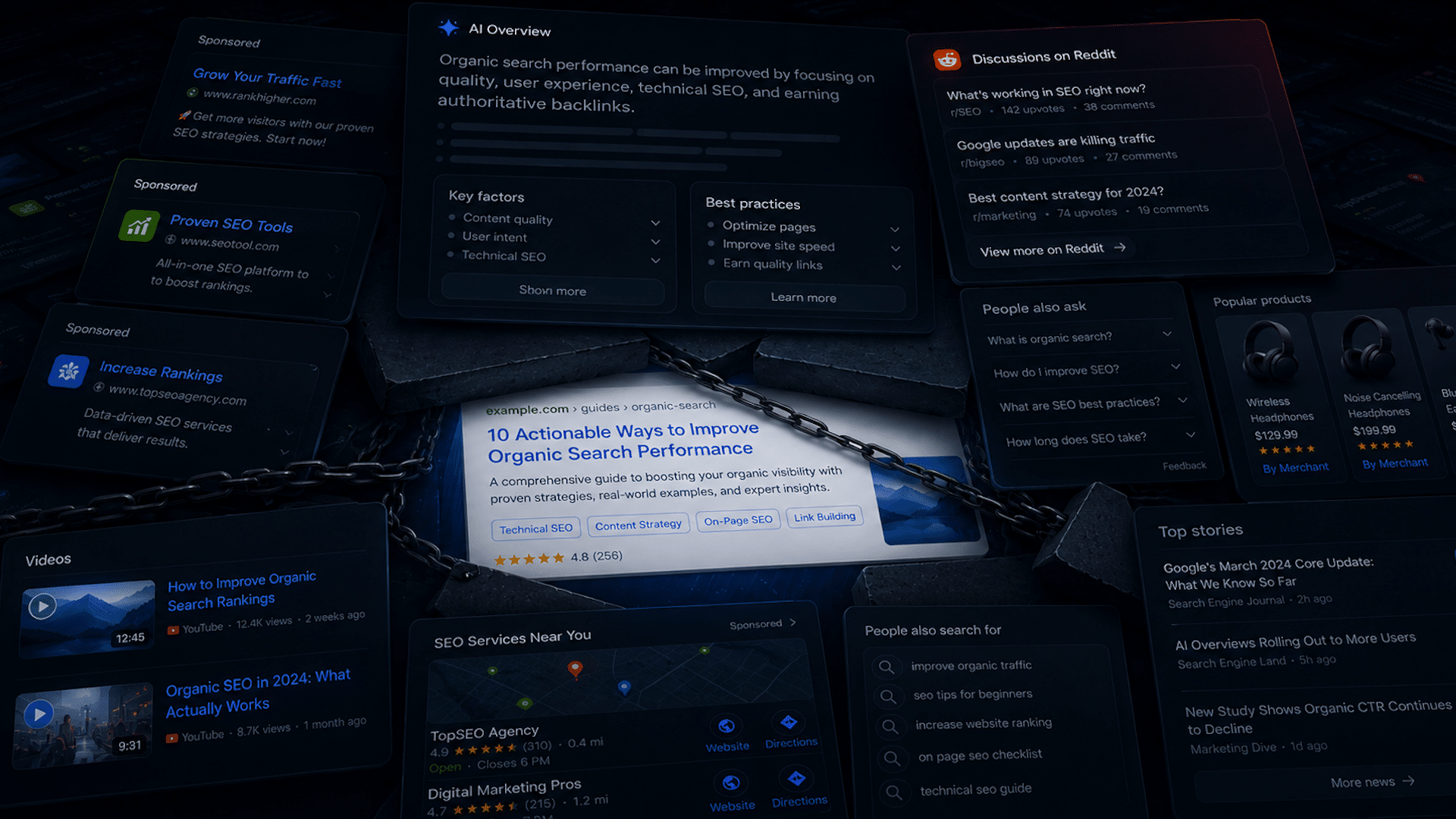
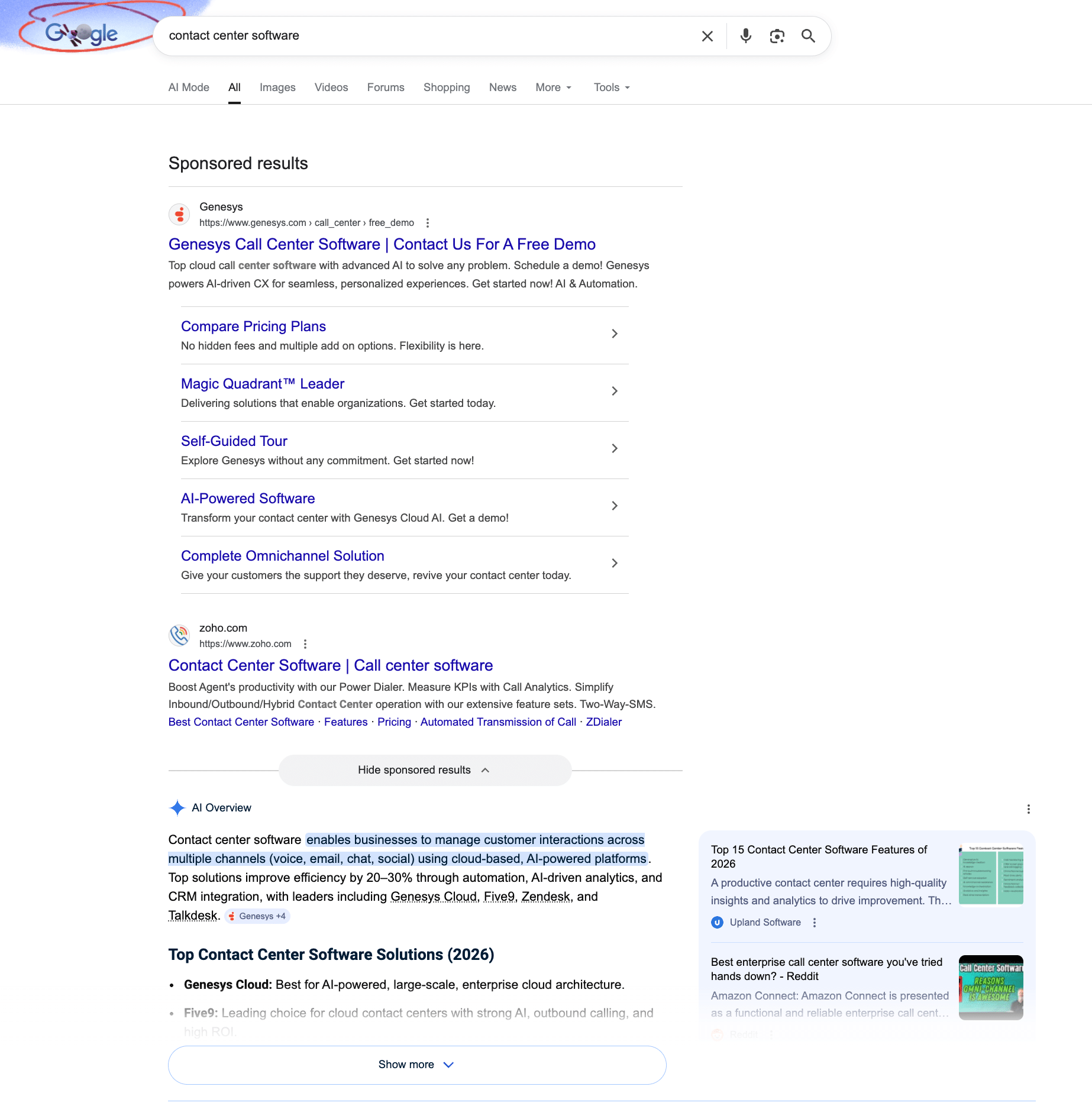
Currently, users first encounter AI Overviews, then a slew of commerce links, pushing organic results further down the page.
“It’s worked out well for Google,” Lynch commented.
A shifting landscape. The alterations made by Google have disrupted the model that other digital entities, like BuzzFeed, used to convert social media and search traffic into revenue.
“That era has ended,” he declared.
Lynch mentioned that brands in the intermediary stages are having the most trouble adapting to changes in AI and search frameworks.
“In today’s world, having a specified niche with a dedicated audience is crucial. Relying solely on advertising to support significant journalism investments is a challenging position,” he stated.
Shifting priorities at Condé Nast. We are now emphasizing brands that excel in these areas:
Dedicated direct audiences.
Potential for subscriptions.
Undeniable expertise in a given niche or category.
Lynch also hinted at a potential advantage for premium publishers against AI-generated content:
“Our audience expects and desires human-generated content. Creating AI-generated content doesn’t play to our strengths. Identifying and building on your competitive advantages is vital.”
Why this matters. Lynch emphasized that the practice of turning search and social media traffic into lucrative businesses is outdated. Publishers lacking a strong brand or dedicated readership might face challenges, as platforms can revise their methods at any moment.
The full interview. You can watch Lynch’s discussion, where he elaborates why human journalism remains crucial in the AI era, starting at 30:28 here.
I believe the launch of TurboQuant will revolutionize AI and SEO as we know it. This cutting-edge algorithm from Google drastically reduces the computing power and energy needs by allowing the massive compression of LLMs and vector search engines.
Imagine using six times less memory and achieving eight times the speed without compromising accuracy. That’s how TurboQuant dramatically lowers the cost of running AI tasks.
As search engines evolve from simply listing links on a SERP to providing immediate AI-generated overviews, it’s crucial for us in the SEO industry to adapt. We need to focus on creating meaningful, trustworthy content and understand its impact on searches.
Before AI became prevalent, SEO was grounded in basic keywords and topics, which inefficiently represented user intent. High costs and energy consumption hindered mapping true meaning across the web, but now TurboQuant uses an advanced compression method, PolarQuant, to transform data into manageable coordinates. This breakthrough allows Google to process complex ideas far more efficiently.
TurboQuant can match exact search meanings in real time, thanks to its ability to understand user intent using past searches and real-world contexts.
The near-zero indexing lead time of TurboQuant eradicates delays between publication and ranking. Trusted publishers will gain instant recognition for their expertise, while the system also blocks manipulation and spam from appearing.
We must prepare for the fast-approaching era where AI summaries become the norm in responding to most queries. Thin content, which adds no original value, will vanish because AI can now summarize the web almost instantly, making unique viewpoints and genuine data irreplaceable.
Developing trust and authority with original thoughts, data, and experiences will prove essential, as AI-generated summaries merely consolidate existing information.
The focus of our SEO strategies should be to become a source AI recommends reliably, not just rankings based on keywords. TurboQuant maintains a more reliable index of facts by validating them against its real-time knowledge base.
This new system tracks a brand’s strength across various platforms, reinforcing the necessity of improving our knowledge graph as a trusted source.
With TurboQuant handling vast information without delays, hyper-personalization is set to explode in ways we’ve previously not imagined. AI agents could remember extensive user interactions to provide extensive personalization.
TurboQuant’s capability to integrate various signals into a cohesive perception of a brand’s value demands a strategic shift toward consistent, omnichannel representation.
We’ve prioritized quantity over quality for far too long in this industry. TurboQuant signals the end of this era, as it necessitates creating high-quality, meaningful content that establishes us as trusted entities.
Delivering a reliable message with a clear voice will guide how our messages are distributed and our brand credibility.
As I look ahead, I’m thrilled to share what we have in store with our latest product, Profound. Over the coming weeks and months, we are embarking on a journey that represents a much bolder move than anything we’ve previously attempted.
Internally, our team is buzzing with excitement, and we believe it’s time to extend that excitement to you, our valued customers. We’re eager to unveil our vision for the future and how it aligns with your needs.
SEO isn’t dead—far from it. But let’s face it, AI is definitely changing the game in ways we never imagined. This got me thinking about how things are looking different for us, especially with the rise of zero-click searches and AI Overviews. In 2026, these are becoming more like the hand guiding our SEO strategies.
With AI advancements, I’m seeing how crucial it is for all of us to adapt and build our SEO approaches around these innovations. Answer Engine Optimization (AEO) is making waves, and it’s fascinating to watch how it reshapes our tactics.
If we want to stay ahead, integrating AI into our SEO strategies isn’t just optional—it’s essential. The landscape is evolving, and so should we.
Over the past few years, I’ve been inundated with advice on generative engine optimization (GEO) – everything from AI citation checklists to technical guides for structuring content for large language models.
Most GEO guidance revolves around a key premise: To be visible in AI-generated answers, your content must be structured, authoritative, and easy to extract.
In my view, this advice, while valuable, falls short if your brand isn’t yet eligible for consideration in AI-generated results.
The underlying assumption is that ticking those boxes makes your brand eligible for AI-generated answers. However, many brands overlook the fact that they aren’t even being considered.
To get past this hurdle, we need to address an underappreciated factor that many GEO enthusiasts miss.
Traditional SEO has taught us to seek visibility through rankings, believing that higher rankings translate into more clicks and better outcomes. Many have now adapted this mindset to AI, aiming for citations or inclusions in AI-generated answers.
However, AI systems don’t just rank; they filter and select entities based on signals, determining eligibility before weighing options.
Without eligibility, many brands risk being excluded from the AI recommendation set right from the start.
Brands often misprioritize, focusing on extractability before establishing clarity, which results in missed opportunities.
It’s critical to understand the difference between qualification (being eligible to join the candidate set) and selection (being chosen from that set).
AI-driven search changes the game. While traditional SEO ranks pages, AI selects entities, such as branded products and concepts, interconnected in a web of knowledge.
This shift means we must prioritize entities over pages. An entity might excel in traditional search yet remain ambiguous in AI-generated answers.
Common issues lie in clarity and relevance. AI systems ask: Can I identify and associate this entity accurately?
If definitions are inconsistent across platforms or names vary, brands struggle to pass this threshold.
Clarity is the cornerstone. When AI or search engines see your brand, clarity allows them to understand exactly who you are.
For example, when I noticed my common name, Mariana Franco, was causing confusion, I changed it to “Maryanna.” This helped ensure that my identity was distinct and recognizable to AI systems.
By consistently using this unique name variant across all my online assets, I reduced ambiguity within a week, making it easier for systems to recognize me as an entity.
Relevance is another crucial factor. Does the web associate your brand with relevant topics consistently and strongly?
This involves appearing alongside related entities, demonstrating expertise through in-depth content, and being referenced by well-known entities in your field.
Once qualified, a brand becomes part of the candidate pool, applying GEO strategies to increase the chance of selection.
Credibility becomes vital at this stage. You need corroboration from reputable sources to enhance your credibility.
Multiple credible mentions and appearances in media, reports, and podcasts bolster your visibility and reliability.
Extractability, or how easily an AI can generate answers from your content, is crucial once in the candidate set.
To ensure extractability, organize your content clearly, prioritizing concise, context-independent answers.
Testing your brand’s appearance in AI tools can reveal whether you’re recognized or recommended. A search using ‘best [your category]’ illuminates inclusion gaps.
If AI recognizes your brand but doesn’t recommend it, focus on building selection signals — credibility and extractability.
For comprehensive visibility, prioritize clarity and relevance to ensure eligibility, then focus on credibility and extractability to strengthen your standing.
Start by ensuring name consistency and clarity — the foundation of being recognized as a distinct entity.
Your About page should explicitly define your brand, utilizing schema to integrate into AI systems.
In AI’s expanding landscape, qualified entities will thrive, making consistent clarity and corroboration more critical than ever.
I find it intriguing how, despite creating stellar content, it often doesn’t make it to the top of Google’s search results. What holds it back isn’t necessarily quality—there are usually other roadblocks in play. Let me break down how to identify what’s hindering your content’s rankings.
The common advice has always been to create helpful, high-quality content to rank well. However, this piece of advice doesn’t cover the full story of Google’s search algorithm mechanics.
Even if your content is well-researched and aligned with search intent, technical barriers and competition may still impede its visibility. Identifying these barriers is crucial before deciding to rewrite any piece of content.
Before blaming your content’s positioning, it’s essential to assess its quality. I often observe pages that don’t stand out, sometimes being autogenerated with minimal editorial input. Google’s guidelines on helpful content underscore the significance of experience and trust.
Ask yourself: Does your content deliver unique insights, adhere to Google’s preferred format, and offer value beyond the current top results? A ‘yes’ suggests positioning issues; otherwise, focus on enhancing your content’s quality first.
In the competitive 2026 search landscape, various factors such as AI summaries and an increased ad presence are reshaping search results pages, making it harder for organic content to achieve visibility.
Understanding what your content is truly competing against is key. If these external factors push your content down the page, adjustments are necessary to remain competitive.
When questioning why good content isn’t ranking, I employ a diagnostic framework that prioritizes technical issues. Ensuring that your page is indexed and free from technological hurdles is the first and simplest step to address.
Matching search intent with your content’s format is also critical. If your content is misaligned, improving it won’t suffice unless you address the fundamental disconnect.
If a large trust signal gap exists between your domain and your competitors’, repositioning is often necessary to focus on less competitive keywords where you can compete effectively.
The type of website you manage affects which barriers are most significant. For example, SaaS platforms typically face challenges concerning authority more than technical issues, while ecommerce sites contend with technical constraints.
Understanding and applying this diagnostic sequence helps identify and address potential bottlenecks, ultimately allowing your content to rank better by focusing on what truly matters.
In 2026, as the ease of generating good content continues to grow due to AI, positioning becomes crucial. Differentiated, experience-driven content is what stands out and captures attention.
Your strategic question isn’t just about creating good content. It’s about understanding the landscape: What else is required for your content to achieve outstanding results in the search arena?
You know you have a marketing data trust problem when a budget meeting turns into a forensic audit. Marketing opens an ad dashboard, Sales opens the CRM, Finance opens the revenue report, and everyone spends the next hour explaining why the totals do not match.
The goal is not to force every system to display one perfect number. It is to make each number traceable, label its uncertainty, reconcile legitimate differences, and limit the decisions it is allowed to drive. That confidence layer removes the hidden cost of repeatedly cleaning, defending, and second-guessing marketing data.
Give every important metric a trust contract
Two reports can use the same metric name while answering different questions. An ad platform may count a conversion when it receives a signal. Your CRM may count a lead only after deduplication and qualification. Finance may recognize revenue after another business event entirely. Calling all three values “conversions” creates an argument that no dashboard redesign can resolve.
Start with the decision in front of you. Are you deciding whether to increase spend, change targeting, forecast pipeline, or report recognized revenue? Then write a metric contract for every number that can influence that decision.
Name: Use a precise label such as form submissions, accepted leads, closed customers, or collected revenue. Avoid an unqualified label such as conversions.
Business question: State what the metric is intended to answer and what it cannot answer.
Definition: Specify the qualifying event, numerator, denominator, and any status rules.
Grain: Declare whether one row represents an event, person, account, opportunity, order, or reporting period.
System of record: Identify the system that owns the relevant event or status. Do not use “the dashboard” as the source.
Time rule: Record the time zone, reporting window, attribution window where applicable, and whether the metric uses event time or the time a status was updated.
Inclusions and exclusions: Name the treatment of test records, duplicates, invalid leads, cancellations, refunds, internal traffic, and unmatched records.
Join rule: Document the identifiers used to connect marketing activity with people, accounts, opportunities, and revenue.
Owner and approval: Assign someone to maintain the definition and name the teams that must approve a change.
Put the contract beside the dashboard, not in a forgotten documentation folder. When a metric changes, update the definition and mark the effective date. Otherwise, a chart can appear continuous while its meaning changes underneath it.
Be especially careful with ratios. A conversion rate is not defined until both the numerator and denominator are defined at compatible grains. Dividing qualified leads by ad-platform clicks may be useful, but it is not interchangeable with qualified leads divided by unique sessions. The label must reveal which calculation you chose.
Build one journey spine without erasing useful differences
You do not need one database to replace every marketing, sales, and finance system. You need a shared journey spine that connects their records and preserves the meaning of each stage.
For a typical demand journey, that spine might connect an impression or click to a session, form submission, lead, qualified lead, opportunity, customer, and revenue event. Adapt the stages to your business, but give each stage a stable identifier, an event timestamp, a status, a source record, and a documented connection to the preceding stage.
Preserve raw campaign values alongside normalized channel values. If someone changes the channel taxonomy, you should still be able to reconstruct the original record.
Carry both the time an event occurred and the time it entered or changed in a system. This makes reporting-window differences visible.
Keep source record identifiers through every transformation so an analyst can trace a dashboard row back to the underlying event.
Represent missing campaign information as unknown or unmapped. Do not silently turn it into organic traffic merely because a downstream rule needs a bucket.
Keep unmatched records in an exception table. Dropping them makes totals look cleaner while hiding the actual identity and instrumentation problem.
Reconciliation should explain differences rather than force them to zero. For example, form submissions can be separated into accepted leads, duplicates, invalid records, and records awaiting review. If every submission lands in a named outcome, Marketing and Sales can disagree about policy without disagreeing about what happened.
Use a small, stable exception taxonomy across reports: duplicate, invalid, unmatched identity, missing campaign data, status mismatch, time-window mismatch, test or internal record, and unresolved. Assign an owner to each class. The exception count then becomes an operational queue instead of a recurring surprise in an executive meeting.
Treat confidence as metadata, not a feeling
A number is not simply trustworthy or untrustworthy. It can have a strong identity match but poor freshness, direct customer input but incomplete coverage, or clean attribution without causal evidence. Store those dimensions separately so a polished chart cannot conceal a weak assumption.
Confidence dimension
Labels to preserve
Decision rule
Identity certainty
Deterministic, probabilistic, unmatched
Do not merge an inferred identity into a verified profile without retaining the inference and its confidence.
Data origin
Zero-party, first-party, third-party
Distinguish information a person deliberately supplied from behavior you observed and information obtained elsewhere.
Data quality
Validated, exception, incomplete, stale
Quarantine or disclose failed records instead of silently repairing them.
Measurement strength
Descriptive, attributed, incrementality-tested
Do not let an attribution rule masquerade as proof that marketing caused the result.
Deterministic and probabilistic describe identity certainty. A verified login, account identifier, or transaction key can provide a deterministic connection. Device, location, network, and behavioral signals may support only an inferred connection. Both can be useful, but they should not be blended under one unlabeled customer ID.
Zero-party, first-party, and third-party describe origin, which is a different question. Zero-party data is information a person intentionally gives you, such as a stated preference or purchase intention. First-party data comes from behavior observed in your own interactions. Third-party data arrives from outside that direct relationship. Directly supplied and directly observed information generally provides a firmer foundation than outside speculation, but origin alone does not guarantee correctness.
Do not collapse these dimensions into one confidence score. A self-declared preference may be attached to a probabilistically matched profile. A deterministic account can contain an old preference. Keeping the dimensions separate tells you whether to verify the identity, refresh the field, or limit the intended use.
Put a release gate in front of dashboards and models
Create a defined path from raw records to approved decision data. The gate should run in the same order each time:
Validate structure. Confirm that required fields exist, expected types have not changed, and controlled values remain valid.
Deduplicate. Use stable record identifiers and a documented survivor rule. Never delete a duplicate without retaining enough information to audit the decision.
Resolve identity. Apply deterministic joins first. Route probabilistic matches and unmatched records into explicitly labeled paths.
Apply business rules. Enforce the metric contract’s qualification, exclusion, and status logic.
Reconcile stages. Make sure differences between journey stages are accounted for by named outcomes or exception classes.
Stamp the release. Record the included time range, source snapshots, transformation version, refresh time, exclusions, known limitations, and owner.
This process favors correct, explainable data over maximum volume. A larger dataset does not rescue duplicate identities, broken joins, stale fields, or inconsistent definitions. Feeding those records into an AI system can make the problem harder to notice because a fluent output can still be confidently wrong when its inputs are unreliable.
Give AI systems the confidence labels too
If an AI system summarizes performance, recommends budget changes, prioritizes audiences, or drafts an executive explanation, pass the confidence metadata with the marketing records. Do not give the model a flattened export in which verified purchases, inferred identities, and unmatched sessions all look equally certain.
A useful instruction is: use deterministic records for customer-level conclusions; summarize probabilistic records separately; disclose unmatched coverage; identify stale or incomplete fields; and do not describe attributed outcomes as incremental outcomes. Require the response to name its data snapshot, exclusions, and measurement status.
Keep model-generated classifications in a separate field from observed or customer-supplied facts. Record the model or workflow version and the input snapshot that produced them. If a later result changes, you will be able to determine whether the data changed, the rules changed, or the model changed.
Ask what marketing changed, not only what received credit
Attribution and causation answer different questions. Attribution assigns credit according to a rule. Incrementality asks how many outcomes would not have happened without the marketing intervention.
Branded search exposes the difference. Someone who already intends to buy may search for your brand immediately before converting. The search ad can record the final touch even when another channel, prior experience, or existing intent created the demand. A checkout scanner records the purchase, but it did not necessarily cause the shopping trip.
Use a holdout test when a material budget decision depends on whether a paid campaign caused additional outcomes:
Define the eligible audience, intervention, primary outcome, and measurement window before examining results.
Create comparable exposed and holdout groups. Keep the holdout from receiving the intervention being tested.
Measure both groups with the same identity rules, exclusions, time boundaries, and outcome definition.
Compare conversion rates rather than attributed totals alone. The difference is the starting point for estimating incremental effect.
Check whether delivery failures, audience overlap, identity gaps, or other execution problems compromised the comparison.
Report the test design and limitations beside the result so a directional estimate is not presented as certainty.
Keep attributed and incremental views side by side. Attribution helps you inspect journeys, operate campaigns, and diagnose tracking. Credible incrementality testing provides stronger evidence for budget allocation. When you do not have a valid causal test, label the budget case as a hypothesis and favor a smaller, reversible change.
This distinction matters when AI answer engines, recommendations, content, paid media, and branded search all touch the journey. A customer may first encounter your business through one channel and convert through another. Add an optional zero-party question such as “How did you first hear about us?” to reveal candidate discovery paths, but keep that response separate from click attribution and do not treat either one as causal proof.
Key takeaways
Define a metric by the decision it supports, its qualifying event, its grain, its time rule, and its exclusions.
Connect marketing, sales, and revenue events through a shared journey spine while preserving raw records and system-specific meanings.
Explain every difference with a named outcome or exception class instead of hiding unmatched records.
Label identity certainty, data origin, data quality, and causal strength as separate confidence dimensions.
Give AI systems those labels and require them to disclose snapshots, exclusions, and unsupported conclusions.
Use attribution to assign and inspect credit; use a well-designed holdout when you need evidence that marketing caused additional outcomes.
Before your next budget review, choose the one KPI that causes the most debate. Write its trust contract, trace it through the journey spine, label its confidence, and account for its exceptions. Then decide whether attribution is sufficient for the decision or whether you need an incrementality test. If the number cannot survive those steps, it has not earned the right to move the budget yet.
Your pages rank. Your backlink profile looks healthy. Yet when a buyer asks an AI system which providers fit their situation, your brand is missing – or appears without enough context to make the shortlist.
That is not necessarily a conventional ranking problem. It is a citation problem. To address it, you need to find the prompts that influence real decisions, identify the pages shaping those answers, and make sure those pages contain accurate, usable information about where your brand fits.
Diagnose the visibility gap before you chase mentions
AI citation optimization is the practice of improving the material AI systems can retrieve, use, and cite when answering questions relevant to your business. The goal is not citation volume for its own sake. The goal is accurate brand inclusion in answers that help a buyer compare options, evaluate fit, verify claims, or plan implementation.
Traditional SEO metrics still matter, but they do not fully explain AI visibility. A company can have strong rankings, substantial traffic, and a large link profile while remaining absent from consequential buyer questions. AI systems need enough context to connect a brand with a particular audience, problem, use case, constraint, and decision criterion.
This changes the question you ask about a placement. Conventional link building often starts with whether a page can pass authority or referral traffic. Citation optimization adds another test: can the page help an AI system understand why your brand belongs in a specific answer?
Most visibility problems fall into one of three practical categories:
Information gap: The facts a buyer needs do not exist in accessible content. Sales or implementation teams may know the answer, but the web does not.
Surface gap: Useful information exists, but not on the pages or platforms that repeatedly shape relevant AI answers.
Context gap: Your brand is mentioned, but the surrounding text does not explain its category, intended customer, use case, distinguishing criteria, evidence, or implementation requirements.
Each gap requires a different response. An information gap calls for new decision-ready material. A surface gap calls for distribution and outreach. A context gap calls for a richer, more accurate description. Treating all three as a request for another backlink wastes effort because anchor text alone does not provide the surrounding meaning an AI system needs.
Start by writing one sentence that describes the visibility failure precisely. For example: our brand is absent when mid-market buyers compare options for a regulated workflow, even though competitors appear. That sentence gives you a buyer, a decision, a constraint, and an observable gap. It is far more actionable than a broad goal such as increase AI citations.
Build a prompt map from real buyer decisions
Keyword lists are a weak starting point because buyers no longer have to compress a complicated situation into a short query. They can describe what they are trying to accomplish, what they have already considered, what constraints they face, and what would disqualify an option.
Your prompt map should therefore come from decision friction, not just search volume. Pull recurring questions from sales, implementation, customer success, product documentation, and support. Look especially for questions about fit, comparisons, use cases, proof, prerequisites, and rollout. These are often the details a buyer needs before taking a vendor seriously.
You generally will not have a complete log of the prompts prospective customers submit to AI systems. Synthetic prompts can still expose meaningful gaps, but they should be treated as directional representations of buyer intent, not precise demand data or proof that every buyer behaves the same way.
Buyer decision
Prompt pattern
Information the cited page should contain
Fit
Which type of provider suits a buyer with this need and constraint?
Intended audience, qualifying conditions, poor-fit cases, and relevant use cases
Comparison
How do the credible options differ on the criteria that matter here?
Consistent comparison dimensions, meaningful differences, tradeoffs, and scope
Use case
Which options can handle this workflow or operating environment?
Specific workflow, users involved, constraints, and supported outcome
Proof
What evidence supports each option for this problem?
Verifiable examples, methodology, documentation, and limits on the claim
Implementation
What would adopting this option require?
Prerequisites, integrations, handoffs, responsibilities, and likely points of friction
A useful prompt template is: Which options fit [buyer type] that needs [use case], operates under [constraint], and cares most about [decision criteria]? Compare the options and explain the implementation implications. Replace each bracket with language your customers actually use.
Build and run the map in a repeatable sequence:
Collect recurring buyer questions from teams that hear them directly.
Remove your brand name so the prompt tests discovery rather than brand recall.
Add the buyer’s role, problem, environment, constraints, and decision criteria.
Group related prompts into fit, comparison, use-case, proof, and implementation clusters.
Record the answer, every visible citation, the brands included, and the context attached to each brand.
Repeat the prompt families rather than drawing a conclusion from one isolated response.
Do not prioritize a citation opportunity merely because a page appeared once. Look for repetition. A page or domain becomes strategically interesting when it recurs across several valuable prompt variations, helps define an important comparison, includes relevant competitors while omitting you, or describes your brand without the context needed to establish fit.
This prompt-cluster approach also prevents a common reporting mistake. If your brand appears for a broad informational question but disappears when the buyer adds an important constraint, you do not have uniform visibility. You have coverage for one part of the decision and a gap in another.
Improve the pages AI already leans on
Once you know which pages shape relevant answers, audit what those pages actually contribute. A cited URL may supply a definition, comparison, shortlist, proof point, implementation detail, or category framework. Its role matters because your improvement has to strengthen the part of the answer the page supports.
Review each recurring page for these elements:
The buyer question the page can answer directly
The brands, products, or approaches it includes
The criteria it uses to distinguish those options
The context surrounding your brand, if you are mentioned
The evidence supporting claims about fit or performance
The use cases, tradeoffs, and implementation details it explains
The presence of clear tables, lists, comparisons, or frameworks
Any inaccurate, obsolete, ambiguous, or unsupported description
Clear structure is not cosmetic. AI systems need material they can readily use, and tables, comparisons, and explicit explanations can make a page more useful for decision-oriented answers. A polished page that never states who an option is for is less helpful than a plain page that answers the buyer’s question precisely.
Strengthen owned pages with decision-ready context
On pages you control, put the answer before the background. State what the offering is, who it serves, which problem it addresses, and the conditions under which it is or is not a sensible fit. Do not force a system – or a buyer – to infer the relationship from slogans.
A useful brand-description pattern is: [Brand] is a [specific category] for [defined audience] that needs [use case]. It is relevant when [qualifying condition], differs on [decision criterion], and requires [implementation condition]. Every part of that sentence should be supportable. Remove any field you cannot substantiate.
Then support the initial description with the content units the decision requires:
Fit: Identify intended customers and important disqualifiers.
Use cases: Describe the problem, operating context, workflow, and supported outcome.
Comparison: Use the same criteria for every option and acknowledge meaningful tradeoffs.
Proof: Connect each claim to verifiable documentation or evidence, and state its limits.
Implementation: Explain prerequisites, dependencies, integrations, handoffs, and ownership.
Terminology: Use consistent names and category language across related pages so the brand is not framed as a different kind of offering in each location.
Avoid copying the same generic company paragraph across every page. The core entity description should remain consistent, but the surrounding context should match the decision. A comparison page needs criteria and tradeoffs. An implementation page needs prerequisites and process. A use-case page needs a defined user, problem, constraint, and outcome.
Ask third-party publishers for context, not just a link
Prioritize third-party action when a recurring page omits a genuinely relevant option, contains an inaccurate description, uses a comparison dimension you can substantively improve, or mentions your brand without enough information to explain its place in the market.
Your outreach brief should make the editorial improvement obvious. Identify the section that is incomplete, explain which buyer question remains unanswered, supply a concise and verifiable description, offer supporting evidence, and suggest a fair comparison dimension. Ask for inclusion only when the brand meets the page’s stated criteria. A forced mention on an irrelevant page creates noise, not useful visibility.
When a publisher already mentions you, enriching that paragraph may be more valuable than placing a new link elsewhere. The revised context should explain the offer, audience, use case, differentiator, and evidence relevant to that page. The link then supports the explanation instead of standing in for it.
Preserve editorial independence. Give publishers accurate material they can verify, but do not ask them to disguise promotional claims as neutral comparison. Citation optimization depends on trustworthy context; weakening the page’s credibility works against that objective.
Measure recurring coverage, context, and accuracy
AI answers vary by prompt, industry, intent, and available material. A single successful answer does not establish durable visibility, and a single omission does not prove a systemic failure. Your measurement system should reveal recurring patterns across prompt clusters.
Maintain a citation ledger with the following fields:
AI surface and prompt wording
Buyer stage and prompt cluster
Answer date and test conditions
Brands included in the answer
How your brand was described
Cited domains and exact pages
The role each cited page played
Missing, weak, inaccurate, or conflicting context
Owned-page, outreach, or correction action
Status after the next comparable observation
Classify brand visibility by meaning, not just presence. Useful states include absent, named without decision context, named with inaccurate context, accurately included but unsupported by a visible citation, and accurately included with relevant supporting material. This keeps a shallow name drop from being reported as equivalent to a credible recommendation.
Read the ledger horizontally and vertically. Across a row, you can see why one prompt produced a particular answer. Down a prompt cluster, you can see recurring omissions, frequently cited pages, unstable descriptions, and competitors that repeatedly occupy the position you want to earn.
Use the pattern to select the next action:
If your brand is absent and the same third-party pages recur, investigate their inclusion criteria and missing context.
If your brand appears inaccurately across several answers, align owned descriptions and correct influential third-party material.
If an owned page is cited but the answer omits your brand’s relevant use case, make the relationship explicit on that page.
If competitors appear because they provide stronger comparisons or proof, improve the underlying information rather than merely increasing mention volume.
If results fluctuate without a recurring pattern, keep observing the cluster before committing resources to a page or domain.
Keep conventional SEO and business measures in view. Rankings, links, referral visits, engagement, and conversions still help you judge whether a page creates value. The important change is that they now sit beside answer inclusion, citation recurrence, contextual accuracy, and coverage of decision-stage questions. Links remain useful; they simply are not a complete AI visibility strategy by themselves.
Do not collapse the ledger into one unexplained visibility percentage. Any summary metric depends on the prompts you selected, how you grouped them, which systems you tested, and what counted as a successful appearance. Preserve those assumptions so a change in the dashboard cannot be mistaken for a change in buyer visibility.
Key takeaways
AI citation optimization aims to earn accurate inclusion in consequential answers, not collect citations indiscriminately.
Start with natural-language buyer decisions about fit, comparison, use cases, proof, and implementation.
Track prompt clusters and recurring cited pages instead of reacting to one output.
Separate information, surface, and context gaps because each requires a different fix.
Improve the material surrounding a brand mention; a backlink without useful context is incomplete.
Measure presence, accuracy, citation support, and decision-stage coverage alongside traditional SEO outcomes.
Your next move is small and concrete: choose one decision your buyers repeatedly struggle with, create a focused set of unbranded prompts around it, and record the pages that keep shaping the answer. The recurring gap will tell you whether to create missing information, improve an owned page, enrich a third-party mention, or correct an inaccurate one.